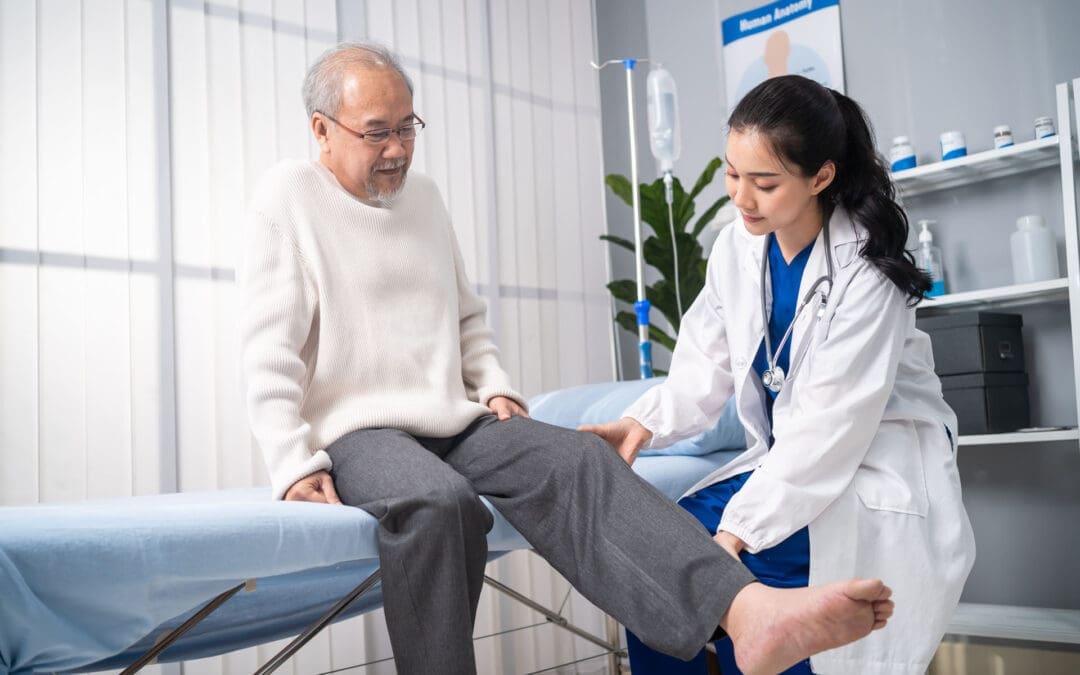
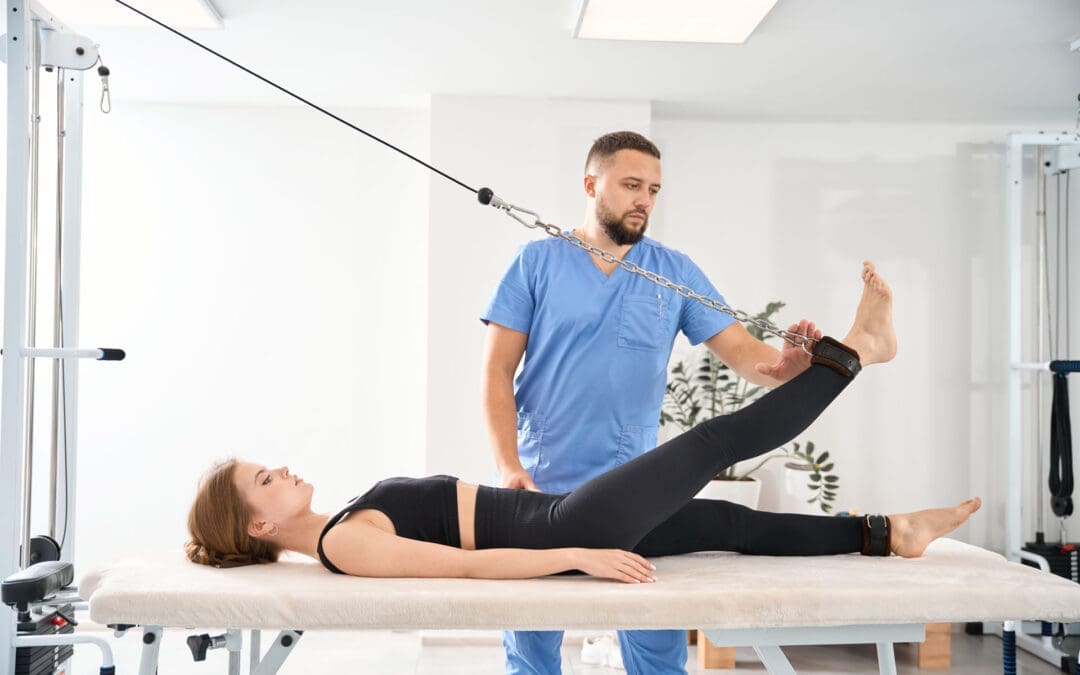
Back Clinic Screening Tests. Screening tests are typically the first assessment completed and are used to determine if further diagnostic testing might be needed. Because screening tests are the first step towards diagnosis, they are designed to be more likely to overestimate the true incidence of a disease. Designed to be different from diagnostic tests in that they might demonstrate more positive results than a diagnostic test.
This can lead to both true positives as well as false positives. Once a screening test is found to be positive, a diagnostic test is then completed to confirm the diagnosis. Next, we will discuss the assessment of diagnostic tests. Many screening tests are available for physicians and advanced chiropractic practitioners to utilize in their practice. For some tests, there is quite a bit of research demonstrating the benefit of such tests on early diagnosis and treatment. Dr. Alex Jimenez presents appropriate assessment and diagnostic tools used in the office to further clarify and appropriated diagnostic assessments.
Neuropathy Pain: “What’s the Best Medication?” And How El Paso Back Clinic Uses a Team Approach
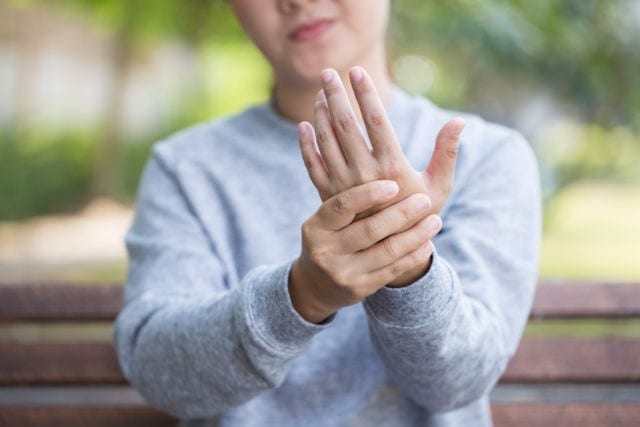
Neuropathy is a common reason people contact El Paso Back Clinic®. The most common question sounds simple: “What’s the best medication for this pain?” But neuropathy is not one single problem. It is a symptom pattern (burning, tingling, numbness, electric shocks, sensitivity) that can result from various causes, such as diabetes, vitamin deficiencies, nerve compression, medication side effects, or past injuries. Getting the “best” treatment usually means combining the right medical plan with the right hands-on and movement-based care, plus lifestyle steps that protect nerves over time.
At El Paso Back Clinic, the care model described in their neuropathy education includes integrative chiropractic care coordinated with nurse practitioner (NP) oversight, aiming to improve function and quality of life while also looking for root causes.
What Peripheral Neuropathy Really Means
Peripheral neuropathy means the nerves outside the brain and spinal cord are irritated or damaged. These nerves help with:
Feeling (touch, pain, temperature)
Movement (muscle control)
Automatic body functions (sweating, digestion, blood pressure)
When signals get disrupted, symptoms can include burning pain, numbness, tingling, cramps, and weakness—often starting in the feet or hands.
Why cause matters: Treatment works best when you address both the pain and the underlying cause of the nerve’s discomfort. Primary care guidance emphasizes a careful history, exam, and targeted lab testing to look for common causes (diabetes, alcohol use, nutritional issues, toxins, nerve compression, and more).
The “Best Medication” for Neuropathy Pain: What Most Guidelines Start With
There isn’t a single perfect medication for everyone. Most major guidance starts with a few first-line options because they can reduce abnormal nerve pain signaling:
Common first-line medication groups
Gabapentinoids:gabapentin or pregabalin
SNRIs (a type of antidepressant used for nerve pain):duloxetine
TCAs (older antidepressants used for nerve pain):amitriptyline (used more often at night due to sedation)
This is consistent across multiple evidence summaries and public clinical guidance.
What patients usually want to know (in plain language)
These medicines do not “fix” the nerve overnight.
They aim to reduce the volume of nerve pain messages reaching the brain.
Many people need dose adjustments or a different medication to get the best balance of relief and side effects.
Side Effects to Expect (And Why NPs Help So Much Here)
A big reason people stop neuropathy meds is side effects—especially in the first 1–3 weeks. The NHS lists these as commonly used neuropathic pain medicines, and side effects are a key part of safe prescribing decisions.
Typical side effects patients report
Gabapentin/pregabalin: sleepiness, dizziness, “brain fog,” swelling, weight gain (for some)
Amitriptyline: dry mouth, constipation, grogginess, dizziness (often taken at night)
How an NP helps (practical, real-world):
Reviews your full medication list to avoid risky combos
Adjusts timing (for example, shifting sedating doses toward evening)
Watches for issues like fall risk, daytime sleepiness, and mood changes
Checks labs or contributing problems (blood sugar, B12, thyroid, kidney function when relevant)
Plans step-by-step changes instead of guessing
NPs are also well-positioned to manage chronic pain patterns and medication decision-making over time, because neuropathy often requires follow-up and fine-tuning.
“Are There Non-Drug Treatments?” Yes—And They Matter
Most people with neuropathy want conservative options first, or at least options that let them use less medication. The El Paso Back Clinic neuropathy education highlights several non-surgical strategies commonly used in integrative care.
Integrative chiropractic care focused on movement, joint mechanics, and nerve irritation patterns
Footwear, balance support, and fall prevention
Sleep and stress strategies (very underrated for nerve pain)
Patient-facing education materials often encourage asking about topical options, TENS, and PT because neuropathy increases fall risk and balance issues.
A safety point that matters in real life
When numbness is present, people may not notice small injuries—especially on the feet. Major cancer center patient education emphasizes routine skin checks (hands/feet) and lifestyle habits that support nerve health and safety.
How Integrative Chiropractic Care Can Help Neuropathy Symptoms
Not all neuropathy pain is the same. Some nerve pain is driven by systemic issues (like diabetes). Other nerve pain can be worsened by biomechanics—for example, irritation at the spine, pelvis, or along nerve pathways that changes movement and increases sensitivity.
The El Paso Back Clinic neuropathy resource outlines an approach focused on non-invasive, whole-person strategies and coordination with NP oversight.
What integrative chiropractic care may focus on
Finding patterns of nerve compression/irritation linked to posture or movement
Improving joint motion to reduce “mechanical stress” on sensitive areas
Corrective exercises to support better balance and gait
Soft tissue work and mobility strategies to reduce protective tension
Coordinating with medical care when neuropathy is linked to diabetes, medication effects, or other systemic causes
Important note: Chiropractic and integrative therapies should be framed as part of a broader plan—not a stand-alone “cure.” A careful diagnostic workup is still key, especially if symptoms are new, worsening, one-sided, or include weakness.
“Why Is My Neuropathy Worse at Night?”
This is one of the most common questions. Nighttime can amplify nerve pain for several reasons:
Less distraction: your brain has fewer competing signals
Stress/emotions: the day catches up, and pain feels louder
Temperature changes: some people notice symptoms more when cooler
Cleveland Clinic’s patient education explains several of these factors and also notes that approaches like PT, mindfulness, and medication adjustments may help when pain spikes at night.
Nighttime tips that are often helpful
Keep a steady sleep schedule (even on weekends)
Avoid alcohol excess (it can worsen neuropathy for some people)
Review medication timing with your NP
Use foot/hand warmth if cold triggers symptoms (not hot enough to burn)
This is where a stepwise plan matters. Many people either give up too early or keep escalating one med until side effects take over.
Evidence-based reviews emphasize recognizing when treatment is not effective and switching earlier, and they also note that combination therapy can help some patients (using moderate doses instead of maxing out on a single drug).
Common next steps an NP may consider
Confirm the diagnosis (is it neuropathy, radiculopathy, vascular, or something else?)
Adjust dose timing or switch to a different first-line option
Consider combination therapy when appropriate and safe
Severe pain with fever, unexplained weight loss, or a cancer history
Primary care guidance recommends referral for electrodiagnostic studies when symptoms are concerning (e.g., rapid progression, asymmetry, motor/autonomic issues) or when the initial workup is normal but symptoms persist.
The “Two Lanes” of Neuropathy Care at El Paso Back Clinic: Medical + Mechanical
A practical way to think about neuropathy treatment is two lanes running together:
Support nerve health with lifestyle and risk-factor control
Coordinate referrals for testing if needed
Lane 2: Integrative chiropractic + rehab
Address movement patterns that keep pain “turned up”
Improve mobility, balance, and function
Reduce mechanical stress and improve daily tolerance
Build a home plan you can actually follow
This is the kind of “integrative” model described in El Paso Back Clinic’s neuropathy content—conservative, coordinated, and focused on quality of life.
Smart Questions to Ask at Your Neuropathy Visit
Patients often feel more confident when they come in with clear questions. These are consistent with neuropathy question guides and clinical evaluation principles:
Medication questions
“What is the first medicine you recommend, and what side effects should I expect?”
“If that doesn’t work, what’s next?”
“Are topical lidocaine patches or creams right for me?”
Diagnosis and cause questions
“What type of neuropathy do I have?”
“What do you think is the most likely cause for me?”
“Will we check for diabetes/prediabetes, vitamin levels, or thyroid issues?”
“Do my symptoms suggest inherited, toxic, inflammatory, or metabolic patterns?”
Function and safety questions
“What can I do to improve balance and prevent falls?”
“What should I do for foot care if I can’t feel injuries well?”
“Which exercises are safe for me right now?”
Bottom Line
The “best medication” for neuropathy pain is the one that reduces pain enough to help you function without side effects that wreck your day. For many people, that means starting with gabapentin, pregabalin, duloxetine, or amitriptyline, and then adjusting based on response and tolerability.
At El Paso Back Clinic, the integrative approach outlined in their neuropathy resources emphasizes coordinated care—NP oversight of medical management and integrative chiropractic strategies to support mobility, comfort, and daily life.
Sciatica Numbness in the Hamstring and Foot (Without Low Back Pain): An El Paso Back Clinic Guide to What It Means and What to Do
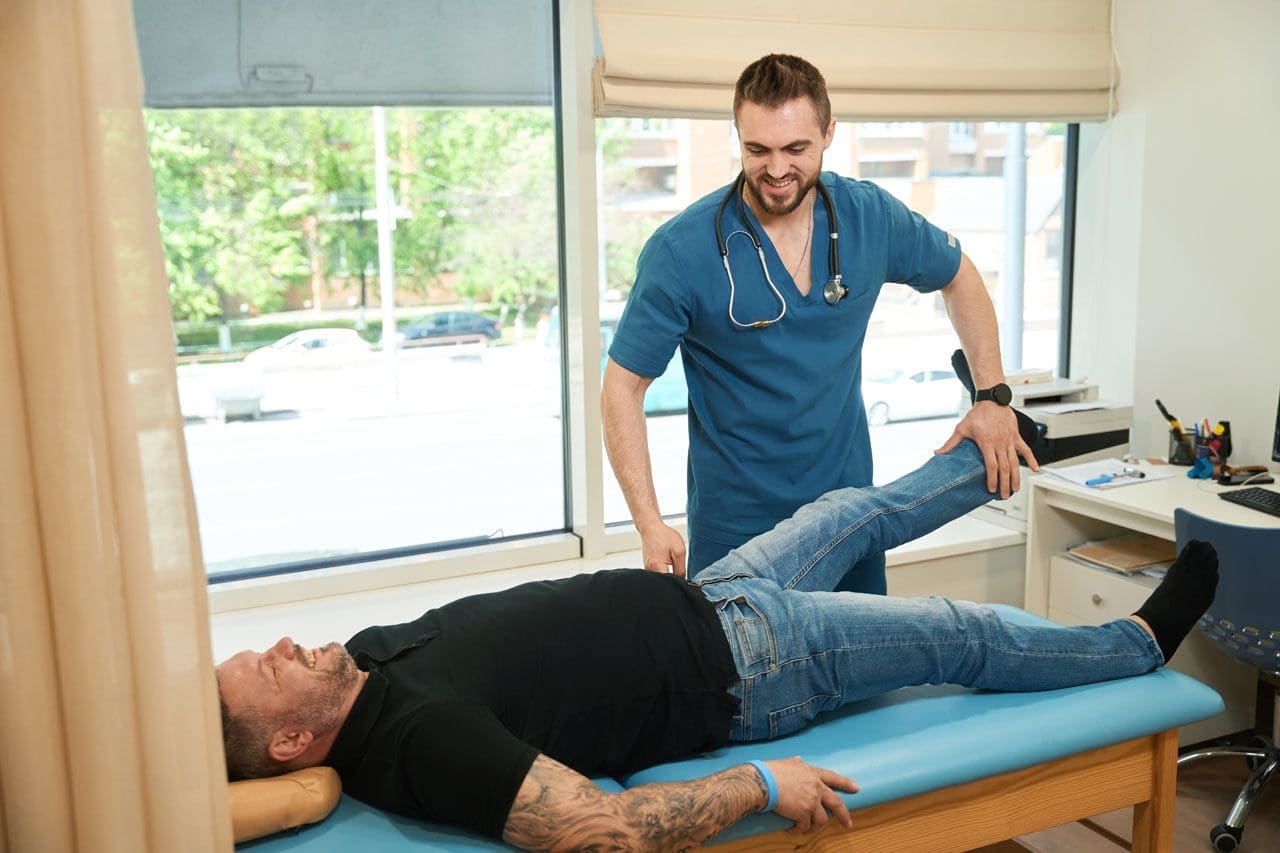
Patient with sciatica symptoms but no back pain, only leg and foot numbness and pain, lies supine on the examination table while the chiropractor/nurse practitioner lifts his extended leg with resistance.
If your hamstring feels numb or your foot feels tingly or “asleep,” it’s easy to think you pulled a muscle. But many people in El Paso are surprised to learn that sciatica can show up as leg numbness without much (or any) low back pain. That pattern is common—and it’s one reason sciatica can get missed at first. (Yale Medicine, n.d.; Penn Medicine, n.d.; AMA, 2024)
At El Paso Back Clinic, we often see this exact concern:
“My lower back doesn’t hurt… so how can this be sciatica?”
“Why is there numbness in my hamstring and foot?”
“Is this a hamstring strain or a nerve issue?”
“When should I worry and get checked?”
This article explains the “why,” helps you distinguish between muscle and nerve pain, and shows how an integrative chiropractic approach may reduce sciatica-related numbness by addressing the spine, hips, soft tissues, and movement habits that keep the nerve irritated. (HSS, 2024; Fletcher Family Chiropractic, 2025; Auburn Hills Chiropractic, n.d.)
Important: Numbness can have several causes. A careful evaluation matters—especially if symptoms persist or worsen.
What Sciatica Really Is (And Why It Can Feel Like a Hamstring/Foot Problem)
Sciatica is a set of symptoms caused by irritation or compression of nerve roots in the lower back or of the sciatic nerve pathway itself. The sciatic nerve is the largest nerve in the body. It starts in the lower back and travels through the buttocks, down the back of the thigh, and into the lower leg and foot. (Yale Medicine, n.d.; Penn Medicine, n.d.; HSS, 2024)
That pathway explains a big point:
You can feel the problem far away from where it starts. So even if your low back feels “fine,” the nerve signals going into your hamstring, calf, or foot can still be affected. (Yale Medicine, n.d.; Mayo Clinic, 2025)
Common sciatica symptoms include:
Pain that travels down the leg
Tingling (“pins and needles”)
Numbness in the thigh, leg, or foot
Burning or electric-like feelings
Weakness in the leg or foot (Mayo Clinic, 2025; Penn Medicine, n.d.)
Why Sciatica Can Cause Hamstring and Foot Numbness Without Back Pain
The nerve is irritated “upstream,” but you feel it “downstream”
A nerve can be irritated near the spine, but the symptoms often show up where the nerve travels—like the hamstring or foot. This is one reason people feel confused: the pain isn’t always in the back. (Yale Medicine, n.d.; Penn Medicine, n.d.)
Some sciatica patterns are leg-dominant
Some people mainly feel sciatica below the knee (calf/foot) with little low back pain. That’s still consistent with nerve involvement. (AMA, 2024; Mayo Clinic, 2025)
The irritation may be outside the spine (hip/buttock region)
Not every case is a disc issue. Sometimes the sciatic nerve becomes irritated where it passes through the buttocks. Tight, overworked muscles can compress or irritate the nerve, leading to numbness down the leg. (Total Ortho Sports Med, 2025; HSS, 2024)
Common Causes of Sciatica-Like Numbness (Even When the Low Back Doesn’t Hurt)
Think of these as the “usual suspects.” A proper exam helps pinpoint which one fits your pattern.
A) Lumbar nerve root irritation (radiculopathy)
A disc bulge/herniation, arthritic changes, or narrowing of the spaces in the spine can irritate nerve roots. You may feel numbness in the legs even if the back pain is mild. (Mayo Clinic, 2025; Penn Medicine, n.d.)
Clues that this may be happening:
Symptoms travel below the knee
Sitting makes it worse (especially long drives)
Coughing/sneezing increases symptoms
You notice weakness or heaviness in the foot (Mayo Clinic, 2025; Goodman Campbell, 2025)
B) Piriformis syndrome / deep buttock compression
When the buttock area is the main source of compression, you may feel:
Buttock tightness or a deep ache
Symptoms worsen with sitting
Numbness/tingling down the leg with minimal back pain (Total Ortho Sports Med, 2025)
C) Mobility and movement problems that keep the nerve irritated
Even when the “main” cause is a disc or nerve root, symptoms can stick around if:
The hips don’t move well
The pelvis is rotating during walking
The core and glutes aren’t supporting the spine
Work and driving keep you in nerve-irritating positions (HSS, 2022; Mayo Clinic, 2025)
In clinical settings like El Paso Back Clinic, we often see a pattern where spine mechanics + hip tension + repeated sitting/positioning team up to keep the nerve cranky. (Jimenez, n.d.)
D) Non-sciatica causes that mimic sciatica
Some issues look like sciatica but are different, such as:
Peripheral neuropathy
Other nerve entrapments lower in the leg
Vascular problems (circulation)
Rare but serious spinal conditions (AMA, 2024; Mayo Clinic, 2025)
That’s why ongoing numbness deserves a focused exam.
Sciatica vs. Hamstring Strain: How to Tell the Difference
This is one of the biggest “either/or” questions.
Hamstring strain is usually a muscle problem
Hamstring strains often occur during sprinting, sudden acceleration, or deep stretching. (Ducker Physio, 2025)
Typical hamstring strain signs:
Local pain in the back of the thigh
Tenderness to touch in the muscle
Pain with resisted knee bending or stretching the hamstrings
Usually no tingling or numbness in the foot (Ducker Physio, 2025)
Sciatica is a nerve problem
Sciatica symptoms often behave differently.
Typical sciatica signs:
Tingling, numbness, burning, or electric sensations
Symptoms can travel below the knee into the foot
Sitting, bending, or twisting can trigger it
The sensation may come and go with certain positions (Mayo Clinic, 2025; Yale Medicine, n.d.)
Quick comparison (simple and practical)
Hamstring strain: muscle pain, tender spot, worse with stretch/strength work, no foot numbness (Ducker Physio, 2025)
Sciatica: numbness/tingling, traveling symptoms, position-sensitive, may include weakness (Mayo Clinic, 2025)
Why You Can Have Foot Numbness and Not Much Pain
People often say, “It doesn’t hurt that badly, it’s just numb.” That can still be significant.
Numbness can happen when nerve signals are disrupted. Instead of sharp pain, your body gives you:
Reduced sensation
Tingling
A “sock-like” strange feeling
A foot that feels off when you walk (Mayo Clinic, 2025)
If numbness persists, spreads, or is accompanied by weakness, it’s a strong reason to get evaluated. (AMA, 2024; Mayo Clinic, 2025)
When to Get Help: Red Flags You Shouldn’t Ignore
Get urgent care if you have:
New or worsening leg weakness
Trouble lifting the foot (or frequent tripping)
Loss of bowel or bladder control
Numbness in the groin/saddle area
Severe symptoms after trauma (AMA, 2024; Mayo Clinic, 2025)
Schedule an evaluation soon if:
Numbness lasts more than 1–2 weeks
Symptoms keep returning
Numbness is moving farther down the leg
Pain/numbness is affecting sleep or walking
Home care isn’t working (Mayo Clinic, 2025; Goodman Campbell, 2025)
How El Paso Back Clinic Approaches Sciatica-Related Numbness (Integrative Chiropractic Perspective)
In Dr. Alexander Jimenez’s clinical observations, leg-dominant sciatica symptoms often improve best when care focuses on more than one area:
Spine mechanics (how the lumbar joints and discs are loading)
Hip and pelvis motion (how the leg is moving under the trunk)
Soft tissue tension (especially deep gluteal and posterior chain tightness)
Movement habits (sitting, driving posture, bending technique, sports training patterns) (Jimenez, n.d.)
This integrative approach aims to answer a simple question:
“Where is the nerve being stressed, and why is it staying stressed?” (Jimenez, n.d.)
Orthopedic tests (to reproduce or reduce symptoms)
Movement checks (hip hinge, gait, pelvic control)
Posture and work/drive habit review If findings suggest serious compression or a non-spine cause, referral or imaging may be appropriate. (Mayo Clinic, 2025; Penn Medicine, n.d.)
How Integrative Chiropractic Therapy May Help Reduce Hamstring and Foot Numbness
Sciatica-related numbness can improve when you reduce mechanical stress and calm irritation around the nerve.
Spinal and pelvic adjustments (when appropriate)
Chiropractic adjustments are often used to improve joint motion and reduce mechanical irritation patterns. Many chiropractic resources describe symptom improvement by addressing mobility restrictions and reducing stress on sensitive tissues. (Auburn Hills Chiropractic, n.d.; Alliance Ortho, 2024)
Soft tissue therapy for buttock/hip and posterior chain tension
Soft-tissue methods can help when muscle tension and fascial tightness contribute to irritation—especially in the deep gluteal region. (AFCadence, n.d.; Collective Chiro, 2024)
Common tools include:
Myofascial release
Trigger point work
Targeted stretching (symptom-guided)
Gentle mobilization
Rehab exercises that “retrain” movement, not just stretch
When numbness is linked to nerve irritation, the goal is often:
Better hip mobility without nerve flare-ups
Stronger glute support and core stability
Improved walking mechanics and posture
Gradual return to bending and lifting patterns (HSS, 2022; Mayo Clinic, 2025)
Technique options like flexion-distraction (case-by-case)
Some clinics use flexion-distraction approaches for certain disc-related patterns to reduce irritation and improve movement tolerance. (Fletcher Family Chiropractic, 2025; Spinal Recovery Center, n.d.)
The best plan depends on the pattern. If numbness is your main symptom, a clinician should check for weakness, reflex changes, and other signs that require faster escalation of care. (AMA, 2024; Mayo Clinic, 2025)
Practical Self-Care Tips for Sciatica Numbness (Simple, Safe, and Nerve-Friendly)
These are general strategies commonly recommended in conservative sciatica care.
Helpful basics
Take walking breaks if walking helps
Avoid long sitting without standing up
Use heat or ice based on what feels better
Don’t force stretches that shoot symptoms into the foot (Mayo Clinic, 2025; HSS, 2022)
If symptoms are not improving—or if weakness is appearing—get reassessed.
Key Takeaways
Sciatica can cause hamstring and foot numbness without back pain, because nerve irritation is often felt along the nerve’s path. (Yale Medicine, n.d.; Penn Medicine, n.d.)
It’s important to tell nerve symptoms apart from a hamstring strain, since numbness/tingling usually points to nerve involvement. (Ducker Physio, 2025)
An integrative chiropractic plan often combines mobility care, soft tissue work, and rehab exercises to reduce irritation and restore movement. (HSS, 2022; Alliance Ortho, 2024; Jimenez, n.d.)
Red flags like weakness or bowel/bladder changes require urgent evaluation. (AMA, 2024; Mayo Clinic, 2025)
If you’re dealing with hamstring or foot numbness—especially if it’s lingering—getting a focused evaluation can help you figure out whether it’s sciatica or something else and build a plan that fits your life in El Paso.
How Integrative Chiropractic Care Prevents Future Injuries in Athletes Using Functional Movement Assessments
Sports: an athlete is in action on the field, ready to hit the ball during the game.
Athletes often push their bodies hard during training and competition. Small problems can build up over time and turn into painful injuries that force time off from sports. To catch these issues early, many athletes now ask for functional movement assessments as part of integrative chiropractic care. This method spots hidden imbalances like muscle tightness, weak spots, or stiff joints before pain starts. By addressing these problems with adjustments, soft-tissue work, and targeted exercises, practitioners help athletes stay healthy, move better, and avoid overuse injuries.
Functional movement assessments check how the body moves during everyday and sport-specific actions. These tests look at mobility, stability, balance, and coordination. Common movements include squats, lunges, reaching overhead, or stepping in different directions. The goal is to find areas where the body does not move smoothly or evenly. Even if nothing hurts yet, these assessments reveal subclinical imbalances—small issues that do not cause pain right away but can lead to bigger problems later.
Early detection of poor posture or uneven weight distribution
Spotting a limited range of motion in the hips, shoulders, or ankles
Identifying weak core or glute muscles that affect overall stability
Noting tight muscles that pull joints out of proper alignment
Integrative chiropractic care
Integrative chiropractic care combines spinal adjustments, soft-tissue therapies, and corrective exercises to effectively address these findings. Gentle adjustments move joints back into better positions, improving nerve signals and reducing pressure on surrounding tissues. Soft tissue work, such as massage or instrument-assisted techniques, loosens tight muscles and breaks up scar tissue. Corrective exercises then build strength and teach proper movement patterns. Together, these steps enhance nervous system function, optimize biomechanics, and stop the body from developing harmful compensation patterns.
The nervous system controls every muscle movement. When the spine or joints are misaligned, nerve messages can get disrupted. This leads to weaker muscle coordination or slower reaction times. Chiropractic adjustments help restore clear nerve pathways, so muscles fire at the right time and with the right force. Better biomechanics means joints move through their full, natural range without extra stress. This reduces wear and tear on knees, hips, shoulders, and the lower back.
Compensation patterns occur when one part of the body works harder to compensate for a weakness elsewhere. For example, tight hip flexors or a tilted pelvis in runners can cause the knees to track incorrectly, leading to pain or stress fractures over time. Faulty shoulder mechanics in swimmers or weightlifters can overload the rotator cuff. Integrative care addresses these root causes rather than just treating symptoms later.
Common subclinical imbalances identified through functional movement assessments include:
Muscle tension in the lower back or hamstrings that limits forward bending
Weak glute muscles that fail to stabilize the pelvis during running or jumping
Joint restrictions in the ankles that change walking or landing mechanics
Uneven shoulder mobility that affects throwing or overhead lifting
Poor core stability causes excessive arching in the lower back during lifts
By addressing these early, athletes lower their injury risk and maintain consistent training. Regular care also speeds recovery if minor issues arise, resulting in less downtime overall.
Practitioners often start with a thorough history and physical exam. They watch the athlete perform key movements and note any asymmetries or compensations. Based on the results, they create a personalized plan. Spinal adjustments realign the vertebrae to take pressure off nerves. Soft tissue therapies release tight fascia and muscles. Then, corrective exercises strengthen weak areas and retrain proper form. Over time, these steps improve balance, coordination, flexibility, and power output.
Key benefits of combining functional movement assessments with integrative chiropractic care:
Reduced chance of sprains, strains, tendonitis, and stress fractures
Improved joint mobility and muscle flexibility for better performance
Faster reaction times and coordination through better nerve function
Less inflammation and quicker recovery between workouts
Longer sports careers by preventing chronic overuse problems
Runners frequently show pelvic imbalances that tilt the hips and strain the iliotibial band or shins. Chiropractic adjustments and exercises that strengthen the glutes and core help keep the pelvis level, improving stride efficiency and cutting injury risk. Weightlifters with restricted shoulder mobility may compensate by excessively arching their backs, which can lead to low-back strain. Targeted soft tissue work and mobility drills correct this pattern before pain develops.
Football players and other contact-sport athletes benefit from regular checks of spinal alignment to better handle impacts. Swimmers gain from improved shoulder mechanics that prevent rotator cuff irritation. Weekend warriors who lift weights or cycle also see gains in endurance and reduced soreness. The approach works for athletes of all levels because it focuses on the root causes rather than waiting for symptoms.
Dr. Alexander Jimenez, DC, APRN, FNP-BC, brings valuable clinical observations to this field. As a chiropractor and board-certified family nurse practitioner with certifications in functional medicine, he emphasizes non-invasive, root-cause approaches. His work highlights how chiropractic adjustments, combined with functional assessments of mobility and biomechanics, help treat sports injuries, sciatica, and musculoskeletal imbalances. Dr. Jimenez observes that addressing nerve compression, inflammation, and movement dysfunction early—through adjustments, nutrition support, and tailored rehabilitation—enhances recovery and prevents recurrence in athletes and active individuals. His integrative practice in El Paso integrates chiropractic care with functional medicine to optimize performance, reduce chronic pain, and support long-term wellness.
This holistic view aligns with broader chiropractic principles that view the body as interconnected. When one area is restricted, it affects the whole kinetic chain. Integrative care breaks that cycle by restoring proper alignment and teaching sustainable movement habits.
Additional advantages athletes notice include:
Better posture during daily activities and sports
Enhanced proprioception (body awareness) for safer landings and cuts
Decreased muscle fatigue during long training sessions
Greater overall strength and power from efficient mechanics
Support for mental focus through reduced nagging discomfort
Preventing injuries this way also saves time and money by avoiding expensive treatments or missed competitions later. Many athletes report feeling stronger, more balanced, and more confident in their movements after consistent care.
To maintain results, athletes typically schedule regular visits. Frequency depends on training intensity, sport demands, and individual findings. Some come weekly during heavy training periods, while others maintain monthly check-ins. Between visits, they perform prescribed exercises at home or in the gym to reinforce new patterns.
Education plays a big role, too. Chiropractors teach proper warm-up routines, cool-down stretches, and body mechanics for specific sports. Nutritional guidance can sometimes complement care to support tissue repair and reduce inflammation. Collaboration with coaches, physical therapists, or trainers creates a complete support team.
In summary, functional movement assessments allow integrative chiropractic care to identify subclinical imbalances long before pain appears. Adjustments restore joint function, soft tissue therapies release restrictions, and corrective exercises build resilience. This combination enhances nervous system communication, optimizes biomechanics, and prevents compensation patterns that cause overuse injuries. Athletes—from runners dealing with pelvic tilts to lifters correcting shoulder mechanics—benefit by training more consistently, performing at higher levels, and enjoying longer, healthier careers. By addressing small issues proactively, this approach helps athletes stay in the game without painful interruptions.
Common Motor Vehicle Accidents in El Paso: Recovery and Healing at El Paso Back Clinic®
An injured woman in a stretcher after a car accident, covered by a thermal blanket.
Motor vehicle accidents, or MVAs, are a big issue in El Paso. This city sits on the border, with lots of trucks and cars zooming on roads like I-10 and Loop 375. Accidents often result from drivers not paying attention, drinking, or speeding. They can lead to injuries like neck pain or broken bones. At El Paso Back Clinic®, we help people heal from these injuries. Our team, led by Dr. Alexander Jimenez, uses integrative chiropractic care. This mixes spine fixes with massage, exercise, and healthy eating tips. It treats the whole body and mind. In this article, we discuss common crashes in El Paso, the harm they cause, and how our clinic supports recovery. We draw on Dr. Jimenez’s expertise at our locations in El Paso, TX.
El Paso has many crashes each year. Recent data shows thousands of wrecks, with injuries and even deaths. The border sees heavy truck traffic, upping the risks. Dust storms or rain-slick roads. Work zones add hazards. Knowing this helps folks drive safely. At El Paso Back Clinic®, we see many patients from these events. Our care focuses on pain relief and full health.
Common Types of Motor Vehicle Accidents in El Paso
El Paso’s roads mix locals, visitors, and cross-border traffic. This leads to jam-ups and crashes. Here are the key types:
Distracted Driving Accidents: Phones or snacks pull drivers’ eyes from the road. In El Paso, this sparks many wrecks. Texting hits hard at spots like Mesa and Stanton streets. Texas-wide, it caused over 84,000 crashes in one year.
Drunk or Impaired Driving: Booze or drugs slow folks down. Crashes spike nights and weekends. It’s a top cause in Texas spots like El Paso. They pop up near fun zones like Cincinnati Avenue.
Speeding-Related Crashes: Too fast means tough stops. It makes up 30% of Texas wrecks. On I-10 and Loop 375, speed leads to bad hits. Winds make it worse.
Rear-End Collisions: Cars bump backs from close follows or late brakes. Common on Loop 375 in traffic or near shops like Cielo Vista. Distractions or weather help cause them.
Intersection Crashes: Red-light runs or no yields cause side smacks. Over half happen at crossings like Montana or Zaragoza. The Spaghetti Bowl adds mess. Stop sign skips are big faults.
Pedestrian Incidents: Walkers get struck when drivers miss spots or speed. Downtown, schools, or UTEP see many. Poor walks led to many deaths lately.
Truck Accidents: Border hauls mean big trucks everywhere. Thousands cross yearly. Recent counts show many truck wrecks with injuries. Tired drivers, heavy loads, or blind areas cause them. Spots like I-10, US-54, and Loop 375 are hot.
Pile-ups hit in storms on I-10. Lane changes in builds confuse. Hit-runs occur in town. Stay alert, slow down, and watch out for trucks to avoid.
At El Paso Back Clinic®, we treat folks from all these. Our team knows border traffic woes. We offer care plans for quick heals.
Common Injuries Sustained in Motor Vehicle Accidents
MVAs jolt bodies hard. Sudden moves cause hidden hurts. Here are the usual ones:
Whiplash: Neck snaps cause pain, stiffness, headaches, and dizziness. Top in rear-ends.
Neck and Back Sprains: Pulls or tears cause pain and reduced movement. Low back twists.
Soft Tissue Damage: Bruises, rips in muscles. Swell, stiff. Deep ones last.
Fractures: Breaks from hits. Ribs puncture lungs. Bad ones need ops. Limbs, spine too.
Traumatic Brain Injuries (TBIs): Head knocks cause mix-ups, forgetfulness, and eye issues. Change lives, cost lots.
Shoulders, knees, and inside bleed too. Burns and scars are possible. Trucks crush more. Walkers break bones, heads. Minor ones spark worry or PTSD.
At our clinic, we spot these early. Dr. Jimenez’s team uses checks to plan care.
How These Injuries Occur
Crashes stop or hit fast. Bodies fly in cars. Belts save, but force hurts. Rear-ends jerk heads, stretch necks for whiplash. Sides twist spines for sprains, disc slips. Heads hit for TBIs. Knees dash-bang for sprains. Moves inflame tissues. Trucks smash small cars, break bones. Walkers fly, land hard. Signs may be delayed, so check soon.
We urge quick visits. Our El Paso spots offer fast help.
Integrative Chiropractic Care at El Paso Back Clinic® for MVA Recovery
Our integrative care treats all of you. We fix spines hands-on, easing pain without pills or cuts first. Mixes old ways with massage, PT, and nutrition. Speeds heal, drops swell. Here’s our approach:
Spinal Adjustments: Move bones right, cut nerve pinch, up move. Great for whiplash, back.
Physical Therapy: Builds strong, flexible. Restores after sprains and breaks.
Nutritional Support: Food advice; adds fight-swell, up mood.
Other Therapies: Needle work or disc pull. Ease pain, stress.
We speed recovery, hit the body and feelings. Start in 72 hours, best. Stops long pain. Our functional medicine finds roots.
Insights from Dr. Alexander Jimenez and El Paso Back Clinic®
Dr. Alexander Jimenez, DC, APRN, FNP-BC, has headed El Paso Back Clinic® for 30+ years. He excels in MVA, which includes injuries like whiplash and TBIs. We use functional medicine, nutrition, and rehab. Holistic care heals body and mind from trauma. Cases show fast recovery from car and truck hits. Border traffic brings many to us. Our spots at 11860 Vista Del Sol and 6440 Gateway East offer full care. Call 915-850-0900 for help.
Conclusion
El Paso MVAs from busy roads hurt many. From whiplash to TBIs, harms vary. El Paso Back Clinic® gives natural healing. We cut pain, restore movement. See us after crashes. Safe drives prevent woes. Visit elpasobackclinic.com or call for wellness.
Mobility Challenges in Mexican and Mexican American Communities: Insights from El Paso Back Clinic®
Mexican-American with back pain at a construction site.
At El Paso Back Clinic® in El Paso, TX, we see many patients from Mexican and Mexican American backgrounds facing mobility issues. These problems often stem from tough jobs, health factors like obesity, and aging. Our wellness chiropractic care focuses on pain relief and improved movement. This article discusses common issues such as arthritis and back pain, supported by studies. We’ll explain how our team, including Dr. Alexander Jimenez, DC, APRN, FNP-BC, uses integrative approaches to help. If you’re in El Paso dealing with these, our clinic is here for you.
Common Musculoskeletal Mobility Issues We Treat
Musculoskeletal problems affect your bones, muscles, and joints, making it difficult to move freely. At our clinic, we see these issues often in our community, where many work in demanding fields like farming or construction.
Arthritis, especially in the knees, is a top concern. It causes joint wear-related swelling and pain. In Mexico, about 20-25% of adults aged 40+ have it, with higher rates among women (Villarreal Rizzo et al., 2025). Mexican Americans in the U.S. also face risks, like osteoporosis weakening bones in 16% of women (Wright et al., n.d.). At El Paso Back Clinic®, we help ease this with gentle adjustments and exercises.
Chronic low back pain hits hard, too. It comes from prolonged lifting or standing. In Mexico, it’s the leading cause of disability, with 840.6 cases per 100,000 in 2021 (Clark et al., 2023). Among farmworkers here in Texas, 46.9% report back issues affecting daily life (Weigel et al., 2013). Our chiropractic care targets this to get you moving again.
Work injuries often involve the shoulders, wrists, and legs. Repetitive tasks in jobs cause rotator cuff problems in 19.1% and elbow pain in 20.2% of Latino workers (Mora et al., 2014). Older adults in our area are at risk of frailty due to ongoing pain, leading to reduced mobility (National Institutes of Health, n.d.). Women face more disability in tasks like walking, with arthritis raising risks by 35% over time (Rodriguez et al., 2021).
Here are key facts we see in our patients:
Arthritis rates: 19.6% for knee issues in Mexicans over 40, up to 24.2% in women (Ciampi de Andrade et al., 2022).
Back pain: Affects 16.9% of farmworkers from repetitive strain (Mora et al., 2014).
Craft-related injuries: Neck and knee pain from activities like weaving (Jeanson et al., 2025).
Disability trends: Physical function declines by 0.18 points per year with arthritis (Rodriguez et al., 2021).
Jobs in agriculture and construction drive these, plus obesity adds joint stress. In our Mexican American patients, higher BMI initially slows strength loss but worsens it later (Davis & Al Snih, 2025). About 83% of Hispanic men are overweight, linked to less activity (Valdez et al., 2019). At El Paso Back Clinic®, we address this with personalized plans.
Neuromusculoskeletal Issues Addressed at Our Clinic
These issues combine nerve problems with muscle and bone pain, leading to numbness or weakness. Our wellness approach helps restore nerve function and reduce discomfort.
Chronic low back pain is common, often due to nerve compression. It’s the main cause of disability in Mexico (Alva Staufert et al., 2021). Knee and foot arthritis affects movement, with 25.5% showing joint changes (Ciampi de Andrade et al., 2022). We treat foot pain from standing jobs, seen in 4.8% of workers (Mora et al., 2014).
Shoulder injuries, such as rotator cuff tears, are associated with overhead work and affect 19.1% (Mora et al., 2014). Elbow issues, or epicondylitis, affected 20.2% due to tool use (Mora et al., 2014). MSDs in Mexico rose 57.3% over 30 years (Clark et al., 2023). Obesity plays a role, with 40% of Hispanic men affected (Valdez et al., 2019).
In border areas like El Paso, women report 29.8% low back and 38.3% upper back pain from factory jobs (Harlow et al., 1999). Older patients walk more slowly due to leg pain (Quiben & Hazuda, 2015).
Common issues we handle:
Low back pain: Top disability driver, tied to work and weight (Alva Staufert et al., 2021).
Knee/foot arthritis: More in women, causing stiffness (Ciampi de Andrade et al., 2022).
Rotator cuff: From arm overuse in construction (Mora et al., 2014).
Epicondylitis: Elbow strain, common in 20% (Mora et al., 2014).
How El Paso Back Clinic® Helps with Integrative Care
Our clinic combines nurse practitioners (NPs) and chiropractic methods for culturally sensitive help. We focus on pain management and rehab to fit our community’s needs.
NPs at our clinic offer full check-ups that consider culture and history. They suggest diets rich in veggies and yoga for detox and pain relief (Jimenez, 2026a). We team up for whole-body care (Jimenez, 2026b).
Chiropractic adjustments realign the spine to ease nerve compression. For sitting-related back pain, we restore curves and strengthen the core (El Paso Back Pain Clinic, n.d.). Access to this care is key, though Hispanics use it less (Roseen, 2023).
Dr. Alexander Jimenez shares from his experience: Chronic back pain worsens with poor posture, but adjustments and exercises help (Jimenez, n.d.). For sciatica, decompression relieves pressure on nerves, which is common in laborers. Neuropathy gets therapy for tingling (Jimenez, n.d.). He uses functional medicine to tackle stress, diet, and job factors in our Mexican American patients.
We include mindfulness and natural remedies. Cultural factors, such as family support, help recovery, but delays worsen pain (Arthritis Foundation, n.d.). Our NPs create home plans (Pérez-Stable et al., 2003).
Rehab strengthens areas such as the legs and shoulders (Mora et al., 2014). It cuts frailty risks (National Institutes of Health, n.d.). For farmworkers, it reduces disability (Weigel et al., 2013).
Our care benefits:
Cultural match: Understanding barriers like work migration (Harlow et al., 1999).
Strength building: Targeted exercises (Mora et al., 2014).
Prevention: Nutrition against obesity (Valdez et al., 2019).
Why Choose El Paso Back Clinic® for Your Mobility Needs
In El Paso, with our diverse community, these issues are common but treatable. Our clinic specializes in wellness chiropractic to help you stay active. Contact us for a consultation with Dr. Jimenez and our team.
Natural Detox Support at El Paso Back Clinic®: Enhancing Your Body’s Wellness in El Paso, TX
A Chiropractor/Nurse Practitioner points to various organs on a computer screen.
In the busy city of El Paso, Texas, staying healthy means helping your body naturally cleanse itself. Organs like the liver and kidneys handle detoxification every day, removing waste from food, air, and daily life. But factors like stress, poor diet, or injuries can slow this down. At El Paso Back Clinic®, a top wellness chiropractic care clinic in El Paso, TX, we focus on supporting your body’s own detox processes. Our team, led by Dr. Alexander Jimenez, DC, APRN, FNP-BC, combines nurse practitioner expertise with integrative chiropractic care for a whole-body approach. We avoid quick fixes and instead promote lasting health through nutrition, adjustments, and lifestyle tips.
Many folks chase trendy detoxes like juice cleanses, but experts agree the body doesn’t need them if it’s working well. The liver breaks down toxins, and the kidneys filter them out (MD Anderson Cancer Center, n.d.). Risky methods like colon cleanses can harm your gut balance (Lehigh Valley Health Network, n.d.). At our clinic, we guide patients toward safe, natural ways to support detoxification, drawing on over 30 years of Dr. Jimenez’s experience in functional medicine and injury recovery.
Dr. Jimenez’s clinical work at El Paso Back Clinic® demonstrates how gentle methods help reset the body, especially after holidays or other sources of stress. We address root causes, such as gut issues or pain, that affect detox, using personalized plans for El Paso residents (Jimenez, n.d.a; Jimenez, n.d.b).
How Nurse Practitioners at El Paso Back Clinic® Aid Natural Detox
At El Paso Back Clinic®, our nurse practitioners (NPs) are key to detox support. As advanced nurses, they diagnose and manage health needs, focusing on liver and kidney function with everyday habits. Located at 11860 Vista Del Sol Dr, Suite 128, in El Paso, TX, we offer convenient care for locals dealing with pain, fatigue, or toxin buildup.
Boosting Liver and Kidney Health
The liver and kidneys are detox powerhouses. Our NPs help by recommending simple nutrition and hydration changes tailored to your life in El Paso, where dry weather can make staying hydrated tough.
Choose colorful produce: Fruits and veggies full of antioxidants protect your liver (Whole Family Health Care, n.d.).
Drink plenty of water: This flushes the kidneys and fights dehydration common in our desert climate (Care and, n.d.).
Balance protein intake: Opt for plant-based options to avoid overloading the kidneys (Care and, n.d.).
Add fiber: Whole grains and beans help gut detox by binding waste (University of Wisconsin Department of Family Medicine and Community Health, n.d.).
We monitor your health to spot early signs of strain, like from meds or local pollution. Dr. Jimenez uses functional tests at the clinic to check for toxins and suggest nutrient boosts (Jimenez, n.d.a).
Hydration is extra important here in El Paso. Our NPs teach that water supports sleep and that much detox occurs (Comprehensive Cancer Centers of Nevada, n.d.). We swap soda for herbal teas to keep things natural.
Handling Substance Withdrawal Safely
For those in El Paso facing addiction, detox means safe withdrawal. Our NPs manage this with meds and checks, easing symptoms in a supportive setting.
Prescribe calming meds: Like lorazepam for alcohol withdrawal (National Center for Biotechnology Information, n.d.a).
Track health signs: Watch blood pressure to avoid risks (Pine Rest Christian Mental Health Services, n.d.).
Offer comfort: Counseling helps through emotional ups and downs (Health eCareers, n.d.).
As certified addictions experts, our team customizes detox protocols, using tapers for substances like opioids (Mississippi Drug and Alcohol Treatment Center, n.d.). We stabilize patients medically and mentally first (National Center for Biotechnology Information, n.d.b). Family involvement builds strong support, key in our community-focused clinic (Health eCareers, n.d.).
Dr. Jimenez’s neuropathy and addiction care at El Paso Back Clinic® blends NP skills for symptom relief without over-relying on drugs (Jimenez, n.d.b).
Using Holistic Techniques for Stress Relief
Stress is a big detox blocker, raising hormones that slow liver work (Richmond Functional Medicine, n.d.). At our El Paso clinic, NPs use whole-person methods to calm the mind and body.
Safe herbs: Like milk thistle for liver aid, chosen just for you (Natural Healers, n.d.).
Relaxing therapies, such as massage or acupuncture, promote peace (Collaborating Docs, n.d.).
Dr. Jimenez notes stress management is vital for chronic pain patients here, using clinic tools to balance emotions (Jimenez, n.d.a).
Promoting Lasting Lifestyle Shifts
We stress habits that stick, not fads. Our NPs create plans fitting El Paso’s active lifestyle, from border walks to mountain hikes.
Healthy eating: Focus on whole foods to fuel detox (Whole Family Health Care, n.d.).
Quality rest: 7-9 hours lets your body clean house (Comprehensive Cancer Centers of Nevada, n.d.).
Move daily: Exercise boosts blood flow and sweat (University of Wisconsin Department of Family Medicine and Community Health, n.d.).
Handle stress: Yoga classes at our clinic keep systems smooth (Richmond Functional Medicine, n.d.).
Plans are personal, taking into account your job or family. We collaborate with other pros to resolve issues like stress from long commutes. Education empowers you—learn why changes help (Natural Healers, n.d.). In addiction recovery, we cover triggers (Health eCareers, n.d.).
At El Paso Back Clinic®, Dr. Jimenez’s integrative NP role uses nutrition science to support detoxification without judgment (Jimenez, n.d.b). This builds natural health for our community.
How Integrative Chiropractors at El Paso Back Clinic® Enhance Detox
Our integrative chiropractors at El Paso Back Clinic® look at the whole you, starting with spine health. They improve nerve function, flow, and organ work for better detox, all in our welcoming El Paso spaces.
Fine-Tuning the Nervous System
Nerves control detox organs. Spine misalignments block signals, slowing cleanup. Our adjustments fix this gently.
Realign spine: Eases nerve pressure for optimal function (DC Labs, n.d.).
Support organs: Better signals help the liver and kidneys (Impact Chiropractic, n.d.a).
Dr. Jimenez’s clinic observations indicate that chiropractic aids detoxification in functional medicine (Jimenez, n.d.a).
Adjustments enhance natural waste removal, not myths about toxin release (Dr. Chris Harlan, n.d.).
Boosting Lymph and Blood Flow
Lymph drains waste; blood carries nutrients. Chiropractors promote this for efficient detox.
Increase movement: Adjustments get fluids circulating (Impact-Chiropractic, n.d.).
Cut swelling: Less inflammation eases detox (Dallas Accident and Injury Rehab, n.d.).
We add exercise tips, like stretches for El Paso’s warm days (Mountain Movement Center, n.d.).
Dr. Jimenez sees adjustments as helping circulation during sports recovery, aiding detox (Jimenez, n.d.b).
Holistic Support for Organs
Our chiropractors combine adjustments with nutrition and lifestyle advice for comprehensive detox support.
Eat smart: Anti-inflammatory foods for organ health (Hutsell Chiropractic, n.d.).
Hydrate well: Water supports the kidneys in our dry area (Cascades Chiropractors, n.d.).
Daily habits: Exercise and relaxation improve waste exit (Mountain Movement Center, n.d.).
We relieve pressure through alignment, no harsh flushes (DC Labs, n.d.).
Dr. Jimenez combines this with NP care for conditions such as sciatica (Jimenez, n.d.b).
Steering Clear of Quick Fixes
We guide away from extremes, toward steady changes for El Paso lifestyles.
Fix posture: Reduces organ stress (Impact Chiropractic, n.d.b).
Pair with nutrition: Boosts adjustment benefits (Hutsell Chiropractic, n.d.).
Patients often feel happier and more energetic post-care (Dr. Chris Harlan, n.d.).
Dr. Jimenez’s gentle resets align with our clinic’s philosophy (Jimenez, n.d.b).
The Benefits for Your Long-Term Wellness in El Paso
At El Paso Back Clinic®, NPs and chiropractors team up for top detox support, avoiding the risks of fad diets. We enhance the liver, kidneys, nerves, and flow for true wellness.
Dr. Jimenez’s expertise ensures smart, non-invasive care (Jimenez, n.d.a; Jimenez, n.d.b). Call 915-850-0900 to start your journey.
Natural detox thrives on support, not shortcuts. Our clinic empowers El Pasoans for healthier lives.
Fun Ways to Stay Active: Alternatives to Boring Workouts for Better Health
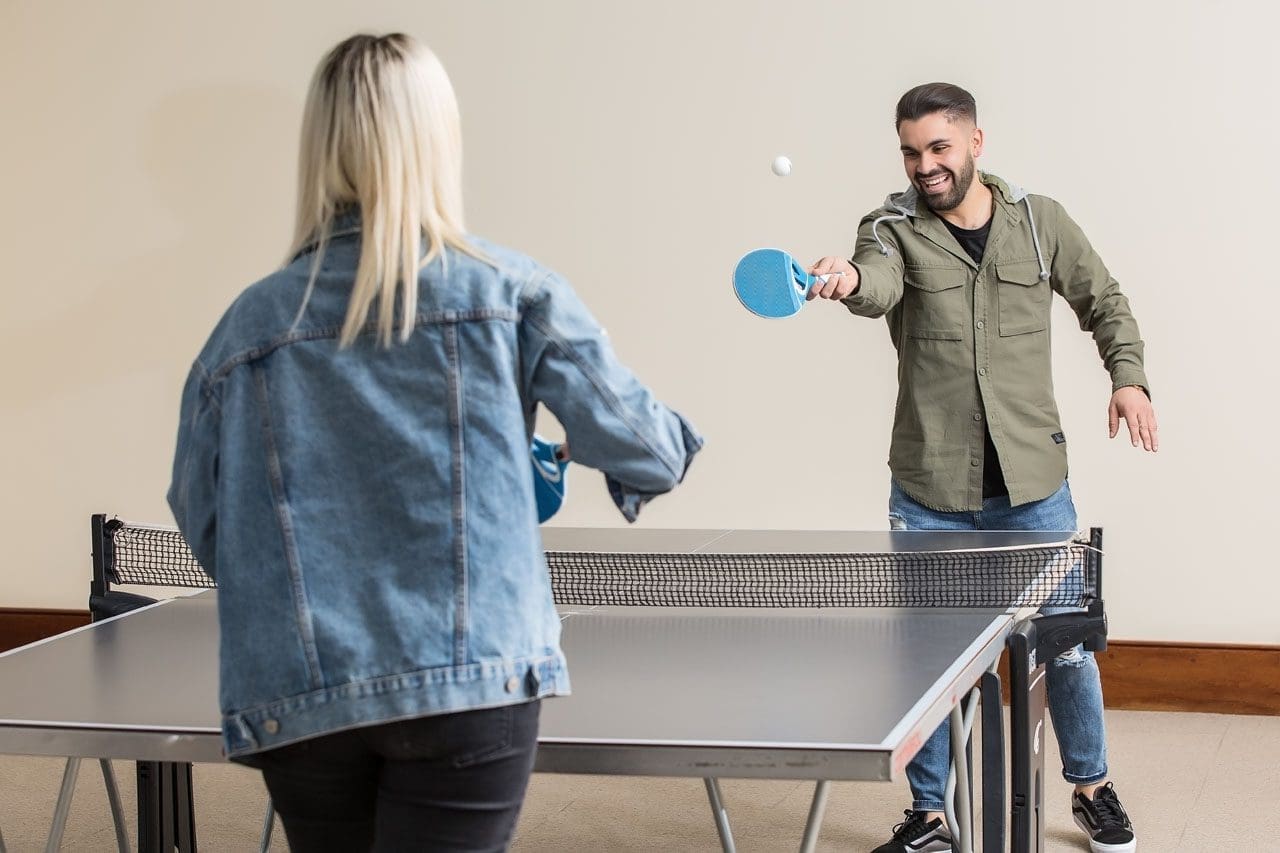
Friends play table tennis as a way to start making fitness fun and as a doable health goal.
Many people start the new year with big fitness goals. They promise to hit the gym every day or run miles each week. But often, these plans fall apart quickly. Life gets busy, motivation fades, and suddenly, exercise feels like a chore. If this sounds like you, don’t worry. Giving up on strict resolutions doesn’t mean giving up on health. Instead, shift to activities that feel more like play than work. Fun sports and easy movements can keep you moving without the dread of traditional workouts. This approach makes staying active sustainable and enjoyable, leading to better long-term habits (Bayou Bend Health System, n.d.).
Research shows that making physical activity fun boosts your chances of sticking with it. For example, choosing things you enjoy turns exercise into a hobby. This can improve your mood, reduce stress, and even help with weight management. Health experts recommend at least 150 minutes of moderate activity per week for adults, but it doesn’t have to be in a gym (NHS, n.d.). Simple swaps like walking in nature or dancing to music can meet these goals while feeling effortless.
In this article, we’ll explore ways to restart your fitness journey with joy. We’ll cover fun sports, social options, and relaxing practices. We’ll also discuss low-impact choices for those who struggle with standard routines. Plus, learn how professionals like integrative chiropractors and nurse practitioners can guide you. Drawing from expert insights, including clinical observations from Dr. Alexander Jimenez, DC, APRN, FNP-BC, this guide offers practical tips to get back on track.
Restarting After a Failed New Year’s Resolution
If your resolution crashed early, it’s time for a fresh start. The key is picking activities that excite you. Fun, easy sports like hiking, dancing, swimming, or biking can make movement feel rewarding. These options build fitness without the pressure of sets and reps.
Hiking: Head to a trail for fresh air and views. It’s a great way to explore while getting your heart rate up. Start with short paths and build up. Hiking strengthens legs and improves balance, all while enjoying nature (MultiCare Clinic, n.d.).
Dancing: Put on your favorite tunes and move freely. Whether alone or in a class, dancing boosts cardio and coordination. It’s low-pressure and can burn calories without feeling like exercise (Whispering Oaks Senior Living, n.d.).
Swimming: Water supports your body, making it gentle on joints. Swim laps or just splash around for fun. It’s ideal for all ages and helps with endurance (Vista Springs Living, n.d.).
Biking: Ride a bike around your neighborhood or on paths. It’s easy to adjust speed and distance. Biking tones muscles and can be a social outing (Blue Cross NC, n.d.).
These activities trick your brain into thinking you’re playing, not working out. Studies support this: enjoyable exercise leads to better adherence and health outcomes (Exercise is Medicine, n.d.).
Beyond solo sports, join social activities to add fun. Pickleball, tennis, or team sports bring people together, making commitment easier.
Pickleball: A mix of tennis and ping-pong, it’s easy to learn and play. Courts are popping up everywhere, and it’s great for quick games with friends (Nerd Fitness, n.d.).
Tennis: Hit the court for rallies that improve agility. Doubles makes it less intense and more chatty (Athlean-X, n.d.).
Team Sports: Join a recreational league for soccer, basketball, or volleyball. The group vibe keeps you motivated, and games feel like events, not drills (Quora, n.d.).
Social exercise can reduce feelings of isolation while building strength. One study notes that group activities enhance mental health alongside physical benefits (Reddit, n.d.).
For a calmer approach, try mind-body practices like yoga or Tai Chi. These are low-impact and focus on relaxation.
Yoga: Gentle poses improve flexibility and reduce stress. Start with beginner videos at home. It helps with breathing and mindfulness (Piedmont Wellness Center, n.d.).
Tai Chi: Slow, flowing movements build balance and calm the mind. It’s perfect for easing into activity without strain (Care Insurance, n.d.).
These practices are adaptable for any fitness level. They promote relaxation, which can lower blood pressure and improve sleep (NHLBI, n.d.).
To build habits, start small. Aim for 10–15 minute sessions a few times a week. Gradually increase as you gain confidence. This prevents burnout and lets your body adjust (Bayou Bend Health System, n.d.). Track progress in a journal to see improvements, like feeling more energetic.
Options for Those Who Dislike Traditional Workouts
Not everyone loves the gym or running. If weights and treadmills bore you, low-impact or sociable sports offer alternatives. These keep you active without the monotony, focusing on enjoyment and variety.
Swimming and biking stand out as low-impact favorites. Swimming provides a full-body workout in a supportive environment, reducing joint stress (Seniors Helping Seniors, n.d.). Biking lets you control the pace, making it accessible for beginners (MultiCare Clinic, n.d.).
Hiking and dancing add adventure. Hiking varies with terrain, keeping things interesting, while dancing lets you express yourself creatively (Blue Cross NC, n.d.; Whispering Oaks Senior Living, n.d.).
For a challenge, try rock climbing. It’s low-impact but builds strength and problem-solving skills. You can start indoors at a gym with easy walls (The Telegraph, n.d.).
Joining a recreational sports league brings community. Options like softball or ultimate frisbee emphasize fun over competition (Nerd Fitness, n.d.).
Benefits of These Activities:
More engaging than repetitive workouts.
Build social connections.
Adaptable to your energy level.
Improve mood through endorphins (Sanguina, n.d.).
These choices make the activity feel natural. For instance, walking briskly counts as exercise and can be done anywhere (Quora, n.d.). Or jump rope for short bursts—it’s simple and effective for cardio (MCU, n.d.).
If mobility is an issue, modify exercises. Chair-based routines or water aerobics allow movement without strain (ParentGiving, n.d.; Care.com, n.d.). The goal is consistency over intensity.
Experts agree: low-impact options like these support heart health and flexibility, especially for those with limits (Gaddis Premier, n.d.; Prairie Hills at Independence, n.d.).
How Integrative Professionals Can Help
When starting or restarting activity, professional guidance ensures safety. Integrative chiropractors and nurse practitioners offer tailored care, especially if you have physical limits.
Integrative chiropractors focus on the whole body. They use adjustments to align the spine, reducing pain and improving movement. This holistic approach addresses root causes rather than just symptoms (Integral Chiropractic, n.d.; Impastato Chiropractic, n.d.).
For example, if joint pain stops you from hiking, a chiropractor can ease stiffness through manipulations and exercises (Elysian Wellness Centre, n.d.; De Integrative Healthcare, n.d.). They often include nutrition and lifestyle advice for better results (AFP Fitness, n.d.; Together4Health Wellness, n.d.).
Nurse practitioners add medical expertise. They assess your health and create plans that address limits, such as suggesting low-impact swimming for arthritis (Buckner Parkway Place, n.d.; Cor Health Ontario, n.d.).
Together, these pros provide personalized care. They work with your abilities to help you enjoy activities again (Wellness Center FW, n.d.; Fortitude Health, n.d.).
Dr. Alexander Jimenez, DC, APRN, FNP-BC, embodies this integrated approach. With over 30 years in practice, he combines chiropractic and nursing for comprehensive care. His clinical observations highlight non-invasive methods for pain management and mobility.
In his work, Dr. Jimenez notes that tailored programs, like resistance band exercises, strengthen muscles without high impact. This helps people with injuries return to fun activities like biking or dancing. He emphasizes flexibility for joint health, noting that restricted movement can lead to pain, but gentle practices like yoga can restore it.
On LinkedIn, Dr. Jimenez shares insights on sciatica and back pain, recommending core exercises like modified squats for those with limitations. He advocates stretching to prevent stiffness, noting, “If you don’t stretch, your body ‘pays interest'” in reduced mobility.
His practice includes functional medicine, addressing nutrition and the environment for wellness. For example, he uses assessments to create plans that fit patients’ lifestyles, helping them stay active despite chronic conditions (All Injury Rehab, n.d.; Motus Integrative Health, n.d.).
How They Help:
Assess limits and set realistic goals.
Provide exercises like water aerobics for joint relief (Activ Therapy, n.d.).
Offer advice on enjoyable activities to build habits (Nepute Wellness Center, n.d.).
Monitor progress to adjust plans.
This support makes returning to movement less daunting. Integrative care focuses on harmony in physical, mental, and emotional health (Wellness Center FW, n.d.).
Wrapping Up: Make Movement Joyful
Staying active doesn’t require grueling workouts. By choosing fun options like hiking or yoga and seeking professional help when needed, you can rebuild habits. Remember Dr. Jimenez’s observation: personalized, holistic care unlocks better mobility. Start small, stay consistent, and enjoy the process. Your health will thank you.
IFM's Find A Practitioner tool is the largest referral network in Functional Medicine, created to help patients locate Functional Medicine practitioners anywhere in the world. IFM Certified Practitioners are listed first in the search results, given their extensive education in Functional Medicine