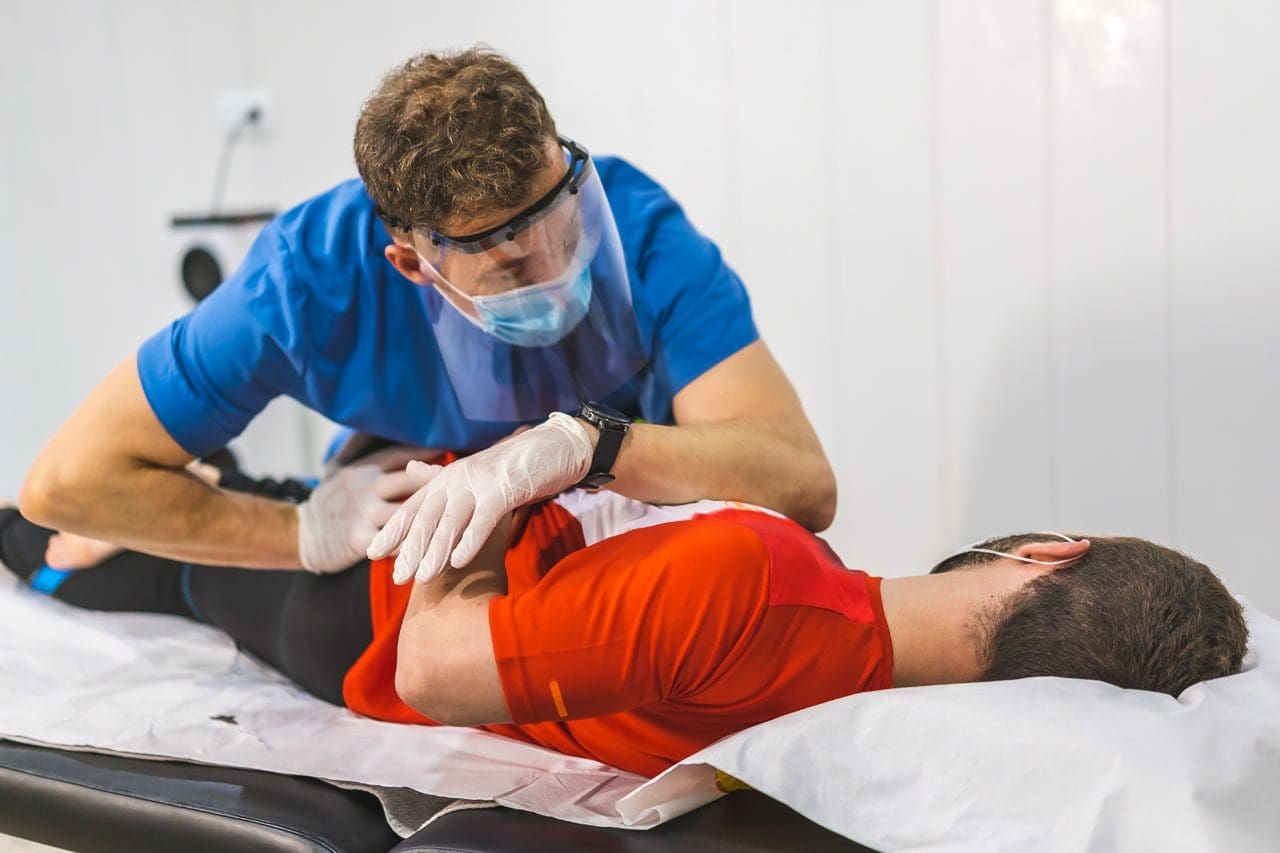
The One-Sided Carry: What a Laptop Bag, Tool Case, or Work Tote Can Do to Your Back and Hips
Abstract: A laptop bag, tool case, or work tote may feel harmless because each trip is short. But carrying the same load on the same side can change how your trunk, shoulder, hips, and legs share the work. This article explains asymmetrical loading, what clinicians look for, and practical ways to redistribute load and build capacity.
The Bag Is Not “Putting Your Spine Out”
Picture a network engineer leaving a parking lot with a laptop bag over the right shoulder. The bag is not extremely heavy, and the walk is only ten minutes. Yet by Thursday, the right shoulder feels elevated, the left low back feels tight, and one hip seems tired on stairs.
That pattern does not prove the bag has “misaligned” the spine. A better explanation is compensation.
When weight hangs on one side, the body has to keep the center of mass controlled while walking. The trunk may lean or stiffen, one shoulder may elevate, the pelvis may shift, and the hips may produce different forces from side to side. Classic biomechanical research found that asymmetric load carriage changed trunk muscle demands and hip and knee moments during walking (DeVita et al., 1991). Human bodies tolerate asymmetry every day. Concern grows when repetition exceeds a person’s strength, endurance, recovery, or tissue tolerance.
Why Repetition Matters More Than One Carry
Load-carriage research shows that load size and placement can alter posture, walking mechanics, and balance. A systematic review of backpack studies found changes such as more trunk flexion, altered hip and ankle motion, shorter strides, and higher cadence while carrying loads (Liew et al., 2016). Another systematic review found that load carriage can reduce postural stability, with load magnitude and placement influencing the effect (Martin et al., 2023).
These studies do not mean every worker carrying a bag will develop pain. They support a practical idea: the body adapts to repeated demands.
Think about the total “dose”:
How heavy is the bag?
How far do you carry it?
How many times per shift?
Do you always use the same side?
Are you climbing stairs or walking uneven ground?
Are you already fatigued from sitting, lifting, driving, or poor sleep?
Do you have enough trunk, hip, and shoulder endurance for the task?
A moderate load repeated many times can become more meaningful than one unusually heavy carry.
What Your Trunk and Hips Do With an Uneven Load
Carrying involves a coordinated system that includes the rib cage, spinal muscles, pelvis, hips, legs, and feet.
Trunk compensation
If a bag pulls downward on the right, your body may lean, brace, or rotate to keep its center of mass controlled. Some people stiffen through the torso; others allow more side-to-side motion. Either strategy can increase fatigue.
Shoulder elevation
A slipping strap can encourage shoulder hiking. Over time, neck and shoulder muscles may stay active longer than necessary, contributing to fatigue, tightness, headaches, or discomfort between the shoulder blades.
Hip loading
The hips help control the pelvis every time one foot leaves the ground. With an uneven load, one side may need to work differently to stabilize the body. Asymmetric carrying has been shown to change hip moments during walking, although the response depends on load, placement, speed, and the individual (DeVita et al., 1991).
Walking changes
People often shorten their stride, adjust cadence, change pelvic movement, or spend more time stabilizing when loads increase. These are normal adaptations, not proof of damage. Problems are more likely when the strategy becomes uncomfortable, inefficient, or difficult to recover from.
Signs the Carrying Pattern Deserves Attention
Occasional muscle fatigue is not automatically a medical problem. However, repeated symptoms that follow a predictable carrying pattern deserve a closer look.
Useful clues include:
pain that builds during or after carrying;
one shoulder consistently feeling higher or more tense;
aching on one side of the low back or outer hip;
symptoms that improve when the bag is removed or sides are changed;
reduced walking tolerance;
numbness, tingling, or weakness;
pain that changes how you climb stairs, bend, or lift.
Severe pain after trauma, progressive weakness, loss of bowel or bladder control, saddle-region numbness, fever, unexplained weight loss, or other major neurological or systemic symptoms require timely medical evaluation.
What a Chiropractic Assessment Should Actually Examine
At El Paso Back Clinic, the goal should not be to look at a shoulder bag and declare that the spine is “out.” A useful assessment asks what tissues and movements are struggling and why.
A clinician may examine spinal and hip range of motion, tenderness, neurological findings, gait, single-leg balance, trunk endurance, hip strength, shoulder mechanics, and how the patient carries. The examination may also consider work demands, prior injuries, training level, footwear, and recovery.
Watching the patient walk with the actual laptop bag or tool case can be especially informative.
Does the trunk lean?
Does the shoulder hike?
Does pain appear after several minutes?
Can symptoms improve by changing strap position, load distribution, or carrying side?
That information turns treatment from a generic back-pain plan into a task-specific rehabilitation strategy.
Treatment Should Improve Capacity, Not Create Dependence
For mechanical back or hip symptoms, chiropractic care may be one part of a broader plan to improve movement and reduce pain. Current guidance for chronic primary low back pain supports individualized nonsurgical care that can include education, structured exercise, and selected physical therapies such as spinal manipulation (World Health Organization, 2023).
The practical goal is to help the patient tolerate real life again.
A plan may include:
chiropractic manipulation or mobilization when appropriate;
hip and thoracic mobility work;
trunk endurance exercises;
progressive hip-abductor and gluteal strengthening;
loaded carries that gradually rebuild tolerance;
gait and stair training;
shoulder and scapular endurance work;
work-specific lifting and carrying practice.
If persistent musculoskeletal pain or muscle guarding limits rehabilitation, acupuncture or electroacupuncture may sometimes be added as an adjunct after appropriate evaluation. Evidence suggests electroacupuncture may reduce nonspecific low-back pain when combined with standard care, although certainty is limited and it should not replace diagnosis, exercise, or progressive conditioning (Hsieh et al., 2024).
The simplest fix is often not “stop carrying.” It is improving how you manage the load.
First, remove items you do not need. Bags can slowly collect chargers, tools, notebooks, bottles, and backup equipment.
Second, keep the load close to your body. A load that swings far from the trunk creates more movement to control.
Third, use two straps when practical. A well-fitted backpack can distribute load more evenly than a one-shoulder tote. For heavier occupational equipment, waist or hip support may help redistribute part of the load depending on the design.
Fourth, switch sides if the task requires one-handed or one-shoulder carrying. Changing sides doesn’t eliminate the load, but it reduces repetition of the same pattern.
Fifth, break long carries into shorter trips when possible. A rolling case or cart may be smarter than carrying everything at once.
Finally, build capacity. Stronger hips, trunk muscles, shoulders, and legs make carrying less costly. Progressive conditioning also respects autonomy: instead of telling patients their bodies are fragile, it teaches them how to prepare for the work they choose to do.
Coordinated Care for Back and Hip Symptoms in El Paso
Dr. Alex Jimenez, DC, APRN, FNP-BC, CFMP, IFMCP, combines chiropractic and medical training to evaluate mechanical, neurological, and broader health contributors to pain. When medical complexity requires oversight, he collaborates with Dr. Maria Guadalupe Cardenas, MD, a board-certified internal medicine physician with more than 40 years of experience.
That integrated model supports three principles. Beneficence means choosing care that restores function and addresses the likely cause. Non-maleficence means starting with appropriate noninvasive, drug-free strategies when reasonable while recognizing when imaging, medication, injections, or referral may be needed. Autonomy means explaining findings clearly so the patient can decide how to proceed and coordinate with an existing medical team.
A laptop bag, tool case, or work tote is rarely the whole story. The useful question is whether repeated one-sided loading is exceeding your current capacity. When assessment, load redistribution, chiropractic care, rehabilitation, and progressive conditioning match your job’s actual demands, the goal isn’t just to feel better on the treatment table. It is to walk, carry, climb, work, and recover with confidence.
Why Your Back Hurts Monday After a Weekend of Yard Work, Cleaning, or Home Projects
Abstract
You felt fine Friday. By Sunday evening, the yard is clean, the garage is organized, and your lower back remembers every bend, lift, twist, and carry. Often, the issue is not one “bad lift.” It is a sudden workload jump that exceeds what your back, hips, and supporting muscles were prepared to handle. This guide explains why that happens, how to move safely through Monday, and when back pain needs prompt medical evaluation.
The Weekend Workload Jump
Monday through Friday, a desk worker may spend hours sitting. A data center employee may alternate between computer work and equipment checks. An Amazon employee may repeat familiar tasks their body has adapted to.
Then Saturday arrives.
Suddenly, that person spends hours raking, pulling weeds, scrubbing floors, painting, climbing ladders, lifting soil, carrying boxes, or moving furniture. Research links greater exposure to lifting and carrying, non-neutral postures, and combined mechanical demands with increased odds of chronic low-back pain (Jahn et al., 2023). That does not mean bending is dangerous. Dose, repetition, recovery, conditioning, and individual capacity matter.
A weekend project can compress a large amount of unfamiliar work into one afternoon.
Why Your Muscles Feel So Tired
Your spine does not work alone. Muscles of the trunk, hips, abdomen, and legs share the job of controlling movement and transferring force.
When you rake, vacuum, shovel, paint, or lift repeatedly, those muscles produce force again and again. As fatigue builds, movement may become less coordinated. You may reach farther, twist while carrying, rush transitions, or rely more on the lower back because the hips and legs are tired.
Next-day soreness can reflect muscle stress or irritated tissues. It does not automatically mean a disc “slipped” or something is permanently damaged.
Most low-back pain is classified as nonspecific, meaning clinicians cannot tie it to one dangerous structural disease or single injured tissue (World Health Organization [WHO], 2023). A careful examination is more important than guessing based on pain location alone.
Hip Mobility Helps Share the Load
Your hips help you squat, hinge, step, and rotate. If they are stiff after a week of limited movement or unprepared for hours of weekend activity, the body may borrow motion elsewhere.
Imagine lifting a bag of mulch. If your ankles, knees, and hips work comfortably, you share the task. If your legs fatigue, you may bend more through the lumbar spine or hold the load farther away.
That does not make spinal bending inherently harmful. The larger picture includes total workload, task variety, strength, recovery, previous symptoms, and individual response. The goal is enough mobility, strength, and confidence for your whole body to participate.
Monday Morning: Keep Moving, but Scale the Load
When your back feels stiff Monday morning, you may want to barely move. For many uncomplicated episodes, current guidance instead encourages staying active and continuing normal activities as tolerated (National Institute for Health and Care Excellence [NICE], 2016; WHO, 2023).
Try a graded Monday:
Before work, take a short walk and use gentle hip and trunk movements.
During sitting tasks, change position regularly instead of chasing one “perfect” posture.
When standing, shift your stance and take brief walking breaks.
When lifting, temporarily reduce load size, keep objects close when practical, and let your legs and hips share the effort.
Break large jobs into smaller sets instead of testing your back with one heavy effort.
If movement sharply increases leg pain, numbness, or weakness, stop and seek clinical guidance.
What Chiropractic and Rehabilitation Can Add
A useful back evaluation should do more than ask where it hurts. It should examine how you move and what your workday requires.
At El Paso Back Clinic, an integrative examination may include spinal and hip motion, neurological screening, strength, gait, lifting mechanics, symptom behavior, and the activities that triggered the flare. The goal is to identify what can be modified and what needs further medical investigation.
Guidelines support exercise, education, and selected manual therapies for low-back pain. Manual therapy, including spinal manipulation or mobilization, is best used within a broader plan that includes active rehabilitation rather than as a stand-alone solution (George et al., 2021; NICE, 2016).
For the right patient, chiropractic care may reduce pain and restore comfortable movement, making progressive exercise easier. Rehabilitation then builds the capacity that weekends and workdays demand.
Build Capacity, Not Fear
A good recovery plan does not teach you that your back is fragile. It helps you understand current capacity and gradually expand it.
That may include:
hip-hinge and squat patterns;
trunk endurance and control;
progressively heavier carrying;
pushing and pulling;
hip and thoracic mobility;
walking and aerobic conditioning; and
task-specific lifting for home or work.
This is beneficence in practical terms: care should help you function better, not simply chase a pain score. It also supports autonomy. You should understand what clinicians find, what options are available, and what each option can realistically accomplish.
Appropriate non-invasive care may help reduce unnecessary reliance on medications or invasive procedures for some nonspecific cases. Avoiding harm also means recognizing when conservative care is not enough.
Red Flags: When Back Pain Needs Urgent Care
Seek urgent medical evaluation if back pain comes with new or progressive neurological problems, especially:
increasing weakness in one or both legs;
numbness around the groin, inner thighs, or saddle area;
new loss of bladder or bowel control;
severe walking difficulty caused by neurological weakness; or
rapidly worsening numbness or coordination loss.
Suspected cauda equina syndrome requires urgent assessment and typically prompt lumbar MRI because delayed treatment can risk permanent neurological loss (American College of Radiology, 2021).
Back pain after major trauma, pain with fever, unexplained weight loss, a cancer history, significant immune suppression, or other serious systemic symptoms also deserve medical assessment. Red-flag screening separates ordinary mechanical flare-ups from conditions requiring different care.
Prepare for the Next Weekend
Build capacity during the week. Walk. Strength train. Practice lifting. Vary your sitting. Break long chores into shorter blocks. Alternate bending tasks with upright tasks. Use carts or ask for help with unusually heavy objects. Increase workload gradually instead of going from five quiet workdays to six nonstop hours of home renovation.
At Injury Medical Clinic PA in El Paso, Dr. Alex Jimenez, DC, APRN, FNP-BC, CFMP, IFMCP, combines chiropractic structural care, mechanical rehabilitation, and medical assessment as a Doctor of Chiropractic and board-certified Family Practice Nurse Practitioner. Dr. Maria Guadalupe Cardenas, MD, a board-certified Internal Medicine physician with more than 40 years of experience, serves as Medical Director, Clinical Director, and collaborative physician, providing medical oversight when symptoms, medications, metabolic conditions, laboratory findings, or risk factors require broader evaluation.
This integrated model keeps the patient in charge. Chiropractic and rehabilitation can address mechanical problems, while medical evaluation investigates symptoms that do not fit a routine musculoskeletal pattern. Care can coordinate with your existing medical team.
If Monday back pain repeats after active weekends, ask, “What workload am I asking my body to handle, and how can I build the capacity to handle it better?” That conversation can turn a frustrating Monday pattern into a practical plan for stronger lifting, easier sitting, better recovery, and more confidence when the next weekend project arrives again. Schedule a multidisciplinary evaluation if recurring pain is limiting work, home projects, sleep, or confidence.
Sitting through a coding block, a dashboard review, a rack ticket, or a long El Paso drive can leave the low back stiff the moment you stand. This article explains why the first steps feel awkward after prolonged sitting: less joint motion, hip flexor tightness, tired trunk muscles, and a short-term rise in lumbar stiffness. It also covers simple movement resets, when stiffness is just a warm-up issue, and the nerve or pain signs that warrant an evaluation. Care at El Paso Back Clinic is framed as a choice you direct, with non-surgical options considered before medication dependence or surgery.
The meeting ends. You push the chair back and stand, and the first three steps feel like your low back forgot how to walk. Programmers know the feeling after a long merge. Analysts feel it after a dashboard review. Remote workers feel it when they move between the kitchen and the laptop. Drivers feel it when they step out of the car. Data center staff feel it after a seated ticket queue, then a crouch at a rack. The stiffness is real. It is also often mechanical, not a sign that your spine suddenly failed.
El Paso Back Clinic treats that first-stand moment as a function problem: easier steps, less guarded movement, and a plan that keeps you working without jumping to surgery.
What Prolonged Sitting Does to a Working Spine
Sitting is not poisonous. Unbroken sitting is the problem. Hips stay bent. The low back often rounds. Joints that should glide stay parked. Muscles that should share the load quiet down, then tire.
A laboratory study found that passive flexion stiffness of the lumbar spine rose in men after only one hour of sitting, with a higher chance of strain if someone then bends fully forward (Beach et al., 2005). You sit for a sprint, stand, and then reach for a bag, a cable, or a child seat.
Harvard Health notes that long sitting shortens the hip flexors, which attach near the pelvis and low back (Harvard Health Publishing, 2024). When you stand, tight hip flexors can tug the pelvis and shorten the first steps. Drivers add a twist when getting out.
Both prolonged sitting and prolonged standing raised low-back discomfort in a two-hour computer-task study (Park & Srinivasan, 2021). Standing all day is not the cure. Changing position is.
Why the First Steps Feel Awkward
The awkward walk has a few stacked reasons.
Joints have not moved. Facet joints and the hips need a few cycles of motion before they feel smooth.
Hip flexors shorten from the chair or car seat (Harvard Health Publishing, 2024).
Glute and deep trunk muscles are underused, so the low back bears the load during the first steps.
Passive spinal stiffness can rise after a long sit, especially in men, within the first hour (Beach et al., 2005).
Fatigue makes the body guard, so the first steps become shorter.
A programmer who has not left the chair since the last build can stand fine and still walk stiffly to the printer. An analyst feels the fatigue as they cross the lot. A technician feels it after alerts, then a cable pull. The spine goes from parked to loaded in one second.
A Two-Minute Reset Before You Walk
Active breaks that change posture have moderate-quality evidence for easing pain and discomfort, without hurting work output (Waongenngarm et al., 2018). You do not need a gym. You need a sequence.
Before you leave the chair
Scoot to the edge. Plant both feet.
Tip the pelvis forward and back five times. Small range. No bouncing.
Squeeze both glutes for five seconds, twice.
Stand by hinging at the hips, not by yanking with the low back.
The first thirty seconds on your feet
Hold the desk or the car door. Step one foot back into a gentle hip-flexor stretch. Keep the ribs stacked. Twenty seconds on each side is enough to start (Harvard Health Publishing, 2024).
March in place for ten slow steps before you walk away.
If you just drove, stand fully before you twist to grab a bag.
During the shift
Break a long sit before the hour mark when you can. Beach and colleagues saw stiffness changes by sixty minutes in men (Beach et al., 2005).
Alternate sitting and standing, but do not trade one frozen posture for another (Park & Srinivasan, 2021).
After a rack crouch, stand tall and take five easy steps before you lift.
Skip a heavy forward bend right after a long sit, when passive stiffness may be highest (Beach et al., 2005).
When Stiffness Is Only a Warm-Up
Many people loosen within a few minutes of walking. A short warm-up ache differs from pain that spreads or lingers. If the first steps are awkward and then walking feels normal, movement practice and a spinal check are often the right first path.
Benefits patients notice when motion returns:
Less grab in the low back on the first stand
Smoother steps to the car or the rack
Easier sitting through the next block
Better sleep because the evening is not spent guarding
Signs That Deserve an Examination
Some patterns should not be watched for weeks.
Pain that shoots into the buttock, thigh, or foot
Numbness, tingling, or a foot that slaps or drags
Weakness when you rise from a chair or climb a step
Pain that does not ease after several minutes of easy walking
Stiffness that lasts the whole shift, not just the first steps
Night pain that wakes you, fever, or unexplained weight loss
Bowel or bladder changes, or saddle numbness — seek urgent care
A new problem after a crash, a fall, or a lift you felt immediately
Those signs are information, not a verdict that you need surgery. They are a reason to map the joint, the nerve, and the work pattern.
How a Back-Focused Visit Uses the Whole Team
El Paso Back Clinic sits inside a collaborative model at Injury Medical Clinic PA. Dr. Alex Jimenez, DC, APRN, FNP-BC, CFMP, IFMCP, is a doctor of chiropractic and a board-certified family nurse practitioner (Texas APRN license #1191402, prescriptive authority #59628, NPI 1205907805). He pairs spinal alignment and mechanical care with medical diagnostics under collaborative oversight. Dr. Maria Guadalupe Cardenas, MD, board-certified in internal medicine (Texas license #J2933, NPI 1164426748), is the medical director and collaborative physician, with more than forty years as an internist. She oversees medical risk, labs, and how structural care fits into a safe medical plan.
That split serves beneficence: the visit is built for your safety and for the cause of the stiffness, not a single technique. Non-maleficence shows up in the order of care. Joint motion, decompression when indicated, and movement coaching come before long medication use or an operation. Autonomy means you choose. Findings are explained in plain language, and care can coordinate with the clinician you already trust.
For this pattern, the plan starts with how you sit, stand, and load the hips. Spinal decompression may be used when disc pressure and guarded motion keep the first steps painful. Adjustments aim to restore motion so the walk does not start from a locked joint. If nerve pain is sharp, image-guided epidural care can be a window for rehab, not a cure by itself. Shockwave or MLS laser may support irritated soft tissue. Peptides, PRP, or hormone therapy are not the default for simple stand-up stiffness. Consider them only when the exam and labs, guided by Dr. Cardenas, show a separate recovery problem.
Many programmers, analysts, drivers, and data center employees here carry strong group health benefits. An evaluation and non-surgical spinal care are often the covered path worth using before symptoms take over the shift.
If the first steps after sitting stay awkward, or if nerve symptoms have joined the stiffness, book a function-focused visit. Call Injury Medical Clinic PA at 915-850-0900 or visit https://www.elpasobackclinic.com. Bring how long you sit, whether you drive, and whether the pain fades or travels. You leave with a plan you understand, built to help you stand, walk, and finish the shift with less risk of an avoidable procedure. Start with the two-minute reset today.
Why Coughing or Sneezing Can Suddenly Light Up Back or Leg Pain: Disc Pressure, Nerve Irritation—or Something Else?
Abstract
A cough, sneeze, or strain can briefly raise pressure in the trunk and lumbar discs. If a nerve root is already irritated, that spike may light up back or leg pain. The flare is a clue, not proof of a herniated disc. This post covers the mechanics, the exam, imaging limits, red flags, conservative care, and why an epidural is a short rehab window, not a cure.
A sneeze hits halfway through a shift, a code review, or a lane change. The low back grabs, or a hot line runs into the calf, then settles. Programmers at a second monitor, technicians under racks, Amazon workers mid-pivot, drivers in a seat, and desk professionals in allergy season all describe the sensation. It is not a diagnosis on its own.
What a Cough Does to Disc Pressure
A cough, sneeze, or strain is a short Valsalva maneuver. Chest and belly pressure rises, and some of that load reaches the lumbar discs. This effort generally increases intradiscal pressure in classic measurements, though the rise varies (Nachemson & Morris, 1964). Bending, lifting, and combined postures push pressure well above quiet standing (Wilke et al., 1999).
A healthier disc works like a water-filled cushion. A sudden belly brace can push the soft center outward. If the outer ring is torn, or disc material sits near a nerve root, that spike can press the root and flash pain into the back or leg.
Loaded postures that stack the spike
A programmer often sneezes in a flexed, rotated chair.
A data center technician may cough while kneeling at a rack.
An Amazon associate may pivot with a tote, then strain as dust hits.
A driver may be seated, hips flexed, with no chance to stand and unload.
A worn disc does not hold pressure like a young disc (Wilke et al., 1999). The symptom is still mechanical, not random.
A Useful Clue, Not Proof of a Herniated Disc
In 395 adults with severe sciatica, leg pain that worsened with coughing, sneezing, or straining was linked to nerve-root compression and disc herniation on MRI. The diagnostic odds were about 2.3 and 2.5. Back pain alone was weaker (Verwoerd et al., 2016).
That history is meaningful. It is not proof. It does not name the level or decide who needs a procedure. A disc bulge on a scan may be silent, and a cough wince may come from a facet, a hip, or a sensitive nerve that is not compressed.
What Else Can Light Up With a Sneeze?
Facet irritation prefers extension and rotation, though a stiff brace can still jar it.
Hip or sacroiliac pain may grab the buttock, then fade.
Deep gluteal irritation can mimic sciatica after long sitting.
Abdominal wall strain stays in the belly.
Kidney irritation is usually higher in the flank and often brings urinary changes.
Poor circulation usually hurts after a set walking distance and eases when you stand still. One sneeze rarely causes it.
Strength, Reflexes, and the Straight-Leg Raise
The visit asks where pain travels, whether the cough hits the back, the leg, or both, and whether the leg feels weak or numb. The exam checks toe and ankle strength, heel-and-toe walking, knee and ankle reflexes, light touch, hip motion, and the first steps after sitting. Amazon and rack workers often notice those first steps most.
The straight-leg raise lifts the leg with the knee straight. Between about 30 and 70 degrees, tension rises on the lower lumbar roots. A clearly negative test makes a large compressive herniation less likely, but tight hamstrings can also hurt, so the test is not specific (Camino Willhuber & Piuzzi, 2023). A crossed straight-leg raise is less sensitive and more specific. Nerve-pattern pain, a sensory change, reflex or strength loss, and a positive raise together make a disc-related root problem more likely (Verwoerd et al., 2016).
When Imaging Helps, and When It Does Not
Early MRI is not the default. Routine imaging in the first weeks, without red flags, does not speed recovery (Chou et al., 2011). Imaging is usually not appropriate before a trial of care, but prompt MRI is appropriate if cauda equina syndrome is suspected or weakness is severe or worsening (American College of Radiology, 2021).
Scans overcall. Disc bulges are common in adults without symptoms and more common with age (Brinjikji et al., 2015). A picture does not prove the cause of the sneeze. Imaging is indicated when pain or weakness is not improving, strength is dropping, a procedure is planned, or a red flag is present.
Red Flags That Should Not Wait
Most flares are mechanical. Seek same-day care for trouble starting urination, new bladder or bowel loss, saddle numbness, rapidly worsening weakness, fever, unexplained weight loss, cancer history, or pain after major trauma. These can signal cauda equina compression or infection (American College of Radiology, 2021). Knowing what should not wait is part of directing your care.
Conservative Care Before a Needle Is Discussed
The first gain is movement you can tolerate. Strict bed rest usually stiffens the hips and keeps the root sensitive. Short walks and unloading positions work better.
At El Paso Back Clinic, care centers on function.
Spinal decompression, manual or mechanical, reduces load while an irritated root settles.
Chiropractic alignment is used for joints that are not guarding a severe deficit.
Hip and mid-back mobility keep the lumbar discs from being the only hinges.
Pacing matches desk reach, rack crouches, aisle pivots, and long drives.
MLS laser therapy may help when swelling keeps the root angry.
Dr. Alex Jimenez, DC, APRN, FNP-BC, CFMP, IFMCP, bridges that structural work with medical evaluation. He holds Texas APRN license #1191402 and prescriptive authority #59628 (NPI 1205907805). Dr. Maria Guadalupe Cardenas, MD, board-certified in internal medicine (Texas license #J2933, NPI 1164426748), directs medical care at Injury Medical Clinic PA in Mission Plaza, including blood pressure, diabetes, and clotting risk.
That pairing is beneficence: structural care and medical screening serve the same person. It is also non-maleficence, because drug-free decompression and movement can reduce the pull toward opioids or an early surgery talk. Many El Paso programmers, data center employees, Amazon associates, and drivers have group benefits that may cover the evaluation and, when indicated, imaging or a procedure. Benefits vary.
If nerve pain blocks walking and decompression, an image-guided epidural may be discussed. It is not the first step, and it is not a disc repair.
What happens during the procedure?
Under fluoroscopy, or sometimes ultrasound, a thin needle is guided into the epidural space near the root, not into the disc. Contrast may confirm placement. A small dose of corticosteroid, often with local anesthetic, is placed around the nerve so swelling can settle and movement can restart.
A 2025 review of 90 trials found that epidural steroids probably help with short-term radicular pain and disability. About 4 people had to be treated for one short-term pain benefit. Long-term pain relief was not clearly proven (Armon et al., 2025). That is a window of weeks, not a cure.
How the window should be used
Use the window to walk farther, tolerate decompression, and rebuild strength for ladders and aisle pivots. Recheck before any repeat injection. Risks include a pain flare, higher blood sugar, headache after a dural puncture, and rare infection or bleeding. Doing no harm includes saying no when the exam does not support a needle.
You Remain the Decision-Maker
A sneeze that lights up the leg says the symptom is pressure-sensitive. It does not assign a herniated-disc label or a procedure. Ask what strength and reflexes showed and what better should look like after two weeks of walking and decompression. Care at Injury Medical Clinic PA is meant to stay coordinated with the clinician you already trust.
If coughing, sneezing, or straining keeps shooting pain into the buttock or leg, schedule an evaluation at El Paso Back Clinic with Dr. Alex Jimenez, DC, APRN, FNP-BC, and the team led by Dr. Maria Guadalupe Cardenas, MD. Bring the pattern with you. Leave with a next step.
The Hip That Hurts After Sitting: Is Your Low-Back Problem Actually Being Driven by the Hip?
Abstract: Prolonged sitting holds the hip in flexion, reduces usable hip extension, and can force the lumbar spine to move more than it should. Programmers, engineers, data analysts, gamers, and remote workers often feel these symptoms as front-of-hip tightness, buttock discomfort, or low-back pain after a long session. This article explains those mechanics and when structural care, mobility, strengthening, or decompression belong in the plan.
The call ended an hour ago. You are still in the chair. When you stand, the front of one hip feels pinched, the buttock feels thick, and the low back won’t straighten. A few steps later, the back eases. That pattern is common in people who sit to think. It doesn’t prove that every desk worker has tight hip flexors. Sitting changes the hip, but a stretch does not automatically repair the spine.
What Sitting Does to the Hip
Sitting is a flexed-hip posture. The thigh stays bent toward the trunk, often near 90 degrees, for hours, and the tissues around the hip adapt to that demand (Chamberlain, 2021).
The hip is designed for large ranges of motion. The lumbar spine is built for a smaller, more controlled range.
In a typical sit, the pelvis tilts backward slightly and lumbar lordosis decreases. That sit-to-stand strategy is normal, not a diagnosis by itself (Devin et al., 2012).
Perching on the chair edge or gaming with a collapsed trunk keeps the hip bent while the low back flexes or twists.
Front-of-hip tissues can feel short because they have been held short, because the joint does not tolerate end-range flexion, or because a lumbar nerve refers symptoms to the groin or buttock.
The useful question is not “Are the hip flexors tight?” It is “Where is motion missing, and what is setting the limit?”
When the Hip Cannot Extend, the Low Back Often Pays
Hip extension takes the thigh behind the body. Walking needs only about 10 to 15 degrees of that motion. If the hip does not extend, the pelvis and lumbar spine often finish the job by extending or rotating more than they should (Gómez-Hoyos et al., 2020).
That is the core of hip-spine thinking. Offierski and MacNab described coexisting hip and lumbar problems that can mimic, amplify, or hide each other (Offierski & MacNab, 1983). Later reviews add a practical rule: if the hip cannot supply sagittal motion, the lumbopelvic region often will (Devin et al., 2012).
For a desk-based engineer or analyst, the day can look like hours of hip flexion, brief standing with a hip that no longer extends easily, extra lumbar motion to keep the trunk upright, and a return to the chair before the hip practices the missing motion. People with low back pain often show reduced hip range of motion and weaker hip extensors and abductors than pain-free adults (Pizol et al., 2024). That does not make the hip the villain in every case. It does show that the hip and low back share a job.
Reduced Gluteal Capacity Is a Loading Problem
The gluteal muscles extend and stabilize the hip. In sitting, they are lengthened, unloaded, and rarely asked to produce force. Capacity drops because they are undertrained for controlling the pelvis when you stand or walk. If the hip cannot create or control extension, lumbar extensors often work harder. The back starts doing a hip job. That can feel like a tight belt after a long coding block or a late gaming session.
Adding hip strengthening to a low-back plan can reduce pain and disability in nonspecific low back pain (Santamaría et al., 2023). That is not a reason to load the glutes on day one. If the hip joint is irritated, aggressive bridging can increase groin pinch instead of building capacity.
Hold four targets at once: the hip needs motion, the gluteals need force and endurance, the trunk needs to stabilize instead of steal extra motion, and the workday needs more than one posture.
Tight Muscle, Stiff Joint, or Nerve Irritation?
A stretch that feels good in the front of the hip does not identify the source.
Adaptive muscle stiffness
The front-of-hip muscles have spent the day in flexion. They may resist lengthening when you stand. Symptoms often ease after walking, without catching or a sharp groin pinch at the end of range. This is the usual tight-flexor pattern, not the only one.
Hip joint limits
Intra-articular problems such as femoroacetabular impingement, labral irritation, or early degenerative change often prefer the groin. Sitting, crossing the legs, or tying a shoe can pinch. Clicking or limited internal rotation raises concern that the joint, not just the muscle, is setting the barrier (Chamberlain, 2021; Enseki et al., 2023).
Extra-articular hip pain
Lateral hip pain with side-lying or stair climbing can point toward gluteal tendon irritation. Deep buttock pain can come from posterior hip muscles, the sacroiliac region, or referred lumbar symptoms.
Nerve-related pain
A lumbar disc or irritated nerve root can send symptoms into the buttock, thigh, or groin. Numbness, tingling, shooting pain, or true weakness are not flexor tightness. They need a spinal and neurological exam.
Seek prompt evaluation for fever, unexplained weight loss, unchanging night pain, progressive weakness, or bowel or bladder changes. Those signs are not stretch problems.
A Direct Plan That Respects Both Regions
El Paso Back Clinic treats this as a mechanical problem first. Dr. Alex Jimenez, DC, APRN, FNP-BC, CFMP, IFMCP, evaluates spinal motion, hip motion, strength, and nerve signs in the same visit. Dr. Maria Guadalupe Cardenas, MD, Board Certified in Internal Medicine, provides medical direction when findings suggest more than postural overload.
A useful exam compares hip and lumbar motion, sit-to-stand quality, single-leg control, and nerve tension tests. The goal is to decide whether the low back is primary, the hip is primary, or both share the load. That is beneficence: treat the driver, not only the loudest complaint.
Chiropractic structural care can improve joint mechanics in the lumbar spine, pelvis, and hips when restriction is present. The intent is to give each region its own range so one area stops compensating for the other. Gentle hip mobilization may help when the capsule, not the muscle, is the barrier. Aggressive end-range stretching is a poor first choice if groin pinching suggests impingement.
Mobility work should look like the missing task: hip extension without extra lumbar arching, rotation without twisting through the lowest lumbar joints, and sit-to-stand without a lurch. Movement variability—standing, walking, sitting, and changing sides—reduces the hours the hip spends in one angle.
Once pain allows, training should include quiet hip hinges or bridges, side-lying or standing abduction, split-stance work that asks one hip to extend, and trunk endurance that resists motion instead of creating it. A programmer who sits for ten hours does not need a max squat in week one. They need a hip that can stand and walk without handing the job to the low back.
Non-surgical spinal decompression is a targeted tool for disc-related compression and selected nerve findings. It is not a default treatment for a stiff hip. If an exam and imaging support a disc or stenosis driver, decompression may reduce neural irritation while rebuilding capacity. If the spine is quiet and the hip is the limiting factor, the plan should focus on the hip. Choosing a non-invasive path first can reduce the rush toward long-term medication or surgery when those steps are not required. That is how the plan avoids adding risk the patient does not need.
What You Gain When Both Regions Share the Work
The outcomes patients want are practical: stand after a long review without grabbing the chair, walk without a chopped stride, and sit through focused work without a pinched groin or a locked low back. The hip should supply motion and force. The low back should supply controlled motion and stability.
Autonomy means you leave with a map: which symptoms are reasonable to train through, which signs should stop a stretch, and how this plan can sit alongside the care you already receive from your medical team.
Next Step With the El Paso Back Clinic Team
If sitting leaves a mark on the hip or low back, a focused exam can separate a short, adapted muscle from a joint or nerve problem. That is the difference between stretching what is loud and treating what is driving the load. Schedule an evaluation with Dr. Alex Jimenez, DC, APRN, FNP-BC, CFMP, IFMCP, and the collaborative medical team directed by Dr. Maria Guadalupe Cardenas, MD, so structural care, hip mobility, progressive strengthening, and—only when spinal findings justify it—decompression can be matched to your exam, not to a generic desk-stretch list.
Devin, C. J., McCullough, K. A., Morris, B. J., Yates, A. J., & Kang, J. D. (2012). Hip-spine syndrome. Journal of the American Academy of Orthopaedic Surgeons, 20(7), 434–442.
The Server-Rack Crouch: How Mid-Back Stiffness, Hip Restriction, and Awkward Reaching Overload the Lumbar Spine
Abstract: Data center technicians and network engineers crouch behind racks, kneel on hard floors, pull cables, and lift gear in tight aisles. When the mid-back cannot rotate, and the hips cannot flex well, the lumbar spine takes on extra bend, twist, and shear. This article maps that kinetic chain, shows what a structural exam should measure, and outlines alignment, mobility work, mechanical rehab, lifting strategy, and spinal decompression to keep a mechanical problem from becoming a disc or nerve injury.
The job does not look like heavy construction. You slide a switch into a dim rack, kneel to dress fiber, and then stand when a ticket hits. By day three, the low back feels thick and unreliable. Calling that “bad posture” does not tell you what to change.
The real issue is load sharing. The lumbar spine is built to carry compression and resist excess rotation. It is not built to supply the turn your mid-back should provide, or the hip bend your hips should provide, while you also reach and lift. When those neighbors stiffen, the low back becomes the available joint—and available joints get overloaded.
The Kinetic Chain Behind the Rack
Treat the trunk as a three-part system.
The thoracic spine and rib cage should rotate and extend so the arms can reach without dragging the pelvis.
The hips should flex and extend so you can drop or rise without folding the lumbar discs to their end range.
The lumbar spine should stay relatively stable while those two regions move.
When thoracic rotation is limited, the trunk borrows from the lumbar segments. Mobilizing restricted thoracic joints increases thoracic rotation and reduces lumbar rotation during the same turn (Yasuda et al., 2023). Modeling also shows that a stiffer thoracic spine raises lumbar disc stress and L5 pars stress (Morimoto et al., 2024). That is the server-rack crouch: you rotate to see a port, the ribs do not turn, and L4–L5 or L5–S1 supplies the missing degrees.
Hip restriction writes the same story in the sagittal plane. If hip flexion is short, a squat or kneel-to-stand uses extra lumbar flexion. Available hip flexion is linked to how much the lumbar spine flexes during a squat lift (Patterson et al., 2022). People with poorer hip and lumbar mobility also place higher bending stress on the spine during everyday lifts (Dolan & Adams, 1993). On the floor, this means hinging to pick up a box rather than rounding through the belt line.
Awkward reaching multiplies both problems. A reach around a rack post is flexion plus rotation plus a long lever. Confined-space research shows spinal load stays high in restricted height, though kneeling can cut shear compared with stooping because the trunk can stay more upright (Weston et al., 2020). Behind a rack, you often experience the worst mix: a stooped torso, rotated shoulders, and a load at arm’s length, then a sudden stand.
Why This Pattern Progresses
A single shift rarely herniates a disc. The pattern does. Repeated end-range lumbar flexion and rotation under load stress the annulus, facets, and ligaments. Over months, you may notice morning stiffness, a catch when standing from a kneeling position, or buttock pain after a long pull. Those are mechanical warnings. If the segment keeps moving past its useful range while a disc is already irritated, nerve roots can become inflamed. That is a load problem, not “tight muscles.”
What a Structural Assessment Should Measure
A useful exam maps missing motion and excess motion.
Mid-back and rib cage
Seated and quadruped thoracic rotation with the pelvis held still
Thoracic extension, watching for lumbar substitution
Rib and segmental joint play through the levels used in reaching
Hips and pelvis
Hip flexion, extension, and rotation
Hip-hinge quality from standing and from a half-kneel
Pelvic control during sit-to-stand and floor-to-stand
Lumbar spine and nerves
Segmental motion and tenderness
Repeated-movement testing to see whether flexion or extension changes symptoms
Nerve tension signs if pain or tingling travels below the knee
Imaging and a neurologic exam when weakness or progressive numbness appears
Dr. Alex Jimenez, DC, APRN, FNP-BC, CFMP, IFMCP, uses that map with medical screening. Dual licensure lets structural findings sit next to a review of inflammation and medication risk. Dr. Maria Guadalupe Cardenas, MD, Board Certified in Internal Medicine, provides collaborative oversight so care stays coordinated with your existing medical team. That is beneficence: the plan exists to protect the disc and the person.
Alignment First: Restore the Joints That Should Move
If the mid-back is locked and the hips are stiff, adjusting only the sore lumbar joints may provide temporary relief, but the improvement often fades by the next session.
Alignment at El Paso Back Clinic restores motion where it belongs:
Thoracic and rib work to return rotation and extension to the cage
Pelvic and hip work so the femur can flex without flattening the lumbar curve
Specific lumbar adjustments after neighboring regions can share load
Patients keep autonomy here. You should know which joint is being treated, why, and how you’ll measure change at the next visit.
Non-maleficence sits in the same step. Skilled, non-invasive adjustments and graded loading can reduce the rush toward long-term medication or surgery while the problem is still mechanical. Surgery has a place for true neurologic emergencies. Most back problems become that case only after the same compensation runs for years.
Mobility Restoration You Can Own
Clinic work does not replace the shift.
Thoracic rotation in a half-kneel, ribs turning, pelvis quiet
Hip-flexor length after long kneeling, so standing does not yank the lumbar spine
Hip-hinge rehearsal so the crease is at the hips, not at the belt
Ankle motion, because a stiff ankle forces an extra lumbar fold when you drop
Short sessions beat heroic stretching after the damage is done. Two minutes before a rack walk and two minutes after is a plan most crews can keep.
Mechanical Rehabilitation and Lifting Strategy
Mobility without strength leaves a new joint unprotected.
Hip-dominant hinges and split-stance pulls so the glutes lift the torso
Anti-rotation holds so the lumbar spine can resist twist while the arms reach
Tall-kneeling and half-kneeling work that mirrors floor-to-stand cable tasks
Gradual loading of lift height and mass so the hips take the extra demand
Lifting rules:
Get the load close before it leaves the floor or the cart
Turn the feet instead of twisting the belt line
Prefer a kneel with an upright trunk over a full stoop when the aisle is low
Split the task: slide, then lift, then turn
Use a partner or lift aid for awkward chassis
Confined work will never be perfect. The goal is fewer cycles at end-range lumbar flexion and twist.
When Spinal Decompression Belongs in the Plan
If the disc is already irritated, alignment and exercise may not be enough in the first weeks. Non-surgical spinal decompression uses controlled traction to reduce load on an injured disc while you rebuild the kinetic chain. In lumbar radiculopathy, adding decompression to routine physical therapy improved pain, lumbar motion, endurance, and disability more than therapy alone over four weeks (Amjad et al., 2022).
Decompression is not a substitute for finding the stiff thorax or the restricted hip. It is a tool to calm a loaded segment so those corrections can stick. At Injury Medical Clinic PA in El Paso, decompression is paired with alignment and, when indicated, medical review by Dr. Cardenas so inflammation and nerve status are not ignored.
A Direct Plan for the Next Cutover
If your low back catches when you stand from behind a rack, treat it as a mechanical diagnosis.
Get a structural exam that measures thoracic rotation, hip motion, and lumbar control.
Restore motion to the mid-back and hips, then protect the lumbar segments.
Rebuild hinge strength and anti-rotation capacity for kneeling and reaching.
Change the lift: closer load, feet turn first, upright kneel in a low aisle.
Use decompression when disc or nerve signs are present, under a plan you understand.
You remain the decision-maker. Integrative care at El Paso Back Clinic is designed to work with your current physicians, not around them. The aim is simple: keep the lumbar spine from doing a job it was never meant to do.
Reversing Severe Lumbago and Disc Compression from Amazon Fulfillment Shifts
Abstract: Severe low-back pain after fulfillment work or delivery routes can feel like a one-way road toward surgery. Yet many cases deserve a careful conservative evaluation first. This guide explains how repetitive bending, sorting, vehicle vibration, and lifting can aggravate lumbago and disc-related pain; where mechanical alignment and selected non-surgical decompression may fit; how medical oversight screens red flags; and how Amazon workers can use practical lifting limits to reduce repeat flares.
When a Shift Starts Loading the Lumbar Spine
A warehouse associate may begin a shift feeling stiff. Hours later, repeated low-bin reaches, package twisting, sorting, pallet work, or lifting away from the body can turn stiffness into severe lumbago. Delivery drivers add prolonged sitting, road vibration, repeated cabin exits, carrying, and awkward curbside lifts.
The problem is often cumulative. When the trunk bends and rotates while a load stays away from the body, spinal muscles must generate more force to control movement. Repetition can fatigue those tissues and degrade movement quality. NIOSH treats load weight, reach distance, vertical height, twisting, lifting frequency, duration, and grip quality as factors that change lifting risk (NIOSH, 2024).
That matters because “safe lifting” is not one universal number. A box manageable at waist height may be too demanding on the floor, far from the body, poorly gripped, or lifted repeatedly near the end of a long shift.
Why Pain Can Spike After the Shift
Symptoms may intensify after clocking out because fatigued muscles provide less support, sitting stiffens the hips, and irritated tissues remain sensitive after repeated loading. Delayed soreness doesn’t mean a disc suddenly worsened. Track which movements, loads, positions, and recovery habits consistently increase or decrease symptoms across workdays.
What “Disc Compression” Really Means
Between the lumbar vertebrae, intervertebral discs distribute load and allow movement. A disc is not a jelly doughnut that simply pops out and can be pushed back into place. It is a load-bearing structure with a fibrous outer ring and softer inner region. Repeated flexion, compression, rotation, aging, prior injury, and anatomy can contribute to disc changes.
Pain may come from several overlapping sources:
Irritated lumbar joints or surrounding soft tissues
Protective muscle spasm and reduced hip motion
Disc-related inflammation or mechanical sensitivity
A disc herniation that irritates a nerve root
Deconditioning after repeated pain episodes and activity avoidance
This is why a structural examination matters. The goal is to match symptoms with movement findings, neurologic testing, work demands, and imaging when indicated. Low-back guidelines support exercise, education, and selected manual or mobilization approaches as part of conservative care rather than a single passive treatment (George et al., 2021).
Step One: Restore Motion Without Forcing the Spine
At El Paso Back Clinic, targeted mechanical care begins with a practical question: which movements are limited, painful, unstable, or poorly coordinated?
One worker may have stiff hips that force repeated lumbar bending. Another may have painful lumbar joints that limit extension. A driver can show a different pattern after hours of seated flexion and vibration.
Chiropractic adjustments and non-thrust joint mobilization may improve mobility and reduce pain when the examination supports them. Guidelines report benefit from joint mobilization for many people with chronic low-back pain, including some with leg symptoms (George et al., 2021). Care should pair manual treatment with rehabilitation so improved motion becomes usable strength.
The Functional Target
The patient gains something measurable: easier standing, smoother walking, less guarded bending, better sleep positions, safer transitions from a delivery van, and more confidence handling daily tasks. Those functional gains matter more than trying to make every spinal image look “perfect.”
Step Two: Use Non-Surgical Decompression Carefully
Non-surgical spinal decompression is commonly described as controlled lumbar traction or unloading. The practical aim is to reduce mechanical stress temporarily and create a position in which painful tissues or irritated nerve roots may become less sensitive.
The evidence requires precision. A systematic review found short-term improvements in pain and disability when certain mechanical traction forms were added to treatment for lumbar radiculopathy, but study quality and results varied (Vanti et al., 2021). WHO guidance for chronic primary low-back pain advises against routine traction for most patients, so decompression should not become an automatic protocol for every painful back (World Health Organization, 2023).
For a selected patient, decompression may be one tool within movement retraining, strengthening, work modification, and medical evaluation. It should never be sold as a guaranteed way to “reinflate” a disc or permanently reverse degeneration.
Preventing Unnecessary Surgery Without Delaying Necessary Surgery
Avoiding surgery is valuable when recovery is safe with conservative care. Lumbar discectomy can be appropriate for selected patients, yet it still carries risks such as recurrent herniation, wound complications, dural tears, reoperation, and neurologic complications (Bombieri et al., 2022).
The safer message is not “never have surgery.” It is “earn the decision with the right evaluation.” Recent spine recommendations support surgery when conservative treatment fails and emphasize urgent or early surgery for cauda equina syndrome or progressive severe neurologic deficits (Costa et al., 2024).
Seek urgent assessment for new bowel or bladder dysfunction, saddle-region numbness, rapidly worsening leg weakness, or serious neurologic changes. Fever, major trauma, unexplained weight loss, or concern for infection, fracture, or cancer also deserves prompt review.
This is non-maleficence in practice: use the least invasive reasonable option when it is safe, but never let a desire to avoid surgery delay care for a true emergency.
Step Three: Set Proactive Lifting Limits
For Amazon associates, prevention must survive the workday. “Lift with your legs” is not enough.
Use these rules:
Bring the package close before standing up.
Turn with the feet instead of twisting under load.
Reduce load size when the object starts low, high, or far away.
Use team lifting or mechanical assistance for demanding or awkward items.
Break up repeated lifting when possible with task rotation or brief recovery periods.
Stop treating pain as a test of toughness; a changing neurologic symptom deserves evaluation.
The Revised NIOSH Lifting Equation is useful because it does not assume every worker should lift the same weight in every position. It calculates a recommended weight limit using task conditions and a lifting index that reflects physical demand. NIOSH recommends keeping the lifting index or composite lifting index at or below 1.0 when evaluating two-handed lifting tasks (NIOSH, 2024).
Integrated Oversight: Structure, Medicine, and Patient Choice
Dr. Alex Jimenez, DC, APRN, FNP-BC, CFMP, IFMCP, bridges chiropractic structural alignment, mechanical rehabilitation, and advanced medical diagnostics. He holds Texas Advanced Practice Nursing License #1191402, Prescriptive Authority #59628, and NPI #1205907805. His dual licensure lets the clinic coordinate musculoskeletal examination with broader medical assessment and appropriate advanced interventions.
Dr. Maria Guadalupe Cardenas, MD, is Board Certified in Internal Medicine, has more than 40 years of experience, and holds Texas Medical License #J2933 and NPI #1164426748. As Medical Director, Clinical Director, and Collaborative Physician at Injury Medical Clinic PA in El Paso, she provides internal medicine oversight, risk stratification, interpretation of indicated laboratory tests, and comorbidity coordination.
That collaboration supports beneficence: the plan centers on the patient’s best functional outcome. It supports non-maleficence by screening for medical risks before aggressive treatment and using non-invasive, drug-sparing options when appropriate. It also protects autonomy. Patients are taught what the examination shows, what each option can and cannot reasonably do, and when another specialist or their existing medical team should be involved.
A Better Goal Than “Toughing It Out”
Severe lumbago after warehouse or delivery work is not a character test. The goal is to interrupt the overload cycle before pain, guarding, deconditioning, and poor mechanics reinforce one another.
A conservative plan can include targeted joint care, selected decompression, progressive trunk and hip rehabilitation, work-specific lifting education, and medical oversight. The target is direct: more comfortable movement, safer lifting, better sleep, and the ability to work without organizing each day around the next flare.
Multidisciplinary Call to Action
If repeated bending, sorting, driving, or lifting causes severe low-back pain, start with a coordinated evaluation. El Paso Back Clinic can assess mechanical function, neurologic findings, lifting demands, and medical risks, then explain conservative options and when to refer. Bring your imaging, medication list, job demands, and questions. The final decision remains yours, supported by clear information and coordinated chiropractic and medical care.
IFM's Find A Practitioner tool is the largest referral network in Functional Medicine, created to help patients locate Functional Medicine practitioners anywhere in the world. IFM Certified Practitioners are listed first in the search results, given their extensive education in Functional Medicine