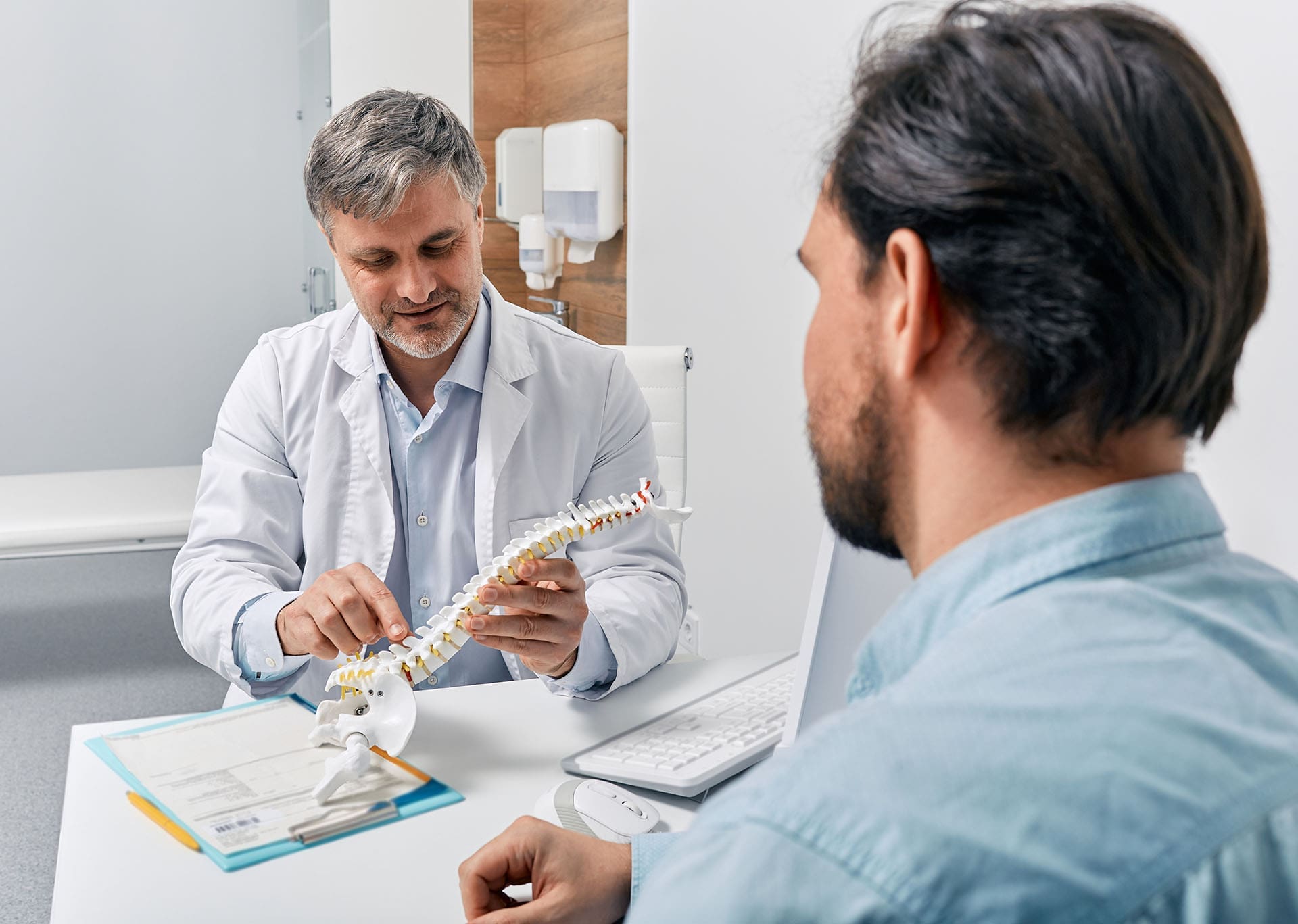
Back Clinic Herniated Disc Chiropractic Team. A herniated disc refers to a problem with one of the rubbery cushions (discs) between the individual bones (vertebrae) that stack up to make your spine.
A spinal disc has a soft center encased within a tougher exterior. Sometimes called a slipped disc or a ruptured disc, a herniated disc occurs when some of the soft centers push out through a tear in the tougher exterior.
A herniated disc can irritate the surrounding nerves which can cause pain, numbness, or weakness in an arm or leg. On the other hand, many people experience no symptoms from a herniated disk. Most people who have a herniated disc will not need surgery to correct the problem.
Symptoms
Most herniated disks occur in the lower back (lumbar spine), although they can also occur in the neck (cervical spine). Most common symptoms of a herniated disk:
Arm or leg pain: A herniated disk in the lower back, typically an individual will feel the most intense pain in the buttocks, thigh, and calf. It may also involve part of the foot. If the herniated disc is in the neck, the pain will typically be most intense in the shoulder and arm. This pain may shoot into the arm or leg when coughing, sneezing, or moving the spine into certain positions.
Numbness or tingling: A herniated disk can feel like numbness or tingling in the body part served by the affected nerves.
Weakness: Muscles served by the affected nerves tend to weaken. This may cause stumbling or impair the ability to lift or hold items.
Someone can have a herniated disc without knowing. Herniated discs sometimes show up on spinal images of people who have no symptoms of a disc problem. For answers to any questions you may have please call Dr. Jimenez at 915-850-0900
Segmental Disc Compression Patterns Generated by Loop 375 Lateral Impacts
Abstract
Loop 375 lateral impacts in El Paso generate rapid, side-directed force vectors that compress lumbar segments, tear the annulus, and accelerate disc height loss visible on structural MRI. These patterns create clear mechanism-to-injury linkages that support clinical and proximate causation for lumbar claims. At Injury Medical Clinic PA, the dual-licensed team of Dr. Alex Jimenez, DC, APRN, FNP-BC, and collaborating medical director Dr. Maria Guadalupe Cardenas, MD, documents these objective findings with Colossus-compliant notes, functional testing, and imaging timelines. Non-invasive care—chiropractic decompression and ESWT—restores disc hydration and height, reduces surgical risk, and keeps patients in control of their recovery decisions. The resulting impairment ratings are packaged inside the medical-legal causation documentation framework at https://dralexjimenez.com.
Highway-side impacts on El Paso’s Loop 375 do more than crumple doors. They deliver concentrated lateral force vectors that simultaneously load lumbar discs in compression, shear, and side-bending. The result is a recognizable pattern of segmental disc compression: annular fissures, progressive height loss, and altered load-sharing that shows up clearly on structural MRI. For personal-injury attorneys and patients, this pattern clearly links crash mechanics to documented objective injury.
How Lateral Force Vectors Create Segmental Compression
In a typical Loop 375 side-impact or side-swipe, the struck vehicle’s occupant experiences a rapid lateral acceleration. The lumbar spine, already bearing axial load, is forced into lateral bending while the upper body lags. Finite-element and cadaver studies show that axial compression plus lateral bending produces peak stresses along the posterolateral annulus—the same region where clinical annular tears most often appear.
The outer annulus, whose fibers run nearly vertical in the posterolateral quadrant, is mechanically weakest in this direction. Once a tear begins, nuclear material can migrate, and the disc loses height. Sequential MRI demonstrates the progression: an initially bright T2 fissure evolves into a broader annular disruption accompanied by measurable reduction in disc height at the involved segment (commonly L4–L5 or L5–S1).
MRI Correlation That Withstands Scrutiny
Structural MRI is the cornerstone of objective documentation. High-resolution T2 sequences reveal hyperintense annular fissures; sagittal and axial measurements quantify disc-height loss relative to adjacent normal levels. When these imaging findings are correlated with the known crash kinematics—ΔV, principal direction of force, and seat-belt usage—the clinical causation statement becomes precise: the lateral impact produced the observed segmental compression pattern and annular disruption.
Digital diagnostic imaging, functional range-of-motion and strength testing, and detailed electronic notes are packaged so they align with Colossus valuation factors. These records also support Letters of Protection and provide a clear timeline that patients and counsel can share.
Beneficence: Restoring Disc Hydration and Height
The clinical goal is root-cause recovery, not symptom suppression. Non-surgical spinal decompression creates negative intradiscal pressure that draws nuclear material centrally and allows water and nutrients to re-enter the disc. When low-energy extracorporeal shockwave therapy (ESWT) is combined with controlled traction, animal and clinical data show improved disc height, rehydration, and favorable remodeling of the annular matrix.
At the clinic, Dr. Jimenez (DC, APRN, FNP-BC, CFMP, IFMCP; Texas License #1191402, Prescriptive Authority #59628, NPI 1205907805) integrates these mechanical therapies with targeted regenerative options under the medical direction of Dr. Cardenas, MD (Board Certified Internal Medicine, Texas License #J2933, NPI 1164426748). The combination addresses both the structural compression and any concurrent metabolic or inflammatory factors that slow healing.
Non-Maleficence: Delaying or Avoiding Surgery
Invasive procedures carry risks of infection, hardware, and adjacent-segment disease. By restoring disc height and reducing annular stress through decompression and ESWT, many patients experience durable pain relief and improved mobility without immediate surgical intervention. This approach minimizes iatrogenic harm while still producing the objective measurements insurers and defense counsel expect.
Autonomy: Patient-Owned Imaging and Decision Making
Patients retain full access to their imaging timeline and functional data. They review the mechanism-to-injury linkage with both the clinical team and their attorney, then choose the care pathway that fits their goals. Coordination with existing medical providers remains seamless; the clinic’s dual-licensure model keeps chiropractic, acupuncture/electroacupuncture, and advanced medical diagnostics within one coordinated plan.
Future-Care Projections That Drive Case Value
Documented residual disc-height loss and annular disruption support projections for ongoing decompression sessions, periodic ESWT, and monitoring MRI. These future-care items are stated in plain language and tied directly to the original lateral-impact mechanism, so they withstand Colossus review and support appropriate impairment ratings.
The resulting impairment ratings are packaged inside the medical-legal causation documentation framework at https://dralexjimenez.com.
Detailed Biomechanics of Loop 375 Lateral Impacts
Loop 375’s high-speed corridors and frequent lane-change geometry produce a distinctive set of force vectors. When a vehicle is struck broadside or sideswiped, the occupant’s torso is accelerated laterally while the pelvis remains partially restrained by the seat. The resulting moment arm loads the lumbar spine in combined compression, lateral bending, and shear.
Peak annular stresses concentrate at the posterolateral annulus of L4–L5 and L5–S1. In vitro studies using complex loading protocols that include lateral bending demonstrate endplate junction failures and isolated outer-annulus disruptions—exactly the lesions seen clinically after side impacts.
These mechanics explain why patients present with segmental rather than diffuse disc changes. The MRI shows focal height loss and annular high-intensity zones at the levels that experienced the greatest lateral moment. Correlating the police report’s principal direction of force with these segmental findings supplies the proximate-causation statement required for both medical and legal purposes.
Structural MRI Protocols and Quantification
Standard lumbar MRI protocols are augmented with thin-slice T2 sequences and precise mid-sagittal height measurements. Disc height is compared with the adjacent normal disc and with published normative data. We grade annular tears by radial extent and T2 signal intensity. When serial imaging is available, the timeline shows progressive height loss beginning after the documented impact rather than from age-related change alone.
These measurements are entered into the electronic record in a Colossus-ready format: diagnosis codes, objective findings, and functional limitations appear in structured fields. The same images are released to counsel so the patient retains ownership of the visual evidence.
Clinical Examination and Functional Correlates
The physical examination maps MRI findings to clinical signs: restricted lateral flexion, positive straight-leg or femoral-nerve tension, and segmental motion restriction. Instrumented strength and range-of-motion testing quantifies the deficit. These functional data corroborate imaging and show that segmental compression produces real activity limitations—information that directly influences impairment ratings and future care needs.
Multidisciplinary Treatment: Decompression and ESWT
Chiropractic decompression tables apply computer-controlled distraction forces that cycle between hold and rest phases, generating negative intradiscal pressures sufficient to retract nuclear material and promote rehydration. ESWT delivers acoustic energy that, when combined with traction, down-regulates matrix-degrading enzymes and stimulates annular repair.
Sessions are scheduled according to the severity of height loss and annular disruption. We track progress with clinical scores and, when indicated, follow-up MRI. The dual-licensed model allows Dr. Jimenez to integrate these mechanical therapies with medical oversight from Dr. Cardenas, ensuring concurrent management of any metabolic factors.
Beneficence is realized when disc height and hydration improve and patients regain mobility and sleep. Non-maleficence is served by prioritizing non-invasive options that delay or eliminate the need for fusion or discectomy. Autonomy is preserved because every patient receives a clear explanation of the mechanism, imaging findings, and expected outcomes of each treatment choice; the patient retains possession of the imaging timeline and shares it with counsel at the patient’s direction.
Documentation That Survives Defense Scrutiny
Every encounter generates Colossus-compliant electronic notes that link the original crash kinematics to current objective findings. Digital imaging is archived with measurement annotations. Functional testing results are dated and signed. The complete package supports both the Letter of Protection and the impairment rating that is later incorporated into the medical-legal causation report hosted at https://dralexjimenez.com.
Impairment Ratings and Future-Care Projections
Residual disc-height loss and annular disruption are translated into AMA Guides impairment percentages when appropriate. Future-care projections specify the number and frequency of decompression and ESWT sessions needed to maintain restored height and prevent further annular progression. These projections are written in plain language and tied explicitly to the Loop 375 lateral-impact mechanism.
Coordination with Legal Counsel and Existing Providers
The clinic supplies counsel with a concise mechanism-to-injury summary, annotated imaging, and the functional data set. When a patient already has a primary-care or specialty physician, the dual-licensure team coordinates with that relationship rather than replacing it, preserving continuity while adding the structural and regenerative expertise needed for the injury claim.
Multidisciplinary Call to Action and Reference List
Patients injured in Loop 375 lateral impacts and their attorneys can obtain a coordinated evaluation that links crash mechanics to MRI-documented segmental disc compression, restores disc height non-surgically through decompression and ESWT, and packages the entire record for legal use.
Call to Action
Schedule a comprehensive evaluation at Injury Medical Clinic PA in El Paso. Dr. Alex Jimenez, DC, APRN, FNP-BC, and Dr. Maria Guadalupe Cardenas, MD, will map the force vectors of your collision to your current MRI findings, design a drug-free plan to restore disc hydration and height, and prepare the objective documentation your counsel needs. Contact the clinic or visit https://dralexjimenez.com to begin.
References
Che, Y.-J., Guo, J.-B., Wang, Y.-F., Zhu, L.-M., Zhou, C.-X., & Liu, Y.-L. (2021). Low energy extracorporeal shock wave therapy combined with low tension traction can better reshape the microenvironment in degenerated intervertebral disc regeneration and repair. The Spine Journal, 21(1), 91–102. https://doi.org/10.1016/j.spinee.2020.08.004
When Leg Pain Is Too Irritated for Rehab: What an Epidural Injection Is Actually Trying to Accomplish
Abstract
When radiating leg pain from lumbar nerve-root inflammation becomes so intense that walking, sitting, sleeping, or starting rehabilitation feels impossible, an image-guided epidural injection may be considered. This post explains radicular pain, why the procedure aims to reduce inflammation rather than repair a disc, how fluoroscopic guidance places medication in the epidural space, what patients typically experience, and how temporary symptom relief can open a practical window for decompression, movement, and active recovery. It also explains when an injection isn’t the right first step.
You finish a long Amazon fulfillment shift, a night of data-center rack work, a full day of programming, or a long drive, and the walk to the car lights the leg up so badly that even the idea of starting rehabilitation the next day feels out of reach. Sitting for more than a few minutes becomes a negotiation. Sleep is broken by position changes. Walking the length of a parking lot or a warehouse aisle turns into a calculated risk. For many adults with significant radiating leg pain, the barrier is not motivation. The barrier is that the nerve is too irritated to tolerate the very movements that would otherwise help.
What Radicular Pain Actually Is
Radicular pain travels along the path of a spinal nerve root. In the lumbar spine, it often follows the sciatic nerve distribution or one of its roots, causing burning, shooting, or electric sensations that can reach the buttock, thigh, calf, or foot. Numbness, tingling, or a feeling of weakness in the leg can accompany it.
A herniated disc, foraminal narrowing, or other structural change can mechanically crowd the nerve root. At the same time, biochemical factors amplify the problem. Degenerated or herniated disc material releases inflammatory mediators such as phospholipase A2, cytokines, and prostaglandins. These substances increase local edema, sensitize the nerve, and can cause ectopic firing even with only moderate mechanical pressure (McLain et al., 2005). The result is a nerve root that is both compressed and chemically inflamed. Pain and limited function often exceed what imaging alone would predict.
Why an Epidural Is Not Trying to “Repair the Disc”
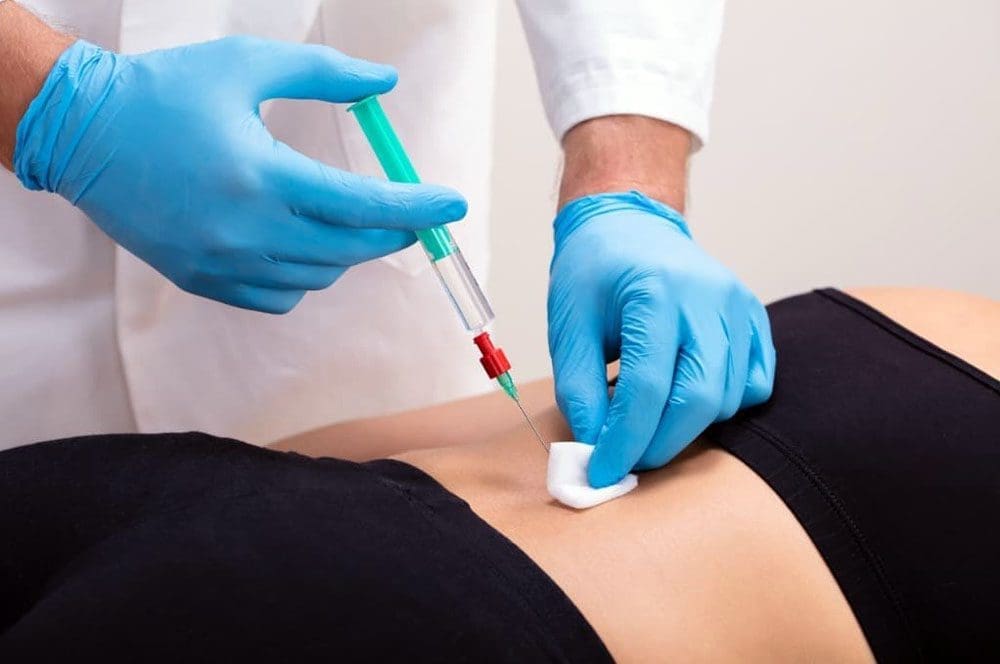
An epidural steroid injection places medication into the epidural space—the area outside the dural sac that surrounds the spinal cord and nerve roots.
It does not enter the disc.
It does not shrink, reseal, or surgically remove a herniation.
It does not enlarge a stenotic canal or reverse degenerative change.
The intended effect is to locally reduce inflammation around the irritated nerve root. Corticosteroids decrease inflammatory mediator production, reduce capillary permeability and edema, and can dampen ectopic nerve firing (Patel et al., 2024). When included, local anesthetic may provide more immediate, temporary relief and help confirm that the targeted root is relevant. The goal is symptom reduction, not structural repair.
Guidelines that synthesize higher-quality fluoroscopically guided trials describe meaningful short- to intermediate-term benefit for lumbar radicular pain associated with disc herniation when the injection is properly placed (Manchikanti et al., 2021). Duration varies widely; some patients get weeks of useful relief, while others experience several months. The injection is best understood as a bridge, not a destination.
Fluoroscopic Guidance, the Epidural Space, and Medication Placement
Modern lumbar epidural procedures are performed under fluoroscopic (live X-ray) guidance. The patient is positioned on a table, the skin is cleaned, and local anesthetic is used at the insertion site. A thin needle is advanced toward the epidural space. Approaches include interlaminar (through the ligamentum flavum between the laminae) and transforaminal (more selective placement near a specific exiting nerve root). The physician injects contrast dye under continuous imaging to confirm the medication spreads in the epidural space and does not enter a blood vessel or the subarachnoid space.
Once the physician verifies correct placement, they inject the corticosteroid (often with local anesthetic). The entire procedure typically lasts 10–20 minutes. Patients remain awake or lightly sedated so they can report unusual sensations. After a short observation period, most people go home the same day.
What Patients Commonly Experience
During the injection, some people feel pressure or a brief reproduction of their usual leg symptoms as the medication spreads. Immediate relief from the local anesthetic can last a few hours. The steroid effect usually begins over the following 2–7 days. A temporary increase in soreness at the injection site or a short flare of familiar leg pain can occur in the first day or two as the medication disperses; this is usually mild and self-limited.
Relief is not guaranteed and varies from person to person. When it occurs, patients often notice that they can sit longer, walk farther, sleep with fewer position changes, or tolerate the early stages of guided movement. The practical value is that these improvements create a usable window.
The Window for Movement, Decompression, and Rehabilitation
When chosen, the central purpose of the injection is to lower nerve-root irritation enough that active care becomes possible. Once leg pain no longer dominates every transition, spinal decompression therapy can be introduced or progressed more comfortably. Chiropractic adjustments and mobilization that respect the irritated root can be applied with clearer feedback. Targeted exercises for hip mobility, core control, and walking tolerance can start without an immediate severe flare.
For Amazon associates, this may mean returning to a modified floor shift with better standing and walking tolerance.
For data center technicians, it may mean safer ladder and rack work.
For programmers and drivers, it may mean longer sitting blocks without the same electric build-up.
For any adult, it may mean restoring sleep and basic daily mobility.
At Injury Medical Clinic PA, we never view the injection as a stand-alone fix. Dr. Alex Jimenez, DC, APRN, FNP-BC, CFMP, IFMCP, works under the collaborative medical direction of Dr. Maria Guadalupe Cardenas, MD, so the procedure, when indicated, is coordinated with structural care, rehabilitation, and any needed functional medicine support. The aim is beneficence: using the least invasive, effective option that serves the patient’s overall recovery and safety.
When an Injection Is Not the Appropriate First Step
Several situations call for a different sequence or urgent evaluation rather than an elective epidural:
Progressive motor weakness, saddle anesthesia, or new bowel or bladder changes (possible cauda equina) require immediate medical assessment, not a scheduled injection.
Active infection, uncontrolled coagulopathy, or allergy to the planned medication are contraindications.
Pure axial low-back pain without a clear radicular pattern is not a classic indication; other sources (facet, discogenic, myofascial) should be considered first.
Mild or improving symptoms that still allow basic walking, sleep, and a trial of conservative care often respond to decompression, targeted exercise, and activity modification without injection.
If the clinical pattern doesn’t correlate with imaging, or if a properly placed prior injection fails, the clinic should re-examine the diagnosis rather than repeat the same procedure.
Non-maleficence guides these boundaries. The clinic prioritizes options that avoid unnecessary procedural risk, prolonged high-dose medication, or premature surgery. Autonomy remains central: patients receive a clear explanation of expected benefits, realistic duration, risks, and alternatives so they can decide in coordination with their existing medical team and any group insurance requirements.
A Practical Next Step
If radiating leg pain is currently blocking rehabilitation, sleep, or basic work and home function, an evaluation can determine whether an image-guided epidural is appropriate or whether a different sequence is safer. Many patients with excellent group insurance coverage can coordinate the integrated evaluation, procedure (when indicated), and subsequent rehabilitation plan efficiently.
To schedule a visit at Injury Medical Clinic PA in El Paso, call 915-850-0900 or use the online scheduler. The multidisciplinary team—led by Dr. Alex Jimenez, DC, APRN, FNP-BC, and Dr. Maria Guadalupe Cardenas, MD—will review your history, examination, and imaging to develop a plan that supports lasting movement and function.
Why Coughing or Sneezing Can Suddenly Light Up Back or Leg Pain: Disc Pressure, Nerve Irritation—or Something Else?
Abstract
A cough, sneeze, or strain can briefly raise pressure in the trunk and lumbar discs. If a nerve root is already irritated, that spike may light up back or leg pain. The flare is a clue, not proof of a herniated disc. This post covers the mechanics, the exam, imaging limits, red flags, conservative care, and why an epidural is a short rehab window, not a cure.
A sneeze hits halfway through a shift, a code review, or a lane change. The low back grabs, or a hot line runs into the calf, then settles. Programmers at a second monitor, technicians under racks, Amazon workers mid-pivot, drivers in a seat, and desk professionals in allergy season all describe the sensation. It is not a diagnosis on its own.
What a Cough Does to Disc Pressure
A cough, sneeze, or strain is a short Valsalva maneuver. Chest and belly pressure rises, and some of that load reaches the lumbar discs. This effort generally increases intradiscal pressure in classic measurements, though the rise varies (Nachemson & Morris, 1964). Bending, lifting, and combined postures push pressure well above quiet standing (Wilke et al., 1999).
A healthier disc works like a water-filled cushion. A sudden belly brace can push the soft center outward. If the outer ring is torn, or disc material sits near a nerve root, that spike can press the root and flash pain into the back or leg.
Loaded postures that stack the spike
A programmer often sneezes in a flexed, rotated chair.
A data center technician may cough while kneeling at a rack.
An Amazon associate may pivot with a tote, then strain as dust hits.
A driver may be seated, hips flexed, with no chance to stand and unload.
A worn disc does not hold pressure like a young disc (Wilke et al., 1999). The symptom is still mechanical, not random.
A Useful Clue, Not Proof of a Herniated Disc
In 395 adults with severe sciatica, leg pain that worsened with coughing, sneezing, or straining was linked to nerve-root compression and disc herniation on MRI. The diagnostic odds were about 2.3 and 2.5. Back pain alone was weaker (Verwoerd et al., 2016).
That history is meaningful. It is not proof. It does not name the level or decide who needs a procedure. A disc bulge on a scan may be silent, and a cough wince may come from a facet, a hip, or a sensitive nerve that is not compressed.
What Else Can Light Up With a Sneeze?
Facet irritation prefers extension and rotation, though a stiff brace can still jar it.
Hip or sacroiliac pain may grab the buttock, then fade.
Deep gluteal irritation can mimic sciatica after long sitting.
Abdominal wall strain stays in the belly.
Kidney irritation is usually higher in the flank and often brings urinary changes.
Poor circulation usually hurts after a set walking distance and eases when you stand still. One sneeze rarely causes it.
Strength, Reflexes, and the Straight-Leg Raise
The visit asks where pain travels, whether the cough hits the back, the leg, or both, and whether the leg feels weak or numb. The exam checks toe and ankle strength, heel-and-toe walking, knee and ankle reflexes, light touch, hip motion, and the first steps after sitting. Amazon and rack workers often notice those first steps most.
The straight-leg raise lifts the leg with the knee straight. Between about 30 and 70 degrees, tension rises on the lower lumbar roots. A clearly negative test makes a large compressive herniation less likely, but tight hamstrings can also hurt, so the test is not specific (Camino Willhuber & Piuzzi, 2023). A crossed straight-leg raise is less sensitive and more specific. Nerve-pattern pain, a sensory change, reflex or strength loss, and a positive raise together make a disc-related root problem more likely (Verwoerd et al., 2016).
When Imaging Helps, and When It Does Not
Early MRI is not the default. Routine imaging in the first weeks, without red flags, does not speed recovery (Chou et al., 2011). Imaging is usually not appropriate before a trial of care, but prompt MRI is appropriate if cauda equina syndrome is suspected or weakness is severe or worsening (American College of Radiology, 2021).
Scans overcall. Disc bulges are common in adults without symptoms and more common with age (Brinjikji et al., 2015). A picture does not prove the cause of the sneeze. Imaging is indicated when pain or weakness is not improving, strength is dropping, a procedure is planned, or a red flag is present.
Red Flags That Should Not Wait
Most flares are mechanical. Seek same-day care for trouble starting urination, new bladder or bowel loss, saddle numbness, rapidly worsening weakness, fever, unexplained weight loss, cancer history, or pain after major trauma. These can signal cauda equina compression or infection (American College of Radiology, 2021). Knowing what should not wait is part of directing your care.
Conservative Care Before a Needle Is Discussed
The first gain is movement you can tolerate. Strict bed rest usually stiffens the hips and keeps the root sensitive. Short walks and unloading positions work better.
At El Paso Back Clinic, care centers on function.
Spinal decompression, manual or mechanical, reduces load while an irritated root settles.
Chiropractic alignment is used for joints that are not guarding a severe deficit.
Hip and mid-back mobility keep the lumbar discs from being the only hinges.
Pacing matches desk reach, rack crouches, aisle pivots, and long drives.
MLS laser therapy may help when swelling keeps the root angry.
Dr. Alex Jimenez, DC, APRN, FNP-BC, CFMP, IFMCP, bridges that structural work with medical evaluation. He holds Texas APRN license #1191402 and prescriptive authority #59628 (NPI 1205907805). Dr. Maria Guadalupe Cardenas, MD, board-certified in internal medicine (Texas license #J2933, NPI 1164426748), directs medical care at Injury Medical Clinic PA in Mission Plaza, including blood pressure, diabetes, and clotting risk.
That pairing is beneficence: structural care and medical screening serve the same person. It is also non-maleficence, because drug-free decompression and movement can reduce the pull toward opioids or an early surgery talk. Many El Paso programmers, data center employees, Amazon associates, and drivers have group benefits that may cover the evaluation and, when indicated, imaging or a procedure. Benefits vary.
If nerve pain blocks walking and decompression, an image-guided epidural may be discussed. It is not the first step, and it is not a disc repair.
What happens during the procedure?
Under fluoroscopy, or sometimes ultrasound, a thin needle is guided into the epidural space near the root, not into the disc. Contrast may confirm placement. A small dose of corticosteroid, often with local anesthetic, is placed around the nerve so swelling can settle and movement can restart.
A 2025 review of 90 trials found that epidural steroids probably help with short-term radicular pain and disability. About 4 people had to be treated for one short-term pain benefit. Long-term pain relief was not clearly proven (Armon et al., 2025). That is a window of weeks, not a cure.
How the window should be used
Use the window to walk farther, tolerate decompression, and rebuild strength for ladders and aisle pivots. Recheck before any repeat injection. Risks include a pain flare, higher blood sugar, headache after a dural puncture, and rare infection or bleeding. Doing no harm includes saying no when the exam does not support a needle.
You Remain the Decision-Maker
A sneeze that lights up the leg says the symptom is pressure-sensitive. It does not assign a herniated-disc label or a procedure. Ask what strength and reflexes showed and what better should look like after two weeks of walking and decompression. Care at Injury Medical Clinic PA is meant to stay coordinated with the clinician you already trust.
If coughing, sneezing, or straining keeps shooting pain into the buttock or leg, schedule an evaluation at El Paso Back Clinic with Dr. Alex Jimenez, DC, APRN, FNP-BC, and the team led by Dr. Maria Guadalupe Cardenas, MD. Bring the pattern with you. Leave with a next step.
Can Nutrition Change How Well an El Paso Spine Recovers?
Abstract: Mechanical care remains central to spinal recovery. This article explains why protein, glucose control, hydration, sleep, and smart loading still matter for shift workers recovering from disc, ligament, muscle, or spinal injuries. Food does not heal a herniated disc. Nutrition can support collagen remodeling, muscle preservation, and rehab tolerance. Poor meals, glucose swings, dehydration, and sleep loss can slow the same plan. El Paso Back Clinic pairs non-surgical decompression with medical oversight so patients can use group insurance and choose next steps with clear information.
The server room is quiet at 2:17 a.m. A data center technician finishes a rack job that required a crouch and a twist. An Amazon associate on the same clock has already walked miles of concrete. A programmer covering an overnight deploy has been in one chair since dinner. All three later need care for a disc, ligament, or muscle injury that will not settle.
Someone always offers the same advice. Eat cleaner. Drink collagen. Cut sugar. The advice is incomplete. At El Paso Back Clinic, the sentence is this: your disc does not eat dinner.
A herniated disc doesn’t tuck itself back in because breakfast included eggs. Ligaments do not restitch because a shake lists twenty grams of protein. Mechanical load, joint motion, nerve protection, and a graded return to work decide most of the outcome. Nutrition is the supply line, not the decompression table.
Two Different Kinds of “Disc Nutrition”
People use nutrition for two jobs. Mixing them creates false hope.
The disc’s own grocery route
An intervertebral disc has almost no direct blood supply. Glucose, oxygen, and waste move mostly by diffusion through the endplates. Slow, cyclic loading—the kind seen in walking and well-dosed rehab—can help that exchange. Long static postures and sudden heavy flexion can work against it (Gullbrand et al., 2015; Belavy et al., 2016). That is why non-surgical spinal decompression, alignment work, and movement coaching stay central. They change the mechanical environment the disc lives in. A protein bar cannot.
The tissues that do use your plate
The muscles that brace the spine, the tendons that transmit force, and the ligaments that limit end-range motion rebuild with amino acids, energy, and time. They waste away when nights get long, meals get irregular, and loading stops. Shift work fills that gap. Night schedules change when you eat, how you sleep, and how your body handles glucose. Food did not cause the herniation. The construction crew around the injured segment may still be underfed, under-rested, and asked to work a full shift (Matre et al., 2021; Oosterman et al., 2020).
Why Mechanical Care Still Comes First
Beneficence starts with the step most likely to help and least likely to harm. For many people with severe lumbago or disc-related pain, that means a non-surgical plan:
Examination of posture, hip motion, nerve tension, and work tasks
Imaging review when symptoms and function do not match
Adjustments and flexion-distraction or decompression when indicated
MLS laser or shockwave for surrounding soft tissue when appropriate
A loading plan that protects the segment while the body stays useful
Conservative care can reduce the rush toward surgery or long medication courses when those steps are not required. You should know what the spine needs mechanically before anyone sells a disc-healing diet.
Dr. Alex Jimenez, DC, APRN, FNP-BC, CFMP, IFMCP, leads the structural side and, with collaborative medical oversight, can add diagnostics and selected procedures. Dr. Maria Guadalupe Cardenas, MD, Board Certified in Internal Medicine, directs laboratory interpretation, metabolic risk, and coordination with existing physicians.
Protein: Building Material, Not a Reset Button
After injury or reduced loading, muscle protein breakdown rises. Rehab then asks those same muscles to stabilize a sore spine. Injury-nutrition reviews commonly place protein needs near 1.6 to 2.2 grams per kilogram per day, spread across meals (Smith-Ryan et al., 2020; Papadopoulou, 2020). Energy drinks and one burrito are a weak supply line.
What protein actually supports
Muscle preservation when you sit, stand, or protect a painful segment
Rehab quality, because weak, underfed muscle fails first
Amino acids for remodeling tissue, not a disc reset overnight
Collagen peptides plus training have some evidence for tendon morphology and joint comfort, but the effect depends on loading (Khatri et al., 2021; Aussieker et al., 2023; Bischof et al., 2024).
Shift-work protein problems we see in El Paso
One large meal after the shift, then almost nothing for ten hours
Protein pushed to 3 a.m., when appetite is low
“I’ll eat when I get home,” which becomes sleep
A practical target is protein every few waking hours: eggs, yogurt, leftover chicken, beans with rice, or a shake if food is not available on the floor. That supports recovery. It will not replace decompression.
Glucose: The Quiet Load on Collagen
High or swinging blood sugar does not cause every herniated disc. It can change collagen quality over time. Excess glucose helps form advanced glycation end-products (AGEs). AGEs cross-link collagen, reduce fiber slide, and make some tissues stiffer and more brittle. Research links diabetes and AGE burden with disc and tendon changes (Kakadiya et al., 2020; Rosenberg et al., 2023; Li et al., 2024).
For a programmer, NOC operator, or Amazon lead, the pattern is familiar: fasting through half the shift, a sweet drink for alertness, a heavy meal at the wrong clock, and poor sleep, which worsens glucose handling (Oosterman et al., 2020). That can raise inflammation and lower rehab tolerance. That doesn’t mean an MRI will reverse if you switch drinks. It means the same mechanical program may work better when glucose is steadier.
This is where MD and NP lab work earns its place. A1C, fasting glucose, lipids, and related markers help Dr. Cardenas see whether recovery is inflamed, insulin-resistant, or under-fueled. Treating numbers without treating the spine is incomplete. Treating the spine while ignoring uncontrolled glucose is also incomplete.
Sleep, Water, and the Night-Shift Recovery Tax
Shift work is associated with higher odds of chronic musculoskeletal pain, and low-grade inflammation is one proposed link (Matre et al., 2021). Circadian misalignment also reduces muscle insulin sensitivity and disturbs repair timing (Oosterman et al., 2020). A technician who decompresses at noon and then sleeps five broken hours is asking collagen to work nights too.
Hydration is simpler and still ignored. Caffeine-only nights and hot warehouse aisles do not dry a disc like a sponge on a stove, but they increase fatigue and make people move worse.
A short list that fits a night schedule
Keep water at the station; pair each energy drink with water
Protect a dark, cool sleep block even if it starts at 9 a.m.
Eat protein before the shift, not only after
Do not save the entire recovery plan for days off
Loading Still Writes the Script—Including After PRP
If a ligament, tendon, or joint later needs platelet-rich plasma (PRP), the injection is a signal, not a substitute. Mechanical loading after the procedure shapes the tissue response. Skipping rehab or returning to a poor lift can waste the appointment (Neph et al., 2020; Gremeaux et al., 2026). The same logic applies to image-guided epidurals. A calmer nerve is a window for movement, not a cure on its own.
The clinic keeps that hierarchy visible: protect the segment and restore motion; reload muscle in a way the job can survive; support protein, glucose, micronutrients, and sleep so the plan is tolerable; and add procedures only when they serve that sequence.
Using Group Insurance Without Guessing
Many data center, IT, and fulfillment employers in El Paso carry strong group insurance. That benefit can cover evaluation, chiropractic and decompression visits, medical assessment, and indicated labs. Using the plan early is often cheaper than waiting until lifting limits or sleep collapse.
A visit may include a mechanical exam tied to rack height, pallet work, chair time, or night rotation; a plain-language imaging review; a decompression plan with home loading rules; and labs when fatigue or slow tissue response is part of the story. You remain the decision-maker.
Call El Paso Back Clinic at 915-850-0900 or schedule through Injury Medical Clinic PA at Mission Plaza. Bring your work schedule, insurance card, and the movements that still scare you. The spine needs mechanics first. The body still has to show up with materials.
Reversing Severe Lumbago and Disc Compression from Amazon Fulfillment Shifts
Abstract: Severe low-back pain after fulfillment work or delivery routes can feel like a one-way road toward surgery. Yet many cases deserve a careful conservative evaluation first. This guide explains how repetitive bending, sorting, vehicle vibration, and lifting can aggravate lumbago and disc-related pain; where mechanical alignment and selected non-surgical decompression may fit; how medical oversight screens red flags; and how Amazon workers can use practical lifting limits to reduce repeat flares.
When a Shift Starts Loading the Lumbar Spine
A warehouse associate may begin a shift feeling stiff. Hours later, repeated low-bin reaches, package twisting, sorting, pallet work, or lifting away from the body can turn stiffness into severe lumbago. Delivery drivers add prolonged sitting, road vibration, repeated cabin exits, carrying, and awkward curbside lifts.
The problem is often cumulative. When the trunk bends and rotates while a load stays away from the body, spinal muscles must generate more force to control movement. Repetition can fatigue those tissues and degrade movement quality. NIOSH treats load weight, reach distance, vertical height, twisting, lifting frequency, duration, and grip quality as factors that change lifting risk (NIOSH, 2024).
That matters because “safe lifting” is not one universal number. A box manageable at waist height may be too demanding on the floor, far from the body, poorly gripped, or lifted repeatedly near the end of a long shift.
Why Pain Can Spike After the Shift
Symptoms may intensify after clocking out because fatigued muscles provide less support, sitting stiffens the hips, and irritated tissues remain sensitive after repeated loading. Delayed soreness doesn’t mean a disc suddenly worsened. Track which movements, loads, positions, and recovery habits consistently increase or decrease symptoms across workdays.
What “Disc Compression” Really Means
Between the lumbar vertebrae, intervertebral discs distribute load and allow movement. A disc is not a jelly doughnut that simply pops out and can be pushed back into place. It is a load-bearing structure with a fibrous outer ring and softer inner region. Repeated flexion, compression, rotation, aging, prior injury, and anatomy can contribute to disc changes.
Pain may come from several overlapping sources:
Irritated lumbar joints or surrounding soft tissues
Protective muscle spasm and reduced hip motion
Disc-related inflammation or mechanical sensitivity
A disc herniation that irritates a nerve root
Deconditioning after repeated pain episodes and activity avoidance
This is why a structural examination matters. The goal is to match symptoms with movement findings, neurologic testing, work demands, and imaging when indicated. Low-back guidelines support exercise, education, and selected manual or mobilization approaches as part of conservative care rather than a single passive treatment (George et al., 2021).
Step One: Restore Motion Without Forcing the Spine
At El Paso Back Clinic, targeted mechanical care begins with a practical question: which movements are limited, painful, unstable, or poorly coordinated?
One worker may have stiff hips that force repeated lumbar bending. Another may have painful lumbar joints that limit extension. A driver can show a different pattern after hours of seated flexion and vibration.
Chiropractic adjustments and non-thrust joint mobilization may improve mobility and reduce pain when the examination supports them. Guidelines report benefit from joint mobilization for many people with chronic low-back pain, including some with leg symptoms (George et al., 2021). Care should pair manual treatment with rehabilitation so improved motion becomes usable strength.
The Functional Target
The patient gains something measurable: easier standing, smoother walking, less guarded bending, better sleep positions, safer transitions from a delivery van, and more confidence handling daily tasks. Those functional gains matter more than trying to make every spinal image look “perfect.”
Step Two: Use Non-Surgical Decompression Carefully
Non-surgical spinal decompression is commonly described as controlled lumbar traction or unloading. The practical aim is to reduce mechanical stress temporarily and create a position in which painful tissues or irritated nerve roots may become less sensitive.
The evidence requires precision. A systematic review found short-term improvements in pain and disability when certain mechanical traction forms were added to treatment for lumbar radiculopathy, but study quality and results varied (Vanti et al., 2021). WHO guidance for chronic primary low-back pain advises against routine traction for most patients, so decompression should not become an automatic protocol for every painful back (World Health Organization, 2023).
For a selected patient, decompression may be one tool within movement retraining, strengthening, work modification, and medical evaluation. It should never be sold as a guaranteed way to “reinflate” a disc or permanently reverse degeneration.
Preventing Unnecessary Surgery Without Delaying Necessary Surgery
Avoiding surgery is valuable when recovery is safe with conservative care. Lumbar discectomy can be appropriate for selected patients, yet it still carries risks such as recurrent herniation, wound complications, dural tears, reoperation, and neurologic complications (Bombieri et al., 2022).
The safer message is not “never have surgery.” It is “earn the decision with the right evaluation.” Recent spine recommendations support surgery when conservative treatment fails and emphasize urgent or early surgery for cauda equina syndrome or progressive severe neurologic deficits (Costa et al., 2024).
Seek urgent assessment for new bowel or bladder dysfunction, saddle-region numbness, rapidly worsening leg weakness, or serious neurologic changes. Fever, major trauma, unexplained weight loss, or concern for infection, fracture, or cancer also deserves prompt review.
This is non-maleficence in practice: use the least invasive reasonable option when it is safe, but never let a desire to avoid surgery delay care for a true emergency.
Step Three: Set Proactive Lifting Limits
For Amazon associates, prevention must survive the workday. “Lift with your legs” is not enough.
Use these rules:
Bring the package close before standing up.
Turn with the feet instead of twisting under load.
Reduce load size when the object starts low, high, or far away.
Use team lifting or mechanical assistance for demanding or awkward items.
Break up repeated lifting when possible with task rotation or brief recovery periods.
Stop treating pain as a test of toughness; a changing neurologic symptom deserves evaluation.
The Revised NIOSH Lifting Equation is useful because it does not assume every worker should lift the same weight in every position. It calculates a recommended weight limit using task conditions and a lifting index that reflects physical demand. NIOSH recommends keeping the lifting index or composite lifting index at or below 1.0 when evaluating two-handed lifting tasks (NIOSH, 2024).
Integrated Oversight: Structure, Medicine, and Patient Choice
Dr. Alex Jimenez, DC, APRN, FNP-BC, CFMP, IFMCP, bridges chiropractic structural alignment, mechanical rehabilitation, and advanced medical diagnostics. He holds Texas Advanced Practice Nursing License #1191402, Prescriptive Authority #59628, and NPI #1205907805. His dual licensure lets the clinic coordinate musculoskeletal examination with broader medical assessment and appropriate advanced interventions.
Dr. Maria Guadalupe Cardenas, MD, is Board Certified in Internal Medicine, has more than 40 years of experience, and holds Texas Medical License #J2933 and NPI #1164426748. As Medical Director, Clinical Director, and Collaborative Physician at Injury Medical Clinic PA in El Paso, she provides internal medicine oversight, risk stratification, interpretation of indicated laboratory tests, and comorbidity coordination.
That collaboration supports beneficence: the plan centers on the patient’s best functional outcome. It supports non-maleficence by screening for medical risks before aggressive treatment and using non-invasive, drug-sparing options when appropriate. It also protects autonomy. Patients are taught what the examination shows, what each option can and cannot reasonably do, and when another specialist or their existing medical team should be involved.
A Better Goal Than “Toughing It Out”
Severe lumbago after warehouse or delivery work is not a character test. The goal is to interrupt the overload cycle before pain, guarding, deconditioning, and poor mechanics reinforce one another.
A conservative plan can include targeted joint care, selected decompression, progressive trunk and hip rehabilitation, work-specific lifting education, and medical oversight. The target is direct: more comfortable movement, safer lifting, better sleep, and the ability to work without organizing each day around the next flare.
Multidisciplinary Call to Action
If repeated bending, sorting, driving, or lifting causes severe low-back pain, start with a coordinated evaluation. El Paso Back Clinic can assess mechanical function, neurologic findings, lifting demands, and medical risks, then explain conservative options and when to refer. Bring your imaging, medication list, job demands, and questions. The final decision remains yours, supported by clear information and coordinated chiropractic and medical care.
Severe Low Back Pain in Amazon Fulfillment Workers: Epidural Injections, Spinal Decompression, and the Treatment Window
Abstract: Severe low back pain can turn a 10-hour fulfillment shift into a battle. Repeated low-bin reaching, standing, twisting, and handling can keep an irritated lumbar nerve from settling. This article explains a function-first strategy: “turn down the fire, then address the load.” When true lumbar radiculopathy is present, an appropriately selected epidural injection may reduce acute nerve inflammation enough to create a treatment window for nonsurgical spinal decompression, mechanical chiropractic care, rehabilitation, and safer work habits. The goal is not temporary numbness. It is restoring movement while addressing the forces that keep symptoms returning.
A picker starts the shift moving quickly: scan, reach, bend, pull, pivot, walk, repeat. By hour seven, a familiar ache becomes sharper. By hour ten, standing upright hurts, the leg may burn, and getting into the car feels harder than moving another tote.
NIOSH identifies heavy physical work, lifting, forceful movement, bending, twisting, and static postures as recognized risk factors for low-back musculoskeletal disorders (National Institute for Occupational Safety and Health [NIOSH], 2024). For fulfillment workers, the problem is cumulative exposure. Low bins encourage trunk flexion, rushed reaches add rotation, and long hours on concrete floors magnify fatigue. Once pain changes how you move, compensation can load the hips, pelvis, and opposite side of the back.
The Key Question: Is the Fire in the Back or the Nerve?
Not every severe backache needs an injection. The first step is to identify what is irritated.
Localized lumbar pain may come from muscles, joints, discs, or other structures. Radicular pain is different. It can occur when a lumbar nerve root becomes irritated or compressed and may produce:
Burning or electric pain into the buttock or leg
Numbness or tingling
Pain that travels below the knee
Weakness in the foot or leg
Symptoms that worsen with certain spinal positions, coughing, or straining
A careful examination should assess strength, reflexes, sensation, movement tolerance, nerve tension, gait, and symptom patterns. Imaging may be appropriate when findings suggest significant disc injury, persistent neurologic symptoms, trauma, or when results would change treatment.
New loss of bowel or bladder control, saddle numbness, rapidly worsening weakness, fever with severe back pain, or major trauma requires urgent medical evaluation. These symptoms are not ones you can just “work through.”
Turn Down the Fire, Then Fix the Load
Think of an irritated lumbar nerve like a fire alarm beside a hot engine. If inflammation is high enough, even small movements can trigger intense pain. The worker may stop bending normally, brace every step, sleep poorly, and avoid rehabilitation because almost everything hurts.
That is where the treatment-window concept matters.
For appropriately selected lumbar radiculopathy, an epidural corticosteroid injection can place anti-inflammatory medication near the affected nerve root. A 2025 American Academy of Neurology review found that epidural steroid injections probably reduce short-term pain and disability in radiculopathy, while long-term pain benefit remains uncertain (Armon et al., 2025).
In plain language: the injection is not rebuilding a disc or correcting lifting mechanics. It may turn down the inflammatory “fire” long enough to make useful movement possible.
That window matters when pain blocks progress. A worker who could not tolerate walking, traction, unloading, or stabilization may gain enough control to begin them.
What an Epidural Injection Can—and Cannot—Do
A properly indicated epidural may help:
Reduce acute radicular pain
Improve tolerance for walking and sleep
Make rehabilitation easier to participate in
Allow a graded return to mechanical treatment
Reduce reliance on passive coping alone
It does not guarantee permanent relief, prevent surgery in every case, or address occupational loading patterns on its own. The AAN review found insufficient evidence that epidural steroid injections reduce the eventual need for surgery (Armon et al., 2025).
There are also risks. The FDA notes rare but serious neurologic complications associated with epidural corticosteroid injections and states that corticosteroids are not FDA-approved specifically for epidural administration (U.S. Food and Drug Administration [FDA], 2014). That makes informed consent, patient selection, appropriate image guidance, and medical oversight essential.
Step Two: Use the Window for Nonsurgical Spinal Decompression
Once the fire is quieter, the next question is simple: what mechanical inputs can the spine tolerate now?
Here, “spinal decompression” means nonsurgical mechanical traction or distraction, not surgery. The goal is controlled lumbar unloading while monitoring symptoms and neurologic response.
Research on traction is encouraging for some lumbar disc herniation patients, but it is not one-size-fits-all. A 2025 systematic review found improvements across traction, exercise, and manipulation studies, while also reporting very high variability between protocols and patient groups (Thavarajasingam et al., 2025).
That is why decompression should be treated as a clinical tool, not a magic table.
During the treatment window, the clinician can look for useful signs:
Leg pain centralizes toward the back
Standing and walking tolerance improves
Numbness or tingling decreases
The patient can change positions with less guarding
Basic trunk and hip exercises become tolerable
If symptoms worsen, spread farther down the leg, or neurologic weakness progresses, reassess the plan.
Step Three: Fix the Load With Mechanical Chiropractic Care
Pain relief is valuable, but function is the finish line.
The picker or packer has to return to the same realities: low bins, repetitive handling, long walking routes, awkward reaches, and a clock that does not care whether the lumbar muscles are fatigued. Mechanical chiropractic care should therefore focus on restoring motion and controlling load, not simply chasing pain scores.
Care may include low-force mobilization, selected chiropractic adjustments, hip mobility, trunk endurance, graded lifting, nerve-mobility exercises, and conditioning. Aggressive manipulation is not automatically appropriate during a highly irritable radicular episode; treatment intensity should match neurologic findings and tolerance.
A useful return-to-function plan teaches the worker to:
Hinge through the hips instead of repeatedly rounding the lumbar spine
Bring the load closer before standing
Pivot with the feet instead of twisting while bent
Alternate positions when task design allows
Break large recovery goals into short movement exposures
Report progressive weakness or spreading numbness promptly
These habits support autonomy. The patient should understand what is being treated, why each step is being used, what alternatives exist, and what would change the plan.
Integrated Care: One Plan, Not Three Disconnected Treatments
Severe radicular pain often crosses professional lanes. That is where multidisciplinary care can improve coordination.
Dr. Alex Jimenez, DC, APRN, FNP-BC, CFMP, IFMCP, combines Doctor of Chiropractic care with board-certified family nurse practitioner authority and advanced practice nursing. Under collaborative medical oversight, his scope includes image-guided epidural spinal injections, structural chiropractic care, mechanical rehabilitation, and functional medicine support.
Dr. Maria Guadalupe Cardenas, MD, is board-certified in Internal Medicine, has more than 40 years of experience, and serves as Medical Director and collaborative physician at Injury Medical Clinic PA. Her role includes medical oversight, risk stratification, laboratory interpretation, and coordination of medical conditions that can affect recovery.
The benefit is sequence and communication: calm the nerve when indicated, restore tolerable motion, rebuild capacity, and coordinate with the patient’s existing medical team. That supports beneficence while respecting non-maleficence—using the least invasive reasonable options first when safe, without delaying surgical or emergency referral when neurologic findings demand it.
Your Treatment Window Should Lead Somewhere
An epidural injection should not become permission to ignore the same loading pattern until the pain returns. The window is valuable because it creates opportunity.
Use it to walk more normally.
Use it to sleep.
Use it to tolerate decompression or rehabilitation.
Use it to relearn bending, lifting, and bracing strategies.
Use it to build enough capacity that the next 10-hour shift is not simply another flare waiting to happen.
For an Amazon fulfillment worker with severe low back pain and leg symptoms, the goal is not to choose between “an injection” and “chiropractic.” The better question is whether each tool fits the diagnosis and timing.
Turn down the fire. Then fix the load.
If severe back pain, sciatica, numbness, or weakness is limiting your work or daily function, schedule a multidisciplinary evaluation at El Paso Back Clinic. A coordinated DC/APRN/FNP-BC and MD-guided plan can help determine whether you need urgent referral, an epidural treatment window, nonsurgical decompression, mechanical rehabilitation, or a different path entirely. You remain the informed decision-maker at every step.
When to Seek a Second Opinion for Complex Spinal Joint and Nerve Pain in El Paso, Texas
Abstract
Complex spinal joint and nerve pain is long-lasting discomfort that comes from more than one spinal structure at the same time. Wear, injury, or pressure can affect the bones, facet joints, discs, and nearby nerve roots at the same time. That overlap is why a single pill, a short course of physical therapy, or one injection often fails to bring lasting relief. This article explains what the condition is, how nerve pain differs from joint pain, and when people in El Paso, Texas, should seek a second opinion. It also shows how integrative chiropractic care can work with medical oversight and combined therapies such as shockwave therapy, MLS laser therapy, IV infusion therapy, PRP, PFP, MFAT, and epidural spinal injections. The goal is a clear path toward better movement and less daily pain.
What Is Complex Spinal Joint and Nerve Pain?
Complex spinal joint and nerve pain is chronic discomfort caused by overlapping damage, wear, or pressure on the vertebrae, facet joints, discs, and surrounding nerve roots in the spine.
The spine is a stack of bones called vertebrae. Between most of those bones sit discs that act like cushions. Small joints on the back of the spine, called facet joints, help you bend and twist. Nerve roots leave the spinal canal through narrow openings and travel into the arms or legs. When more than one of these parts is irritated at the same time, pain can feel mixed, confusing, and hard to treat.
Spine problems often involve the vertebrae, discs, nerves, and nearby muscles together. That mix can cause back or neck pain, stiffness, limited motion, numbness, tingling, or weakness in an arm or leg.
This is not the same as Complex Regional Pain Syndrome (CRPS). CRPS is a separate nerve condition that usually affects a hand, arm, foot, or leg after injury and can include changes in skin color, temperature, and swelling. Complex spinal joint and nerve pain stays centered on the spine and the nerves that exit it.
Why Joint Pain and Nerve Pain Feel So Different
Joint pain and nerve pain do not feel the same, even when they start in the same region of the back or neck.
Joint pain often feels like:
A deep ache in one spot
Stiffness after sitting or first thing in the morning
Pain that worsens when you arch backward or stand for a long time
Soreness that stays close to the spine
Nerve pain often feels like:
Burning, stabbing, or electric-shock sensations
Tingling, numbness, or “pins and needles”
Pain that travels into a shoulder, arm, hip, or leg
Weakness in a muscle group
Kansas Pain Management notes that muscle pain tends to feel dull and tight, nerve pain often shoots or burns, and facet joint pain is more localized and position-based. Oakland Spine explains that nerve pain can start far from where you feel it, while joint pain usually stays in one area unless a swollen joint also presses on a nerve.
When both problems exist together, a person may have a stiff low back and burning pain down the leg. Treating only the joint, or only the nerve, leaves half the problem untouched.
Common Causes of Pressure on Spinal Joints and Nerves
Nerve compression happens when the space around a nerve root becomes smaller. Common causes include:
A bulging or herniated disc
Bone spurs from arthritis
Spinal stenosis (a narrowed spinal canal)
Degenerative disc disease
Injury from a fall, work accident, or car crash
Thickened ligaments
Long-term posture strain
“Radiculopathy” is the medical term for a pinched nerve root. It can cause pain, numbness, tingling, or weakness along the nerve’s path. It is most common in the neck and lower back.
Facet joints can also wear down. When those small joints become inflamed, they can create local spine pain and, in some cases, add extra pressure near a nerve root. That is one reason symptoms overlap.
When to Seek a Second Opinion in El Paso, Texas
A second opinion is not a sign that the first provider failed. It is a smart step when the picture is incomplete.
Consider a second opinion if:
Pain has lasted more than a few weeks and is not clearly improving
You have numbness, tingling, or weakness in an arm or leg
Imaging was done, but no one explained how the findings match your symptoms
You were told “everything looks fine,” yet you still cannot work, sleep, or drive comfortably
Steroid shots or pain medicine helped only for a short time
Surgery was offered as the next step before a full non-surgical plan was tried
You were treated for only one pain source when your symptoms sound mixed
An auto accident, work injury, or old sports injury still bothers you months later
You live in El Paso or elsewhere in West Texas and want a team that can look at both the mechanical and medical sides of the problem
People often seek a new evaluation when traditional care focused on rest, medication, or a single procedure and the pain kept returning. Accurate identification of the pain source—nerve, joint, disc, muscle, or a combination—guides better treatment.
Why One Treatment Often Is Not Enough
A herniated disc on an MRI does not always explain every symptom. Facet arthritis, muscle guarding, inflammation, poor movement patterns, and nerve irritation can all sit at the same spinal level. If care targets only one layer, relief can stall.
Educational videos on spine anatomy and nerve pain show how discs, joints, and nerves sit close together and can fail as a unit rather than as isolated parts. That close relationship is why a combined plan often makes more sense than a single procedure.
Early, complete evaluation also matters because delayed care can allow stiffness, weakness, and guarded movement to become habits. Those habits then keep feeding into the pain cycle.
How Integrative Chiropractic Care Fits Into Treatment
Integrative chiropractic care looks at how the spine moves, how the joints stack, and how nearby muscles and nerves respond. The goal isn’t just to ease pain for a day. The goal is to restore cleaner motion, so nerves have more room and joints share load more evenly.
Chiropractic care can help by:
Improving spinal joint motion with precise adjustments
Reducing mechanical pressure around irritated nerve roots
Pairing care with spinal decompression when discs are compressed
Retraining posture and core support so the spine stays more stable
Coordinating soft-tissue work so muscles stop guarding the injured area
Oakland Spine notes that chiropractic care and physical therapy can help both nerve pain and joint pain when the plan corrects alignment and builds support around the injured structures.
In an integrative clinic, chiropractic care does not stand alone. It is timed with medical evaluation, rehabilitation, and regenerative options so the spine can move better while tissues repair.
Combined Therapies for More Thorough Healing
Complex pain often needs more than one tool. The therapies below are commonly used together, not as competing choices.
Shockwave therapy
Shockwave therapy sends acoustic waves into tight or scarred tissue. Those waves can increase local blood flow, break up dense scar tissue, and help a stalled healing response start again. It is often used before or after regenerative injections so the area is more ready to repair.
MLS laser therapy
MLS laser therapy uses specific light wavelengths to lower inflammation and support cellular energy. It can calm swelling after an adjustment, decompression session, or injection and make it easier to stay consistent with rehab.
IV infusion therapy
IV therapy delivers fluid and selected nutrients into the bloodstream. It does not replace spinal treatment. It may support hydration, recovery, and the broader healing environment while other therapies work on the joints and nerves.
PRP (platelet-rich plasma)
PRP uses a concentrated portion of a person’s own blood platelets. Platelets release growth factors that may support tissue repair in joints, soft tissue, or selected spinal structures when used as part of a larger plan.
PFP (platelet-fibrin plasma / platelet-fibrin products)
PFP is a related blood-based product. Clinics use it when a more fibrin-rich preparation may better support a treatment area. Like PRP, it is a supportive option, not a stand-alone cure.
MFAT (microfragmented adipose tissue)
MFAT uses a small amount of a person’s own fat tissue that is processed into smaller fragments. It may be considered when a more complex injury requires structural or cushioning support.
Epidural spinal injections
An epidural injection places medication near an irritated nerve root to reduce inflammation in the space around that nerve. Conservative care for radiculopathy often includes rehabilitation, medication, and interventional options such as epidural injections. Injections can create a window of lower pain so a person can move, adjust, and strengthen more effectively.
These options work best when they are sequenced. Decompression and adjustments can create space. Shockwave and laser can prepare tissue and control inflammation. Regenerative procedures and selected injections can support biology. Rehabilitation then teaches the spine how to hold the new motion.
The Collaborative Team in El Paso
At Injury Medical Clinic PA in El Paso, Texas, care is built as a team model rather than a one-provider visit.
Dr. Alexander Jimenez, DC, APRN, FNP-BC, CCST, CFMP, IFMCP, ATN, provides chiropractic care, functional medicine, personal injury evaluation, and rehabilitation planning. His clinical observations, shared on dralexjimenez.com and his LinkedIn profile, emphasize finding both the mechanical problem and the metabolic or inflammatory factors that keep pain going. He often notes that patients improve more when alignment, soft-tissue health, nutrition, and cellular support are addressed together.
Dr. Maria Guadalupe Cardenas, MD, is board-certified in internal medicine. Her NPI is #1164426749, and her Texas medical license is #J2933. With more than 40 years of experience as an internist, she serves as medical director and collaborative physician at Injury Medical Clinic PA. This MD–DC partnership is common in integrative and injury-care clinics. The medical director provides medical oversight while the chiropractic and rehabilitation team addresses spinal mechanics, movement, and recovery.
Together, the team can coordinate:
Chiropractic and spinal decompression
Functional medicine and nutrition support
Personal injury documentation and rehabilitation
Shockwave and MLS laser therapy
Regenerative options such as IV infusion therapy, PRP, PFP, and MFAT
Medical decision-making around injections and co-existing health issues
That structure matters in El Paso, Texas, where patients may travel from across El Paso, the Upper Valley, or nearby desert communities and want one coordinated plan instead of disconnected referrals.
What a Second-Opinion Visit Should Cover
A useful second opinion should do more than repeat the last MRI report. It should connect your story to a clear exam.
A thorough visit often includes:
A detailed history of how the pain started and what makes it travel
A movement exam of the neck or low back
Nerve testing for strength, sensation, and reflex changes
Review of prior imaging and whether it matches the exam
Screening for joint pain versus nerve pain versus mixed pain
A discussion of non-surgical options before any new procedure
A staged plan that may combine chiropractic care, rehab, laser or shockwave therapy, and selected regenerative or injection options
If you have personal injury, veteran, or work-related documentation needs, those records should be part of the same conversation so care and paperwork stay aligned.
A Clear Next Step for El Paso, Texas Patients
Complex spinal joint and nerve pain is particularly challenging because it is rarely “just a disc” or “just arthritis.” It is often both, plus muscle guarding and nerve irritation. That is why people feel stuck after standard care.
A second opinion is worth seeking when pain is mixed, persistent, or poorly explained. Integrative chiropractic care can restore motion and reduce mechanical pressure. Medical oversight can keep the plan safe and complete. Combined therapies such as shockwave therapy, MLS laser therapy, IV infusion therapy, PRP, PFP, MFAT, and epidural spinal injections can support healing from more than one angle.
If you live in El Paso or elsewhere in West Texas and your current plan has not given you a clear path forward, a multidisciplinary evaluation can help you see which structures are driving the pain and which combination of care is most likely to help you move again.
IFM's Find A Practitioner tool is the largest referral network in Functional Medicine, created to help patients locate Functional Medicine practitioners anywhere in the world. IFM Certified Practitioners are listed first in the search results, given their extensive education in Functional Medicine