Fast Sports Injury Help Online: How Telemedicine Guides Diagnosis, Rehab, and Return to Play
A massage therapist treats the injury of a professional athlete at El Paso Back Clinic
Telemedicine is changing how athletes get help after an injury. When a chiropractor and a nurse practitioner (NP) work together online, they can guide recovery from many sports injuries without the need for an in-office visit. This is especially helpful for athletes who travel, live far from clinics, or are balancing school, work, family, and training.
In this article, we’ll break down how an integrated chiropractor–NP telemedicine team can:
Do virtual exams from a distance
Share treatment plans and coordinate care
Support at-home rehab, nutrition, and mental health
Help with urgent issues like a possible concussion during games
Reduce unnecessary ER visits while still protecting your safety
1. Why telemedicine matters for sports injuries
Telemedicine is more than a video call. It is a structured way to deliver health care at a distance using secure video, phone, apps, and online tools. Johns Hopkins Medicine notes that telemedicine improves comfort, convenience, and access, especially for people who would otherwise struggle to travel or fit visits into a busy schedule. Hopkins Medicine
For athletes, that matters because:
Practices and games already take up time.
Travel teams may compete hours away from home.
Injuries often happen suddenly—during a weekend tournament, camp, or late-night match.
Telehealth physical therapy and sports services now let athletes receive full evaluations and guided rehab sessions from home, with real-time video coaching. SportsMD+1 Research shows telehealth physical therapy is effective for many orthopedic and sports-related conditions, including non-surgical and post-surgical rehab. PMC
At the same time, sports medicine researchers have shown that telehealth can support concussion care, including baseline testing, diagnosis, and follow-up—especially in rural or resource-limited settings. PMC+1
2. What is an integrated chiropractor + NP telemedicine team?
An integrated team means the chiropractor and nurse practitioner work together instead of in separate silos.
The nurse practitioner (NP) focuses on your overall health, medical history, medications, imaging, and underlying conditions (like asthma, diabetes, or heart issues).
The chiropractor focuses on your spine, joints, muscles, and movement patterns, using guided tests, posture checks, and therapeutic exercises delivered remotely.
In Dr. Alexander Jimenez’s clinical model in El Paso, Texas, the same provider is both a board-certified family nurse practitioner and a chiropractor, which allows one clinician to blend medical and musculoskeletal care through telemedicine for neck pain, low back pain, headaches, and sports injuries. El Paso, TX Doctor Of Chiropractic+2El Paso, TX Doctor Of Chiropractic+2
When the chiropractor and NP are separate providers, they can still share:
Notes and findings in the same electronic health record
Imaging reports and lab results
Exercise programs and rehab goals
Messages with athletic trainers, physical therapists, and coaches
This two-pronged approach helps create one unified plan that covers:
Functional goals (return to sport, position-specific demands)
3. How a virtual sports injury exam works
A telemedicine visit is structured and systematic, not just a quick chat.
3.1 Before the visit
You’ll usually:
Complete an online intake form about symptoms, past injuries, and sport.
Upload any previous X-rays, MRIs, or reports, if available.
Test your camera, microphone, and Wi-Fi connection. SportsMD+1
3.2 During the visit: what the NP does
The nurse practitioner can:
Take a detailed medical history:
How the injury happened
Any prior concussions, surgeries, or chronic conditions
Current medications and allergies
Screen for red flags like chest pain, severe shortness of breath, uncontrolled bleeding, or signs of serious head injury. telehealth.hhs.gov+1
Order diagnostic imaging (X-ray, MRI, CT) if needed.
Write or adjust prescriptions, such as:
Pain medications (when appropriate)
Muscle relaxants
Anti-inflammatory medications
Coordinate referrals to orthopedics, neurology, or emergency care if telemedicine alone is unsafe. OrthoLive+1
3.3 During the visit: what the chiropractor does
Over secure video, the chiropractor can:
Observe posture and alignment (standing, sitting, walking).
Guide you through movement tests, for example:
Bending, rotating, or side-bending the spine
Squats, lunges, or single-leg balance
Shoulder or hip range of motion
Identify pain patterns that suggest sprain, strain, tendinopathy, or joint irritation. sportsandexercise.physio+1
Teach safe at-home movements, such as:
Gentle mobility drills
Core stability exercises
Isometrics to protect healing tissue
In his telemedicine work, Dr. Jimenez describes using these virtual exams to track changes in pain, strength, and mobility from week to week, adjusting exercise progressions and ensuring athletes are not overloading injured tissue. El Paso, TX Doctor Of Chiropractic+1
3.4 Typical flow of a telemedicine sports injury visit
NP and chiropractor (or dual-licensed provider) review your history and goals.
Guided movement and functional tests help narrow down the likely diagnosis.
The NP decides whether imaging or labs are needed.
The chiropractor designs initial movement and pain-reduction strategies.
You leave with a clear home plan and follow-up schedule.
4. Building a shared treatment plan online
After the virtual exam, the team builds a plan that blends medical and musculoskeletal care. Telehealth orthopedic and sports practices report four consistent benefits from this style of care: improved access, reduced costs, better quality and safety, and higher patient satisfaction. OrthoLive
Clear guidelines for when to go to urgent care or ER
Chiropractic and movement actions
Joint and spinal stabilization work
Mobility and flexibility progression
Posture and movement training specific to your sport position
Rehab schedule
How often you meet on video
How many daily or weekly exercises
When to retest speed, strength, or sport-specific skills
Telehealth sports physiotherapy services emphasize that virtual care works best when the athlete receives personalized exercise programs, regular online check-ins, and careful progression from injury to return to play. sportsandexercise.physio+1
5. Conditions that respond well to integrated telemedicine care
Research and real-world practice show that many sports injuries can be evaluated and managed, at least partly, through telemedicine. SportsMD+1
5.1 Common injuries suited for telemedicine
Mild to moderate ankle sprains
Knee pain related to overuse (patellofemoral pain, mild tendinopathy)
Back and neck pain from training load, lifting, or collisions
Mild muscle contusions without signs of fracture
Telehealth physical therapy has shown promise in non-operative and post-operative sports rehab, especially when therapists guide exercise, monitor progress, and adjust programs in real time. PMC+1
5.2 How the NP and chiropractor divide roles
The NP can:
Confirm whether the injury is stable enough for home care.
Check for other health issues (asthma, heart conditions, bleeding disorders).
Manage medications and monitor side effects.
The chiropractor can:
Analyze movement patterns that caused or worsened the injury.
Dr. Jimenez’s clinical work often combines telemedicine visits with in-clinic follow-ups, advanced imaging review, and collaboration with physical therapy and sports training teams to keep athletes progressing without re-injury. El Paso, TX Doctor Of Chiropractic+1
6. Telemedicine and concussion: quick decisions from a distance
Concussions and suspected head injuries are a special case. A missed or delayed diagnosis can put an athlete at serious risk.
A systematic review found that telehealth has been used successfully for concussion baseline testing, diagnosis, and management, especially in military and rural settings. PMC+1 Another review focused on sideline telehealth, where sports medicine physicians assist trainers in real time through video connections during games. PMC+1
SportsMD describes “teleconcussion,” where athletes can quickly access concussion specialists via telehealth instead of waiting days or weeks for in-person care. SportsMD
6.1 How telemedicine helps when you suspect a concussion
During or shortly after a game, a telemedicine visit can help:
Review how the head impact occurred (direct hit, whiplash, fall).
Check acute symptoms, such as:
Headache
Dizziness
Nausea or vomiting
Vision changes
Confusion or memory loss
Guide a brief neurological exam and balance checks via video. PMC+1
Decide whether the athlete must leave the game immediately and seek emergency care.
Telemedicine programs in school sports have also been used to minimize risk by providing teams with rapid access to sports medicine expertise, rather than relying solely on coaches to decide whether a player is safe to continue. NFHS+1
6.2 Role of the integrated team
The NP can determine whether emergency imaging or ER evaluation is needed, arrange teleconcussion follow-ups, and manage symptom-relief medications when appropriate.
The chiropractor can later help with neck pain, posture, and vestibular-related issues—such as balance and coordination problems—once the acute phase is stable and medical clearance is given.
7. At-home rehab and return-to-play through telemedicine
Telehealth lets rehab follow you to your home, hotel room, or training camp.
Telehealth physical therapy programs show several key benefits: increased accessibility, reduced travel burden, and the ability to continue personalized plans even when athletes are on the road. SportsMD+2SportsMD+2
7.1 Common tele-rehab tools
An integrated chiropractor–NP team may use:
Video exercise sessions where the provider:
Demonstrates exercises
Watches your form from different angles
Makes real-time corrections
Secure messaging for quick questions about pain flare-ups or modifications. ATI+1
Remote monitoring apps, where you log:
Pain levels
Step counts or training minutes
Completion of home exercises
Progress checks every 1–2 weeks to advance the plan or adjust if pain increases.
7.2 Examples of tele-rehab goals
Acute phase (first days)
Protect the injured area
Control swelling and pain
Maintain gentle mobility where safe
Subacute phase (1–4 weeks)
Restore the normal range of motion
Begin light strengthening and balance work
Fix faulty movement patterns
Return-to-play phase
Add power, agility, and sport-specific drills
Monitor for any return of pain or instability
Clear the athlete for full competition once the criteria are met
Telehealth sports physio services emphasize a “injury to return-to-play” continuum, where the same remote team oversees each phase to avoid gaps in care. sportsandexercise.physio+1
8. Lifestyle, nutrition, and mental health support from afar
Sports injuries are never just physical. Pain, sudden time off from sport, and stress about losing a starting spot can weigh heavily on athletes.
Telemedicine makes it easier to address the whole person, not just the injured body part:
Nutrition – Remote visits can cover:
Protein and calorie needs during healing
Anti-inflammatory food choices
Hydration strategies for training and games SportsMD+1
Sleep and recovery habits – Online coaching about sleep routines, stretching, and scheduling lighter days can support healing. SportsMD
Mental health – some telemedicine platforms connect athletes with sports psychologists or counselors for stress, anxiety, or mood changes after injury. Programs that highlight telemedicine for athlete health care note that virtual visits help athletes stay engaged in care without derailing their training or school schedules. Nully Medical LLC+2Nully Medical LLC+2
In Dr. Jimenez’s integrative model, telemedicine visits often combine pain management, mobility training, nutritional guidance, and coaching on long-term wellness so that athletes return to sport stronger and healthier, not just “cleared.” El Paso, TX Doctor Of Chiropractic+2LinkedIn+2
9. Benefits for remote and traveling athletes
Telemedicine is especially valuable if you:
Live in a rural area with limited access to sports medicine. Hopkins Medicine+1
Travel often for tournaments, camps, or professional seasons. Nully Medical LLC+1
Have trouble arranging rides, time off work, or childcare. Hopkins Medicine+1
Telehealth platforms built for sports and orthopedic care highlight these advantages:
Faster access to specialists who may be in another city or state. OrthoLive+1
Fewer missed practices or school days.
Less time sitting in traffic or waiting rooms.
Continuous oversight of rehab, even during road trips. SportsMD+1
In school and youth sports, telemedicine programs have also been used to minimize risk by providing real-time medical input during events and improving response to injuries. NFHS+1
10. When telemedicine is not enough: red flags
Telemedicine is powerful, but it is not a replacement for emergency or in-person care when certain warning signs are present. National telehealth guidance stresses that some situations require hands-on exams or urgent evaluation. telehealth.hhs.gov+1
If you experience any of the following, seek in-person or emergency care immediately:
Loss of consciousness, seizure, or severe confusion after a hit to the head
Repeated vomiting, severe headache, or worsening neurologic symptoms
Clear deformity of a bone or joint, or inability to bear weight at all
Suspected fracture with severe swelling or visible misalignment
Chest pain, shortness of breath, or signs of allergic reaction
Suspected spinal injury with numbness, weakness, or loss of bowel/bladder control
In these cases, telemedicine can still play a role after emergency care—for follow-up visits, rehab planning, and coordination between specialists, the NP, and the chiropractor. PMC+1
11. Clinical observations from Dr. Alexander Jimenez, DC, APRN, FNP-BC
1. Telemedicine speeds up early decisions. Athletes can be evaluated within hours of an injury—sometimes the same day—without waiting for an in-person slot. This helps determine quickly whether an athlete can manage at home, needs imaging, or must seek urgent or emergency care.
2. Dual-scope evaluation reduces gaps. Because Dr. Jimenez is both a chiropractor and an NP, he can:
Interpret imaging and lab results
Address inflammation, pain, and sleep issues medically
Analyze biomechanics, joint function, and movement patterns
Coordinate with attorneys and athletic organizations when injuries occur in organized sports or school settings El Paso, TX Doctor Of Chiropractic+1
3. Telemedicine helps keep athletes compliant. Through secure messaging and remote check-ins, many athletes are more likely to complete their exercises and follow nutrition or recovery plans. This lines up with broader telehealth research showing high patient satisfaction and good adherence when care is accessible and flexible. OrthoLive+1
4. Hybrid care works best. Dr. Jimenez often uses a hybrid model: telemedicine for triage, education, home-based rehab progressions, and imaging review, plus targeted in-clinic visits for hands-on care when necessary. This mirrors national trends where telemedicine is integrated into, not replacing, in-person sports and orthopedic care. El Paso, TX Doctor Of Chiropractic+1
12. Practical tips for athletes using telemedicine for sports injuries
To get the most out of a telemedicine visit with an NP and chiropractor, prepare like you would for a big game.
Before your visit
Write down:
When and how the injury happened
What makes it better or worse
Medications and supplements you take
Set up your space:
Good lighting
Enough room to walk, squat, or lie down
A stable surface for your phone or laptop
Have gear ready:
Resistance bands or light weights (if you have them)
A chair, wall, or countertop for balance work
During your visit
Be honest about your pain level and limitations.
If you are worried about a concussion, clearly describe all symptoms, even if they seem minor. SportsMD+1
Ask about clear return-to-play criteria:
Pain goals
Strength targets
Functional tests (jumping, sprinting, cutting)
After your visit
Follow the home exercise program and track your progress.
Use the patient portal or app to ask questions if pain changes or if you have trouble with a movement. ATI+1
Schedule regular follow-up telehealth visits so your plan can be adjusted as you improve.
13. Putting it all together
An integrated chiropractor and nurse practitioner telemedicine team gives athletes a powerful, flexible way to:
Get fast evaluations after a sports injury
Receive coordinated medical and musculoskeletal care
Follow individualized rehab plans at home
Access nutrition and mental health support
Lower the chance of unnecessary ER visits, while still protecting safety
From major health systems like Johns Hopkins to specialized sports platforms, and from youth leagues to professional levels, the evidence continues to grow that telemedicine—when used wisely—can make sports medicine more accessible, more coordinated, and more athlete-friendly. InjureFree+3Hopkins Medicine+3OrthoLive+3
In real-world practice, clinicians like Dr. Alexander Jimenez show how blending chiropractic care, nurse practitioner expertise, and telemedicine can keep athletes moving forward—even when they are injured, on the road, or far from a clinic. El Paso, TX Doctor Of Chiropractic+2El Paso, TX Doctor Of Chiropractic+2
Kim, B. I., et al. (2022). Telehealth physical therapy for sports medicine and orthopedic care. Journal of Telemedicine and Telecare. (Summary from PMC article). PMC
Integrative Chiropractic Therapy Meets Telemedicine: A Path to Better Pain Relief
A doctor of chiropractic and a nurse practitioner show a patient an X-ray image of the spine post-slip and fall injury
In today’s fast-paced world, many people deal with ongoing pain or injuries that disrupt daily life. Neck aches from desk work, throbbing headaches that won’t quit, or sore muscles from weekend sports can make simple tasks feel overwhelming. That’s where integrative chiropractic therapy steps in, blending hands-on adjustments with modern tools like telemedicine and nurse practitioner support. This approach lets patients get expert care without always leaving home, making treatment easier and more effective.
People often search for ways to manage these issues without relying solely on pills or surgery. Integrative chiropractic therapy combines spinal alignments and muscle work with virtual check-ins and personalized plans from nurse practitioners. Telemedicine adds the convenience of video calls and app-based tracking, allowing real-time tweaks to exercises or lifestyle tips. This mix eases symptoms and builds long-term habits for staying healthy (Mayo Clinic, 2023).
Dr. Alexander Jimenez, a chiropractor and board-certified family nurse practitioner, has seen this firsthand in his practice. With over 30 years of experience, he notes that patients with busy schedules love how virtual sessions keep them on track without missing work. “By linking chiropractic adjustments with remote monitoring, we address the whole person—not just the pain,” Jimenez shares on his professional site (Jimenez, n.d.a).
What Is Integrative Chiropractic Therapy?
Integrative chiropractic therapy goes beyond basic back cracks. It pulls together different health tools to resolve problems at their source. Think of it as a team effort: chiropractors handle spine and joint fixes, nurse practitioners check meds and overall health, and telemedicine keeps everyone connected from afar.
This method shines for everyday woes like stiff necks or lower back twinges. Patients receive in-person tweaks when needed, along with online follow-ups to track progress. Studies show this blend cuts pain faster than solo treatments, thanks to better teamwork among providers (Dallas Accident and Injury Rehab, n.d.).
Key Parts of the Approach
Chiropractic Adjustments: Gentle pushes to realign the spine, easing nerve pressure and boosting movement.
Nurse Practitioner Input: Pros who review symptoms, adjust plans, and spot when extra tests are needed.
Telemedicine Tools: Apps for logging pain levels, video chats for quick advice, and wearables that share data like steps or posture.
One big win? It fits real life. A working parent with chronic neck pain can chat virtually with a nurse while doing home stretches guided by a chiropractor. This setup has grown popular since the pandemic, with more clinics offering hybrid options (National Academy of Medicine, 2023a).
Dr. Jimenez often highlights that his dual role as DC and FNP-BC enables him to spot links between spine issues and factors such as poor sleep or diet. In one case, he used telemedicine to guide a patient through posture fixes after a car accident, blending virtual coaching with occasional office visits (Jimenez, n.d.b).
The Rise of Telemedicine in Health Care
Telemedicine has changed how we think about doctor visits. No more long waits in stuffy rooms—just a quick video link from your couch. For pain and injury care, it’s a game-changer, letting experts review your form during exercises or adjust plans based on daily logs.
This tech isn’t new, but its use exploded during COVID-19. Now, it’s standard for follow-ups, especially when travel is tough. Clinics use secure portals for sharing X-rays or symptom updates, making care feel seamless (Mayo Clinic, 2023).
Benefits for Busy Lives
Saves Time: Skip the drive; log in from anywhere with Wi-Fi.
Better Tracking: Devices send real-time info on pain or activity, helping pros spot patterns early.
Safer Access: Great for those in rural areas or with mobility limitations, cutting infection risks, too.
Research backs this up. A review found that telemedicine boosts patient adherence to pain plans, leading to quicker relief (Alhowimel et al., 2024). Plus, it teams up well with chiropractic work, where virtual sessions reinforce hands-on gains.
In Dr. Jimenez’s view, telemedicine shines for ongoing issues like sports strains. “We can watch a patient’s squat form live and correct it on the spot, preventing re-injury,” he posts on LinkedIn (Jimenez, n.d.c).
How Nurse Practitioners Fit In
Nurse practitioners (NPs) are like bridges in health care. Trained in both nursing and advanced practice, they handle exams, prescribe meds, and team with specialists. In integrative setups, NPs monitor how chiropractic tweaks affect overall health, like checking blood pressure after neck adjustments.
Their role grows as telemedicine expands, with them leading virtual visits. This means faster answers on whether pain signals something bigger, plus tweaks to home routines. NPs also focus on prevention, suggesting diet changes or stress tips alongside spine work (Health Coach Clinic, 2023).
Ways NPs Enhance Care
Full Check-Ups: Review history and symptoms via video, and order tests as needed.
Med Management: Adjust anti-inflammatories or pain relievers based on progress.
Holistic Advice: Link pain to lifestyle, like how poor sleep worsens migraines.
This teamwork cuts errors and boosts results. For instance, an NP might flag inflammation from lab results, while a chiropractor eases the joint strain. Dr. Jimenez, as an FNP-BC, uses this daily: “My nursing background lets me see the full picture, ensuring safe, rounded care” (Jimenez, n.d.a).
Conditions That Thrive with This Integrated Approach
This combination of chiropractic, NPs, and telemedicine directly addresses common pain points. It works best for issues where movement, monitoring, and mindset all play a part. Let’s break down key ones.
Cervical and Lumbar Pain
Neck (cervical) and low back (lumbar) pain hit millions yearly, often from slouching at desks or heavy lifting. Integrative care starts with adjustments to straighten the spine, easing nerve pinches. Telemedicine follows up with posture videos and exercise demos, while NPs track inflammation via apps.
Patients see big wins: less stiffness, better mobility. A study showed that VR-guided exercises via telehealth reduced low back pain by 30% in 4 weeks (Alhowimel et al., 2024). Home setups let folks practice daily, with virtual nudges keeping them motivated.
Dr. Jimenez notes, “For lumbar issues like sciatica, we blend decompression therapy with remote nerve checks—patients report walking easier sooner” (Jimenez, n.d.b).
Quick Tips for Home Relief:
Gentle neck rolls during video calls.
Lumbar stretches tracked via phone apps.
NP-guided heat packs for flare-ups.
Chronic Migraines
Those pounding headaches can sideline anyone. Triggers like tension or poor alignment respond well to chiropractic neck work, which cuts attack frequency by up to 75% in some cases (El Paso Back Clinic, n.d.). Telemedicine adds migraine logs and trigger alerts, with NPs suggesting meds or hydration plans.
Virtual sessions teach relaxation techniques, such as audio-guided breathing exercises. This mix not only douses the fire but also prevents sparks. Research links it to fewer ER trips (Mayo Clinic, 2023).
In practice, Dr. Jimenez uses functional assessments to tie migraines to gut health, adjusting diets remotely: “Telemedicine lets us fine-tune triggers without delay” (Jimenez, n.d.c).
Athletic Injuries
From twisted ankles to pulled hamstrings, sports mishaps need quick, smart fixes. Chiropractors realign joints, NPs handle swelling with meds, and telemedicine coaches rehab moves. Wearables track healing and flag overdoing-it moments.
This approach speeds the return to play. For sudden strains, virtual evals spot issues early and blend with in-person therapy (Health Coach Clinic, 2023). One review praised telerehab for muscle recovery, noting that it matched the results of in-office treatment (Alhowimel et al., 2024).
Dr. Jimenez, working with athletes, says, “Post-game video reviews catch imbalances fast, keeping injuries from lingering” (Jimenez, n.d.a).
Rehab Musts:
Balance drills via app timers.
Strength logs shared with NPs.
Gradual return plans discussed live.
Chronic Pain Management
Lingering aches from old injuries or daily wear demand steady care. Hybrid models combine relief adjustments with telehealth monitoring to detect patterns. NPs weave in non-drug options like mindfulness apps, cutting reliance on opioids (National Academy of Medicine, 2023a).
Outcomes? The results include improved sleep, elevated mood, and enhanced function. Studies show hybrid care halves pain scores over time (National Academy of Medicine, 2023b).
Osteoarthritis Woes
Joint wear, like knee or hip osteoarthritis, stiffens life. Chiropractic eases alignment, physical therapy builds support via virtual guides, and NPs manage flare meds. This trio slows progression, boosting daily ease (Grace Medical Chiro, n.d.).
Dr. Jimenez adds nutrition tweaks: “Anti-inflammatory foods, tracked remotely, pair perfectly with joint work” (Jimenez, n.d.b).
Daily Joint Helpers:
Low-impact walks with step counters.
Heat therapy reminders from apps.
NP check-ins for supplement fits.
Dizziness and Balance Blues
That woozy feeling from neck kinks or inner ear glitches? Adjustments free nerves, exercises via telehealth, steady steps, and NPs rule out other causes. Integrated plans restore confidence fast (Grace Medical Chiro, n.d.).
Real-Life Wins: Patient Stories and Expert Insights
Meet Sarah, a teacher with lumbar pain from hauling books. Traditional visits clashed with her schedule, but switching to hybrid care changed everything. Weekly video tweaks to her stretches, plus NP med reviews, dropped her pain from 8/10 to 3/10 in two months. She describes the experience as having a personal coach at her side.
Or take Mike, an avid runner sidelined by shin splints—an athletic injury classic. Dr. Jimenez’s team used telemedicine for gait analysis, blending chiropractic realigns with home drills. NPs monitored swelling remotely. Back on track in weeks, Mike credits the seamless flow.
These aren’t rare. Clinics report 80% satisfaction with hybrid models, thanks to flexibility (Dallas Accident and Injury Rehab, n.d.). Dr. Jimenez’s observations align: “In my El Paso practice, we’ve treated thousands via this method, seeing faster heals and happier lives” (Jimenez, n.d.a). His LinkedIn shares cases like TBI recovery, where posture videos aid brain rehab (Jimenez, n.d.c).
Challenges and How to Overcome Them
No system is perfect. Tech glitches or spotty internet can be frustrating, especially in rural areas. Plus, not all pains suit screens—some need hands-on feels (National Academy of Medicine, 2023b).
Solutions? Start with simple audio calls for low-bandwidth spots. Training helps patients navigate apps, and hybrid options ensure in-person when key. Policies that promote fair access, such as subsidy programs, level the field (National Academy of Medicine, 2023a).
Dr. Jimenez directly addresses this issue by providing loaner devices and step-by-step guides to ensure that no one is left behind (Jimenez, n.d.b).
Common Hurdles and Fixes
Tech Barriers: Use voice-only options; provide tutorials.
Privacy Worries: Stick to HIPAA-secure platforms.
Equity Gaps: Partner with community groups for device loans.
The Future: Smarter, Wider Reach
Looking ahead, AI could predict flare-ups from app data, while VR amps up the fun of exercise. More states are approving cross-border telehealth, thereby expanding its reach (Alhowimel et al., 2024).
For chronic pain and injuries, this means fewer hospital stays and more empowered patients. Equity pushes, like audio-only coverage, ensure everyone benefits (National Academy of Medicine, 2023a).
Dr. Jimenez envisions: “With functional medicine at the core, we’ll prevent more than we treat, using telehealth to scale wellness” (Jimenez, n.d.c).
Wrapping Up: Your Next Step to Pain-Free Days
Integrative chiropractic therapy with NPs and telemedicine isn’t a fad—it’s a smart, proven path to handling cervical pain, migraines, injuries, osteoarthritis, dizziness, and more. It blends the best of touch and tech for real relief.
Ready to try? Chat with a provider about hybrid options. Small steps, like logging daily aches, can spark significant changes. As Dr. Jimenez puts it, “Healing starts with connection—virtual or not” (Jimenez, n.d.a).
References
Alhowimel, A. S., Alodaibi, F., Shirazi, S. A., Alharthi, S., Alqahtani, B., & Alrawaili, S. (2024). Innovative applications of telemedicine and other digital health solutions in pain management: A literature review. Journal of Pain Research, 17, 2563–2583. https://doi.org/10.2147/JPR.S473619
The Role of Telemedicine in Integrative Injury Care at El Paso Back Clinic: Providing Full Support for Car Accident, Work, and Sports Injuries in El Paso, TX
A doctor of chiropractic and a nurse practitioner review the MRI of a patient following a motorcycle collision.
In El Paso, TX, getting injured in a car crash, at work, or during sports can be tough. But at El Paso Back Clinic®, a top wellness chiropractic care spot, new tools like telemedicine make getting help simpler. Telemedicine uses video calls and online apps to let health experts care for you from home. This article explores how the clinic’s integrative nurse practitioner (NP) and chiropractor team up with telemedicine to provide comprehensive injury care. This covers virtual check-ups, treatment planning, and long-term help. It’s super useful for folks who can’t easily move or get to the clinic. The team also shares tips on eating, working out, and daily habits to speed up healing. They keep everything organized and documented for the best outcomes.
El Paso Back Clinic® focuses on functional medicine and holistic healing. Led by Dr. Alexander Jimenez, who is both a chiropractor (DC) and a family nurse practitioner (FNP-BC), the clinic combines conventional medicine with natural approaches to treat injuries. Telemedicine here means you can get exams, diagnoses, and follow-ups without leaving home. This is great for busy El Paso residents or for those who are hurting too much to travel. The clinic’s approach considers your whole body, with the NP and chiropractor working together to create plans that fit your life.
What Is Integrative Care at El Paso Back Clinic?
At El Paso Back Clinic®, integrative care means a team of doctors, therapists, and nutritionists working together to fully heal you. For car accident injuries like whiplash or back strains, the chiropractor adjusts your spine while the NP manages pain and checks for deeper issues. They make custom plans using evidence-based methods.
Common Injuries Treated: Neck pain from crashes, work lifts causing strains, or sports-related twists leading to sprains.
Why Choose Integrative?: It targets the cause, not just pain, blending adjustments with lifestyle changes.
Telemedicine’s Role: Allows remote care, so you start healing right away from home.
This method helps with lasting health. For sports fans in El Paso, tips on better nutrition can speed up recovery (Dallas Accident and Injury Rehab, n.d.).
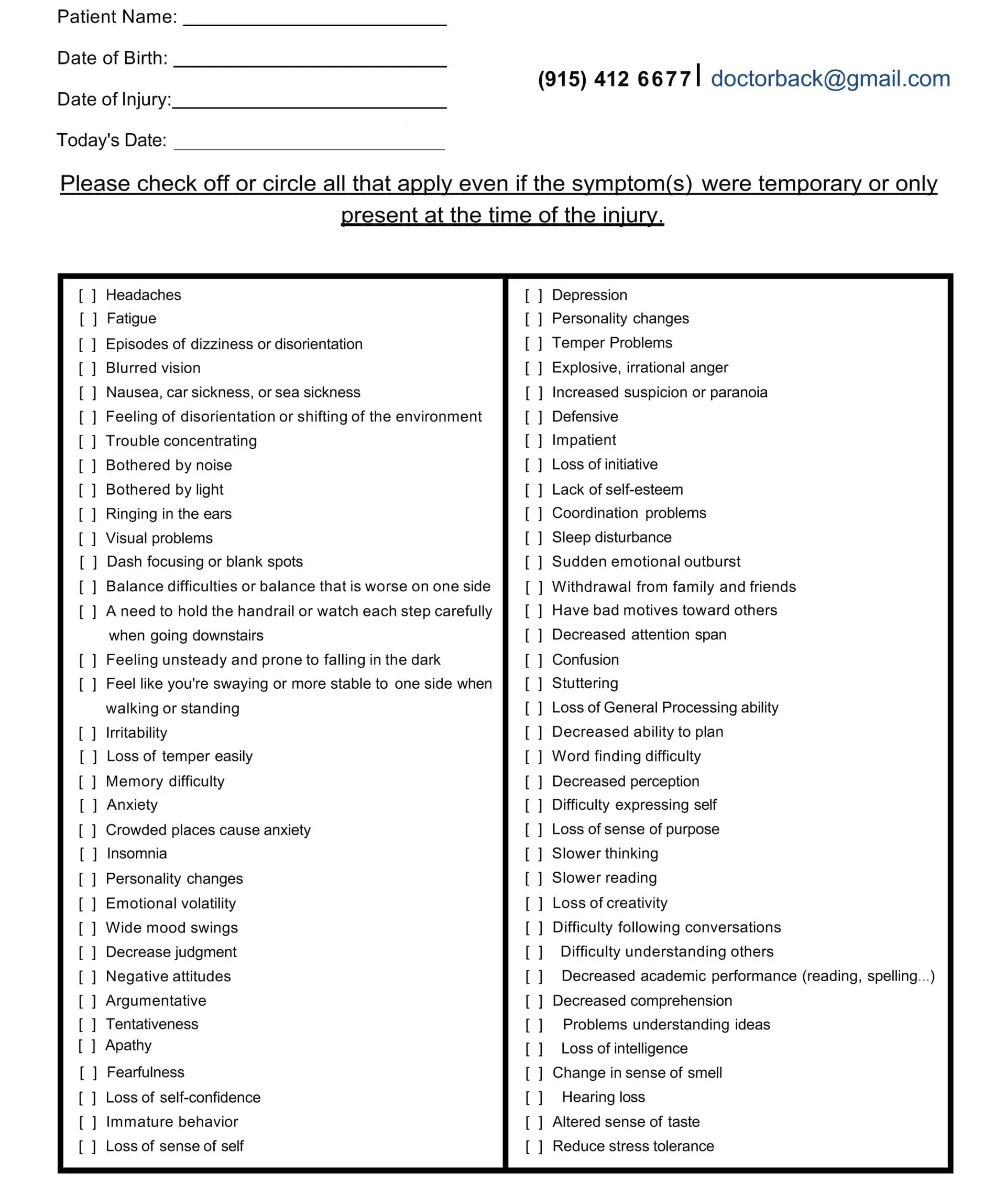
Head Injury/Traumatic Brain Injury Symptom Questionnaire
Virtual Examinations: How El Paso Back Clinic Does It Remotely
Telemedicine at El Paso Back Clinic® starts with virtual exams. You connect via secure video from your phone or computer. Dr. Jimenez or the team talks to you about your injury.
For a car accident, they ask about the crash and pain spots. They watch you move, like bending or walking, to check for swelling or stiffness. Even without hands-on involvement, they spot many problems, such as muscle pulls or nerve issues (Personal Injury Firm, 2025).
Work injuries, like slips, get quick virtual checks to stop things from getting worse. The chiropractor guides home tests, such as balance checks.
Tools in Virtual Exams: Video for movement, apps for sharing photos of injuries, or devices for vital signs.
When It’s Not Enough: Some need in-person touches, so they schedule clinic visits at their El Paso locations.
This remote setup makes getting checked easy, especially in El Paso, where traffic can be a hassle (CK Firm, 2024).
Diagnoses Through Telemedicine at the Clinic
After the exam, the team at El Paso Back Clinic® diagnoses remotely. Common ones from car accidents include whiplash or disc problems. The NP might order X-rays or MRIs, which are performed locally and shared online.
Chiropractors like Dr. Jimenez spot spinal shifts that can cause leg pain, such as sciatica. They explain it clearly on video. The NP assesses whole-body health, including whether swelling worsens.
All sessions are recorded for official documents, insurance keys, or personal injury claims (ChiroMed, n.d.).
Diagnosis Examples: Work-related back pain, sports-related nerve hits, and crash-neck strains.
Team Collaboration: NP handles meds; chiropractor does adjustments.
Tips for Accuracy: Describe pain and show motions well.
This reduces wait times, allowing you to start your El Paso recovery sooner (Complete Care, n.d.).
Managing Treatment Plans Remotely from El Paso Back Clinic
The NP and chiropractor create a treatment plan together, updated via telemedicine. For a sports knee sprain, it might include rest, ice, and shown exercises.
Dr. Jimenez demonstrates stretches on camera. The NP monitors pain and adjusts treatments.
They coordinate to avoid overlaps. For work injuries, plans cover safe job returns. Everything’s online for easy tracking.
Plan Essentials: Pain relief, movement work, and prevention advice.
Integrative Touches: Diet tweaks to cut swelling, like more omega-3 foods.
Telemedicine Updates: Regular video calls to tweak based on progress.
This saves time and money for El Paso patients (Jimenez, n.d.-a).
Ongoing Support and Follow-Up Care at the Clinic
Recovery needs steady help, and El Paso Back Clinic® uses telemedicine for easy follow-ups. Log in to chat about how you’re doing.
For car crash back pain, they check therapy effects and offer encouragement. Support includes mental health tips, as injuries can stress you.
Chiropractors guide home exercises on video. NPs watch for treatment side effects.
Support Types: Mood talks, progress logs, specialist referrals.
How Often: Weekly, early on, then less.
For El Paso Athletes: Safe return-to-play tips, like warm-ups.
This prevents pain from lasting, helping you get back to life fast (Prescient National, n.d.).
Benefits for El Paso Residents with Mobility or Access Issues
Injuries make moving hard, especially in spread-out El Paso. Telemedicine brings care to you.
No travel needed, perfect for remote areas or difficult days. For work injuries, it means less downtime. See pros from home.
Who Gains Most: Those pained by walking, without transport, or packed schedules.
Access Help: Shorter waits than office visits.
Legal Benefits: Docs care for claims without hold-ups.
This makes healing equal for all in El Paso (CK Firm, 2024).
Integrative Advice on Diet, Exercise, and Lifestyle from the Clinic
El Paso Back Clinic® shines with holistic telemedicine tips. They suggest anti-inflammatory foods, such as fruits, to aid healing.
Exercise advice includes easy yoga for pain, demonstrated online. Lifestyle shifts cover better sleep or stress cuts, like apps for calm.
For sports, they teach form to prevent re-injury.
Diet Ideas: Omega-3 for nerves, antioxidants for fixes.
Workout Suggestions: Stretches for range, walks for build-up.
Life Changes: Posture tweaks, drop bad habits.
This addresses root causes for better long-term health (Dallas Accident and Injury Rehab, n.d.).
Coordination and Documentation Between NP and Chiropractor at El Paso Back Clinic
The team shares notes easily on telemedicine platforms. Dr. Jimenez, as both NP and chiropractor, bridges the roles seamlessly.
Records from calls build your file, showing progress for insurance or courts.
Therapies align, like adjustments with rest plans.
Coordination Methods: Shared digital files, joint calls.
Record Value: Shows timely, excellent care.
Your Part: Update honestly for the top plans.
This leads to smooth recoveries in El Paso (Jimenez, n.d.-b).
Insights from Dr. Alexander Jimenez at El Paso Back Clinic
Dr. Alexander Jimenez, DC, APRN, FNP-BC, shares hands-on views from over 30 years at El Paso Back Clinic®. He uses telemedicine for same-day injury exams, like after crashes or sports.
He stresses integrative care for body and mind. For head injuries, he advises sleep, diet, and exercise. His dual license allows him to prescribe medications and adjust spines remotely when possible.
Jimenez highlights tests, such as MRIs, shared online. He combines adjustments in nutrition with other interventions for issues like gut health post-trauma.
Main Observations: Injuries are linked to overall health, like nerves and digestion.
Telemedicine in Practice: Quick virtual help for accidents, with shipped braces.
Tips: Use posture drills and supplements for healing.
His approach shows how the clinic’s NP-chiropractor team excels (Jimenez, n.d.-a; Jimenez, n.d.-b; Jimenez, n.d.-c).
Challenges and Future of Telemedicine at El Paso Back Clinic
Telemedicine has limits, such as the need for touch for some exams. Tech glitches can happen.
But the future is promising. Better apps and AI will improve diagnoses. More insurance covers it.
The clinic trains in remote teamwork.
Fixing Issues: Have in-person backups, help with tech.
Coming Trends: Wearables for live data.
Importance: Makes care more accessible and affordable in El Paso.
Conclusion
At El Paso Back Clinic® in El Paso, TX, telemedicine transforms injury care for car, work, or sports-related injuries. The integrative NP and chiropractor team, led by Dr. Jimenez, offers virtual exams for ongoing support. It includes holistic advice for better living. Ideal for mobility challenges. As Dr. Jimenez proves, this leads to quicker, fuller healing. If injured, reach out to El Paso Back Clinic® for easy, top-notch care at 915-850-0900 or visit their site.
Introduction: My Personal Commitment to the Medico-Legal World—Bridging the Gap Between Clinical Science and Courtroom Proof
By Dr. Alex Jimenez, DC, APRN, FNP-BC | Board-Certified Nurse Practitioner & Chiropractor
Injury Medical Clinic PA, El Paso, Texas
The answer to the crucial question of whether the injury can be conclusively proven, dated, and causally connected to the traumatic event frequently determines the outcome of the high-stakes world of personal injury litigation.
My life’s work at Injury Medical Clinic PA is dedicated to answering this question with an unassailable “Yes.” I have spent decades developing a diagnostic and documentation protocol that transcends the limitations of standard clinical practice. For me, a patient is not just a set of symptoms; they are a complex medico-legal case requiring forensic-level analysis. I recognized early on that El Paso attorneys needed more than a standard radiologist’s report or a simple chiropractor’s diagnosis—they needed a comprehensive, integrated expert who could seamlessly bridge advanced musculoskeletal biomechanics (my foundation as a Chiropractic Physician, DC) with the rigorous standards of comprehensive medical management and documentation (my expertise as a Board-Certified Nurse Practitioner, APRN, FNP-BC).
This unique duality is the engine of our practice. I am not just treating the patient; I am building the legal case. My goal for every personal injury client referred to me is to deliver definitive diagnostic proof that withstands the most rigorous cross-examination, establishes clear causality using objective biomechanical markers, and determines a scientifically validated timeline for the injury—what I call injury dating.
This lengthy post serves as my own, in-depth guide to legal counsel, shedding light on the extent of my involvement in the evaluation of injuries. I meticulously examine the procedures that I use to assess patient cases. These procedures are indispensable for determining the root cause of an illness and for shedding light on the actual degree of disability and impairment that has resulted from traumatic events. I take great pride in my role as a professional in that I am committed to the idea that when a clinical case is brought before a jury, the attorneys representing the plaintiff have complete confidence in the credibility and scientific basis of the expert testimony that I provide.
Dr. Alex Jimenez, DC, APRN, FNP-BC
I will deeply discuss, from my personal experience:
The Diagnostic Imperative: My sophisticated capability to personally stage and interpret complex Magnetic Resonance Imaging (MRI) findings, distinguishing acute trauma from pre-existing conditions using forensic principles.
Causality and Timing: My systematic, proprietary methodology for establishing causality and determining the precise timing (injury dating) of trauma using advanced biomechanical and physiological markers like Modic changes and Wolff’s Law.
The Dual-Licensed Advantage: The justification and profound benefit of treatment and testimony provided by me, a dual-licensed professional, within the El Paso legal community.
Expert Credibility: How attorneys frequently utilize my expert testimony as the credible, objective voice regarding injury dating, impairment, and functional loss, ensuring my documented assessments and evaluations meet the stringent Daubert Standard.
1.0 The Diagnostic Imperative: Personally Staging and Interpreting Complex MRI Findings—Going Beyond the Radiologist’s Report
In my experience, the Magnetic Resonance Imaging (MRI) scan is the single most crucial piece of objective evidence in spinal injury litigation. However, I’ve found that a standard radiologist report often focuses primarily on morphology—describing what is seen—but fails to provide the critical context of causality and chronicity necessary for a successful legal claim.
At Injury Medical Clinic PA, I do not simply accept the outside read; I forensically interpret the physiological, mechanical, and temporal signatures embedded within the MRI data myself. I personally review every single slice and sequence because my ultimate testimony depends on my deep understanding of the images.
1.1 Meeting the Daubert Standard: My Personal Protocols for Scientific Admissibility
In the medico-legal domain, any scientific evidence I present, especially complex imaging findings, must adhere to the Daubert Standard. This requires my expert testimony to be grounded in the methods and procedures of science and supported by appropriate validation (Spinal Diagnostics, n.d.). My entire documentation protocol is built around this necessity.
I personally ensure my findings are admissible by:
Employing Validated Methodology: I utilize diagnostic criteria and staging methods that are thoroughly established in peer-reviewed orthopedic and radiological literature, such as the classification of disc pathology and the chronology of vertebral changes (Wang et al., 2017).
Focusing on Objectivity: My reports meticulously cite the specific MRI pulse sequences (T1, T2, STIR) and image numbers where the pathology is visualized, allowing opposing counsel and the court to verify the data. This objectivity mirrors the rigor seen in advanced quantitative neuroimaging tools like NeuroQuant®, which are successfully used to meet the Daubert standard in TBI cases (National Institutes of Health, 2022).
Simplifying Complex Science: When I testify, my goal is to translate complex terms into easily digestible concepts for the jury. I do not just state a Modic 1 change is present; I explain why it’s a marker of acute trauma, making the science reliable and understandable. This is a crucial skill that attorneys rely on me for.
1.2 Decoding the Spinal Pathologies: My Forensic Review of T1, T2, and STIR Sequences
My method for forensic MRI interpretation depends on a nuanced understanding of various pulse sequences and their physiological meaning (Advanced MRI Interpretation, n.d.). I meticulously review the T1-weighted, T2-weighted, and Short Tau Inversion Recovery (STIR) sequences because they tell different stories about the underlying tissue pathology.
MRI Staging Acute Vs Chronic Injuries
MRI Sequence
Primary Signal (Bright)
Primary Signal (Dark)
Pathological Significance
T1-Weighted
Fat (Marrow), Contrast (Gadolinium)
Water (Edema, CSF), Cortical Bone
Anatomy: Excellent for visualizing fatty infiltration (chronic muscle atrophy, Modic 2) and overall anatomical structure.
T2-Weighted
Water (Edema, CSF), Degenerated Disc
Fat (Marron), Cortical Bone
Pathology: Crucial for identifying water, making it the primary sequence for acute inflammation, disc herniation (fluid), and spinal cord changes.
STIR (Fat-Suppressed)
Water (Edema, CSF, Inflammation)
Fat (Marrow)
Acuity: The definitive sequence for acute trauma. By suppressing fat signal, any remaining bright signal is unequivocally edema, confirming acute inflammation in bone or soft tissue.
The presence of edema (abnormal fluid accumulation) in the bone marrow or soft tissues surrounding the spine is, in my professional opinion, the most powerful, objective indicator of acute trauma. This edema is the body’s immediate inflammatory response to injury and provides the temporal signature required for my precise injury dating.
1.3 Injury Dating: My Systematic Methodology for Establishing a Timeline of Trauma
The ability to accurately date an injury—to definitively state that a spinal pathology is new or acute, rather than chronic and pre-existing—is, without question, the cornerstone of a successful personal injury claim. My clinic utilizes physiological and biomechanical principles to establish this timeline with forensic precision.
1.3.1 Modic Changes: The Gold Standard for Vertebral Endplate Chronology
Modic changes are alterations in the vertebral body endplates and adjacent bone marrow, visible on MRI, that reflect different stages of pathological response. I rely on them heavily because they provide an objective and scientifically validated marker for estimating the age of an injury (Wang et al., 2017; Spinal Diagnostics, n.d.).
Determining Age of Injury Via MRI Staging
Modic Type 1 (MC1) – The Acute Signature: MC1 represents the acute inflammatory stage characterized by bone marrow edema. When I see this, I know I’m looking at an injury that is active and recent.
My Staging: I stage this based on the specific signal patterns: Dark on T1 and Bright on T2/STIR (Spinal Diagnostics, n.d.). The persistent bright signal on STIR is the definitive confirmation of active, acute inflammation.
My Testimony: I explain to attorneys that MC1 changes typically resolve or transition to the fatty Type 2 changes within approximately 6 to 8 weeks (Spinal Diagnostics, n.d.). Therefore, the presence of MC1 is a powerful, objective sign of recent trauma, often correlating directly with the patient’s reported high pain scores (Jensen et al., 2024). When a defense expert attempts to argue degeneration, my documentation of MC1 provides the irrefutable evidence of a specific, new acute event.
Modic Type 2 (MC2) – The Chronic Transition: MC2 represents the replacement of normal bone marrow with fatty tissue (Wang et al., 2017). This is a marker of a more subacute or chronic condition.
My Staging: I stage this based on the characteristic Bright on T1/T2 but crucially, Dark on STIR (fat-suppressed) sequence (Spinal Diagnostics, n.d.).
My Testimony: I use MC2 to show pre-existing degeneration, which ironically, strengthens my credibility. By acknowledging a chronic condition at one level (MC2) while simultaneously proving an acute injury at another (MC1), I demonstrate objectivity and isolate the liability to the new, acute trauma.
1.3.2 Wolff’s Law and My Chronological Interpretation of Bone Spurs
Further reinforcing my injury dating is my application of Wolff’s Law, a fundamental biomechanical principle that bone tissue adapts to the loads placed upon it (Spinal Diagnostics, n.d.). Chronic instability leads to the formation of osteophytes (bone spurs) as the body attempts to stabilize the segment through the piezoelectric effect (Spinal Diagnostics, n.d.).
The Biomechanical Timeline: I rely on scientific research confirming that it takes approximately six months for a bone spur to become radiographically visible or significant (Spinal Diagnostics, n.d.).
My Medico-Legal Implication: When I review a patient’s initial X-rays or CT scans following an MVA, and I find a complete absence of chronic osteophyte formation in the affected segment (e.g., C5-C6), yet the MRI shows an acute disc herniation, I have created an unassailable timeline. The absence of the six-month marker (the bone spur) provides strong supporting evidence that the soft-tissue injury is acute and causally related to the recent collision.
1.4 The Crucial Differential Diagnosis: My Approach to Acute Trauma vs. Chronic Degeneration
Distinguishing new trauma from old, asymptomatic degeneration is essential for proving the extent of damage. I use specific MRI markers to draw this clear line, transforming a murky diagnosis into legal certainty.
Many accident victims have some degree of pre-existing, asymptomatic degeneration. The defense always targets this reality. My expertise lies in identifying and quantifying the acute-on-chronic injury (Spinal Diagnostics, n.d.).
The tell-tale radiological sign I look for is the clear observation of newly extruded disc material extending beyond the border of a mature, pre-existing osteophyte (Spinal Diagnostics, n.d.). The osteophyte, being a chronic boney change, acts as an anatomical baseline for pre-injury status. Any disc material that has been forcefully extruded beyond this chronic bony landmark is, by definition, new trauma and directly quantifiable aggravation. I personally measure this new extrusion and document its displacement in my reports.
1.4.2 The Vacuum Disc Phenomenon: The Irrefutable Marker of Old Pathology
I use the Vacuum Disc Phenomenon as another definitive marker of a chronic, old condition. This finding—nitrogen gas (a distinct signal void, appearing black) within the center of the disc on all MRI sequences (T1, T2, and STIR)—is a reliable sign of old, irreversible degenerative changes and instability (Spinal Diagnostics, n.d.; Advanced MRI Interpretation, n.d.).
When I find a vacuum disc at one level, I include it in my report. This establishes my objectivity, allowing me to state confidently that while one level is chronic, the adjacent, non-vacuum level that displays Modic 1 changes is acute and causally related to the MVA. This approach prevents the defense from collapsing the entire spine into a single, pre-existing condition.
1.5 Analysis of Complex Non-Disc Spinal Pathologies: The Hidden Injuries
Beyond disc herniation, I specialize in the advanced interpretation of other complex spinal pathologies frequently misunderstood or missed by general practitioners, yet vital for proving injury.
1.5.1 The Spinal Epidural Venous Plexus (Batson’s Plexus): Dural Tenting
The Spinal Epidural Venous Plexus (Batson’s Plexus) is a valveless network highly susceptible to sudden pressure changes (Advanced MRI Interpretation, n.d.). In court, I must distinguish between normal physiological changes and pathological ones.
My Differential Diagnosis: Trauma can cause a physiological venous dilation because a disc extrusion can push on the thecal sac—a phenomenon known as dural tenting. This must be carefully distinguished from a pathological Epidural Varix (a symptomatic dilation that causes neural compression) (Advanced MRI Interpretation, n.d.). I rely on sequences like contrast-enhanced MRI (when medically necessary) and non-contrast flow-sensitive sequences to confirm the difference. Incorrectly diagnosing normal venous dilation as a compressive pathology can undermine an entire claim, and my careful distinction preserves my credibility.
1.5.2 Post-Traumatic Muscle Changes: Fatty Infiltration of the Multifidus
The deep lumbar muscles, particularly the multifidus, are essential stabilizers. I have seen time and again how pain-induced inhibition leads to rapid structural changes in this muscle.
My Injury Dating and Causality: This muscle transformation begins to appear on imaging as early as 2 to 12 weeks post-injury (Spinal Diagnostics, n.d.; Central Ohio Spine and Joint, n.d.). Fatty infiltration (visible as a bright signal on T1-weighted images) is highly associated with chronic pain and instability. The degree of infiltration is a crucial prognostic indicator, correlating negatively with functional improvement (Xu et al., 2024). The presence and severity of multifidus fatty infiltration provide powerful objective evidence of chronic functional impairment and instability directly resulting from the traumatic event. I use this finding to prove permanent injury to the core stabilizing system, which is critical for future medical damages.
2.0 Establishing Causality: My Biomechanical and Legal Framework
The defense is designed to argue that a plaintiff’s pain is due to aging or unrelated issues. My documentation provides the scientific and legal rebuttals necessary to establish clear causation—a process I personally manage from the moment the patient walks through my door.
2.1 The “Eggshell Plaintiff” Doctrine: My Documentation Strategy
A foundational principle in personal injury law is the “Eggshell Plaintiff” Rule: a defendant must take the victim as they find them (Cornell Law School, n.d.). This means the defendant is fully liable for the plaintiff’s injuries, even if those injuries are more severe than they would have been in an average person due to an existing, pre-disposed condition (Rafi Law Firm, n.d.).
My Personal Role: Successfully applying this doctrine in court requires meticulous documentation, which I provide by:
Defining the Baseline: Precisely evaluating the pre-accident state (using the Vacuum Disc, Modic 2/3, and chronic osteophyte timelines). I acknowledge the pre-existing state without minimizing the new trauma.
Quantifying the Acute Change: Using Modic Type 1 and Acute-on-Chronic findings to objectively demonstrate the new, causally related injury (Spinal Diagnostics, n.d.).
Proving Exacerbation: Establishing that the traumatic event (MVA) directly aggravated the pre-existing condition, resulting in new symptoms, functional loss, and permanent impairment. My reports meticulously connect the mechanism of injury to the exacerbation, ensuring the court grasps the full scope of liability.
2.2 The Biomechanical Signatures of Soft Tissue and Ligamentous Injury (Whiplash)
Soft tissue injuries, or whiplash-associated disorders (WAD), are commonly challenged as subjective. My examination protocol goes beyond standard range of motion checks to confirm structural injury.
Occult Ligamentous Injury: I utilize the MRI’s fluid-sensitive sequences (STIR) to search for occult tears and sprains. I look for the hyperintense (bright) signal in the interspinous and supraspinous ligaments (Spinal Diagnostics, n.d.), which represents edema and tearing. This finding transforms a subjective “sprain/strain” into an objective, structural instability.
Facet Capsular Edema: The facet joints are often injured during MVA hyperflexion/hyperextension. I meticulously look for capsular edema or effusion (bright signal around the joint) on T2/STIR images. This is a highly specific finding for acute trauma to the joint capsule, which often correlates to localized, severe pain.
The Biomechanical Correlation: I thoroughly document the mechanism of injury (e.g., rear-end collision, specific speed data if available) and link the vector of force to the specific pathology found (e.g., a rear-end vector causing anterior compression and posterior ligamentous tearing) (NCBI, 2023). This correlation is crucial in court to overcome defense arguments that the forces were insufficient to cause the documented injury.
3.0 The Dual-Licensed Advantage: My DC & APRN/FNP-BC Model in El Paso
The most compelling aspect of the Injury Medical Clinic PA model, and the primary reason for my success in the medico-legal field, is my unique qualification as a dual-licensed professional. The integration of the Doctor of Chiropractic (DC) and the Advanced Practice Registered Nurse/Family Nurse Practitioner (APRN/FNP-BC) licenses creates a holistic, comprehensive, and legally powerful care model that is unmatched in the El Paso area.
3.1 Comprehensive Care Models: My Integrated Approach
I bring together the best of both worlds, creating a single source of expertise that satisfies both the clinical and legal standards of care:
My Role as a Chiropractic Physician (DC): I provide unparalleled expertise in spinal biomechanics, functional assessment, manual therapy, and the non-surgical management of complex musculoskeletal injuries. The DC perspective is critical for evaluating the long-term functional impairment caused by disc, facet, and ligament pathology.
My Role as a Nurse Practitioner (APRN/FNP-BC): I provide the essential medical framework, including the ability to prescribe medication (e.g., muscle relaxants, neuropathic agents), order and manage advanced diagnostic testing (e.g., specific, medically-prescribed MRI protocols, nerve conduction studies), manage co-morbidities, and, most crucially, write comprehensive, authoritative medical-legal reports and provide expert testimony that carries the weight of a board-certified medical professional, satisfying the standard medical scrutiny of the court.
This integration ensures the patient receives optimal physical rehabilitation alongside rigorous medical documentation, all under one practice. My reports are medical documents authored by an APRN/FNP-BC, while the therapeutic details reflect the specialized biomechanical insight of a DC. This synergy is invaluable to attorneys.
3.2 Justification for Dual-Licensed Intervention: Case Archetypes in My Practice
I manage these three case archetypes every day, and they demonstrate why my dual-licensed approach is often medically and legally necessary:
Case Archetype
Clinical Presentation in My Clinic
My Dual-Licensed Treatment Rationale
Medico-Legal Value in My Reports
Type 1: Complex Cervical WAD with Radiculopathy.
Patient presents with neck pain, headaches, and confirmed numbness/tingling in the arm. MRI shows a C5-C6 disc bulge impinging on the nerve root.
My DC Expertise: Focus on specific spinal mobilization to reduce segmental dysfunction and restore cervical curve stability. My APRN Expertise: Prescribe gabapentin or NSAIDs for nerve pain, order Electromyography/Nerve Conduction Velocity (EMG/NCV) studies, and administer facet or trigger point injections if necessary (Mayo Clinic, 2024).
Causality: The combined finding of clinical radiculopathy (confirmed by NCV—a medical test I ordered) and the biomechanical trauma (my DC diagnosis) is documented under a single, authoritative medical record (my APRN report). I can objectively testify to the severity of the neurological deficit.
Type 2: Acute Lumbar Disc Extrusion with Failed Conservative Care.
Patient suffers acute L5-S1 disc extrusion causing severe, debilitating sciatica that is not responding to basic care.
My DC Expertise: Implement specialized non-surgical spinal decompression protocols and advanced core stabilization exercises. My APRN Expertise: Medically evaluate the patient’s pain using objective outcome measures (Oswestry Disability Index), rule out Red Flags (Cauda Equina), manage opioid/non-opioid medication, and critically, document the failure of conservative care, which justifies the trajectory toward advanced interventions or surgical consultation.
Damages & Prognosis: My comprehensive documentation of conservative care failure establishes the persistent, debilitating nature of the injury. This robust history is essential for the attorney to justify the valuation of both past and high-value future medical costs in front of a jury.
Type 3: Acute-on-Chronic Spinal Instability.
Patient has pre-existing, asymptomatic spinal stenosis (Modic Type 2 changes), but the MVA results in new symptoms and a new Modic Type 1 change at the adjacent level.
My DC Expertise: Focus on restoring segmental stability to the traumatized level while protecting the degenerated level. My APRN Expertise: Personally interpret the complex MRI (Modic 1 vs. Modic 2) to clearly delineate the acute injury (liability) from the pre-existing condition (eggshell) (Spinal Diagnostics, n.d.).
Defeating the Defense: My precise diagnostic report legally isolates the acute trauma (Modic 1) from the chronic degeneration (Modic 2/Vacuum Disc), providing the attorney with clear, objective evidence to apply the Eggshell Plaintiff doctrine and secure recovery for the aggravation and new injury.
4.0 My Credible Expert Witness Testimony: Illuminating Disability and Driving Monetary Recoveries
My ultimate function for the legal community is to serve as the credible, objective voice that clarifies the patient’s impairment for the jury. My testimony is built upon the synthesis of advanced clinical diagnostics and established medico-legal principles that I personally adhere to.
4.1 The Credibility Foundation: My Daubert-Compliant Testimony
Attorneys frequently utilize my expertise because my methodology is rooted in the scientific method, ensuring my opinions are admissible under the Daubert Standard. My expert testimony is not merely anecdotal; it is a direct presentation of verifiable scientific data:
Measurable Markers: When I testify, I don’t just state an opinion. I point to the imaging and explain that the Modic Type 1 change is not random, but an established scientific finding with a specific 6-8 week timeline, proving the freshness of the bone trauma (Wang et al., 2017). I use analogies, like comparing the Modic 1 change to a fresh bruise on the bone, which makes the complex science undeniable to a layperson jury.
Biomechanically Sound Conclusions: I personally explain how the physics of the impact (the vector, the forces) translates into the specific, demonstrable injury, such as the mechanism by which a sudden flexion-extension event causes an annular tear (Paredes et al., 2023). This link between physics and physiology is critical for proving causation.
The Power of the Dual Role: When I stand before the court, my opinion integrates the highest standard of musculoskeletal diagnosis (DC) with the authority of advanced medical management (APRN). I am uniquely positioned to counter both the defense’s biomechanics expert and their medical expert.
4.2 My Method for Translating Pathology into Permanent Impairment and Disability
The value of a personal injury case is directly linked to the demonstrability and permanency of the injury. My detailed reports translate abstract medical findings into tangible, compelling evidence of long-term disability for the jury.
4.2.1 Quantifying Functional Loss: From Imaging to Activities of Daily Living (ADLs)
I shift the focus from what the injury looks like on an MRI to how it permanently impairs the patient’s life:
Multifidus Fatty Infiltration: I explain to the jury that the increased bright signal on the patient’s T1 MRI is not simply “fat,” but the objective, measurable sign of a permanent loss of spinal stability (Central Ohio Spine and Joint, n.d.). I elaborate that the muscle is no longer functional, leading to chronic instability, increased risk of re-injury, and an inability to perform basic ADLs like prolonged sitting, standing, or lifting—directly correlating to a lower quality of life and permanent functional loss.
Irreversible Cord Damage (Myelomalacia): If I identify Myelomalacia (softening, necrosis, and scarring of the spinal cord tissue) on a T2 image (hyperintensity within the cord), I use this to establish a definitive, catastrophic, permanent neurological injury (Spinal Diagnostics, n.d.). This finding is irreversible and dictates a life of permanent neurological deficits, which is irrefutable evidence of severe disability that warrants significant monetary recovery.
4.2.2 Linking Causality to Prognosis and Future Medical Costs
My reports connect the initial traumatic event to the long-term cost of care. This is vital for the attorney’s calculation of future medical damages.
Permanent Impairment Rating (PIR): I use objective prognostic indicators—such as the severity of multifidus infiltration (Xu et al., 2024), the persistence of Modic 1 changes, or the presence of irreversible ligament instability—to generate a scientifically grounded Permanent Impairment Rating (PIR) using the AMA Guides to the Evaluation of Permanent Impairment.
Future Medical Requirements: The report then outlines the need for future care (e.g., ongoing chiropractic maintenance, periodic APRN follow-ups, medication management, or potential injections/surgical consultations) directly necessitated by the MVA. This robust justification of future needs is critical for maximizing the final settlement or jury award.
By establishing causation, chronicity, and prognosis through my rigorous, peer-reviewed methodology, I provide the unassailable evidence necessary to maximize the plaintiff’s recovery and to position legal counsel to confidently present even the most complex clinical cases before a jury. My role is to ensure that the injury is not only treated effectively but also documented exhaustively, establishing Injury Medical Clinic PA as the premier clinic for injuries resulting from accidents in the El Paso area.
National Institutes of Health (NIH). (2022). Updated Review of the Evidence Supporting the Medical and Legal Use of NeuroQuant® and NeuroGage® in Patients With Traumatic Brain Injury. PMC – PubMed Central. https://pmc.ncbi.nlm.nih.gov/articles/PMC9027332/
Brain Injury Risks in Martial Arts: Understanding Dangers and Recovery Paths
Martial arts, such as mixed martial arts (MMA), combine striking, grappling, and high-energy moves. These sports draw millions of fans and fighters worldwide. But they come with real risks to the brain. Repeated hits to the head can cause short-term problems like dizziness and confusion. Over time, these can lead to bigger issues, such as memory loss or even diseases like chronic traumatic encephalopathy (CTE). This article examines these dangers and how integrative chiropractic care can aid fighters in their recovery. It draws on studies and expert views to demonstrate why early action is crucial.
The rise of MMA has made it one of the fastest-growing sports. Fighters train hard, often taking hundreds of blows in a single session. While gloves and rules help, the brain still takes a hit. Research shows that even light taps can add up, altering how the brain functions (Bernick et al., 2015). Fighters need to know the signs and seek care fast. This knowledge can save careers and lives.
Short-Term Symptoms: What Happens Right After a Hit
When a fighter lands a punch or kick to the head, the brain inside the skull shakes. This jolt can cause a concussion, a type of traumatic brain injury (TBI). Short-term symptoms can develop rapidly and persist for days or weeks.
Vertigo and Dizziness: Fighters often feel the room spin. This comes from the inner ear and brain signals getting mixed up. Balance issues make simple tasks, such as walking, difficult.
Disorientation and Confusion: Right after a blow, a fighter might not know where they are or what just happened. This “fog” can last minutes to hours.
Headaches and Nausea: Sharp pain in the head pairs with an upset stomach. Lights and sounds feel too loud, adding to the stress.
Fatigue and Sleep Changes: Even after rest, fighters often feel exhausted. They might sleep too much or struggle to fall asleep.
These signs show the brain needs time to reset. In MMA, knockouts (KOs) or technical knockouts (TKOs) are common. A study of over 800 UFC fights found 13% ended in KOs and 21% in TKOs, mostly from head strikes (Babić et al., 2014). During a TKO, a fighter takes about 18 head hits in the last 30 seconds. That’s a lot for the brain to handle at once.
Dr. Alexander Jimenez, a chiropractor with over 30 years of experience in sports medicine, frequently sees these symptoms in his clinic. He notes that many fighters push through the pain, thinking it’s just part of training. However, ignoring early signs can exacerbate the situation (Jimenez, 2024a). His patients report quick relief from gentle adjustments that ease neck tension tied to these issues.
Medical teams at fights check pupils and ask basic questions to spot problems. If a fighter blacks out for more than 30 seconds, it’s a red flag. They might need scans to rule out bleeding (Fagan, 2020). Rest is key here—no sparring until cleared.
Long-Term Repercussions: The Hidden Cost of Repeated Hits
The real worry starts after many fights. Each hit, even if it doesn’t knock you out, chips away at brain health. Over the years, this has led to cognitive slowdown and diseases like CTE.
Cognitive Impairment: Memory slips and trouble focusing become normal. Fighters might forget training moves or struggle with decisions in the ring.
Slower Processing Speed: The brain takes longer to react. This shows up in tests where fighters with more bouts score lower (Bernick et al., 2015).
Neurodegenerative Disorders like CTE: CTE builds up from repeated trauma. It causes protein clumps in the brain, leading to mood swings, aggression, and dementia later in life (Meehan et al., 2019).
Studies link exposure to fighting to smaller brain parts, such as the thalamus, which is involved in thinking and movement. One review found 58% to 78% of MMA injuries involve the head, raising CTE odds (Stern et al., 2021). Women might face extra risks due to longer fights and more head strikes per minute (Kavanagh et al., 2022).
Psychological effects grow, too. Anxiety and depression hit hard, with 33% of TBI patients facing major mood issues in the first year (Reis, 2023). Behavioral changes, such as snapping at loved ones, can strain relationships. Physically, tremors and poor balance make daily life tough.
A survey of MMA fighters showed over 60% worry about brain damage. One vet in his 30s noticed stuttering and word loss after years of sparring (Rogers, 2020). CTE cases, like Gary Goodridge’s in 2012, highlight the stakes—no cure exists, only prevention.
Dr. Jimenez observes similar patterns among martial artists. In his practice, he uses functional assessments to spot early decline. He stresses that starting care soon can slow progression (Jimenez, 2024b).
Psychological, Behavioral, and Physiological Effects Over Time
Brain injuries don’t stay in one spot—they spread. Psychological strain increases when fighters begin to doubt their skills. Behavioral shifts, such as increased aggression, can end careers outside the ring.
Psychological Toll: Depression and panic attacks are common. Fighters feel isolated, hiding symptoms to stay competitive.
Behavioral Changes: Impulse control fades, leading to risky choices. Irritability spikes, affecting team dynamics.
Physiological Shifts: Sleep disruption, hormone imbalance, and the body heals more slowly. This cycle feeds more injuries.
These effects worsen with time. A video on concussions notes that most gym coaches miss signs, letting issues grow (Concussions in Combat Sports, 2023). The National Institute of Neurological Disorders and Stroke lists long-term risks like post-traumatic dementia from even mild hits (National Institute of Neurological Disorders and Stroke, 2023).
Fighters report feeling “off” after sessions, with speech changes that fade only after breaks (Rogers, 2020). Physiological changes include less blood flow to the brain, starving cells of oxygen.
Dr. Jimenez incorporates mental health assessments into his treatment plans. His holistic approach, which combines nutrition and therapy, helps patients rebuild their confidence (Jimenez, 2024a).
How Integrative Chiropractic Care Steps In
Integrative chiropractic care provides a comprehensive approach to addressing brain injuries. It goes beyond pain meds, targeting the spine-brain link. Chiropractors, such as Dr. Jimenez, use hands-on methods to realign the body and enhance healing.
This care mixes adjustments, therapy, and lifestyle tips. It’s safe, drug-free, and works in conjunction with doctors for optimal results (Carr Chiropractic Clinic, n.d.). For martial artists, it means a faster return to training without the risk of re-injury.
Symptom Relief: Manipulation cuts headaches and dizziness. Soft tissue work relaxes tight muscles.
Studies back this. Adjustments improve blood flow, key for brain repair (Apex Chiropractic, n.d.). Patients see gains in weeks, not months.
Key Benefits of Chiropractic for Brain Recovery
Chiropractic shines in recovery. It tackles root causes, not just signs. For TBIs, this translates to better long-term outcomes.
Here’s how it helps:
Improved Balance: Neck exercises strengthen stabilizers, reducing the risk of falls. Fighters regain ring control faster.
Increased Cerebrospinal Fluid Circulation: Adjustments clear blockages, flush toxins, and deliver nutrients to the brain.
Stimulation of Brain Neuroplasticity: The brain rewires itself. Gentle pressure sparks new connections, aiding memory and speed.
One clinic reports that patients with concussions experience improved vision and coordination after sessions (Calibration Mansfield, n.d.). Dr. Jimenez utilizes tools such as digital X-rays to track progress, noting quicker healing in athletes (Jimenez, 2024b).
For MMA injuries, care focuses on managing pain and accelerating tissue repair (Turnersville Chiropractic, 2023). It’s holistic—adding diet and exercise for full strength.
Real-World Examples and Expert Insights
Take Paula, a TBI survivor treated at a chiropractic center. After accidents, she battled depression and pain. With adjustments, laser therapy, and balance training, she was able to run half-marathons again (Reis, 2023). Stories like hers show hope.
Dr. Jimenez shares cases of martial artists regaining their agility after injury. His LinkedIn posts highlight non-invasive wins over surgery (Jimenez, 2024b). He teams with therapists for team-based care.
A YouTube doc on fighting concussions stresses protocols. Coaches must identify issues early, and chiropractic care can serve as a first step (Concussions in Combat Sports, 2023).
Prevention Tips for Fighters
Staying safe starts in the gym. Cut heavy sparring and focus on drills. Use better gear and track hits.
Train Smart: Limit head contact. Add brain games, such as puzzles, for protection.
Monitor Symptoms: Log headaches or fog. Rest at the first sign.
Seek Pros Early: Chiropractors identify issues before they become a problem.
Rule changes, such as longer counts after knockdowns, could help (Babić et al., 2014). Fighters own their health—listen to your body.
Why Choose Integrative Care for Lasting Health
Brain risks in martial arts are serious, but recovery is possible. Short-term issues like vertigo typically subside with rest. Long-term threats like CTE require immediate action. Integrative chiropractic bridges the gap, addressing spinal issues and promoting brain repair.
Benefits stack up: better flow, rewiring, and balance. Experts like Dr. Jimenez prove it works for athletes. Don’t wait—start care to fight smarter, not harder.
Bernick, C., Banks, S., Shin, K., & Rao, V. (2015). Repeated head trauma is associated with smaller thalamic volumes and slower processing speed. British Journal of Sports Medicine, 49(15), 1007. https://bjsm.bmj.com/content/49/15/1007
Stern, R. A., et al. (2021). Head injury in mixed martial arts: A review of epidemiology, affected brain structures and risks of cognitive decline. PubMed. https://pubmed.ncbi.nlm.nih.gov/33538222/
Understanding Core Overtraining Injuries: Wellness Strategies and Chiropractic Solutions at El Paso Back Clinic
A man is training in a gym to build strong and healthy muscles.
Pushing your core muscles too far without proper rest can create big issues for your overall health, especially your back. At El Paso Back Clinic® in El Paso, TX, we specialize in wellness chiropractic care that helps people recover from these problems and stay strong. Core overtraining affects the muscles around your midsection, which support your spine and daily movements. This article breaks down the injuries that can happen, why they occur, ways to stop them, and how our chiropractic methods provide relief. We focus on natural wellness to keep your back and body in balance.
The Role of Core Muscles in Back Health and Overtraining Basics
Your core is like the foundation of a house—it holds everything together. It includes muscles in your stomach, sides, lower back, and hips. These help with bending, twisting, and standing straight. When you overtrain, you repeat exercises like sit-ups or lifts too much, without breaks. This wears down tissues faster than they can heal. Wellness experts note that this leads to lasting soreness, reduced energy, and risks to your spine.
At our clinic, we treat many cases where core issues cause back pain. Overtraining disrupts the natural alignment, pulling on the back. Science shows repetitive stress changes how muscles and bones work together, leading to problems.
Everyday Muscle Strains from Pushing the Core Too Hard
Strains are pulls or small tears in muscles. They are common when the core gets overworked and can’t support the body well.
Strains Around the Groin
These happen in the inner thigh muscles tied to the core. Quick stops and starts in activities like hiking or playing kickball can trigger them. If the core is weak from too much training, it adds extra pull. You feel a sudden sharp pain, maybe see bruising, and have trouble moving your legs inward. In the back, this strain can tug on the lower spine, causing aches there too.
Strains in the Stomach Area
Abdominal strains come from forceful turns, like swinging a racket or carrying heavy bags. Overdoing core workouts builds up damage over time. Pain hits when you tense up or laugh, and the area feels sore to the touch. This connects to back health because weak abs force the back muscles to overcompensate, leading to stiffness.
Problems with Hip Flexors
These muscles help raise your legs and link directly to the core. Running uphill or doing too many leg raises without rest inflames them. Symptoms include a tight feeling in the front of the hip and pain when stepping up. Poor core balance makes the back arch unnatural, adding pressure.
Our wellness approach at El Paso Back Clinic uses gentle checks to find these strains early and guide healing without harsh methods.
Deeper Issues: Fractures and Bone Stress from Core Overuse
When overtraining goes on, it can harm bones, which support the core and back.
Fractures in the Ribs
Rib stress fractures are tiny breaks from constant tugging by core muscles. This shows up in paddling sports or even heavy coughing fits from overuse. The muscles contract hard, stressing the bone until it cracks. Pain sharpens with deep breaths or twists, and it can feel tender. Since ribs protect the upper back area, this injury often leads to posture problems and back discomfort.
Other Stress Fractures
These small cracks appear in weight-bearing bones like the pelvis or lower spine from ongoing impact. Walkers or dancers who ignore rest will experience issues when bone repair lags behind damage. Early signs are dull aches that worsen with activity. In young active people, it might involve cartilage issues, too. Back clinic patients often report these symptoms linked to core weakness, causing spinal instability.
Healing takes rest, but our chiropractic wellness plans speed it up safely.
Extra Effects Like Ongoing Pain, Loss of Power, and Stiffness
Overtraining doesn’t stop at big injuries—it brings smaller but nagging problems.
Lasting Pain and Rigid Muscles
You might wake up stiff or feel constant soreness in the core. This spreads to the back, making sitting or standing tough. It’s a sign the body is inflamed and needs recovery time.
Weaker Muscles Overall
Tired core muscles can’t hold strong, leading to drops in power. One side might become too tight while the other weakens, throwing off balance. This imbalance pulls on the back, increasing the risk of slips or strains during daily tasks.
Tight Spots in the Legs and Sides
Muscles like the back of the thighs (hamstrings) or the outer thigh band (IT band) tighten to make up for a worn-out core. This causes knee or hip issues that refer pain to the lower back. Wellness care addresses these chains of problems.
Signs also include getting sick more or feeling down, as the body fights overload.
How These Injuries Develop and What Increases the Risk
Injuries build from too much activity without balance. Body mechanics play a part—bad posture during exercises adds uneven stress. Muscles need time to fix small wear, but skipping rest lets damage grow.
In jobs with lifting or sports with jumps, core pulls transfer to bones. Poor shoes or low nutrients weaken things further. At our back clinic, we look at the whole picture, including how back alignment affects core strain.
Smart Ways to Avoid Core Overtraining Problems
Wellness starts with prevention. Ramp up workouts slowly, adding just a bit more each week. Switch activities to give muscles variety. Take full rest days and stretch gently.
Eat foods rich in vitamins for strong bones, and use supportive gear. Pay attention to body signals like unusual tiredness. Our clinic offers wellness checks to catch risks early.
Chiropractic Wellness Care for Healing Core Injuries
At El Paso Back Clinic, we use integrated chiropractic to resolve core issues and boost back health.
Adjustments to the Spine
These hands-on moves realign the back, easing nerve pressure and helping muscles relax. It improves how the core and back communicate, reducing pain fast.
Therapies for Soft Tissues
Massage-like techniques release tight spots, increase blood flow, and calm inflammation. This works well for strains and stiffness.
Our methods treat current pain while building wellness to avoid repeats. They enhance flexibility, strength, and nerve health for long-term back care.
Expertise from Dr. Alexander Jimenez at El Paso Back Clinic
Dr. Alexander Jimenez, DC, APRN, FNP-BC, leads our wellness efforts with deep knowledge in chiropractic science.
Linking Injuries to Patient Histories
He connects core overtraining to back pain through detailed stories, exams, and imaging. For instance, work lifts or sports twists can lead to patterns in muscle and nerve issues.
Diagnosis with Dual Expertise
Using his skills as a nurse practitioner and chiropractor, he does thorough assessments. Advanced scans reveal hidden bone or tissue problems in core areas.
Step-by-Step Treatments
Procedures include spine adjustments, tissue work, and guided exercises. For sports or personal injuries, he adds strength training. In car accidents, focus is on impact-related core and back strains.
Care for Medical and Legal Needs
The clinic manages full treatment plans, including reports for insurance or court in injury cases. This covers work, auto, or everyday accidents with clear documentation.
Dr. Jimenez promotes education on wellness to empower patients.
Bringing It All Together for Better Health
Core overtraining brings strains, fractures, pain, and imbalances that hit the back hard. Prevention through smart habits and chiropractic care keeps you moving well. At El Paso Back Clinic®, our wellness focus helps restore balance naturally.
Chiropractic Solutions for Sudden Movement Injuries
Businesswoman experiencing back pain while working at her desk in a modern office.
Introduction
Picture yourself dashing to catch a ball, only to twist your ankle with a sharp sting. Or imagine your neck jerking in a car crash, leaving you stiff and sore. These are sudden movement injuries—quick, forceful actions that strain muscles, sprain joints, or sometimes result from involuntary jerks due to medical conditions (Hopkins Medicine, n.d.; Verywell Health, 2022). Sudden movement injuries are acute musculoskeletal issues, such as sprains or strains, caused by a single traumatic event, or they can result from neurological conditions that lead to uncontrollable motions (Cleveland Clinic, 2023a; UF Health, n.d.).
Chiropractic integrative care can help by easing pain, reducing swelling, and restoring movement naturally. At El Paso Back Clinic, Dr. Alexander Jimenez, DC, APRN, FNP-BC, uses spinal adjustments, nutrition, and therapies like massage to heal these injuries (Jimenez, n.d.a). This article explores what sudden movement injuries are, how they happen, and how Dr. Jimenez’s holistic approach speeds recovery. You’ll learn practical tips to heal and prevent future issues, all backed by science.
Whether from a sports slip or an unexpected jolt, these injuries can disrupt daily life. With the right care, you can bounce back stronger and stay active (Cleveland Clinic, 2023b).
Understanding Sudden Movement Injuries
Sudden movement injuries come in two forms. Acute soft-tissue injuries, like strains (stretched muscles or tendons) or sprains (stretched ligaments), happen from a single, forceful action, such as twisting a knee or jerking your neck in a crash (Hopkins Medicine, n.d.; Cleveland Clinic, 2023c). These often occur in sports, work accidents, or falls, causing pain, swelling, or limited motion (UPMC, n.d.).
Involuntary movement injuries, like jerks or tremors, stem from neurological conditions such as myoclonus or ataxia (Verywell Health, 2022; Children’s Hospital, n.d.). These can result from brain injuries, seizures, or migraines, leading to uncontrolled motions that may strain muscles or joints (Edward K. Le, 2023; Movement Disorders, n.d.).
Both types limit mobility and can lead to chronic pain if untreated. Acute injuries cause immediate swelling or bruising, while neurological ones may add balance issues or anxiety (Cleveland Clinic, 2023a; UF Health, n.d.). Early treatment prevents long-term problems like arthritis or weakness (Cleveland Clinic, 2023b).
How Sudden Movement Injuries Occur
Acute soft-tissue injuries arise from sudden force. A quick pivot in basketball can sprain an ankle, or lifting a heavy box awkwardly can strain a back muscle (Cleveland Clinic, 2023c). Common triggers include:
Sports Accidents: Sudden twists or tackles in soccer or running (Cleveland Clinic, 2023b).
Car Crashes: Whiplash from neck jerking (Cleveland Clinic, 2023d).
Slips or Falls: Tripping on a curb, straining a knee (Pain Care Florida, n.d.).
No Warm-Up: Jumping into exercise without stretching (Cleveland Clinic, 2023c).
Involuntary movement injuries come from medical issues. Myoclonus, which causes jerky motions, can result from epilepsy or brain trauma, straining muscles during spasms (Movement Disorders, n.d.). Ataxia, causing unsteady movement, might follow a stroke, leading to falls or sprains (Children’s Hospital, n.d.). Risk factors include age, weak muscles, or prior injuries, which make joints less stable (UPMC, n.d.).
Both types disrupt normal movement. A sprained ankle swells, limiting walking, while involuntary jerks can cause falls, leading to additional injuries (Edward K. Le, 2023).
Signs and Effects of Sudden Movement Injuries
Signs vary by injury type. For soft-tissue injuries, you might notice:
Sharp pain or swelling, like a sore ankle after a twist (Hopkins Medicine, n.d.).
Bruising or stiffness, making joint movement tough (Cleveland Clinic, 2023c).
Weakness, like struggling to lift after a shoulder strain (UPMC, n.d.).
Involuntary movement injuries show differently:
Sudden twitches or tremors, like myoclonus spasms (Movement Disorders, n.d.).
Unsteady walking or balance loss from ataxia (Children’s Hospital, n.d.).
Muscle soreness from repetitive jerks (Verywell Health, 2022).
These injuries can make daily tasks hard—walking hurts with a sprained knee, or involuntary jerks cause embarrassment (Cleveland Clinic, 2023a). Untreated, they risk chronic pain, joint damage, or falls, especially in older adults (Cleveland Clinic, 2023b). Acting early stops small issues from growing.
Chiropractic Care for Recovery
Chiropractic care helps sudden movement injuries by fixing spinal misalignments that disrupt nerve signals, easing pain and swelling (New Edge Family Chiropractic, n.d.). Adjustments realign the spine, improving joint function and muscle coordination (Rangeline Chiropractic, n.d.). For a sprained ankle, adjustments reduce nerve pressure, speeding healing (Texas Medical Institute, n.d.).
For involuntary movements, chiropractic care calms nervous system stress, reducing spasms in conditions like myoclonus (Jimenez, n.d.a). Patients often feel less pain and better mobility after a few sessions (Cleveland Clinic, 2023b). It’s like resetting a stuck gear, letting your body move freely.
Dr. Jimenez’s Expertise at El Paso Back Clinic
At El Paso Back Clinic, Dr. Alexander Jimenez, DC, APRN, FNP-BC, uses his dual expertise as a chiropractor and nurse practitioner to treat sudden movement injuries from work, sports, personal falls, or motor vehicle accidents (MVAs). “Trauma misaligns the spine, blocking healing,” he explains (Jimenez, n.d.b).
His clinic uses advanced diagnostics: X-rays for neuromusculoskeletal imaging and blood tests to check inflammation. A sports injury, like a twisted knee, might show nerve pinches affecting mobility (Jimenez, n.d.a). Treatments are non-surgical: adjustments restore alignment, ultrasound reduces swelling, and exercises strengthen muscles. For MVAs, Dr. Jimenez provides detailed medical-legal documentation, working with specialists for smooth claims.
Integrative therapies boost recovery. Massage improves blood flow, speeding tissue repair; acupuncture reduces pain for easier motion; and nutrition plans with anti-inflammatory foods support healing (Jimenez, n.d.b). A worker with a strained back from lifting moved freely after adjustments and massage. Dr. Jimenez targets root causes, like poor form, to prevent chronic issues.
Integrative Therapies for Healing
El Paso Back Clinic’s integrative approach enhances recovery. Massage therapy relaxes tight muscles, boosting circulation to heal sprains faster (Texas Medical Institute, n.d.). Acupuncture targets points to ease pain and calm spasms, helping with involuntary movements (Jimenez, n.d.b). Exercises like leg lifts rebuild strength and stabilize joints (Sport and Spinal Physio, n.d.).
The RICE method (rest, ice, compression, elevation) helps reduce swelling in soft-tissue injuries early on (Cleveland Clinic, 2023e). These therapies, paired with chiropractic, speed recovery and prevent issues like arthritis (Cleveland Clinic, 2023b).
Nutrition to Support Recovery
Nutrition aids healing from sudden movement injuries. Omega-3-rich foods like salmon reduce inflammation, easing joint pain (Best Grand Rapids Chiropractor, n.d.). Leafy greens like spinach provide antioxidants to protect tissues (Spine, n.d., p. 417). Lean proteins like chicken rebuild muscles and ligaments (Human Care NY, n.d.).
Calcium from yogurt strengthens bones, while magnesium in nuts prevents spasms (Foot and Ankle Experts, n.d.). Try salmon salads or berry smoothies to support recovery. These foods work with chiropractic to speed healing (Rangeline Chiropractic, n.d.).
Preventing Future Injuries
Prevent injuries with smart habits. Warm up before sports with stretches to cut strain risks (Cleveland Clinic, 2023c). Strengthen core muscles with planks to stabilize joints (Sport and Spinal Physio, n.d.). Use proper form when lifting—bend knees, keep back straight (UPMC, n.d.).
For neurological issues, manage conditions like epilepsy with doctor guidance to reduce spasms (Verywell Health, 2022). Regular chiropractic check-ups catch misalignments early (New Edge Family Chiropractic, n.d.). These steps keep you moving safely.
Success Stories from El Paso Back Clinic
At El Paso Back Clinic, a runner with a sprained ankle healed with adjustments and protein-rich meals, returning to races. A driver post-MVA eased neck pain with acupuncture and greens. These stories show how integrative care restores mobility.
Conclusion
Sudden movement injuries, from sprains to involuntary jerks, can disrupt life, but chiropractic care at El Paso Back Clinic, led by Dr. Jimenez, heals them naturally. Using adjustments, nutrition, and therapies like massage, the clinic restores movement. Try warm-ups, eat omega-3s, and visit the clinic. Stay active and pain-free.
IFM's Find A Practitioner tool is the largest referral network in Functional Medicine, created to help patients locate Functional Medicine practitioners anywhere in the world. IFM Certified Practitioners are listed first in the search results, given their extensive education in Functional Medicine