A dislocated elbow is a common injury in adults and children and often happens in tandem with bone fractures and nerve and tissue damage. Can physical therapy help to support recovery and ensure range of motion?
Dislocated Elbow Injury
Elbow dislocations are generally caused by trauma when the elbow bones no longer connect. Individuals falling onto an outstretched hand is the most common cause of the injury. (James Layson, Ben J. Best 2023) Healthcare providers will try to relocate the elbow using a closed reduction. Individuals may require surgery if they cannot relocate the elbow using closed reduction.
The hinge function allows the bending and straightening of the arm.
Ball-and-socket joint
The ball-and-socket function allows you to rotate the palm of your hand to face up or face down.
A dislocated elbow injury can damage bones, muscles, ligaments, and tissues. (American Academy of Orthopaedic Surgeons. 2021) The longer the elbow remains out of the joint, the more damage can occur. Elbow dislocations rarely reset into their joints on their own and are recommended to be evaluated by a qualified healthcare provider to prevent permanent damage to nerves or function.
It is not recommended to try to reset the elbow on your own.
A healthcare provider will work to restore the joint and ensure proper alignment.
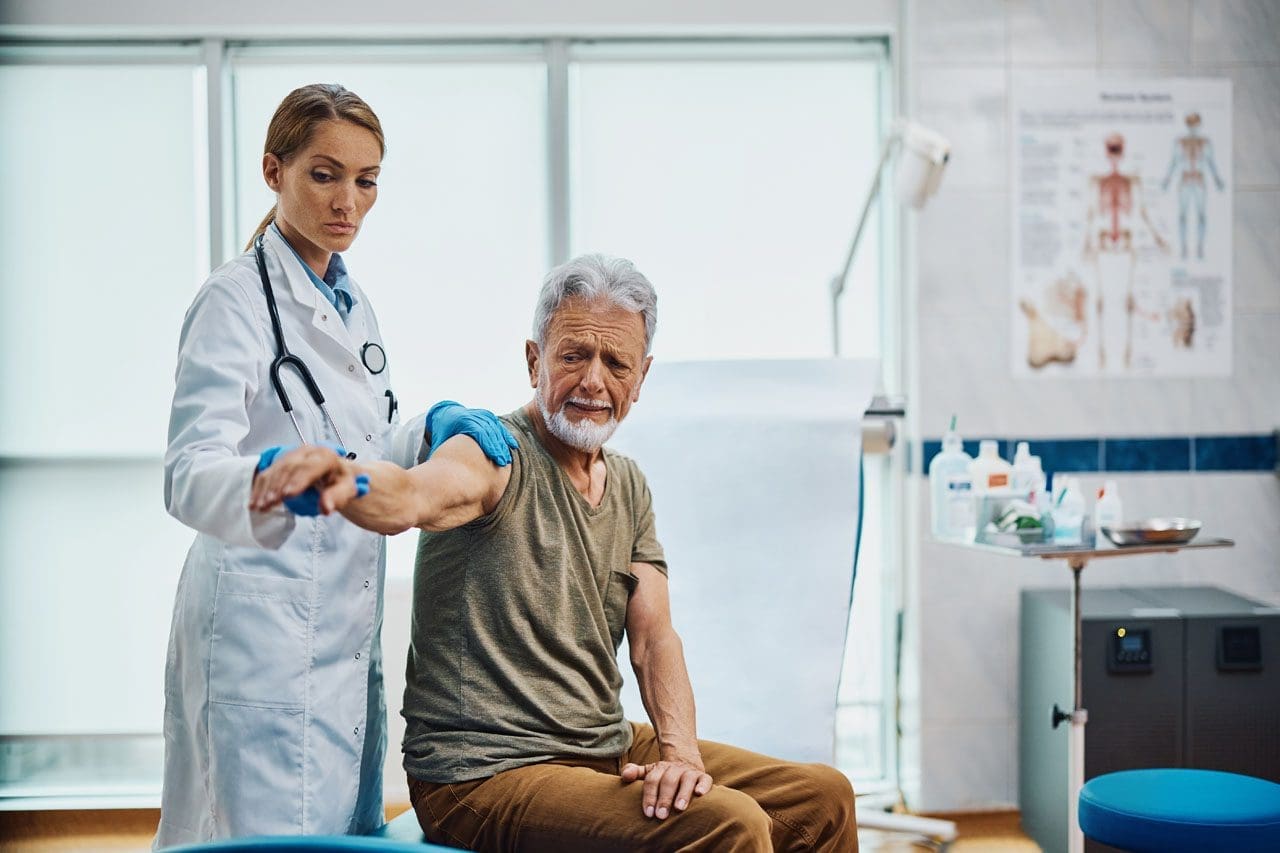
Before the reset, they will perform a physical examination to assess blood circulation and any nerve damage.
A closed reduction means that the elbow can be relocated without surgery.
Before the closed reduction, a healthcare provider will administer medications to help relax the individual and address the pain. (Medline Plus. 2022)
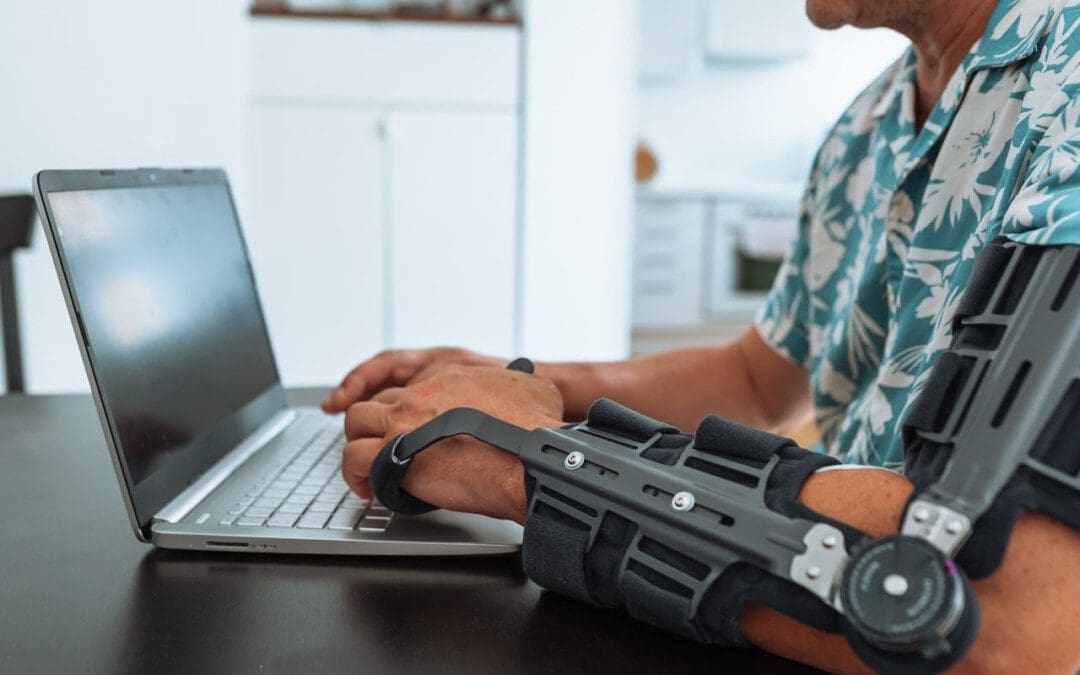
Once relocated into the correct position, a healthcare provider applies a splint (usually at a 90-degree angle of flexion) to keep the elbow in place. (James Layson, Ben J. Best 2023)
The objective is to prevent elbow extension, which can cause re-dislocation.
For individuals experiencing a turf toe injury, can knowing the symptoms help athletes and non-athletes with treatment, recovery time, and returning to activities?
Turf Toe Injury
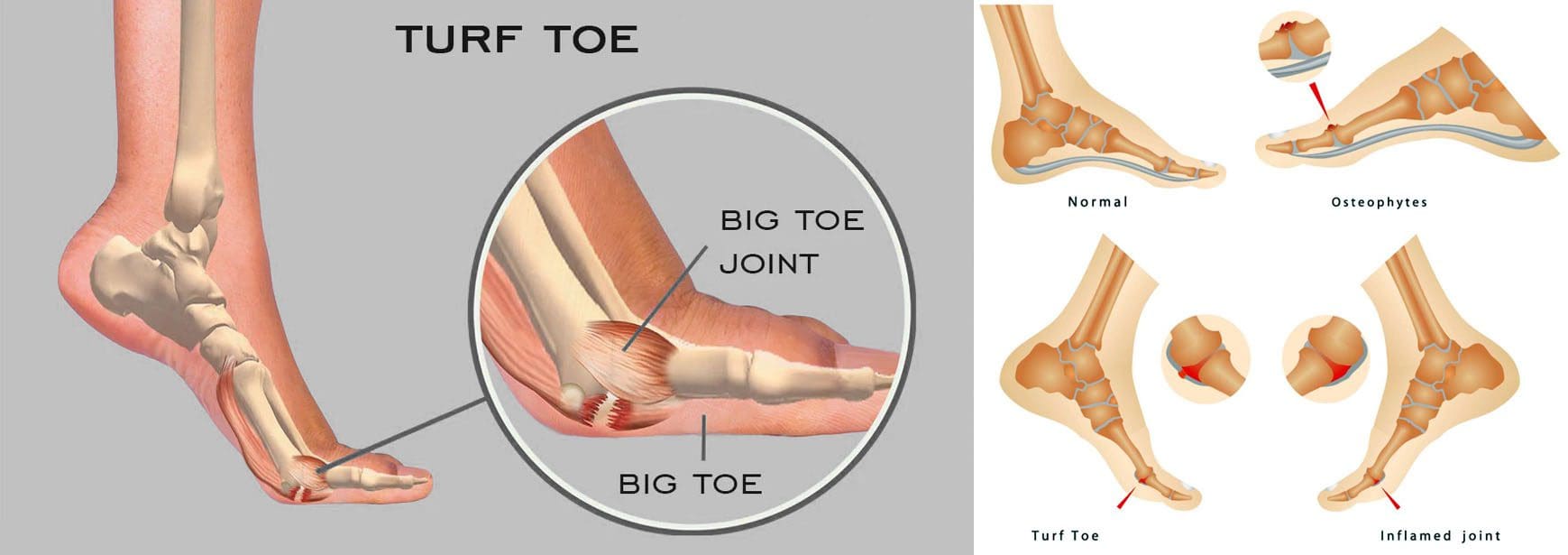
A turf toe injury affects the soft tissue ligaments and tendons at the base of the big toe under the foot. This condition usually occurs when the toe is hyperextended/forced upward, such as when the ball of the foot is on the ground and the heel is lifted. (American Academy of Orthopaedic Surgeons. 2021) The injury is common among athletes who play sports on artificial turf, which is how the injury got its name. However, it can also affect non-athletes, like individuals working on their feet all day.
Recovery time after turf toe injury depends on the severity and the type of activities the individual plans to return to.
Returning to high-level sports activities after a severe injury can take six months.
These injuries vary in severity but usually improve with conservative treatment. In severe cases, surgery could be required.
Pain is the primary issue that stops physical activities after a grade 1 injury, while grades 2 and 3 can take weeks to months to heal completely.
Meaning
A turf toe injury refers to a metatarsophalangeal joint strain. This joint comprises ligaments that connect the bone on the sole of the foot, below the big toe/proximal phalanx, to the bones that connect the toes to the larger bones in the feet/metatarsals. The injury is usually caused by hyperextension that often results from a pushing-off motion, like running or jumping.
If experiencing turf toe symptoms, see a healthcare provider for a proper diagnosis so they can develop a personalized treatment plan. They will perform a physical exam to assess pain, swelling, and range of motion. (American Academy of Orthopaedic Surgeons. 2021) If the healthcare provider suspects tissue damage, they may recommend imaging with X-rays and (MRI) to grade the injury and determine the proper course of action.
Grades 2 and 3 come with partial or complete tissue tearing, severe pain, and swelling. Treatments for more severe turf toe can include: (Ali-Asgar Najefi et al., 2018)
Limited weight bearing
Using assistive devices like crutches, a walking boot, or a cast.
Physical therapy also includes proprioception and agility training exercises, orthotics, and wearing recommended shoes for specific physical activities. (Lisa Chinn, Jay Hertel. 2010)
A physical therapist can also help ensure that the individual does not return to physical activities before the injury is fully healed and prevent the risk of re-injury.
Grade 1 – Subjective as it varies depending on the individual’s pain tolerance.
Grade 2 – Four to six weeks of immobilization.
Grade 3 – Eight weeks minimum of immobilization.
It can take up to six months to return to normal function.
Returning To Normal Activities
After a grade 1 turf toe injury, individuals can return to normal activities once the pain is under control. Grades 2 and 3 take longer to heal. Returning to sports activities after a grade 2 injury can take around two or three months, while grade 3 injuries and cases that require surgery can take up to six months. (Ali-Asgar Najefi et al., 2018)
Sports Chiropractic Treatment
References
American Academy of Orthopaedic Surgeons. (2021). Turf toe.
American College of Foot and Ankle Surgeons. Foot Health Facts. (2023). RICE protocol.
Najefi, A. A., Jeyaseelan, L., & Welck, M. (2018). Turf toe: A clinical update. EFORT open reviews, 3(9), 501–506. https://doi.org/10.1302/2058-5241.3.180012
Pinter, Z. W., Farnell, C. G., Huntley, S., Patel, H. A., Peng, J., McMurtrie, J., Ray, J. L., Naranje, S., & Shah, A. B. (2020). Outcomes of Chronic Turf Toe Repair in Non-athlete Population: A Retrospective Study. Indian journal of orthopaedics, 54(1), 43–48. https://doi.org/10.1007/s43465-019-00010-8
Chinn, L., & Hertel, J. (2010). Rehabilitation of ankle and foot injuries in athletes. Clinics in sports medicine, 29(1), 157–167. https://doi.org/10.1016/j.csm.2009.09.006
Athletes and physically active individuals who participate in activities, exercises, and sports that involve kicking, pivoting, and/or shifting directions can develop pelvis overuse injury of the pubic symphysis/joint at the front of the pelvis known as osteitis pubis. Can recognizing the symptoms and causes help in treatment and prevention?
Osteitis Pubis Injury
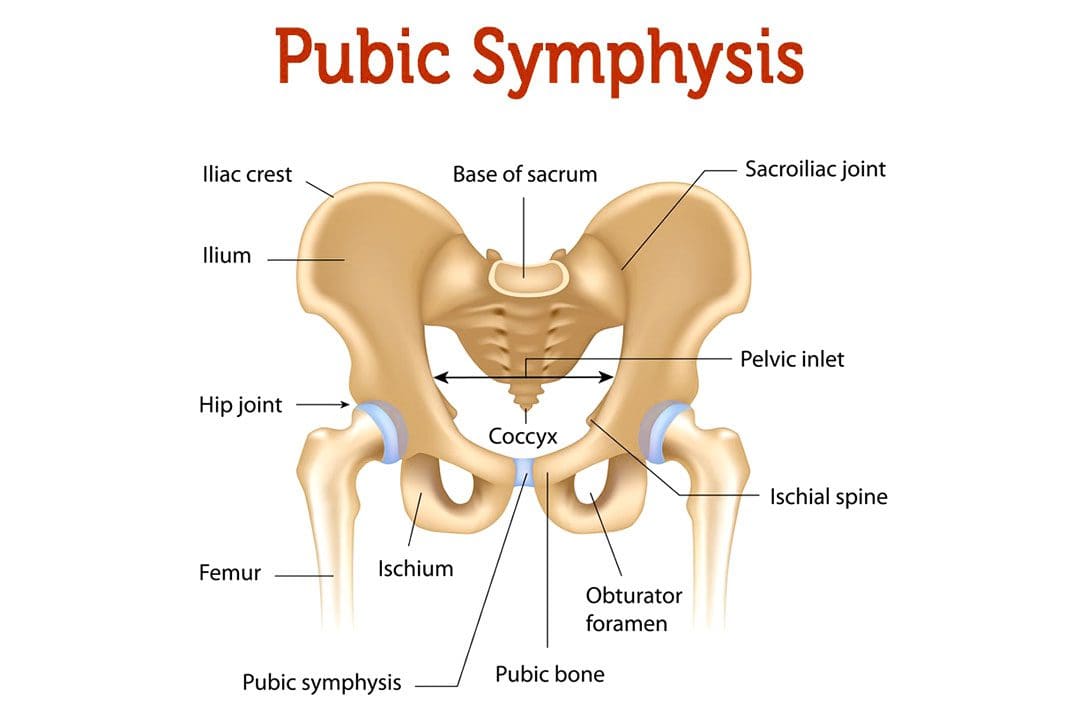
Osteitis pubis is the inflammation of the joint that connects the pelvic bones, called the pelvic symphysis, and the structures around it. The pubic symphysis is a joint in front of and below the bladder. It holds the two sides of the pelvis together in the front. The pubis symphysis has very little motion, but when abnormal or continued stress is placed on the joint, groin and pelvic pain can present. An osteitis pubis injury is a common overuse injury in physically active individuals and athletes but can also occur as the result of physical trauma, pregnancy, and/or childbirth.
Symptoms
The most common symptom is pain over the front of the pelvis. The pain is most often felt in the center, but one side may be more painful than the other. The pain typically radiates/spreads outward. Other signs and symptoms include: (Patrick Gomella, Patrick Mufarrij. 2017)
Lower abdominal pain in the center of the pelvis
Limping
Hip and/or leg weakness
Difficulty climbing stairs
Pain when walking, running, and/or shifting directions
Clicking or popping sounds with movement or when shifting directions
Pain when lying down on the side
Pain when sneezing or coughing
Osteitis pubis can be confused with other injuries, including a groin strain/groin pull, a direct inguinal hernia, ilioinguinal neuralgia, or a pelvic stress fracture.
Causes
An osteitis pubis injury usually occurs when the symphysis joint is exposed to excessive, continued, directional stress and overuse of the hip and leg muscles. Causes include: (Patrick Gomella, Patrick Mufarrij. 2017)
Sports activities
Exercising
Pregnancy and childbirth
Pelvic injury like a severe fall
Diagnosis
The injury is diagnosed based on a physical examination and imaging tests. Other tests may be used to rule out other possible causes.
The physical exam will involve manipulation of the hip to place tension on the rectus abdominis trunk muscle and adductor thigh muscle groups.
Pain during the manipulation is a common sign of the condition.
Individuals may be asked to walk to look for irregularities in gait patterns or to see if symptoms occur with certain movements.
X-rays will typically reveal joint irregularities as well as sclerosis/thickening of the pubic symphysis.
Magnetic resonance imaging – MRI may reveal joint and surrounding bone inflammation.
Some cases will show no signs of injury on an X-ray or MRI.
Treatment
Effective treatment can take several months or longer. Because inflammation is the underlying cause of symptoms, the treatment will often involve: (Tricia Beatty. 2012)
Rest
Allows the acute inflammation to subside.
During recovery, sleeping flat on the back may be recommended to reduce pain.
Ice and Heat Applications
Ice packs help reduce inflammation.
The heat helps ease pain after the initial swelling has gone down.
Physical Therapy
Physical therapy can be extremely helpful in treating the condition to help regain strength and flexibility. (Alessio Giai Via, et al., 2019)
Anti-inflammatory Medication
Over-the-counter nonsteroidal anti-inflammatory medications – NSAIDs like ibuprofen and naproxen can reduce pain and inflammation.
Assistive Walking Devices
If the symptoms are severe, crutches or a cane may be recommended to reduce stress on the pelvis.
Cortisone
There have been attempts to treat the condition with cortisone injections, but the evidence supporting its use is limited and needs further research. (Alessio Giai Via, et al., 2019)
Prognosis
Once diagnosed, the prognosis for full recovery is optimal but can take time. It can take some individuals six months or more to return to pre-injury level of function, but most return by around three months. If conservative treatment fails to provide relief after six months, surgery could be recommended. (Michael Dirkx, Christopher Vitale. 2023)
Sports Injuries Rehabilitation
References
Gomella, P., & Mufarrij, P. (2017). Osteitis pubis: A rare cause of suprapubic pain. Reviews in urology, 19(3), 156–163. https://doi.org/10.3909/riu0767
Beatty T. (2012). Osteitis pubis in athletes. Current sports medicine reports, 11(2), 96–98. https://doi.org/10.1249/JSR.0b013e318249c32b
Via, A. G., Frizziero, A., Finotti, P., Oliva, F., Randelli, F., & Maffulli, N. (2018). Management of osteitis pubis in athletes: rehabilitation and return to training – a review of the most recent literature. Open access journal of sports medicine, 10, 1–10. https://doi.org/10.2147/OAJSM.S155077
Dirkx M, Vitale C. Osteitis Pubis. [Updated 2022 Dec 11]. In: StatPearls [Internet]. Treasure Island (FL): StatPearls Publishing; 2023 Jan-. Available from: https://www.ncbi.nlm.nih.gov/books/NBK556168/
Finger sprains and dislocations are common hand injuries that can happen during work, physical/sports activities, or in automobile collisions and accidents. Can recognizing the symptoms help in developing an effective treatment strategy?
Finger Sprains and Dislocations
Finger sprains and dislocations are common injuries of the hand that cause pain and swelling.
A sprain happens when the finger tissue that supports a joint gets stretched beyond its limits in a way that stresses the ligaments and tendons.
The ligament tissue can be partially or completely torn. If the damage is bad enough, the joint comes apart.
This is a dislocation – A dislocation happens when the joint in the finger gets shifted out of its normal position.
Both injuries can cause pain and stiffness in the finger and hand.
Sprains
Finger sprains can happen any time the finger bends in an awkward or unusual way. This can happen from falling on the hand or getting hurt when engaged in physical activities like sports or household chores. Sprains can occur in any of the knuckle joints in the finger. However, most commonly, the joint in the middle of the finger gets sprained. It’s known as the proximal interphalangeal or PIP joint. (John Elfar, Tobias Mann. 2013) Symptoms of a finger sprain can include:
Other treatments to help a sprained finger include:
Elevate the hand if swelling and inflamed.
Gentle finger exercises/movements to prevent stiffness.
Icing the injured finger.
Take an anti-inflammatory medication.
Individuals who have not broken bones or dislocated the joint will probably be able to move their finger in about a week. A doctor will set a timeline for when to start using the finger normally.
Individuals who sprain their finger that feels swollen and stiff for longer than a few weeks are recommended to consult a doctor or specialist.
Thumb sprains and finger sprains in children may need to be splinted or taped for longer periods, as the ligament is not fully developed or as strong, which could lead to a tear.
Dislocations
A finger dislocation is a more severe injury involving the ligament, joint capsule, cartilage, and other tissues that causes misalignment of the finger. The ligaments and the joint capsule get torn when a joint is dislocated. The joint needs to be reset, which can be a simple process, or in severe cases, patients may need to be placed under anesthesia or undergo surgery to reset the joint properly.
In these cases, tendons or other tissues might be preventing the joint from getting into position.
Putting the finger back into the right position is known as”reduction.” Once reduced, the finger needs to be splinted.
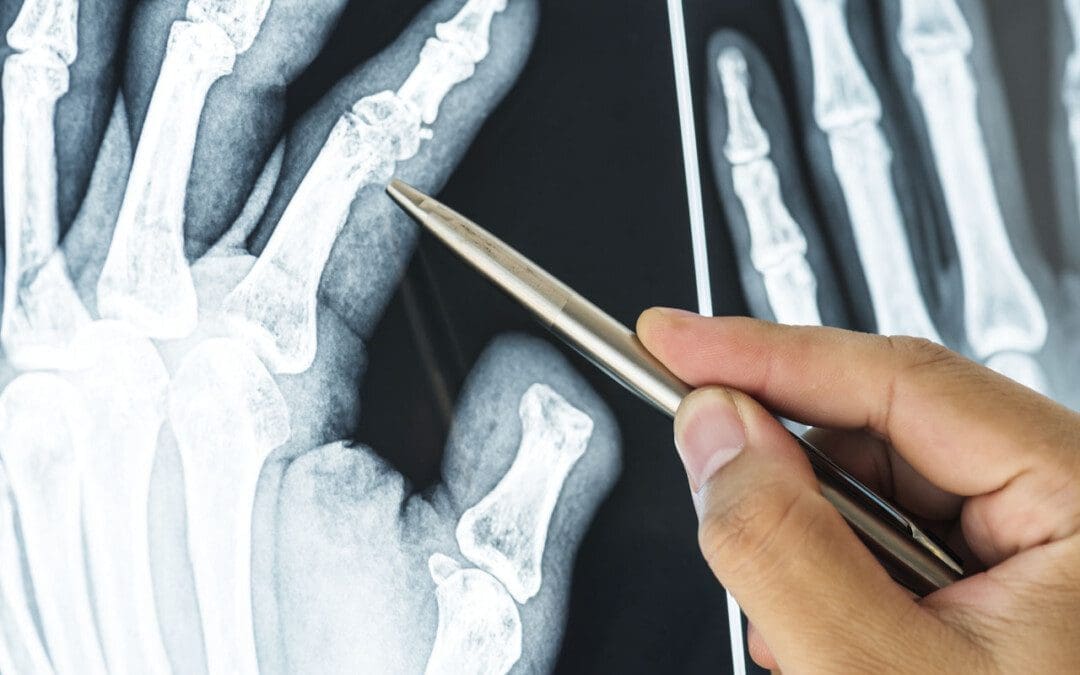
Individuals also need an X-ray to ensure the joint is lined up correctly and that any bones were not broken or fractured when they sustained the injury. (James R. Borchers, Thomas M. Best. 2012)
Once reset, caring for a dislocated finger is basically the same as a sprained finger. Using ice on the finger, keeping the hand elevated to reduce swelling.
Elfar, J., & Mann, T. (2013). Fracture-dislocations of the proximal interphalangeal joint. The Journal of the American Academy of Orthopaedic Surgeons, 21(2), 88–98. https://doi.org/10.5435/JAAOS-21-02-88
OrthoInfo from the American Academy of Orthopaedic Surgeons. (2022) Hand fractures.
Hung, C. Y., Varacallo, M., & Chang, K. V. (2023). Gamekeeper’s Thumb. In StatPearls. StatPearls Publishing.
OrthoInfo from the American Academy of Orthopaedic Surgeons. (2022) Finger fractures.
Borchers, J. R., & Best, T. M. (2012). Common finger fractures and dislocations. American family physician, 85(8), 805–810.
It can be difficult for individuals and athletes to stay motivated, manage stress and prevent becoming overwhelmed. Can mental toughness and a positive attitude help increase potential and performance levels?
Mental Toughness
Athletes and fitness enthusiasts work on conditioning, skills training, and perfecting techniques. Physical training can take individuals far but another necessary part of maximizing athletic potential is building mental toughness and having the right attitude. Like anything, mental training takes time, effort, and regular adjustments to find ways to shift a losing or bad attitude into a positive one that can bring out the best.
Attitude Is Important
If negativity begins to set in like dealing with an injury, getting rid of self-limiting beliefs can be difficult, as well as generate optimism to rise up and succeed. For athletes or individuals who enjoy competitive sports, developing a positive mental attitude will help with:
Emotions that can affect cognitive functioning strategies.
Energy levels.
Other aspects of physical performance.
Mental Strategies
Mood Improvement
Individuals frustrated by a pessimistic perspective tend to dwell on problems or issues. To shift into a positive mood do something to lift your spirits, even if you don’t think it will help.
Listen to your favorite or uplifting music.
Watch an inspirational movie.
Read a sports psychology book.
Get together or call a teammate or friend that are cheerful and upbeat.
Play different games just for fun.
Take a break, go to the park, walk around, and meditate.
Get into hobbies.
Relax with a therapeutic massage.
Positive Self Talk
Continuing sports psychology research shows that practicing positive self-talk can improve athletic performance. (Nadja Walter, et al., 2019) Sports psychologists describe this through the idea that thoughts create beliefs, that drive actions.
Positive self-talk can take different forms.
For some reciting a specific phrase, sentence, or a single word can effectively manage thoughts, push out the negativity, and focus on taking care of business. Anything that inspires can include:
Focus
Remember the fundamentals!
You know what to do!
You can do it!
You got this!
Research shows that positive self-talk reduces anxiety and increases self-confidence, optimization, efficacy, and performance. (Nadja Walter, et al., 2019) However, self-talk needs to be practiced and part of a regular routine to be effective.
Visualization
Another strategy is using visualization exercises.
This could be using all the senses to imagine the venue where the tournament is taking place, the sound of the crowd, the smells, how the ground or court feels, and/or how the ball or specific sports object feels.
The wisdom is if you can think it, you can do it, once that is determined apply strategies to get there.
Sports Injury Rehabilitation
References
Walter, N., Nikoleizig, L., & Alfermann, D. (2019). Effects of Self-Talk Training on Competitive Anxiety, Self-Efficacy, Volitional Skills, and Performance: An Intervention Study with Junior Sub-Elite Athletes. Sports (Basel, Switzerland), 7(6), 148. https://doi.org/10.3390/sports7060148
Reiser, M., Büsch, D., & Munzert, J. (2011). Strength gains by motor imagery with different ratios of physical to mental practice. Frontiers in psychology, 2, 194. https://doi.org/10.3389/fpsyg.2011.00194
Individuals who engage in a regular fitness regimen can begin to lose interest and motivation. Can knowing the signs of exercise burnout help individuals rediscover their motivation?
Exercise Burnout
When maintaining fitness and health becomes a chore and doing anything else is better than working out, individuals could be experiencing exercise burnout. Here are a few signs an individual is getting burned out.
Procrastination
One sign is constantly putting things off.
An individual may put on workout clothes, set up the equipment, etc.
However, the workout never happens as the individual continues to find other things to do.
At some point, they decide it’s too late and they’ll work out tomorrow.
Solution
Simplify the workout. Make some small goals or adjustments and keep the workout light. (Nemanja Lakicevic, et al., 2020) An example could be:
Focus only on stretching.
Take a walk around the block.
Go up and down some stairs equivalent to a few laps.
Do 10 pushups, 10 squats, and 10 lunges, or other exercises and that’s it.
No Longer Interesting
When burned out, exercise is not interesting and disenchanting. (Franklin Velasco, Rafael Jorda. 2020) Trainers will suggest finding something positive about the workouts.
When the interest and passion are nowhere to be found don’t engage in the usual workouts, as this can further decrease motivation.
This is the time to change up the routine and go for a leisurely bicycle or rollerblade, skateboard, etc., session.
Go to a park, just walk around, and forget about exercise just taking in everything.
Play a game with a friend or toss a ball around.
Exhaustion
Not just physical, but mental fatigue could be a sign of exercise burnout.
Solution
Rest.
Individuals may think they have to work out every day and stick to the regimen or else they’ve failed.
This type of mindset can lead to burnout and added stress.
The body and mind require adequate recovery time.
Forget about structured exercise for a day, and see how the mind and body feel the next day.
Two or three days off in a row can make a significant difference in motivation and offer a new perspective on the workout routine.
Low Energy Levels After Exercise
Workouts, although tiring in a good way, should energize the individual. Most workouts should leave the body feeling better than before. When the body feels worse or energy levels are low, this could be a sign of overtraining that could lead to exercise burnout.
Solution
This could be the time to ease off of the fitness regimen.
This is a form of active recovery, allowing the mind and body to rest from the overwork.
Mood Changes and/or Irritability
When the mind and body are overworked and over-trained, it can cause moodiness, irritability, and frustration that leads to burnout.
Solution
Do something that feels good. This could include:
A therapeutic massage.
A spa session.
Taking a long nap.
Soaking the feet.
Taking a therapeutic bath.
Meditation
Burnout can happen, the objective is to keep the solutions simple like taking a few days off or trying something new to come back feeling refreshed and energized.
Multidisciplinary Evaluation and Treatment
References
Lakicevic, N., Gentile, A., Mehrabi, S., Cassar, S., Parker, K., Roklicer, R., Bianco, A., & Drid, P. (2020). Make Fitness Fun: Could Novelty Be the Key Determinant for Physical Activity Adherence?. Frontiers in psychology, 11, 577522. https://doi.org/10.3389/fpsyg.2020.577522
Velasco, F., & Jorda, R. (2020). Portrait of Boredom Among Athletes and Its Implications in Sports Management: A Multi-Method Approach. Frontiers in psychology, 11, 831. https://doi.org/10.3389/fpsyg.2020.00831
For individuals about to engage in physical activity or exercise, how does warming up the body help prepare for the work ahead?
Central Nervous System Activation
A proper warm-up before physical activity or working out prepares the mind and body to reduce risks of injury, mentally and physically transition to physical activity work, and enhance performance. A well-designed warm-up also primes the central nervous system/CNS for activity. The central nervous system transmits messages to the muscles to prepare them for action. Central nervous system activation increases motor neuron recruitment and engages the sympathetic nervous system so the body can better handle the physical stressors. The process may seem complex, but priming the nervous system is as simple as warming up with light aerobic activity before getting into more explosive movements.
CNS
The CNS consists of the brain and spinal cord. This central communication system uses another part of the nervous system known as the peripheral nervous system or PNS to transmit and receive messages throughout the body. The PNS is connected to the entire body and the brain and spinal cord (CNS).
Nerves run throughout the body, receiving signals from the CNS to the muscles, fibers, and organs, transmitting various information back to the brain. (Berkeley University. N.D.)
There are two types of systems within the peripheral nervous system – somatic and autonomic.
Somatic nervous system actions are those controlled by the person through voluntary actions like choosing to pick something up.
Properly preparing the body for an intense strength training session or other physical activity needs the correct messages to be sent through the autonomic nervous system.
Parasympathetic and Sympathetic States
The autonomic nervous system consists of two subcategories, which are parasympathetic and sympathetic.
The sympathetic nervous system helps the body get ready to face stress which includes physical stress. (R. Bankenahally, H. Krovvidi. 2016)
The fight, flight, or freeze response describes the sympathetic nervous system’s aspect.
The parasympathetic nervous system is responsible for relaxation and de-stressing.
Individuals are recommended to perform a few calming movements and actions after a workout to return the body to a parasympathetic state. This can be:
Activating the CNS can increase performance and prevent injuries. The process wakes up and alerts the body for the activity. Individuals are recommended before beginning a training session, to communicate to the body about the physical stress it is about to endure and to prepare for the work ahead. This is a concept known as post-activation potentiation/PAP. (Anthony J Blazevich, Nicolas Babault. 2019) PAP helps increase force and power production, which enhances physical performance.
Whenever an individual trains, the brain adapts and learns what the body is doing and the purpose of the training.
Muscle memory describes this interaction.
Individuals who have started up a new strength training routine or after an extended break report feeling awkward for the first few sessions, or even weeks, depending on their experience. (David C Hughes, Stian Ellefsen, Keith Baar, 2018)
However, after a few sessions, the body is more adept at performing the movements and ready to increase resistance, repetitions, or both.
This has to do with the neural drive and muscle memory than it has to do with true potential physical abilities. (Simon Walker. 2021)
The first step is a general warm-up that should use large muscle groups and be of low intensity so as not to exhaust the body before beginning the actual training. General warm-up benefits central nervous system activation and the entire body include: (Pedro P. Neves, et al., 2021) (D C. Andrade, et al., 2015)
Increases blood circulation.
Assists the release of oxygen from hemoglobin and myoglobin.
Warms the muscles, so they contract more effectively.
Increases nerve impulse speed.
Increases nutrient delivery.
Lowers joints’ resistance through increased synovial fluid/joint lubrication.
Increases joint range of motion.
Improves joint resiliency.
Removes metabolic waste quicker.
Reduces risk of injury.
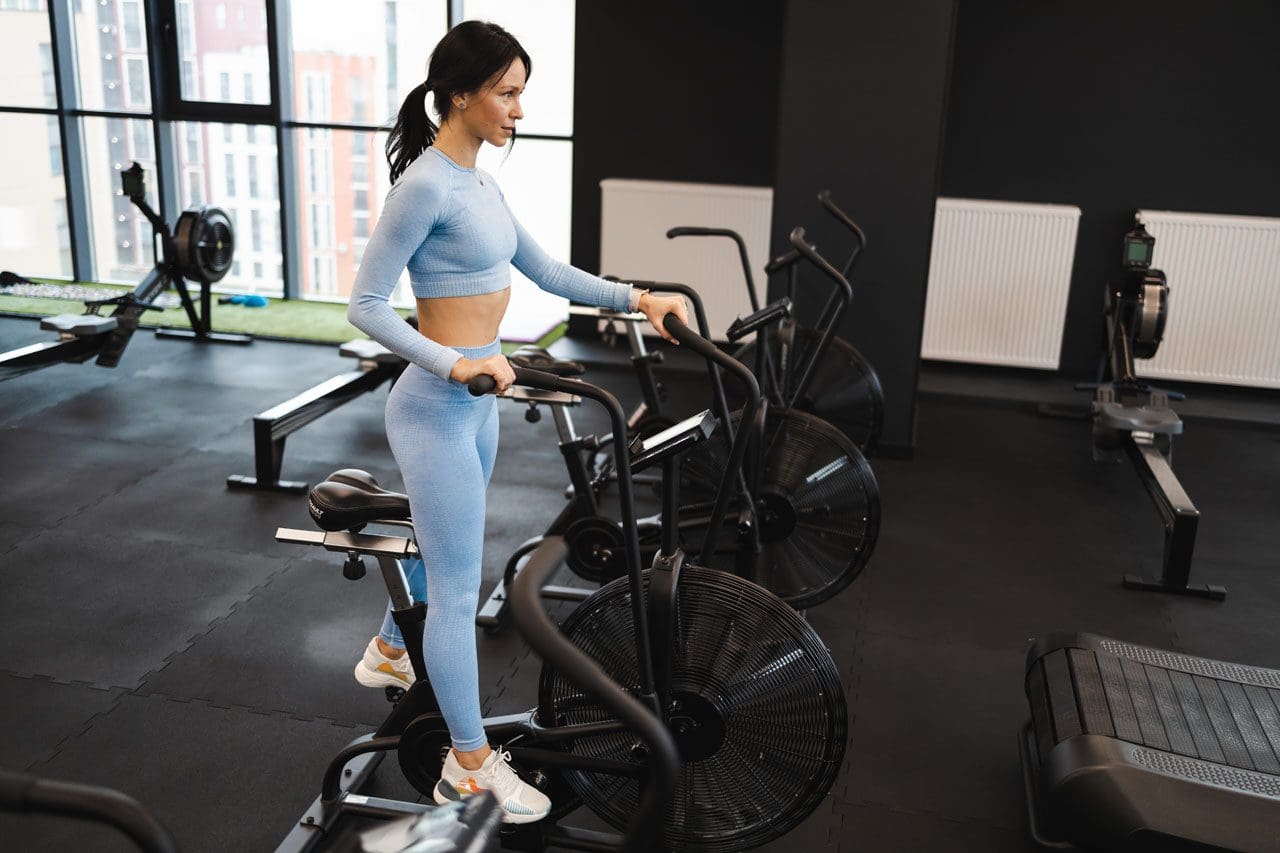
A general warm-up can be simple as any aerobic activity will work. This can include:
Performing bodyweight movements – light jumping jacks or jogging in place.
Treadmill
Rowing machine
Stair climber
Elliptical trainer
It is recommended to use the rating perceived exertion scale/RPE to determine the general warm-up effort. An exertion rating of between 5 to 6 is equivalent to moderate walking or a slow jog. Individuals should be able to speak clearly without taking a pause.
Try this strategy before the next workout to see increased performance and reduced injury risks.
Blazevich, A. J., & Babault, N. (2019). Post-activation Potentiation Versus Post-activation Performance Enhancement in Humans: Historical Perspective, Underlying Mechanisms, and Current Issues. Frontiers in physiology, 10, 1359. https://doi.org/10.3389/fphys.2019.01359
Hughes, D. C., Ellefsen, S., & Baar, K. (2018). Adaptations to Endurance and Strength Training. Cold Spring Harbor perspectives in medicine, 8(6), a029769. https://doi.org/10.1101/cshperspect.a029769
Walker S. (2021). Evidence of resistance training-induced neural adaptation in older adults. Experimental gerontology, 151, 111408. https://doi.org/10.1016/j.exger.2021.111408
Andrade, D. C., Henriquez-Olguín, C., Beltrán, A. R., Ramírez, M. A., Labarca, C., Cornejo, M., Álvarez, C., & Ramírez-Campillo, R. (2015). Effects of general, specific, and combined warm-up on explosive muscular performance. Biology of sport, 32(2), 123–128. https://doi.org/10.5604/20831862.1140426
IFM's Find A Practitioner tool is the largest referral network in Functional Medicine, created to help patients locate Functional Medicine practitioners anywhere in the world. IFM Certified Practitioners are listed first in the search results, given their extensive education in Functional Medicine