Back pain and soreness are widespread conditions that affect all genders, races, and lifestyles. The causes for back pain are varied from injury, poor posture, arthritis, age, overuse, etc. If back pain is frequent, perhaps the last assumption is that the pain could be caused by cancer. While it’s far from the most common causes, cancer back pain is possible, which makes consulting a doctor that will figure out the root cause, especially if there are other non-related symptoms, and treat the back pain very important.
Cancer Back Pain
Back pain that could be caused by cancer usually occurs with other symptoms and include:
Back pain that is not related to movement.
Pain does not get worse with activity.
Back pain usually presents at night or early in the morning and fades away or improves as the day progresses.
Back pain persists even after physical therapy or other treatments.
Changes in bowel movements or blood in urine or stool.
Like lung cancers, some breast cancer tumors can press on nerves connected to the spine, causing discomfort and pain.
Gastrointestinal
Cancers of the stomach, colon, and rectum can cause back pain.
The pain radiates from where the cancer is to the back.
Tissue and Blood Cancers
Blood and tissue cancers like:
Multiple myeloma
Lymphoma
Melanoma
Can cause back pain.
Diagnosing Cancer and Back Pain
Medical treatments for back pain-related cancer depend on its type and how advanced it is. A doctor will consider symptoms and medical history when diagnosing possible back pain causes. Because cancer is a rare cause of back pain, a doctor may recommend various treatments before a full cancer work-up. The doctor may order imaging studies and blood testing if the pain persists after chiropractic, physical therapy, or anti-inflammatory medications. These tests will help identify potential cancer markers causing back pain.
Treatments usually include chemotherapy and radiation to shrink a tumor.
A doctor will recommend surgery to remove a tumor.
Chiropractic
Cancer patients have found chiropractic treatment to be effective for:
Pain management.
Flexibility improvement.
Mobility improvement.
Strengthening muscles.
Helping to reduce stress.
Helping the body function more efficiently.
Chiropractic physiotherapy benefits patients undergoing chemotherapy, as it helps the body withstand the debilitating effects of the treatment based on the whole-body approach.
Body Composition
Don’t Hate Dieting
Individuals hate dieting, usually because they go about it the wrong way. Individuals do not need to starve themselves and live at the gym. Reaching quick weight loss goals might sound appealing; however, going through it for an extended time can make individuals feel:
Tired
Depressed
Unmotivated
Individuals can find a nutrition plan/exercise balance that works for them and their lifestyle. For some individuals, dieting alone is effective, but more than likely, they have increased metabolisms. Trying to lose fat by only cutting calories can be difficult for individuals with smaller metabolisms. The goal is to find a balance between diet and exercise. This does not mean having to go on an extreme diet, skip meals, or cut out entire macronutrient groups like fat or carbs, as the body needs both of these nutrients. Finding a sustainable long-term nutrition plan takes planning and support. A dietician, nutritionist, or health coach can offer a variety of nutrition and exercise plans customized to the individual.
References
Downie, Aron et al. “Red flags to screen for malignancy and fracture in patients with low back pain: a systematic review.” BMJ (Clinical research ed.) vol. 347 f7095. 11 Dec. 2013, doi:10.1136/bmj.f7095
Mabry, Lance M et al. “Metastatic cancer mimicking mechanical low back pain: a case report.” The Journal of manual & manipulative therapy vol. 22,3 (2014): 162-9. doi:10.1179/2042618613Y.0000000056
Vasser, Melinda, and Matthew Koroscil. “When Back Pain Turns Deadly: An Unusual Presentation of Lung Cancer.” Respiratory medicine case reports vol. 29 101009. 28 Jan. 2020, doi:10.1016/j.rmcr.2020.101009
Verhagen, Arianne P et al. “Red flags presented in current low back pain guidelines: a review.” The European spine journal: official publication of the European Spine Society, the European Spinal Deformity Society, and the European Section of the Cervical Spine Research Society vol. 25,9 (2016): 2788-802. doi:10.1007/s00586-016-4684-0
Orthopedic massage is part of injury rehabilitation that focuses on the muscles and soft tissues surrounding the joints and ligaments. Pain could be caused post-surgery, an acute injury, or overuse/repetitive motion injury from work or sports. The objective is to:
Decrease pain
Release tension
Restore balance
Increase mobility and flexibility
Preparing the body to return to everyday routines and activities.
Whatever the cause of the muscle damage or injury, an orthopedic massage will lengthen and soften the muscles and ligaments, allowing for a better range of motion of the affected joints.
Orthopedic Massage
All massage techniques can improve joint movement and function. Orthopedic massage is specifically designed to return the joints to their normal position function and alleviate pain with movement.
Swedish massage focuses on overall relaxation.
Deep tissue massage reduces deep muscle pain and strain.
Orthopedic massage therapists have an extensive understanding of anatomy, soft tissues, and misalignment of the musculoskeletal system that can cause pain and injury. It is similar to sports massage targeting damaged areas for recovery and rehabilitation from conditions and injuries. Sports massage helps the individual strengthen and retrain the damaged areas back to optimal performance and prevent injury. Orthopedic massage utilizes:
Massage benefits many symptoms and conditions. It has been shown to help with:
Sprains
Pulled muscles
Torn ligaments
Carpal-tunnel syndrome
Frozen shoulder
Tennis elbow
Tendinitis
Sciatica
Bulging discs
Post-surgery
Techniques
A therapist will look at the range of motion, flexibility, and rotation of the tissues. This will help determine what muscle groups and tendons are involved and which techniques to use. Massage therapists use an assortment of approaches to loosen muscles and tendons. These include:
Active Engagement
This is used to reach deep, hard-to-reach muscles by applying pressure and massaging lengthwise in a perpendicular motion.
It is beneficial for whiplash and/or back pain.
Positional Release
This is a gentle treatment for inflamed muscles and tissues highly sensitive to other techniques.
Soft tissues are manipulated into comfortable positions and held in place for a specific time.
This lengthens and softens tissues to bring pain relief.
Nerve Mobilization
Also known as neural mobilization, this method addresses strained nerves and pain sources.
Muscle Energy Release
The therapist provides resistance while the individual voluntarily contracts muscles.
Effective with low back pain.
Trigger Point Therapy
Pressure intervals are held on trigger areas to release lactic acid and promote circulation.
Myofascial Release
Gentle pressure is applied to stretch fascia tissues.
Body Composition
Brittle Bones
The reason bones become weaker is that bone tissue is living tissue that constantly forms new bone material and absorbs the old bone material. As the body ages, the rate at which bone is reabsorbed becomes faster than newly formed bone material. One reason for rapid bone loss is lack of exercise and physical activity. The Mayo Clinic has stated that individuals that spend a great deal of time sitting, whether at home or work, have an increased risk of osteoporosis than more active individuals. Sitting too much with little to no activity can lead to weakened bones. Just like the muscles, bones get stronger when they are in use. Walking, running, jumping, and getting the body moving along with using some resistance, can increase the strength and durability of the bones.
References
Kim, Seung-Kook et al. “Clinical outcomes and cost-effectiveness of massage chair therapy versus basic physiotherapy in lower back pain patients: A randomized controlled trial.” Medicine vol. 99,12 (2020): e19514. doi:10.1097/MD.0000000000019514
Klein, Ifat et al. “Lymphatic treatments after orthopedic surgery or injury: A systematic review.” Journal of bodywork and movement therapies vol. 24,4 (2020): 109-117. doi:10.1016/j.jbmt.2020.06.034
Loew, Laurianne M et al. “Deep, transverse friction massage for treating lateral elbow or lateral knee tendinitis.” The Cochrane database of systematic reviews vol. 2014,11 CD003528. 8 Nov. 2014, doi:10.1002/14651858.CD003528.pub2
Majewski-Schrage, Tricia, and Kelli Snyder. “The Effectiveness of Manual Lymphatic Drainage in Patients With Orthopedic Injuries.” Journal of sport rehabilitation vol. 25,1 (2016): 91-7. doi:10.1123/jsr.2014-0222
Setting spinal goals is important for an individual’s treatment plan to ensure a thorough and successful recovery following:
Surgery
Trauma
Spinal condition
When developing goals with a surgeon or spine specialist, utilizing a well-known method known as SMART is recommended. Individuals are encouraged to set goals to accomplish personal growth and improvement. It is a model for forming goals and objectives that for medical purposes include:
This could be fitness trackers, daily journaling – writing, video, health coach, etc.
Attainable
Determine if the goal is achievable.
Figure out what tools or skill sets are needed to reach the goal.
Realistic
Results-oriented goals.
Measure results or output, including accomplishments.
Time Frame
Set goals within a doable time frame.
Goal setting helps individuals monitor their progress when recovering from injury, surgery, and/or spinal conditions. Making goals smaller makes it easier to achieve improvements. It’s recommended to have a partner assistant during the goal-setting because the pain can compromise decision-making. Pain affects the mind’s abilities to assess improvement and treatment response rationally. Taking the most important goals and focusing on small building blocks helps individuals maintain motivation during a long recovery process.
Difference Between Goal Setting and Treatment
A standard treatment plan is structured for a specific result and is not set up for adjusting the way goal setting does. A treatment plan is created and prescribed to a patient with little patient input. Goal setting is a collaboration between a patient and a doctor setting objectives as stepping-off points to achieve goals. Goal setting empowers patients with education, skillsets, and tools to succeed and continue that mindset as their lives move on. Achieving short-term goals helps individuals reflect positively on small gains that set a solid foundation for more challenging future goals.
Spinal Treatment Goals
Goals are personalized/custom-tailored to the individual’s case and condition. For example, a patient could set a goal of returning to weekend sports activities. Therefore, achieving the goal could require the individual to engage in exercise five days a week for the next two weeks that could include physical therapy rehabilitation:
These activities are small goals that help the body adapt to handling additional physical stress.
Goal Setting When In Recovery
Spinal issues are dealt with by creating reasonable small objectives to reach a goal. SMART goal setting is an instrumental framework for medical providers to help identify what is important to the patient. Modifications on SMART goals can be done to adjust to the individual’s needs. Spinal goals help patients accomplish what is necessary, keeping them empowered and motivated.
Body Composition
Too Comfortable With Goals
An individual may have a great deal of success doing the same workouts initially but then notice they’re getting easier and are not seeing the same rate of progression. That same workout routine, same weights, and equipment will only go so far in goal achievement. In recovery, as the body gets stronger and fitness levels improve, it is recommended to consistently challenge yourself to avoid falling into a rehabilitation fitness plateau. Part of the recovery process is to change up workouts to challenge the body to achieve optimal health and healing. Individuals are recommended to:
Increase weight and or reps
Increase the amount of weight or the number of reps in each set.
Increase or decrease the tempo
Shorten the rest period between sets to keep the heart rate high or slow down to focus on muscle contraction.
Experiment with different types of workout sets
If you’ve been doing the same kinds of lifts, try drop sets, supersets, or AMRAP (as many reps as possible) to challenge your muscles differently.
Individuals doing high-intensity interval training are recommended to incorporate a long run or bike ride.
Changing the workout routine will keep challenging the body, which is great for health progress.
References
Alexanders, Jenny et al. “Goal setting practices used within anterior cruciate ligament rehabilitation: An exploration of physiotherapists understanding, training, and experiences.” Musculoskeletal care vol. 19,3 (2021): 293-305. doi:10.1002/msc.1535
Bovend’Eerdt, Thamar J H et al. “Writing SMART rehabilitation goals and achieving goal attainment scaling: a practical guide.” Clinical rehabilitation vol. 23,4 (2009): 352-61. doi:10.1177/0269215508101741
Haas, B et al. “Rehabilitation goals of people with spinal cord injuries can be classified against the International Classification of Functioning, Disability and Health Core Set for spinal cord injuries.” Spinal cord vol. 54,4 (2016): 324-8. doi:10.1038/sc.2015.155
When individuals think about wellness and health, they usually think about a checkup with their doctor. However, wellness treatment with chiropractic is much more proactive. Chiropractic focuses on keeping the body functioning properly and allowing its natural healing properties to activate and do its job. Chiropractic checks to ensure the spine is correctly aligned and correct any subluxation/misalignment before pain occurs. Pain is one of the body’s warnings that something is wrong. Chiropractic wellness care aims to catch and correct any issues before it becomes a problem, keeping the central nervous system in top form, increasing the immune system’s strength, making the body healthier.
Chiropractic Increases Wellness and Health Levels
The body’s baseline level of health can be improved. Individuals can feel that they are fulfilling their responsibilities and maintaining health by engaging in physical exercise and eating a healthy diet. It is believed that lifestyle is largely the extent of an individual’s ability to maintain their health, without realizing that optimal wellness and health can be increased through chiropractic, the ideal supplement to a healthy life. Chiropractic improves body process functions by:
Increasing circulation.
Facilitating detoxification.
Balancing the distribution of hormones and nutrients.
Regulating the heart’s rhythm.
Soothing the nervous system.
Increased mobility.
Decreased pain.
Better flexibility.
Chiropractic serves as supportive treatment to other types of therapeutic care like physical therapy and massage therapy.
Improves Physical Performance
A chiropractor will recommend adjustments, manual muscle manipulation, tissue manipulation, and massage customized for the body’s needs, focusing specifically on long-term realignment. A variety of treatments help to improve the body’s structure, alignment, and energy flow. Chiropractic makes a significant difference in:
Endurance
Explosiveness
Flexibility
Speed
Mobility
Adaptability
Chiropractic also:
Realigns joints and bones.
Decompresses nerves.
Releases muscles, tendons, and ligaments.
Detoxifies stagnant areas of the body.
Chiropractic is the perfect supplement to increasing performance, wellness, and health by increasing the health and alignment of the physical body and energy flow.
Improves Mental Health
Chiropractic also benefits mental health. The mind is controlled by the central nervous system or CNS and is directly affected by chiropractic treatment. With hands-on manipulation, adjustments, or traction, bones and joints move back toward optimal alignment, causing the nervous system’s structure to move toward optimal capacity and efficiency. Nerve channels and bundles can become decompressed, bruised, and pinched. The flow of electrical impulses is regulated within the body through the nervous system. Cognitive performance becomes enhanced from the improvement in communication across the central and peripheral nervous systems. Mental performance is also supported through the rush of cerebrospinal fluid/CSF. Cerebrospinal fluid removes waste and toxins from the brain and supplies the brain with oxygen and nutrients. CSF floods the brain after a chiropractic adjustment.
Improves Immune System Function
Chiropractic improves immune system function by increasing energy circulation, blood circulation, and lymphatic fluid flow.Treatment combats stagnation allowing the body to purge toxins and waste accumulated in joints, tissues, and near organs. Chiropractic loosens up areas of the body that have been compressed, crushed, strained, and divided because of misalignment, lack of physical activity/exercise, or stiffness and injury. This allows the flow of lymphatic fluid and white blood cells to regulate areas that may have previously been difficult to access. This helps to increase the immune system’s ability to fight off infection.
Body Composition
Get More Sleep
Sleep is a strong regulator of immune system functions and operates to enhance the adaptive immune system. When the body is deprived of adequate sleep, it becomes more susceptible to various infectious agents. Sleep deprivation weakens the body making it harder to recover from bacteria or virus infections. When the body sleeps, it utilizes the time to strengthen the immune system and move T cells to the lymph nodes. These are the vessels of the immune system responsible for filtering harmful substances. T cells produce cytokines activated when there is inflammation in the body or under stress. Inadequate sleep causes cytokine production to decrease, causing damage to the immune system.
References
Besedovsky, Luciana et al. “Sleep and immune function.” Pflugers Archiv: European journal of physiology vol. 463,1 (2012): 121-37. doi:10.1007/s00424-011-1044-0
Goncalves, Guillaume et al. “Effect of chiropractic treatment on primary or early secondary prevention: a systematic review with a pedagogic approach.” Chiropractic & manual therapies vol. 26 10. 5 Apr. 2018, doi:10.1186/s12998-018-0179-x
Iben, Axén, et al. “Chiropractic maintenance care – what’s new? A systematic review of the literature.” Chiropractic & manual therapies vol. 27 63. 21 Nov. 2019, doi:10.1186/s12998-019-0283-6
Vining, Robert et al. “Effects of Chiropractic Care on Strength, Balance, and Endurance in Active-Duty U.S. Military Personnel with Low Back Pain: A Randomized Controlled Trial.” Journal of alternative and complementary medicine (New York, N.Y.) vol. 26,7 (2020): 592-601. doi:10.1089/acm.2020.0107
Chiropractors understand the need to treat the whole body to reduce and alleviate pain. Many types of pain are caused by inflammation. Inflammation is a natural and healthy response to injury; however, chronic inflammation is not. Low-grade chronic inflammation can lead to health problems like obesity, diabetes, arthritis, dementia, heart disease, stroke, and cancer. If not treated, chronic inflammation can spread throughout the body, causing pain and aggravation. When it comes to nutritional health, the foods can worsen chronic pain. Chiropractors and doctors recommend an anti-inflammation diet for chronic pain.
Anti-Inflammation Diet
When the body gets injured, the nervous system sends signals to the immune system to send chemicals and new red and white blood cells needed for healing. The immune system works correctly when it fights infection by activating when the body recognizes anything foreign entering the system. This could be plant pollen, chemicals, or invading microbes. Studies show that individuals get 50 percent of their calories from sugar, white flour, vegetable oil, and industrial seed oils. These foods are known to increase inflammation in the body. Eating foods that trigger the immune system, like refined white flours or sugar, creates inflammation that does not turn off because the information sent constantly signals an injury exacerbating inflammation and pain.
Foods That Cause Inflammation
The following foods should be avoided or limited as much as possible:
Sugary beverages and soda drinks.
Margarine and lard.
Gluten and white pasta.
Refined carbohydrates in white bread and pastries.
Processed meat like sausages and hot dogs.
Red meat like steaks and burgers.
Fried foods that are high in trans fats, like chips and fries.
Excessive alcohol.
Some of these foods have been associated with chronic diseases that include:
Foods high in natural antioxidants include apples and blueberries. Antioxidants are reactive molecules that can reduce the number of free radicals in the diet. A free radical is a molecule that has the potential to alter and damage the cells in the body. Damaged cells increase the risk of disease development.
Chiropractic Inflammation Relief
Chiropractic physiotherapy strengthens the body by strengthening the immune system removing any blockage. This maintains the natural flow of blood and nutrients throughout the body, increasing the immune system’s defense. Changing to an anti-inflammation diet can help boost the immune system but can be a challenging adjustment. Discuss available options to manage pain relief and inflammation.
Body Composition
Muscle Is Not Just For Athletes
Many individuals think that muscle gain is only necessary for athletes. Not everyone wants to be muscular, but everyone needs to be able to fight off sickness from infection/s. Muscle is made up primarily of water and protein. Protein is an essential macronutrient that the body needs to function correctly. When the body enters a stressed state like becoming sick, the body’s protein demands suddenly increase up to four times the amount usually required. If the body does not get the necessary protein from the food, it will begin to take what it needs from the muscles and start breaking them down. If muscles aren’t sufficiently developed or underdeveloped, the body becomes reduced in its ability and strength to fight off infections and increases the chances for future ones.
References
Haß, Ulrike et al. “Anti-Inflammatory Diets and Fatigue.” Nutrients vol. 11,10 2315. 30 Sep. 2019, doi:10.3390/nu11102315
Owczarek, Danuta et al. “Diet and nutritional factors in inflammatory bowel diseases.” World journal of gastroenterology vol. 22,3 (2016): 895-905. doi:10.3748/wjg.v22.i3.895
Sears, Barry. “Anti-inflammatory Diets.” Journal of the American College of Nutrition vol. 34 Suppl 1 (2015): 14-21. doi:10.1080/07315724.2015.1080105
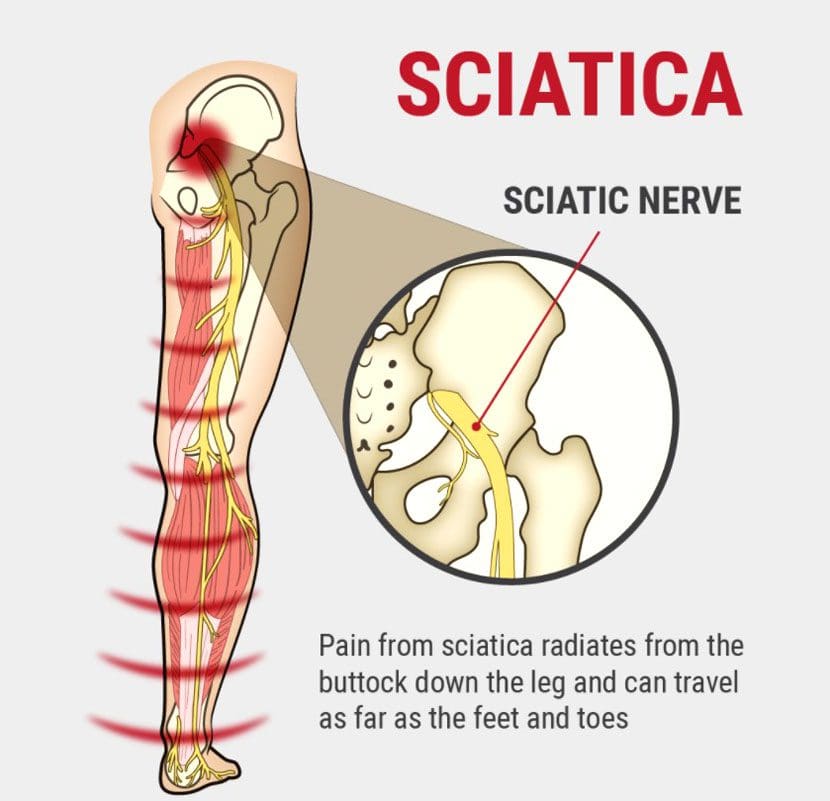
Sciatic nerve injury happens from trauma to the nerve and can cause numbness, tingling, loss of muscle power, and pain. The traumatic experience can be a muscle spasm that pulls and/or pinches the sciatic nerve, force/pressure impact injury, over-stretching injury, or a laceration/cutting injury. A slipped disk, or herniated disk, is the most common cause of irritation on the sciatic nerve. A slipped disk occurs when one becomes slightly dislodged, pushing out from the spine. This places pressure/compression on the sciatic nerve.
Trauma to the lower back, buttocks, or leg from an automobile accident, sports injury, work injury.
Medical treatment causes:
Direct surgical trauma.
Total hip replacement surgery can cause nerve compression and stretch during the procedure, causing damage to the sciatic nerve resulting in dysfunction.
Injection injuries via intramuscular injection in the gluteal region. This is a situation where there is a loss of movement and or lack of sensation at the affected lower extremity with or without pain.
Injection palsy can begin suddenly or hours following damage to the sciatic nerve.
A misplaced intramuscular injection at the gluteal region is the most common cause of injury. It is attributed to frequent injections or poor techniques resulting from inadequately trained or unqualified staff.
Complaints of radiating pain in the leg, which follows a sensory nerve pattern.
Pain radiates below the knee, into the foot.
Complaints of low back pain, which is often less severe than leg pain.
Report of electrical, burning, numbing sensations.
Diagnosis
A detailed subjective and objective physical examination is necessary to figure out the severity of the sciatic nerve injury. Diagnostic studies include:
Chiropractic and physical therapy exercises and stretches improve nerve regeneration after nerve damage.
Electrical Muscle Stimulation
TENS and Electroacupuncture have been shown to help enhance nerve regrowth.
Bio-laser stimulation can help with nerve nutrition and regeneration.
Joint or Soft Tissue mobilization
Helps to retain muscle, nerve, and soft tissue flexibility and prevent deformity.
Balance Training
Coordination, strength, and flexibility exercises help to restore balance.
Splinting
In the early stages after a sciatic nerve injury, bracing may be needed to prevent deformity and new injury or re-injury risks.
Ankle Foot Orthosis – AFO can help prevent foot drop, muscle damage, and falls risk.
Body Composition
Optimize Diet for Fat Loss
Individuals that want to lose fat need to create a calorie deficit. Individuals need to consistently eat less than they need for Total Daily Energy Expenditure – TDEE. The safest way to handle a caloric reduction is to reduce calorie intake in small doses like 200-300 calories, for example. After a week or two, perform a body composition analysis. If Fat Mass numbers begin to drop or not, adjust calorie needs accordingly. Restricting calories is the most common way, a deficit can also be created by increasing calorie needs through exercise.
References
Kline, D G et al. “Management and results of sciatic nerve injuries: a 24-year experience.” Journal of neurosurgery vol. 89,1 (1998): 13-23. doi:10.3171/jns.1998.89.1.0013
Schmalzried, TP et al. “Update on nerve palsy associated with total hip replacement.” Clinical Orthopedics and related research,344 (1997): 188-206.
Shim, Ho Yong et al. “Sciatic nerve injury caused by a stretching exercise in a trained dancer.” Annals of rehabilitation medicine vol. 37,6 (2013): 886-90. doi:10.5535/arm.2013.37.6.886
Suszyński, Krzysztof et al. “Physiotherapeutic techniques used in the management of patients with peripheral nerve injuries.” Neural regeneration research vol. 10,11 (2015): 1770-2. doi:10.4103/1673-5374.170299
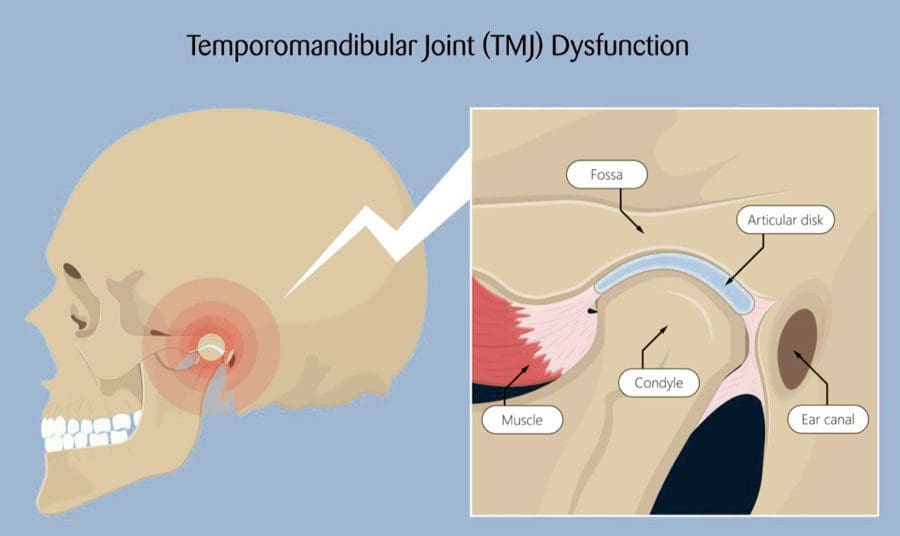
The temporomandibular (tem-puh-roe-man-dib-u-lur) joint TMJ acts as a sliding hinge that connects the jawbone to the skull. There is one joint on each side of the jaw. TMJ jaw disorders are also known as temporomandibular disorders – TMD. These disorders affect the connecting point between the jaw and the skull that causes swelling and pain in the joint and the muscles that control movement. The disorder can be caused by a combination of factors, like stress, genetics, arthritis, or injury. The symptoms, pain, and discomfort are often temporary and can be relieved with self-care and nonsurgical treatment like chiropractic.
Jaw Disorders
If the jaw is not moving correctly or becomes imbalanced, it can stress the temporomandibular joint. If this happens, the jaw muscles and the neck and shoulder muscles can tense up and over time become fatigued as they overwork to compensate and keep the jaw balanced. The bones that interact in the joint are covered with cartilage and are separated by a small shock-absorbing disc to maintain smooth movement. Jaw disorders can happen if:
The disc erodes or moves out of alignment.
The joint’s cartilage is damaged by arthritis.
The joint is damaged by impact trauma like hitting the head from a fall or sports accident.
Individuals that have been in an automobile accident.
Other factors include:
Tension or stress can cause individuals to grind or clench their teeth, known as bruxism.
Symptoms of TMJ vary from case to case. These symptoms might include:
Problems with opening or closing the mouth
Difficulty or pain while chewing
Pain or tenderness of the jaw
Pain in one or both of the temporomandibular joints
Aching facial pain
Neck and shoulder pain
Headaches
Aching pain in and around the ear
Dizziness
Locking of the joint
Clicking sound
Grating sensation
Chiropractic Relief
Chiropractors can help with TMJ by alleviating tension and dysfunction in the shoulder, neck, and jaw. Once the dysfunction is relieved, it reduces the pressure on various nerves. Treatment includes:
Manipulation of the jaw joint so it can move easily
Not all carbs are equal, with some having a more significant effect on insulin levels than others. For individuals with diabetes or insulin resistance, this is important. A food’s Glycemic Index – ranging from 0 to 100 – indicates how a particular carbohydrate will affect blood sugar and insulin levels.
Foods that digest quickly are high on the index.
Foods that digest slowly are lower on the index.
Foods high on the GI scale, include potatoes and white bread, are quickly broken down. This is what happens when going through a sugar rush that comes crashing down minutes later. Foods low on the GI scale, include sweet potatoes and whole oats, are digested gradually. This results in a steady rise in blood sugar levels. The following factors may influence the GI scale:
Food processing
The more processed the food, the higher the GI.
Fat and acid content
Foods high in fat, acid, or carbs eaten with fat or acid tend to have a lower GI.
Fiber content
Fiber slows down the rate of digestion, leading to a gradual, healthy rise in blood sugar levels.
Ripeness
Ripened fruits tend to have a higher GI than unripened fruit.
References
Alcantara, Joel et al. “Chiropractic care of a patient with temporomandibular disorder and atlas subluxation.” Journal of manipulative and physiological therapeutics vol. 25,1 (2002): 63-70. doi:10.1067/mmt.2002.120415
DeVocht, James W et al. “A pilot study of a chiropractic intervention for management of chronic myofascial temporomandibular disorder.” Journal of the American Dental Association (1939) vol. 144,10 (2013): 1154-63. doi:10.14219/jada.archive.2013.0034
Pavia, Steven et al. “Chiropractic Treatment of Temporomandibular Dysfunction: A Retrospective Case Series.” Journal of chiropractic medicine vol. 14,4 (2015): 279-84. doi:10.1016/j.jcm.2015.08.005
Rubis, Lisa M et al. “A collaborative approach between chiropractic and dentistry to address temporomandibular dysfunction: a case report.” Journal of chiropractic medicine vol. 13,1 (2014): 55-61. doi:10.1016/j.jcm.2013.10.003
IFM's Find A Practitioner tool is the largest referral network in Functional Medicine, created to help patients locate Functional Medicine practitioners anywhere in the world. IFM Certified Practitioners are listed first in the search results, given their extensive education in Functional Medicine