ESWT for Car Accident Injuries in El Paso: How El Paso Back Clinic Uses Shockwave Therapy With Integrative Chiropractic + NP Care
Motor vehicle accidents (MVAs) can cause injuries that do not always show up clearly on basic imaging. You might be told, “Nothing is broken,” but still feel real pain, stiffness, tightness, and limited movement. That is because many car accident injuries involve soft tissue injuries such as muscle strains, tendon irritation, ligament sprains, fascia tightness, and painful scar tissue (adhesions). These injuries can lead to chronic pain when tissues remain inflamed, circulation remains poor, and the body continues to guard the area.
At El Paso Back Clinic, an integrative approach can help people recover more completely. The clinic’s content emphasizes non-invasive care, structural assessment, chiropractic and rehab, and broader healing support as part of a multi-disciplinary recovery plan. This matters because post-MVA pain is rarely caused by just one issue. It is often a combination of tissue injury, movement dysfunction, and ongoing sensitivity.
One tool that can make a big difference in stubborn cases is genuine Extracorporeal Shockwave Therapy (ESWT). True ESWT delivers therapeutic acoustic waves into injured tissues to help break down tight scar tissue, reduce pain signaling, improve circulation, and stimulate tissue repair. Mayo Clinic describes shockwave therapy as a noninvasive option used in musculoskeletal care with generally minimal adverse effects when appropriately applied.
This article explains, in plain language, how genuine ESWT can help with MVA injuries and why it works even better when combined with integrative chiropractic care and nurse practitioner (NP) oversight, a care model frequently discussed across El Paso Back Clinic content.
What “genuine ESWT” means (and why it matters)
Not all “shockwave” or “acoustic wave” treatments are the same. Real ESWT is designed to deliver a measurable therapeutic dose of acoustic energy into tissue. In simple terms, it is meant to do more than feel like a massage tool. The goal is to create a controlled mechanical stimulus that tells your body, “Restart repair here.”
A major review in the medical literature describes ESWT as working through mechanotransduction, meaning the mechanical stimulus triggers biological healing responses in the tissue. These responses can include improved signaling for healing, pain modulation, and tissue remodeling.
At El Paso Back Clinic, ESWT is presented as a non-surgical option that can be especially useful for deeper, stubborn pain patterns and chronic soft tissue problems.
Why car accident injuries can linger for months
After an accident, your body tries to protect you. It tightens muscles, limits motion, and increases inflammation around the injured area. That is normal at first. The problem happens when this protective pattern sticks around too long.
Common reasons MVA injuries become chronic include:
Scar tissue and adhesions that limit motion and pull on pain-sensitive tissue
Poor micro-circulation around the injury, slowing repair
Trigger points and muscle guarding that keep joints stiff
Altered biomechanics (compensation patterns) that overload nearby areas
Nervous system sensitivity, where pain signals stay “turned up”
El Paso Back Clinic’s approach highlights that many chronic pain cases improve when you combine structural assessment, conservative care, and a plan that supports true recovery rather than temporary relief.
How ESWT helps MVA injuries heal
Genuine ESWT can help through several overlapping effects. Think of it as improving the tissue environment so your body can complete the healing process.
It helps break down thick, painful scar tissue
Many chiropractic and rehab clinics describe shockwave therapy as useful for breaking down scar tissue and adhesions that form after injuries, especially when those tissues stay tight and painful.
It increases circulation to injured tissue
Better blood flow helps deliver oxygen and nutrients needed for repair. This is one reason ESWT is often used for chronic injuries that feel “stuck.” UCHealth describes shockwave therapy as promoting a reparative healing process that includes changes in circulation and tissue response.
It stimulates tissue remodeling and collagen repair
Tendons, ligaments, and fascia rely heavily on collagen structure. ESWT is commonly discussed as supporting tissue regeneration and collagen-related remodeling in musculoskeletal injuries.
It can reduce pain signaling
Pain relief from ESWT is not just “numbing.” Research reviews describe pain reduction effects that may involve changes in nerve sensitivity and local biochemical signaling.
It can support recovery in stubborn muscle injuries
Some reviews describe ESWT as associated with improvements in pain and function in certain muscle injury contexts (including sports-related muscle injuries), which can be relevant when car accidents result in deep strains and protective tightness.
MVA conditions that may respond well to ESWT
ESWT is commonly used for soft tissue and chronic pain patterns. In post-accident care, it may be considered for:
Whiplash-related muscle strain patterns (neck/upper back tightness)
Shoulder strain and rotator cuff irritation
Thoracic and rib region soft tissue pain and stiffness
Low back sprains/strains and persistent tight bands
Hip and glute strain patterns (piriformis-type tightness, trigger points)
Hamstring and calf strains from bracing during impact
Tendon irritation that does not respond well to rest alone
Chronic “knots” and trigger points that restrict motion
El Paso Back Clinic’s ESWT-focused content specifically points toward accident-related soft tissue injury and stubborn pain that has not improved as situations where this approach may fit well.
How many sessions does ESWT usually take?
Many patients report improvement early, but full remodeling can take time. A common pattern described in clinic-based educational resources is:
Noticeable changes often occur within 2–3 sessions
Full treatment plans commonly range from 4 to 12 sessions, depending on severity and how long the injury has been present
What often improves first:
Reduced sharpness or intensity at the worst pain points
Better range of motion (turning the neck, lifting the shoulder, bending)
Less stiffness the next morning
Improved tolerance to rehab exercises and daily activities
Why ESWT works best when paired with integrative chiropractic + NP care
ESWT helps tissue repair, but most MVA injuries also involve movement dysfunction. If a joint is not moving well, the tissue around it can stay irritated. That is why combining tissue work and structural care often produces better results.
Clear documentation of progress and functional improvement
El Paso Back Clinic’s content highlights the value of an integrated chiropractic + nurse practitioner approach.
Why the combination accelerates healing
When ESWT improves tissue quality and pain sensitivity, it often becomes easier to:
Move better
Accept and benefit from adjustments and mobility work
Build strength and stability through rehab
Return to work, training, and daily life with fewer flare-ups
Some integrative therapy articles describe combining chiropractic care with shockwave therapy (and sometimes laser therapy or rehab) to address both tissue injury and mechanical contributors.
What an ESWT session is like at a practical level
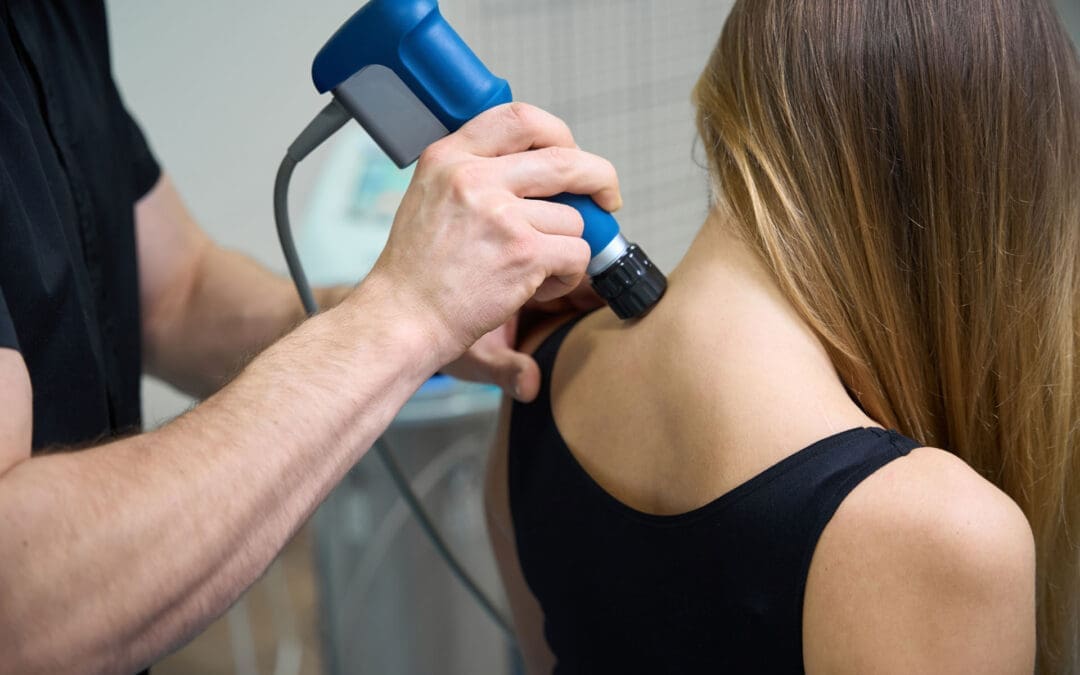
ESWT is typically done with a handheld applicator placed on the skin over the injured area. You may feel a tapping or pulsing sensation that can be intense in tight spots.
Many people experience:
Mild soreness afterward (similar to deep tissue work)
Temporary redness or sensitivity
A sense of looseness or improved motion over the next day or two
Mayo Clinic notes that shockwave therapy is generally associated with minimal adverse effects when used appropriately in musculoskeletal care.
Simple ways to get more out of ESWT after a car accident
ESWT is not magic by itself. It works best as part of a plan. Helpful steps often include:
Hydrate and walk after treatment (gentle circulation support)
Avoid overloading the area the same day (do not “test it” aggressively)
Track function, not just pain (turning your neck, lifting, walking, sitting tolerance)
Signs your plan is working:
You can do more with less flare-up
Your range of motion is improving
Pain is less frequent or less intense
Rehab feels more doable and less aggravating
Clinical perspective aligned with Dr. Alexander Jimenez’s educational approach
Across El Paso Back Clinic’s content, Dr. Alexander Jimenez presents a multidisciplinary, evidence-informed style that connects tissue healing, biomechanics, rehab, and whole-person factors. In this framework, ESWT fits as a regenerative tool that supports deeper tissue recovery, while chiropractic and rehab restore movement quality.
The practical takeaway is simple:
ESWT supports tissue repair and pain reduction
Chiropractic care supports structure and motion
NP oversight supports safer decision-making and whole-body recovery planning
That combination is often what helps MVA patients move from “surviving day to day” to building a stable recovery.
Live Pain-Free: Chiropractic and Integrative Care for Injury Recovery at El Paso Back Clinic
In the vibrant heart of El Paso, Texas, where desert trails beckon and hardworking days define our community, injuries can derail your active lifestyle. From car accidents to workplace strains or sports mishaps, overexertion and trauma often lead to pain, stiffness, or chronic issues that linger without proper care. These setbacks can limit your ability to work, play, or enjoy El Paso’s unique spirit. At El Paso Back Clinic, led by Dr. Alexander Jimenez, DC, APRN, FNP-BC, chiropractic and integrative care offer a path to recovery. Through spinal adjustments, soft tissue therapy, and neuromuscular re-education, the clinic accelerates healing, restores flexibility, enhances balance, and boosts heart and lung function. With holistic nutrition and stress management plans, Dr. Jimenez’s team crafts personalized strategies to prevent future injuries, empowering El Pasoans to live pain-free and thrive.
This article explores how injuries arise, the benefits of integrative care, and how El Paso Back Clinic delivers top-tier recovery solutions.
The Impact of Overuse and Accidents: Why Pain Persists
El Paso’s dynamic lifestyle—hiking the Franklin Mountains, working long shifts, or driving busy roads—can strain the body. Overexertion from repetitive tasks like lifting or intense workouts causes sprains, strains, or joint issues. Motor vehicle accidents (MVAs) bring sudden trauma, with 60% of cases leading to lingering pain if untreated (Jimenez, n.d.). Even minor falls at home can spark chronic discomfort.
Dr. Alexander Jimenez, a chiropractor and nurse practitioner with over 30 years of experience, sees these patterns daily. “Our dual-scope diagnostics, combining chiropractic and nursing insights, uncover how trauma or overuse triggers pain cycles,” he shares on his clinic’s site (Jimenez, n.d.). Using advanced neuromusculoskeletal imaging, his team pinpoints root causes, from workplace injuries to MVA trauma. Ignoring early signs, such as stiffness or fatigue, can lead to reduced mobility, increased stress, and sleep disturbances. El Paso Back Clinic’s integrative approach breaks this cycle, restoring health naturally.
Everyday Injuries: From Crashes to Chronic Strains
Injuries vary but share a common impact: they disrupt your life. MVAs cause neck and back pain, limiting movement. Work-related strains, like those from lifting or repetitive tasks, create nagging discomfort. Sports injuries, such as twisted ankles or knees, sideline active El Pasoans. Personal falls at home can lead to shoulder or hip pain, while untreated stress may cause chronic conditions like joint stiffness.
Dr. Jimenez’s clinic tackles these with precision. “We connect injury origins—crashes, work tasks, or sports—to customized treatments,” he explains. MVAs receive urgent care with legal documentation for claims. Work injuries get rehab to restore function, and sports or personal injuries benefit from targeted plans to prevent recurrence. Without care, these issues worsen, lowering the quality of life. El Paso Back Clinic’s chiropractic and integrative methods pave the way to recovery.
Realigning for Relief: The Power of Spinal Adjustments
Spinal adjustments are the foundation of chiropractic care at El Paso Back Clinic. These precise, hands-on techniques realign vertebrae, easing nerve pressure and restoring balance to the body. Injuries from accidents or overuse misalign the spine, causing pain and impaired movement. Adjustments can boost blood flow, reduce inflammation, and alleviate pain by up to 25% in as little as a few weeks (Trident Health Chiropractic, n.d.).
For MVA patients, adjustments relieve neck stiffness, restoring mobility. Work injury patients regain strength for daily tasks. Dr. Jimenez’s approach is unique: “We use imaging to guide adjustments, targeting issues from trauma or strains,” he says. Legal reports ensure MVA patients have clear records for claims. From athletes to office workers, adjustments help El Pasoans move freely and heal quickly.
Healing Muscles: Soft Tissue Therapy for Recovery
Injuries tighten muscles, creating knots that misalign joints and prolong pain. Soft tissue therapy, like massage or myofascial release, targets these areas, breaking up scar tissue and boosting circulation. This delivers nutrients to damaged tissues, speeding recovery. A single session can significantly reduce healing time, getting you back to work or play faster (Yoder Chiropractic Center, n.d.).
Picture a construction worker with shoulder pain from heavy lifting. Therapy loosens tightness, improving arm range. MVA patients find relief from neck strain. Dr. Jimenez’s team pairs therapy with imaging for precision. “We treat trauma from accidents or sports non-surgically,” he notes. Legal documentation tracks progress for claims, prioritizing natural healing. Patients feel relaxed, move more easily, and recover more quickly.
Injuries disrupt nerve-muscle communication, resulting in shaky balance or impaired movements. Neuromuscular re-education uses exercises like balance drills or resistance training to retrain these pathways, reducing fall risks and boosting confidence. A soccer player with a sprained ankle, for example, regains stability, thereby lowering the odds of re-injury (Integrative Chiropractic, n.d.).
Dr. Jimenez’s clinic excels here. “We link nerve issues to injury histories, guiding re-education for MVA, work, or sports recovery,” he says. A retail worker with back pain learns core-strengthening moves; an MVA patient rebuilds neck control. Legal reports detail progress for claims, ensuring comprehensive care. This sharpens coordination, making daily tasks and active pursuits feel natural again.
Faster Healing, Better Mobility: Recovery and Flexibility Gains
Chiropractic care at El Paso Back Clinic speeds healing by optimizing body systems. Adjustments and therapy reduce swelling, allowing tissues to mend faster—often in weeks, not months (Abundant Life Chiropractor, n.d.). Flexibility improves as tight muscles and joints stretch safely. A warehouse worker lifts without strain; an accident victim moves freely again.
Dr. Jimenez’s holistic plans amplify results. “Targeted exercises and adjustments build lasting mobility, preventing chronic issues,” he says. Nutrition tips, like anti-inflammatory foods, fuel healing. MVA and work cases get legal-grade documentation, aligning care with claims. El Pasoans recover quickly, staying active in our vibrant community.
Balance and coordination are key to preventing injuries and enhancing daily function. Re-education drills steady wobbly steps, helping MVA victims or athletes avoid falls. A delivery driver navigates uneven terrain easily post-care. Chiropractic also boosts stamina by freeing the spine for deeper breaths, improving oxygen flow and endurance (ASR Sports Medicine, n.d.).
Jimenez’s integrative approach shines: “Acupuncture and massage enhance flow, boosting stamina for work or sports.” Virtual coaching reinforces gains, and legal support ensures MVA patients have clear records. Patients work longer, play harder, and live stronger.
Whole-Person Healing: Nutrition, Stress, and Custom Plans
El Paso Back Clinic’s functional medicine approach goes beyond physical fixes. Nutrition advice—like omega-3s or antioxidant-rich fruits—fights inflammation and boosts energy. Stress management, such as mindfulness or breathing exercises, eases tension, aiding sleep and recovery. Personalized plans fit your injury, lifestyle, and goals.
Dr. Jimenez leads the way. “We uncover root causes—poor diet, stress—and craft plans with acupuncture or massage,” he says. MVA or work injuries get detailed reports for legal cases, prioritizing natural healing. Patients receive plans tailored to their El Paso lives, ensuring lasting wellness.
El Paso Back Clinic: Your Trusted Recovery Partner
At El Paso Back Clinic, Dr. Alexander Jimenez combines chiropractic and nursing expertise for exceptional care. Awarded from 2015 to 2024, his team treats MVAs, work strains, sports injuries, and personal falls with precision. “Our imaging and dual expertise catch hidden issues,” he says. A crash victim drives pain-free in weeks. A nurse lifts patients again. Legal documentation supports MVA and work cases, while virtual coaching and nutrition webinars empower long-term health.
Patients praise the results: “Dr. Jimenez restored my mobility and energy,” one shares. From veterans to families, his care transforms lives, helping El Pasoans thrive.
Preventing Future Pain: A Strategy for Lifelong Wellness
Prevention keeps you active. Regular chiropractic checkups spot misalignments early, cutting injury risks by 20% (Erie Chiro, n.d.). Holistic habits—such as balanced diets, stress relief, and smart exercise—build resilience. Dr. Jimenez’s team creates plans for workers, athletes, or retirees. “We flag risks like posture or stress early, ensuring lasting health,” he notes.
With care, education, and documentation, El Pasoans live pain-free, embracing our city’s vibrant spirit.
IFM's Find A Practitioner tool is the largest referral network in Functional Medicine, created to help patients locate Functional Medicine practitioners anywhere in the world. IFM Certified Practitioners are listed first in the search results, given their extensive education in Functional Medicine

 Motor vehicle accidents (MVAs) can cause injuries that do not always show up clearly on basic imaging. You might be told, “Nothing is broken,” but still feel real pain, stiffness, tightness, and limited movement. That is because many car accident injuries involve soft tissue injuries such as muscle strains, tendon irritation, ligament sprains, fascia tightness, and painful scar tissue (adhesions). These injuries can lead to chronic pain when tissues remain inflamed, circulation remains poor, and the body continues to guard the area.