Back Clinic Federal Employee Work Injuries. Federal employees face the same injury risks as those in the private industry and different areas of the public sector. A federal worker who suffers a job-related private injury or illness can seek benefits through the Federal Employees Compensation Act (FECA).
The Federal Employees‘ Compensation Act (FECA) is administered by the U.S. Department of Labor, Office of Workers‘ Compensation Programs (OWCP). Benefits include continuing pay for traumatic injuries, compensation for wage loss, medical care, and other assistance for job-related injury or death. These benefits include coverage of wages that are lost because of permanent or temporary disability.
It can be difficult for people who have never before applied to document a federal workers’ compensation, or disability benefits claim. Various experts will allow federal employees to sort through the confusion and pursue the advantages or reimbursement they deserve. Dr. Alex Jimenez informs the public about these issues, directing them to the proper specialists.
General Disclaimer *
The information herein is not intended to replace a one-on-one relationship with a qualified healthcare professional or licensed physician and is not medical advice. We encourage you to make your own health care decisions based on your research and partnership with a qualified health care professional. Our information scope is limited to chiropractic, musculoskeletal, physical medicines, wellness, sensitive health issues, functional medicine articles, topics, and discussions. We provide and present clinical collaboration with specialists from a wide array of disciplines. Each specialist is governed by their professional scope of practice and their jurisdiction of licensure. We use functional health & wellness protocols to treat and support care for the injuries or disorders of the musculoskeletal system. Our videos, posts, topics, subjects, and insights cover clinical matters, issues, and topics that relate to and support, directly or indirectly, our clinical scope of practice.* Our office has made a reasonable attempt to provide supportive citations and has identified the relevant research study or studies supporting our posts. We provide copies of supporting research studies available to regulatory boards and the public upon request.
We understand that we cover matters that require an additional explanation of how it may assist in a particular care plan or treatment protocol; therefore, to further discuss the subject matter above, please feel free to ask Dr. Alex Jimenez or contact us at 915-850-0900.
Dr. Alex JimenezDC,MSACP, CCST, IFMCP*, CIFM*, ATN*
email: [email protected]
Licensed in: Texas & New Mexico*
IV Infusion Therapy: How It Delivers Vitamins and Nutrients Straight to Your Body
IV infusion therapy puts vitamins, minerals, and fluids directly into your bloodstream. This bypasses the digestive tract, so your body can use more of the nutrients more quickly and fully. Clinics often use it to support immune function, fix dehydration, ease chronic fatigue, and correct nutritional shortfalls that oral supplements sometimes cannot fix well.
Many people feel run down, foggy, or slow to recover because their gut does not absorb everything from food or pills. IV therapy changes that by sending the mixture straight into circulation through a small tube placed in the arm. The result is higher amounts of nutrients reaching your cells faster than you can usually get from eating or swallowing capsules.
How Intravenous Therapy Works
Intravenous (IV) therapy uses a sterile mix of vitamins, minerals, and amino acids. A trained professional inserts a thin catheter into a vein, usually in the arm or hand. The liquid then drips in over 30 to 60 minutes while you rest in a comfortable chair.
Because it bypasses the stomach and intestines, the body absorbs nearly 100 percent of the nutrients. Oral supplements often lose a large portion during digestion. IV delivery avoids that loss and gives a rapid boost when someone needs quick rehydration or higher nutrient levels.
Why People Choose IV Infusion Therapy
Clinics report several common reasons patients try this therapy. Here are the main ones explained simply:
Fast hydration and electrolyte balance — After illness, intense workouts, travel, or long days, fluids and minerals go straight in to restore balance quickly.
More steady energy — B vitamins, magnesium, and other nutrients help cells produce energy. Many people notice less afternoon drag and better focus.
Immune support — High amounts of vitamin C, zinc, and antioxidants can give the body’s defense system extra help during cold and flu season or times of stress.
Recovery from physical stress — Athletes, active workers, and people healing from injuries often use it to supply building blocks for tissue repair and to reduce downtime.
Filling nutrition gaps — When digestion is off due to stress, medications, or long-term conditions, IV can deliver what the gut is missing.
These effects happen because the nutrients reach cells directly. Still, results vary from person to person. What works well for one individual may feel different for another.
IV Therapy Inside an Integrative Care Team
When an integrative chiropractic and functional medicine clinic offers IV therapy, patients gain extra layers of support. The approach focuses on three important ideas: personalized and data-driven treatment, a comprehensive care team, and a root-cause focus.
The team reviews lab work, health history, symptoms, and lifestyle before recommending a formula. They do not use a one-size-fits-all drip. Instead, they match the mix to what the person actually needs. This data-driven step helps avoid unnecessary or poorly matched nutrients.
A full care team means different experts work together. Chiropractic care addresses spinal alignment and nerve function. Functional medicine explores gut health, inflammation, and lifestyle factors. Medical oversight adds safety checks and the ability to handle more complex health pictures. Rehabilitation and personal injury support fit in when someone is recovering from accidents or ongoing pain.
It is crucial to consult a qualified healthcare professional to ensure the treatment aligns with your unique health profile and objectives, as individual needs and responses to IV therapies can vary.
How One El Paso Clinic Combines These Services
At Injury Medical Clinic PA in El Paso, Texas, this team model is in action every day. Dr. Alexander Jimenez, DC, APRN, FNP-BC, CFMP, IFMCP, ATN, CCST, brings decades of experience in chiropractic care and advanced functional and integrative approaches. He works closely with Dr. Maria Guadalupe Cardenas, MD, a board-certified internist (NPI #1164426749, Texas MD License #J2933) with more than 40 years of experience.
Dr. Cardenas serves as Medical Director and Collaborative Physician. Her role provides medical direction and oversight for procedures such as IV infusions. This partnership is common in integrative or injury-focused clinics: the chiropractor handles structural and nervous system care, while the medical doctor ensures the safe, appropriate use of advanced therapies.
Patients receive coordinated care. Someone coming in after a car accident might receive chiropractic adjustments for whiplash, rehabilitation exercises, and, when appropriate, IV nutrients to support healing and energy. The medical oversight helps the team monitor interactions, select safe doses, and track lab results when needed. Dr. Jimenez has observed in his clinical work that patients with lingering fatigue, slow recovery, or chronic discomfort after injuries often respond better when nutrition and hydration are optimized alongside hands-on treatments.
This multidisciplinary setup allows the clinic to address the whole person rather than isolated symptoms. Chiropractic improves movement and nerve signaling. Functional medicine targets underlying drivers like inflammation or gut issues. IV therapy provides rapid nutritional support when oral intake is insufficient. Personal injury and rehabilitation services tie everything together, helping patients return to daily life with less pain and greater function.
What a Typical Session Looks Like
Most visits follow a clear, comfortable flow:
You meet with a provider to review your health history, current symptoms, and any recent labs.
The team selects or customizes a nutrient formula based on your goals.
A small catheter is placed in your arm (most people feel only a quick pinch).
You relax for 30–60 minutes while the solution drips in. Many people read, listen to music, or nap.
The catheter is removed, and you receive simple aftercare instructions, such as drinking extra water and resting as needed.
The whole process is designed to be low-stress. Clinics with proper medical oversight keep emergency supplies and trained staff on hand.
Safety and Smart Choices
IV therapy is generally well tolerated when performed by licensed professionals in a clinical setting. Mild side effects can include temporary bruising or soreness at the insertion site. More serious risks, such as infection or nutrient overload, are rare but possible, which is why medical supervision matters.
Experts note that while many people report feeling better, high-quality studies on broad wellness benefits for otherwise healthy individuals are still limited. IV therapy works best as one tool inside a larger plan that includes good nutrition, movement, sleep, and treatment of any underlying conditions. It is not a replacement for a healthy lifestyle or prescribed medical care.
People with certain conditions (kidney disease, heart issues, or specific medication regimens) should always check with their doctor first. In a clinic like the one described, the collaborative MD-NP team helps screen for these factors before any drip begins.
Putting It All Together
IV infusion therapy gives your body a direct route for vitamins, minerals, and fluids when you need fast, high-level support. By skipping digestion, it delivers higher usable amounts in less time. In an integrative setting that includes chiropractic care, functional medicine, rehabilitation, and strong medical oversight, it becomes part of a broader strategy aimed at addressing root causes and achieving lasting improvement.
Whether you are dealing with everyday fatigue, recovering from physical stress, or simply want to optimize how you feel, the key is to work with qualified professionals who personalize their approach. Clinics that combine these services under proper medical direction, such as the team model in El Paso, demonstrate how different therapies can support one another for better overall results.
Talk with your healthcare provider to see if IV infusion therapy fits your health picture. When used thoughtfully, it can be a helpful step on the path to feeling stronger, recovering faster, and supporting your body’s natural ability to heal and perform.
How to Prove Car Accident Injuries in El Paso: Expert Medical Documentation at El Paso Back Clinic
Car crashes happen fast, but the pain can last for weeks or months. Many people in El Paso feel stiff or sore right after a wreck. Others notice problems days later. Insurance companies often push back and say your injuries are old problems or not related to the crash at all. The good news? You can build a rock-solid case with quick action and smart record-keeping. Getting medical help fast and keeping detailed notes creates a clear link between the accident and your injuries. This helps you heal and get fair payment for your bills, lost work, and pain.
This guide walks you through simple steps to prove your car accident injuries. You will see why seeing a doctor within 72 hours matters, how to build a strong paper trail, and why El Paso Back Clinic offers the best integrated care in El Paso to support your recovery and your claim.
Why Seek Immediate Medical Attention Within 72 Hours
The clock starts right after the crash. Medical professionals agree that you should seek a check-up within 72 hours. This quick step shows a direct connection between the accident and your injuries.
Waiting longer gives insurance adjusters a chance to claim your pain comes from something else. Early visits create official records that tie your symptoms straight to the wreck. Soft-tissue injuries like whiplash or back strain often feel mild at first but worsen over time. Even if you think you are okay, hidden damage can show up later.
Emergency room or clinic notes from the first few days become powerful proof.
Doctors can order X-rays or MRIs to catch problems early.
Starting treatment right away helps you heal faster and keeps your medical story clear.
Prompt care stops insurers from calling your injuries “pre-existing.” (Greater Texas Orthopaedics, 2025; Georgia Spine and Orthopaedics, n.d.)
Building a Detailed Paper Trail: Records, Photos, and Your Daily Journal
One doctor visit is not enough. You need a complete paper trail that shows exactly what happened to your body after the crash. Save every medical record: doctor notes, bills, prescriptions, and test results like X-rays and MRIs.
Take clear photos of bruises, cuts, and swelling as soon as possible. Snap pictures from different angles in bright light and update them as things change. These images are hard for anyone to argue against.
Stick to your full treatment plan and never skip appointments. Gaps in care can make it look like your pain is not serious or not crash-related. Keep receipts and notes about missed work or daily activities, too.
Your daily pain journal is one of the strongest tools you have. Write simple notes each day about how you feel. This personal record proves the real impact of your injuries over time and helps show pain and suffering.
Include these details every day in your journal:
Pain level on a scale of 1 to 10.
Where the pain is and what makes it better or worse.
How the injury limits walking, sitting, driving, sleeping, or working.
Emotional feelings like worry, sadness, or trouble focusing.
Any missed work, family time, or normal activities.
Consistent notes like these make it much harder for insurance companies to say your injuries are unrelated. (Reno Law Firm, n.d.; Darrell Castle Law, n.d.; Texas Injury Accident Lawyers, n.d.)
Why El Paso Back Clinic Delivers the Best Integrated Care for Accident Injuries
Not every injury shows up on a quick emergency room visit. Many people leave the ER with no broken bones but still have real pain from whiplash, muscle strains, or joint problems. El Paso Back Clinic, led by Dr. Alex Jimenez, DC, APRN, FNP-BC, CFMP, IFMCP, provides comprehensive care and the detailed records you need for your claim.
This El Paso clinic is part of the larger Injury Medical Clinic PA and offers a full multidisciplinary team right here in town. They specialize in auto accident care, whiplash, soft-tissue injuries, back pain, neck pain, and personal injury cases. The clinic blends chiropractic adjustments, advanced nursing, functional medicine, physical therapy, and rehabilitation in one place.
Dr. Alex Jimenez brings more than 25 years of experience as both a chiropractor and a board-certified Family Nurse Practitioner. He and his team provide prompt evaluations, advanced diagnostics, and personalized treatment plans that clearly link your injuries to the crash. Their approach includes digital motion X-rays, nerve tests, MRIs, and functional assessments to spot root causes that regular doctors might miss.
At El Paso Back Clinic, you get:
Immediate comprehensive exams and treatment plans that document the accident connection.
Chiropractic care focused on soft-tissue injuries and spinal alignment that emergency rooms often overlook.
APRN/FNP-BC support for pain management, functional testing, and full-body rehab.
Functional medicine tools that look at how the crash affects inflammation, energy levels, and overall health.
The clinic’s detailed records and progress notes help prove your injuries are new and accident-related. Patients in El Paso often share stories of faster healing and stronger claims due to clear documentation and coordinated care. Whether your crash caused whiplash, herniated discs, sciatica, or chronic pain, the team at El Paso Back Clinic creates the objective evidence insurers and courts respect. (Jimenez, n.d.; El Paso Back Clinic, n.d.)
How Strong Documentation Proves Causation in Your Claim
Causation simply means showing that the car accident caused your injuries. Good records and expert care make this link obvious. Insurance companies and courts want clear timelines, consistent symptoms, and professional notes.
Diagnostic images show new disc problems or swelling that started after the crash. The doctor reports tracking your condition from day one. Your pain journal captures the daily reality that no scan can.
When your case moves to settlement talks or court, these records become key evidence. They help calculate medical costs, lost wages, and fair payment for pain and suffering. Notes from a specialized clinic, such as El Paso Back Clinic, hold significant value because of their focus on soft-tissue injuries commonly encountered in accidents.
Common problems insurers raise include:
Claims that injuries are from aging or old sports issues.
Arguments that you waited too long to get help.
Questions about how bad the pain really is.
Your complete paper trail and El Paso Back Clinic records answer every doubt with facts. (Pendas Law, n.d.; Mitl Law, n.d.; PFFP Law, n.d.; Edwards Injury Law, n.d.)
Extra Tips to Make Your Motor Vehicle Accident Claim Stronger
Stay consistent with every part of your care. Go to every follow-up visit and report any new symptoms right away.
Share your journal notes with your doctor so they become part of your official file.
Ask for copies of every report, image, and treatment plan. Keep everything organized in one folder or on your phone.
If the injury changed your job or daily life, get a note from your employer regarding time missed. This adds another layer of proof.
Choosing El Paso Back Clinic early often means faster healing plus the strongest possible support for your legal case.
Take the Next Step: Protect Your Health and Your Claim at El Paso Back Clinic
Proving car accident injuries does not have to be hard. Start with medical care within 72 hours. Build a solid paper trail with records, photos, and a daily journal. Then turn to El Paso Back Clinic for expert integrated care that combines chiropractic, nursing, and functional medicine.
Dr. Alex Jimenez and the team at El Paso Back Clinic have helped countless El Paso residents recover from whiplash, back pain, and more while creating the documentation needed to win fair settlements. Their modern facilities, advanced diagnostics, and whole-person approach set them apart.
Do not wait. Your health and your case both improve when you act from day one. Call El Paso Back Clinic today at 915-850-0900 or visit https://elpasobackclinic.com/ to schedule your evaluation. Get the care you need and the proof your claim deserves.
Faster Recovery After Spine Surgery: Enhanced Surgical Recovery (ESR) Programs at El Paso Back Clinic® in El Paso, TX
The doctor administers a local anesthetic into the patient’s affected area, using ultrasound to visualize the spine’s anatomical components.
Spine surgery can help treat serious back problems, such as pain from injuries, disc issues, or aging. At El Paso Back Clinic® in El Paso, TX, we focus on helping patients recover faster and more safely through modern methods. Enhanced Surgical Recovery (ESR), also called Enhanced Recovery After Surgery (ERAS), is a team-based plan that reduces the need for strong pain medications, shortens hospital stays, and lowers the risk of readmission. Led by Dr. Alexander Jimenez, DC, APRN, FNP-BC, our clinic combines chiropractic care, nurse practitioner expertise, and new tools to support healing. This article explains the main parts of ESR for spine surgery, how it cuts opioid use, shortens hospital stays, and reduces readmissions. We also cover the big roles of integrative chiropractic care and nurse practitioners, plus exciting new tech like virtual reality (VR) for building strength after surgery.
Many people in El Paso face back pain from work, accidents, or daily life. Surgery may be necessary, but traditional methods can make recovery challenging. ESR improves this process by planning care before, during, and after the operation. It uses simple steps, such as teaching patients, eating better, and moving early. Studies show these measures can cut opioid use a lot and help people go home sooner (Dagal et al., 2023). At El Paso Back Clinic®, we work with surgeons to add non-drug options for even better results.
What Is Enhanced Surgical Recovery (ESR)?
ESR is a proven plan to make surgery recovery easier and quicker. It started in other surgeries, but now helps a lot with spine operations, such as fusions or disc repairs. The idea is to lower body stress and speed natural healing. Instead of staying in bed and taking many pain pills, patients move soon and use gentler pain control.
Key parts of ESR include:
Team Approach — Doctors, nurses, chiropractors, and therapists all work together.
Step-by-Step Care — Planning starts before surgery and continues at home.
Personal Plans — Care fits each person’s health needs.
Research shows ESR helps with many spine issues, from small fixes to big ones (Zaed et al., 2023). Reviews find that most programs use around 12 key steps, such as better pain management and early walking (Berk et al., 2025).
Main Components of ESR for Spine Surgery
ESR has steps before, during, and after surgery to make things smoother.
Before Surgery (Pre-Op)
Getting ready early helps avoid problems.
Teaching Patients: Learn what to expect, how to manage pain, and why moving matters. This lowers worry and helps follow the plan (Zaed et al., 2023).
Better Nutrition: Check for low energy or anemia. Eat protein and carbs to build strength. Nutritious food helps healing (Soffin et al., 2022).
Pain Prep: Start gentle meds like acetaminophen. Quit smoking to lower risks (American Association of Nurse Anesthesiology, n.d.).
Prehab Exercises: Build strength with walks or stretches.
These make surgery safer.
During Surgery (Intra-Op)
The team uses ways to protect the body.
Better Anesthesia: Short drugs to wake up fast. Add non-opioid options (Dagal et al., 2023).
Careful Fluids: Just the right amount to avoid issues.
Small Cuts: Less muscle damage for quicker recovery (Dietz et al., 2019).
Pain Blocks: Numb the area for hours after.
Patients feel better right away.
After Surgery (Post-Op)
Focus on rapid healing.
Early Walking: Get up soon and walk daily (Zaed et al., 2023).
Mixed Pain Control: Use non-opioids, ice, and movement.
Quick Eating: Start foods and drinks early.
Checks for Safety: Watch for clots or other issues.
These steps lower risks.
How ESR Reduces Opioid Use
Strong pain drugs like opioids help, but can lead to problems like addiction. ESR cuts its use by at least half (Dagal et al., 2023). At El Paso Back Clinic®, we add chiropractic methods for even less need.
Mixed Pain Options: Non-opioids first, like NSAIDs and nerve meds. Some programs use almost no IV opioids (HCA Healthcare, n.d.).
Teaching Non-Drug Ways: Ice, breathing, and adjustments.
Blocks and Early Move: Numb areas and walk to ease pain.
In fusions, opioids dropped considerably without worse pain (Dagal et al., 2023). This helps avoid side effects and promotes natural healing.
Shortening Hospital Stays with ESR
Long hospital time raises costs and risks. ESR cuts stay by 1-2 days (HCA Healthcare Today, 2022).
Early Movement: Prevents issues and builds strength.
Fast Nutrition: Energy for recovery.
Good Pain Control: Less bedtime.
Team Reviews: Go home when ready.
One example shows noticeable shortened stays (Dagal et al., 2023). Patients heal better at home.
Lowering Readmission Rates
Going back to the hospital is tough. ESR lowers this risk (HCA Healthcare Today, 2022).
Home Care Teaching: Know warning signs.
Follow-Ups: Calls from our team at El Paso Back Clinic®.
Fewer Problems: Better prep means fewer infections.
Full Care: Controls swelling early.
Fewer complications overall (Berk et al., 2025).
Integrative Chiropractic Care at El Paso Back Clinic®
Chiropractic care fits perfectly with ESR. At our clinic, Dr. Jimenez uses hands-on adjustments to align and relieve symptoms.
Before Surgery: Improve posture and movement.
Pain Without Drugs: Soft tissue work eases tension.
After Surgery: Reduce scar tissue and build mobility (New York City Spine, n.d.).
Nerve Help: Better signals for less pain.
We complement therapy for smoother recovery (Active Health Center, n.d.).
Role of Nurse Practitioners
Nurse practitioners (NPs) like Dr. Jimenez coordinate care.
Team Links: Connect everyone.
Teaching and Meds: Focus on safe, non-opioid options.
Tracking Progress: Adjust plans.
NPs help stick to ESR paths (American Association of Nurse Anesthesiology, n.d.).
New Tech: Virtual Reality (VR) for Recovery
VR uses games and guides to make rehab more enjoyable. It helps spine patients build strength.
Fun Exercises: Improves engagement and movement.
Less Pain Feel: Distraction helps.
Strength Gains: Tailored for muscles and focus.
Home Options: Practice alone.
Recent studies show VR speeds recovery after spine issues, like in cervical cases or general neurorehab (Bolton et al., 2025; various 2025 trials).
Insights from Dr. Alexander Jimenez at El Paso Back Clinic®
Dr. Alexander Jimenez, DC, APRN, FNP-BC, leads El Paso Back Clinic® with dual expertise in chiropractic and nursing. He uses team care for pain management and rehab after injuries or surgery. His plans include adjustments, nutrition, and integrative methods for better mobility without heavy drugs. He stresses whole-body healing for lasting results (Dr. Alex Jimenez, n.d.; LinkedIn, n.d.).
Conclusion
ESR programs accelerate spine surgery recovery and make it safer. With education, nutrition, movement, and team support, they reduce opioids, shorten stays, and lower readmissions. At El Paso Back Clinic® in El Paso, TX, we add chiropractic care and NP guidance for full support. New VR tech adds exciting ways to build strength. If facing spine surgery, ask about ESR and our integrative options. Contact us at 915-850-0900 for help.
Integrative Chiropractic Therapy Meets Telemedicine: A Path to Better Pain Relief
A doctor of chiropractic and a nurse practitioner show a patient an X-ray image of the spine post-slip and fall injury
In today’s fast-paced world, many people deal with ongoing pain or injuries that disrupt daily life. Neck aches from desk work, throbbing headaches that won’t quit, or sore muscles from weekend sports can make simple tasks feel overwhelming. That’s where integrative chiropractic therapy steps in, blending hands-on adjustments with modern tools like telemedicine and nurse practitioner support. This approach lets patients get expert care without always leaving home, making treatment easier and more effective.
People often search for ways to manage these issues without relying solely on pills or surgery. Integrative chiropractic therapy combines spinal alignments and muscle work with virtual check-ins and personalized plans from nurse practitioners. Telemedicine adds the convenience of video calls and app-based tracking, allowing real-time tweaks to exercises or lifestyle tips. This mix eases symptoms and builds long-term habits for staying healthy (Mayo Clinic, 2023).
Dr. Alexander Jimenez, a chiropractor and board-certified family nurse practitioner, has seen this firsthand in his practice. With over 30 years of experience, he notes that patients with busy schedules love how virtual sessions keep them on track without missing work. “By linking chiropractic adjustments with remote monitoring, we address the whole person—not just the pain,” Jimenez shares on his professional site (Jimenez, n.d.a).
What Is Integrative Chiropractic Therapy?
Integrative chiropractic therapy goes beyond basic back cracks. It pulls together different health tools to resolve problems at their source. Think of it as a team effort: chiropractors handle spine and joint fixes, nurse practitioners check meds and overall health, and telemedicine keeps everyone connected from afar.
This method shines for everyday woes like stiff necks or lower back twinges. Patients receive in-person tweaks when needed, along with online follow-ups to track progress. Studies show this blend cuts pain faster than solo treatments, thanks to better teamwork among providers (Dallas Accident and Injury Rehab, n.d.).
Key Parts of the Approach
Chiropractic Adjustments: Gentle pushes to realign the spine, easing nerve pressure and boosting movement.
Nurse Practitioner Input: Pros who review symptoms, adjust plans, and spot when extra tests are needed.
Telemedicine Tools: Apps for logging pain levels, video chats for quick advice, and wearables that share data like steps or posture.
One big win? It fits real life. A working parent with chronic neck pain can chat virtually with a nurse while doing home stretches guided by a chiropractor. This setup has grown popular since the pandemic, with more clinics offering hybrid options (National Academy of Medicine, 2023a).
Dr. Jimenez often highlights that his dual role as DC and FNP-BC enables him to spot links between spine issues and factors such as poor sleep or diet. In one case, he used telemedicine to guide a patient through posture fixes after a car accident, blending virtual coaching with occasional office visits (Jimenez, n.d.b).
The Rise of Telemedicine in Health Care
Telemedicine has changed how we think about doctor visits. No more long waits in stuffy rooms—just a quick video link from your couch. For pain and injury care, it’s a game-changer, letting experts review your form during exercises or adjust plans based on daily logs.
This tech isn’t new, but its use exploded during COVID-19. Now, it’s standard for follow-ups, especially when travel is tough. Clinics use secure portals for sharing X-rays or symptom updates, making care feel seamless (Mayo Clinic, 2023).
Benefits for Busy Lives
Saves Time: Skip the drive; log in from anywhere with Wi-Fi.
Better Tracking: Devices send real-time info on pain or activity, helping pros spot patterns early.
Safer Access: Great for those in rural areas or with mobility limitations, cutting infection risks, too.
Research backs this up. A review found that telemedicine boosts patient adherence to pain plans, leading to quicker relief (Alhowimel et al., 2024). Plus, it teams up well with chiropractic work, where virtual sessions reinforce hands-on gains.
In Dr. Jimenez’s view, telemedicine shines for ongoing issues like sports strains. “We can watch a patient’s squat form live and correct it on the spot, preventing re-injury,” he posts on LinkedIn (Jimenez, n.d.c).
How Nurse Practitioners Fit In
Nurse practitioners (NPs) are like bridges in health care. Trained in both nursing and advanced practice, they handle exams, prescribe meds, and team with specialists. In integrative setups, NPs monitor how chiropractic tweaks affect overall health, like checking blood pressure after neck adjustments.
Their role grows as telemedicine expands, with them leading virtual visits. This means faster answers on whether pain signals something bigger, plus tweaks to home routines. NPs also focus on prevention, suggesting diet changes or stress tips alongside spine work (Health Coach Clinic, 2023).
Ways NPs Enhance Care
Full Check-Ups: Review history and symptoms via video, and order tests as needed.
Med Management: Adjust anti-inflammatories or pain relievers based on progress.
Holistic Advice: Link pain to lifestyle, like how poor sleep worsens migraines.
This teamwork cuts errors and boosts results. For instance, an NP might flag inflammation from lab results, while a chiropractor eases the joint strain. Dr. Jimenez, as an FNP-BC, uses this daily: “My nursing background lets me see the full picture, ensuring safe, rounded care” (Jimenez, n.d.a).
Conditions That Thrive with This Integrated Approach
This combination of chiropractic, NPs, and telemedicine directly addresses common pain points. It works best for issues where movement, monitoring, and mindset all play a part. Let’s break down key ones.
Cervical and Lumbar Pain
Neck (cervical) and low back (lumbar) pain hit millions yearly, often from slouching at desks or heavy lifting. Integrative care starts with adjustments to straighten the spine, easing nerve pinches. Telemedicine follows up with posture videos and exercise demos, while NPs track inflammation via apps.
Patients see big wins: less stiffness, better mobility. A study showed that VR-guided exercises via telehealth reduced low back pain by 30% in 4 weeks (Alhowimel et al., 2024). Home setups let folks practice daily, with virtual nudges keeping them motivated.
Dr. Jimenez notes, “For lumbar issues like sciatica, we blend decompression therapy with remote nerve checks—patients report walking easier sooner” (Jimenez, n.d.b).
Quick Tips for Home Relief:
Gentle neck rolls during video calls.
Lumbar stretches tracked via phone apps.
NP-guided heat packs for flare-ups.
Chronic Migraines
Those pounding headaches can sideline anyone. Triggers like tension or poor alignment respond well to chiropractic neck work, which cuts attack frequency by up to 75% in some cases (El Paso Back Clinic, n.d.). Telemedicine adds migraine logs and trigger alerts, with NPs suggesting meds or hydration plans.
Virtual sessions teach relaxation techniques, such as audio-guided breathing exercises. This mix not only douses the fire but also prevents sparks. Research links it to fewer ER trips (Mayo Clinic, 2023).
In practice, Dr. Jimenez uses functional assessments to tie migraines to gut health, adjusting diets remotely: “Telemedicine lets us fine-tune triggers without delay” (Jimenez, n.d.c).
Athletic Injuries
From twisted ankles to pulled hamstrings, sports mishaps need quick, smart fixes. Chiropractors realign joints, NPs handle swelling with meds, and telemedicine coaches rehab moves. Wearables track healing and flag overdoing-it moments.
This approach speeds the return to play. For sudden strains, virtual evals spot issues early and blend with in-person therapy (Health Coach Clinic, 2023). One review praised telerehab for muscle recovery, noting that it matched the results of in-office treatment (Alhowimel et al., 2024).
Dr. Jimenez, working with athletes, says, “Post-game video reviews catch imbalances fast, keeping injuries from lingering” (Jimenez, n.d.a).
Rehab Musts:
Balance drills via app timers.
Strength logs shared with NPs.
Gradual return plans discussed live.
Chronic Pain Management
Lingering aches from old injuries or daily wear demand steady care. Hybrid models combine relief adjustments with telehealth monitoring to detect patterns. NPs weave in non-drug options like mindfulness apps, cutting reliance on opioids (National Academy of Medicine, 2023a).
Outcomes? The results include improved sleep, elevated mood, and enhanced function. Studies show hybrid care halves pain scores over time (National Academy of Medicine, 2023b).
Osteoarthritis Woes
Joint wear, like knee or hip osteoarthritis, stiffens life. Chiropractic eases alignment, physical therapy builds support via virtual guides, and NPs manage flare meds. This trio slows progression, boosting daily ease (Grace Medical Chiro, n.d.).
Dr. Jimenez adds nutrition tweaks: “Anti-inflammatory foods, tracked remotely, pair perfectly with joint work” (Jimenez, n.d.b).
Daily Joint Helpers:
Low-impact walks with step counters.
Heat therapy reminders from apps.
NP check-ins for supplement fits.
Dizziness and Balance Blues
That woozy feeling from neck kinks or inner ear glitches? Adjustments free nerves, exercises via telehealth, steady steps, and NPs rule out other causes. Integrated plans restore confidence fast (Grace Medical Chiro, n.d.).
Real-Life Wins: Patient Stories and Expert Insights
Meet Sarah, a teacher with lumbar pain from hauling books. Traditional visits clashed with her schedule, but switching to hybrid care changed everything. Weekly video tweaks to her stretches, plus NP med reviews, dropped her pain from 8/10 to 3/10 in two months. She describes the experience as having a personal coach at her side.
Or take Mike, an avid runner sidelined by shin splints—an athletic injury classic. Dr. Jimenez’s team used telemedicine for gait analysis, blending chiropractic realigns with home drills. NPs monitored swelling remotely. Back on track in weeks, Mike credits the seamless flow.
These aren’t rare. Clinics report 80% satisfaction with hybrid models, thanks to flexibility (Dallas Accident and Injury Rehab, n.d.). Dr. Jimenez’s observations align: “In my El Paso practice, we’ve treated thousands via this method, seeing faster heals and happier lives” (Jimenez, n.d.a). His LinkedIn shares cases like TBI recovery, where posture videos aid brain rehab (Jimenez, n.d.c).
Challenges and How to Overcome Them
No system is perfect. Tech glitches or spotty internet can be frustrating, especially in rural areas. Plus, not all pains suit screens—some need hands-on feels (National Academy of Medicine, 2023b).
Solutions? Start with simple audio calls for low-bandwidth spots. Training helps patients navigate apps, and hybrid options ensure in-person when key. Policies that promote fair access, such as subsidy programs, level the field (National Academy of Medicine, 2023a).
Dr. Jimenez directly addresses this issue by providing loaner devices and step-by-step guides to ensure that no one is left behind (Jimenez, n.d.b).
Common Hurdles and Fixes
Tech Barriers: Use voice-only options; provide tutorials.
Privacy Worries: Stick to HIPAA-secure platforms.
Equity Gaps: Partner with community groups for device loans.
The Future: Smarter, Wider Reach
Looking ahead, AI could predict flare-ups from app data, while VR amps up the fun of exercise. More states are approving cross-border telehealth, thereby expanding its reach (Alhowimel et al., 2024).
For chronic pain and injuries, this means fewer hospital stays and more empowered patients. Equity pushes, like audio-only coverage, ensure everyone benefits (National Academy of Medicine, 2023a).
Dr. Jimenez envisions: “With functional medicine at the core, we’ll prevent more than we treat, using telehealth to scale wellness” (Jimenez, n.d.c).
Wrapping Up: Your Next Step to Pain-Free Days
Integrative chiropractic therapy with NPs and telemedicine isn’t a fad—it’s a smart, proven path to handling cervical pain, migraines, injuries, osteoarthritis, dizziness, and more. It blends the best of touch and tech for real relief.
Ready to try? Chat with a provider about hybrid options. Small steps, like logging daily aches, can spark significant changes. As Dr. Jimenez puts it, “Healing starts with connection—virtual or not” (Jimenez, n.d.a).
References
Alhowimel, A. S., Alodaibi, F., Shirazi, S. A., Alharthi, S., Alqahtani, B., & Alrawaili, S. (2024). Innovative applications of telemedicine and other digital health solutions in pain management: A literature review. Journal of Pain Research, 17, 2563–2583. https://doi.org/10.2147/JPR.S473619
The Role of Telemedicine in Integrative Injury Care at El Paso Back Clinic: Providing Full Support for Car Accident, Work, and Sports Injuries in El Paso, TX
A doctor of chiropractic and a nurse practitioner review the MRI of a patient following a motorcycle collision.
In El Paso, TX, getting injured in a car crash, at work, or during sports can be tough. But at El Paso Back Clinic®, a top wellness chiropractic care spot, new tools like telemedicine make getting help simpler. Telemedicine uses video calls and online apps to let health experts care for you from home. This article explores how the clinic’s integrative nurse practitioner (NP) and chiropractor team up with telemedicine to provide comprehensive injury care. This covers virtual check-ups, treatment planning, and long-term help. It’s super useful for folks who can’t easily move or get to the clinic. The team also shares tips on eating, working out, and daily habits to speed up healing. They keep everything organized and documented for the best outcomes.
El Paso Back Clinic® focuses on functional medicine and holistic healing. Led by Dr. Alexander Jimenez, who is both a chiropractor (DC) and a family nurse practitioner (FNP-BC), the clinic combines conventional medicine with natural approaches to treat injuries. Telemedicine here means you can get exams, diagnoses, and follow-ups without leaving home. This is great for busy El Paso residents or for those who are hurting too much to travel. The clinic’s approach considers your whole body, with the NP and chiropractor working together to create plans that fit your life.
What Is Integrative Care at El Paso Back Clinic?
At El Paso Back Clinic®, integrative care means a team of doctors, therapists, and nutritionists working together to fully heal you. For car accident injuries like whiplash or back strains, the chiropractor adjusts your spine while the NP manages pain and checks for deeper issues. They make custom plans using evidence-based methods.
Common Injuries Treated: Neck pain from crashes, work lifts causing strains, or sports-related twists leading to sprains.
Why Choose Integrative?: It targets the cause, not just pain, blending adjustments with lifestyle changes.
Telemedicine’s Role: Allows remote care, so you start healing right away from home.
This method helps with lasting health. For sports fans in El Paso, tips on better nutrition can speed up recovery (Dallas Accident and Injury Rehab, n.d.).
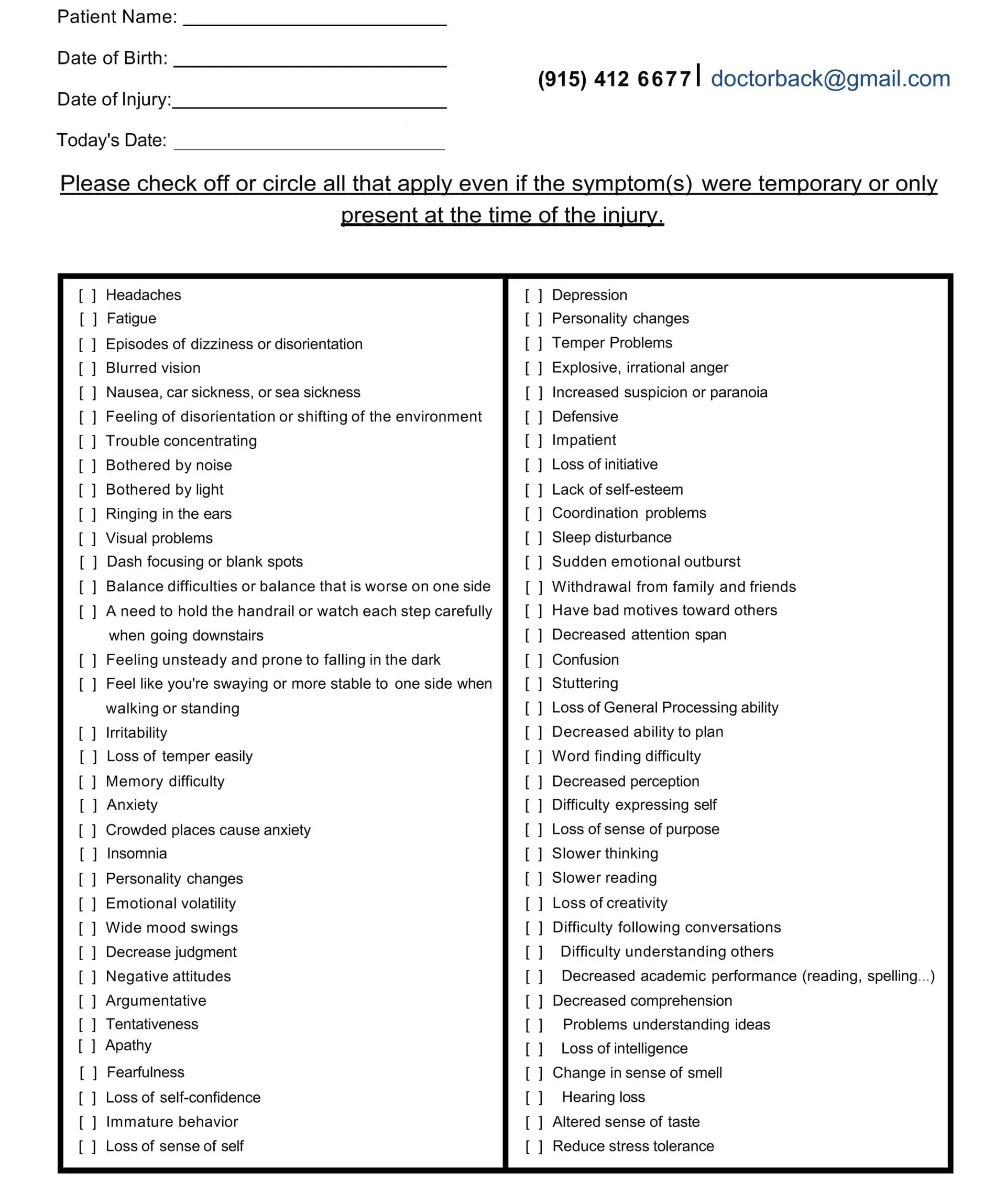
Head Injury/Traumatic Brain Injury Symptom Questionnaire
Virtual Examinations: How El Paso Back Clinic Does It Remotely
Telemedicine at El Paso Back Clinic® starts with virtual exams. You connect via secure video from your phone or computer. Dr. Jimenez or the team talks to you about your injury.
For a car accident, they ask about the crash and pain spots. They watch you move, like bending or walking, to check for swelling or stiffness. Even without hands-on involvement, they spot many problems, such as muscle pulls or nerve issues (Personal Injury Firm, 2025).
Work injuries, like slips, get quick virtual checks to stop things from getting worse. The chiropractor guides home tests, such as balance checks.
Tools in Virtual Exams: Video for movement, apps for sharing photos of injuries, or devices for vital signs.
When It’s Not Enough: Some need in-person touches, so they schedule clinic visits at their El Paso locations.
This remote setup makes getting checked easy, especially in El Paso, where traffic can be a hassle (CK Firm, 2024).
Diagnoses Through Telemedicine at the Clinic
After the exam, the team at El Paso Back Clinic® diagnoses remotely. Common ones from car accidents include whiplash or disc problems. The NP might order X-rays or MRIs, which are performed locally and shared online.
Chiropractors like Dr. Jimenez spot spinal shifts that can cause leg pain, such as sciatica. They explain it clearly on video. The NP assesses whole-body health, including whether swelling worsens.
All sessions are recorded for official documents, insurance keys, or personal injury claims (ChiroMed, n.d.).
Diagnosis Examples: Work-related back pain, sports-related nerve hits, and crash-neck strains.
Team Collaboration: NP handles meds; chiropractor does adjustments.
Tips for Accuracy: Describe pain and show motions well.
This reduces wait times, allowing you to start your El Paso recovery sooner (Complete Care, n.d.).
Managing Treatment Plans Remotely from El Paso Back Clinic
The NP and chiropractor create a treatment plan together, updated via telemedicine. For a sports knee sprain, it might include rest, ice, and shown exercises.
Dr. Jimenez demonstrates stretches on camera. The NP monitors pain and adjusts treatments.
They coordinate to avoid overlaps. For work injuries, plans cover safe job returns. Everything’s online for easy tracking.
Plan Essentials: Pain relief, movement work, and prevention advice.
Integrative Touches: Diet tweaks to cut swelling, like more omega-3 foods.
Telemedicine Updates: Regular video calls to tweak based on progress.
This saves time and money for El Paso patients (Jimenez, n.d.-a).
Ongoing Support and Follow-Up Care at the Clinic
Recovery needs steady help, and El Paso Back Clinic® uses telemedicine for easy follow-ups. Log in to chat about how you’re doing.
For car crash back pain, they check therapy effects and offer encouragement. Support includes mental health tips, as injuries can stress you.
Chiropractors guide home exercises on video. NPs watch for treatment side effects.
Support Types: Mood talks, progress logs, specialist referrals.
How Often: Weekly, early on, then less.
For El Paso Athletes: Safe return-to-play tips, like warm-ups.
This prevents pain from lasting, helping you get back to life fast (Prescient National, n.d.).
Benefits for El Paso Residents with Mobility or Access Issues
Injuries make moving hard, especially in spread-out El Paso. Telemedicine brings care to you.
No travel needed, perfect for remote areas or difficult days. For work injuries, it means less downtime. See pros from home.
Who Gains Most: Those pained by walking, without transport, or packed schedules.
Access Help: Shorter waits than office visits.
Legal Benefits: Docs care for claims without hold-ups.
This makes healing equal for all in El Paso (CK Firm, 2024).
Integrative Advice on Diet, Exercise, and Lifestyle from the Clinic
El Paso Back Clinic® shines with holistic telemedicine tips. They suggest anti-inflammatory foods, such as fruits, to aid healing.
Exercise advice includes easy yoga for pain, demonstrated online. Lifestyle shifts cover better sleep or stress cuts, like apps for calm.
For sports, they teach form to prevent re-injury.
Diet Ideas: Omega-3 for nerves, antioxidants for fixes.
Workout Suggestions: Stretches for range, walks for build-up.
Life Changes: Posture tweaks, drop bad habits.
This addresses root causes for better long-term health (Dallas Accident and Injury Rehab, n.d.).
Coordination and Documentation Between NP and Chiropractor at El Paso Back Clinic
The team shares notes easily on telemedicine platforms. Dr. Jimenez, as both NP and chiropractor, bridges the roles seamlessly.
Records from calls build your file, showing progress for insurance or courts.
Therapies align, like adjustments with rest plans.
Coordination Methods: Shared digital files, joint calls.
Record Value: Shows timely, excellent care.
Your Part: Update honestly for the top plans.
This leads to smooth recoveries in El Paso (Jimenez, n.d.-b).
Insights from Dr. Alexander Jimenez at El Paso Back Clinic
Dr. Alexander Jimenez, DC, APRN, FNP-BC, shares hands-on views from over 30 years at El Paso Back Clinic®. He uses telemedicine for same-day injury exams, like after crashes or sports.
He stresses integrative care for body and mind. For head injuries, he advises sleep, diet, and exercise. His dual license allows him to prescribe medications and adjust spines remotely when possible.
Jimenez highlights tests, such as MRIs, shared online. He combines adjustments in nutrition with other interventions for issues like gut health post-trauma.
Main Observations: Injuries are linked to overall health, like nerves and digestion.
Telemedicine in Practice: Quick virtual help for accidents, with shipped braces.
Tips: Use posture drills and supplements for healing.
His approach shows how the clinic’s NP-chiropractor team excels (Jimenez, n.d.-a; Jimenez, n.d.-b; Jimenez, n.d.-c).
Challenges and Future of Telemedicine at El Paso Back Clinic
Telemedicine has limits, such as the need for touch for some exams. Tech glitches can happen.
But the future is promising. Better apps and AI will improve diagnoses. More insurance covers it.
The clinic trains in remote teamwork.
Fixing Issues: Have in-person backups, help with tech.
Coming Trends: Wearables for live data.
Importance: Makes care more accessible and affordable in El Paso.
Conclusion
At El Paso Back Clinic® in El Paso, TX, telemedicine transforms injury care for car, work, or sports-related injuries. The integrative NP and chiropractor team, led by Dr. Jimenez, offers virtual exams for ongoing support. It includes holistic advice for better living. Ideal for mobility challenges. As Dr. Jimenez proves, this leads to quicker, fuller healing. If injured, reach out to El Paso Back Clinic® for easy, top-notch care at 915-850-0900 or visit their site.
Federal employees face the same injury risks as those in the private industry and different areas of the public sector. Those risks can be serious. The Bureau of Labor Statistics (BLS) reports that approximately 124 federal employees suffered fatal accidents in 2013.
Based on the BLS, the top causes of fatal injuries among workers are:
A federal worker who suffers a job-related private injury or illness (or even families of these employees who have been lost) can seek benefits through the Federal Employees’ Compensation Act (FECA). These benefits include coverage of wages that are lost because of permanent or temporary disability. They also have death benefits for eligible survivors.
The following is a closer look at the most common leading causes of accidents among federal employees:
Transportation Incidents
Many federal jobs require travel between offices or even as a main function of the job. Postal work is the apparent example. Truck and car accidents, which are usually as a result of driver error, can be fatal or result in serious injury. In cases where another driver is at a motor vehicle’s error caused an accident or fault, a worker may consider filing an injury claim in addition to seeking workers’ compensation benefits.
Violence
Unfortunately, federal employees may also be hurt by violence. Incidents of violence include attacks by other creatures and dogs as a cause of harm. In acts of violence, the perpetrator or an animal’s owner may also be held responsible for the employee’s injury, which adds to compensation for the employee’s losses.
Struck by Object or Equipment
There are many ways from being struck by an object or equipment, a worker can suffer a head injury, eye injury, fracture, internal organ injury, cut, bruise or alternative injury. By way of instance, materials and tools can drop from above in a storeroom or roll off a truck. Material stacked can collapse. Debris could be ejected by means of a power tool. By, or a man who excursions can fall and hit at them, make them fall and be hurt.
Falls, Trips or Slips
Slipping or tripping onto a floor or falling off a ladder, scaffolding is a common source of injury in all walks of life. Falls can lead to broken bones, brain injuries, back and spine injuries and much more. In the workplace, using scaling ladders, step stools or other gear puts a worker in danger of falling. Meanwhile, as workers leave equipment or leave slippery and moist floors, this can result in falling accidents.
Harmful Substance Exposure
From being exposed to certain harmful substances such as chemicals, A worker can suffer catastrophic injuries such as burns. A worker may also create health issues from repeated exposure to asbestos, smoke, diesel exhaust or other dangerous substances.
Fire and Explosions
Compressed gases, flammable liquids, open-flames and chemicals are fire and explosion risks. At car depots with petrol or gasoline pumps for automobiles, trucks or equipment, fuel can be ignited. Some metals and synthetic substances that are organic in addition to many natural can form. Third-and-fourth-degree burns, if survived, typically require treatment that includes several surgeries and rehab and leave the sufferer disabled.
Caught-in / Caught-between Accidents
Employees involved in “captured” accidents can endure fractures and tearing accidents if their body parts or clothes become caught in machinery, or even when the worker is crushed between objects or torn from moving components. Caught-in accidents consist of trench, excavation or construction collapses, which may cause devastating injuries in addition to injuries.
Overexertion
Pressure and the stress from overexertion can harm nerves muscles and tendons in the neck, upper extremities and back. Work activities which can result in such musculoskeletal injuries include lifting, pushing, pulling, carrying and holding materials, tools and other objects. They can also be caused by bending, reaching working in awkward body positions and doing similar jobs repetitively or the exact same. Employees can suffer harms that cause numbness, swelling and debilitating pain and sprains, strains, tears, pinched nerves, herniated discs, hernia, carpal or tarsal tunnel syndrome.
Electrocution / Shock
Workers who come into contact may suffer electrocution, which can be death, or jolt, which encircles burns and other accidents caused . Electrical currents can also cause explosions, fires, arc flash and arc blast — each of which might cause burn injuries. Shock and electrocution may be caused by contact with bare wires , damaged fixtures, overhead power lines or faulty equipment or gear.
Seek Federal Benefits
It can be difficult for people people who have never before applied to document a federal workers’ compensation or disability benefits claim. The principles regulating benefits available to employees are lengthy and complicated. Workers who are eligible for numerous advantages may realize that they offset each other, so your total benefit might be less than what you deserve if your claim is organised improperly.
Various experts will allow you to sort through the confusion and work to pursue the advantages or reimbursement you deserve. They can work throughout the country with federal employees.
The scope of our information is limited to chiropractic and spinal injuries and conditions. To discuss options on the subject matter, please feel free to ask Dr. Jimenez or contact us at 915-850-0900 .�
Back pain is one of the most common symptoms reported among the general population. While back pain can occur due to a variety of injuries and/or underlying conditions, a work accident has often been associated as a frequent origin of back pain issues. Back pain can affect an individual at least once throughout their lifetime. Fortunately, federal employees who experience back pain, such as symptoms of sciatica, can benefit from programs like FECA.
Federal employees that are injured at work do not get benefits through workers’ comp insurance or their nation’s workers’ comp program.
Instead, federal employees receive workers’ compensation benefits through the Federal Employees Compensation Act, abbreviated as FECA, except for railroad workers, longshoremen, black lung coal miners, and refuge workers (that are insured under their own national laws for workers’ compensation). Members of the USA armed forces are also not considered federal employees for purposes of FECA.
FECA provides benefits and injury compensation for workers injured on the job, or even if their injury happened during the course and scope of their employment offsite. FECA covers both injuries and occupational diseases that arise over time work conditions. The United States Department of Labor, through the Office of Worker Compensation Programs, administers the workers’ comp benefits provided by the Federal Employees Compensation Act.
Qualifications
Coverage under FECA, or the Federal Employees Compensation Act, is supplied to all national government employees regardless of the number of years of service, nature of the position, or kind of job they perform. In order to be covered by FECA, you must be employed by the federal government, not a private government contractor. If you are currently working for a private business, the workers’ compensation laws in the state will cover you.
For the injury or illness to qualify under FECA, then you must have become injured while performing duties of your job or you developed a disease because of the conditions and hazards inherent in your job. This may consist of accidents occurring while working or traveling offsite as well.
FECA does not cover injuries and diseases that arise because of activities beyond the “course and scope of your employment.” Activities beyond the course and scope of employment include commuting to and from work, recreational excursions, and activities for private reasons. Injuries sustained while intoxicated or under the influence of non-prescription drugs will not be covered by the Federal Employees Compensation Act. FECA also provides benefits to surviving family members for employees that die on the job while performing work-related pursuits.
Back Pain in Federal Employees
As with anyone experiencing symptoms of back pain after being involved in a work accident, due to aggravated conditions or illness, or simply from wear-and-tear injuries, it’s essential for federal employees to seek the proper care and benefits for their symptoms to receive immediate medical attention. Spine issues resulting in sciatica can be debilitating and may affect an employee’s capability to work. Programs for federal employees like FECA may help substantially improve an individual’s overall health and wellness, allowing them to return to work as soon as possible.
FECA Workers’ Compensation Benefits
If your FECA workers’ compensation claim is permitted, you will start to receive workers’ compensation benefits to compensate you for your injury or illness and help you with the recovery. First, FECA will cover all necessary and appropriate claim-related medical therapy. This includes prescriptions, surgery and rehabilitation.
The Federal Employees Compensation Act provides compensation if a worker is disabled and unable to work as a result of industrial injury or occupational disease. You will be compensated by your service directly for your lost wages and more. Should your inability to work exceed 45 days, FECA will cover your wages that are lost.
If your workers’ compensation claim is based on an occupational disease, you’re entitled to compensation for lost salary from FECA after an initial three-day waiting period.
If your injury or illness results in permanent partial disability or permanent total disability, FECA will provide advantages and additional benefits. The total amount of the compensation is based on the severity of your permanent disability and the effect it has on your earning capacity. And if you have dependents, you will probably receive increased permanent disability compensation to account for your own requirement to supply for those dependents.
In the event that you need job retraining to return to the workforce after your injury or illness FECA provides compensation. Dependents are eligible to receive survivor’s benefits. For further details regarding the benefits of the Federal Employees Compansation Act, visit the�Division of Federal Employees’ Compensation (DFEC).
Speak to an Attorney
If your FECA employees’ compensation claim is refused, your claim may be more complicated, or your injury may have been considered more severe. You should carefully consider speaking to a lawyer in your area experienced in FECA employees’ compensation law. Although an attorney isn’t necessary to obtain workers’ compensation benefits, an attorney can help in ensuring you get all of the benefits you’re entitled to get, guiding you through the procedure.
The scope of our information is limited to chiropractic and spinal injuries and conditions. To discuss options on the subject matter, please feel free to ask Dr. Jimenez or contact us at 915-850-0900 .�
Back pain is one of the most common symptoms reported among the general population. While back pain can occur due to a variety of injuries and/or underlying conditions, a work accident has often been associated as a frequent origin of back pain issues. Back pain can affect an individual at least once throughout their lifetime. Fortunately, federal employees who experience back pain, such as symptoms of sciatica, can benefit from programs like FECA.
IFM's Find A Practitioner tool is the largest referral network in Functional Medicine, created to help patients locate Functional Medicine practitioners anywhere in the world. IFM Certified Practitioners are listed first in the search results, given their extensive education in Functional Medicine