Gentle Recovery Strategies After Traumatic Brain Injury: Exercises, Chiropractic Care, and Holistic Support for Lasting Healing
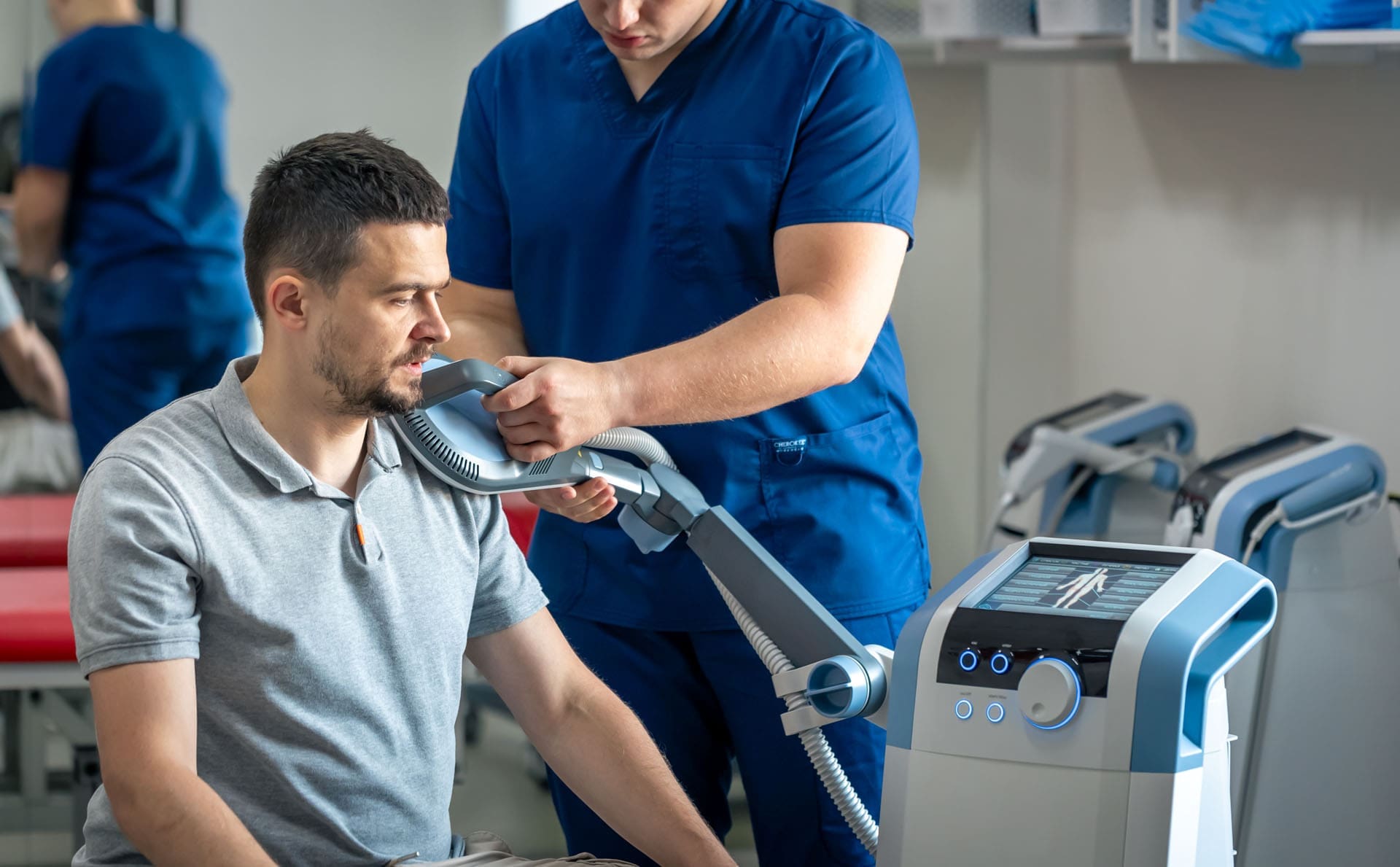
Electromagnetic therapy of the back: a physiotherapist doctor works with a patient with a traumatic brain injury from an occupational accident.
Traumatic brain injury (TBI) affects millions of people every year. A sudden blow or jolt to the head can cause headaches, dizziness, memory problems, neck pain, and poor balance. While the brain needs time and rest to heal, the body also needs gentle movement to recover fully. Early, safe exercises for the neck, core, and balance can speed healing, reduce pain, and lower the risk of falls. Integrative chiropractic care helps restore nerve signals and alignment. Nurse practitioners guide the whole recovery process. When these approaches work together, many people feel stronger and clearer months faster than with rest alone.
This 3,000-word guide uses simple language and proven steps. Every exercise and idea comes from military health guides, rehab centers, and clinical experts. Always get a doctor’s okay before starting. Stop any move that causes sharp pain or new dizziness.
Why Neck Pain Is So Common After TBI
When the head snaps forward and back—like in a car crash or sports hit—the neck takes a huge force. Doctors call this whiplash-associated disorder. Muscles tighten, joints get stiff, and nerves can become irritated. Many people also develop forward head posture, where the head sits inches in front of the shoulders. Each inch forward adds about 10 pounds of stress to the neck muscles (Healthline, 2023a).
Left alone, tight neck muscles pull on the skull base, worsening headaches. They also make balance harder because the brain receives mixed signals from the upper neck. Gentle stretches and posture exercises can effectively address this issue early on.
Common Neck Problems After TBI
Muscle spasms and knots
Stiffness that limits turning the head
Headaches that start at the base of the skull
Forward head posture from pain guarding
Dizziness when moving the head quickly
Safe Neck Stretches to Start in the First Weeks
These four stretches appear on official military and rehab fact sheets. Have them sit in a firm chair with feet flat on the floor. Breathe slowly. Hold each stretch 15–30 seconds and repeat 3–5 times, 2–3 times a day.
Chin Tuck – Slide your chin straight back (like making a double chin) until you feel a stretch behind the neck. Do not tilt down. This is the single best move to fight forward head posture (U.S. Department of Defense, 2020; Healthline, 2023a).
Side Bend – Sit tall. Slowly drop one ear toward the same shoulder until you feel a stretch on the opposite side. Keep your nose pointing forward. Use the hand on top of the head for a gentle extra pull if comfortable (Achieve Brain & Spine, n.d.).
Neck Rotation – Turn your head to look over one shoulder as far as comfortable. Hold, then switch sides. Move only the neck, not the shoulders (U.S. Department of Defense, 2020).
Upper Trapezius Stretch – Sit and place one hand under your thigh to anchor the shoulder. With the other hand, gently pull the head away and slightly forward. You will feel the stretch along the side and back of the neck (Healix Therapy, n.d.).
Tip: Warm the neck first with a warm shower or heating pad for 10 minutes.
Core and Trunk Exercises That Protect the Neck and Brain
A weak core forces the neck muscles to work overtime to keep the head steady. Simple seated core moves wake up the deep stomach and back muscles without jarring the brain.
Do these 3–4 times a week. Start with 8–10 repetitions and build to 15–20.
Sitting Marching – Sit tall with hands on thighs. Lift one knee toward the chest while keeping the back straight, then lower slowly. Alternate legs. This exercise turns on the lower abs and hip flexors (Flint Rehab, 2023a).
Lateral Trunk Flexion (Side Bends) – Sit tall. Slowly slide one hand down the side of the thigh as you bend to that side. Use the opposite core muscles to pull yourself back upright. Works the obliques and reduces side-to-side sway (Illinois Department of Central Management Services, n.d.).
Seated Trunk Extension – Cross arms over chest. Lean forward 10–15 degrees, then slowly sit back tall using the back muscles. Keep the chin tucked to protect the neck (Flint Rehab, 2023a).
Seated Weight Shifts – Scoot forward on the chair so feet are flat and knees are at 90 degrees. Shift weight side to side or front to back while keeping the trunk tall. This exercise is particularly beneficial for promoting early balance (Flint Rehab, 2023a).
Balance Exercises That Are Safe After TBI
Poor balance is one of the biggest fall risks after brain injury. Start every balance exercise seated or holding onto a sturdy surface.
Beginner Level (Weeks 1–4)
Reach in different directions while seated
Heel raises and toe raises while holding a counter
March in place, holding onto a chair
Intermediate Level (Weeks 4–8)
Stand with feet together, eyes open, then eyes closed for 10–20 seconds
Single-leg stance holding a chair (5–10 seconds each leg)
Stand on a firm cushion or folded towel (Neofect, n.d.)
Advanced Level
Tandem stance (heel-to-toe) with arms out
Walk heel-to-toe in a straight line
Step over small objects while watching your feet
Do balance work for 5–10 minutes daily. Progress only when the easier level feels straightforward.
Gentle Yoga and Breathing for Brain and Body Recovery
Modified yoga poses calm the nervous system and safely stretch the entire spine.
Seated Cat-Cow – Hands on knees. Inhale and arch the back while lifting the chest and chin slightly. Exhale and round the back while tucking the chin. Move slowly with the breath (Flint Rehab, 2023b).
Seated Side Stretch – Inhale arms overhead. Exhale and lean to one side, keeping both sit bones on the chair. Hold 3–5 breaths on each side.
Chair Warrior II – Sit sideways on the chair. Extend one leg back and bend the front knee. Reach arms out for a gentle chest and hip opener.
Yoga improves balance by 36% and reduces anxiety in brain-injury patients (Flint Rehab, 2023b).
How Integrative Chiropractic Care Helps TBI Recovery
Chiropractic care is not just about “cracking” the back. Doctors of chiropractic trained in brain-injury care use gentle techniques to:
Remove pressure on nerves, leaving the spine
Restore normal motion to stiff neck joints
Reduce muscle spasms with soft-tissue therapy
Improve blood flow and oxygen to the brain
Correct forward head posture that slows healing
Studies and clinical reports show that spinal adjustments can reduce headache frequency, improve sleep, and speed return to work after concussion (Calibration Mansfield, n.d.; Northwest Florida Physicians Group, n.d.; Pinnacle Health Chiropractic, n.d.).
Dr. Alexander Jimenez, DC, APRN, FNP-BC, a dual-credentialed chiropractor and family nurse practitioner in El Paso, Texas, has treated thousands of patients with TBI, including veterans. He combines precise cervical adjustments, soft-tissue work, and functional neurology exercises. “The upper neck houses sensors that tell the brain where the head is in space. When those joints are stuck, the brain gets fuzzy signals, and balance suffers,” Dr. Jimenez explains in his clinical teaching (Jimenez, 2025). His patients often report clearer thinking and less dizziness within weeks of starting care.
The Important Role of Nurse Practitioners in TBI Care
Nurse practitioners (NPs) are trained to manage complex patients from head to toe. In TBI recovery, they:
Watch for worsening symptoms (increased swelling, seizures, mood changes)
Coordinate physical therapy, chiropractic, counseling, and medications
Teach patients and families what is normal and what needs quick attention
Adjust care plans as healing progresses
Provide follow-up visits to catch problems early (Ackerman, 2012; Mayo Clinic, 2024; Nursing Center, 2023)
Because NPs spend more time with patients than many doctors, they often spot small improvements or setbacks first. Dr. Jimenez, who also holds APRN and FNP-BC credentials, uses this whole-person view in his clinic every day.
Sample 6-Week Gentle Recovery Plan
Week 1–2 (Very Gentle Phase)
5–10 minutes of chin tucks and side bends twice daily
Sitting, marching 2 sets of 10 each leg
Deep breathing for 3 minutes
Short walks with a partner
Week 3–4 (Add Core and Balance)
Add lateral trunk flexion and seated trunk extension
Begin seated weight shifts and reaching
One chiropractic visit for evaluation and gentle adjustment
Week 5–6 (Build Strength and Confidence)
Add standing balance drills with support
Try modified cat-cow and seated yoga stretches
Increase reps to 15–20
Weekly chiropractic care and NP follow-up
Rest for at least one full day between harder sessions. Keep a simple journal: note pain level (0–10), dizziness, and energy. Share it with your team.
Drink water all day (half your body weight in ounces)
Eat protein and colorful vegetables at every meal
Limit screen time in the first weeks—use blue-light glasses if needed
Join an online TBI support group for encouragement
Walk outside in nature when symptoms allow
When to Call the Doctor Right Away
Stop exercising and seek help if you have:
Sudden severe headache
Vomiting or vision changes
Worsening confusion or slurred speech
Seizure or loss of consciousness
Final Thoughts: Healing Is Possible and Often Faster Than You Think
A traumatic brain injury feels overwhelming at first, but the brain and body are built to heal. Gentle neck stretches, core work, balance drills, chiropractic adjustments, and strong nurse practitioner guidance give your recovery the best chance. Start small, stay consistent, and celebrate every tiny win.
Thousands of people—including veterans treated by Dr. Alexander Jimenez—return to work, sports, and family life after TBI by using exactly these safe, evidence-based steps. You can too.
Traumatic Brain Injury Recovery: Effective Exercises and Chiropractic Care for Head Injuries
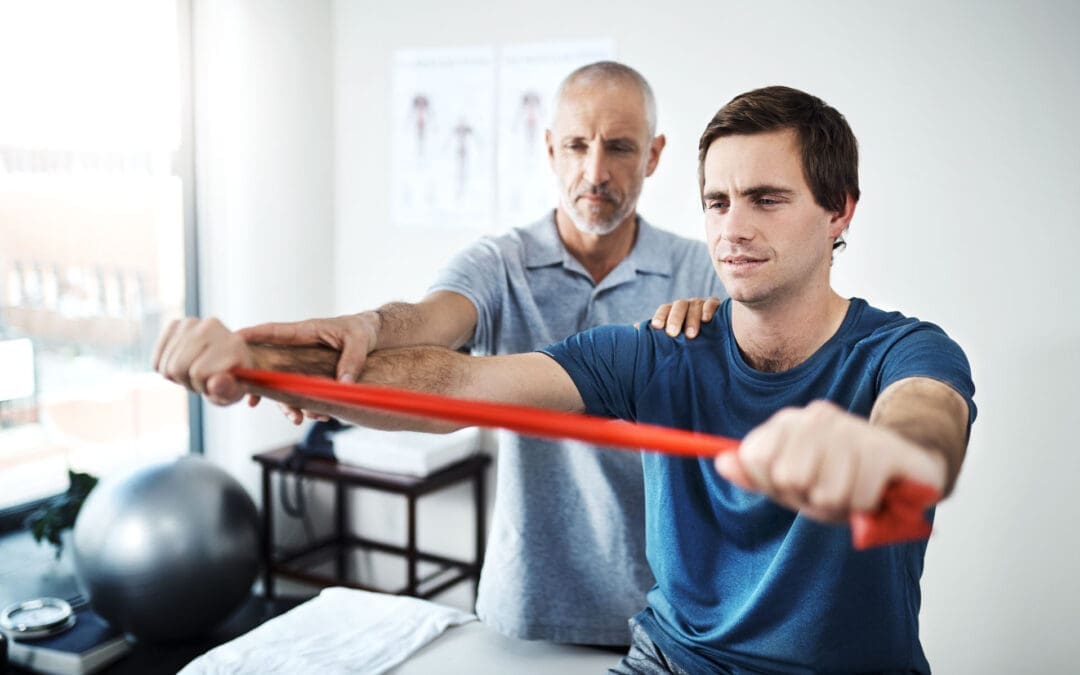
Rehabilitation exercises after an auto accident with head injuries.
Traumatic brain injury, or TBI, happens when a strong hit to the head harms the brain. This can come from falls, car crashes, sports, or other accidents. Head injuries are much like TBIs because they often involve the same kinds of damage to the brain and body. Recovery from these injuries requires time and effort. It focuses on getting back physical strength, mental sharpness, and balance. Rehabilitation utilizes a combination of exercises to aid recovery. These include activities that get the heart pumping, build muscle, improve steadiness, and sharpen the mind. Chiropractic care can also play a significant role, particularly in addressing issues such as headaches and dizziness. This article examines ways to recover, with a strong focus on training and improving step by step.
People with TBI or head injuries often face problems like pain, trouble moving, forgetfulness, or feeling off-balance. Starting recovery early is crucial, but it must be done slowly and safely. Doctors and therapists guide the process. Exercises help the brain rewire itself through something called neuroplasticity. This means the brain can create new pathways to repair damaged ones. Training helps build these paths. Recovery is not limited to a single type of exercise. It combines various types to cater to all needs. Let’s dive into the details.
Physical Exercises for Strength and Aerobic Health
Physical exercises are a big part of getting better from TBI or head injuries. They help rebuild muscle, boost energy, and enhance overall bodily function. Start slow because rushing can cause more harm. Always check with a doctor first.
Aerobic activities get the heart rate up without too much strain. Walking is a simple start. It can be done inside or outside, and it helps blood flow to the brain. This brings oxygen and nutrients for the healing process. Jogging on a treadmill or using a stationary bike are other options. Swimming is great too because the water supports the body, making movement easier. Aim for 150 minutes a week of moderate aerobic work, spread out over days. This could be 20 to 40 minutes per session, three to four times a week. These activities lower the risk of other health issues like heart problems or diabetes, which can slow recovery. They also lift mood and reduce tiredness.
Strength training builds muscle power. This is important because injuries can weaken muscles. Squats are a good exercise. Stand with your feet apart, as if your shoulders are wide, bend your knees as if sitting back in a chair, then stand up. Do this 10 times. Rows work the back and arms. Sit or stand, pull your elbows back like squeezing something between your shoulder blades. Use light weights or resistance bands if possible. Bicep curls are simple: Hold a water bottle, bend your elbow to bring it to your shoulder, then lower it. Repeat 10 times per arm. For legs, try seated marching. Sit in a chair and lift one knee up, then the other, like walking in place. These exercises help with daily tasks, such as getting up from a chair or carrying objects.
Other strength moves include push-ups against a wall or chair for the chest and arms. Shoulder presses: Lift arms overhead with light weights. Do these in sets, with rests in between. Strength training should be done two to three times a week, focusing on the larger muscle groups. It helps with posture and stops falls. As you become stronger, add more reps or increase the weight. But listen to your body. If it hurts, stop and rest.
Seated exercises are beneficial for individuals who are unable to stand or walk. Seated hip rotations: Sit and turn your hips side to side. This builds core strength. Alternating heel-toe raises: Lift your heels, then your toes, while sitting. These improve lower-body control and blood flow. Arm push: Push a bottle across a table with your wrist. This strengthens arms without much effort. Mixing aerobic and strength training keeps the workout fun and covers more ground for recovery.
Balance Exercises to Regain Stability
Balance problems are common after TBI or head injuries. They can cause falls and make walking hard. Balance training helps the brain and body work together better. It uses neuroplasticity to fix these issues.
Tandem stance is a basic exercise. Stand with one foot right in front of the other, like on a tightrope. Hold for 30 seconds, then switch feet. If it’s too hard, spread feet wider. Close your eyes to make it tougher once you’re ready. Weight shifts: Stand with your feet apart, shift your weight to one side, and lift the other foot slightly. Hold 30 seconds per side. This builds steadiness.
Romberg stance: Stand with feet together, eyes closed. Hold as long as you can, up to two minutes. It trains the body to use senses apart from sight for balance. Alternating heel-to-toe raises: Stand and rise on your toes, then rock back onto your heels. Do it 10 times. This strengthens legs and improves coordination.
For more challenge, use tools. A gym ball: Sit on it and reach for objects. This makes the surface unstable, forcing better control. Balance boards: Stand on a wobbly board and try not to lose your balance. Start with help. Walking on various surfaces, such as grass or sand, trains the body to adapt.
Vestibular exercises help with dizziness. These include head turns while focusing on a point, as well as eye movements such as following a finger. They retrain the inner ear and brain. Do balance work daily, but in short sessions to avoid fatigue. Progress slowly from a seated to a standing position. Good balance means safer movement and less fear of falling.
Mix balance with other training. For example, do squats while on one leg. Or walk while turning your head. This makes exercises more realistic. Recovery improves when training mimics daily activities.
Cognitive Exercises for Mental Sharpness
Mental skills can be affected after TBI or head injuries. Aspects such as memory, focus, and problem-solving require improvement. Cognitive exercises challenge the brain to build new connections.
Try new things: Walk a different path or try a new food. This sparks neuron growth. Use your non-dominant hand for tasks such as brushing your teeth. It activates the other side of the brain and strengthens thinking. Brain-training games: Play chess, Sudoku, or apps like Lumosity. These improve logic and memory.
Memorization: Recall a grocery list or song lyrics. Start small and build up. Draw maps from memory, like your route to the store. This boosts spatial thinking. Read out loud: It works reading, speaking, and listening parts of the brain.
Puzzles and games: Jigsaw puzzles or board games like Connect Four help develop planning and hand-eye coordination skills. Mental math: Add numbers in your head or count backwards by sevens. Keep a journal of senses: Note what you see, hear, and smell each day. This mixes memory and senses.
Start slow with easy tasks. Increase difficulty as you improve. Do 15-20 minutes a day. Combine with physical exercises for a complete recovery. Cognitive training helps with daily life, like remembering names or following recipes.
Integrative Chiropractic Therapy for Support
Chiropractic care helps with TBI and head injury recovery. It focuses on the spine and nervous system. This can help alleviate headaches and dizziness caused by injuries.
Adjustments align the spine, reducing nerve pressure. This improves blood flow to the brain and cuts inflammation. Craniosacral therapy: Light touch on the head and spine boosts fluid flow around the brain. It helps with headaches and brain function.
Chiropractors offer lifestyle tips, such as healthy eating and adequate sleep. They also suggest exercises, such as those for strength and balance. Combining chiropractic care with physical therapy can accelerate recovery. It addresses both body and mind.
For long-term care, regular visits prevent chronic pain. Chiropractic supports neuroplasticity by stimulating the nervous system. It’s non-invasive and can be used in conjunction with other treatments.
Insights from Dr. Alexander Jimenez
Dr. Alexander Jimenez, a chiropractor with over 30 years of experience, shares observations on TBI and head injuries. He uses integrative care for recovery. His work includes functional medicine to fix root causes. For injuries, he emphasizes the importance of prompt action with rehabilitation programs. These include exercises for mobility and nerve health. He helps with symptoms like pain and weakness through adjustments and nutrition. His clinic focuses on achieving full healing without the use of drugs or surgery.
Jimenez notes that personalized plans are most effective. He combines chiropractic with exercises to boost recovery. His insights demonstrate how training can rebuild strength and function after head injuries.
Putting It All Together for Recovery
Recovery from TBI or head injuries needs a mix of exercises and care. Focus on training: Do aerobic exercises for heart health, strength training for muscles, balance training for stability, and cognitive exercises for the mind. Add chiropractic for extra support. Start slow, be consistent, and track progress. With time, these steps lead to a better quality of life.
Always work with pros. Recovery is a journey, but training makes it possible.
Healing After a Head Injury: How Your Body Can Recover with the Right Team
Your son sustained a severe blow during Friday-night football. Your wife walked away from a three-car pile-up. Your husband fell 12 feet off a scaffold. All three left the hospital with the same three letters: TBI – traumatic brain injury. The doctor said, “Go home and rest.” But two weeks later, the headaches, foggy thinking, and stomach troubles are worse. You feel lost. This article is written for you – the person healing, the family member searching at 2 a.m., and the nurse, coach, or therapist who wants to help.
We will walk through:
What really happens inside the skull in the first minutes, hours, and weeks?
Why does the damage keep spreading if no one stops the “second wave”
How a whole-body team – including chiropractic nurse practitioners (CNPs) – can turn the tide.
Simple daily steps you can start tomorrow.
Let’s begin where the injury begins.
The Two Waves That Steal Recovery
Wave 1: The First Hit (Primary Injury)
A helmet-to-helmet tackle, a steering wheel to the forehead, or a beam to the hard hat cracks open brain cells in an instant. Blood vessels tear. The skull may stay whole, but the soft brain bounces like gelatin in a jar. This is the damage everyone sees on the CT scan (Missouri University of Science and Technology, 2025).
Wave 2: The Hidden Fire (Secondary Injury)
The real thief shows up later. Four chemical storms start inside the brain and body:
Excitotoxicity – Too much glutamate (brain messenger chemical) pours out. Neurons fire relentlessly until they burn out (Waters, 2023).
Oxidative stress – Tiny sparks called reactive oxygen species (ROS) act like rust on brain wires (Gharavi et al., 2023).
Neuroinflammation – Immune cells rush in to help, but stay too long and attack healthy tissue (Simon et al., 2017).
Gut-brain meltdown – The gut lining leaks, bad bacteria cross into the blood, and the brain swells even more (Heuer Fischer, 2024).
These four storms can last weeks, not hours. One mouse study showed that brain toxins still remained elevated 7 days after the crash (Missouri University of Science and Technology, 2025). That is why “I feel worse at week three” is so common.
Real People, Real Storms
Jake, 17, linebacker – Cleared to play after 10 days. By week four, he had forgotten his homework, snapped at his mom, and thrown up every morning. Gut-brain tests showed that no good bacteria remained.
Maria, 34, Uber driver – Whiplash plus airbag to the temple. Doctors only checked her neck X-ray. Six months later, she still can’t balance her checkbook. Blood tests revealed extremely high levels of inflammation markers.
Carlos, 42, roofer – The hard hat saved his life, but it could not protect him from the diffuse twist inside his body. His wife noticed he cried at commercials and slept 14 hours a day. His oxidative stress score was triple the norm.
All three were told, “It’s just a concussion. Wait it out.” Waiting lets the second wave win.
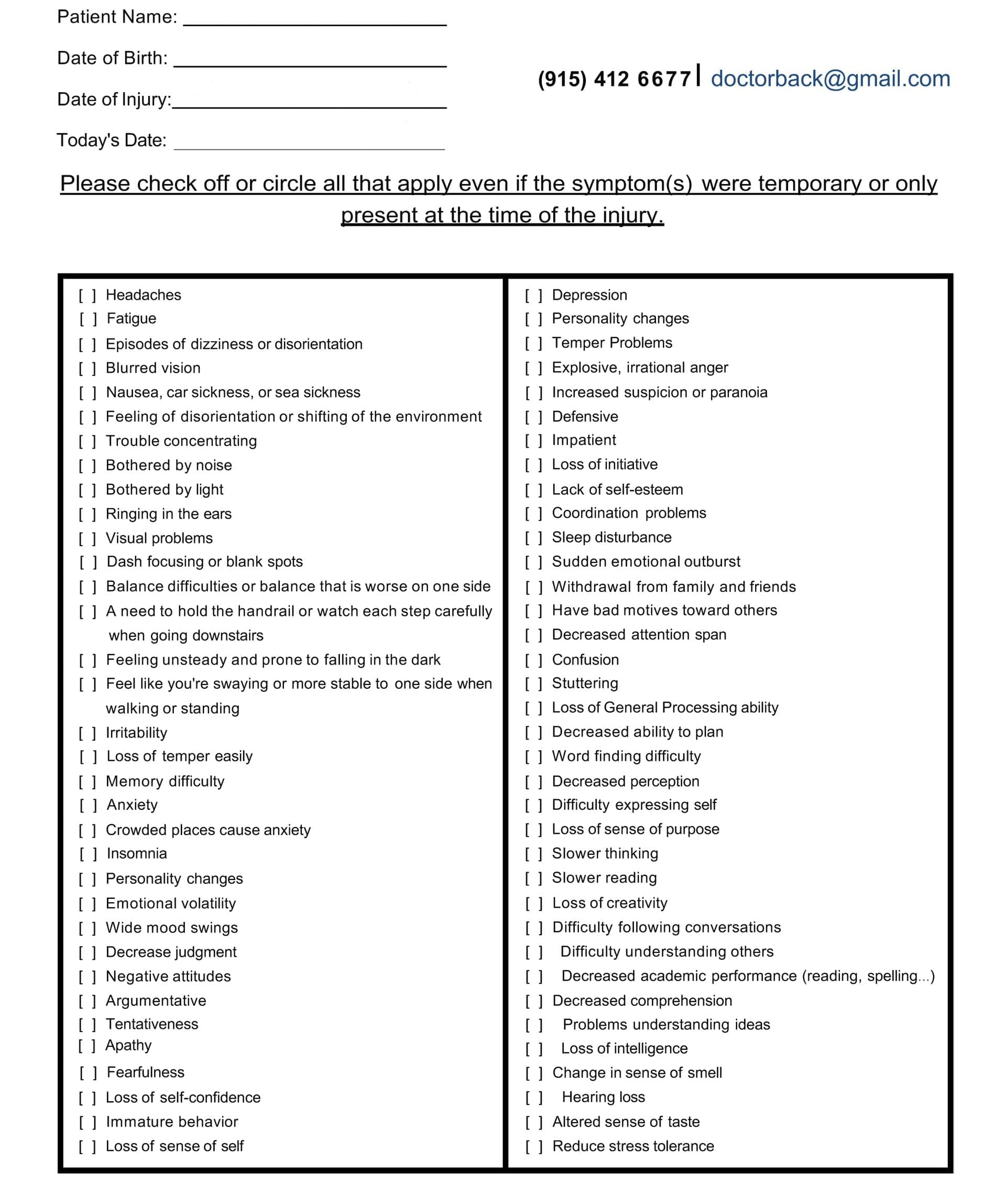
Symptom Questionnaire:
The Blood-Brain Barrier: Your Skull’s Broken Gate
Think of the blood-brain barrier (BBB) as a velvet rope around a VIP club. After TBI, it rips. Proteins and water leak in, causing brain swelling (edema). Two kinds matter:
Cytotoxic edema – Cells drink too much water and burst.
Vasogenic edema – The rope is cut; everything floods the dance floor (Kuriakose & Uzunova, 2023).
Swelling squeezes healthy areas. Memory, mood, and movement shut down. MRI may still look “normal” because standard scans miss these tiny leaks.
The Gut-Brain Highway No One Talks About
Your gut has more nerve endings than your spinal cord. After TBI:
Stress hormones crash.
Good bacteria die.
The gut wall gets holes.
Toxins ride the vagus nerve straight to the brain.
Result? Anxiety, constipation, and brain fog that no pill fixes (Heuer Fischer, 2024). Heal the gut, calm the brain.
Meet the Team That Sees the Whole Picture
The Chiropractic Nurse Practitioner (CNP)
A CNP is a registered nurse with extra doctoral training in chiropractic neurology and functional medicine. Dr. Alexander Jimenez, DC, APRN, FNP-BC, in El Paso, Texas, has treated more than 4,000 TBI patients. Dr. Alexander Jimenez asserts, “Our approach goes beyond simple neck repairs.” We reset the entire nervous system dashboard” (Jimenez, 2025).
The Core Four Tests Every TBI Patient Needs
qEEG brain map – Shows which brain waves are stuck.
Ice for 10 minutes on / 20 minutes off, behind the neck.
Zero screens after 7 p.m. Blue light feeds excitotoxicity.
Sip bone broth; it contains glycine, nature’s brake pedal on glutamate.
Week 2 – Feed the Repair Crew
20 g collagen + 500 mg vitamin C before breakfast.
Walk 10 minutes outside; sunlight reboots the circadian rhythm.
Family rule: No yelling. Loud voices re-trigger fight-or-flight.
Week 3 – Reboot the Gut-Brain Highway
One new fermented food daily: sauerkraut, kimchi, kefir.
4-7-8 breathing with kids: In 4, hold 7, out 8. Calms the vagus nerve.
Week 4 – Gentle Brain Games
Lumosity 10 min/day.
Chiropractic CNP checks the pupil’s response and the balance board.
Month 2 – Return-to-Life Checklist
Driver’s test with an occupational therapist.
Coach reviews film for neck-safe tackling.
The employer receives a light-duty note based on the HRV score.
Stories That Prove It Works
Jake – After 6 weeks of CNP care plus fermented foods, his qEEG looked like his pre-season map. He started in the playoffs.
Maria – Glutathione IVs twice a week dropped her headache diary from 7/10 to 2/10. She passed the driving retest on her first try.
Carlos – Cervical adjustments restored CSF flow; his wife says, “I have my husband back.” He returned to framing houses with a new hard-hat liner.
Why Insurance Is Starting to Pay
Medicare and most Blue Cross plans now cover:
Chiropractic neurology E/M codes 99xxx
IV antioxidant therapy under “medically necessary”
qEEG as diagnostic code R94.01
Request Dr. Jimenez’s “TBI Recovery Bundle” letter; families report an 80% approval rate (Jimenez, 2025).
Your 3-Minute Action Plan Tonight
Text your CNP: “Can we do the Core Four tests?”
Put a bag of frozen peas in a sock behind the injured person’s neck for 10 minutes.
Open the fridge, eat one spoon of yogurt, and hum “Happy Birthday” out loud.
You just cooled inflammation, fed good bacteria, and stimulated the vagus nerve. That is real medicine.
The Promise We Make to Families
No one should feel alone in the dark after a head injury. The brain wants to heal. Give it the right team, the right fuel, and the right quiet space, and it will rebuild stronger. You are not “just concussed.” You are a whole person with a whole team ready to walk the road with you.
IFM's Find A Practitioner tool is the largest referral network in Functional Medicine, created to help patients locate Functional Medicine practitioners anywhere in the world. IFM Certified Practitioners are listed first in the search results, given their extensive education in Functional Medicine