April Hermosillo has achieved overall health and wellness by following proper nutrition and engaging in exercises/physical activities. As a regular fitness participant, April Hermosillo can experience low back pain which affects even her most basic tasks. April Hermosillo struggled with spine health issues and sciatica before receiving chiropractic care.
Dr. Alex Jimenez is a chiropractor in El Paso, TX who has helped April Hermosillo achieve pain relief so she can return to her everyday fitness routines. April Hermosillo describes how Dr. Jimenez has tremendously helped improve her overall symptoms. April Hermosillo highly recommends Dr. Alex Jimenez as the non-surgical choice for personalized spine and sciatica treatment and rehabilitation.
El Paso Back Clinic
We are blessed to present to you El Paso�s Premier Wellness & Injury Care Clinic.
As El Paso�s Chiropractic Rehabilitation Clinic & Integrated Medicine Center, we passionately are focused on treating patients after frustrating injuries and chronic pain syndromes. We focus on improving your ability through flexibility, mobility and agility programs tailored for all age groups and disabilities.
We want you to live a life filled with more energy, positive attitude, better sleep, less pain, proper body weight and educated on how to maintain this way of life.
I assure you, I will only accept the best for you�
If you have enjoyed this video and we have helped you in any way, please feel free to subscribe and recommend us.
A herniated disc is a common spinal disc issue. The spine is a very intricate structure, and when one component fails to function correctly, it can affect the entire body, causing pain and loss of mobility.
Tiny bones, called vertebrae, are stacked on each other to form the spine. They are joined in such a way to facilitate movement, flexibility, and a wide range of motion. There are small, fluid-filled discs that rest between each vertebra, providing a cushion between the bones. When one of these discs becomes damaged, it can affect the surrounding nerves, causing pain and making movement difficult.
What is It?
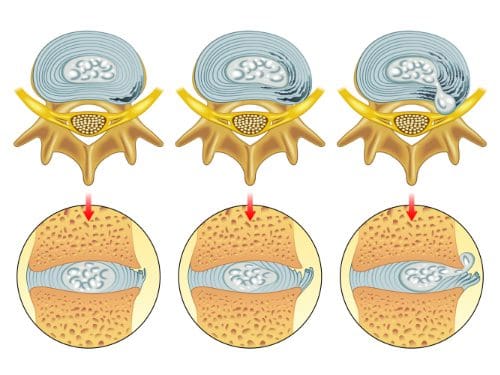
A herniated disc is a common spinal condition that typically affects the cervical spine (neck region) or the lumbar spine (lower back), although it can occur in any part of the spine. Most often, a herniated disc happens at the L4 � L5 and the L5 � S1. This is because this portion of the spine, the lumbar region, bears the bulk of the body�s weight.
It is often referred to as a ruptured disc or slipped disc and occurs when the disc moves or slips out of place. It can also be the result of a disc that has a small tear and is leaking the jelly-like substance that is inside. This can put pressure on the surrounding nerves, causing pain and discomfort.
The first two stages are called incomplete herniations while the last two stages are called complete herniations.
Symptoms of a herniated disc may increase or worsen as the condition progresses although some patients do not experience any at all Typical symptoms include:
Pain in the affected area
Tingling
Numbness
Weakness
Leg or arm pain
Loss of reflex
Loss of mobility
Loss of flexibility
Decreased range of motion
What Causes It?
There are several causes. The most common are aging and degeneration, overuse, and normal wear and tear on the body.
A herniated disc resulting from an injury or trauma, such as a blow to the back, is less common, but it does happen. Because the back does bear most of the body�s weight, it can put a significant amount of pressure on the spine and discs. Over time, the discs may begin to weaken and a herniation can occur.
Injury or trauma that results in a herniation may include a car accident that involves sudden jerking, or incorrectly lifting heaving objects can put excessive pressure on the spine, causing it to herniate.
How is it Diagnosed?
A physical examination is usually the first step in diagnosing a herniated disc. The physician or chiropractor will examine the spine while the patient is standing, then while they are lying down. Depending on the severity and location of the herniation, they may note a decrease in spinal curvature.
Radicular pain will also be assessed, when the spine is unmoving, while in motion, and when pressure is applied. Other tests may also be administered. X-rays may also be taken, but an MRI is usually more accurate and provides greater detail.
What are the Treatments?
Medications may be recommended or prescribed, including NSAIDs, narcotics, muscle relaxers, and anticonvulsants. Some doctors may advise cortisone injections to reduce inflammation. Physical therapy may be recommended as a stand-alone treatment or in conjunctions with other treatments. Surgery for herniated discs is rare and usually reserved as a last resort option.
Chiropractic has been very effective in helping patients manage their pain and regain their mobility so they can return to their normal life. Therefore, it should be your first option for treatment before you go down the road with drugs or surgery.
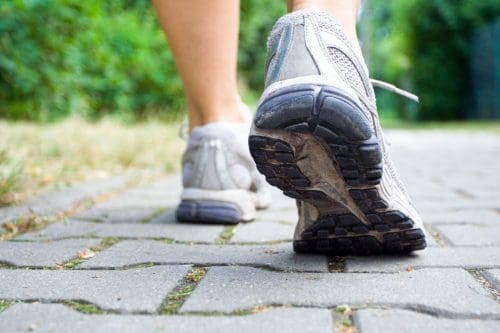
You hear many people talk about the benefits of walking but may not know how it applies to you. Walking regularly can be exceptionally helpful if you have back pain by providing the spine with added support and increased blood flow. These three spinal health benefits of walking should be enough to convince you.
Walking Aids in Rehydrating Your Spinal Discs
Gravity is not your friend. Well, not when it comes to your back. From the time you get out of bed until you lay down again at the end of the day, the pressure of gravity compresses your spine. When your spine is compressed, that means your spinal discs are too. These fluid-filled discs provide a cushion for your vertebrae, but the constant compression that occurs throughout the day due to regular activity squeezes the fluid out of them.
Dehydrated discs can cause back pain and structural problems. That is why restful sleep and staying hydrated are essential for spinal health.
Walk because it increases circulation throughout your body, including your spine. This increased blood flow helps to rehydrate your discs that improve your spinal health. It also helps keep your spine younger, staving off the effects of the aging process.
Walking Relieves Back Pain and Reduces Stress to the Spine
Walking provides an excellent low impact aerobic workout, and it increases blood flow which helps improve mobility, flexibility, and range of motion. When you incorporate stretching, you can reap even more of the benefits of a healthy spine.
The human body is made to move. When you don’t move or are sedentary, your muscles become stiff and inflexible. Moving prevents that, but even if you are experiencing some stiffness, walking, stretching, and movement can help you regain that flexibility.
You will also find that walking regularly also helps with stress relief. Lower back pain is a prevalent stress symptom, but walking combats its effects by encouraging dopamine release.
When you are stressed, your pain sensitivity increases, you feel pain more acutely, and it is more challenging to manage. By reducing your stress level, you also make your pain more manageable but, at the same time, minimize lower back pain.
Walking Improves Posture
When you don’t use your muscles, they become weak and inflexible and cannot do their intended job. The back forces are designed to provide support to the spine, and when they are not used, they can atrophy and weaken, resulting in stooped or other improper posture.
Poor posture causes back pain by putting more pressure on the spine, leading to pain, soreness, tension, and headaches. Without the necessary support, it can also lead to misalignment of the spine, which can cause problems.
Walking strengthens the supporting muscle groups so that your back muscles get more robust, and your spine gets the structural support needed. As your back muscles get stronger, your body will naturally begin to adopt a correct posture. The benefits of good posture include improved organ function, reduced pain, less fatigue, and easier breathing.
Walking is good for your whole body as well as your mind. When you walk to reduce back pain, you are also doing great things for your body. If you have any questions about proper form or achieving a better, healthier posture, your chiropractor can help you. The spine is such an essential part of the body; it does so much. Please do your best to protect it and keep it in good health. In return, it will save you from moving for a long, long time.
Now in the heart of the school year � new shoes, haircuts, homework, and their bulging backpacks. Think about the backpack your child is carrying. Sure, they load them up with books, but did you know that wearing a heavy backpack for a long time can actually hurt your child? The American Academy of Pediatrics (AAP) has provided some helpful guidelines for choosing a backpack for your child and avoiding the injury that can result from one that is too heavy.
What are the health risks of a heavy backpack?
Wearing a heavy backpack can strain the shoulders, back, and neck. As the child�s body tries to compensate for the extra weight, such as leaning forward, it can adopt positions that put the spine out of alignment. It can also cause the muscles to fatigue and weaken. This results in poor posture and a misaligned spine.
The longer he or she carries the extra weight, the worse it gets. Over time, the child can experience pain, stiffness, and problems with flexibility and range of motion. This can significantly increase the child�s potential for injury. The effects may include backache, sore or stiff neck, sore shoulders, and headaches.
How heavy is too heavy for a child�s backpack?
According to the AAP, a child�s backpack should weigh less than 10 to 20 percent of his or her body weight � and no more. However, a Consumer Reports survey showed that the lower end of the range, around 10 percent or less, is preferable. In short, the lighter the backpack, the healthier it is for your child. A good rule of thumb is to observe your child wearing the backpack. If they are stooped or leaning forward, it is too heavy.
Children who are shorter, as well as girls, may be more prone to back pain caused by carrying heavy backpacks. This means that for these children you need to aim for even lighter weights. Children who are overweight may also be at risk for injury. The excess weight already puts a strain on their joints and muscles; the heavy backpack exacerbates the situation.
Children who wear their backpack over one shoulder also increase their risk of injury. This puts all the weight on one side, causing the child to bend or lean in an effort to compensate for the off-kilter weight. This can strain the shoulder and back, eventually causing injury and pain.
Helping your child avoid carrying a heavy backpack.
If you notice that your child cannot stand up straight while wearing the backpack, then it is too heavy. You should inspect your child�s backpack on a regular basis to test the heaviness. When purchasing a backpack, aim for wide, padded straps that are adjustable. It should fit the child well and to be too big. The straps should not be too loose. You want it to fit close to your child�s body and should come to just below the waist � but not too far. Don�t allow your child to carry the backpack on one shoulder, encourage them to wear it on both shoulders. This distributes the weight more evenly.
If your child is carrying a heavy backpack, you may need to talk to their teacher to see what is necessary for him or her to carry daily, and what can be left at home or at school. Work together to find ways to lighten the load and avoid injury. Also, keep in mind, your child may not bring your attention to the fact that their backpack is too heavy. It is up to you to observe and intervene for them.
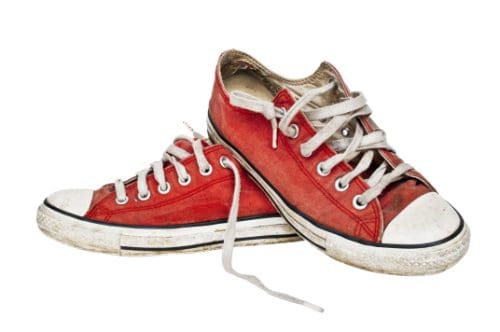
If you�ve been experiencing lower back pain and can�t seem to pinpoint the cause, try looking down � at your feet. What kind of shoes are you wearing? Your shoes can have a tremendous effect on your spine, causing back pain. While this is traditionally considered to be a �female issue,� some men�s shoe styles are unsafe as well. Take a look at the most common culprits and find out how you can be safely shod.
The Truth About High Heels
Wearing high heels puts your body in a position that is very similar to walking on a ramp. It causes your calf muscles to stay in a constantly flexed position and increases fatigue throughout the lower body. What�s worse, though, is that high heels cause your entire posture to change, they:
Thrust your chest forward
Push your lower back forward
Tilt your pelvis up so the spine and hips are out of alignment
Put excessive pressure on the knees
Tendons get thicker and calf muscles get shorter
Shift your weight to the balls of your feet with increased downward force pressure
Extended regular wear can actually cause your anatomy to change
Wearing high heels for even a few hours can cause lower back pain. Wearing them regularly can have a detrimental effect on your body. This does not take into account the increased risk of falls and twisted ankles.
Why Flip Flops are a Flop
Flip flops are a popular summer shoe. They are easy to slip on and take off, they�re cool and fairly comfortable. Most even stand up to getting wet without damage. However, you may be sacrificing your safety and spine health for choosing these easy to wear shoes.
The biggest problem is, they do not offer any ankle or foot support � none at all. The cushioning is minimal at best and they aren�t really secure on your foot. All of this leaves you vulnerable to trips and falls � a leading cause of injury and death in the United States. It also leaves you vulnerable to back pain and spinal injury.
There are several problems with wearing flip-flops, especially on a regular basis:
You have to unnaturally shorten your stride
You have to curl or pinch your toes to keep your shoes on while you walk
Your foot contacts the ground in an unnatural way that causes your leg to rotate slightly
All of these things put pressure on your spine, causing unusual strain on your hips, knees, feet, and lower back. It can cause muscular pain and strain, but it can also cause misalignment of your spine.
So, are Flat Shoes Better?
When compared to high heels, flat shoes are much better, especially when it comes to posture. Flats keep your spine pretty straight and your calf muscles are relaxed. They also help to distribute your body weight more evenly through your whole foot as opposed to pushing it to the balls of the feet. However, not all flat shoes are created equal. For instance, flip flops are flat, but we know that they are bad for your body, so be careful when choosing your flat footwear.
Throughout the course of the day, your foot naturally expands. Go shoe shopping in the afternoon to get a more accurate fit.
Get your feet measured every time you buy shoes.
Always try on new shoes, walk around in them and stand.
When determining length and width, do it while standing.
Look for shoes that provide foot support and have arch support.
Don�t get shoes that are too wide or too narrow � or too long or short.
Look at both size and width. Going up a half a size may not necessarily mean a shoe is wide enough if the shoes you are trying on pinch.
Speaking of size, let it be a guide, not a rule. Gauge your shoe size by your comfort, not a number.
Feel the insides of the shoes, along the heel and down to the toe to make sure that there are no seams, tags, or anything else that will affect your comfort or rub your foot.
Check the shoe for sturdiness and soundness. Is the sole thick? Does the sole adhere well to the shoe (no gaps or loose spots)? Is the shoe made from durable, quality material?
Shoes are not accessories, they are tools that help protect much more than just your feet. Wear them well.
Sports Injury Rehabilitation Chiropractor | El Paso, Tx (Best)
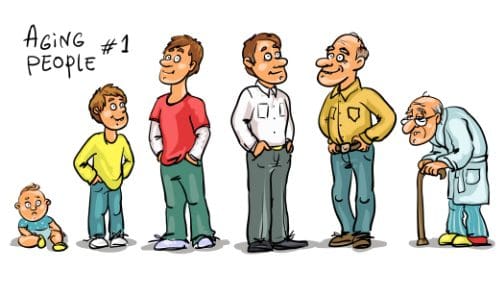
If you are in your 40s, and you measured your height, chances are you would not be the same height that you were in, say, high school. It’s true. As we get older, we tend to shrink. A French study in 2010 measures more than 8,000 women who were over the age of 60. They then asked each woman to estimate her own height. Nearly all of the women in the study overestimated their height. Some overestimated by as much as 2 inches. This is not wishful thinking on the women’s part; they recalled their tallest height. Shrinking in stature is a normal part of the aging process, but there are ways you can stop it or at least slow it down.
What Causes People to Shrink?
There are several reasons why a person may lose some height as they age :
A condition like osteoporosis can cause loss of bone density, leading to a compression fracture which is essentially a collapse of the vertebrae
Flattening of the feet. As we age, our arches flatten out, and this can take inches off our height
Dehydration of the discs that lie between each vertebra. Dehydration can cause the discs to compress.
A stooped posture caused by loss of muscle in the core or abdomen
Getting Shorter by the Numbers
It is estimated that the average person will lose about to inch every decade after they turn 40 (although some estimates say 30 and others say 50). Women are also more prone to height loss than men. The Baltimore Longitudinal Study of Aging (BLSA) found that between 30 and 70 years of age, women lost, on average, 2 inches while men lost around 1 inch of height. By the age of 80, women had lost a little more than 3 inches while men lost 2. However, with all of the varying factors, some people will lose more and others will lose less, and some don’t shrink an inch.
Health Implications of Height Loss
It is important to know that height loss can be an indicator of a problem. Probably the most concerning of the conditions is skeletal problems, such as a compression fracture.
Such a condition can be debilitating, causing back pain and mobility problems. Muscle loss can also cause pain, as can compressed discs. It is important to stay on top of it, get ahead of any potential problems.
Height loss can also be a symptom of other problems that are physiological or metabolic in nature. It can also indicate inadequate nutrition or poor health. In short, if you experience height loss, it may be in your best interest to pay attention and talk to your doctor.
Combating the Shrinkage
While genetics does play a large part in certain conditions that can cause you to lose height, there are some things you can do that may help. If you are still below the threshold age, start taking care of yourself, get the proper nutrition, exercise, get enough sleep, and drink plenty of water. The better the foundation you build when you are young, the better you will be as you age.
Older people may be able to slow the shrinkage by eating a healthy diet rich in calcium, doing weight-bearing exercises, staying hydrated, and avoiding unhealthy practices such as drinking alcohol and smoking. Study after study shows that exercise works, so that should be a priority. Hydration is also key. In the end, the better you take care of your body when you are young, the better care it will take of you when you are older.
6 Day Detox Kitis designed to renew and enhance the body’s cleansing and detoxification capabilities. It combines four specially selected XYMOGEN formulations: ColonX, Drainage, ProbioMax Daily DF, and OptiCleanse GHI. When taken together, as recommended within the 6-Day Detox Guide, these complementary formulas work in concert to encourage the various detox-linked systems and organs of the body to process and eliminate waste and toxins.*
The lumbar spine, or lower back, takes a lot of stress and strain throughout the day. The spine provides stabilization for the entire body, and the lumbar spine bears the brunt of much of the movement and activity. This wear and tear show up as lower back pain in many people. The American Chiropractic Association estimates that 31 million Americans have low back pain at some point in their lives. The leading cause of disability is low back pain � not only in the U.S. but worldwide.
What is the Lumbar Spine?
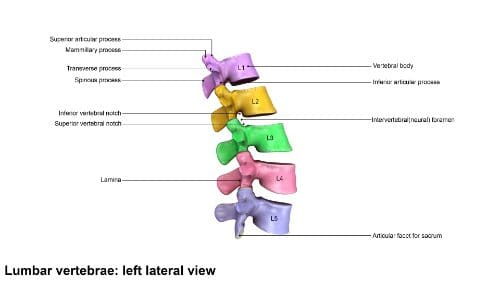
Located in the lower back area, the lumbar region is the portion of the spine that begins below the shoulder blades, about five or six inches, at the lordosis (where it curves in toward the abdomen). Five vertebrae make up the lumbar spine, L1 through L5 � which also happen to be the largest unfused vertebrae in the entire spinal column. The lower vertebrae bear more weight than the upper vertebrae, so they are constructed to be sturdier, but are also more prone to injury and degradation.
The L5 vertebra meets the S1 (the sacrum) at the lumbosacral joint. It is this joint that provides most of the range of motion including rotational flexibility of the hips and pelvis, allowing them to swing during movement such as running and walking.
The spinal cord ends at around the L1 and many nerve roots that originate at the spinal cord form what is called the cauda equine. These nerves travel down the spine, branching out to the legs, buttocks, and feet. The appearance resembles a horse�s tail, hence the name. Because the spinal cord does not extend into the lumbar area, the chance of a problem with the lower back resulting in paralysis or damage to the spinal cord is very rare.
Lower Back Pain
The most common causes�of lower back pain are soft tissue injuries and mechanical problems. Either of these can damage the intervertebral discs, compress the nerve roots, and inhibit the�correct function of the spinal joints so that they don�t move properly. Lower back pain is most commonly caused by a pulled or torn muscle or ligament, known as a sprain or strain. These injuries can have some causes, including:
Prolonged improper posture
Improper lifting of something heavy (without using your legs)
Sports injuries, particularly those where the player sustains high impact or where a lot of twisting is involved
Lifting while twisting the spine
A fall or movement that occurs suddenly and puts a great deal of stress on the lumbar area
Chiropractic Care for the Lumbar Spine
Chiropractic care is a prevalent, effective treatment for lower back pain. A chiropractor can help patients manage their back pain through spinal adjustments and lifestyle advice. They may recommend supplements, exercise, and dietary changes. The whole-body approach to chiropractic makes it an optimal choice for many people, especially those who don�t want to take medications or undergo invasive procedures.
The chiropractic treatment itself usually involves spinal manipulation and mobilization. Spinal manipulation is the technique that most people think of when they think of chiropractic. It of a short lever, high-velocity arm thrust applied directly to the vertebra that is injured or is causing the pain. This technique typically relieves pain, improves the function of the spine, and restores the back�s range of motion. Mobilization is a low-velocity movement performed by the chiropractor to manipulate the area, stretching and moving the joints and muscles.
These techniques typically restore range of motion and flexibility to the spine while reducing pain. For people with chronic lower back pain, chiropractic care can be a game changer.
IFM's Find A Practitioner tool is the largest referral network in Functional Medicine, created to help patients locate Functional Medicine practitioners anywhere in the world. IFM Certified Practitioners are listed first in the search results, given their extensive education in Functional Medicine