Back Clinic Power & Strength Training. These types of conditioning programs are for both athletes and the general population. They can reach higher levels of personal power and strength, making them capable of achieving their personal fitness goals. Power is defined as the ability to generate as much force as fast as possible. It’s needed for athletic movements such as workouts (clean & jerk), swinging a bat, golf club, tennis racket, and running through a tackle.
Power requires strength and speed to develop force. Strength is the amount of force muscle/s can exert against an external load. One rep maximum test is performed where individuals assess the greatest weight they can lift while maintaining proper form. The movement’s speed is not important in a strength test. Dr. Alex Jimenez offers insight into various stretches and exercises and explains the possible risks of injury on strength training through his numerous article archives.
Metabolic syndrome is a cluster of risk factors that can ultimately increase the risk of developing a variety of health issues, including heart disease, stroke, and diabetes, among other problems. Central obesity, high blood pressure, high blood sugar, high triglycerides, and low HDL or good cholesterol levels are the 5 risk factors associated with metabolic syndrome. Having at least three of the five risk factors may suggest the presence of metabolic syndrome. Dr. Alex Jimenez, Alexander Jimenez, Truide Torres, Kenna Vaughn, and Astrid Ornelas explain the 5 risk factors associated with metabolic syndrome, in further detail, as they recommend diet and lifestyle modification advice and guidelines, such as the ketogenic diet or the keto diet, as well as demonstrate the biochemical and chemical pathways that the body goes through during ketosis to help people with metabolic syndrome improve their overall health and wellness. From eating good fats and staying hydrated to exercise and better sleep, Dr. Alex Jimenez, Alexander Jimenez, Truide Torres, Kenna Vaughn, and Astrid Ornelas discuss how diet and lifestyle modifications, such as the ketogenic diet or keto diet, can help improve the 5 risk factors associated with metabolic syndrome to prevent the risk of developing a variety of other health issues, including heart disease, stroke, and diabetes. � Podcast Insight
If you have enjoyed this video and/or we have helped you in any way
please feel free to subscribe and share us.
Thank You & God Bless.
Dr. Alex Jimenez RN, DC, MSACP, CCST
Everyday exercises that increase the strength of the abdomen/core along with the back muscles will optimize your body to resist spinal injuries.
Your spine goes through a lot each day. It provides structural support and houses the central nervous system that carries impulses from the brain throughout the body. When it doesn’t work as it is supposed to, the entire body can be affected. Chiropractic has long been praised as a way to keep the back healthy.
The spine is the primary support for the body. When it breaks down, the body suffers. Regular chiropractic care keeps the spine properly aligned, which keeps the body in proper alignment.
Chiropractic helps with joint health as well as the health of the related muscles and ligaments. Your chiropractor can also recommend stretching and strength-building exercises to help keep your spine strong and in optimal form.
Try the following everyday exercises as the day progresses.
Rotate the shoulders, forward and back.
Turn the head slowly from side to side.
Imagine an airplane taking off, just over your right shoulder. Feel the neck stretch, and follow the plane as it goes up, around and down, until it disappears behind the other shoulder. Reverse and do the same from the left side.
When there is a break or pause in your day waiting at the elevator or for a traffic light to change pull in the abdominal muscles, tighten and hold for 8 seconds without breathing. Relax and increase the count gradually when you feel ready. After a week or so, practice breathing the way you normally do with your abdomen flat and contracted. Try this when you sit, stand, and walk.
Before rising out of bed in the morning, push your head against the pillow and hold for 6 seconds. This strengthens the neck muscles and helps you wake up.
Chiropractic helps keep the spine flexible and loose to prevent injury/s. A strong flexible spine reduces the chances of a misaligned back and could experience pain.Your quality of life will greatly improve being more flexible and mobile.
Continued Everyday Exercises
As you get ready for your day, brushing teeth or shaving, pull in the abdominal muscles and hold them as hard as you can.
Make a habit of starting your day holding stomach muscles in.
In the car, waiting in traffic make the most of it, grab the steering wheel on either side of the wheel at three o’clock and nine o’clock. Try to pull the wheel apart and hold it for a few seconds. Then do the same but push inward. You can also push with your palms against the roof. Also push against your knees using the muscles in your forearms, chest, and abdomen.
Waiting for an elevator, push your toe against the bottom of a wall and hold. You should feel it in your rear, abdomen and low back.
You can strengthen your grip and arms by squeezing a solid object like an office landline phone receiver and then let go and repeat.
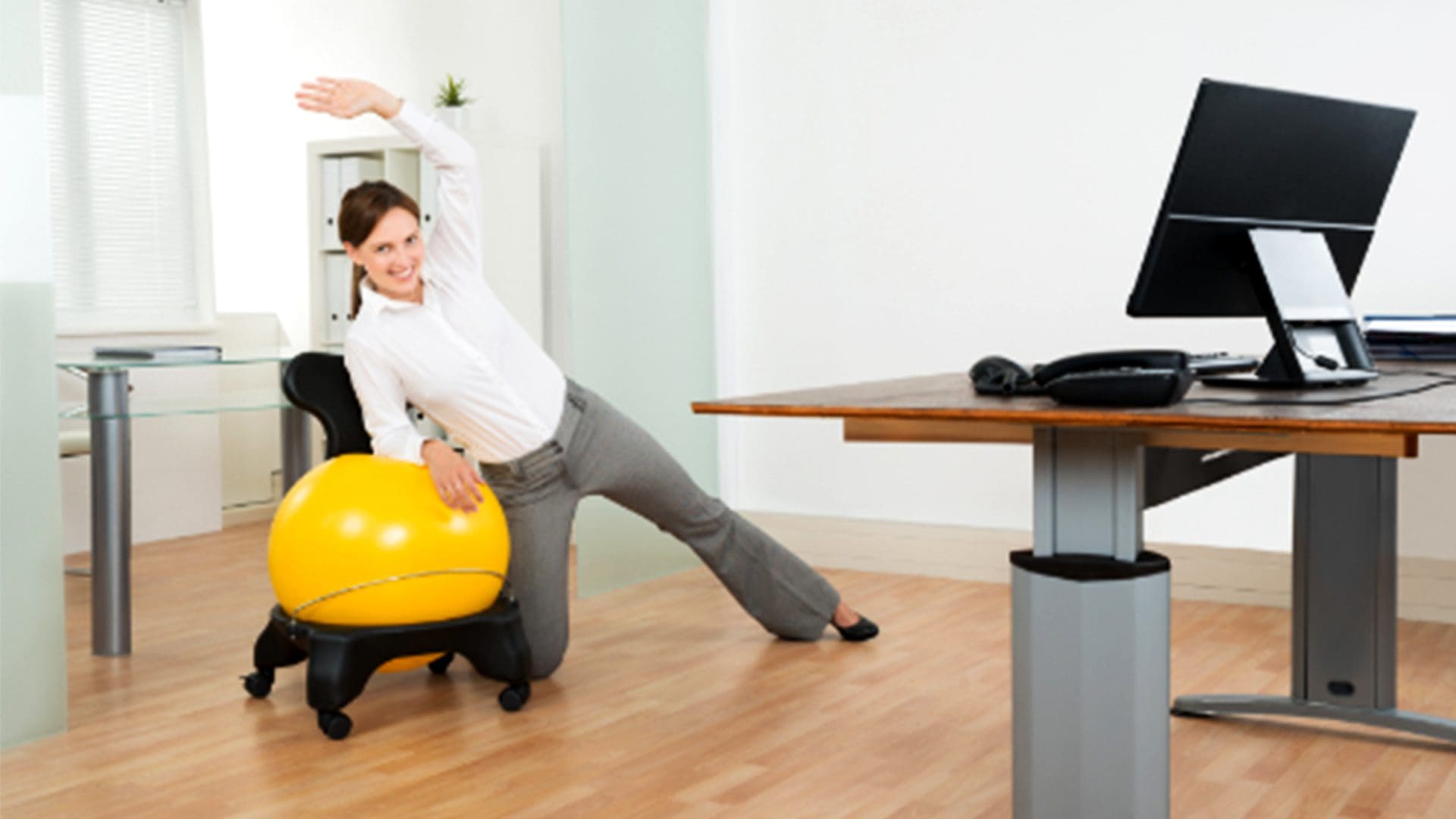
While talking on the phone, stand over your desk waste-basket with legs straight, squeeze in using the muscles in your legs and hips.
You can also choose to do some exercises that can be done anywhere and in public.
Chiropractic Improves Posture
Proper posture is beneficial for the entire body. Proper alignment keeps the muscles working correctly and in strong fashion. This prevents over wear and tear on the joints surface and keeps the muscles working effectively and efficiently. Good posture prevents injury and helps with organ function.
Chiropractic optimizes overall health by keeping the body balanced and in tip-top form. Many think that its only purpose is to treat back pain, but it actually focuses on total body wellness.
Reduce Excessive Foot Pronation with Custom Foot Orthotics
NCBI Resources
Having healthy body composition means�there needs to be more lean body mass i.e.�muscle mass�and less body fat.�Strength training/CrossFit�helps by raising the�metabolic rate�while lowering body fat. The increased muscle strength helps maintain correct posture and body mechanics in whatever you do.
Physical activity reduces the chance of injury while increasing physical performance like being able to climb stairs or carry groceries with added confidence.
You might not think it, but weight lifting and spine strengthening exercises can help reduce back pain. Remember the point of this type of weight lifting is not to build up the muscles like a bodybuilder but is to develop:
Core strength
Spine strength
Body strength
The muscles in the back keep the spine moving and functioning properly. When the spine or abdominal muscles are weak this creates a higher probability of a back strain or injury. Having strong, healthy spine muscles are important because they function in maintaining correct posture, which in some cases, causes chronic back pain because of poor posture.
If�only one part of the body is strengthened like the back is not enough. Therefore strengthening the rest of the body is a must. These include the body’s core and leg muscles. Total body strength will reduce back pain and can help perform regular activities, like lifting heavy objects much easier, with more confidence and with a lesser probability of injury.
Spine strengthening exercises benefits
Most important reasons are they:
Prevents future back injuries
Stabilizes the spine
Helps the spine move properly
Help maintain correct posture
Increases muscle tone
Teaches correct body mechanics
Helps build bone this is especially beneficial for those with osteoporosis or at risk of developing it
A personal trainer or sports chiropractor can help start a spine strengthening regimen. They will teach:
Simple
Specific
Strengthening
Weight lifting exercises.
A physical therapist can also develop a custom weight lifting/strength�exercise�program for optimal spine health and for reducing pain.
Most workout regimens incorporate a combination of weight lifting with actual weights/exercise machines and strengthening exercises/calisthenics with the body’s weight as the resistance for maintaining a healthy strong spine.
Here are a few weight lifting and back strengthening exercises that can help decrease and prevent back pain.
Talk to a doctor or chiropractor before beginning any exercise program. Remember to listen to your body and stop right away if there is something off.
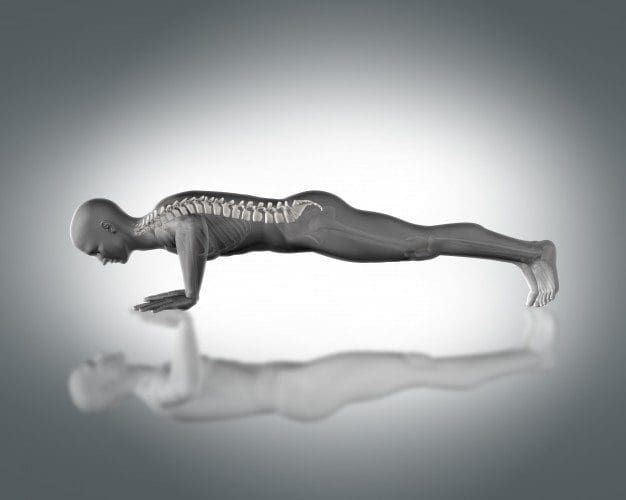
Push-ups
Push-ups help strengthen the:
Back
Chest
Arms
Core muscles
Your own body weight is the resistance.
To do this:
Position the body in a straight line from head to toe, the face looking down.
Hands should be wider than shoulder-distance apart. Walk the hands out so they are slightly higher than the shoulders
Keep the balance on toes and hands, with a straight back, lower the body to the floor by slowly bending the elbows until at a 90-degree angle.
Push up using arm upper back, and chest muscles.
Do 3 sets of 10 every day. As the strength increases do more reps.
Chest Flyes
Chest flies are excellent for building muscle in the:
Upper back
Chest
Dumbbells or a weight machine can be used for this exercise. To do this:
Lie on the floor with the knees bent and the feet flat on the ground.
Extend the arms out to either side of the body, and let them rest on the floor.
With a dumbbell in each hand, raise the dumbbells until they meet at the top at the same time, and keep a slight bend in the elbows.
Lower the hands to the ground, and repeat.
Do this exercise 15 times 3 times a week. With added strength add more reps.
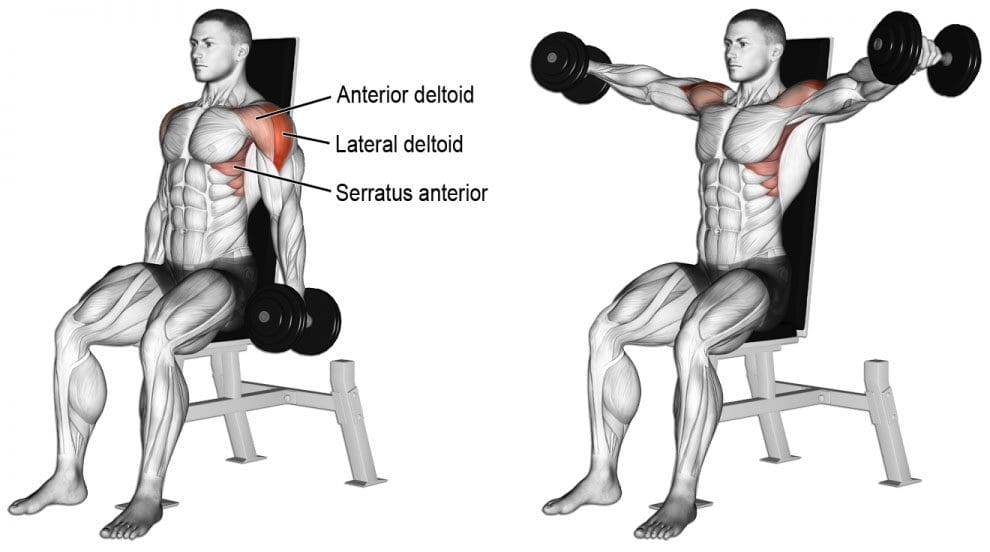
Lateral Raises
Lateral raises help strengthen the entire back. All that is needed is a set of dumbbells. To do this move:
Stand or sit with the feet equal hip-distance apart. Arms are at the side.
With a dumbbell in each hand and a slight bend in the elbows, raise the arms to the side until shoulder height. Keep the core engaged during the movement.
Once at shoulder height, slowly lower the dumbbells, and repeat.
Repeat this exercise 15 times 3 times a week. As strength increases add more reps.
These exercises should be performed slowly with a gradual build-up to more complex movements and adding more weight. Remember to breathe naturally. If you hold your breath during exercise, it can cause tension in the�muscles, which can worsen any pain or create new injuries.�Before adding weight or new spine strengthening exercises, talk to a doctor about exercising with back pain. They will let you know if there are certain movements or positions that should be avoided.
Weight lifting exercises done incorrectly can lead to more back pain and added injuries. If there is any pain while doing these exercises, stop and call a doctor, chiropractor or physical therapist right away.
As El Paso�s Chiropractic Rehabilitation Clinic & Integrated Medicine Center,�we passionately are focused on treating patients after frustrating injuries and chronic pain syndromes. We focus on improving your ability through flexibility, mobility and agility programs tailored for all age groups and disabilities.
Back Pain Chiropractic Care | El Paso, Tx
NCBI Resources
It can be tempting to not exercise with a spinal condition. But remember that if there is no movement at all, you could make the pain worse. Knowing what your body can handle and sticking to a workable schedule, these healthy steps will relieve you and help with back pain.
Cycling is a great cardiovascular workout, building strength, stamina, and balance. However, it can be tough on the body, especially if you put in a lot of miles. This is true of any activity that is repetitive, though. Certain muscles can become tense and others that aren�t used become weaker. This can cause your spine to become misaligned. Bending over the handlebars can also cause back pain as well as wrist, neck and shoulder pain and affect your posture if you remain in that position for long stretches or are not using proper form. Chiropractic for cyclists can help combat these effects and keep your body in alignment.
Hip and Knee Pain
Cycling puts a lot of strain on your lower body, particularly the hips and legs. The more developed these muscles get, the tighter they can become if you aren�t stretching before and after your ride (and getting regular chiropractic care).
Inflammation and stiffness of the sacroiliac joint are very common with cyclists. It can cause a significant decrease in range of motion and flexibility, not to mention cause pain. This issue can really affect your ride. The stress that occurs in this area can affect nearby large joints, such as the knees. Chiropractic can release those joints and address any issues associated with it.
Lower Back Out of Alignment
Spending a lot of time hunched over your handlebars can cause your back muscles to become stretched out. When you combine that with hunching over a desk or computer all day, it can leave you with a misaligned spine.
The tight muscles of the lower body, including hip flexors and hamstrings, work against the stretched out back muscles to weaken the spinal support. Once your spine is misaligned, it can lead to back pain, hip pain, and make it difficult for you to ride effectively or comfortably.
Getting good, regular chiropractic adjustments, along with some core strength exercises, stretching and exercises to increase the range of motion, you can get your spine aligned � and keep it that way. It is also worth mentioning that proper bike fit is absolutely integral to keeping your spine and body healthy and aligned.
Numb, Tingling Hands
Numb, tingling hands are very common among cyclists. There are several reasons that this can occur, but the most common culprits are stress on the upper back from riding in a hunched position, or wrist issues that come from the stress of supporting your upper body as you are hunched over, and from holding the handlebars.
Proper bike fit can go a long way in preventing this, as does maintaining proper form and technique while riding. This will help you avoid compression, undue stress, and overreaching so that your arms are in a more natural, comfortable position. Your chiropractor can help alleviate the pain and correct the condition with spinal manipulation and other techniques applied to the joints.
Chiropractic is exceptional for cyclists because it not only addresses structural issues in the body, it also provides whole body care. Your chiropractor may recommend certain exercises and stretches, supplements, and lifestyle changes to help improve your ride and help you live a healthier life. You will combat the strain that the sport puts on your body and learn powerful techniques for avoiding injury.
If you are a regular cyclist, whether you ride competitively, ride with a group, or bike to work, you will find that your body will respond very well to chiropractic treatments. When performed regularly, you will find that your body will get stronger and your posture will be better. You will feel better too.
Labrum Tear Hip Treatment El Paso, TX Chiropractor
Fitness Trackers: Exercise is usually a great compliment to chiropractic treatment. In fact, many chiropractors recommend regular exercise to their patients. It helps with pain management and speeds healing as well as give your mood a healthy, natural boost.
Fitness trackers are a popular workout tool that helps people set fitness goals, track their progress, and get healthier. How can they help chiropractic patients though? What can they offer that will patients get more out of their treatments? Find out what you need to know about chiropractic and fitness trackers.
Fitness Trackers
It Takes More Than The Tech To Get You Fit.
All the flashy, high tech bells and whistles in the world won�t roll you out of bed in the morning and place you on the treadmill. No fancy wristband will get you up and moving, getting exercise and getting fit. The tech is cool. It is fun and exciting, but it won�t get you fit. Only you can do that.
So if you are getting a fitness tracker with the belief that it is going to be some kind of fitness magic bullet, that just won�t happen. It is great as a fitness buddy, a tool, a nifty gadget that may help motivate you and help you achieve your fitness goals. In the end, though, you are the one driving that car. You are in control.
Is A Fitness Tracker For You?
There are so many fitness trackers on the market with an almost endless list of features. Finding the one that is right for you, or if you could even benefit from a fitness tracker takes a bit of research. Look for features that work for you and the activities you will be pursing.
For instance, if you enjoy water-based fitness activities you might want a waterproof model. There are also data limits, screen sizes (or no screen at all), heart rate tracking options, and whether you want a clip on tracker or one that straps on your wrist.
Before making your purchase, take some time to research all of the features that are available to you then decide what you like and what features would best help you meet your fitness goals.
How To Get The Most Out Of Your Fitness Tracker.
Once you have your fitness tracker you will want to make a plan to ensure that you get the most out of it. Try these tips to make your fitness tracker work its best for you.
Identify clear cut goals. When you begin your fitness quest, the first thing you need to do is know where you want to go with it. It is a good idea to record your stats at the beginning and then update them every month or so. This will let you see how many more steps you are taking, how much weight you�ve lost, or whatever else you wish to accomplish.
Set attainable benchmarks. Benchmarks help you along as you work toward your goal. The key is setting them so that they are attainable but still present a bit of a challenge. If weight loss is your key, you might set benchmarks for every two months. For fitness goals, you may set benchmarks for a certain number of steps in a given time or a certain number of workouts each week. When you reach a benchmark, celebrate a little.
Wear it on your non-dominant wrist. The Journal, Medical and Science in Sports and Exercise published a study that revealed participants who wore fitness trackers on their wrists throughout the day found that they were more accurate when worn on the non-dominant wrist. The theory is that the non-dominant wrist moves less, giving a more accurate reading.
Calibrate your tracker to match your stride. Not everyone has the same stride. You may be very tall or very short; you might take longer strides or time steps. Whatever the case, you�ll get the most out of your fitness tracker by calibrating your stride. Most trackers will provide instructions for doing the calibration. It is well worth taking the time to complete it.
Incorporate other apps to boost your fitness efforts. Many fitness trackers will recommend other apps that can help you meet your goals and you can sync them to your tracker. However, you can also look for apps on your own that can help. There are so many different fitness apps out there from food tracking to apps that use your phone�s GPS to provide more accurate measurements on your runs, walks, or bike rides.
The more fit you are the better your chiropractic treatments will typically work. Fitness trackers can help you reach your goals and get the most out of your chiropractic care.
Sports Performance is everything! Regardless of whether you�re a pro football player or a weekend warrior, your level of performance in your chosen athletic activity is what takes you to competitive heights.
There are certain things that every athlete knows will make them stronger, faster, more flexible, and have more stamina. Chiropractic care is becoming increasingly popular as a way for the sportsman in all of us to have that competitive edge.
You may know that chiropractic is great for people with back pain or even headaches, but you may be wondering how it can help an athlete. Solid research, along with a proven track record show that chiropractic helps sports performance in several key areas.
Sports Performance & Chiropractic
Increased Flexibility
Flexibility is important for nearly every sport and chiropractic care helps to increase flexibility throughout the body. As the spine is aligned, the body is better able to perform as it should and flexibility is a big part of that.
Better Mobility
When a person has better flexibility they are able to move around better. Chiropractic loosens the joints and spine, releasing energy to flow through the body. Blood flow is increased which means that nutrients and oxygen are carries much more efficiently to the vital organs and brain. This whole body wellness encourages better mobility.
More Resistant To Injury
Because chiropractic keeps the body flexible, there is a much lower risk of injury. Tight muscles can lead to injuries, sometimes serious injury. When the body well aligned and flexible the chances of a pulled or torn muscle or torn ligament are greatly decreased.
Helps Relieve Sports Hernias
Groin pain is a component of around 20 percent of all sports injuries. The thing is, it is often not due to sudden movements that result in injury like a torn muscle. Most of the time is it due to a condition called athletic pubalgia, or sports hernia.
Sports like hockey and football are full contact sports and injuries are not uncommon. However, even milder sports like horseback riding or cycling can also result in injuries or pain from over exertion. One study showed how chiropractic helped relieve the pain of shoulder instability in hockey players.
Chiropractic aligns the spine and body while increasing blood flow, but endorphins are also released through the treatment. This helps the body combat pain in a natural, less invasive way without the use of medications.
Increases Strength
While chiropractic care is typically regarded as a method for relieving pain and alleviating skeletal and muscular issues, it has also been found to improve physical strength. A study on judo athletes who received just three chiropractic care sessions showed that their grip strength improved by 16 percent.
Helps Sports Related Injuries Heal Faster
Chiropractic care has long been a standard practice for aiding in the healing of many sports related injuries including tennis elbow, hamstring pulls, rotator cuff injuries, back strains, and neck pain. While it does help prevent these injuries, in the event that they do occur, chiropractic care helps the athlete recover faster and get back in the game quicker.
So whether you enjoy the occasional game of touch football with the guys or you are a college basketball star, chances are you too can benefit from chiropractic care. Each of these benefits are exceptional in their own right and athletes rely on their chiropractor to keep them in the game, but all these little benefits add up to one significant plus: it improves sports performance. If you want to be stronger, faster, and more agile, the research shows that chiropractic care can certainly help.
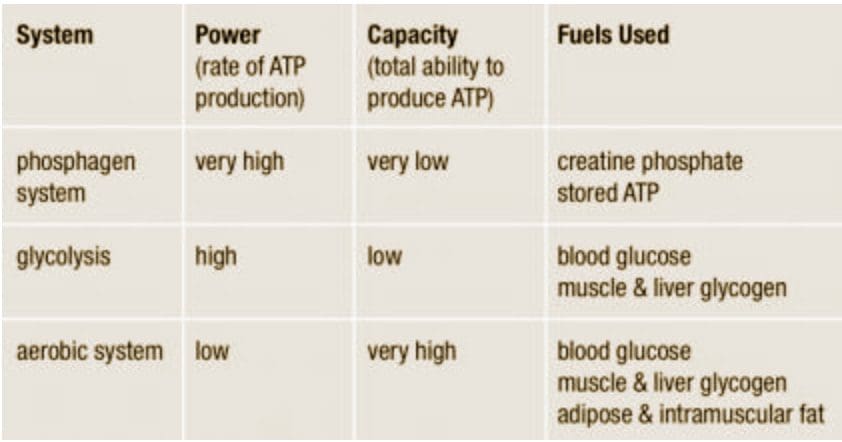
We usually talk of energy in general terms, as in �I don�t have a lot of energy today� or �You can feel the energy in the room.� But what really is energy? Where do we get the energy to move? How do we use it? How do we get more of it? Ultimately, what controls our movements? The three metabolic energy pathways are the�phosphagen system, glycolysis�and the�aerobic system.�How do they work, and what is their effect?
Albert Einstein, in his infinite wisdom, discovered that the total energy of an object is equal to the mass of the object multiplied by the square of the speed of light. His formula for atomic energy, E = mc2, has become the most recognized mathematical formula in the world. According to his equation, any change in the energy of an object causes a change in the mass of that object. The change in energy can come in many forms, including mechanical, thermal, electromagnetic, chemical, electrical or nuclear. Energy is all around us. The lights in your home, a microwave, a telephone, the sun; all transmit energy. Even though the solar energy that heats the earth is quite different from the energy used to run up a hill, energy, as the first law of thermodynamics tells us, can be neither created nor destroyed. It is simply changed from one form to another.
ATP Re-Synthesis
The energy for all physical activity comes from the conversion of high-energy phosphates (adenosine�triphosphate�ATP) to lower-energy phosphates (adenosine�diphosphate�ADP; adenosine�monophosphate�AMP; and inorganic phosphate, Pi). During this breakdown (hydrolysis) of ATP, which is a water-requiring process, a proton, energy and heat are produced: ATP + H2O ���ADP + Pi�+ H+�+ energy + heat. Since our muscles don�t store much ATP, we must constantly resynthesize it. The hydrolysis and resynthesis of ATP is thus a circular process�ATP is hydrolyzed into ADP and Pi, and then ADP and Pi�combine to resynthesize ATP. Alternatively, two ADP molecules can combine to produce ATP and AMP: ADP + ADP ���ATP + AMP.
Like many other animals, humans produce ATP through three metabolic pathways that consist of many enzyme-catalyzed chemical reactions: the phosphagen system, glycolysis and the aerobic system. Which pathway your clients use for the primary production of ATP depends on how quickly they need it and how much of it they need. Lifting heavy weights, for instance, requires energy much more quickly than jogging on the treadmill, necessitating the reliance on different energy systems. However, the production of ATP is never achieved by the exclusive use of one energy system, but rather by the coordinated response of all energy systems contributing to different degrees.
1. Phosphagen System
During short-term, intense activities, a large amount of power needs to be produced by the muscles, creating a high demand for ATP. The phosphagen system (also called the ATP-CP system) is the quickest way to resynthesize ATP (Robergs & Roberts 1997). Creatine phosphate (CP), which is stored in skeletal muscles, donates a phosphate to ADP to produce ATP: ADP + CP ���ATP + C. No carbohydrate or fat is used in this process; the regeneration of ATP comes solely from stored CP. Since this process does not need oxygen to resynthesize ATP, it is anaerobic, or oxygen-independent. As the fastest way to resynthesize ATP, the phosphagen system is the predominant energy system used for all-out exercise lasting up to about 10 seconds. However, since there is a limited amount of stored CP and ATP in skeletal muscles, fatigue occurs rapidly.
2. Glycolysis
Glycolysis is the predominant energy system used for all-out exercise lasting from 30 seconds to about 2 minutes and is the second-fastest way to resynthesize ATP. During glycolysis, carbohydrate�in the form of either blood glucose (sugar) or muscle glycogen (the stored form of glucose)�is broken down through a series of chemical reactions to form pyruvate (glycogen is first broken down into glucose through a process called�glycogenolysis). For every molecule of glucose broken down to pyruvate through glycolysis, two molecules of usable ATP are produced (Brooks et al. 2000). Thus, very little energy is produced through this pathway, but the trade-off is that you get the energy quickly. Once pyruvate is formed, it has two fates: conversion to lactate or conversion to a metabolic intermediary molecule called acetyl coenzyme A (acetyl-CoA), which enters the mitochondria for oxidation and the production of more ATP (Robergs & Roberts 1997). Conversion to lactate occurs when the demand for oxygen is greater than the supply (i.e., during anaerobic exercise). Conversely, when there is enough oxygen available to meet the muscles� needs (i.e., during aerobic exercise), pyruvate (via acetyl-CoA) enters the mitochondria and goes through aerobic metabolism.
When oxygen is not supplied fast enough to meet the muscles� needs (anaerobic glycolysis), there is an increase in hydrogen ions (which causes the muscle pH to decrease; a condition called acidosis) and other metabolites (ADP, Pi�and potassium ions). Acidosis and the accumulation of these other metabolites cause a number of problems inside the muscles, including inhibition of specific enzymes involved in metabolism and muscle contraction, inhibition of the release of calcium (the trigger for muscle contraction) from its storage site in muscles, and interference with the muscles� electrical charges (Enoka & Stuart 1992; Glaister 2005; McLester 1997). As a result of these changes, muscles lose their ability to contract effectively, and muscle force production and exercise intensity ultimately decrease.
3. Aerobic System
Since humans evolved for aerobic activities (Hochachka, Gunga & Kirsch 1998; Hochachka & Monge 2000), it�s not surprising that the aerobic system, which is dependent on oxygen, is the most complex of the three energy systems. The metabolic reactions that take place in the presence of oxygen are responsible for most of the cellular energy produced by the body. However, aerobic metabolism is the slowest way to resynthesize ATP. Oxygen, as the patriarch of metabolism, knows that it is worth the wait, as it controls the fate of endurance and is the sustenance of life. �I�m oxygen,� it says to the muscle, with more than a hint of superiority. �I can give you a lot of ATP, but you will have to wait for it.�
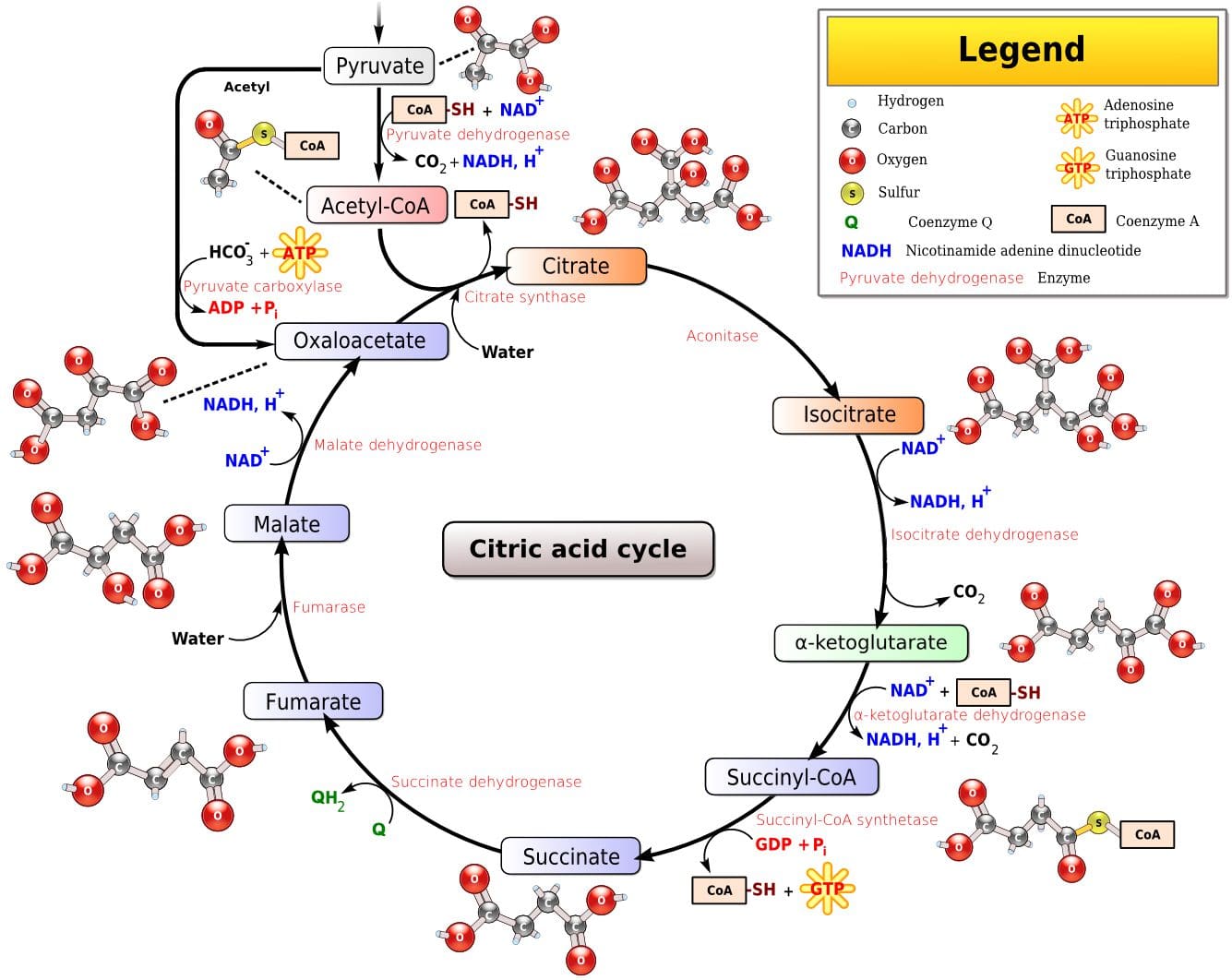
The aerobic system�which includes the�Krebs cycle�(also called the�citric acid cycle or TCA cycle) and the�electron transport chain�uses blood glucose, glycogen and fat as fuels to resynthesize ATP in the mitochondria of muscle cells (see the sidebar �Energy System Characteristics�). Given its location, the aerobic system is also called�mitochondrial respiration.�When using carbohydrate, glucose and glycogen are first metabolized through glycolysis, with the resulting pyruvate used to form acetyl-CoA, which enters the Krebs cycle. The electrons produced in the Krebs cycle are then transported through the electron transport chain, where ATP and water are produced (a process called�oxidative phosphorylation) (Robergs & Roberts 1997). Complete oxidation of glucose via glycolysis, the Krebs cycle and the electron transport chain produces 36 molecules of ATP for every molecule of glucose broken down (Robergs & Roberts 1997). Thus, the aerobic system produces 18 times more ATP than does anaerobic glycolysis from each glucose molecule.
Fat, which is stored as triglyceride in adipose tissue underneath the skin and within skeletal muscles (called�intramuscular triglyceride), is the other major fuel for the aerobic system, and is the largest store of energy in the body. When using fat, triglycerides are first broken down into free fatty acids and glycerol (a process called�lipolysis). The free fatty acids, which are composed of a long chain of carbon atoms, are transported to the muscle mitochondria, where the carbon atoms are used to produce acetyl-CoA (a process called�beta-oxidation).
Following acetyl-CoA formation, fat metabolism is identical to carbohydrate metabolism, with acetyl-CoA entering the Krebs cycle and the electrons being transported to the electron transport chain to form ATP and water. The oxidation of free fatty acids yields many more ATP molecules than the oxidation of glucose or glycogen. For example, the oxidation of the fatty acid palmitate produces 129 molecules of ATP (Brooks et al. 2000). No wonder clients can sustain an aerobic activity longer than an anaerobic one!
Understanding how energy is produced for physical activity is important when it comes to programming exercise at the proper intensity and duration for your clients. So the next time your clients get done with a workout and think, �I have a lot of energy,� you�ll know exactly where they got it.
Energy System Characteristics
Energy System Workouts
Have clients warm up and cool down before and after each workout.
Phosphagen System
An effective workout for this system is short, very fast sprints on the treadmill or bike lasting 5�15 seconds with 3�5 minutes of rest between each. The long rest periods allow for complete replenishment of creatine phosphate in the muscles so it can be reused for the next interval.
2 sets of 8 x 5 seconds at close to top speed with 3:00 passive rest and 5:00 rest between sets
5 x 10 seconds at close to top speed with 3:00�4:00 passive rest
Glycolysis
This system can be trained using fast intervals lasting 30 seconds to 2 minutes with an active-recovery period twice as long as the work period (1:2 work-to-rest ratio).
8�10 x 30 seconds fast with 1:00 active recovery
4 x 1:30 fast with 3:00 active recovery
Aerobic System
While the phosphagen system and glycolysis are best trained with intervals, because those metabolic systems are emphasized only during high-intensity activities, the aerobic system can be trained with both continuous exercise and intervals.
60 minutes at 70%�75% maximum heart rate
15- to 20-minute tempo workout at lactate threshold intensity (about 80%�85% maximum heart rate)
5 x 3:00 at 95%�100% maximum heart rate with 3:00 active recovery
Brooks, G.A., et al. 2000.�Exercise Physiology: Human Bioenergetics and Its Applications.Mountain View, CA: Mayfield.
Enoka, R.M., & Stuart, D.G. 1992. Neurobiology of muscle fatigue.�Journal of Applied Physiology, 72�(5), 1631�48.
Glaister, M. 2005. Multiple sprint work: Physiological responses, mechanisms of fatigue and the influence of aerobic fitness.�Sports Medicine, 35�(9), 757�77.
Hochachka, P.W., Gunga, H.C., & Kirsch, K. 1998. Our ancestral physiological phenotype: An adaptation for hypoxia tolerance and for endurance performance?�Proceedings of the National Academy of Sciences, 95,�1915�20.
Hochachka, P.W., & Monge, C. 2000. Evolution of human hypoxia tolerance physiology.�Advances in Experimental and Medical Biology, 475,�25�43.
McLester, J.R. 1997. Muscle contraction and fatigue: The role of adenosine 5′-diphosphate and inorganic phosphate.�Sports Medicine, 23�(5), 287�305.
Robergs, R.A. & Roberts, S.O. 1997.�Exercise Physiology: Exercise, Performance, and Clinical Applications.�Boston: William C. Brown.
IFM's Find A Practitioner tool is the largest referral network in Functional Medicine, created to help patients locate Functional Medicine practitioners anywhere in the world. IFM Certified Practitioners are listed first in the search results, given their extensive education in Functional Medicine


















 We usually talk of energy in general terms, as in �I don�t have a lot of energy today� or �You can feel the energy in the room.� But what really is energy? Where do we get the energy to move? How do we use it? How do we get more of it? Ultimately, what controls our movements? The three metabolic energy pathways are the�phosphagen system, glycolysis�and the�aerobic system.�How do they work, and what is their effect?
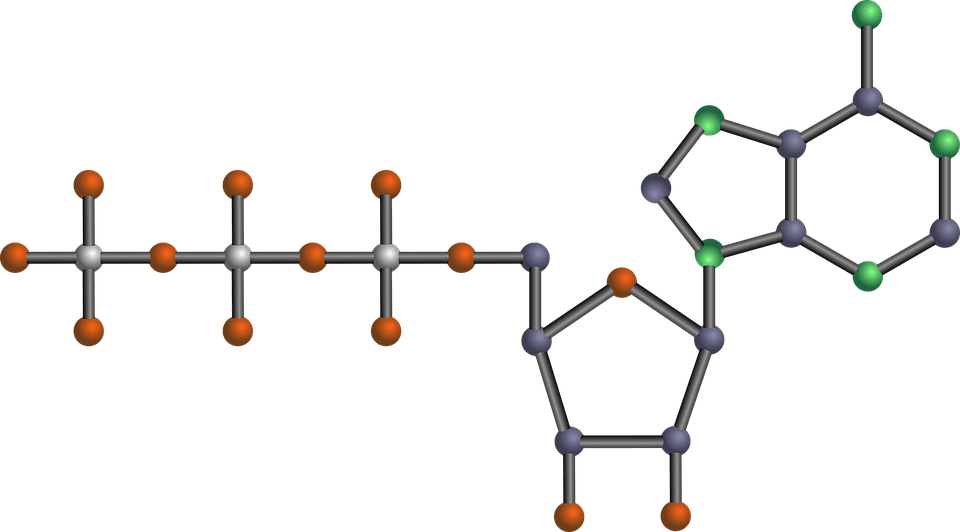 The energy for all physical activity comes from the conversion of high-energy phosphates (adenosine�triphosphate�ATP) to lower-energy phosphates (adenosine�diphosphate�ADP; adenosine�monophosphate�AMP; and inorganic phosphate, Pi). During this breakdown (hydrolysis) of ATP, which is a water-requiring process, a proton, energy and heat are produced: ATP + H2O ���ADP + Pi�+ H+�+ energy + heat. Since our muscles don�t store much ATP, we must constantly resynthesize it. The hydrolysis and resynthesis of ATP is thus a circular process�ATP is hydrolyzed into ADP and Pi, and then ADP and Pi�combine to resynthesize ATP. Alternatively, two ADP molecules can combine to produce ATP and AMP: ADP + ADP ���ATP + AMP.
 During short-term, intense activities, a large amount of power needs to be produced by the muscles, creating a high demand for ATP. The phosphagen system (also called the ATP-CP system) is the quickest way to resynthesize ATP (Robergs & Roberts 1997). Creatine phosphate (CP), which is stored in skeletal muscles, donates a phosphate to ADP to produce ATP: ADP + CP ���ATP + C. No carbohydrate or fat is used in this process; the regeneration of ATP comes solely from stored CP. Since this process does not need oxygen to resynthesize ATP, it is anaerobic, or oxygen-independent. As the fastest way to resynthesize ATP, the phosphagen system is the predominant energy system used for all-out exercise lasting up to about 10 seconds. However, since there is a limited amount of stored CP and ATP in skeletal muscles, fatigue occurs rapidly.
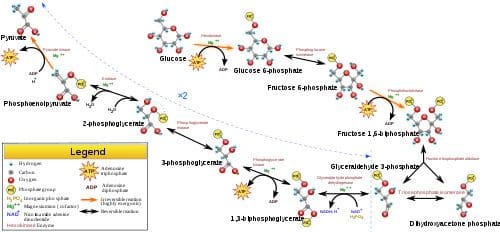 Glycolysis is the predominant energy system used for all-out
 Since humans evolved for aerobic activities (Hochachka, Gunga & Kirsch 1998; Hochachka & Monge 2000), it�s not surprising that the aerobic system, which is dependent on oxygen, is the most complex of the three energy systems. The metabolic reactions that take place in the presence of oxygen are responsible for most of the cellular energy produced by the body. However, aerobic metabolism is the slowest way to resynthesize ATP. Oxygen, as the patriarch of metabolism, knows that it is worth the wait, as it controls the fate of endurance and is the sustenance of life. �I�m oxygen,� it says to the muscle, with more than a hint of superiority. �I can give you a lot of ATP, but you will have to wait for it.�
 Fat, which is stored as triglyceride in adipose tissue underneath the skin and within skeletal muscles (called�intramuscular triglyceride), is the other major fuel for the aerobic system, and is the largest store of energy in the body. When using fat, triglycerides are first broken down into free fatty acids and glycerol (a process called�lipolysis). The free fatty acids, which are composed of a long chain of carbon atoms, are transported to the muscle mitochondria, where the carbon atoms are used to produce acetyl-CoA (a process called�beta-oxidation).