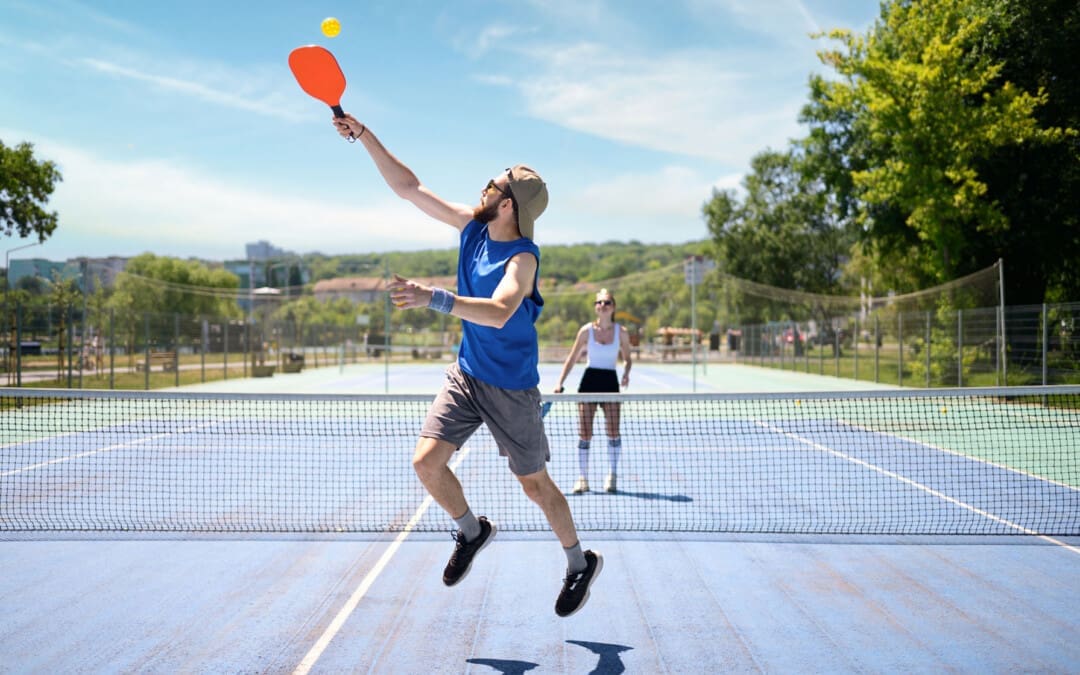
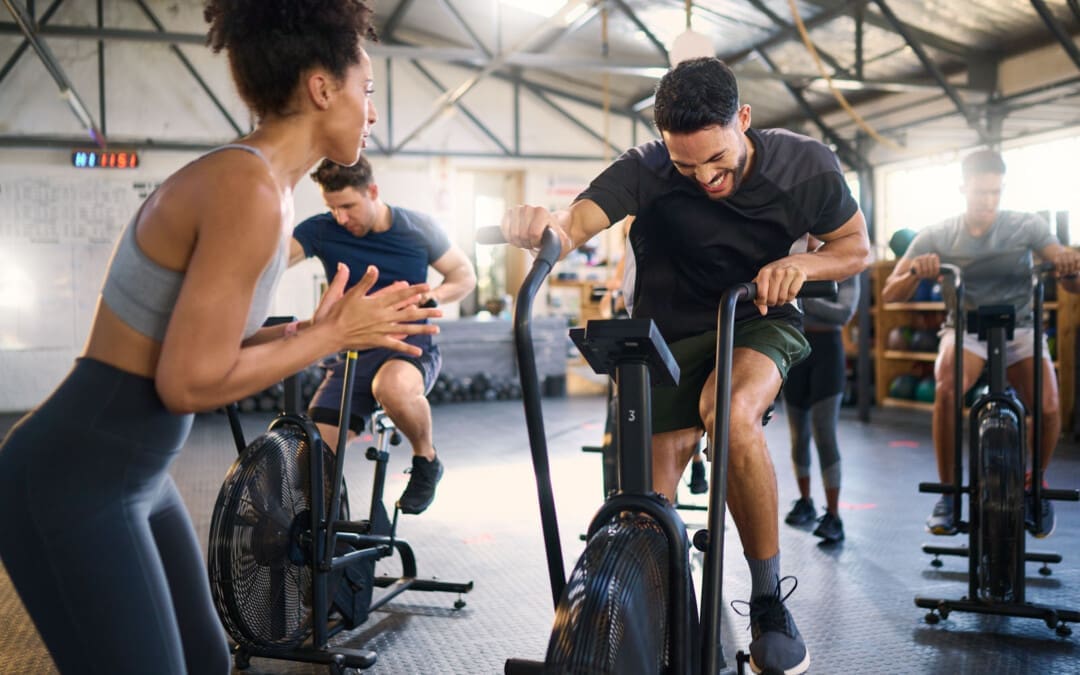
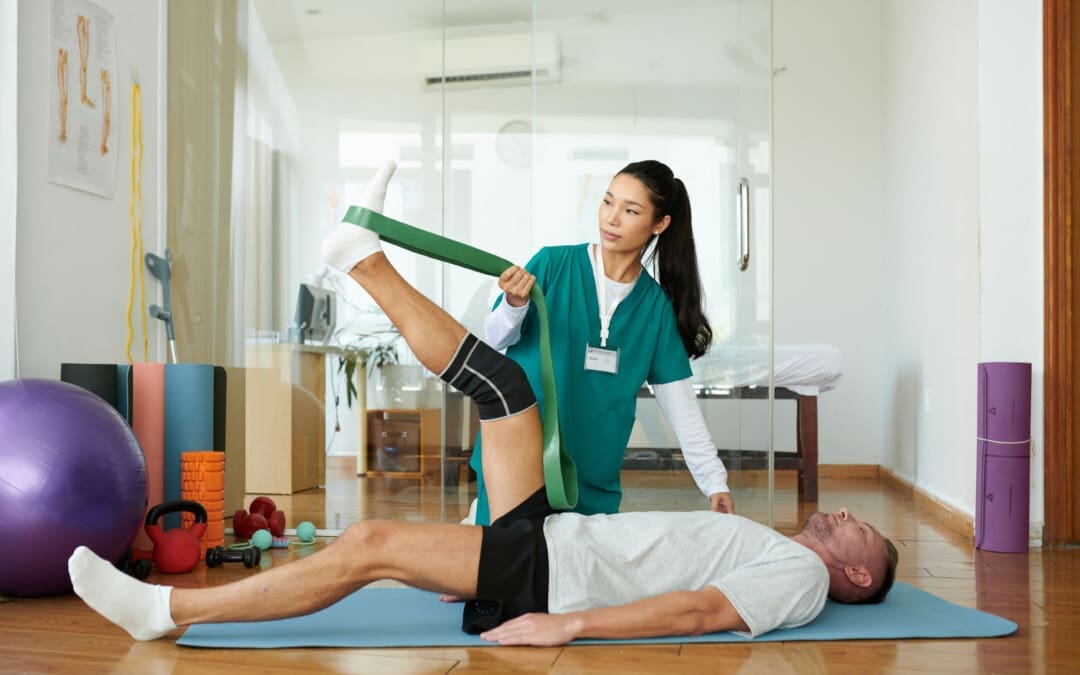
Proper shoes are highly recommended when playing sports, whether professional or recreational. Can wearing pickleball footwear help increase optimal performance and prevent injuries?
Pickleball Footwear
Pickleball has become quite popular because individuals of all ages and abilities can play it. Although it is a relatively new sport, it emerged in 1965. (USA Pickleball, 2021) It’s now one of the fastest-growing sports, with over 8 million players nationwide. (Brandon, 2023) The game can be played with most shoes designed for sports, like running or cross-fit shoes. There are shoes specifically for pickleball that improve traction, enhance stability and cushioning, and increase impact absorption. For those getting into the game long-term, investing in high-quality pickleball footwear is a worthwhile investment that can contribute to long-term enjoyment and injury prevention.
The Demands of Pickleball
Like tennis or table tennis, pickleball involves dynamic and fast-paced movements, including lateral strides, pivoting, and quickly changing direction. The body has to move forward, backward, and side to side across the court and pivot. When chasing the ball, to control the shots, produce power, decrease the risk of injury, and change direction while maintaining balance, the feet, body, and shoes must work together to make all this possible. One consideration depends on where the game will be played, whether flat ground or a harder surface. Wearing sneakers or tennis shoes is recommended for flat-ground play, as they provide supportive cushioning and shock absorption. For harder surfaces like concrete or hardwood courts, specialized shoes like those designed for pickleball are recommended.
Benefits
Some of the benefits of investing in pickleball footwear include.
Optimal Traction
Traction is incredibly important in pickleball. Optimal traction can help players execute quick movements, maintain stability, and prevent slips and falls. When looking for the right shoes, consider traction-specific materials like rubber, nylon, and leather. Individuals are most likely to find rubber pickleball shoes because they’re cheaper and commonly used in other outdoor sport-specific shoes, such as soccer. Nylon is more expensive but offers better traction than rubber and is often used in high-tech sneakers because it provides significant shock absorption and long-term durability. Leather is the most expensive material but offers the best grip. Because of its natural look and feel, it is also becoming more popular in sneakers.
Stability and Support
Moving from side to side in a lateral fashion requires players to be on top of their balance and maintain steadiness when making shots. Pickleball shoes are designed to support stability and can help reduce injuries like sprains.
Impact Absorption Cushioning
Pickleball footwear is designed similarly to running shoes, with cushioned comfort and a midsole that offers shock absorption and reduces the impact felt in the joints, including the knees, lower back, and feet. Individuals can find pickleball footwear that utilizes various sports technologies, like gel inserts or responsive foam, which can help cushion and reduce the impact on the joints. When cushioned, the body can maintain more balance, promote positive movement habits, prevent muscular fatigue and joint pain, help reduce overall stress, and allow individuals to play harder without experiencing pain. Long-term benefits result in a stronger, more flexible body.
Proper Fit and Considerations
Make sure that the pickleball shoes fit well and provide adequate support. Measure your feet using a ruler or measuring tape, and have the measurements handy while shopping. Suggestions include:
Look for shoes that fit snugly but don’t allow the feet to move around too much during play.
Pay attention to arch support.
Individuals with high arches should look for shoes with adjustable straps or more supportive materials built into the sole.
Using an integrated approach to treat and prevent injuries and chronic pain syndromes, improve flexibility, mobility, and agility, and help individuals return to normal activities, Injury Medical Chiropractic and Functional Medicine Clinic works with primary healthcare providers and specialists to develop a personalized fitness program. Each case is different and requires reviewing individual medical history and physical examination to determine the proper training plan. Dr. Jimenez has teamed up with top trainers, clinical specialists, medical researchers, and rehabilitation providers to provide the most effective treatments if other training is needed.
Custom Foot Orthotics
References
USA Pickleball. (2021). History of the game. https://usapickleball.org/what-is-pickleball/history-of-the-game/
Mackie, B. Pickleheads. (2024). Pickleball statistics. https://www.pickleheads.com/blog/pickleball-statistics#h-key-pickleball-statistics
For individuals who don’t have time for a full workout, could incorporating sprint exercise training be an option to improve their cardiovascular and overall health?
Sprint Exercise Training
Most think of running when they hear the word sprinting. However, sprinting can be performed in any aerobic activity, whether swimming, cycling, rollerblading, or exercising on an elliptical machine. Sprint exercise training means varying the intensity levels of the activity. It is also known as sprint interval training or speed drills. It targets cardiovascular endurance and is suitable for all fitness levels, from beginners to advanced. This type of training is demanding and requires high motivation, but it can lead to significant improvements and help achieve fitness goals faster.
Sprint workouts are a time saver. Many exercise guidelines recommend up to 60 minutes of moderate exercise 3 times a week; however, many people don’t have the time. Studies have shown that short, high-intensity sprint exercise training improves aerobic capacity and endurance in half the time of traditional endurance exercise. Sprint exercise training burns calories, improves cardiovascular health, builds muscle, and increases speed and power. Sprint workouts are great for individuals who lack time for traditional steady endurance exercise but want to improve cardiovascular health. (Vollaard, N. B. J., and Metcalfe, R. S. 2017) Adding them to a workout routine can take training to a new level.
Training
The key to sprint training is performing an activity at a certain percentage of all-out effort to increase heart rate. Sprint exercise training is recommended three times a week, with at least one to two days of rest or other easy exercises between sprint workouts. How to do.
Warm-up
Warm up with easy exercise for five to 10 minutes.
Slowly perform the exercise that will be done for the sprints to prepare the body for the intense sprint.
Do the First Sprint
Perform the first sprint at around 60% intensity.
Slow down and continue warming up if there is muscle tightness or joint pain.
Rest
Recover for four minutes by slowing to a comfortable pace, but continue moving.
Do the Second Sprint
Perform the next sprint at 80% max intensity.
Rest
Rest for four minutes.
Do the Third Sprint
Perform the remainder of the sprints at 100% intensity or all-out efforts for 30 seconds.
Push to the maximum for each exercise.
Rest
Recover for four minutes after each sprint to slow down breathing and heart rate, and can hold a conversation without gasping.
Repeat
Repeat the sprint/recovery routine four to eight times, depending on fitness level and ability.
For the first workout, stop at four sprints.
Gradually build up to eight.
Benefits
Sprint exercise training enhances endurance performance and can be effectively used by athletes, fitness enthusiasts, and individuals who want to improve their fitness and health. (Litleskare, S. et al., 2020) In one study, participants who completed eight weeks of sprint training saw improvements in maximal oxygen uptake or VO2 max. The test is one way to measure cardiovascular fitness. (Litleskare, S. et al., 2020) These short bursts of intense exercise improve muscle health and performance comparable to several weeks of traditional training. (Gunnarsson, T. P. et al., 2013) Other studies have found that short, high-intensity exercise burns more calories than the same amount of moderate-level cardiovascular exercise. (Vollaard, N. B. J., and Metcalfe, R. S. 2017)
Variations
There are different ways to structure a sprinting routine, and different fitness goals will determine the intensity, duration, and number of sprints that should be performed.
Beginners
Those new to sprinting should start slow, as overdoing it can lead to injury. Work on building up a base level of fitness before introducing sprinting into an exercise routine. Start with one set of four sprint/rest cycles when trying sprints. As fitness goals are achieved, add more sprints to each set or different sprints.
Intermediate
Once a sprinting exercise routine is begun, it may only be a few weeks before one is ready to advance to an intermediate level. Try increasing the number of sprints at different intensity levels. However, avoid sprint exercises too often weekly as the body needs adequate rest.
Advanced
Advanced athletes can intensify the routine by increasing intensity and adding reps. One way is by adding resistance. For example, for those running or cycling, try sprinting hills, or if rollerblading, try wearing wrist and ankle weights to increase the load. Swimmers can use strength-building techniques to focus on specific body areas or add resistance. The intensity of any sprinting activity can be intensified by wearing a weighted vest.
Beginner Errors
A few common starting mistakes include going too hard, advancing too quickly, and doing too many for too long. Sprints are not meant to replace moderate-intensity exercise. The goal is to modulate the intensity of aerobic activities. A study showed that not getting enough rest between sprints led to an inability to perform as well during sprinting. (Selmi, M. A. et al., 2016)
Safety
Sprint workouts can be done with running, swimming, cycling, or other aerobic cardiovascular exercises. The following precautions should be considered before adding sprint training to a workout schedule:
Safety
Because sprinting is a high-intensity exercise, it is recommended that individuals consult with a healthcare professional and review the physical activity readiness questionnaire (PAR-Q) before beginning a sprint training workout.
Base Fitness
A strong fitness base in the sprint activity is also important.
To build a fitness base, follow the 10% rule and gradually increase training volume.
Frequency
Because of the intensity, sprint workouts should not be done more than three times a week.
Muscle Soreness
Launching into a sprint program can cause delayed-onset muscle soreness.
Experts recommend having about three to four weeks of base fitness before beginning.
Injuries are more likely if the body isn’t properly prepared.
The goal is to do a sprint workout six times in two weeks, then only perform 2 times a week for maintenance for six to eight weeks before changing the workout. On the days following a sprint workout, aim for 20–30 minutes of the same aerobic activity at an easier pace to help recover but maintain results. If pleased with the results, continue with the routine longer, but it is recommended to vary the workouts every few months and throughout the year. Modify the routine to find what works best.
Military Training and Chiropractic Care: Maximizing Performance
References
Vollaard, N. B. J., & Metcalfe, R. S. (2017). Research into the Health Benefits of Sprint Interval Training Should Focus on Protocols with Fewer and Shorter Sprints. Sports medicine (Auckland, N.Z.), 47(12), 2443–2451. https://doi.org/10.1007/s40279-017-0727-x
Litleskare, S., Enoksen, E., Sandvei, M., Støen, L., Stensrud, T., Johansen, E., & Jensen, J. (2020). Sprint Interval Running and Continuous Running Produce Training Specific Adaptations, Despite a Similar Improvement of Aerobic Endurance Capacity-A Randomized Trial of Healthy Adults. International journal of environmental research and public health, 17(11), 3865. https://doi.org/10.3390/ijerph17113865
Gunnarsson, T. P., Christensen, P. M., Thomassen, M., Nielsen, L. R., & Bangsbo, J. (2013). Effect of intensified training on muscle ion kinetics, fatigue development, and repeated short-term performance in endurance-trained cyclists. American journal of physiology. Regulatory, integrative and comparative physiology, 305(7), R811–R821. https://doi.org/10.1152/ajpregu.00467.2012
Selmi, M. A., Haj, S. R., Haj, Y. M., Moalla, W., & Elloumi, M. (2016). Effect of between-set recovery durations on repeated sprint ability in young soccer players. Biology of sport, 33(2), 165–172. https://doi.org/10.5604/20831862.1198636
Can learning about comminuted fracture symptoms and repair help individuals and healthcare providers develop effective treatment and rehabilitation programs?
Comminuted Fractures
A comminuted fracture is a severe break in which the bone splits into at least three pieces. Comminuted fractures typically happen in the long bones like those in the arms and legs. But they can also happen in other places, including the ribs. (Corinne Tarantino, 2022) They are usually caused by intense impact, like an automobile collision/accident or a severe fall. Depending on the location of the fracture, recovery from a comminuted fracture can take months and often involves:
Surgery – A surgeon will place screws and rods to hold the pieces of the bone in position. Sometimes, the hardware is left in permanently. (American Academy of Orthopaedic Surgeons, 2021)
Wearing a cast for several months.
Physical therapy.
Types
In these types of fractures, the bone is completely broken, not just cracked. The break is a highly comminuted fracture if the bone is broken into four or more pieces. (Corinne Tarantino, 2022)
Symptoms
The symptoms are the same as those of other broken bones, but they can be more intense because the bone is broken in multiple areas, which means there may also be more soft tissue injuries than with a simple fracture. Broken bone symptoms include: (MedlinePlus, 2024)
Persistent pain
Swelling
Bruising
Deformity – the bone looks out of place or is at an odd angle.
Tingling
Numbness
Difficulty moving the limb.
Causes
An intense force causes a comminuted fracture, often a car accident or a hard fall, but it can also result from sports injuries. (Corinne Tarantino, 2022)
Diagnosis
A comminuted fracture is diagnosed by X-ray, which shows where the bone has broken and how many pieces it has split into (MedlinePlus, 2024). Healthcare providers will diagnose any broken bones but also look for other injuries.
Treatment
Typically, broken bones can be treated with casts, braces, or a boot to keep them immobilized. (MedlinePlus, 2024) Because comminuted fractures are more severe, they often need other treatments, including surgery. Sometimes, the bone can be reset instead of surgery using a closed reduction technique, where the healthcare provider resets the bone manually. Surgery may be recommended if that’s not possible or doesn’t work.
Types of Surgery
Surgery allows the healthcare provider to correctly position all the pieces of the bone to heal in a strong, stable formation. The two types commonly used to treat comminuted fractures are: (American Academy of Orthopaedic Surgeons, 2021)
External Fixation
This surgery uses rods and screws outside the body to stabilize the bone.
This external frame is placed during surgery and later removed.
Open Reduction Internal Fixation – ORIF
During this surgery, the bone is stabilized with metal plates, screws, rods, and/or wires placed inside your body.
Sometimes, these are permanent, but in other cases, they are removed later.
An orthopedic surgeon performs these surgeries.
Casting
After surgery, a cast is usually needed to prevent the bone from moving and allow healing. Typically, the cast is worn for six to eight weeks, but it may need to be worn longer with comminuted fractures. Some need a cast for several months (American Academy of Orthopaedic Surgeons, 2021). Sometimes, those with an external fixation must continue wearing a cast after removing the pins and rods, giving the bone more time to stabilize. The healthcare provider will inform the patient how long the cast will need to be worn and which sports activities should be avoided even after the cast comes off.
Physical Therapy
The healthcare provider may recommend physical therapy to help treat the fracture. Usually, when the cast is removed, physical therapy is activated to help rebuild strength and range of motion. (Corinne Tarantino, 2022)
Prognosis
Although these fractures are severe, they are treatable. The prognosis is good for individuals who follow their healthcare provider’s treatment plan. Most don’t have lingering pain after the initial injury and can eventually return to regular activities. (American Academy of Orthopaedic Surgeons, 2021)
Recovery
Healing a comminuted fracture can take months. During that time, it’s helpful to focus on tasks that can be accomplished, like new hobbies that don’t involve physical injury. Talk to the healthcare provider about any problems with the cast or ongoing pain and what to expect during recovery.
Injury Medical Chiropractic and Functional Medicine Clinic works with primary healthcare providers and specialists to develop an optimal health and wellness solution through an integrated approach to treating injuries and chronic pain syndromes, improving flexibility, mobility, and agility programs to relieve pain and help individuals return to normal. Our providers create personalized care plans for each patient. If other treatments are needed, Dr. Jimenez has teamed up with top surgeons, clinical specialists, medical researchers, and rehabilitation providers to provide the most effective treatments.
The Path to Healing Personal Injury
References
Corinne Tarantino, MPH. Osmosis. (2022). Comminuted Fracture: What is it, Examples and More. https://www.osmosis.org/answers/comminuted-fracture
Throckmorton T.W. American Academy of Orthopaedic Surgeons. (2021). Fractures (broken bones). https://orthoinfo.aaos.org/en/diseases–conditions/fractures-broken-bones/
MedlinePlus. National Library of Medicine. (2024). Fractures Also called: Broken bone. Retrieved from https://medlineplus.gov/fractures.html
Can increasing endurance help individuals who want to improve their physical abilities or extend the time they perform these activities?
Endurance
Individuals tend to think of endurance in terms of exercise and fitness, such as running, biking, swimming, and strength training. While this is true, endurance is involved in nearly every task we perform. For example, an individual has to have enough endurance to complete a full day of activities. This includes:
Carpooling the kids
Professional responsibilities
Home chores
Preparing dinner
Helping out kids with homework, etc.
Nearly every activity requires some level of endurance, which means the ability to maintain activity for an extended period of time. When endurance begins to wane, it usually results from not performing certain activities regularly. The body gets used to daily routines and activities. When it stops engaging in certain activities, like walking and exercising regularly, endurance slowly declines, and the ability to perform at the same caliber.
What Is It?
Endurance is an ability that is acquired after extensive physical and mental training. Physiological and psychological factors reinvigorate individuals to continue doing what they are doing longer. Factors include:
Fatigue
Individuals who didn’t sleep well the night before or are worn out may have difficulty following through with certain activities that require extensive output or stamina.
Fitness Levels
Current fitness levels are also a predictor of endurance.
How physically fit an individual is, coupled with their level of training, will impact endurance abilities.
Genetics is another factor, as everybody has different muscle fibers that can influence physical capabilities. While research shows that individuals can gradually alter the amount of these fibers, it also emphasizes the role of genetics in determining one’s muscle makeup. (de Souza, E. O. et al., 2014)
Individuals who constantly challenge themselves mentally and physically are continually building endurance.
Endurance and Stamina Difference
Endurance is often used interchangeably with stamina. However, the two are very different.
Stamina refers to how long an individual can perform a certain activity at maximum capacity or without getting tired.
Endurance revolves around an individual’s ability to perform a certain activity without performing at maximum capacity.
Types
Endurance can be divided into classifications defined by type. Here are the main types of endurance in physical fitness and what they mean.
Cardiovascular
Cardiovascular endurance is the stress an individual’s heart can take during physical activity.
When building cardiovascular endurance, the body becomes more efficient at pumping blood while performing a specific activity.
Individuals with more cardiovascular endurance can sustain longer and more intense overall training.
Muscular
Muscular endurance is the length of time muscles can continue to contract enough to allow the body to finish a certain activity.
An individual lacking in muscular endurance will succumb faster to excess lactic acid build-up, causing cramps.
An individual with significant muscular endurance can lift a weight for more repetitions before failure.
Anaerobic
Anaerobic means without oxygen, so anaerobic endurance refers to how long a muscle can continue working at a certain physical level without much or any oxygen.
Weightlifting is a great example of this.
Anaerobic exercise tends to be shorter in duration but more intense than aerobic exercise, like swimming or cycling.
Improvement
Through endurance training, individuals can improve their ability to carry out certain activities longer. Recommendations for how to improve include.
Interval Training
Interval training, or high-intensity interval training, involves increasing the intensity of the workout for a short period of time.
If running, intentionally push the pace harder than normal for 20-second intervals.
Followed by a slower recovery pace for about a minute.
This increases endurance and improves insulin sensitivity.
Pedaling on an air bike is another recommended activity to build strength and endurance.
Rest Less Between Sets
Resting in between certain types of physical activity is beneficial, it can also lower heart rate and endurance threshold.
Taking less rest between workout sets so that the heart rate stays elevated increases endurance with each workout.
Perform a Few More Reps On Each Set
Whatever the type of exercise being done, one way to enhance endurance is to add one more rep, one more mile, or a few more minutes to the fitness schedule.
The body will slowly adapt to that level, making it the new norm.
Increase Core Strength
No matter the workout—running, swimming, cycling, or weight lifting—it’s important to focus on strengthening the core. This will help improve endurance in any activity and prevent injuries.
Individuals having trouble taking their workouts to the next level and feeling that their endurance has flattened should consider enlisting the help of a certified personal trainer. If there is any discomfort or pain when working to increase endurance, seek advice from a healthcare professional. Injury Medical Chiropractic and Functional Medicine Clinic uses an integrated approach to treating injuries and chronic pain syndromes. It offers personalized care plans that improve ability through flexibility, mobility, and agility programs to relieve pain. Our providers use an integrated approach to create personalized care plans for each patient, including Functional Medicine, Acupuncture, Electro-Acupuncture, and Sports Medicine principles. Our goal is to relieve pain naturally by restoring health and function to the body. If other treatment is needed, Dr. Jimenez has teamed up with top surgeons, clinical specialists, medical researchers, and rehabilitation providers to provide the most effective treatments.
Unlocking Athletic Potential
References
de Souza, E. O., Tricoli, V., Aoki, M. S., Roschel, H., Brum, P. C., Bacurau, A. V., Silva-Batista, C., Wilson, J. M., Neves, M., Jr, Soares, A. G., & Ugrinowitsch, C. (2014). Effects of concurrent strength and endurance training on genes related to myostatin signaling pathway and muscle fiber responses. Journal of strength and conditioning research, 28(11), 3215–3223. https://doi.org/10.1519/JSC.0000000000000525
For wrestling athletes or those thinking about getting into the sport, can knowing about common injuries help in rehabilitation and prevention?
Wrestling Injuries
Wrestling is an intense and demanding sport. Studies have found that football and wrestling are the two high school sports with the highest risk of serious injury to athletes (Center for Injury Research and Policy, 2009). The injury rate for college wrestlers is 9 injuries per 1,000 athlete exposures. (Kroshus, E. et al., 2018) While most wrestling injuries include strains and sprains, there can also be serious traumatic and unusual injuries. Using proper safety gear and learning correct techniques can significantly reduce the risk of injuries. The majority occur during competition.
Common
The most common wrestling injuries are similar to those in other sports and include:
Muscle Soreness
Muscle soreness that is experienced 12 to 48 hours after an intense workout or competition.
Resting is often all that is needed to recover.
Bruises and Contusions
Sparring, take-downs, and hard landings can result in various bruises and contusions.
Sprains and Strains
Rest, ice, compression, and elevation are recommended to treat sprains and strains immediately.
Ankle Sprains
Ankle sprains occur when surrounding ligaments stretch and tear around the joint.
Wrist Sprains
Typically, it occurs when stretching or tearing the ligaments.
Falling or landing on the hands is a common cause.
Overtraining Syndrome
Frequently occurs in athletes who train beyond the body’s ability to recover.
Dehydration
When trying to make weight, dehydration can be a serious health problem that many wrestlers experience.
Other Injuries
Other injuries common in wrestling:
Wrist tendinitis
Finger fractures
Iliotibial band syndrome
Meniscus tears
Groin pull
Hamstring pull or tear
Pulled calf muscle
Achilles tendonitis
Achilles tendon rupture
Clavicle/Collarbone fracture
Concussion
Serious
The forcing of a joint beyond its normal range of motion is the most common cause of serious injuries. The most serious wrestling injuries affect the neck, shoulder, elbow, and knee and include:
Neck
The cervical vertebrae are often forced into vulnerable positions during various techniques and movements, which can result in a neck injury. Common types include:
Neck Strain
Whiplash
Cervical Fracture
Shoulder
A combination of leverage and twisting causes most upper body and shoulder injuries during competition. Types of shoulder injuries include:
Rotator cuff injury
Shoulder separation
Shoulder dislocation
Elbow Dislocation
Elbows are under tremendous strain when maneuvering.
Dislocations of the radial head are often related to the athlete bracing for a fall on an outstretched arm during take-downs.
Knee
Most knee injuries occur to the ligaments of the knee joint.
These include anterior and posterior cruciate ligament or ACL/PCL injuries.
Safety
Wrestling requires flexibility, strength, and proper technique to prevent injury, combined with thorough instruction and coaching and following basic safety precautions. Some tips include.
Safety Gear
Wear appropriate headgear and mouthguards during practices, meets, and tournaments.
Improving Joint Flexibility
Wrestlers with a high degree of shoulder flexibility have fewer injuries.
The flexibility of the lower back, hamstrings, elbows, and cervical spine should also be worked on.
Gain or Lose Weight Safely
Avoid dramatic weight loss and weight-gaining strategies by maintaining healthy nutrition and hydration during the season.
Avoiding Dangerous Holds and Slam Moves
Safe wrestling techniques need to be followed as these can generate severe injuries.
Regardless of how common or seemingly not serious an injury or medical condition is, it’s important to rest and recover and tell a coach and health care professional, as some injuries and conditions can become serious if left untreated. Injury Medical Chiropractic and Functional Medicine Clinic focuses on and treats injuries and chronic pain syndromes through personalized care plans that improve ability through flexibility, mobility, and agility programs to relieve pain. Our providers use an integrated approach to create personalized care plans for each patient, including Functional Medicine, Acupuncture, Electro-Acupuncture, and Sports Medicine principles. Our goal is to relieve pain naturally by restoring health and function to the body. If other treatment is needed, Dr. Jimenez has teamed up with top surgeons, clinical specialists, medical researchers, and rehabilitation providers to provide the most effective treatments.
Perseverance and Power
References
Nationwide Children’s Hospital. (2024). Center for Injury Research and Policy. https://www.nationwidechildrens.org/research/areas-of-research/center-for-injury-research-and-policy
Kroshus, E., Utter, A. C., Pierpoint, L. A., Currie, D. W., Knowles, S. B., Wasserman, E. B., Dompier, T. P., Marshall, S. W., Comstock, R. D., & Kerr, Z. Y. (2018). The First Decade of Web-Based Sports Injury Surveillance: Descriptive Epidemiology of Injuries in US High School Boys’ Wrestling (2005-2006 Through 2013-2014) and National Collegiate Athletic Association Men’s Wrestling (2004-2005 Through 2013-2014). Journal of athletic training, 53(12), 1143–1155. https://doi.org/10.4085/1062-6050-154-17
For individuals looking to improve their fitness health, can a fitness assessment test identify potential areas and help evaluate overall health and physical status?
Fitness Assessment
A fitness test, also known as a fitness assessment, helps evaluate an individual’s overall and physical health. It comprises a series of exercises to design an appropriate exercise program for general health and fitness. (National Strength and Conditioning Association. 2017) Fitness assessment testing benefits include:
Identifying areas that need improvement.
Assisting professionals in understanding what types of exercise are safest and most effective.
Helping measure fitness progress over time.
Allowing for an individualized plan that can help prevent injuries and maintain the body’s overall health.
An assessment can comprise a wide range of tests, including:
Body composition tests.
Cardiovascular stress tests.
Endurance tests.
Range of motion tests.
They are meant to ensure the individual won’t be at risk of injury and provide the trainer with the insights needed to establish clear and effective fitness goals. Individuals who wonder whether fitness testing would benefit them should consult their healthcare provider.
General Health
Before starting a fitness program, it is important to inform the trainer of individual medical history and get the necessary approval from a primary healthcare provider. (Harvard Health Publishing. Harvard Medical School. 2012) Fitness specialists usually use one or more screening tools to help determine individual baseline health.
This may include obtaining vital sign measurements like height and weight, resting heart rate/RHR, and resting blood pressure/RBP. Many trainers will also use a physical activity readiness questionnaire/PAR-Q comprising questions about general health. (National Academy of Sports Medicine. 2020) Among the questions, individuals may be asked about the medications being taken, any problems with dizziness or pain, or medical conditions that may impair their ability to exercise.
Body Composition
Body composition describes total body weight components, including muscles, bones, and fat. The most common methods for estimating body composition include:
Bioelectrical Impedance Analysis – BIA
During BIA, electrical signals are sent from electrodes through the soles of the feet to the abdomen to estimate body composition. (Doylestown Health. 2024)
These measurements use calipers to estimate the amount of body fat in a fold of skin.
Cardiovascular Endurance
Cardiovascular endurance testing, also known as stress testing, measures how efficiently the heart and lungs work to supply oxygen and energy to the body during physical activity. (UC Davis Health, 2024) The three most common tests used include:
12-minute Run Tests
Twelve-minute run tests are performed on a treadmill, and an individual’s pre-exercise heart and respiration rates are compared with post-exercise heart and respiration rates.
Exercise Stress
Exercise stress testing is performed on a treadmill or stationary bike.
It involves using a heart monitor and blood pressure cuff to measure vital signs during exercise.
VO2 Max Testing
Performed on a treadmill or stationary bike.
V02 max testing uses a breathing device to measure the maximum rate of oxygen consumption during physical activity (UC Davis Health, 2024)
Some trainers will incorporate exercises like sit-ups or push-ups to measure response to specific exercises.
These baseline results can be used later to see if health and fitness levels have improved.
Strength and Endurance
Muscle endurance testing measures the length of time a muscle group can contract and release before it fatigues. Strength testing measures the maximal amount of force a muscle group can exert. (American Council on Exercise, Jiminez C., 2018) The exercises used include:
The push-up test.
Core strength and stability test.
Sometimes, a trainer will use a metronome to measure how long the individual can keep up with the rhythm. The results are then compared to individuals of the same age group and sex to establish a baseline level. Strength and endurance tests are valuable as they help the trainer spot which muscle groups are stronger, vulnerable, and need focused attention. (Heyward, V. H., Gibson, A. L. 2014).
Flexibility
Measuring the flexibility of joints is vital in determining whether individuals have postural imbalances, foot instability, or limitations in range of motion. (Pate R, Oria M, Pillsbury L, 2012)
Shoulder Flexibility
Shoulder flexibility testing evaluates the flexibility and mobility of the shoulder joint.
It is performed by using one hand to reach behind the neck, between the shoulders, and the other hand to reach behind the back, toward the shoulders, to measure how far apart the hands are. (Baumgartner TA, PhD, Jackson AS, PhD et al., 2015)
Fitness assessment testing has various benefits. It can help trainers design a personalized workout program, help individuals identify fitness areas that need improvement, measure progress, and add intensity and endurance to their routine, which can help prevent injuries and help maintain overall health. We focus on what works for you and strive to better the body through researched methods and total wellness programs. These natural programs use the body’s ability to achieve improvement goals. Ask a healthcare professional or fitness professional for guidance if you need advice.
PUSH Fitness
References
National Strength and Conditioning Association. (2017). Purposes of assessment. https://www.nsca.com/education/articles/kinetic-select/purposes-of-assessment/
Harvard Health Publishing. Harvard Medical School. (2012). Do you need to see a doctor before starting your exercise program? HealthBeat. https://www.health.harvard.edu/healthbeat/do-you-need-to-see-a-doctor-before-starting-your-exercise-program
National Academy of Sports Medicine. (2020). PAR-Q-+ The Physical Activity Readiness Questionnaire for Everyone. https://www.nasm.org/docs/pdf/parqplus-2020.pdf?sfvrsn=401bf1af_24
Doylestown Health. (2024). Bio-Electrical Impedance Analysis (BIA)-Body Mass Analysis. https://www.doylestownhealth.org/service-lines/nutrition#maintabbed-content-tab-2BDAD9F8-F379-403C-8C9C-75D7BFA6E596-1-1
National Heart, Lung, and Blood Institute. U.S. Department of Health and Human Services. (N.D.). Calculate your body mass index. Retrieved from https://www.nhlbi.nih.gov/health/educational/lose_wt/BMI/bmicalc.htm
UC Davis Health. (2024). VO2max and Aerobic Fitness. https://health.ucdavis.edu/sports-medicine/resources/vo2description
American Council on Exercise. Jiminez C. (2018). Understanding 1-RM and Predicted 1-RM Assessments. ACE Fitness. https://www.acefitness.org/fitness-certifications/ace-answers/exam-preparation-blog/2894/understanding-1-rm-and-predicted-1-rm-assessments/
Heyward, V. H., Gibson, A. L. (2014). Advanced Fitness Assessment and Exercise Prescription. United Kingdom: Human Kinetics. https://www.google.com/books/edition/Advanced_Fitness_Assessment_and_Exercise/PkdoAwAAQBAJhl=en&gbpv=1&dq=Strength+and+endurance+tests+muscle+groups+are+stronger+and+weaker&pg=PA173&printsec=frontcover#v=onepage&q=Strength%20and%20endurance%20tests%20muscle%20groups%20are%20stronger%20and%20weaker&f=false
Pate R, Oria M, Pillsbury L, (Eds). (2012). Health-related fitness measures for youth: Flexibility. In R. Pate, M. Oria, & L. Pillsbury (Eds.), Fitness Measures and Health Outcomes in Youth. https://doi.org/10.17226/13483
Baumgartner, T. A., Jackson, A. S., Mahar, M. T., Rowe, D. A. (2015). Measurement for Evaluation in Kinesiology. United States: Jones & Bartlett Learning. https://www.google.com/books/edition/Measurement_for_Evaluation_in_Kinesiolog/_oCHCgAAQBAJ?hl=en&gbpv=1&dq=Measurement+for+Evaluation+in+Kinesiology+(9th+Edition).&printsec=frontcover#v=onepage&q&f=false
American Council of Exercise. Metcalf A. (2014). How to improve flexibility and maintain it. ACE Fitness. https://www.acefitness.org/resources/everyone/blog/3761/how-to-improve-flexibility-and-maintain-it/
What are the healing times of common sports injuries for athletes and individuals who engage in recreational sports activities?
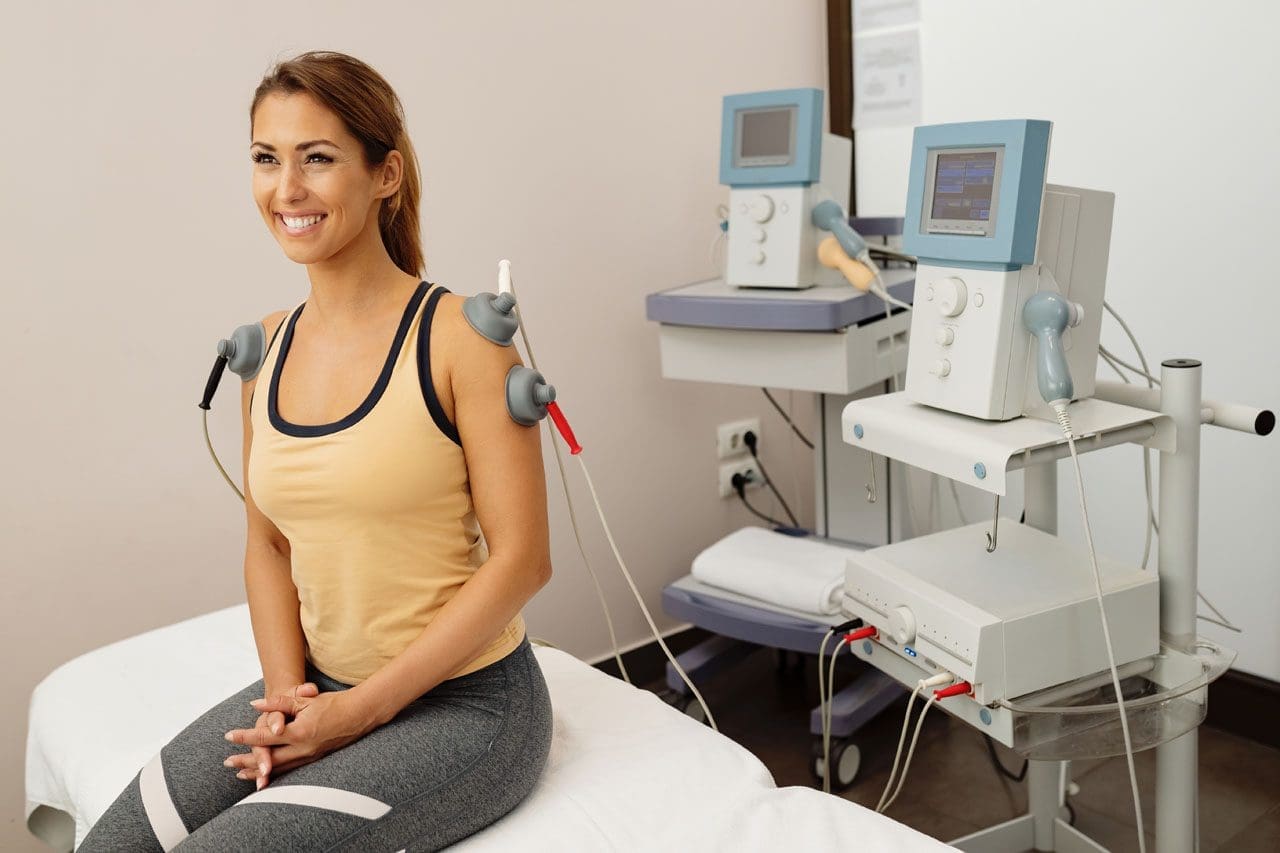
A young, happy sportswoman is getting tens-electrotherapy treatments at a medical clinic.
Healing Times for Sports Injuries
Healing time from sports injuries depends on various factors, such as the location and extent of the injury and the health of the skin, joints, tendons, muscles, and bones. It is also important to take the time to recuperate or not rush back into physical sports activities before the bones or tissues have fully healed. To prevent re-injury, ensure the doctor clears health before returning to sports or strenuous physical activity.
According to CDC research, an average of 8.6 million sports and recreation-related injuries occur annually. (Sheu, Y., Chen, L. H., and Hedegaard, H. 2016) However, most sports injuries are superficial or caused by low-grade strains or sprains; at least 20% of injuries result from bone fractures or more serious injuries. Bone fractures take longer than sprains or strains, and complete tendon or muscle ruptures can take months before one can fully return to activities. Individuals in decent physical shape with no underlying illness or impairment, here is what they can expect when recovering from the following sports injuries:
Bone Fractures
In sports, the highest rate of bone fractures occurs with football and contact sports. Most are centered around the lower extremities but can involve the neck and shoulder blades, arms, and ribs.
Simple Fractures
Depends on the individual’s age, health, type, and location.
Generally, takes at least six weeks to heal.
Compound Fractures
In this case, a bone is broken in several places.
It may require surgery to stabilize the bone.
Healing time can take up to eight months.
Fractured Clavicle/Collarbone
It may require the immobilization of the shoulder and upper arm.
It can take five to ten weeks to heal fully.
Fractured fingers or toes can heal in three to five weeks.
Fractured Ribs
Part of the treatment plan includes breathing exercises.
Painkillers may be needed short term.
Usually, it takes around six weeks to heal.
Neck Fractures
It may involve any one of the seven neck vertebrae.
A neck brace or a halo device that is screwed into the skull for stability may be used.
A sprain is the stretching or tearing of ligaments or the tough bands of fibrous tissue that connect two bones at a joint.
A strain is the overstretching or tearing of muscles or tendons.
Sprained Ankles
It can heal in five days if there are no complications.
Severe sprains involving torn or ruptured tendons can take three to six weeks to heal.
Calf Strains
Classified as grade 1 – a mild strain can heal in two weeks.
A grade 3 – severe strain may require three months or more to heal completely.
The use of calf suppression sleeves can expedite the recovery of strains and sprains in the lower leg.
Acute Neck Strain
A tackle, impact, fall, quick shifting, or whipping motion can cause a whiplash injury.
Healing time can take a couple of weeks to six weeks.
Other Injuries
ACL Tears
Involving the anterior cruciate ligament.
Usually, it requires months of recuperation and rehabilitation, depending on several factors, including the type of sports activity.
Full recovery from surgery takes six to 12 months.
Without surgery, there is no specific timeline for rehabilitation.
Achilles Tendon Ruptures
It is a serious injury.
These occur when the tendon is either partially or completely torn.
Individuals will more than likely require surgery.
Recovery time is four to six months.
Cuts and Lacerations
Depends on the depth and location of the injury.
It can take anywhere from a week to a month to heal.
If there are no accompanying injuries, stitches can be removed within two to three weeks.
If a deep cut requires stitches, more time is necessary.
Mild Contusions/Bruises
Are caused by a trauma to the skin, causing blood vessels to break.
In most cases, a contusion will take five to seven days to heal.
Shoulder Separations
When treated properly, it usually takes around two weeks of rest and recovery before the patient returns to activity.
Multidisciplinary Treatment
After the initial inflammation and swelling have subsided, a doctor will recommend a treatment plan that usually involves physical therapy, self-performed physical rehabilitation, or supervision by a physical therapist or team. Fortunately, athletes and individuals who regularly exercise tend to have a faster healing time because they are in top physical shape, and their cardiovascular system provides a stronger blood supply that speeds up the healing process. At El Paso’s Chiropractic Rehabilitation Clinic & Integrated Medicine Center, we passionately focus on treating patients’ injuries and chronic pain syndromes. We focus on improving ability through flexibility, mobility, and agility programs tailored to the individual. We use in-person and virtual health coaching and comprehensive care plans to ensure every patient’s personalized care and wellness outcomes.
Our providers use an integrated approach to create personalized care plans that include Functional Medicine, Acupuncture, Electro-Acupuncture, and Sports Medicine principles. Our goal is to relieve pain naturally by restoring health and function to the body.
If the chiropractor feels the individual needs other treatment, they will be referred to a clinic or physician best suited for them. Dr. Jimenez has teamed up with the top surgeons, clinical specialists, medical researchers, and premier rehabilitation providers to provide the top clinical treatments for our community. Providing highly noninvasive protocols is our priority, and our personalized patient-based clinical insight is what we provide.
Lumbar Spine Injuries in Sports: Chiropractic Healing
References
Sheu, Y., Chen, L. H., & Hedegaard, H. (2016). Sports- and Recreation-related Injury Episodes in the United States, 2011-2014. National health statistics reports, (99), 1–12.
IFM's Find A Practitioner tool is the largest referral network in Functional Medicine, created to help patients locate Functional Medicine practitioners anywhere in the world. IFM Certified Practitioners are listed first in the search results, given their extensive education in Functional Medicine