Sports Chiropractor: To figure out what these professionals dont want you to do before making an appointment, Runners World asked two chiropractors who specialize in running about what common training flaws are leading to patients ending up in their offices over and over again.
While studies go back and forth on whether or not specific types of running shoes lead to injury, it’s still a good idea to opt for a proper fit over a pair of kicks that look cool or that you got for cheap. Ian Nurse, D.C., founder of Wellness in Motion Boston and a sub-2:30 marathoner, believes that many running injuries can start from not having the right shoes on your feet.
The nurse recommends going to a run specialty store and having someone watch your gait outside or on the treadmill. This will allow someone at the store to find a range of shoes that might work best for your specific running/walking mechanics. (You can find a nearby running store by checking out our Store Finder.) From there, you can go by what feels the best when running.
The nurse said he also asked his patients if there had been a change in running shoes from one style to another. For example, switching to a zero-drop shoe from a normal shoe, without easing into them, may increase your risk of injury. Like a fitter at a running store, a sports chiropractor like a Nurse may even look at your running gait in the office to diagnose imbalances in your foot’s motion mechanics.
The whole biomechanics starts in your foot, Nurse said. We all have different foot strikes. If it hits the ground in a certain way, the shoe has to support that. If you are a forefoot striker, rearfoot striker, overpronator, or under pronator, all of those foot strikes can lend themselves to various running injuries.
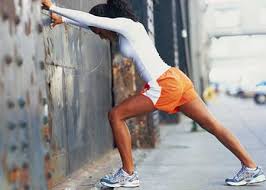
DONT Do Static Stretching Before A Run
Holding a static stretch for longer than 10 seconds can take away from your explosive muscular power before a run, according to Derek Vinge, D.C. at Fit Chiropractic & Sports Therapy in Courtenay, British Columbia. One study even showed that stretching cold muscles before a tough 3K left individuals starting their runs slower and at a greater perceived effort. And when your muscles aren’t signaling properly, it can lead to small injuries turning into larger problems over time.
You are better off with a series of dynamic stretches like lunges and squats to get the blood flowing in the body. (This 2-minute warmup should do the trick.) The benefits will be noticeable if you add five to 10 minutes of dynamic stretching before hitting the roads or trails.
If you do some activation and dynamic warmups, you will be a stronger, faster runner. I also forget to do a busy stretch, and I think maybe it is a time thing where you tell yourself I’ll do this later. I’ll deal with it later, Vinge said.
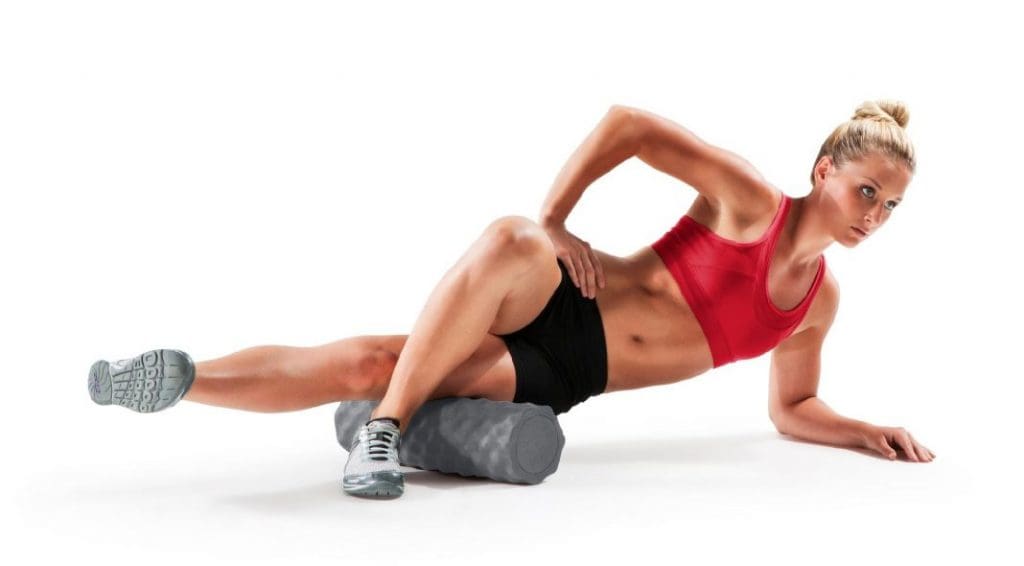
DONT Overdo It On Foam Rollers
Foam rolling and other ways to work out a knot or refresh your legs can be a good thing in moderation. But less sometimes is more, according to Nurses.
I see a lot of people who tend to go overboard on that, Nurse said. They do so much foam rolling on their IT band and quads and are even more in pain. It’s more like a finesse, where you are trying to get blood flow into the area, but you aren’t trying to beat up the room so badly that you are causing more damage.
Stop if you’re working out on a foam roller and something continues to hurt or gets worse. Overdoing a problem spot may inflame it more. If you’re feeling relatively good, the Nurse suggests doing light work on the foam roller after a run to hit any problem areas for one to two minutes.
DONT Clam Up When You Get Into The Office
It would be best if you didn’t arrive at an office visit with pages and notes from WebMD. But you shouldn’t be silent and think a sports chiropractor has all the answers just by looking at you.
Going into an appointment, think about what has been consistently driving you crazy on a stiff run neck, a cranky left ankles that will allow a dog to focus on what’s bothering you.
Runners know their bodies a lot better than a lot of people, Nurse said. As we run, we are constantly checking in on different body parts, and people can recognize what is wrong, and they can tell if their gait is altered and what is hanging them up. The information I get from my patients helps me a lot.
DONT Forget To See Someone If You Need It & Listen To Your Sports Chiropractor
With training goals and miles to complete, runners often dont admit when there is something wrong. It’s almost a badge of honor to stay off the table for long periods.
But Vinge thinks there’s more to what he does than fixing injuries. Once an underlying issue is taken care of, you can teach your body to perform at a higher level than you thought was possible.
After they start to get better, then we can work on other issues to get some more performance out of them, said Vinge. If you’ve never been looked at, you have no idea what’s going wrong.
Bobby Gomez describes how each visit with Dr. Alex Jimenez and to PUSH Fitness with Daniel Alvarado has resulted in great improvements in the stability of his shoulders as well as in the placement of his hips. Although Bobby Gomez’s recovery has been progressing gradually, he discusses the tremendous changes he has experienced mentally, emotionally and physically. Bobby Gomez highly recommends Dr. Alex Jimenez as the non-surgical choice for neck and back pain, as well as shoulder and hip pain.
Shoulder Pain Treatment
Cerebral palsy (commonly known as CP) affects ordinary motion in various areas of the human body and has many degrees of severity. CP causes problems with posture, gait, muscle tone and coordination of movement. Some children with CP have coexisting conditions, such as eyesight and hearing impairment. These disorders are brought on by brain damage and aren’t a direct result of cerebral palsy. Cerebral palsy does not affect life expectancy. Based on the way in which the condition is handled, motor abilities can improve or decrease over time. While severity and symptoms vary, most individuals with this condition go on to direct a rich, fulfilling life.
We are blessed to present to you�El Paso�s Premier Wellness & Injury Care Clinic.
As El Paso�s Chiropractic Rehabilitation Clinic & Integrated Medicine Center,�we passionately are focused treating patients after frustrating injuries and chronic pain syndromes. We focus on improving your ability through flexibility, mobility and agility programs tailored for all age groups and disabilities.
If you have enjoyed this video and/or we have helped you in any way please feel free to subscribe and share us.
Fitness Trackers: Exercise is usually a great compliment to chiropractic treatment. In fact, many chiropractors recommend regular exercise to their patients. It helps with pain management and speeds healing as well as give your mood a healthy, natural boost.
Fitness trackers are a popular workout tool that helps people set fitness goals, track their progress, and get healthier. How can they help chiropractic patients though? What can they offer that will patients get more out of their treatments? Find out what you need to know about chiropractic and fitness trackers.
Fitness Trackers
It Takes More Than The Tech To Get You Fit.
All the flashy, high tech bells and whistles in the world won�t roll you out of bed in the morning and place you on the treadmill. No fancy wristband will get you up and moving, getting exercise and getting fit. The tech is cool. It is fun and exciting, but it won�t get you fit. Only you can do that.
So if you are getting a fitness tracker with the belief that it is going to be some kind of fitness magic bullet, that just won�t happen. It is great as a fitness buddy, a tool, a nifty gadget that may help motivate you and help you achieve your fitness goals. In the end, though, you are the one driving that car. You are in control.
Is A Fitness Tracker For You?
There are so many fitness trackers on the market with an almost endless list of features. Finding the one that is right for you, or if you could even benefit from a fitness tracker takes a bit of research. Look for features that work for you and the activities you will be pursing.
For instance, if you enjoy water-based fitness activities you might want a waterproof model. There are also data limits, screen sizes (or no screen at all), heart rate tracking options, and whether you want a clip on tracker or one that straps on your wrist.
Before making your purchase, take some time to research all of the features that are available to you then decide what you like and what features would best help you meet your fitness goals.
How To Get The Most Out Of Your Fitness Tracker.
Once you have your fitness tracker you will want to make a plan to ensure that you get the most out of it. Try these tips to make your fitness tracker work its best for you.
Identify clear cut goals. When you begin your fitness quest, the first thing you need to do is know where you want to go with it. It is a good idea to record your stats at the beginning and then update them every month or so. This will let you see how many more steps you are taking, how much weight you�ve lost, or whatever else you wish to accomplish.
Set attainable benchmarks. Benchmarks help you along as you work toward your goal. The key is setting them so that they are attainable but still present a bit of a challenge. If weight loss is your key, you might set benchmarks for every two months. For fitness goals, you may set benchmarks for a certain number of steps in a given time or a certain number of workouts each week. When you reach a benchmark, celebrate a little.
Wear it on your non-dominant wrist. The Journal, Medical and Science in Sports and Exercise published a study that revealed participants who wore fitness trackers on their wrists throughout the day found that they were more accurate when worn on the non-dominant wrist. The theory is that the non-dominant wrist moves less, giving a more accurate reading.
Calibrate your tracker to match your stride. Not everyone has the same stride. You may be very tall or very short; you might take longer strides or time steps. Whatever the case, you�ll get the most out of your fitness tracker by calibrating your stride. Most trackers will provide instructions for doing the calibration. It is well worth taking the time to complete it.
Incorporate other apps to boost your fitness efforts. Many fitness trackers will recommend other apps that can help you meet your goals and you can sync them to your tracker. However, you can also look for apps on your own that can help. There are so many different fitness apps out there from food tracking to apps that use your phone�s GPS to provide more accurate measurements on your runs, walks, or bike rides.
The more fit you are the better your chiropractic treatments will typically work. Fitness trackers can help you reach your goals and get the most out of your chiropractic care.
Bernadette Banda informs her compelling weight loss story while she clarifies how much her life has changed since she discovered the right fitness regimen with Dr. Alex Jimenez and Daniel “Danny” Alvarado in PUSH Fitness. PUSH became Bernadette Banda’s life philosophy, where she took it on herself never to give up and to always “push” herself towards any fitness goal she wished to attain. With tremendous gratitude, Bernadette Banda praises Danny’s and all the other coach’s efforts and support to help her become healthy.
Chiropractic Weight Loss Treatment
Intentional weight loss is the decrease in total body mass because of attempts to improve fitness and wellness. Weight loss in people who are overweight or obese can decrease health risks, increase health, and may delay the onset of diabetes. It may decrease pain and increase movement in people with osteoarthritis of the knee. Weight reduction may result in a drop in hypertension. Weight loss occurs when the body is expending more energy in metabolism than it’s swallowing from meals or additional nutrients. It is going to then use stored reserves from fat or muscle, slowly resulting in weight loss.
We are blessed to present to you�El Paso�s Premier Wellness & Injury Care Clinic.
As El Paso�s Chiropractic Rehabilitation Clinic & Integrated Medicine Center,�we passionately are focused treating patients after frustrating injuries and chronic pain syndromes. We focus on improving your ability through flexibility, mobility and agility programs tailored for all age groups and disabilities.
If you have enjoyed this video and/or we have helped you in any way please feel free to subscribe and share us.
Chiropractic care is designed to alleviate pain and restore the body to its natural balance. For chiropractors, injury prevention is key for a healthy body. Good practices combined with solid exercises creates toned muscles that protect the body and spine from harm. While each patient receives exercise instructions for their specific condition, the following exercise tips for chiropractic patients apply to everyone.
Take Time To Warm Up Before You Exercise
Before starting any exercises, it’s important to warm up. A series of dynamic moves will boost your heart rate and heat up the muscles that you will be using during your work out.
Select whole body movements such as leg lunges paired with arm motion or walk in place while raising and lowering your arms. Once you’ve warmed up, you can safely stretch without risk of injury.
Introduce Ergonomics Into Your Home And Work Space
One of the most important exercise tips for chiropractic patients is to take steps to keep your body in alignment as you move through your day. In the workplace, check with an ergonomics consultant to ensure proper positioning, especially if you spend most of the day seated or doing repetitive tasks.
A comfortable chair reduces muscle strain and prevents injury. Make sure that your feet sit firmly on the floor and that lumbar support is in place. At home, you should have a good mattress and supportive furniture.
Choose The Right Shoes
Before you buy your next pair of shoes, check for stability, flexibility, and comfort. During your test drive, make sure that the shoes feel firmly in place as you move through your entire range of motion for a stable gait during wear.
Footwear should be flexible enough to give easily at the base of the toe for a smooth gait, and there should be cushioning at all the right places with plenty of room for the toes to move. Shoes that properly fit your feet means that your walk will be more natural and healthy during exercise and in daily motion.
Sit And Stand With Posture In Mind
Perhaps the biggest reason that these exercise tips for chiropractic patients are so important is that strong and flexible muscles will help you have good posture. Be mindful of the following as you move through your day:
When sitting, your feet should be on the floor, your shoulders should be relaxed, and your forearms should remain parallel with the ground.
If you will be standing for a time, make sure that you maintain posture by tucking your stomach muscles in.
When standing for an especially long period of time, be sure to shift your weight from one foot to the other and from the heels to the toes and back again.
These simple tips for maintaining good posture will passively work your muscles and result in a healthier spine.
Passive Stretches For Large Muscles
Finally, it is important to target large muscle groups with passive exercises. Use your weight to slowly stretch your hamstrings, your piriformis, and your entire back. Passive stretching is gentle and relieves stress points that cause back pain. These gentle exercises provide a great deal of relief and are easily adjusted to suit your current ability.
Your chiropractor will work with you to design an exercise program that is optimal for you. Be sure to follow through with the plan and include these tips in your regular work out to experience the joy of healing from chiropractic care.
This article is copyrighted by Blogging Chiros LLC for its Doctor of Chiropractic members and may not be copied or duplicated in any manner including printed or electronic media, regardless of whether for a fee or gratis without the prior written permission of Blogging Chiros, LLC.
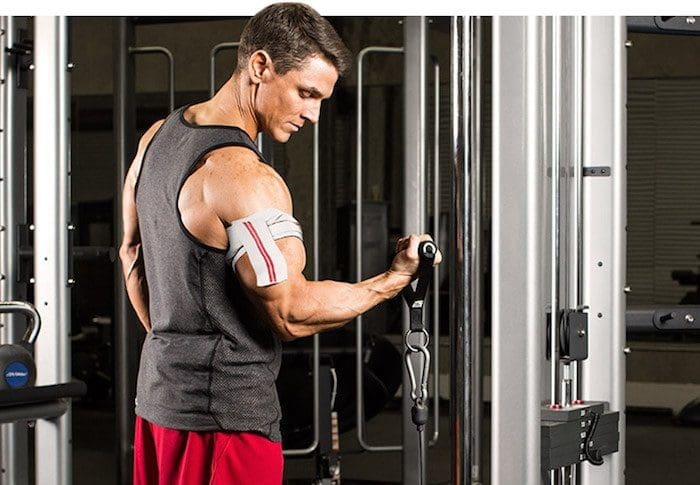
Occlusion training involves restricting the flow of blood to a muscle group while training. That is why it is also commonly called �blood flow restriction training.�
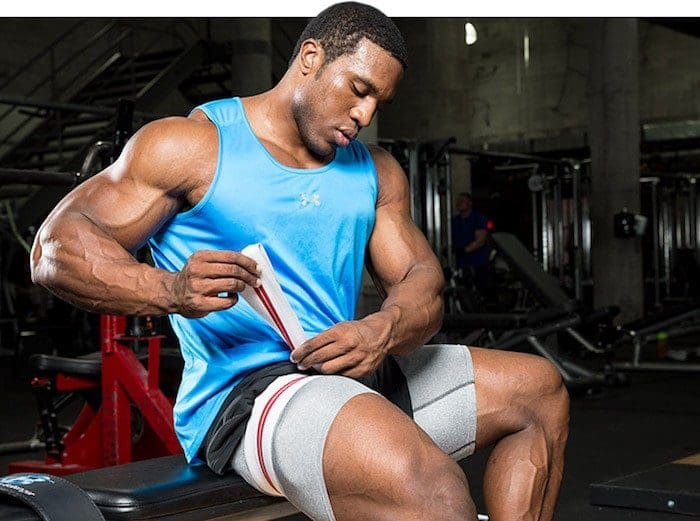
Basically you take a wrap or band and apply it to the top of your limb.
The aim of this�isn�t�to completely cut off circulation to the area as that is dangerous and painful.
This means that you aren�t restricting arterial flow to the area, but you are restricting the venous return from the muscles.
Arteries are what takes the blood from your heart to your muscles and it is then returned to your heart through a system of veins.
Restricting the blood flow back to your heart causes a pooling of the blood in the area that you are working.
This is what occlusion training uses to create an�anabolic effect�on your muscles.�
HOW DOES OCCLUSION TRAINING WORK?
The bloodstream is the network that connects the muscles in your body, providing oxygen and nutrients and carrying away waste products
Muscles require a steady flow of blood to operate.
That is why we aren�t cutting off the flow to the muscle, we are only slowing the rate at which the blood releases from it.
When performing any kind of resistance training your body directs more blood to your muscles performing the exercise.
The reason you get a �pump� when working out is that the speed at which your body is pumping blood into your muscles is faster than the amount of blood going out of them.
Your pump reduces when you rest between your sets as more blood is released from your muscle groups.
Blood flow restriction training prolongs and intensifies your pump.
This is done by placing wraps in one of two places during your working sets.
You wrap above your bicep for movements that involve your bicep�s, triceps, forearms, and even chest and back can benefit from this.
While wrapping in this position it makes sense that it would benefit your arms but how does it help your chest and back?
There is no possible way that you can restrict blood flow to your chest and back because of the positions they are located in.
However wrapping your arm allows you to pre-fatigue your arms and as a result chest and back exercises that you perform are going to require more involvement from those muscles rather than your biceps or triceps.
Wrap your upper thigh for movements that involve your quads, hamstrings, glutes and calves.
Building Muscle With Occlusion Training
During training you have two�types of muscle�that are responsible for all muscle growth in the gym.
Fast twitch fibers and slow twitch fibers.
Slow twitch muscle fibers are smaller muscle fibers and generate less power and strength than fast twitch fibers. However slow twitch fibers fatigue slower and can sustain activity for longer.
Fast twitch fibers are larger muscle fibers, generate more power and strength and have the most potential for growth.
Fast twitch fibers are recruited last during contractions and mostly don�t use oxygen. Slow twitch fibers on the other hand use oxygen and are recruited first in the movement.
This means that by restricting the blood flow to a muscle group you are pre-fatiguing the slow twitch fibers and forcing the fast twitch fibers to take control even when you�re using low weights.
Occlusion training seems to�trick your body�into thinking you are lifting heavy weights. This means you can get very�similar benefits�of heavy training by using 20-30% of your 1 rep max.
There are two main factors that lead to muscle growth during training. These are:
Metabolic Stress
Cellular Swelling
Metabolic Stress
When you�re working out your body is burning energy. As your body chews through its fuel stores, metabolic by-product accumulates in your muscles.
Metabolic by-products act as an anabolic signal, telling your body to increase size and strength.
Under normal training most of these by-products would be washed out by blood flow.
Occlusion training keeps them near the muscle helping to increase the anabolic effect that the by-products have on the muscles.�
Cellular Swelling
During resistance training your cells expand and fill with fluid and nutrients. This is known as cellular swelling and has also been shown to be an anabolic�signal for muscle growth.
Occlusion training isn�t a better option than heavy training, but that said it is a nice supplement.
Regularly pushing your muscles to the point of failure or at least close to it (1-2 reps) is an important factor of increasing your strength and muscle mass.
Occlusion training allows you to replicate this without putting anywhere near as much strain on your joints, ligaments and tendons as you would to get the same result from lifting heavy.
This means that you can do more volume without the risk of�overtraining.
Here are a couple of scenarios where this could be really beneficial for you:
If you suffer from joint issues
If you�re travelling and only have access to hotel weights
If you�re injured or have nagging aches and pains.
In short your body might not always feel up to another heavy training day. Occlusion training can be a great way to get a good workout in and help you maintain muscle mass.�
How To Do Blood Flow Restriction Training
As I mentioned earlier you only ever wrap yourself at the top of your biceps and the top of your thighs.
Elastic knee wraps, medical tourniquets and exercise band �are good options to use for your wraps.
Here�s two videos explaining how to wrap your arms and legs
Blood flow restriction training works best when with isolation exercises. If you are going to do compound movements do them at the start of your workout and save the blood flow restricted exercises for the end.
Layne Norton recommends performing lifts at 20%-30% of your 1rm for 20-30 reps of the first set and then the next three sets at 10-15 reps. Have a 30 second rest between sets before going again.
You want to keep the cuffs on your limbs for the entire 4 sets and then release them at the end.
If you�re in pain before the exercise starts that�s a good sign that your wraps are too tight.
Also if you can�t complete the prescribed sets either the wraps are too tight or the weight is too heavy.�
Conclusion
Blood flow restriction training has been getting a lot of hype lately.
While it isn�t better than regular strength training, it is a good supplement for it and can be beneficial when used in conjunction with your regular training.
This is more of an advanced training technique so if you are just starting out lifting it probably won�t give you any more benefits than your normal heavy training.
If you�re an advanced lifter, are injured, or don�t have access to heavier weights than this training technique could benefit you.
Deadlifts are one of the best strength and mass building exercises that you can perform.
When performing the deadlift you are working more muscles than any other exercise, including the squat.
Deadlifts have many different variations and forms. In this article we are going to focus on the difference between the Romanian Deadlift and standard deadlifts.
There are lots of valid arguments as to which exercise is better in a Romanian Deadlift vs regular deadlift battle.
Keep reading to learn the differences.
Romanian Deadlift Vs. Standard Deadlift
The Romanian Deadlift is one of the most�commonly used among the various deadlift techniques.
In fact a lot of people that think they are performing a deadlift are sometimes actually doing a Romanian Deadlift.
Both the conventional and Romanian Deadlifts are great strength and muscle building exercises.
Even though they are both deadlifts�variations the setup, execution and muscles activated are different.
Here�s a quick video that highlights the differences in form and setup between the two.
Regular Deadlift
As the name suggests the deadlift is a strength training exercise that involves�lifting dead weight.
The regular deadlift is one of the best total body exercises you can do as it works just about every fiber in your body.
The deadlift requires you to lift a weight off the ground�and lower it back down again. Although it may sound simple there is a lot going on in the movement and incorrect form can cause injuries.
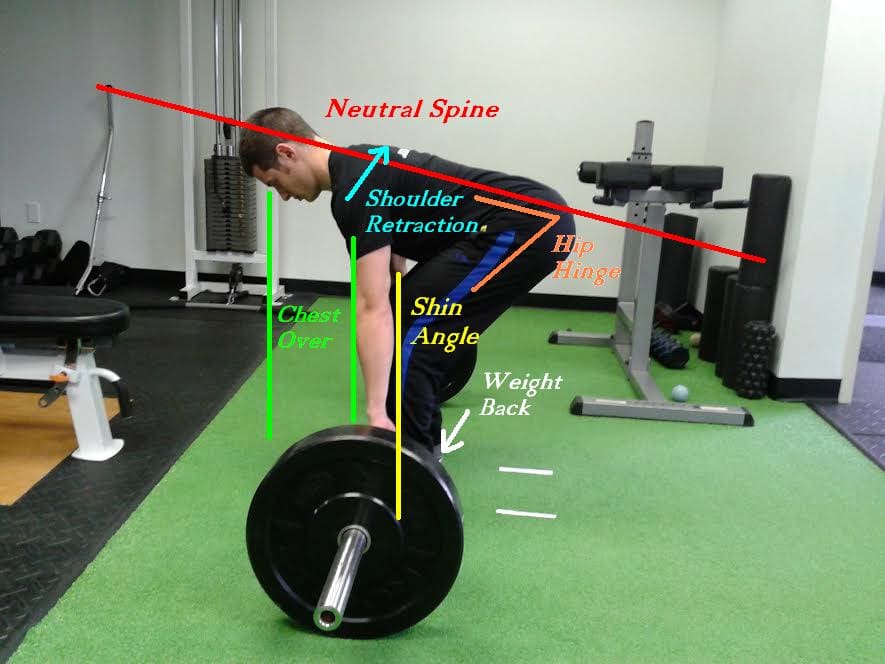
One of the most common causes for injury while deadlifting is rounding the back. Your lower back must stay neutral during the whole movement. Rounding your lower back during heavy deadlifts puts uneven pressure on your spine. Always lift with a neutral lower back, allowing for the natural inward curve of your lower spine.
Don�t try and rush to lift heavier weights. the quickest way to improve your deadlift is through correct form. By pulling more efficiently you can use more muscles and deadlift heavier. So start out practicing correct form and build your way up.
The best way to approach the exercise is to think as if you were leg pressing the floor as opposed to�using your upper body to lift something. This will help you mentally focus on using your legs rather than your back (which can cause rounding) for the exercise.
The �dead� in deadlift stands for dead weight so each rep must start on the floor, from a dead stop. �Deadlifts are different to other exercises like the bench press or squat where the weight starts at the top. The deadlift movement�starts from the bottom and and you pull the weight up then return it to the floor�for one rep.
Here are�Stronglifts�5 steps to proper deadlift form:
Walk to the bar.�Stand with your mid-foot under the bar. Your shins shouldn�t touch it yet. Put your heels hip-width apart, narrower than on Squats. Point�your toes�out 15�.
Grab the bar.�Bend over without bending your legs. Grip the bar narrow, about shoulder-width apart like on the Overhead Press. Your arms must be vertical when looking from the front.
Bend your knees.�Drop into position by bending your knees until your shins touch the bar. Do NOT let the bar move away from your mid-foot. If it moves,�start from scratch with step one.
Lift your chest.�Straighten your back by raising you chest. Do not change your position � keep the bar over your mid-foot, your shins against the bar, and your hips where they are.
Pull.�Take a big breath, hold it and�stand up with the weight. Keep the bar in contact with your legs while you pull. Don�t shrug or lean back at the top.
Lower the bar by moving your hips back while keeping your legs almost straight. Once the bar is past your knees, bend your legs more. The bar will land over your mid-foot, ready for your next rep.
Rest a second between reps while staying in the setup position. Take a deep breath, get tight and pull again. Every rep must start from a dead stop on the floor. Don�t bounce the weight off the floor or you can end up lifting�with�bad form.
IFM's Find A Practitioner tool is the largest referral network in Functional Medicine, created to help patients locate Functional Medicine practitioners anywhere in the world. IFM Certified Practitioners are listed first in the search results, given their extensive education in Functional Medicine