El Paso, TX. Chiropractor Dr. Alex Jimenez examines good health and wellness.
Most individuals will experience neck or back pain at some time in their own own lives. Neck pain and back are among the leading causes of disability worldwide, along with the number of cases is increasing. Some factors behind this are increased usage of cellular devices bad position, and unhealthy lifestyle choices.
Though it’s not necessarily possible to stop neck and back pain, you will find steps individuals can take to help decrease the chance it is going to occur.
Why good posture?
One of the most important approaches to ensure your spine stays healthy would be to keep good posture. A healthy back has three natural curves� an external curve at the upper back an inward curve at the neck, and an inward curve at the low back. Proper bearing helps maintain these curves that are natural and puts minimal pressure in your joints. Defective bearing does the opposite. It may stress or pull muscles, causing pain and musculoskeletal imbalances in the back, neck, and extremities. Some typical postural blunders rounding your shoulders are positioning your face too much forward, and slouching so you lose the normal curve in the lower back.
Cellular Devices &�Neck Pain
The increasing use of cellular devices can bring about inferior spine health, influencing our posture and body mechanics in ways that are unhealthy. Kenneth K. Hansraj, MD, the Chief of Spine Surgery at New York Spine Surgery and Rehabilitation Medicine, created a computer model of the cervical spine that demonstrated how use of mobile devices directly contributes to neck pull. In an article published in Surgical Technology International, Dr. Hansraj, MD, revealed that neck pull increases as the forward angle of the head increases, as it does when you look down at your cell phone or tablet. As you lean your head, you round another aspect of poor position, your shoulders. All this surplus strain creates additional wear and tear on the structures of the neck, upper spine and back, and can result in spinal degeneration that could need surgery.
Body Mechanics &�Prevention Tips
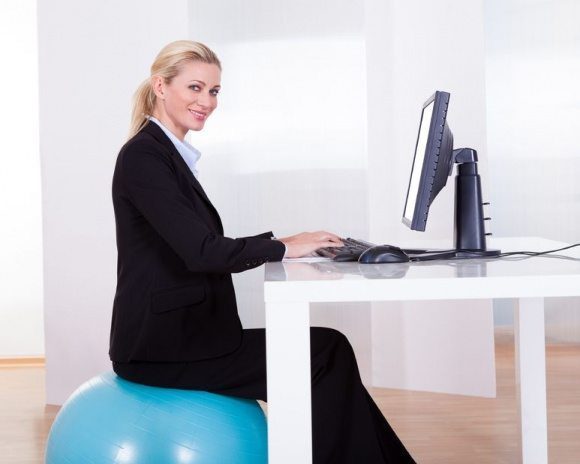
Good posture and placement is particularly important when you’re bending over, squatting, and when you are lifting things. When lifting boxes or alternative things you should avoid twisting your body. But it also is crucial to keep good posture while standing and sitting. It really is a lot more crucial that you develop a good ergonomic working arrangement to safeguard your spine with people spending increasing quantities of time at work,. Over time, poor sitting posture and workplace ergonomics can damage spinal structures and contribute to persistent or persistent back and neck pain.
Sleep Time
One other place people spend a sizable percentage of the time is in bed. That makes it vital to truly have a mattress that enables you to have a supporting and restful slumber. The identical natural spinal alignment you have is maintained by a mattress that is good when standing and will help prevent back pain.
Eat Well &�Exercise Frequently
The diet and exercise choices you make might assist you to protect your back. Exercise can help prevent back pain and neck pain by strengthening the muscles supporting your vertebrae. Strength training, flexibility training, and aerobic exercise are part of a healthy exercise routine, and every type of exercise contributes to spinal health. Great nutrition also is crucial to helping us reach our optimum well-being and feel our best. A nutritious diet along with exercise also assist you to keep a healthier weight, that is just another approach to simply help make sure your back is not overstrained.
Smoking, Your Brain, Chronic Back Pain & Bone Health
Another lifestyle alternative that’s damaging to spine health is cigarette smoking. Researchers from Northwestern University conducted a study demonstrating that smokers are three times more likely than nonsmokers to develop chronic back pain. �Smoking affects the brain,� according to scientist Bogdan Petre, who headed the study, which was published on the internet in the journal Human Brain Mapping. �We found that it appears to make people less resilient to an episode of pain and changes the way the brain responds to back pain.�
Smoking also reduces bone density, which increases the risk for osteoporosis along with other degenerative spine conditions, and it can reduce the success of spinal fusion. People who are facing fusion or any back surgery should make every endeavor to avoid smoking. The associated dangers will reduce and raise the probability of an effective spinal fusion surgery.
El Paso, TX. Chiropractor Dr. Alex Jimenez listens in on how chiropractors can help with sciatica.
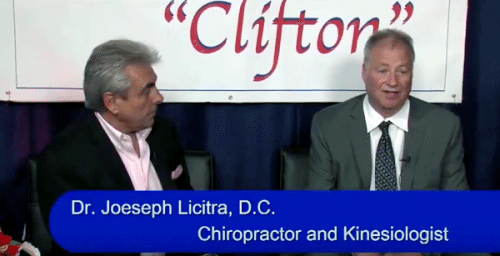
Dr. Joseph Licitra DC, a chiropractor that serves Clifton, NJ as well as Montclair, Bloomfield, and Passaic, recently discussed sciatica on a local cable show. Dr. Licitra says that chiropractors can help treat sciatic nerve pain.
Clifton, United States
Dr. Joseph Licitra DC, the owner of a chiropractic practice that serves Clifton, New Jersey and surrounding areas such as Montclair, Bloomfield, and Passaic, recently discussed sciatica on a local cable show called �Meet Clifton.� Those interested in learning more about the challenges of sciatica and how it can be treated can view an exclusive video clip for free on Dr. Licitra�s website: http://www.josephlicitra.com/sciatica
In addition to speaking about the prevalence of sciatica in America, Dr. Licitra also touched upon the economic consequences of the debilitating condition. An interesting fact explored during his presentation brought to light the extent of which sciatica negatively affects employee attendance in the workplace. Dr. Licitra said: �People with sciatica have difficulty sitting and bending and therefore they can�t go to work. There is tremendous economic strain on the cities, on the companies, and on the families.�
The Causes Of Sciatica
Sciatic nerve pain can stem from many different things such as repetitive bending, direct trauma to the spine, as well as a sedentary lifestyle.
How chiropractors can help � There is hope for people who suffer from sciatica. Chiropractors can determine the origin of the sciatic condition and then focus on balancing out the spine to get the bones in correct alignment. Chiropractors like Dr. Licitra who specialize in kinesiology will also focus on the musculature to pinpoint the cause(s) of sciatic pain.
Dr. Licitra has been in practice for over 30 years and has worked on many professional athletes such as the New York Giants and the National Hockey League. His practice is now offering free consultations to new patients interested in receiving treatment for sciatica, as well as to patients suffering from other health conditions like neck or back pain, shoulder pain, and even migraines.
Struggling With Sciatica?
If you are experiencing pain that radiates from the back or buttocks all the way down the legs, you may have a common condition called sciatica. Many people in Clinton suffer with the pain of sciatica and may never achieve a long-term solution. An untreated sciatic condition can continue to worsen and make the daily tasks of living go from difficult to nearly impossible. Fortunately, chiropractic treatment can help you overcome this debilitating condition.
Sciatica In Clifton
Sciatica, also known as sciatic neuralgia, is a condition that causes pain in the lower back, down the back of the leg, and into the foot. It can make sitting and standing for long periods of time difficult and can lead to weakness, tingling, and numbness in the leg and foot. It will often come and go throughout a person’s lifetime, causing periods of varying degrees of pain and discomfort. If left untreated, sciatic pain will generally grow worse and the nerve can become permanently damaged.
The reason why the pain travels so far, radiating up and down the legs and back, is due to the compression of the sciatic nerve which is the longest nerve in the body. This nerve originates in the lumbar spine and extends into the buttocks before traveling down the leg to the ankle and foot. When the vertebrae in the lower back are compressed, the roots of the sciatic nerve can become pinched and irritated which is what causes the pain.
How Do You Develop Sciatica?
There are a number of factors that can lead to sciatica. It is most commonly caused by disc injuries and bulges. In this occurrence, the disc presses against the nerve root causing sciatic pain. Disc Injuries can occur because of poor posture, repetitive use injuries, and accidents. Sciatica is also common when there are subluxations (misalignments) in the spine due to postural issues, pregnancy, or trauma. Some patients report simply bending over to pick up a piece of paper and then being suddenly hit with extreme pain. The reality, however, is that the spinal condition was probably already developing for quite some time before the triggering incident occurred.
Some people respond very quickly while others take more time to recover. It really depends on the condition of the disc or the joints that the chiropractor has to correct. In most cases, the longer the issue persists, the longer it will take to achieve correction. The great news is that it typically takes less time to fix an issue like this than it took to create it in the first place. Once the position of the spine and discs are corrected, patients often report improvements in their overall health. If you are experiencing symptoms of sciatica, please call our team at Joseph Licitra, DC today.
El Paso, TX. Chiropractor Dr. Alex Jimenez looks at exercise as treatment for back injuries.
Since 1992 Opioid Prescriptions Rose From 112 Million To More Than 249 Million As Of 2015
In 2004, there were enough written opioid prescriptions to ensure every American could have their own bottle. According to studies, a written prescription of a pain-killer should not be used for a back related injury; but rather, exercise is the most effective tool for recovery.
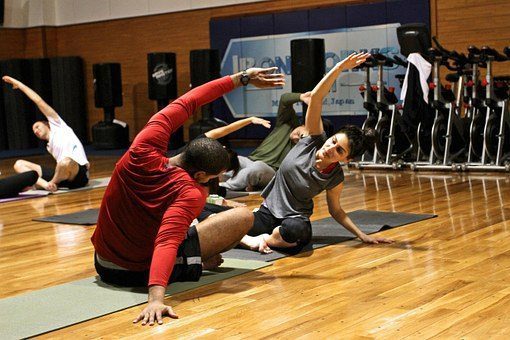
The First &�Foremost Way To Heal & Prevent Further Injury To The Back Is By Simply Moving Around
Vidan Family Chiropractic explains that �what made the body-heals the body.” They suggest exercise such as walking, stretching and yoga instead of requesting an opioid prescription.
Dr. Alex Vidan from Vidan Family Chiropractic joins us more information on the excessive use and prescription of opioids for injuries.
El Paso,TX. Chiropractor Dr. Alex Jimenez looks examines a�herniated disc.
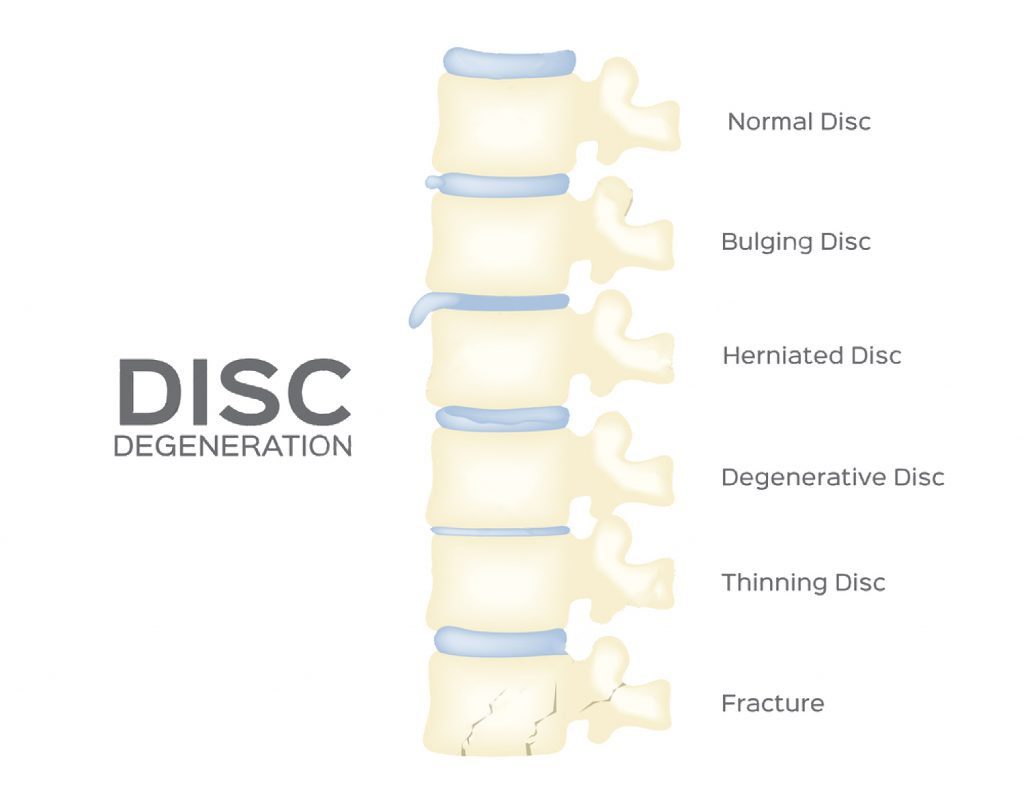
Herniated disc is a somewhat common condition that can occur anywhere along the spinal column, but most commonly affects the lower back or neck area. Also known as ruptured disk or a slipped disc, a herniated disc develops when one of the pillow-like pads between the vertebrae moves out of position and presses on nerves that are adjacent.
Herniated discs are usually caused by overuse injuries or injury to the back; however, disc conditions may also develop as a result of the standard aging process. It’s also known that there is a genetic factor that leads to the evolution of herniated disc and disc degeneration. As the size of herniation shrinks with time via resorption, typically, a herniated disc in the lower back will heal within six months. If physical therapy, drugs along with other treatments fail, operation may be needed.
What’s A Disk?
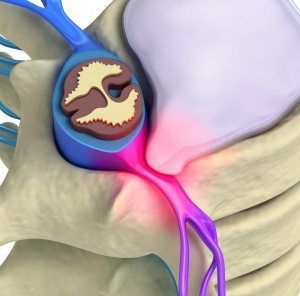
Spinal discs are cushion-like pads located between the vertebrae. Without these �shock absorbers,� the bones in the spinal column would grind against one another. Along with giving the backbone flexibility and making movements like twisting and bending potential, discs protect the spine by absorbing the effect of trauma and body weight. Each disk has a strong outer layer called annulus fibrosus and a soft, gel-like center, called nucleus pulposus. There are fibers on the outside of each disc that attach to adjoining vertebrae and hold the disc in position. A herniated disc occurs when the gel as well as the outer layer tears or ruptures -like middle leaks to the spinal canal.
The spinal canal has only enough space to place spinal fluid and the spinal cord. When a disc herniates and spills to the spinal canal, it could cause compression of spinal cord or the nerves. Alterations in sensation and intense, debilitating pain often happen. Furthermore, the gel-like substance inside the disk releases chemical irritants that bring about pain and nerve inflammation.
What Causes A Herniated Disc?
As we get older, the spinal disks gradually lose fluid volume. This process progresses slowly and begins at about age 30, over time. As the disks dry out, tears or microscopic cracks can form on the outer surface, causing it to become weak, fragile and much more susceptible to injury. The most common causes of herniated disc are:
Wear and tear: Disks dry out and aren�t as adaptive as they were.
Repetitive�movements: Work, lifestyle, and certain sports activities that place stress on the spine, especially the lower back, further weaken an already vulnerable area.
Lifting the wrong way: Never lift while bent at the waist. Proper lifting entails lifting with a straight back and your legs.
Injury: High-impact trauma can create the disk to bulge, tear or rupture.
Obesity: Carrying excess weight places an undue amount of strain on the back.
Genetics: There are a few genes which might be more typically present in individuals with disc degeneration. More research is necessary to investigate the role of those genes�they could be targets of biological treatment in the future.
Which Are The Symptoms Of A Herniated Disc?
Pain from a herniated disc can fluctuate, determined by severity and the place of the harm. It is typically felt on one side of the body.
Little or no pain could be felt in case the injury is minimal. Pain might be severe and unrelenting, in the event the disk ruptures. If significant nerve impingement has occurred pain may radiate to an extremity in a certain nerve root distribution. For instance, sciatica is often resulting from herniated disc in the low back. Herniated disc can manifest itself with a variety of symptoms, including:
Dull ache to severe pain
Numbness, tingling, burning
Muscle weakness; spasm; altered reflexes
Loss in bowel or bladder control (Note: These symptoms constitute a medical emergency. When they occur, seek medical attention immediately).
How Is A Herniated Disc Diagnosed?
History and physical examination point to some diagnosis of herniated disc. A herniated disc is likely if low back pain is accompanied by radiating leg pain in a nerve root distribution with positive straight leg raising test (ie, elevating the leg while lying down causes radiating pain down the leg), as well as other neurologic deficits for example numbness, weakness, and altered reflexes.
Imaging studies usually are ordered to confirm a diagnosis of herniated disc. X rays are not the imaging medium of choice because soft tissues (eg, discs, nerves) are hard to capture with this specific technology. However, they might be used as an initial tool to eliminate other illnesses such as for instance fracture or a growing. Confirmation of the feeling of herniated disc is generally achieved with:
Magnetic Resonance Imaging (MRI): This technology shows the spinal cord, surrounding soft tissue and nerves. It really is the best imaging study to support the identification of a herniated disc.
Nerve Conduction Studies (NCS) and Electromyogram (EMG): These studies use electric impulses to measure the level of harm to the nerve/s brought on by compaction from a herniated disc along with other conditions that cause nerve impingement may be ruled out. NCS and EMG are not routine evaluations to diagnose herniated disc.
Herniated discs occasionally heal independently through a process called resorption. This means the disk fragments are consumed by the body. Most people suffering from herniated disc do not need surgery and react well to conservative treatment.
El Paso, TX. Chiropractor Dr. Alex Jimenez discusses student-athletes and injuries.
Most injuries to student-athletes occur during routine practices, but only about a third of public high schools have a full-time trainer, according to the U.S.-based National Athletic Trainers’ Association (NATA).
“It’s important to have the right sports safety protocols in place to ensure the health and welfare of student athletes,” said Larry Cooper, chairman of NATA’s secondary school committee. “By properly preparing for practices and competitions, young athletes can excel on the field and stay off the sidelines with potential injuries.”
As Spring Season Approaches NATA Recommends Parents & Students Review Their Schools Policies On Sports Injuries
Here’s what to consider:
Who handles sports-related injuries? Know who will care for athletes who are hurt during practice. Consider that person’s experience and credentials, including first aid and medical training. Determine who makes medical decisions. Coaches and athletes may not make objective decisions about injuries and safety if they are concerned about winning.
What’s the emergency action plan? Every team should have a written plan detailing what to do if a serious injury occurs. An athletic trainer or first responder should review this plan.
Is all equipment in good working condition? Sports equipment such as field goals, turf, basketball flooring and gymnastics apparatus should be examined to make sure it’s safe. Medical equipment such as splints and spine boards should be checked routinely. Schools should have an automated external defibrillator (AED) and staff trained in its use.
Are high school coaches qualified? All coaches, assistant coaches and team volunteers should undergo a background check. They should have knowledge in the sport they are coaching and all credentials required by the state and athletic conference or league. Coaches should be trained to administer CPR, use an AED and provide first aid.
Are locker rooms and gyms sanitary? These areas should be cleaned routinely to prevent the spread of bacterial, viral and fungal skin infections. Athletes should never share towels, athletic gear, water bottles, razors and hair clippers.
NATA says parents should also help ensure their teens are both mentally and physically prepared to play sports. This includes a preseason physical to identify any health conditions that could limit their participation. Young athletes shouldn’t be pushed or forced to participate. Parents should make sure their child’s school, coaches and other staff have a copy of his or her medical history as well as a completed emergency medical authorization form.
NATA recommends parents, student-athletes and coaches keep these safety tips in mind when spring training begins:
Acclimate gradually. Athletes playing in hot weather should build up their endurance over one to two weeks. During this time, they should stay well hydrated and adjust their exercises according to weather. Athletes who must wear heavy protective equipment should gradually get used to playing in their gear. For example: wear only helmets on days one and two; then helmets and shoulder pads on days three and four, then full gear by day five.
Be aware of concussions. Student-athletes, coaches and school medical staff must be well educated on concussion prevention and management. Students with head injuries should speak up if they experience symptoms such as dizziness, loss of memory, lightheadedness, fatigue or trouble with balance.
Screen for sickle cell. All newborns are tested for this inherited trait that can lead to blockage of blood vessels during intense exertion. Athletes with sickle cell trait should take precautions. Warning signs include fatigue or shortness of breath.
Allow for recovery time. The body needs to rest between seasons. Incorporating recovery time into the year can help prevent injuries. Repetitive motions can put excessive stress on joints, muscles or ligaments, resulting in injuries from overuse.
“It’s critical that all members of a school’s sports medicine team (athletic trainers, physicians and school nurses) work together to help prevent, manage and treat injuries or illnesses should one occur,” Cooper said in a NATA news release. “With a team approach we can reduce acute, chronic or catastrophic injury and ensure a successful season all around.”
News stories are written and provided by HealthDay and do not reflect federal policy, the views of MedlinePlus, the National Library of Medicine, the National Institutes of Health, or the U.S. Department of Health and Human Services.
El Paso, TX. Chiropractor Dr. Alex Jimenez investigates if garlic works for back pain.
Test�It Out yourself! Spaghetti, Oil & Garlic.
In my never-ending quest to learn everything I can about the best way to reduce back pain, I conduct research online frequently. Everything from tried and true remedies�like yoga, the latest scientific studies about nutrition as well as foods that promise to possess anti-inflammatory properties � are all on my radar. My intention is always to leave no stone unturned in the event the advice I uncover can reduce someone�s suffering.
So, the other day, when several pages of results turned up, I Googled �natural remedies for back pain� and wasn�t surprised. Granted, not everything you read on the Internet is accurate�in fact, finding information that is credible needs some sophistication. Briefly, it makes sense appraise the purpose of the source, to find out the source and look at the domain name when making a judgement call about it.
All of us know that pain can be alone triggered by inflammation, so minimizing or controlling it may be effective. If it�s accurate that in addition to truly being a vampire repellant, garlic is also an antiinflammatory power food (as some are promising), I�m game to start adding more to my diet.
On my way down the research rabbit hole, I came across some amazing facts from the Journal of Immunology (1), Journal of Immunology Research (2) and the University of Maryland Medical Center (3).
Plants of the genus Allium are known for his or her creation. Among these, garlic (Allium sativum) is one of the very broadly used.
Isolated and when expressed, these compounds display a broad spectrum of effects that are beneficial against microbial diseases and therefore are employed to safeguard against cardiovascular disease.
Garlic is now being analyzed because of its ability to boost the immune system and potentially fight with cancer.
Garlic contains allicin, a strong, sulfur-based compound that is in charge of the distinctive smell, but may also be the basis for �s antibacterial properties that are garlic.
Don�t Rush�The Rose
Garlic, frequently known as the �stinking rose does seem to have a full bouquet of health benefits. But preparation questions. Research supports that heating garlic soon interferes with the health-boosting benefits of allicin.
Cooks Take Note:
Be sure to let minced, chopped or crushed garlic to sit down for 5 to 10 minutes before warming. If you throw it into boiling water or that hot olive oil too soon and are inpatient, you’ll deactivate the valuable enzyme. Patience is definitely a virtue as it pertains to preparing this gold nugget!
Another Advantage Of Garlic, It’s Affordable!
At my last trip to the grocery store, a great-size bulb of garlic was priced at 99 cents. Paradise for under a dollar! All this adds up to what looks just like a total no-brainer to me. Add garlic to my diet. Obtain numerous health benefits. It couldn�t be more or considerably simpler cost-effective than that.
Over summer time, I made a decision to create a concerted effort to consume more garlic, and you also know what? I�ve found I have significantly more energy and feel better. Now it might be pure coincidence, but I�m going to continue my regime of taking one clove in the morning (I just chop the garlic, wait for allicin to activate, then consume the little sections with water). I�ve also been incorporating it to the main meal of the day. All things considered, except for ice cream, what doesn�t taste better using a tiny garlic?
Therefore I encourage you to give it a try and, as the famous, Greek philosopher Hippocrates once said: �Let food be thy medicine and medicine be thy food.�
I�d love to hear your experiences with garlic are going. Please fill me in on how it helped you, or if it didn�t. Share your comments on our Facebook page. Recipes additionally welcomed!
Meanwhile, enjoy this healthful and simple meal that is deliciously. And contemplate giving garlic a standing invitation to your own dinner table!
Spaghetti, Oil and Garlic. Buon Apetito!
Cook spaghetti according to directions
Save 1 cup of starchy pasta water when you drain it.
Chop 4 gloves of garlic�allow to breathe 5 to 10 minutes and then brown in olive oil
Add pasta water to help produce a sauce that may stick to the pasta.
Transfer pasta noodles to garlic and oil
Mix and top using a sprinkling of parsley and lemon zest
Add freshly -grated Parmesan cheese to taste. Enjoy!
El Paso, TX. Chiropractor Dr. Alex Jimenez looks at yoga for back pain.
Yoga increases strength and flexibility, but some find it to be a spiritual experience that brings serenity and delight.
I attended my first yoga class after I was 21 years old. At the time the goal was purely to appease my self so that I really could tell my family, buddies and coworkers that “I do yoga”. In my experience, yogis were “cool” and I enjoyed being linked with that healthy lifestyle. My twenty-something year old mind was in a self absorbed place and that I totally enjoyed the freedom of dedicating myself to yoga and other enjoyable ways to fill my time.
Yoga in its purest form is intended to help the individual’s head and body and is likely to be practiced without ego.
My First Yoga Course
I loved her gentle encouragement. As I visited my weekly yoga classes, bending and twisting and telling myself “I can perform this,” I began to reap the benefits. I was sleeping better. My body felt less angry and I noticed a calmness come over me. I felt more patient coping with the irritations of life, too.
Here is The�Irony
Yoga is not something you do. It’s a thing that you encounter. Because over time, it gets engrained in you it’s called a practice. The teachings of Maureen were put in me like little seeds which didn’t actually completely thrive until much later in my life. To jogging, though I did not intentionally give up my usual yoga practice, around along the way it took a back seat. Those little seeds were there but lay dormant for now.
Running Was Different
I felt free moving swiftly across the road. Being goal oriented, I found monitoring my mileage to be a pleasing achievement. Running was pleasing for another reason, too. My best friend Linda was also a runner, and we’d meet most Sundays for long runs. We’d participated in occasional half marathons and put in 15 to 20 miles each week. Running that distance took time � two hours or even more.
Those small seeds were there all along. Like I mentioned, yoga has a way of becoming engrained in you.
My Back Pain & Yoga
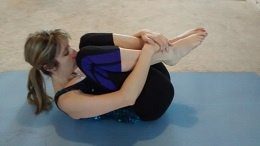
If you’ve been following my site, you understand that I’ve had back pain through most of my entire life. Then, seemingly out of nowhere, my little friend “yoga” softly arrived back on the scene. My pain riddled body seemed to intuitively understand it needed yoga again. I began feeling the requirement to roll over on my back and pull my legs towards my chest, before getting out of bed in the early hours. (The knees-to-chest pose extends your lower back muscles and is a gentle, soothing approach to begin your day.) The reach that was straightforward felt energizing and really good.
There are quite a lot of advantages of yoga, especially for maintaining well-being and managing low back pain. A follow up experiment was conducted after 26 weeks, and those same yoga participants were experiencing increased function and less pain. For me, the continual practice of yoga has relieved my pain to the point that I no more need pain medication to get me.
Other Ways�Yoga Relieves Back Pain
Yoga strengthens abdominal muscles both of which help support the spinal column and builds flexibility in the rear, when practiced regularly.
Holding yoga models, for up to a minute, helps stretch the muscles over time.
Properly stretching�the muscles in the low back reduces stress over the area.
Yoga offers relief from pain, stress and anxiety. All low back pain suffers know this is a vicious cycle. You start with pain that doesn’t go away. You find out there is an anatomical reason for the pain. But, you still have the anxiety, and stress of worrying about how long this may last. Yoga can counter that triple threat.
Yoga improves posture. To maintain a strong, fit, flexible backbone great posture is vital. Seated and standing yoga poses help improve the alignment of the spine and also posture. Proper bearing reduces back pain and removes some of the pressure from your spinal column.
Yoga For Beginners
Thus, let’s get started with a couple of poses which are a cinch to do and great for preserving flexibility in your spine.Try these three poses daily for increased flexibility and your spine will thank you!
Knees to Chest Pose (Picture below)
Lie on your back with legs and arms stretched
Bring both knees to chest as you exhale. Clasp your hands around legs
Back is flat on the floor (mat)
If it’s comfortable for you, gently rock back and forth, which gives you a little massage
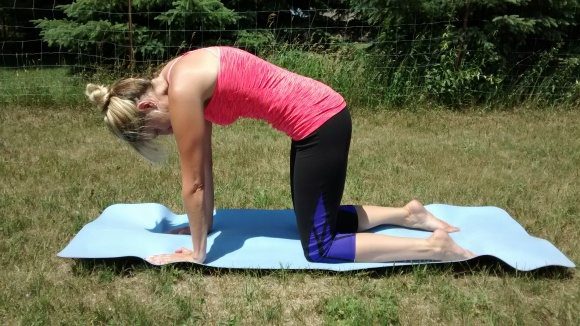
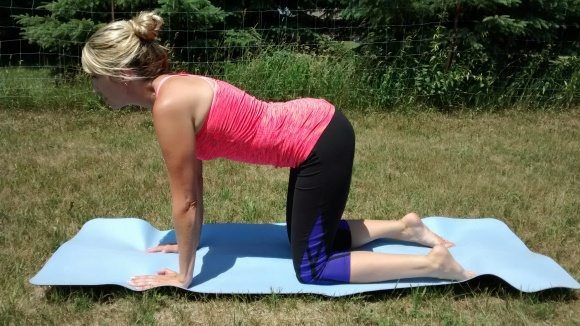
Cat/Cow Pose (Images below)
Begin on all fours in a tabletop�position
Place your hands under your shoulders along with your knees under your hips
Like a cat, round your back up to arch on the exhale
Bring your chin to chest
On the inhale, drop your abdomen and raise your head, extending your sitting bones (sits) back up
Cat Pose
Cow Pose
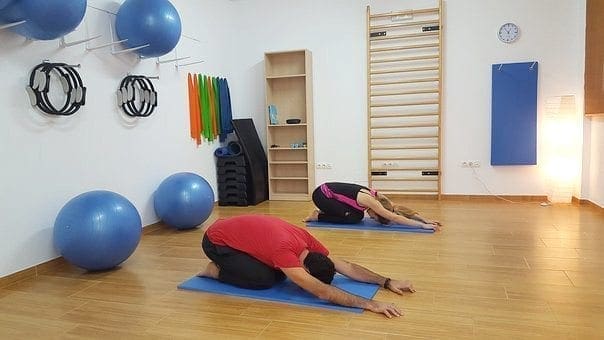
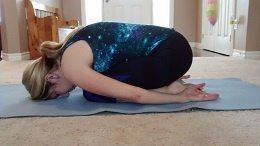
Child’s�Pose (Picture below)
Move from table top to a kneeling position. Rest your arms by your side, press your shoulders down and simultaneously reach your head tall
Slowly lower�your buttocks towards your heels feeling a nice stretch in your lower back/hips.
Let your forehead�rest on the floor
Place arms resting alongside your body
Or you can place�arms above head, gently stretching as they are placed on the floor
If it is easier too, you can widen knees as you stretch out
Those small yoga seeds�put by my first teacher long past � have continued to grow/flourish. I’m a fully certified yoga teacher and revel in sharing my practice with students every week now. May you find peace on your own journey and pain relief too, one pose at a time. Namaste.
IFM's Find A Practitioner tool is the largest referral network in Functional Medicine, created to help patients locate Functional Medicine practitioners anywhere in the world. IFM Certified Practitioners are listed first in the search results, given their extensive education in Functional Medicine