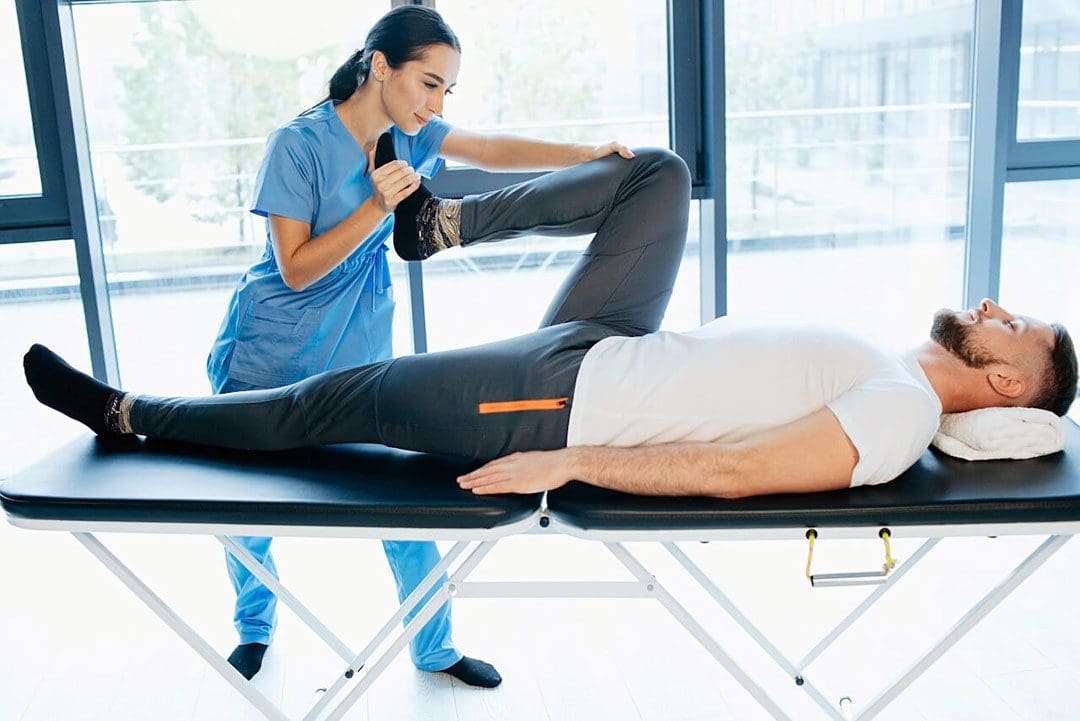
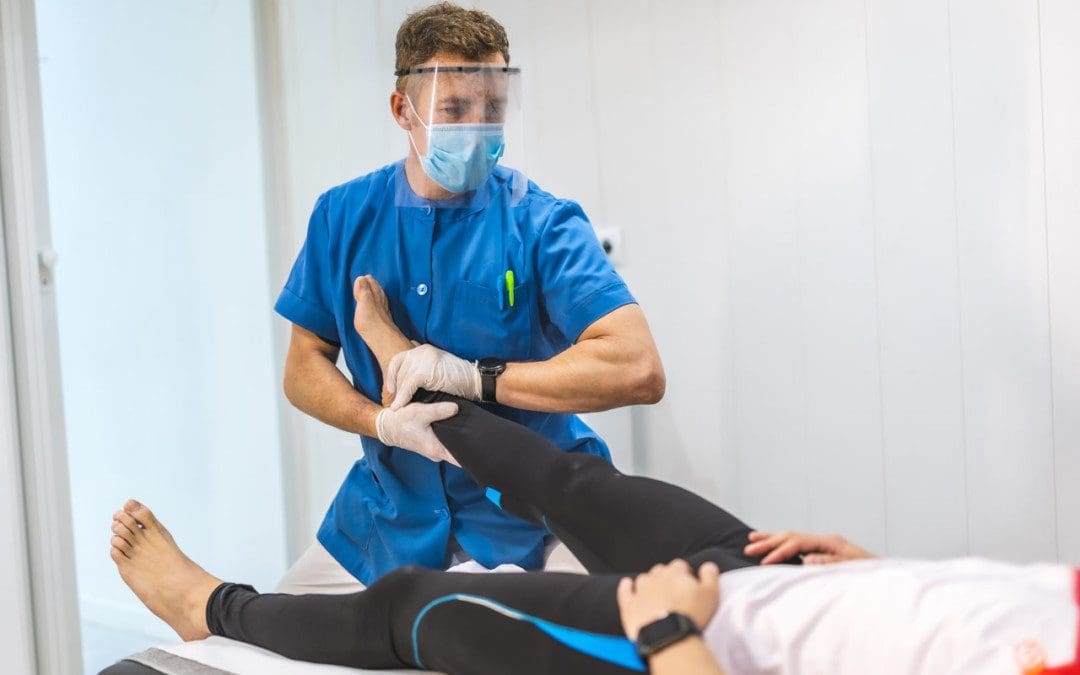
Agility is the ability to accelerate, decelerate, stabilize, and quickly change directions with proper form and posture. Everyone, athletes and non-athletes, use agility every day. This can be maneuvering around objects during a jog, shifting movements or positions when walking through a crowd, reaching toward the highest shelf, or carrying things upstairs. These controlled reactions require a balance of coordination, speed, stamina, and strength. Injury Medical Chiropractic and Functional Medicine Clinic can provide agility enhancement through adjustments, massage, and decompression to relax the body, strengthen the muscles, and improve circulation and nerve function.
Agility Enhancement
Individuals need skill and control to react to a stimulus or movement. Agility requires muscular coordination, efficiency, and cohesiveness between the upper and lower body. Agility and reaction time are two components of neuromusculoskeletal health that work together. Agility enhancement can improve cognitive ability, power production, and physical performance. Agility enhancement improves overall physical skills, including:
Balance
Stability
Coordination
Body Control
Cognition
Recovery time
Chiropractic Care
Chiropractic improves agility neurologically through improved circulation and energy flow in the nervous system.
Injury Treatment and Prevention
Agility enhancement can help with injury prevention, as agility training increases control, balance, and flexibility. It teaches the correct body placement while moving to protect the knees, shoulders, and lower back. It also helps to strengthen the muscles and improve the resiliency of the connective tissue allowing them to shorten and lengthen rapidly. This helps prevent injuries and relieves pain and stiffness associated with muscle overuse.
Stiffness often occurs from the overuse of muscles.
Stiffness reduces flexibility, increasing the risk of injury and affecting movement and physical capabilities.
Stiffness can even occur from changes in everyday routines.
Chiropractic prevents the muscles from tensing up, reducing stiffness and increasing your range of motion.
Chiropractic helps strengthen the musculoskeletal system, which makes it easier to maintain normal balance.
Chiropractic can strengthen the muscles by making the muscle fibers more excitable, contributing to quicker reaction time.
We create rehabilitation and strength and conditioning treatment plans that are individualized for each individual. This program entails the following:
Posture, mobility, and performance education for improved movement.
Health and nutritional recommendations.
Our treatment programs are designed to improve each individual’s whole body health and decrease the risk of injury.
Improve Balance And Agility
References
Ali, Kamran, et al. “Comparison of Complex Versus Contrast Training on Steroid Hormones and Sports Performance in Male Soccer Players.” Journal of chiropractic medicine vol. 18,2 (2019): 131-138. doi:10.1016/j.jcm.2018.12.001
Järvinen, Tero A H, et al. “Muscle injuries: optimizing recovery.” Best practice & research. Clinical rheumatology vol. 21,2 (2007): 317-31. doi:10.1016/j.berh.2006.12.004
Lennemann, Lynette M et al. “The influence of agility training on physiological and cognitive performance.” Journal of strength and conditioning research vol. 27,12 (2013): 3300-9. doi:10.1519/JSC.0b013e31828ddf06
Miners, Andrew L. “Chiropractic treatment and the enhancement of sports performance: a narrative literature review.” The Journal of the Canadian Chiropractic Association vol. 54,4 (2010): 210-21.
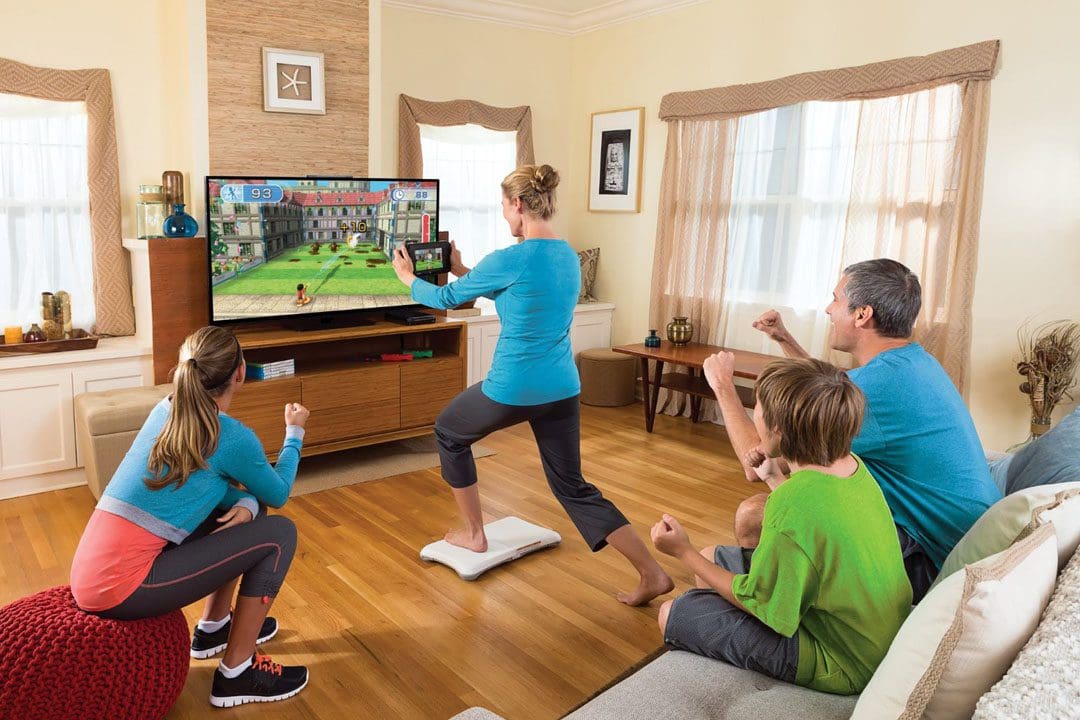
This time of year brings plenty of changes to normal day-to-day activities. We eat more and move less. But it is possible to stay on track while still enjoying the holiday festivities. The key is to balance healthy choices, stay aware of stressors, make a plan for staying healthy and get the whole family involved. The CDC recommends focusing on four areas to maintain family health: physical activity, nutritional habits, sleep, and screen time.
Family Health
Striking a balance between being active and having fun will help to create a more enjoyable and relaxing holiday experience.
Get The Whole Family Moving
Physical activity develops stronger muscles and bones, improves heart health, increases blood circulation, and lowers body fat.
Children ages 3 to 5 years should be active throughout the day.
Children ages 6 to 17 need at least 60 minutes of physical activity daily.
Look for ways to blend fun and physical activity as a family.
If you can get outside, play games like basketball or touch football, walk the dog, or take a nature walk.
Everyone has go-to foods, treats, and drinks they enjoy during the holidays. Restricting or avoiding these pleasures completely isn’t good, as it can lead to binge eating.
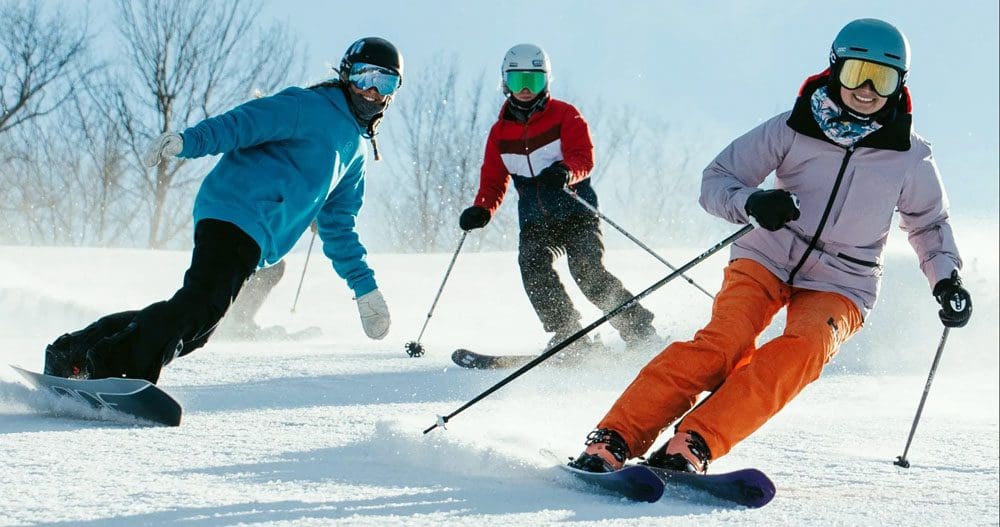
Skiing sports require balance, strength, endurance, and muscle power. It is recommended to start training for ski season about eight to twelve weeks before heading to the slopes. However, any amount of training is better than no training; as long as you stay consistent and focus on exercises that enhance skiing or snowboarding, even a few weeks of fitness training can make a difference. A ski conditioning workout can help you ski better, stay out longer, prevent injuries, and have more fun.
Skiing
Before beginning any training plan, check with your doctor or a certified training professional. The recommended strategy is a cardio and strength workout routine that trains and strengthens the lower-body muscles, including the quads, hamstrings, and glutes. This will improve mobility and balance to help control the skis better and support body parts like the knees, which are more prone to skiing injuries.
General Overview of Training
Increase Muscle Power
Strengthen the quads, glutes, hamstrings, and hips.
Posture and Balance
Train the core and the muscles around the hips, which helps provide stability.
Increase Endurance
Condition the body to handle vigorous conditions.
Increase Cardiovascular Function
Cardiovascular activities include running, biking, or interval training to strengthen the lungs and heart.
Training Schedule
Starting
With skiing, you’ll need a combination of cardio and strength training and enhanced aerobic fitness for the higher altitude.
Individuals are encouraged to start around six to eight weeks before ski season because it takes around that amount of time to experience the benefits.
The muscles need time to recover and repair themselves between sessions.
As aforementioned, you can still exercise even if you have missed the training window.
Pick an enjoyable activity: jogging, biking, and high-intensity interval training/HITT.
The goal should be 30 minutes of cardio activity 2-3 times a week to prepare the heart and lungs for downhill runs.
Recommended workouts for getting into ski shape:
Elliptical trainer – The elliptical trainer is highly recommended for ski training, as it mimics the same upper-body and lower-body movements used in Nordic skiing.
This could be a short session on a treadmill, jumping jacks, or a quick jog.
Guidelines as you progress through the workout:
Inhale during initial exertion, and exhale as you return to the starting position.
Maintain breathing patterns during faster exercises.
Rest at the end of each exercise.
Walking Lunge with Rotation Exercise
This exercise works the glutes, quads, hamstrings, and abdominals and improves core rotation.
Stand with your feet slightly apart.
Step one foot forward into a lunge.
As you step forward, rotate your body to the side in the direction of your lead knee.
Arms should be at chest height, slightly elevated from the sides.
Drive up and through your forward leg to take the next lunge.
Repeat ten times on each side for a total of 20.
Tips and modifications:
If you don’t have enough space, you can stay in one spot and alternate lunging.
Make it easier by keeping the back leg straight.
Make sure that your knees do not go inward.
Stay in a straight line with your foot and hip.
Lateral Ski Jump Exercise
This power exercise prepares for the explosive ski movements and energy bursts needed to control the descent.
Stand with your feet hip-width apart and knees slightly bent, balancing on one leg.
Jump to the side, landing on the other leg.
Think about landing softly with your knee slightly bent.
Jump to the other side, landing softly on the other leg.
Swing the arms sideways across your body like a speed skater.
Repeat 15 on each side.
Tips and modifications:
Make smaller jumps to the side
Move slower
Touch your toe to the ground instead of keeping it off the floor.
Chop Exercise
This exercise will strengthen the core to initiate turns using the core rather than the arms or shoulders and help prevent lower back pain.
Use a resistance band that you can secure slightly above the shoulders.
Stand sideways to where the band is anchored.
Position yourself so that you can reach up evenly with your shoulder to grab the free end of the band with both hands.
Your knees should be slightly bent.
Pull the band down across your body while turning your body.
Think about the trunk doing most of the work for this exercise, not the arms and shoulders.
Keep your arms as straight as you can as you pull the band down
The arms should act as guides, with the obliques and back muscles generating the pulling and rotating power.
Do this 15 times, then repeat facing the other way.
Rest for 90 seconds before moving on to the next exercise.
Tips and modifications:
Adjust the band resistance level by shortening it to increase resistance or lengthening it to ease resistance.
The goal is to feel tired at the end of the reps but not so exhausted that you struggle to finish.
Hip Roll Exercise
This exercise strengthens the muscles of the hips, including the glutes, to help prevent knee pain. There’s a direct relationship between hip strength and knee control. When hip strength is weak, the knees tend to shift inward.
Stand on your left leg.
Lean your body forward at the hips, keeping the back straight.
Lift your right leg back behind you, slightly off the ground.
Rotate or roll your hip away from your standing foot.
Maintain the body in a straight line as you roll your hips back.
Repeat 10-15 times on each side.
Tips and modifications:
If balancing is difficult, hold on to the back of a chair or keep your toes on the ground.
Whether you’re going alpine or Nordic skiing, these are just a few exercises designed to help all types and levels of recreational skiers and snowboarders. Always check with your doctor before starting any exercise routine, and it is recommended to consult a ski instructor or personal trainer for more comprehensive and intense workouts.
Ski Team Workout
References
Laskowski, E R. “Snow skiing.” Physical medicine and rehabilitation clinics of North America vol. 10,1 (1999): 189-211.
Nagle, Kyle B. “Cross-Country Skiing Injuries and Training Methods.” Current sports medicine reports vol. 14,6 (2015): 442-7. doi:10.1249/JSR.0000000000000205
Steadman, J R et al. “Training for Alpine skiing.” Clinical orthopedics and related research,216 (1987): 34-8.
Therell, Terese, et al. “Effects of Core Strength Training on Skiing Economy in Elite Junior Cross-Country Skiers.” Research quarterly for exercise and sport vol. 93,3 (2022): 608-614. doi:10.1080/02701367.2021.1887441
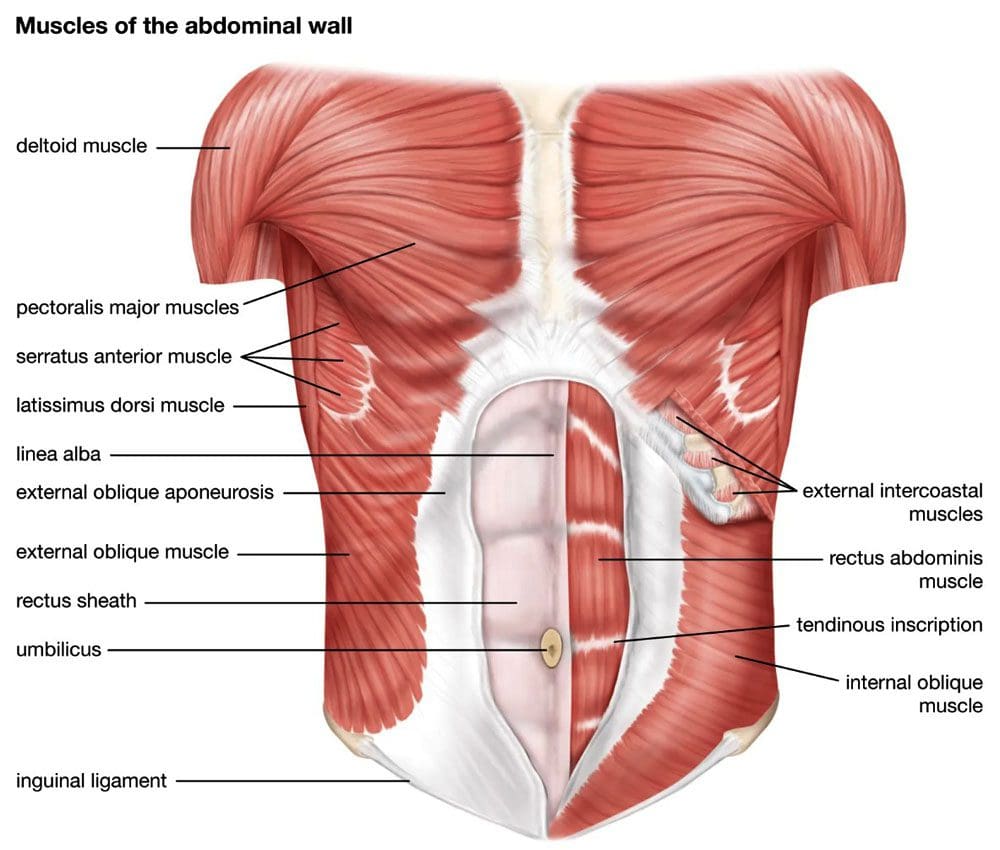
The 0blique muscles support and aid in side-to-side movement, helping maintain back strength and healthy posture. There are two oblique muscle sets, the internal and external obliques. Maintaining a strong core is one recommended way to protect the body and spine. However, many forget to train and strengthen all of the oblique muscles. Individuals tend to focus on the superficial core muscle, or rectus abdominis, and not enough or any attention goes to the lateral stabilizers or the internal and external obliques. Chiropractic and functional medicine can restore musculoskeletal flexibility, mobility, and function.
Oblique Muscles
The external obliques make up a large part of the trunk area. There are two external obliques on either side of the body, located on the lateral sides of the abdominal region. These muscles have an essential role in daily movements.
External
External obliques help with trunk rotation and support spine rotation.
They assist with pulling the chest down to compress the abdominal cavity.
They help with bending from side to side.
Any strain or injury to these muscles can lead to abdominal, hip, and back issues.
Maximizing external oblique strength is important to maintain a strong core.
Internal
The internal oblique is a muscle deep within the lateral side of the abdomen.
The internal oblique muscle is one of the main stabilizers and functions to flex the trunk and compress the chest.
Its positioning makes it invisible, but it still has an essential role in body movement.
This muscle can function bilaterally, meaning both sides can operate at the same time.
These muscles provide spinal and posture support.
Strain or injury in this area can cause posture problems and abdominal, hip, and back issues.
Rotation and Mobility
The internal and external obliques are the primary rotators of the spine and provide thoracic spine mobility.
The internal obliques work with the external obliques and the rectus abdominis for lateral spine flexion of the quadratus lumborum and lumbar paraspinals.
They attach to the diaphragm, transverse abdominis, and thoracolumbar fascia, contributing to core stabilization.
A quadratus lumborum muscle spasm can result from muscle inhibition in the obliques.
Inhibition
If the internal obliques are inhibited, compensation can cause an alteration in the sequence patterns of the posterior oblique subsystem.
When this system is not functioning correctly, individuals usually complain of discomfort in the hips and shoulders.
A common sign of oblique inhibition is individuals holding their breath during basic movement patterns to gain stability, indicating dysfunction in the intrinsic stabilization subsystem.
Simple movements include walking gait, single-leg stance, flexion, extension, etc.
If you are experiencing waistline, hip, and low back stiffness or tightness and pain, consult our professional chiropractic team. We’re ready to help!
Oblique Anatomy and Movement
References
Calais-Germain, Blandine, and Stephen Anderson. Anatomy of Movement. Seattle: Eastland, 1993.
Cook G. Movement: Functional Movement Systems: Screening, Assessment, and Corrective Strategies. Aptos, CA: On Target Publications, 2010.
Elphinston J. Stability, Sport and Performance Movement: Practical Biomechanics and Systematic Training for Movement Efficacy and Injury Prevention. Lotus Publishing, 2013.
Huxel Bliven, Kellie C, and Barton E Anderson. “Core stability training for injury prevention.” Sports health vol. 5,6 (2013): 514-22. doi:10.1177/1941738113481200
Myers TW. Anatomy Trains: Myofascial Meridians for Manual and Movement Therapists. Edinburgh: Churchill Livingstone, 2001.
Neumann DA. Kinesiology of the Musculoskeletal System: Foundations for Physical Rehabilitation. St. Louis: Mosby, 2002.
Starrett K, Cordoza G. Becoming a Supple Leopard: The Ultimate Guide to Resolving Pain, Preventing Injury, and Optimizing Athletic Performance. Las Vegas: Victory Belt Pub., 2013.
Weinstock D. NeuroKinetic Therapy: An Innovative Approach to Manual Muscle Testing. Berkeley, CA: North Atlantic, 2010.
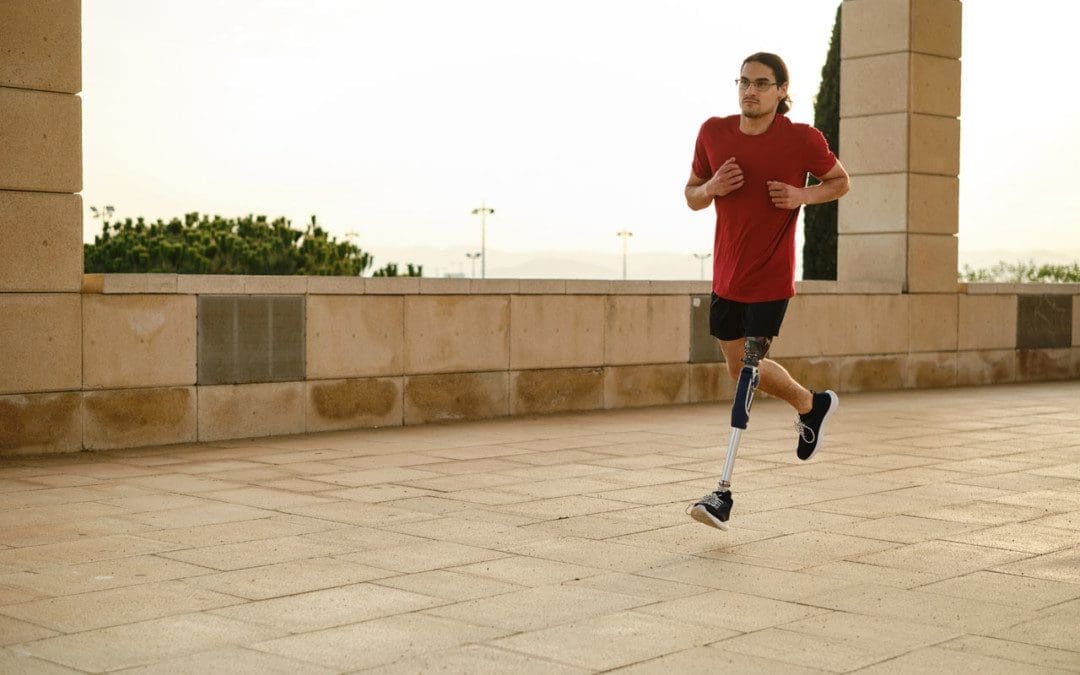
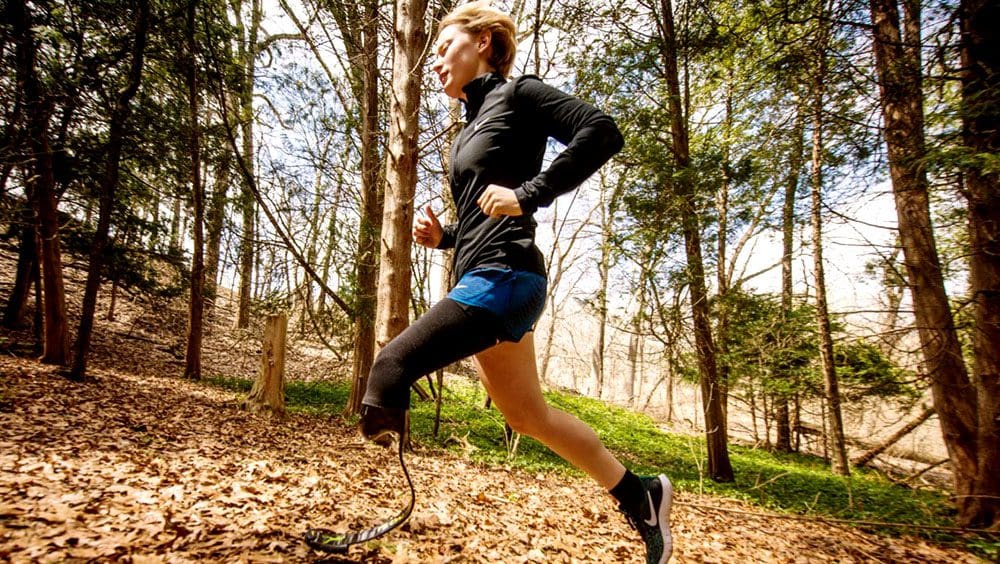
Before you begin running, talk with your physician, prosthetist, and other clinicians involved in your rehabilitation/health care treatment. Learning to use a prosthetic takes time and practice. Individuals that meet the minimum recommendations for running and have mastered walking on a prosthesis can begin running. The world of sports prosthetics has realized technological advancements to become highly refined and targeted for all levels of competition.
Before Running Recommendations
Every individual has specific healthcare needs, and guidelines should be considered to prevent injuries.
To become a runner and progress to a good runner, individuals need to focus on strengthening their legs to build endurance levels to meet the energy demands.
Working with a sports chiropractic and physical therapy team is recommended to build, strengthen, and condition the muscles and develop healthy posture and walking habits.
Skin Health
Talk with your healthcare team to ensure the skin can withstand the forces while running. If limb skin quality is insufficient, running can result in sores and blisters that prevent wearing a prosthesis until they heal. Other considerations include the following:
The incision should be healed.
All stitches and staples have been removed.
There should be no drainage.
Ensure there are no open wounds or blisters.
Bone Health
Research suggests in some cases that a decrease in bone density/osteopenia or osteoporosis of the residual limb can occur after amputation.
This can result in pain when applying weight through the residual limb.
Some amputations can result in heterotopic ossification – bone growth in the soft tissues outside the normal skeleton.
If heterotopic ossification is causing symptoms, it is not recommended to run and talk to your physician and prosthetist about options.
Proper Fitting of Prosthetic
Suboptimal socket fit can result in an altered gait.
If there is any compensation when walking, the gait deviations will be exacerbated when running.
Gait deviations can result in abnormal loading, resulting in injuries.
Talk to your prosthetist about the fit if it is less than optimal.
It is recommended to participate in gait training with a chiropractic physical therapy team to learn to walk with proper form.
Balance and Agility
Agility drills are recommended to transition from walking to running.
They help coordinate the limbs and can be done with a regular prosthesis.
Agility and balance exercises promote stability in the socket to become more stabilized during quick movements.
They can help to prevent balance-related falls.
When working on balance, do it in a safe environment with a friend, family, or something to hold on to.
Strength Training
The unaffected leg will now be the main powerhouse, so the focus needs to be on strengthening all the muscles in that leg.
If you have bilateral amputations or both legs, the hips will be the powerhouse for running. It needs to generate all the force to propel the body forward.
Individuals with a below-knee amputation will also have the hamstrings to help out.
Hip musculature needs to be strong to meet running demands.
Without proper strength, the body will compensate in various ways, which can lead to injuries.
Endurance
Endurance training is essential.
A high level of endurance is required before training to run to meet the energy demands.
Running on a prosthesis requires more energy. It could be recommended to use a running prosthesis instead of the everyday prosthesis. The energy needed to run is:
Greater for individuals with amputations above the knee than those below the knee.
Even greater for those with amputations on both sides.
Asymmetry
Asymmetrical loading is a common problem when running with a prosthesis. Runners want to use the unaffected limb more than maintain balance for reasons that include:
Not trusting the prosthetic.
Discomfort when loading the residual limb.
Not enough strength in the residual limb.
Unbalanced amounts of force from impact can result in injuries.
Practice Schedule
In the first week, asses how the socket fits and if there is any discomfort.
If something does not feel correct, check with your prosthetist.
Don’t run for more than 10 minutes in the beginning without stopping to check the skin to see if any red spots appear.
The pressure will be increased, so be aware of anything irritating or rubbing the skin.
Individuals who had their amputations some time ago may be able to tolerate the load more easily at the beginning than individuals who recently had an amputation.
Too much too soon can result in injuries.
Slowly ease into running and give the limbs and body time to adapt to the physical and mental stress.
Running With A Prosthetic Limb
References
Beck, Owen N et al. “Reduced prosthetic stiffness lowers the metabolic cost of running for athletes with bilateral transtibial amputations.” Journal of applied physiology (Bethesda, Md.: 1985) vol. 122,4 (2017): 976-984. doi:10.1152/japplphysiol.00587.2016
Bragaru, Mihai, et al. “Sport prostheses and prosthetic adaptations for the upper and lower limb amputees: an overview of peer-reviewed literature.” Prosthetics and orthotics international vol. 36,3 (2012): 290-6. doi:10.1177/0309364612447093
Kanas, Joanne L, and Mark Holowka. “Adaptive upper extremity prostheses for recreation and play.” Journal of pediatric rehabilitation medicine vol. 2,3 (2009): 181-7. doi:10.3233/PRM-2009-0082
Matthews, D et al. “Return to sport following amputation.” The Journal of sports medicine and physical fitness vol. 54,4 (2014): 481-6.
Meyers, Carolyn, et al. “Heterotopic Ossification: A Comprehensive Review.” JBMR plus vol. 3,4 e10172. 27 Feb. 2019, doi:10.1002/jbm4.10172
Morgan, Sara J et al. “Mobility with a lower limb prosthesis: experiences of users with high levels of functional ability.” Disability and rehabilitation vol. 44,13 (2022): 3236-3244. doi:10.1080/09638288.2020.1851400
It is difficult for individuals to achieve health and fitness goals when they don’t like to eat vegetables. Intermittent fasting, Paleo, vegan, Mediterranean, or New Nordic, almost all healthy nutrition plans require vegetable consumption to achieve optimal health. However, it is never too late to learn to enjoy vegetables. Injury Medical Chiropractic and Functional Medicine Clinic can recommend ways not just to eat vegetables because they are healthy but to truly enjoy them.
Training Oneself To Enjoy Vegetables
Everyone’s taste preferences are different.
Many individuals grew up in homes where vegetables were prepared in unappetizing ways.
Over boiling and steaming are common preparation methods that many had experience with, including broccoli, cauliflower, asparagus, and Brussels sprouts, which made them flavorless, mushy and is where many decided they were not going to eat these foods.
Vegetables are full of nutrients that are very beneficial to the body.
Vegetables contain antioxidants, vitamins, minerals, fiber, and phytonutrients.
These nutrients help keep the mind and body healthy and avoid deficiencies.
Vegetables add fiber that provides a feeling of fullness by giving volume to fill the stomach without added calories.
This controls energy balance/calories in vs. calories out, which helps shed body fat without feeling hungry and maintain body weight.
Vegetables feed the intestinal bacteria that help the digestive tract.
Vegetables provide hydration that helps the fiber eliminate waste products.
Vegetables add variety to help maintain healthy nutrition.
Branching Out
The key is to branch out incrementally. Most individuals will have a vegetable or two that they can tolerate. This could be a starting point by expanding on new variations on those tolerable vegetables that will lead to broadened taste preferences. This can be done through different cooking methods that include:
Regardless of where you’re starting, there are simple ways to make the vegetable bitterness less intense, more palatable, and more enjoyable that consists of:
Vegetable Challenge
Vegetable Complement
Vegetable Cushion
Vegetable Challenge
Pick a vegetable that you would not normally eat that requires effort to try.
Motivate yourself to try it – health reasons, children, family, friends, etc.
Take a small bite; you may hate it, like it, or it has no effect.
You at least tried it.
Research suggests that individuals may need to try new foods many times (prepared differently) before tolerating or liking them.
It means pairing food with a vegetable to activate various tastes and flavors pleasing to the palate simultaneously.
Vegetable Cushion
On the tongue are a variety of receptors that bind to the chemicals in food.
When these receptors are activated, they send a chemical signal to the brain about the taste.
Variations in the number and type of receptors help develop flavor preferences.
Basic tastes – sweet, sour, spicy, salty, bitter, and umami.
Pairingbitterness with other distinct flavors, like sweet and spicy, can develop and change the brain’s perception of bland or bitter vegetables to tasty and delicious.
Cushions for bitterness include honey, real maple syrup, sour cream, Mexican crema, hot sauce, oils, almonds, and butter used in balance to enhance and bring out flavors.
The objective is to start small and work your way to becoming more comfortable with experimenting and combining more flavors. Consultation with a professional nutritionist can help individuals get on a healthy nutrition plan that they can enjoy.
Tip From A Dietitian
References
Christoph, Mary J et al. “Intuitive Eating is Associated With Higher Fruit and Vegetable Intake Among Adults.” Journal of nutrition education and behavior vol. 53,3 (2021): 240-245. doi:10.1016/j.jneb.2020.11.015
Melis M, Yousaf NY, Mattes MZ, Cabras T, Messana I, Crnjar R, Tomassini Barbarossa I, Tepper BJ. Sensory perception of salivary protein response to astringency as a function of the 6-n-propylthioural (PROP) bitter-taste phenotype. Physiol Behav. 2017 Jan 24;173:163-173.
Mennella JA. Development of food preferences: Lessons learned from longitudinal and experimental studies. Food Qual Prefer. 2006 Oct;17(7-8):635-637.
Tordoff, Michael G, and Mari A Sandell. “Vegetable bitterness is related to calcium content.” Appetite vol. 52,2 (2009): 498-504. doi:10.1016/j.appet.2009.01.002
Wallace, Taylor C et al. “Fruits, vegetables, and health: A comprehensive narrative, umbrella review of the science and recommendations for enhanced public policy to improve intake.” Critical reviews in food science and nutrition vol. 60,13 (2020): 2174-2211. doi:10.1080/10408398.2019.1632258
Wieczorek, Martyna N et al. “Bitter taste of Brassica vegetables: The role of genetic factors, receptors, isothiocyanates, glucosinolates, and flavor context.” Critical reviews in food science and nutrition vol. 58,18 (2018): 3130-3140. doi:10.1080/10408398.2017.1353478
Long-distance running, also known as endurance running, is a great way to improve fitness and relieve stress. Health experts say long-distance runners’ benefits include strong cardiovascular health, low cholesterol, healthy blood pressure levels, and improved metabolism. However, it is not easy and requires specific training, but it is not impossible even for beginners. Here is a beginner long-distance running training guide that goes over the fundamental areas needed to develop.
Long Distance Running Training
Running is a great form of cardio that offers several health benefits that, includes:
Weight loss
Stronger muscles
Stronger bones
Improved cardiovascular functionality
One of the main prerequisites is building up the body’s ability to handle the exercise. To reach the full potential as a distance runner, key areas that need developing include:
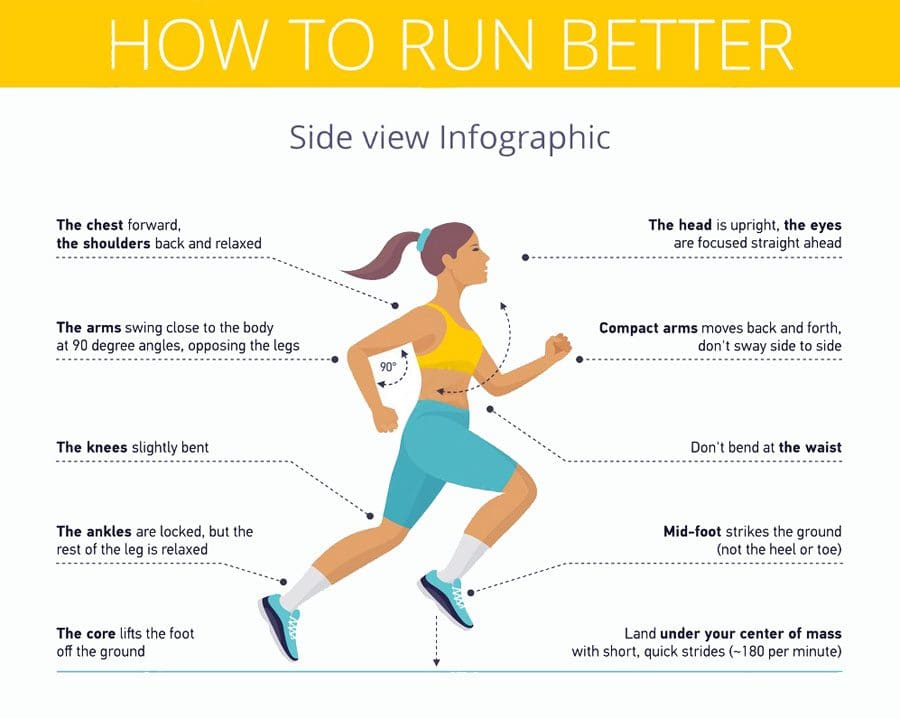
Running technique is essential for gaining the most speed and endurance. Using the correct form, the body is not expending unnecessary energy. The proper running form includes:
Maintaining an upright spine with the head, shoulders, and hips aligned.
Focus on maintaining a steady breathing rhythm.
Follow through on strides.
Do not cut the movements short.
Find your natural stride, which could be leading with the heel or running toe to heel.
Consult an experienced running coach or exercise physiologist for assistance in finding your running form.
Long-Term Goal
The body adapts to the stress of training slowly and over time.
Physiological adaptations cannot be rushed; however, the training program can be optimized to individual needs.
The minimum time before seeing an improvement from training is around six weeks.
Gradual Increase
Training load is a combination of distance, intensity, and the number of runs each week.
The body can only develop with moderate increases over a short time.
Increasing the load too much and too fast leads to injury, illness, and exhaustion.
Limiting distance, intensity, or frequency changes is recommended no more than once a week.
Recovery
Training provides the stimulus to improved fitness, but the body needs recovery time to grow and adapt.
Often beginners want to train hard every day, trying to cover all the elements at once.
This common mistake slows progress and can cause various injuries, fatigue, and loss of motivation.
Rest days are essential to allow the body to recover, develop, adapt, and continue to progress healthily.
The classic training program alternates a hard training day with an easy day or a rest day.
Two consecutive hard training days can be done as long as they are followed by two full recovery days.
Beginner Tips
References
Berryman, Nicolas, et al. “Strength Training for Middle- and Long-Distance Performance: A Meta-Analysis.” International journal of sports physiology and performance vol. 13,1 (2018): 57-63. doi:10.1123/ijspp.2017-0032
Blagrove, Richard C et al. “Effects of Strength Training on the Physiological Determinants of Middle- and Long-Distance Running Performance: A Systematic Review.” Sports medicine (Auckland, N.Z.) vol. 48,5 (2018): 1117-1149. doi:10.1007/s40279-017-0835-7
Kenneally, Mark, et al. “The Effect of Periodization and Training Intensity Distribution on Middle- and Long-Distance Running Performance: A Systematic Review.” International journal of sports physiology and performance vol. 13,9 (2018): 1114-1121. doi:10.1123/ijspp.2017-0327
Tschopp, M, and F Brunner. “Erkrankungen und Überlastungsschäden an der unteren Extremität bei Langstreckenläufern” [Diseases and overuse injuries of the lower extremities in long distance runners]. Zeitschrift fur Rheumatologie vol. 76,5 (2017): 443-450. doi:10.1007/s00393-017-0276-6
van Poppel, Dennis, et al. “Risk factors for overuse injuries in short- and long-distance running: A systematic review.” Journal of sport and health science vol. 10,1 (2021): 14-28. doi:10.1016/j.jshs.2020.06.006
IFM's Find A Practitioner tool is the largest referral network in Functional Medicine, created to help patients locate Functional Medicine practitioners anywhere in the world. IFM Certified Practitioners are listed first in the search results, given their extensive education in Functional Medicine

 Agility Enhancement
 Family Health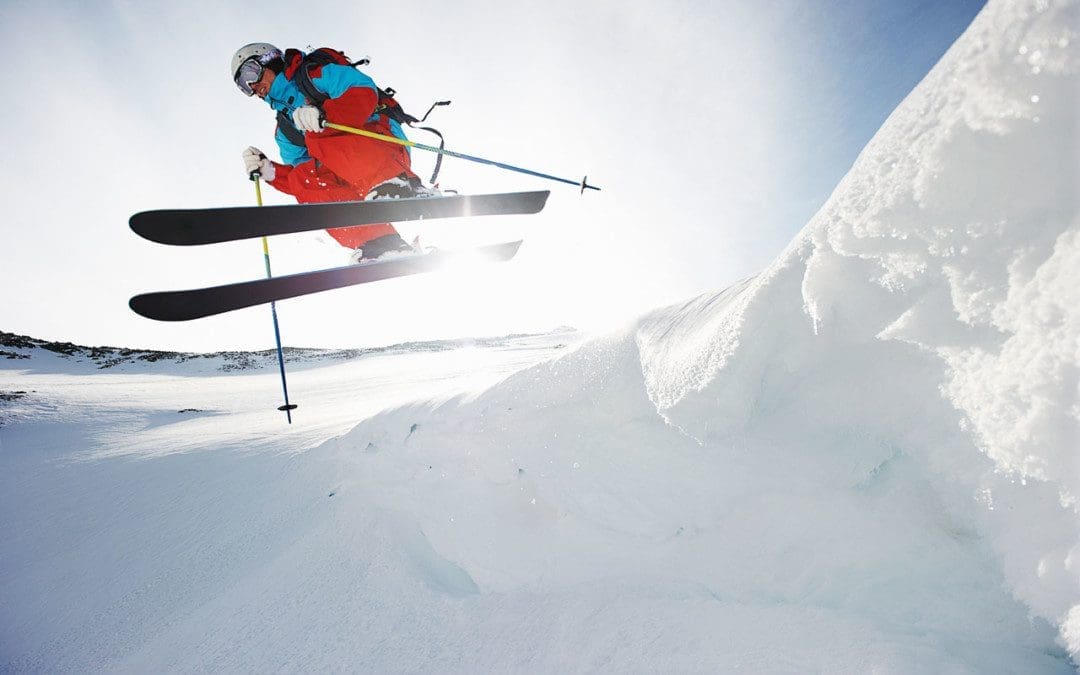
 Oblique Muscles