It can be difficult for individuals and athletes to stay motivated, manage stress and prevent becoming overwhelmed. Can mental toughness and a positive attitude help increase potential and performance levels?
Mental Toughness
Athletes and fitness enthusiasts work on conditioning, skills training, and perfecting techniques. Physical training can take individuals far but another necessary part of maximizing athletic potential is building mental toughness and having the right attitude. Like anything, mental training takes time, effort, and regular adjustments to find ways to shift a losing or bad attitude into a positive one that can bring out the best.
Attitude Is Important
If negativity begins to set in like dealing with an injury, getting rid of self-limiting beliefs can be difficult, as well as generate optimism to rise up and succeed. For athletes or individuals who enjoy competitive sports, developing a positive mental attitude will help with:
Emotions that can affect cognitive functioning strategies.
Energy levels.
Other aspects of physical performance.
Mental Strategies
Mood Improvement
Individuals frustrated by a pessimistic perspective tend to dwell on problems or issues. To shift into a positive mood do something to lift your spirits, even if you don’t think it will help.
Listen to your favorite or uplifting music.
Watch an inspirational movie.
Read a sports psychology book.
Get together or call a teammate or friend that are cheerful and upbeat.
Play different games just for fun.
Take a break, go to the park, walk around, and meditate.
Get into hobbies.
Relax with a therapeutic massage.
Positive Self Talk
Continuing sports psychology research shows that practicing positive self-talk can improve athletic performance. (Nadja Walter, et al., 2019) Sports psychologists describe this through the idea that thoughts create beliefs, that drive actions.
Positive self-talk can take different forms.
For some reciting a specific phrase, sentence, or a single word can effectively manage thoughts, push out the negativity, and focus on taking care of business. Anything that inspires can include:
Focus
Remember the fundamentals!
You know what to do!
You can do it!
You got this!
Research shows that positive self-talk reduces anxiety and increases self-confidence, optimization, efficacy, and performance. (Nadja Walter, et al., 2019) However, self-talk needs to be practiced and part of a regular routine to be effective.
Visualization
Another strategy is using visualization exercises.
This could be using all the senses to imagine the venue where the tournament is taking place, the sound of the crowd, the smells, how the ground or court feels, and/or how the ball or specific sports object feels.
The wisdom is if you can think it, you can do it, once that is determined apply strategies to get there.
Sports Injury Rehabilitation
References
Walter, N., Nikoleizig, L., & Alfermann, D. (2019). Effects of Self-Talk Training on Competitive Anxiety, Self-Efficacy, Volitional Skills, and Performance: An Intervention Study with Junior Sub-Elite Athletes. Sports (Basel, Switzerland), 7(6), 148. https://doi.org/10.3390/sports7060148
Reiser, M., Büsch, D., & Munzert, J. (2011). Strength gains by motor imagery with different ratios of physical to mental practice. Frontiers in psychology, 2, 194. https://doi.org/10.3389/fpsyg.2011.00194
For individuals about to engage in physical activity or exercise, how does warming up the body help prepare for the work ahead?
Central Nervous System Activation
A proper warm-up before physical activity or working out prepares the mind and body to reduce risks of injury, mentally and physically transition to physical activity work, and enhance performance. A well-designed warm-up also primes the central nervous system/CNS for activity. The central nervous system transmits messages to the muscles to prepare them for action. Central nervous system activation increases motor neuron recruitment and engages the sympathetic nervous system so the body can better handle the physical stressors. The process may seem complex, but priming the nervous system is as simple as warming up with light aerobic activity before getting into more explosive movements.
CNS
The CNS consists of the brain and spinal cord. This central communication system uses another part of the nervous system known as the peripheral nervous system or PNS to transmit and receive messages throughout the body. The PNS is connected to the entire body and the brain and spinal cord (CNS).
Nerves run throughout the body, receiving signals from the CNS to the muscles, fibers, and organs, transmitting various information back to the brain. (Berkeley University. N.D.)
There are two types of systems within the peripheral nervous system – somatic and autonomic.
Somatic nervous system actions are those controlled by the person through voluntary actions like choosing to pick something up.
Properly preparing the body for an intense strength training session or other physical activity needs the correct messages to be sent through the autonomic nervous system.
Parasympathetic and Sympathetic States
The autonomic nervous system consists of two subcategories, which are parasympathetic and sympathetic.
The sympathetic nervous system helps the body get ready to face stress which includes physical stress. (R. Bankenahally, H. Krovvidi. 2016)
The fight, flight, or freeze response describes the sympathetic nervous system’s aspect.
The parasympathetic nervous system is responsible for relaxation and de-stressing.
Individuals are recommended to perform a few calming movements and actions after a workout to return the body to a parasympathetic state. This can be:
Activating the CNS can increase performance and prevent injuries. The process wakes up and alerts the body for the activity. Individuals are recommended before beginning a training session, to communicate to the body about the physical stress it is about to endure and to prepare for the work ahead. This is a concept known as post-activation potentiation/PAP. (Anthony J Blazevich, Nicolas Babault. 2019) PAP helps increase force and power production, which enhances physical performance.
Whenever an individual trains, the brain adapts and learns what the body is doing and the purpose of the training.
Muscle memory describes this interaction.
Individuals who have started up a new strength training routine or after an extended break report feeling awkward for the first few sessions, or even weeks, depending on their experience. (David C Hughes, Stian Ellefsen, Keith Baar, 2018)
However, after a few sessions, the body is more adept at performing the movements and ready to increase resistance, repetitions, or both.
This has to do with the neural drive and muscle memory than it has to do with true potential physical abilities. (Simon Walker. 2021)
The first step is a general warm-up that should use large muscle groups and be of low intensity so as not to exhaust the body before beginning the actual training. General warm-up benefits central nervous system activation and the entire body include: (Pedro P. Neves, et al., 2021) (D C. Andrade, et al., 2015)
Increases blood circulation.
Assists the release of oxygen from hemoglobin and myoglobin.
Warms the muscles, so they contract more effectively.
Increases nerve impulse speed.
Increases nutrient delivery.
Lowers joints’ resistance through increased synovial fluid/joint lubrication.
Increases joint range of motion.
Improves joint resiliency.
Removes metabolic waste quicker.
Reduces risk of injury.
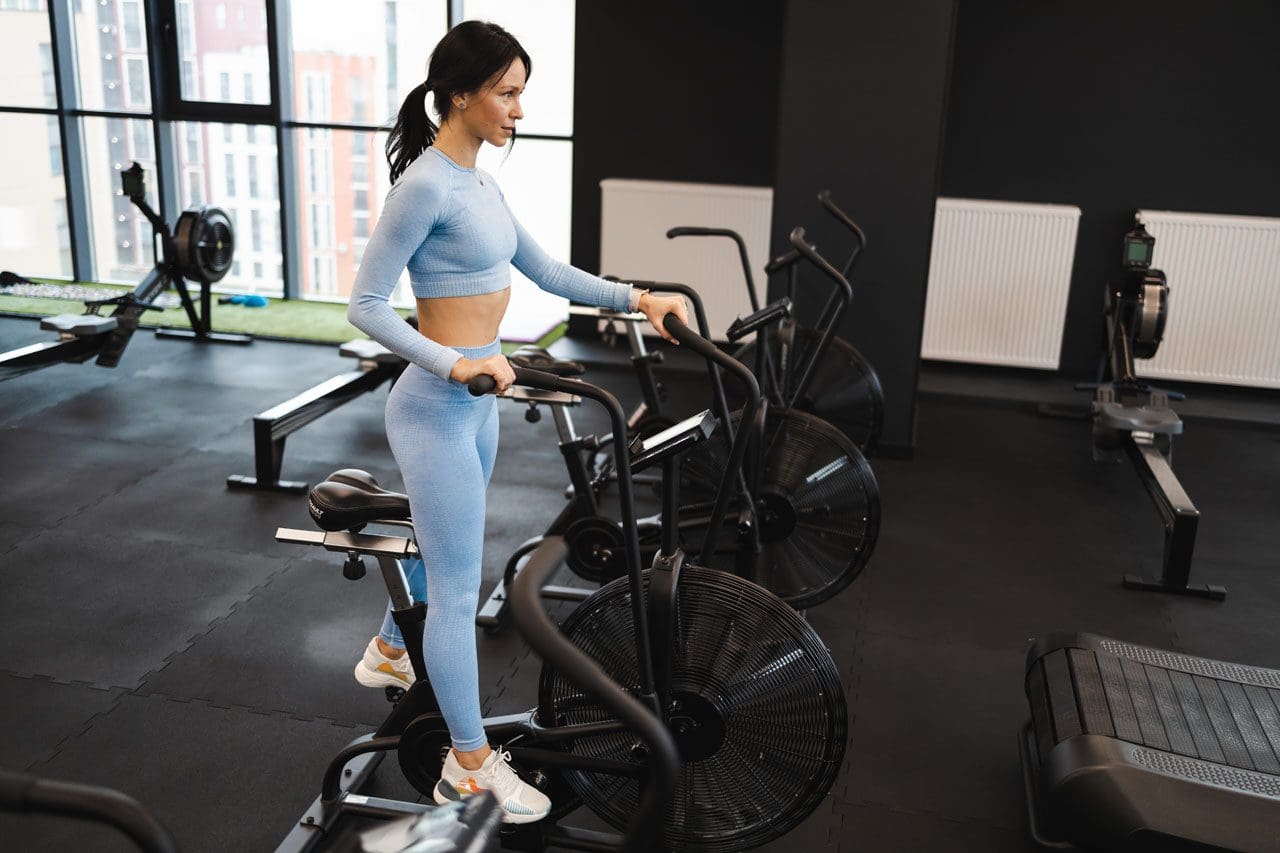
A general warm-up can be simple as any aerobic activity will work. This can include:
Performing bodyweight movements – light jumping jacks or jogging in place.
Treadmill
Rowing machine
Stair climber
Elliptical trainer
It is recommended to use the rating perceived exertion scale/RPE to determine the general warm-up effort. An exertion rating of between 5 to 6 is equivalent to moderate walking or a slow jog. Individuals should be able to speak clearly without taking a pause.
Try this strategy before the next workout to see increased performance and reduced injury risks.
Blazevich, A. J., & Babault, N. (2019). Post-activation Potentiation Versus Post-activation Performance Enhancement in Humans: Historical Perspective, Underlying Mechanisms, and Current Issues. Frontiers in physiology, 10, 1359. https://doi.org/10.3389/fphys.2019.01359
Hughes, D. C., Ellefsen, S., & Baar, K. (2018). Adaptations to Endurance and Strength Training. Cold Spring Harbor perspectives in medicine, 8(6), a029769. https://doi.org/10.1101/cshperspect.a029769
Walker S. (2021). Evidence of resistance training-induced neural adaptation in older adults. Experimental gerontology, 151, 111408. https://doi.org/10.1016/j.exger.2021.111408
Andrade, D. C., Henriquez-Olguín, C., Beltrán, A. R., Ramírez, M. A., Labarca, C., Cornejo, M., Álvarez, C., & Ramírez-Campillo, R. (2015). Effects of general, specific, and combined warm-up on explosive muscular performance. Biology of sport, 32(2), 123–128. https://doi.org/10.5604/20831862.1140426
Tennis requires strength, power, and endurance. Can combining tennis weight training into a player’s fitness regimen that is broken up into phases achieve optimal results?
Tennis Weight Training
In professional sports that utilize weight lifting, the training is often broken up into seasonal phases. (Daniel S Lorenz, Michael P Reiman, John C Walker. 2010) Each phase consists of specific objectives that contribute to and build upon the previous phase. This is known as periodization. Tennis is played year-round indoors and outdoors. This is an example of a tennis weight training program to build up strength.
Pre-Season
In the early pre-season, players prepare to rebuild their strength after a break.
The emphasis is on building functional strength and some muscle.
Late Pre-Season
In late pre-season, players workout to get ready for the start of the season.
Here, the emphasis is on building maximum power.
In Season
In season, regular practice, play, and competition get underway and players are in top condition.
In this phase, strength and power maintenance is the focus.
Season Break
This is when players need to relax for a while.
However, players need to keep active if they want to maintain some level of fitness.
The emphasis is on rest and recovery with the maintenance of light activity, like cross-training and light gym workouts.
Research has shown that taking a break from serious strength training does help the body recover and rebuild. (Daniel Lorenz, Scot Morrison. 2015)
This is a three-phase all-around program.
The first phase concentrates on building basic strength and muscle
The second phase on power delivery.
Players who play year-round can continue with the power program once they build the basics.
Players who take a break for longer than six weeks should start again with the strength program.
Pre-Season – Phase One
Strength and Muscle
The focus is on lifting heavy weights, but not going full force to begin training the nervous system to work with the muscle fibers.
Some muscle building or hypertrophy/building muscle size will happen during strength development.
Strength is the foundation for the power development phase.
Exercises:
Duration: 6-8 weeks
Workout Days: 2-3, with at least one day, however, two are recommended between sessions.
Reps: 8-10
Sets: 2-4
Rest between sets: 1-2 minutes
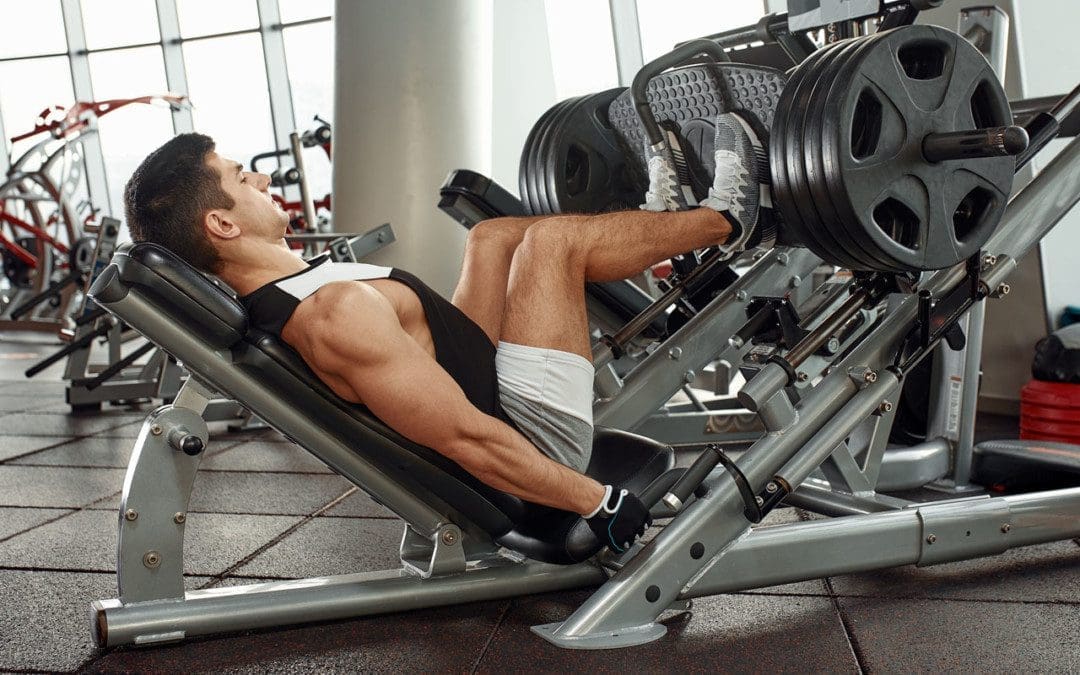
Barbell squat, dumbbell squat, or sled hack squat
Romanian deadlift
Dumbbell bent-over row
Dumbbell triceps extension or machine pushdown
Cable wood chop
Lat pulldown to the front with a wide grip
Reverse crunch
Things to Remember
Use the Proper Weight
Adjust the weight so that the last reps are heavy but don’t cause a complete failure.
Balance the Lower Half
The posterior chain of the hips, the gluteals/buttocks, the upper legs, and the abdominals are of equal importance and require equal attention. (Eline Md De Ridder, et al., 2013)
Squats and deadlifts build strength and power in this region.
Follow Proper Form
For upper body exercises like the dumbbell press, lat pulldown, and wood chops the proper form needs to be followed.
Keep the forearms in a vertical plane with the upper arms.
Do not extend excessively at the bottom of the movement.
Remember to protect the vulnerable shoulder joint.
Listen to The Body
Strength training is physically and mentally challenging.
Individuals who are not able to recover from a session with only one rest day are recommended to move the program to two sessions per week.
Muscle soreness or delayed onset muscle soreness – DOMS – is normal, however, joint pain is not.
Monitor arm and shoulder reactions during this phase.
Stop if any joint pain or discomfort is felt.
Late Pre-Season – In-Season – Phase Two
Power
Power is the ability to move the heaviest loads in the shortest time and is the combination of strength and speed. In this phase, the player builds on the strength developed in phase one with tennis weight training that will increase the ability to move a load at high velocity.
Power training requires lifting weights at high velocity and with explosiveness.
The body needs to rest adequately between repetitions and sets so that each movement is done as fast as possible.
The number of sets can be less than phase one because there is no point in training at this level when the body is fatigued.
Exercises
Duration: Ongoing
Days per week: 2
Reps: 8 to 10
Sets: 2-4
Rest between repetitions: 10 to 15 seconds
Rest between sets: at least 1 minute or until recovered
Barbell or dumbbell hang clean
Cable push-pull
Cable wood chop
One arm cable raises
Medicine ball push press
Medicine ball standing twist with a partner or alone – 6×15 repetitions fast and recover between sets.
Reminders When Preparing For the Season
Recovery Time
In power training, it’s important that the body has relatively recovered for each repetition and set so that the individual can maximize the movement.
The weights should not be as heavy and the rest periods sufficient.
Push When Possible
Rest is important, at the same time, the player needs to push through reasonably heavy loads to develop power against significant resistance.
When doing medicine ball twists, do a full set at maximum, then sufficiently rest before the next one.
If doing the medicine ball exercises alone, use a lighter ball and keep the ball in your hands while twisting.
In Season – Phase Three
When the season begins training does not stop in order to help maintain strength and power.
Strength and Power Maintenance
Alternate phase one and phase two for a total of two sessions each week.
Every fifth week, skip weight training to achieve optimal recovery.
Key Points
Things to keep in mind during the season.
Avoid Overscheduling
Avoid strength training on the same day when practicing on the court.
If the weight training has to be both on the same day, try to separate the workouts into morning and afternoon sessions.
Plan Time
Rest completely from strength training one week out of every six.
Light gym work is fine.
During the season, use intuition when it comes to working out at the gym.
Individuals with limited time, stick to court skills training instead of tennis weight training.
Off Season
If there is an off-season, this is the time for emotional and physical decompression and full-body recovery.
For several weeks, forget about weight training and do other things.
Stay fit and active with cross-training or other physical activities but keep it light to prevent injuries.
It is recommended to consult a coach, trainer, sports chiropractor, and/or physical therapist to develop a program specific to an individual’s needs, fitness goals, and access to resources.
Spine Injuries In Sports
References
Lorenz, D. S., Reiman, M. P., & Walker, J. C. (2010). Periodization: current review and suggested implementation for athletic rehabilitation. Sports health, 2(6), 509–518. https://doi.org/10.1177/1941738110375910
Lorenz, D., & Morrison, S. (2015). CURRENT CONCEPTS IN PERIODIZATION OF STRENGTH AND CONDITIONING FOR THE SPORTS PHYSICAL THERAPIST. International journal of sports physical therapy, 10(6), 734–747.
De Ridder, E. M., Van Oosterwijck, J. O., Vleeming, A., Vanderstraeten, G. G., & Danneels, L. A. (2013). Posterior muscle chain activity during various extension exercises: an observational study. BMC musculoskeletal disorders, 14, 204. https://doi.org/10.1186/1471-2474-14-204
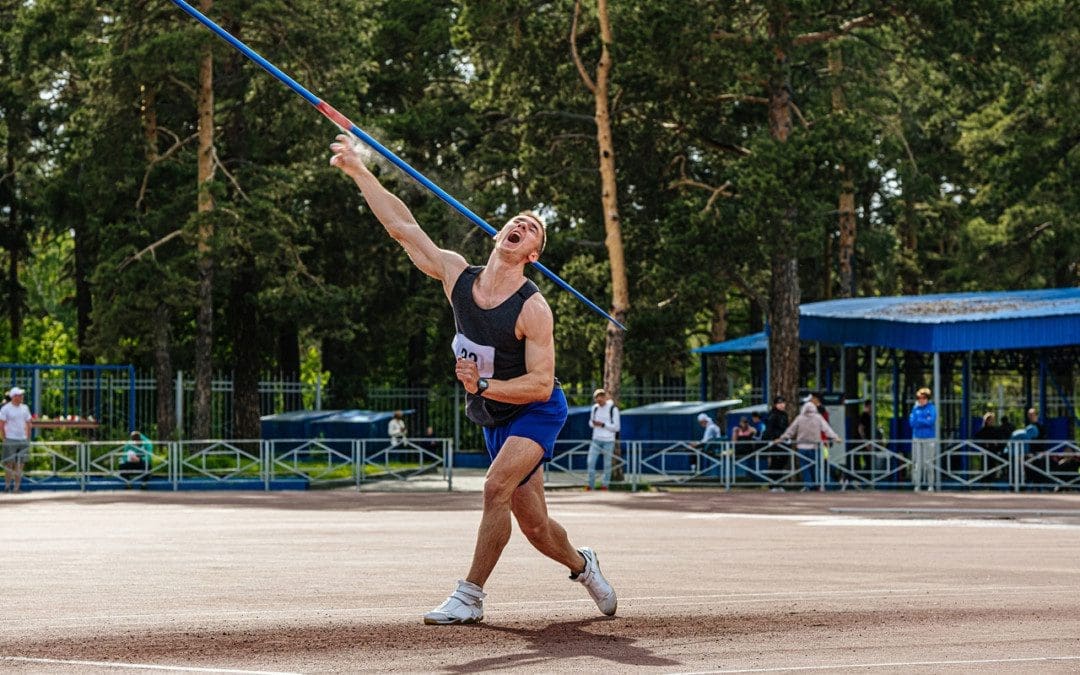
Can weight and strength training increase speed and power in athletes that participate in throwing sports?
Throwing Sports
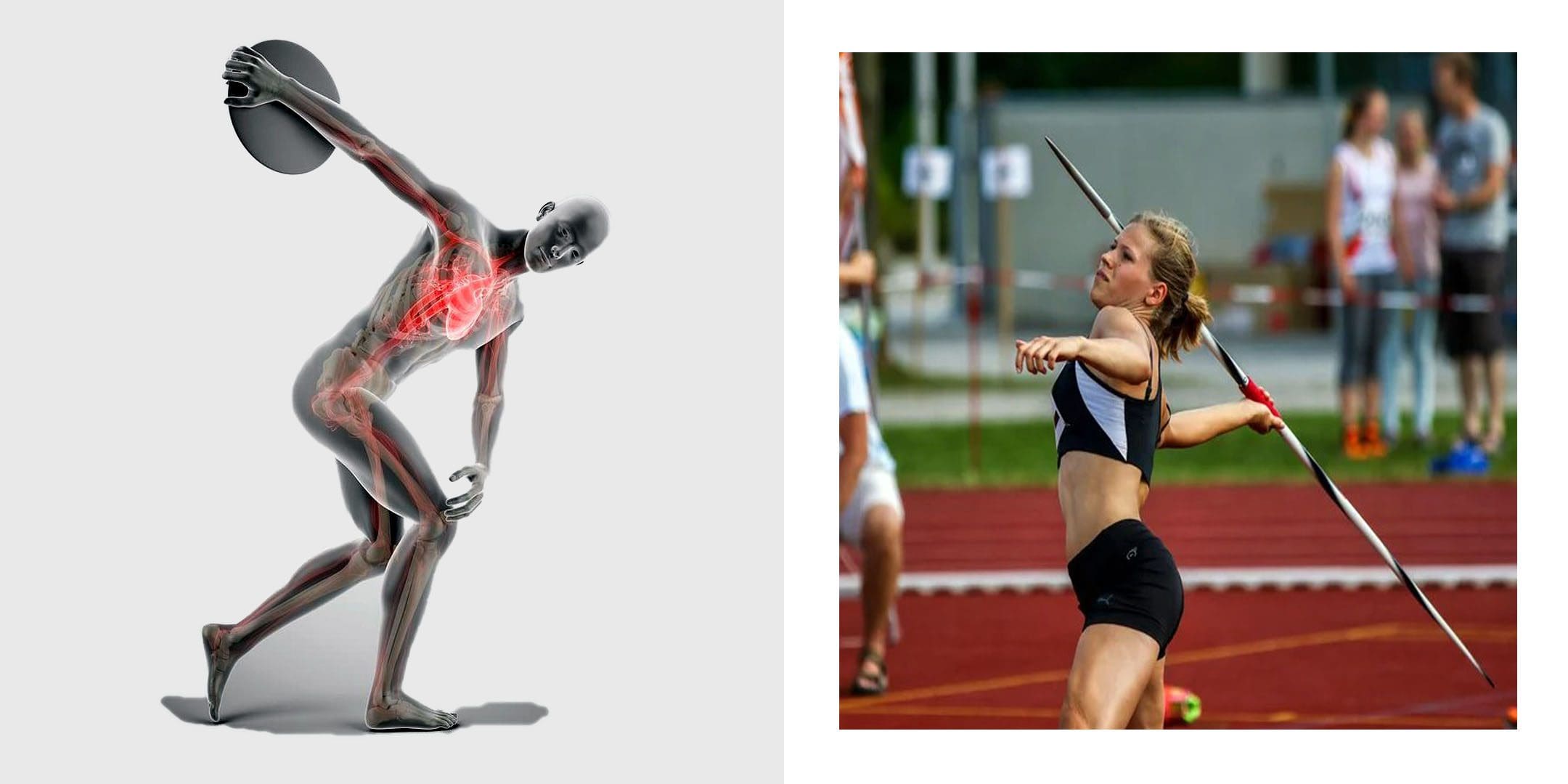
Top-throwing athletes have amazing arm speed. To succeed in throwing sports athletes need to be able to generate quick explosive power. This means the ability to propel the arm forward with substantial velocity for maximum object delivery like a baseball, javelin, hammer throw, shot put, discus, etc. Combined with sports technique training, throwing strength and power can be increased by training with weights. Here is a three-phase training plan to improve throwing performance.
Full Body
The arm provides only one part of the delivery process.
The legs, core, shoulders, and general flexibility need to work cooperatively to exert maximum thrust and achieve maximum object speed.
The natural ability to throw fast with power is largely determined by an individual’s muscle type, joint structure, and biomechanics. (Alexander E Weber, et al., 2014)
Preparation
Preparation should provide all-around muscle and strength conditioning for early pre-season conditioning.
Athletes will be doing throwing training as well, so fieldwork will need to be able to fit in.
It is recommended not to do weight training prior to throwing practice.
This leads to the start of competition and tournament play.
Frequency
2 to 3 sessions per week
Type
Strength and power – 60% to 70% for one-rep max/1RM
The one-repetition maximum test, known as a one-rep max or 1RM, is used to find out the heaviest weight you can lift once.
When designing a resistance training program, individuals use different percentages of their 1RM, depending on whether they’re lifting to improve muscular strength, endurance, hypertrophy, or power. (Dong-Il Seo, et al., 2012)
Throwing practice and competition are the priorities.
Before competition begins, take a 7- to 10-day break from heavyweight sessions while maintaining throwing workouts.
Weight training during competition should provide maintenance.
Frequency
1 to 2 sessions per week
Type
Power – lighter loads and faster execution than in the preparation stage.
Exercises
3 sets of 10
Rapid movement, 40% to 60% of 1RM.
Squats
Power hang clean and press
Romanian deadlift
Lat pulldown
Incline bench press
Crunches
Rest
Between sets 1 to 2 minutes.
Training Tips
Athletes have individual needs, so a general program like this needs modification based on age, sex, goals, skills, competitions, etc.
A certified strength and conditioning coach or trainer could help develop a fitness plan that can be adjusted as the athlete progresses.
Be sure to warm up prior to weight training and cool down afterward.
Don’t try to train through injuries or try to progress too fast – it is recommended not to throw or do weights when treating or recovering from an injury. (Terrance A Sgroi, John M Zajac. 2018)
Focus on the fundamentals and practice proper form.
Take a few weeks off at the end of the season to recover after hard training and competition.
Body Transformation
References
Weber, A. E., Kontaxis, A., O’Brien, S. J., & Bedi, A. (2014). The biomechanics of throwing: simplified and cogent. Sports medicine and arthroscopy review, 22(2), 72–79. https://doi.org/10.1097/JSA.0000000000000019
American College of Sports Medicine (2009). American College of Sports Medicine position stand. Progression models in resistance training for healthy adults. Medicine and science in sports and exercise, 41(3), 687–708. https://doi.org/10.1249/MSS.0b013e3181915670
Zaras, N., Spengos, K., Methenitis, S., Papadopoulos, C., Karampatsos, G., Georgiadis, G., Stasinaki, A., Manta, P., & Terzis, G. (2013). Effects of Strength vs. Ballistic-Power Training on Throwing Performance. Journal of sports science & medicine, 12(1), 130–137.
Seo, D. I., Kim, E., Fahs, C. A., Rossow, L., Young, K., Ferguson, S. L., Thiebaud, R., Sherk, V. D., Loenneke, J. P., Kim, D., Lee, M. K., Choi, K. H., Bemben, D. A., Bemben, M. G., & So, W. Y. (2012). Reliability of the one-repetition maximum test based on muscle group and gender. Journal of sports science & medicine, 11(2), 221–225.
Sakamoto, A., Kuroda, A., Sinclair, P. J., Naito, H., & Sakuma, K. (2018). The effectiveness of bench press training with or without throws on strength and shot put distance of competitive university athletes. European journal of applied physiology, 118(9), 1821–1830. https://doi.org/10.1007/s00421-018-3917-9
Sgroi, T. A., & Zajac, J. M. (2018). Return to Throwing after Shoulder or Elbow Injury. Current reviews in musculoskeletal medicine, 11(1), 12–18. https://doi.org/10.1007/s12178-018-9454-7
Hiking is a form of exercise accessible to a wide range of physical abilities, which makes it a great outdoor activity for all. The health benefits include improved blood pressure, sleep, and reduced stress and anxiety. However, being out in the elements without conditioning the body can lead to serious injuries and other health issues. Many trails are rough, uneven, and have elevation gain, so even the easiest courses require balance and strength to avoid injury. Hiking training that includes strength, cardio, and practice will help condition the body to allow the trip to be more enjoyable and safe.
Hiking Training
Two of the most common hiking injuries are rolling the ankle and ankle sprains. Individuals that are out of shape or haven’t been active for some time are recommended to start with basic movements and exercises to warm up the muscles and increase heart rate.
Walk/Run Through Sand
This builds the muscles that protect the knees and ankles.
Increase Range of Motion
Using a resistance band will strengthen muscles through their full extension.
Standing on a tennis ball or balance disc is great as it builds the small stabilizer muscles around the ankles and knees.
Crunches
Building core strength will help maintain balance on uneven surfaces.
Squats and Lunges
Keep the back straight and take each squat and lunge slowly to strengthen the core muscles.
Push-ups
Sufficient upper body strength, especially the back muscles will help on long trips and when carrying a heavy pack.
Cardiovascular
Walking around the neighborhood, on a treadmill, or stationary bike will work to increase cardiovascular ability.
The objective is to get the heart rate up to build lung capacity.
Step-ups
Before a backpacking trip, weigh the pack – try 20 lbs. – and step up onto a park bench 16 to 18 inches high.
Add 5 pounds a week until the pack is as heavy as it will be on the hike.
Strength Hiking Training for Backpacking
Carrying a heavy pack activates many muscles, including those of the arms and shoulders, and back. Hiking for an extended period with a backpack requires getting used to the weight and feel of it. Nothing conditions the body for a pack better than actually experiencing it.
Shoulder and Neck
The trapezius muscles radiate out from the base of the neck.
This is where the shoulder harness of the pack sits.
Strong traps help prevent soreness.
Most of the pack’s weight should be on and around the hips, but it doesn’t always happen due to pack design and body shape.
Shoulder and Arm
The shoulder of the arm used to put on and take off the pack does a lot of work at awkward angles.
The rotator cuff of the shoulder is vulnerable to these loads.
Upper Back
The muscles of the upper and mid back contract to stabilize the pack, especially with heavy loads.
Beginning hikers and backpackers tend to get a dull pain right in the center of the shoulder blades.
Lower Back
The lower back takes the brunt of the force from lifting and twisting the posterior chain of muscles.
Abdominal Muscles
The abdominal muscles work to stabilize the pack when twisting and turning.
Legs
Walking, squatting, and standing with the pack requires strong support from the legs.
Strong legs, especially thighs, make a difference.
Start small and go slow until you feel comfortable in the surroundings. Start off with lightweight and short distances and gradually extend to heavier weights and longer distances. Remember to go at your own pace and don’t try to be an expert.
Hikers Strength Training
References
Chrusch, Adam, and Michelle Kavin. “Survey of Musculoskeletal Injuries, Prehike Conditioning, and On-Trail Injury Prevention Strategies Self-Reported by Long-Distance Hikers on the Appalachian Trail.” Wilderness & environmental medicine vol. 32,3 (2021): 322-331. doi:10.1016/j.wem.2021.04.004
Fleg, Jerome L. “Aerobic exercise in the elderly: a key to successful aging.” Discovery Medicine vol. 13,70 (2012): 223-8.
Gatterer, H et al. “Effect of weekly hiking on cardiovascular risk factors in the elderly.” Zeitschrift fur Gerontologie und Geriatrie vol. 48,2 (2015): 150-3. doi:10.1007/s00391-014-0622-0
Huber, Daniela, et al. “Sustainability of Hiking in Combination with Coaching in Cardiorespiratory Fitness and Quality of Life.” International journal of environmental research and public health vol. 19,7 3848. 24 Mar. 2022, doi:10.3390/ijerph19073848
Liew, Bernard, et al. “The Effect of Backpack Carriage on the Biomechanics of Walking: A Systematic Review and Preliminary Meta-Analysis.” Journal of applied biomechanics vol. 32,6 (2016): 614-629. doi:10.1123/jab.2015-0339
Li, Simon S W, et al. “Effects of a backpack and double pack loads on postural stability.” Ergonomics vol. 62,4 (2019): 537-547. doi:10.1080/00140139.2018.1552764
Li KW, Chu JC, Chen CC. Strength decrease, perceived physical exertion, and endurance time for backpacking tasks. Int J Environ Res Public Health. 2019;16(7):1296. doi:10.3390/ijerph16071296
Mitten, Denise, et al. “Hiking: A Low-Cost, Accessible Intervention to Promote Health Benefits.” American Journal of lifestyle medicine vol. 12,4 302-310. 9 Jul. 2016, doi:10.1177/1559827616658229
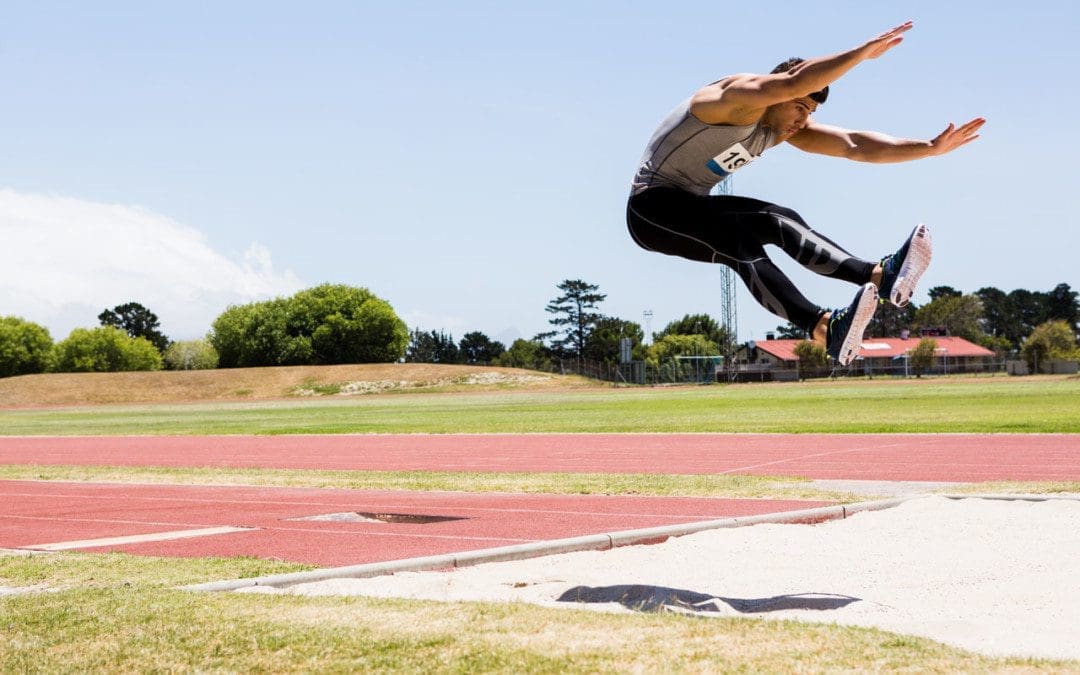
For athletes, the vertical jump is a skill that can be increased and improved with proper training. To improve jumping abilities for sports like basketball, tennis, volleyball, or track and field events such as the high jump it is necessary to do both strength and power training. Research has found certain key components can help athletes become better at jumping. There are different ways to improve an individual’s vertical jump. Here we go over some of the most effective exercises including plyometrics, and exercises that build strength and power.
Vertical Jump Increase and Improvement
Jumping is an explosive movement.
To jump well, an individual needs a consistent powerful spring.
This is achieved by training the explosive/fast-twitch muscle fibers with the ability to shorten and stretch dynamically.
Upper body strength is important for creating upward momentum.
Strength exercises involve slow, controlled movements like squats, lunges, and step-ups with weights.
Power exercises involve explosive, quick movements.
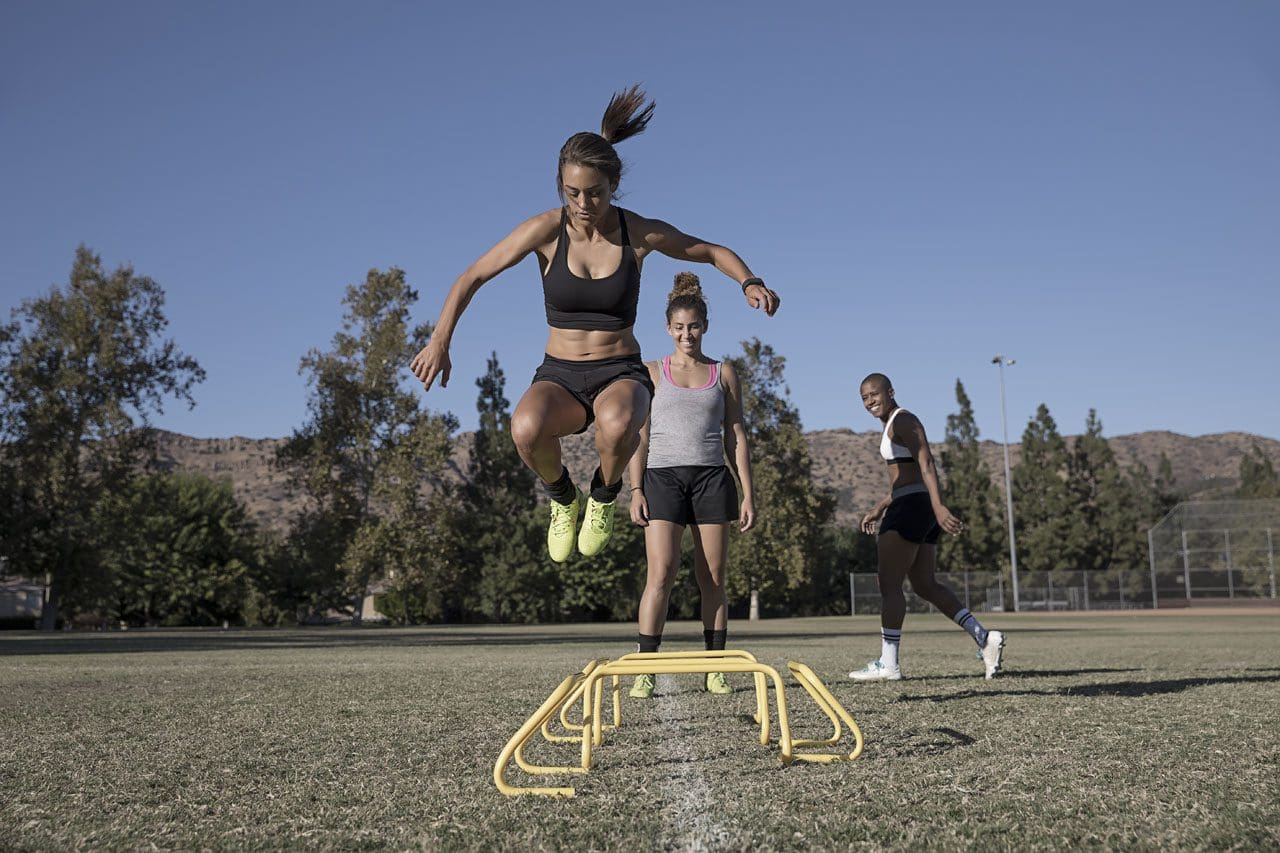
Plyometrics involve explosive hopping, bounding, and jumping drills that combine strength and speed.
Exercises
Plyometrics
Common plyometric exercises include hops, jumps, and bounding movements.
A popular exercise is jumping off a box and rebounding off the floor then jumping onto another, higher box.
Box jumps provide practice for jumping.
Single-Leg Squats
Single-leg squats can be done almost anywhere, without equipment.
They work the hips, hamstrings, quadriceps, gluteus maximus, and calves.
They strengthen the core and increase flexibility.
Full Squats
This is a barbell exercise to build strength and power.
It is considered one of the best total body exercises.
Weighted Step-Ups
The step-up is a recommended all-around exercise that can be done almost anywhere.
Not only will it build strength in your quadriceps, but you can also use it as part of a cardio workout.
It has a low risk of injury.
Overhead Walking Lunges
All that is needed is a weight and room to walk.
This exercise builds power, strength, and speed in the legs.
Improves core strength.
Stair Running
This is a high-intensity workout that builds speed, power, and cardiovascular fitness.
It targets the glutes, quads, and calves.
Agility Drills
Agility drills can include jumping to improve coordination, speed, power, and specific skills.
Sprints
Sprints are quick intense exercises to build muscle and increase performance.
Sprints use more muscle groups.
Practice
Build strength by performing basic weight training exercises using slow, controlled movements.
Build power with faster dynamic movements.
Improve movement speed to create power with explosive, quick exercises.
Work on form, by incorporating the lead-up to the jump, arm motion, and safe landing technique.
Include time to practice maximum jumping and bring it all together.
Always warm up before jumping or performing drills to keep the joints and body safe.
Athletes jump rope to get the blood circulating and warm up their muscles.
Do several slow, controlled toe raises to prepare the feet and ankles for jumping and landing.
Gradually work up to a full vertical jump, by doing box and squat jumps.
Jumping
When finally working on the vertical jump, start with the feet hips-distance apart.
If measuring jump height, stand about a foot away from the measuring tape or measuring bar on the side.
Start with arms overhead.
As you drop into a squat position swing the arms behind the hips.
Swing back up to the starting position before going for the full jump.
The pre-swing helps build momentum.
Land with the knees bent to minimize the impact.
Jumping is a high-impact activity that can take a toll on the knees, hips, ankles, and feet. Be sure to rest the body between hard workouts so the muscles have time to recover, repair, and build up.
Improving Athletic Performance
References
Barnes, Jacque L et al. “Relationship of jumping and agility performance in female volleyball athletes.” Journal of Strength and conditioning research vol. 21,4 (2007): 1192-6. doi:10.1519/R-22416.1
Bezerra, Ewertton DE S et al. “Influence of Trunk Position during Three Lunge Exercises on Muscular Activation in Trained Women.” International journal of exercise science vol. 14,1 202-210. 1 Apr. 2021
Hedlund, Sofia, et al. “Effect of chiropractic manipulation on vertical jump height in young female athletes with talocrural joint dysfunction: a single-blind randomized clinical pilot trial.” Journal of Manipulative and physiological therapeutics vol. 37,2 (2014): 116-23. doi:10.1016/j.jmpt.2013.11.004
Hernández, Sebastian, et al. “Effects of Plyometric Training on Neuromuscular Performance in Youth Basketball Players: A Pilot Study on the Influence of Drill Randomization.” Journal of sports science & medicine vol. 17,3 372-378. 14 Aug. 2018
Karatrantou, Konstantina, et al. “Can sport-specific training affect vertical jumping ability during puberty?.” Biology of sport vol. 36,3 (2019): 217-224. doi:10.5114/biolsport.2019.85455
Markovic, Goran. “Does plyometric training improve vertical jump height? A meta-analytical review.” British Journal of sports medicine vol. 41,6 (2007): 349-55; discussion 355. doi:10.1136/bjsm.2007.035113
McLellan, Christopher P et al. “The role of rate of force development on vertical jump performance.” Journal of Strength and conditioning research vol. 25,2 (2011): 379-85. doi:10.1519/JSC.0b013e3181be305c
Rodríguez-Rosell, David, et al. “Traditional vs. Sport-Specific Vertical Jump Tests: Reliability, Validity, and Relationship With the Legs Strength and Sprint Performance in Adult and Teen Soccer and Basketball Players.” Journal of Strength and conditioning research vol. 31,1 (2017): 196-206. doi:10.1519/JSC.0000000000001476
Vanezis, Athanasios, and Adrian Lees. “A biomechanical analysis of good and poor performers of the vertical jump.” Ergonomics vol. 48,11-14 (2005): 1594-603. doi:10.1080/00140130500101262
Fitness, exercising, weight, and strength training programs use terms like sets, reps, and rest intervals. Knowing what they mean and how to use them for optimal results is important to achieve health goals. An individual’s training program will differ in the weights, reps, sets, rest intervals, and execution speed depending on whether the training is for fitness, muscle growth, strength, power, or endurance. Here we offer a strength training guide on understanding these terms and how they apply to a workout program.
Strength Training Guide
Reps
Rep means repetition.
A rep is one completion of an exercise, such as one bench press, or one bicep curl.
So, one bicep curl equals one rep, and 10 bicep curls equals 10 reps.
Reps make up a set, which is typically the total number of reps done before taking a break.
A repetition maximum – 1RM is an individual’s personal best or the most they can lift once in a single repetition.
A 10RM would be the most an individual could lift and successfully perform 10 reps with proper form.
Sets
A set is a series of repetitions performed sequentially.
For example, one set of bench presses could be eight reps
Sets are designed according to the individual’s workout program.
Rest
The rest interval is the time of resting between sets that allow the muscles to recover.
The rest period between sets can range from 30 seconds to two minutes.
Exercises can have short or long rests between reps.
The ideal rest period depends on the objective of the workout and health goals.
Not resting long enough and starting with another set too soon can fatigue the muscles too soon, increasing the risk of injury.
Resting too long between reps can cool the muscles down and release tension before starting again.
Execution Speed
The speed at which one rep of an exercise is performed is contraction velocity.
Concentric – shortening of the muscle is often the lifting part of a rep.
Eccentric – lengthening of the muscle, often the lowering part of a rep helps to build muscle mass.
Strength: 1 to 2 seconds concentric and eccentric
Hypertrophy: 2 to 5 seconds concentric and eccentric
Endurance: 1 to 2 seconds concentric and eccentric
Power: Less than 1 second concentric and 1 to 2 seconds eccentric
Choosing Weights
The distribution of repetitions against a percentage of 1RM maximum lift is as follows. This example uses a bench press where 1RM is 160 pounds.
100% of 1RM: 160 pounds, 1 repetition
60% of 1RM: 96 pounds, warm-up reps
85% of 1RM: 136 pounds, 6 repetitions
67% of 1RM: 107 pounds, 12 repetitions
65% of 1RM: 104 pounds, 15 repetitions
An individual should be able to do one lift at 1RM, six reps at 85%, 15 reps at 65%, and so on.
Goals to Build a Program
A training program is a schedule of exercise types, frequency, intensity, and volume, for weight training or any other type of fitness training. Individuals can devise various combinations of sets, reps, rest, and exercise types to find what works best for them. A qualified strength and conditioning trainer can help develop a program. The variables can be adjusted and include:
Exercise selection
Weights or resistance used
Number of reps
Number of sets
Execution speed
Rest time between sets
Rest time between training sessions and days of the week
General Fitness
A basic strength training fitness program targets strength and muscle-building.
Between eight and 15 repetitions for two to four sets will help achieve both.
Choose eight to 12 exercises, making sure to hit the lower and upper body and core.
Strength
Building strength uses the most weight, the least number of reps, and the longest rest periods.
The neuromuscular system responds to heavy weights by increasing the body’s ability to lift heavy loads.
For example, individuals with a strength goal could use a 5×5 system.
This means five sets of five repetitions.
Muscle Growth
Muscle growth and bodybuilding training use lighter weights, more reps, and less rest periods.
Muscle requires metabolic stress to increase in size.
This means working the muscles to the point where lactate builds and the muscle suffers internal damage, sometimes called “training to failure.”
Then resting and proper nutrition help muscle repair and the muscle grows larger in the process.
A program could be three sets of 8 to 12 reps, with loads that reach or near the failure point on the last few reps.
Power
Power training uses slightly lighter weights, takes longer rest periods, and focuses on execution speed.
Power is the ability to move an object at high speed.
Each push, pull, squat, or lunge is done at a quick tempo.
This type of training requires practicing the acceleration of a lift, resting properly, and repeating.
Muscular Endurance
Endurance weight training requires more reps in each set, up to 20 or 30, with lighter weights.
Individuals should ask themselves what is the day-to-day physical activity that requires the most muscular endurance?
For example, runners will want to concentrate on increasing endurance in their legs.
Swimmers may shift and focus on their arms one day then legs another.
Movement as Medicine
References
Liu, Chiung-Ju, and Nancy K Latham. “Progressive resistance strength training for improving physical function in older adults.” The Cochrane Database of systematic reviews vol. 2009,3 CD002759. 8 Jul. 2009, doi:10.1002/14651858.CD002759.pub2
Loturco, Irineu, et al. “Muscle Contraction Velocity: A Suitable Approach to Analyze the Functional Adaptations in Elite Soccer Players.” Journal of sports science & medicine vol. 15,3 483-491. 5 Aug. 2016
Rønnestad, B R, and I Mujika. “Optimizing strength training for running and cycling endurance performance: A review.” Scandinavian Journal of Medicine & Science in Sports vol. 24,4 (2014): 603-12. doi:10.1111/sms.12104
Suchomel, Timothy J et al. “The Importance of Muscular Strength: Training Considerations.” Sports medicine (Auckland, N.Z.) vol. 48,4 (2018): 765-785. doi:10.1007/s40279-018-0862-z
Tøien, Tiril, et al. “Maximal strength training: the impact of eccentric overload.” Journal of Neurophysiology vol. 120,6 (2018): 2868-2876. doi:10.1152/jn.00609.2018
Westcott, Wayne L. “Resistance training is medicine: effects of strength training on health.” Current sports medicine reports vol. 11,4 (2012): 209-16. doi:10.1249/JSR.0b013e31825dabb8
IFM's Find A Practitioner tool is the largest referral network in Functional Medicine, created to help patients locate Functional Medicine practitioners anywhere in the world. IFM Certified Practitioners are listed first in the search results, given their extensive education in Functional Medicine