Everyone needs to take care of their back/spine because it is what holds us up as long as we keep it straight and strong. Strengthening the core can help prevent a weak and misaligned spine from getting worse and helps to eliminate pain.�
Back safety should be priority one, as it affects all aspects of your life. Not only are you protecting your back, but are preventing future injury. From the time you wake until bedtime, here are some tips for changes in sleeping position, and getting in and out of a car.
We all need to pay attention to proper body positioning and body mechanics, as it will pay off in the long run.
Getting In and Out of Bed
This is usually the time when the pain starts and can make the rest of the day miserable. Here are a few tips that can help.
Lean forward from your hips, not from your back.
Try not to arch your back.
Push your upper body off the bed with your elbows and hands and swing both legs to the floor.
Keep your back straight.
Try not to bend at the waist.
Position for Sleeping
Sleep is very important. Finding a comfortable position while sleeping can be tough, especially with back pain. Using quality pillows in the right way can help provide comfort, support for your neck and back and keep you asleep.
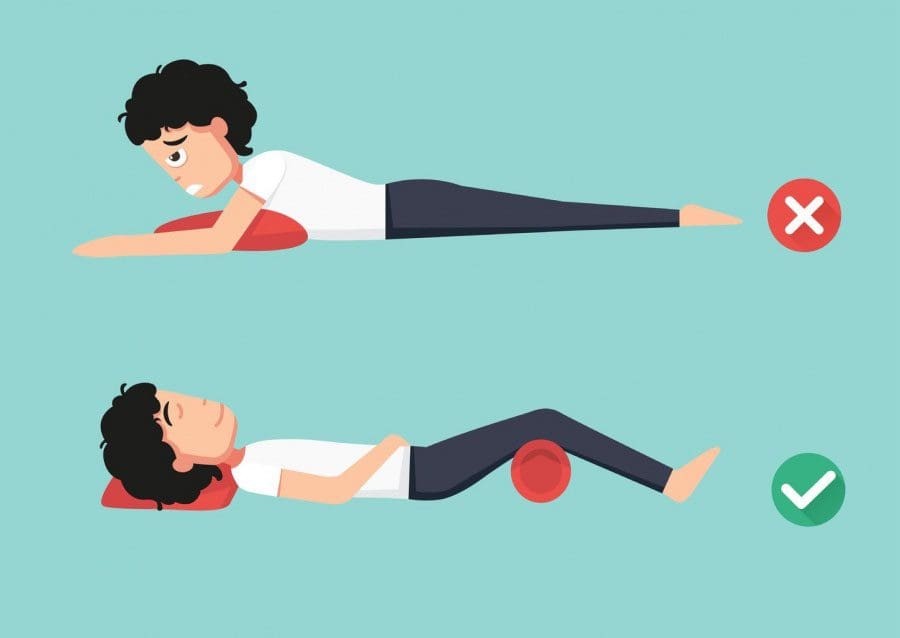
Sleeping on your back is optimal but you should bend your legs and place a pillow under your knees allowing for optimal blood circulation.
Do not sleep on your stomach, as this places pressure on the pelvis and the lower back because there is no support underneath. If you must sleep like this try to keep it for a short while before changing position and place a pillow or two underneath for support.
A firm mattress can help keep your spine in line. But talk to a doctor or chiropractor to find out what style of mattress would benefit your back.
Rotate your mattress every three months and flip it over twice a year.
Take Care When Entering/Exiting an Automobile
Getting in and out of a car can be a tough challenge when dealing with back pain. Here are a few tips to help.
When getting in or out move the seat back as far as it goes, hold onto the side of the car, back of the seat, or the dashboard for support when lifting yourself out or when easing into the seat.
Bend at the knees, not the back and avoid twisting and turning to reach for objects, etc.
The use of proper body mechanics keeps the muscles working properly.
Use both arms and legs when raising and lowering yourself in and out of the seat.
Keep your body aligned and only turn your body as much as needed.
The key is to be aware of your posture and safety awareness.
Daily living including sports and household chores should be done with overall and spinal safety in mind.
Whatever positions work for you and your regular activities bending, retrieving, lifting, and carrying objects, using correct techniques combined with proper posture will take care of your neck and back.
Back Pain Chiropractic Care | El Paso, Tx
NCBI Resources
Chiropractic can take care of your spine which means it is good for your overall health. While many people think that its only purpose is to treat back pain, chiropractic focuses on total body wellness. All too often problems within the body are interrelated. For instance, back pain could be the result of an altered gait due to an ankle injury.� A misaligned neck could cause a headache due to awkward sleep positions (or even the wrong pillow).
For many chiropractic patients, the first experience with chiropractic comes during early adulthood or middle age. Most adults seek out chiropractic care because they are in some sort of pain. If you are one of those that are new to chiropractic, its effectiveness may surprise you. Your next thought might be about how chiropractic could help others in your life�friends, family and more.
Fortunately, sharing chiropractic with your loved ones is easy because it is so well-suited to just about everyone. Whatever the age of the individual, chiropractic can be adapted to provide gentle preventative care and to improve overall health.
Smiling multi-generation family smiling down at the camera
Chiropractic for Children
Sometimes it can seem like children are invincible. They are flexible, heal quickly and tend to bounce back from situations that would floor an adult. But kids need support to be as healthy as possible, especially as they grow up. Chiropractic care is excellent for encouraging healthy growth in infants, toddlers, children, and teens.
Some of the benefits of chiropractic for children include:
Spinal alignment. The small spines of children can become misaligned much like those of adults. Regular chiropractic adjustments help to bring your child�s spine back into proper alignment, which encourages proper functioning of the nervous system, immune system and more.
Healthy movement patterns. It is normal to develop at least a few unhealthy movement patterns as we move from childhood to adulthood. These bad patterns can lead to injuries on down the line. Chiropractic care can help teach children how to move safely, which can yield benefits for a lifetime.
Gentle adjustments designed for young bodies. Chiropractors who work with children learn special techniques to ensure that adjustments heal and not hurt. Immature bodies work in much the same way as older bodies, but a delicate touch is still important for safety.
Chiropractic Care for Older Adults
Older adults can also experience numerous benefits from chiropractic care. The elderly in particular face a number of health challenges that chiropractic can assist with. Some of the benefits of chiropractic care for older adults include:
Pain relief. Chiropractic can do wonders for pain management, all without drugs or surgery. Regular adjustments and other supplemental therapies have been proven to reduce or eliminate pain, something older adults can truly appreciate.
More mobility. Just because you get older does not mean you should have to stop doing the things you love. Chiropractors know how to gently increase your mobility so that you can get back on your feet and enjoy life the way you deserve.
Improved immune response. The nervous system and immune system are linked in many ways. Adjustments help to align the spine and improve nervous system function. An adjustment can also aid in immune system function, which means your body can fight off invaders more effectively.
Contact us today to schedule an appointment with our chiropractic team. We look forward to meeting you!
Benefits of Using Custom *Foot Orthotics* | El Paso, TX (2019)
Foot Orthotics
Experiencing foot pain, there�s no doubt you checked out your foot to make sure it�s not�injured�or hurting from�improper fitting shoes, corns, plantar fasciitis, etc. This may seem counterintuitive, but you may want to check the condition of the�lumbar spine (lower back)?� Most foot problems are caused by issues with the foot itself, but you might be surprised to find that pressure on the sciatic nerve can cause intense foot pain.
What is a Pronated Foot and Can Custom Orthotics Help?
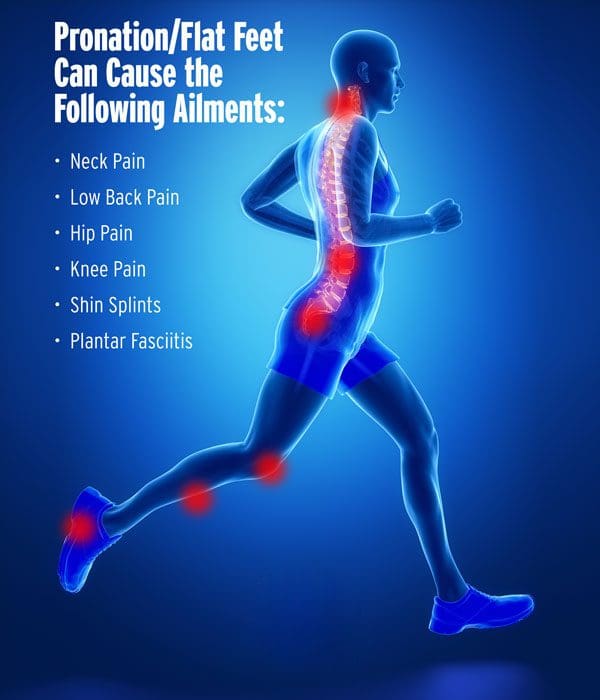
When a foot is pronated, it means the arches have fallen and the foot is flat.
Flat feet are less shock-absorbent and make for a less stable base for the rest of the body. This includes the bones, muscles, ligaments, and tendons.
Flat Feet can also:
Shift the body out of alignment
Cause pain in the feet, knees, hips, neck, and spine
Lead to injury/s like shin splints, Achilles tendinitis, and plantar fasciitis
Women with flat feet are 50% more likely to have low back pain
Up to 1/3 of people suffer from flat feet
�Pronation Causes
The connective tissue, called the plantar fascia, on the underside of the foot is what maintains the foot�s healthy arch shape.
Walking and standing, injury and health conditions can cause the fascia to stretch out and flatten.
Once the fascia stretches out, there is nothing to bring the spring back.
Treatment
Chiropractic adjusting to ensure proper positioning of bones and joints
Custom orthotics for pronation control, support, and comfort
Chronic Inversion Sprain
Foot Dysfunction can very easily cause a domino effect that extends all the way to the back. The feet are the foundation of the body and when there is a problem with the way they function it can cause the entire body to shift out of alignment. For instance, overpronation of the foot causes a series of internal changes that extend up through the leg. The femur may rotate causing hip pain and inflammation of the sacroiliac joint which leads to back pain. Other misalignments in the body that are caused by foot problems can also lead to chronic lower back pain as well.
NCBI Resources
The best way to keep your spinal joints healthy over the long-term is to make regular visits to your chiropractor while also maintaining a healthy diet and�exercise regimen. Everyone is different, which is why it is important to get customized treatment from your chiropractor.
No matter what the season is, there’s always time to get outside and be active, as long as, the weather cooperates. Hiking is great exercise while getting to take in nature in the process. Now add chiropractic maintenance into the mix, and you have a formula for optimal wellness!
The Benefits
Hiking is a great cardio workout that can help improve your blood sugar levels as well as your blood pressure. It can also decrease your risk of heart disease.
What�s more, walking qualifies as a weight-bearing exercise so it helps guard against osteoporosis by improving bone density. If you hike on a regular basis, you will find that your weight is better managed, your core is stronger, your mood is better, and your balance is improved.
As you hike, anxiety and stress will melt away. You will look better, feel better, and function better. The good news is, the more you do it, the more benefits you�ll see.
The more you work, the more you can work. As your body gets stronger, you will find that you can go farther and even challenge yourself on some of the more difficult trails. Just the act of moving will make you feel better, but get ready to get hooked!
Chiropractic/Hiking Mean Healthy Results
Incorporating regular chiropractic care into your life helps keep everything working as it should. When you are backing that care with cardiovascular exercise, you greatly increase the benefits of both.
Chiropractic care is also focused on whole-body wellness, so your chiropractor may recommend certain lifestyle changes or a special diet to support your hiking routine. If you get hurt, or even sore, from your hikes, chiropractic can help manage the pain or eliminate it completely.
You will heal faster so you can get back on the trail sooner. What�s more, chiropractic will increase your performance faster and your body will work much more efficiently. Combining the two creates a powerhouse that will provide you with fantastic health benefits for a very long time.
Hiking Tips
When you set out to hike, you might feel great and want to get started right away. However, there are some things you need to pay attention to so that you can be sure your hike is productive and safe. There�s nothing like a knee, ankle, or back injury to mess up a great hiking routine. Stick with these tips to avoid any problems.
A good warm up before your hike will improve your performance on the trail and reduce your risk of injury. Take a few minutes to warm up your muscles and stretch a little. Your body will thank you.
Choosing the right shoes will greatly improve your hike. Look for footwear that is supportive, fits well, and allows your foot and ankle to work as they should. You will feel a good pair of shoes all the way up to your back � same as you�ll feel bad ones.
Don�t try to conquer the toughest trail right off the bat. Start slow and work your way up to more challenging trails and longer hikes. For instance, you may want to start on a fairly level surface and gradually work up to areas with uneven terrain or even hills.
If balance is an issue (or even if it�s not), you may want to add poles. They can help keep you balanced but do double duty by providing a great upper body workout.
Chiropractor, Dr. Alexander Jimenez talks about strengthening the body without pain through pilates.
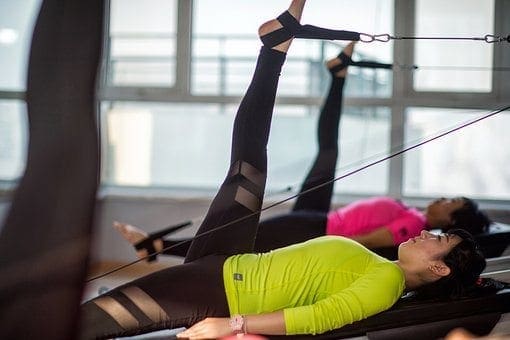
More than 20 years ago in a small walk up studio with hardwood floors that are creaky, several dancers and exercise enthusiasts would join several times for ‘ballet exercise’. In actuality, the motions of Joseph Pilates (Pil-lah-tees) (1880-1967) were in practice. The advantages from his approach removed stress, provided physical and mental balance, and helped to assemble in each individual streamlined and a strong musculature.
Joseph Pilates’ exercise philosophy can help women and men of any age. It’s especially advantageous to individuals who recognize the importance of providing a business support system for the backbone. Its focus is placed by the essence of Pilates on what’s termed the body’s ‘powerhouse.’ Here is the abdominal region, the buttocks, hips and low back – the centre of the body. Pilates works the deep muscles in the body making a powerful centre.
His teachings, “The Art of Contrology” unites mind and body to create a direct connection to the muscles. Each movement that is precise needs mental concentration as well as physical control. The mind and body learn to work together as one harmonious unit. Muscles are stretched and lengthened while building strength through soft, non-impact exercises that, as perfected, are designed to flow in rhythm from one move into the following.
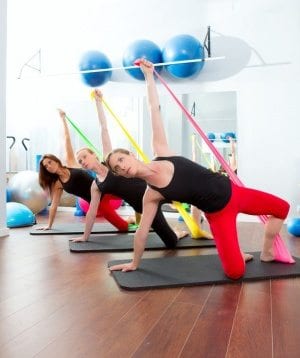
Although, Pilates has been related to odd looking apparatus made up of springs cables and pulleys, or equipment termed the Reformer and also the Cadillac, the foundation is the mat work. Instead of machines and weights, the body uses its own resistance.
The Pilates�Philosophy
The Pilates philosophy incorporates basic principles some of which comprise control and concentration, respiration, and centering.
Concentration and Control includes visualizing the body as movement occurs. Each command that is mental sparks and teaches muscle control that, over time, can become exact. Engram is a medical term used to denote muscle memory, which is stored in the mind ‘s cerebrum. Like learning how to play a musical instrument, diligent practice results in wonderful music. In Pilates, emphasis is positioned on the grade of the motion, not the number of repetitions.
Centering focuses attention on the ‘power station’ – the energy source that flows outward to the extremities of the body. Anatomically, the spinal column is a significant component in the powerhouse. To support the spinal structures, its muscular system (i.e., gluteals, obliques, quadratus, trapezius, scalenes) must be powerful and flexible. Pilates mat work is made to build a strong basis for the entire spinal structure.
Breathing is taking in and expelling air. Breathing properly functions to oxygenate the entire body and cleanse it. Breathing needs complete inhalations and exhalations during the entire length of mat work or exercise when done correctly.
The Advantages Of Pilates
The advantages to be obtained from Pilates are numerous – learn the capability to keep up proper position, which leads to the entire well-being of the body – long, flexible muscles – increased joint range of movement – a flat lean stomach – enhanced circulation and stamina – better dexterity – this and more without pain and soreness often due to conventional forms of exercise.
To realize the numerous benefits Pilates offers does not mean buying clothing or special equipment. All that is needed is a willing disposition to improve the body. The exercises can be performed just about everywhere when completely stretched out the body fits. Many individuals who’ve started Pilates that are in the beginner level state how well they feel after only 8 or 10 sessions.
Check out Brooke Siler’s novel entitled The Pilates Body to find out more about Pilates. This is a superb novel and source for learning the essentials to begin Pilates without attending courses*. The illustrations, photographs and prompts Ms. Siler incorporates make the book easy to use at the mat. The Pilates exercises provided for the beginner, intermediate, and advanced participant are in her novel. Plus, an all-inclusive record of certified Pilates teachers (this is essential!) is provided by the end of her book.
*It is wise to consult with your doctor prior to starting any physical fitness or exercise plan.
Ethan Padilla arrived to Push-as-Rx �� with a different set of goals in mind but his plans changed. Despite this, he continued training and with time became a trainer at Push as Rx. Ethan’s life changed as he enjoyed training and building the self-confidence of others through his training. Ethan Padilla is proud of seeing the positive impact he has created on his athletes at Push-as-Rx �.
PUSH-as-Rx ���is leading the field with laser focus supporting our youth sport programs.� The�PUSH-as-Rx ���System is a sport specific athletic program designed by a strength-agility coach and physiology doctor with a combined 40 years of experience working with extreme athletes. At its core, the program is the multidisciplinary study of reactive agility, body mechanics and extreme motion dynamics. Through continuous and detailed assessments of the athletes in motion and while under direct supervised stress loads, a clear quantitative picture of body dynamics emerges. Exposure to the biomechanical vulnerabilities are presented to our team. �Immediately,�we adjust our methods for our athletes in order to optimize performance.� This highly adaptive system with continual�dynamic adjustments has helped many of our athletes come back faster, stronger, and ready post injury while safely minimizing recovery times. Results demonstrate clear improved agility, speed, decreased reaction time with greatly improved postural-torque mechanics.��PUSH-as-Rx ���offers specialized extreme performance enhancements to our athletes no matter the age.
Please Recommend Us: If you have enjoyed this video and/or we have helped you in any way please feel free to recommend us. Thank You.
Recommend: PUSH-as-Rx ��915-203-8122
Facebook: https://www.facebook.com/crossfitelpa…
PUSH-as-Rx: http://www.push4fitness.com/team/
Information: Dr. Alex Jimenez � Chiropractor: 915-850-0900
Linked In: https://www.linkedin.com/in/dralexjim…
Pinterest: https://www.pinterest.com/dralexjimenez/
Do you have a muscle imbalance? Muscle imbalances occur when one side of opposing muscles is stronger than the other. Many exercise enthusiasts may be getting chronic injuries because of muscle imbalances they don�t know they have. According to renowned physical therapist Dr. Kareem Samhouri, locating and correcting muscle imbalances is essential to good health, and can help cure many of the ailments people encounter daily.
Dr. Kareem is a doctor of Physical Therapy & Kinesiology and owner of Dr. Kareem F Samhouri Fitness LLC. In his practice, Dr. Kareem has rehabilitated and trained a wide variety of patients seeking help for an assortment health issues:
Improved athletic performance in Olympic and professional athletes
Joint pain in baby boomers
Balance issues in older patients
Coma victims
Spinal cord injuries
Rare diseases
Heart issues
Lung disease
Pregnancy
Stroke victims
Health issues among children and infants
How To Fix Muscle Imbalance
Dr. Kareem has had many amazing success stories throughout his medical career. One of his favorite patients is a 112 year old women who was wheelchair bound:
�She had very little strength or coordination, but had a great spirit and was willing to work hard. The mission was to reactivate her muscles and nervous system, so we started with simple exercises such as simply lifting one foot and putting it back down.
�Once she was able to do that, we focused on squeezing her knees together and moving them apart. In the beginning she needed assistance, but over time, she was lifting her knees, rotating her shoulders and pulling herself out of her chair with little assistance.
�When she was finally able to lift herself out of the chair without help, she asked me �is there any way I can dance?� The music was turned up and after a little help, she was able to dance for the first time in years!�
Another highlight of Dr. Kareem�s career was helping save the life of a four-day old baby who was born 18 weeks prematurely. This baby was the youngest baby ever born at that hospital and doctors didn�t think this baby was going to survive.
What Dr. Kareem did was to put the baby in different positions:
�Instead of it cringing into fetal position because of all the noises, and sirens, and bells, and whistles going off in the hospital, we opened him up and let his chest breathe a little bit. We moved the baby�s arms in diagonal patterns so he could actually get more breath. We also put a little pressure on the diaphragm so the baby could take deeper breaths, then took the pressure off as the belly would expand and contract.
�All of these factors led towards the baby really just developing a little bit more easily and a little bit faster. Of course, in an infant that�s that young, you really just have to be as gentle as can be. Oftentimes, instead of a hand, it�s just barely a fingertip touch that you�re going to do. When it came to actually moving the baby�s muscles, light, little taps in the areas where the nerve ties into the muscle to say, �Hey, right here.�
�Sure enough, baby got better, grew up totally healthy, and ended up living a healthy life.�
When Dr. Kareem consults with his clients, he shares his philosophy on health: �Your body is designed to heal or decay. From now on, decide on your own health momentum. Regain control while you begin to look and feel years younger.�
Dr. Kareem started on his health journey by simply wanting to help his mother with her health issues, but soon discovered he had health issues of his own. After close scrutiny, he was able to determine that his ailments were due to a muscle imbalance, and they were all alleviated by simply straightening out his posture. He eventually graduated from Pennsylvania State University College of Medicine and became a physical therapist. Shortly thereafter, he added personal training to his resume, opening the world�s first clinic where these practices were taught all under one roof. Dr. Kareem believes the body is meant to move, and the key to good health is getting it to move correctly.
This is the basis of muscle balance therapy, and it is designed to assist the body with the following health issues:
Alleviating pain
Faster healing
Improved mood
Improved posture
Increased athleticism
Greater quality of life
� Causes of Common Muscle Imbalance
There are many causes of muscle imbalance, following are the most common:
Improper Exercise When it comes to traditional exercise, many of us tend to exercise in a one or two-dimensional way, which is primarily comprised of movements that are either forwards and/or backwards. For example, the bench press and running are two exercises that are extremely popular, but they can cause muscle imbalances if other complementary exercises are not included in the workout regimen.
In many cases, muscle imbalances mean that the larger muscles are becoming stronger at a faster rate than the smaller muscles. According to Dr. Kareem, the issues caused by muscle imbalance affects more than the disturbed area and may cause a domino effect. For example, if a person has a rotator cuff imbalance, the nerve signal that shuts down the muscle is turned on. When a muscle gets shut down, not only does it stop a person from being able to move the way they want, but it slows down their metabolism as well. This can make a person less effective at many other things, which could eventually affect their mood.
Even as adults, we are meant to play. Our bodies are designed to move in every possible direction. That�s how you would naturally hit all the different muscles. Unfortunately, many of us don�t play. We go to a gym and try to simulate the movements, yet we�re missing different diagonals, rotations, and areas that would be balanced by real life dynamic movement. Repetitive workout routines can create muscle imbalances that wreck our bodies over time.
Moreover, imbalances can lead to injury. For some exercise enthusiasts who are getting chronic injuries, it may be from an underlying muscle imbalance. A person can be big and strong in certain areas, but his smaller stabilizer muscles are not being used. As a result, the body is thrown out of balance, oftentimes creating a functional problem.
Muscle imbalances can affect people of all ages. Kids can experience overuse injuries very quickly, making them less capable of excelling in a sport. In adults of all fitness levels, muscle imbalances can have a negative impact on performance; they�ll be slower, less coordinated, and unable to learn new movements quickly. In older individuals, muscle imbalances can result in decreased coordination, decreased strength and joint pain. Many times, the pain seems to have come out of nowhere or flares up suddenly, but in reality, it was based on a long history of improper movement.
Sedentary Lifestyle
The human body was made to move, not sit at a desk or in front of the television for an extended period of time. Excess sitting can cause muscles to become tight and eventually shorter than they are designed to be. The dangers associated with the sedentary lifestyle are well documented. According to data from the National Center on Health, Physical Activity and Disability (NCHPAD)1
Sedentary people have the highest rate of heart attacks.
For every 2 hours a person watches television, their risk of Type 2 diabetes�increases 14%
Sedentary individuals have an increased risk of breast and colon cancer.
The risk of stroke is reduced by two-thirds in physically active men and women by 50%.
Bone loss�increases in physically inactive individuals.
Walking for sixty minutes daily can reduce a person�s risk of obesity by 24%.
A Weak Core
A strong core helps keeps the muscles and internal organs properly aligned. A weak core can cause slouching, which can lead to poor posture, which could lead to muscle imbalances. These imbalances in the core can lead to health issues such as constipation, acid reflux, and other issues.
Common Muscle Imbalance Areas
Muscle imbalances can happen throughout the body. Some of the most common imbalances include the following:
Neck flexors.�A person�s neck flexors actually end up quite stretched, while their neck extensors become compressed. This often occurs if a person is right handed and they�re always writing with their right hand, typing in a specific way, reaching for a mouse or a stapler, or just rotating their spine in a very specific pattern and shoulder in the same manner over and over again.
Tight hip flexors. Tight hip flexors are caused by sitting for extended periods of time. The human body was not designed to sit as long and as often as we do, and the result is the hip flexors become shortened. This in turn causes the pelvis to rotate or tilt downward, causing the glutes to become lengthened and weak. This will put more pressure on the hamstrings, increasing the risk of hamstring tears, strains and pulls.
Weak upper back. Another common problem is forward shoulder posture, or �upper crossed syndrome.� This is common among individuals who spend long hours in front of a computer. The head goes forward, and as people make that adjustment, chin comes up, which causes an additional strain. Another cause of the upper back imbalance is performing �pushing� exercises such as pushups and bench presses, but not doing any �pulling� exercises for the back such as bent over rows or pulldowns.
As a result of these imbalances, the trapezius and rhomboid muscles become lengthened and weak, while the pectoral muscles and anterior deltoids become tight.
Tight calves. Women who wear high heels increase their probability of having tight calves. The soleus, gastrocnemius, peroneal, and other muscles in the lower leg become tight. This muscle imbalance can lead to different foot, heel, and ankle problems such as plantar fasciitis and fallen arches.
Tight Piriformis. The piriformis is muscle in the glutes which is also part of the external rotator in the hip. A tight piriformis occurs more often in men than women because men tend to sit with their legs open more often than women. Individuals with a tight piriformis often have knee problems, while others may experience problems with sciatica, which is shooting pain from the glutes to the back of the legs.
Tight abductors. Tight abductors usually occur in women because they tend to sit with their legs crossed. If a person has tight abductors, the femur may become internally rotated, which increases the probability of knee pain.
Muscle imbalance can occur in many different ways. Not only is It important to be aware of their causes, but it�s also important to know the various ways they can harm the body.
Call Today!
Dangers of Muscle Imbalance
Many people are unaware how muscle imbalances can affect their overall health. Oftentimes, I would explain to my clients how �structure affects function.� I would show them an x-ray so they can see how an imbalance could erode their discs early and cause injury. However, it was a challenge for me to get them to understand how that affects their immune system.
Dr. Kareem explains the dangers of muscle imbalance by looking at the problem from both an Eastern medicine philosophy and Western medicine philosophy. He feels both viewpoints are valid, even though they are based on different rationales.
For example, in Western medicine, it�s understood that if we don�t take care of our bodies and keep them in proper alignment, they will begin to deteriorate and become weak very quickly. Pain signals will take over instead of muscle signals and contractions. We�ll begin to lose coordination, which ultimately, means we�ll lose our mobility and become less active. We�ll be less motivated to eat right and begin to feel helpless and assume the fetal position.
When we�re stressed, we curl up in the fetal position, and that�s a position of self-defeat. This position is a sign of anxiety, depression, and tension throughout the entire body. As we begin to look at illness from this perspective, we start to branch over to the Eastern medicine philosophy: how does this affect quality of life?
As we delve deeper into the Eastern medicine philosophy, we must consider the importance of the central nervous system and cerebral spinal fluid (CSF) and how it relates to muscle balancing: If you have a block in CSF flow, and it gets disrupted (through your brain, through your spinal cord, and back up,) it will change the way your entire body communicates.
Dr. Kareem elaborates further: �If there�s something more critical going on in your body right now, like for example, your nervous system�s compromised because CSF flow is blocked, then it doesn�t care if you want to lose weight. It doesn�t care if you have a cut or a laceration on your skin. It�s not going to heal it as well. It certainly doesn�t care if you have wrinkles that you want to get rid of or if your energy level isn�t what you want it to be. You got to fix the root cause, the number one priority in your body, and a domino effect takes place.
�That, perhaps, linked with oral health are two of the most important foundational things you can do to improve your health, period. If you�re not taking good care of your mouth, and you�re not taking good care of the messaging system for your entire body, those are primitive areas of your body that change everything else. The body�s organized in a way where it�s going to work from the highest priority backwards.�
When it comes to health, many people are focused on the wrong things. People are concerned more about the wrinkles� and the weight loss so energy and focus goes there. They don�t realize that root canals, cavitation, and amalgam fillings�in their mouths are making them toxic. It�s important for people to understand these things can cause inflammation, accelerated aging, and other issues. Toxins do this by getting into the cells the nervous system, and ultimately the anterior head. They�re not aware how their spinal cord is stretched and interfering with their nervous system. Instead of focusing on issues like the skin and weight loss, it�s more important to look upstream�and get to the root cause of our health issues.
Dr. Kareem believes that it is important to work on the number one system first, which is the endocrine system. When the endocrine system is under stress, hormones are more important than going on a particular diet. For example, if your pelvis is out of position and it�s properly realigned, you might uncover a six-pack you didn�t know you had:
�This is one of my biggest lessons and one of my earliest personal training finds. This was an introduction for me to muscle balancing. You see, there was this girl named Lindsey, and she worked as hard as anybody could work. She wasn�t anorexic, but she was borderline at that point where she was just doing everything she possibly could in the gym. She was eating correctly, so she wasn�t really skimming off food, but she just couldn�t get that final six-pack. She just wanted a little bit of definition. She always had the four at the top of the abs, but nothing at the bottom.
�Finally, I ended up doing a postural assessment on her. I took a peek. You know what? We just needed to tip her pelvis backwards a little bit. When we tipped her pelvis backwards a little bit, lo and behold, all those folds went away. Her love handles weren�t actually there. There was no extra body fat on her body preventing her from having the body she wanted. She just needed to be in a slightly different position.
�Now, the coolest thing is not only did she end up getting the body that she wanted, but she starting moving so quickly, all her results accelerated. It was months of work to get to this point, where then all of a sudden, in the next 30 days, she hit every single one of her goals. Truth was, it only took two weeks to tip her pelvis back into position and a few simple exercises that anybody can do at home with just their body weight alone.�
Do You Have Muscle Imbalances?
Our subconscious mind knows when the body�s out of position. If we turned the lights off in the room, you know your arms are behind you. You don�t have to look over to see that. That�s because there�s these little mechanoreceptors in every muscle telling your brain, �We�re over here.�
Same with when the head is forward. The mechanoreceptors are firing, letting the brain knows it�s out of position. When something is out of position, it sucks the energy right out of the cell. This �energy drain� is disruptive to your central nervous system and, if uncorrected, your entire body over time.
The subconscious mind knows this, but the average person is unaware the imbalance is occurring. They don�t know their head is tilted forward or their hips are slightly misaligned. They look in the mirror and think they are ok. I remember when I did this type of work saying, �Look at your low shoulder,� and they would look at themselves and say, �What low shoulder?� The point is this imbalance is the norm, but it�s can be a huge performance zapper.
If a person has had muscle imbalance for a period of time, one or both of these things can happen:
Our bodies are going to balance themselves out. If your head is tilted one way, you�ll subconsciously raise your shoulder a little bit to balance.
A person may opt to take medication to try relieve symptoms of discomfort. However, medication doesn�t get to the root cause of the issue, which is the muscle imbalance. In reality, a slight adjustment may be all that is needed.
Checking for Muscle Imbalances
You can check for muscle imbalances in the comfort of your own home:
Take a string and hang it from the ceiling, or have someone hold it for you. With the string, divide your body between right and left sides. Take a picture of yourself and compare your two sides.
1. When you look closely at the picture, look for the following signs of muscle imbalance:
Is one shoulder is up a little bit more than the other?
Is your side bent a little bit?
Is your head slightly tilted?
Is one hip raised little higher than the other?
Do you have a little bit more of a love handle on one side?
Is one hip is tighter than the other?
2. Take a second picture with the string dividing the body from front to back by taking it with the string at your side.
Is your head forward?
Is your chin tipped up?
Is one shoulder a little bit higher or rounder than the other one?
Is your pelvis tipped so that your lower back is arched a bit, and your belly is sticking out?
These imbalances can affect a person in many different ways. For example, if you�re a runner or athlete you may ask yourself �why can�t I get my hamstrings stronger?� or �why can�t I get faster?� This may be a case where you�re not getting the signal because your back�s arched, and you�re tipped out of position. Identifying the imbalances with a concrete image you can reference is an excellent place to begin looking for clues.
Call Today!
Correcting Muscle Imbalances
Once the muscle imbalance is found, steps can be taken to correct it. While many people have the same types of muscle imbalances, Dr. Kareem stresses that it�s also important to focus on personalized health. This simply means to tailor muscle balancing techniques based on your symmetry.
�A lot of people say, �My right bicep is stronger than my left. Should I just lift heavier on my left and try and make up for it?� No. You actually want to back down. You want to cater to the more limited side of your body. Symmetry comes first. The fastest results come from slowing down to balance your body�s strength, and then everything accelerates from there. You want to back off from your weights on both arms to match the strength of your left, and then you would increase.�
�The same thing reflects ability and mobility in tissue release. If you can raise both arms up into the air, but one of your shoulders is hiking up a little bit, don�t go quite as far. Cater to the more limited side just before your shoulder hikes up, and come back. Work on your mobility just here, opening up your chest, increasing your ability to take a deep breath through your diaphragm. Then what happens is before you know it, even just a few reps in oftentimes, you�ll start to get a little bit further. If you just keep pushing past that point of resistance, sure, the left can keep going as far as it wants, but the right�s never going to get any better. That just results in more twisting through your body.�
Dr. Kareem has devised a short, five-minute program that uses a diagonal pattern that brings the body back into alignment naturally:
1. Free Squat
Stand hip width apart or slightly wider
Exhale and slowly lower, looking straight ahead
Inhale and rise back to starting position
Repeat for 50 seconds
Notes: Keep feet firmly planted. Arms can be crossed in front of body, fingertips at your ears, or held out (as shown.)
2. Superset pushup
Start with hands close together
Exhale and lower
Inhale and rise to starting position
Move hands out to shoulder width apart
Exhale and lower
Inhale and rise to starting position
Move arms out passed shoulder width apart
Exhale and lower
Inhale and rise to start position
This is one rep.
Repeat for 50 seconds
Notes: Pushups can be modified by doing them on your knees.
3. Fast Bridges
Lay on back with your feet planted onto the ground
Keep arms on your sides for stability
Raise hips toward the ceiling and lower quickly
Repeat for 50 seconds
Notes: Keep upper back planted on floor. Make sure to raise both hips evenly. Do not tilt the body.
4. Middle Trap (Bird Exercise)
Lower body into squat position
Feet shoulder width apart
Dig heels into floor
Tuck your chin
Extend arms out to sides
Lower arms to floor
Raise arms parallel to sides
Lower
Repeat for 50 seconds
Notes: Move shoulder, not the arms.
5. Rotational Plank
Start in pushup position
Keep core tight
Exhale and slowly roll body upwards on your left side
Inhale and slowly lower body back to pushup starting position
Repeat for 50 seconds
Notes: Keep core tight at all times. Body should be rolling back and forward in one fluid motion. Keep arms in plank positions at all times. Exercise can also be done on forearms.
For more information on these exercises, go to Dr. Kareem�s website.
This exercise program is designed to stimulate the front of body, the back of body, the lower body, and the upper body. This excites all of the nerves in the body and involves the smaller muscles. As a person performs these exercises, his body will quickly learn how to challenge the smaller muscles as well.
The body will begin to balance itself out by recruiting the big muscles to send the signal to the smaller ones. The idea here is to �train a nerve, not a muscle,� and that nerve starts in your head.
Dr. Kareem recommends performing these exercises every day or every other day. 50 seconds of work and 10 seconds of rest before you transition to the next exercise. Everything is one minute, and it�s a total of five minutes every other day.
A popular misconception is we must do a certain amount of weight or reps for an exercise to be effective. Popular opinion is we are to do three sets of 10, three sets of 15, five sets, etc. In actuality, there is no solid evidence saying that that has to be the number instead of three reps or instead of six. The reality is your body just wants the cue in the right direction and let it take over. Instead of overanalyzing, we should just let nature take its course. We can self-optimize and trigger our small cues to say, �hey, body, I want to do this now.� When we send that signal for the first time, the body will understand, and it�ll start to superimpose it onto our lives and our body.
The Power of Visualization
An important part of this exercise is visualization. When a person thinks about a movement, the body begins to respond to that movement. Elite athletes use this method to prepare for a race or athletic event. They visualize the entire race before it happens.
It�s important to watch somebody else demonstrate properly first, then picture yourself doing the same move identically. This is the fastest way to learn a movement, and your body will begin to subconsciously learn how to perform the movement as well. Visualization techniques are very effective, and have shown to increase contractile strength by 30%.
On average, it takes about six weeks for a new exercise or activity to become second nature. A good example is getting out of a chair: the average person just gets up and walks without thinking about it, but in the beginning it may have taken effort. This is often the case with babies first learning to walk or people who are going through rehabilitation. They have to learn certain things all over again until they can do them without thinking about them.
Dealing with Chronic Injuries
When dealing with chronic injuries, Dr. Kareem suggests a person back off from their current activities or lower the intensity to ensure they�re not overtraining. It�s time to allow the body to learn something new, and that can be accomplished by performing the five muscle balance exercises described above. Here are a few tips from Dr. Kareem:
Weekend warrior.�If you�re not moving at all during the week, it may be helpful to decrease the intensity on the weekend warrior activities. If you�ve been playing two hours of basketball a day, cut it down to one just for a few weeks until you get the postural piece right.�
Elite athlete.�If you�re an elite athlete, maybe you�ll cut out a little bit of the time that you�re spending in the gym weight training. What you want to do is just use these five exercises initially, and then replace them over time. Use these five exercises. Do your workout, so you�re still playing basketball, or you�ll still play your sport. Within a few weeks, you�ll notice that your posture�s improved. Do that plumb line test, and you�ll see, �Where do I stand?�
Older individuals.�If you�re an older adult, avoiding falls is going to be the number one predictor of your longevity and quality of life. Take the same five minutes and use it as your five-minute mini circuit, or five-minute circuit in anything that you�re doing to enhance your health.�
�Once you know your body�s moving the way you envisioned, you can replace the five exercises with something different and something more powerful for you. It can be coordination training, speed training, balance reaction training, etc.�
In addition to athletics, doing muscle balancing exercises can help alleviate many other health conditions as well.
Additional Benefits of Muscle Balancing
Muscle balancing therapy has shown to help many conditions including the following:
Arthritis
Speed
Chronic pain
Chronic Fatigue Syndrome
Muscle balancing exercises are designed to improve health on a cellular level, giving attention to cells in the body that need them most.
Improved circulation. Muscle balancing helps the circulatory system become more efficient. This is important because red blood cells carry oxygen and the oxygen mitochondria needed to create energy production for every cell in the body.
Strengthened nervous system. Muscle balancing teaches the body to contract a muscle at the right time and in the right sequence by targeting our nerves instead of our muscles. The body then creates a �pump effect� that allows the deoxygenated blood stuck in your ankles and fingertips to find its way back to your heart efficiently and easily. This allows the heart to focus on getting rich, oxygenated blood back to the rest of your body.
Muscle Balancing with Massage
Dr. Kareem believes in myofascial release, which is a method of applying gentle pressure to eliminate pain and restore motion. When a person gets a massage and they experience a �good hurt,� that can indicate they either have a muscle imbalance or a knot in the muscle.
In addition to the five exercises, a tennis ball, foam roller, or massage are all effective ways to help remove knots and eliminate muscle imbalance. By using these methods, you�re taking something that functions almost like scar tissue, and giving it more slack. When you give your body more slack, you give it more forgiveness. Ultimately, that leads to a more effective, younger-feeling body.
Muscle imbalances can affect a person in many different ways. By eliminating imbalances, a person can see quality of life improve physically, mentally and spiritually. However, fixing muscle imbalance is one piece of the puzzle to realizing optimal health. I encourage you to address any imbalance, but to get real and lasting results a Multi-Therapeutic Approach must be implemented. My MTA involves diet change and variation, proper exercise, fasting, True Cellular Detox�, emotional detox, and more. Combining multiple proven health strategies is the most surefire way I know to fix cellular dysfunction and enjoy your best life.
Proven�research is now indicating that receiving Chiropractic adjustments to the pelvis can�increase vertical jump height. �This new research further solidifies the stance of many professional and collegiate teams with providing Chiropractic care for their athletes. In addition to injury prevention this research proves that chiropractic care results in an increase in sports performance.
[Purpose] This study aimed to investigate the effect of pelvic adjustment on vertical jump height (VJH) in female university students with functional leg length inequality (FLLI). [Subjects] Thirty female university students with FLLI were divided into a pelvic adjustment group (n = 15) and a stretching (control) group (n = 15). [Methods] VJH was measured using an OptoGait. [Results] After the intervention, jump height improved significantly compared with the pre-intervention height only in the pelvic adjustment group, while FLLI showed statistically significant improvement in both groups. [Conclusion] Pelvic adjustment as per the Gonstead method can be applied as a method of reducing FLLI and increasing VJH.
Key words:�Pelvic adjustment, Functional leg length inequality, Vertical jump height
INTRODUCTION
The pelvis, a structure located between the hip joint and the lumbosacral spine and attached to several muscles, regulates the movement of the hip joint and lumbosacral spine. The position of the pelvis is the most critical factor determining the sagittal alignment and posture of the human body). Only when the pelvis is in the neutral position can be in the right posture, move the upper and lower body in the dynamic posture, and improve daily movements and ambulatory ability).
Functional leg length inequality (FLLI) worsens due to pelvic tilt in the medial plane and pelvic rotation in the sagittal plane). Therefore, FLLI might be improved by pelvic adjustment. High-velocity and low-amplitude (HVLA) adjustment has been widely utilized as a general chiropractic adjustment method). Many studies have indicated that leg length inequality (LLI) causes posture alteration), limiting exercise and causing tension of the muscles and other soft tissues5). LLI is accompanied by several clinical symptoms6)�such as lumbar pain)�and hip pain). Correcting leg length inequality reportedly reduces pain, increases mobility, and improves posture).
Vertical jumping is practiced to enhance the muscular strength and endurance of the leg and serves as a barometer of muscular strength). There have been studies in which plyometric training was undertaken to improve leg muscle strength), dynamic stretching was applied after jogging for 5 minutes to improve vertical jump height (VJH), or HVLA manipulation was performed for talocrural joint dysfunction). However, there has been no study in which FLLI was corrected and VJH was measured as a barometer for leg muscle strength. Many studies have assessed the effect of pelvic adjustment on FLLI), posture), pressure on the foot, and balance). However, no study has investigated the changes in FLLI and VJH resulting from just a single adjustment. Therefore, this study aimed to assess the immediate effects of a single pelvic adjustment on FLLI and VJH in female university students with FLLI.
SUBJECTS AND METHODS
A total of 30 female university students with an FLLI of more than 10?mm between the left and right legs were selected and randomly assigned to one of two groups: the pelvic adjustment group (adjustment group, n = 15) and control group (stretching group, n = 15). The exclusion criteria were as follows: anatomical LLI; degenerative osteoarthritis; muscle, bone, or nervous system problems; ankle joint, knee joint, hip joint, or lumbar pain; limited range of motion due to burn or postsurgical scarring; and regular leg exercise. This study was approved by Korea Nazarene University�s Institutional Review Board, and the safety of all subjects was protected during all parts of the experiment. All subjects understood the purpose of this study and provided written informed consent prior to participation in accordance with the ethical standards of the Declaration of Helsinki.
The age, height, and weight of the subjects in the adjustment group were 23.5�4.7?years, 163.0�5?cm, and 54.1�5?kg, while those in the stretching group were 22.2�6.3?years, 162.7�6?cm, and 53.1�6?kg, respectively. Gender was analyzed using the ?2�test, while age, height, and weight were analyzed using the independent t-test. As these analyses detected no statistically significant differences (p>0.05), the two groups were deemed identical.
The pelvic adjustment performed in the adjustment group consisted of an HVLA technique administered in the prone posture in accordance with Gonstead�s theory. Subjects were instructed to lie prone, their pelvic height was checked, and the posterior-inferior innominate bone was given an anterior-superior impact while the anterior-superior pelvis was given a posterior-inferior impact. When making these impacts, the therapist put one of his hands on top of the other, placed them on the posterior-superior iliac spine or the ischial spine, and then gave the impact using his own weight, gravity, and acceleration). This adjustment was performed 3�5 times by one skilled physical therapist with more than 10?years of clinical experience. The control group stretched the backbone erector, rectus abdominis, iliac muscle, psoas major, quadriceps muscle, leg adductor, and quadratus lumborum adjacent to the pelvis in order to resolve muscular imbalance that could further the pelvic imbalance. In the process, the therapist assisted the subjects in performing additional height training for each muscle and maintaining each posture at the maximum height for 10�15 seconds. The subjects then resumed the initial posture, rested for 5 seconds, and repeated the stretching one more time. Stretching was done three times per posture for a total of 15 minutes).
For leg length measurement, subjects lay straight on a bed, and the tape measure method (TMM) was used to measure the leg from the anterior superior iliac spine (ASIS) to the medial malleolus. Beattie et al. reported that LLI as measured by the TMM did not show a significant difference from radiological findings. We were therefore confident in the reliability of using the TMM for measuring leg length). The measurement started from the ASIS so that pelvic bone-related problems such as pelvic tilt and pelvic asymmetry could be included.
We used an OptoGait (Microgate Srl, Bolzano, Italy), a system for optical detection, to analyze ambulation and measure VJH. On its signal-sending bar, there are 96 LEDs that communicate via an infrared frequency. The signal-receiving bar has an identical number of LEDs. We installed the signal-sending and signal-receiving bars of the OptoGait one meter apart on a flat surface. When a subject performs a vertical jump between the bars, the bars calculate the time at which the subject touches the floor or stays in the air and communicates this information by sending and receiving 1,000 signals per second, generating accurate data. Based on this basic data, the OptoGait software calculates the precise VJH.
Leg length and VJH were measured before and after the intervention. The measured data were analyzed using the statistics program SPSS 12.0 KO (SPSS, Chicago, IL, USA), and the collected data are presented as averages and standard deviations. The significance of pre- and post-intervention differences was tested using the paired t-test, and the significance of between-group differences was tested using the independent t-test. The p-value ? was set at 0.05.
RESULTS
In the pre- and post-intervention comparison, VJH improved significantly only in the adjustment group, while FLLI improved significantly in both the adjustment group and the stretching group (p<0.05) (Table 1). When comparing the pre-intervention data, post-intervention data, and changes between the pre- and post-intervention data, VJH showed statistical significance only for the changes between the pre-and post-intervention data, while FLLI showed statistical significance for post-intervention data and changes between the pre- and post-intervention data (p<0.05) (Table 2).
Table 1.
Comparison of the Pre- and post-intervention data for VJH and FLLI in each group (mean�SD) (Unit: VJH-cm, FLLI-mm)
Table 2.
Comparison of VJH and FLLI between the adjustment group and stretching group (mean�SD) (Unit: VJH-cm, FLLI-mm)
DISCUSSION
The pelvis supports the abdomen, connects the spine and legs, and is involved in transferring weight from the spine to the legs when a person stands up, maintaining a straight posture and enabling smooth arm movements). Due to their erect ambulation, human beings are exposed to gravity and can thus be subject to a malalignment of the pelvis and legs affecting posture, ambulatory pattern, and balance. LLI is easily observed clinically and causes functional disturbance of normal biomechanics).
Winter and Pinto reported that pelvic obliquity is caused by LLI), and Mccaw and Bates explained the relation between biomechanics and spinal deformity due to LLI). Defrin et al. reported that when a shoe insert was used in 22 chronic back pain patients with LLI of 10?mm and less, pain intensity and muscular weakening were reduced), which appears to be due to reduced pain and muscular weakening attributed to decreased pelvic tilt resulting from LLI adjustment. On the basis of previous studies on pelvic adjustment, Alcantara et al. reported that following adjustments using fast and slow speed amplitudes in patients with sacroiliac joint obliquity, pain was reduced, and patients could resume daily life and work). Park et al. reported that balance in 20 elderly men was improved through pelvic adjustment according to the Gonstead method). In this study, FLLI was reduced after pelvic adjustment, a finding similar to a previous study in which pelvic adjustment helped reduce FLLI and the pressure difference between soles).
In this study, stretching was not associated with increased VJH, while pelvic adjustment was. In a previous study by Ryan et al. in which subjects jogged for 5 minutes in order to improve VJH, a barometer for leg strength, and then performed dynamic stretching, VJH was increased as compared with a control group that only jogged for 5 minutes). In the present study, it is suspected that VJH did not increase because only static stretching was applied. Hedlund et al. reported that VJH showed a statistically significant increase following 3 weeks of chiropractic HVLA manipulation in 22 female handball players with talocrural joint dysfunction, which is similar to the findings of the present study).
Pelvic adjustment balances the left and right pelvic height and left and right anterior and posterior rotation of the hip bones, which, in turn, leads to FLLI improvement. It also balances the left and right muscle lengths of the rectus femoris and sartorius, which are involved in the hip bone�s anterior rotation, and the hamstring and gluteus maximus, which are involved in posterior rotation. This seems to explain the improvement in vertical jump ability. We recommend that pelvic adjustment be applied for decreasing FLLI and increasing VJH, a barometer for leg muscle strength, in the future.
Research now indicates that receiving Chiropractic Adjustments to the pelvis can�increase vertical jump height. �This research solidifies many professional and collegiate teams that�provide chiropractic care for their athletes. In addition to injury prevention this research proves that chiropractic care results in greater athletic performance.
IFM's Find A Practitioner tool is the largest referral network in Functional Medicine, created to help patients locate Functional Medicine practitioners anywhere in the world. IFM Certified Practitioners are listed first in the search results, given their extensive education in Functional Medicine
















 Muscle balancing therapy has shown to help many conditions including the following:




 A total of 30 female university students with an FLLI of more than 10?mm between the left and right legs were selected and randomly assigned to one of two groups: the pelvic adjustment group (adjustment group, n = 15) and control group (stretching group, n = 15). The exclusion criteria were as follows: anatomical LLI; degenerative osteoarthritis; muscle, bone, or nervous system problems; ankle joint, knee joint, hip joint, or lumbar pain; limited range of motion due to burn or postsurgical scarring; and regular leg exercise. This study was approved by Korea Nazarene University�s Institutional Review Board, and the safety of all subjects was protected during all parts of the experiment. All subjects understood the purpose of this study and provided written informed consent prior to participation in accordance with the ethical standards of the Declaration of Helsinki.