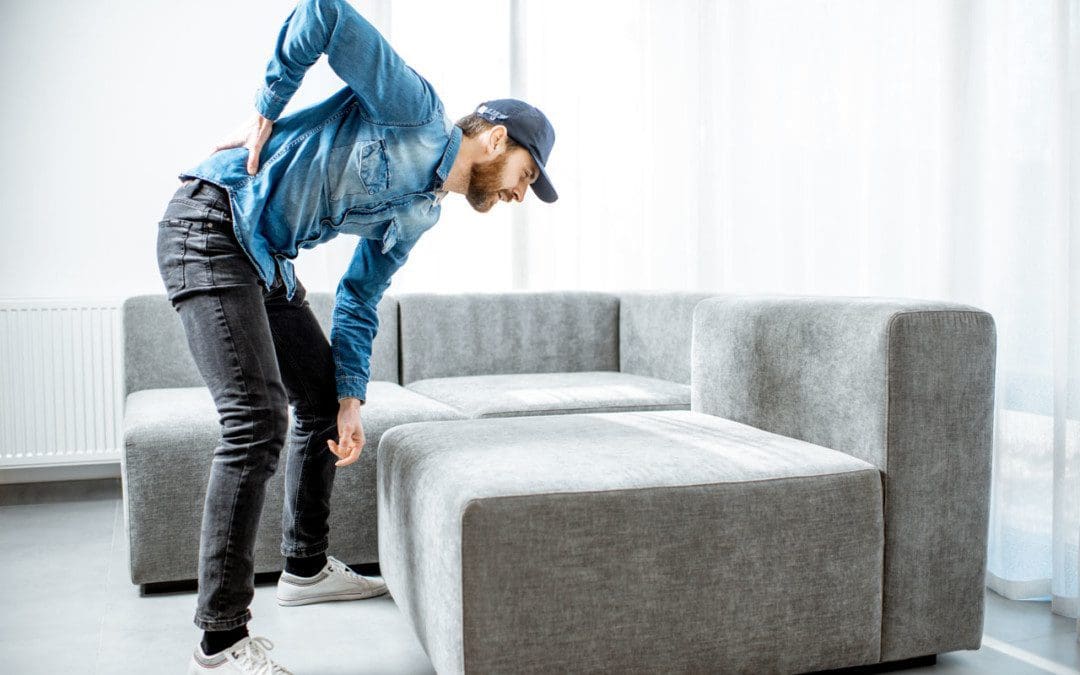
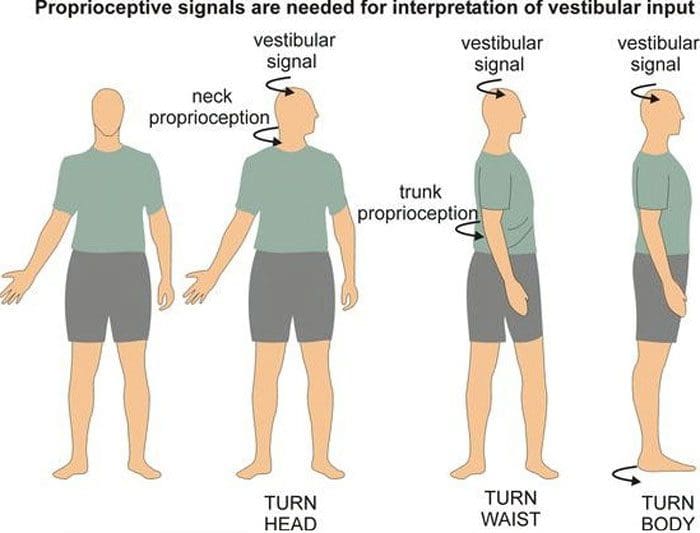
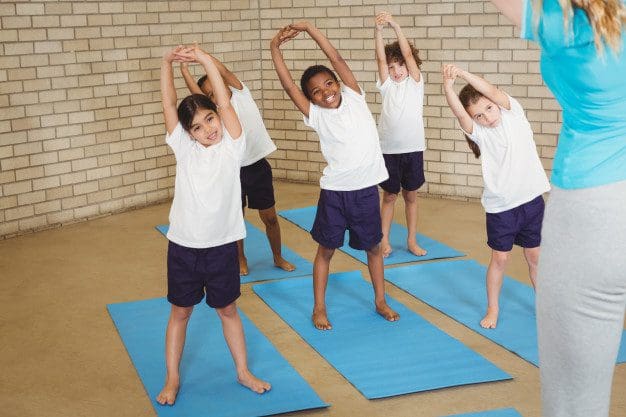
Kinesthesia is the body’s ability to sense movement, position, action, and location, also known as proprioception. An example is when moving the arm, the brain and body are aware that the arm has moved. When dealing with chronic back pain, individuals are unable to function normally with regular everyday movements causing discomfort.
Chronic back pain can make an individual feel like a stranger in their body, altering their perception. Tension develops throughout the body due to the pain, causing tightness and positional adaptations that are unfamiliar, awkward, and unhealthy for the musculoskeletal system. These body positioning changes continue while the individual is unaware of what they are doing, causing further strain and injury.
Kinesthesia
Kinesthesia is essential for overall coordination, balance, and posture as long as the movements are done correctly with proper form. Chronic back pain can affect kinesthesia differently. Individuals can misjudge and estimate that their bodies’ ability to lift, carry, or open something is more complicated or easier than it is. This can exceed the body’s tolerances, causing:
Strains
Sprains
Severe injuries
Once the back starts to hurt, this causes the individual’s sense of kinesthesia to compensate for the pain. As a result, individuals may knowingly or unknowingly attempt to carry out uncoordinated, awkward movements and positions, making things worse.
Motor Control
Motor control is the ability to control movement. When experiencing back pain, individuals adjust their motor control to avoid specific movements that cause back pain. Motor control adaptations and kinesthesia involve body positioning and heightened responsiveness to stimuli, like muscle spasms. Even moderate back pain can cause awkward and dangerous responses causing individuals to overcompensate or become too cautious, worsening or creating new injuries in the process. The body is performing movements that do not follow proper form, even though an individual thinks they are protecting themselves.
Building Healthy Proprioception
A recommended strategy for building kinesthesia to benefit the back and the rest of the body is yoga. Yoga helps build bodily sensory awareness. It trains the body when sending significant signals from the muscles, joints, and tendons back to the proprioceptive centers in the brain. This happens immediately and increases over time.
Yoga Poses
Creating positive awareness of the body’s movements will help relieve back pain as the body learns to feel, understand, and control the muscles. Here are a few poses to help, along with video links.
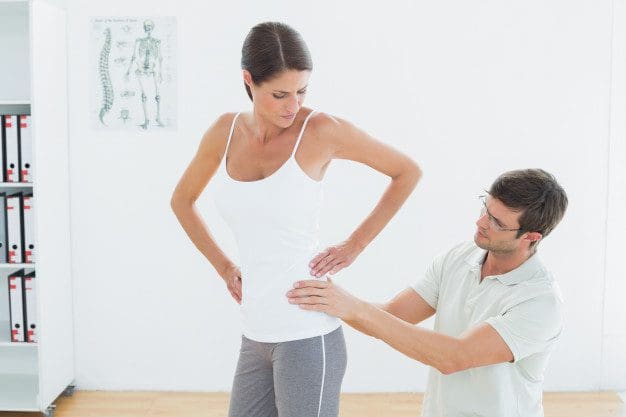
Body awareness is critical, but if an individual moves in a way that’s not natural to the body, it can cause injury. Kinesthesia and healthy posture can help avoid back pain and other health issues. A professional chiropractor can alleviate back pain, educate on proper form and recommend specific stretches and exercises to strengthen the body to prevent injury.
Body Composition
Magnesium
Magnesium supports a healthy immune system. It helps maintain:
Healthy bone structure
Muscle function
Insulin levels
Magnesium assists the body with ATP energy metabolism and acts as a calcium blocker. This reduces cramping and aids in muscle relaxation after physical activity/exercise. Magnesium is essential in biochemical reactions in the body. A slight deficiency can lead to an increased risk of cardiovascular disease and a higher risk of insulin resistance. Many magnesium-rich foods are high in fiber, like:
Studies have shown that consuming a diet rich in Magnesium also provides a higher intake of dietary fiber. Dietary fiber aids in:
Digestion
Helps control weight
Reduces cholesterol
Stabilizes blood sugar
The best sources of Magnesium include:
Spinach, swiss chard, and turnip greens
Almonds and cashews
Flax, pumpkin, and chia seeds
Cocoa
References
Meier, Michael Lukas et al. “Low Back Pain: The Potential Contribution of Supraspinal Motor Control and Proprioception.” The Neuroscientist: a review journal bringing neurobiology, neurology and psychiatry vol. 25,6 (2019): 583-596. doi:10.1177/1073858418809074
Tong, Matthew Hoyan et al. “Is There a Relationship Between Lumbar Proprioception and Low Back Pain? A Systematic Review With Meta-Analysis.” Archives of physical medicine and rehabilitation vol. 98,1 (2017): 120-136.e2. doi:10.1016/j.apmr.2016.05.016
Wang, Jinsong, et al. “Dietary magnesium intake improves insulin resistance among non-diabetic individuals with metabolic syndrome participating in a dietary trial.” Nutrients vol. 5,10 3910-9. 27 Sep. 2013, doi:10.3390/nu5103910
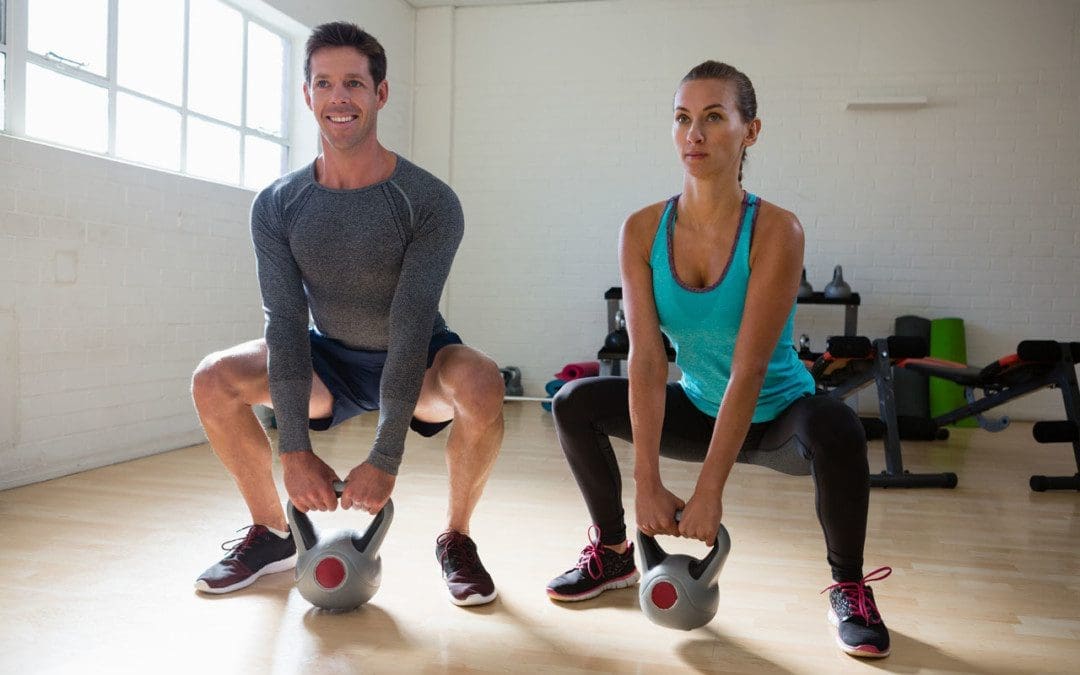
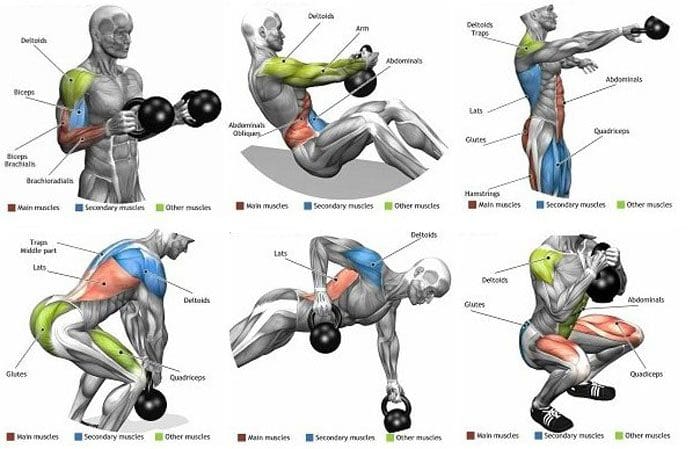
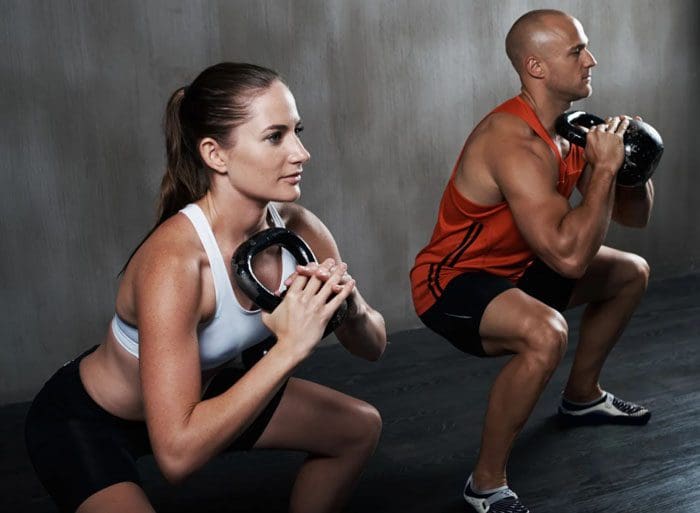
Kettlebell training for the back muscles and back pain prevention can be part of a recommended treatment plan. When experiencing low back pain, many sports medicine experts recommend kettlebell exercise to strengthen the core and posterior chain. However, if not used correctly, kettlebell exercises can worsen back pain.
Kettlebell
They are made of cast iron or steel and are named for resembling a tea kettle with an oversized handle. They can be used in one and two-handed movements.
Exercises and Movements for Back Pain
For individuals that are not experiencing back pain, kettlebell training can be excellent for maintenance and injury prevention. They strengthen the core and back muscles.
The kettlebell swing is an essential exercise and is one of the most important exercises when dealing with back pain issues.
A kettlebell is placed on the floor about 12 inches in front while standing with the feet a little wider than hip-distance.
The hips become the hinge.
Extend the arms down to the bell and grip it.
Begin swinging it up and down through the legs and then upward and outward to chest level.
The shoulders are to stay relaxed.
The hips are used to thrust and create momentum to swing the kettlebell.
Keep the spine neutral throughout the exercise to prevent injury.
The arms are to hold the bell only.
Don’t swing with the arms or shoulders, but push through with the hips.
The exercise can be swung up over the head but is not recommended for those with back pain.
Benefits
They are portable and don’t require a lot of space.
With kettlebells, an individual can train more easily than with barbells.
Kettlebell workouts provide strength training and cardiovascular fitness.
Once the proper technique is learned, individuals can set up a regular regimen at home.
Proper Form and Mistakes
Proper form is crucial. The primary movement most individuals have difficulty with is getting the proper hinging motion at the hip. Most individuals flex at the lower back and place increased pressure on the discs. Proper hip hinge motion means:
Keeping the low back straight
Flexing at the hip
Pushing back out with the buttocks when performing the swing motion.
When done correctly, an individual should be able to stop at any stage and hold that position.
Posture Form Tips
Form issues with kettlebells include:
Hip Hinge
When picking up the kettlebell, remember to hip hinge instead of squatting to maintain the back in a neutral position.
Drive the hips back in the same way when sitting down on a low chair.
Arching the back
If the pelvis is tilted too far forward, the back arches a lot.
This can narrow where the nerves leave the spine in the low back.
Keep the abdominals tight to prevent the pelvis from tilting forward.
Using the incorrect weight can also cause problems; this could be going too heavy or too light.
Too heavy increases the risk of straining the body and back.
A kettlebell that is too light does not provide the correct resistance to strengthen the muscles.
Another common mistake is overtraining. Specifically, individuals over 50 whose bodies don’t recover as quickly.
Individuals over 50 are recommended to spread out the workout days with more than one rest day.
Common Injuries
Proper training before working with kettlebells is highly recommended, especially for those already dealing with back pain. Individuals are encouraged to work with a physical therapist, sports chiropractor, or personal trainer who can teach proper techniques and specific exercises, observe the individual’s process, and make corrections. Improper technique can lead to:
Muscle strains.
Muscle spasms.
Compressed or pinched nerves.
Added stress to pre-existing low back conditions.
Impact injuries to the wrist and forearm.
Body Composition
Exercise Ball Pikes
Exercise ball pikes are an advanced total body workout. Muscle groups worked out include:
Deep abdominals
Hip abductors
Quadriceps
Deltoids
Scapula stabilizers
Pectoralis major/minor
To do the exercise:
Start in a pushup position with the arms on the floor in front.
Lift the legs, so the tops of the feet rest on the exercise/stability ball.
Knees should be bent to start the movement.
Extend the legs out as straight as possible.
Hold the position for a few seconds.
Return to the starting position.
References
Common Injuries Associated with Kettlebells: ACSM’s Health & Fitness Journal (March/April 2017) “Managing Risks of Training with Kettlebells to Achieve Optimum Benefits.” https://journals.lww.com/acsm healthfitness/Fulltext/2017/03000/MANAGING_RISKS_OF_TRAINING_WITH_KETTLEBELLS_TO.6.aspx
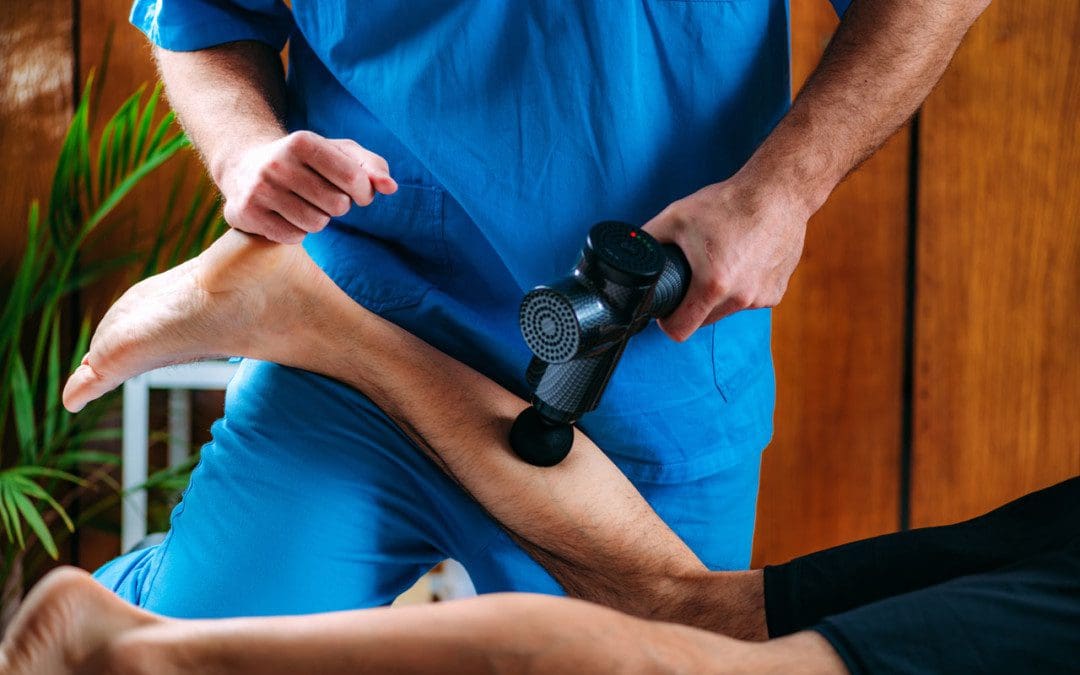
Calf pain is common in individuals that are on their feet for long periods. This could be standing, walking, as part of a job or jogging, and running. In most cases, calf soreness and/or pain result from repetitive/overuse strain/injury/tear of the calf muscles. Pain along with stiffness presents with physical activity, exercise, movement. Chiropractic treatment and Active Release can help alleviate and eliminate calf pain.
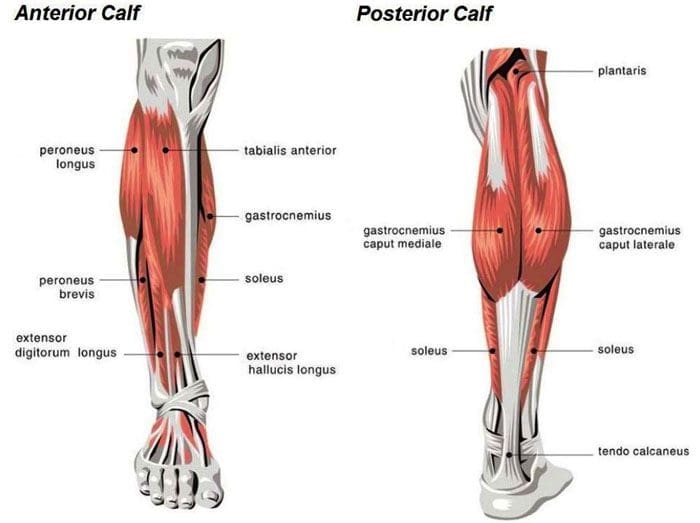
Calf Muscles
The calf muscle is in the back of the lower leg, behind the shin bone, and consists of three muscles. The calf muscle supports the body when standing and enables movement of the foot and lower leg. The calf muscles support the body when:
Walking
Running
Jumping
Standing on the toes.
Flexing the foot – lifting the toes toward the knee.
It helps push the body forward and allows jumping, ankle rotation, and flexing of the foot.
Causes, Conditions, and Disorders
The overuse of the calf muscles usually causes calf soreness, discomfort, and pain. Over time, tiny tears develop in the muscles of the lower legs and calves. Repeated use can lead to more severe injury or condition without proper treatment. Conditions include:
Strain
The most common injury is a strain. Strains happen when the muscle fibers are overused and get stretched too far and/or tear. However, the fibers may not tear in that instance, and so the tear could occur at a later time while doing a basic movement like slightly bending or kneeling to tie a shoe. This is when individuals wonder how a tear happened with a simple action. But the tear was already present, just not fully torn.
Cramps
Muscle cramps and muscle spasms in the calves can be excruciating limiting mobility. Calf cramps can happen during the day or at night. They can result from several factors that include:
Healthcare providers call this strain tennis leg because it happens when the leg extends and the foot flexes. Tennis players are in this position when they serve and push themselves off into motion; however, it can happen in any sport, job, chore that involves the same movement. This type of muscle strain injury affects the gastrocnemius muscle.
Compartment syndrome
Compartment syndrome happens when pressure builds up inside a muscle. The pressure significantly reduces the flow of blood and oxygen. It can result from trauma like a fracture or strenuous exercise/activity.
Symptoms
Calf muscle issues can cause calf muscle:
Pain
Tightness
Stiffness
Pain may be sharp or dull
Pain can start as mild pain and progressively worsen.
Limited mobility
Limited range of motion
Muscle weakness
A bump, bulge, or lump in the back of the lower leg.
Tenderness
Bruising
General leg cramps are common and are more likely to happen as the body ages.
Healthcare professionals estimate around 75% of individuals over 50 have had leg cramps and pain.
Calf Health
To prevent and avoid problems with the calf muscles, individuals are recommended to:
Maintain a healthy diet and weight
Individuals that are overweight are more likely to pull or strain a muscle.
Excess pounds add pressure on the legs placing individuals at a higher risk of an injury.
If obese or overweight, talk to a healthcare professional about healthy weight.
Stay hydrated
Drink the proper amount of water and other fluids
This decreases the chance of causing a cramp.
Stretch and warm-up
Warmed-up calf muscles are less likely to stretch too far or tear.
Before engaging in physical activity at work or school, do a few warm-up stretches to increase flexibility.
When exercising, gradually increase the intensity.
Talk to a doctor about taking another medication that does not cause these side effects.
Body Composition
Nutrients of Protein
Protein is necessary for all of the body’s physiological functions. Protein and amino acids are the building blocks of the muscle tissue in the body. The body’s muscles are a house, protein is the bricks, and the amino acids that form protein are the building blocks of muscle. The body manufactures various amino acids, but nine are essential amino acids – EAA because they are not made in the body. Individuals have to consume EAAs from food sources like:
Meat
Beans
Nuts
Soy
A diet that consists of mixed amino acids can help maximize muscle protein synthesis. Protein is essential in building muscle because amino acids help repair and maintain muscle tissue. After a strenuous activity or a workout, protein helps the body repair muscles that are slightly torn. To build a healthy body, the body needs to have the right amount of protein. Protein is an essential component of:
Muscle development
Bone density
Muscle mass
Lean tissue
References
Binstead JT, Munjal A, Varacallo M. Anatomy, Bony Pelvis, and Lower Limb, Calf. [Updated 2020 Aug 22]. In: StatPearls [Internet]. Treasure Island (FL): StatPearls Publishing; 2021 Jan-. . Accessed 6/4/2021.https://www.ncbi.nlm.nih.gov/books/NBK459362/ (https://www.ncbi.nlm.nih.gov/books/NBK459362/)
Bright JM, Fields KB, Draper R. Ultrasound Diagnosis of Calf Injuries. Sports Health. 2017 Jul-Aug;9(4):352-355. . Accessed
6/4/2021.https://www.ncbi.nlm.nih.gov/pmc/articles/PMC5496702/ (https://www.ncbi.nlm.nih.gov/pmc/articles/PMC5496702/)
Young G. Leg cramps. BMJ Clinical Evidence. 2015 May 13;2015:1113. . Accessed 6/4/2021.https://www.ncbi.nlm.nih.gov/pmc/articles/PMC4429847/ (https://www.ncbi.nlm.nih.gov/pmc/articles/PMC4429847/)
Individuals that go through severe low back pain caused by degeneration, herniated discs, vehicle, personal, work, and sports injuries, surgery, or spinal fusion is usually a last resort if non-invasive treatments fail to provide relief or not enough relief. Patients try to avoid spinal fusion because it can be an intense experience and requires a year-long recovery period. Unfortunately, individuals still experience discomfort and pain after surgery. Do individuals want to know what other treatment options are available, including chiropractic care?
Doctors will inform post-op patients of the risks involved with chiropractic therapy. However, chiropractic medicine can bring natural pain relief after surgery. Chiropractic treatment requires that an individual be adequately or fully healed before beginning a personalized treatment plan. At Injury Medical Chiropractic and Functional Medicine Clinic, we consult patients post-surgery about the effectiveness of rehabilitation spinal adjustments and physical therapy massage.
Wait Time After Surgery
Spinal fusion surgery involves removing the discs between two or more vertebrae and fusing the bones with metal screws and plates. The objective is to correct conditions like herniated discs and degenerative diseases by immobilizing the spine in that area. It can take at least three months for the vertebrae to fuse for a fully immobilized graft. Once the graft is complete, a few months of physical therapy are recommended to loosen/stretch and strengthen the muscles around the graft. Initial recovery combined with physical therapy typically takes a full year for a complete recovery.
It is during recovery where it can be difficult and for discomfort and pain to present. The reason is patients are recommended to avoid any twisting, bending, over-reaching motions, or the graft could break. This can make an individual take on awkward poses/postures, flexing and contracting muscles incorrectly, causing strain. The result is added discomfort and/or pain.
How Chiropractic Helps
Spinal fusion is not guaranteed to alleviate an individual’s back pain completely. But many do experience discomfort or pain post-surgery. This could be for a little while or longer, depending on their condition or injuries. Fortunately, chiropractic treatment can help bring pain relief through mobilization, manipulation, and massage techniques. Manipulations’ objective is to adjust and/or realign the bones of the spine and other areas of the body. Because of the intricacy of spinal manipulations, many who have undergone back or spinal fusion surgery are hesitant to seek chiropractic treatment. Discuss possible chiropractic care with your physician to determine if the surgical graft is strong enough to withstand spinal manipulations. If the graft is adequately/fully healed and your physician believes it can endure mild adjustments, reach out to a chiropractor to discuss a customized treatment plan.
Body Composition Testing
Poor Leg Skeletal Muscle Mass
The gluteal muscles or buttock muscles are the largest muscle group in the body. Individuals can start losing bone density by their 30s. This increases the risk of injury and further bone density loss. Bone density loss is a natural process, but the process can be accelerated for individuals with under-developed skeletal muscle mass. The health of muscles and bones are closely linked. Researchers found that individuals with less muscle mass than average for their height tended to have narrower and thinner bones. This resulted in limited lower bending strength.
Decreased muscle mass was shown to be linked to balance problems and increased risk of falls. There is a higher prevalence of sarcopenia or muscle wasting for patients with hip fractures and a reduction of leg muscle mass. The combination of:
Low muscle mass
Low bone density
Hip fractures
It can have lifelong consequences
References
Fernandez, Matthew et al. “Surgery or physical activity in the management of sciatica: a systematic review and meta-analysis.” The European spine journal: official publication of the European Spine Society, the European Spinal Deformity Society, and the European Section of the Cervical Spine Research Society vol. 25,11 (2016): 3495-3512. doi:10.1007/s00586-015-4148-y
Keller, Glenda. “The effects of massage therapy after decompression and fusion surgery of the lumbar spine: a case study.” International journal of therapeutic massage & bodywork vol. 5,4 (2012): 3-8. doi:10.3822/ijtmb.v5i4.189
O’Shaughnessy, Julie et al. “Chiropractic management of patients post-disc arthroplasty: eight case reports.” Chiropractic & osteopathy vol. 18 7. 21 Apr. 2010, doi:10.1186/1746-1340-18-7
Perrucci, Rachel M, and Christopher M Coulis. “Chiropractic management of post-spinal cord stimulator spine pain: a case report.” Chiropractic & manual therapies vol. 25 5. 6 Feb. 2017, doi:10.1186/s12998-017-0136-0
Szulc, Pawel et al. “Low skeletal muscle mass is associated with poor structural parameters of bone and impaired balance in elderly men–the MINOS study.” Journal of bone and mineral research: The American Society for Bone and Mineral Research vol. 20,5 (2005): 721-9. doi:10.1359/JBMR.041230
There are different types of muscle from a biological perspective, however, there is no such thing as lean muscle. Lean suggests the absence of body fat. But the fact is that all muscle is lean muscle. It is important to build muscle mass as the body ages, however, it is more important to build lean body mass. Here is the difference.
Lean Body Mass
Lean Body Mass is the total weight of an individual’s body minus all the weight from the fat mass.
Lean Body Mass (LBM) = Total Weight – Fat Mass
Lean Body Mass includes the weight of the:
Skin
Body Water
Bones
Organs
Muscle Mass
Because Lean Body Mass consists of various components, any change in the weight of these areas is recorded as changes in lean body mass. However, the weight of the body’s organs will not change. Bone density does decrease with time and age, but will not significantly affect the weight of lean body mass. With lean body mass, 2 areas of focus include:
Body water
Muscle mass
Lean Muscle
Sometimes, individuals use the term lean muscle referring to the shape of the muscles. However, both types of muscle are lean and fat-free.
The difference between muscle mass and lean muscle
The strict definition of muscle mass is the weight of the muscles of the body. When individuals say they are gaining muscle mass, they typically mean that the muscles look and feel bigger.
Lean muscle masson the other hand is a term often used when someone is referring to the weight of the muscles, not factoring in the amount of fat that could be present within a muscle.
Combining Lean Gains
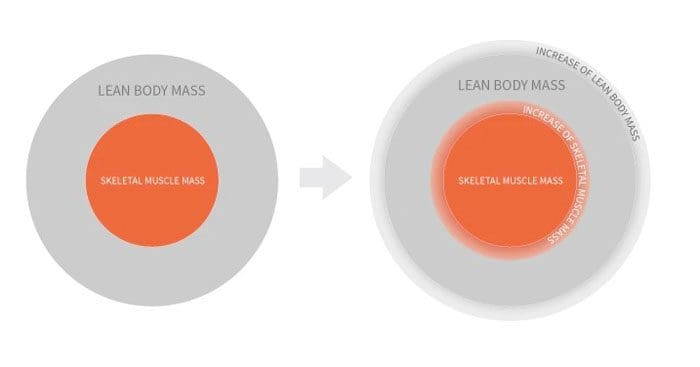
Increases in Skeletal Muscle Mass are also an increase in Lean Body Mass. What tends to happen is individuals combine them as lean mass gains or lean gains. However, an increase in Lean Body Mass does not always increase muscle.
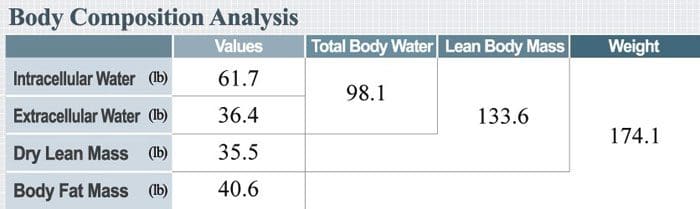
This is because body water makes up a significant portion of an individual’s Lean Body Mass. For example, a body composition analysis of a 174-pound male.
98.1 Total Body Water + 35.5 Dry Lean Mass = 133.6 Lean Body Mass
Water makes up more than 55% of total body weight
This is normal for healthy adult males
Lean Body Mass consists of three components, two of which are water.
Everything else grouped together makes up the individual’s Dry Lean Mass.
This includes bone minerals, protein content, etc.
Muscle gains contribute to Lean Body Mass gains, but so does water. The difference is that water levels can fluctuate throughout the day depending on:
Hydration levels
Diet
Physical activity
The muscle tissue itself contains a significant amount of water. Muscle tissue is comprised of up to 79% water. Research has shown that resistance training increases intracellular water in both men and women. This creates an issue when looking at lean gains.
Lean Mass gains can happen quickly, and the increases are mostly body water
Measuring Lean Body Mass and Muscle Mass
What not to do
Don’t try to use a scale to calculate changes in Skeletal Muscle Mass. A popular method used is to estimate muscle gain from the number on the scale and applying fitness websites/magazine tips. The problem with this technique is that estimating progress has many factors that can influence an increase in body weight. These include:
It is the difference between total body weight and body fat weight. However, these calculations are more for helping physicians determine the appropriate amount of prescription medication/s or if an individual will be undergoing anesthesia and not a computation of overall body composition.
Paying Attention to Weight Loss
Paying attention to weight loss is an inaccurate reflection of lean body mass, muscle mass, or lean mass.
Weight loss, or gain, does not reflect overall health and body composition.
Resistance training/weightlifting workouts combined with added protein will generate a muscle mass percentage increase
Skeletal Muscle Mass is connected with Lean Body Mass
Everyone’s body composition is different, making the proportion of an individual’s skeletal muscle mass to Lean Body Mass unique.
Lean Mass or Lean body mass is the safest term to use to describe gains.
Which Is More Important?
When it comes to tracking muscle gain or fat loss, it all comes down to what tools are being used to measure progress.
If working with just a weight scale, an individual will only know their weight increases or decreases.
This is difficult to see the difference in weight gain from water, muscle, or body fat.
For individuals that want accurate measuring of their muscle gain and assessing their health, then body composition analysis is the key.
Body Composition Difference
Disclaimer
The information herein is not intended to replace a one-on-one relationship with a qualified health care professional, licensed physician, and is not medical advice. We encourage you to make your own health care decisions based on your research and partnership with a qualified health care professional. Our information scope is limited to chiropractic, musculoskeletal, physical medicines, wellness, sensitive health issues, functional medicine articles, topics, and discussions. We provide and present clinical collaboration with specialists from a wide array of disciplines. Each specialist is governed by their professional scope of practice and their jurisdiction of licensure. We use functional health & wellness protocols to treat and support care for the musculoskeletal system’s injuries or disorders. Our videos, posts, topics, subjects, and insights cover clinical matters, issues, and topics that relate to and support, directly or indirectly, our clinical scope of practice.* Our office has made a reasonable attempt to provide supportive citations and has identified the relevant research study or studies supporting our posts. We provide copies of supporting research studies available to regulatory boards and the public upon request. We understand that we cover matters that require an additional explanation of how it may assist in a particular care plan or treatment protocol; therefore, to further discuss the subject matter above, please feel free to ask Dr. Alex Jimenez or contact us at 915-850-0900.
Dr. Alex Jimenez DC, MSACP, CCST, IFMCP*, CIFM*, CTG*
email: [email protected]
phone: 915-850-0900
Licensed in Texas & New Mexico
References
Galán-Rioja, Miguel Ángel et al. “Effects of Body Weight vs. Lean Body Mass on Wingate Anaerobic Test Performance in Endurance Athletes.” International journal of sports medicine vol. 41,8 (2020): 545-551. doi:10.1055/a-1114-6206
Köstek, Osman et al. “Changes in skeletal muscle area and lean body mass during pazopanib vs sunitinib therapy for metastatic renal cancer.” Cancer chemotherapy and pharmacology vol. 83,4 (2019): 735-742. doi:10.1007/s00280-019-03779-5
Ribeiro, Alex S et al. “Resistance training promotes an increase in intracellular hydration in men and women.” European journal of sports science vol. 14,6 (2014): 578-85. doi:10.1080/17461391.2014.880192
Ten Haaf, Dominique S M et al. “Protein supplementation improves lean body mass in physically active older adults: a randomized placebo-controlled trial.” Journal of cachexia, sarcopenia and muscle vol. 10,2 (2019): 298-310. doi:10.1002/jcsm.12394
Belly dancing has been found to be an effective way to help individuals managing low back pain. It could be utilized as a part of a chiropractic treatment plan. The dancing is beneficial for improving posture and allows an individual to improve their fitness with a light form of aerobic exercise.
Regular physical activity/exercise and a healthy lifestyle go hand in hand. For individuals with spinal issues, the right stretches and exercises can make a difference in their quality of life. It increases:
Strength
Flexibility
Helps with pain management
Improves posture
Maintains spinal alignment
Belly dancing can help with injury recovery, as well as overall health. For most the trouble with exercising regularly is that it becomes routine and boring. Individuals want to live healthily, but it can be a challenge to maintain interest and motivation. An alternative form of physical activity that qualifies as exercise could be the answer.
Dancing has grown in popularity because of its fitness, flexibility, and spinal benefits. This form of belly dancing exercise does not require any special outfit or plenty of space. This utilizes the movements as a form of stretching and keeping the body moving in an aerobic fashion. They can be done at home with video instruction or an online class. Although the majority are women, men can and do belly dance.
Belly Dance
Information on the history of belly dancing. The dance has gone through various transformations since its inception. It was once considered burlesque entertainment, is now recognized as an important cultural expression, and today has been found to be a respected form of dance exercise.
Isometric exercises are contract specific muscles or groups of muscles. These types of exercise help with strength and stability enhancement. Both are vital for individuals recovering from back injuries or back pain management.
Posture
Dance posture is different than normal standing or sitting posture. Dance posture refers to the way an individual prepares/maintains their body to perform specific movements so that the motions are fluid, graceful, and with no presentation of pain. Belly dance posture maintains proper spinal alignment, which encourages reduced stress/pressure on the joints. This is beneficial for individuals managing back problems. The keys to spinal success are:
The knees should be slightly bent and not stiff so as not to pull/strain the lower back muscles
When the abdominal and back muscles maintain/support a straight spine, this alleviates stress on the low back. Lower back issues have shown a positive response to a belly dance exercise therapy program. A study looked at the effects of belly dancing on pain and function in women with chronic lower back pain. The study found that belly dancing made movements of the trunk and pelvis that are known to influence low back pain much easier.
A belly dance program in conjunction with a chiropractic or physical therapy treatment plan can help alleviate pain and improve function. A 45-minute belly dance routine/session promotes aerobic benefits, improves flexibility and core strength.
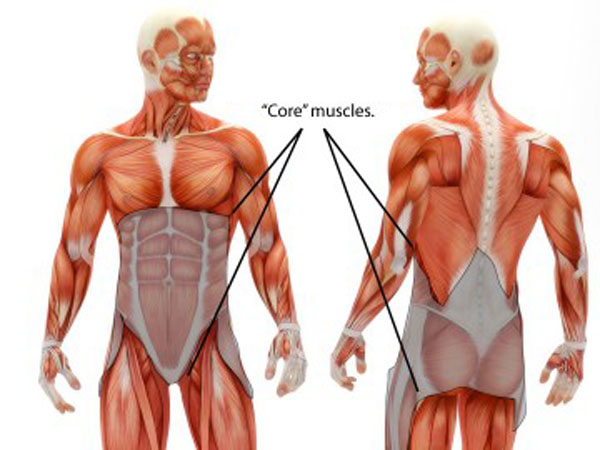
Core Strength
These are movements that train the muscles in the:
Pelvis
Abdomen
Hips
Low back
They help build strength, generate stability, protect against back pain, poor posture, and muscle injuries. Having core strength is crucial for individuals with back issues, as it increases the stabilization of the spine. Core strengthening is highly recommended and often prescribed for individuals recovering from lumbar issues.
Depression/Anxiety Improvement
Individuals with back pain also tend to experience psychological issues like depression and anxiety. Back pain can affect:
Mood
Tiredness
Sleep problems
Self-esteem problems
Belly dancing as part of a treatment/therapy program can help an individual experience benefits that improve mental health and well-being. These include:
Regaining mobility
Having a positive body image
Social interaction is enhanced
For All Ages
Belly dancing is a fantastic creative outlet and a great way to exercise. Anyone that is able can participate. Children, seniors, and everyone in between can get into belly dancing. It enhances health and strengthens the body and mind. When the body is in the proper position/posture there are no joint issues or pain. In-person classes, at home with online instruction, DVDs, or video meeting apps can benefit the body and especially the spine.
Life-Changing Orthotics
Dr. Alex Jimenez�s Blog Post Disclaimer
The scope of our information is limited to chiropractic, musculoskeletal, physical medicines, wellness, and sensitive health issues and/or functional medicine articles, topics, and discussions. We use functional health & wellness protocols to treat and support care for injuries or disorders of the musculoskeletal system. Our posts, topics, subjects, and insights cover clinical matters, issues, and topics that relate and support directly or indirectly our clinical scope of practice.*
Our office has made a reasonable attempt to provide supportive citations and has identified the relevant research study or studies supporting our posts. We also make copies of supporting research studies available to the board and or the public upon request. We understand that we cover matters that require an additional explanation as to how it may assist in a particular care plan or treatment protocol; therefore, to further discuss the subject matter above, please feel free to ask Dr. Alex Jimenez or contact us at 915-850-0900. The provider(s) Licensed in Texas& New Mexico*
Strength training: The Centers for Disease Control have estimated that around 16% of six to nineteen-year-olds in the US are overweight or obese. This comes from inactivity, no movement, exercise, and poor diet. On the other end, young athletes search for ways to gain an edge, often falling victim to steroids and all of the negative effects they have.
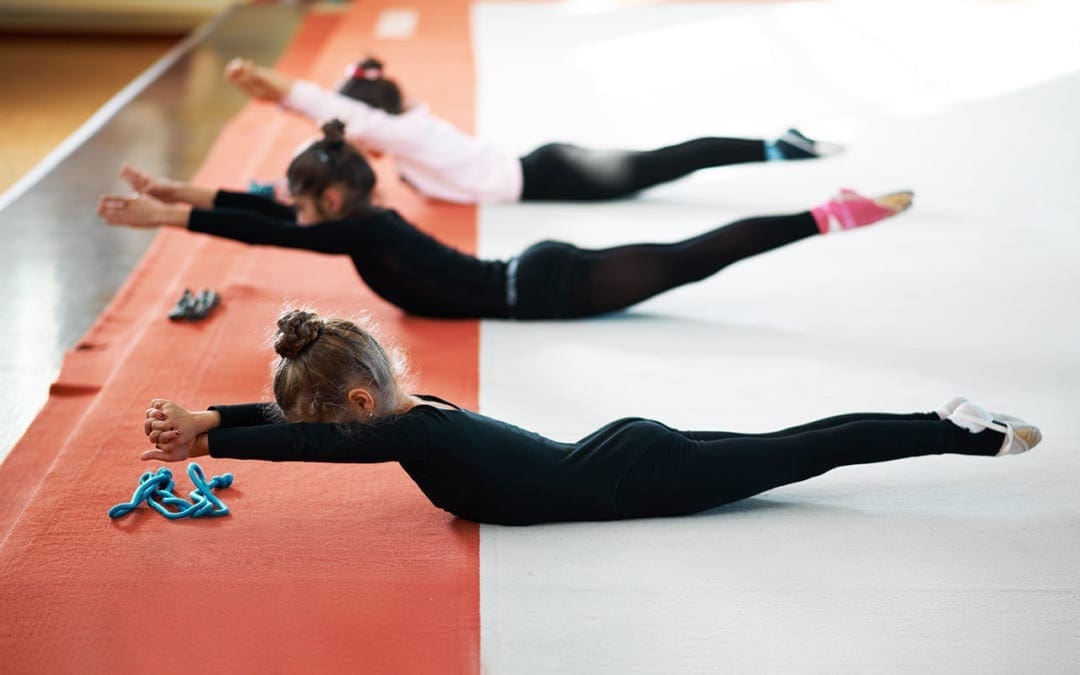
This is where strength training comes in. This could be an answer to getting kids off the couch, moving, and offers a healthy alternative to the young athletes looking for that competitive edge. Fitness experts, doctors, health coaches, and parents say absolutely.
The focus for children in strength training is not to bulk up, as this is not weightlifting, powerlifting, or bodybuilding. Fitness experts agree that these types of training regimens are not healthy or safe for children. The goal is to:
Added benefits of strength training can help young athletes improve performance through increased endurance.
Training Guidelines
It is fundamental to find a program that is safe and successful for children. Parents want a program designed specifically for kidssupervised by a fitness professional with child experience, and most of all, it is fun. For strength training, there is not a minimum age; however, the kids should understand and follow directions.
Before starting a child on any new fitness program, check with their doctor or healthcare provider.
A training program should include:
A session should start with a 5-10 minute warm-up exercise/s like stretching and light aerobics.
Every session should end with a cool-down combined with stretching and relaxation.
Kids should not immediately be using weights until proper form and technique are learned.
Kids should start with their own body weight, bands, or a bar with no weight.
Using 6-8 different exercises that address all the muscle groups, begin with 8-15 repetitions.
Each exercise should be done with a complete follow-through of the full range of motion.
If the repetitions are too much with a specific weight, reduce the weight.
Repetitions and sets should gradually increase over time to maintain the intensity of the training.
Add more weight only when the child displays the proper form and can easily do at least 10 reps.
Workouts should be 20 to 30 minutes long, 2 to 3 times per week, to get the most benefit.
Make sure to rest a day between each workout day.
Safety
Strength training was not always considered an appropriate exercise for kids. Doctors and fitness professionals believed that it was unsafe for a child’s growing body because of the added pressure on growth plates or the cartilage that has not fully turned into solid bone. However, experts now know that kids can safely participate in a strength training program with proper technique and supervision.
As with any exercise/fitness regiment, safety measures need to be in place along with heightened supervision. Unfortunately, most injuries happen when kids are not supervised, not using proper techniques, or from trying to lift too much weight. Here are some safety precautions to remember:
Learning new exercises should be done under the supervision of a trainer/instructor, making sure proper technique and form are used.
Smooth, controlled motions should be the goal.
Controlled breathing and not holding their breath needs to be taught
Proper technique will help avoid injuries
The kids’ progress should be monitored
Have the children record the exercises they have done, how many reps, and the amount of weight/resistance.
If enrolled in a strength training class, a good ratio is one instructor per 10 students. With this ratio, the kids can receive proper instruction and supervision.
Kids should train in a hazard-free, well-lit, and properly ventilated facility.
Make sure the kids drink plenty of water during and after the workout
Fitness trainers/instructors will see to it that there are frequent rest and rehydration breaks
Keep in mind
In a strength training program for children, there should be no competitive drive. Instead, the focus should be on participation, learning the movements, and positive reinforcement. Set realistic goals and expectations for the child to understand that it will take time to learn these new skills.
Remember that kids do not increase muscle size until after puberty. Please make sure the kids enjoy the strength training sessions and that they are having fun. Keep in mind that kids can become easily bored. Therefore, use various exercises and routines, keeping them excited and wanting to learn and do more.
Healthy Habits
Getting kids interested in fitness early on can help establish a life-long habit of wanting to be and stay healthy. This includes a balanced diet, plenty of rest, and regular exercise. When done correctly, strength training can be a fun and highly beneficial activity.
IFM's Find A Practitioner tool is the largest referral network in Functional Medicine, created to help patients locate Functional Medicine practitioners anywhere in the world. IFM Certified Practitioners are listed first in the search results, given their extensive education in Functional Medicine