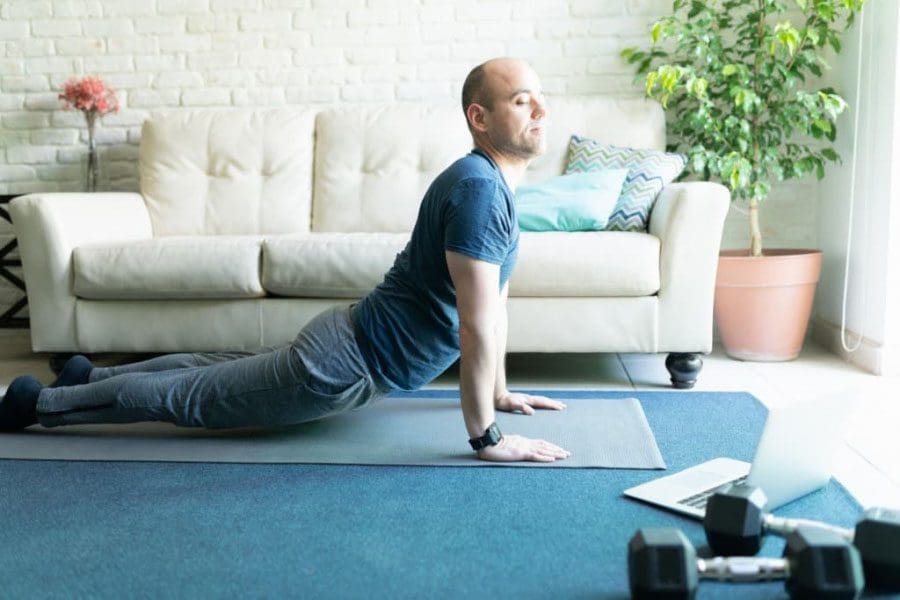
We all have our hobbies that we are passionate about, love doing, and could see turning into a second career. However, certain hobbies can generate stress on the spine. This often leads to a decrease in being able to participate in these activities, which can lead to various health issues. Maintaining the body's physical fitness and keeping the spine healthy is key to being able to continue without neck or back pain. Hobbies are an important part of life. Individuals need to enjoy what they love from sports activities to music to arts and craft projects. Having activities/hobbies help:
Boost mental health
Relieve stress
Lower blood pressure
Promotes weight loss
Meditative qualities
Here�s how to make sure the hobbies/activities are fun and safe.
Protecting the Neck
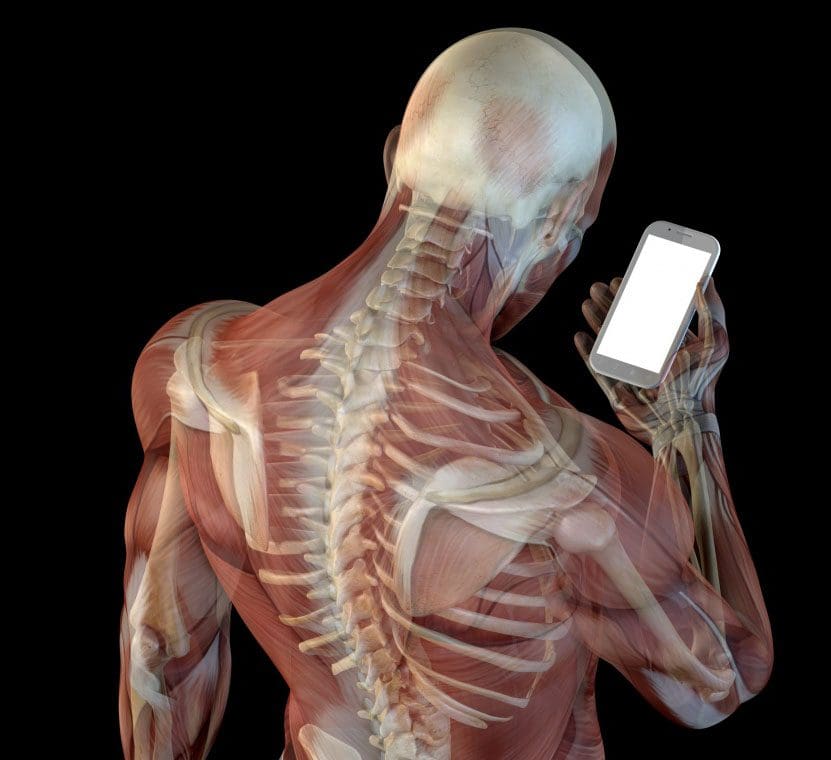
Poor posture is one of the leading causes of neck and back pain. Looking down or being in a standing/sitting hunched position regularly increases the load/stress on the neck increasing the chances for strain, injury, headaches, and chronic pain. In the neutral position, the skull weighs around 10-12 pounds.
When leaning the head forward weight increases from let's say 27 pounds at a 15-degree angle to 60 pounds at a 60-degree angle. The strain on the cervical vertebrae, joints, and muscles can be immense. A good example is text-neck. This has become a normal thing when using a smartphone, gaming, or other similar activities.
Studies suggest that the average individual spends three to five hours a day on a smartphone or tablet. This means three to five hours of extra weight on the cervical spine. Engaging in a hobby that requires an individual to look down constantly in a similar fashion can lead to serious and chronic neck pain along with other cervical issues.
Individuals are spending more time at home and getting more serious about their hobbies. This is fantastic, however, these individuals need to take time to stretch out, and get some physical activity into their hobby routine. Just like taking frequent walk-around, stretch out at work breaks, so to do hobbyists need to step back from their projects to keep a healthy balance. The position of the neck and the way it is held for activities like:
Sewing
Carpentry
Gardening
Painting
Pottery
Knitting
Music
Hobbies like this can increase the risk of neck pain, so the key is prevention, paying attention to head posture every now and again, and taking stretching breaks.
Proper Posture Makes a Difference
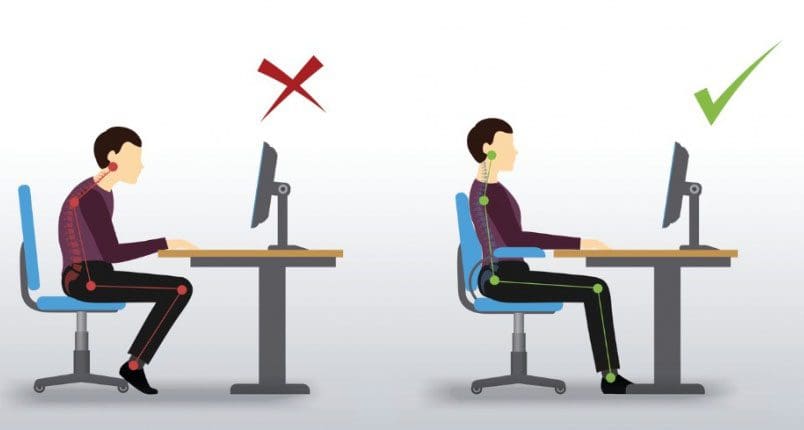
Many individuals stand and sit when working on their hobbies. This is quite common and is encouraged when doing these absorbing activities. But being immersed in these activities, most forget to check their posture when doing so. This is what leads to problems that at first are shrugged off as just soreness.
Eventually, the individual begins to engage in bad/awkward posture habits that avoid the pain and think this will help. This worsens the problems and promotes further strain/injury. Leaning, bending, reaching, and twisting curves the spine increasing the load and stress. Performing these actions over and over for extended periods means:
Strain
Low back pain
Muscle spasms
Sciatica
Leg pain
Foot pain
Slouching is another posture problem that increases the likelihood of lower back pain. Slouching causes gaps between the lower back vertebrae. This stresses the facet joints or the connections between the vertebrae. The soft tissues elongate/stretch and lengthen like muscles and connective tissue. What elongation does is:
Cause the tissues to attempt to snap back to the original shape. This can cause painful spasms.
Muscles that are constantly elongated become weaker with time.
The longer an individual sits, stands, and slouches impacts the body's health negatively, leading to a chain of health problems. Maintaining proper posture and keeping the spine straight minimizes the strain on muscles and the vertebrae. Prevent pain and discomfort.
Ergonomics at the House
Ergonomic stressors include:
The force/s required to perform and complete a physical chore/task.
Adopted static and awkward working postures to complete task/s
The repetitiveness of the task/s
Any of these factors or combination places a higher risk for discomfort, pain, and injury. The immediate surroundings like the bench, work area, craft room, etc. and how the individual moves or does not move, and interacts in these areas is the focus of ergonomics. Proper ergonomics will help protect the spine, as well as the rest of the body. Improper ergonomics can cause damage like muscle strain, repetitive movements, and incorrect posture. Taking a look at the hobby workspace the ergonomics, and making any necessary adjustments can help prevent strain/injury.
Proper seating
Make sure the right type of chair, stool, bench, etc is being utilized. Adjustable types that have neck and lower back support are the way to go. Make sure the base is stable, the seat is comfortable and adjustable. Backrests and armrests can help maintain proper posture.
Correct table/desk/workstation height
Various drafting tables and lap desks have adjustable surfaces to adjust the height for working with a proper ergonomic posture. If the work surface is not adjustable adjust the chair or make adjustments as needed. The hips should be higher than the knees to take the strain off the sacrum and lower back. The upper back should be straight, with the shoulder blades together creating a supportive platform for the neck and head.
Tools
Using the best tools for working and organization will help avoid injuries and constant awkward positions like leaning/reaching over and around the workspace. Look for tools that can be adjusted to different heights, resistance levels, etc. depending on what is needed and what will reduce any strain.
Vision
If an individual needs to lean in to get a closer look then vision could be the problem. If an individual wears glasses it could be time for a check-up. Or if an individual does not wear glasses, it could be time to see an optometrist. Non-prescription magnifiers could be the answer.
Stretching Regularly
Working too long in one position can be detrimental to overall health.
It is very understandable when individuals get into the zone, working on something creative, and not wanting to stop the flow. However, frequent breaks are vital. Stretching regularly and getting up to move around is key to staying healthy.
Neck Stretch
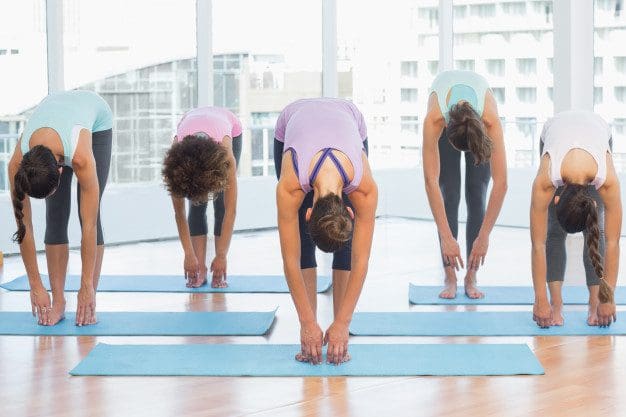
Stretch the neck by turning the head from side to side in a gentle fashion.
Tip the head to each side so the ear almost touches the shoulder.
Lower the head so that the chin almost touches the chest.
Turn the to look diagonally down at the armpit. This stretches the trapezius and levator scapulae muscles.
Hold the stretches for 10-15 seconds.
Always perform slowly and gently.
Lower Back Stretch
15 minutes a day of stretches will maintain the health of the spine. If pain or discomfort becomes frequent or unmanageable, seek professional help. Physical therapists and chiropractors are trained in orthopedic issues and ergonomics without prescription. Call a doctor or physical therapist to find out if treatment is necessary. Following these guidelines can help keep hobbies fun and without pain.
Lower Back Pain Skate Boarding Injury Treatment
Dr. Alex Jimenez�s Blog Post Disclaimer
The scope of our information is limited to chiropractic, musculoskeletal, physical medicines, wellness, and sensitive health issues and/or functional medicine articles, topics, and discussions. We use functional health & wellness protocols to treat and support care for injuries or disorders of the musculoskeletal system. Our posts, topics, subjects, and insights cover clinical matters, issues, and topics that relate and support directly or indirectly our clinical scope of practice.*
Our office has made a reasonable attempt to provide supportive citations and has identified the relevant research study or studies supporting our posts. We also make copies of supporting research studies available to the board and or the public upon request. We understand that we cover matters that require an additional explanation as to how it may assist in a particular care plan or treatment protocol; therefore, to further discuss the subject matter above, please feel free to ask Dr. Alex Jimenez or contact us at 915-850-0900. The provider(s) Licensed in Texas& New Mexico*
Finding the right surgeon that specializes in an individual's specific spinal conditions and physical health means doing some research. There are several types of procedures for spinal problems. The type of surgery depends on the condition and an individual's medical history. If surgery is recommended for a lumbar herniated disc or LHD combined with sciatica here are a few things to think about.
Devotes at least 50% of their practice to spinal conditions
Specializes in treating herniated disc/s and sciatica. This means they will have added/specialized knowledge and expertise.
It is extremely important that an individual feels comfortable and feels they are able to communicate freely with the surgeon. A professionally qualified surgeon should:
Spend adequate time with the individual
Answer all questions
Provide all information needed about the condition and treatment
Listen to what the individual has to say
Is open-minded
Is not hard to get in contact with
Has experience in the latest methods and techniques
What to look at and think about
Individuals can feel uncomfortable asking questions, but thorough communication is key. Remember, it is your body, and it is your right to know the details of the spinal disorder, along with non-surgical and surgical approaches to treatment that are available. There is time to consider the options and make an informed decision about the treatment plan as most spinal procedures are elective. Ask the surgeon all the questions you have to help decide wisely and with confidence. Make sure they address all concerns, and any others not listed.
The surgeon's specialization/focus
Orthopedic surgeons and neurosurgeons perform spinal procedures. Each will have a specific interest and expertise in certain spinal condition/s. For example, some surgeons may specialize in treating adult or pediatric patients, and some may only treat either lumbar/low back or cervical/neck conditions. Within those groups, some focus on:
Spinal deformities
Tumors
Myelopathy a spinal cord disease
Specific spinal cord diseases
Minimal invasive surgery option
Minimally invasive spine involves tiny incisions, that reduces the recovery time needed to heal. With this type, individuals can be up and walking within hours after surgery. Unfortunately, not all conditions can take this approach.
Is the surgery absolutely necessary, or can it be treated non-surgically?
Sciatica and herniated discs can be quite painful and cause disability. Never rush into surgery just to relieve symptoms. As surgery can cause other types of pain symptoms and issues. Herniation and sciatica can be resolved with:
Chiropractic
Physical therapy
Medications
Injections
Lifestyle changes
Diet adjustments
Regular exercise
Weight loss
However, if there are neurologic symptoms, like weakness in the leg, foot, numbness, or loss of bladder or bowel control - this is considered a medical emergency - then surgery is absolutely needed.
The number of similar procedures performed
The surgeon�s experience is very important. The more experienced, the better. Ask if they can refer to other patients who have had similar procedures.
Recovery time
Every patient is unique, as is the type of surgery, and recovery times. They all vary accordingly. General health, physical condition, and the severity of the disorder play a role in how long and how involved recovery time will be. Experienced surgeons can provide more specific answers concerning recovery/healing time.
Complication rate
All surgeries carry some risk of complication. Complication rates that are more than 10% is a red flag. Possible post-surgery complications.
Infection rate
Surgeons should have an infection rate lower than 10%. However higher rates do not always mean that surgeon is at fault as higher rates can come from performing highly complex procedures. Another reason for high infection rates could be the patients themselves like smokers or individuals with diabetes have increased risks for infection. However, do not feel uncomfortable asking the surgeon to explain a high infection rate.
Decide to not opt for spine surgery
As a surgeon produces a diagnosis, they should present a recommended treatment plan, including alternative treatments/therapies. Ask for another explanation of any part of the evaluation, diagnosis, or available treatment options.
Get a second opinion
A second opinion should be encouraged. A second opinion can reinforce the surgeon�s recommendations and offers a new perspective. The surgeon should be comfortable with a second opinion. This does not mean that the individual does not trust the surgeon. It does mean that there is considerable interest in achieving optimal health and making sure that surgery is the absolute right thing to do. Pass on surgeons that discourage or disapprove of second opinions and continue looking.
Whiplash Chiropractic Massage Therapy
Dr. Alex Jimenez�s Blog Post Disclaimer
The scope of our information is limited to chiropractic, musculoskeletal, physical medicines, wellness, and sensitive health issues and/or functional medicine articles, topics, and discussions. We use functional health & wellness protocols to treat and support care for injuries or disorders of the musculoskeletal system. Our posts, topics, subjects, and insights cover clinical matters, issues, and topics that relate and support directly or indirectly our clinical scope of practice.*
Our office has made a reasonable attempt to provide supportive citations and has identified the relevant research study or studies supporting our posts. We also make copies of supporting research studies available to the board and or the public upon request. We understand that we cover matters that require an additional explanation as to how it may assist in a particular care plan or treatment protocol; therefore, to further discuss the subject matter above, please feel free to ask Dr. Alex Jimenez or contact us at 915-850-0900. The provider(s) Licensed in Texas& New Mexico*
Nutritional relief for acute and chronic back pain can be achieved by eating specific fruits and vegetables. Individuals dealing with acute and chronic back pain have recently been asking if their diets can be modified to reduce back pain. Absolutely, eating healthier will lead to weight loss and will help reduce back pain symptoms.
The big surprise was a nutritionist that did not know about this recommendation to help ease back pain symptoms. Life seems to throw a lot of curveballs especially in the midst of pain. Stress eating and just eating great tasting food is one method/technique of dealing with the pain, as it makes you feel good and forget the pain for a little while.
However, the problem is still present and becomes worse with the added weight. Not to mention the consequences of eating too much unhealthy food, like diabetes, high blood pressure, etc. Eating junk food and suffering in silence can become a way of life.
Pain Relief With Healthy Food
Most individuals will experience back pain at some point. There are a variety of causes from disease to injury and just normal wear and tear.Fortunately, for most, it will be short-lived. But for some chronic pain can develop, creating a new set of health issues and makes achieving back pain relief more complicated. It may sound too easy but making adjustments to your diet can make all the difference in dealing with and eliminating back pain.
Manage and eradicate back pain
Constantly going for the wrong foods, speeds up the inflammation process. Various studies show certain foods contain components that have anti-inflammatory properties. Experts agree that choosing healthy foods for and/or chronic illnesses reduces flare-ups, inflammation and helps heal the body back to top form.
The pain reduces because the inflammation triggers are kept in check. This means the grocery store and healthy foods can be a powerful tool for fighting inflammation. Our ancestors lived off the land eating organic natural foods and healed themselves without refined products.
Multi-colored vegetables and fruits
Dark green vegetables supply powerful nutrients that fight inflammation. Added benefits are they help remove cancer-causing free radicals. Examples include:
Spinach
Broccoli
Kale
Collard greens
Orange and yellow vegetables like:
Carrots
Squash
Pumpkin
Peppers
Pineapple
Carrots contain vitamin E and C and antioxidants that protect the healthy tissue around the inflamed area. Pineapple contains natural enzymes that help break down fibrin that forms around any acute injury. As the barrier is broken down nutrients are allowed to penetrate the area and ease the inflammation.
Nutritional Relief
The ability to heal the body with proper food choices should be a no brainer. But because humans are creatures of habit, breaking away from what is normal for the individual can be a challenge. Some simple ways to start eating toward healing:
Reduce the fat intake like butter, corn, red meat, and simple carbohydrates that are high in sugar and low in fiber.
When eating fill up with vegetables, fruits, and herbs and reduce the meat intake. Eat two to three servings of fruits and vegetables at all meals.
There are plenty of choices that can aid in healing the body from the inside out. Take nutritional relief steps now and start on the road to recovery.
Back Pain During Pregnancy Treatment
Dr. Alex Jimenez�s Blog Post Disclaimer
The scope of our information is limited to chiropractic, musculoskeletal, physical medicines, wellness, and sensitive health issues and/or functional medicine articles, topics, and discussions. We use functional health & wellness protocols to treat and support care for injuries or disorders of the musculoskeletal system. Our posts, topics, subjects, and insights cover clinical matters, issues, and topics that relate and support directly or indirectly our clinical scope of practice.*
Our office has made a reasonable attempt to provide supportive citations and has identified the relevant research study or studies supporting our posts. We also make copies of supporting research studies available to the board and or the public upon request. We understand that we cover matters that require an additional explanation as to how it may assist in a particular care plan or treatment protocol; therefore, to further discuss the subject matter above, please feel free to ask Dr. Alex Jimenez or contact us at 915-850-0900. The provider(s) Licensed in Texas& New Mexico*
Acetaminophen, best known as Tylenol, is one of the most common medications for headaches and general pain. More than likely the most common back, neck, and overall pain medication around. However, it is only a pain reducer, and will not reduce inflammation.
Doctors often recommend this medicine before moving on to prescription medication. A member of the analgesic pain reliever class of medications. These can vary in strength along with side effects, but their purpose is to reduce pain. Acetaminophen can be found in over 600 prescriptions and over-the-counter medicines, including certain opioids. Other acetaminophen brand names include:
Tylophen
Tempra
FeverAll
Mapap
Pharbetol
Panadol
Strength and Weakness
When neck or back pain presents, over-the-counter medicines fall into two categories. These are acetaminophen or non-steroid anti-inflammatory drugs also known as NSAIDs. Acetaminophen and NSAIDs like Advil, aspirin both relieve pain. However, non-steroid anti-inflammatories also help in reducing inflammation. Although non-steroid anti-inflammatories have this added benefit, they can also present potential side effects like stomach and gastrointestinal problems.A spinal sprain or strain can cause acute back pain. Acetaminophen is typically recommended for acute back or neck pain and for pain that comes and goes quickly. Individuals that experience periodic pain usually take acetaminophen when the pain flares up. Individuals with chronic spinal pain report acetaminophen help to alleviate/reduce the pain. Many with chronic pain use acetaminophen regularly and not only when the pain presents. This helps manage before pain strikes.
Safety
Acetaminophen is gentle on the stomach, making some individuals preferring it over the non-steroid anti-inflammatories. But just like any other medication acetaminophen has its risks and can cause severe damage if used improperly.
Taking acetaminophen in large doses can cause severe liver damage. The Food and Drug Administration reports that acetaminophen overdoses send over fifty-thousand individuals to the emergency room every year. And over one-hundred Americans die yearly from accidental overdoses.
Using acetaminophen safely means taking no more than 3,000 milligrams a day and no more than 1,000 milligrams at a time. Take extra precautions when taking extra-strength. These can include as much as 650 mg per pill/capsule.Before taking acetaminophen for back and neck pain, talk to a doctor or pharmacist about the proper dosage. And tell the doctor about all the medications being taken including natural herbs and holistic. Another reason for telling the doctor is that many other medications have acetaminophen included without you knowing it. Part of the discussion should include alcohol consumption. This can elevate the risk of negative reactions.
Resources
If non-pharmacological treatments/therapies done for at least 4 months prove ineffective then an acetaminophen regimen could be a safe and effective part of a back and neck pain treatment plan. While this medicine is one of the most common treatments, it is not without risks and side effects. Talk to a doctor or pharmacist about all the medications and supplements to ensure the regimen supports health for the long-term. To learn more along with safety information go to Acetaminophen Patient Guide.
Severe Back Pain Chiropractic Treatment
Dr. Alex Jimenez�s Blog Post Disclaimer
The scope of our information is limited to chiropractic, musculoskeletal, physical medicines, wellness, and sensitive health issues and/or functional medicine articles, topics, and discussions. We use functional health & wellness protocols to treat and support care for injuries or disorders of the musculoskeletal system. Our posts, topics, subjects, and insights cover clinical matters, issues, and topics that relate and support directly or indirectly our clinical scope of practice.*
Our office has made a reasonable attempt to provide supportive citations and has identified the relevant research study or studies supporting our posts. We also make copies of supporting research studies available to the board and or the public upon request. We understand that we cover matters that require an additional explanation as to how it may assist in a particular care plan or treatment protocol; therefore, to further discuss the subject matter above, please feel free to ask Dr. Alex Jimenez or contact us at 915-850-0900. The provider(s) Licensed in Texas& New Mexico*
Breathing exercises along with meditation can be beneficial for individuals with back pain. Breath control techniques, exercises, and meditation techniques help bring the mind and body into functional harmony.This can help ease and reduce back pain. The article discusses the benefits of how these techniques help promote spinal health.
Breathing Exercises
Developing the ability to rhythmically breathe properly and optimally helps reduce back pain. This is because it allows the individual to focus on breathing, keeping the brain from focusing on the back pain. Most individuals breathe in a shallow manner, taking short, uneven breaths. This does not allow for sufficient blood flow throughout the body. Only the minimum amount is being pumped, which does not help inflamed/injured areas.
Proper breathing technique involves taking deep slow, smooth breaths that reach into the abdominal area. Each inhale should be the same length when exhaling. One way to make sure is to inhale and hold for five seconds then exhale for five seconds. This can be done while sitting or lying down but these exercises should be practiced anywhere regularly to get into the habit of breathing fully. It could be in the car, at work, at a desk, the store, etc.
Meditation
Meditation helps the body and the brain relax. This helps to loosen and unclench the back muscle tension. It helps decrease the perception of pain by resetting the focus on something other than the pain. While meditating the objective is to let go of negative thoughts, specifically thoughts on pain, allowing the positive to take over.
There are various ways this can be achieved like listening or watching the rain, ocean waves, or nature soothing videos. It's not about forgetting the back pain but a system to cope with it. Meditation helps an individual become more aware of their mind and body. Meditation should be done sitting or lying down in a comfortable position.
Connecting Mind and Body
Today local gyms and yoga studios offer workshops that focus on breathing and meditation combined with linking the mind and body. Check out DVDs and books available. These exercises/techniques are different for everyone. Try a variety to figure out which works for you, as it could be a combination. It's all about finding safe natural ways to help relieve and prevent back pain. Although these are not considered strenuous physical activity, consult with a doctor or chiropractor before beginning a breathing/meditation regimen.
Back Pain Rehabilitation
Dr. Alex Jimenez�s Blog Post Disclaimer
The scope of our information is limited to chiropractic, musculoskeletal, physical medicines, wellness, and sensitive health issues and/or functional medicine articles, topics, and discussions. We use functional health & wellness protocols to treat and support care for injuries or disorders of the musculoskeletal system. Our posts, topics, subjects, and insights cover clinical matters, issues, and topics that relate and support directly or indirectly our clinical scope of practice.*
Our office has made a reasonable attempt to provide supportive citations and has identified the relevant research study or studies supporting our posts. We also make copies of supporting research studies available to the board and or the public upon request. We understand that we cover matters that require an additional explanation as to how it may assist in a particular care plan or treatment protocol; therefore, to further discuss the subject matter above, please feel free to ask Dr. Alex Jimenez or contact us at 915-850-0900. The provider(s) Licensed in Texas& New Mexico*
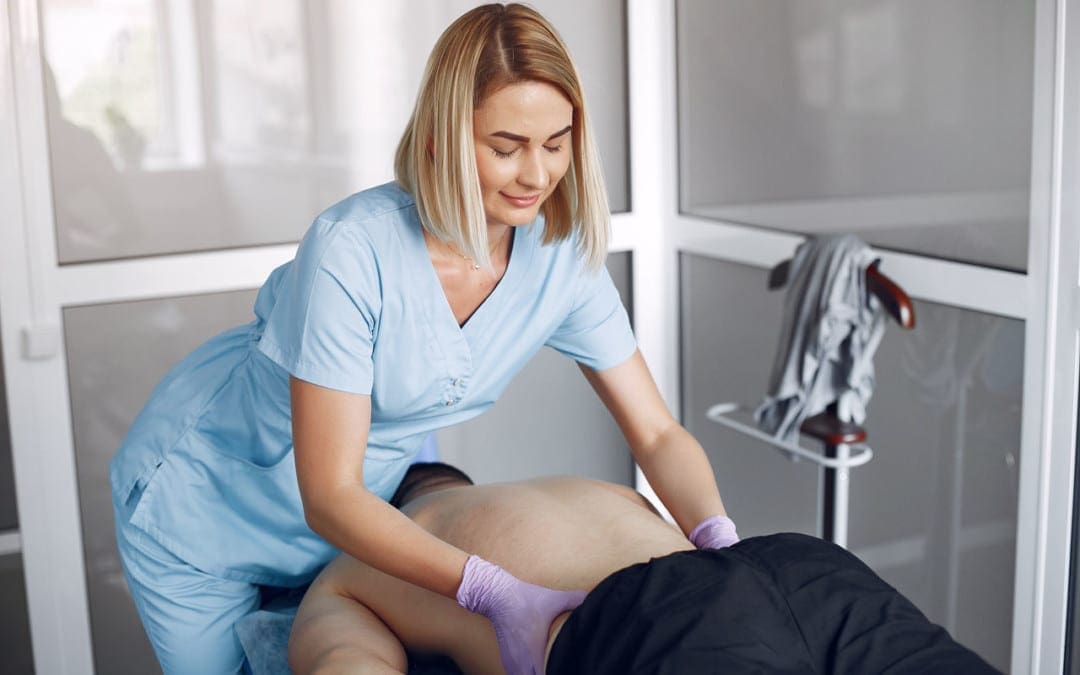
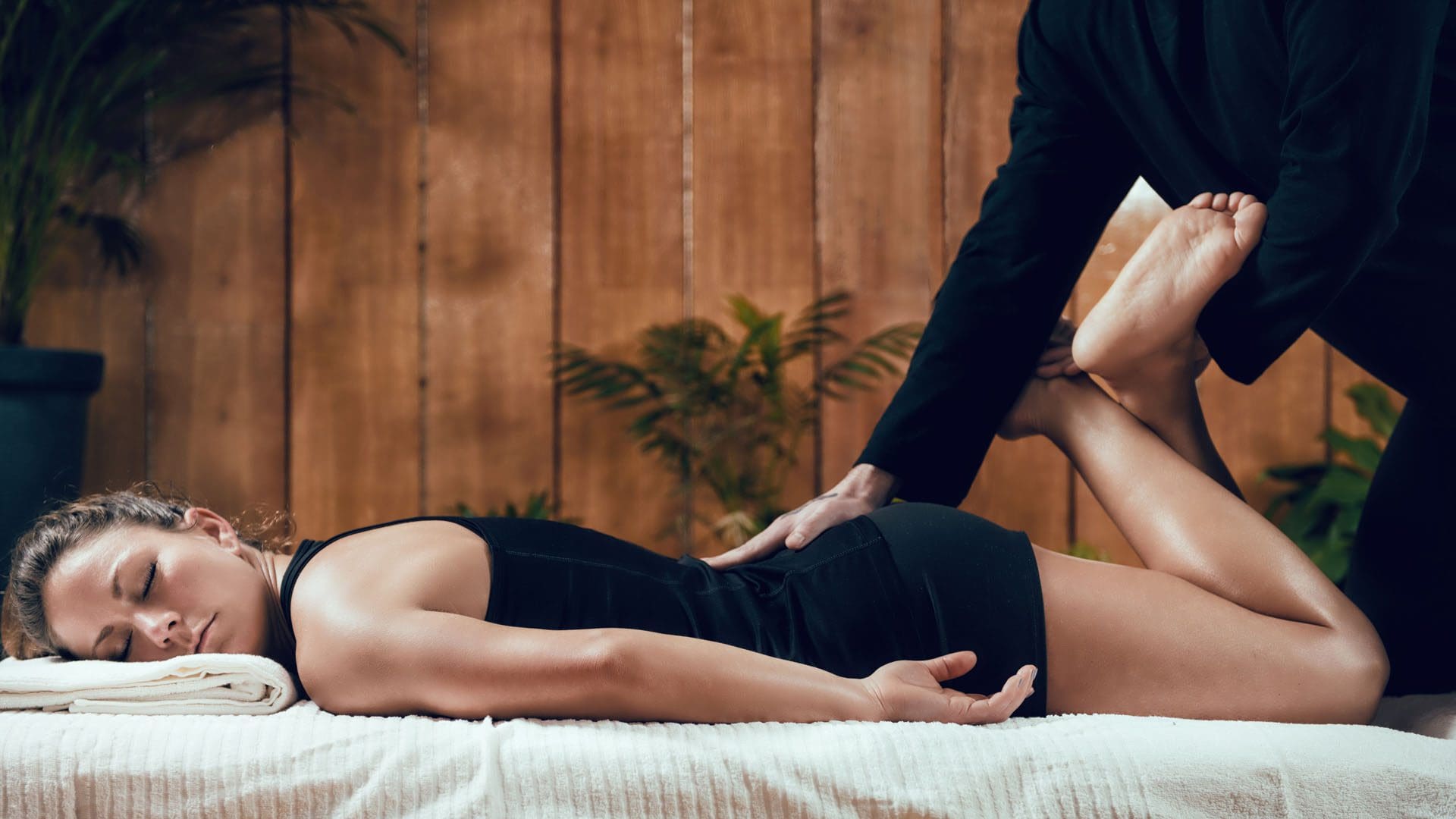
Massage therapists have come a long way in reducing pain and improving wellness. Back pain is one of the most common reasons people seek physical therapy, chiropractic care, and massage therapy. Back pain affects around three in four adults at some point in their lives. Research supports that massage is a bona fide back pain treatment option. This could be welcome news to those who prefer not to use medications or invasive approaches to managing back pain. The right massage therapists can make all the difference in achieving the benefits.
Massage goals
The first thing is to figure out what the goals are from the massage itself.
Are there acute back or neck issues that need to be addressed?
Looking for non-invasive therapy for long-term management of a chronic spinal condition?
Is the massage for performance enhancement? Could be athletic or to help perform daily activities easier.
Is it just wanting to relax?
Figuring out what it is to be achieved from the massage is essential to finding the right therapist.
Massage clinic, spa, health club, home
A massage can be performed in health clubs, spas, medical clinics, and at home. The location does not predict the massage type or specialty of the massage therapists, but it can be an indicator. Example: For athletic performance, a gym, or Crossfit center massage therapist is a good place to start. If massage is part of a back and neck pain management plan, look into the massage therapists at a medical clinic or a therapeutic massage clinic.
Ask for recommendations and ask questions
When searching, get recommendations, and ask plenty of questions to get all the information needed.
After a few prospects have been found then ask plenty of questions before making an appointment. This can help determine if this will be a long-term therapeutic relationship or a one-time visit. If looking to manage a serious spinal condition, the recommendation would be to find a therapist with more experience.
Massage education programs that are only entry-level do not provide in-depth education and practice for the many specific and complex spinal conditions. The real experience comes from years of practice along with continued education. This is how massage therapists are able to expand their clinical analysis and treatment development expertise. Get a sense of the massage therapist�s education and practice experience. This will help significantly when choosing a therapist best equipped.
Questions to ask potential therapists:
How long have you been practicing?
What�s your massage education?
Related education or practice experience? Many nurses or occupational therapists go on to become massage therapists. This means the information and knowledge from their nursing are now integrated into their massage practice.
How much-continued education have you gone through?
How many sessions do you offer?
What does the schedule look like? Think about scheduling when the therapist is more refreshed, like early in the workweek or their scheduled shift.
Do you have specialties with specific conditions or techniques?
Do you get massaged? If so, how often? Massage is a labor-intensive task. Therefore, it could be best to go to a therapist that keeps themselves healthy and balanced.
How long does it take for the initial appointment?
Do you have to book ahead?
If a therapist is booked don't get frustrated
If a long-term therapeutic relationship for the management of a spinal condition is the goal, then it may be worth waiting for. A therapist that has a long wait time for initial appointments means they have patients that see them regularly and that�s a very good sign of quality care. One possible option for individuals waiting for their appointment is to go to a local massage school to get treated. This option is less expensive, great for body maintenance, and provides opportunities for the training therapists.
Professionalism
A quality indicator is the professionalism of the therapist. This includes the extent to which they model the values of a health care professional valued by the patient. This is different for everyone. Questions to consider:
Are they on time?
Does the therapist cancel appointments?
Are you comfortable around them?
Do they listen?
Does the patient help in the development of a treatment plan?
Are they comfortable and engaged in the work?
Are they taking their massage career seriously?
Feeling at ease during the appointment/s is very important to massage success and relief. If anything about the therapist causes hesitation, look for another.
Massage Management
Massage is an excellent back pain treatment option that has gained popularity as a complement to pain management plans and as an alternative to invasive procedures. But, massage is not a cure-all. Often the cause of the back pain does not go away entirely. This is where massage therapy comes in as a pain management tool.
It's important to consider the condition�s duration and severity when evaluating the success of a session. This helps in planning the massage schedule. When there is a complex and established spinal condition be patient, as a 1-hour massage is not going to solve a 10-year back pain battle. However, with perseverance massage can safely and effectively help reduce pain and promote a better quality of life.
Chiropractic Massage Rehabilitation
Dr. Alex Jimenez�s Blog Post Disclaimer
The scope of our information is limited to chiropractic, musculoskeletal, physical medicines, wellness, and sensitive health issues and/or functional medicine articles, topics, and discussions. We use functional health & wellness protocols to treat and support care for injuries or disorders of the musculoskeletal system. Our posts, topics, subjects, and insights cover clinical matters, issues, and topics that relate and support directly or indirectly our clinical scope of practice.*
Our office has made a reasonable attempt to provide supportive citations and has identified the relevant research study or studies supporting our posts. We also make copies of supporting research studies available to the board and or the public upon request. We understand that we cover matters that require an additional explanation as to how it may assist in a particular care plan or treatment protocol; therefore, to further discuss the subject matter above, please feel free to ask Dr. Alex Jimenez or contact us at 915-850-0900. The provider(s) Licensed in Texas& New Mexico*
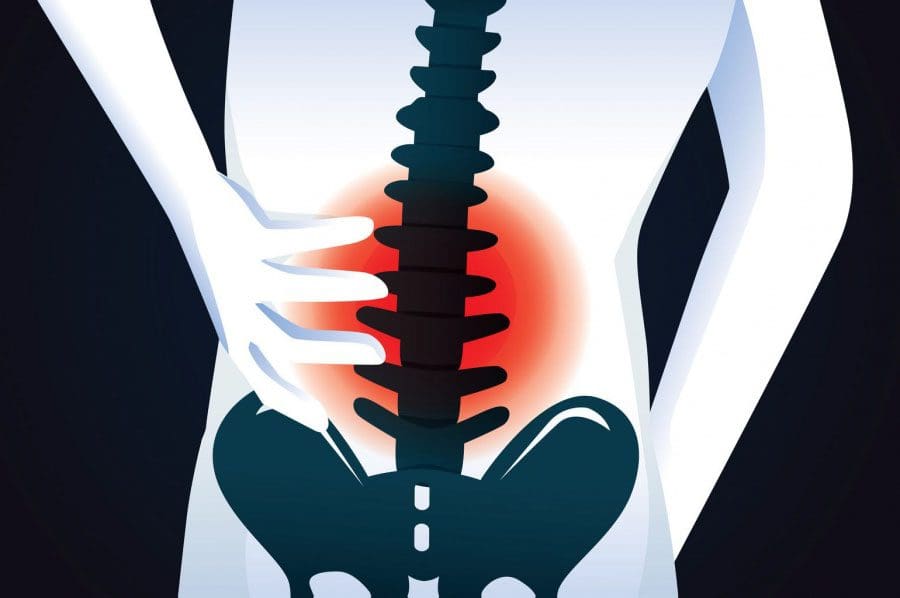
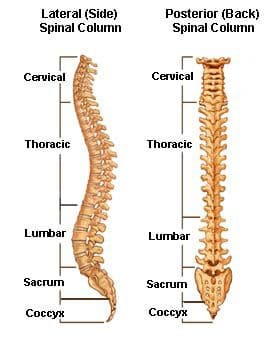
The spinal/vertebral column extends from the skull to the pelvis and consists of individual bones known as vertebrae. It is what holds the body upright, allows the body to bend, twist, and is the conduit for major nerves running from the brain to the rest of the body. The vertebrae are grouped into four regions. They are the:
�
SpinalTerminology
Number of Vertebrae
Area of Body
Abbreviation
Cervical
7
Neck
C1-C7
Thoracic
12
Chest
T1-T12
Lumbar
5-6
Low back
L1-L5
Sacrum
5 fused vertebrae
Pelvis
S1-S5
Coccyx
3
Tailbone
None
�
Cervical Vertebrae
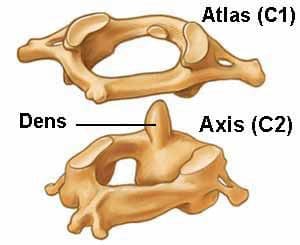
The cervical spine breaks down into two parts. The upper cervical C1 and C2, and the lower cervical C3 through C7. The C1 vertebrae are known as the Atlas and the C2 the Axis. The Occipital Bone is a flat bone that forms the back of the head.
�
Atlas
The Atlas is the first cervical vertebra and is abbreviated as C1. This vertebra supports the skull. It appears different from the other spinal vertebrae, as it resembles a ring and is made up of two masses joined at the front and back by the anterior and posterior arches. �
�
Axis
The Axis is the second cervical vertebra and is abbreviated C2. It is a tooth-like process that projects upward. It is referred to as the odontoid process or dens, which is Latin for tooth. It provides a kind of pivot and collar that allows the head along with the atlas to rotate.
�
Thoracic Vertebrae
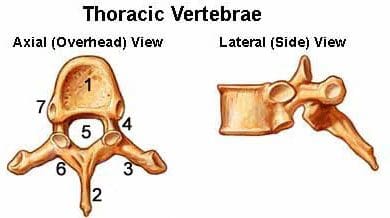
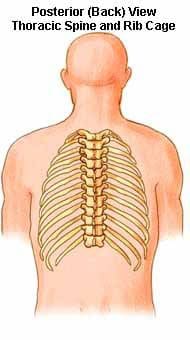
The thoracic vertebrae become larger from T1 through T12. What makes the thoracic spine unique is that it is the only vertebrae that support the ribs and is made up of pedicles, spinous processes, and large neural passageways that help reduce nerve compression. Unfortunately, not everyone has a large intervertebral foramen, which can cause compression. �
�
Vertebral Body
Spinous Process
Transverse Facet
Pedicle
Foramen
Lamina
Superior Facet
The thoracic vertebrae are attached to the ribs. However, at T11 and T12, the ribs are not attached and are called floating ribs. The region of the spine's range of motion is limited because of the rib/vertebrae attachments and the long spinous processes. �
Lumbar Vertebrae
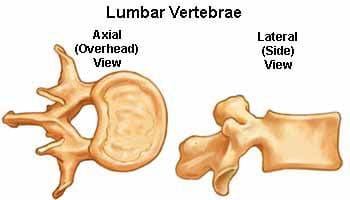
The lumbar vertebrae increase in size from L1 through L5. These are the vertebrae that take the body's weight along with any loading force that can create biomechanical stress. The pedicles are longer and wider than the thoracic spine pedicles, and the spinous processes are horizontal and more square. The neural passageway is large but nerve root compression is very common due to disc herniation from poor posture, prolonged sitting, improper lifting, etc. �
�
Vertebrae's Purpose
The vertebrae range in size with the cervical region being the smallest. The lumbar low back region is the largest. The vertebral bodies of the spinal column are what bear the weight. The body's upper weight is dispersed through the spine to the sacrum and pelvis. Thee natural curves in the spine provide resistance, flexibility by distributing the body's weight, and axial loads/forces sustained when in motion. Vertebrae are made up of many elements critical to the overall function of the spine. This includes the intervertebral discs and facet joints. Functions of the spinal/vertebral column include: �
Protection
Spinal Cord Internal Organs
Attachment
Ligaments Muscles Tendons
Support Structure
Head Shoulders Chest Connect Upper and Lower body Balance
The sacrum is located behind the pelvis. It consists of five bones that are abbreviated S1 through S5. They are fused together in a triangular shape. The sacrum fits between the hipbones and connects the spine to the pelvis. The last vertebra L5 moves with the sacrum. Right below are five more bones that are also fused together and they form the Coccyx or tailbone.
�
Intervertebral Discs
The intervertebral discs make up a quarter of the spinal/vertebral column's length. There are no discs between the Atlas, Axis, and Coccyx. Discs are not connected to the body's vascular system and so depend on the endplates to disperse essential minerals and nutrients. The cartilaginous layers keep the discs in place. They are fibrocartilaginous cushions that function as the spine/body's shock absorbers. They protect the vertebrae, brain, nerves, etc. There is some vertebral motion that the discs allow but individual disc movement is limited. Significant motion is possible when the discs work together. �
�
Annulus Fibrosus and Nucleus Pulposus
Intervertebral discs are made up of an annulus fibrosus and a nucleus pulposus. The annulus fibrosus is a strong radial structure made up of lamellae. Concentric sheets of collagen fibers connect to the endplates. These sheets are positioned at various angles. The annulus fibrosus encapsulates the nucleus pulposus. �
�
Both are made up of water, collagen, and proteoglycans. However, the larger amount of water and proteoglycans are in the nucleus pulposus. Proteoglycan molecules are essential because they attract and retain water. The nucleus pulposus consists of a hydrated gel-like substance that resists compression. The amount of water in the nucleus changes throughout the day. This depends on the activity or non-activity. All in all proper care and maintenance of the spinal/vertebral column is vital to general health and overall well-being.
Car Accident Rehabilitation Chiropractor
�
Dr. Alex Jimenez�s Blog Post Disclaimer
The scope of our information is limited to chiropractic, musculoskeletal, physical medicines, wellness, and sensitive health issues and/or functional medicine articles, topics, and discussions. We use functional health & wellness protocols to treat and support care for injuries or disorders of the musculoskeletal system. Our posts, topics, subjects, and insights cover clinical matters, issues, and topics that relate and support directly or indirectly our clinical scope of practice.*
Our office has made a reasonable attempt to provide supportive citations and has identified the relevant research study or studies supporting our posts. We also make copies of supporting research studies available to the board and or the public upon request. We understand that we cover matters that require an additional explanation as to how it may assist in a particular care plan or treatment protocol; therefore, to further discuss the subject matter above, please feel free to ask Dr. Alex Jimenez or contact us at 915-850-0900. The provider(s) Licensed in Texas& New Mexico*
IFM's Find A Practitioner tool is the largest referral network in Functional Medicine, created to help patients locate Functional Medicine practitioners anywhere in the world. IFM Certified Practitioners are listed first in the search results, given their extensive education in Functional Medicine