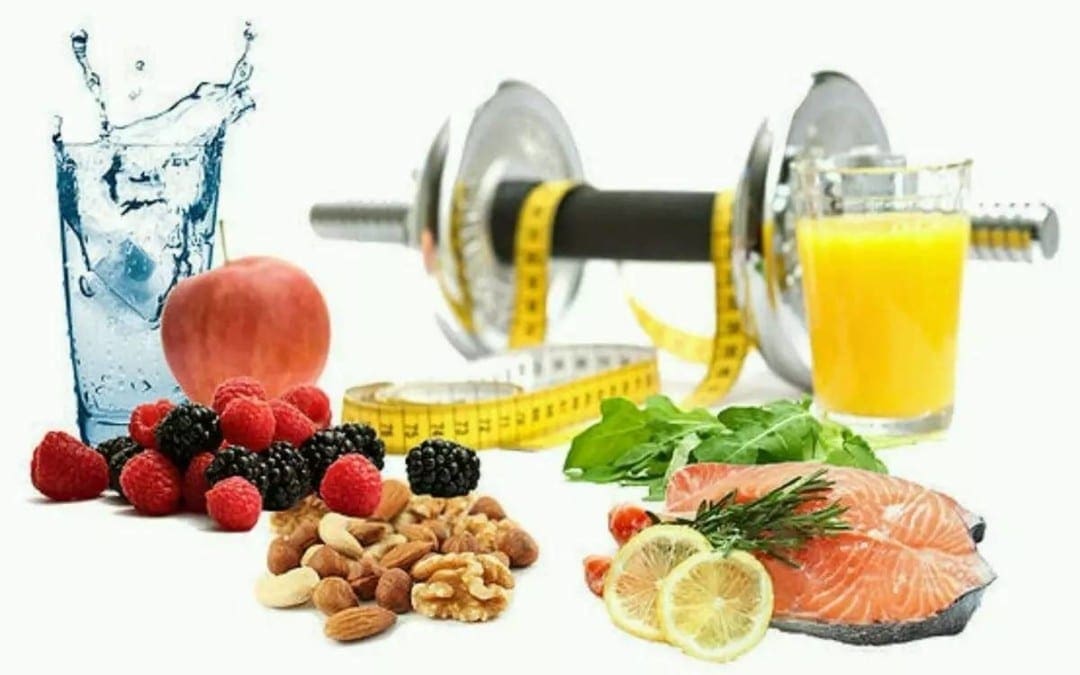
Clinicians recognize that lifestyle changes can be difficult for patients. Research is currently helping us understand what patients actually need to have in order to produce effective and sustainable changes in their diet and physical activity.
How is nutrition and exercise effective for well-being?
Two intervention studies suggest direct access to healthy food enhance emotional well-being and metabolism respectively. When patients with chronic disease learn by performing lifestyle modification behaviors, even over a brief period of time, both their well-being and wellness improve.
Nutrition & Exercise Research Study
At a randomized controlled trial over a two-week interval, researchers investigated the effects of giving a group of young people a $10 voucher for fruits and vegetables and twice per day text-reminders versus giving yet another group of young people received the real fruits and vegetables worth $10 with no reminders.
Despite both classes consuming relatively the same amount of fruits and vegetables, such as a greater amount than ordinary even, only the group who had been given fruits and veggies flourished and showed improvements in their vitality and motivation. This study suggests that direct access to healthy food might be necessary for successful dietary modification, even if the clinician is providing “high-touch” support. Quite simply, clinicians might wish to think about exploring their patients’ access to standard meals prior to giving them other tools to help them eat better.
In a different study, over a 12-week period, a randomized controlled trial of 24 breast cancer survivors split them to either a fitness program or a management group instructed to continue their regular exercise routines. The exercise group saw increased muscle strength and endurance, as well as decreased body fat percentage, waist circumference, visceral fat area, insulin levels, leptin/adiponectin ratios, and DKK1 and SFRP1 levels. The researchers indicate that DKK1 and SFRP1 may be useful biomarkers to ascertain both long-term exercise’s advantages along with the prognosis of patients. In addition they suggest exercise might have a therapeutic advantage in those with chronic illnesses.
Fortunately, many integrative and functional medicine practitioners find innovative methods to place new science into practice, and new programs make it possible for clinicians to apply the results from studies such as these right away from the clinic. Many integrative and functional medicine practitioners offer a toolkit containing more than 200 items that help enhance patient compliance to professionals. General ill-being and chronic disorder decreases, when patients learn lifestyle modification behaviors.
The scope of our information is limited to chiropractic and spinal injuries and conditions. To discuss options on the subject matter, please feel free to ask Dr. Jimenez or contact us at 915-850-0900 .
By Dr. Alex Jimenez
Additional Topics: Wellness
Overall health and wellness are essential towards maintaining the proper mental and physical balance in the body. From eating a balanced nutrition as well as exercising and participating in physical activities, to sleeping a healthy amount of time on a regular basis, following the best health and wellness tips can ultimately help maintain overall well-being. Eating plenty of fruits and vegetables can go a long way towards helping people become healthy.
Since ketones are a preferred fuel for the heart and the diaphragm, and because a state of ketosis may provide extreme focus and cognitive performance during difficult mental activities, a ketogenic diet can be extremely useful for endurance athletes such as triathletes, distance swimmers, cyclists, marathoners, ultra-runners, etc..
Problem is, there are not a ton of tools out there about how highly active people can really get into a state of ketosis.
In this guide, author, triathlete, and ketogenic expert extraordinaire Patricia Daly explains how to do things the ideal way. Patricia just finished writing an amazing publication called “Practical Keto Meal Plans For Endurance Athletes: Tips, Tricks And How To’s For Optimizing Performance Using A High Fat, Low Carb Meal Plan”, and she has a wealth of information on this topic.�So in this article, you’re going to get the top 10 mistakes low-carb athletes make.
Mistake #1: Being Scared of Fat
The ketogenic diet is quite different from other typical diets. The objective of your lifestyle is to teach the body to utilize ketone bodies rather than glucose as the primary source of energy. That is why the quantity is about 75 to 85+ percent of daily caloric consumption.
Quite simply, if you operate out quite a bit you probably eat about 2,900 calories a day, of which about 2,300 will come from fat should you follow a ketogenic diet. Fat contains 9 calories per gram, and you will eat 256g of fat daily, based on how much you train of course. To simplify this further: all your intake will be approximately 18 tablespoons, one tablespoon of olive oil, for example, weighs approximately 14g.
Mistake #2: Eating Too Much Protein
Another mistake novices make is to substitute most of the carbs they used to consume with protein instead of fat. This happen all of the time. The problem is that excess protein intake can result in gluconeogenesis, which is the conversion of amino acids to glucose. This is not what we need on a ketogenic diet, to the contrary, promote the creation of ketone bodies from fatty acids to keep glucose levels low.
A lot of men and women are amazed when they start weighing their food according to the proper meal plans and realize how small protein they actually must consume on a ketogenic dietplan. But fat is protein sparing, meaning that a high fat consumption is decreased with by your need for protein.
Mistake #3: Carbs Creeping In
Carbohydrates can quickly add up if you’re eager to get your veggies, herbs and spices in. They can in fact be found in products that you’d never think contained carbs.
Good examples are any processed foods, shop bought salad dressings, milk replacements (many almond and coconut milks have added sugar), tomato sauce, a few meats, such as duck confit, starchy vegetables and even herbal tea, to name only a few. Eating out can be challenging because most restaurants prefer to use dressings, sauces and dips that have added alternative or honey sources of sugar. It tastes nice but is not keto-friendly. Having strong, reliable information is key to carb restriction, especially in the first stages when metabolic alterations occur.
Mistake #4: Giving Up Too Early
The faster you enter nutritional ketosis, the more side effects you could suffer from initially. The metabolic changes may be striking because every single cell in the body wants to do the change from glucose. Insulin is influenced: Amounts return because of reduced consumption. Insulin allows the kidneys to hold on to sodium. If insulin is at a lower level, the body starts getting rid of excess sodium and also water.
This is why it’s so important to guarantee you add sufficient sodium to your diet and keep well hydrated, especially in the first few days of beginning to reduce carbohydrates. This will make certain that you don’t suffer from some of the symptoms of the dreaded “keto flu”: shivers, foggy mind, headaches or nausea are some of the possible symptoms. It is probably more appropriate to call them “carbohydrate withdrawal symptoms” because of the effects on hormonal and electrolyte balance.
Things that help to get over these initial obstacles are strong bone broth with good quality salt, a great deal of rest, no extreme exercise and plenty of mineral-rich water, e.g. San Pellegrino. However, the best advice I could give is to take things slowly and not to give up when you are feeling a bit off in the initial phases, provided you’ve done all of the suggested blood tests to exclude any underlying health issues before starting a ketogenic diet.
Mistake #5: Scared of the New; Eating the Same
Many people feel overwhelmed from the first phases of executing a low carb and ketogenic diet. And because they have very little experience with certain new foods, they still keep eating the same “safe” low-carb stuff. For instance bacon and eggs for breakfast and nuts for snacks.
Of course this means that you’re eating low carbohydrate but its often a first priority to always improve their wellness. And this is only possible using a healthy diet. Eating the same things over and over again is dull, it may set you up for having deficiencies and growing food intolerances. This happens quite frequently especially if you’re somewhat worried, your gut function is not optimal or if you’re using medications.
Food intolerances may have an effect not only on your stomach health by causing nausea, bloating, diarrhea, constipation or other symptoms, but also in your immune system. The best advice is to continue experimenting with new foods, even if they seem completely strange to you, such as (for example) chicken liver, that is way easier to find and prepare than you’d think. There is a wonderful recipe for each and every food.
Mistake #6: Eating Processed Foods
This is particularly common for people who have read about the Atkins diet and noticed the products that are sold online and in stores. Yes, they keep you inside the limits that you select and may make life easier but they are also full of artificial flavors, polydextrose, odor, sucralose and other artificial sweeteners that can mess with your psychological and physical health.
A rule of thumb: if you wouldn’t have the ability to bake or cook a meal depending on the components list (because you don’t recognize half of them or wouldn’t know where to buy them), then you should stay away from it. Hopefully, with a growing amount of research to verify the advantages of low carb and ketogenic diets there will be plenty of incentives for companies to create snacks based on real foods.
Mistake #7: Deficiency Of Planning (And Obsessing)
Both absence of preparation and obsessing too much could be stumbling stone. If you don’t plan you’re much more likely to “fail” and give up in your lifestyle modifications. You see, the challenge is that if you realize you haven’t got all you might not find them.
Some of the goods that are staples on a low carb or ketogenic diet like olive oil, olives, fatty fish or ghee can only be bought in health stores or on the internet. More and more supermarkets start to inventory them but this depends where you live. Planning makes it more easy to cook in bulk and save cash and time.
Evidently, it’s a different story for somebody who follows a ketogenic diet for medical reasons, for instance in the case of epilepsy, no mistakes could be made without a consequence and where the diet has to be nicely calculated. But occasionally people become stressed out about dietary modifications that they wake in the middle of the night and can not go back to sleep. They fear what their next meal could look like ketones could be further increased by them or what to eat on a vacation In cases like this, it’s time to choose a (big) step back, relax, try some recipes without weighing and counting and possibly give it another go after a couple of weeks with a great deal of preparation and support. Stressing about meals can cancel the positive effects of good nutrition out.
Mistake #8: Ignoring the Body’s Warning Signs
Trainers who obsess over dietary modifications can get caught up in measuring blood sugar and ketones, weighing their meals all the time, producing exact meal programs and they are able to get really scared of eating out where items are out of their hands. In experience, they are also likely candidates to ignore the warning signs of their body.
Please remember that you just know your body best and that no meal or instruction program can conquer your innate wisdom and intuition. Take warning signs since you have it in your head to adhere to a specific regime, and do not override them. Low carb and ketogenic diets are not for everybody and if you are feeling worse than before, even after getting over the first symptoms talked about before, then it is probably time to stop and reconsider.
Mistake #9: Social Pressure
Even years into following a ketogenic diet, many people get opinions from close friends and family regarding this specific nutritional plan and it can sometimes be difficult for individuals to follow their keto diet close when social pressure pushes them to eat a variety of foods outside of their meal plan.
Ketogenic diets are still very poorly known even by the medical profession. People don’t understand where a few treats are allowed in moderate quantities, that you can not follow the famous 80/20 rule. You are either in ketosis or you’re not.
Mistake #10: Bad Timing
And lastly, lets discuss when to start lowering your carbs or attempting to go into ketosis. Please don’t do it a week before your competition of the season or during a period when you’re super busy at the office.
The best period of the year to make key adjustments to lifestyle and diet is when you are “off season”. Another fantastic time is before a few preparatory competitions to build towards the most important race. That’s when you see how your body responds to intensity and if the diet doesn’t suit you, you have loads of time to make changes.
The scope of our information is limited to chiropractic and spinal injuries and conditions. To discuss options on the subject matter, please feel free to ask Dr. Jimenez or contact us at 915-850-0900 .�
By Dr. Alex Jimenez
Additional Topics: Wellness
Overall health and wellness are essential towards maintaining the proper mental and physical balance in the body. From eating a balanced nutrition as well as exercising and participating in physical activities, to sleeping a healthy amount of time on a regular basis, following the best health and wellness tips can ultimately help maintain overall well-being. Eating plenty of fruits and vegetables can go a long way towards helping people become healthy.
Core chiropractor, Dr. Alexander Jimenez continues from part I through the core stability routines.
Menu 6: Pulley, Standing
This menu challenges pelvic stability during unilateral standing upper body movements. The kinds of arm movements undertaken in many sports create strong rotational forces that have to be controlled by the trunk and pelvic muscles. The aim of these exercises, therefore, is to develop co-ordination and control of the pelvis.
Research has shown that unilateral exercises increase the recruitment of the core musculature. The core and pelvic muscles will all be using static contractions to hold the required postures, while the upper body muscles will be producing the limb movements. The resistance load on the arm is secondary to the stability challenge of the core. Overall this menu is intermediate.
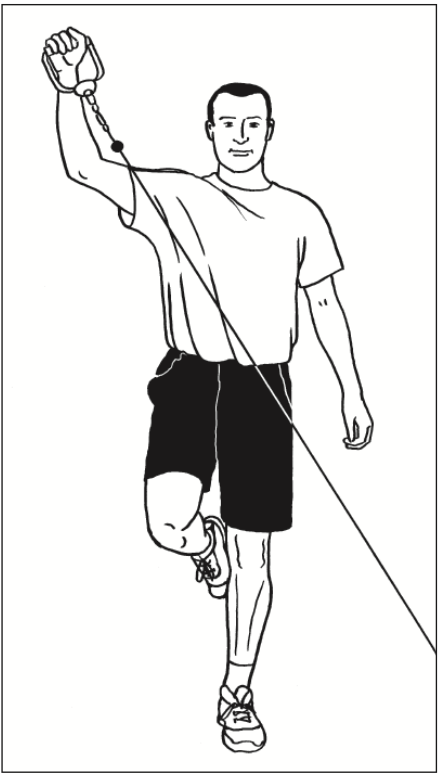
Rear Sling
Overview: The challenge of this exercise and its pair (see opposite) is to establish perfect pelvic alignment, while standing on one leg, against a rotational force from the upper body.
Technique: Stand on one leg to the side of the pulley column. Handle is attached at below-hip height. Grasp the handle with the hand on the opposite side (opposite to standing leg). Set perfect posture and pelvic alignment.
Brace the core and then pull the weight up and around the body, keeping the elbow straight, so that the arm rotates up
and out. Finish with hand above your head and out to the side slightly. The aim is to maintain perfect balance and pelvic
alignment as you raise and lower the arm diagonally. Reposition to repeat exercise for opposite leg/arm.
Perform 10 reps each side increasing to 20 reps; 2 to 3 sets.
Progression: Increase the weight.
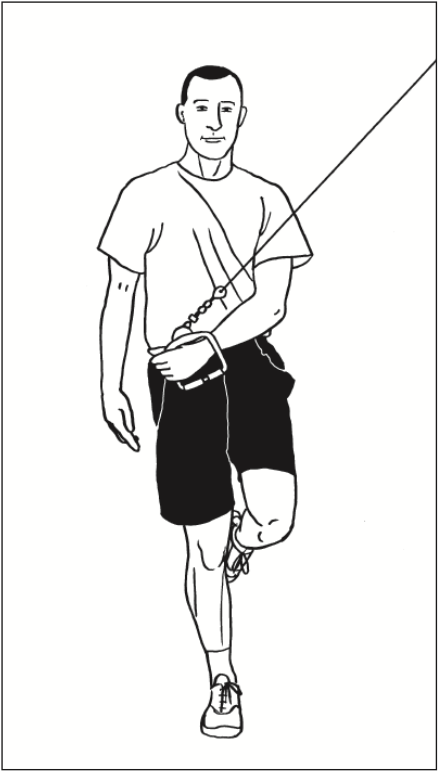
Front Sling
Overview: This is the natural opposite of the rear sling exercise. It involves a forward arm rotation, which must be controlled.
Technique: Stand on one leg to the side of pulley column. Handle is attached at above shoulder height. Grasp the handle with the arm nearest the column (opposite side to standing leg). Set perfect posture and pelvic alignment.
Brace your core; pull the weight down and around the body, keeping the elbow straight so that the arm rotates down and round. Finish with hand next to your hip across your body. The aim is to maintain perfect balance and pelvic alignment as you lower and raise the arm. Reposition to repeat with opposite leg/arm.
Perform 10 reps each side, increasing to 20 reps; 2 to 3 sets.
Progression: Increase the weight.
One Leg, One Arm Rowing
Overview: The challenge of this exercise is to maintain stability while standing on one leg and controlling against a pulling force from the upper body. The pelvis must stay fixed when the upper back and shoulder are pulling backwards.
Technique: Stand on one leg, facing the pulley column. Handle is attached at waist height. Grasp the handle with the opposite arm (same side as lifted leg). Your hand will be out directly in front of you in the start position. Set perfect posture and pelvic alignment, standing tall with shoulders back.
Brace your core; pull on the cable, leading with the elbow in a rowing movement Finish with hand by your side and elbow behind you. The aim is to maintain perfect balance and pelvic alignment as you perform the rowing movement. Reposition to repeat with opposite leg/arm.
Perform 10 reps each side; 2 to 3 sets.
Progression: Increase the weight.
Menu 7: Medicine Ball, Floor
The four exercises in this menu all involve throwing and catching the medicine ball while performing a trunk flexion or rotation movement. The action of throwing the ball during the muscle-shortening phase of each of the exercises increases the force production of the trunk muscles. The action of catching the ball at the start or during the muscle-lengthening phase of each exercise not only increases the force production but also the overall stability challenge.
The impact that the catch has on the upper limb has to be controlled by the trunk. You should be aiming to maintain good spine alignment and correct movement while making the catch. Only use a weight of medicine ball that will allow you to perform the exercises with good technique. If the ball is too heavy, you will sacrifice core stability, irrespective of your arm strength.
Overall these exercises are advanced. However they are also safe and effective for young athletes using light medicine balls to develop dynamic trunk movement and control.
Sit Up & Throw
Overview: An advanced version of a sit-up exercise, in which the throwing action makes the crunch phase faster and the catching action adds load to the return phase.
Level: Advanced
Muscles targeted: Abdominals (Plus upper body)
Technique: You will need a partner to receive and pass the ball. Alternatively perform the exercise in front of a wall and use a medicine ball that will bounce back.
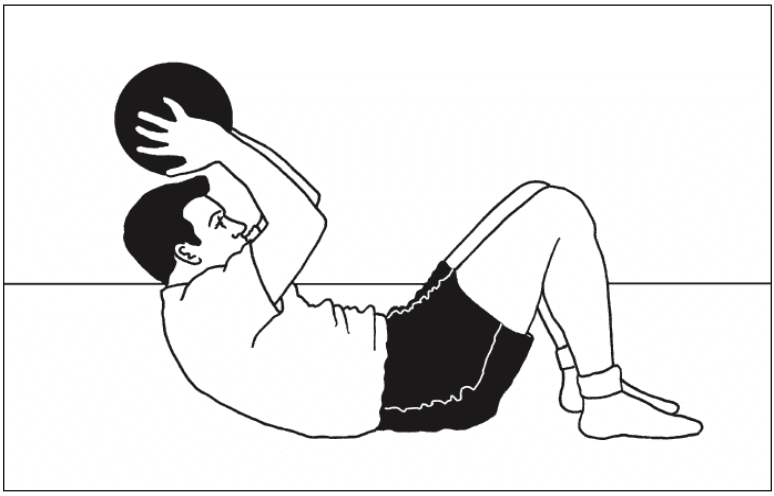
Start in the sit-up position (knees bent) with hands up ready�to receive the ball. Catch the ball and begin to lower back down. Do not collapse back down, control it with the abs and keep hands above the head as you lower down.
Once shoulders are touching the floor (keeping head up and eyes forward), reverse the movement. Throw the ball forward and crunch up at the same time. Follow the throwing action and complete the sit-up as fast as possible. Make sure you crunch as you throw so that the abs contribute to the force of the throw and help you sit up faster. Men should start with a 5kg ball; women with a 3kg ball.
Perform 10 to 20 reps; 2 to 3 sets
Progression: Progress to heavier ball once 3 sets of 20 reps is comfortable
45-degree Sit, Catch and Pass
Overview: A very tough stability exercise that requires massive trunk musculature co-contraction to hold a good spine alignment against the impact of making the catch.
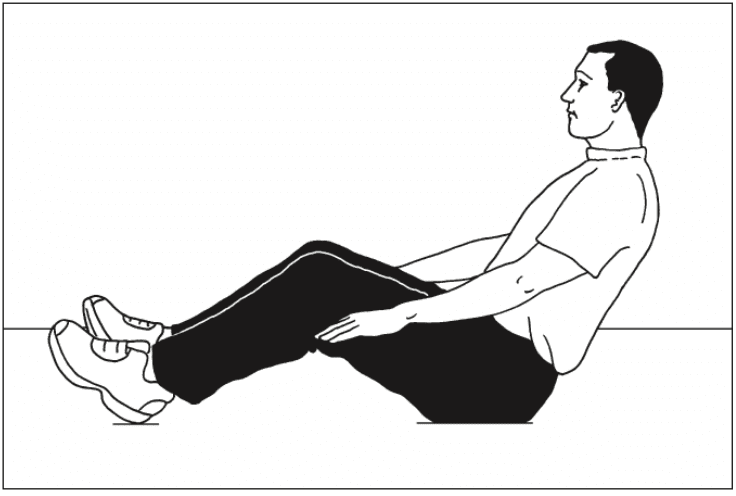
Technique: Sit up with knees bent and lean back at 45 degrees. Aim to hold a �lengthened� spine, with lumbar spine in neutral, shoulders back and neck long and relaxed. It takes a fair amount of control and strength endurance simply to hold this posture perfectly. Aim to get this right before progressing on to the catch and pass.
Raise hands in front of your face and receive a pass from a partner, around this height. As you catch the ball you must hold the long spine position. Do not flex the low back, or become round-shouldered. Gently throw the ball back. Men should start with a 3kg ball; women with a 2kg ball.
Complete a few passes, holding the position for 30 seconds. Perform 2 to 3 sets.
Progression: Raising the hands to above head height makes the stability challenge of the catch significantly harder. Catches made to either side of the head are also more challenging.
Sit & Twist Pass
Overview: A trunk rotation exercise involving catching and passing the medicine ball, which provides a challenge to the obliques to produce powerful rotation, but also pelvic stability, so that the sitting position is stable throughout the movement.
Level: Advanced
Muscles targeted: Abdominals, Obliques
Technique: Sit up with knees bent and lean back at 45 degrees. Aim to hold a �lengthened� spine, with lumbar spine in neutral, shoulders back and neck long and relaxed. Your feet, knees and hips should remain reasonably still throughout this exercise, the rotation coming from your waist and not your hips.
Hold hands to one side ready to receive the ball. Catch the ball to one side and absorb the catch by turning your shoulders further to that side. Reverse the rotation, turning back to the middle and release the ball. Continue rotating to the other side; receive the ball the other side and continue. Ensure you�can hold good posture throughout the movement, with a long spine and wide shoulders. Men should start with a 4 to 5kg ball; women with a 2 to 3kg ball.
Perform 10 to 20 reps.
Progression: Increase the weight of the ball once you can perform a set of 20 reps comfortably with perfect technique.
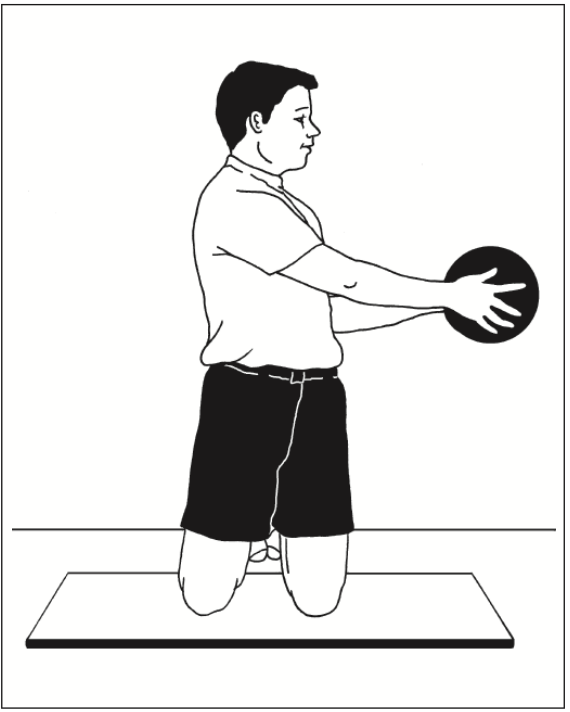
Kneeling Twist Pass
Overview: To perform the rotation movement in this position demands a greater range of motion, helping to develop strength through the full range of trunk rotation. It may also help to develop trunk rotation range of movement.
Level: Intermediate to advanced
Muscles targeted: Obliques
Technique: Kneel upright with good posture (lumbar spine in neutral, chest out, shoulders low). Start with the ball in hands and twist shoulders and head round as far as you can. Then, under control, twist around to the other side as far as possible, and hand the ball to partner. Turn back to the start position, receive the ball again and continue.
The aim of the movement is to rotate through the biggest shoulder turn you have. You can allow the hips to rotate a little with the shoulders, but not too much. You should feel a stretch in the side at the end of each twist.
As you gain greater flexibility and stability you will be able to�fix your pelvis square to the front and rotate through an increasingly full range of motion. Men should start with a 5 to 6kg ball; women with a 3 to 4kg ball.
Perform 10 reps then take the ball to the opposite side and repeat.
Menu 8: Medicine Ball, Standing
The aim of this menu is to perform trunk movements while standing on one leg. This is functional training for balance in sports and daily living activities. These exercises are advanced because of the requirements for lower limb balance and body movement awareness, which makes controlled performance of these trunk movements quite difficult. These moves also use the hip rotator and abductor muscles for control and stability.
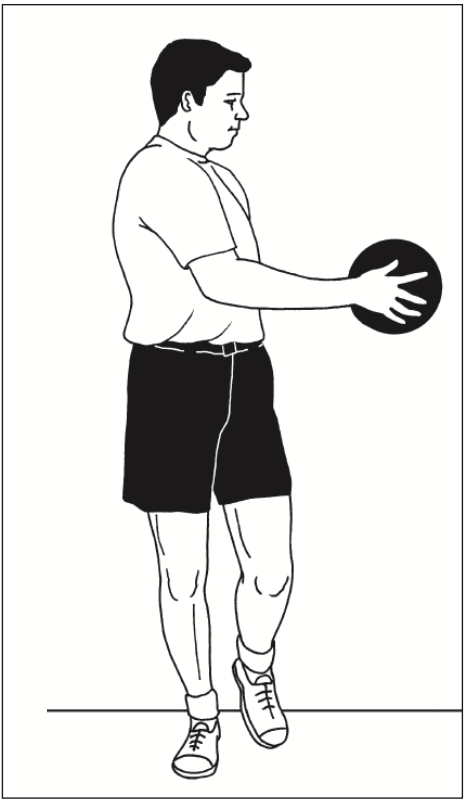
One-leg Twist Pass
Overview: A trunk rotation exercise performed on one leg. This requires good pelvic stability at the hip of the standing leg, for the trunk rotation to be dissociated from the pelvis.
Technique: Stand on one leg with hips facing square to the front. Hold medicine ball slightly out in front. Slowly twist from side to side. The rotation comes from the waist only,�head turning with the shoulders. Keep pelvis fixed square and knee in line with second toe throughout. Men should start with a 5 to 6 kg ball; women with a 3 to 4 kg ball.
Perform 10 slow reps; 2 to 3 sets. Repeat on other leg.
Progression: Swap the ball for a pulley machine and add resistance, once you have mastered the controlled balance on one leg.
One-leg Deadlifts with Rotation
Overview: An advanced exercise for the posterior chain of muscles, which includes rotation to challenge control of pelvis.
Level: Advanced
Muscles targeted: Erector spinae, Gluteals (max and med) Hamstrings, Piriformis
Technique: Stand on one leg. Flex the free leg a little at the knee to lift it off the floor, but do not flex or extend the hip of the free leg throughout the movement, in order to keep pelvis in control. Hold the ball in front of you.
Bend down, flexing at the knee and the hip. Lower down until the ball touches the floor by your foot, all the time keeping your arms straight and without reaching excessively with your upper back (ie, maintain a reasonably flat back). Stand back up, pushing down through the foot to use your gluteals correctly to extend the hips.
Alternate between touching the ball down on the inside and then the outside of the standing foot. This means you are internally or externally rotating the hip on alternate repetitions, challenging control of hip rotation. Keep the knee in line with�second toe as much as possible throughout. Men should use a 5kg ball; women use a 3kg ball.
Start with 5 slow controlled reps, 2 to 3 sets. Build up to 10 reps. Repeat on the opposite leg.
Progression: Increase the weight of the ball or use a dumb-bell as you get stronger.
One-leg Catch & Pass
Overview: The main aim of this exercise is to control the impact of the catch without losing balance or rotating excessively at the hips. It�s all about how effectively you can anticipate the impact and produce the required stiffness throughout the body to retain good posture and control. This is a very useful �reaction�-type stability exercise.
Level: Advanced
Muscles targeted: Everything
Technique: Stand on one leg with good posture (lumbar spine neutral, chest out, shoulders wide) and with hips square to the front. Hold hands up ready to catch. Receive catches anywhere within arm�s reach. Make sure the passes are varied in their placement. Aim to restrict movement to arms and/or turning your shoulders, keeping the pelvis and lower limb stable. Use a 2 to 3kg ball that is not too big, so it is easy to catch.
Start with 30 sec bouts of catch and pass on each leg; 2 to 3 sets.
Progression: Receive more forceful passes so the impact of the catch is greater.
Menu 9: Resistance-Based
Menu rationale
The aim of these three exercises is to progress the loading in order to build high-level trunk muscle strength. These exercises can be performed in the 5- to 10-repetition range with a suitably high weight for this number of reps. As you get stronger, you should prioritize an increase in weight rather than an increase in the number of reps. Overall, these exercises are very advanced.
Crunch with Weight
Overview: The standard isolated abdominal exercise with increased load.
Level: Advanced
Muscles targeted: Abdominals
Technique: Perform the crunch in the usual way: knees bent, low back flat, head up and looking forward. Curl the shoulders up and down using just the abdominals. The weight (medicine ball, dumb-bell or barbell weight plate) should be held above or behind the head. Arms are fixed, all they do is hold the weight in place. Do not use arms to move the weight relative to head as the crunch is performed. Keeping the elbows out helps to achieve this.
Perform 5 to10 reps; 2 to 3 sets.
Progression: Increase weight, maintaining the range of 5 to 10 reps per set.
Reverse Hypers
Overview: An excellent hip and back extension exercise to which it is very simple to add load.
Level: Advanced
Muscles targeted: Erector spinae, Gluteals
Technique: Lie on your front on a horizontal bench, with hips just off the end of the bench. Grasp bench legs firmly for support. Your legs should be straight with a dumb-bell between the ankles for resistance. Squeezing the gluteals, extend hips and lift legs and the dumb-bell off the floor. Stop when your back is slightly hyper-extended and hips are fully extended. Lower slowly until feet are just off the floor and continue.
Perform 8 to 10 reps; 2 to 3 sets.
Progression: Increase weight, maintaining the range of 8 to 10 reps per set.
Reverse Crunch with Weight
Overview: This is a great exercise, as it requires good co- ordination and strength. Research shows that the obliques as well as the abdominals work very hard during this exercise, making it excellent value.
Level: Advanced
Muscles targeted: Abdominals, Obliques
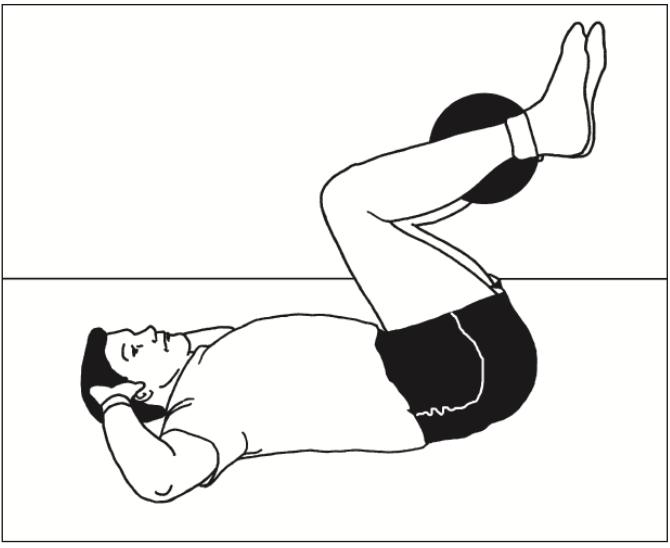
Technique: Lie on back with hands behind head and elbows out to the sides. Knees should be bent and heels close to bum. Hold weight between your legs. Initiate the movement by curling the pelvis upwards (flattening the back into
the floor) and then continue to use the abs to pull the low back and pelvis off the floor. This is the bit that requires good co- ordination, as the temptation is to kick with the legs and pull the hips up with the hip flexors. Learn to focus on the abs before you add weight, as if you do this strictly it is very tough, especially for women (whose pelvises are relatively heavier).
Perform 5 to 10 reps; 2 to 3 sets.
Progression: Increase weight, maintaining the range of 5 to 10 reps per set.
Menu 10: Hanging Bar
Menu rationale
The aim of these three exercises is to work the abdominals as hard as possible with very advanced, gymnastic-style movements. Reasonable upper body strength is required for these exercises.
Hanging Leg Lifts
Overview: This exercise requires you to lift the full weight of your legs and (if possible) your pelvis, while hanging from a bar. Anyone who can perform these movements well through a good range of motion has achieved good strength.
Level: Advanced
Muscles targeted: Abdominals, Obliques, Hip flexors
Technique: Hang from a bar with arms straight. Lift knees, bringing them up as high as possible. At the top of the movement the knees should be near the chest and pelvis should be curled upwards (low back flexed). This extra curl of the pelvis ensures that the abdominals are working maximally. Do not kick legs up or swing the body excessively. Simply draw up knees, crunching as you lift. It is important to feel that the abdominals are doing the lion�s share of the work rather than the hip flexors or front of thigh muscles.
Perform 5 to 10 reps;, 2 to 3 sets.
Progression: Perform the same exercise with straight legs, lifting them up to 90 degrees in front of you, curling the pelvis at the top of the movement.
Windscreen Wipers
Overview: The ultimate ab-buster. Anyone who can do 10 reps of this exercise with good technique has a very strong core!
Level: Super advanced
Muscles targeted: Abdominals, Obliques, Hip flexors
Technique: Hang from bar with arms straight. Lift legs up in the air until feet are at approx head height. Maintaining the height of the lift, take the legs from side to side in an arc. The movement will look like a windscreen wiper, moving from side to side. Aim for at least 45 degrees of movement to each side.
Perform 5 to10 reps; 2 to 3 sets.
Progression: The straighter the legs, the harder the exercise. Increasing the range of movement to each side also makes it tougher.
Candlesticks
Overview: Another beauty! Lots of strength required to control this movement; only for the very strong.
Level: Super advanced
Muscles targeted: Abdominals, Obliques, Hip flexors
Technique: Lie flat and raise yourself up to a shoulder stand position, holding on to a bench/table leg/partner’s leg with your hands above your head. Establish a fully extended hip and leg position and then begin to lower your body down slowly to the floor. The body should move in an arc as a single unit (no sagging in the back, or bending at the hips or knees). Lower under control from vertical to just above horizontal.
Gripping firmly for stability, lift your body back up into shoulder stand, again keeping everything straight and aligned in a single unit.
Slow and controlled movement on the way down will help, and a maximal contraction of everything will get you back up.
Exercise Physiologist and PUSH-as-Rx � fitness facility owner Daniel Alvarado takes a look at common mistakes that people make in their workout routines.
Time is precious. That’s why making the most of every sweat session and avoiding common workout mistakes is key. I’m a huge fan of sneaking in mini-workouts whenever I could. That’??s one of the benefits of high-intensity interval training: You only need several minutes.
But there are so many other ways you can shift your own exercise routine to more efficient workouts. Tiny tweaks may make a huge different when it comes to losing body fat increasing lean muscle mass and reducing stress.
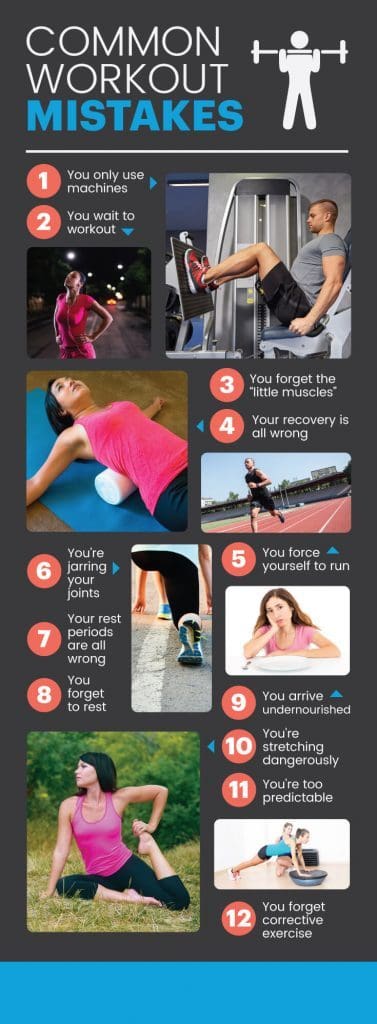
12 Common Workout Mistakes
Here are some of the most common workout mistakes you need to avoid:
1. You Only Use Machines.
There??s no doubt about it. Resistance training is medicine.
In fact, a 2012 study found just 10 weeks of resistance training can increase lean muscle mass by nearly 4 pounds and reduce 4 pounds of fat while increasing your metabolic rate by 7 percent. Translation, you’ll burn more fat when you’re out of the gym, too. But that does not so much more than strength training . It’s a key factor in the natural management of type 2 diabetes, thanks to its ability to help create normal blood sugar levels. Resistance training increases bone mineral density by 1 to 3 percent, helps shed that dangerous belly fat and also lowers your resting blood pressure.
Its pain-relieving properties can help ease fibromyalgia symptoms in women. Clearly, we all need to be make sure strength training is in our lives.
But you’re short-changing yourself if you’??re only using machines. (In fact, this is one of the classic workout mistakes.) Strength training machines lock your movement into a pre-determined plane of motion, meaning you’re working those large, primer mover muscles without a lot of assistance from stabilizing muscles. Keeping these muscles out of the mix fails to strengthen them and also largely eliminates the use of balance in each lift.
Certainly, if your only goal is increase muscle mass in one area, or if you’re focusing on one muscle group for rehab purposes, machines have their place. But a lot of us want training that is more functional so we could move around with more ease, and in much less pain, every day. Free weights strengthens total-body movements and increases coordination between muscle groups that are different. Free weights may improve performance better than a machine-only approach, too. For instance, squats are more effective at increasing vertical jumping compared to machine leg presses.
Be sure to make free weights part of your lifting routine. And don’t forget to incorporate bodyweight exercises, too. Remember, even the ancient Greeks understood the insane fitness value of calisthenics.
2. You Wait To Work Out.
Studies show you’ll be able to optimize your workouts by targeting a specific time of day, depending on your goals, although working out at night is not working out at all. (Of course, pushing your workout to nights also means more excuses can pop up through the day, derailing your PM workout efforts, too.)
But the best time to sneak in a sweat session largely depends on your own main fitness goal. This great Medical Daily article sheds some light on optimal workout times:
Walking to lose weight? Getting your steps in can transform your diet in a way that better leads to weight loss, based on an 2011 study published in the Journal of Sports Medicine and Physical Fitness. Walking later in the day prompted exercisers to eat during breakfast, an important factor to reduce late-night cravings, lower the risk of obesity and improve weight-loss success. you are able to also optimize fat-burn should you workout in a fasted state before breakfast. Doing this helps improve insulin sensitivity even in case you eat a high-fat diet, researchers say. The good news for walkers? You’ve got options.
If you’re looking to construct muscle fast and increase strength, evening workouts are optimal.
To beat work-day brain fog and increase focus and performance, aim for afternoon sweat sessions between noon and 6 p.m.
Exercise is one of the most potent stress relievers on the planet. To help prime your blood pressure for optimal levels for sleep, opt for morning exercise. A 2010 study by Appalachian State University researchers found morning resistance training helped drop blood pressure levels on average by 20 percent. That’s as good or even better than common hypertension-fighting drugs. �A 2011 study published in the Journal of Strength and Conditioning Research discovered moderate 7 a.m. morning walking resulted in a 10 percent blood pressure drop throughout the day; at night, it sank 25 percent. It helped exercises reach deeper sleep compared to working out at other times of the day. The AM exercises spent up to 75 percent more time in deep sleep compared to afternoon and evening exercisers.
3. You Forget The “?Little Muscles.”
Sure, biceps and pecs and quads usually get all of the glory, but there’s more to movement than those big prime mover showoff muscles. There’s a whole other cast of characters you need to nurture. Stabilizers are muscles that support the body while the prime movers do their thing. Synergists help assist those prime movers to create movement patterns that are functional. Should you ignore these little guys, you might be setting yourself up for posture problems that may manifest into pain and injuries down the line. Workout mistakes such as these will only snowball and lead to inflammation, pain, altered movements and eventually injury.
Using resistance band exercises and exercises that involve multiple planes of motion that mimic more real-life movements (not just the up-and-down of a bicep curl) can help target those important, albeit less famous, muscles.
Targeting the dynamic stabilizers of the rotator cuff, erector spinae (deep core muscles that keep your body upright), gluteus medius and minimum, tibialis anterior and obliques.
Men’s Health shares some ideas on how best to strengthen a few of these important muscles:
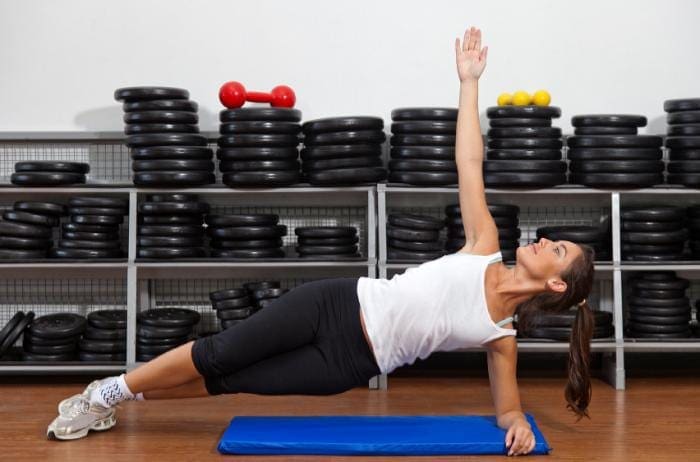
Back extensions
Bicycle crunches
Side steps using an exercise band around both feet
4. Your Recovery Is All Wrong.
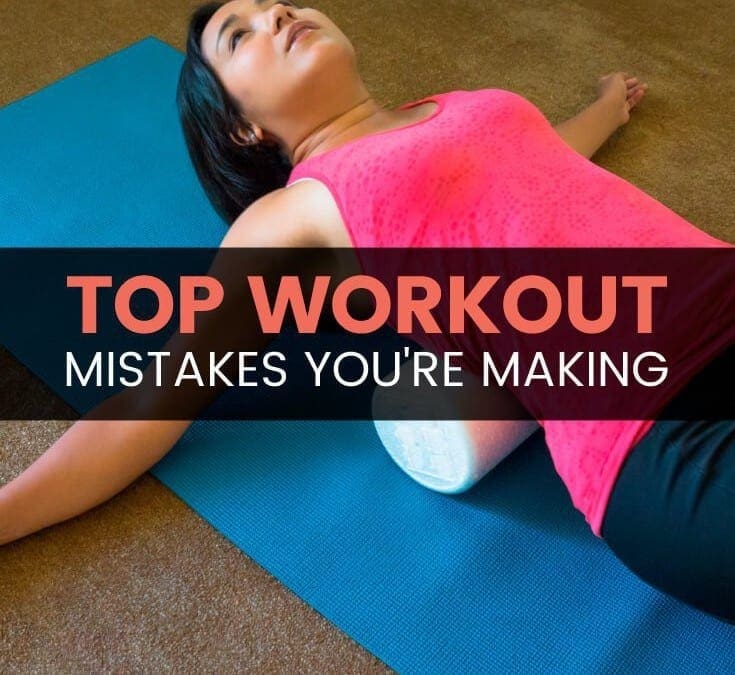
In case your post-workout recovery consists of 2 minutes of stretching and a shower, it’s time to get real. Workout mistakes such as these may not seem just like a huge deal now, but as you age you’ll start feeling it. Chances are it’ll catch up with your joints and muscles as you age, making injury and pain inevitable. Here, I want to cover foam rolling exercises.
But let’s back up a sec. The organs, muscles, nerves, bones and arteries and veins of your body are all enveloped in a densely woven webbing called fascia. Much like the yard of a sweater, your fascia connects you entire inner body, highlighting the fact that trouble in one spot could impact a totally different part of the body.
When you work your muscles hard, microspasms occur, triggering the formation of knots?� or adhesions in the soft tissue. This, subsequently, starts leading to abnormal movement that can, over time, result in chronic pain and injury. Luckily, self-myofascial release, including foam rolling, can help �??break up those knots to help get your muscle length and functioning back to normal.
And here’s the big takeaway: foam rolling short, tight muscles riddled with knots in combination with proper stretching can help return your body to some more normal selection of motion. This could improve not only performance, but just the manner in which you feel in general, too. A Texas Woman’s University study found this combo can serve as one of the remedies for fast back pain relief.
And this is something I’m really excited about. Foam rolling effects your brain and stress hormones, too, not just your muscles. Emerging science suggests foam rolling impacts the nervous system and can lower cortisol levels, reducing not just physical stress, but emotional stress, too. After exercise, foam rolling can improve cortisol levels in fact better than rest. Exciting stuff!
To get a full-spectrum foam rolling and corrective exercise program, your best bet is to have other posture and movement assessments and an overhead squat by way of a qualified personal trainer with high-level certifications and also a college degree to do so. The National Academy of Sports Medicine focuses heavily on these assessments and corrective exercise programs.
Several key points:
Common muscles include the calves, peroneals, IT- band, TFL, piriformis, adductors, hamstrings, quadriceps, latissimus dorsi and thoracic spine.
It’s possible for you to foam roll holding tender spots for 30 to 90 seconds, 1 set daily.
DON’T make the classic foam rolling of quickly rolling over a muscle back and forth mistakes. So the neural, skeletal and muscular systems can work together to more effectively break up the adhesion, you need to hold tender spots.
To improve flexibility, follow foam rolling with static stretches of the same muscles, holding the static stretches for at least 30 seconds. Do this before and following a workout.
Keep proper posture as you’re rolling.
If you want more pressure, you are able to use your own body to create it. For instance, if you’re rolling your calves and need more pressure, it is possible to cross your one leg within the other that’s being rolled.
If�you have a health condition or are pregnant, talk with your doctor before foam rolling. Foam rolling is not suitable for people with cancer, congestive heart failure or alternative organ failure, skin lesions, goiters, uncontrolled high blood pressure, blood clots, bleeding disorders and certain other health issues.
5. You Force Yourself To Run.
If you’ve gone over the best running tips for beginners and still dread lacing up your sneaks for a jog, it might be time to find another form of cardio. The key is to do something so you stick with it, you like, not torture yourself.
If you do stick with running, remember, it’s not about speed. In fact tend to live longer. Fast marathon runners gain no increase in lifespan compared to people who avoid exercise.
Cycling, mountain biking, spinning (I love the Peloton bike) are just a few of the other ways to work cardio into your life. I recently did an article to try. Just make it fun and find a workout buddy. We know working out using a buddy increases your odds of sticking to an exercise routine. But did you know a virtual buddy works? That may be one huge factor in Pelot’??s success, where people from throughout the world indoor cycle as they’re connected virtually to other riders.
6. You’re Jarring Your Joints (And Maybe Your Lungs).
Love basketball? Opt for indoor instead of a game on asphalt to save your valuable knees. Runner? Get your job on along the side of the road for more give. And consider trail running to get a more natural, less jarring surface. Runner’s World’s annual sneaker guide features an annual featuring many options with better shock absorption, too, but shoes can only go so far.
And beware of other workouts that were popular linked to joint injuries. They dynamic, twisting movements of Zumba make it a fun class. In one study, nearly 30 percent of Zumba participants experienced an injury; 42 percent of those involved the knee. The people most likely to suffer injury took class nearly 4 times a week, so if your joints are feeling it, maybe dial back a bit and fill in a class or two with something more forgiving, like gentle yoga. (Maybe sure you’ve a qualified instructor.)
Flooring matters. For indoor gyms, I prefer flooring made from natural cork or real linoleum (NOT vinyl knockoffs). And this brings up an important side point: Natural floorings like solid or certified formaldehyde-free manufactured cork don’t off-gas toxic fumes common to popular gym flooring and mats. In 2014, the University of Lisbon in Portugal and the Delft University of Technology in the Netherlands released first-of-its-kind data showing the horrific state of indoor air in gyms. We know vinyl-based products off-gas carcinogenic formaldehyde, as well as plasticizing phthalate chemicals.
Popular gym flooring made from recycled tires labeled as rubber?� are often laden with compounds on the verge of being classified as hazardous waste. Tire crumb used in several gym floors contains distillate aromatic extract, oils that can make up to 30 percent of a tires mass. Unfortunately, these are among the world’??s most harmful chemicals, rich in polyaromatic hydrocarbons and other carcinogens, in accordance with the Healthy Building Network.
Urge your gym to use more healthy flooring materials and invest in a air exchange system. If you’re setting up a part of your home for working out, looking into cork or real linoleum flooring with good shock absorption qualities. Green Building Supply is a good place to look for safer building materials.
Athletic Tips
7. Your Workout Rest Periods Are Wrong.
The amount of time you rest between exercise sets matters, depending on your own fitness goals.
Here’s a nice breakdown in the National Academy of Sports Medicine:
Muscle endurance & stabilization: This is great if you’re just getting started or back on the wagon with exercise. It’ll help strength key muscles for joint stability in order to build a strong foundation and progress in a safer way as you become more fit. In this stage, you’ll focus on lifting lighter and taking a rest period anywhere from zero to 90 seconds long between sets. The short rest period keeps the heart rate elevated, optimizing weight loss and fat burn.
When hypertrophy is the goal, we’re focusing on increased muscle size. Short rest periods increases testosterone levels and human growth hormone in men. It’??s is best achieved with relatively short rests periods often ranging from 0 to 60 seconds. Longer rest periods may be appropriate depending on condition of the lifter and the amount of weight lifted.
Maximal strength & power: When you’re focusing on lifting your max weight and when you’re training for maximum power, you’re going to focus on taking much longer rest periods. Three to five minutes are necessary.
8. You Forget To Rest.
Overtraining is a problem. Not giving your body and hormones the time to adjust to exercise or not resting adequately between workouts �?? can cause injuries, mood problems, negative changes in your metabolism and burnout within a couple of months time. While too much exercise mightn’t be the sole reason for negative symptoms in some people, overtraining combined with stress from other factors like imbalanced hormones, a diet that is poor, and a lack of sleep or rest can accumulate to serious bodily damage.
And get this: Overtraining can actually cause weight gain. Excessive exercise can lead to high cortisol levels, which could switch your body into fat-storage mode.
Signs of overtraining include:
Changes in your heart rate
Trouble sleeping
Increased soreness
Joint pain
Moodiness, depression or anxiety
Chronic fatigue or exhaustion
Changes in your appetite
Feeling more thirsty
Digestion issues
Irregular periods or changes to your menstrual cycle, such as with all the severe overtraining phenomenon called female athlete triad
Running is definitely an exercise that helps you live longer, but you’ll want to mix it up to include the benefits of yoga and HIIT training, too.
9. You Arrive Undernourished.
Working out on an empty stomach does burn fat. But showing up having an empty tank doesn’t work for everybody. And in some, having the right pre-workout snack enhances fat burn in fact. In The Event you end up burning out halfway during your workout, you could possibly want to try many of these pre-workout snacks before you hit the gym.
A study published in the Journal of the International Society of Sports Nutrition found no difference in weight loss between women who ate a meal-replacement shake before exercising without eating and those who got straight into their workouts. So the moral of the story? Do what’s right for you personally, but probably get some sort of natural, pre-workout drink or snack in your routine.
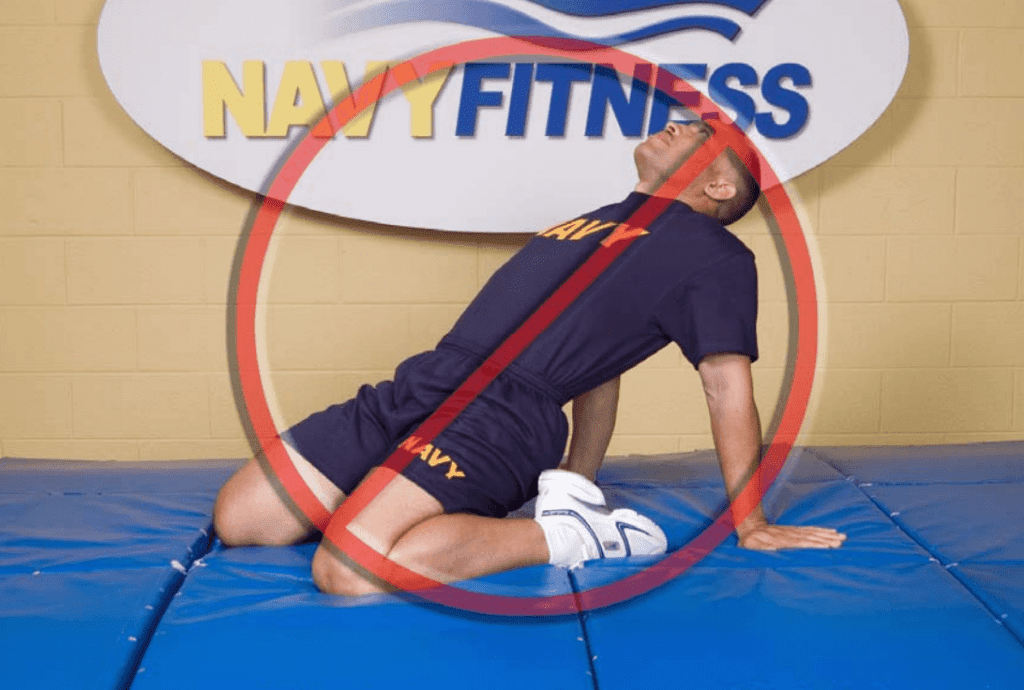
10. You’re Stretching Dangerously.
This is really a biggie when it comes to workout mistakes. If you played sports growing up, chances are you did one of these dangerous stretches that place torque and unnecessary strain on your joints.
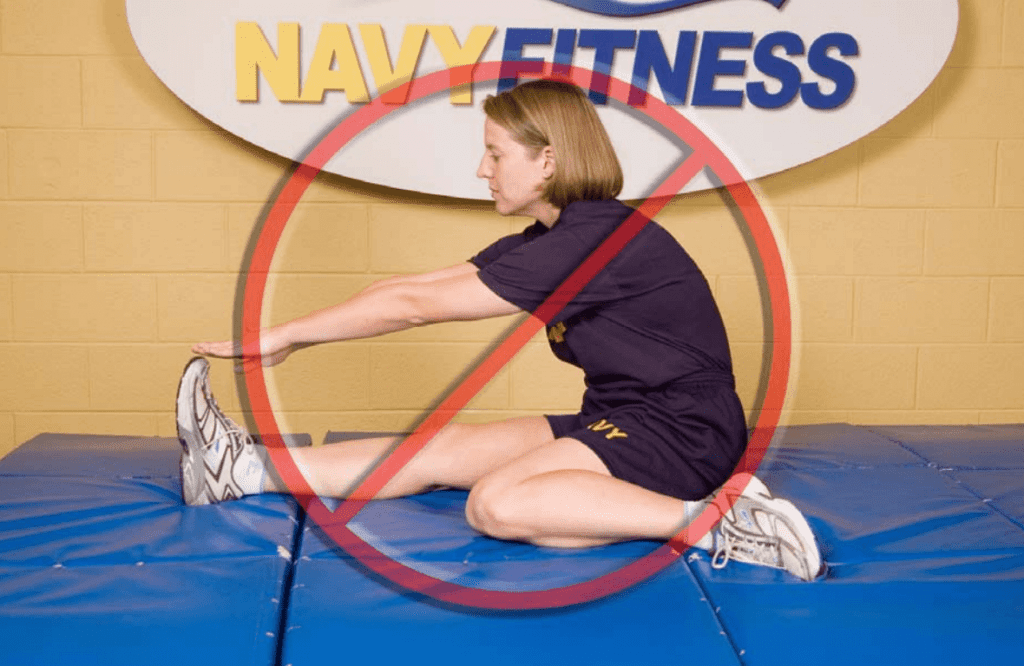
Common Exercise Mistake: You Endanger Your Knee with This Hurdler’s Stretch
The above stretch hurdler’s stretch is intended to stretch the hamstring, but it’s one of the major workout mistakes. But the problem lies for the reason that left knee. See how it’s rotated and stressing the knee? This could stretch the joint capsule, damaging cartilage and ligaments, according to a lot of studies. The U.S. Navy IDs this as a stretch to avoid.
To get a hamstring stretch with no unneeded stress, put the foot of the leg opposite the one being stretched to the inner thigh of the leg that is stretched.
Common Exercise Mistake: You Do This Quadriceps Stretch with Both Knees Flexed
Here’s another one that stresses your knees. You can get an effective quad stretch minus the damaging effects of the one above. The Navy trainers recommend then reaching around with one arm, lying on your own stomach and grasping the same-side foot. Before you feel a stretch in the very front of the leg, pull the foot toward the buttocks. To protect your neck, turn your head toward the same side that you’re reaching.
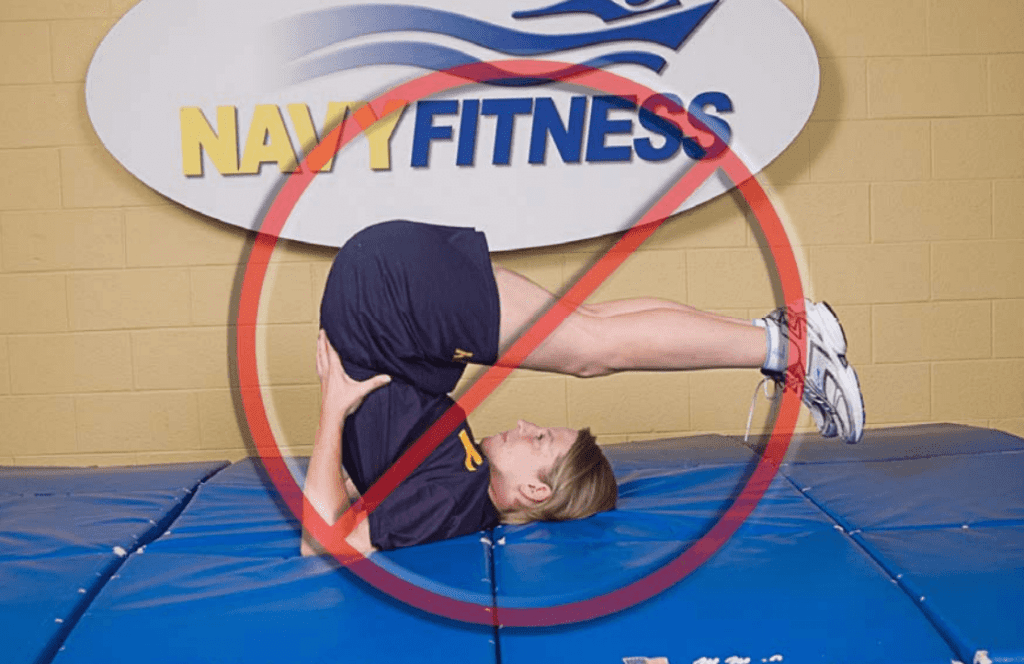
Exercise Mistake: You Do This Overhead Bicycle, Yoga Plow Stretch
This may be the most dangerous stretch on the list. And there’s no safe alternative. It places your neck into extreme positions that are forward, putting pressure on the cervical discs.
11. You’re Too Predictable.
We do anything with no variation, we can get bored and our fitness goals can plateau. The nervous system and muscle can adapt to your own routine, sometimes as early as 6 to 8 weeks. Now it’s time to shake things up!
Here are a few tricks for climbing your way from a plateau so you don�??t get stuck in this workout mistake:
If you’re a runner, try the Swedish training trick called fartlek.
Trade in a few longer, moderate cardio workouts for BurstFit ideas you can do at home.
Eliminate, or drastically cut back on, alcohol. I’ve seen so many people fall off of the fitness wagon, sometimes with as little as one or two drinks. If you’re drinking and hitting a plateau, it’s time for mocktails instead.
Eat more fat. That’s right, your body may be craving more healthy fats. Experiment by means of your calorie intake and find out if adding more avocados and other healthy fats into your diet stokes your fat burn.
12. You Forget Corrective Exercise.
We touched on foam rolling earlier, but that’s just one important component of corrective exercise. To workout without this component that is critical is making one of the workouts mistakes that are most common. To get a personalized read on what you need to work on, it’s best to consult using a certified personal trainer (I recommend ones through National Academy of Sports Medicine, the American College of Sports Medicine or the National Sports and Conditioning Association.) Physical therapists and chiropractors can help.
The idea is getting a postural and movement assessment will help show:
Muscles that need stretching and rolling
Muscles that need strengthening
Running issues like supination or pronation
Broken body mechanics, including postural distortions like forward- head posture, upper – and lower-crossed syndrome
Final Thoughts On Common Workout Mistakes
The best time of day depends on your specific fitness and health goals.
To avoid injury and pain, it’s imperative to work corrective exercise into your routine.
Foam rolling can improve both your physical and mental stress levels, but be sure to hold tender spots for at least 30 and you have to roll the proper muscles to be effective.
If you’re starting to notice joint pain, pay attention to the classes you take, your shoes and the surfaces you exercise on. Workout mistakes are the culprit, and adjustments may be necessary.
The rest period you take in between exercise sets varies depending on your fitness level and goals.
The Schroth Method is a non-surgical principle of scoliosis treatment using scoliosis-specific exercise based on curve-pattern.
The scoliosis exercises do not resemble traditional exercises and the Schroth method includes a proprietary corrective breathing technique known as rotational breathing also known as rotational angular breathing (RAB). Each patient with scoliosis has a unique curve pattern and the goal of the Schroth method is to de-flex and de-rotate the trunk allowing a return to a more �normal� physiological position.
The term scoliosis exercise leads people to think it�s easy to manage scoliosis via exercise � well it can be, once mastered. It is important that training is conducted by an experienced and knowledgeable expert in Schroth methodology. With focused instruction in the newest evolution of the Schroth method, it is possible for the patient to learn the skills needed for lifetime management, to incorporate those into daily life.
Schroth Method Goals
Patients incorporating the Schroth Method into their lives can expect a few, many, or all of the following:
Spinal stabilization and better balance via improved body mechanics
Halt scoliosis curve progression � in adolescents we strive for reduction
Improve lung capacity via corrective breathing and active rib mobilization
Relieve or reduce pain as a result of scoliosis
Improve strength and flexibility
Prevent or avoid surgery
Improve postural appearance
Learn to maintain spinal corrections during daily activities
Empowerment given the knowledge and tools to manage one�s own unique scoliosis
For post-surgical scoliosis patients, the Schroth Method helps to improve posture and create stability above and below the fused spinal segments
The scoliosis treatment programs are comprehensive outpatient Schroth Method programs for those with mild, moderate or severe scoliosis:
Adolescent scoliosis
Adult scoliosis
Post-surgical scoliosis
Scheuermann�s Kyphosis
Rotational Breathing
Why Schroth rotational breathing for scoliosis?
�During physiological respiratory movement, all regions of the trunk, thorax and abdomen expand, with the purpose of increasing the volume and the air intake to the lungs. The thoracic cage and inhalation muscles on one side and the lung mass on the other, form two elastic systems in opposite directions, joined by two sheets of pleural space. The scoliosis deformation process causes morphological changes to the trunk. some areas of the trunk protrude or become convex, and others sink in or become concave. Breathing mechanics do not function normally. The deformity causes an imbalance in all muscles of the trunk.�
� from “Best Practice in Conservative Scoliosis Care”, by Dr. Hans-Rudolf Weiss
Corrective rotational breathing is the proprietary feature of the Schroth Method and Schroth Best Practice� scoliosis exercise protocols.
During Schroth instruction, the patient learns how to change their breathing pattern in order to decrease the risk of scoliotic curve progression. The focus is on expansion of the collapsed concave areas during inspiration. This enhances mobility and promotes a more balanced posture.
According to the conclusions of various research studies, the physiotherapy program as developed by Schroth can be regarded as highly effective for the prevention or treatment of secondary functional impairment, particularly with respect to the restrictive ventilatory disorder. It has also already been shown to have a beneficial effect on scoliosis related pain.
Schroth Method Exercise Examples
The scope of our information is limited to chiropractic and spinal injuries and conditions. To discuss options on the subject matter, please feel free to ask Dr. Jimenez or contact us at 915-850-0900 .
By Dr. Alex Jimenez
Additional Topics: Lower Back Pain After Auto Injury
After being involved in an automobile accident, neck injuries and aggravated conditions, such as whiplash, are some of the most commonly reported types of injuries, due to the force of the impact. A study discovered, however, that the seat of a vehicle can often lead to injuries as well, causing lower back pain and other symptoms. Lower back pain is also among one of the most common types of automobile accident injuries in the U.S. alone.
The Schroth method can help control scoliosis, a spinal condition with little medical advice available for patients to know how to help themselves, aside from wearing a scoliosis brace. On the contrary of popular belief, a proper program utilizing the Schroth method exercises can ultimately help people achieve spinal balance, providing them with an increased grade of control regarding a patient’s scoliosis.
Careful instruction from a qualified and experienced healthcare professional who specialized in the Schroth method for scoliosis can empower a scoliosis patient in multiple ways. Most importantly, one-to-one training between a chiropractor or physical therapist and a patient helps properly educate the individual on the most effective ways to counteract the abnormal curvature of their spine.
Finding Relief for Scoliosis
The Schroth method exercises alone aren’t enough to provide relief from scoliosis and its associated symptoms, altering the way an individual engages in their daily activities can also help ease the progression of the spinal condition. As the patient, learning which Schroth method exercises are recommended for each specific curvature of the spine and practicing curve-pattern-specific breathing exercises can be beneficial for the overall health of the spine. There is an additional empowering element, however, in learning what not to do to prevent the scoliosis from advancing.
When a child or adult follows the correct Schroth method exercises from a qualified and experienced healthcare professional, including multi-part movements combined with breathing to promote spinal stabilization to strengthen the spinal musculature, feeling relief from their symptoms as well as seeing the improvement in the alignment of the spine can be empowering and motivating. The Schroth method can be an effective treatment for scoliosis.
Moreover, its essential for the patient with scoliosis to consult an experienced and qualified healthcare professional who understands the complex anatomy of a spine with scoliosis and its effects on the rest of the body. Chiropractors, physical therapists, and other healthcare specialists who focus on spinal complications, such as scoliosis, should also be capable of spending as much time as necessary to explain the bends, twists, curves and effects of an individual’s scoliosis on the rest of their body. Make sure to seek the proper treatment for your scoliosis or other spinal issue.
Scoliosis Assistance for Children and Adults
From a parental perspective, when a child is diagnosed with scoliosis, or simply if the adult is diagnosed with the spinal condition, its common for them to have a variety of questions regarding their complication. From, which is the proper posture to avoid the progression of scoliosis and whether the bending, twisting and collapsing of the spine with each movement is affecting the scoliosis, to, what are the safest, most effective treatments available for scoliosis, these common questions can be answered accordingly by an experienced and qualified healthcare professional. Furthermore, once a child, or adult, has been diagnosed with scoliosis, its fundamental for them to seek immediate medical attention in order to avoid further complications from the spinal condition, such as the threat of spinal fusion resulting in surgery. The sooner scoliosis is treated, the better for the patient.
When considering the Schroth method for scoliosis, utilizing a specialized exercise program for a child or adult with scoliosis, there’s one final consideration the patient, and parents alike, must become aware of, treatment for scoliosis may be a lifetime commitment. Scoliosis doesn’t end with skeletal maturity. Children become adults and adults will eventually begin to experience the natural degeneration of their spine, as well as other structures in their body, which may lead to scoliosis and other spinal complications. It’s essential for patients to continue seeking regular medical care from a qualified and experienced chiropractor, physical therapist, or other healthcare professional, regarding their scoliosis.
The Schroth method and its specific exercises are for life and after participation in a comprehensive program, the patient will have the necessary skills and tools needed to manage their scoliosis and other similar spinal issues. This empowering treatment option can help ultimately avoid the progression of scoliosis, providing overall health and wellness for a lifetime to come.
The scope of our information is limited to chiropractic and spinal injuries and conditions. To discuss options on the subject matter, please feel free to ask Dr. Jimenez or contact us at 915-850-0900 .
By Dr. Alex Jimenez
Additional Topics: Neck Pain and Auto Injury
After being involved in an automobile accident, the sheer force of the impact can often cause whiplash, a common type of neck injury resulting from the sudden, back-and-forth motion of the head against the body due to a car wreck, or other incident. Because of this, many of the complex structures found within the neck, including the spine, ligaments and muscles, can be stretched beyond their normal range, causing injury and painful symptoms.
Ever find yourself going about your day, not even thinking about food, when all of a sudden your appetite kicks in, and you’re at the drive-thru or rummaging through your pantry, looking for whatever it is you crave?
That’s because feeling hungry often has little to do with whether your system really needs food and a lot more to do with some sneaky cues and behaviors you encounter without realizing it. These 6 are among the biggest offenders tricking you into thinking you’re hungry when you really aren’t.
Cooking Shows
There may be a downside to turning to TV for recipe inspiration. A new study found that people who cook from scratch based on recipes they got off a cooking show weighed 11 pounds more than those who watched these shows but didn�t cook very often. The authors of the study, from Cornell University�s Food and Brand Lab, think the extra pounds might have to do with how indulgent TV recipes are. When people make them at home and consume them, they think it’s okay to take in all the extra calories.
Orange and Red-Colored Foods
From a biological perspective, humans �tend to seek out vibrant colored foods, as these contain the most vitamins and minerals,� says Susan Albers, PsyD, clinical psychologist at the Cleveland Clinic and author of 50 More Ways to Soothe Yourself Without Food. �The response is subconscious�think about a time when you’ve walked through a grocery store and found yourself picking up a sack of oranges or bag of red peppers.� But that instinct works against you when you’re face to face with a plate of mac and cheese or gooey nachos. These dishes share a similar hue as oranges do, but they have way more fat and calories.
Food Packages on Kitchen Counter
You know the saying, out of sight is out of mind? That definitely applies to food as well, and it sums up the dangers of not putting your groceries away as soon as you come back from the supermarket or leaving out half-eaten boxes of takeout pizza. When you see these items, even in their containers, your appetite gets going, and it�s hard to resist consuming them.
�People tend to reach automatically for foods that are within arm�s reach,� Dr. Albers says. �If it�s there, you�re likely to eat it.� One study shows that people who keep soda and cereal on their counters weigh a startling 26 pounds more than those who opt to tuck them away in a pantry.
Other People Eating
You�re having drinks with friends when someone orders a round of apps. You weren�t hungry at all before the order was placed, so why did you dig in when the food arrived at the table? We automatically match the pace at which people around us eat and �mirror� their behavior, Dr. Albers explains, and that�s true even if they�re at another table and you don�t know them. You could also blame a little social anxiety. �We�re simply trying to fit in and make a situation more comfortable,� she adds.
Large Plates
If you�re served a heaping pile of food on a large plate, you�ll likely try to finish it, even after you�re already full. �We naturally eat more off of large plates and bowls,� says Dr. Albers. It�s a mean trick your eyes play on you. Larger plates cause us to think a serving of food is smaller than it actually appears. One study showed that people scarfed down 16% more cereal than usual when it was served to them in a bigger bowl.
A Happy Mood
You know about stress eating: tough day of work = pint of ice cream. But it’s not just negative emotions that lead us to dive into our kitchens. Positive emotions like joy, excitement, and even love can crank your appetite as well. It has to do with the fact that certain foods, like chocolate, trigger satisfying neurochemical responses in the brain. �We want to hold onto [those happy emotions], and another creamy bar of chocolate or crispy bag of chips promises to keep the good feelings rolling,� says Dr. Albers.
Also, when life is going well and you feel good, you�re more relaxed and less vigilant about your calorie intake. �People actually eat more when they�re in a happy relationship,� Dr. Albers notes.
The scope of our information is limited to chiropractic and spinal injuries and conditions. To discuss options on the subject matter, please feel free to ask Dr. Jimenez or contact us at 915-850-0900 .
Additional Topics: Whole Body Wellness
Maintaining overall health and wellness of the body can be achieved through a balanced nutrition, regular physical activity and/or exercise, as well as by getting plenty of rest. Along with these basic principles, its important to receive whole body maintenance, especially making sure the spine is properly aligned, ensuring the nervous system is functioning to its fullest capabilities. Chiropractic care is an alternative treatment option which focuses on musculoskeletal and nervous system conditions and injuries, helping to maintain spinal health.
IFM's Find A Practitioner tool is the largest referral network in Functional Medicine, created to help patients locate Functional Medicine practitioners anywhere in the world. IFM Certified Practitioners are listed first in the search results, given their extensive education in Functional Medicine