Abstract
Subcutaneous testosterone injections place hormone therapy in the fat layer just under the skin instead of deep inside a muscle. Men and women can both receive this type of shot when a clinician decides it is appropriate. The smaller needle is often easier to use at home, and weekly levels can stay more even than with a deep muscle shot. This article explains how the method works, how testosterone supports muscle and bone, and how integrative chiropractic care in El Paso can sit beside medical hormone care. It is an option for people who don’t want pellets or a deep intramuscular injection.
What a Subcutaneous Shot Is
A subcutaneous (SubQ) injection goes into the thin layer of fat beneath the skin. Common sites are the belly and the outer thigh. The needle is short and thin. An intramuscular (IM) shot goes deeper into muscle, often the glute or thigh, and usually requires a longer needle.
Both routes can use the same familiar esters, such as testosterone cypionate or enanthate. The medicine is not a brand-new drug. The change is where the oil sits. Fat has less blood flow than muscle, so the hormone often leaves the depot more slowly. Average blood levels can land in a similar place. The shape of the week is often calmer.
For about eighty years, deep muscle injection was simply the habit. In The Quiet Case for the Subcutaneous Needle, Dr. Thomas A. Hatzilabrou, M.D., of Worldborne Medical, makes a narrow claim: move the same ester from muscle to fat, and therapy can become easier to live with without giving up the average level guidelines care about (Hatzilabrou, n.d.).
That claim is about a route, not a brand.
Why the Weekly Curve Matters
The Endocrine Society and the American Urological Association tell clinicians to restore testosterone to a mid-normal range in men who truly need treatment, match the plan to the person, and check labs on a schedule.
Two plans can share the same average and still feel like different weeks. A deep IM shot can spike high, then sag before the next dose. People feel that sag as low energy, low mood, or a crash. Modeling of testosterone enanthate found that SubQ dosing blunts that peak-to-trough swing. The average is the number on the lab report. The swing is the number a person lives in (Hatzilabrou, n.d.; Figueiredo et al., 2022).
A review found SubQ testosterone to be feasible, practical, and reasonable for routine use, with comparable mean levels. A 52-week study of weekly SubQ enanthate found that 92.7% of men were in the target range by week 12, and more than 95% reported no injection-related pain.
One dosing rule matters at every switch visit. A milligram under the skin may not equal a milligram in the muscle. After a change, assess the level and how the person feels. Do not assume syringe-for-syringe equality.
SubQ Testosterone for Men and for Women
Both men and women can receive SubQ testosterone when a licensed clinician chooses that plan. The smaller needle is often more convenient for women and for anyone who prefers not to receive a deep glute injection.
The research is not even, and that honesty belongs here.
In men with low testosterone, SubQ shots have produced target-range levels and better comfort than IM.
In gender-affirming care, people who switched from IM to SubQ often preferred SubQ, and levels still reached the intended range.
In women, no testosterone product is FDA-approved in the United States. Use is off-label. The goal is a physiologic, premenopausal-range level—not a male dose. The strongest randomized evidence in women is still transdermal gel, not injection (Hatzilabrou, n.d.).
So SubQ can be easier as a technique. It is not automatically the best-proven female route. Any plan in women should stay inside a safe female range, with labs to prove it. Start low. Go slow. Watch skin, hair, voice, and mood.
What This Route Wins On
If average exposure is close to a tie, daily life breaks the tie.
A short, fine needle is easier to use on your own.
Pain and dread before the shot are usually lower.
There is no awkward reach to the glute and less concern about the sciatic path.
The week can feel steadier.
Cost can stay low because the same generic esters are used.
There is no skin-to-skin transfer risk like gels and patches.
Needle fear is common. It turns a five-minute task into the one a person keeps putting off. A delayed dose becomes a missed dose. A missed dose becomes “this isn’t working.” An easier shot is not a luxury. It is how long-term care survives.
Safety does not get lighter because the needle is shorter. High red-cell count, fertility changes, prostate checks in men, and androgenic effects in women track with the hormone level, not with “IM versus SubQ.” Monitoring stays the same.
How the Home Shot Is Done
A clinician teaches the first doses. The usual steps are simple:
Wash hands. Set out a clean syringe, a short needle (often 25- to 30-gauge and about half an inch), an alcohol wipe, and a sharps container.
Choose a clean site on the abdomen or outer thigh. Rotate sites.
Pinch a fold of skin. Insert the needle at about a 45-degree angle. Inject slowly.
Do not share syringes. Place used needles in a sharps box.
Xyosted is one FDA-cleared weekly auto-injector for men that is used in the abdomen. Some clinics use compounded syringes. The treating clinician still manages the dose, storage, and follow-up.
This method is straightforward for people who don’t want pellet placement or a deep muscle shot. It is still an injection. It is a middle-path option.
What Testosterone Does for the Body
Testosterone helps the body maintain lean muscle, support bone health, recover after strain, and maintain energy and drive. When levels stay too low, people often feel weak, foggy, and slow to bounce back. Stairs feel taller. Rehab after a sprain, a fall, or a car crash lasts longer.
That is the link to musculoskeletal health. Weaker muscles mean less support around the spine, hips, and knees. Joints take more load. Guarding becomes a habit. Sleep and mood often fall with the strength loss.
A steadier hormone curve does not replace exercise or alignment work. It can give muscle and bone a clearer internal signal while those programs run.
How Integrative Chiropractic Care Fits
Hormone therapy works inside the body. Chiropractic care works on the frame that carries the body.
When the spine and pelvis are restricted, muscles stay tight. Joints load on one side. The nervous system stays loud. That mix can blunt the gains people hope to see from hormone care. Integrative chiropractic care aims to restore motion, ease muscle tightness, and improve how the body shares load. Strength work then has a better platform for these gains.
In my clinical observations, patients often report easier hip and low-back mechanics after treatment for spinal and pelvic restrictions alongside other therapies. I have also seen some men do better when large, infrequent depot shots are changed to smaller, more frequent SubQ doses. The mid-cycle crash—fatigue, irritability, a sense that “the shot wore off”—often settles when the curve flattens. Labs still decide the number. The person decides whether the week feels livable (Jimenez, n.d.).
Chiropractic care does not replace testosterone. Testosterone does not replace an adjustment, a rehab plan, or a strength progression. Together they treat the signal and the structure.
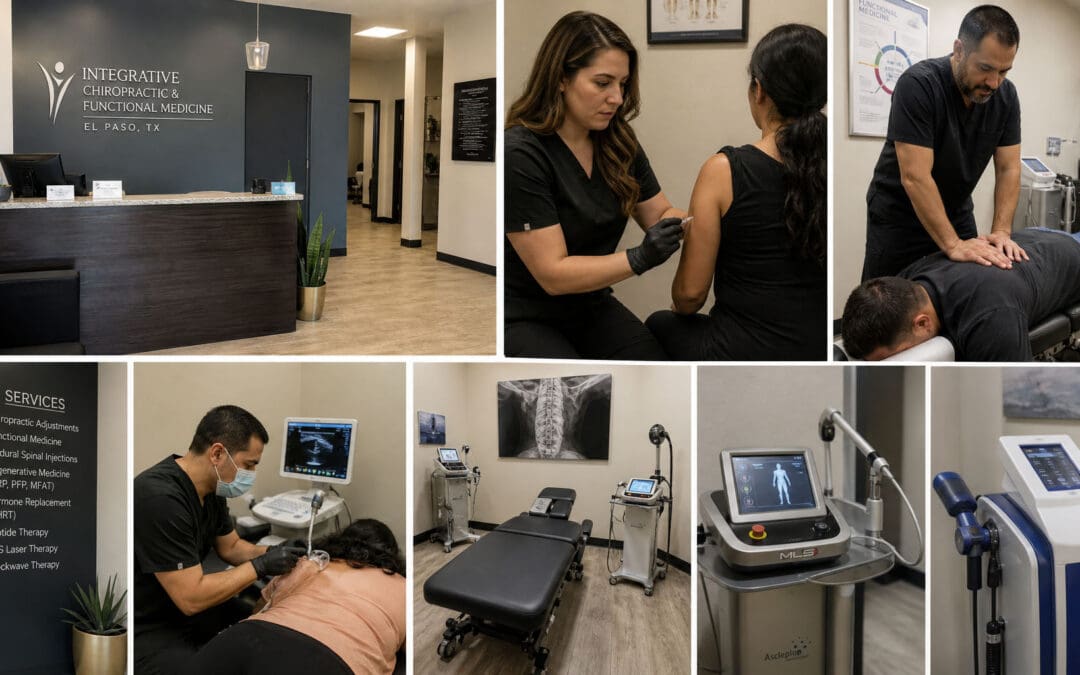
The El Paso Team Model
Injury Medical Clinic PA uses a multidisciplinary model. I serve as clinical director, a chiropractor, and a board-certified family nurse practitioner. Dr. Maria Guadalupe Cardenas, MD, is board-certified in internal medicine (NPI #1164426749, Texas MD License #J2933). She has more than 40 years of experience as an internist and serves as medical director and collaborative physician.
This setup is common in integrative and injury clinics. The MD provides medical direction, internal medicine risk review, and hormone oversight. The chiropractic and rehab team addresses alignment, soft tissue, personal injury recovery, and return to work or sport. Functional medicine adds labs, nutrition, sleep, and gut-muscle links so the plan isn’t just a shot.
A person in this model may move through:
Medical review of symptoms, medicines, fertility goals, and safety screens
Targeted hormone and metabolic labs
Chiropractic care for spinal and pelvic mechanics
Rehabilitation for strength, balance, and daily demands
Nutrition and recovery habits that support hormone work
Follow-up labs for testosterone, hematocrit, and PSA when indicated
Main East Side clinic: 11860 Vista Del Sol, Suite 128, El Paso, TX 79936. Office: 915-850-0900 or 915-412-6677.
Who This Option May Suit
SubQ testosterone may be worth a supervised talk when:
Labs and symptoms support treatment, and the person can learn a home shot.
Deep IM shots cause pain, fear, or missed doses.
Pellets feel like too much commitment or are difficult to fine-tune.
Gels are messy or raise transfer concerns at home.
The goal is a steadier week, not a bigger peak.
It is a poor first choice when fertility is an immediate goal, when there is a prostate or breast cancer concern, when hematocrit is already high, or when a woman needs the route with the strongest female trial data. Those calls belong in the clinic.
Conclusion
The quiet case for the subcutaneous needle is simple. Same ester. Different depot. Comparable average levels for many patients. It’s a shot that most people can keep getting. Pair that with integrative chiropractic care, and the aim isn’t just a better lab printout. The aim is a body that can still move.
This article is educational. The FDA does not review compounded medicines in the same way it reviews approved branded products. The prescribing clinician makes final treatment decisions after a full evaluation.
BHRT, EvexiPEL, and Whole-Body Hormone Care at El Paso Back Clinic
Bioidentical Hormone Replacement Therapy, or BHRT, is often discussed as a way to help people feel more like themselves again when hormone levels drop or become unbalanced. It may help with symptoms such as low energy, poor sleep, mood changes, lower sex drive, mental fog, and body composition changes. But at El Paso Back Clinic, the message should be clear: hormone care should never be treated like a stand-alone shortcut. It works best when hormonal symptoms are reviewed alongside thyroid health, metabolic health, inflammation, gut function, stress load, and overall body mechanics. That type of full-picture care aligns with the clinic’s integrative model, which combines chiropractic care, functional medicine, and advanced nursing under the care of Dr. Alexander Jimenez, DC, APRN, FNP-BC. (Cleveland Clinic, 2022; EVEXIAS Health Solutions, n.d.; El Paso Back Clinic, 2026).
What BHRT Means
Bioidentical hormones are hormones designed to closely match those the human body naturally produces. Cleveland Clinic explains that BHRT is used to help manage symptoms related to menopause or other hormone imbalances, and that these hormones can come in several forms, including pills, creams, patches, gels, injections, and pellets. Cleveland Clinic also notes that some bioidentical options are FDA-approved, while custom-compounded versions are less studied and may carry more uncertainty. That matters because patients often hear the word “natural” and assume “risk-free,” but that is not always true. (Cleveland Clinic, 2022; Cleveland Clinic, 2024).
In simple terms, BHRT is not just about replacing hormones. It is about determining whether hormones are the primary issue, which hormones are low or imbalanced, and whether other systems are also involved. A person with fatigue, weight gain, poor focus, low motivation, or digestive problems may have a hormone imbalance, but they may also have thyroid dysfunction, insulin resistance, poor sleep, chronic stress, inflammation, or nutritional problems. That is why careful medical review matters before treatment begins. (Cleveland Clinic, 2024; EVEXIAS Health Solutions, n.d.).
Why This Topic Fits El Paso Back Clinic
El Paso Back Clinic is not just a back pain site. The published clinical model emphasizes integrative care that connects structural health, metabolic health, gut function, inflammation, and advanced nursing support. The clinic’s materials describe a team approach that combines chiropractic care, functional medicine, lab testing, and personalized plans. Dr. Alexander Jimenez’s published content also connects thyroid health, metabolism, inflammation, and gut function rather than treating each complaint as a separate issue. That makes BHRT a natural fit for the site when it is presented as one part of a broader healing strategy, not as a single magic answer. (El Paso Back Clinic, 2026; Jimenez, n.d.).
For a spine and wellness audience, this matters even more because hormone problems can affect the whole body, including:
energy and recovery
sleep quality
muscle tone and body composition
inflammation levels
mood and stress tolerance
motivation for exercise and rehab
digestive comfort and gut regularity
When those systems are off, recovery from back pain, mobility, and overall function can also suffer. That is why a whole-person clinic can add value to hormone care. (El Paso Back Clinic, 2026; EVEXIAS Health Solutions, n.d.).
What EvexiPEL Pellet Therapy Is
EVEXIAS Health Solutions describes EvexiPEL as a clinically advanced BHRT method that uses tiny hormone pellets placed just under the skin during a simple in-office procedure. According to EVEXIAS, those pellets then release a steady, physiologic dose of hormones over about 3 to 6 months. The company presents this as a way to reduce the ups and downs that some people experience with daily creams, pills, patches, or more frequent injections. (EVEXIAS Health Solutions, n.d.).
That steady-release idea is one reason many patients are interested in pellet therapy. EVEXIAS states that pellets are designed to provide more consistent delivery and fewer “peaks and valleys” than some other delivery methods. For patients who do not want to remember daily or weekly dosing, that convenience can be appealing. At the same time, pellets are still a medical treatment, which means the patient needs the right workup, the right dosing plan, and the right follow-up. Convenience should never replace careful clinical judgment. (EVEXIAS Health Solutions, n.d.; Cleveland Clinic, 2024).
Why Thyroid and Metabolic Health Must Be Checked
One of the most important points for El Paso Back Clinic readers is that not every “hormone problem” starts with estrogen or testosterone. EVEXIAS says its testing protocols include sex hormone panels, advanced thyroid profiles with antibodies, adrenal stress and cortisol rhythm assessments, and metabolic markers such as insulin and A1C. That is a strong reminder that hormonal complaints often overlap with thyroid, adrenal, and metabolic health. (EVEXIAS Health Solutions, n.d.).
Dr. Jimenez’s metabolic thyroid content makes a similar point. His published thyroid articles explain that thyroid dysfunction can affect metabolism and can overlap with inflammation, chronic symptoms, and gut-related problems. In his educational materials, he also connects endocrine function with nutrition and whole-body recovery. This supports an important clinical idea: if someone has fatigue, poor exercise recovery, digestive symptoms, stubborn weight changes, or brain fog, the best next step is often a full workup rather than a guess. (Jimenez, n.d.).
This full workup may help answer questions like:
Is the problem mainly estrogen, progesterone, or testosterone related?
Is low thyroid function part of the picture?
Is stress chemistry affecting symptoms?
Is insulin resistance driving fatigue and weight gain?
Is chronic inflammation making everything worse?
Are gut issues interfering with absorption and recovery?
That kind of careful thinking aligns with how El Paso Back Clinic presents its broader care philosophy. (EVEXIAS Health Solutions, n.d.; El Paso Back Clinic, 2026).
Gut Health, Inflammation, and Hormone Balance
Many people who seek BHRT do not just complain about hormones. They also talk about bloating, constipation, poor digestion, mood swings, sleep trouble, and stubborn inflammation. The recent gut-health content from El Paso Back Clinic indicates a practical connection between the spine, gut, inflammation, and metabolism. The clinic’s published articles describe root-cause approaches that combine lab testing, nutrition support, and structural care. Dr. Jimenez’s thyroid and gut education also connects chronic inflammation with digestive imbalance and endocrine stress. (El Paso Back Clinic, 2026; Jimenez, n.d.).
This does not mean BHRT alone fixes gut health. It means hormone symptoms should be reviewed in a broader context. If a patient is exhausted, inflamed, constipated, bloated, gaining abdominal weight, and sleeping poorly, it makes sense to look at hormones, thyroid function, gut health, stress load, and nutrition together. That whole-body view is one of the strongest ways to position BHRT at El Paso Back Clinic. (EVEXIAS Health Solutions, n.d.; El Paso Back Clinic, 2026).
How an Integrative Clinic Can Improve BHRT Results
EVEXIAS says its broader model can include advanced lab testing, hormone therapy, targeted nutraceuticals, and peptide therapy as part of a personalized plan. Its functional and integrated health framework also includes support for the thyroid, adrenal, metabolic, and gut systems, as well as inflammation. That approach lines up well with the type of clinical ecosystem readers expect from El Paso Back Clinic. (EVEXIAS Health Solutions, n.d.).
At an integrative clinic, BHRT may be stronger when it is paired with:
full lab testing before treatment
thyroid and metabolic review
nutrition counseling
gut and inflammation support
peptide support when clinically appropriate
sleep, stress, and lifestyle coaching
chiropractic and rehab strategies that help the body move and recover better
El Paso Back Clinic’s own content states that the strongest results occur when chiropractic, functional medicine, and advanced nursing work together. The site describes this mix as a way to improve mobility, calm inflammation, support nerve function, and build long-term health. For a patient who is also struggling with low energy, hormone imbalance, or metabolic stress, that kind of coordinated care can be especially helpful. (El Paso Back Clinic, 2026; EVEXIAS Health Solutions, n.d.).
Clinical Observations From Dr. Alexander Jimenez
Dr. Alexander Jimenez’s published materials describe a multidisciplinary model built around chiropractic care, advanced nursing, functional medicine, imaging, lab review, and personalized recovery plans. El Paso Back Clinic’s recent clinical posts state that when structural treatment is paired with nutrition, hormone support, and metabolic care, patients often report increased energy, reduced inflammation, and improved overall function. The clinic also emphasizes that improved alignment, nerve function, and reduced inflammation can support recovery beyond just pain relief. (El Paso Back Clinic, 2026; Jimenez, n.d.; LinkedIn, n.d.).
For a BHRT article geared toward El Paso Back Clinic, the clinical takeaway is simple: the body functions as a single system. If hormones are off, the patient may also struggle with movement, sleep, inflammation, digestion, and stress resilience. If the spine and nervous system are stressed, that may also affect recovery, activity levels, and how well a patient responds to lifestyle changes. The strongest plan is one that respects both structure and chemistry. (El Paso Back Clinic, 2026).
Risks and Why Monitoring Matters
Cleveland Clinic is clear that all hormone replacement therapy comes with risks and that compounded bioidentical hormones may carry additional uncertainty because their long-term effects are not as well studied. Cleveland Clinic also says some people are not good candidates for hormone therapy and that treatment decisions should be based on symptoms, medical history, and an informed discussion with a healthcare provider. (Cleveland Clinic, 2022; Cleveland Clinic, 2024).
That is why a responsible BHRT program should include the following:
a full health history
lab work before treatment
a review of thyroid and metabolic markers
discussion of risks, benefits, and alternatives
regular follow-up for symptoms and side effects
dose adjustments when needed
For El Paso Back Clinic readers, this is an important message: smart hormone care is individualized, monitored, and tied to the patient’s bigger health picture. It is not just about giving more hormones. It is about finding the right level of support for the right patient at the right time. (Cleveland Clinic, 2024; EVEXIAS Health Solutions, n.d.).
Final Thoughts
BHRT can be a useful tool for the right patient, especially when symptoms are truly linked to hormone decline or imbalance. EvexiPEL pellet therapy offers a steady-delivery option that many patients find appealing, as it is designed to release hormones over 3 to 6 months. Still, the best hormone care does not stop at pellets or prescriptions. It looks at thyroid health, metabolism, inflammation, gut function, stress, nutrition, sleep, and physical recovery as a whole. That whole-body approach is exactly what makes this topic a strong fit for El Paso Back Clinic. (EVEXIAS Health Solutions, n.d.; El Paso Back Clinic, 2026; Cleveland Clinic, 2024).
IFM's Find A Practitioner tool is the largest referral network in Functional Medicine, created to help patients locate Functional Medicine practitioners anywhere in the world. IFM Certified Practitioners are listed first in the search results, given their extensive education in Functional Medicine