Spinal Health Integrative Care and Chronic Pain Relief
Your Spine, Your Life: An El Paso-Ready Guide to Strong, Flexible, Pain-Resistant Backs
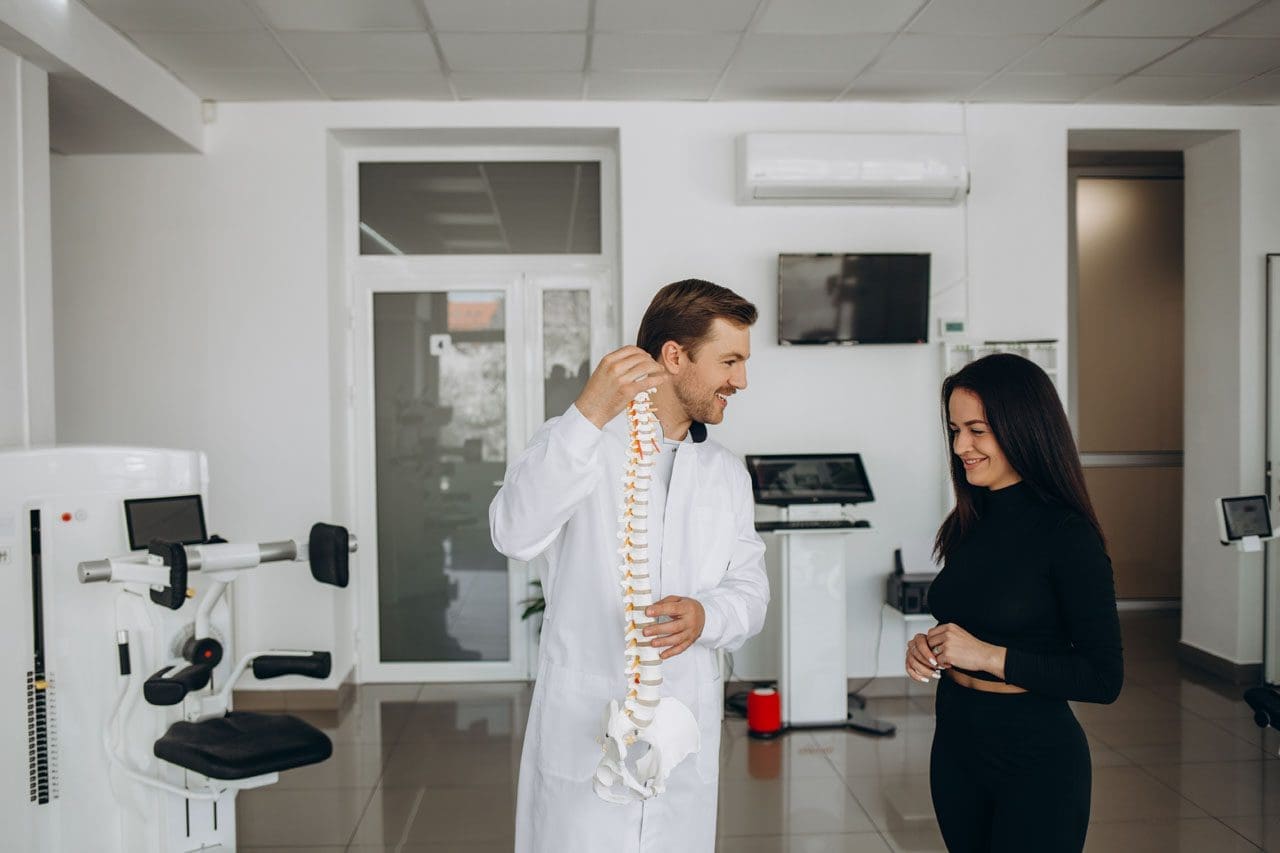
A young woman is performing a spine checkup at a vertebra clinic.
What “spinal health” means (and why it matters here in El Paso)
Spinal health refers to the proper structure, alignment, and function of the spine, enabling it to support the body, facilitate movement, and protect the spinal cord—the pathway for nerve signals between the brain and the body. Good spinal health comes from regular exercise, posture awareness, a nutrient-dense diet, steady hydration, and a healthy weight. Poor spinal health can lead to chronic pain, nerve irritation or damage, and a lower quality of life (Raleigh Orthopaedics, 2024; Orthopedic Specialists of Southwest Florida [OSSWF], 2024; National Spine Health Foundation, 2024).
How a healthy spine supports your whole body
-
Support & alignment: Your spine acts like a central pillar that shares load with the hips and legs and keeps you upright (Premier Spine & Sports Medicine, n.d.).
-
Movement & shock absorption: Curves, discs, and joints allow for safe bending and twisting, enabling you to lift, reach, and play (Raleigh Orthopaedics, 2024).
-
Nerve protection: The spinal column shields the spinal cord and nerve roots, so signals move clearly. Irritation can cause pain, tingling, or weakness (Cary Orthopaedics, 2023).
-
Quality of life: Ongoing spine issues can lead to fatigue, poor sleep, headaches, and reduced participation in work or sports (Raleigh Orthopaedics, 2024).
Common problems we see—and why early action helps
-
Strains/sprains and facet irritation from long sitting, poor lifting form, or sudden loads
-
Disc problems that can press on nearby nerves and create radiating symptoms
-
Spinal stenosis (narrowing) that pinches nerves
-
Degenerative changes related to age, low activity, smoking, or extra weight
Most cases respond to conservative care when initiated early, including movement, postural changes, targeted exercises, and load management (OSSWF, 2024).
Red flags—don’t wait: radiating pain, numbness, weakness, headaches, or loss of function. Seek a prompt exam (Cary Orthopaedics, 2023; Suarez Physical Therapy, n.d.).
An El Paso Back Clinic–style plan: simple steps that fit your day
1) Movement you can keep
-
20–30 minutes of low-impact cardio most days (e.g., walking, cycling, swimming).
-
Core & hip strength 2–3 days/week: planks, side planks, glute bridges, and bird-dogs.
-
Mobility after warm-ups: thoracic open-books, hip-flexor, and hamstring stretches (National Spine Health Foundation, 2024; Mobility Project PT, 2024).
2) Posture that holds up at work and home
-
Sit: feet flat, hips back in the chair, lumbar support, screen at eye level.
-
Stand: weight balanced, knees soft, ears over shoulders.
-
Micro-breaks: move every 30–45 minutes (National Spine Health Foundation, 2024).
3) Ergonomics you actually feel
-
The chair is high enough so the hips are level with or slightly above the knees.
-
Keyboard and mouse close; forearms supported; shoulders relaxed.
-
Lift with a hip hinge, keep the load close, and exhale as you stand.
4) Sleep & stress recovery
-
Neutral neck/back with a supportive mattress and the right pillow height.
-
Side sleepers: pillow between knees. Back sleepers: pillow under knees.
-
Use breathing drills, short walks, and stretch breaks to lower tension (Raleigh Orthopaedics, 2024).
5) Hydration & healthy weight
-
Steady water intake supports disc hydration and tissue recovery (Centeno-Schultz Clinic, n.d.).
-
A healthy body weight lowers compressive load on joints and discs (Raleigh Orthopaedics, 2024).
Nutrition for a stronger spine (simple and local-friendly)
-
Protein for muscle and connective-tissue repair
-
Omega-3s (salmon, trout, walnuts) to help regulate inflammation
-
Calcium & vitamin D for bone strength
-
Magnesium for nerve and muscle function
-
Colorful fruits/vegetables for antioxidants that support recovery
-
Water for disc hydration and nutrient transport
These habits reduce inflammation and support healing (Watkins Family Chiropractic, 2023; OSSWF, 2024).
Four-week “Borderland Back Reset” (minimal gear, steady progress)
Week 1 — Start easy
-
Daily: 10-minute walk + 5 minutes mobility (open-books, hip-flexor, hamstrings).
-
Core set (3x/week): plank 20 s, side plank 15 s/side, glute bridge 10 reps.
-
Posture: Raise the screen and add a small lumbar roll.
Week 2 — Build consistency
-
Daily: 15–20 minutes walk/cycle + mobility.
-
Core set (3x/week): plank 25–30 s, side plank 20 s/side, bridge 12 reps; add bird-dog 6/side.
-
Nutrition: add one serving of leafy greens and one serving of lean protein to each meal (Watkins Family Chiropractic, 2023).
Week 3 — Strength + recovery
-
Cardio most days: 20–25 minutes.
-
Light hinge pattern (backpack or kettlebell) 1–2 days/week; focus on form.
-
Before bed, do slow breathing for 5 minutes.
Week 4 — Re-test & adjust
-
Compare flexibility, pain, and energy levels with those of Week 1.
-
Keep what helps; trim what doesn’t.
-
If numbness, weakness, or radiating pain persists, book an exam (Cary Orthopaedics, 2023; Suarez Physical Therapy, n.d.).
Real-world injuries: work, sports, and motor-vehicle accidents (MVAs)
-
Work: Desk roles need posture breaks and lumbar support; physical jobs need task rotation, hip-hinge training, and planned recovery.
-
Sports: Combine mobility, core/hip strength, and gradual return to play.
-
MVAs: Even “minor” collisions can cause whiplash or soft-tissue injury. A stepwise evaluation, along with imaging when necessary, guides safe return and documentation (OSSWF, 2024).
Inside our integrative approach in El Paso
(Clinical observations from Dr. Alexander Jimenez, DC, APRN, FNP-BC, Nurse Practitioner and Chiropractor)
Dual-scope diagnosis: We blend chiropractic and medical perspectives. Your exam includes a detailed history, movement, and neurological screens, as well as, when necessary, advanced imaging to clarify the problem and rule out potential red flags (Jimenez, n.d.; see Imaging/Diagnostics and Personal-Injury topics).
Evidence-based conservative care:
-
Chiropractic adjustments to restore motion and reduce joint irritation
-
Therapeutic exercise to build core/hip strength and mobility
-
Manual therapy/massage for tight or sensitive tissues
-
Acupuncture as part of an integrative plan when appropriate
-
Lifestyle coaching on posture, lifting, sleep, and stress
(Prestige Health & Wellness, n.d.; Mobility Project PT, 2024; Raleigh Orthopaedics, 2024)
Documentation & advocacy: For work, sports, personal, and MVA cases, we document the mechanism of injury, exam findings, functional limits, and response to care. When claims or legal issues arise, clear records and appropriate imaging support decision-making (Jimenez, n.d.; Rangeline Chiropractic, n.d.).
Myths vs. facts (short and clear)
-
Myth: “If my back hurts, I should rest all day.”
Fact: Gentle movement and short walks often speed recovery; long bed rest adds stiffness (National Spine Health Foundation, 2024). -
Myth: “Only heavy lifting causes back pain.”
Fact: Prolonged sitting, poor ergonomics, stress, and sleep problems also drive pain (National Spine Health Foundation, 2024; Raleigh Orthopaedics, 2024).
The El Paso Back Clinic checklist
-
☐ Break up sitting every 30–45 minutes
-
☐ Screen at eye level; use lumbar support
-
☐ 10–15 minutes daily core + mobility
-
☐ 20–30 minutes low-impact cardio most days
-
☐ Hydrate across the day
-
☐ Build meals around protein + produce + healthy fats
-
☐ Sleep with neutral neck/back alignment
-
☐ Seek care quickly for red flags or lasting symptoms
References
-
Cary Orthopaedics. (2023, September 7). [Spine FAQs]. https://www.caryortho.com/spine-center/spine-faqs/
-
Centeno-Schultz Clinic. (n.d.). [Understanding the thoracic and lumbar spines]. https://centenoschultz.com/understanding-the-thoracic-and-lumbar-spines/
-
Jimenez, A. (n.d.). [Injury Medical & Chiropractic—Exams, imaging, and personal injury resources]. https://dralexjimenez.com/
-
Mobility Project Physical Therapy. (2024, September 20). [The importance of spinal health and how to maintain it]. https://mobilityprojectpt.com/the-importance-of-spinal-health-and-how-to-maintain-it/
-
National Spine Health Foundation. (2024, October 17). [30 tips for spine health prevention & wellness]. https://spinehealth.org/article/spine-health-wellness/
-
Orthopedic Specialists of Southwest Florida. (2024, June 13; updated August 22). [Spinal health 101: Prevention and treatment of common disorders]. https://www.osswf.com/spinal-health-101-prevention-and-treatment-of-common-disorders/
-
Premier Spine & Sports Medicine. (n.d.). [The backbone of wellness: Nurturing your spinal health]. https://premierspineandsports.com/the-backbone-of-wellness-nurturing-your-spinal-health/
-
Prestige Health & Wellness. (n.d.). [The benefits of spinal care chiropractic for a healthy lifestyle]. https://www.prestigehealthwellness.com/the-benefits-of-spinal-care-chiropractic-for-a-healthy-lifestyle/
-
Raleigh Orthopaedics. (2024, August 6). [Why spine health is essential for your overall wellness]. https://www.raleighortho.com/blog/neck-and-back/why-spine-health-is-essential-for-your-overall-wellness/
-
Rangeline Chiropractic. (n.d.). [The backbone of well-being: A comprehensive guide to spinal health]. https://www.rangelinechiropractic.com/blog/the-backbone-of-well-being-a-comprehensive-guide-to-spinal-health
-
Suarez Physical Therapy. (n.d.). [Low back pain]. https://www.suarezpt.com/services/symptoms-conditions/low-back-pain
-
Watkins Family Chiropractic. (2023, September 26). [Nutrition and spinal health: The vital connection]. https://www.watkinsfamilychiropractic.com/nutrition-and-spinal-health-the-vital-connection/