UTEP Basketball 2017-18 Season Tickets are now on sale.� Miner hoops fans can�get on board for an action-packed campaign with Omega Harris, Matt Willms and the Miner men, or the UTEP women under the direction of first-year head coach Kevin Baker.
Fans who renew their season tickets (men�s or women�s) by Aug. 4 will be entered into a drawing to win one of four fabulous prizes.� The earlier the renewal, the greater the opportunity to win!� Payment plans are available.
The UTEP men return five of their top six scorers from last year�s squad that charged to a 13-4 record in its last 17 games and tied for third place in Conference USA.� Buoyed by the addition of a top-flight recruiting class, the Miners are looking to contend for the league title in 2017-18.��UTEP will feature a potent inside-outside combination in�seniors Harris (17.0 ppg), a�1,000-point scorer, and Willms, who ranks�ninth in school history with 98 blocked shots.
The Miners� non-conference home schedule features matchups with arch-rivals NM State and New Mexico, as well as Pac-12�squad�Washington State.
With the third-best winning percentage among all schools in the state of Texas since 2007, the UTEP women�s program has established itself as a proven winner. �The task on continuing that run of success now falls on Baker, who was announced as the eighth head coach in program history on April 24.
Baker has an outstanding track record, setting school records for wins at every stop of his career. �He is an eight-time coach of the year. �Baker has a combined college coaching record 122-30, including 50-14 in two seasons (2015-17) at Angelo State University. �Overall he is 344-131, which included 10 years as a high school head coach at four schools in Texas.
�Raise the Pick� is a MAC initiative focused on generating the necessary financial support to provide UTEP student-athletes a first-class athletic and academic experience.
Three ways YOU can �Raise the Pick�:
Current season ticket holders can add to the donation portion of their season ticket.
As a suggestion, your donation increase could be 10%/20%/30% that you can add towards your invoice.
New donors donating this year towards student-athlete scholarships. (Minimum $100).
Refer a friend to join the MAC for the first time. (Minimum $100).
By joining the �Raise the Pick� initiative you will receive a special invite to the �Raise the Pick� appreciation pre-game basketball dinner in the Larry K. Durham Center. [Date TBD]
For any questions or more information please call the Season Ticket Office at 747-6150 or go online.
There are many types of headaches. Is yours the dull pain that comes from a tension headache, or is it the forceful pounding, throbbing, and nausea from a migraine? Getting good headache treatment starts with identifying which type of headache you have.
Types Of Headaches
There are three main types of tension headaches -type, cluster, and migraine.
Many structures changes, and sense pain, particularly tension in muscles. However, the brain itself has no pain and also you have a headache as the surrounding tissues report their discomfort.
Tension headaches result from straining muscles that cover your skull, or your face or neck muscles. They might also occur when the blood vessels that circulates in your mind, face, and open. Exercise stress, and medication are a few things that could make your blood vessels open and provide you with a short-term tension headache.
Headache pain from tension headaches comes on gradually, and after that clears up in a number of hours. Just in case your tension headaches are severe or occur, you should see your doctor. Most headaches are just a part of life and no cause for concern.
Should you experience a cluster headache, the pain certainly will occur, and that’s sharp concentrate behind one eye. Headache experts attribute these headaches that are sudden and problems using a part of your brain called the hypothalamus.
Migraine Headaches And Their Symptoms
More than 60 million American adults report experiencing a migraine, and they affect women in a rate 3 times higher than men.1 Most people with migraines experience their first migraine as an adult, but children and teenagers can fall victim to them, too.
A pounding, deeply or pulsating throbbing aching headache, nausea, and pain which is immobilizing are the main symptoms of migraine headaches. Other common symptoms may include:
One-sided blind spots and blurred vision
Sensitivity to light, noise, or odors
Fatigue and confusion
Feeling sweaty or cold
A stiff or tender neck
Light-headedness
About 20% of people with migraines experience an aura lasting 15 to 20 minutes in front of the onset of the actual migraine.1,2 The most common aura is visual where people experience blind spots, flashing lights, and glowing zigzagging forms. Auras involve other senses, such as for example a tingling feeling or numbness. They confuse the migraine victim and may affect speech.
Causes Of Migraines
Medical experts aren’t sure what causes migraines. Shifting levels of serotonin together with other chemicals in the brain may provoke migraines, but brain scientists and neurologists admit that people have a great deal to learn before we understand the cause completely.
The list below covers a selection of migraine causes; learn more about what causes migraines in our detailed migraine and headache causes article.
You will discover a number of migraine triggers. And meaning you should consider avoiding food can often triggers migraines:
alcoholic beverages
caffeine
legumes, pea pods, lentils, beans, nuts, and peanut butter
pickled and fermented foods such as pickles, soy sauce, sauerkraut, and olives
bologna, ham, herring, hot dogs, pepperoni, sausage, and aged or cured meat
meat tenderizer, seasoned salt, bouillon cubes, and monosodium glutamate (MSG)
buttermilk, sour cream, and other cultured dairy
aged cheese
the artificial sweetener aspartame
avocados
onions
passion fruit and papaya
coffee cake, donuts, sourdough bread, and other items containing brewer’s yeast or fresh
chocolate, cocoa, and carob
figs, plumbs that are red, and raisins
Other common migraine triggers include:
fumes and strong odors
stress
bright lights
loud noises
fatigue
depression
weather changes
poor sleep
interruptions for example missing a meal, in your diet
certain medications
hormonal changes
smoking
exercise, sex, and other activities that are intense
In the event you live with migraine headaches, avoiding triggers may help you reduce the number of episodes you will need to endure.
The scope of our information is limited to chiropractic and spinal injuries and conditions. To discuss options on the subject matter, please feel free to ask Dr. Jimenez or contact us at 915-850-0900 .�
By Dr. Alex Jimenez
Additional Topics: Cervicogenic Headache and Chiropractic
Neck pain associated with whiplash-associated disorders resulting from an automobile accident are reportedly the most prevalent cause for discomfort along the cervical spine. The sheer force of an impact from a rear-end car crash or other traffic incident can cause injuries or aggravate a previously existing condition. While neck pain is commonly the result of damage to the complex structures of the neck, cervicogenic headaches may also result due to neck issues. Chiropractic care can help carefully restore the alignment of the cervical spine to relieve headaches and neck pain.
Chiropractic treatment is based on the principle which allows the body to heal itself naturally through the use of basic techniques. This natural healing controlled by the nervous system. Nerve impulses flow down from the brain to the spinal cord and out through spinal nerves, known as the peripheral nervous system, which then flow into the muscles, ligaments, tendons, and vital organs.
A misalignment in the spine can potentially result in the compression or impingement of the central nervous system. Interference in the nervous system due to spinal complications may often lead to disease and other conditions. These can affect the optimal structure and function of the body.
What is the Atlas Orthogonal?
Atlas Orthogonal is a healthcare program for the spine, initially developed by Dr. Roy Sweat in the late 1960’s based on scientific and biomechanical procedures. Dr. Sweat is considered by many to be one of the world’s foremost authorities regarding injuries and conditions associated with the cervical spine. After years of extensive research and studies, Dr. Roy Sweat developed a non-invasive, precision instrument to restore the original structure of the vertebrae along the cervical spine. The percussion instrument achieves postural restoration without the use of manipulation or the practice of surgery. This precision treatment helps reduce symptoms caused by misalingments along the cervical spine.
The Atlas Orthogonal chiropractic technique has been described by many patients as a gentle, effective and proven treatment, many reporting a decrease in their discomfort and improved function after an adjustment has taken place. The Atlas supports the head and is the top vertebrae of the spine. Orthogonal means at right angle. When the Atlas is not square to the head and spine, or it’s subluxated or misaligned, subsequently, the alignment of the head and spine in relation to the Atlas may be improper. Essentially, the spine cannot be straight in the event the head isn’t on straight. The resulting stress from the misalignment, or subluxation, may cause discomfort to the back, shoulders, pelvis, hips, knees and ankles.
A normal Atlas is aligned with both the skull and the spine. A subluxated or misaligned Atlas is not square. The adjusting instrument is a safe, gentle, and precise method of correcting a misaligned (subluxated) Atlas vertebrae, without the need for physical manipulation. The instrument utilized for the Atlas Orthogonal chiropractic technique delivers a precise impulse to the exact area needed as determined by the patient’s X-rays.
As with chiropractic adjustments utilized to help ease neck pain, back pain and muscle aches, the Atlas Orthogonal chiropractic technique can help relieve many of the similar symptoms. The Atlas Orthogonal Spinal Correction can help the body naturally heal a variety of health problems. This misalignment can block the communication between your brain and body, causing pain, stress and tension. The tension, stress and pain associated with complications along the cervical spine can affect all, even mental and physical activity of the body. Correction of the Atlas may relieve many painful symptoms.
What is the Activator Method Technique?
The Activator Method technique utilizes specific procedures to detect body mechanics problems, analyze leg length inequality, detect spinal joint dysfunction and test neurological reflexes. With one of the unique analytical tools, healthcare professionals can restore your overall spinal balance. An instrument called the Activator is used by many chiropractors to address spinal joint dysfunction. This unique hand-held instrument was scientifically designed to give you a very specific, “low force” adjustment. The Activator instrument delivers a thrust that is fast, light and controlled, without causing undue strain. Activator adjustments are controlled and quick, allowing to get an exact and precise adjustment.
About the Atlas Orthogonal Chiropractic Technique
The scope of our information is limited to chiropractic and spinal injuries and conditions. To discuss options on the subject matter, please feel free to ask Dr. Jimenez or contact us at 915-850-0900 .
By Dr. Alex Jimenez
Additional Topics: Cervicogenic Headache and Chiropractic
Neck pain associated with whiplash-associated disorders resulting from an automobile accident are reportedly the most prevalent cause for discomfort along the cervical spine. The sheer force of an impact from a rear-end car crash or other traffic incident can cause injuries or aggravate a previously existing condition. While neck pain is commonly the result of damage to the complex structures of the neck, cervicogenic headaches may also result due to neck issues. Chiropractic care can help carefully restore the alignment of the cervical spine to relieve headaches and neck pain.
Dr. Alex Jimenez presents a story of triumph. An unlikely source defending his own story, Dr. Hosmer, a brother Chiropractor discusses a personal message for those who detract from Crossfit. The story is one that hit home in our very own El Paso because we now have quite a few Chiropractors, Physical Therapist, Orthopedist and allied heath professionals doing Crossfit.
Chiropractor Herniates Lumbar Disc While Doing CrossFit
By: Seth Hosmer, a brother in Chiropractic
The title is valid. I am a Chiropractor, and last week I herniated my L5-S1 disc during a CrossFit workout. I’m sure that several people out there will rejoice in this data point, given that a spine and biomechanics expert could not avoid injuring their back while doing CrossFit. However, my goal in writing this article is to shed some light on what I’ve found concerning CrossFit safety and effectiveness. I also want to share my experience recovering from a herniated lumbar disc, so hopefully, others can draw upon my experience to help them through this challenging injury.
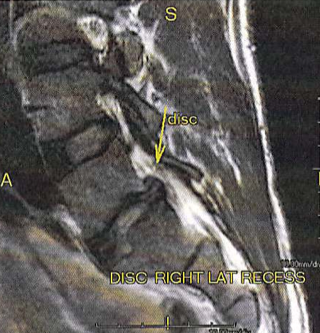
MRI of my spine L5-S1 herniation with compression of the L5 and S1 nerve roots
Part 1: CrossFit Safety
First off, let’s get the CrossFit is Dangerous discussion over with. I was warming up on front squats when the injury happened. We always do 10 minutes or so of dynamic mobility as our warm-up, then some specific movement prep before we begin. In this case, I’d completed my usual warm-up with no low back pain or tightness. I did ten or so reps with just the bar (45 pounds), then ten reps with a 25-pound plate on either side (95 pounds), and towards the end of that second set, I felt my low back tighten up. I’ve had common back issues previously, more on that later, and this just felt like a mild tightening right over the spine at belt level. So I took a minute to do some SI joint and Lumbar mobility on the foam roller and felt fine, so I continued the workout. We were working up to 5 sets of 5 front squats, with a progression based on the percent of 1 repetition max. Rep 1 of the next set (135 pounds) was terrible, and I knew that I should stop the workout right away. I spent the rest of my time at the gym that day doing stretching, foam rolling, and mobility work for my low back. My symptoms worsened in the next 24-48 hours, and ultimately I was diagnosed via MRI with an L5-S1 disc herniation, with compression of both the L5 and S1 nerve roots.
It would be easy to conclude, therefore, that I herniated my disc because of CrossFit. However, read the literature that discusses the etiology of Lumbar Disc Herniations. You’ll find that the vast majority result from many years of degenerative changes and weakening of the disc, culminating with an acute herniation which is typically triggered by a trivial movement. This is also consistent with my case, as I’ve had low back pain on and off for about 15 years. I think that there were many reasons for this, including 22 years in school, 13 years of bike racing, including my fair share of crashes, and the tight hips and limited mobility that go along with that. I hate to admit it, but turning 40 next year probably has something to do with it, if nothing more than falling smack in the middle of the most likely age range for lumbar disc herniations.
Before CrossFit, I’d had several episodes of my low back ‘going out, all triggered by doing Kettlebell snatches. Without going into a lot of detail on that, I would predictably have 2-3 painful days, and then I’d be okay again. It seemed to be related to a lack of ability to stabilize my lumbar spine, possibly from the postural/tightness factors outlined above. So I’d had to take some time off from strength training, which is what ultimately brought me to CrossFit. I thought that trying something different might help.
And one of the things that were different about CrossFit for me is that I knew going into it that I had significant mobility limitations, and I was going to have to fix those to move forward. I began doing about 60 minutes of self-myofascial release, stretching, and mobility work daily, yes, and had zero back pain for about 1.5 years, or as long as I’d been doing CrossFit. My low back felt amazing. Although I got sore in many places, I never had any low back pain from WODs.
So when my back locked up on me during the workout recently, I was astonished. It also felt exactly like the back pain I had previously, so I was not overly concerned at the time. I am guessing at this point, but I think that the back pain I’d been feeling all those years was likely my L5-S1 disc tearing, and it finally let go during those front squat warm-ups. And when I developed radicular symptoms (pain in the posterior hip and down the leg to my foot) the next day, I realized that it was just a more extreme version of pain I’d been having for ten years (although rarely in the past 1.5 years), leading me to conclude that I had some ongoing nerve compression from a possible lumbar disc bulge for quite some time. Previously I’d assumed that it was just tight hips and a peripheral entrapment of the sciatic nerve from all the year sitting and cycling.
Would my disc have herniated if I had not been doing CrossFit? I’ll never know for sure, but I would guess that it would have given my history of symptoms. I know that without CrossFit, I would not have done all the mobility work or achieved things in the gym I never thought I’d be able to do.
As a Chiropractor with an emphasis on sports, I treat a fair number of sports injuries. Some of them are from CrossFit, but we also regularly get runners, golfers, yogis, basketball players, lacrosse players, you name it. There is danger in all sports, and indeed, some are more dangerous than others traumatic brain injuries from Football anybody. Still, ultimately it is up to each individual to assess their risk/reward ratio and decide what a good fit for them is. Of the sports injuries that we treat from CrossFit, the vast majority are injuries that happened previous to starting CrossFit but were re-irritated due to the challenging nature of the training. I would categorize my lumbar disc herniation in this category. My spine was already in trouble when I started CrossFit, and it happened to let go during a WOD. It could have just as easily happened when picking up one of my kids, carrying groceries, or any other relatively trivial activity that is most consistent with the onset of lumbar disc herniations in the population at large.
Mitigating risk in sports and training is a complex topic, but for the purposes of this article I’d say that the key factors for most people include:
Overall musculoskeletal health, and especially no weak links
Respecting your limits
Good instruction and oversight
Continual emphasis on technique, and improving mobility and function in your limited areas
So to summarize my opinion on the safety of CrossFit, I think that it can be done safely, and it can also be done unsafely. It is up to the individual to respect their limits and progress gradually. The trainer helps keep them stay safe along the way.
Part 2: What to do about a Herniated Lumbar Disc
With any injury, the first step is to get help in figuring out exactly what is going on, and how serious the injury is. I was 99% sure that I’d herniated a lumbar disc, primarily due to the severity of the pain in my low back, but also due to the true radicular pain all the way down to my foot. But I still sought confirmation via MRI, and my imaging study showed the L5-S1 disc herniation, which compressed my R S1 nerve root and put some pressure on the L5 nerve root.
With that information, I got started on the recovery process. I have treated a number of Lumbar Disc Herniations in my Chiropractic clinic, and so I basically did everything that I could to heal quickly. There are a few things that you want to establish as quickly as possible:
Are there any positions that relieve your pain? Sitting with a large pad behind my back provided the most relief for me. For the majority of disc sufferers, standing is typically the best them.
Are there any positions you need to avoid? For me, standing was generally bad, and forward flexion was the absolute worst.
Treatment-wise, I had basically everything available to me. The thing that provided the most immediate and lasting relief was flexion-distraction treatment. We also used some kinesiology tape. Though the literature suggests that Chiropractic Adjustments can be helpful for Lumbar Disc Herniations, our examination did not reveal any segments that were not moving properly in that region, so we did not do any adjustments.
In addition, I did several things on my own including using a Low-Level Laser several times per day, using natural anti-inflammatories (Wobenzym PS and Hammer Nutrition Tissue Rejuvenator), and stretching and mobility work.
I experienced significant relief over the next several days and was feeling an estimated 50% better in about 5 days. However, I decided to try an epidural steroid injection to help relieve the pain and gather another data point for me to use with my patients in the future. I get some of my best knowledge of injury treatment through working through my injuries. The injection was relatively painless, and I had nearly complete resolution of all pain in about 24 hours. I still need to avoid both trunk/lumbar flexion and R hip flexion with the knee straight, as both still produce exquisite pain in my low back. But as long as I avoid those two things, I’m feeling pretty good.
Part 3: Three Weeks Out from Injury
It has been three weeks since my injury, and I am symptom-free; as long as I don’t do anything like a straight leg raise (SLR), this movement causes fairly intense low back pain as the nerve roots get squeezed by the disc material. Otherwise, I’m reasonably functional, and forward flexion is no longer painful. I resumed training at the CrossFit gym about 1.5 weeks ago. Still, I avoid lifting anything heavy, and I am putting a lot of time into improving my trunk position to limit flexion with all squatting motions. Will I continue to do CrossFit?
Part 4: Eight Weeks Out from Injury
I am happy to report that the low back is more or less a non-issue unless I’m trying to do a kick a soccer ball as far as I can while coaching my son’s soccer team. Otherwise, I have been gradually working back up in my weight and can do deadlifts at 205 pounds this morning without any trouble. I’m still hyper-attentive to my technique, but I feel pretty good day today. I feel like I got lucky. I know that a lot of people suffer for a long time with a disc herniation. Thanks to all who have helped out already and helped me stay motivated.
Chiropractic treatment has been associated with pain relief ever since it became part of the public consciousness. If you have a sore back, shoulder, or neck you head to the chiropractor for an adjustment and all-natural pain relief. But is pain the only reason to see a El Paso chiropractor?
Drawn In By Pain
The main reason people make that first visit to see a El Paso chiropractor is because they are in pain. They may have a persistent headache, lower back pain, radiating pain from the neck, sore shoulders, knees, or some other type of pain. The common denominator is pain and the need for relief. Some patients will be trying out a chiropractor as a last resort after exhausting all conventional options, and others will be looking for chiropractic treatment right from the start.
Chiropractors are experts at adjusting spinal misalignments, which is a major cause of pain throughout the body. And while many patients are drawn in to see chiropractors in El Paso because of pain, they quickly discover there is a lot more to it than just pain relief.
A Host of Other Benefits
Chiropractic treatment has the potential to improve and eliminate scores of different health issues and related problems. Some health problems and other factors that you probably haven�t associated with chiropractic treatment before, include:
Ear Infections
Increased Range of Motion
Colic
PMS Symptoms
High Blood Pressure
Various Behavioral Issues
Improved Productivity
Improved Immunity
Stress Reduction
Decreased Need for Pain Medication
Improved Sleep Quality
More Comfortable Pregnancy
Allergy Relief
When you visit a El Paso chiropractor it is important to clearly detail why you are there and explain every health issue that has been plaguing you. Many patients don�t bother telling the chiropractor about certain health conditions because they feel chiropractic treatment is only effective for pain. Much of the time whatever you are experiencing is just a symptom of a more complex issue. Chiropractors are trained to treat causes, not just symptoms, so you may notice improvements in several different areas after treatment.
The goal of our El Paso chiropractic office is to create a comprehensive treatment plan that will restore your body back to its original balance. It might take only a few sessions, or it may take longer, but in the end you�ll be free of pain and you�ll feel like your old self. �We are happy to help answer any questions that you might have.
At Jimenez Chiropractic and Wellness our team is here to help answer your questions.� Please feel free to contact us today.
Seeing a doctor of chiropractic, otherwise called chiropractic physician, a chiropractor or DC, might be a beneficial step towards effectively treating low back pain. Below is a quick description of what chiropractors do and how they help patients solve their low back pain.
What Chiropractors Do
Chiropractors use a string of treatments designed to manipulate tissues of the entire body, joints, and the spine to alleviate pain and improve functional ability. Usually, this will be referred to as spinal manipulative therapy (SMT), but you’ll find many other chiropractic treatment procedures.
A chiropractor tailors her or his treatment approach based on the individual needs of a patient, utilizing a traditional doctrine of starting off together with the more natural, less-invasive therapies before continuing to some more aggressive approaches.
At each stage throughout the process, chiropractors preserve a strict emphasis on communicating together with the patient precisely what’s going to happen. The chiropractor makes sure the patient comprehends everything that happens during a diagnosis, evaluation, and also the planned procedures, to be able to educate the patient and receive direct acceptance to commence the treatment process. This emphasis on informed consent is vital because stuff threat*, which means there could a danger, however, unimportant, that a certain process perhaps could cause an injury may be carried by some chiropractic techniques.
* state may vary by state.
Nonetheless, a chiropractor additionally advises a patient of the potential risks attached to abstaining in the task, totally. Nevertheless, none of this is intended to frighten a patient. Make sure the patient, who has full control over her or his body can make an educated choice and always it truly is simply intended to remove mistakes.
Before making any type of analysis or treatment strategy, a chiropractor will analyze a patient thoroughly. The evaluation can include various facets, including wellness history.
Look at the characteristics of the pain, keeping an eye fixed out for “red flags,” which suggest that further diagnostic testing ought to be conducted to be able to exclude any potentially serious medical problems which can be related to neck or low back pain-like neurological disorders, fractures, diseases, and tumors.
There are lots of reasons why low back pain happens. A chiropractor will find out those reasons to configure the treatment that is best suited, including: physical examinations, such as neurological and orthopedic evaluations and analyzing sensory nerves, the reflexes, joints, muscles, along with other regions of the body.
Advanced Diagnostic Testing
Imaging and laboratory tests usually are not recommended for nonspecific LBP, however they could possibly be required if there are indications of a serious underlying illness. A chiropractor logically classifies them based by how serious and examines ailments and the symptoms of an injury or sickness they are, and how long they last.
Symptoms are subdivided into degrees of severity: mild, moderate, or severe. With regards to duration, pain (and other symptoms) can be referred to as:
Acute – lasts for less than 6 weeks
Subacute – lasts between 6 and 12 weeks
Chronic – persists for at least 12 weeks
Continuing/flare-up – the same symptom(s) reoccurs sporadically or because of exacerbating the initial harm
An average chiropractic healing trial is 2 to 3 weekly sessions on the course of 2 to 4 weeks, going up to 12 complete sessions per trial, if a patient is suffering from acute or subacute low back pain. Often, this could be sufficient to completely solve the pain. Other times, additional treatments might be necessary, especially if a patient is suffering from other problems.
Outcome measurements certainly are a valuable instrument for a chiropractor because they are able to help determine when the treatments are showing significant progress. Some means a chiropractor can quantify the outcomes of the treatments including having a patient speed the pain. With a pain diagram so a patient can describe nature and the place of the pain, which increases (or declines) in daily living practices, as in the capacity to work (employment), exercise and sleep. Such as for example lifting ability, strength, flexibility, and endurance analyzing functional capacity
Some patients’ low back pain may have lasted into and beyond the 12-week mark, which makes it persistent pain. During examination, chiropractors will seek out signs to find out whether a patient is prone to developing chronic pain- the “yellow flags” of chronicity so to speak.
The scope of our information is limited to chiropractic and spinal injuries and conditions. To discuss options on the subject matter, please feel free to ask Dr. Jimenez or contact us at 915-850-0900 .
By Dr. Alex Jimenez
Additional Topics: Lower Back Pain After Auto Injury
After being involved in an automobile accident, neck injuries and aggravated conditions, such as whiplash, are some of the most commonly reported types of injuries, due to the force of the impact. A study discovered, however, that the seat of a vehicle can often lead to injuries as well, causing lower back pain and other symptoms. Lower back pain is also among one of the most common types of automobile accident injuries in the U.S. alone.
(HealthDay News) � Chronic lower back pain affects millions of Americans. Many try steroid injections to ease their discomfort, but researchers now say this remedy provides only short-term relief.
In their study, investigators from France focused on 135 patients with back pain seemingly caused by inflammation between the discs and bones (vertebrae) in the lower spine.
The researchers found that a single steroid injection eased pain for one month. After that, however, effectiveness waned. Virtually no difference was seen one year after treatment between patients who did or didn�t get the injection.
�Our results do not support the wide use of an injection of glucocorticoid in alleviating symptoms in the long term in this condition,� said lead researcher Dr. Christelle Nguyen.
The findings are consistent with earlier studies, said Nguyen, an assistant professor of physical medicine and rehabilitation at Paris Descartes University.
Nguyen said she and her colleagues had hoped that targeting local disc inflammation with an anti-inflammatory steroid would help alleviate long-term pain.
To test their theory, they selected patients with chronic lower back pain and signs of disc inflammation on an MRI. On average, participants had suffered from back pain for six years. Half were assigned to a single steroid shot; the other half got no injection.
Patients rated their pain severity before the injection and again one, three, six and 12 months after the treatment.
One month after treatment, 55 percent of those who got the steroid injection experienced less lower back pain, compared with 33 percent of those who weren�t treated.
�However, the groups did not differ for the assessed outcomes 12 months after the injection,� Nguyen said.
For example, patients who did or didn�t received a steroid injection ended up in similar circumstances, with the same incidence of disc inflammation, lower quality of life, more anxiety and depression and continued use of non-narcotic pain pills, she said.
Overall, most patients found the steroid injections tolerable, and would agree to have a second one if necessary, Nguyen said. �We had no specific safety concerns and found no cases of infection, destruction or calcification of the disc 12 months after the injection,� she added.
The results were published March 20 in the Annals of Internal Medicine.
Dr. Byron Schneider, of Vanderbilt University School of Medicine in Nashville, noted there are many different causes of back pain.
In this study, the patients suffered from chronic back pain, he pointed out. �Patients with chronic lower back [pain] probably have more than one cause of their pain, which may be why the good results they found at one month weren�t there a year later,� said Schneider, an assistant professor of physical medicine and rehabilitation.
The study results don�t mean steroid injections should be avoided altogether, he noted.
Patients with a sudden episode of back pain � so-called acute pain � probably don�t need a steroid injection, he said.
Chiropractic Care Boosts Surgery Avoidance
�But if they�re not getting better after a month or two the way we would expect them to, at that point it would be reasonable to discuss the pluses and minuses of a steroid injection,� said Schneider, co-author of an accompanying journal editorial.
Chronic (long-term) back pain is a different situation, he said. Treating chronic back pain means treating the pain itself, but also using cognitive behavior therapy and �pain psychology� to help patients cope with pain, he said.
�For chronic pain, physicians need to address the musculoskeletal reasons that cause the hurt, but also other reasons that patients may be experiencing pain,� Schneider said.
According to the editorial, psychological distress, fear of pain and even low educational levels can affect pain levels.
IFM's Find A Practitioner tool is the largest referral network in Functional Medicine, created to help patients locate Functional Medicine practitioners anywhere in the world. IFM Certified Practitioners are listed first in the search results, given their extensive education in Functional Medicine