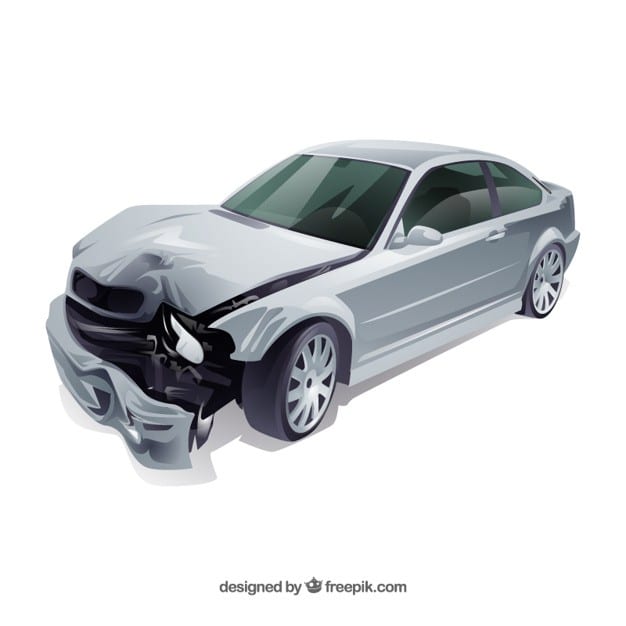
Crash: Few instances shatter our normal world into pieces more quickly than an automobile accident. Never expected, a wreck causes bodily injury, stress, and, in some cases, ongoing financial litigation issues.
Unfortunately, the vast number of vehicles on the road today, as well as drivers’ penchant for distracted driving, dramatically increases an individual’s chances of being involved in a crash. If you already suffer from an injury or medical condition, you must do your part to ensure it is not aggravated or exacerbated.
If a car crash happens to you, it’s essential to recognize and follow these six tips to keep you safe and your injuries to a minimum.
Car Crash: Immediately Take Stock Of The Situation
The way you react seconds after a crash impacts the situation tremendously. Determine what area you are injured, and if you are in imminent danger in the vehicle.
For example, if the automobile is on fire, or you are sinking into a lake, rescue yourself as quickly as possible. Otherwise, stay inside your vehicle.
Analyze Your Injured Areas
How injured do you appear to be? Keep in mind you are not a doctor. So, even if you feel fine, your neck or back could still have been impacted. Identify which areas of your body hurts, and the intensity of the pain.
Wait For The Authorities
Stay calm inside your vehicle and wait for the police and ambulance to arrive. This is imperative if your vehicle has flipped and you are hanging from your seatbelt.
Many head and neck injuries result from automobile occupants releasing their seat belts after a crash that has left them upside down.
Inform The Emergency Technicians
Once help arrives, it’s vital to explain to them, if you can, the areas of injury. If you have previously suffered from injury or medical condition to your neck, back, or spine, let them know that, too.
This information helps them formulate the form of extraction and emergency treatment that minimizes the chance of creating further harm. Be calm and specific when you relay the information, using simple language and the 1-10 pain scale to describe your level of discomfort.
Visit Your Chiropractor
If your injuries are deemed minimal and you are released, be happy and grateful that you were not hurt worse! Then, make an appointment with your chiropractor, and explain the nature of the wreck.
Certain injuries take a few days to show up, and the crash could have impacted bones, joints, and ligaments that went undiscovered during the initial after-crash exam. Ask for a complete examination, and talk with your chiropractor about any treatment deemed necessary.
Minimize The Chances Of Another Automobile Accident
While you cannot control being in a wreck, you can take measures to guard against the occurrence, and give yourself a greater chance to avoid injury. Always wear your seatbelt, avoid distracted driving (this means your cell phone), maintain your vehicle’s brakes and tires, and understand the current traffic laws. Commit to driving at a safe speed depending on the weather conditions, and never, ever drive after imbibing alcohol.
Being in an automobile accident is scary business, and we hope it never happens to you. There is increased risk to individuals who already deal with medical conditions or bodily injuries from sports, work, or falls.
However, by maintaining a clear head and following these six tips, you can minimize the chance of being seriously injured in many car wreck situations and return to your normal life quickly, putting this awful incident behind you.
Basketball Hall Of Famer Nancy Lieberman Rear Ended
This article is copyrighted by Blogging Chiros LLC for its Doctor of Chiropractic members and may not be copied or duplicated in any manner including printed or electronic media, regardless of whether for a fee or gratis without the prior written permission of Blogging Chiros, LLC.
Chiropractic Care: Our neck is a busy body part. It holds up and turns our head, allowing us to see, hear, and speak in the direction we choose.
Although the neck is a real “team player” it’s a bit of a diva, meaning it’s fairly delicate. There are many ways everyday motion injures the neck, ending up causing pain, decreased mobility, and varying degrees of short and long-term misery.
Whiplash is a common neck injury caused by a sudden movement that jerks the neck forth and then back in a whipping motion. Automobile accidents frequently result in whiplash, as the vehicle is moving and then stopping rapidly.
This affects the neck’s ligaments and joints in various degrees, depending on the speed of the vehicle and the site of the impact. In severe cases, the discs and the nerves may also be damaged.
Symptoms of whiplash include varying degrees of pain, stiffness in the neck, headaches, and sometimes dizziness, blurred vision, and nausea. Some people only suffer with whiplash a few days, while others experience ongoing issues.
If you have been injured in an automobile crash, it’s in your best interest to immediately schedule an appointment with a chiropractor. There are a myriad of ways chiropractic care assists in managing the pain and minimizing the symptoms of whiplash.
Here Are The 5 Best Reasons For Chiropractic Care:
#1: Reduces Inflammation To Promote Healing
The first order of business for whiplash sufferers is to get the neck’s inflammation reduced, as this hinders proper healing. Your chiropractor will utilize chiropractic adjustments, along with other forms of treatment based on your specific injury. It�s essential to undergo this type of treatment as soon after the injury occurs as possible in order to reach optimum results.
#2: Minimizes Pain For Greater Comfort
Whiplash can be extremely painful, as so many of the neck’s components may be involved, and the neck is such a mobile body part. Every neck movement hurting is no way to live! Chiropractic care soothes the pain of whiplash through therapeutic techniques that promote healing of the damaged area.
#3: Returns Proper Body Alignment
When the inflammation and the pain of whiplash are reduced, the next step is to promote healing and alignment within the body. A chiropractor will perform a series of chiropractic adjustments that includes the neck and spine, but may also incorporate other parts of the body. Whiplash does a number on the body’s natural alignment, and it’s the chiropractor’s job to put it all back together in workable order.
#4: Offers Exercises To Increase Mobility
Contrary to old movies where the whiplash sufferer wears a cumbersome neck brace, it’s vital to the rehabilitation process to keep moving. During chiropractic visits, patients receive a regimen of exercises to perform regularly at home. These, combined with chiropractic care, lessen the time it takes to recover.
#5: Provides An Alternative To Surgery
The good news is that a whiplash injury rarely requires surgery. However, it’s best to not tempt fate and visit a chiropractor to make certain your injuries are treated and begin healing. A chiropractor monitors improvements and keeps you apprised of your progress, empowering you to get better and back to normal activity faster than simply suffering through the symptoms, hoping they go away.
If you are involved in a motor vehicle crash and end up with whiplash, don’t despair. A chiropractor will map out a treatment regimen that will decrease inflammation and pain, increase mobility, and promote healing. Remember, the sooner you see your chiropractor, the faster the treatment begins, and the sooner you see results. Don’t suffer needlessly!
Chiropractic Care & Headaches
This article is copyrighted by Blogging Chiros LLC for its Doctor of Chiropractic members and may not be copied or duplicated in any manner including printed or electronic media, regardless of whether for a fee or gratis without the prior written permission of Blogging Chiros, LLC.
Soccer is one of the most popular team sports in the United States, and offers an excellent form of exercise to children and adults alike. Unfortunately, the nature of the sport, the repeated movement and the chance of collision, add up to quite a few opportunities for injury.
Lower and upper extremity injuries, overuse injuries, and head, neck, and face injuries are commonplace. According to Stanford Children’s Health, “88,000 children 8-14 were treated in an emergency room for soccer-related injuries.”
Soccer players who take certain precautionary measures decrease their chances of injury. Let�s look at three ways you can avoid injury as a soccer player:
#1: Soccer: Use Proper Equipment
Donning proper fitting cleats, uniforms, and shin guards decrease the risk of being hurt in the first place. Make adjustments often, especially if the player is growing rapidly or fluctuates in weight.
#2: Get Checked Out By A Chiropractor Pre-Season
Soccer players who allow their fitness less to lapse increase the chance of injury. Visit a Doctor of Chiropractic to ensure there are no underlying issues with participating in strenuous activity. A chiropractor is also able to make sure the spine is aligned and muscles and joints are strong and functioning properly.
#3: Pay Attention To The Surroundings
A field that is not kept up well offers a greater chance of turning an ankle or falling. It’s vital to check out the playing area beforehand and note any uneven areas that could cause a player to trip.
In addition, consider the weather. Muddy, slick fields create extra issues, and particularly hot temperatures make players run the risk of dehydration or heat stroke. Prepare for weather issues in advance of the game.
If, even though you take all of these precautions, you still end up injured, there are several options for treatment. The injury is hopefully mild and heals on its own after a few days of rest. More serious injuries require a doctor visit, and one of these three treatments.
First, ice and elevate it: Keep weight off the injured area as much as possible, and elevate it with pillows. Use an ice bag wrapped in a towel to keep down swelling and inflammation. If the injury is painful, over the counter medication helps reduce discomfort.
Then, take a break: The last decision you want to make is to begin playing too soon and re-injure yourself. With more serious injuries, sitting out of a few games, or even an entire season, is a choice that promotes healing and health. Talk to your chiropractor about the timeframe the injury needs to be able to recover correctly, and follow his or her advice.
Finally, keep your chiropractic adjustments: Chiropractors are trained in treating the neuromusculoskeletal system as a whole. Many of the injuries suffered from soccer show an improvement after a few chiropractic visits.
Spinal and joint alignment, muscle healing, and tendon relaxation are all techniques chiropractors employ to promote and hasten healing. Additionally, chiropractors give insight on valuable ways to use nutrition and exercise to keep the body functioning at optimum capacity, to avoid re-injury.
Enjoying physical activity is essential to maintain a routine that provides a healthy, active lifestyle, and joining a soccer team is a great choice for children as well as adults. Knowing the advance precautions to put in place to avoid injury will help keep you strong and safe.
If, however, you or your child end up hurt, these forms of treatment will lessen healing time and get you back in the game at full speed. So give us a call to schedule your next appointment before you get back out on the pitch.
Chiropractic Treatment For Concussions
This article is copyrighted by Blogging Chiros LLC for its Doctor of Chiropractic members and may not be copied or duplicated in any manner including printed or electronic media, regardless of whether for a fee or gratis without the prior written permission of Blogging Chiros, LLC.
Baseball Injuries: The crack of a ball against your bat, good! The crack of a back or shoulder, bad!
Baseball, the nationwide pass time, heats up in summer. From little league on up, individuals enjoy swinging the bat and running the bases. Unfortunately, the movements baseball requires can wreak havoc on a person’s body, leaving them with strained backs, hurt shoulders, and pulled muscles. According to Livestrong, there are over 600,000 injuries from playing baseball per year, and 5-14 year olds suffer from 117,000 of them.
The aspects of the game � running, sliding, twisting, and jumping � cause the body to maneuver into awkward positions. If you or a loved one has slid into first and felt a pop, or twisted to catch a fly ball and felt a snap, chiropractic care offers several ways to help put you on the road to a complete recovery.
Baseball Injuries: Manage Pain
Baseball injuries frequently involve large muscles, resulting in a high degree of pain. Chiropractic treatment offers relief from severe pain of many injuries involving the spine, muscles, and joints.
Using spinal adjustments, a chiropractor is able to help the body align itself properly, and sooth the injured area. Once the body functions normally, pain is diminished. Sometimes this can be accomplished in one visit, while other injuries require a few sessions before pain diminishes.
Increase Mobility
A strained neck, pulled back, or overextended knee may cause the individual serious issues in being able to move. Limping around slowly is nobody’s idea of fun!
Chiropractic adjustments are proven to help reduce inflammation and improve mobility in many injury cases. If that last baseball game has you unable to put weight on your knee, your neck won’t twist without pain, or your shoulder won’t lift your arm, it may be time to visit a chiropractor for evaluation.
Promote Healing
The premise of chiropractic care is to treat the entire body as a whole, not just the injured part. As the body becomes better aligned, it functions at a higher capacity, and begins to heal itself.
Most injuries resulting from playing baseball, such as tendonitis, strained muscles, torn rotator cuffs, and the like, heal faster with chiropractic care. Increased blood flow to the injured area, and less pressure on the body part (usually due to misalignment of the spine) allow the injured area to regenerate, and a greater chance to begin healing faster than without chiropractic care.
Avoid Medication
Even over-the-counter pain and anti-inflammatory drugs cause side effects in certain individuals. Allergies, stomach issues, and other reasons result in many injured people steering clear of medication to relieve pain and inflammation.
Chiropractic care provides these individuals a drug-free, less invasive way to help manage the pain and promote healing. More people every year are choosing to visit a chiropractor for pain relief instead of popping pain medicine.
Before jumping into a baseball game, or even if you or your children play regularly, remember that prevention is worth its weight in gold. Take care of your body by stretching beforehand, being aware of your physical limits, maintaining proper posture, and staying hydrated during the game. With a little extra effort, the chance of a baseball injury can be dramatically decreased.
Summer fun often includes activities such as baseball, whether in a league or in your back yard with your family. Avoid suffering from an injury as best you can, and, if you or your child end up with an achy knee, twisted elbow, or smarting shoulder, call you chiropractor to schedule a thorough evaluation as quickly as possible.
Prevention, Recognition & Management Of Youth Sports Injuries
This article is copyrighted by Blogging Chiros LLC for its Doctor of Chiropractic members and may not be copied or duplicated in any manner including printed or electronic media, regardless of whether for a fee or gratis without the prior written permission of Blogging Chiros, LLC.
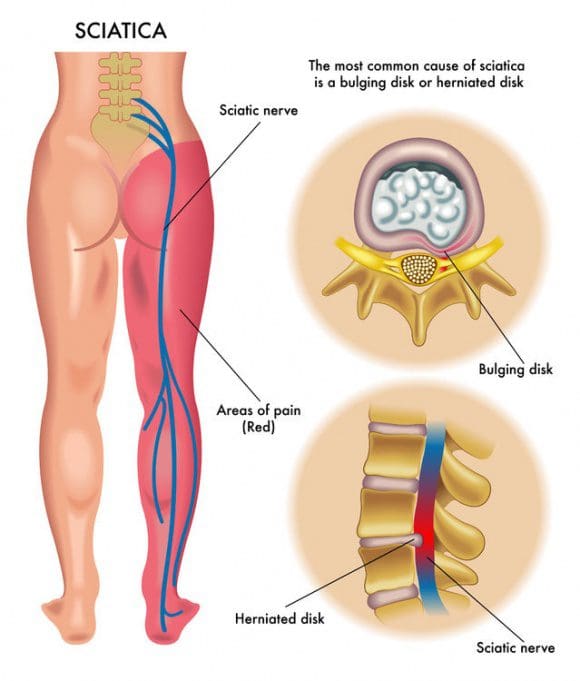
Cause Of Sciatica: Several lumbar spine (lower back) disorders can cause sciatica. Sciatica is often described as mild to intense pain in the left or right leg. Sciatica is caused by compression of one or more of the 5 sets of nerve roots in the lower back. Sometimes doctors call sciatica a radiculopathy. Radiculopathy is a medical term used to describe pain, numbness, tingling, and weakness in the arms or legs caused by a nerve root problem. If the nerve problem is in the neck, it is called a cervical radiculopathy. However, since sciatica affects the low back, it is called a lumbar radiculopathy.
Pathways To Sciatic Nerve Pain
Five sets of paired nerve roots in the lumbar spine combine to create the sciatic nerve. Starting at the back of the pelvis (sacrum), the sciatic nerve runs from the back, under the buttock, and downward through the hip area into each leg. Nerve roots are not “solitary” structures but are part of the body’s entire nervous system capable of transmitting pain and sensation to other parts of the body. Radiculopathy occurs when compression of a nerve root from a disc rupture (herniated disc) or bone spur (osteophyte) occurs in the lumbar spine prior to it joining the sciatic nerve.
What Causes Sciatic Nerve Compression?
Several spinal disorders can cause spinal nerve compression and sciatica or lumbar radiculopathy. The 6 most common are:
a bulging or herniated disc
lumbar spinal stenosis
spondylolisthesis
trauma
piriformis syndrome
spinal tumors
Sciatica�Cause:�6 Leading Sources
Several lumbar spine (lower back) disorders can cause sciatica. Sciatica is often described as mild to intense pain in the left or right leg. Sciatica is caused by compression of one or more of the 5 sets of nerve roots in the lower back. Sometimes doctors call sciatica a radiculopathy. Radiculopathy is a medical term used to describe pain, numbness, tingling, and weakness in the arms or legs caused by a nerve root problem. If the nerve problem is in the neck, it is called a cervical radiculopathy. However, since sciatica affects the low back, it is called a lumbar radiculopathy.
Sciatica Cause #1: Lumbar Bulging Disc Or Herniated Disc
A bulging disc is also known as a contained disc disorder. This means the gel-like center (nucleus pulposus) remains “contained” within the tire-like outer wall (annulus fibrosus) of the disc.
A herniated disc occurs when the nucleus breaks through the annulus fibrosus. It is called a “non-contained” disc disorder. Whether a disc bulges or herniates, disc material can press against an adjacent nerve root and compress delicate nerve tissue and cause sciatica.
The consequences of a herniated disc are worse. Not only does the herniated disc cause direct compression of the nerve root against the interior of the bony spinal canal, but the disc material itself also contains an acidic, chemical irritant (hyaluronic acid) that causes nerve inflammation. In both cases, nerve compression and irritation cause inflammation and pain, often leading to extremity numbness, tingling, and muscle weakness.
Herniated disc is a relatively common condition that can occur anywhere along the spine, but most often affects the lower back or neck region. Also known as a slipped disc or ruptured disc, a herniated disc develops when one of the cushion-like pads between the vertebrae moves out of position and presses on adjacent nerves.
Herniated discs are typically caused by overuse injuries or trauma to the spine; however, disc conditions can also develop as a result of the normal aging process. It is also known that there is a genetic factor that contributes to the development of disc degeneration and herniated disc. In most cases, a herniated disc in the lower back will heal within six months, as the size of herniation shrinks with time via resorption. Surgery may be needed if medication, physical therapy and other treatments fail.
What Is A Disc?
Spinal discs are cushion-like pads located between the vertebrae. Without these �shock absorbers,� the bones in the spine would grind against one another. In addition to giving the spine flexibility and making movements such as twisting and bending possible, discs protect the spine by absorbing the impact of trauma and body weight. Each disc has a strong outer layer called annulus fibrosus and a soft, gel-like center, called nucleus pulposus. There are fibers on the outside of each disc that attach to adjacent vertebrae and hold the disc in place. A herniated disc occurs when the outer layer tears or ruptures and the gel-like center leaks into the spinal canal.
The spinal canal has just enough space to house the spinal cord and spinal fluid. When a disc herniates and spills into the spinal canal, it can cause compression of the nerves or spinal cord. Intense, debilitating pain and alterations in sensation often occur. In addition, the gel-like substance inside the disc releases chemical irritants that contribute to nerve inflammation and pain.
What Causes A Herniated Disc?
As we age, the spinal discs gradually lose fluid volume. This process starts at about age 30 and progresses slowly, over time. As the discs dry out, microscopic cracks or tears can form on the outer surface, causing it to become brittle, weak and more susceptible to injury. The most common causes of herniated disc are:
Wear and tear: Discs dry out and aren�t as flexible as they once were.
Repetitive movements: Work, lifestyle, and certain sports activities that put stress on the spine, especially the lower back, further weaken an already vulnerable area.
Lifting the wrong way: Never lift while bent at the waist. Proper lifting entails lifting with your legs and a straight back.
Injury: High-impact trauma can cause the disc to bulge, tear or rupture.
Obesity: Carrying excess weight puts an undue amount of strain on the spine.
Genetics: There are some genes that are more commonly present in individuals with disc degeneration. More research is needed to investigate the role of these genes�they could be targets of biological treatment in the future.
What Are The Symptoms Of A Herniated Disc?
Pain from a herniated disc can vary, depending on the location and severity of the injury. It is typically felt on one side of the body.
If the injury is minimal, little or no pain may be felt. If the disc ruptures, pain can be severe and unrelenting. Pain may radiate to an extremity in a specific nerve root distribution if significant nerve impingement has occurred. For example, sciatica is frequently caused by a herniated disc in the lower back. Herniated disc can manifest itself with a range of symptoms, including:
Dull ache to severe pain
Numbness, tingling, burning
Muscle weakness; spasm; altered reflexes
Loss of bowel or bladder control (Note: These symptoms constitute a medical emergency. If they occur, seek medical attention immediately).
How Is A Herniated Disc Diagnosed?
History and physical examination point to a diagnosis of herniated disc. A herniated disc is likely if low back pain is accompanied by radiating leg pain in a nerve root distribution with positive straight leg raising test (ie, elevating the leg while lying down causes radiating pain down the leg), and other neurologic deficits such as numbness, weakness, and altered reflexes.
Imaging studies are usually ordered to confirm a diagnosis of herniated disc. X-rays are not the imaging medium of choice because soft tissues (eg, discs, nerves) are hard to capture with this technology. However, they may be used as an initial tool to rule out other disorders such as a growth or fracture. Confirmation of the suspicion of herniated disc is generally accomplished with:
Magnetic Resonance Imaging (MRI): This technology reveals the spinal cord, surrounding soft tissue and nerves. It is the best imaging study to support the diagnosis of a herniated disc.
Nerve Conduction Studies (NCS) and Electromyogram (EMG): These studies use electrical impulses to measure the degree of damage to the nerve/s caused by compression from a herniated disc and other conditions that cause nerve impingement can be ruled out. NCS and EMG are not routine tests to diagnose herniated disc.
Herniated discs sometimes heal on their own through a process called resorption. This means that the disc fragments are absorbed by the body. Most people suffering from herniated disc respond well to conservative treatment and do not require surgery.
Sciatica Cause #2: Lumbar Spinal Stenosis
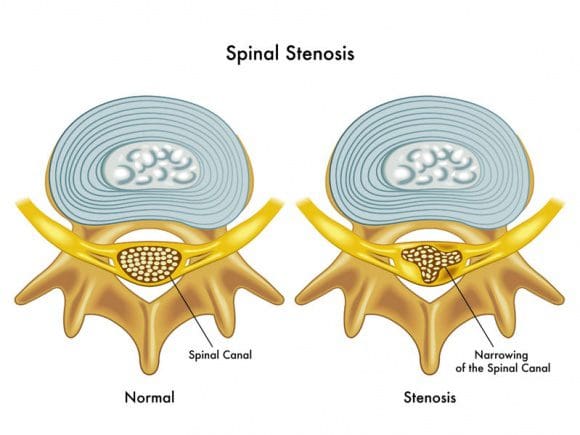
Spinal stenosis is a nerve compression disorder most often affecting older adults. Leg pain similar to sciatica may occur as a result of lumbar spinal stenosis. The pain is usually positional, often brought on by activities such as standing or walking and relieved by sitting down.
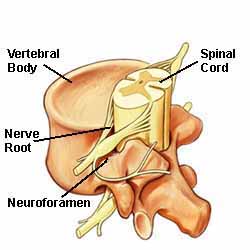
Spinal nerve roots branch outward from the spinal cord through passageways called neural foramina comprised of bone and ligaments. Between each set of vertebral bodies, located on the left and right sides, is a foramen. Nerve roots pass through these openings and extend outward beyond the spinal column to innervate other parts of the body. When these passageways become narrow or clogged causing nerve compression, the term foraminal stenosis is used.
What Is Spinal Stenosis?
A clue to answering this question is found in the meaning of each word. Spinal refers to the spine. Stenosis is a medical term used to describe a condition where a normal-size opening has become narrow. Spinal stenosis may affect the cervical (neck), thoracic (chest), or lumbar (lower back) spines.
The most commonly area affected is the lumbar spine followed by the cervical spine.
Visualize Spinal Stenosis?
Consider a water pipe. Over time, rust and debris builds up on the walls of the pipe, thereby narrowing the passageway that normally allows water to freely flow. In the spine, the passageways are the spinal canal and the neuroforamen. The spinal canal is a hollow vertical hole that contains the spinal cord. The neuroforamen are the passageways that are naturally created between the vertebrae through which spinal nerve roots exit the spinal canal.
The neuroforamen are the passageways that are naturally created between the vertebrae through which spinal nerve roots exit the spinal canal.
Illustration above: The spine’s bony structures encase and protect the spinal cord. Small nerve roots shoot off from the spinal cord and exit the spinal canal through passageways called neuroforamen.
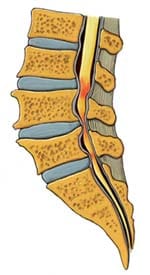
Lumbar (low back) spinal stenosis is illustrated below. Notice the narrowed areas in the spinal canal (reddish-colored areas). As the canal space narrows, the spinal cord and nearby nerve roots are squeezed causing different types of symptoms. The medical term is nerve compression.
Anatomy Overview Can Help You Understand Spinal Stenosis
The spine is a column of connected bones called vertebrae. There are 24 vertebrae in the spine, plus the sacrum and tailbone (coccyx). Most adults have 7 vertebrae in the neck (the cervical vertebrae), 12 from the shoulders to the waist (the thoracic vertebrae), and 5 in the lower back (the lumbar vertebrae). The sacrum is made up of 5 vertebrae between the hipbones that are fused into one bone. The coccyx is made up of small fused bones at the tail end of the spine.
Lamina and Spinous Processes: At the back (posterior) of each vertebra, you have the lamina, a bony plate that protects your spinal canal and spinal cord. Your vertebrae also have several bony tabs that are called spinous processes; those processes are attachment points for muscles and ligaments.
Ligaments, Especially the Ligamentum Flavum: Vertebrae are connected by ligaments, which keep the vertebrae in their proper place. The ligamentum flavum is a particularly important ligament. Not only does it help stabilize your spine, it also protects your spinal cord and nerve roots. Plus, the ligamentum flavum is the strongest ligament in your spine.
The ligamentum flavum is a dynamic structure, which means that it adapts its shape as you move your body. When you’re sitting down and leaning forward, the ligamentum flavum is stretched out; that gives your spinal canal more room for the spinal nerves. When you stand up and lean back, though, the ligamentum flavum becomes shorter and thicker; that means there’s less room for the spinal nerves. (This dynamic capability helps explain why people with spinal stenosis find that sitting down feels better than standing or walking.)
Discs: In between each vertebra are tough fibrous shock-absorbing pads called the intervertebral discs. Each disc is made up of a tire-like outer band (annulus fibrosus) and a gel-like inner substance (nucleus pulposus).
Spinal Nerves and the Spinal Cord: Nerves are also an important part of your spinal anatomy�after all, they’re what sends messages from your brain to the rest of your body. The spinal cord, the thick bundle of nerves that extends downward from the brain, passes through a ring in each vertebra. Those rings line up into a channel called the spinal canal.
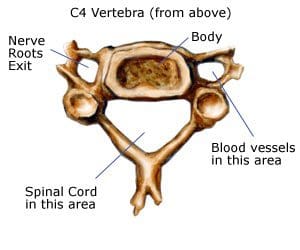
Between each vertebra, two nerves branch out of the spinal cord (one to the right and one to the left). Those nerves exit the spine through openings called the foramen and travel to all parts of your body.
Normally, the spinal channel is wide enough for the spinal cord, and the foramen are wide enough for the nerve roots. But either or both can become narrowed, and cause spinal stenosis.
Sciatica Cause #3: Spondylolisthesis
Spondylolisthesis is a disorder that most often affects the lumbar spine. It is characterized by one vertebra slipping forward over an adjacent vertebra. When a vertebra slips and is displaced, spinal nerve root compression occurs and often causes sciatic leg pain. Spondylolisthesis is categorized as developmental (found at birth, develops during childhood) or acquired from spinal degeneration, trauma or physical stress (eg, lifting weights).
Spondylolisthesis occurs when one vertebra slips forward over the vertebra below it. The term is pronounced spondy-low-lis-thesis and is derived from the Greek language: spondylo means vertebra and listhesis means to slip. There are several types or causes of spondylolisthesis; a few are listed below.
Congenital spondylolisthesis means the disorder is present at birth.
Isthmic spondylolisthesis occurs when a defect, such as a fracture occurs in a bony supporting vertebral structure at the back of the spine.
Degenerative spondylolisthesis is more common and is often associated with degenerative disc disease, wherein the discs (eg, due to the effects of growing older) lose hydration and resilency.
How Spondylolisthesis May Develop
The lumbar spine is exposed to directional pressures while it carries, absorbs, and distributes most of your body’s weight at rest and during activity. In other words, while your lumbar spine is carrying and absorbing body weight, it also moves in different directions (eg, rotate, bend forward). Sometimes, this combination causes excessive stress to the vertebra and/or its supporting structures, and may lead to a vertebral body slipping forward over the vertebrae beneath.
Who May Be At Risk
If a family member (eg, mother, father) has spondylolisthesis, your risk for developing the disorder may be greater. Some activities make you more susceptible to spondylolisthesis. Gymnasts, linemen in football, and weight lifters all put significant pressure and weight on their low backs. Think about gymnasts and the positions they put their body in: They practically bend in half backwards�that’s an extreme arched back. They also twist through the air quickly when doing flips and then land, absorbing the impact through their legs and low back. Those movements put substantial stress on the spine, and spondylolisthesis can develop as a result of repeated excessive strains and stress.
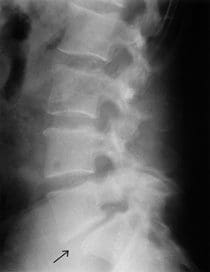
X-Ray View Of Spondylolisthesis
The x-ray below shows you a good example of a lumbar spondylolisthesis. Look at the area the arrow is pointing to: You can see that the vertebra above the arrow isn’t in line with the vertebra below it. It’s slipped forward; it’s spondylolisthesis.
Arrow Points To A Lumbar Spondylolisthesis
Grading Spondylolisthesis
Doctors “grade” the severity of a spondylolisthesis using five descriptive categories. Although there are several factors your doctor considers when evaluating your spondylolisthesis, the grading scale (below) is based on the far forward a vertebral body has slid forward over the vertera beneath. Often, the doctor uses a lateral (side view) x-ray to examine and grade a spondyloisthesis. Grade I is a smaller slip than Grade IV or V.
Grade I: Less than 25% slip
Grade II: 25% to 49% slip.
Grade III: 50% to 74% slip.
Grade IV: 75% to 99% slip.
Grade V: The vertebra that has fallen forward off the vertebra below it. This is the most severe type of spondylolisthesis and is termed spondyloptosis.
Sciatica Cause #4: Trauma
Sciatica can result from direct nerve compression caused by external forces to the lumbar or sacral spinal nerve roots. Examples include motor vehicle accidents, falling down, football and other sports. The impact may injure the nerves or, occasionally, fragments of broken bone may compress the nerves.
Sciatica Cause #5: Piriformis Syndrome
Piriformis syndrome is named for the piriformis muscle and the pain caused when the muscle irritates the sciatic nerve. The piriformis muscle is located in the lower part of the spine, connects to the thighbone, and assists in hip rotation. The sciatic nerve runs beneath the piriformis muscle. Piriformis syndrome develops when muscle spasms develop in the piriformis muscle thereby compressing the sciatic nerve. It may be difficult to diagnose and treat due to the lack of x-ray or magnetic resonance imaging (MRI) findings.
If you�ve ever felt pain in the hip, pain in the center of the butt, or pain down the back of the leg, you are likely suffering, at least partially, with piriformis syndrome. The piriformis is a muscle which runs from your sacrum (mid-line base of spine) to the outer hip bone (trochanter). This muscle truly works overtime on anyone who runs at all.
The muscles in and around the gluteal region help with three areas
rotation of the hip and leg;
balance while one foot is off the ground; and
stability for the pelvic region.
Needless to say, all of these characteristics are highly needed by runners (and everyone else, when you come to think of it).
Injuries To The Piriformis
This muscle is a prime candidate for repetitive motion injury (RMI). RMI occurs when a muscle is asked to perform beyond it�s level of capability, not given enough time to recover, and asked to perform again. The typical response from a muscle in this situation is to tighten, which is a defensive response of the muscle. This tightness, however, manifests itself in several ways to a runner.
The first symptom suggesting piriformis syndrome would be pain in and around the outer hip bone. The tightness of the muscle produces increased tension between the tendon and the bone which produces either direct discomfort and pain or an increased tension in the joint producing a bursitis. Again, a bursitis is an inflammation of the fluid filled sac in a joint caused by an elevation of stress and tension within that joint.
The second symptom suggesting piriformis syndrome would be pain directly in the center of the buttocks. Although this is not as common as the other two symtpoms, this pain can be elicited with direct compression over the belly of the buttocks area. A tight muscle is a sore muscle upon compression due to a reduced blood flow to that muscle.
The third symptom suggesting piriformis syndrome would be a sciatic neuralgia, or pain from the buttocks down the back of the leg and sometimes into different portions of the lower leg. We have an article that can teach you more about how piriformis syndrome and sciatica are related.
The sciatic nerve runs right through the belly of the piriformis muscle and if the piriformis muscle contracts from being overused, the sciatic nerve now becomes strangled, producing pain, tingling and numbness.
Simple Physiology
Any muscle repetitively used needs to have an opportunity to recover. This recovery can either be on Nature�s clock, or can be facilitated and sped up with proper knowledge and treatment. Since the muscle is tightening due to overuse, continued use will only make it worse. This injured muscle needs to relax and have increased blood flow encouraged to it for more rapid healing. This tightness that exists also reduces the normal blood flow going to the muscle reducing the speed with which the muscle can recover. To encourage fresh, oxygen-rich blood to the muscle is the most powerful means of getting the muscle to begin to relax and function normally. Multiple massages per day to this area is greatly encouraged.
The next step in this “recovery” process is to use a tennis ball under the butt and hip area. While sitting down on the floor, roll away from the side of involvement and place a tennis ball just inside the outer hip bone under the butt area. As you begin to allow your weight onto the tennis ball, note areas of increased pain and soreness. Trigger points will tend to accumulate in a repetitively used muscle, and until these toxins are manually broken up and eliminated, the muscle will have an artificial ceiling with regard to flexibility potential and recovery potential. So, if it�s sore and hurts while your sitting on it, you�re doing a good job. Let the ball work under each spot for 15-20 seconds before moving it to another area. Once you�ve been on the ball for 4-5 minutes, now put the ankle of the involved leg over the knee of the non-involved leg (crossing your legs). Now place the tennis ball just inside the outer hip bone again and work the tendon of the piriformis muscle. While this pain is typically excruciating and takes some time to effectively reduce, the benefits here are huge. Be patient, be consistent and good things will happen.
Additional Treatments
Due to the fact that the sciatic neuralgia and the hip bursitis or tendonitis are both inflammatory in nature, ice, or cryotherapy, over the involved area 15-20 minutes at a time will be beneficial. This should be done multiple times per day.
Stretching of the hip muscles should not be done until the acute pain is gone. At that point in time, begin with gentle stretching, such as the cross-legged stretch while pulling up on the knee. The muscle should have increased flexibility before an active return to running.
Finally, I�m always discouraging the use of pharmaceutical anti-inflammatories. Not only do they greatly aggravate the intestines, but they also suggest an artificial wellness that can lead to bigger problems. Proteolytic enzymes, such as bromelain, are both natural and extremely beneficial with no side effects.
Conclusion: The piriformis muscle is pretty important for all of us.
Sciatica Cause #6: Spinal Tumors
Spinal tumors are abnormal growths that are either benign or cancerous (malignant). Fortunately, spinal tumors are rare. However, when a spinal tumor develops in the lumbar region, there is a risk for sciatica to develop as a result of nerve compression.
If you think you have sciatica, call your doctor or chiropractor. The first step toward relieving pain is a proper diagnosis.
Written by Jean-Jacques Abitbol, MD; Reviewed by Brian R. Subach, MD
Howard S. An, MD, Stewart G. Eidelson, MD; Reviewed by Howard S. An, MD, Jason M. Highsmith, MD
Timothy J. Maggs, D.C.; Reviewed by Edward C. Benzel, MD
Effectiveness: We all know and understand the importance of maintaining a healthy weight. Some individuals do quite nicely at managing their pounds with seemingly little effort, while other struggle constantly.
A recent study by the Center for Disease Control and Prevention (CDC) reports that 78 million American adults suffer from obesity. A person who has sustained an injury or suffers from an illness that affects their back, hips, knees or ankles are especially susceptible to weight gain, because they must deal with limited mobility and the stress of daily pain.
Striving to stay in the ideal weight range for your body type and height provides a variety of health benefits such as adding less pressure on your back and joints, and increasing your range of motion. Patients who receive chiropractic care often enjoy the effectiveness of increased healing by pursuing weight loss.
Successfully fight the battle of the bulge with these four handy weight loss tips to:
Amplify The Effectiveness Of Chiropractic Care
First, Start Small
Replace a couple of negative behaviors with positive ones, and commit to making them stick. Great examples of these are substituting water for soft drinks, eating a high-protein breakfast, or changing out your nightly bowl of ice cream with yogurt.
Simply removing 100 calories a day adds up to a 10 pound weight loss over a year’s time. Small modifications offer the dual benefits of being easier to implement while still showing results.
Next, Keep A Journal
Write down every bite you eat along with the portion size. Listing your food intake provides accountability, which may keep you from noshing on that third slice of pizza or super-sizing those fries.
It also arms you with important intel that will be helpful throughout your weight loss journey. If you hit a plateau, read back through the journal to see what you may have changed over time that caused the scales to stall.
And speaking of scales….
Don’t Live And Cry By The Scales
Often, dieters weigh every day and are elated or depressed based on the number on the scales. That’s a roller coaster way to live, and those emotions can cause calorie laden binges!
Plus, daily weighing is not accurate, as fluctuations in water weight are common. Weigh once a week at the most, at roughly the same time each day. A weekly routine gives you a good idea of your success without the stressful up and down of daily weighing.
Decrease Your Sedentary Ways
Even if you are dealing with an injury or medical condition that limits the ability to exercise, you can still probably be less sedentary than you are now. Again, simplicity is the key.
Walk into the bank instead of using the drive through window, stand up to fold clothes instead of sitting down, and take periodic breaks at your desk to stand for a bit.
Ask your chiropractor about any limitations you need to follow, and request stretching exercises as your personal situation permits. Moving more on a daily basis will aid in shedding those extra pounds and keeping them off long-term.
It’s important for individuals to maintain a normal weight range in order to enjoy a healthy life. Chiropractic patients benefit even more from shedding those extra pounds.
By committing to a healthier lifestyle with fewer pounds to carry around, individuals with back and joint injuries will see greater positive impact from their chiropractic visits. Over time, the combination of a leaner body and chiropractic care will bring greater mobility, less pain, and a decreased chance for re-injury to the patient.
Shea Vaughn Talks “Targeting Obesity”
This article is copyrighted by Blogging Chiros LLC for its Doctor of Chiropractic members and may not be copied or duplicated in any manner including printed or electronic media, regardless of whether for a fee or gratis without the prior written permission of Blogging Chiros, LLC.
Nutritional Tips:Chiropractic care effectively and naturally treats a multitude of conditions and diseases. The overall premise is to return the body to its natural alignment by removing subluxations, which takes care of the root cause of many problems.
Spinal adjustments, however, aren�t necessarily the Holy Grail for total health. It’s essential for chiropractic patients to also make adjustments in their everyday lives. By doing so, they�ll maximize the effects of their chiropractic treatments, and experience better overall health in general.
Nutrition is one of the biggest factors and plays a large role in a patient’s recovery. The old adage “you are what you eat” is true. Feeding the body with vital vitamins and minerals promotes growth and healing. Filling up on fried, fatty foods does the opposite.
Let’s Look At Four Nutritional Tips Every Chiropractic Patient Should Follow:
Watch Your Calories
Individuals recovering from spinal or other injuries heal quicker when they avoid carrying excess weight. This is especially true if the injury has sidelined them from normal physical exercise.
Choose lean cuts of meat and fresh fruits and vegetables, and practice portion control. A diet with few excess calories offers the dual benefit of helping you avoid packing on the pounds, and helping you heal faster.
Pay Attention To Calcium Intake
Bones need calcium for strength, so it should be a priority to consume foods that are rich with it. According to healthconsciousness.com, the four most calcium-rich foods are dark leafy greens, low-fat cheese, milk, and yogurt.
If you are visiting a chiropractor for issues or conditions concerning your bones or nerves, he or she may recommend that you introduce these foods into your diet as soon as possible.
Make Protein A Priority
Muscle injuries are one of the most popular reasons for chiropractic visits. Protein helps build and heal muscle tissue, helping it to renew itself back to a pre-injury state.
If your daily intake of protein is low, it can hinder the healing process and stand in the way of chiropractic visits giving you the maximum results. Fish and lean meats are the foods that offer the highest protein.
Other vegetarian options are tofu, soy beans, eggs, milk, and nuts. Help your muscles rebuild and heal by adding high protein foods into every meal menu.
Stay Hydrated
Why do most of us view water drinking with dread? Its not that bad! If you wish to promote healing, it’s imperative to drink enough water every day.
Water provides an entire slew of benefits, from transporting those important nutrients to where they need to be, to flushing harmful toxins out of the body. Aim for eight glasses of water a day, and try to drink it throughout the day.
Getting into this habit will boost overall health, and promote healing of injuries and other medical conditions.
While it’s a smart goal to try to ingest all the nutrients you need through food and drink, supplements are available to bridge the gap. Before beginning a supplement regimen, talk to you chiropractor for recommendations on the type and dosage that will aid and improve your unique situation.
You may also want to download a smartphone app to track your daily intake of calories, calcium, protein and liquid. There are many available, one being My Fitness Pal.
Easy and free to use, this is a powerful tool to keep you on the right nutritional track.
Making the commitment to chiropractic treatment is a big step in the right direction for your overall health and well-being. Incorporate these nutritional tips to your daily routine in order to get the most out of your chiropractic care.
Good Nutrition & Chiropractic Care Contribute To Overall Well-Being
IFM's Find A Practitioner tool is the largest referral network in Functional Medicine, created to help patients locate Functional Medicine practitioners anywhere in the world. IFM Certified Practitioners are listed first in the search results, given their extensive education in Functional Medicine



 #1: Reduces Inflammation To Promote Healing


 Promote Healing
 What Causes Sciatic Nerve Compression?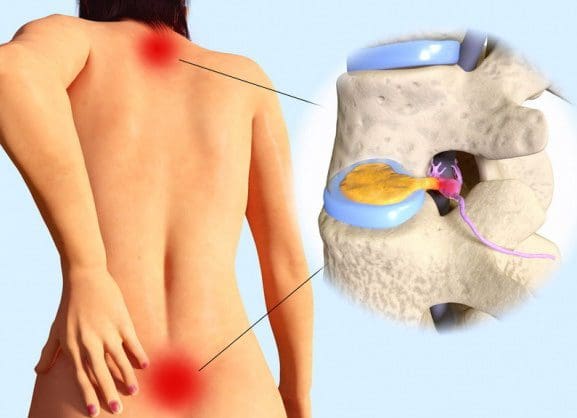
 Spinal stenosis is a nerve compression disorder most often affecting older adults. Leg pain similar to sciatica may occur as a result of lumbar spinal stenosis. The pain is usually positional, often brought on by activities such as standing or walking and relieved by sitting down.
 The neuroforamen are the passageways that are naturally created between the vertebrae through which spinal nerve roots exit the spinal canal.
 Anatomy Overview Can Help You Understand Spinal Stenosis
 Normally, the spinal channel is wide enough for the spinal cord, and the foramen are wide enough for the nerve roots. But either or both can become narrowed, and cause spinal stenosis.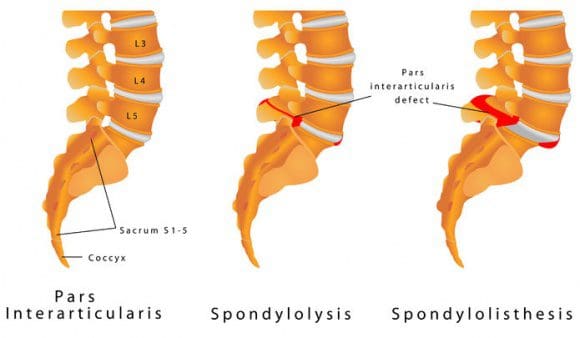
 Arrow Points To A Lumbar Spondylolisthesis
 The muscles in and around the gluteal region help with three areas
 Don’t Live And Cry By The Scales
 Make Protein A Priority