What are the recommendations for a pulled muscle injury to fully recover?
Pulled Muscle Recovery Time
A pulled muscle, medically known as a strain, occurs when muscle fibers are stretched too far and sometimes tear. A pulled muscle injury typically starts to heal within days. Mild injuries can heal completely in one to three weeks, but more serious strains or tears, depending on the severity, can take six to 12 weeks or longer. (Fernandes T. L., Pedrinelli A., & Hernandez A. J. 2015) Rest, hydration, healthy foods, and slowly returning to activity can help expedite healing time.
Timeline
The timeline for recovering from a pulled muscle depends on the injury’s severity.
Pulled muscles are typically categorized into three grades based on the degree and size of pulled muscle fibers, as follows (Hospital for Special Surgery, 2024)
Grade 1 (mild)
Heals in a few days.
A microscopic tear or stretch in the muscle fiber.
It might feel sore, but you can still use the muscle.
Grade 2 (moderate)
Heals in four to six weeks.
A partial tear in the muscle causes noticeable pain and swelling, making it harder to move or use the injured muscle.
Grade 3 (severe)
Heals in several months
This type of muscle strain causes a complete tear, also known as a rupture.
It results in intense pain, significant swelling, and inability to use the muscle.
Surgery may be required in some cases.
Larger muscles, such as the hamstrings and quadriceps, may take longer to heal than smaller muscles due to their increased size and greater weight-bearing loads.
Body Parts More Susceptible To Injury
The following are more susceptible to muscle strains, pulls, or tears (Nölle L. V. et al., 2022)
Neck – levator scapulae and trapezius
Shoulders – rotator cuff muscles
Lower back – erector spinae
Groin – adductors
Front of the thigh – quadriceps
Behind the thigh – hamstrings
Calves – gastrocnemius and soleus
Healing Stages and Factors
Pulled muscles heal in three predictable stages, though the timing and progression may vary by individual and injury severity (Baoge L. et al., 2012).
Inflammatory Stage (zero to three days)
When pulling a muscle, the body reacts instantly with an inflammatory response that may include swelling, redness, bruising, and pain.
Rest is important during this stage to prevent the injury from getting worse.
Repair Stage (three to 21 days)
Damaged muscle fibers are repaired and regrow during this stage.
Collagen fills in any tears to rebuild damaged muscle tissue.
Gentle movement and easy activity can help the fibers line up properly and reduce stiffness.
Start slowly moving a pulled muscle as soon as possible, but avoid too much activity too soon, as it can delay and prolong healing.
Remodeling Stage (three weeks to one year)
Repaired tissue gets stronger and adapts to regular movement.
Gradually adding more activity, stretching, and strengthening exercises helps treat a pulled muscle and return to full strength and function but should be done carefully to avoid re-injury.
Avoid activities that cause pain, but move the muscle gently to prevent stiffness.
Prolonged rest can slow healing, so maintain a balance between rest and exercise.
Ice
Add ice for 10–20 minutes for the first 48 hours to reduce swelling and pain.
Ice helps control inflammation by limiting blood flow to the injured area.
Compression
Use compression stockings or wrap the injured part in bandages to help reduce swelling.
Ensure the binding is not too tight so circulation is not cut off.
Elevation
Raise the injured area above heart level throughout the day.
This helps reduce swelling by allowing fluids to drain away from the injury site.
Heat
After the first two to three days, heat therapy increases blood circulation and improves flexibility, helping the muscle heal.
Eat Healthy
Get enough protein for muscle repair.
Maintain Hydration
Drink plenty of water to help with circulation and muscle lubrication.
Massage and Physical Therapy
These hands-on interventions can improve circulation, help reduce scar tissue, and restore range of motion.
Over-the-counter Medications
If needed, over-the-counter nonsteroidal anti-inflammatory medications like Advil or Motrin (ibuprofen) and Aleve (naproxen sodium) can help with pain and swelling.
Only use as directed.
These steps can help promote faster healing and expedite returning to normal daily activities.
When to Resume Normal Activity
Individuals may need one to two weeks to recover before resuming normal activity for mild strains. However, for more severe injuries, it could take four to six weeks or longer to return to all daily activities. (Harvard Health Publishing, 2023) It’s essential to gradually return to daily activities to avoid reinjury, which can delay and prolong healing. Follow these recommendations to recover from a pulled muscle safely and quickly (Kraemer W., Denegar C., & Flanagan S. 2009)
Once the pain has subsided, the swelling has decreased, and the muscle feels better, start with low-impact exercises.
Slowly resume normal activities, avoiding overexerting the injured area.
Gradually increase activity levels and stop if there is any pain.
Avoid strenuous activities that place excessive stress on the injured muscle until the muscle is completely healed.
Contact a Healthcare Provider
While most pulled muscles heal with home care, seek medical attention if: (Penn Medicine, 2023)
Pain persists or worsens after seven to 10 days.
This can indicate a more serious injury, such as a severe torn muscle.
Significant pain, loss of motion and strength, and swelling disrupt daily activities or show signs of worsening despite rest and self-care.
It is difficult to move the affected area, or the muscle cannot bear weight, suggesting a more severe injury.
There are signs of infection, including redness, warmth, increased swelling, or fever, especially if the skin is cut or broken near the injured area.
There is unusual bruising or a visible deformity, which could indicate a bone fracture requiring professional evaluation.
A healthcare provider may recommend imaging studies, such as MRI, ultrasound, or X-rays, to assess the extent of the injury, rule out fractures, or check for muscle tears.
Injury Medical Chiropractic & Functional Medicine Clinic
Injury Medical Chiropractic and Functional Medicine Clinic works with primary healthcare providers and specialists to develop an optimal health and wellness solution. We focus on what works for you to relieve pain, restore function, and prevent injury. Regarding musculoskeletal pain, specialists like chiropractors, acupuncturists, and massage therapists can help mitigate the pain through spinal adjustments that help the body realign itself. They can also work with other medical professionals to integrate a treatment plan to resolve musculoskeletal issues.
Say Goodbye to Pain with Chiropractic Care
References
Fernandes, T. L., Pedrinelli, A., & Hernandez, A. J. (2015). MUSCLE INJURY – PHYSIOPATHOLOGY, DIAGNOSIS, TREATMENT, AND CLINICAL PRESENTATION. Revista brasileira de ortopedia, 46(3), 247–255. https://doi.org/10.1016/S2255-4971(15)30190-7
Hospital for Special Surgery. J. N. R., MD. (2024). Muscle Strain: Causes, Symptoms, Treatment. https://www.hss.edu/conditions_muscle-strain.asp
Nölle, L. V., Mishra, A., Martynenko, O. V., & Schmitt, S. (2022). Evaluation of muscle strain injury severity in active human body models. Journal of the mechanical behavior of biomedical materials, 135, 105463. https://doi.org/10.1016/j.jmbbm.2022.105463
Baoge, L., Van Den Steen, E., Rimbaut, S., Philips, N., Witvrouw, E., Almqvist, K. F., Vanderstraeten, G., & Vanden Bossche, L. C. (2012). Treatment of skeletal muscle injury: a review. ISRN orthopedics, 2012, 689012. https://doi.org/10.5402/2012/689012
Laumonier, T., & Menetrey, J. (2016). Muscle injuries and strategies for improving their repair. Journal of Experimental Orthopaedics, 3(1), 15. https://doi.org/10.1186/s40634-016-0051-7
Harvard Health Publishing. (2023). Muscle strain. https://www.health.harvard.edu/staying-healthy/muscle-strain-a-to-z
Kraemer, W., Denegar, C., & Flanagan, S. (2009). Recovery from injury in sport: considerations in the transition from medical care to performance care. Sports Health, 1(5), 392–395. https://doi.org/10.1177/1941738109343156
Penn Medicine. (2023). Strains. https://www.pennmedicine.org/for-patients-and-visitors/patient-information/conditions-treated-a-to-z/strains
For individuals with shoulder pain and problems, what are the stages of a frozen shoulder, how long do they last, and what can be done to relieve pain?
Frozen Shoulder Stages
A frozen shoulder, also called adhesive capsulitis, is a very common cause of shoulder pain. It causes severe pain and limited mobility. The condition progresses through stages and can take up to two years to resolve completely. The stages of frozen shoulder include pre-freezing, freezing, freezing, and thawing.
Stage 1
Pre-Freezing – 1 month to 3 months
Pre-freezing describes the earliest stage of a frozen shoulder. This is when individuals first start to notice pain in their shoulder. (Soussahn, S. et al., 2024) Many in this stage will first experience the pain at night while changing sleeping positions. As the condition progresses, individuals may notice pain when they move their shoulders, especially when raising their arms or reaching behind them. Individuals may also find reduced mobility in that shoulder and may ache even when not using it. Because motion may be only slightly restricted in this stage, an early frozen shoulder can be mistaken for a rotator cuff problem. (Chan H. B. Y., Pua P. Y., & How C. H. 2017)
Root Cause
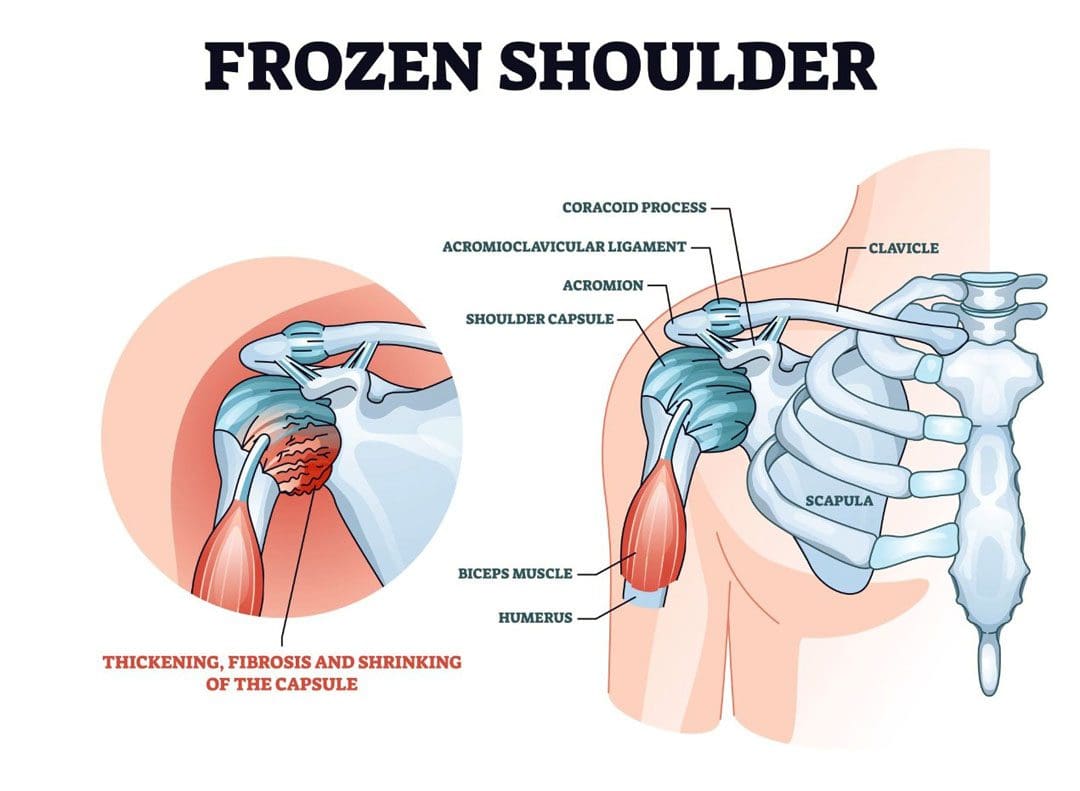
A frozen shoulder happens when there is inflammation in the tissue that surrounds the shoulder joint. Although the specific causes aren’t known, immobilization after an injury and other shoulder conditions, like bursitis, may play a role. (Johns Hopkins Medicine, 2025)
Stage 2
Freezing – 10 weeks to 8 months
The freezing stage is the most painful. The shoulder capsule becomes inflamed and can thicken and stiffen. As this happens, shoulder movements become increasingly difficult and painful. (Soussahn, S. et al., 2024)
Stage 3
Frozen – 4 months to 12 months
The third stage of a frozen shoulder is known as the frozen phase, where the shoulder is stiff. The examination finding confirming the frozen shoulder diagnosis is that neither the individual nor another person can move the shoulder. (UpToDate, 2024) With a rotator cuff issue, a patient cannot move their arm normally, but the healthcare provider can. This distinguishes between a frozen shoulder and a rotator cuff injury. The frozen stage is typically much less painful than freezing, but pain can result from simple activities. (Soussahn, S. et al., 2024) Rotation of the shoulder joint is limited, making activities like washing hair or reaching painful or difficult.
Stage 4
Thawing – 5 months to 2 years
In this phase, the shoulder joint capsule becomes thickened and stiff but gradually loosens with time. (Soussahn, S. et al., 2024) Stretching the shoulder capsule, even allowing for some discomfort, is important to ensure the shoulder joint’s mobility continues to recover. Not having the extreme pain associated with freezing the joint and seeing gradual gains in mobility make this stage tolerable.
Treatment
Frozen shoulder treatment starts with physical therapy and joint stretching. Anti-inflammatory medications, ice and heat application, and alternative therapies can all help manage the discomfort. A healthcare provider may also recommend a corticosteroid injection to reduce inflammation, relieve pain, and expedite improved mobility. Redler L. H. & Dennis E. R. 2019)
Surgery is seldom needed but is an option for treating a frozen shoulder. It is usually only considered if prolonged efforts at therapy have failed to improve symptoms. One of the problems is that surgery could worsen shoulder problems. (Le H. V., Lee S. J., Nazarian A., & Rodriguez E. K. 2017)
Prognosis
The timeline for recovery can be long, measured in months and possibly years. (Le H. V., Lee S. J., Nazarian A., & Rodriguez E. K. 2017) Expecting a quick recovery can cause more frustration. However, individuals can take steps to speed their recovery and reduce discomfort. Physical therapy can be beneficial, and a healthcare provider can suggest treatments to help alleviate pain while recovering. Over time, almost all patients will find complete relief and a normal or near-normal range of motion in their shoulder joints.
Injury Medical Chiropractic and Functional Medicine Clinic
Injury Medical Chiropractic and Functional Medicine Clinic works with primary healthcare providers and specialists to build optimal health and wellness solutions. We focus on what works for you to relieve pain, restore function, prevent injury, and help mitigate issues through adjustments that help the body realign itself. They can also work with other medical professionals to integrate a treatment plan to resolve musculoskeletal problems.
Motion Key To Healing
References
Soussahn, S., Hu, D., Durieux, J., Kosmas, C., & Faraji, N. (2024). Adhesive capsulitis: Utility of magnetic resonance imaging as a primary diagnostic tool and clinical management support. Current problems in diagnostic radiology, 53(4), 464–469. https://doi.org/10.1067/j.cpradiol.2024.03.005
Chan, H. B. Y., Pua, P. Y., & How, C. H. (2017). Physical therapy in the management of frozen shoulder. Singapore Medical Journal, 58(12), 685–689. https://doi.org/10.11622/smedj.2017107
UpToDate. (2024). Patient education: Frozen shoulder (beyond the basics). https://www.uptodate.com/contents/frozen-shoulder-beyond-the-basics
Redler, L. H., & Dennis, E. R. (2019). Treatment of Adhesive Capsulitis of the Shoulder. The Journal of the American Academy of Orthopaedic Surgeons, 27(12), e544–e554. https://doi.org/10.5435/JAAOS-D-17-00606
Le, H. V., Lee, S. J., Nazarian, A., & Rodriguez, E. K. (2017). Adhesive capsulitis of the shoulder: review of pathophysiology and current clinical treatments. Shoulder & elbow, 9(2), 75–84. https://doi.org/10.1177/1758573216676786
For individuals who don’t have time for a full workout, could incorporating sprint exercise training be an option to improve their cardiovascular and overall health?
Sprint Exercise Training
Most think of running when they hear the word sprinting. However, sprinting can be performed in any aerobic activity, whether swimming, cycling, rollerblading, or exercising on an elliptical machine. Sprint exercise training means varying the intensity levels of the activity. It is also known as sprint interval training or speed drills. It targets cardiovascular endurance and is suitable for all fitness levels, from beginners to advanced. This type of training is demanding and requires high motivation, but it can lead to significant improvements and help achieve fitness goals faster.
Sprint workouts are a time saver. Many exercise guidelines recommend up to 60 minutes of moderate exercise 3 times a week; however, many people don’t have the time. Studies have shown that short, high-intensity sprint exercise training improves aerobic capacity and endurance in half the time of traditional endurance exercise. Sprint exercise training burns calories, improves cardiovascular health, builds muscle, and increases speed and power. Sprint workouts are great for individuals who lack time for traditional steady endurance exercise but want to improve cardiovascular health. (Vollaard, N. B. J., and Metcalfe, R. S. 2017) Adding them to a workout routine can take training to a new level.
Training
The key to sprint training is performing an activity at a certain percentage of all-out effort to increase heart rate. Sprint exercise training is recommended three times a week, with at least one to two days of rest or other easy exercises between sprint workouts. How to do.
Warm-up
Warm up with easy exercise for five to 10 minutes.
Slowly perform the exercise that will be done for the sprints to prepare the body for the intense sprint.
Do the First Sprint
Perform the first sprint at around 60% intensity.
Slow down and continue warming up if there is muscle tightness or joint pain.
Rest
Recover for four minutes by slowing to a comfortable pace, but continue moving.
Do the Second Sprint
Perform the next sprint at 80% max intensity.
Rest
Rest for four minutes.
Do the Third Sprint
Perform the remainder of the sprints at 100% intensity or all-out efforts for 30 seconds.
Push to the maximum for each exercise.
Rest
Recover for four minutes after each sprint to slow down breathing and heart rate, and can hold a conversation without gasping.
Repeat
Repeat the sprint/recovery routine four to eight times, depending on fitness level and ability.
For the first workout, stop at four sprints.
Gradually build up to eight.
Benefits
Sprint exercise training enhances endurance performance and can be effectively used by athletes, fitness enthusiasts, and individuals who want to improve their fitness and health. (Litleskare, S. et al., 2020) In one study, participants who completed eight weeks of sprint training saw improvements in maximal oxygen uptake or VO2 max. The test is one way to measure cardiovascular fitness. (Litleskare, S. et al., 2020) These short bursts of intense exercise improve muscle health and performance comparable to several weeks of traditional training. (Gunnarsson, T. P. et al., 2013) Other studies have found that short, high-intensity exercise burns more calories than the same amount of moderate-level cardiovascular exercise. (Vollaard, N. B. J., and Metcalfe, R. S. 2017)
Variations
There are different ways to structure a sprinting routine, and different fitness goals will determine the intensity, duration, and number of sprints that should be performed.
Beginners
Those new to sprinting should start slow, as overdoing it can lead to injury. Work on building up a base level of fitness before introducing sprinting into an exercise routine. Start with one set of four sprint/rest cycles when trying sprints. As fitness goals are achieved, add more sprints to each set or different sprints.
Intermediate
Once a sprinting exercise routine is begun, it may only be a few weeks before one is ready to advance to an intermediate level. Try increasing the number of sprints at different intensity levels. However, avoid sprint exercises too often weekly as the body needs adequate rest.
Advanced
Advanced athletes can intensify the routine by increasing intensity and adding reps. One way is by adding resistance. For example, for those running or cycling, try sprinting hills, or if rollerblading, try wearing wrist and ankle weights to increase the load. Swimmers can use strength-building techniques to focus on specific body areas or add resistance. The intensity of any sprinting activity can be intensified by wearing a weighted vest.
Beginner Errors
A few common starting mistakes include going too hard, advancing too quickly, and doing too many for too long. Sprints are not meant to replace moderate-intensity exercise. The goal is to modulate the intensity of aerobic activities. A study showed that not getting enough rest between sprints led to an inability to perform as well during sprinting. (Selmi, M. A. et al., 2016)
Safety
Sprint workouts can be done with running, swimming, cycling, or other aerobic cardiovascular exercises. The following precautions should be considered before adding sprint training to a workout schedule:
Safety
Because sprinting is a high-intensity exercise, it is recommended that individuals consult with a healthcare professional and review the physical activity readiness questionnaire (PAR-Q) before beginning a sprint training workout.
Base Fitness
A strong fitness base in the sprint activity is also important.
To build a fitness base, follow the 10% rule and gradually increase training volume.
Frequency
Because of the intensity, sprint workouts should not be done more than three times a week.
Muscle Soreness
Launching into a sprint program can cause delayed-onset muscle soreness.
Experts recommend having about three to four weeks of base fitness before beginning.
Injuries are more likely if the body isn’t properly prepared.
The goal is to do a sprint workout six times in two weeks, then only perform 2 times a week for maintenance for six to eight weeks before changing the workout. On the days following a sprint workout, aim for 20–30 minutes of the same aerobic activity at an easier pace to help recover but maintain results. If pleased with the results, continue with the routine longer, but it is recommended to vary the workouts every few months and throughout the year. Modify the routine to find what works best.
Military Training and Chiropractic Care: Maximizing Performance
References
Vollaard, N. B. J., & Metcalfe, R. S. (2017). Research into the Health Benefits of Sprint Interval Training Should Focus on Protocols with Fewer and Shorter Sprints. Sports medicine (Auckland, N.Z.), 47(12), 2443–2451. https://doi.org/10.1007/s40279-017-0727-x
Litleskare, S., Enoksen, E., Sandvei, M., Støen, L., Stensrud, T., Johansen, E., & Jensen, J. (2020). Sprint Interval Running and Continuous Running Produce Training Specific Adaptations, Despite a Similar Improvement of Aerobic Endurance Capacity-A Randomized Trial of Healthy Adults. International journal of environmental research and public health, 17(11), 3865. https://doi.org/10.3390/ijerph17113865
Gunnarsson, T. P., Christensen, P. M., Thomassen, M., Nielsen, L. R., & Bangsbo, J. (2013). Effect of intensified training on muscle ion kinetics, fatigue development, and repeated short-term performance in endurance-trained cyclists. American journal of physiology. Regulatory, integrative and comparative physiology, 305(7), R811–R821. https://doi.org/10.1152/ajpregu.00467.2012
Selmi, M. A., Haj, S. R., Haj, Y. M., Moalla, W., & Elloumi, M. (2016). Effect of between-set recovery durations on repeated sprint ability in young soccer players. Biology of sport, 33(2), 165–172. https://doi.org/10.5604/20831862.1198636
What are the healing times of common sports injuries for athletes and individuals who engage in recreational sports activities?
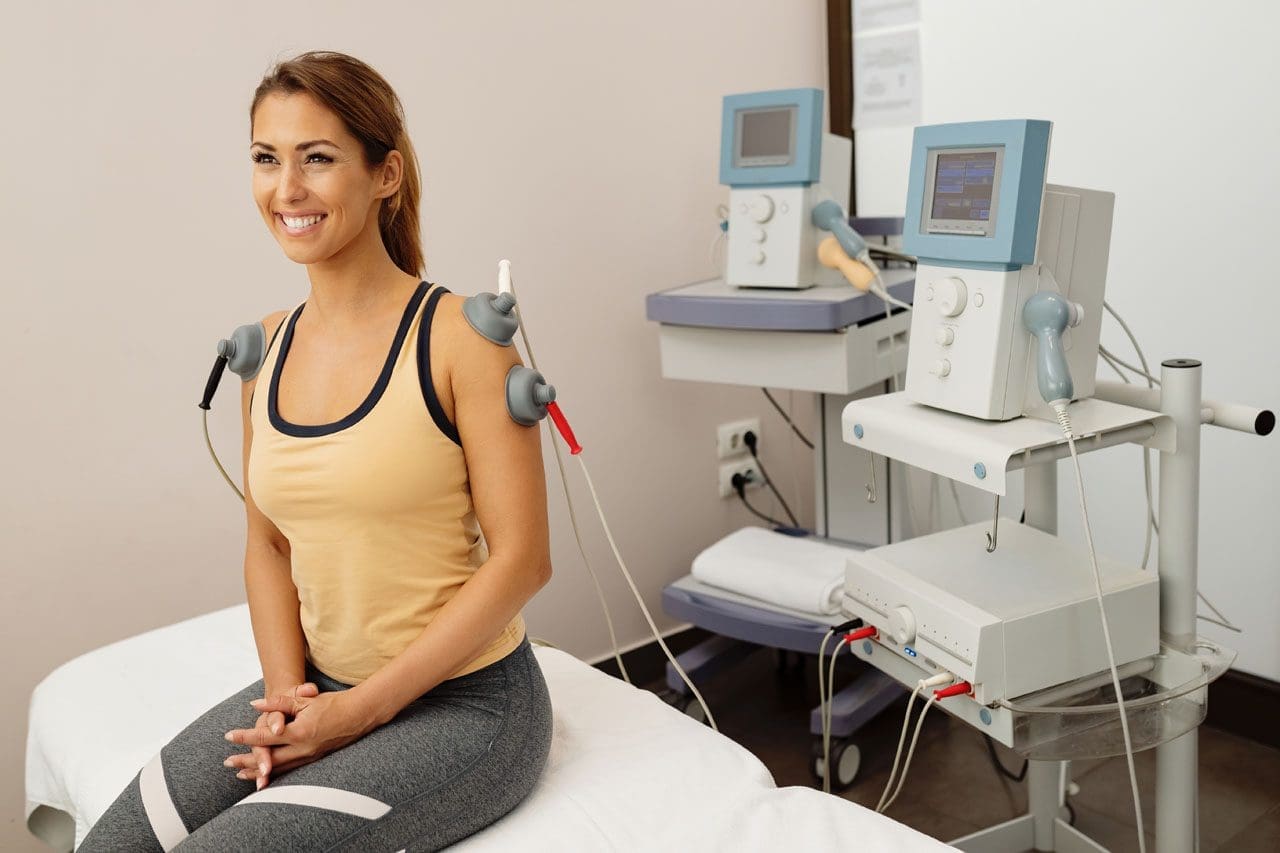
A young, happy sportswoman is getting tens-electrotherapy treatments at a medical clinic.
Healing Times for Sports Injuries
Healing time from sports injuries depends on various factors, such as the location and extent of the injury and the health of the skin, joints, tendons, muscles, and bones. It is also important to take the time to recuperate or not rush back into physical sports activities before the bones or tissues have fully healed. To prevent re-injury, ensure the doctor clears health before returning to sports or strenuous physical activity.
According to CDC research, an average of 8.6 million sports and recreation-related injuries occur annually. (Sheu, Y., Chen, L. H., and Hedegaard, H. 2016) However, most sports injuries are superficial or caused by low-grade strains or sprains; at least 20% of injuries result from bone fractures or more serious injuries. Bone fractures take longer than sprains or strains, and complete tendon or muscle ruptures can take months before one can fully return to activities. Individuals in decent physical shape with no underlying illness or impairment, here is what they can expect when recovering from the following sports injuries:
Bone Fractures
In sports, the highest rate of bone fractures occurs with football and contact sports. Most are centered around the lower extremities but can involve the neck and shoulder blades, arms, and ribs.
Simple Fractures
Depends on the individual’s age, health, type, and location.
Generally, takes at least six weeks to heal.
Compound Fractures
In this case, a bone is broken in several places.
It may require surgery to stabilize the bone.
Healing time can take up to eight months.
Fractured Clavicle/Collarbone
It may require the immobilization of the shoulder and upper arm.
It can take five to ten weeks to heal fully.
Fractured fingers or toes can heal in three to five weeks.
Fractured Ribs
Part of the treatment plan includes breathing exercises.
Painkillers may be needed short term.
Usually, it takes around six weeks to heal.
Neck Fractures
It may involve any one of the seven neck vertebrae.
A neck brace or a halo device that is screwed into the skull for stability may be used.
A sprain is the stretching or tearing of ligaments or the tough bands of fibrous tissue that connect two bones at a joint.
A strain is the overstretching or tearing of muscles or tendons.
Sprained Ankles
It can heal in five days if there are no complications.
Severe sprains involving torn or ruptured tendons can take three to six weeks to heal.
Calf Strains
Classified as grade 1 – a mild strain can heal in two weeks.
A grade 3 – severe strain may require three months or more to heal completely.
The use of calf suppression sleeves can expedite the recovery of strains and sprains in the lower leg.
Acute Neck Strain
A tackle, impact, fall, quick shifting, or whipping motion can cause a whiplash injury.
Healing time can take a couple of weeks to six weeks.
Other Injuries
ACL Tears
Involving the anterior cruciate ligament.
Usually, it requires months of recuperation and rehabilitation, depending on several factors, including the type of sports activity.
Full recovery from surgery takes six to 12 months.
Without surgery, there is no specific timeline for rehabilitation.
Achilles Tendon Ruptures
It is a serious injury.
These occur when the tendon is either partially or completely torn.
Individuals will more than likely require surgery.
Recovery time is four to six months.
Cuts and Lacerations
Depends on the depth and location of the injury.
It can take anywhere from a week to a month to heal.
If there are no accompanying injuries, stitches can be removed within two to three weeks.
If a deep cut requires stitches, more time is necessary.
Mild Contusions/Bruises
Are caused by a trauma to the skin, causing blood vessels to break.
In most cases, a contusion will take five to seven days to heal.
Shoulder Separations
When treated properly, it usually takes around two weeks of rest and recovery before the patient returns to activity.
Multidisciplinary Treatment
After the initial inflammation and swelling have subsided, a doctor will recommend a treatment plan that usually involves physical therapy, self-performed physical rehabilitation, or supervision by a physical therapist or team. Fortunately, athletes and individuals who regularly exercise tend to have a faster healing time because they are in top physical shape, and their cardiovascular system provides a stronger blood supply that speeds up the healing process. At El Paso’s Chiropractic Rehabilitation Clinic & Integrated Medicine Center, we passionately focus on treating patients’ injuries and chronic pain syndromes. We focus on improving ability through flexibility, mobility, and agility programs tailored to the individual. We use in-person and virtual health coaching and comprehensive care plans to ensure every patient’s personalized care and wellness outcomes.
Our providers use an integrated approach to create personalized care plans that include Functional Medicine, Acupuncture, Electro-Acupuncture, and Sports Medicine principles. Our goal is to relieve pain naturally by restoring health and function to the body.
If the chiropractor feels the individual needs other treatment, they will be referred to a clinic or physician best suited for them. Dr. Jimenez has teamed up with the top surgeons, clinical specialists, medical researchers, and premier rehabilitation providers to provide the top clinical treatments for our community. Providing highly noninvasive protocols is our priority, and our personalized patient-based clinical insight is what we provide.
Lumbar Spine Injuries in Sports: Chiropractic Healing
References
Sheu, Y., Chen, L. H., & Hedegaard, H. (2016). Sports- and Recreation-related Injury Episodes in the United States, 2011-2014. National health statistics reports, (99), 1–12.
For individuals considering acupuncture for sciatica relief and management, can knowing how it works and what to expect during a session help in making the decision?
Acupuncture Sciatica Treatment Session
Acupuncture for sciatica is a safe and effective medical treatment to relieve and manage pain symptoms. Studies suggest it is as effective as other treatment strategies and causes fewer side effects. (Zhihui Zhang et al., 2023) The frequency of acupuncture to relieve sciatica pain depends on the severity of the condition and injury, but many report improvement within two to three weeks. (Fang-Ting Yu et al., 2022)
Needle Placement
Circulation problems can cause the body’s energy to stagnate in one or more meridians/channels, leading to pain in and around the surrounding area. (Wei-Bo Zhang et al., 2018)
The objective of acupuncture is to restore optimal circulation by stimulating specific points in the body called acupoints.
Thin, sterile needles stimulate the acupoints to activate the body’s natural healing abilities and relieve pain. (Heming Zhu 2014)
Some practitioners use electroacupuncture – a gentle, mild electrical current is applied to the needles and passes through the tissues to activate the nervous system. (Ruixin Zhang et al., 2014)
Acupoints
Acupuncture sciatica treatment involves specific acupoints along the bladder and gallbladder meridians.
Bladder Meridian – BL
The bladder meridian/BL runs down the back along the spine, hips, and legs. The acupoints within the meridian for sciatica include: (Fang-Ting Yu et al., 2022)
BL 23 -Shenshu – Location on the lower back, near the kidney.
BL 25 – Dachangshu – Location on the lower back.
BL 36 – Chengfu – Location on the back of the thigh, just below the buttocks.
GB 30 – Huantiao – Location on the back, where the buttocks meet the hips.
GB 34 – Yanglingquan – Location on the outside of the leg, below the knee.
GB 33 – Xiyangguan – Location lateral to the knee, on the side.
Stimulating acupoints in these meridians increases blood flow to the area, reduces inflammation, and releases endorphins and other pain-relieving neurochemicals to relieve symptoms. (Ningcen Li et al., 2021) The specific acupoints vary depending on symptoms and the root cause. (Tiaw-Kee Lim et al., 2018)
Example Patient
An example of acupuncture sciatica treatment session: A patient with persistent shooting pain extending down the back and side of the leg. A standard treatment consists of the following:
The acupuncturist thoroughly goes over the patient’s medical history and symptoms and has the patient point to where the pain is located.
Then, they palpate on and around the area to find where the pain worsens and lessens, communicating with the patient as they go along.
Depending on the site and severity, they may start placing needles at the lower back, focusing on the site of the injury.
Sometimes, the sacrum is involved, so the acupuncturist will place needles on those acupoints.
They then move to the back of the leg and insert needles.
The needles are retained for 20-30 minutes.
The acupuncturist leaves the room or treatment area but regularly checks in.
The patient may feel a warmth, tingling, or mild heaviness, which is a normal response. This is where patients report a calming effect. (Shilpadevi Patil et al., 2016)
The needles are carefully removed.
The patient may feel deeply relaxed and will be advised to get up slowly to avoid dizziness.
There may be soreness, redness, or bruising at the needle insertion site, which is normal and should resolve quickly.
The patient will be given recommendations as to avoiding strenuous activity, properly hydrating, and performing gentle stretches.
Acupuncture Benefits
Acupuncture has been shown to be a complementary therapy for pain relief and management. The benefits of acupuncture:
Improves Circulation
Acupuncture stimulates blood circulation, which nourishes damaged or irritated nerves and promotes healing.
This helps relieve sciatica symptoms, like numbness, tingling, and pain. (Song-Yi Kim et al., 2016)
Releases Endorphins
Acupuncture triggers the release of endorphins and other natural pain-relieving chemicals, which help relieve pain. (Shilpadevi Patil et al., 2016)
Regulates the Nervous System
Acupuncture rebalances the sympathetic and parasympathetic responses, which reduces stress, tension, and pain. (Xin Ma et al., 2022)
Relaxes the Muscles
Nerve pain often accompanies muscle tension and spasms.
Acupuncture relaxes tight muscles, reducing pressure and providing relief. (Zhihui Zhang et al., 2023)
From Symptoms to Solutions
References
Zhang, Z., Hu, T., Huang, P., Yang, M., Huang, Z., Xia, Y., Zhang, X., Zhang, X., & Ni, G. (2023). The efficacy and safety of acupuncture therapy for sciatica: A systematic review and meta-analysis of randomized controlled trails. Frontiers in neuroscience, 17, 1097830. https://doi.org/10.3389/fnins.2023.1097830
Yu, F. T., Liu, C. Z., Ni, G. X., Cai, G. W., Liu, Z. S., Zhou, X. Q., Ma, C. Y., Meng, X. L., Tu, J. F., Li, H. W., Yang, J. W., Yan, S. Y., Fu, H. Y., Xu, W. T., Li, J., Xiang, H. C., Sun, T. H., Zhang, B., Li, M. H., Wan, W. J., … Wang, L. Q. (2022). Acupuncture for chronic sciatica: protocol for a multicenter randomised controlled trial. BMJ open, 12(5), e054566. https://doi.org/10.1136/bmjopen-2021-054566
Zhang, W. B., Jia, D. X., Li, H. Y., Wei, Y. L., Yan, H., Zhao, P. N., Gu, F. F., Wang, G. J., & Wang, Y. P. (2018). Understanding Qi Running in the Meridians as Interstitial Fluid Flowing via Interstitial Space of Low Hydraulic Resistance. Chinese journal of integrative medicine, 24(4), 304–307. https://doi.org/10.1007/s11655-017-2791-3
Zhu H. (2014). Acupoints Initiate the Healing Process. Medical acupuncture, 26(5), 264–270. https://doi.org/10.1089/acu.2014.1057
Zhang, R., Lao, L., Ren, K., & Berman, B. M. (2014). Mechanisms of acupuncture-electroacupuncture on persistent pain. Anesthesiology, 120(2), 482–503. https://doi.org/10.1097/ALN.0000000000000101
Perreault, T., Fernández-de-Las-Peñas, C., Cummings, M., & Gendron, B. C. (2021). Needling Interventions for Sciatica: Choosing Methods Based on Neuropathic Pain Mechanisms-A Scoping Review. Journal of clinical medicine, 10(10), 2189. https://doi.org/10.3390/jcm10102189
Li, N., Guo, Y., Gong, Y., Zhang, Y., Fan, W., Yao, K., Chen, Z., Dou, B., Lin, X., Chen, B., Chen, Z., Xu, Z., & Lyu, Z. (2021). The Anti-Inflammatory Actions and Mechanisms of Acupuncture from Acupoint to Target Organs via Neuro-Immune Regulation. Journal of inflammation research, 14, 7191–7224. https://doi.org/10.2147/JIR.S341581
Lim, T. K., Ma, Y., Berger, F., & Litscher, G. (2018). Acupuncture and Neural Mechanism in the Management of Low Back Pain-An Update. Medicines (Basel, Switzerland), 5(3), 63. https://doi.org/10.3390/medicines5030063
Kim, S. Y., Min, S., Lee, H., Cheon, S., Zhang, X., Park, J. Y., Song, T. J., & Park, H. J. (2016). Changes of Local Blood Flow in Response to Acupuncture Stimulation: A Systematic Review. Evidence-based complementary and alternative medicine : eCAM, 2016, 9874207. https://doi.org/10.1155/2016/9874207
Patil, S., Sen, S., Bral, M., Reddy, S., Bradley, K. K., Cornett, E. M., Fox, C. J., & Kaye, A. D. (2016). The Role of Acupuncture in Pain Management. Current pain and headache reports, 20(4), 22. https://doi.org/10.1007/s11916-016-0552-1
Ma, X., Chen, W., Yang, N. N., Wang, L., Hao, X. W., Tan, C. X., Li, H. P., & Liu, C. Z. (2022). Potential mechanisms of acupuncture for neuropathic pain based on somatosensory system. Frontiers in neuroscience, 16, 940343. https://doi.org/10.3389/fnins.2022.940343
For individuals trying to get into a regular fitness regimen, could using the FITT Principle help structure exercise, track progress, and achieve fitness goals?
FITT Principle
The FITT principle is a set of guidelines for adjusting, revising, and improving exercise workouts. FITT is an acronym for:
Frequency
Intensity
Time
Type of exercise
Individuals take these elements to create and adjust workouts that fit their goals and fitness levels.
For example, this could be a workout of 3 to 5 days combined with low, medium, and high-intensity exercises for 30 to 60 minutes each session that incorporates cardio and strength training. Focusing on these details and progressing over time helps create an effective program.
Frequency
Workout frequency and how often the individual is going to exercise is the first thing to look at.
Frequency depends on various factors, including the type of workout being done, how hard the workout is, fitness levels, and exercise goals.
General exercise guidelines developed by the American College of Sports Medicine offer recommendations. (Carol Ewing Garber, et al., 2011)
Cardiovascular Workouts
Cardio workouts are usually scheduled more often.
Depending on goals, guidelines recommend moderate cardio exercise five or more days a week or intense cardio three days a week to improve health.
Individuals can adjust the exercise intensity level easily on a treadmill to provide excellent and convenient cardiovascular workouts.
Individuals who want to lose weight may want to work up to more workouts gradually.
However, more is not always better, and recovery time is essential. (Pete McCall. 2018)
For individuals following a split routine, like upper body one day and lower body the next, workouts can be more frequent than total body workouts.
Intensity
Workout intensity involves how hard the individual is pushing themselves during exercise. How it is increased or decreased depends on the type of workout. (Carol Ewing Garber, et al., 2011)
Cardiovascular Workouts
For cardio, individuals will monitor workout intensity by:
The general recommendation is to work at a moderate intensity for steady workouts.
Interval training is done at a higher intensity for a shorter period.
It’s recommended to mix up low, medium, and high-intensity cardio exercises to stimulate different energy systems and prevent overtraining. (Nathan Cardoos. 2015)
Strength Training
Individual intensity comprises the amount of weight being lifted and the number of reps and sets done.
The intensity can change based on health goals.
Beginners looking to build stability, endurance, and muscle are recommended to use a lighter weight and do fewer sets with high repetitions – for example, two or three sets of 12 to 20 reps.
Individuals wanting to grow muscle are recommended to do more sets with a moderate amount of reps – for example, four sets of 10 to 12 reps each.
Individuals who want to build strength are recommended to use heavy weights and do more sets with fewer reps – for example, five sets of three reps each.
The next element of the plan is how long the exercise will be during each session. Exercise length depends on individual fitness level and the type of workout being done.
Cardiovascular Workouts
The exercise guidelines suggest 30 to 60 minutes of cardio, but workout duration will depend on fitness level and type of exercise. ((Carol Ewing Garber, et al., 2011)
Beginners are recommended to start with a 15- to 20-minute workout.
Individuals with some workout experience and are doing steady-state cardio, like jogging or using a cardio machine, might exercise for 30 to 60 minutes.
For individuals doing interval training and working at very high intensity, the workout will be shorter, around 10 to 15 minutes of high-intensity interval training.
Having a variety of workouts of different intensities and durations will provide a solid, balanced cardiovascular program.
Strength Training
How long an individual strength trains will depend on the type of workout and schedule.
A total body workout can take over an hour.
A split routine can take less time by working fewer muscle groups in one session.
Type
The type of exercise you do is the last part of the FIIT principle.
It is easy to manipulate to avoid overuse injuries or weight loss plateaus.
Cardiovascular Workouts
Cardio is easy to adjust and change because any activity that increases heart rate counts.
Walking, dancing, running, cycling, swimming, and using an elliptical trainer are a few activities that can be incorporated.
Having multiple cardio activities is recommended to reduce burnout and keep workouts fresh.
Strength Training
Strength training workouts can also be varied.
They include any exercise where some type of resistance – bands, dumbbells, machines, etc. are used to work the muscles.
Bodyweight exercises can also be considered a form of strength training.
Strength workouts can be changed from total body training to adding, for example, supersets or pyramid training.
Incorporating new exercises for each body area is another way to vary the type of workouts.
Spending a few weeks working on functional strength movements, then switching to hypertrophy or strength-based training.
Each modality includes various alternative types of strength-based exercises.
Using FITT
The FITT principle outlines how to adjust workout programs to achieve better results. It also helps figure out how to change workouts to avoid burnout, overuse injuries, and plateaus.
For example, walking three times a week for 30 minutes at a moderate pace is recommended for a beginner to start out with. After a few weeks, the body adapts to the workout. This results in burning fewer calories, burnout, or weight management efforts, and goals are put on hold. This is where the FITT principles come in. For example, a change-up could include:
Changing frequency by adding another day of walking or jogging.
Changing intensity by walking faster, adding more challenging terrain like a hill, or jogging at certain intervals.
Walking for a longer time each workout day.
Changing the type of workout by swapping one or more of the walk sessions for cycling or aerobics.
Even just changing one element can make a big difference in the workout and how the body responds to exercise.
It’s important to change things up regularly to keep the body healthy and mind engaged.
Injury Prevention
One of the best things about using FITT is that it allows individuals to monitor the length and intensity of their workouts. When individuals work out too frequently or don’t get enough rest, they run the risk of overuse injuries, burnout, and muscle strains. The FITT principle encourages adding variety to workouts. When following this practice, it allows the body to rest and recover properly. Because individuals are not working the same muscle groups over and over again, better results are achieved.
Fighting Inflammation Naturally
References
Garber, C. E., Blissmer, B., Deschenes, M. R., Franklin, B. A., Lamonte, M. J., Lee, I. M., Nieman, D. C., Swain, D. P., & American College of Sports Medicine (2011). American College of Sports Medicine position stand. Quantity and quality of exercise for developing and maintaining cardiorespiratory, musculoskeletal, and neuromotor fitness in apparently healthy adults: guidance for prescribing exercise. Medicine and science in sports and exercise, 43(7), 1334–1359. https://doi.org/10.1249/MSS.0b013e318213fefb
McCall Pete. 8 reasons to take a rest day. (2018) American Council on Exercise.
National Strength and Conditioning Association. (2017) Determination of resistance training frequency.
Schoenfeld, B. J., Ogborn, D., & Krieger, J. W. (2016). Effects of Resistance Training Frequency on Measures of Muscle Hypertrophy: A Systematic Review and Meta-Analysis. Sports medicine (Auckland, N.Z.), 46(11), 1689–1697. https://doi.org/10.1007/s40279-016-0543-8
Cardoos, Nathan MD. Overtraining Syndrome. (May/June 2015). Current Sports Medicine Reports 14(3):p 157-158. DOI: 10.1249/JSR.0000000000000145
Fitness, exercising, weight, and strength training programs use terms like sets, reps, and rest intervals. Knowing what they mean and how to use them for optimal results is important to achieve health goals. An individual’s training program will differ in the weights, reps, sets, rest intervals, and execution speed depending on whether the training is for fitness, muscle growth, strength, power, or endurance. Here we offer a strength training guide on understanding these terms and how they apply to a workout program.
Strength Training Guide
Reps
Rep means repetition.
A rep is one completion of an exercise, such as one bench press, or one bicep curl.
So, one bicep curl equals one rep, and 10 bicep curls equals 10 reps.
Reps make up a set, which is typically the total number of reps done before taking a break.
A repetition maximum – 1RM is an individual’s personal best or the most they can lift once in a single repetition.
A 10RM would be the most an individual could lift and successfully perform 10 reps with proper form.
Sets
A set is a series of repetitions performed sequentially.
For example, one set of bench presses could be eight reps
Sets are designed according to the individual’s workout program.
Rest
The rest interval is the time of resting between sets that allow the muscles to recover.
The rest period between sets can range from 30 seconds to two minutes.
Exercises can have short or long rests between reps.
The ideal rest period depends on the objective of the workout and health goals.
Not resting long enough and starting with another set too soon can fatigue the muscles too soon, increasing the risk of injury.
Resting too long between reps can cool the muscles down and release tension before starting again.
Execution Speed
The speed at which one rep of an exercise is performed is contraction velocity.
Concentric – shortening of the muscle is often the lifting part of a rep.
Eccentric – lengthening of the muscle, often the lowering part of a rep helps to build muscle mass.
Strength: 1 to 2 seconds concentric and eccentric
Hypertrophy: 2 to 5 seconds concentric and eccentric
Endurance: 1 to 2 seconds concentric and eccentric
Power: Less than 1 second concentric and 1 to 2 seconds eccentric
Choosing Weights
The distribution of repetitions against a percentage of 1RM maximum lift is as follows. This example uses a bench press where 1RM is 160 pounds.
100% of 1RM: 160 pounds, 1 repetition
60% of 1RM: 96 pounds, warm-up reps
85% of 1RM: 136 pounds, 6 repetitions
67% of 1RM: 107 pounds, 12 repetitions
65% of 1RM: 104 pounds, 15 repetitions
An individual should be able to do one lift at 1RM, six reps at 85%, 15 reps at 65%, and so on.
Goals to Build a Program
A training program is a schedule of exercise types, frequency, intensity, and volume, for weight training or any other type of fitness training. Individuals can devise various combinations of sets, reps, rest, and exercise types to find what works best for them. A qualified strength and conditioning trainer can help develop a program. The variables can be adjusted and include:
Exercise selection
Weights or resistance used
Number of reps
Number of sets
Execution speed
Rest time between sets
Rest time between training sessions and days of the week
General Fitness
A basic strength training fitness program targets strength and muscle-building.
Between eight and 15 repetitions for two to four sets will help achieve both.
Choose eight to 12 exercises, making sure to hit the lower and upper body and core.
Strength
Building strength uses the most weight, the least number of reps, and the longest rest periods.
The neuromuscular system responds to heavy weights by increasing the body’s ability to lift heavy loads.
For example, individuals with a strength goal could use a 5×5 system.
This means five sets of five repetitions.
Muscle Growth
Muscle growth and bodybuilding training use lighter weights, more reps, and less rest periods.
Muscle requires metabolic stress to increase in size.
This means working the muscles to the point where lactate builds and the muscle suffers internal damage, sometimes called “training to failure.”
Then resting and proper nutrition help muscle repair and the muscle grows larger in the process.
A program could be three sets of 8 to 12 reps, with loads that reach or near the failure point on the last few reps.
Power
Power training uses slightly lighter weights, takes longer rest periods, and focuses on execution speed.
Power is the ability to move an object at high speed.
Each push, pull, squat, or lunge is done at a quick tempo.
This type of training requires practicing the acceleration of a lift, resting properly, and repeating.
Muscular Endurance
Endurance weight training requires more reps in each set, up to 20 or 30, with lighter weights.
Individuals should ask themselves what is the day-to-day physical activity that requires the most muscular endurance?
For example, runners will want to concentrate on increasing endurance in their legs.
Swimmers may shift and focus on their arms one day then legs another.
Movement as Medicine
References
Liu, Chiung-Ju, and Nancy K Latham. “Progressive resistance strength training for improving physical function in older adults.” The Cochrane Database of systematic reviews vol. 2009,3 CD002759. 8 Jul. 2009, doi:10.1002/14651858.CD002759.pub2
Loturco, Irineu, et al. “Muscle Contraction Velocity: A Suitable Approach to Analyze the Functional Adaptations in Elite Soccer Players.” Journal of sports science & medicine vol. 15,3 483-491. 5 Aug. 2016
Rønnestad, B R, and I Mujika. “Optimizing strength training for running and cycling endurance performance: A review.” Scandinavian Journal of Medicine & Science in Sports vol. 24,4 (2014): 603-12. doi:10.1111/sms.12104
Suchomel, Timothy J et al. “The Importance of Muscular Strength: Training Considerations.” Sports medicine (Auckland, N.Z.) vol. 48,4 (2018): 765-785. doi:10.1007/s40279-018-0862-z
Tøien, Tiril, et al. “Maximal strength training: the impact of eccentric overload.” Journal of Neurophysiology vol. 120,6 (2018): 2868-2876. doi:10.1152/jn.00609.2018
Westcott, Wayne L. “Resistance training is medicine: effects of strength training on health.” Current sports medicine reports vol. 11,4 (2012): 209-16. doi:10.1249/JSR.0b013e31825dabb8
IFM's Find A Practitioner tool is the largest referral network in Functional Medicine, created to help patients locate Functional Medicine practitioners anywhere in the world. IFM Certified Practitioners are listed first in the search results, given their extensive education in Functional Medicine