Skipping Across Time Zones More Than Just Tiring For Pro Baseball Players:
The resulting jet lag may actually harm their performance on the field, a new study suggests.
Researchers analyzed data from more than 40,000 Major League Baseball games played over 20 years. The conclusion: jet lag may have a significant impact on players.
The Northwestern University researchers said they found that jet lag slowed the base running of home teams but not away teams. And both home and away pitchers gave up more home runs when jet-lagged.
“Jet lag does impair the performance of Major League Baseball players. The negative effects of jet lag we found are subtle, but they are detectable and significant. And they happen on both offense and defense and for both home and away teams, often in surprising ways,” study leader Ravi Allada, a circadian rhythms expert, said in a university news release.
The researchers also found that the negative effects of jet lag were generally stronger when teams traveled eastward rather than westward.
“This is a strong argument that the effect is due to the circadian clock, not the travel itself,” Allada said.
What that means is that players’ internal 24-hour body clock falls out of sync with the cycle of sunlight, the study authors explained.
The findings suggest — but don’t prove — that team managers should pay close attention to their players’ body clocks. And even consider sending pitchers ahead of the rest of the team for upcoming games, the researchers added.
“If I were a baseball manager and my team was traveling across time zones — either to home or away — I would send my first starting pitcher a day or two ahead, so he could adjust his clock to the local environment,” Allada said.
The study was published Jan. 23 in the Proceedings of the National Academy of Sciences.
News stories are written and provided by HealthDay and do not reflect federal policy, the views of MedlinePlus, the National Library of Medicine, the National Institutes of Health, or the U.S. Department of Health and Human Services.
As a team physician for the St Louis Cardinals during their 2011 World Series Championship season, I learned a lot about the importance of players taking care of themselves firsthand. I would see players preparing themselves both mentally and physically for the game ahead. Kids look up to these players and emulate them. Major League Baseball (MLB) recognizes this and wants their youth players to be healthy and play as safely as possible. This is why MLB took time, energy, and resources, to determine what would be best for today�s young pitchers. Below is a snapshot of what the MLB and the American Sports Medicine Institute (ASMI) found as risk factors for the young pitcher. It�s recommended that these guidelines be followed by coaches, parents, and players.
The MLB Pitch Smart guidelines provide practical, age-appropriate parameters to help parents, players, and coaches avoid overuse injuries and encourage longevity in the careers of young pitchers.
It was found that specific risk factors were seen as creating a higher incidence of injuries. According to the ASMI, youth pitchers that had elbow or shoulder surgery were 36 times more likely to regularly have pitched with arm fatigue. Coaches and parents are encouraged to watch for signs of pitching while fatigued during their game, in the overall season, and during the course of the entire year.
The ASMI also found that players that pitched more than 100 innings over the course of a year were 3.5 times more likely to be injured than those who did not exceed the 100 innings pitched mark. It�s important to note that every inning counts. Games and showcase events should count toward that total number of 100.
Rest is key. Overuse on a daily, weekly, and annual basis is the greatest risk to a young pitcher�s health. Numerous studies have shown that pitchers that throw a greater number of pitches per game, as well as those who don�t get enough rest between outings, are at a greater risk of injury. In fact, in little league baseball, pitch count programs have shown a reduction in shoulder injuries by as much as 50% (Little League, 2011). Setting limits for pitchers throughout the season is vitally important to their health and longevity in the game.
Pitching with injuries to other areas of the body will also affect a player�s biomechanics and change the way he delivers his pitch. An ankle, knee, hip, or spinal injury can cause changes in the biomechanics of how a player throws and will put more stress on his arm. Be cautious with these injuries, because at times the changes in the mechanics of the player can be very subtle; however, they can cause a significant amount of strain on a player�s pitching arm.
For best results for your youth baseball player�s longevity in the sport and keeping a healthy arm for seasons to come follow the MLB�s pitch count and required rest guide.
Call Today!
3 Common Shoulder Sports Injuries
The shoulder is the most mobile joint in the body, which also makes it prone to injury. If you�re an athlete, taxing your shoulder over time with repetitive, overhead movements or participating in contact sports may put your shoulder at risk for injury.
There are several nonsurgical and surgical options available to treat labrum tears in the shoulder.
These are three common shoulder injuries caused by sports participation:
1. SLAP Tear
This is a tear to the ring of cartilage (labrum) that surrounds your shoulder’s socket. A SLAP tear tends to develop over time from repetitive, overhead motions, such as throwing a baseball, playing tennis or volleyball, or swimming.
Athletic performance decreases. You have less power in your shoulder, and your shoulder feels like it could �pop out.�
Certain movements cause pain. You notice that pain occurs with certain movements, like throwing a baseball or lifting an object overhead.
Range of motion decreases. You may not throw or lift an object overhead like you used to, as your range of motion decreases. You may also find reaching movements difficult.
Shoulder pain you can�t pinpoint. You have deep, achy pain in your shoulder, but you can’t pinpoint the exact location.
It�s common to experience shoulder instability if you�re an athlete. This injury can occur if you�re participating in contact sports, including football or hockey, or ones that require repetitive movements, like baseball.
Shoulder instability happens when your ligaments, muscles, and tendons no longer secure your shoulder joint. As a result, the round, top part of your upper arm bone (humeral head) dislocates (the bone pops out of the shoulder socket completely), or subluxates (the bone partially comes out of the socket).
Dislocation is characterized by severe, sudden onset of pain; subluxation (partial dislocation) may be accompanied by short bursts of pain. Other symptoms include arm weakness and lack of movement. Swelling and bruising on your arm are visible changes you may also notice.
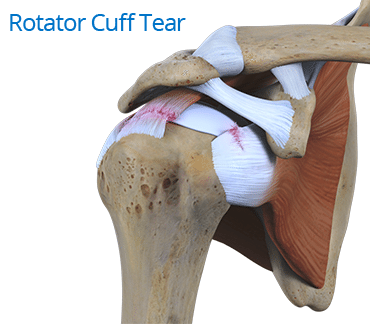
This is another injury commonly seen in athletes participating in repetitive, overhead sports, including swimming and tennis. Rotator cuff injuries are typically characterized by weakness in the shoulder, reduced range of motion, and stiffness.
Being aware of these injuries and knowing their symptoms may encourage you to seek medical treatment sooner; early treatment intervention could result in a better outcome and earlier return to sports.
There�s nothing more frustrating for an athlete than sitting injured on the sidelines watching others compete. Although there�s not one foolproof way to stop shoulder pain from occurring, there are several tips that may help prevent it from starting or getting worse.
If you notice shoulder pain during certain activities, say while throwing a baseball or swimming, stop that activity for a period of time and find an alternative exercise, such as riding a stationary bike. Doing so can give your shoulder some time to rest and heal, while maintaining your cardiovascular fitness.
At the same time, don�t eliminate all shoulder movement. This is because you don�t want to develop a stiff shoulder from infrequent use. Consider doing some mild stretches to keep your arm moving.
2. Change Your Sleeping Position
If you notice pain in your right shoulder, don�t sleep on your right side. Try sleeping on your left side or back instead. If sleeping on your back irritates your shoulder, try propping your arm up with a pillow.
3. Warm Up
Exercising cold muscles is never a good idea. Before practicing your volleyball serve or baseball pitch, warm up your body with mild exercise. For example, start walking for a few minutes and gradually build up to a jog. Doing so raises your heart rate and body temperature and activates the synovial fluid (lubricant) in your joints.1 In other words, a mild warm up gets your body ready for the intense workout that follows.
4. Build Up Your Endurance
It�s a good idea to increase your endurance over time. If it�s been a few weeks or months since you�ve hit the tennis court, consider playing for a short period of time�maybe just 20 minutes to start�and build up to a longer period of playing time. Don�t fall into the trap of doing too much too soon, especially when your body is not used to it.
Strengthening your shoulder muscles can help provide support and stabilization to your shoulder joint. This, in turn, may prevent painful injuries like a shoulder dislocation, which is when the ball of your shoulder comes out of its socket.
Speak to your doctor before starting a strengthening program. They can suggest exercises to perform or may recommend working with a physical therapist.
6. Cross-Train
Some sports are particularly taxing on the shoulder due to repetitive, overhead movements. So you may want think about cross-training. If you�re a swimmer, for example, alternate some of your swimming workouts with a running or biking workout to reduce the stress on your shoulder, while still staying physically fit.
Alternatively, if you�re a painter or construction worker�two occupations commonly associated with repetitive, overhead movements�talk to your boss and ask if there are other non-repetitive tasks you can take on.
Above all, listen to your body and be proactive. You may need to make some adjustments to workout or daily routine to help prevent further damage down the road. It may also be worth getting your doctor�s input, even if you think you�ve got a minor injury. Catching injuries or discomfort early may help keep you in the game and prevent painful injuries down the road.
Being aware of sports�injuries and knowing their symptoms may encourage you to seek medical treatment sooner as early treatment intervention could result in a better outcome and earlier return to sports.�For Answers to any questions you may have please call Dr. Jimenez at
Exercise is an important part of a healthy lifestyle, and sports are one approach many people choose to use to get their exercise.
For people with back pain, sports can still be a viable option if they pay attention to their back.
For others who participate in sports, knowing the type of strain various sports place on the back may help prevent a back injury.
This article gives specific information about sports injuries and back pain from bicycling, weight lifting, running, swimming, skiing, golf, and tennis.
Types of Sports-Related Back Injuries
In any sport, injuries to any part of the spine are possible, as well as injuries to the soft tissue and fascia that help comprise the makeup of the body. Up to 20% of all injuries that occur in sports involve an injury to the lower back or neck.
Lower Back Injury
The lower back is subject to a great deal of strain in many sports. Sports that use repetitive impact (e.g., running), a twisting motion (e.g. golf), or weight loading at the end of a range-of-motion (e.g., weightlifting) commonly cause damage to the lower back.
Neck Injury
The neck is most commonly injured in sports that involve contact (e.g., football), which place the cervical spine (neck) at risk of injury.
Upper Back Injury
The thoracic spine (mid portion of the spine at the level of the rib cage) is less likely to be injured because it is relatively immobile and has extra support. Injuries seen here can involve rib fracture and intercostal neuralgia as well as intercostal muscle strains in sports that involve rotation of the torso (e.g. weight training with rotation), swimming, golf, tennis, and even skiing.
Stretching and Warm-Up Prior to Exercise
While static stretching prior to any type of exercise used to be recommended, a number of studies in recent years have shown that stretching the muscles prior to exercise is not needed. A number of studies have shown that it does not help prevent injury, and likely does no harm either.1,2,3
For every sport, a thorough warm-up should be completed before starting to play. The warm-up will target the muscles used in that sport, but it should also prepare the back for the stresses to come.
The warm-up used should be specific to the sport to be played. A typical warm-up should include:
Increase circulation gradually by doing some easy movement (such as walking) to increase blood circulation to the muscles and ligaments of the back
Stretch the lower and upper back and related muscles, including hamstrings and quadriceps
Start slowly with the sport movements (e.g. swing the golf club, serve the ball)
Work with a Professional to Prevent or Manage Back Injury
There are professionals or instructors in almost every sport who are willing to share their expertise. Ideally, someone with this type of expertise can teach the correct form for a new sport or help develop and keep the proper technique for a current sport.
Before starting to work with any sports or exercise professional, it is advisable to inquire about his or her credentials. In general, if the individual is certified by the National Strength and Conditioning Association (NSCA), he or she should be up to date on the latest evidence related to stretching, exercise routines for specific sports, and additional information designed to benefit your personal routine.
Mets’ Infield, Chiropractor Is The Most Important Position
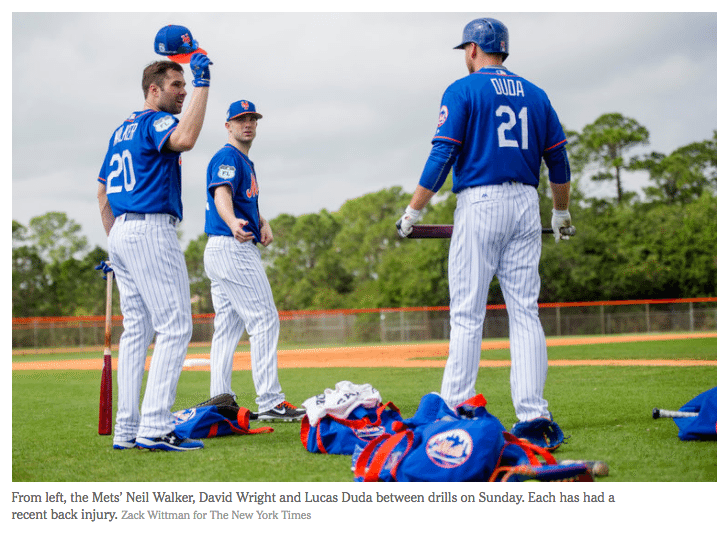
There are many ways to describe the Mets� projected starting infield of David Wright, Asdrubal Cabrera, Neil Walker and Lucas Duda. But two weeks ago, as Mets Manager Terry Collins discussed how he would handle their playing time, he provided a telling answer while rattling off the positions.
�We�ve got a bad back, bad back, bad knee and a bad back,� Collins said, referring to Wright, Walker, Cabrera and Duda.
The 2017 Mets, for all of their potential and talent, cannot ignore a significant question mark: health. Aside from the arm-related injuries of the pitching staff, the condition of the spines of three key infielders will hover over the team all season.
Wright, the long-tenured third baseman, has played only 75 games during the past two seasons; part of the reason was neck surgery in June, but mostly it is because of spinal stenosis, a chronic condition. Walker, the second baseman, had surgery to repair a herniated disk in his lower back in September. And Duda, the power-hitting first baseman, missed four months last season because of a stress fracture in his lower back.
All three reported to spring training relatively healthy; in Wright�s case, fusion surgery on a herniated disk in his neck had healed. But only two days into the exhibition schedule, the Mets have suffered a setback.
After experiencing what he said was a pain-free off-season, Duda reported feeling spasms in his back late last week. The pressure had an adverse effect on his hips, and he received a cortisone shot on each side Friday.
�So we�ll take a few days now instead of two weeks down the road,� Duda said. �Just being cautious.�
That should be the Mets� motto all year.
Although baseball players put repeated strain on their core when pitching or swinging, they do not suffer more back injuries than athletes in sports that entail more forceful impact, such as football or hockey, said Dr. Andrew C. Hecht, the chief of spine surgery for Mount Sinai Health System, who wrote a soon-to-be-released book on spine injuries in athletes.
�What happens when you have a few on one particular team is that it highlights it,� Hecht said.
Walker�s injury was the simplest. He first felt discomfort in his lower back and tingling in his leg late during the 2012 season, which he thought was caused by the sport�s day-to-day rigors. Some back pain recurred in the years that followed, but never to the degree that it did last season, when he said he also experienced numbness in his leg and foot.
Sign Up for the Sports Newsletter
Get the big sports news, highlights and analysis from Times journalists, with distinctive takes on games and some behind-the-scenes surprises, delivered to your inbox every week.
Hecht, who is not involved in the treatment of these Mets players, said lumbar disk herniation like Walker�s is �as common as common can be.� Surgery to repair the injury involves removing only the part of the herniated disk that is pinching the nerve and causing the pain, Hecht said.
Walker, 31, said he completed his physical therapy in less than three months and went through normal off-season workouts. Although he is healthy now, Walker said that he has a regimen of daily exercises and stretches to keep his back in good shape.
Despite the back ailment last season, Walker still hit .282, with 23 home runs and a career-high .823 on-base-plus-slugging percentage. The Mets felt confident enough in his recovery that they gave him a one-year, $17.2 million qualifying offer. Walker accepted, and the sides have talked about a contract extension.
Duda�s injury, a vertebral crack, is another common back ailment in athletes, Hecht said. The usual treatment is rest and rehabilitation.
Before his recent flare-up of back spasms, Duda, 31, said he, too, was regularly doing exercises to support his back. Until last week, there was reason to be optimistic about Duda�s outlook because, after missing 107 games last season, he returned in September to play eight games.
Still, as a precaution, right fielder Jay Bruce took ground balls at first base during workouts on Sunday. Jose Reyes and Wilmer Flores are options to back up Walker; Cabrera, the infielder with the balky knee last season; and Wright.
Wright�s stenosis, a narrowing of the canal in the spinal cord that can lead to chronic stiffness and pain, is the most complicated ailment. Hecht said the condition was rare among younger athletes, and while Wright is only 34, he is entering his 14th major league season.
Wright said doctors have told him his condition was the �perfect storm� of three factors. He was born with a narrow spinal canal, Wright said, explaining, �Ideally, you�d want a little more space so that those nerves don�t get pinched.� Wright also sustained a vertebral fracture years ago, which, along with the wear and tear of playing so much baseball, has contributed to his injury.
Wright had neck surgery in June, for an injury that he said was unrelated to his spinal stenosis, which was diagnosed in May 2015. After rest and rehabilitation, he returned to the field in August 2015, but he often required hours of stretching and preparation to play. That kind of maintenance is expected to continue for the rest of his career.
While expectations of how much Wright can play will be tempered again this season, he can try to limit the effects of spinal stenosis. Compared with last year, Wright said, he has a better idea of how to manage his back in spring training, even though he is still building up his arm strength after his neck surgery.
�I know the routine and the process,� he said. �I understand my body a little bit better.�
In any sport, injuries to any part of the spine are possible, as well as injuries to the soft tissue and fascia that help comprise the makeup of the body. Up to 20% of all injuries that occur in sports involve an injury to the lower back or neck.�For Answers to any questions you may have please call Dr. Jimenez at
Injuries to the muscles and ligaments around the hip affect both competitive and recreational athletes. These injuries can interfere significantly with sports enjoyment and performance levels, and they occasionally will end participation completely. Excessive pronation and poor shock absorption have been found to be an underlying cause or a contributing factor for many leg injuries. Functional orthotics which have been custom-fitted to improve the biomechanics of the feet and reduce the extent of pronation can help to prevent many sport-related leg injuries.
Lower Extremity Problems in Athletes
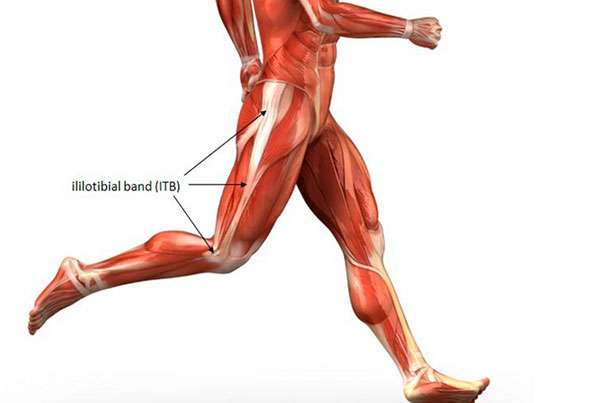
One study looked at the foot biomechanics of athletes who reported a recent foot or leg injury and compared them to an uninjured control group. The researchers determined that those athletes with more foot pronation had a much greater statistical probability of sustaining one of five leg injuries, including iliotibial band syndrome (which is due to excessive tightness of the hip abductor muscles).
This study helps us understand how providing appropriate functional foot orthotic support to patients who are involved in sports or recreational activities lowers their likelihood of developing both traumatic and overuse hip injuries.
In this paper, sixty-six injured athletes who ran at least once a week, and who had no history of traumatic or metabolic factors, were the study group. Another control group of 216 athletes were matched who did not have any symptoms of lower extremity injuries. The amount of pronation during standing and while running at �regular speed� was determined by measuring the angles of their footprints. The investigators found a significant correlation: Those athletes with more pronation had a much greater likelihood of having sustained one of the overuse athletic injuries.
Hip and Thigh Injuries
Many injuries experienced at the hip develop from poor biomechanics and gait asymmetry, especially when running. Smooth coordination of the muscles that provide balance and support for the pelvis is needed for optimum bipedal sports performance. This includes the hamstring muscles and the hip abductor muscles, especially the tensor fascia lata (the iliotibial band). When there is a biomechanical deficit from the feet and ankles, abnormal motions (such as excessive internal rotation of the entire leg) will predispose to pulls and strains of these important support muscles. The hamstrings (comprised of the biceps femoris, semimembranosus, and semitendinosus muscles) are a good example.
During running, the hamstrings are most active during the last 25% of the swing phase, and the first 50% of the stance phase. This initial 50% of stance phase consists of heel strike and maximum pronation. The hamstring muscles function to control the knee and ankle at heel strike and to help absorb some of the impact. A recent study has shown a significant decrease in electromyographic activity in the hamstrings when wearing orthotics. In fact, these investigators found that the biceps femoris (which is the most frequently injured of the three hamstring muscles) had the greatest decrease in activity of all muscles tested, including the tibialis anterior, the medial gastrocnemius, and the medial and lateral vastus muscles. The scientists in this study theorized that the additional support from the orthotics helped the hamstrings to control the position of the calcaneus and knee, so there was much less stress into the hip joint and pelvis.
Excessive Pronation and Hip Injuries
Using functional orthotics to correct excessive pronation and to treat hip problems requires an awareness of the various problems that can develop. The following is a list of the pathologies that are seen in the hip and pelvis secondary to pronation and foot hypermobility:
Iliotibial band syndrome����������������� Tensor fascia lata strain
Trochanteric bursitis����������������������� Hip flexor muscle strain
Piriformis muscle strain������������������ Hip adductor muscle strain
Hip joint capsulitis��������������������������� Anterior pelvic tilt
These conditions will develop much more easily in athletes, who push their musculoskeletal systems, and who seek more efficient and effective functional performances.
In 2002, researchers at Logan College of Chiropractic recruited a total of 40 male subjects that demonstrated bilateral pes planus or hyperpronation syndrome. Subjects were cast for custom made orthotics; their right and left Q-angles were measured with and without the orthotic in place. Thirty-nine of 40 test subjects showed reduced Q-angle, which was in the direction of correction, suggesting that wearing orthotics can improve stability and levelness of the pelvis, thus protecting the body to some degree from hip injury.
Conclusion
Excessive pronation and/or poor shock absorption have been shown to be an associated or causative factor in many leg injuries � from the foot itself, up the lower leg to the knee, thigh, and into the hip joint. The good news is that many of these conditions can be prevented with custom-fitted functional orthotics. Evaluation of foot biomechanics is a good idea in all patients, but is especially necessary for those who are recreationally active, or for anyone who has experienced hip problems.
To avoid potentially disabling hip injuries, competitive athletes must have regular evaluations of the alignment and function of their feet. Additional preventive measures include wearing well-designed and solidly-constructed shoes. When athletes are provided with custom-fitted functional orthotics, it can help prevent arch breakdown and biomechanical foot problems, and also treat numerous injuries of the lower extremities, including the hip joints.
Many injuries experienced at the hip develop from poor biomechanics and gait asymmetry, especially when running. Smooth coordination of the muscles that provide balance and support for the pelvis is needed for optimum bipedal sports performance. For Answers to any questions you may have please call Dr. Jimenez at 915-850-0900
We all want to relax. In our hectic lives, it’s hard to find time for R&R. If you deal with this in your life, a massage is in order. The article below has what you must know about the fine art of massage.
The Basics of Massage
Share Free Ebook
First of all, make sure to drink plenty of water following a massage. With massaging procedures, the tissues of your body will be stimulated, resulting in the release of toxins. Drinking at least 10 glasses of water throughout the day will flush out the toxins. Aim to drink 2-3 glasses within the first hour or so and then at least 8 more within the next 24 hours.�In the hour following the massage, drink several glasses and then continue with eight more in the next 23 hours.
As for those giving the massages, when performing the procedure, it is important to use your thumbs. They are strong, and can be great for muscle stimulation. Don’t overdo it, though, as you could hurt the recipient.
Also, don’t eat just before a massage. Eating before a massage can leave you feeling bloated and can make you uncomfortable when lying down. Let food fully digest first. You’ll feel much better and more relaxed during the massage.
Massages once or twice per week are a great idea. When people take the time to have regular massages, they experience overall mood improvement and health. This is more than likely attributed to the simple fact that massages are natural stress reducers which help both relax your mind and body. Try to go to the massage parlor twice a week, or more.
Experiment with different types of oils on the person before you massage them. Each person is different and will have a different reaction to oil; you must find what works for them. The massage will be better if you have lubrication, which is what the oils provide you with.
If you do not like the stretch marks you received from pregnancy or weight fluctuations, you will likely have given most removal options a try. You should massage your stretch marks with some cocoa butter on a daily basis. Massaging the area stimulates tissue regeneration, lessening the appearance of stretch marks.
If you’re the person getting a massage, be sure you watch what you eat before it. Eating a lot may make you feel uncomfortable during your massage and that can make the experience go badly. To make sure you feel good, eat something light and healthy beforehand.
Analyze how your partner is reacting to the massage as you do it. Check out how they are reacting to different motions and levels of pressure. This reading ability will provide a great deal of benefits for you as a masseuse. Let their reactions guide how you massage them.
Do not hesitate to pose questions as you receive a massage. Your massage therapist will welcome questions. What you must do is attempt such comfort, so ask the masseuse and find out what you need to do.
If the lights are not dimmed when you go for your massage, request this. A dark room will enhance the relaxing environment you want to experience during a massage. Try to keep the room dim to resemble the night and a quiet atmosphere.
Massages are not only relaxing, but also healing. Kids that have asthma can find massages to help them, they can reduce stress and headaches as well. They can also help with easing tense muscles in all areas of the body. To get the most of a massage, you must concentrate on relaxing fully.
If you’re receiving a massage, you shouldn’t hesitate to talk to your massage therapist. Let your therapist know if there’s a part of your body you want her to focus on more. If no enough pressure is being applied on you, those deep knots will not budge and you will not get relief.
Don’t underestimate the power of massage. Massages tend to alleviate pain and stress and increase energy levels. No matter what your personal situation is, a massage could be the answer to many of your problems.
Remember the hands and feet when you are massaging someone. These are two of the most sensitive areas on the entire body and can produce some of the best feelings throughout the whole massage. You should be firm when massaging to loosen the muscles.
Bear hugs can help with shoulder tension. Just wrap yourself with your own arms. Put one hand on each shoulder and rub. This simple action can relieve tension and provide a quick massage whenever needed.
Massaging your own stomach can help with digestion and any stomach pains. After a big meal, try rubbing your abdomen clockwise with both hands. This simple technique can aid your stomach in the digestion of your food. It is important, however, that you don’t apply a lot of pressure in the abdomen area until digesting has finished.
When getting a massage, one should shave in advance. This creates a smooth surface which will make your job a lot easier, particularly if oil is being used. Your hands will be able to glide much more easily over their skin, maximizing the pleasure and sensation of the massage.
Be open with your therapist about all of your medical conditions before you start. Let your masseuse know about important things such as pregnancy. The more your therapist knows about your body, the more he or she will be able to make a plan for the most effective treatment. If you don’t let your massage therapist know of your situation, you could worsen your aches.
Any athlete that has hard works outs knows about sports massages. Those who enjoy exercise, even if they are not a pro, can take advantage of good sport massages. These types of massages are meant to help build you up to prevent injury.
Speak up during a deep tissue or sports massage. If you feel discomfort or pain at all you should tell your massage therapist, because the only way they will know is if you speak up. Your therapist has a right to know if you are experiencing anything uncomfortable.
The pain of a migraine headache can shut down your world. If you’ve ever had a migraine, then you know how terrible they feel. Fortunately, massages can be beneficial to migraines.
Make sure that your hands are following the body’s curves, when you are massaging someone. Work out the palm and fingers of your hand. Use your palm to apply gentle pressure on bony areas. For deeper curves of the body, you can press further in to get out any kinks.
What area should you concentrate on with a massage? Anyplace you have pain! Begin with areas that have aches and pains and head outwards from there. If you locate new pain, work that out as well. When the good feeling stops, you can end the massage.
If you apply oil to someone’s body during the massaging process, make sure you allow them to clean up in some way. The shower will wash the oil away and provide a soothing effect. It can also help their skin, keeping pores from becoming clogged and forming blemishes.
Eliminate stomach pain and improve your digestion by massaging your stomach. After you have eaten, put your hands on your stomach and rub it in a clockwise motion. This simple technique can aid your stomach in the digestion of your food. Be gentle and keep pressure off the abdomen until digestion has finished.
Always warm the oil with your hands before applying it on the patient’s skin. Cool oil feels unpleasant on the skin and it is not going to start off the procedure correctly. Pour a few drops of oil in the palm of your hands so you can warm the oil by rubbing. Friction is enough to warm the oil to the right temperature.
Massage Therapist
Prior to exercise, give your muscles a massage to increase blood flow and make recovery faster. Before you start exercising, use fists to do a pommeling motion on the muscles to encourage blood flow in your arms and legs. After you finish exercising, rub your muscles with palm or fist towards the direction of the heart.
If you like giving massages, think about obtaining a massage therapist license. Getting your licence should only take a few months and you will be able to earn a good living as a massage therapist. You could either go work for a clinic or invest in a massage table so you can receive clients at home.
Be sure to immerse yourself within a relaxing environment while giving massages. The focus is on stress relief and relaxation. Noise just leads to more stress. You should be in a place that is good for sleeping in. You can achieve a calming effect by dimming the lights and providing soft music.
Don’t be afraid to use pressure and even thumps on tense muscles as throughout massages. Start softly and communicate while you do it. If you are careful, the pressure that you use can rid the person of pain and stress. Don’t use these techniques near an articulation or very close to their spine.
If you sustained an injury while practicing a sport, you should get deep tissue massages besides using efficient recovery therapies. Seeing a chiropractor or getting acupuncture are good therapy examples. These are good activities to combine for a complete experience that involves the nervous system, the skeletal system and musculature. They may shorten healing times and help you return to the activity that you love.
You are deserving of a massage, and you now know how to receive one. You can use the information that has been provided to you to help you find the right specialist. Enjoy the pleasure of massage for life by applying the knowledge shared here.
Don’t be afraid to tell your masseur what it is you want. Some massage therapists will press your body too hard while others too less that is why you should not hesitate to let them know. You’re paying for the service, so you should get what you’re looking for.
Last nights Super Bowl victory by the New England Patriots was one for the record books! Tom Brady led one of the greatest comebacks in sports history lifting New England from a 25-point hole to the Patriots� fifth NFL championship in the first Super Bowl overtime.
Nothing that Tom Brady has said about chiropractic care will come as a�surprise to Dr. Michael Miller, a graduate of the prestigious Palmer College of Chiropractic, who has been the chiropractic team physician for the Patriots for the past 30 years. He works with anywhere from 30 to 40 Patriots players before each game and is available for specific injuries during the game. He has been to seven Super Bowl games with the team and is the proud possessor of three Super Bowl rings and four championship rings. Miller was the first chiropractor to work for an NFL team 30 years ago, but now every team in the NFL has at least one chiropractor on its full-time staff.
Last evening, Dr. Miller won his fifth Super Bowl ring, along with Tom Brady and the whole Patriots team, making him the only chiropractor in the world with such an extensive collection. It�s another symbol�his role on the team: an important member that contributed to the success of these elite athletes.
Dr. Michael Miller is the Team Chiropractor for the New England Patriots Super Bowl-winning football team. He has served as the Patriots� team chiropractic physician since 1982.
Miller originally went to medical school with plans to become a medical researcher. But during his training, the neurophysicists he worked with suggested that chiropractic might be a better choice�because it focuses on the cause, rather than the symptoms, of disease.
As a chiropractor, Dr. Miller specialized in sports and rehabilitation�and developed a private practice that cares for patients of all kinds, including many professional athletes. �You can be your own boss, have your own practice, and have your own independence,� comments Miller. ��I enjoy that.�
He explains that there is a difference between working with professional athletes and his �regular� patients, but the reward is there either way. �It�s a special feeling when you get recognized by your patients,� says Dr. Miller.
Chiropractic is a natural form of therapy that�s a great fit for elite athletes, who are in a sense like high-performance racing cars. They�re fast, but their bodies are also subjected to tremendous forces when they perform, both during training and competition.These athletes simply can�t rely on drugs to keep playing and most wouldn�t even if they could.
Much of Dr. Miller�s work is done pre-game, making adjustments to players� knees, shoulders, ankles, and backs to help them avoid injury. As he says, �Their job is to get banged and be tackled. They are basically getting beaten up each game. They understand the importance of a chiropractor and see how it allows them to play longer.�
Many athletes in many sports have joined Tom Brady in telling their own stories and offering their endorsements. They recognize that chiropractic care has helped them be more injury-free and kept their bodies performing more optimally, which has made them better at their sport over the course of their careers.
Chiropractors are being utilized all over our beautiful country to advance high performance athletes. Tom Brady has his favorite chiropractor always standing strong to help him when the time is right. What a proud day for those Patriots, what a proud day for chiropractic.
Additional Topics: Neck Pain and Auto Injury
After being involved in an automobile accident, the tremendous force of the impact can cause damage or injury to the body, primarily to the structures surrounding the spine. Whiplash is a common result of an auto collision, affecting the bones, muscles, tendons, ligaments and other tissues around it, causing symptoms such as neck pain. Neck pain is a common symptom after an automobile accident, which may require immediate medical attention to determine its source and follow up with the appropriate treatment.
IFM's Find A Practitioner tool is the largest referral network in Functional Medicine, created to help patients locate Functional Medicine practitioners anywhere in the world. IFM Certified Practitioners are listed first in the search results, given their extensive education in Functional Medicine