How PRP Supports Tissue Repair and Recovery at El Paso Back Clinic
Platelet-Rich Plasma, or PRP, is a treatment that uses a concentrated portion of your blood to support healing in a specific injured area. Platelets are best known for helping blood clot, but they also carry growth factors and signaling proteins that help guide tissue repair. PRP is made by drawing a small amount of blood, spinning it in a centrifuge, and then placing the platelet-rich portion back into the area that needs help healing. Reviews of PRP describe it as an autologous therapy, meaning it comes from the patient, with platelet levels above baseline and a strong supply of growth factors and cytokines that can affect inflammation, angiogenesis, and cell proliferation.
For El Paso Back Clinic, this topic fits naturally with the clinic’s broader identity as a multidisciplinary injury and recovery practice. The clinic presents itself as a center for chiropractic care, functional medicine, injury care, rehabilitation, imaging and diagnostics, and wellness support, with a strong focus on injury recovery and musculoskeletal problems. That makes PRP a logical part of a larger recovery conversation rather than a stand-alone trend.
What PRP Really Does
PRP is often described in popular language as helping the body “clean up” damaged tissue. That idea can be helpful, but it needs to be explained carefully. PRP is not a whole-body cleanse or a detox program. The better scientific explanation is that PRP supports local tissue healing in a targeted area by releasing growth factors and signaling molecules that help coordinate repair. These signals may encourage cell recruitment, help regulate inflammation, support blood vessel growth, and improve the rebuilding of connective tissue.
In simple terms, PRP helps the body do three major things at an injured site:
Signal that healing needs to begin
Support the cleanup of damaged material
Help rebuild healthier tissue
That is why PRP is often used for tendons, ligaments, muscles, joints, and other slow-healing structures. Hospital for Special Surgery explains that PRP is injected into injured or diseased tissue to accelerate healing of tendons, ligaments, muscles, bones, and joints.
PRP and the Early Healing Response
Every injured tissue needs an organized healing response. In many chronic injuries, that response becomes weak, disorganized, or incomplete. PRP helps by creating a stronger healing signal in the injured area. A major review on PRP explains that platelets release growth factors and cytokines that influence inflammation, angiogenesis, stem cell migration, and cell proliferation. Another HSS review states that activated concentrated platelets release growth factors that stimulate the body to produce more reparative cells.
This is one of the reasons PRP is attractive in conservative and regenerative care. Instead of only covering pain, it aims to support the body’s own repair process. That does not mean results are guaranteed. PRP outcomes vary by tissue type, injury severity, preparation method, and the patient’s health. Still, the basic goal is clear: support better healing instead of simply masking symptoms.
How PRP Supports Tissue “Cleanup”
When people talk about PRP helping with detoxification or cleansing, the best way to describe it is local biologic cleanup. Injured tissue often contains damaged cells, inflammatory byproducts, and disorganized matrix material. Research shows that PRP helps create a regenerative microenvironment that supports both structural repair and functional recovery. A 2025 review describes key PRP pathways, including immune modulation, angiogenesis, and support for M2 macrophage polarization, which is linked to tissue repair.
Macrophages are important because they help remove damaged material. In healing tissues, they act like cleanup and coordination cells. They help phagocytose, or break down and remove, debris and necrotic material while also supporting repair signals. So when PRP is used in an injured joint, tendon, or soft-tissue area, it may help the body more effectively clear damaged tissue while also moving the area toward repair. That is much more accurate than saying PRP “flushes toxins” out of the whole body.
Angiogenesis: Bringing Better Blood Supply to Injured Tissue
A major part of healing is circulation. If tissue has a poor blood supply, healing can be slower and less complete. PRP has been linked to angiogenesis, which means the formation of new blood vessels. A major review of PRP biology reports that platelets release factors, including vascular endothelial growth factor and fibroblast growth factor, both of which are involved in angiogenesis. A newer PRP review also states that PRP’s overall effect is predominantly pro-angiogenic in therapeutic settings such as wound repair and tissue regeneration.
This matters because new blood vessel growth can help the injured area receive:
More oxygen
More nutrients
More signaling molecules
Better support for tissue remodeling
For a spine, joint, tendon, or sports-injury practice like El Paso Back Clinic, angiogenesis is one reason PRP may fit into broader musculoskeletal recovery plans. Better blood flow support can help move tissue from a stuck or slow-healing state toward active repair.
Fibroblasts, Collagen, and Matrix Remodeling
PRP is also important because healing is not only about cleanup. It is also about rebuilding. Fibroblasts are connective tissue cells that help produce collagen and organize the extracellular matrix. Research reviews show that PRP can stimulate fibroblast proliferation, collagen production, and extracellular matrix remodeling. These effects are part of why PRP is studied in wound care, scar remodeling, skin repair, and musculoskeletal recovery.
This rebuilding phase is important for injuries in which tissues have become weak, irritated, or degenerated over time. In those situations, PRP may help encourage a better repair environment by supporting stronger collagen organization and more orderly tissue remodeling. In practical terms, that can support recovery in tissues that need structure as well as symptom relief.
Inflammation: Starting It, Then Regulating It
Some people get concerned when they hear that PRP can create a healing response that includes inflammation. But a short and controlled inflammatory response is a normal part of repair. The goal is not endless inflammation. The goal is an organized healing phase followed by better regulation of the tissue environment. The 2025 PRP review notes that PRP can reduce pro-inflammatory cytokines while promoting tissue-repair pathways. This is part of why PRP is described as both reparative and immunomodulatory.
This balanced effect is important for chronic injuries. A tissue that has been irritated for a long time may need a better biologic signal to restart and organize healing. PRP can support that process by helping shift the local environment away from ongoing dysfunction and toward recovery.
Why Image Guidance and Clinical Precision Matter
PRP is only as useful as the way it is applied. Cleveland Clinic notes that providers may use ultrasound to locate the appropriate injection site. Hospital for Special Surgery also notes that ultrasound imaging is sometimes used to guide the injection directly into the area of injury.
That point matters for a clinic like El Paso Back Clinic because the site emphasizes injury care, diagnostics, imaging, rehabilitation, and multidisciplinary support. When PRP is paired with careful diagnosis and precise placement, the treatment is more likely to target the tissue that actually needs help. This is especially important in complex cases of back pain, sports injuries, ligament problems, and other musculoskeletal conditions where multiple structures may be involved.
An Integrative Recovery Approach
One of the strongest ways to frame PRP for El Paso Back Clinic is as part of a bigger recovery plan. The clinic site highlights chiropractic care, functional medicine, rehabilitation, injury care, wellness medicine, and diagnostic services. That kind of setting supports the idea that tissue repair works best when the injection is not treated like a one-step fix.
A full PRP recovery plan may also include:
A clear diagnosis
Image-guided placement when needed
Activity modification
Rehabilitation exercises
Joint and spine support
Nutrition and metabolic support
Follow-up to track healing progress
This broader model lines up well with Dr. Alexander Jimenez’s public clinical approach, which emphasizes injury recovery, rehabilitation, imaging, wellness, and integrated musculoskeletal care through the El Paso Back Clinic platform and related services. Based on that public positioning, PRP can be described as one piece of a comprehensive repair strategy rather than a stand-alone solution.
What Patients Should Keep in Mind
PRP has real potential, but it also has limits. HSS notes that one of the main uncertainties with PRP is that effectiveness can vary from patient to patient. The same source notes that the risk of infection is low but still possible, as with any injection. Because PRP comes from the patient’s own blood, side effects are usually limited, but results are not identical for everyone.
So the most honest summary is this:
PRP supports local tissue repair, not a whole-body detox
PRP may help damaged tissue move through the cleanup and rebuilding phases
PRP can support angiogenesis, fibroblast activity, and collagen remodeling
PRP often works best when paired with diagnosis, rehab, and follow-up care
PRP is promising, but patient response can vary
That kind of balanced explanation is helpful for patients who want both hope and realism.
Final Thoughts
For El Paso Back Clinic, PRP is best suited as a biologic support tool within a broader musculoskeletal and wellness model. It uses the patient’s own platelets to deliver growth factors and signaling molecules into injured tissue. Those signals can help start healing, support local immune cleanup, encourage angiogenesis, stimulate fibroblasts, and improve collagen and matrix remodeling. In other words, PRP may help the body clear damaged tissue and build healthier tissue in the same area.
That message matches the clinic’s public identity as a multidisciplinary injury and recovery center in El Paso. When PRP is paired with careful diagnosis, image-guided precision, rehabilitation, chiropractic and wellness support, and a thoughtful follow-up plan, it can be presented as a practical part of an integrative recovery strategy for back pain, sports injuries, and other musculoskeletal conditions.
El Paso Back Clinic Shockwave Therapy: A Non-Surgical Option for Chronic Pain
Why Real ESWT Matters for Deep Healing at an Integrative El Paso Back Clinic
When people hear the term shockwave therapy, they often assume every machine is the same. It is not.
Some devices are true medical Extracorporeal Shockwave Therapy (ESWT) systems. Other devices are weaker radial pressure wave tools that are sometimes marketed as shockwave devices, even though they work differently. That difference matters if your goal is real tissue healing, not just short-term soreness relief. Mayo Clinic explains that focused shockwave (FSW) and radial pressure wave (RPW) are distinct waveforms, and only FSW is considered a “true shockwave” in a strict physical sense.
For a clinic like El Paso Back Clinic, where patients often come in with chronic pain, sports injuries, auto injuries, soft-tissue damage, and complex back conditions, the type of device and the treatment plan can make a big difference. The clinic’s site emphasizes multidisciplinary care, non-surgical recovery, and an integrative model that includes chiropractic, rehab, and functional medicine support.
This article explains, in plain language, what “real” shockwave therapy is, why focused shockwave is different from weaker devices, and how it fits into a complete recovery program in an integrative chiropractic setting.
What Is Real Shockwave Therapy?
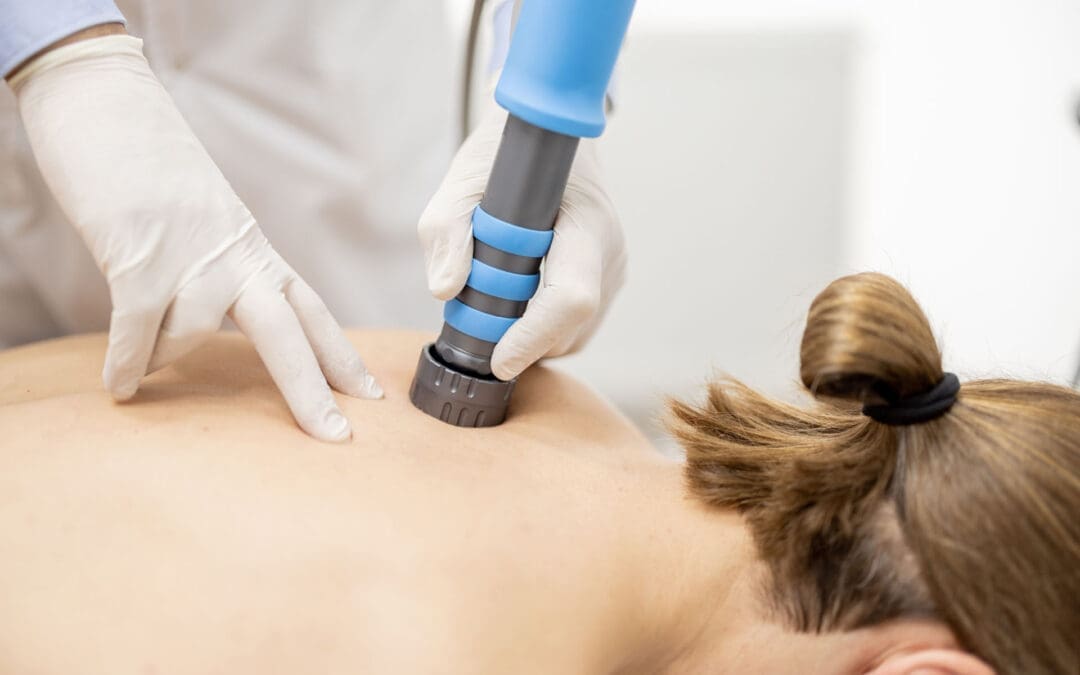
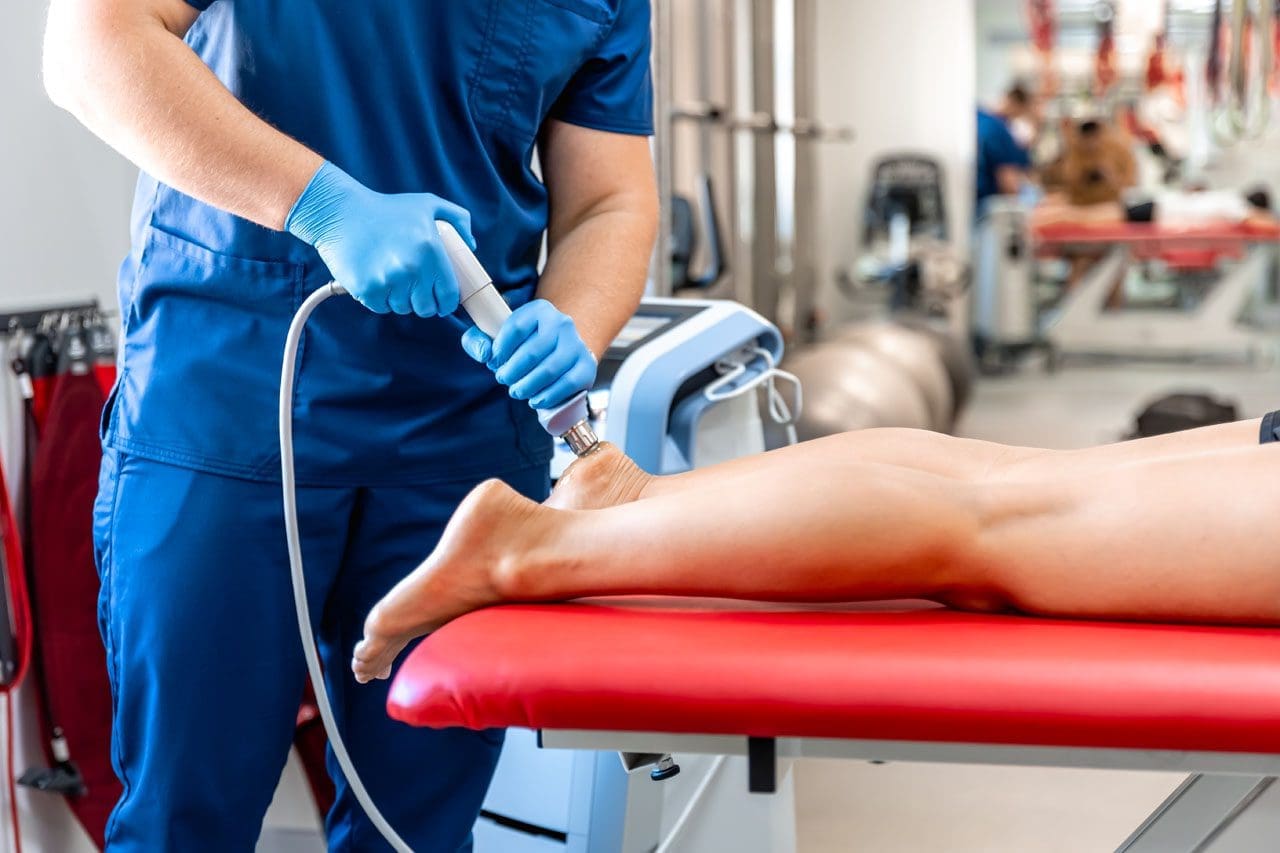
Extracorporeal Shockwave Therapy (ESWT) is a non-invasive treatment that sends acoustic energy (sound waves) into injured tissue from outside the body. It is used in musculoskeletal care to help reduce pain and support healing in stubborn injuries. UCHealth describes ESWT as a noninvasive option for people who have not responded well to more conventional treatments, noting that it delivers high-energy acoustic waves to injured areas.
Mayo Clinic also describes shockwave therapy as a growing tool in physical medicine and sports medicine, especially for tendon and fascia problems.
In simple terms
Shockwave therapy is used to help the body “restart” healing in tissue that has been painful or stuck for a long time, such as:
tendons
fascia
ligaments
some chronic soft-tissue injuries
certain bone healing problems (in selected cases)
Mayo Clinic lists many musculoskeletal uses, including plantar fasciitis, Achilles tendinopathy, patellar tendinopathy, and lateral epicondylitis (tennis elbow).
Not All “Shockwave” Machines Are the Same
This is the most important part of the topic.
Many clinics use the word shockwave, but there are two main categories of devices used in musculoskeletal care:
Focused Shockwave (FSW / F-ESWT)
Radial Pressure Wave (RPW / radial therapy)
Mayo Clinic clearly explains that these are different technologies and should not be treated as identical. In fact, Mayo states that only focused shockwave generates a true shockwave, while radial devices generate a radial pressure wave.
Why that matters
The difference is not just marketing. It affects:
how deep the energy goes
how precise the treatment is
how much energy reaches the target tissue
what conditions may respond best
If a patient has a deep tendon problem, scar tissue, or a stubborn chronic injury, the provider should know exactly what machine is being used and why.
Focused Shockwave vs. Radial Pressure Wave
Here is the practical difference in plain language.
Focused Shockwave (FSW)
Focused shockwave is designed to deliver energy to a specific target depth. It is more precise and is often the better choice when the provider wants to treat a deeper structure or a smaller, more exact area. Mayo Clinic notes that focused shockwave has different physical properties and can be used alone or in combination with radial treatment, depending on the condition.
Radial Pressure Wave (RPW)
Radial therapy spreads energy more broadly and is often more surface-level. Mayo Clinic explains that radial devices generate pressure waves and notes tissue penetration of about 4 to 5 cm in its 2022 discussion of radial ESWT.
That does not mean radial is “bad.” It means it is different. In many cases, radial therapy remains helpful. But if a clinic claims “shockwave” and the patient expects high-energy focused treatment, the patient should ask which device is being used.
Quick comparison
Focused shockwave
More precise targeting
True shockwave physics
Often used for deeper or more exact lesions
Better fit for some regenerative goals
Radial pressure wave
Broader spread
Pressure-wave technology
Often, more superficial or diffuse treatment
Can still be useful in the right case
Why Energy Dose Matters
Real ESWT is not just “machine on, machine off.” It is dosed.
One of the main ways clinicians describe ESWT dose is Energy Flux Density (EFD), and the standard unit is mJ/mm² (millijoules per square millimeter). A PubMed Central review explains that EFD is the professional parameter used to describe shockwave energy flow through tissue, and specifically notes the unit of measurement as mJ/mm².
This is important because:
stronger energy is not always better
tissue type matters
the diagnosis matters
different injuries need different treatment settings
A quality clinic should be able to explain the treatment plan in a way that matches your condition, rather than using the same approach for every patient.
Does Shockwave Therapy Create “Microtrauma”?
Many people explain shockwave therapy by saying it creates “microtrauma” that triggers healing. That is a common explanation, and Mayo Clinic Sports Medicine uses this language in a patient-friendly way, noting that acoustic waves can create microtrauma to help reinitiate a healing response in tendons.
That said, many experts also describe the process in a more modern way as mechanotransduction—meaning the waves create a mechanical signal that helps cells activate repair pathways. Mayo Clinic’s 2025 article also highlights mechanotransduction and regenerative effects like cellular signaling and neovascular changes.
A simple way to think about it
Shockwave therapy helps by:
stimulating local tissue response
improving healing signaling
reducing pain pathways over time
helping stubborn tissue become more “active” in repair
So the short answer is:
Yes, “microtrauma” is a common way to explain it.
But the bigger idea is that the shockwave creates a healing signal, not uncontrolled tissue damage.
FDA Regulation and Why It Matters
Another reason patients should ask questions is that regulatory status matters.
The FDA has approved/cleared specific extracorporeal shockwave devices for specific uses. For example, the FDA PMA listing for the OrthoSpec Extracorporeal Shock Wave Therapy device states that it is indicated for adults with proximal plantar fasciitis (with or without a heel spur) who have had symptoms for 6 months or more and have failed conservative treatment.
That helps patients understand two important points:
real ESWT is a recognized medical technology
device claims should match actual indications and training
If a clinic says “shockwave,” it is fair to ask:
What exact device is this?
Is it focused or radial?
Is it FDA-cleared/approved for a musculoskeletal indication?
These are smart questions, not rude questions.
Why Real ESWT Is Useful in an Integrative Chiropractic Clinic
Shockwave therapy can be very effective, but it works best when the diagnosis is correct, and the rest of the care plan supports healing.
That is where an integrative clinic model is helpful.
The El Paso Back Clinic describes on its website a multidisciplinary, non-surgical, and functional recovery approach that includes chiropractic care, rehab, and broader wellness support. It also describes care for back, auto, and sports injuries, tendinopathy-related issues, and chronic pain.
Why this pairing makes sense
Shockwave therapy targets soft tissue and the healing response.
Chiropractic and rehab help restore:
joint motion
spinal alignment
posture
movement control
load tolerance
When these are combined, the patient gets a more complete plan.
Example of an integrative recovery setup
A patient with chronic Achilles pain, plantar fasciitis, or post-accident scar tissue restriction may benefit from:
Focused shockwave or radial therapy (depending on the tissue depth and goal)
Chiropractic adjustments to improve joint mechanics
Mobility work to reduce compensation patterns
Strength training/rehab exercise to improve tissue tolerance
Lifestyle support (sleep, inflammation control, nutrition)
This is especially important for back and soft-tissue injuries, as pain often has multiple causes. The tissue may be irritated, but there may also be a movement issue, posture problem, or old compensation pattern keeping it from healing.
Clinical Observations in Dr. Alexander Jimenez’s Integrative Model
Public information on dralexjimenez.com and El Paso Back Clinic describes Dr. Alexander Jimenez as a Doctor of Chiropractic and board-certified Family Nurse Practitioner (DC, APRN, FNP-BC) who uses a multidisciplinary, integrative approach focused on non-surgical recovery, diagnostics, and personalized care.
His El Paso Back Clinic content also emphasizes:
advanced injury rehabilitation
chronic pain care
sports injury care
auto injury care
functional medicine support
team-based recovery planning
These clinic observations support the idea that shockwave therapy should not be used as a stand-alone “gadget” treatment. Instead, it fits best within a broader care plan that includes biomechanics, rehab, and whole-person recovery.
Why dual training matters in this setting
In a clinic model that blends chiropractic and nurse practitioner perspectives, the provider can often look at a case more completely, including:
musculoskeletal pain drivers
nerve irritation patterns
inflammation
healing delays
activity limitations
overall recovery readiness
That type of clinical reasoning is helpful when deciding whether a patient should receive:
focused shockwave
radial therapy
chiropractic and rehab only
imaging first
referral or co-management
What Conditions Often Respond to Shockwave Therapy?
Shockwave therapy is often used for chronic injuries that have not improved enough with standard care.
Mayo Clinic and UCHealth commonly describe these types of cases:
Plantar fasciitis
Tennis elbow (lateral epicondylitis)
Achilles tendinopathy
Patellar tendinopathy
Shoulder tendinopathy
Other chronic tendon or fascia pain problems
Mayo’s clinical articles also note that ESWT has roles in treating tendons, ligaments, fascia, and even in selected bone-healing situations.
It may be especially helpful when:
pain has lasted for months
the patient plateaued in regular therapy
surgery is being considered, but not yet desired
the injury is painful with loading (walking, running, lifting, gripping)
the provider wants a non-invasive option
How to Tell if a Clinic Is Offering “Real” Shockwave Therapy
Because the market uses confusing language, patients should ask direct questions before paying for treatment.
Ask these questions
Is this focused shockwave (FSW) or radial pressure wave (RPW)?
What condition are you treating, and why is this device the right choice?
How do you set the energy dose (EFD/mJ/mm2)?
How many sessions are usually recommended for my condition?
Will I also get rehab or movement treatment?
If my pain is deep, how will you target it?
Is the device FDA-cleared/approved for musculoskeletal use?
A strong clinic should be comfortable answering these questions in simple language.
Why Device Hype Alone Is Not Enough
Some clinics advertise shockwave therapy as a miracle treatment. That is not the best way to present it.
Shockwave therapy can be a powerful tool, but results depend on:
Even the best technology will not work well if the diagnosis is wrong or if the patient returns to the same harmful movement pattern right away.
This is one reason integrated care models, like the one described at El Paso Back Clinic and Dr. Jimenez’s clinical sites, can be so useful for complex injuries: patients receive more than one treatment option and more than one clinical lens.
Bottom Line: Focused ESWT Is the Better Choice for True Regenerative Shockwave Goals
If your goal is real regenerative shockwave therapy, focused shockwave (FSW/F-ESWT) is usually the benchmark because it is the true shockwave form and offers more precise targeting. Mayo Clinic makes this distinction very clearly.
Radial devices can still be helpful in many cases, but they are not the same technology. Patients should not be told they are identical.
For patients in El Paso dealing with:
chronic tendon pain
back-related soft tissue problems
sports injuries
accident-related soft tissue injury
stubborn pain that has not improved
An integrative clinic model like El Paso Back Clinic can be a strong fit because it combines:
non-invasive care
structural assessment
chiropractic and rehab
broader healing support
multidisciplinary planning
That is often what it takes to move from “temporary pain relief” to true recovery.
IFM's Find A Practitioner tool is the largest referral network in Functional Medicine, created to help patients locate Functional Medicine practitioners anywhere in the world. IFM Certified Practitioners are listed first in the search results, given their extensive education in Functional Medicine