Progress can be challenging for individuals in post total ankle replacement surgery. How can physical therapy help in recovery and restoring leg function?
Total Ankle Replacement Post Surgery Physical Therapy
Total ankle replacement surgery is a major procedure that takes time to recover. A total ankle replacement surgery or arthroplasty can benefit individuals with chronic ankle pain or disability. This procedure can significantly improve an individual’s overall pain and function with time. Physical therapy is essential to regaining movement in the ankle and restoring full mobility. A physical therapist will work with the individual to control pain and swelling, restore the ankle’s range of motion, train on walking gait and balance, and rebuild strength in the leg. This will help maximize the chances of a successful outcome after surgery.
Total Ankle Replacement
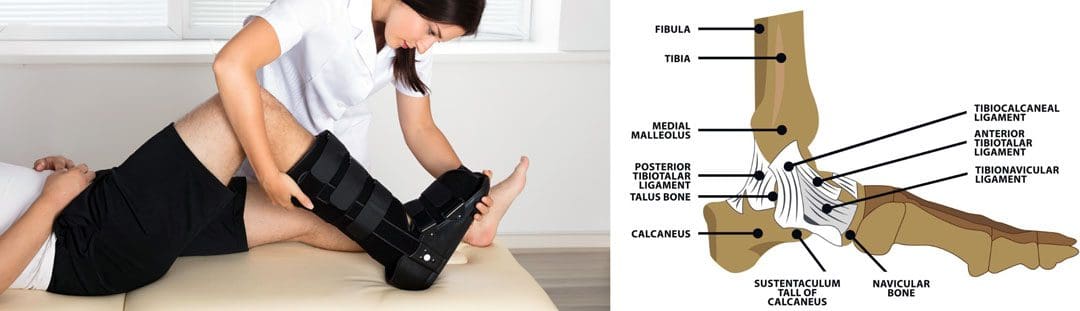
The ankle joint is the section of the lower leg where the shinbone/tibia meets the talus bone on the top of the foot. What can happen is the slippery surface/articular cartilage that coats the ends of these bones begins to thin or deteriorate. As the deterioration progresses, it can lead to significant pain, disability, and difficulty walking. (Cleveland Clinic. 2021) This is where a specialist may recommend total ankle replacement for the best results. Various conditions can be helped by this procedure, including:
During an ankle replacement procedure, an orthopedic surgeon removes the damaged ends of the tibia and talus bones and replaces them with an artificial covering. A polyethylene component is also secured between the two structures to support the smooth movement of the new joint endings. (Massachusetts General Hospital. N.D.) Following the procedure, individuals are typically placed in a protective boot or splint. The healthcare provider will recommend staying off the leg for 4 to 8 weeks to allow healing.
Physical Therapy
Outpatient physical therapy is usually initiated several weeks after the ankle operation. (UW Health Orthopedics and Rehabilitation. 2018) Physical therapy can last for five months or more, depending on the severity of the condition and injury. The physical therapist will focus on different areas to get the best results. (Cort D. Lawton et al., 2017)
Pain and Swelling Control
Post-operative pain and swelling are normal after a total ankle replacement. It is not unusual for an ankle to be swollen for even six to 12 months after the operation. (UW Health Orthopedics and Rehabilitation. 2018) The surgeon will normally prescribe medication to help manage discomfort early on, and physical therapy also plays an important role in addressing the symptoms. Treatments used can include:
Electrical stimulation – mild electrical pulses applied to the muscles.
Ice
Vasopneumatic compression, where an inflatable sleeve is used to create pressure around the area, is commonly utilized at the beginning of physical therapy to reduce pain or swelling.
Other modalities, such as stretching and targeted exercises, are combined with other treatments.
Range of Motion
Early after the procedure, the ankle will be very stiff and tight. This is due to several factors, including the inflammation and swelling after surgery and the time spent immobilized in a boot.
The physical therapist will employ various techniques to improve the ankle joint’s range of motion to rotate and flex.
The physical therapist may employ passive stretching induced by an outside force such as the therapist or a resistance band) to help improve mobility.
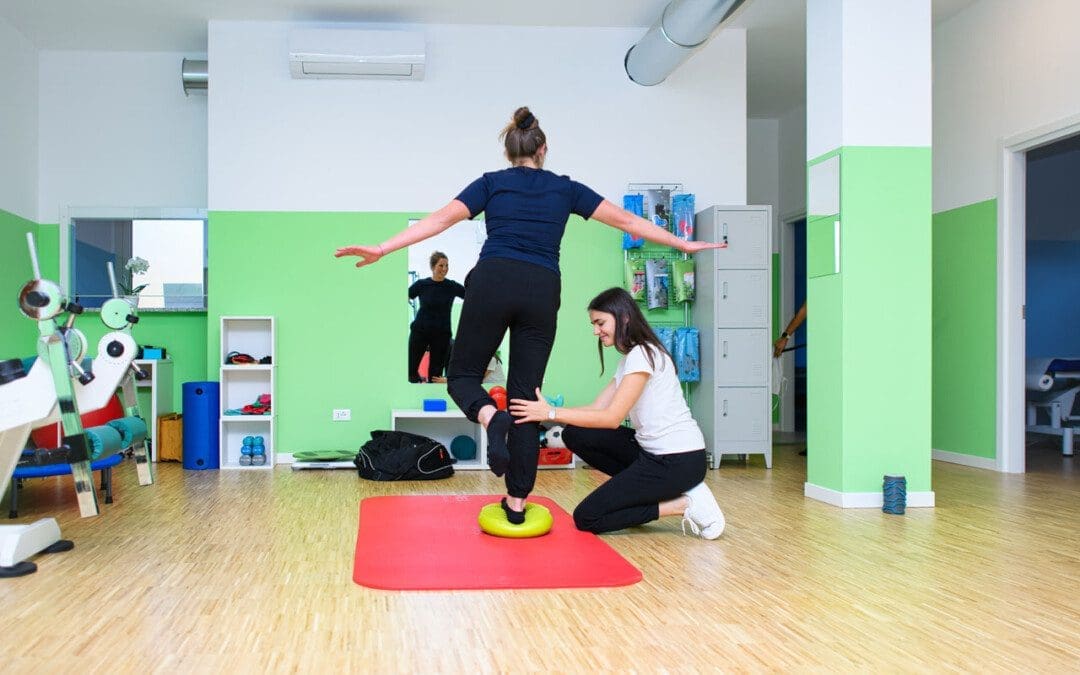
After multiple weeks of reduced movement and lack of bearing any weight on the ankle, the muscles that surround the ankle have often atrophied/weakened, which can impact balance.
When the individual can begin placing weight on the leg, the therapist will apply proprioceptive/sense of body position training to improve overall stability. (UW Health Orthopedics and Rehabilitation. 2018)
Balance exercises will be added to the home program and will progress from week to week.
Strength
The muscles in the leg, ankle, and foot become weak from the surgery and the time spent in a splint or boot. These structures have a significant role in balance, the ability to stand, walk, and go up or down the stairs.
Regaining the strength and power of these muscles is a critical goal of rehabilitation.
In the first weeks, the physical therapist will focus on gentle strengthening exercises.
Isometrics lightly activate the muscles but avoid irritating the surgical site.
As time passes and weight-bearing is allowed, these gentle moves are replaced with more challenging ones, like resistance bands and standing exercises, to accelerate strength gains.
Lawton, C. D., Butler, B. A., Dekker, R. G., 2nd, Prescott, A., & Kadakia, A. R. (2017). Total ankle arthroplasty versus ankle arthrodesis-a comparison of outcomes over the last decade. Journal of orthopaedic surgery and research, 12(1), 76. https://doi.org/10.1186/s13018-017-0576-1
For individuals experiencing a turf toe injury, can knowing the symptoms help athletes and non-athletes with treatment, recovery time, and returning to activities?
Turf Toe Injury
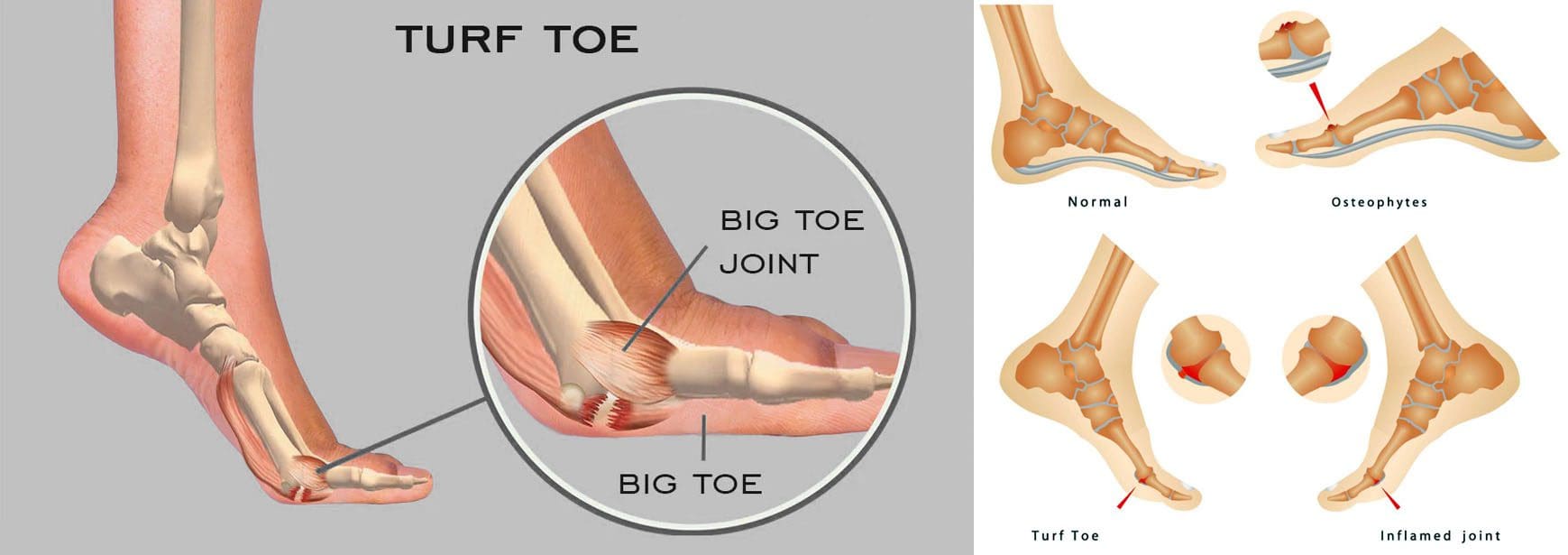
A turf toe injury affects the soft tissue ligaments and tendons at the base of the big toe under the foot. This condition usually occurs when the toe is hyperextended/forced upward, such as when the ball of the foot is on the ground and the heel is lifted. (American Academy of Orthopaedic Surgeons. 2021) The injury is common among athletes who play sports on artificial turf, which is how the injury got its name. However, it can also affect non-athletes, like individuals working on their feet all day.
Recovery time after turf toe injury depends on the severity and the type of activities the individual plans to return to.
Returning to high-level sports activities after a severe injury can take six months.
These injuries vary in severity but usually improve with conservative treatment. In severe cases, surgery could be required.
Pain is the primary issue that stops physical activities after a grade 1 injury, while grades 2 and 3 can take weeks to months to heal completely.
Meaning
A turf toe injury refers to a metatarsophalangeal joint strain. This joint comprises ligaments that connect the bone on the sole of the foot, below the big toe/proximal phalanx, to the bones that connect the toes to the larger bones in the feet/metatarsals. The injury is usually caused by hyperextension that often results from a pushing-off motion, like running or jumping.
If experiencing turf toe symptoms, see a healthcare provider for a proper diagnosis so they can develop a personalized treatment plan. They will perform a physical exam to assess pain, swelling, and range of motion. (American Academy of Orthopaedic Surgeons. 2021) If the healthcare provider suspects tissue damage, they may recommend imaging with X-rays and (MRI) to grade the injury and determine the proper course of action.
Grades 2 and 3 come with partial or complete tissue tearing, severe pain, and swelling. Treatments for more severe turf toe can include: (Ali-Asgar Najefi et al., 2018)
Limited weight bearing
Using assistive devices like crutches, a walking boot, or a cast.
Physical therapy also includes proprioception and agility training exercises, orthotics, and wearing recommended shoes for specific physical activities. (Lisa Chinn, Jay Hertel. 2010)
A physical therapist can also help ensure that the individual does not return to physical activities before the injury is fully healed and prevent the risk of re-injury.
Grade 1 – Subjective as it varies depending on the individual’s pain tolerance.
Grade 2 – Four to six weeks of immobilization.
Grade 3 – Eight weeks minimum of immobilization.
It can take up to six months to return to normal function.
Returning To Normal Activities
After a grade 1 turf toe injury, individuals can return to normal activities once the pain is under control. Grades 2 and 3 take longer to heal. Returning to sports activities after a grade 2 injury can take around two or three months, while grade 3 injuries and cases that require surgery can take up to six months. (Ali-Asgar Najefi et al., 2018)
Sports Chiropractic Treatment
References
American Academy of Orthopaedic Surgeons. (2021). Turf toe.
American College of Foot and Ankle Surgeons. Foot Health Facts. (2023). RICE protocol.
Najefi, A. A., Jeyaseelan, L., & Welck, M. (2018). Turf toe: A clinical update. EFORT open reviews, 3(9), 501–506. https://doi.org/10.1302/2058-5241.3.180012
Pinter, Z. W., Farnell, C. G., Huntley, S., Patel, H. A., Peng, J., McMurtrie, J., Ray, J. L., Naranje, S., & Shah, A. B. (2020). Outcomes of Chronic Turf Toe Repair in Non-athlete Population: A Retrospective Study. Indian journal of orthopaedics, 54(1), 43–48. https://doi.org/10.1007/s43465-019-00010-8
Chinn, L., & Hertel, J. (2010). Rehabilitation of ankle and foot injuries in athletes. Clinics in sports medicine, 29(1), 157–167. https://doi.org/10.1016/j.csm.2009.09.006
When a groin strain injury happens, can knowing the symptoms help in the diagnosis, treatment, and recovery times?
Groin Strain Injury
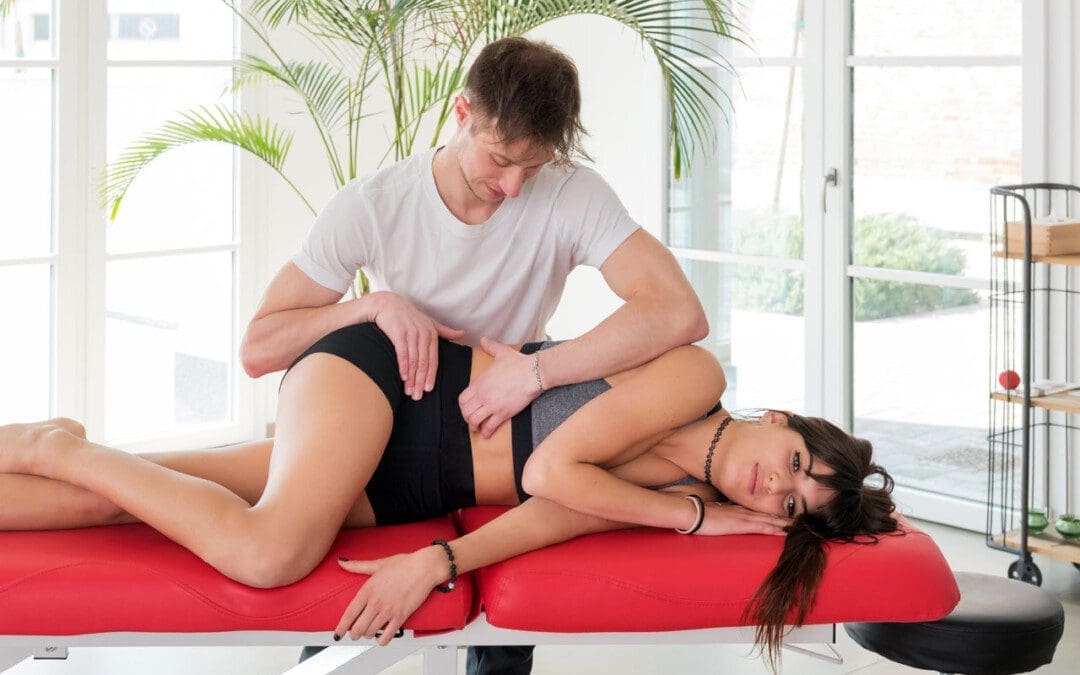
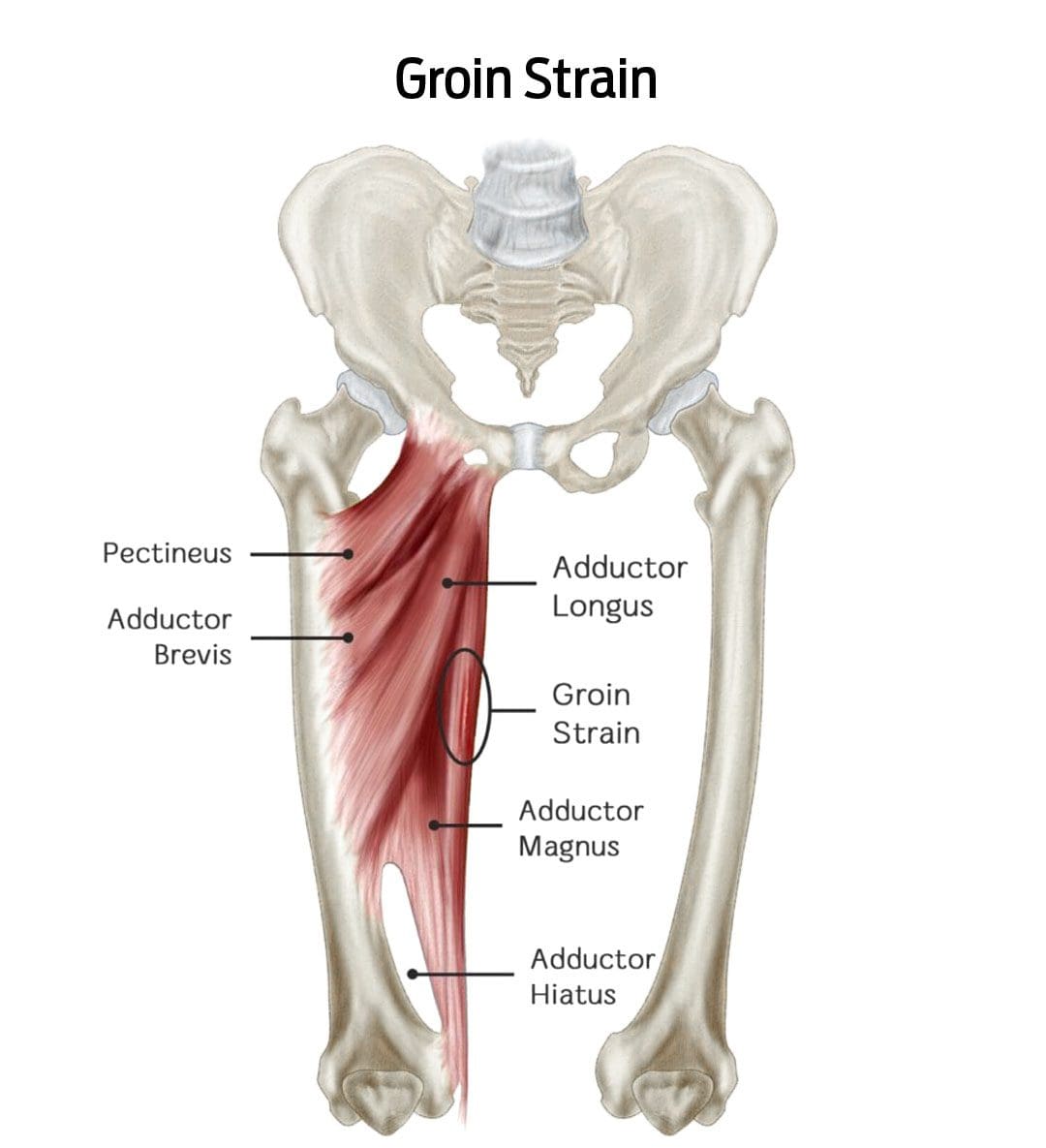
A groin strain is an injury to an inner thigh muscle. A groin pull is a type of muscle strain affecting the adductor muscle group (the muscles help pull the legs apart). (Parisa Sedaghati, et al., 2013) The injury is caused when the muscle is stretched beyond its normal range of motion, creating superficial tears. Severe strains can tear the muscle in two. (Parisa Sedaghati, et al., 2013)
A groin muscle pull causes pain and tenderness that worsens when squeezing the legs together.
There may also be swelling or bruising in the groin or inner thigh.
An uncomplicated groin pull takes four to six weeks to heal with proper treatment. (Andreas Serner, et al., 2020)
Symptoms
A groin pull can be painful, interfering with walking, navigating stairs, and/or driving a car. In addition to pain, other symptoms around the injured area include: (Parisa Sedaghati et al., 2013)
A popping sound or snapping sensation when the injury occurs.
Increased pain when pulling the legs together.
Redness
Swelling
Bruising of the groin or inner thigh.
Groin pulls are graded by severity and how much they impact mobility:
Grade 1
Mild discomfort but not enough to limit activities.
Grade 2
Moderate discomfort with swelling or bruising that limits running and/or jumping.
Grade 3
Severe injury with significant swelling and bruising can cause pain while walking and muscle spasms.
Signs of a severe groin strain
Difficulty walking
Groin pain while sitting or resting
Groin pain at night
A healthcare provider should see severe groin pulls because the muscle may have ruptured or be on the verge of rupturing.
In severe cases, surgery is necessary to reattach the torn ends.
Groin pulls are sometimes accompanied by a stress fracture of the pubis/forward-facing pelvic bones, which can significantly extend healing and recovery time. (Parisa Sedaghati et al., 2013)
Causes
Groin pulls are often experienced by athletes and individuals who play sports where they must stop and change directions quickly, placing excessive strain on the adductor muscles. (Parisa Sedaghati et al., 2013) The risk is increased in individuals who: (T. Sean Lynch et al., 2017)
Have weak hip abductor muscles.
Are not in adequate physical condition.
Have a previous groin or hip injury.
Pulls can also occur from falls or extreme activities without the proper conditioning.
Diagnosis
A healthcare provider will perform a thorough investigation to confirm the diagnosis and characterize the severity. This involves: (Juan C. Suarez et al., 2013)
Medical History Review
This includes any previous injuries and specifics about where and when the symptoms started.
Physical Examination
This involves palpating – lightly touching and pressing the groin region and manipulating the leg to understand better where and how extensive the injury is.
Imaging Studies
Ultrasound or X-rays.
If a muscle rupture or fracture is suspected, an MRI scan may be ordered to visualize soft tissue injuries and stress fractures better.
Differential Diagnosis
Certain conditions can mimic a groin pull and require different treatments. These include: (Juan C. Suarez, et al., 2013)
Sports Hernia
This type of inguinal hernia occurs with sports and work injuries.
It causes a portion of the intestine to pop through a weakened muscle in the groin.
Hip Labral Tear
This is a tear in the cartilage ring of the labrum outside the rim of the hip joint socket.
Hip Osteoarthritis
This is the wear-and-tear form of arthritis that can present with groin pain symptoms.
Osteitis Pubis
This is inflammation of the pubic joint and surrounding structures, usually caused by the overuse of the hip and leg muscles.
Referred Groin Pain
This nerve pain originates in the lower back, often due to a pinched nerve, but is felt in the groin.
Treatment
Beginning treatment is conservative and includes rest, ice application, physical therapy, and prescribed gentle stretching and exercises.
Individuals may need crutches or a walking device to reduce pain and prevent further injury if the pain is significant. (Andreas Serner, et al., 2020)
Physical therapy will be a part of the treatment plan.
Over-the-counter pain medications like Tylenol/acetaminophen or Advil/ibuprofen can help with pain relief short term.
If there is severe pain from a grade 3 injury, prescription medications may be used for a short period to help minimize pain. (Andreas Serner, et al., 2020)
Sedaghati, P., Alizadeh, M. H., Shirzad, E., & Ardjmand, A. (2013). Review of sport-induced groin injuries. Trauma monthly, 18(3), 107–112. https://doi.org/10.5812/traumamon.12666
Serner, A., Weir, A., Tol, J. L., Thorborg, K., Lanzinger, S., Otten, R., & Hölmich, P. (2020). Return to Sport After Criteria-Based Rehabilitation of Acute Adductor Injuries in Male Athletes: A Prospective Cohort Study. Orthopaedic journal of sports medicine, 8(1), 2325967119897247. https://doi.org/10.1177/2325967119897247
Lynch, T. S., Bedi, A., & Larson, C. M. (2017). Athletic Hip Injuries. The Journal of the American Academy of Orthopaedic Surgeons, 25(4), 269–279. https://doi.org/10.5435/JAAOS-D-16-00171
Suarez, J. C., Ely, E. E., Mutnal, A. B., Figueroa, N. M., Klika, A. K., Patel, P. D., & Barsoum, W. K. (2013). Comprehensive approach to the evaluation of groin pain. The Journal of the American Academy of Orthopaedic Surgeons, 21(9), 558–570. https://doi.org/10.5435/JAAOS-21-09-558
For individuals trying to get into a regular fitness regimen, could using the FITT Principle help structure exercise, track progress, and achieve fitness goals?
FITT Principle
The FITT principle is a set of guidelines for adjusting, revising, and improving exercise workouts. FITT is an acronym for:
Frequency
Intensity
Time
Type of exercise
Individuals take these elements to create and adjust workouts that fit their goals and fitness levels.
For example, this could be a workout of 3 to 5 days combined with low, medium, and high-intensity exercises for 30 to 60 minutes each session that incorporates cardio and strength training. Focusing on these details and progressing over time helps create an effective program.
Frequency
Workout frequency and how often the individual is going to exercise is the first thing to look at.
Frequency depends on various factors, including the type of workout being done, how hard the workout is, fitness levels, and exercise goals.
General exercise guidelines developed by the American College of Sports Medicine offer recommendations. (Carol Ewing Garber, et al., 2011)
Cardiovascular Workouts
Cardio workouts are usually scheduled more often.
Depending on goals, guidelines recommend moderate cardio exercise five or more days a week or intense cardio three days a week to improve health.
Individuals can adjust the exercise intensity level easily on a treadmill to provide excellent and convenient cardiovascular workouts.
Individuals who want to lose weight may want to work up to more workouts gradually.
However, more is not always better, and recovery time is essential. (Pete McCall. 2018)
For individuals following a split routine, like upper body one day and lower body the next, workouts can be more frequent than total body workouts.
Intensity
Workout intensity involves how hard the individual is pushing themselves during exercise. How it is increased or decreased depends on the type of workout. (Carol Ewing Garber, et al., 2011)
Cardiovascular Workouts
For cardio, individuals will monitor workout intensity by:
The general recommendation is to work at a moderate intensity for steady workouts.
Interval training is done at a higher intensity for a shorter period.
It’s recommended to mix up low, medium, and high-intensity cardio exercises to stimulate different energy systems and prevent overtraining. (Nathan Cardoos. 2015)
Strength Training
Individual intensity comprises the amount of weight being lifted and the number of reps and sets done.
The intensity can change based on health goals.
Beginners looking to build stability, endurance, and muscle are recommended to use a lighter weight and do fewer sets with high repetitions – for example, two or three sets of 12 to 20 reps.
Individuals wanting to grow muscle are recommended to do more sets with a moderate amount of reps – for example, four sets of 10 to 12 reps each.
Individuals who want to build strength are recommended to use heavy weights and do more sets with fewer reps – for example, five sets of three reps each.
The next element of the plan is how long the exercise will be during each session. Exercise length depends on individual fitness level and the type of workout being done.
Cardiovascular Workouts
The exercise guidelines suggest 30 to 60 minutes of cardio, but workout duration will depend on fitness level and type of exercise. ((Carol Ewing Garber, et al., 2011)
Beginners are recommended to start with a 15- to 20-minute workout.
Individuals with some workout experience and are doing steady-state cardio, like jogging or using a cardio machine, might exercise for 30 to 60 minutes.
For individuals doing interval training and working at very high intensity, the workout will be shorter, around 10 to 15 minutes of high-intensity interval training.
Having a variety of workouts of different intensities and durations will provide a solid, balanced cardiovascular program.
Strength Training
How long an individual strength trains will depend on the type of workout and schedule.
A total body workout can take over an hour.
A split routine can take less time by working fewer muscle groups in one session.
Type
The type of exercise you do is the last part of the FIIT principle.
It is easy to manipulate to avoid overuse injuries or weight loss plateaus.
Cardiovascular Workouts
Cardio is easy to adjust and change because any activity that increases heart rate counts.
Walking, dancing, running, cycling, swimming, and using an elliptical trainer are a few activities that can be incorporated.
Having multiple cardio activities is recommended to reduce burnout and keep workouts fresh.
Strength Training
Strength training workouts can also be varied.
They include any exercise where some type of resistance – bands, dumbbells, machines, etc. are used to work the muscles.
Bodyweight exercises can also be considered a form of strength training.
Strength workouts can be changed from total body training to adding, for example, supersets or pyramid training.
Incorporating new exercises for each body area is another way to vary the type of workouts.
Spending a few weeks working on functional strength movements, then switching to hypertrophy or strength-based training.
Each modality includes various alternative types of strength-based exercises.
Using FITT
The FITT principle outlines how to adjust workout programs to achieve better results. It also helps figure out how to change workouts to avoid burnout, overuse injuries, and plateaus.
For example, walking three times a week for 30 minutes at a moderate pace is recommended for a beginner to start out with. After a few weeks, the body adapts to the workout. This results in burning fewer calories, burnout, or weight management efforts, and goals are put on hold. This is where the FITT principles come in. For example, a change-up could include:
Changing frequency by adding another day of walking or jogging.
Changing intensity by walking faster, adding more challenging terrain like a hill, or jogging at certain intervals.
Walking for a longer time each workout day.
Changing the type of workout by swapping one or more of the walk sessions for cycling or aerobics.
Even just changing one element can make a big difference in the workout and how the body responds to exercise.
It’s important to change things up regularly to keep the body healthy and mind engaged.
Injury Prevention
One of the best things about using FITT is that it allows individuals to monitor the length and intensity of their workouts. When individuals work out too frequently or don’t get enough rest, they run the risk of overuse injuries, burnout, and muscle strains. The FITT principle encourages adding variety to workouts. When following this practice, it allows the body to rest and recover properly. Because individuals are not working the same muscle groups over and over again, better results are achieved.
Fighting Inflammation Naturally
References
Garber, C. E., Blissmer, B., Deschenes, M. R., Franklin, B. A., Lamonte, M. J., Lee, I. M., Nieman, D. C., Swain, D. P., & American College of Sports Medicine (2011). American College of Sports Medicine position stand. Quantity and quality of exercise for developing and maintaining cardiorespiratory, musculoskeletal, and neuromotor fitness in apparently healthy adults: guidance for prescribing exercise. Medicine and science in sports and exercise, 43(7), 1334–1359. https://doi.org/10.1249/MSS.0b013e318213fefb
McCall Pete. 8 reasons to take a rest day. (2018) American Council on Exercise.
National Strength and Conditioning Association. (2017) Determination of resistance training frequency.
Schoenfeld, B. J., Ogborn, D., & Krieger, J. W. (2016). Effects of Resistance Training Frequency on Measures of Muscle Hypertrophy: A Systematic Review and Meta-Analysis. Sports medicine (Auckland, N.Z.), 46(11), 1689–1697. https://doi.org/10.1007/s40279-016-0543-8
Cardoos, Nathan MD. Overtraining Syndrome. (May/June 2015). Current Sports Medicine Reports 14(3):p 157-158. DOI: 10.1249/JSR.0000000000000145
For individuals trying to make healthy lifestyle adjustments, can adding protein bars into their diet help achieve health goals?
Protein Bar
Protein bars provide a quick energy boost between meals that can help curb appetite and avoid filling up on high-fat, sodium-packed snacks for individuals trying to lose weight. They can also increase calorie intake for individuals like athletes trying to increase muscle mass. Protein bars can vary in terms of factors like additives, calories, fat, sugars, and other ingredients. Labels need to be read carefully; otherwise, the bar can be more of a candy bar than a healthy, nutritious mini-meal or snack. It’s important to have a sense of how much protein is really needed each day, and the amount varies depending on individual factors.
How Much Protein Is Needed
Protein is vital to many body functions, but the body can’t produce this macronutrient, and it has to come from food. Dietary protein is broken down during digestion, and compounds known as amino acids are formed:
These are the building blocks the body uses to build and maintain muscles and organs.
It is vital to the production of blood, connective tissue, antibodies, enzymes, and hair. (Marta Lonnie, et al., 2018)
As protein is necessary for building muscle, athletes or individuals with physically demanding jobs are recommended to eat more.
The ideal protein intake considers how much is eaten at individual sittings. The average individual is recommended to consume between 25 and 35 grams of protein at every meal. (Emily Arentson-Lantz, et al., 2015)
Sources
The richest sources of dietary protein include:
Meats
Poultry
Fish and shellfish
Eggs
Milk and other dairy products
Plant sources include:
Beans
Legumes
Nuts
Seeds
Whole grains
These are foods that are easy to include in a balanced diet, so eating a variety in ample quantities daily will equal the recommended amount of protein. Recommendations are to stick with those low in saturated fat and processed carbs and rich in nutrients. However, eating too much protein can cause kidney problems. Therefore, individuals who are predisposed to kidney disease are recommended to be careful over-protein intake. (Kamyar Kalantar-Zadeh, Holly M. Kramer, Denis Fouque. 2020)
What To Look For
Incorporating protein bars into a diet, either as a between-meal snack, as a grab-and-go option when there is no time for a full meal, or as a part of a weight-loss or weight-gain strategy, individuals need to read and understand the ingredients on the different types of bars to choosing the healthiest options. Some general guidelines to consider:
Protein Content
For a between-meal or pre-post-workout snack, look for a bar with at least 20 grams of protein.
Meal replacement bars should have at least 30 grams of protein.
A less is more approach to these guidelines is recommended, as the body can digest only between 20 and 40 grams of protein in one sitting. (Brad Jon Schoenfeld, Alan Albert Aragon. 2018)
Protein Type
The protein usually comes from dairy or plant sources.
The most common include eggs, milk, rice, whey, soy, peas, and hemp.
Individuals with allergies or sensitivities need to choose a bar that is comprised of a type of protein that is safe to eat.
Calories
For a bar to eat between meals, recommendations are those with around 220 to 250 calories.
A protein bar that substitutes for a full meal can have 300 to 400 calories.
Fat
Ten to 15 grams of total fat and no more than two grams of saturated fat is ideal.
Steer clear of unhealthy trans fats found in partially hydrogenated oils.
Fiber
Fiber is filling, so the more fiber, the more likely it is to keep hunger satisfied until the next snack or meal.
It is recommended to choose those that contain more than three to five grams of fiber.
Sugar
Some protein bars have just as much sugar content as candy bars.
Some have as much as 30 grams of added sugar.
The ideal amount is around five grams or less.
Artificial sweeteners like erythritol, sorbitol, and maltitol are not better options as they can cause bloating and gas.
It is recommended to work with a nutritionist to figure out the most effective type so that they can be incorporated into an individual’s diet to achieve and maintain health goals.
Nutrition Fundamentals
References
Lonnie, M., Hooker, E., Brunstrom, J. M., Corfe, B. M., Green, M. A., Watson, A. W., Williams, E. A., Stevenson, E. J., Penson, S., & Johnstone, A. M. (2018). Protein for Life: Review of Optimal Protein Intake, Sustainable Dietary Sources and the Effect on Appetite in Ageing Adults. Nutrients, 10(3), 360. https://doi.org/10.3390/nu10030360
Stephens, T. V., Payne, M., Ball, R. O., Pencharz, P. B., & Elango, R. (2015). Protein requirements of healthy pregnant women during early and late gestation are higher than current recommendations. The Journal of nutrition, 145(1), 73–78. https://doi.org/10.3945/jn.114.198622
Arentson-Lantz, E., Clairmont, S., Paddon-Jones, D., Tremblay, A., & Elango, R. (2015). Protein: A nutrient in focus. Applied physiology, nutrition, and metabolism = Physiologie appliquee, nutrition et metabolisme, 40(8), 755–761. https://doi.org/10.1139/apnm-2014-0530
Kalantar-Zadeh, K., Kramer, H. M., & Fouque, D. (2020). High-protein diet is bad for kidney health: unleashing the taboo. Nephrology, dialysis, transplantation : official publication of the European Dialysis and Transplant Association – European Renal Association, 35(1), 1–4. https://doi.org/10.1093/ndt/gfz216
Schoenfeld, B. J., & Aragon, A. A. (2018). How much protein can the body use in a single meal for muscle-building? Implications for daily protein distribution. Journal of the International Society of Sports Nutrition, 15, 10. https://doi.org/10.1186/s12970-018-0215-1
Individuals who have gone through recent low back surgery, like a lumbar laminectomy and discectomy, could they benefit from physical therapy for full recovery? (Johns Hopkins Medicine. 2008)
Rehabilitation Exercise Program
A lumbar laminectomy and discectomy is a surgical procedure performed by an orthopedic or neurologic surgeon to help decrease pain, relieve associated symptoms and sensations, and improve flexibility and mobility. The procedure involves cutting away disc and bone material that presses against, irritates, and damages the spinal nerves. (Johns Hopkins Medicine. 2023)
Post-Surgery
The therapist will work with the individual to develop a rehabilitation exercise program. The objective of a rehabilitation exercise program is to help the individual:
Relax their muscles to prevent muscle tensing and becoming over-cautious
Regain full range of motion
Strengthen their spine
Prevent injuries
A guide on what to expect in physical therapy.
Postural Retraining
After back surgery, individuals have to work to maintain proper posture when sitting and standing. (Johns Hopkins Medicine. 2008)
Postural control is important to learn as it maintains the lower back in the optimal position to protect and expedite the healing of lumbar discs and muscles.
A physical therapist will teach the individual how to sit with proper posture and use lumbar support.
Attaining and maintaining proper posture is one of the most important things to help protect the back and prevent future back problems.
Walking helps to improve cardiovascular health and blood circulation throughout the body.
This helps to provide added oxygen and nutrients to the spinal muscles and tissues as they heal.
It is an upright exercise that puts the spine in a natural position, which helps to protect the discs.
The therapist will help set up a program tailored to the individual’s condition.
Prone Press Up
One of the exercises to protect the back and lumbar discs is prone press-ups. (Johns Hopkins Medicine. 2008) This exercise helps keep the spinal discs situated in the proper position. It also helps to improve the ability to bend back into lumbar extension.
To perform the exercise:
Lie facing down on a yoga/exercise mat and place both hands flat on the floor under the shoulders.
Keep the back and hips relaxed.
Use the arms to press the upper part of the body up while allowing the lower back to remain against the floor.
There should be a slight pressure in the lower back while pressing up.
Hold the press-up position for 2 seconds.
Slowly lower back down to the starting position.
Repeat for 10 to 15 repetitions.
Sciatic Nerve Gliding
Individuals who had leg pain coming from the back prior to surgery may have been diagnosed with sciatica or an irritation of the sciatic nerve. Post-surgery, individuals may notice their leg feels tight whenever straightening it out all the way. This could be a sign of an adhered/trapped sciatic nerve root, a common problem with sciatica.
After lumbar laminectomy and discectomy surgery, a physical therapist will prescribe targeted exercises called sciatic nerve glides to stretch and improve how the nerve moves. (Richard F. Ellis, Wayne A. Hing, Peter J. McNair. 2012)
Nerve glides can help free the stuck nerve root and allow for normal motion.
To perform the exercise:
Lie on the back and bend one knee up.
Grab underneath the knee with the hands.
Straighten the knee while supporting it with the hands.
Once the knee is fully straightened, flex and extend the ankle about 5 times.
Return to the starting position.
Repeat the sciatic nerve glide 10 times.
The exercise can be performed several times to help improve how the nerve moves and glides in the lower back and leg.
Supine Lumbar Flexion
After surgery, gentle back flexion exercises can help safely stretch the low-back muscles and gently stretch the scar tissue from the surgical incision. Supine lumbar flexion is one of the simplest exercises to improve lumbar flexion range of motion.
To perform the exercise:
Lie on the back with the knees bent.
Slowly lift the bent knees towards the chest and grasp the knees with both hands.
Gently pull the knees toward the chest.
Hold the position for 1 or 2 seconds.
Slowly lower the knees back to the starting position.
Perform for 10 repetitions.
Stop the exercise if experiencing an increase in pain in the lower back, buttocks, or legs.
Hip and Core Strengthening
Once cleared, individuals can progress to an abdominal and core strengthening program. This involves performing specific motions for the hips and legs while maintaining a pelvic neutral position. Advanced hip strengthening exercises help generate strength and stability in the muscles that surround the pelvic area and lower back. A physical therapist can help decide which exercises are recommended for the specific condition.
Return-to-Work and Physical Activities
Once individuals have gained an improved lumbar range of motion, hip, and core strength, their doctor and therapist may recommend working on specific activities to help them return to their previous level of work and recreation. Depending on job occupation, individuals may need to:
Work on proper lifting techniques.
Require an ergonomic evaluation if they spend time sitting at a desk or workstation.
Some surgeons may have restrictions on how much an individual can bend, lift, and twist from two to six weeks after surgery.
Low-back surgery can be difficult to rehab properly. Working with a healthcare provider and physical therapist, individuals can be sure to improve their range of motion, strength, and functional mobility to return to their previous level of function quickly and safely.
Ellis, R. F., Hing, W. A., & McNair, P. J. (2012). Comparison of longitudinal sciatic nerve movement with different mobilization exercises: an in vivo study utilizing ultrasound imaging. The Journal of orthopaedic and sports physical therapy, 42(8), 667–675. https://doi.org/10.2519/jospt.2012.3854
It can be difficult for individuals and athletes to stay motivated, manage stress and prevent becoming overwhelmed. Can mental toughness and a positive attitude help increase potential and performance levels?
Mental Toughness
Athletes and fitness enthusiasts work on conditioning, skills training, and perfecting techniques. Physical training can take individuals far but another necessary part of maximizing athletic potential is building mental toughness and having the right attitude. Like anything, mental training takes time, effort, and regular adjustments to find ways to shift a losing or bad attitude into a positive one that can bring out the best.
Attitude Is Important
If negativity begins to set in like dealing with an injury, getting rid of self-limiting beliefs can be difficult, as well as generate optimism to rise up and succeed. For athletes or individuals who enjoy competitive sports, developing a positive mental attitude will help with:
Emotions that can affect cognitive functioning strategies.
Energy levels.
Other aspects of physical performance.
Mental Strategies
Mood Improvement
Individuals frustrated by a pessimistic perspective tend to dwell on problems or issues. To shift into a positive mood do something to lift your spirits, even if you don’t think it will help.
Listen to your favorite or uplifting music.
Watch an inspirational movie.
Read a sports psychology book.
Get together or call a teammate or friend that are cheerful and upbeat.
Play different games just for fun.
Take a break, go to the park, walk around, and meditate.
Get into hobbies.
Relax with a therapeutic massage.
Positive Self Talk
Continuing sports psychology research shows that practicing positive self-talk can improve athletic performance. (Nadja Walter, et al., 2019) Sports psychologists describe this through the idea that thoughts create beliefs, that drive actions.
Positive self-talk can take different forms.
For some reciting a specific phrase, sentence, or a single word can effectively manage thoughts, push out the negativity, and focus on taking care of business. Anything that inspires can include:
Focus
Remember the fundamentals!
You know what to do!
You can do it!
You got this!
Research shows that positive self-talk reduces anxiety and increases self-confidence, optimization, efficacy, and performance. (Nadja Walter, et al., 2019) However, self-talk needs to be practiced and part of a regular routine to be effective.
Visualization
Another strategy is using visualization exercises.
This could be using all the senses to imagine the venue where the tournament is taking place, the sound of the crowd, the smells, how the ground or court feels, and/or how the ball or specific sports object feels.
The wisdom is if you can think it, you can do it, once that is determined apply strategies to get there.
Sports Injury Rehabilitation
References
Walter, N., Nikoleizig, L., & Alfermann, D. (2019). Effects of Self-Talk Training on Competitive Anxiety, Self-Efficacy, Volitional Skills, and Performance: An Intervention Study with Junior Sub-Elite Athletes. Sports (Basel, Switzerland), 7(6), 148. https://doi.org/10.3390/sports7060148
Reiser, M., Büsch, D., & Munzert, J. (2011). Strength gains by motor imagery with different ratios of physical to mental practice. Frontiers in psychology, 2, 194. https://doi.org/10.3389/fpsyg.2011.00194
IFM's Find A Practitioner tool is the largest referral network in Functional Medicine, created to help patients locate Functional Medicine practitioners anywhere in the world. IFM Certified Practitioners are listed first in the search results, given their extensive education in Functional Medicine