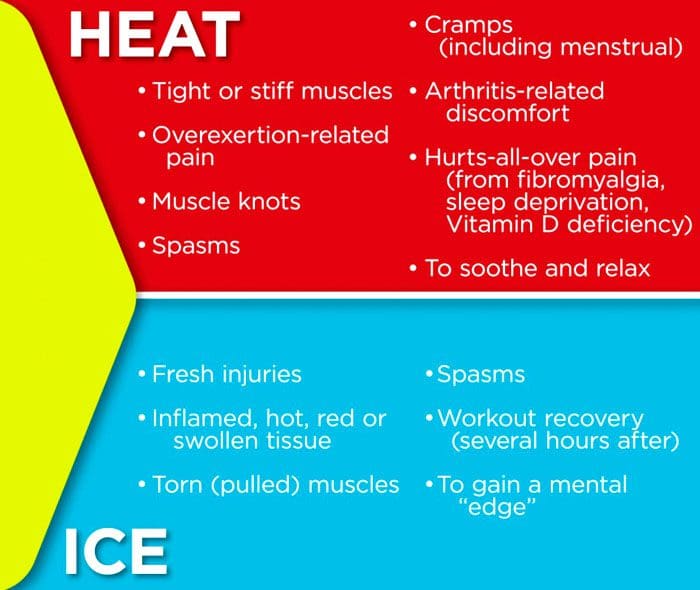
Most if not all of us have probably used heat and/or ice on a sprain, strain, or sore area of the body. Having a pinched nerve, however, has a different feeling than a sprain or strain. Chiropractic treatment for a pinched nerve is recommended, but if the pain isn’t too bad, then home care can work. Which is better for a pinched nerve, heat or ice? Both. Using heat and ice helps reduce swelling, increases blood flow to the area, and relaxes the muscles around the pinched nerve. The objective is to know when to use ice and/or heat.
Applying Heat on a Pinched Nerve
Applying heat on a pinched nerve is fine. The general guideline for a pinched nerve is to use heat only after the pain has subsided/reduced.
When pain presents or flares up, use ice before using heat.
Do not apply heat to the area directly after applying ice.
Wait 30 minutes to an hour.
Keep the heat on the affected area for 10 to 20 minutes at a time.
Take a minimum 30-minute break between sessions.
If the heat helps, make the heat moderate and use it on the area for an hour or more.
Extended heat therapy is beneficial for severe pain from a pinched nerve.
The equivalent is like soaking in a hot bath.
Heat for a Pinched Nerve Benefits
Heat soothes and relaxes both the muscles and the mind.
Heat increases healing abilities by circulating new blood to the injured/affected area, helping to flush toxins away.
Decreases tension and spasms in the muscles.
Increases the range of motion in the joints.
When Not To Use Heat Therapy
It can be dangerous for individuals with pre-existing conditions. Conditions include:
If home remedies don’t work, know when to consult a chiropractor.
Doctors of chiropractic specialize in pinched/compressed nerves. A chiropractor is trained in different techniques to relieve the pressure and release the nerve back to its proper position.
Body Composition
Peripheral Artery Disease
Peripheral artery disease or PAD is the narrowing of the arteries that carry blood away from the heart to the other areas of the body. What to know about PAD:
Peripheral artery disease risks increase with age.
Over half of affected individuals do not present with symptoms.
Around one-fourth of individuals with peripheral artery disease have diabetes mellitus.
Smokers have an increased risk of developing PAD.
This is why it’s important to monitor blood pressure.
References
Chandler, Anne, et al. “Using heat therapy for pain management. (clinical practice).” Nursing Standard, vol. 17, no. 9, 13 Nov. 2002, pp. 40+. Accessed 15 Sept. 2021.
Edzard Ernst, Veronika Fialka, Ice freezes pain? A review of the clinical effectiveness of analgesic cold therapy, Journal of Pain and Symptom Management, Volume 9, Issue 1, 1994, Pages 56-59, ISSN 0885-3924, https://doi.org/10.1016/0885-3924(94)90150-3.
Shu, Jun, and Gaetano Santulli. “Update on peripheral artery disease: Epidemiology and evidence-based facts.” Atherosclerosis vol. 275 (2018): 379-381. doi:10.1016/j.atherosclerosis.2018.05.033
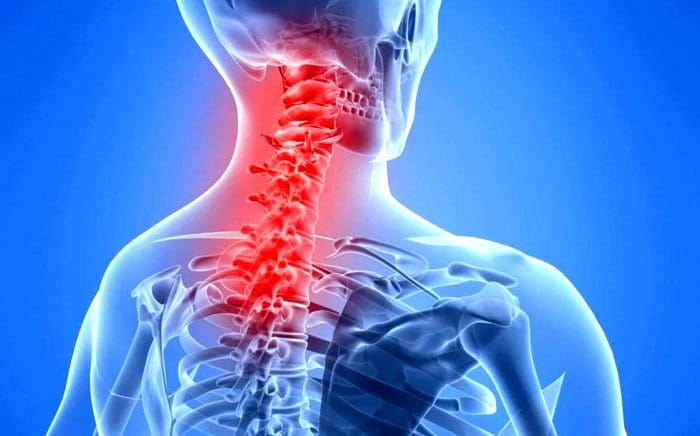
Many individuals will be looking up at the fireworks this 4th of July weekend. A word of caution when keeping the neck in one position for too long can cause neck discomfort and/or pain. Neck discomfort and pain can cause significant disruption with everyday activities. The neck is an area that is constantly in motion. Keeping it in one position for an extended period can cause damage/injury and spinal misalignment. Although neck pain often resolves on its own in a few days. However, it can lead to headaches or an inability to concentrate, affecting an individual’s quality of life. Here are some potential causes and remedies for decreasing neck discomfort and pain.
Keeping The Neck In One Position For Too Long Can Cause
Mechanical issues and imbalances in the upper spine, known as the cervical spine
Muscle tension
Muscle strain
Spinal misalignment
Poor posture
Sleeping problems
Injury or trauma to the neck from the force and weight
Chronic neck misalignment
If symptoms come on suddenly, are severe, or result in neurological issues like severe shooting pain, tingling, numbness, or sudden loss of arm strength, seek medical attention immediately.
Treatment
When the neck is strained or out of alignment, it disrupts nerve circulation integrity. Spinal misalignment is subtle in nature and can be difficult to detect without a professional examination. A chiropractor is trained to recognize any underlying issues to reset/realign the entire spine to optimal form. They will assess, guide, and treat the issue/s specific to the individual’s needs. Once the nerves are working uninhibited, a chiropractor can recommend neck exercises, stretches, and more to strengthen and prevent neck problems. When spinal alignment is restored, the body will begin to operate at full potential.
Healthy Body Composition
Meal Prep to Success
For individuals that want to eat less and change eating habits, change up the approach.
Meal prepping is a healthy habit that many have had success with because it helps achieve sustainable outcomes in weight loss. Every meal plan will vary for everyone.
First, individuals have different health goals.
Second, everyone has a different approach to their diet choices. For example, an individual might want to go low-carb and goes with the ketogenic diet. In comparison, some individuals are comfortable planning a week in advance and freezing labeled plastic containers.
Regardless of goals, dietary, or fitness preferences, a workable meal plan is recommended. The ultimate goal is to prevent feeling overwhelmed about planning the next healthy meal and resort to a junk food meal. To steer clear of unhealthy food choices and achieve a healthy body composition, here is a real-world tip to create and stick to a healthy meal plan.
Have a well-stocked fridge and pantry
Keeping to a meal plan is easier with a well-stocked fridge and pantry. Ensure to keep a list of essential groceries whenever going to the store to ensure plenty. This list of staples includes:
Having these ingredients ready to go means a healthy meal can be quickly put together when short on time.
Be realistic and make room for crazy days
You don’t have to come up with a seven-day weekly meal plan. It is important to change up the routine, so boredom doesn’t set in. Before planning and prepping several meals, double-check the calendar. Allow yourself some slack. This could be one or two lunches or dinners in a week just in case something comes up. If batch cooking, even schedule days for leftovers for that extra flexibility.
References
BMJ. 2017 Advances in the diagnosis and management of neck pain. Available at: https://pubmed.ncbi.nlm.nih.gov/28807894/
Mayo Clin Proc. 2015. Epidemiology, diagnosis, and treatment of neck pain. Available at: https://pubmed.ncbi.nlm.nih.gov/25659245/
Open Orthop J. 2016. A Qualitative Description of Chronic Neck Pain has Implications for Outcome Assessment and Classification. Available at: https://www.ncbi.nlm.nih.gov/pmc/articles/PMC5301418/
Phys Ther. 2018. A Mechanism-Based Approach to Physical Therapist Management of Pain. Available at: https://www.ncbi.nlm.nih.gov/pmc/articles/PMC6256939/
Traditional medical treatment for sciatica can sometimes be not as effective or ineffective for individuals, but nerve flossing is an option that could help. Flossing is not something individuals expect to hear from a medical professional treating their sciatica. However, when sciatica does not respond to common treatment methods like light physical activity or medications, a physician, chiropractor, or physical therapist might suggest combining traditional treatment with nerve flossing to alleviate sciatic nerve pain.
Nerve Flossing
The nerves can get jammed/stuck between the tissues and are not able to move, flex as they should. Nerve flossing involves performing gentle exercises to mobilize and stretch the nerves that help reduce irritation, inflammation, and improve mobility, especially in the hips. Nerve flossing is also known as:
The exercises can be done at home with no equipment and simple instructions. When used in combination with other treatments, like chiropractic and physical therapy the effectiveness is increased. Consult with a doctor or doctor of chiropractic for an accurate diagnosis, because what is causing sciatica helps significantly to determine the best treatment plan.
Guidelines
These are simple exercises but they are still exercises that require following safety guidelines to prevent injury or pain. These include:
The body will need time to adjust to new exercises so individuals should start slow
Only a few repetitions should be done at a time
Gradually increase
Stop if pain presents with any of the exercises and report the pain to a doctor or chiropractic physical therapist to see if there is a problem with how the exercises are being performed or if the exercises should be done later on after further treatment.
Focus on staying relaxed, as tensing up the muscles decreases the effectiveness
Breathing properly is key. Individuals unknowingly stop breathing when doing exercises, which is not healthy. Breathe deep in and out.
Nerve Exercises
True nerve flossing is an active movement with motion otherwise, it is just stretching.
Mobilizing floss
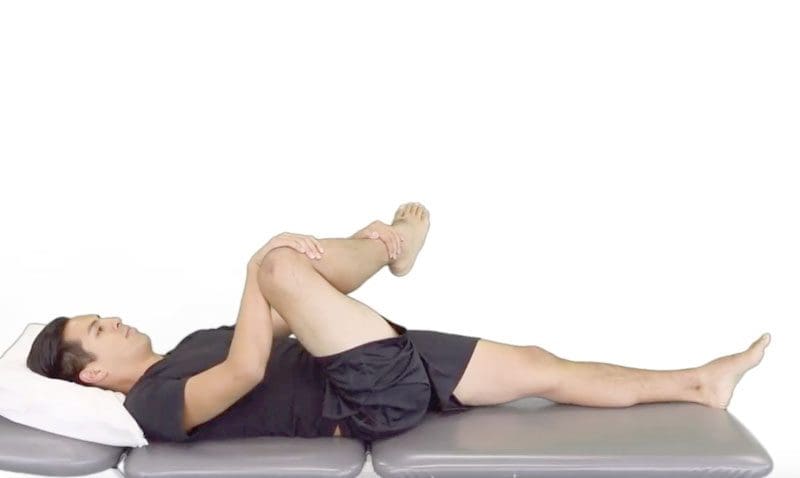
Lie on the floor with both knees bent, feet flat on the floor, and with space at hip-width
A flat pillow can be used for the head if it makes it more comfortable
Tuck the chin in and be sure to keep the upper body relaxed throughout the exercise
Pull the right leg in towards the chest
Keep holding behind the right knee
Slowly straighten the leg until there is a comfortable stretch
Slowly return the knee to the starting position
Breathe deeply, slowly, and try not to press the lower back into the floor
Lower the leg back towards the chest then lower it back to the starting position
Perform with the left leg
Complete five repetitions on each side
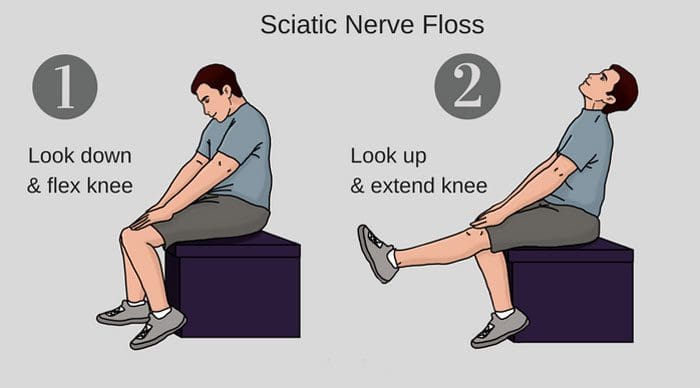
Seated nerve floss
Sitting upright in a chair, knees spaced hip-width, feet flat on the floor, and face forward
Extend the left leg
Flex the foot toward the body
Extend the head up and back looking up at the ceiling
Gently lower head and leg down, tucking the chin into the chest while bending the leg slightly backward
Extend and lower head at the same time when extending and lowering the leg
Perform 10 repetitions
Switch legs and repeat the exercise
Perform exercise 2–3 times every day
Hamstring floss
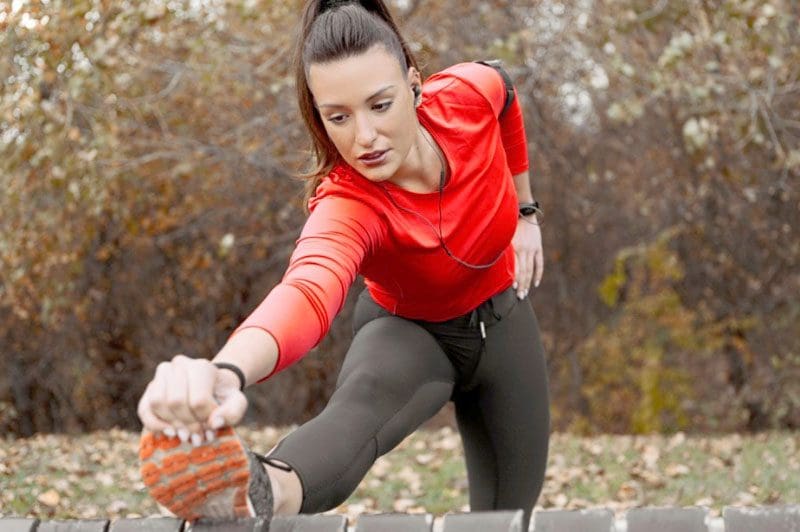
Stand up straight, raise the right leg onto a step or other stable surface while keeping the leg straight and toes pointed up
Keeping the back straight, tilt the head and neck forward until there is a slight pull/stretch in the back
Point the toe and bring the chin to the chest
Flex the foot and return
Repeat five times
Return to starting position
Switch legs
Repeat three sets on each leg
Exercise for Piriformis Syndrome
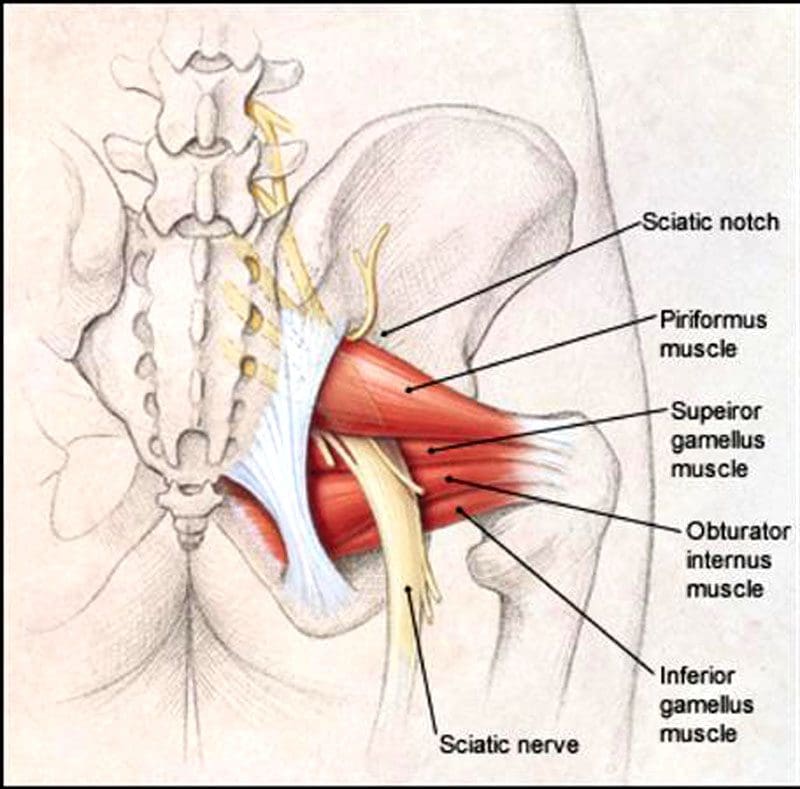
The piriformis muscle joins the base of the spine to the upper leg. Because this muscle is so close to the sciatic nerve, any type of irritation or compression of the sciatic nerve can also cause piriformis syndrome. Piriformis syndrome can cause radiating pain to the:
Hips
Buttocks
Hamstrings
Pain when sitting down or walking upstairs
Nerve flossing can also help relieve the symptoms increasing flexibility and range of motion.
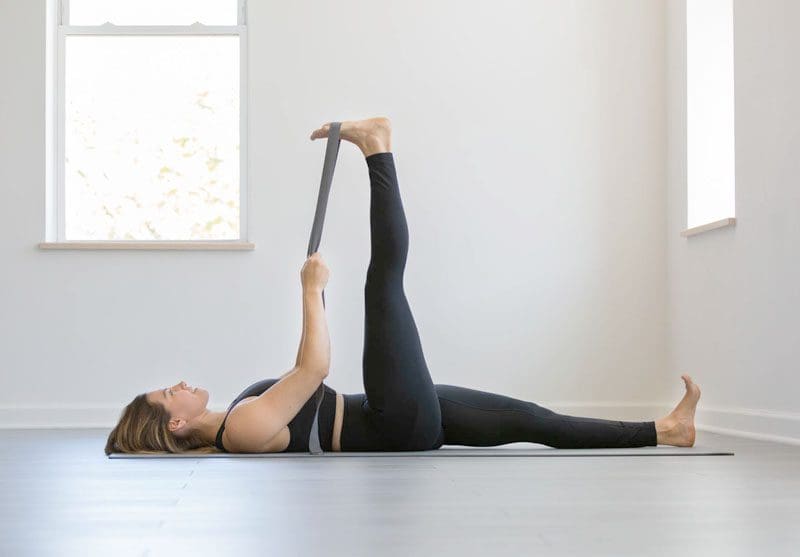
Mobilizing stretch
Lie flat on the floor on the back
Extend both legs
Bend the right leg and bring it up
Hold the right knee and foot
While holding, gently pull the leg across the right side of the body and up toward the right shoulder
Return to the original position
Repeat five times
Gently lower the right leg
Switch legs
Complete five repetitions on each side two to three times a day
Risks
These exercises are not about pushing the body to its limits or in a way that causes pain. They are designed to rehabilitate, stretch, and strengthen the sciatic nerve making risks for further injury minimal. If there are still concerns about the safety of nerve flossing exercises, check with a doctor, doctor of chiropractic, or physical therapist. If there is severe nerve damage or undiagnosed acute pain, nerve flossing could worsen symptoms.Nerve flossing for acute cases of nerve irritation is not recommended as this can cause nerve root aggravation with the stretching/pulling.
There is a difference between being tired after a long day working, playing, etc, and being tired on a regular daily basis. This can be referred to as Chronic Fatigue Syndrome, a clinical condition where fatigue lasts longer than 6 months. With acute, non-clinical fatigue, it is typical to experience many of the symptoms that hamper an individual's ability to function. Symptoms can include:
The information herein is not intended to replace a one-on-one relationship with a qualified health care professional, licensed physician, and is not medical advice. We encourage you to make your own health care decisions based on your research and partnership with a qualified health care professional. Our information scope is limited to chiropractic, musculoskeletal, physical medicines, wellness, sensitive health issues, functional medicine articles, topics, and discussions. We provide and present clinical collaboration with specialists from a wide array of disciplines. Each specialist is governed by their professional scope of practice and their jurisdiction of licensure. We use functional health & wellness protocols to treat and support care for the musculoskeletal system’s injuries or disorders. Our videos, posts, topics, subjects, and insights cover clinical matters, issues, and topics that relate to and support, directly or indirectly, our clinical scope of practice.* Our office has made a reasonable attempt to provide supportive citations and has identified the relevant research study or studies supporting our posts. We provide copies of supporting research studies available to regulatory boards and the public upon request. We understand that we cover matters that require an additional explanation of how it may assist in a particular care plan or treatment protocol; therefore, to further discuss the subject matter above, please feel free to ask Dr. Alex Jimenez or contact us at 915-850-0900.
Dr. Alex Jimenez DC, MSACP, CCST, IFMCP, CIFM, CTG* email: [email protected] phone: 915-850-0900 Licensed in Texas & New Mexico
References
Anikwe EE, Tella BA, Aiyegbusi AI, Chukwu SC: Influence of Nerve Flossing Technique on acute sciatica and hip range of motion, International Journal of Medicine and Biomedical Research, 4(2) May – August 2015, www.ijmbr.com
Jeong UC, Kim CY, Park YH, Hwang-Bo G, Nam CW. The effects of self-mobilization techniques for the sciatic nerves on physical functions and health of low back pain patients with lower limb radiating pain. J Phys Ther Sci. 2016;28(1):46-50. doi:10.1589/jpts.28.46
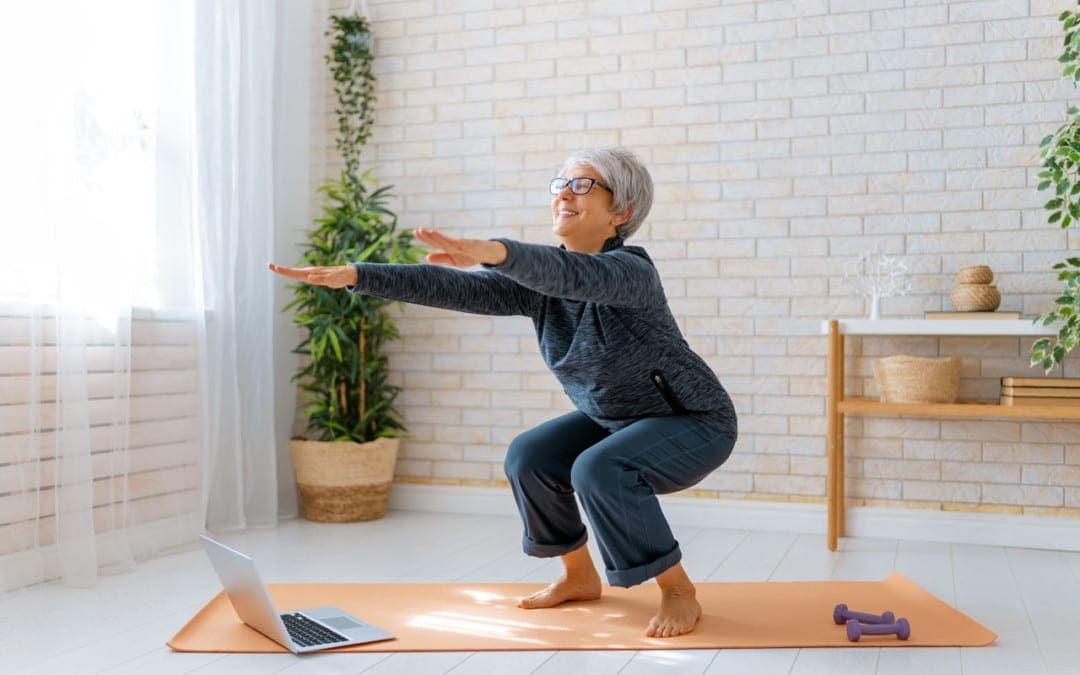
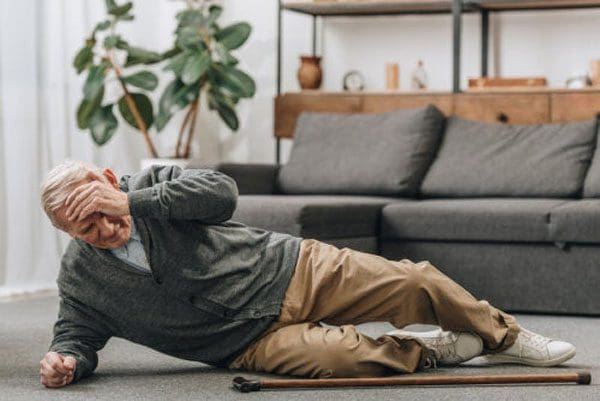
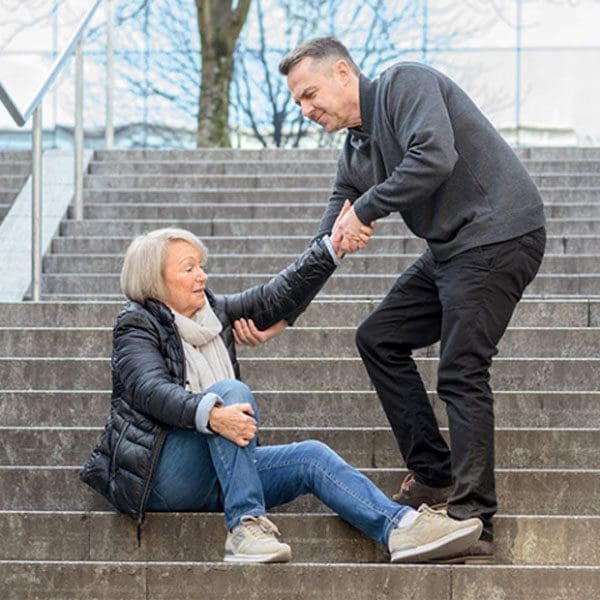
As individuals advance in age, the risk of falling starts to become a regular concern. An average of one in four adults over 65 suffers from a fall every year. Around twenty percent of falling accidents result in serious injury. However, experiencing one fall increases the risk of future falls significantly. The most common injuries sustained include:
Hip fracture
Head injury
These injuries usually necessitate hospitalization. Therefore minimizing the risks is important for increasing/enhancing an individual's quality of life and help minimize the financial burdens that can come with these types of accidents.
Risk Factors for Falling
Various factors can determine an increased risk of falling. If there are two or more at the same time, the risk goes up significantly. These factors include:
A physical therapist or chiropractor can assess the home for safety and possible tripping hazards
Regular vision check-ups at least every two years
Spinal Health
Restoring balance to the body will make the biggest difference in increasing overall health. However, pain, stiffness, and poor health can make getting started a difficult challenge. With the right chiropractic and physical therapy team, getting started does not have to be as challenging, with the transition being made as easily and as smooth as possible.
An essential building block for overall optimal health begins with spinal alignment. When the spine is misaligned it can lead to poor nerve circulation/energy. This slows down and interferes with the body's functions. This is often manifested with poor balance, weakness, and pain. Chiropractic spinal alignment addresses whole-body health. A chiropractic practitioner is specialized in non-invasively and systematically restoring not only the alignment of the spine but the entire body.
Chiropractic Health
Find a chiropractor and talk to them about any health concerns, including falls. A customized chiropractic adjustment treatment plan will be developed along with a fitness and stretching regimen, and dietary adjustments will significantly optimize health and help prevent falls.
Sports Injuries Chiropractic Treatment
Dr. Alex Jimenez�s Blog Post Disclaimer
The scope of our information is limited to chiropractic, musculoskeletal, physical medicines, wellness, and sensitive health issues and/or functional medicine articles, topics, and discussions. We use functional health & wellness protocols to treat and support care for injuries or disorders of the musculoskeletal system. Our posts, topics, subjects, and insights cover clinical matters, issues, and topics that relate and support directly or indirectly our clinical scope of practice.*
Our office has made a reasonable attempt to provide supportive citations and has identified the relevant research study or studies supporting our posts. We also make copies of supporting research studies available to the board and or the public upon request. We understand that we cover matters that require an additional explanation as to how it may assist in a particular care plan or treatment protocol; therefore, to further discuss the subject matter above, please feel free to ask Dr. Alex Jimenez or contact us at 915-850-0900. The provider(s) Licensed in Texas& New Mexico*
References
Hawk, Cheryl et al. �Pilot study of the effect of a limited and extended course of chiropractic care on balance, chronic pain, and dizziness in older adults.��Journal of manipulative and physiological therapeutics�vol. 32,6 (2009): 438-47. doi:10.1016/j.jmpt.2009.06.008
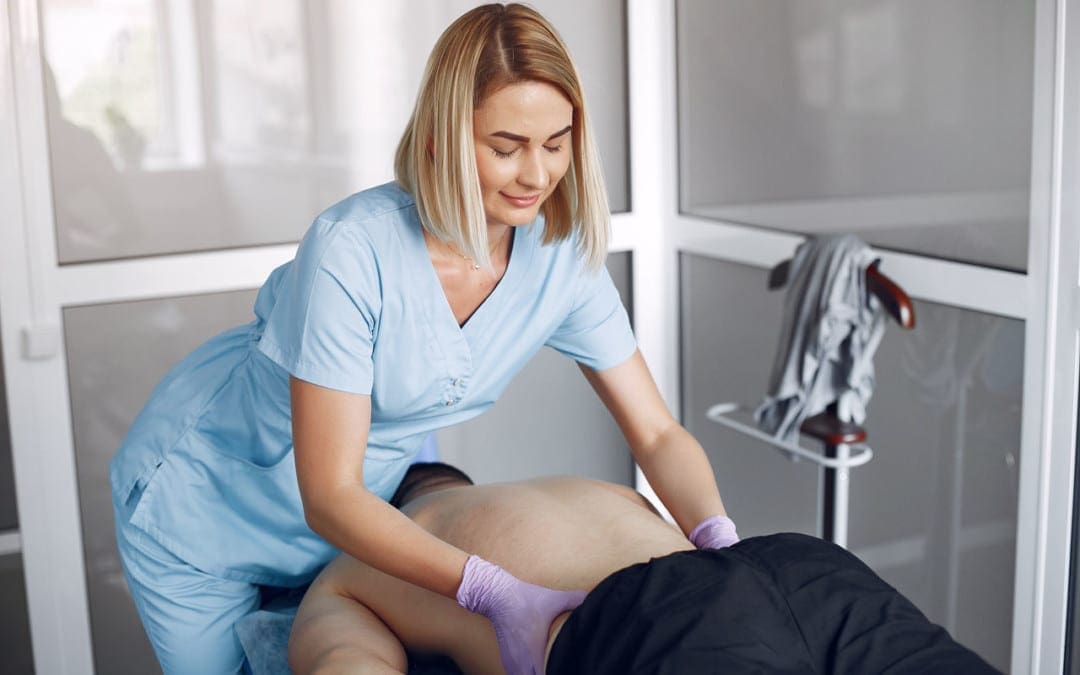
Massage therapists have come a long way in reducing pain and improving wellness. Back pain is one of the most common reasons people seek physical therapy, chiropractic care, and massage therapy. Back pain affects around three in four adults at some point in their lives. Research supports that massage is a bona fide back pain treatment option. This could be welcome news to those who prefer not to use medications or invasive approaches to managing back pain. The right massage therapists can make all the difference in achieving the benefits.
Massage goals
The first thing is to figure out what the goals are from the massage itself.
Are there acute back or neck issues that need to be addressed?
Looking for non-invasive therapy for long-term management of a chronic spinal condition?
Is the massage for performance enhancement? Could be athletic or to help perform daily activities easier.
Is it just wanting to relax?
Figuring out what it is to be achieved from the massage is essential to finding the right therapist.
Massage clinic, spa, health club, home
A massage can be performed in health clubs, spas, medical clinics, and at home. The location does not predict the massage type or specialty of the massage therapists, but it can be an indicator. Example: For athletic performance, a gym, or Crossfit center massage therapist is a good place to start. If massage is part of a back and neck pain management plan, look into the massage therapists at a medical clinic or a therapeutic massage clinic.
Ask for recommendations and ask questions
When searching, get recommendations, and ask plenty of questions to get all the information needed.
After a few prospects have been found then ask plenty of questions before making an appointment. This can help determine if this will be a long-term therapeutic relationship or a one-time visit. If looking to manage a serious spinal condition, the recommendation would be to find a therapist with more experience.
Massage education programs that are only entry-level do not provide in-depth education and practice for the many specific and complex spinal conditions. The real experience comes from years of practice along with continued education. This is how massage therapists are able to expand their clinical analysis and treatment development expertise. Get a sense of the massage therapist�s education and practice experience. This will help significantly when choosing a therapist best equipped.
Questions to ask potential therapists:
How long have you been practicing?
What�s your massage education?
Related education or practice experience? Many nurses or occupational therapists go on to become massage therapists. This means the information and knowledge from their nursing are now integrated into their massage practice.
How much-continued education have you gone through?
How many sessions do you offer?
What does the schedule look like? Think about scheduling when the therapist is more refreshed, like early in the workweek or their scheduled shift.
Do you have specialties with specific conditions or techniques?
Do you get massaged? If so, how often? Massage is a labor-intensive task. Therefore, it could be best to go to a therapist that keeps themselves healthy and balanced.
How long does it take for the initial appointment?
Do you have to book ahead?
If a therapist is booked don't get frustrated
If a long-term therapeutic relationship for the management of a spinal condition is the goal, then it may be worth waiting for. A therapist that has a long wait time for initial appointments means they have patients that see them regularly and that�s a very good sign of quality care. One possible option for individuals waiting for their appointment is to go to a local massage school to get treated. This option is less expensive, great for body maintenance, and provides opportunities for the training therapists.
Professionalism
A quality indicator is the professionalism of the therapist. This includes the extent to which they model the values of a health care professional valued by the patient. This is different for everyone. Questions to consider:
Are they on time?
Does the therapist cancel appointments?
Are you comfortable around them?
Do they listen?
Does the patient help in the development of a treatment plan?
Are they comfortable and engaged in the work?
Are they taking their massage career seriously?
Feeling at ease during the appointment/s is very important to massage success and relief. If anything about the therapist causes hesitation, look for another.
Massage Management
Massage is an excellent back pain treatment option that has gained popularity as a complement to pain management plans and as an alternative to invasive procedures. But, massage is not a cure-all. Often the cause of the back pain does not go away entirely. This is where massage therapy comes in as a pain management tool.
It's important to consider the condition�s duration and severity when evaluating the success of a session. This helps in planning the massage schedule. When there is a complex and established spinal condition be patient, as a 1-hour massage is not going to solve a 10-year back pain battle. However, with perseverance massage can safely and effectively help reduce pain and promote a better quality of life.
Chiropractic Massage Rehabilitation
Dr. Alex Jimenez�s Blog Post Disclaimer
The scope of our information is limited to chiropractic, musculoskeletal, physical medicines, wellness, and sensitive health issues and/or functional medicine articles, topics, and discussions. We use functional health & wellness protocols to treat and support care for injuries or disorders of the musculoskeletal system. Our posts, topics, subjects, and insights cover clinical matters, issues, and topics that relate and support directly or indirectly our clinical scope of practice.*
Our office has made a reasonable attempt to provide supportive citations and has identified the relevant research study or studies supporting our posts. We also make copies of supporting research studies available to the board and or the public upon request. We understand that we cover matters that require an additional explanation as to how it may assist in a particular care plan or treatment protocol; therefore, to further discuss the subject matter above, please feel free to ask Dr. Alex Jimenez or contact us at 915-850-0900. The provider(s) Licensed in Texas& New Mexico*
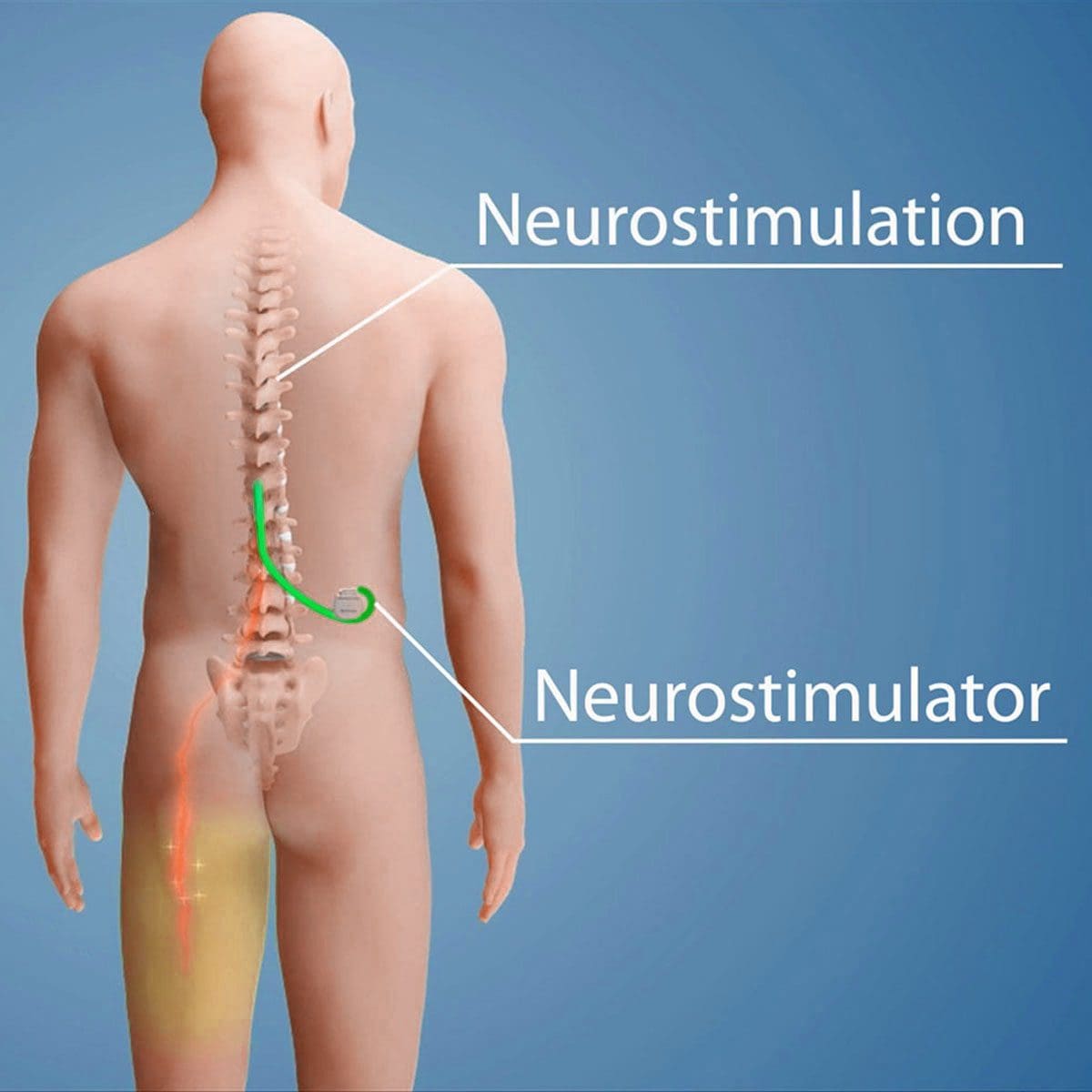
Spinal stimulation is a treatment option that could help bring relief from pain and improve the quality of life for individuals dealing with chronic pain, like low back, and leg pain. Spinal stimulation can help reduce and manage chronic pain that does not alleviate or reduce with physical therapy, pain medications, injections, and other non-surgical treatments/therapies. �
It is a form of neuromodulation that works by blocking pain signals that the nerves send out from reaching the brain. A spinal stimulator is a tiny device that is implanted underneath the skin. The device delivers a very low electrical impulse that masks/changes pain signals before they reach the brain.
�
A Spinal Stimulation System
�
Neurostimulator:
This is the entire device that is implanted and sends out electrical impulses through a lead wire to the nerves in the spine.
Lead:
The thin wire that delivers the electrical impulses from the neurostimulator.
Remote control:
This turns on/off the stimulator and increases or decreases the amount of stimulation.
Charger:
Stimulators are rechargeable and normally require recharging about one hour every two weeks.
�
Spinal Stimulator Types:
�
Traditional stimulators
These produce a gentle ringing/tingling sensation that masks the pain.
Burst stimulators
These send out random interval bursts of electrical impulses designed to copy the way the body sends out nerve impulses.
High-frequency stimulators
These reduce pain without generating tingling sensations. �
�
Types of Pain Spinal Stimulation Treats
Spinal stimulation is approved by the U.S. FDA to treat chronic back and leg pain, including pain that doesn't go away after back surgery known as failed back surgery syndrome. Chronic neuropathic back and leg pain are the most common types that stimulation treats. This means back or leg pain caused by nerve damage from:
Auto accident
Injury - personal, sports, work
Disease
Acute pain is like stepping on a sharp piece of glass, where the pain serves as protection letting you know something is wrong and not to continue. Whereas chronic neuropathic pain lasts for 3 months or more and does not help protect the body. �
�
Spinal stimulation is also used to treat complex regional pain syndrome or CRPS. This is a rare condition that affects the arms/hands or legs/feet and is believed to be caused by damage or malfunction of the nervous system. It is also used in treating peripheral neuropathic pain. This is damage to the nerves outside of the spinal cord often in the hands/feet that is caused by an:
Infection
Trauma
Surgery
Diabetes
Other unknown causes
�
Appropriate Treatment
Spinal cord stimulation should not be used in patients that are pregnant, unable to operate the stimulation system, went through a failed trial of spinal stimulation, and are at risk for surgical complications. The decision to use spinal stimulation is based on an individual's needs and risks. Talk to a doctor, spine specialist, chiropractor to see if spinal stimulation could be an option.
�
Benefits and Risks
The effects of stimulation are different for everyone. Therefore, it is important to understand that spinal stimulation can help reduce pain, but not completely eliminate it. �
�
The Benefits of Spinal Cord Stimulation
In addition to reducing pain, other benefits of spinal stimulation include:
Better sleep
Improved body function
Increased activity
Improved mobility
Reduced opioid medication/s use
Less need for other types of pain meds
Reduced dependence on braces/bracing
�
Risks
During the implantation, there is a risk for:
Bleeding
Infection
Pain at the site of incision
Nerve damage
Rarely paralysis
� For some individuals, scar tissue can build up over the electrode, which can block the stimulator's electrical impulse. The lead wire could move or shift out of position. This could lead to impulses being sent to the wrong location. The device itself could shift under the skin causing pain, making it hard to re-charge or communicate with the remote.
There is a risk that the lead wire could detach or break off causing a malfunction and require a replacement. Also, individuals could respond well to the stimulation at first, but later on, they develop a tolerance, and so the therapy no longer has the same impact and the pain could get worse because the nerves stop responding.
�
Take Precautions
Discuss with a doctor, spine specialist, or chiropractor what you can and can't do after the stimulator is implanted and activated. Here are a few precautions:
Do not drive or operate heavy equipment when the stimulator is active.
Stimulation systems could set off metal detectors, which could require manual screening.
MRIs, electrocautery, diathermy, defibrillators, and cardiac pacemakers could have a negative interaction with certain types of stimulators. This could result in injury or damage to the spinal stimulator. Talk to your doctor to determine if a spinal stimulator is a treatment option that will work for you.
�
Weight Loss Techniques - Push Fitness Center
Dr. Alex Jimenez�s Blog Post Disclaimer
The scope of our information is limited to chiropractic, musculoskeletal, physical medicines, wellness, and sensitive health issues and/or functional medicine articles, topics, and discussions. We use functional health & wellness protocols to treat and support care for injuries or disorders of the musculoskeletal system. Our posts, topics, subjects, and insights cover clinical matters, issues, and topics that relate and support directly or indirectly our clinical scope of practice.*
Our office has made a reasonable attempt to provide supportive citations and has identified the relevant research study or studies supporting our posts. We also make copies of supporting research studies available to the board and or the public upon request. We understand that we cover matters that require an additional explanation as to how it may assist in a particular care plan or treatment protocol; therefore, to further discuss the subject matter above, please feel free to ask Dr. Alex Jimenez or contact us at�915-850-0900. The provider(s) Licensed in Texas& New Mexico
Being able to hike with back pain is a blessing for individuals that love being outdoors. Enjoying nature and being able to get away from all the stress and tension is something we all can use. Hiking is an excellent physical activity that cleanses the mind, body, and spirit. Not to mention the great exercise benefits that come with it.
The time spent going up and down hills following trails, etc. can feel unbelievable until pain symptoms start to present. Those with back pain know and understand that there are certain activities that can kick in the pain. If hiking has been stopped in its tracks because of back pain, or, if just about to start hiking for the first time, here is some advice to reduce and alleviate back pain during and after a hiking session. �
�
Hike The Right Way
Dr. Alex Jimenez D.C. is a spine injury specialist at Injury Medical Chiropractic Clinic. He believes at its core, hiking is very beneficial to individuals with back pain.
Hiking is a great activity for those with back pain because it increases muscular circulation improving soft tissue flexibility in the spine along with other muscle groups. Hiking helps strengthen spinal support muscles, improves flexibility and posture. The result is minimized pain on all levels. Walking on different uneven terrain/s contributes to improved balance and synergistic muscle activity of the back, legs, and core, and the small muscles of the feet. However, there is an incorrect way to hike with back pain.
If done incorrectly hiking can have a negative detrimental impact on the body. Proper technique and form need to be followed. For example, a backpack that is improperly worn or not correctly sized for the body type could lead to imbalance. This could lead to improper form and injuries. Poor posture during a hike places added pressure on the:
Joints
Spine
Ligaments
Tendons
This could easily result in muscle/tendon injuries. With some preparation, a few tips and being aware of your surroundings will help you to become a hiking pro in no time, with reduced, improved, and possibly no back pain after a while of doing this great activity. Here are some words of wisdom when it comes to hiking and back pain.
�
Proper Backpack
A poor-fitting backpack will easily lead to increased back pain and even other ailments like shoulder and neck pain issues. A proper backpack should have the straps around the waist and across the back to evenly distribute the weight. Visit a sports/outdoor store to get correctly fitted for a backpack.
�
Stretching Out
Getting and staying loose before and after a hike is very important. Before a hike improves circulation and loosens the muscles, in turn, reducing the stress on the joints. Stretching after a hike reduces muscle fatigue and soreness that can amplify and exacerbate back pain along with any other body soreness.
�
Trekking Poles
Using trekking poles can be beneficial and quite helpful for individuals with back pain. Trekking poles can help avoid poor posture by keeping the body in an upright position. This helps reduce back pain experienced during and after a hike. �
�
Body Care
Hiking successfully means that the body needs to be fully functional and fueled before even stepping on the trail. Fueling the body with nutritious snacks like bananas, dried fruit, and trail mix will keep the body's energy supply going. And above all stay hydrated with plenty of water. Also, focus the workout on developing upper body and core strength to prevent injury.
Don't forget to listen to what your body is telling you. Individuals with back pain need to listen to their bodies making sure not to overdo it, as well as, with any type of exercise, to adjust to your specific pain tolerance level. If unable to limit distance or time, then make sure to take frequent breaks. This will help avoid placing unnecessary strain on the spine. �
�
Recovery Time
The body needs a proper amount of time between hikes to recover properly. If there is still soreness and pain, WAIT until the body is no longer sorebefore trekking to the next trail. The amount a person can hike depends on the individual, overall strength, and how fast their body recovers between hikes. It is different for everyone.
�
Assistance
As the journey commences, whether going for pain-free or less painful hiking, remember that it's ok to have others help get you there. Getting help from a veteran hiker will definitely benefit proper form and posture. Hiking with an experienced partner can also help avoid poor hiking techniques that can worsen back pain or even create new injuries. �
�
Consult a local chiropractor, or spine, and pain specialist if you are unsure about hiking and are experiencing ongoing back pain. They will help develop a customized/personalized treatment plan with the focus on decreasing and controlling the pain and improving the body's overall function to be able to participate in physical recreational activities.
IFM's Find A Practitioner tool is the largest referral network in Functional Medicine, created to help patients locate Functional Medicine practitioners anywhere in the world. IFM Certified Practitioners are listed first in the search results, given their extensive education in Functional Medicine