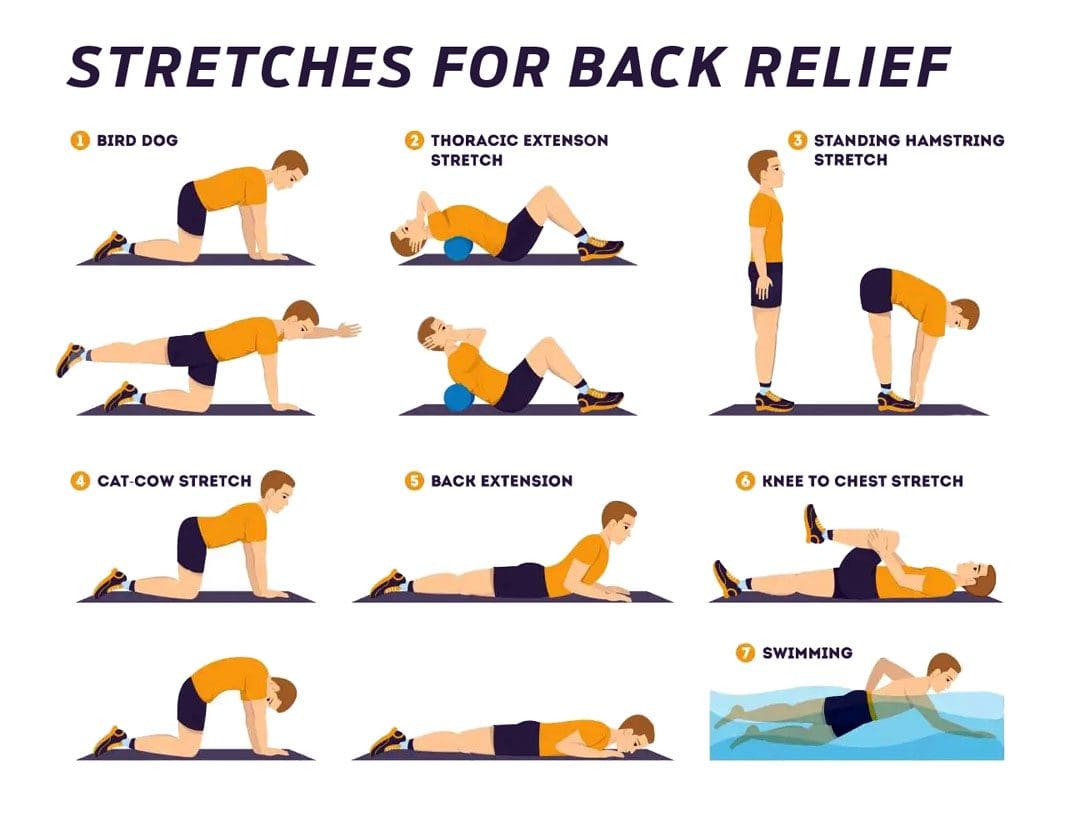
Stretching Objective: The body needs to be flexible to maintain a full range of motion. Stretching keeps the muscles supple, strong, and healthy; without it, the muscles shorten and become stiff and tight. Then, when the muscles are needed, they are weak and unable to extend fully. This increases the risk of joint pain, strains, injuries, and muscle damage. For example, sitting in a chair for a long time results in tight glute muscles and hamstrings, which leads to back discomfort symptoms and inhibits walking. Injury Medical Chiropractic and Functional Medicine Clinic can help individuals develop a personalized stretching program to maintain smooth mobility, flexibility, and function.
Stretching Objective
Benefits
The body needs to be flexible to maintain mobility, balance, and independence. The benefits of regularly stretching include:
When the muscles are stretched, so are the muscle spindles. The spindle records the change in length and speed and transmits the signals through the spinal cord, which conveys the information. This triggers the stretch reflex, which tries to resist the change by causing the stretched muscle to contract. Muscle spindle function helps maintain muscle tone and protects the body from injury. One of the reasons for holding a stretch for a specific amount of time is because, as the muscle stays in a stretched position, the spindle acclimates to the new condition and reduces its resistance signaling, gradually training the stretch receptors to allow greater lengthening of the muscles.
Chiropractic Stretch Training
However, stretching once won’t generate maximum flexibility. Tight muscles may have taken months or years to develop; therefore, it will take time to achieve flexibility and must be continually worked on to maintain it. Chiropractors and physical therapists are body movement experts and can assess individual muscle strength and develop a customized stretching program.
Muscle Spindle Activation
References
Bhattacharyya, Kalyan B. “The stretch reflex and the contributions of C David Marsden.” Annals of Indian Academy of Neurology vol. 20,1 (2017): 1-4. doi:10.4103/0972-2327.199906
Behm, David G et al. “Acute effects of muscle stretching on physical performance, range of motion, and injury incidence in healthy active individuals: a systematic review.” Applied physiology, nutrition, and metabolism = Physiologie applique, nutrition et metabolism vol. 41,1 (2016): 1-11. doi:10.1139/apnm-2015-0235
Berg, K. Stretching fundamentals. In: Prescriptive Stretching. 2nd ed. Kindle edition. Human Kinetics; 2020.
da Costa, Bruno R, and Edgar Ramos Vieira. “Stretching to reduce work-related musculoskeletal disorders: a systematic review.” Journal of rehabilitation medicine vol. 40,5 (2008): 321-8. doi:10.2340/16501977-0204
Page, Phil. “Current concepts in muscle stretching for exercise and rehabilitation.” International journal of sports physical therapy vol. 7,1 (2012): 109-19.
Witvrouw, Erik, et al. “Stretching and injury prevention: an obscure relationship.” Sports medicine (Auckland, N.Z.) vol. 34,7 (2004): 443-9. doi:10.2165/00007256-200434070-00003
Chiropractic can enhance the effectiveness of an exercise program. Chiropractic works on the neuromusculoskeletal system, which comprises the nervous, muscular, and skeletal systems. It produces an indirect effect on the immune system, involving the body’s processes resulting from exercise and muscle development. Most individuals are familiar with the benefits of regular exercise and physical activity. Regular physical activity and exercise:
Increases circulation
Improves strength
Increases immune system function
Produces brain-boosting endorphins and chemicals
Improves mood
Increase muscle mass
Contributes to enhanced flexibility and mobility
Exercise-boosting practices can multiply the effectiveness of a workout program. Exercise-enhancing methods that are well known include:
Incorporating rest days
Staying hydrated
Consistent and high-quality sleep
Utilizing supplements that enhance the body’s ability to produce and sustain muscle.
A chiropractor can develop a personalized treatment plan to support and enhance an individual’s workout/exercise program. This plan can include specific interventions to improve alignment or maintain muscle relaxation and prescribed stretches and movements to decrease the strain from an exercise regimen.
Nervous System
Chiropractic helps to balance the nervous system. Treatment allows pressure to be removed from compressed, bruised, and severed nerves. Chiropractic decreases and eliminates pain originating from inflamed muscles, joints, and tissues. When it comes to exercising, nerve pain usually originates from vigorous movement. Swelling and inflammation in the body can cause nerves to become inflamed or compressed. Misalignment in the spinal structure and joints can occur during strenuous exercise, particularly when weight resistance is involved. It can also constrict/pinch nerves, contributing to sciatic pain, which originates in the lower back and spreads down the gluteal muscles and back of the legs. Chiropractic can help:
Reduce pain and discomfort
Improve physical responsiveness
Decrease inflammation
Improve immune function
Muscular System
The muscular system is interconnected with the nervous and skeletal systems. Manual chiropractic manipulation helps to:
Reduce pain in inflamed muscles that have been utilized during exercise
Release tense and strained muscles
Remove muscular knots
Accelerate muscle repair
Improve exercise performance
Skeletal System
The skeletal system is the foundation for all physical movements and activities. It plays a role in physical activity/exercise, recovery, and the development of strength and musculature. During exercise routines, the joints can become misaligned, especially with weight-bearing or lifting activities. Chiropractic for the skeletal system can:
Rebalance the system
Realign bones and joints
Decrease muscular strain
Improve posture and form
Reduce and eliminate pain in the knees, wrists, and shoulders
Increase the body’s capacity for taking on additional weight healthfully
Keep The Chiropractor Informed
To receive enhanced exercise and performance-related benefits from chiropractic care, individuals must keep their chiropractor informed of goals and style of physical activity. The more the chiropractor knows about the types of exercises, the more they will provide a customized treatment plan for an individual’s specific needs. Any injury or strain experienced during an exercise session or a specific part of the body seems to be recovering at a slower rate than the rest of the body, inform the chiropractor. They can survey posture, stance, determine imbalances, and discover other body areas that may be over-straining to compensate.
Time Sessions Appropriately
Depending on the type of physical activity and exercises, individuals may be advised to seek care on rest days or the same days of the workout. Discuss with the chiropractor what days of the week are best for treatment and before or after workouts.
Health Goals
Movement and exercise practices are unique and vary with each individual. Individuals have different goals for their regimens that range from:
Increasing flexibility and agility
Building strength, endurance, and muscle mass.
Identify health goals and share them with the chiropractor. Depending on the purpose of the exercise routine, treatment may vary to support and enhance specific objectives.
Body Composition
Improve Insulin Sensitivity
When consuming carbohydrates, it is broken down into sugar. The body needs a certain amount of sugar to function. However, cellular damage occurs if the levels become too high for too long, like in diabetes. Insulin’s role is to guide excess sugar – glucose into the safety of the cells. However, more individuals are experiencing high blood insulin levels, called hyperinsulinemia. It’s dangerous to let glucose levels remain elevated, which is why more insulin is produced to bring the blood sugar down. After a time, constant hyperinsulinemia results in a condition called insulin resistance, where the cells become resistant to the effects of insulin and less effective.
Insulin Sensitivity and Weight Loss
A high insulin level in the blood can trigger weight gain and make it difficult to shed excess fat. Research shows that high insulin:
Erion, Karel A, and Barbara E Corkey. “Hyperinsulinemia: a Cause of Obesity?.” Current obesity reports vol. 6,2 (2017): 178-186. doi:10.1007/s13679-017-0261-z
Hawk, Cheryl et al. “Best Practices for Chiropractic Management of Patients with Chronic Musculoskeletal Pain: A Clinical Practice Guideline.” Journal of alternative and complementary medicine (New York, N.Y.) vol. 26,10 (2020): 884-901. doi:10.1089/acm.2020.0181
Hoogvliet, Peter et al. “Does the effectiveness of exercise therapy and mobilization techniques offer guidance for the treatment of lateral and medial epicondylitis? A systematic review.” British journal of sports medicine vol. 47,17 (2013): 1112-9. doi:10.1136/bjsports-2012-091990
Peluso, Marco Aurélio Monteiro, and Laura Helena Silveira Guerra de Andrade. “Physical activity and mental health: the association between exercise and mood.” Clinics (Sao Paulo, Brazil) vol. 60,1 (2005): 61-70. doi:10.1590/s1807-59322005000100012
Strength training: The Centers for Disease Control have estimated that around 16% of six to nineteen-year-olds in the US are overweight or obese. This comes from inactivity, no movement, exercise, and poor diet. On the other end, young athletes search for ways to gain an edge, often falling victim to steroids and all of the negative effects they have.
This is where strength training comes in. This could be an answer to getting kids off the couch, moving, and offers a healthy alternative to the young athletes looking for that competitive edge. Fitness experts, doctors, health coaches, and parents say absolutely.
The focus for children in strength training is not to bulk up, as this is not weightlifting, powerlifting, or bodybuilding. Fitness experts agree that these types of training regimens are not healthy or safe for children. The goal is to:
Added benefits of strength training can help young athletes improve performance through increased endurance.
Training Guidelines
It is fundamental to find a program that is safe and successful for children. Parents want a program designed specifically for kidssupervised by a fitness professional with child experience, and most of all, it is fun. For strength training, there is not a minimum age; however, the kids should understand and follow directions.
Before starting a child on any new fitness program, check with their doctor or healthcare provider.
A training program should include:
A session should start with a 5-10 minute warm-up exercise/s like stretching and light aerobics.
Every session should end with a cool-down combined with stretching and relaxation.
Kids should not immediately be using weights until proper form and technique are learned.
Kids should start with their own body weight, bands, or a bar with no weight.
Using 6-8 different exercises that address all the muscle groups, begin with 8-15 repetitions.
Each exercise should be done with a complete follow-through of the full range of motion.
If the repetitions are too much with a specific weight, reduce the weight.
Repetitions and sets should gradually increase over time to maintain the intensity of the training.
Add more weight only when the child displays the proper form and can easily do at least 10 reps.
Workouts should be 20 to 30 minutes long, 2 to 3 times per week, to get the most benefit.
Make sure to rest a day between each workout day.
Safety
Strength training was not always considered an appropriate exercise for kids. Doctors and fitness professionals believed that it was unsafe for a child's growing body because of the added pressure on growth plates or the cartilage that has not fully turned into solid bone. However, experts now know that kids can safely participate in a strength training program with proper technique and supervision.
As with any exercise/fitness regiment, safety measures need to be in place along with heightened supervision. Unfortunately, most injuries happen when kids are not supervised, not using proper techniques, or from trying to lift too much weight. Here are some safety precautions to remember:
Learning new exercises should be done under the supervision of a trainer/instructor, making sure proper technique and form are used.
Smooth, controlled motions should be the goal.
Controlled breathing and not holding their breath needs to be taught
Proper technique will help avoid injuries
The kids' progress should be monitored
Have the children record the exercises they have done, how many reps, and the amount of weight/resistance.
If enrolled in a strength training class, a good ratio is one instructor per 10 students. With this ratio, the kids can receive proper instruction and supervision.
Kids should train in a hazard-free, well-lit, and properly ventilated facility.
Make sure the kids drink plenty of water during and after the workout
Fitness trainers/instructors will see to it that there are frequent rest and rehydration breaks
Keep in mind
In a strength training program for children, there should be no competitive drive. Instead, the focus should be on participation, learning the movements, and positive reinforcement. Set realistic goals and expectations for the child to understand that it will take time to learn these new skills.
Remember that kids do not increase muscle size until after puberty. Please make sure the kids enjoy the strength training sessions and that they are having fun. Keep in mind that kids can become easily bored. Therefore, use various exercises and routines, keeping them excited and wanting to learn and do more.
Healthy Habits
Getting kids interested in fitness early on can help establish a life-long habit of wanting to be and stay healthy. This includes a balanced diet, plenty of rest, and regular exercise. When done correctly, strength training can be a fun and highly beneficial activity.
Heard about fasting? It is defined as, "abstinence from eating." What this diet has the potential for in medical benefits has increased quite substantially � both in animal and medical research. Inventor of the Fast Mimicking Diet (FMD) Dr. Longo is recognized as a leading expert on longevity and has done intense work in biochemical pathways. In other words the way cells and we as humans age. This diet can change all that!
What's all the hype about the FMD?
After years of experimenting with FMD in animal models and showing its benefits on metabolism and life span, Dr. Longo�s team analyzed the effects in human clinical trials. One hundred healthy subjects participated�with half of them following the Prolon FMD five days a month for three months, while the other half ate their regular diet.
Increase in stem cell production, (this is a marker for cell regeneration).
This diet works by shifting the body�s metabolism and enhancing the power of cells to help protect against chronic diseases like type 2 diabetes and cardiovascular disease. This idea is beginning to catch on: according to a 2018 survey from the International Food Information Council Foundation, intermittent fasting was last year�s most popular diet. Dr. Longo is now studying if a fast-mimicking diet can improve cancer �outcomes and help prevent the disease.
Dr. Longo addresses the point that the more healthy food an individual chooses, the more one can eat. Individuals can still eat fats like pesto, and starches like pasta. The benefits happen when the individual loads up on produce. This brings in more nutrients, more fiber and the feeling of being more full. Dr. Longo is also working on the ability to train an individual's body to eat within a 12-hour day, which acts as a quick fast overnight.
Los Angeles, Calif.�July 31, 2018�On July 10,�L-Nutra, Inc.�became the first company to market a product that has been granted a patent by the�United States Patent and Trademark Office (USPTO)�for optimizing human healthspan, the length of time that a person is healthy. This follows a landmark patent issued in 2016 for treating diabetes and multiple patents previously issued for cancer treatment, but this is the first patented protocol to address health and wellness prior to the onset of disease. The patent is for the Fasting Mimicking Diet� (FMD�), discovered and clinically tested by the�laboratory of Valter Longo�and�Keck Hospital�at the University of Southern California (USC), a nutrition technology that is proven to reduce markers for age-related disease as well as promote tissue regeneration. The Fasting Mimicking Diet is one of few nutri-technologies that has undergone extensive scientific research and clinical trials at major universities across the world. Last year, a landmark human trial published in�Science Translational Medicine�demonstrated that ProLon is clinically proven to reduce markers of the body�s aging process, optimize weight, and maintain healthy levels of multiple metabolic markers such as cholesterol, triglyceride, glucose, and CRP (an inflammatory marker). The secret to the Fasting Mimicking Diet relies on the body�s activation of the epigenetic, metabolic, and cellular reprogramming to survive prolonged periods of fasting. Fasting Mimicking Diet Is Awarded First-Ever Patent for Optimizing Human Healthspan
Interested?
Information
Diet Decreases Calorie Intake to 1,100 on Day One
Then Around 800 the Next Four Days
The program is rich in nuts � so not for those with a nut allergy
Nutrients are crucial and are plant-based whole foods:
Nuts
Olives�(note if don't like olives)
Teas
Soup mixes - which are 80% fat, 10% protein, and 10% carbohydrate.
During the five days fast:
Exercise and Alcohol are prohibited
Coffee is limited to zero or one cup a day
How to Use ProLon FMD
Ready?
What to know. To achieve the published results, one will possibly need to go through three cycles at specific times, where they don't conflict with family/social events like birthdays, weddings, quinceaneras, etc. After three months some will choose to do the program monthly or every other month for long-term health.
Increased Brain Power Study
Preliminary studies with FMD showed remarkable brain changes
FMD fed to mice four days in a row twice a month:
Extended longevity
Lowered visceral fat
Reduced cancer incidence and
Skin Lesions
Rejuvenated the immune system
Slowed down bone density loss
In old mice, FMD cycles promoted:
Brain growth
Demonstrate improved cognitive performance
It is possible that the best brains may result from the least caloric intake for five days a month
IFM's Find A Practitioner tool is the largest referral network in Functional Medicine, created to help patients locate Functional Medicine practitioners anywhere in the world. IFM Certified Practitioners are listed first in the search results, given their extensive education in Functional Medicine


 Stretching Objective