Join the body-strengthening movement for a healthier you. Discover how Pilates can transform your body and fitness level.
Pilates Power: Easing Inflammation with Strength, Chiropractic Care, and Daily Wellness Tips
Hey, health nuts! Think of your body as a busy town where inflammation acts like an unexpected roadblock. It’s important for signaling problems, but it can be a pain when it stops everything. Now, imagine Pilates, the graceful exercise system that came from a dancer’s idea, swooping in like a hero to clear the way and restore smooth flow. When you combine it with exercises that build strength and chiropractic care, you have a powerful trio that can help with musculoskeletal problems and get you on the road to better health. In this in-depth guide (more than 5,000 words of clear, interesting information), we’ll explore how Pilates and strength training can help with inflammation, environmental stress, and work with chiropractic knowledge to keep you moving without pain. Dr. Alexander Jimenez, DC, APRN, FNP-BC, a top doctor in El Paso, will help us with some clinical advice. We’ll also add some humor to make it more fun. This is your guide to feeling great, whether you’re dealing with back pain or healing from an injury. You don’t need any fancy equipment, but a mat can help!
We’ll make it easy enough for a high school student to understand, with useful tips and facts backed by science. Pilates and chiropractic care could be the answer to your problems if inflammation is making you slow down. Let’s get going!
What Is Inflammation and Why Does It Matter?
Let’s go over the basics first. When something goes wrong, inflammation is like a fire alarm going off. It protects your body. When you hurt your wrist or get sick, your immune system sends white blood cells, chemicals, and fluids to the area, which can make it red, swollen, warm, or painful (Cleveland Clinic, n.d.). This is a clutch move for a healthy body: it traps germs, clears away damaged tissue, and starts healing while keeping everything in balance, which is called homeostasis (Yale Medicine, 2020).
Think about this: Carrying heavy boxes puts a lot of stress on your lower back. Inflammation comes in quickly, bringing blood full of nutrients to fix the damage. Injuries might last longer than a bad pop song stuck in your head, and infections could take over. It controls your immune system, which helps you fight off germs, and it even helps your muscles heal after a workout—your body saying, “Let’s get stronger!” (Vanderbilt Medicine, 2015). But if it stays too long, it can cause serious problems like arthritis, heart disease, or chronic pain (Yale Medicine, 2022). So, inflammation is like your body’s security guard. It can handle threats well, but it can also cause problems if it starts acting up.
Why does inflammation make you swell? Your body is having a “stop the invaders” block party, and it’s getting puffy, but someone has to clean up afterward!
Acute vs. Chronic Inflammation: What’s the Difference?
Let’s split it up into two parts: acute and chronic inflammation. Acute inflammation is the quick responder, like a superhero rushing in to save the day and then leaving after a few hours or days (Harvard Health, 2020). A pulled muscle hurts, swells, and then goes back to normal. It’s your body’s way of getting blood and immune cells to the site of injury faster.
Chronic inflammation, on the other hand, is like an unwanted guest who stays too long, simmering for months or years and possibly hurting tissues (Cleveland Clinic, n.d.). Autoimmune disorders, persistent irritants, or unresolved acute injuries can all cause chronic neck pain or sciatica (NCBI, 2023).
The main differences are that acute conditions are short, helpful, and temporary, while chronic conditions are long, harmful, and persistent. Acute helps repair by improving blood flow and cleaning up (Physiopedia, n.d.). Chronic conditions drain energy, cause constant pain, and raise the risk of getting sick (Encompass Health, 2021). Time to laugh: Acute inflammation is like a quick cameo in a big movie. It only lasts for one scene. Long-term? It’s the reboot that no one wanted, and it just keeps going on and on!
This knowledge shapes recovery: ice for sudden flare-ups and holistic methods like Pilates for long-term battles.
Environmental Factors Fueling Inflammation and Musculoskeletal Issues
Your environment isn’t just where you live; it’s also a significant factor in inflammation and musculoskeletal problems. Pollution, diet, stress, and daily habits can all make things worse (Nature Medicine, 2019). Polluted air introduces harmful chemicals into your body, which can cause oxidative stress and inflammation, making your muscles tight or putting stress on your joints (The University of Queensland, n.d.). It’s like your body is fighting a sneaky bad guy that pollutes it.
Diet is very important: Processed foods, sugars, and unhealthy fats can worsen inflammation, which can, in turn, worsen back pain or herniated discs. Antioxidant-rich foods like greens or berries can help calm it down (PMC, 2019). Pesticides and metals can get into your gut and cause systemic inflammation, which puts stress on your spine and joints (ScienceDirect, 2013). Stress raises cortisol levels, worsening inflammation and causing muscles to tense, which in turn worsens neck or shoulder pain (Northwestern University, 2017).
Other causes include smoking, which irritates tissues; being overweight, which puts pressure on joints and sends inflammatory signals; and poor posture from desk jobs or repetitive tasks, which strains your spine and causes chronic pain (PMC, 2019). Poor nutrition and other things that happen early in life can even lead to musculoskeletal problems in adults (Northwestern University, 2017). Environmental triggers make pain and inflammation worse in conditions like fibromyalgia (CGH Journal, 2024). Be careful when you laugh: Do you spend all day hunched over a desk? Your spine is begging for a break from the chair torture that makes it hurt!
Make smart choices like eating better, dealing with stress, or doing Pilates or other movement-based activities to fight back. We’ll talk more about that next.
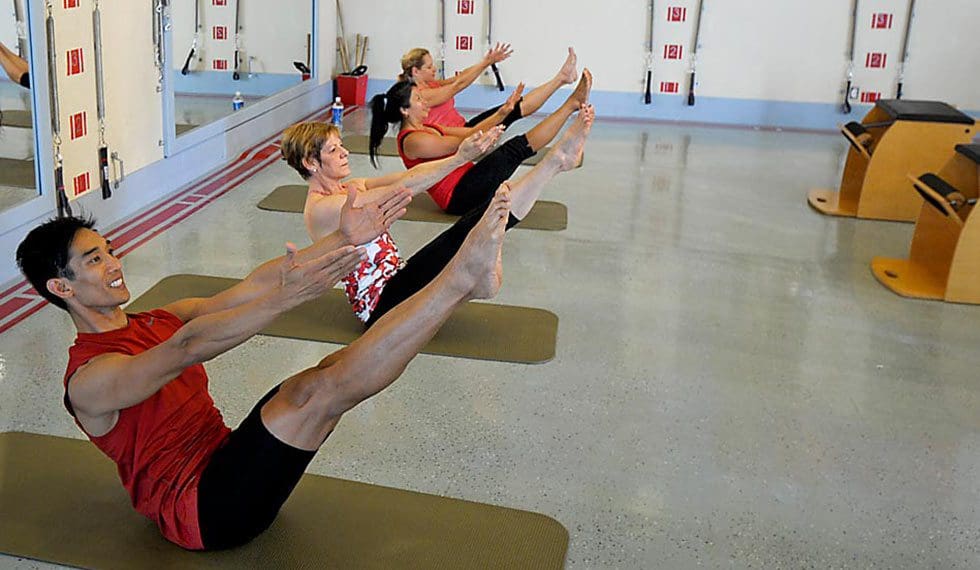
Pilates isn’t just for people who like to work out or dance; it’s a great way for anyone who wants to reduce inflammation and build strength without pain. Joseph Pilates came up with this exercise system to work on your “powerhouse”—your core, hips, glutes, and lower back. It builds a strong, flexible base for your spine (El Paso Back Clinic, n.d.). Pilates is great for relieving stress on the muscles and bones because it uses controlled, flowing movements to stretch and strengthen them. This is different from intense workouts that can make you sore.
How does it deal with inflammation? Pilates improves circulation by sending oxygen to tissues to help reduce swelling and strengthens deep stabilizing muscles to support joints, which helps relieve stress from factors such as bad posture or repetitive movements (Siler, 2000). Because it doesn’t put stress on inflamed areas and focuses on mindful movement, it lowers cortisol levels and calms systemic inflammation (El Paso Back Clinic, n.d.). It’s like a chill pill for your body, and it’s great for everyone, from office workers to those recovering from an injury.
Humor: Pilates is like a tropical vacation for your muscles. It stretches and strengthens them, telling inflammation to take a break. No leotard needed!
Siler, B. (2000). The Pilates body: The ultimate at-home guide to strengthening, lengthening, and toning your body—without machines. Broadway Books.
How Pilates and Body-Strengthening Exercises Reduce Musculoskeletal Issues
Pilates and strength-building exercises work well together to help with musculoskeletal problems caused by inflammation. Here’s the clinical news: Pilates works on the core and stabilizing muscles, like the transversus abdominis and multifidus, which help the spine and ease joint strain (Siler, 2000). This fixes problems caused by activities like sitting for long periods or doing the same thing repeatedly, which can make muscles tight and tissues inflamed (PMC, 2019). Strength exercises, such as bodyweight movements, enhance resilience in muscles and joints, alleviating pain caused by stressors like obesity or inadequate ergonomics (Shah et al., 2015).
Pilates’ controlled movements make joints more flexible and muscles more flexible, which can help with conditions like sciatica or low back pain by putting less pressure on nerves and tissues (Cunha et al., 2018). Strength exercises add load-bearing capacity, countering wear-and-tear from environmental toxins or stress-induced tension (Northwestern University, 2017). They work together to improve circulation, eliminate inflammatory markers, and help your muscles remember how to hold themselves up, which is important for long-term relief (El Paso Back Clinic, n.d.).
Pilates is like your body’s zen master, stretching you out, and strength exercises are like a tough love coach building muscle. Together, they tell inflammation to hit the bench!
Chiropractic Care: A Head Start on Your Wellness Journey
Chiropractic care is the best way to get ready for your Pilates and strength-training workouts. It will help you live a pain-free, active life. Chiropractic adjustments realign the spine and joints, which lowers nerve pressure and improves blood flow. This helps lower inflammation and ease pain in the muscles and joints (Cleveland Clinic, n.d.). This works especially well for conditions like sciatica, neck pain, or herniated discs, where environmental stressors like bad posture or repetitive strain make symptoms worse (Western Reserve Hospital, n.d.).
Dr. Alexander Jimenez, DC, APRN, FNP-BC, a top doctor in El Paso, says that the best way to treat inflammation is to combine chiropractic adjustments with exercises like Pilates (DrAlexJimenez.com, n.d.). His method, which you can read about at https://dralexjimenez.com/, uses advanced imaging (like MRIs) and dual-scope procedures to find the source of injuries and make sure that treatment plans are accurate. Chiropractic helps with alignment, Pilates builds core strength, and body exercises make you more resilient. Together, these three things help you get a head start on health by easing pain and stopping future flare-ups.
Chiropractic care is like giving your spine a pep talk, while Pilates and strength training prepare it for the day.
Pilates and Body-Strengthening Exercises You Can Do at Home or the Gym
Ready to get moving? Here are five Pilates and body-strengthening exercises you can do at home or the gym to reduce musculoskeletal issues and inflammation. These are beginner-friendly, with modifications, and align with Dr. Jimenez’s insights on mobility and recovery (El Paso Back Clinic, n.d.).
1. Pilates Hundred
What It Does: Strengthens the core, improves circulation, and reduces lower back strain.
How to Do It: Lie on your back, legs extended or bent at 90 degrees (easier option). Lift your head and shoulders slightly, arms extended by your sides. Pump your arms up and down while inhaling for 5 counts and exhaling for 5 counts, aiming for 100 pumps. Keep your core engaged.
Why It Helps: Boosts blood flow to reduce inflammation and strengthens the powerhouse to support your spine (Siler, 2000).
Tip: Start with 50 pumps if you’re new, and keep your lower back pressed to the mat to avoid strain.
2. Bodyweight Squats
What It Does: Strengthens glutes, quads, and core, easing knee and hip stress.
How to Do It: Stand with feet hip-width apart, toes slightly out. Lower your hips as if sitting in a chair, keeping your chest up and knees over toes. Return to standing. Do 3 sets of 10-12 reps.
Why It Helps: Builds lower body strength to counter posture-related inflammation and supports joint stability (Shah et al., 2015).
Tip: Hold onto a chair for balance if needed, and don’t let knees collapse inward.
3. Pilates Roll-Up
What It Does: Stretches the spine and strengthens the core, reducing back pain.
How to Do It: Lie flat, arms extended overhead. Slowly roll up to a seated position, reaching for your toes, then roll back down with control. Do 5-8 reps.
Why It Helps: Enhances spinal flexibility and core stability, countering stress-induced tension (El Paso Back Clinic, n.d.).
Tip: Bend knees slightly for beginners, and move slowly to avoid jerking.
4. Plank
What It Does: Builds full-body strength, especially core and shoulders, to support posture.
How to Do It: Start in a push-up position, forearms on the ground, elbows under shoulders. Keep your body in a straight line, core tight, for 20-30 seconds. Repeat 3 times.
Why It Helps: Stabilizes the spine, reducing inflammation from poor posture or repetitive strain (Siler, 2000).
Tip: Drop to your knees for a modified version, and avoid sagging hips.
5. Pilates Side-Lying Leg Lift
What It Does: Strengthens hips and glutes, easing sciatica and lower back pain.
How to Do It: Lie on your side, legs stacked and straight. Lift your top leg slowly to hip height, then lower with control. Do 10-12 reps per side.
Why It Helps: Stabilizes the pelvis, reducing strain on the lower spine and nerves (Cunha et al., 2018).
Tip: Place a hand on the floor for balance, and keep movements smooth to avoid jerking.
Humor: These exercises are like giving your body a standing ovation—strengthening, stretching, and telling inflammation to take a bow and exit stage left!
Chiropractic Care: A Head Start on Your Wellness Journey
Chiropractic care is the best way to get ready for your Pilates and strength-training workouts. It will help you live a pain-free, active life. Chiropractic adjustments lower nerve pressure and improve blood flow by realigning the spine and joints. This helps reduce inflammation and relieve musculoskeletal pain (Cleveland Clinic, n.d.). This works best for conditions like sciatica, neck pain, or herniated discs, where factors such as bad posture or repetitive strain worsen the symptoms (Western Reserve Hospital, n.d.).
Dr. Alexander Jimenez, DC, APRN, FNP-BC, a top doctor in El Paso, stresses the importance of integrative care that combines chiropractic adjustments with exercises like Pilates to treat the root causes of inflammation (DrAlexJimenez.com, n.d.). His method, which you can read about at https://dralexjimenez.com/, uses advanced imaging (like MRIs) and dual-scope procedures to find the exact source of an injury, ensuring that the treatment plans are accurate. This combination of chiropractic for alignment, Pilates for core strength, and body exercises for resilience gets you started on your path to health by relieving pain and stopping future flare-ups.
Chiropractic care is like giving your spine a pep talk, and Pilates and strength training are like the training montage. Your body is ready to star in its own comeback story!
Dr. Alexander Jimenez’s Expertise in Injury Recovery
Dr. Alexander Jimenez is a well-known personal injury doctor in El Paso who combines his knowledge of chiropractic and functional medicine (LinkedIn, n.d.). He uses advanced imaging techniques, like MRIs and X-rays, and dual-scope procedures, which combine clinical exams with diagnostic tools, to find the source of injuries like whiplash or herniated discs. This accuracy makes sure that treatments are focused, which helps reduce pain and inflammation (Dr. Alex Jimenez, n.d.).
Dr. Jimenez also connects medical care and legal paperwork by writing detailed reports for injury claims. Because of his more than 30 years of experience, which you can read about at https://www.linkedin.com/in/dralexjimenez/, he is the best person to see for injuries from accidents. He uses non-invasive methods like adjustments, Pilates, and strength training to help people regain their mobility and energy.
Funny: Dr. Jimenez is like a superhero for your health. He uses high-tech imaging to figure out what’s wrong with you and Pilates to get it out of town!
Everyday Tweaks to Kickstart Your Wellness Journey
Dr. Jimenez’s clinical insights, drawn from https://dralexjimenez.com/, emphasize small, sustainable changes to reduce inflammation and musculoskeletal issues:
Nutrition: Add bromelain-rich pineapple or supplements to your diet to fight inflammation (Hikisz & Bernasinska-Slomczewska, 2021).
Movement: Incorporate 10-15 minutes of Pilates or strength exercises daily to strengthen your core and improve posture.
Posture: Set up an ergonomic workspace to counter desk-related strain.
Stress Management: Practice mindfulness or deep breathing to lower cortisol and muscle tension.
Hydration: Drink plenty of water to support tissue repair and reduce inflammation.
These tweaks, combined with regular chiropractic check-ins, build resilience against environmental stressors like pollution or repetitive tasks (El Paso Back Clinic, n.d.).
Humor: Think of these tweaks as your body’s daily tune-up—like giving your car a quick oil change to keep inflammation from revving up!
This look at Pilates, body-strengthening exercises, and chiropractic care shows a strong, evidence-based way to deal with inflammation and musculoskeletal problems. You can start a wellness journey that will help you stay healthy and mobile for a long time by dealing with environmental triggers and using Dr. Jimenez’s integrative knowledge. These strategies give you the tools you need to deal with stress, heal from injuries, and do well in an active community like El Paso.
Disclaimer: This article is only for informational purposes and is not a replacement for professional medical advice, diagnosis, or treatment. Before starting any new exercises, supplements, or treatments, especially if you already have a health problem, always talk to a qualified healthcare professional. The information comes from research and should be taken seriously when making health choices. Results are different, and there are no guarantees.
Many ask, what and when should you eat before, during, and after engaging in Pilates exercises?
Pilates Nutrition Plan
Pilates involves a lot of core work on the mat. However, it does not require a special diet. To fully utilize Pilates nutrition, individuals should consider what foods keep their bodies feeling the most balanced. A balanced nutrition plan can enhance Pilates practice by:
Providing sustained energy
Supporting muscle recovery
Promoting overall well-being
Pre-Pilates
Timing
Eat a light meal or snack 2-3 hours before a class or a smaller snack 30 minutes before.
Food Options
Eat complex carbohydrates like whole grains, fruits, and vegetables for sustained energy.
Avoid
Heavy, greasy, or spicy foods may cause discomfort during exercise.
Foods that will make you gassy or cause queasiness.
During the Workout
Complex carbohydrates and lean proteins, with a little healthy fat, are good pre-Pilates meals, as they sustain energy better than simple carbs or sugary snacks. (American Heart Association, 2024) Suggestions for a pre-Pilates meal.
Individuals can adjust the portion size.
A protein shake that uses fruit can be convenient.
Peanut butter on whole-grain bread offers a quick source of complex carbohydrates and protein.
Yogurt with fruit.
Small portion of oatmeal.
Because Pilates emphasizes using the abdominal muscles, individuals will want to ensure that any food they’ve eaten before their session is fully digested. Try to eat light before, like snacking on a banana or sipping on a smoothie for some carbohydrates for energy. Regardless of what is eaten, nutrition experts recommend waiting two to three hours after eating before exercising.
Maintain Hydration
Drink water and/or eat hydrating fruits throughout the day, especially before and during the workout or class.
After Working Out
Individuals want to ensure their bodies have enough nutrients to strengthen their muscles and replenish their energy. Try a protein green smoothie afterward or a light snack with lean protein like fish or chicken and carbohydrates like whole grains. The diet between workouts will depend on weight loss goals.
Timing
Consume a protein-rich snack or meal within 30-60 minutes after your class to aid muscle recovery.
Food Choices
Focus on protein for muscle repair and carbohydrates to replenish energy stores.
Hydration
Continue to hydrate to replenish fluids lost through perspiration.
While Pilates can complement cardiovascular exercise as part of a fat-burning workout program, health experts advise that losing weight will not come from exercise alone. Individuals will need to work on reducing their calorie intake overall. (Centers for Disease Control and Prevention, 2023)
Injury Medical Chiropractic and Functional Medicine Clinic
As a Family Practice Nurse Practitioner, Dr. Jimenez combines advanced medical expertise with chiropractic care to address various conditions.
Wellness & Nutrition: Personalized plans to optimize health and prevent disease.
Sports Injuries & Orthopedic Care: Treatment for sprains, strains, and complex injuries.
Chronic Pain Management: Non-invasive solutions for fibromyalgia, sciatica, and low back pain.
Personal Injury & Auto Accident Care: Tailored rehabilitation for whiplash, soft tissue injuries, and more.
Functional Medicine: Root-cause analysis for chronic disorders, incorporating nutrition, lifestyle, and environmental factors.
Neuromusculoskeletal Health: Care for neck pain, migraines, herniated discs, and scoliosis.
Our clinic integrates Functional Medicine, Acupuncture, Electro-Acupuncture, and Sports Medicine to create customized care plans that promote natural healing, mobility, and long-term wellness. By focusing on flexibility, agility, and strength, we empower patients to thrive, regardless of age or health challenges. At El Paso’s Chiropractic Rehabilitation Clinic & Integrated Medicine Center, we passionately focus on treating patients after injuries and chronic pain syndromes. We focus on improving your ability through flexibility, mobility, and agility programs tailored for all age groups and disabilities. We use in-person and virtual health coaching and comprehensive care plans to ensure every patient’s personalized care and wellness outcomes.
Home Exercises for Pain Relief
References
American Heart Association. (2024). Food as fuel before, during, and after workouts. https://www.heart.org/en/healthy-living/healthy-eating/eat-smart/nutrition-basics/food-as-fuel-before-during-and-after-workouts
Centers for Disease Control and Prevention. (2023). Tips for Maintaining Healthy Weight. Retrieved from https://www.cdc.gov/healthy-weight-growth/about/tips-for-balancing-food-activity.html?CDC_AAref_Val=https://www.cdc.gov/healthyweight/calories/index.html
Can Pilates exercise movements be performed in bed for individuals recovering from illness or injury?
Bed Pilates
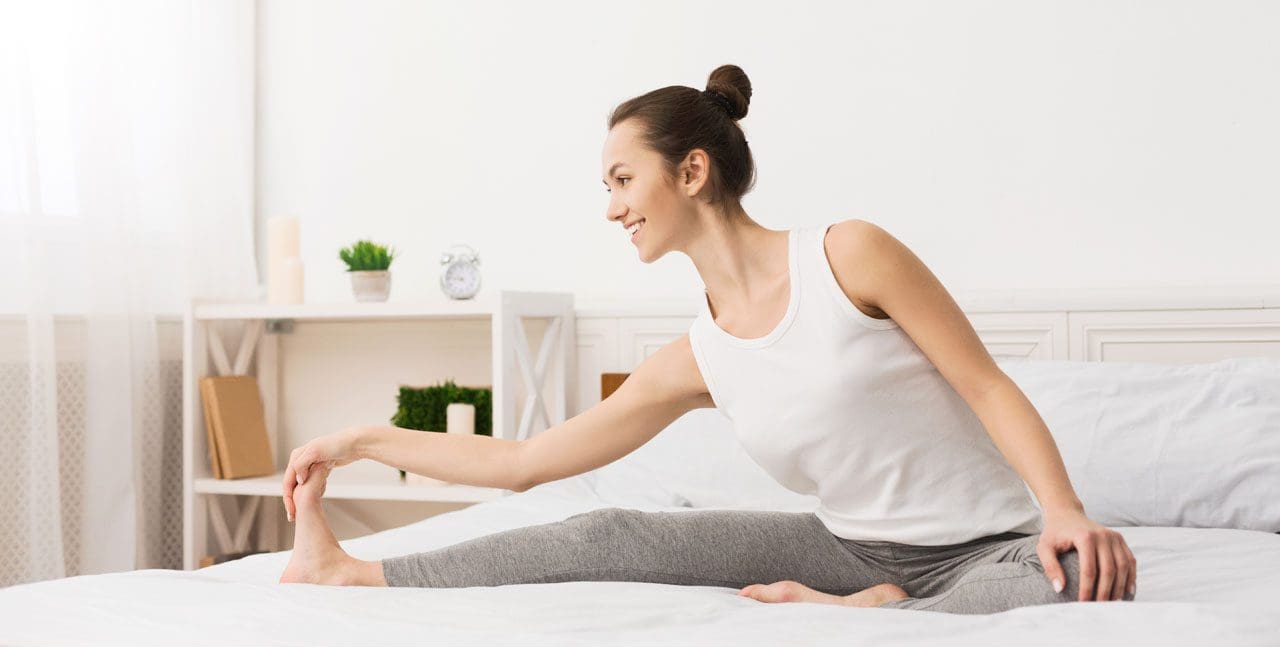
Pilates exercises can be practiced in bed. Joseph Pilates’ exercises and equipment, such as his patented V-shape bed, were designed to help rehabilitate injured individuals who had to stay on or near a bed. After a healthy night’s sleep, Pilates exercises dynamically stimulate circulation and the nervous system. They can also be used to calm the mind and body before going to bed.
Those with health concerns should check with their healthcare provider before starting any exercise program to ensure safety.
Beginners are recommended to learn the Pilates principles and movement fundamentals.
Here are a few Pilates mat exercises adapted for individuals who need or prefer to exercise in bed. A firm mattress is recommended, as a soft mattress will mess up the correct form, making the exercise ineffective.
Spine Twist
This exercise helps improve the flexibility of the spine and core, making it easier to move around, and supports healthy posture. (Geremia J. M. et al., 2015) Pilates exercises like the spine twist have been found to reduce low back pain and disability. (Notarnicola A. et al., 2014) To perform:
Sit up in bed, torso straight, abs engaged, and inhale.
Exhale as you turn your head and shoulders to the right.
Keep your torso straight, and imagine growing taller through the turn.
Inhale as you return to the starting position.
Exhale and turn to the other side.
Repeat five times on each side.
Tendon Stretch
The tendon stretch helps by improving flexibility in the hamstrings and calves. (Chinnavan E., Gopaladhas S., & Kaikondan P. 2015) To perform:
Sit up straight, legs straight out.
Bring heels together and use a towel to pull your feet towards you while pushing your heels away.
Hold for three seconds.
Next, without the towel, point your toes away.
Hold for another three seconds.
Do ten reps.
Double-Leg Stretch
The double-leg stretch is an intermediate exercise that works the abdominals and the core. If this move feels difficult, start with one leg at a time. Another option is to keep the knees slightly bent instead of extending the legs fully. To perform:
Bring both knees to your chest and, with your hands, press down on the ankles to stretch the lower back.
Pull in the abdomen.
Exhale and extend the arms up and the leg or legs as far out in front as possible.
Hold the position for ten seconds and then release.
Do ten reps.
Pelvic Curl
The pelvic curl builds strength in the lower back and core. To perform:
Bend knees and place feet on the bed hip-distance apart.
Curl your pelvis, squeeze the glutes, and lift your body.
A hip-opening exercise, or frog, can be done while lying down or sitting in bed. Hip openers help keep the spine and hips flexible and in alignment. To perform:
Bring the soles of your feet together and as close to the torso as possible.
Let the knees open up as far as possible, and that feels comfortable.
While in the stretch, breathe in and out as deep as possible.
If sitting, place hands on ankles and use forearms to push down on the knees for added stretch.
Injury Medical Chiropractic and Functional Medicine Clinic
Chiropractic care aims to help individuals improve movement with less pain due to condition, after injury, or surgery. A chiropractic therapy team can assess your condition and develop a customized treatment plan to expedite pain relief and improve mobility. Injury Medical Chiropractic and Functional Medicine Clinic works with primary healthcare providers and specialists to build optimal health and wellness solutions. We focus on what works for you to relieve pain, restore function, prevent injury, and help mitigate issues through adjustments that help the body realign itself. They can also work with other medical professionals to integrate a treatment plan to resolve musculoskeletal problems.
Home Exercises for Pain Relief
References
Geremia, J. M., Iskiewicz, M. M., Marschner, R. A., Lehnen, T. E., & Lehnen, A. M. (2015). Effect of a physical training program using the Pilates method on flexibility in elderly subjects. Age (Dordrecht, Netherlands), 37(6), 119. https://doi.org/10.1007/s11357-015-9856-z
Notarnicola, A., Fischetti, F., Maccagnano, G., Comes, R., Tafuri, S., & Moretti, B. (2014). Daily pilates exercise or inactivity for patients with low back pain: a clinical prospective observational study. European journal of physical and rehabilitation medicine, 50(1), 59–66.
Chinnavan, E., Gopaladhas, S., & Kaikondan, P. (2015). Effectiveness of pilates training in improving hamstring flexibility of football players. Bangladesh Journal of Medical Science, 14(3), 265–269. https://doi.org/10.3329/bjms.v14i3.16322
Can individuals with body pain incorporate Pilates to reduce general aches and pains while strengthening muscles in the body?
Introduction
Environmental factors like poor posture, improper steps, mechanical overload, physical inactivity, and poor dieting can affect a person’s health and wellness, leading to body pains in the neck, shoulders, and back. When this happens, the surrounding muscles become weak and overstretched over time, causing pain and discomfort in different body areas. However, many individuals thinking about their health and wellness can seek various treatment options to reduce the pain and discomfort in their bodies and help improve their muscle strength. Today’s article looks at how body pain can affect posture, what Pilates is, how this exercise regime can be incorporated for body pain, and its benefits. We talk with certified associated medical providers who inform our patients about how incorporating Pilates can reduce body pain. While asking associated medical providers intricate questions, we advise patients to incorporate Pilates as part of their routine and how it can improve their muscle strength. Dr. Alex Jimenez, D.C., includes this information as an academic service. Disclaimer.
How Body Pain Can Affect Posture
Do you experience stiffness or general aches and pains in different muscle areas? Do you often feel constantly tired throughout the entire day? Or do you notice your posture worsening after looking at a computer or phone screen? Many of these environmental factors can lead to pain and discomfort in the body, which then can cause issues that many individuals will tend to ignore until it becomes too much. For instance, environmental factors like obesity are commonly associated with musculoskeletal problems and incorrect body posture, which can be represented as a causal factor for impairment to the body. (Calcaterra et al., 2022) This is because many individuals don’t realize that improper posture can be associated with body pain and, if not corrected, can lead to overlapping risk factors in the musculoskeletal system. Hence, many individuals start seeking treatments to improve postural alignment, but it can also be used to prevent and treat musculoskeletal pain. (Matsutani et al., 2023)
The Non-Surgical Approach To Wellness- Video
What Is Pilates?
While many people seek treatment for their body pain and improve muscle strength, many have started exercising to reduce the stress and discomfort caused by body pains associated with the musculoskeletal system. Since everyone knows that exercising is excellent for health and wellness, it can also help make the body healthier. Many individuals looking for an exercise routine have various options, including Pilates.
Developed in the early 20th century, Joseph Pilates created a system of exercises primarily focused on controlled muscle movement, stretching, and breathing known as Pilates. It has become popular later in the years not only as a physical fitness routine but also as a rehabilitation program. (Byrnes et al., 2018) Pilates uses a combination of repetitive exercises to create muscular exertion and is designed to increase muscle strength and endurance, enhance flexibility, and improve posture and balance. (Kloubec, 2011)
How Is It Incorporated For Body Pain?
While many people are dealing with body pain, some may wonder how Pilates is incorporated into a health and wellness treatment plan. Well, when environmental factors like poor posture and body pain associated with the musculoskeletal system start to cause pain and discomfort to the body. At the same time, that pain and discomfort, if not treated, will also affect the spine’s alignment, causing more musculoskeletal problems. (Shadi et al., 2024) Additionally, Pilates can be combined with non-surgical treatments like chiropractic care to help improve musculoskeletal pain and restore a person’s strength, flexibility, and mobility. This, in turn, promotes mindfulness and a faster recovery. Many individuals will begin to notice that combining a therapeutic exercise method like Pilates and non-surgical treatments can allow the individual to be pain-free and experience additional benefits. This will enable people to understand the impact of stretching exercises caused by Pilates on the components of musculoskeletal fitness aimed at rehabilitation or physical conditioning. (Dos Reis et al., 2024)
The Benefits Of Pilates
Many people will notice how Pilates can help their bodies through these benefits. This includes:
Adapting Pilates to your fitness level and needs: Anyone can start Pilates at any fitness level and go at their own pace.
Core strength increases: Pilates can help strengthen the core muscles, which correlates to improved posture and a strong body.
Strengthening muscles: Pilates can help strengthen and elongate muscles to help individuals look toned.
Natural energy booster: Like many exercise routines, Pilates can give people an energy boost through focus breathing. This increases circulation, stimulating the muscles and spine.
Utilizing Pilates for rehabilitation combined with non-surgical treatment can allow individuals to be more mindful of their bodies and to make tiny changes in their routines. This allows the chances of pain and discomfort from returning, allowing individuals to have a healthier lifestyle.
References
Byrnes, K., Wu, P. J., & Whillier, S. (2018). Is Pilates an effective rehabilitation tool? A systematic review. J Bodyw Mov Ther, 22(1), 192-202. https://doi.org/10.1016/j.jbmt.2017.04.008
Calcaterra, V., Marin, L., Vandoni, M., Rossi, V., Pirazzi, A., Grazi, R., Patane, P., Silvestro, G. S., Carnevale Pellino, V., Albanese, I., Fabiano, V., Febbi, M., Silvestri, D., & Zuccotti, G. (2022). Childhood Obesity and Incorrect Body Posture: Impact on Physical Activity and the Therapeutic Role of Exercise. Int J Environ Res Public Health, 19(24). https://doi.org/10.3390/ijerph192416728
Dos Reis, A. L., de Oliveira, L. C., & de Oliveira, R. G. (2024). Effects of stretching in a pilates program on musculoskeletal fitness: a randomized clinical trial. BMC Sports Sci Med Rehabil, 16(1), 11. https://doi.org/10.1186/s13102-024-00808-6
Matsutani, L. A., Sousa do Espirito Santo, A., Ciscato, M., Yuan, S. L. K., & Marques, A. P. (2023). Global posture reeducation compared with segmental muscle stretching exercises in the treatment of fibromyalgia: a randomized controlled trial. Trials, 24(1), 384. https://doi.org/10.1186/s13063-023-07422-w
Shadi, N., Khalaghi, K., & Seyedahmadi, M. (2024). Comparing the effects of Pilates, corrective exercises, and Alexander’s technique on upper cross syndrome among adolescent girls student (ages 13-16): a six-week study. BMC Sports Sci Med Rehabil, 16(1), 143. https://doi.org/10.1186/s13102-024-00933-2
For individuals wanting to try Pilates for back pain and exercise, can learning how to find their neutral spine help improve flexibility and increase the range of motion in the joints?
Pilates Neutral Spine
Pilates is a functional exercise modality emphasizing core stability, which is fundamental to developing a balanced body. The exercises strengthen the muscles, improve flexibility, and increase the range of motion in the joints. (Kloubec J. 2011) It is considered a functional fitness method because its principles work to establish more graceful, efficient movements from everyday life, such as improving posture. Pilates has shown its effectiveness in that it is often used in physical therapy and rehabilitation settings. (Byrnes, K., Wu, P. J., and Whillier, S. 2018) However, knowing how to find the neutral spine is essential for performing various Pilates exercises correctly. (Barbosa, A. C. et al., 2018) This subtle adjustment during practice may help prevent injury and increase overall performance. A neutral spine is the natural position of the spine when all three curves:
Cervical (neck)
Thoracic (middle)
Lumbar (lower)
Are active and in healthy alignment.
This is the strongest position for the spine when standing or sitting, allowing the body to move more naturally.
Alignment
The following exercise can help find the Pilates neutral spine.
Basic Position
Lie on the back with knees bent and feet flat on the floor.
Ensure the legs are parallel to the hips, knees, heels, and toes.
Let the arms rest at your sides.
Relax
Relax the body, including the shoulders, neck, and jaw.
Allow the back to melt into the floor.
The rib cage will drop when the lower ribs are released to the floor.
Breathe Deep
Inhale all the way into the body, allowing it to move into the back and sides of the rib cage and all the way to the pelvis.
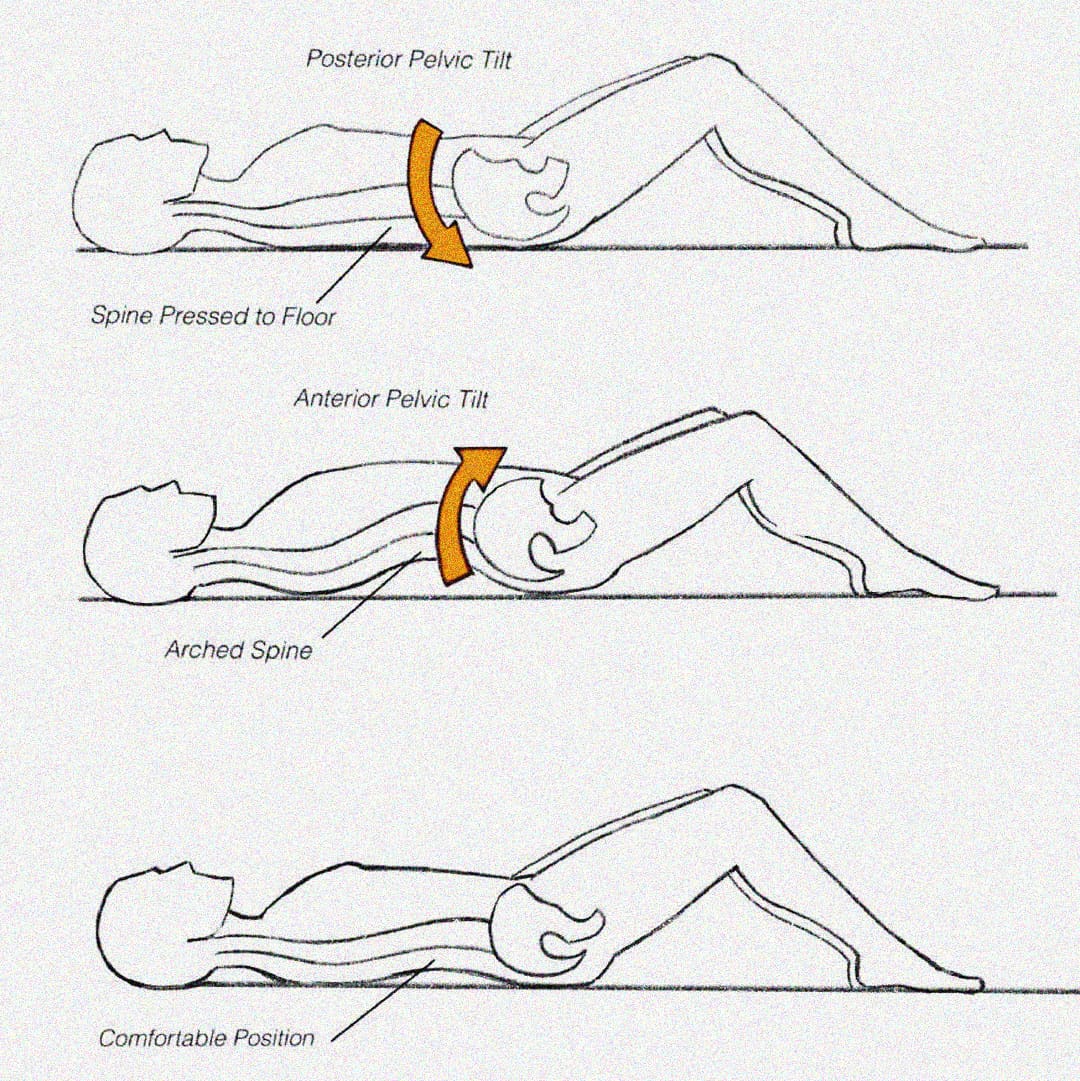
Pelvic Tilt
Exhale and use the abdominals to press the lower spine into the floor in a pelvic tuck. (Eickmeyer S. M. 2017)
Inhale to release.
Exhale and pull the lower spine off the floor, creating a pelvic tilt.
Inhale to release.
Pilates exercises don’t use excess energy or tension. Proper alignment and a neutral spine position can ensure that tension is released and excess energy is not exerted. (Byrnes, K., Wu, P. J., and Whillier, S. 2018) When performing the exercise, ensure that the shoulders, neck, and legs are relaxed and not involved in the movement.
When Exercising
Once a neutral spine is achieved, the goal is to maintain this spinal position during the exercises and when changing positions.
Start by lifting the right leg and placing it back down without letting the hips move.
Then, repeat the motion with the left leg.
Engage the abdominal muscles to help stabilize the pelvis, keeping it from moving and maintaining a neutral spine.
Repeat this process with each leg.
Once each leg can be lifted easily, test with both legs.
Exhale deeply and lift the legs while keeping the core and pelvis stable.
Then, lower them back down.
When performing this progression, there may be a want to release the abs and let the back arch.
This will cause a tuck and tilt position away from the neutral spine position.
If this progression is difficult, keep practicing until you can maintain a neutral spine.
Once this basic progression feels easy, try additional progressions and positioning.
Visualization Tips
Most people have their spines in one of two positions: tucked or tilted. A neutral spine requires individuals to be in between, with the lower abdominals flat and the lower spine’s natural curve slightly off the floor. The following visualization can help establish a neutral spine.
Balanced Pelvic Placement
Imagine a cup of water sitting on the lower abdomen, a couple of inches below the belly button.
Allow the abdominal muscles to drop toward the spine, flattening the belly.
You don’t want the water to spill, so the pelvis cannot be tipped forward or tucked under.
Body Scan Meditation
Once the body is relaxed with a balanced alignment on the floor.
Allow breathing to become deep and full and the abdominals to drop toward the floor.
The natural neck and lower spine curves should be off the floor.
Ensure the lower spine is not pressed into the floor, as this indicates a pelvic tilt.
If there is any discomfort or pain when working to increase endurance, seek advice from a healthcare professional. Injury Medical Chiropractic and Functional Medicine Clinic uses an integrated approach to treating injuries and chronic pain syndromes. It offers personalized care plans that improve ability through flexibility, mobility, and agility programs to relieve pain. Our providers use an integrated approach to create personalized care plans for each patient, including Functional Medicine, Acupuncture, Electro-Acupuncture, and Sports Medicine principles. Our goal is to relieve pain naturally by restoring health and function to the body. If other treatment is needed, Dr. Jimenez has teamed up with top surgeons, clinical specialists, medical researchers, and rehabilitation providers to provide the most effective treatments.
Is Motion Key to Healing?
References
Kloubec J. (2011). Pilates: how does it work and who needs it?. Muscles, ligaments and tendons journal, 1(2), 61–66.
Byrnes, K., Wu, P. J., & Whillier, S. (2018). Is Pilates an effective rehabilitation tool? A systematic review. Journal of bodywork and movement therapies, 22(1), 192–202. https://doi.org/10.1016/j.jbmt.2017.04.008
Barbosa, A. C., Vieira, E. R., Silva, A. F., Coelho, A. C., Martins, F. M., Fonseca, D. S., Barbosa, M. A., & Bordachar, D. (2018). Pilates experience vs. muscle activation during abdominal drawing-in maneuver. Journal of bodywork and movement therapies, 22(2), 467–470. https://doi.org/10.1016/j.jbmt.2017.05.002
Eickmeyer S. M. (2017). Anatomy and Physiology of the Pelvic Floor. Physical medicine and rehabilitation clinics of North America, 28(3), 455–460. https://doi.org/10.1016/j.pmr.2017.03.003
Many people worldwide know that exercising has impressive benefits that help improve the body’s overall wellness. The body has different muscle groups that have a casual relationship with the vital organs inside the body. Organs like the heart, lungs, gut, and bladder correlate with the different muscles through the nerve roots that connect them. When the body suffers from various factors that affect it, it causes referred pain to the body where one pain is at one location but radiates from the other side. Exercising can help the body recover through physical rehabilitation by reducing inflammation and scarring on the muscle tissues. One of the many exercises that helps strengthen the muscles, increase flexibility, and even improve posture is Pilates. Today’s article looks at Pilates, its benefits, and how it can help alleviate back pain. We refer patients to certified providers specializing in musculoskeletal treatments to help many individuals with low back pain issues affecting their bodies. We also guide our patients by referring to our associated medical providers based on their examination when it’s appropriate. We find that education is the solution to asking our providers insightful questions. Dr. Alex Jimenez DC provides this information as an educational service only. Disclaimer
What Is Pilates?
Have you been feeling sluggish or having low energy throughout the entire day? What about experiencing pain in your lower back? Have you experienced muscle stiffness in certain areas around your body? Many of these symptoms are associated with musculoskeletal issues that correlate with different factors that affect the body; why not try an exercise regime like Pilates? Pilates is a system of exercises that uses a particular machine or body to improve a person’s physical strength and posture while increasing the body’s flexibility and enhancing mental awareness. Joseph Pilates developed Pilates in the early 20th century as an exercise program to help World War I soldiers improve their physical fitness levels. Pilates was used as rehabilitation therapy for injured individuals by incorporating resistance, stretching, and target muscle strengthening. Pilates is now utilized for all individuals with different bodies and fitness levels and can provide tremendous benefits.
What Are The Benefits?
Pilates, like any other form of exercise, has many beneficial properties that help improve a person’s health and wellness. Studies reveal that Pilates helps many individuals, including older adults, by improving their posture by decreasing thoracic flexion while increasing lumbar extension for pain relief. Some of the beneficial properties that Pilates offer to the body include:
Increasing core strength: The deep muscles in the abdomen, back, and pelvic regions become stronger and help stabilize the body more.
Strengthen muscle groups: Pilates helps make the muscles not only strong but also helps stretch them so that they can look long and lean. This makes the individual look toned.
It’s a whole body workout: As many exercises work on specific body parts, Pilates focuses on each muscle part of the body and helps muscle development.
Posture Improvement: Pilates help keep the spine aligned while strengthening the body and core. Over time a person’s posture will improve naturally, making them stand taller, stronger, and even more graceful.
Increases energy: Like all exercises, Pilates will give a person the energy boost they need. This is due to the focused breathing and increased blood circulation that stimulates the muscles and the spine.
Pilates Exercises For Back Pain-Video
Are you looking for a new exercise to tone your muscles? Have you been dealing with pain in your lower back? Do you have muscle weakness in some regions of your body? If you have been experiencing pain-related issues, why not try Pilates? The video above goes through a 10-minute Pilates workout for back pain. Studies reveal that non-specific low back pain is a highly prevalent condition many individuals associate with disability and work absence worldwide. Many environmental factors affect many individuals, causing them to suffer back issues. Pilates can help encourage many individuals to regain their health and wellness by incorporating core strength and stability while improving their posture.
Pilates Alleviate Back Pain
Many people don’t realize that some low back pain symptoms are related to poor posture. Poor posture can lead to associated symptoms of headaches, back pain, improper balance, and pelvic issues. What Pilates does is that it creates body awareness and helps improve the lower back muscles by strengthening them and relaxing the stiff muscles. Studies reveal that incorporating Pilates as physical therapy for individuals suffering from low back pain can help address the mental and physical pain aspects with core strengthening, flexibility, and relaxing the tense muscles. Many individuals should never put off exercising when it comes to back pain. Incorporating an exercise routine can benefit the body and prevent future injuries.
Conclusion
An exercise regime can provide many beneficial results for those looking for ways to be healthy, those suffering from injuries, or those who want to add something else to their workout routine. Pilates is one of those exercises that incorporates resistance, stretching, and muscle targeting as it is a full-body workout. Pilates is used in rehabilitation therapy for injured individuals and can provide tremendous benefits. Pilates can help many individuals with back issues associated with environmental factors like poor posture. Many individuals that utilize Pilates as part of their exercise regime will begin to feel stronger and healthier as their backs will thank them.
References
Baker, Sara. “Pilates Exercise for a Healthy Spine – Spineuniverse.” Spineuniverse, 28 Dec. 2019, https://www.spineuniverse.com/wellness/exercise/pilates-exercise-healthy-spine.
Kuo, Yi-Liang, et al. “Sagittal Spinal Posture after Pilates-Based Exercise in Healthy Older Adults.” Spine, U.S. National Library of Medicine, 1 May 2009, https://pubmed.ncbi.nlm.nih.gov/19404180/.
Sorosky, Susan, et al. “Yoga and Pilates in the Management of Low Back Pain.” Current Reviews in Musculoskeletal Medicine, Humana Press Inc, Mar. 2008, https://www.ncbi.nlm.nih.gov/pmc/articles/PMC2684152/.
Yamato, Tiê P, et al. “Pilates for Low Back Pain.” The Cochrane Database of Systematic Reviews, John Wiley & Sons, Ltd, 2 July 2015, https://www.ncbi.nlm.nih.gov/pmc/articles/PMC8078578/.
Everyone knows that exercise is great for overall wellness, better health, and a healthy body. Many chiropractors will often recommend regular exercise to their patients who need to lose weight, want better mobility, or are seeking relief from depression. Some chiropractors are turning to Pilates to help their patients get stronger, more flexible, and more mobile.
What is Pilates?
In the early 20th century Joseph Pilates developed the exercise program to help World War I soldiers improve their physical fitness. It was used to rehabilitate patients who had been injured. By incorporating resistance, stretching, and target strengthening exercise, Pilates uses resistance bands, individual machines, and floor work to reshape and rehabilitate the body. Dancers, gymnasts, athletes, and celebrities use Pilates to stay in shape. However, anyone can do it for a healthier, more supple spine.
Care of the spine is at the core of Pilates. By keeping it in a neutral, or natural, position, this exercise can prevent back pain as well as help ease it. When done correctly, Pilates can:
Improve muscle control and movement efficiency through mental focus.
Make you more mindful of your body�s position, specifically, remaining aware of the spine�s position and keeping it neutral
Improve centering and mental focus through special, breathing techniques
Support and improve posture by strengthening the abdominal and back muscles.
Benefits of Pilates for Chiropractic Patients
The benefits of Pilates tremendous, but for chiropractic patients, it is even more so. By regularly incorporating Pilates into your exercise routine, you can enjoy these incredible benefits.
You can adapt Pilates to your fitness level and needs. Whether you are just starting a fitness program or you�ve been working out for years, Pilates can be tailored to your fitness needs and level.
It helps you strengthen your core. The deep muscles of your abdomen, back, and pelvic floor make up the core muscles of your body. Many of the movements focus on these muscles, making a body that is strong and the frame is supported.
Allows you to strengthen your muscles without bulking up. With Pilates your muscles get strong, but it also stretches the muscles so that they are lean and long. You will look toned and tight but not bulky and muscular.
It focuses on whole body fitness. Many types of exercise only work certain parts of the body, but this focuses on entire body fitness. It works every part of the body so that the muscle development is balanced.
It helps to improve your posture. It strengthens your body and helps to keep your spine in proper alignment due to a strong core. As a result, your posture naturally improves. By incorporating it into your exercise routine, you will find yourself standing taller, stronger, and more graceful.
You can become more connected through your mind and body by increased awareness. Pilates engages your mind and increases body awareness. It unites the mind, body, and spirit for complete coordination. Each movement is done with full attention.
It improves your flexibility. Pilates is a gentle but powerful exercise that works to safely stretch the muscles, making them longer, and increasing the range of motion in the joints.
It can protect you from injuries. By strengthening your body, Pilates can help protect you against injury. It conditions your whole body so that your muscles and strength are balanced. This reduces your risk of injury.
You get a natural energy boost. Just like with any exercise, it will give you an energy boost. However, it is increased even more thanks to the focused breathing and increase in circulation stimulating the muscles and spine.
It can help you lose weight and attain a lean, long, healthy body. It tones and strengthens the body, and if you do it regularly, it will reshape you. The body is more muscular and more balanced. It also helps you move with more grace and ease.
IFM's Find A Practitioner tool is the largest referral network in Functional Medicine, created to help patients locate Functional Medicine practitioners anywhere in the world. IFM Certified Practitioners are listed first in the search results, given their extensive education in Functional Medicine