by Dr Alex Jimenez DC, APRN, FNP-BC, CFMP, IFMCP | Chiropractic, Chronic Back Pain, Migraines, Neck Pain
You get up with it. You go to sleep with it. An incredible number of men and women live with chronic back or neck pain every day. What’s chronic pain? It is technically defined as pain that lasts for 12 weeks or more�even after pain isn’t any longer acute (short-term, serious pain) or the injury has healed.
Accurate Analysis
Getting an exact identification of the reason for neck pain or your back is vital to the outcome of your treatment plan. Depending on the severity and cause of your pain that is chronic, you might need to find out different specialists in addition to your own primary care physician�pain medicine specialist, orthopaedic spine surgeon, neurosurgeon, physiatrist, rheumatologist, physical therapist among others. Over time your chronic pain need to be reevaluated, and may transform, which might affect the way it is handled.
Your chronic back or neck pain treatment generally features a variety of treatments to maximize results that are great. A number of the treatments your doctor prescribes and recommends may include:
Physical Therapy:
Extending and strengthening muscles is vital in the treatment of neck pain or chronic back.
Chiropractic Care:
Depending on your own diagnosis, chiropractic care may be recommended by your doctor. Studies have demonstrated that two weeks of day-to-day exploitation by a chiropractor can result in considerable progress in a few patients with persistent low back pain and referred leg pain.

Medicines:
There are lots of different prescription medications to take care of neuropathic pain, inflammation, muscle spasms, and pain. Additionally, you will find drugs to treat conditions that often accompany chronic pain, including drugs that will help you sleep, alleviate depression, and reduce nervousness.
Processes:
Your doctor may recommend a spinal cord stimulator, spinal injections, drug heart, or spine surgery. You can get a second opinion, in the event you might be uncertain about the treatment plan recommended.
Coping skills:
Never underestimate the power of your head. Your mood and mental perspective can greatly make an impact on your level of pain. Talk with a trained specialist to understand relaxation and coping skills.
Complementary Treatments:
Many physicians recommend acupuncture and other types of traditional Chinese medicine. Speak to your doctor about these choices.
A couple of words about …. age, fitness, body weight
You probably involve some control over body weight and your level of fitness, although you can�t stop aging or its effects. While you can�t stop the clock on the cellular changes that are recognized to accompany aging�such as loss of muscle mass and bone density �you can take little steps today to build a more stronger�you tomorrow.
It�s understood that patients with chronic back or neck pain may not feel like being active, going to the gym and even adhering to a home exercise program. Yet, being active can help chronic pain because during exercise your body releases endorphins�your body�s natural painkiller.
Moreover, by teaming up together with and/or your physician physical therapist you can start to build abdominal muscles that are strong �essential to your own body�s center strength which helps support your back.
Did you know that by simply losing even 5 to 10 pounds you can reduce back pain? It�s true. Carrying around extra weight translates to added stress to the low back that may exacerbate pain.
Conclusion
In many instances, aggressive and early treatment of chronic back or neck pain can make a life-changing difference. But remember that knowledge is power: Be certain you comprehend your alternatives before deciding which route to take.

Call Today!

by Dr Alex Jimenez DC, APRN, FNP-BC, CFMP, IFMCP | Lower Back Pain, Physical Rehabilitation, Spine Care
Pilates for Pain
Exercise can help with back pain�you’ve probably heard that before. And Pilates tops the list of “helpful for your back” exercises.
This shows 4 Pilates moves to prevent pain. Of course, talk to your doctor before beginning an exercise plan.

Warm-up Your Spine with this Exercise
Cat/Cow
The cat/cow stretch lengthens and strengthens the muscles along your spine.
- Start on hands (shoulder-distance apart) and knees (hip-distance apart).
- Inhale and look up as you slightly arch your spine. Then exhale, engage your abdominal muscles, and draw your belly button toward your spine as you gaze at your navel. Repeat 5 to 10 times every day.
Chest Lift

Not Your Average Sit-up
The chest lift is similar to a basic crunch. The difference? This move deeply targets your abs.
- Lie on your back with knees bent and feet flat (hip-distance apart). Bring hands behind head with fingertips touching. Elbows are wide open.
- Inhale, and then as you exhale, pull belly button toward the spine and lift the shoulders off the ground (leading with chest). Really use your abs to lift�not your neck. Inhale again as you release toward the ground. Repeat 6 to 8 times daily.
Pelvic Curl

A Pose to Help Ease Low Back Pain
Doing this exercise regularly teaches you how to engage your abs to help support and lengthen the low back.
- Start by lying on your back with knees bent and feet flat (hip-distance apart).
- Arms are straight along the sides of your body and palms are touching the ground. Inhale deeply and engage your abs as you lift your hips off the floor�vertebra by vertebra.
- Exhale and roll back down very slowly, engaging core muscles. Link breath with movement. Repeat 3 to 5 times daily.
Child�s Pose

An Easy, Restorative Stretch
This move really stretches tight, sore low back muscles.
- From hands and knees, bring hips toward heels, and stretch arms in front of you so palms are touching the ground.
- Press forehead gently to the floor and do some deep belly breathing. Bring hands toward the legs to slowly sit up. Repeat 3 times daily.
Call Today!

by Dr Alex Jimenez DC, APRN, FNP-BC, CFMP, IFMCP | Chiropractic Examination, Mobility & Flexibility, Physical Rehabilitation
Physical therapists (PT’s) are healthcare professionals who treat patients of all ages with back or neck ailments. Your spine surgeon, physiatrist, orthopedist, primary care physician, neurosurgeon and your chiropractor may refer you to a physical therapist as portion of your non-operative plan of treatment. An organized physical therapy plan may be an intrinsic portion of your after-care following back surgery. PT’s practice in a variety of settings for example hospitals, outpatient clinics, rehabilitation centers, and nursing homes. �Myself, I am a Chiropractor. �There are clear differences that sometimes creates confusion, and for that reason I have posted this in order to create conversation regarding the similarities and contrasts.
Goals of Physical Therapy
The primary goals�of physical therapy include: maintain practical skill and improve, build endurance and physical strength, increase flexibility, reduce pain, and prevent impairment. PTs also instruct patients the best way to exercise to enhance overall physical fitness, move about safely (biomechanics and ergonomics), and injury prevention. Physical therapists also help patients with long-term physical incapacity (eg, spinal cord injury).
Physical therapy may contain passive modalities; the individual is administered to treatments by the PT. Modalities include myofascial release, different types of massage, ultrasound, ice or heat. Some of these treatments could be administered before lively therapeutic exercise.

Spine-Associated Conditions Physical Therapists Treat:
- Degenerative disk disease
- Rheumatoid arthritis
- Sciatica
- Spondylosis (spinal arthritis)
- Whiplash
- Rebuild endurance, flexibility and strength after back surgery, also as specific physical needs associated with surgical aftercare.
Coordinated Care
Your physical therapist may work directly for or with your physician, therapist, chiropractor and other healthcare providers to organize aspects of your physical treatment. For instance, your doctor may send the physical therapist pertinent parts of your graph, such as present medications, your analysis, and results of imaging studies.
During the first consultation, the physical therapist talks with you about symptoms, analysis, and your medical history. Many patients with a back or neck ailment experience pain that is severe, chronic, and/or episodic. Severity the location, type, and variables that decrease or increase pain are significant, and the PT will ask you many questions regarding pain.
Education and Clinical Training
Physical therapists are healthcare professionals who passed a state licensing examination and have completed an accredited physical therapy program. The program includes medical ethics academic learning, and evidence-based medicine with clinical use outside the classroom. After graduation, a PT may advance experience and knowledge by participating in areas of their interest. Now all physical therapists graduate with a Doctor of Physical Therapy (DPT) degree.
Through the American Board of Physical Therapy Specialties, a PT can eventually be a board certified specialist in a specific area such as orthopaedics, pediatrics, or geriatrics. There are various areas of specialization.
Selecting A Physical Therapist
Many states permit you to attend a physical therapist without a physician�s referral. What questions should you keep in mind about picking out a physical therapist, even though you can definitely ask your physician for a recommendation? Listed below are some questions to consider.
- What is the physical therapist�s training and educational history?
- Does the physical therapist frequently treat patients with my difficulty?
- How many times per week do I need physical therapy?
- Will I Be provided by the physical therapist with a customized home exercise plan?
- Am I comfortable with a female or male physical therapist?
Taking Charge
Bear in mind a physical therapist is a precious healthcare professional and member of your medical team. While physical therapy may be challenging or demanding at first, you are offered many benefits by a PT. It’s an opportunity to take charge of your back or neck pain, while building a stronger more resilient body.
Call Today!
Source:
American Association of Physical Therapists. www.apta.org

by Dr Alex Jimenez DC, APRN, FNP-BC, CFMP, IFMCP | Exercise, Lower Back Pain, Weight Loss
A good attitude about weight loss will go a long way in helping you to achieve success. Whether your weight problem has resulted from eating the wrong foods, lack of routine physical exercise, using food to resist anxiety, age, or genetics �you can help defeat that by setting reasonable goals and expectations that are realistic.
The initial step to take would be to discuss your set for weight loss and general health by means of your physician. Your physician can assist you to make informed choices about treatments that contain weight loss plans and exercise suitable to your needs.

- Therapies include dietary, behavioral, drug, and for some patients, surgical alteration of the digestive system to reduce the quantity of food consumed. A safe and realistic weight reduction plan may result in success.
- Evaluating your body weight is more involved than stepping on the scale. This info is assessed to find out your risks due to extra weight (eg, high blood pressure).
Nutrition Means To Feed Your Body
In the event you haven’t detected, the ‘D’ word (Diet) hasn’t been used in this post as it relates to weight reduction. Granted, caloric reduction will be required by a weight loss program. Yet, for many overweight or obese folks, a weight loss program means exercising, handling anxiety, and making lifestyle changes, which might comprise relearning how to eat.
It’s vitally crucial that you feed your body the nutrients it needs to be healthy and live. No one food contains all the essential nutrients �it takes combining a wide variety of foods to help meet your body’s needs. If you have been heavy or obese for a long time, your body may really be starving for necessary nutrients!
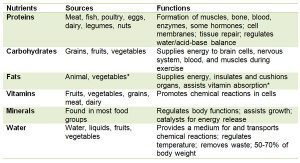
Nutrients Their Food Sources & Activities In The Human Body
*Fats are essential in taking the fat-soluble vitamins A, D, E, and K. There are just three types of fats:
- Saturated Fat will raise blood cholesterol levels. These fats are found mostly in meat and diary products.
- Polyunsaturated Fat tends to lower blood cholesterol levels. It’s mainly found in plant sources such as safflower, sunflower, soybean, corn, and cottonseed.
- Monounsaturated Fat tends to lower the bad cholesterol or LDL (low density cholesterol). Examples include canola oil, olive oil, peanut oil, and avocados.
Although this amount is exceeded by most Americans, dietary ingestion of fat shouldn’t exceed 30% per day.
Remove the skin from poultry, trim visible fat from meat, an easy method to cut back fat consumption is to choose lean cuts of meat, choose water-packed tuna, and pick dairy products made from skim or low-fat milk.

Call Today!

by Dr Alex Jimenez DC, APRN, FNP-BC, CFMP, IFMCP | Chiropractic, Chronic Back Pain, Spine Care
Living with chronic back or neck pain can lead to depression, feelings of worry, nervousness, hopelessness, as well as other mental health-associated symptoms. Your pain medicine physician or your back specialist may refer you to a psychologist or psychiatrist. Referring you doesn�t mean your physician believes your pain is all in your mind! Rather, he/she is taking an optimistic step in treating you as a whole individual � by treating both the physical and psychological pain.
Chronic Neck &�Back�Pain Is Complicated
As someone living with chronic pain caused spondylosis, degenerative disc disease, spinal cord injury or some other back problem, you understand pain is a complicated issue, and treatment requires the expertise of a spine�specialist. Perhaps your pain management plan features a blend of treatments � medication for neuropathic pain, a periodic epidural spinal shot, a muscle relaxant, or physical therapy. Treatment of stress, nervousness, and depression (there are various types) needs the same level of expertise but from somebody who focuses on managing mental health problems.
Depression & Chronic Pain
Are you aware that depression and chronic pain often go together? Depression is a critical condition, and nothing to be embarrassed of. It has been reported that as many as 50% of individuals with chronic pain are depressed.1 So, if you are depressed, you’re far from being alone.
The signs and symptoms of depression can manifest themselves differently in each individual, but tiredness, sleep disruption, changes in eating habits, listlessness, and feelings of hopelessness are all quite common. Aches and pains are a very common symptom of depression notably, depression can lead directly to neck and long-term back pain.
Treating Depression & Pain
Two classes of antidepressants often used to treat depression in those that experience chronic pain are selective serotonin reuptake inhibitors (SSRIs) and serotonin and norepinephrine reuptake inhibitors (SNRIs). Generally prescribed SSRIs include and fluoxetine (Prozac) and sertraline (Zoloft), whereas usually prescribed SNRIs include duloxetine (Cymbalta) and venlafaxine (Effexor). These drugs have now been demonstrated to be effective and safe for handling depression in the context of continual pain, but like all medicines, they come with some risk of unwanted effects. As always, be sure to go over these drugs in detail together with your physician before beginning any treatment regimen that includes them, and inform your physician of all of the medicines (including over the counter medicines), herbal remedies, and nutritional supplements you’re currently taking so as to avoid any negative drug interactions.
Moreover, or in addition to medications, other types of treatment may include:
- Talk therapy, more officially called cognitive behavioral therapy (CBT). The focus of CBT is to help the individual manage their situation and may include learning how to problem solve, thus engaging the individual to alter specific thought patterns to your more positive outlook, and conquering�fears.
- Practice relaxation techniques such as meditation or breathing exercises.
- Routine exercise might help curb feelings of worry, stress as well as depression. Exercise causes the entire body to release endorphins, which can cause you to feel much better and may reduce pain perception too.
Call Today!
Reference
1. Tartakovsky M. Living with chronic pain and melancholy. PsychCentral.com. http://psychcentral.com/lib/living-with-chronic-pain-and-depression/. Got July 30, 2015.

by Dr Alex Jimenez DC, APRN, FNP-BC, CFMP, IFMCP | Auto Accident Injuries, Chiropractic, Personal Injury
Whiplash is�a common injury, annually affecting about 2 million individuals within the U.S. Generally due to a car accident, whiplash also can be a consequence of falling, engaging in sports &�being shaken or punched.
Whiplash may be the common term�for�neck damage or stress caused by hyperextension (see image below) and hyperflexion (see image below). It frequently does not cause immediate symptoms: over-time, it might produce actually. Since whiplash could cause long-lasting results to the back, it is vital that you see your physician if you have been injured, even if you don�t have pain.
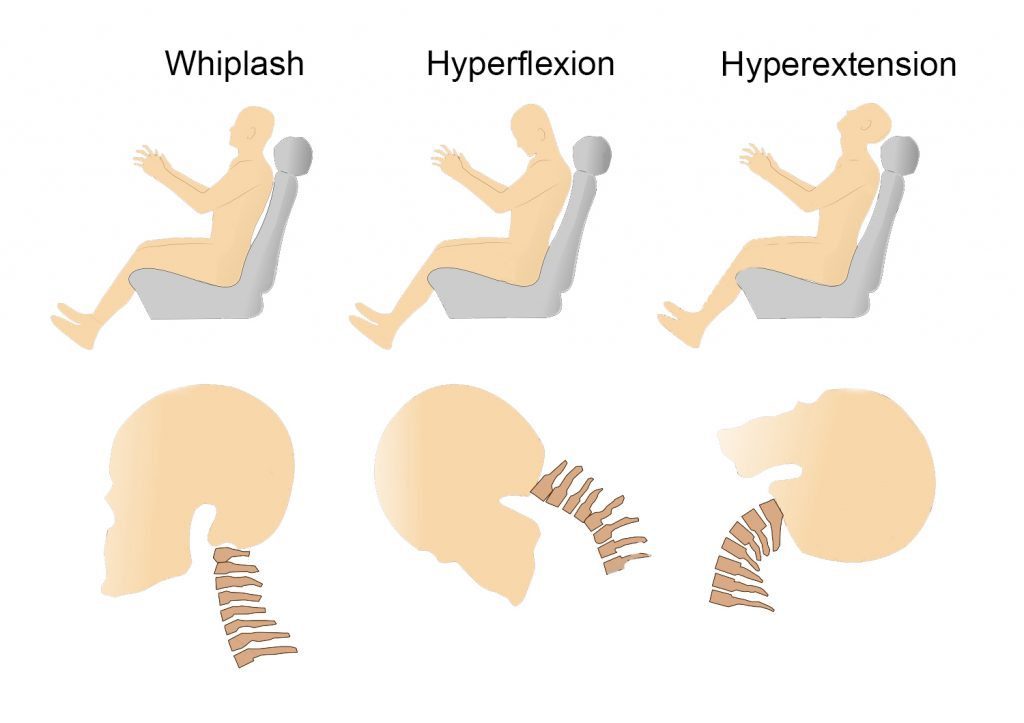
The cervical spine (throat) is really a sophisticated structure consists of vertebrae (spinal bones), intervertebral disks (behave as shock absorbers), muscles, ligaments, and nerves. The throat is is flexible and will move it different guidelines (jerk, swivel) while supporting the total weight of the head. However, that mobility can make the throat at risk of injury. Throughout a whiplash event, your throat goes swiftly and vigorously backward and forward. Pain can continue despite the injury itself has healed.
Whiplash can result in reduced productivity, temporary impairment, and perhaps substantial medical expenses.
Not Just Pain In The Neck
A person with whiplash’s chief criticism is upper back pain or neck pain. Other symptoms may include:
- Pain
- Stiffness
- Pain within the arm and/or shoulder that may expand to the hand(s).
- Paresthesias (including numbness or tingling) and/or weakness that’ll expand into the hand(s).
- Headache
You might possibly experience dizziness, nausea, ringing�in the ears, weakness, jaw pain, and blurred vision.
A Condition With�An Impact

The most frequent cause of whiplash is definitely a car accident in which the person�s vehicle (often stopped) is rear-ended by another car or truck. Because of this, the neck’s bones are forced�into a hyperextended position, while the upper vertebrae are hyperflexed, leading to an unusual S-shaped curve. This cycle typically damages the delicate tissues (structures, tendons, muscles) of the neck.
How Do I Realize I Have Whiplash?
Your doctor works a neurological and physical exam and carefully reviews your medical history. Because x rays don�t show injuries to delicate tissues, a CT (computerized tomography) scan or MRI (magnetic resonance imaging) could be executed.
What Does Treatment Involve?
Treatment is determined by the extent and level of the whiplash, and factor is given to general health and your age. Initial therapy can include:
- Short term rest (a day or two)
- Ice, for first day or two; then alternate ice and temperature
- Gentle�range-of-motion exercises
- Anti-inflammatory drugs (over-the-counter or prescription)
- Muscle relaxants
*When using ice, make certain the cool source is draped in a towel to safeguard your skin area. Don’t apply ice for longer than 15 minutes at a time.
If your pain does not disappear inside a reasonable timeframe, or when it is serious, your doctor may recommend trigger-point injections, physical treatment, chiropractic, massage, acupuncture, and/or use of a transcutaneous electrical nerve stimulation (TENS) device.
Soft�collars, although once trusted for whiplash, are not employed so frequently anymore, since by immobilizing the neck, the muscles can weaken and delay recovery.
Surgery is rarely warranted by whiplash. If your pain persists even after you’ve undergone nonsurgical treatment, your doctor might advise surgery, according to what structures have already been injured and how serious the harm is. It is vital that you understand the risks carried with surgery. Thus, you should have a thorough conversation with your doctor.

Call Today!
Sources
Whiplash. Mayo Clinic. http://www.mayoclinic.org/disorders-situations/whiplash/basics/meaning/con-20033090.
Whiplash. MedicineNet. / whiplash/article.htm Whiplash.
Whiplash Injury. Hopkins Medicine. Http://www.hopkinsmedicine.org/ healthlibrary/problems/adult/spine_shoulder_and_pelvis_disorders/whiplash_injury_85,p01388/.

by Dr Alex Jimenez DC, APRN, FNP-BC, CFMP, IFMCP | Chiropractic, Chronic Back Pain, Spine Care
Pain in the upper and/or mid back is not as common than lower back or neck pain. The upper back is called the thoracic spinal column, and it is the most secure part of the spine. The reach of movement in the upper back is limited because of the backbone�s attachments to the ribs (rib cage).
Upper back pain is generally caused by soft tissue injuries, like sprains or strains, muscle tension caused by bad posture, or looking downward for long time spans (eg, texting, mobile phone use).
- Pain
- Tightness
- Stiffness
- Muscle spasm
- Tenderness to touch
- Headache
What causes or leads to upper back pain?
An episode of upper back pain can be actuated by distinct moves and actions, including:
- Twisting
- Excessive bending
- Whiplash or alternative neck injury
- Lifting improperly
- Poor muscle tone
- Persistent movements, overuse
- Contact sports
- Carrying a load that is heavy
- Smoking
- Being overweight
Poor posture�working at the computer for�a long time without taking a break to walk around and extend, or in general can promote upper back pain. Both muscle fatigue and muscle pull, which often result from poor posture, can trigger the pain.
So what can I do about it?
Usually, upper back pain is not a cause for worry; however, it can be uncomfortable, painful, and inconvenient. Also, if pain develops suddenly and is serious�such as from an injury (eg, fall)�and, certainly if pain and symptoms (eg, weakness) progressively worsen you should seek medical attention.
Generally, the next home treatments can help relieve back pain that is upper.
- Short term rest
- Mild�Stretches
- Over the counter medicine, for example ibuprofen, (Motrin�), naproxen sodium (Aleve�), or acetaminophen (Tylenol�). Take with food, and don’t take more than the recommended dose.
- Use a cold pack that is commercially available or fill a plastic bag with ice and seal it wrap it. Apply to the painful area for 20 minutes every 2-3 hours for the first 2 to 3 days.
- Heat (after the very first 72 hours). After using moist heat, gently stretch the muscles to enhance mobility and alleviate stiffness.
Your physician may prescribe drugs, like a muscle relaxant or perform trigger point injections to greatly help break up muscle spasms. He or she may also recommend physical therapy to increase flexibility, mobility and alleviate pain. Other treatments your doctor may suggest include acupuncture and chiropractic care.
Most cases of upper back pain resolve in 1 to 2 weeks without additional treatment. When you’re able to perform them without pain restart your regular activities slowly. Don�t rush matters, however: you could interfere with your healing and risk reinjury.
As always, abrupt or severe pain ought to be dealt with promptly.
Call Today!
Composed by Stewart G. Eidelson, MD