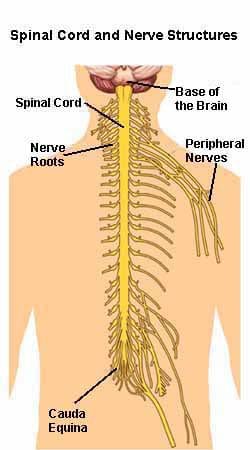
Understanding chronic pain and its alleviation requires an understanding of the anatomy of the nervous system. The nerves of the body are the carriers for the nervous system, as it sends messages to and from the brain. It is quite a complex system. The central nervous system consists of the spinal cord and the brain. The peripheral nervous system branches off the spinal cord.� Both the central and peripheral nervous systems can be affected by neuropathic pain, a type of chronic pain caused by nerve malfunction.
The peripheral nervous system contains 31 pairs of nerve roots that extend from the spinal cord to the rest of the body. There are the feeling nerves/sensory nerves and moving nerves/motor nerves. The chart shows how many pairs of spinal nerves are at each level of the spine.
Peripheral nervous system
The somatic nervous system is comprised of nerves that connect to the musculoskeletal system’s:
Bones
Ligaments
Tendons
Muscles
Skin
It’s what helps generate feeling and what generates the feeling of pain.
It makes sure the heart keeps pumping and the digestive system breaks down food correctly without thinking. Damage to any nerves can lead to the development of chronic pain. The nerves are responsible for sending pain messages, and if they get damaged, they can continually send a steady stream of pain messages.
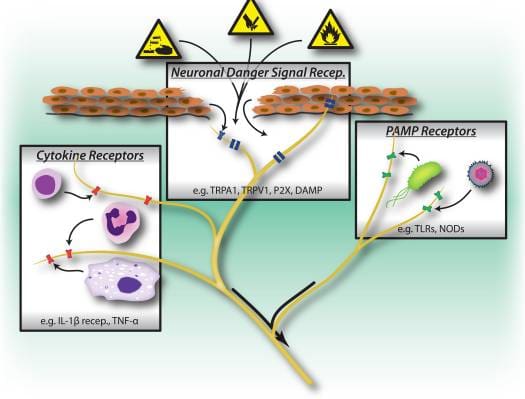
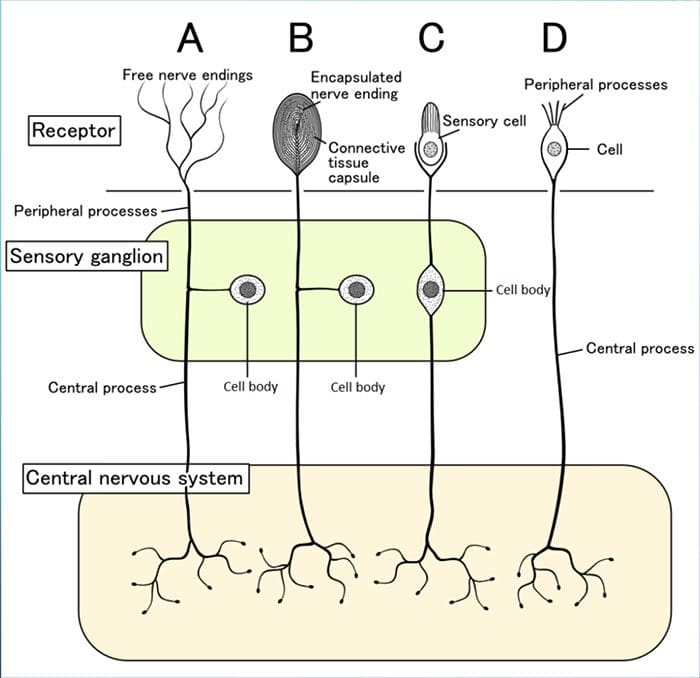
Nociceptorsare another important part of the nerve body. Nociceptors are receptors at the nerve endings, which are activated when something happens and triggers a pain message.
Example: Nociceptors�in the finger turn on and send a pain message through the peripheral nerve to the spinal cord, on to the brain when a finger gets smashed in the car door. Before the finger was smashed, the nociceptors were not on because there was nothing to make them respond.
One possible cause of chronic pain could be malfunctioning nociceptors. Even if there is not a direct or root cause, they could be continually sending pain messages. Using the same example of the finger smashed in the car door. The finger heals after the smashing but pain signals are still being sent. The�finger’s�nociceptor’s nerves could be malfunctioning, which is why they are still sending pain messages. The result is chronic pain.
Chronic pain symptoms
Chronic pain is pain that does not stop for more than 6 months. Pain is a subjective experience, it is different for everyone and takes on many forms. The pain could be:
Aching
Burning
Constant Soreness
Constant Stiffness
Electric
Sharp
Shooting
Throbbing
Tight
Chronic pain can lead to other problems, specifically social, psychological and emotional. It can:
Cause sleeplessness
Drain the body’s energy
Cause depression
Withdraw from activities/friends/family
Weaken the immune system because so much energy is spent dealing with the pain
These added conditions feed off each other. Example: Sleeping is impossible when the pain is active, the next day nothing gets done because of the tiredness. As a result of the inactiveness, a loss of self-esteem begins to set in causing withdrawal from family and social life.
Alleviation
To get the best treatment possible, take note of activities, diet, accidents, injuries, etc before the pain began. Depending on the diagnosis, chiropractic care could help. Research studies have shown that two weeks of regular adjustments/manipulation can bring significant improvement.
Physical therapy combined with stretching and strengthening exercises is part of the treatment for chronic pain. Physical therapy could consist of ice, heat, transcutaneous electrical nerve stimulation, ultrasound, and myofascial release. A chiropractor and other pain professionals can help bring alleviation, so you can fully live your life.
Fender benders/automobile accidents are the number one cause of spinal cord injuries. Auto accidents have accounted for more than a third of all reported cases of spine injuries. On average, individuals drive 30-40 miles every day. We love our cars, and we love to drive. Nothing throws us out of our normal world faster than a fender bender.
Auto accidents also account for other injuries like:
Whiplash
Spinal fractures
Herniated discs
A crash causes bodily injury, stress, and, in some cases, ongoing legal matters. However, these injuries don’t present symptoms until weeks or even months after the accident. With the vast number of automobiles on the road, as well as drivers being distracted, increases an individual’s chances of being involved in an accident. If a fender bender happens to you, it is important to recognize and understand what has happened to keep you safe and your injuries to a minimum.
Understand the Situation
The way you react seconds after a crash can impact the situation tremendously. Determine where you are injured, and if you are in any immediate danger. If for example there is a fire get out fast. Otherwise, stay inside.
Analyze Injuries
How bad are the injuries? Even if you feel fine, your head, neck, and back could still have been impacted. Identify where you hurt, and the intensity of the pain.
Wait for the Ambulance/Police
Try to stay as calm as possible inside your car/truck and wait for the police and ambulance. If your vehicle has flipped and you are stuck from the seatbelt, stay put and wait for someone that knows what to do and can see what is happening. A good portion of head and neck injuries happen when the occupant/s release their seat belts after a crash, not realizing that it can exacerbate an injury or create new ones.
Inform EMT’s
Once paramedics arrive, explain if you can, the areas of pain and injury. If you’ve previously suffered from injury or medical condition to the neck, back, or spine, let them know, as there is increased risk to individuals who already deal with medical conditions or bodily injuries.
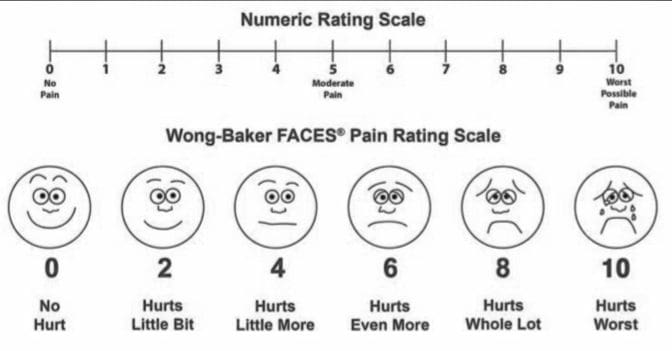
This information helps formulate how they will take the individual out of the vehicle and what type of emergency treatment to utilize. Be specific when telling the paramedics, use simple language and the 1-10pain scale to describe the level of pain and discomfort.
Chiropractor
If the injuries are minimal and you are released, be thankful. Still make an appointment with a chiropractor/physical therapist that specializes in fender bender treatment/therapy. Since some of these injuries can take a few days to show up, the fender bender could have impacted:
Bones
Joints
Ligaments
Nerves
This could have gone undiscovered at the initial post-crash examination. Therefore, ask for a complete examination, and talk with the chiropractor no matter how strange or insignificant the question may be. The chiropractor will understand what you are trying to explain. Your chiropractor may use a combination of spinal manipulation, manual therapy, and other techniques as part of a customized treatment program.
Minimize the chances
While we cannot control when a fender bender takes place we can take measures to guard against the occurrence, and give ourselves a higher chance of avoiding injury.
Always wear a seatbelt
Get out of the habit of distracted driving
Maintain your vehicle’s brakes and tires
Pay attention to traffic signs
Plan ahead if you know of construction closures so you can avoid those highly congested areas
Drive the speed limit depending on the traffic and weather conditions. Be courteous and think about all the drivers and people all around you. Maintaining a clear head and following this little bit of advice, you can minimize the chance of being in an auto accident or being seriously injured. We all have to be somewhere, if we cooperate we can get there on time, safely, and efficiently.
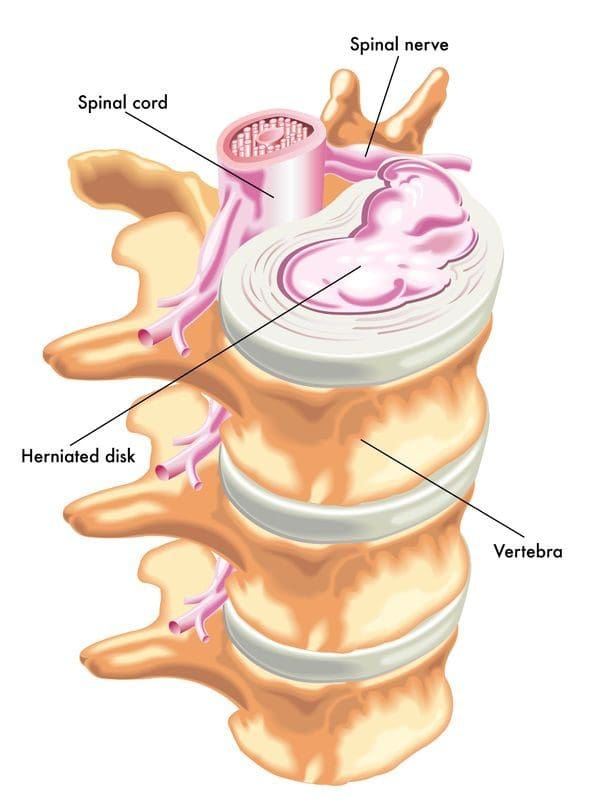
Individuals can develop a herniated, slipped or bulging disc in the neck or back.�Too much stress on the disc/s whether from poor posture, being overweight, injury, aging, and an unhealthy lifestyle can increase the risk for disc problems. Herniation can be caused by a combination of factors or physical injury. Several common questions about disc problems are answered.
Can Discs Slip
A slipped disc can mean a ruptured or herniated disc. We use the term slipped disc, however, the discs do not slip. Each disc is sandwiched between two vertebrae that are supported by a system of ligaments that hold the spine together. A bulging or herniated disc is the proper term.
Difference Between a Bulging and Herniated Disc
Disc disorders are categorized as contained or non-contained. Bulging disc is an example of a contained disc disorder.
Bulging
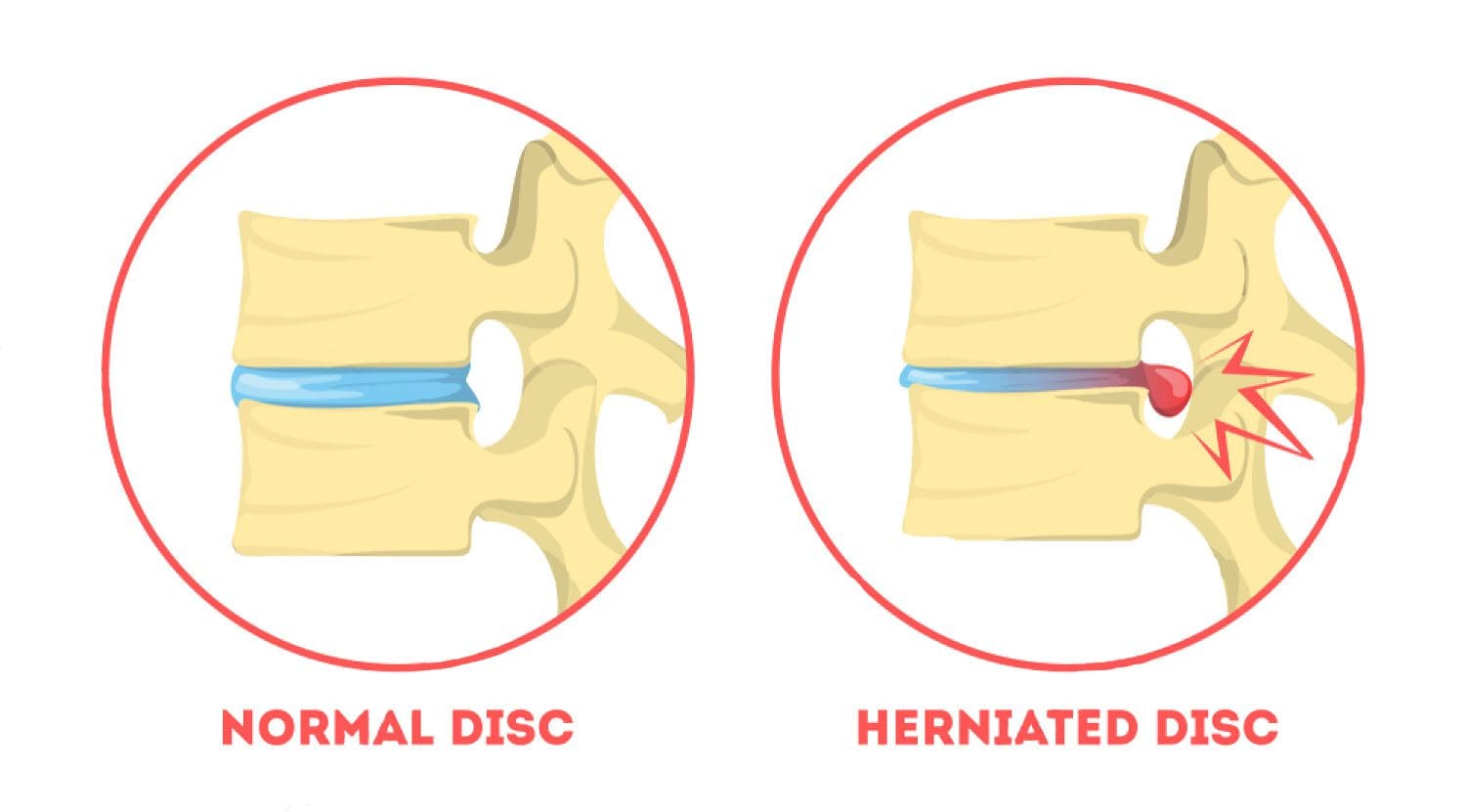
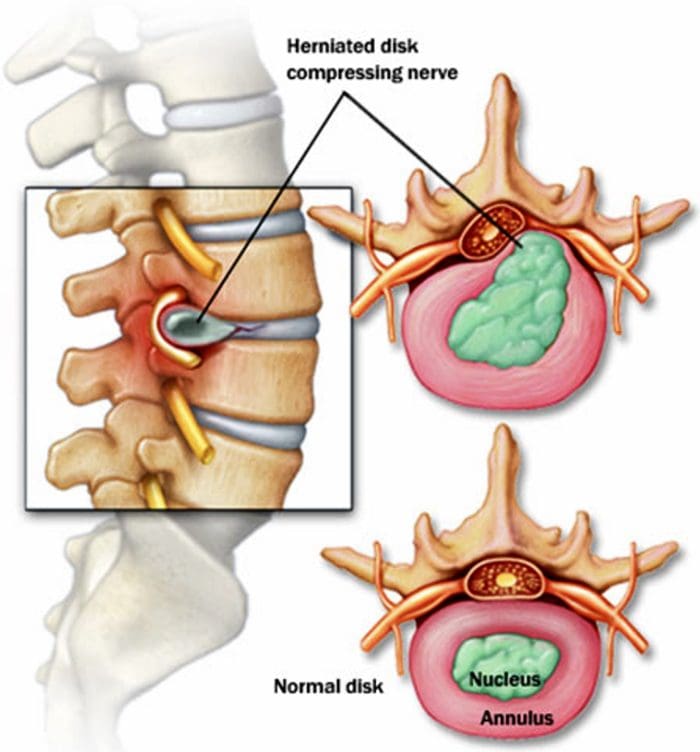
A bulging disc has not broken open meaning the nucleus is still contained inside the annulus fibrosus. The disc could protrude into the spinal canal without breaking open. The gel, the jelly interior does not leak out. The disc stays intact except a small bubble pops out.
Herniated/Ruptured
A non-contained disc has either partially or completely broken open, and that is a herniated/ruptured disc. Imagine a closed tube�being squeezed placed under pressure, which causes the contents to move wherever they can. If a portion of the tube is weak or there is too much pressure, the contents could leak or burst out. When a disc herniates the gel-like contents could spread out to the spinal cord and nerves.
Herniation Can Cause Pain
The disc’s gel-like nucleus has a chemical that irritates the nerves and causes them to become inflamed and swell. The chemical stays and continues to press on the irritated nerves. Sometimes fragments from the disc wall or the tube break off from the disc and drift into the spinal canal causing other nerves to inflame and swell. Based on the type of injury and condition of the discs, more than one disc could herniate, rupture, or bulge. Sometimes injury causes a combination of disc disorders.
Symptoms
Symptoms of a herniated disc can include:
Dull
Shooting pain
Muscle spasms
Cramping
Weakness
Tingling
Referred or radiating/traveling pain
Sometimes, however, a herniated disc does not cause any symptoms at all. When this happens it is called an asymptomatic herniated disc. Disc/s could be bulging or herniated, but if it or they are not applying pressure on the spinal nerve/sor the cord, symptoms like pain may not present. This makes a point about herniated disc symptoms that they are dependent on where you have a herniated disc.
Cervical Herniation Symptoms
With a herniated or bulging disc in the neck, then you could experience:
Neck soreness/pain
Muscle tightness
Cramping in the neck
Pain that travels down the arm/s
Tingling in the arm/s or hand/s
Weakness in the arm/s or hand/s
Lumbar Herniation Symptoms
With a herniated disc in the low back the following symptoms could happen:
Low back pain
Muscle tightness
Cramping in and around the low back
Radiating pain that travels down the leg/s
Tingling in your leg/s or foot/feet
Weakness in the leg/s or foot/feet
Referred Pain
Referred pain means that you have pain in another part of the body from the disc problem. An individual could have a bulging or herniated slipped disc in the low back and have pain in the leg. This is lumbar radiculopathy or sciatica. Usually, just one leg is affected. If you have a herniated disc in the neck, there could be referred pain going down the arm and into the hand.
Chiropractic Cares
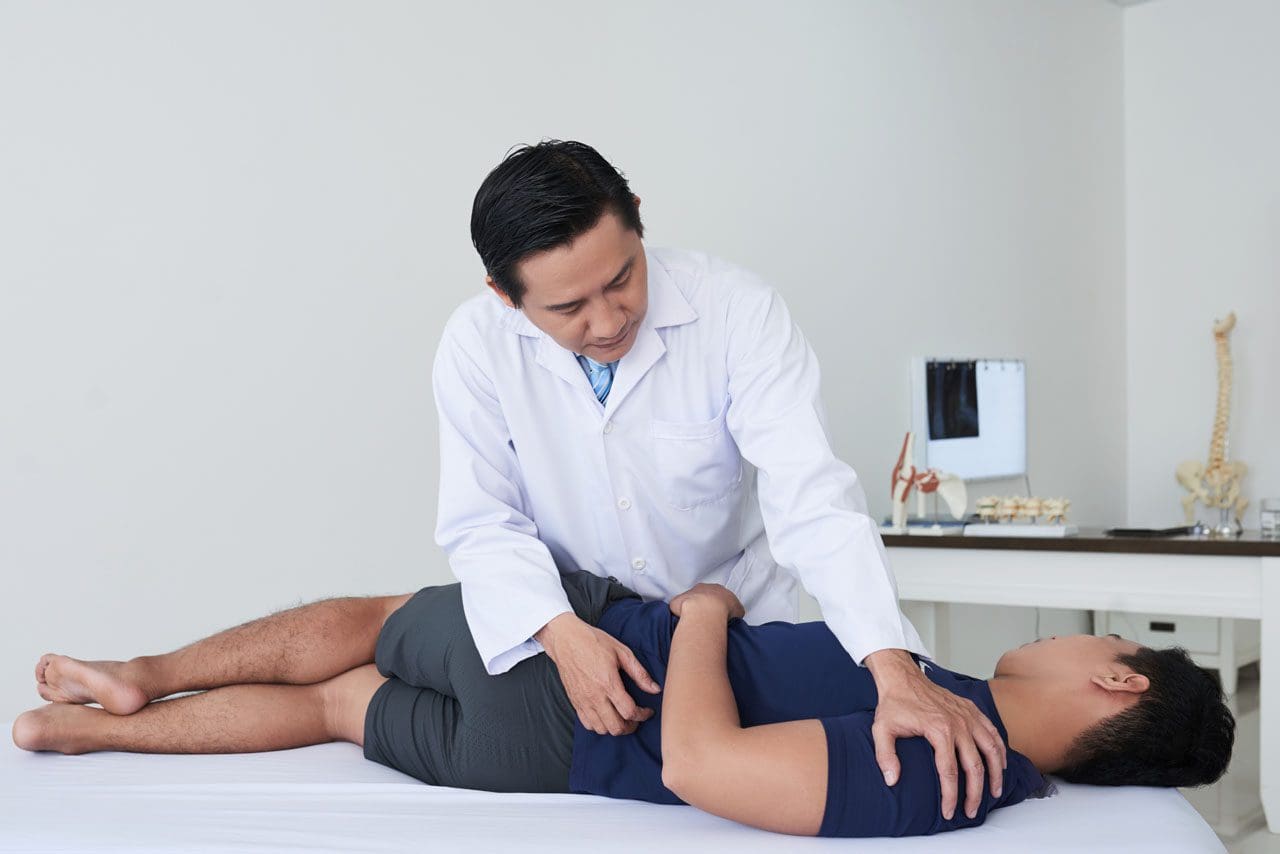
A chiropractor can help relieve back pain and other herniated disc symptoms. A chiropractor will go through your medical history, do a physical exam, and perform orthopedic and neurological tests. They are looking at several things. Orthopedic and neurological exams can help the chiropractor figure out what’s going on.
Are reflexes functioning properly?�Meaning are your nerves sending messages correctly. An example is a reflex test is when a doctor taps the knee with a hammer and the leg kicks.
Is there a loss of muscle strength?
Signs of muscle/s wasting away?
Is there a loss of sensation, tingling or numbness along the nerve/s path?
They will carefully look at posture, and will probably order an X-ray or MRI to help with the diagnosis.
Chiropractors evaluate the entire spine. Even if you only have lower back pain, your chiropractor will examine your neck, too. They want to see how well your spine is functioning overall. Remember what happens to one area of your spine can influence another part of the spine and/or body.
Pain from a herniated disc can make it difficult to enjoy daily life. Walking, sitting, and sleeping normally/comfortably can become a nightmare. You should make an appointment with a doctor or chiropractor if your herniated slipped disc symptoms last for more than two weeks.
Herniated Disc Treatment
NCBI Resources
In the United States alone, acute cases of lower back pain are the fifth most frequent reason for doctor visits and cause 40% of missed days off work. What�s more, it is the leading cause of disability worldwide.
Industrialization/modernization has impacted our food, the way we eat and our weight. Processed fast food can be purchased pretty much anywhere. We no longer expend physical energy to hunt and forage for food. Because of this back pain is probably the most common and most troublesome condition that individuals experience. Eight out of 10 will struggle with back pain at some point in their life. Low chronic back pain can become aggravated by a variety of triggers.
Mechanical stress
Excessive strain
Muscle weakness
Poor sleep position
No exercise
Excessive weight
These can all contribute to making back pain even worse. Obesity is defined as a disease. It is a serious disorder that affects adults and children. Being overweight can contribute to the development of coronary heart disease, diabetes, high blood pressure, and colon cancer. And it can also contribute to symptoms associated with:
Osteoporosis
Osteoarthritis
Rheumatoid arthritis
Degenerative disc disease
Spinal stenosis
Spondylolisthesis
Osteoporosis coupled with a sedentary lifestyle and an unhealthy diet can affect the density and the strength of the bones. When the structural integrity of the spine is compromised there is a higher risk for fracture. Vertebral fractures can be painful and disabling. Those diagnosed with osteoporosis probably have lost between 25% to 30% of bone density.
Being Overweight Affects the Spine
The spine carries the body’s weight and distributes the weight in an equal manner when resting and during activity. When there is excess weight the spine is forced to compromise which can lead to injuries and structural damage. The area of the spine that is the most vulnerable is the low back or lumbar spine.
Exercise is Important
When we don’t exercise it leads to:
Poor flexibility
Weak back muscles
Weak pelvis
Weak thighs
This can increase the lower back’s curve, which causes the pelvis to tilt forward in an unhealthy manner. This is detrimental to proper posture and when our posture weakens, the rest of the body follows.
Age Relation
These disorders of the spine might be thought of as the normal aging process. This is true that as we age, the body tissues begin to change and the spine’s disc wear down. But, if you are overweight, chances are you have, or will have pain in the back.
Weight Loss Reduces Back Pain
Weight loss can contribute to a partial or complete reduction in the back pain symptoms. The research between weight loss and back pain is still ongoing but numerous practitioners report cases of patients experiencing a serious reduction in pain after losing the excess weight. Because the extra weight is taken off the spine further stress is avoided. Especially when a chiropractor realigns the vertebral column. According to the American Spine Society, individuals that stay around 10 pounds of their proper weight are those least likely to experience back problems.
Back Health and Physical Activity
Chiropractic is one of the most popular treatments for back pain. With chiropractic adjustments, pain is alleviated but also the root cause of the problems is corrected. Spinal adjustments can help even more when combined with a proper diet and weight loss treatment program.
Besides weight loss, exercising and strengthening the core muscles can guarantee the proper distribution of the body�s weight. Stronger muscles, less weight, and better posture will provide amazing long-term benefits. If you want to know how to incorporate weight loss and exercise in your daily routine, speak to your chiropractor. They are ready to guide you along the way. If you aren�t currently seeing a chiropractor, give us a call. We�re here to help!
Chiropractic Weight Loss
NCBI Resources
While chiropractic adjustments and associated therapies can ease back pain symptoms and aid in healing, lifestyle changes like a healthy diet are just as important. The more a patient can get to their ideal weight, the easier it becomes to treat and eliminate the back pain.
There are different kinds of head and upper cervical disorders that are also known as:
Upper neck disorders
Craniovertebral junction – CVJ – abnormality
Craniocervical disorders
Some are present at birth while others are developed later in life. Whether congenital or acquired, they share many of the same symptoms.
Neck Pain/Headache
Where your skull and spine meet is where upper cervical disorders take place. Neck pain along with headaches along the back of the head are the most common symptoms. People with craniocervical disorders often experience neck pain and headache in combination and symptoms worsen with head and neck movement. Even just a sneeze or cough can cause pain. Neck pain can also spread to the arms if spinal nerves are compressed.
Spinal Cord Compression
The more complex upper cervical disorders involve spinal cord compression. When the spinal cord gets compressed, nerve problems can happen that make daily function a challenge.
With spinal cord compression, neurological symptoms can present like:
Weakness in the arms, legs or both
Loss of sensation and awareness of the limbs called positional sense
There can be an electrical/shooting pain or tingling running down the spine and into the legs when pitching the neck forward called Lhermitte sign
Hot and cold sensational loss in hands, feet or both
All of these can cause malformation and physical changes in the neck. The neck may appear short, webbed, or twisted. There can also be a limited ability to move the neck.
Symptoms can also be caused by brain and cranial nerve pressure
Conditions like platybasia, basilar invagination, and craniocervical tumors can place pressure on the brain stem and the cranial nerves around it. If this happens the following symptoms can occur:
Eye issues like abnormal eye movements and double vision
Throat and speech problems like hoarseness, slurred speech, and swallowing problems
Loss of coordination
Sleep problems like sleep apnea
Vertigo Faint Feeling
Some individuals could experience a set of symptoms that don’t occur too often called vertebrobasilar ischemia.
This happens when the head position changes placing pressure on the cranial arteries and cutting off the blood supply.
The result is:
Weakness
Confusion
Light-headedness
Feeling faint
Vertigo or a dizzy spinning sensation
Syringomyelia
Syringomyelia is a fluid-filled cyst known as a syrinx that forms inside the spinal cord. If the cyst grows, it can damage the spinal cord causing painful neurological symptoms throughout the body that include weakness, and numbness. In extreme cases loss of ability to feel heat or cold in the neck, hands, and possibly throughout the spine. The hand muscles can become paralyzed.
Quality of Life with Upper Cervical Disorder
While some individuals have no symptoms associated with a craniocervical disorder, others experience intense pain and neurological dysfunction. There are treatment options that can help you successfully manage and eliminate symptoms.
Chiropractic
When headaches present it usually means there is a misalignment in the cervical spine. This is often combined with tight muscles in the neck, shoulders, and surrounding area. Pressure on the nerves can cause sharp shooting pain along with a continual dull throbbing sensation.
A chiropractor will assess the area and then move forward with an adjustment to relieve the pressure and pain. Chiropractic medicine does not just focus on relieving symptoms but finding the root cause and correcting the problem. In addition, the chiropractor will take the time to educate you on the importance of diet, exercise, stretching, and making healthy lifestyle choices.
Whiplash Massage Therapy
NCBI
The effectiveness of chiropractic care for headaches has been proven by many research studies. Chiropractic is not only excellent for treating headaches, but is gentle, non-invasive, does not require medications, and is known for being free of side effects.
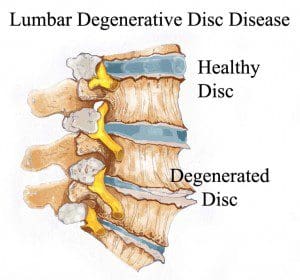
Degenerative disc/s is a condition where the wearing down of the spinal discs causes pain and discomfort. All of our spines go through this, but not everybody�feels pain. Chiropractic care is a treatment option for degenerative disc disease (DDD). The first step is to determine the disc-related problem.
Chiropractic Diagnosis
During an initial evaluation, your chiropractor will review your medical history, along with a discussion about current symptoms and the possible causes.
With degenerative disc/s��the main symptom is back pain. A chiropractor will examine potential causes:
How the mechanics of the spine are operating.
Thinning discs could bulge and place added pressure on the nerves of the spine.
Spinal stenosis can also cause back and leg pain.
A physical and neurological exam can pinpoint problem areas, like:
Where joint motion is restricted
Range of motion
Abnormal spinal curvature
Muscle spasms
Trigger points
An injury like a sprain or strain
There are different reasons why your neck or back may hurt, and your examination may include some basic tests. Observance of how you walk, and overall posture. This will help to observe body mechanics and how your spine moves. Imaging tests like x-rays or MRI are common to find the problem area and cause. The chiropractor will diagnose your condition and create a treatment plan for pain alleviation.�
Degenerative Disc/s
The disc/s can lose their integrity, and begin to thin and possibly tear. This increases unwanted pressure on nerves and creates friction between the vertebrae. Degenerative disc disease can go through various stages. With the progression, the negative symptoms become more pronounced.
Stages
1
The first stage of degenerative disc disease may go unnoticed by the individual but can be identified by a chiropractor or other medical professional. The loss of the natural curvature of the spine can indicate the beginning of degenerative disc disease. Pain may not be apparent, but extra pressure is being placed on the spine which can lead to more rapid aging of the spine, nerves, joints, etc.
2
The degradation of discs becomes more apparent in the second stage. They may look thinner, and it is common to see deformations in the bone, such as bone spurs. The curvature of the spine will become more unnatural and the spinal canal may become more narrow. Stage 2 is often where you will begin to notice some pain and discomfort.
3
Stage 3 is marked by a more extreme change in the posture and curvature of the spine, along with more pain and loss of mobility. Nerve damage is common and scar tissue typically begins to form. Discs are even thinner than before, which can sometimes cause even more deformation of the bones.
4
The final stage of degenerative disc disease is the most severe and is typically considered irreversible. Discs are at their thinnest or gone altogether. The flexibility of the spine is extremely limited and pain is often considerable. Nerve damage can be severe and the bones of the spine may even begin to fuse together.
Care
Chiropractic care is a preferred treatment for degenerative disc/s disease. Because it is gentle and non-invasive, chiropractic does not create undesirable side effects like prescription meds and surgery are more prone to do. The earlier the stage of the disease, the more successful the treatment. But chiropractic can help even in the most extreme cases. The goal of chiropractic is to improve joint mechanics with improved spinal motion and reduced inflammation. The chiropractor may also work on improving the function of the intervertebral discs.
Treatments can include:
Adjustment/s
One of the most effective treatments is to ensure the spine is in proper alignment. Loss of alignment, which can happen due to injury or just regular wear and tear, puts extra stress on the spine which can accelerate disc/s degradation. Adjustments bring the body back into proper alignment.
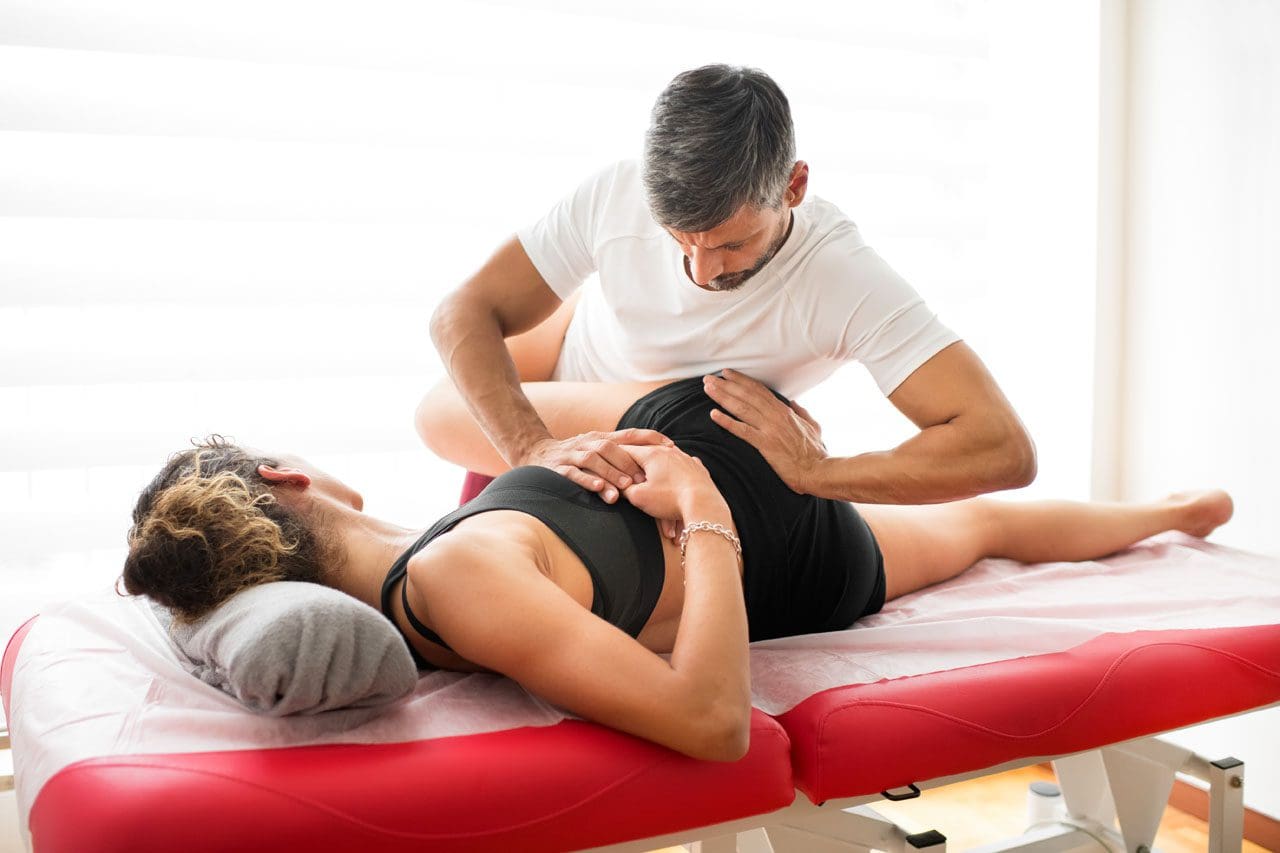
Spinal manipulation will identify the joints that are restricted or those that have abnormal motion. They will use a gentle thrusting technique.
Flexion-distraction technique uses a gentle, non-thrusting technique that is typically used to treat herniated discs and spinal stenosis.
Instrument-assisted manipulation uses a hand-held instrument. The chiropractor or therapist applies gentle force without thrusting directly into the spine.
Therapeutic massage
A physical therapist can perform different types of massage to reduce muscle tension. Manual joint stretching and resistance techniques can also relieve pain and other symptoms.
Trigger point therapy
Here tight painful points on a muscle/s are identified and places direct pressure on these points to relieve tension.
Decompression
Spinal decompression uses gentle but firm pressure to bring space back between the vertebrae. Space allows blood flow to return and healing to happen. Decompression is an important treatment to complement adjustments.
Electrical stimulation
A low-frequency electrical current stimulates your muscles and reduces inflammation.
Ultrasound
This type can help reduce muscle spasms, stiffness, and pain with sound waves that penetrate deep into your muscle tissues. This creates a gentle heat and enhances blood circulation.
With chiropractic, prevention is the key, and therapeutic exercises can prevent symptoms from getting worse. Seek treatment for your back and neck pain now. Our team can help you feel better and educate you on living a healthier life. Your chiropractor will work hard to treat you and address all your symptoms. Chiropractors treat the whole body and not just symptoms.�
Herniated Disc El Paso, TX
NCBI Resources
A disc can also�herniate and place pressure on the nerves that flow into the feet, and cause pain, tingling, and numbness. The wear and tear of the spine combined with a herniated disc�can pinch the nerves that go to the feet.
Everyday exercises that increase the strength of the abdomen/core along with the back muscles will optimize your body to resist spinal injuries.
Your spine goes through a lot each day. It provides structural support and houses the central nervous system that carries impulses from the brain throughout the body. When it doesn’t work as it is supposed to, the entire body can be affected. Chiropractic has long been praised as a way to keep the back healthy.
The spine is the primary support for the body. When it breaks down, the body suffers. Regular chiropractic care keeps the spine properly aligned, which keeps the body in proper alignment.
Chiropractic helps with joint health as well as the health of the related muscles and ligaments. Your chiropractor can also recommend stretching and strength-building exercises to help keep your spine strong and in optimal form.
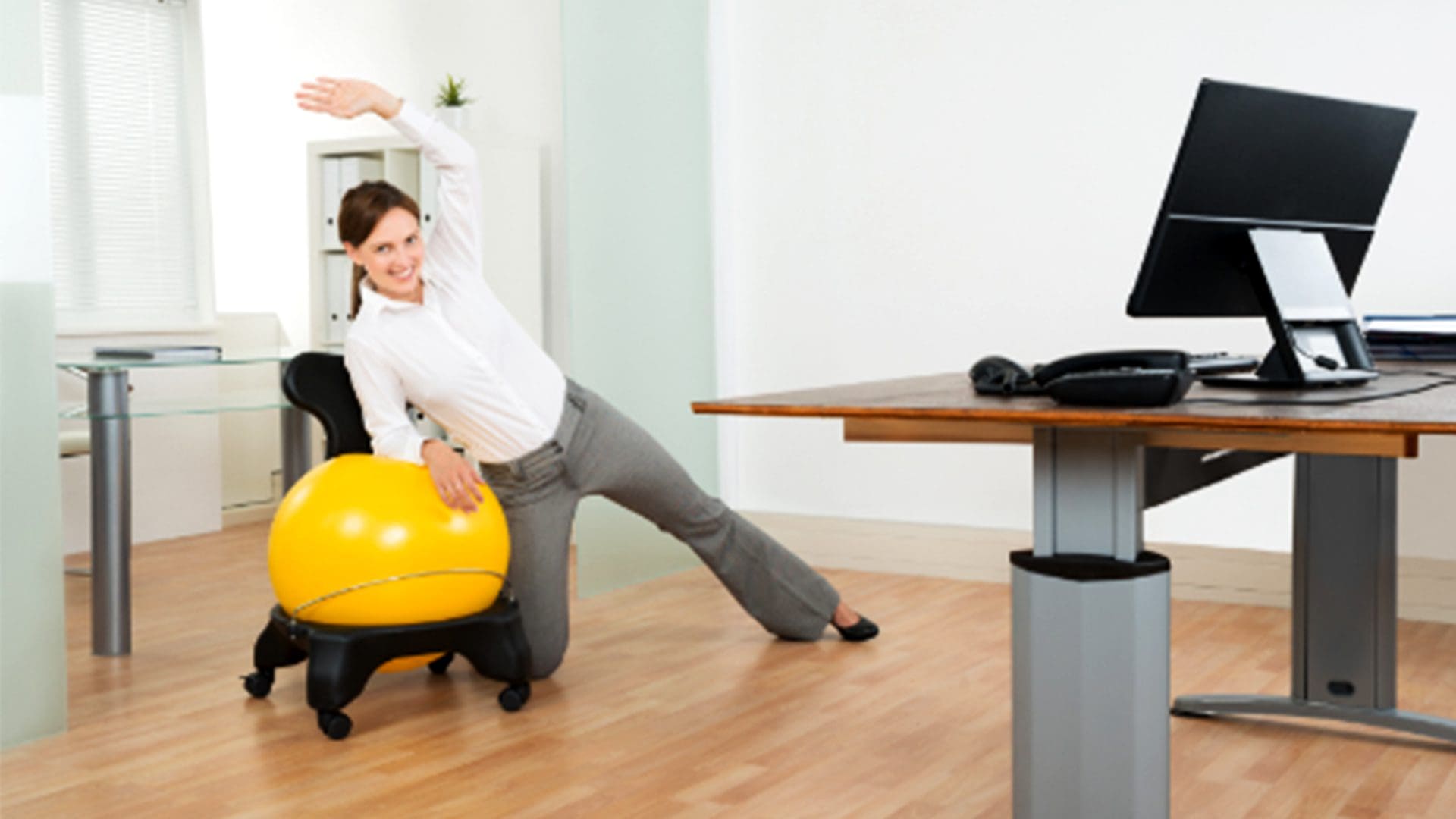
Try the following everyday exercises as the day progresses.
Rotate the shoulders, forward and back.
Turn the head slowly from side to side.
Imagine an airplane taking off, just over your right shoulder. Feel the neck stretch, and follow the plane as it goes up, around and down, until it disappears behind the other shoulder. Reverse and do the same from the left side.
When there is a break or pause in your day waiting at the elevator or for a traffic light to change pull in the abdominal muscles, tighten and hold for 8 seconds without breathing. Relax and increase the count gradually when you feel ready. After a week or so, practice breathing the way you normally do with your abdomen flat and contracted. Try this when you sit, stand, and walk.
Before rising out of bed in the morning, push your head against the pillow and hold for 6 seconds. This strengthens the neck muscles and helps you wake up.
Chiropractic helps keep the spine flexible and loose to prevent injury/s. A strong flexible spine reduces the chances of a misaligned back and could experience pain.Your quality of life will greatly improve being more flexible and mobile.
Continued Everyday Exercises
As you get ready for your day, brushing teeth or shaving, pull in the abdominal muscles and hold them as hard as you can.
Make a habit of starting your day holding stomach muscles in.
In the car, waiting in traffic make the most of it, grab the steering wheel on either side of the wheel at three o’clock and nine o’clock. Try to pull the wheel apart and hold it for a few seconds. Then do the same but push inward. You can also push with your palms against the roof. Also push against your knees using the muscles in your forearms, chest, and abdomen.
Waiting for an elevator, push your toe against the bottom of a wall and hold. You should feel it in your rear, abdomen and low back.
You can strengthen your grip and arms by squeezing a solid object like an office landline phone receiver and then let go and repeat.
While talking on the phone, stand over your desk waste-basket with legs straight, squeeze in using the muscles in your legs and hips.
You can also choose to do some exercises that can be done anywhere and in public.
Chiropractic Improves Posture
Proper posture is beneficial for the entire body. Proper alignment keeps the muscles working correctly and in strong fashion. This prevents over wear and tear on the joints surface and keeps the muscles working effectively and efficiently. Good posture prevents injury and helps with organ function.
Chiropractic optimizes overall health by keeping the body balanced and in tip-top form. Many think that its only purpose is to treat back pain, but it actually focuses on total body wellness.
Reduce Excessive Foot Pronation with Custom Foot Orthotics
NCBI Resources
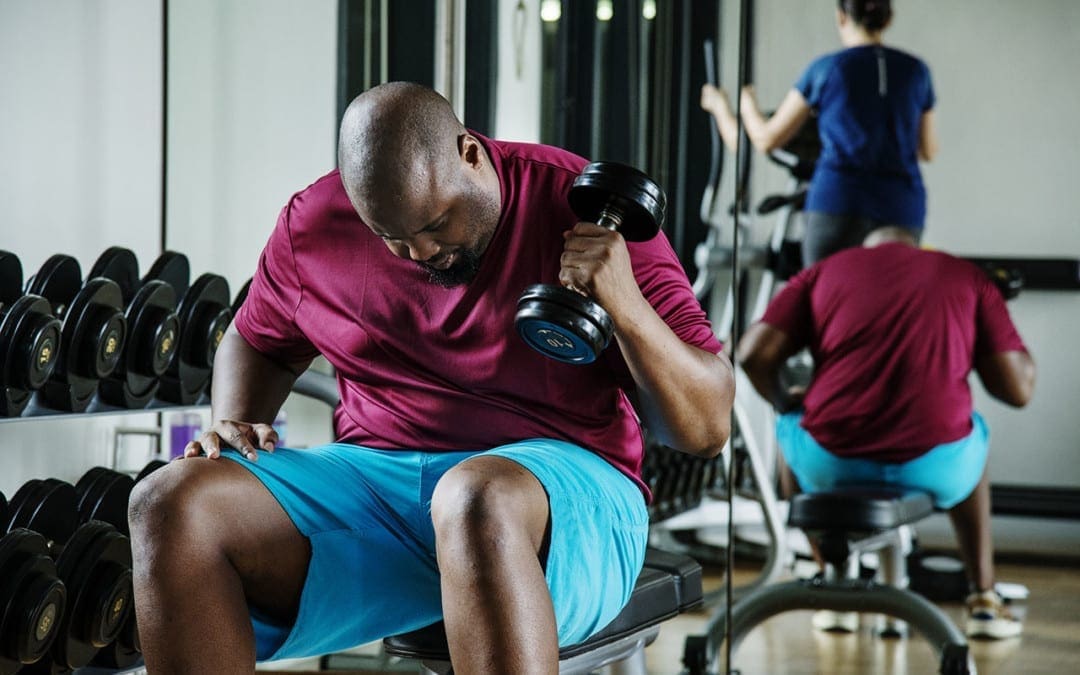
Having healthy body composition means�there needs to be more lean body mass i.e.�muscle mass�and less body fat.�Strength training/CrossFit�helps by raising the�metabolic rate�while lowering body fat. The increased muscle strength helps maintain correct posture and body mechanics in whatever you do.
Physical activity reduces the chance of injury while increasing physical performance like being able to climb stairs or carry groceries with added confidence.
IFM's Find A Practitioner tool is the largest referral network in Functional Medicine, created to help patients locate Functional Medicine practitioners anywhere in the world. IFM Certified Practitioners are listed first in the search results, given their extensive education in Functional Medicine