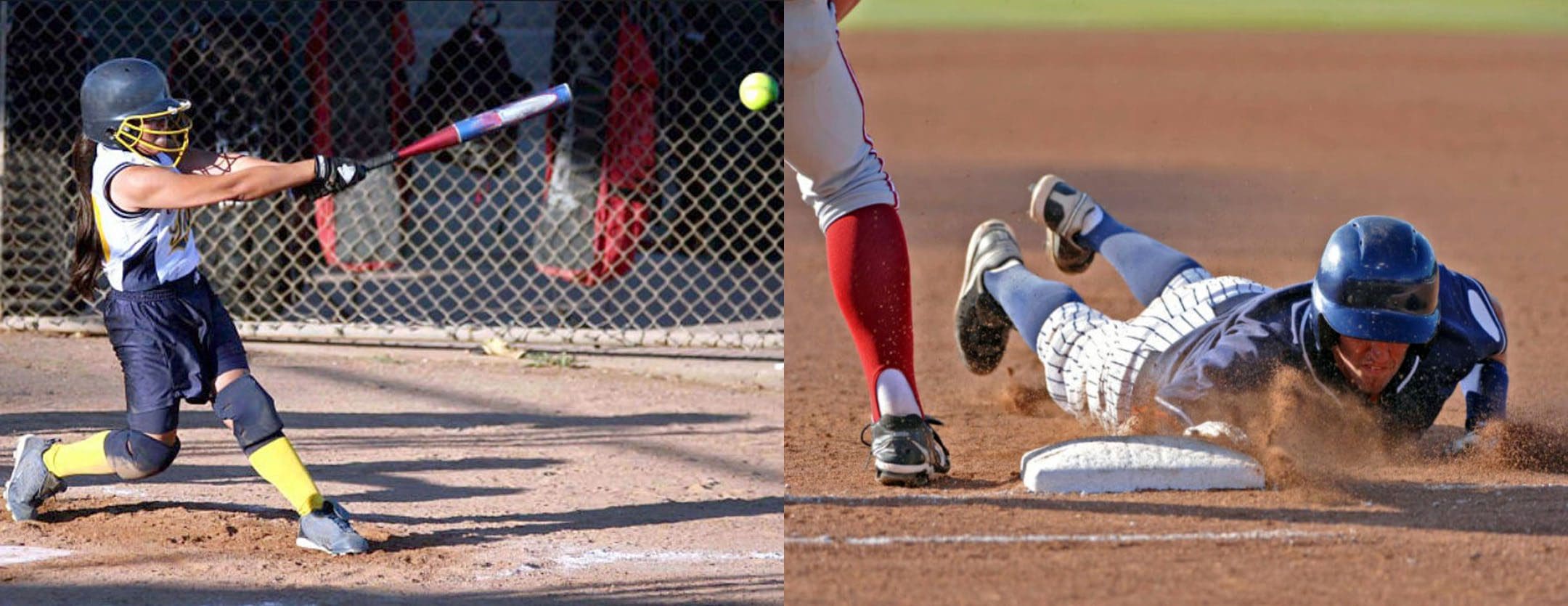
Softball and baseball require running, jumping, throwing, and swinging movements. Even for the fittest athletes and weekend warriors, the body and the neuromusculoskeletal system will go through overuse injuries, throwing-related injuries, sliding injuries, falls, collisions, and getting hit by the ball. Chiropractic and physical therapy can assist athletes by integrating strength training, body realignment, and rehabilitation injury recovery.
Softball and Baseball Injuries
Baseball and softball injuries are generally defined as either acute/traumatic or cumulative/overuse injuries. Both types can occur in various body areas, for example, a knee injury caused by a fall or quick repositioning shift.
Acute/Traumatic
Injuries occur from traumatic force or impact.
Overuse/Cumulative
These occur over time from repeated stress on the muscles, joints, and soft tissues.
Often athletes return too soon to play, not giving the injury enough time to heal fully.
They begin as small aches and pains that can progress into chronic conditions if not treated.
Shoulder
Shoulder overuse injuries are very common. Constantly performing the throwing movements and high-speed throwing strains the joints, muscles, tendons, and ligaments.
In softball, bicep injuries are more common than shoulder injuries.
In baseball, the overhead throwing position leads to shoulder problems.
Frozen Shoulder
Characterized by a restricted range of motion and pain.
Athletes with frequent shoulder injuries have an increased risk.
Shoulder Instability
Softball and baseball players are more susceptible to injury from overhead throwing, which stretches the shoulder capsule and ligaments.
Shoulder instability can lead to loose joints and dislocation.
Shoulder Separation
This is the tearing of the ligaments that connect the shoulder blade to the collarbone.
This is often a traumatic injury that occurs during a collision or fall with outstretched hands.
Shoulder Tendinitis, Bursitis, and Impingement Syndrome
These are overuse injuries in which the shoulder joint becomes inflamed, restricting movement.
This is an injury to the growth plate on the inside of the elbow.
It can be caused by the wrist flexors pulling on the inside.
It is typically attributed to overuse and improper mechanics when throwing.
Tennis Elbow
This overuse injury on the outside of the elbow makes it difficult to lift or grasp objects.
Hand and Wrist
Softball and baseball can cause hand and wrist injuries from catching, colliding, falling, and overuse. Damage to a hand or wrist is typically caused by repetitive stress and/or a sudden impact.
Finger Fractures
These can be caused by impact on the ball or falls.
This can happen during contact with another player or diving for a ball and hitting the ground hard or at an awkward angle.
Sprains
A fall or impact from the ball or another player can cause these.
Tendinitis
This is an overuse injury, often from pitching and/or throwing.
Back
Catchers are especially prone to back injury because of the crouched position and overhead throwing.
Softball pitchers also experience back strain from the windmill pitching action.
Common conditions include chronic muscle strains, herniated discs, low back issues, sciatica symptoms, and pain.
Knee
Softball and baseball players quickly twist or rotate their knees, making them more susceptible to injuries. Sprains, meniscus tears, ACL tears, and hamstring strains are common.
Aggressive twisting and pivoting can cause swelling, stiffness, and pain.
Running and sudden changes in direction can result in acute knee injuries and overuse injuries.
Knee issues require examination for proper diagnosis.
Other common injuries include ankle sprains, stress fractures, and tendonitis in the foot and ankle.
Chiropractic
Chiropractors work with a massage therapy team to treat various musculoskeletal conditions. Chiropractic specializes in spinal adjustments and other treatments, including joint manipulation, myofascial release, MET techniques, trigger point therapy, and electrical stimulation. It encourages expedited recovery for sports-related injuries because instead of focusing on just the injuries, chiropractic assesses the mechanics of the whole body through proper alignment and release of constricted tissues. Adjustments of the spine and extremities allow the body to realign for better overall functionality, reduce pressure, improve blood circulation, and reduce inflammation to promote increased and thorough healing.
Improving Athletic Performance Through Chiropractic
References
Greiner, Justin J et al. “Pitching Behaviors in Youth Fast-Pitched Softball: High Pitching Volumes With Unequal Pitch Counts Among Pitchers are Common.” Journal of pediatric orthopedics vol. 42,7 (2022): e747-e752. doi:10.1097/BPO.0000000000002182
Janda, David H. “The prevention of baseball and softball injuries.” Clinical orthopedics and related research,409 (2003): 20-8. doi:10.1097/01.blo.0000057789.10364.e3
Shanley, Ellen, and Chuck Thigpen. “Throwing injuries in the adolescent athlete.” International Journal of sports physical therapy vol. 8,5 (2013): 630-40.
Shanley, Ellen, et al. “Incidence of injuries in high school softball and baseball players.” Journal of athletic training vol. 46,6 (2011): 648-54. doi:10.4085/1062-6050-46.6.648
Trehan, Samir K, and Andrew J Weiland. “Baseball and softball injuries: elbow, wrist, and hand.” The Journal of hand surgery vol. 40,4 (2015): 826-30. doi:10.1016/j.jhsa.2014.11.024
Wang, Quincy. “Baseball and softball injuries.” Current sports medicine reports vol. 5,3 (2006): 115-9. doi:10.1097/01.csmr.0000306299.95448.cd
Zaremski, Jason L et al. “Sport Specialization and Overuse Injuries in Adolescent Throwing Athletes: A Narrative Review.” Journal of athletic training vol. 54,10 (2019): 1030-1039. doi:10.4085/1062-6050-333-18
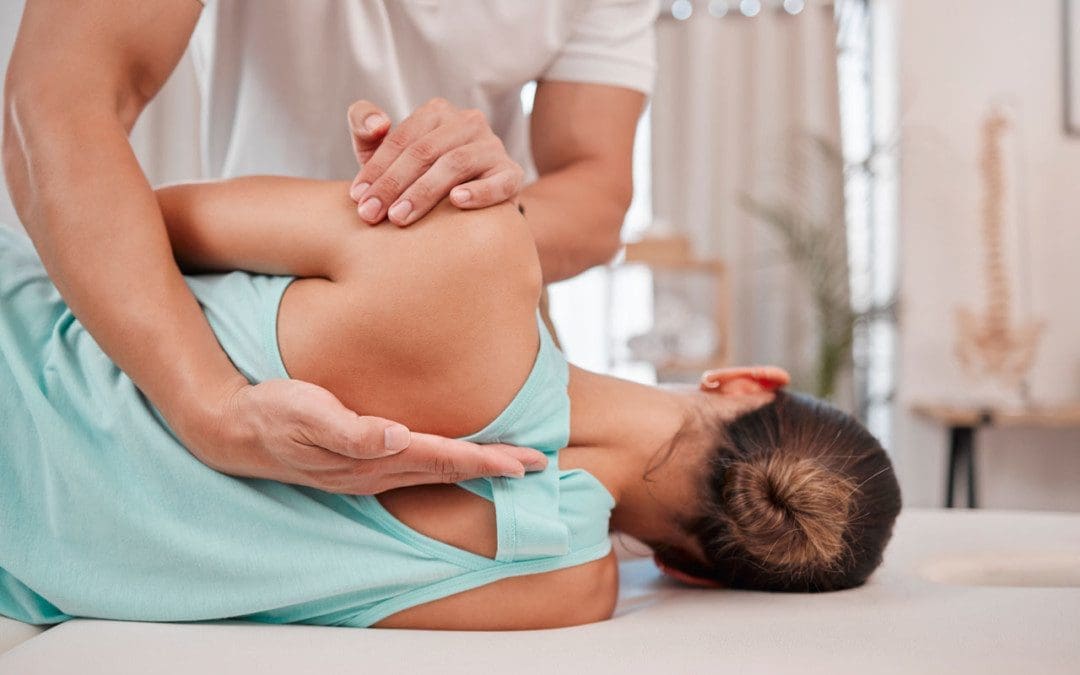
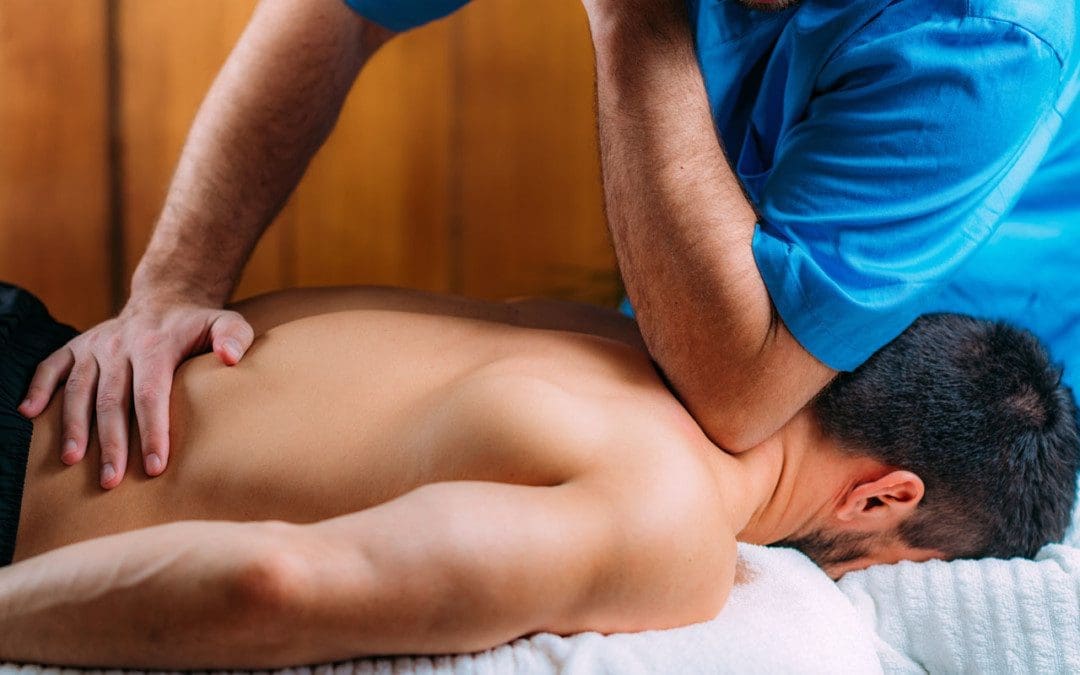
Intercostal muscles are the muscles within the rib cage, commonly called the intercostals, which connect the ribs and make up the chest wall. An intercostal muscle strain refers to an injury between two or more ribs. If these muscles become overstretched, restricted, or suffer damage, it can cause inflammation and significant pain in the middle and upper back. Intercostal muscle strain is a common injury in athletes and physically demanding jobs. Chiropractic care and massage therapy can realign the vertebrae with the ribs and loosen and relax the muscles to increase circulation and restore mobility and function.
Intercostal Muscle Strain
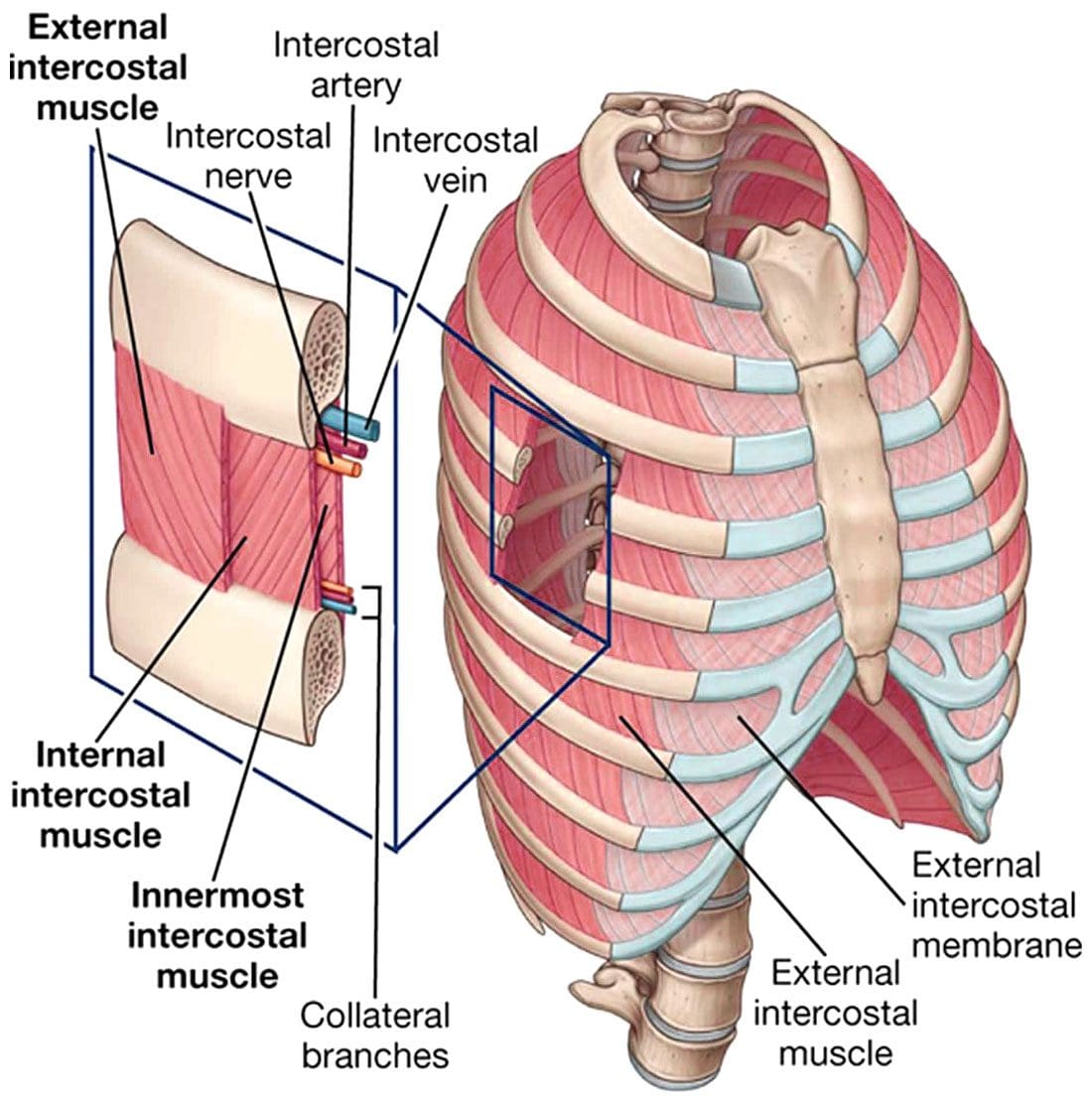
The intercostal muscles have different layers attached to the ribs to help build the chest wall and assist in breathing. There are 11 intercostal muscles on each side of the rib cage. Each set is located between connected ribs in the upper and mid-back and consists of the following:
External
These are the outermost intercostals, responsible for expanding the chest during breathing to help inhale air and allow full deep breaths.
The external intercostals originate at the lower edge of a rib and run diagonally to attach to the upper edge of the rib below.
They are found in the rib cage’s back, sides, and front.
Internal
These sit directly underneath the externals and help collapse the chest during breathing to exhale.
The muscle fibers run perpendicular to the external intercostals, moving diagonally from front to back along the ribs, and are in the entire rib cage.
Innermost
These sit directly underneath, run parallel to the internal intercostals, and run from the back of the rib cage to each side.
The veins, arteries, and nerves lie between the internal and innermost intercostals.
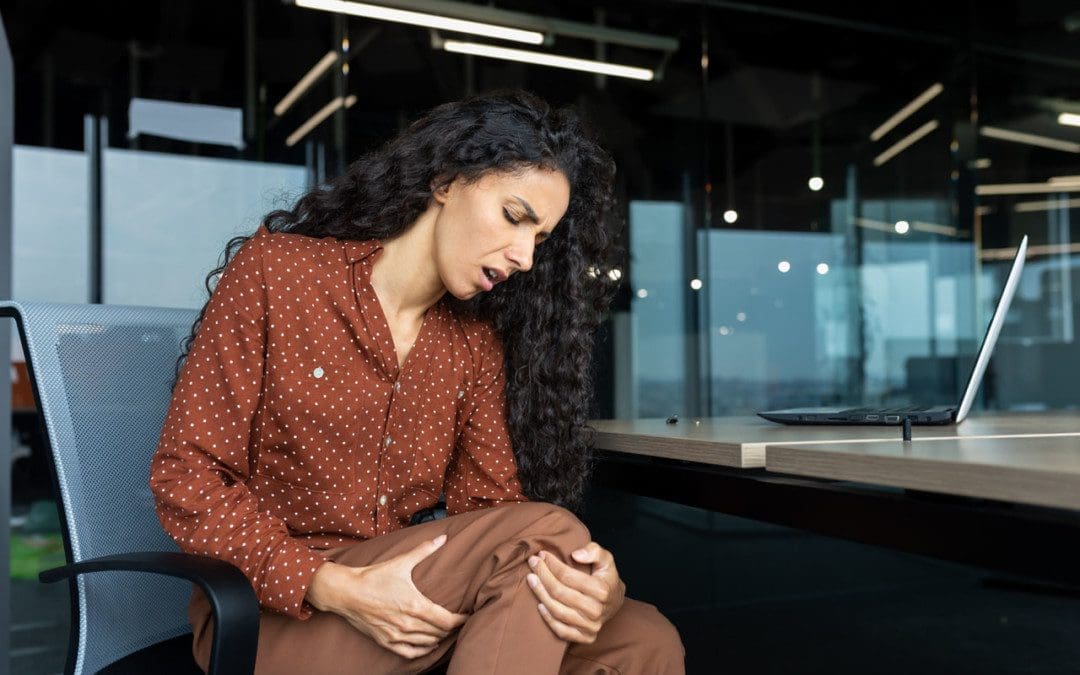
When an intercostal muscle gets twisted, overused, or stretched too far, it can tear, causing muscle strain. Often radiating pain along the rib cage is experienced that extends to the back.
Causes
An intercostal muscle strain often occurs as the result of an injury or overexertion of the muscles. Common causes include:
Trauma to the rib cage, such as from a fall or automobile collision.
Impact trauma from sports or physical activities.
Over twisting the torso beyond its normal range of motion from lifting weights, sports, yoga postures, or dance positions.
Repeatedly reaching overhead for work or tasks like cleaning or painting.
Lifting heavy objects above shoulder height.
Repetitive torso movements.
A sudden increase in physical activity that the body is not used to can also lead to intercostal muscle strain.
This can happen when a lack of conditioning or unhealthy postures weaken muscles.
Symptoms
The signs and symptoms can vary, depending on the severity and cause. Symptoms can include:
Intercostal muscle spasms.
Mobility difficulties.
Inflammation, swelling, and sensitivity in the affected area.
Stiffness and tension, causing upper back pain.
Upper back and rib pain.
Tenderness in the area between the ribs.
Muscle rigidity when bending or twisting the upper body.
Gradual worsening pain after repetitive movements.
Worsening pain when coughing, sneezing, or breathing in deeply.
Severe and sudden pain, particularly if caused by direct trauma to the chest or back.
Chiropractic
Diagnosis involves the individual’s medical history and a physical exam to check for movement limitations and assess affected and sensitive areas. Once the inflammation is reduced, chiropractic and physical therapy will focus on the following:
Pain relief treatment.
Breathing exercises.
Posture training.
Stretching under supervision.
Strengthing exercises.
Most cases fully heal within 6 to 8 weeks.
Rib Muscle Injury
References
De Troyer, A et al. “Mechanics of intercostal space and actions of external and internal intercostal muscles.” The Journal of clinical investigation vol. 75,3 (1985): 850-7. doi:10.1172/JCI111782
Lord, Michael J, and William G Carson Jr. “Multiple Rib Stress Fractures.” The Physician and sports medicine vol. 21,5 (1993): 80-91. doi:10.1080/00913847.1993.11947575
Morrison W. What is an intercostal muscle strain? Medical News Today. Jan 2020
Page P. Current Concepts in Muscle Stretching for Exercise and Rehabilitation. International Journal of Sports Physical Therapy. 2012;7(1):109-119.
Park, Kyung-hee, et al. “Difference in selective muscle activity of thoracic erector spinae during prone trunk extension exercise in subjects with slouched thoracic posture.” PM & R: the Journal of Injury, Function, and Rehabilitation vol. 7,5 (2015): 479-84. doi:10.1016/j.pmrj.2014.10.004
Tran H. Causes of Intercostal Muscle Strain. Spine-health. October 2017
Yoo, Won-Gyu. “Effect of a combined thoracic and backward lifting exercise on the thoracic kyphosis angle and intercostal muscle pain.” Journal of physical therapy science vol. 29,8 (2017): 1481-1482. doi:10.1589/jpts.29.1481
Yoo, Won-Gyu. “Effect of thoracic stretching, thoracic extension exercise and exercises for cervical and scapular posture on thoracic kyphosis angle and upper thoracic pain.” Journal of physical therapy science vol. 25,11 (2013): 1509-10. doi:10.1589/jpts.25.1509
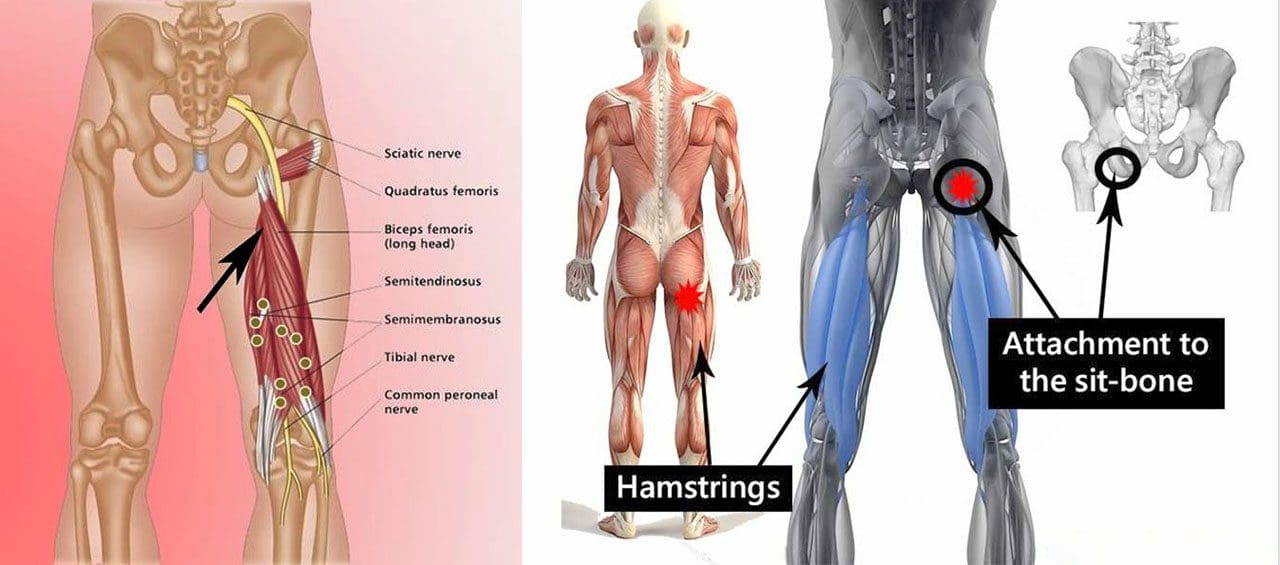
The hamstring muscles attach, through a tendon called the proximal hamstring tendon, to the ischial tuberosity, the bones used to sit deep in the buttock muscles. When the tendon is subjected to overuse/repetitive stresses and strains, the internal structure can become compromised, leading to weakness and pain symptoms. This is known as proximal hamstring tendinopathy. Tendinopathy is an overuse injury where the tendon is repeatedly strained until microscopic tears form. It is common in athletes that do a lot of running but also in individuals that sit for prolonged periods. If left untreated, high hamstring tendinopathy can lead to progressive degeneration of the tissues, leading to chronic weakness, pain, and dysfunction.
High Hamstring Tendinopathy
The hamstrings are a powerful muscle group that extends the hip and flexes the knee. They experience stress and pressure during activity and inactivity/sitting and are susceptible to strain injuries. Tendons attach muscle to bone and are designed to take compressive and tensile weight/loads that stretch or flex. A tendon is made up of fibrous tissue containing organized type 1 collagen. Tendons receive blood; however, the supply is less where the tendon attaches to the bone and is commonly where tendinopathy occurs.
Injury
A hamstring injury involves the bruising, irritation, or tearing of the hamstring tendon or muscle tissue. Severity can range from:
Microtears that cause stiffness and pain symptoms but heal fast on their own.
Severe ruptures that cause debilitating pain, dysfunction and require medical intervention.
The tendon attaches to the ischial tuberosity or sitting buttock bone. Tendons can have a spasm-like reaction to sudden or quick shift changes. A sudden change can cause adverse changes to the tendon. Too much load on the tendon beyond its ability to recover can cause the structure to change and the collagen to break down/tear like a rope tearing and unraveling. High hamstring tendinopathy happens around the hip area and presents as buttock or upper thigh pain. Individuals report deep, dull, radiating buttock pain during walking, running, and prolonged sitting or driving. Sometimes the sciatic nerve can become irritated or entrapped by an affected tendon’s scar tissue, causing sciatica-like symptoms.
Stages of Tendon Pathology
Reactive Phase
Caused by an acute overload of physical activity or inactivity.
The tendon will thicken temporarily to decrease the stress; however, there may be no inflammation.
The tendon can return to normal if the load is reduced or sufficient time for recovery and repair is allowed.
Disrepair
Chronically overloaded.
Unsuccessful healing.
More negative tendon changes occur.
Reversibility is possible with load management and targeted exercises to stimulate the tendon and surrounding tissues.
Degenerative
Continual progression of adverse tendon changes.
More common in older individuals.
Continue load management and strength training to maximize the tendon’s tolerance.
Chiropractic Treatment
A chiropractic therapy team will develop a personalized treatment program to improve tendon structure and strengthen the hamstrings, gluteal, and side abdominal muscles. They will begin with tendon symptom-relieving massage to loosen the muscles and get the blood circulating, MET-targeted stretches to lengthen the muscles, and spinal and pelvic adjustments to realign the body.
Sciatica Explained
References
Buckley, Mark R et al. “Distributions of types I, II and III collagen by region in the human supraspinatus tendon.” Connective tissue research vol. 54,6 (2013): 374-9. doi:10.3109/03008207.2013.847096
Lempainen, Lasse, et al. “Expert opinion: diagnosis and treatment of proximal hamstring tendinopathy.” Muscles, ligaments, and tendons journal vol. 5,1 23-8. 27 Mar. 2015
Mattiussi, Gabriele, and Carlos Moreno. “Treatment of proximal hamstring tendinopathy-related sciatic nerve entrapment: presentation of an ultrasound-guided “Intratissue Percutaneous Electrolysis” application.” Muscles, ligaments, and tendons journal vol. 6,2 248-252. 17 Sep. 2016, doi:10.11138/mltj/2016.6.2.248
Ono, T et al. “Estimation of tensile force in the hamstring muscles during overground sprinting.” International Journal of sports medicine vol. 36,2 (2015): 163-8. doi:10.1055/s-0034-1385865
White, Kristin E. “High hamstring tendinopathy in 3 female long-distance runners.” Journal of chiropractic medicine vol. 10,2 (2011): 93-9. doi:10.1016/j.jcm.2010.10.005
Wilson, Thomas J et al. “Sciatic Nerve Injury After Proximal Hamstring Avulsion and Repair.” Orthopedic Journal of sports medicine vol. 5,7 2325967117713685. 3 Jul. 2017, doi:10.1177/2325967117713685
Mountain biking is a recommended sport for building muscle power and strength, endurance, and agility. Mountain biking uses bicycles designed to ride off-road and over rough terrain. The sport requires core strength, endurance, balance, and self-reliance. This is because riders are often far from civilization. Riders must learn to repair broken bike parts and fix flat tires to avoid being stranded. Mountain biking gear that riders carry includes a heavy-duty backpack with plenty of water, food, tools for repairs, and a first aid kit. Using the appropriate gear and equipment will help make the next ride safer and more comfortable.
Mountain Biking Gear
The first piece of equipment is a properly fitting and well-maintained mountain bike. There are all types of bicycles for every type of rider and trail. There are variations of bikes with full suspension, front suspension, disc brakes, V-brakes, different wheel sizes, and frame materials. It is recommended to consult a professional or visit a bicycle shop specializing in mountain biking to match the individual with the best bike. The right bike makes for a better ride.
Brakes
Disc brakes offer more secure braking when going high speed and needing the option to stop safely and at the proper distance.
Frame Size
The bike’s frame must be properly set up so the individual can easily step over and pedal at the correct height.
Suspension
Individuals that plan on taking on all kinds of terrains need the bike to absorb the shock and impact and are recommended to consider a full-suspension bike or one with a suspension fork.
Wheels
Mountain bike wheels range in size from 26 to 29 inches, and depending on the terrain and speeds, the right wheel diameter is key.
Larger wheels accelerate slower but provide improved traction.
Smaller wheels are lighter and easier to maneuver.
Helmet
A helmet is the most important safety gear that significantly reduces the severity of head injuries; no one should ride without one. Mountain bike helmets generally have a visor to help block the sun when riding so individuals can focus on the trail and not be distracted by glare. Three styles of mountain bike helmets are available, depending on the type of activity.
A trail mountain biking helmet covers part of the face and has a visor to help protect the head from the sun and other weather elements.
Trail helmets are recommended for mountain biking, road, and trail cycling.
Full-Face
Full-face helmets are essential for downhill trails at high speeds and on varying terrains.
They feature an adjustable visor and chin protection for added safety.
Eye Protection
Eye protection helps keep dirt, dust, and debris out of the eyes and helps have clear vision in dark shadows and bright sunlight.
Glasses or goggles protect the eyes if not using a full-face helmet.
Choosing a frame with an interchangeable lens system that comes with different lenses for varying light conditions is recommended.
Hydration Pack
Wearing a hydration packwhen riding provides easy access to hands-free hydration.
This is important for anyone exercising for more than two hours and with limited access to refills on the trail.
Mountain Biking Shoes
Beginners can wear comfortable sports shoes when starting.
Riders who begin riding more frequently will eventually want to transition to mountain biking shoes.
Cleated bike shoes work with pedals and lock the rider’s feet to the bike.
There is a variety of cycling footwear, but all-mountain bike shoes provide thorough traction off the bike, durability, comfort, and a heavy-duty sole for optimal pedaling efficiency.
Clipless Pedals
Clipless pedals are recommended for cross-country trail riding.
Cycling shoes and clipless pedal systems lock the shoes into the pedals for secure and efficient pedaling and can be unclipped easily with a twist of the foot.
Use shoes and pedals that work together.
Gloves
Mountain bike gloves provide additional padding and finger coverage.
They absorb the shock and protect the hands from falls on rough terrain.
The handlebar grips are padded, but additional cushion from the gloves is beneficial for long or downhill rides for extra comfort and protection.
Full-finger gloves offer the best coverage, protection, and grip on the brake levers.
These shorts provide a padded inner liner like underwear that increases comfort and reduces chafing.
The exterior looks like a baggy pair of shorts made of tough, abrasion-resistant fabric to take the wear and tear.
Bicycle Repair Kit
A repair kit can be attached to the bike saddle and holds all the essential tools for mechanical trouble or a flat tire.
The repair kit should include a bicycle multi-tool, an extra tube and patch kit, tire levers, a mini pump, and emergency cash.
Riders should keep an identification card with a list of contact numbers in the seat bag in case of a serious injury or other emergencies.
First Aid Kit
Riders can lose traction on loose rock and crash on the trail.
A first aid kit with various bandages, tape, pain relievers, and antiseptic wipes to treat cuts, scrapes, blisters, rashes, and everything in between is highly recommended.
Also include an eye drop solution, a small pocketknife, moleskin, energy gels, and an emergency whistle.
Biking Franklin Mountains
References
Alena Høye, Bicycle helmets – To wear or not to wear? A meta-analysis of the effects of bicycle helmets on injuries, Accident Analysis & Prevention, Volume 117, 2018, Pages 85-97, ISSN 0001-4575, https://doi.org/10.1016/j.aap.2018.03.026.
Ansari, Majid, et al. “Mountain Biking Injuries.” Current sports medicine reports vol. 16,6 (2017): 404-412. doi:10.1249/JSR.0000000000000429
Clark, Gregory, et al. “Do Mountain Bikers Know When They Have Had a Concussion and, Do They Know to Stop Riding?.” Clinical Journal of sports medicine: official journal of the Canadian Academy of Sports Medicine vol. 31,6 (2021): e414-e419. doi:10.1097/JSM.0000000000000819
Hall, Cougar et al. “Pedal-Assist Mountain Bikes: A Pilot Study Comparison of the Exercise Response, Perceptions, and Beliefs of Experienced Mountain Bikers.” JMIR formative research vol. 3,3 e13643. 13 Aug. 2019, doi:10.2196/13643
Impellizzeri, Franco M, and Samuele M Marcora. “The physiology of mountain biking.” Sports medicine (Auckland, N.Z.) vol. 37,1 (2007): 59-71. doi:10.2165/00007256-200737010-00005
Providing the body with adequate hydration and nutrition at the right time can maximize performance abilities, endurance, and muscle repair and restoration. Eating the right foods at the right time will fuel the body to support intense exercises. That means plenty of energy for cardiovascular and strength training. The optimal combination of pre-workout nutrition depends on the type of workout and how long it takes for the body to absorb the nutrients to get moving. Injury Medical Chiropractic and Functional Medicine Clinic can develop a fitness and nutritional plan customized to the individual’s needs and health goals.
Pre-Workout Nutrition
The three main macronutrients are carbohydrates, proteins, and fats when preparing pre-workout meals and snacks. Ratios are based on the specific needs of the workout. For example, going for a one-mile jog or a light aerobics class requires different amounts for different purposes. The longer and more intense the exercise, the more food is needed. Individuals may only need to modify or adjust their eating habits slightly for light workouts. Their roles vary:
Carbohydrates
Fats
Proteins
Each has a different role in supplying fuel for powering through physical activity.
Carbohydrates
Carbs are an important fuel for exercise.
Carbs can be found in grains, fruits, vegetables, and dairy products.
These are the easiest energy foods for the body to turn into glucose.
Glucose is stored in the muscles as glycogen.
Without enough carbohydrates, the body will be depleted of energy and become exhausted.
Proteins
This macronutrient is found in poultry, eggs, fish, and nuts.
Takes longer for the body to digest.
Protein helps the body feel full.
The body uses various nutrients to repair and build muscles.
Getting protein throughout the day can help with recovery after a workout.
Fats
The body burns fat for longer low to moderate-intensity workouts, such as a long run or bicycle ride.
However, fat takes more effort and time for the body to digest.
So, eating healthy fats is not the best right before exercise.
Pre-Workout Nutrition Guidelines
The exact mix of foods/nutrients ideal for the workout depends on when the individual can eat in relation to the time of the activity and intensity of the exercise.
Two to Four Hours Before Exercising
Have a meal containing a mix of carbohydrates, fats, and protein.
Oatmeal with fruit and nuts, a turkey sandwich with vegetables and some fruit, or a chicken and rice bowl with vegetables and avocado.
One to Two Hours Before Exercising
A light meal or snack.
Cereal with low-fat milk, peanut butter with crackers, or a fruit smoothie.
Avoid foods high in fiber and fat because they take longer to digest and can lead to digestion/stomach issues during exercise.
Before Morning Exercise
Going to the gym or out for a run first thing in the morning, something small, like a banana or granola bar.
For individuals that can’t eat early, don’t force yourself.
Have an extra portion at dinner or a snack before bed to have enough fuel for the morning.
During Workout
Have easy-to-digest carbs if the exercise session lasts more than an hour.
A banana or pretzels.
Sports drink during the workout contains electrolytes and minerals like sodium, magnesium, and potassium that assist in regulating functions like muscle contractions lost as the body sweats.
Hydration
Liquids are lost when the body sweats. Sipping water before, during, and after the workout is important.
Even a small dip in hydration levels can lower exercise performance and lessen mental sharpness.
Drinking two to three cups of water two to three hours before exercise is recommended.
During the workout, you should get at least a half to a full cup of water every 15 to 20 minutes.
After the workout, replenish hydration levels with two to three more cups.
Pre-Workouts
References
Jensen, Jørgen, et al. “The role of skeletal muscle glycogen breakdown for regulation of insulin sensitivity by exercise.” Frontiers in physiology vol. 2 112. 30 Dec. 2011, doi:10.3389/Phys.2011.00112
Jeukendrup, Asker. “A step towards personalized sports nutrition: carbohydrate intake during exercise.” Sports medicine (Auckland, N.Z.) vol. 44 Suppl 1, Suppl 1 (2014): S25-33. doi:10.1007/s40279-014-0148-z
Lowery, Lonnie M. “Dietary fat and sports nutrition: a primer.” Journal of sports science & Medicine vol. 3,3 106-17. 1 Sep. 2004
Ormsbee, Michael J et al. “Pre-exercise nutrition: the role of macronutrients, modified starches, and supplements on metabolism and endurance performance.” Nutrients vol. 6,5 1782-808. 29 Apr. 2014, doi:10.3390/nu6051782
Rothschild, Jeffrey A et al. “What Should I Eat Before Exercise? Pre-Exercise Nutrition and the Response to Endurance Exercise: Current Prospective and Future Directions.” Nutrients vol. 12,11 3473. 12 Nov. 2020, doi:10.3390/nu12113473
Shirreffs, Susan M. “The importance of good hydration for work and exercise performance.” Nutrition Reviews vol. 63,6 Pt 2 (2005): S14-21. doi:10.1111/j.1753-4887.2005.tb00149.x
Healthy posture and movement are essential for everyone, but especially for mothers-to-be. Practicing healthy posture is one of the most important contributions to a healthy pregnancy. Proper body alignment decreases low back and neck discomfort symptoms and muscle fatigue. A chiropractic therapy team can educate on maintaining a healthy posture when standing, sitting, and lying down throughout pregnancy, alleviate any subluxations, maintain optimal alignment, and keep the muscles relaxed through massage techniques.
Pregnancy Posture
Many changes occur in the musculoskeletal system during pregnancy for the growing fetus. This impacts posture, balance, and gait. Pregnancy posture can significantly influence the comfort and/or pain levels in the pregnant and postnatal body. This includes:
Sleeping in the best position while pregnant.
Sitting in the best position during pregnancy.
These little changes and adjustments impact the health of the mother and baby.
Postural Changes During Pregnancy
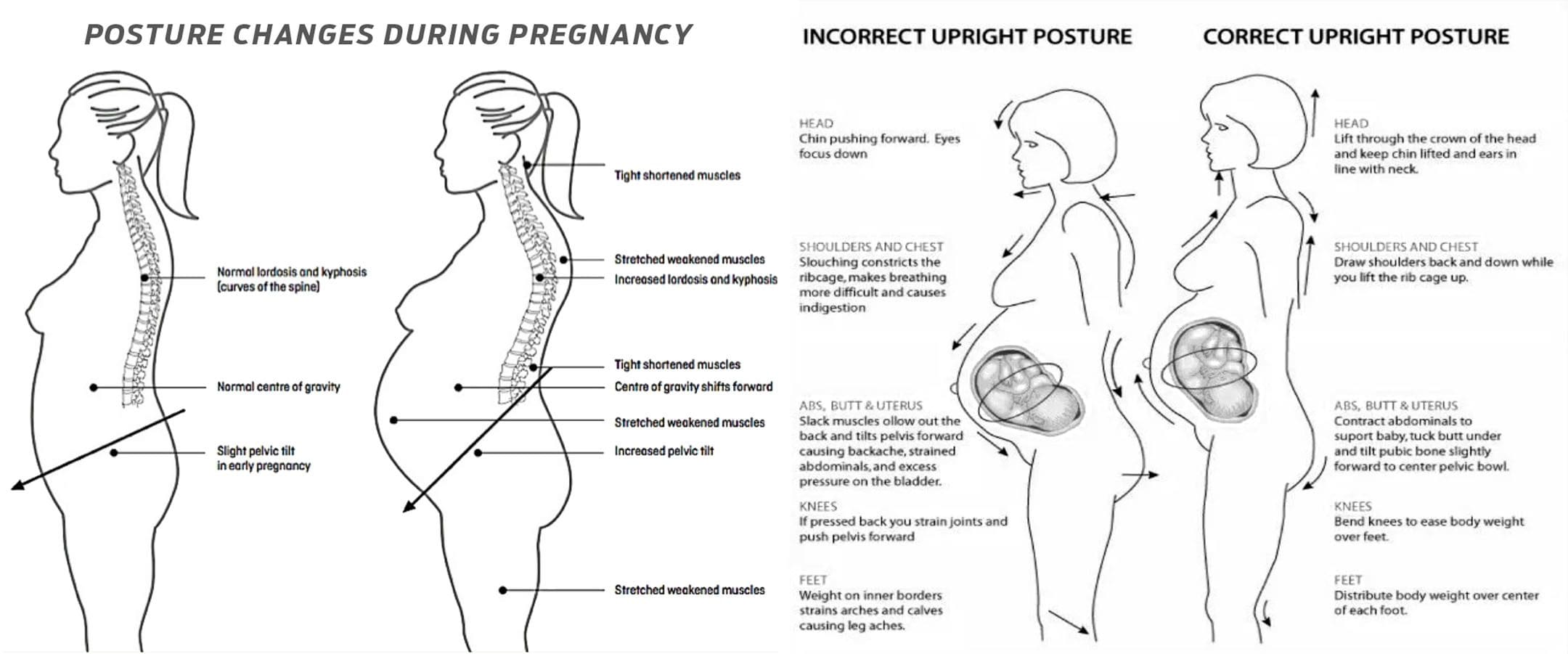
During pregnancy, several factors work against maintaining correct and healthy alignment. For one, the baby’s weight causes the lower back to sway as the center of gravity shifts forward.
Increased Lumbar Lordosis
The concave curvature in the spine can become more pronounced because of the forward pull of the growing fetus.
The normal slight forward curvature of the spine in the neck or cervical area is called cervical lordosis.
The growing fetus aggravates the forward pull on the neck.
During pregnancy, the breasts grow, adding more weight to the thoracic or mid back, causing the neck curvature to get pulled forward and down.
Both shoulders also move forward and inward.
These changes can lead to back problem symptoms/pain, sciatica, and other musculoskeletal disorders and conditions if left untreated.
Unhealthy Posture Happens Naturally
The abdominal muscles become stretched as the baby grows.
Hormone levels increase and cause joints and ligaments to loosen.
The muscles cannot contract fully and keep the lower back in alignment.
Healthy Posture Requires Practice
Standing
Proper posture when standing. From top to bottom:
Maintain a neutral gaze that looks straight ahead.
Don’t bend the head too much forward or backward.
Avoid twisting/bending movements whenever possible, or keep them to a minimum.
The chest should be up, the core braced, and the shoulders back.
The body weight is distributed evenly along the lower extremities.
Contract abdominal and pelvic floor muscles during movements, as they support the stability of the pelvis and the trunk.
When standing and having to hold the position for an extended period, use a box or stool to prop up one foot.
For example, when washing dishes, the cabinet under the sink can rest the foot on the ledge.
Switch position every 20 to 30 minutes.
Chiropractic
Whether in the planning stages or the second or third trimester, it’s essential to keep postural health in mind. A chiropractor trained in the needs of pregnant women will use tables that adjust for a pregnant woman’s body, and they will use techniques that avoid unneeded pressure on the abdomen and provide safe exercises and stretches. Benefits of chiropractic include:
Helps maintain a healthier pregnancy.
Helps regulate symptoms of nausea.
Relieves back, neck, discomfort symptoms, and pain.
Relieves and reduces excess strain on muscles, ligaments, and joints.
Spinal curvature exaggeration is corrected.
The normal spine curvatures are restored and maintained.
As more women seek the benefits of chiropractic for pregnancy, more healthcare providers seek trained doctors of chiropractic to refer their pregnant patients. Discuss these options with your healthcare provider, and schedule a visit to Injury Medical Chiropractic and Functional Medicine Clinic to check posture and biomechanics.
Chiropractic Pregnancy Treatment
References
Bauer, A W. “NEUE GESICHTSPUNKTE UEBER HALTUNG UND ERNAEHRUNG WAEHREND DER SCHWANGERSCHAFT” [NEW VIEWPOINTS ON POSTURE AND NUTRITION DURING PREGNANCY]. Wiener medizinische Wochenschrift (1946) vol. 113 (1963): 875-6.
Fitzhugh, M L, and M NEWTON. “Posture in pregnancy.” American Journal of Obstetrics and Gynecology vol. 85 (1963): 1091-5. doi:10.1016/s0002-9378(16)35644-7
Gutke A, Ostgaard HC, Oberg B Spine (Phila Pa 1976). 2006 Mar 1; 31(5):E149-55. Pelvic girdle pain and lumbar pain in pregnancy: a cohort study of the consequences in terms of health and functioning.
Schröder, Guido et al. “Impact of pregnancy on back pain and body posture in women.” Journal of physical therapy science vol. 28,4 (2016): 1199-207. doi:10.1589/jpts.28.1199
Yoo, Hyunju, et al. “Changes in the spinal curvature, degree of pain, balance ability, and gait ability according to pregnancy period in pregnant and nonpregnant women.” Journal of physical therapy science vol. 27,1 (2015): 279-84. doi:10.1589/jpts.27.279
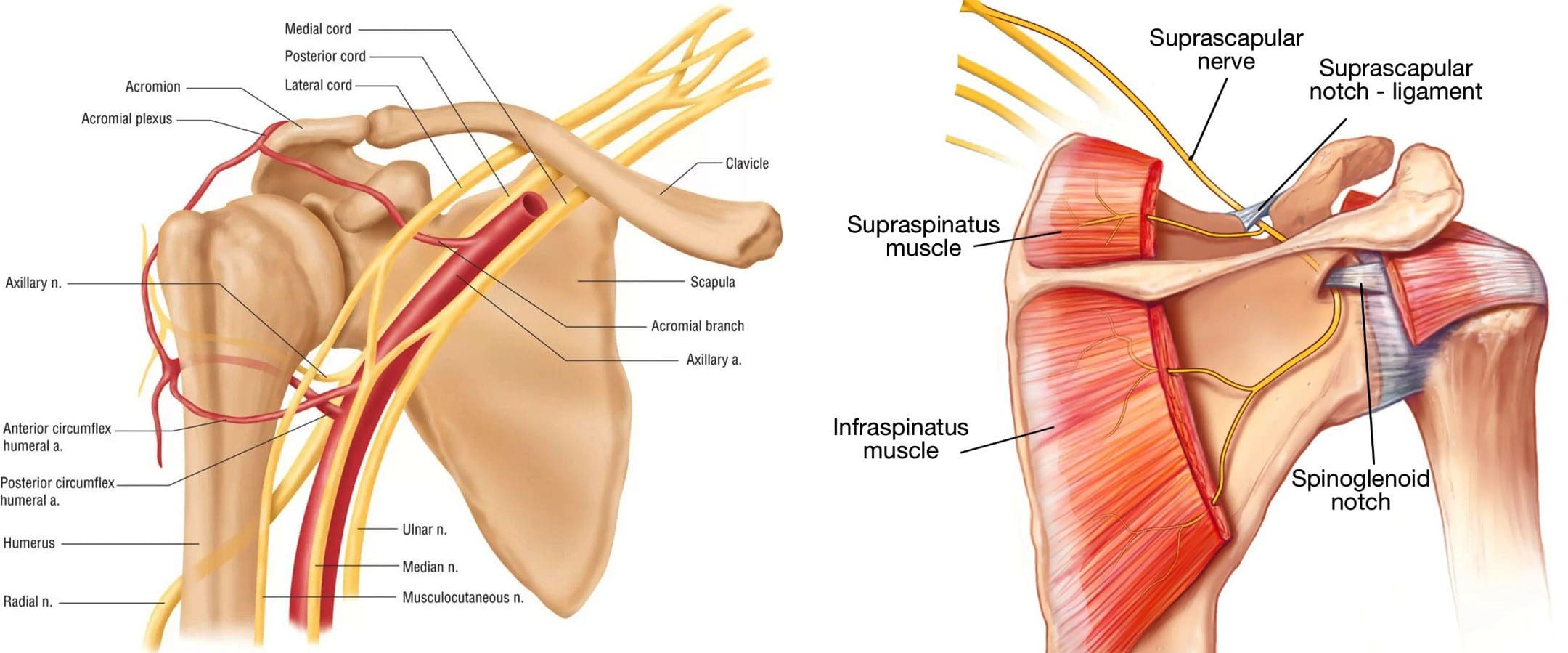
An acute injury or changes to the upper body over time can cause a compressed/pinched nerve in the shoulder. A pinched nerve in the shoulder happens when a muscle, ligament, tendon, or bone irritates or presses on a nerve exiting the neck. Shoulder nerve pain can develop from various sources, such as overuse work injuries, sports injuries, household chores, tendinitis, arthritis, torn cartilage, and other medical conditions, and injuries can contribute to symptoms. Chiropractors are highly qualified to treat pinched nerves. They are trained in whole-body realignment and rehabilitation techniques that find the root source and relieve pressure on compressed nerves.
Shoulder Nerve Pain
The shoulder joint is one of the most complex joints because of its wide range of motion. It is used so frequently that repetitive motion strain is common, often leading to injury. It is usually because of the continued use combined with an unhealed strain/injury that leads to shoulder nerve injury or when surrounding tissues like cartilage or tendons irritate or compress the nerves.
Pinched nerves also occur when a nerve root in the neck is damaged through wear and tear or an acute injury.
Individuals 50 years and older are likely to experience pinched nerves because of degeneration in the cervical spine and/or arthritis.
A nerve can become pinched when bone spurs form around the spinal discs.
Bone spurs are formations of bone that grow when discs weaken with age.
Bone spurs grow around the discs putting pressure on the nerve root.
Symptoms
Compressed Pinched Nerve/Cervical Radiculopathy
Pain sensations in the shoulder.
Tingling and/or pins and needles in fingers or hand.
Weakness in shoulder and arm muscles.
Symptoms have been known to overlap with shoulder arthritis, frozen shoulder, swimmer’s shoulder, or rotator cuff tears, so it’s always best to consult a chiropractor to understand possible causes. Other conditions with symptoms to compare:
Shoulder Arthritis
Stiffness in the joint.
Aching inside the shoulder.
Grinding when moving the joint.
Frozen Shoulder/Adhesive Capsulitis
Stiffness in the joint.
Pain in one shoulder.
Decreased range of motion and movement.
Swimmer’s Shoulder/Impingement
Pain and discomfort in the shoulder.
Weakness in the surrounding area.
Stiffness or tightness in the joint.
Impeded range of motion.
Rotator Cuff Tears
Pain and discomfort symptoms when moving the shoulder.
Weakness in the arm.
Deep aching sensations along the top and side of the joint.
Chiropractic Treatment
Chiropractors are experts on the neuromusculoskeletal system. First, a thorough medical examination will be conducted, including health history and regular activities, to understand the nature of the symptoms. Depending on the type of injury, tests, and exams may be needed to help diagnose and pinpoint the cause. Then the chiropractor will develop a personalized treatment plan. The objective is to relieve pressure and tension on the nerves and relax the muscles. In addition to adjusting the joint or other impacted areas, the therapy team will provide at-home exercises and stretches to maintain the adjustments and expedite healing.
Chiropractic Rehab
References
Kokkalis, Zinon T et al. “Nerve Injuries around the Shoulder.” Journal of long-term effects of medical implants vol. 27,1 (2017): 13-20. doi:10.1615/JLongTermEffMedImplants.2017019545
Leider, Joseph D et al. “Treatment of suprascapular nerve entrapment syndrome.” Orthopedic reviews vol. 13,2 25554. 11 Jul. 2021, doi:10.52965/001c.25554
Matzkin, Elizabeth, et al. “Swimmer’s Shoulder: Painful Shoulder in the Competitive Swimmer.” The Journal of the American Academy of Orthopaedic Surgeons vol. 24,8 (2016): 527-36. doi:10.5435/JAAOS-D-15-00313
Neviaser, Andrew S, and Jo A Hannafin. “Adhesive capsulitis: a review of current treatment.” The American Journal of sports medicine vol. 38,11 (2010): 2346-56. doi:10.1177/0363546509348048
Safran, Marc R. “Nerve injury about the shoulder in athletes, part 1: suprascapular nerve and axillary nerve.” The American Journal of sports medicine vol. 32,3 (2004): 803-19. doi:10.1177/0363546504264582
Strakowski, Jeffrey A, and Christopher J Visco. “Diagnostic and therapeutic musculoskeletal ultrasound applications of the shoulder.” Muscle & Nerve vol. 60,1 (2019): 1-6. doi:10.1002/mus.26505
IFM's Find A Practitioner tool is the largest referral network in Functional Medicine, created to help patients locate Functional Medicine practitioners anywhere in the world. IFM Certified Practitioners are listed first in the search results, given their extensive education in Functional Medicine