Q: Dr. Jimenez, I read one of your articles about physical therapy and spinal stenosis exercises that focus on stretches for relieving pain. I was wondering if it was also possible to do aerobic exercise with a spinal condition and can you recommend a safe cardiovascular program?
I’m a 65-year-old with spinal stenosis, and I want to stay in shape. I try to ride a stationary bike for 20 minutes at least 2 times a week, but with my low back pain, I don’t always finish the workout.
How else can I stay in shape
A: I do recommend aerobic exercise for everyone, but especially for people with spinal conditions.
Aerobic exercise increases the blood flow to the body’s tissues, and people with high levels of cardiovascular fitness generally do better dealing with spinal problems.
However, before anyone with a spine condition or any medical condition for that matter, starts a wellness and fitness program, they should check with their primary caregiver, to clear the individual as fit to exercise.
Example: Someone with cardiovascular (heart problems) can have restrictions when it comes to certain types of exercise.
A physical exam will make sure your body is ready for exercise.
Physiotherapist assisting a senior woman with exercise ball at a chiropractic rehabilitation clinic
Low-impact aerobic exercise is recommended�
Walking
Swimming
These are excellent examples of low-impact aerobic exercise. They increase heart rate and are easy on the body.
Riding a stationary bike is another recommended form of low-impact aerobic exercise.
It can be tiring, but if recommended by a caregiver/therapist, then realize they did so for a reason/s to get you healthy.
By biking, you are building up endurance, and that is exactly what you want, as it speeds up recovery.
Walking is a great exercise for spinal conditions. It is low-impact, and you can control the pace to fit your needs.��
Daily walks after lunch or after getting home are a great way to exercise.
If exercise does begin to increase back pain or another type of pain, tell your caregiver or physical therapist right away.
The phrase, no pain, no gain does not apply when there are spinal conditions. So do not try to push through the pain or think that the hurt is good.
Also, do not try to do take on too much right away. Even if you feel good, follow the fitness plan.
But if you want to mix it up, discuss with your chiropractor/physical therapist if adding walking and swimming to the plan will be beneficial, as well.
It can be tempting to not exercise with a spinal condition. But remember that if there is no movement at all, you could make the pain worse. Knowing what your body can handle and sticking to a workable schedule, these healthy steps will relieve you and help with your low back pain.
Chiropractic Care Sports Injury Rehabilitation El Paso, TX
Daniel Alvarado, the owner of Push-as-RX Fitness, discusses how he carries out his PUSHasRx Functional Fitness Workouts personal injury rehabilitation and athletic training program as a part of Dr. Alex Jimenez’s chiropractic rehabilitation plan.
Physical therapy (PT), also referred to as physiotherapy, is one of the allied health professions which, by utilizing mechanical force and motions (bio-mechanics or kinesiology), manual therapy, exercise therapy, and electrotherapy, remediates impairments and promotes mobility and purpose.
Physical therapy is used to enhance a patient’s quality of life through:
Examination
Diagnosis
Prognosis
Physical intervention
NCBI Resources
Exercise is an essential part of good health. It can help with weight loss and plays a crucial role in preventing many chronic health conditions like hypertension, diabetes, and heart disease. Regular exercise has also been shown to help with depression and anxiety. It is what nature intended; as humans, we are supposed to be active. The more active you are, the better you will look and feel � and the healthier you will be.
In today’s busy world individuals need a little help when it comes to letting go of bad/negative behaviors and adopting/embracing positive behaviors to sustain optimal health and lifestyle. This is where a health coach�comes in.
More adults in the United States have a chronic disease and around thirty percent have two or more.
Many healthcare professionals do not know how to counsel patients on healthy living and, if they do, the information is limited to very basic knowledge like exercise and eat healthily. With this type of info and not a lot of enthusiasm, patients are not going to listen or make lasting changes.
Many providers do not listen to what’s going on and just tell patients what to do, instead of discussing the best options they have for their health. People being told what to do are not likely to listen or act upon the recommendations.
A health coach creates a custom getting healthy plan with you that fits your life, gets you going, sets up a strategy for the challenges and sees you through! This is what a health coach does.
Health coaching Involves
Communication
Motivation
Continued Support
This allows individuals to make meaningful behavior changes that will last forever.
Coaching centers on:
Thorough conversation
Listening
Clinical Intervention
Strategies
These are aimed to actively engage patients in positive behavior change.
Health coaches take on patients wherever they are in their health. An individual can be healthy and just want some advice to individuals that are extremely unhealthy with weight issues, chronic illness, disease or all of the above.
The point is to help individuals learn self-management techniques. The coach teaches, motivates and strategizes with the individual to make educated/informed decisions that will turn into regular healthy habits.
Coaching comes in the form of:
Setting�goals that are achievable�
A Patient’s Values
Strengths
Motivation
Encouraging the patient
This is how healthy attitudes and behaviors are developed.
The Health Journey Begins
The patient’s health history is taken into account. Then the coach asks:
Where they want to be in their health
What Values they hold close
What Goals they have in mind
The plan is Created
Progress is Tracked
Challenges are met
The long-term plan is Created
Patients oftentimes do not know where they are from a health perspective and might not be sure how to explain. This is where health coaches and their training can breakdown any questions/issues a patient may have.
A health coach will look at where a patient is healthwise based on:
Emotional factors
Environmental factors
Financial factors
Psychological factors
Physical factors
Recreational factors
Spiritual factors
Social factors
This health inventory is for the patient to reflect on where they are in their health and where they want to be.
Patients are welcome and encouraged to ask questions about the plan, make changes, reset goals, etc.
Motivating the Patient
Motivation can come in various forms. As people learn in various ways, so too are the motivational strategies to get patients to exercise the positive behavior outlined in their treatment plan. Some ways coaches motivate are:
They collaborate with patients and don’t approach the plan with an all-knowing mindset.
Understand the motivation of the individual to change.
Motivational Principles:
Empathy
Discrepancy
Support patient’s ability
Six stages of behavioral change:
Precontemplation – Patients do not see any problems and do not consider their behavior as negative, and do not see the problems their behavior is causing.
Contemplation – Patients start to think about healthy behaviors.
Preparation/Determination�– Patients are ready to take action toward behavior change and believe the new behavior will lead to a healthy life.
Action�– Change begins and the intention is to keep going.
Maintenance – Behavior change has been for more than six months and continuing on the right track.
Termination�– Negative behaviors are eliminated.
There are different strategies to get through each stage and on to the next until the positive behavior is achieved.
Helping the patient find the coaching plan that is right for them.
Patients are helped by figuring out what they want to change about their health based on what they see and
the most important changes for them. There is no correct answer, as it is different for everyone.
Understanding Your Values
Coaches encourage the patient to identify their values, and what is most important for each individual.
These include:
Family
Friendship
Health
Love
Values begin early in childhood and become reevaluated as life goes on, and can change.
Clarity is important to help the patient build self-awareness to make intelligent decisions and staying balanced.
A coach might ask questions like:
What made you choose the unhealthy product versus the healthy version?
How much stress do you think you have to deal with on a daily basis?
Do you make time for yourself?
For some, identifying negative behavior can help, as the patient grows and realizes how their health is changing, their values start to change.
This information helps to create a plan of action along with steps to help the patient’s decision making.
While working with the patient to determine goals and create steps, tools and methods are created help to ensure the patient understands their role in getting healthy.
Asking Questions
Coaches ask patients what they know and what they would like to know?�There are no incorrect questions, aks away, as the more an individual knows, as well as the more that the coach knows about the patient, the better the treatment plan will be.
Teaching
If the patient doesn�t understand, the process is repeated until the patient is able to explain the treatment plan back to the coach so everything is clear.
This technique is recognized by various associations, including the:
American Academy of Family Physicians
American Hospital Association
Primary Areas of Improvement
Before setting goals the patients go over the primary areas of their life that they want to improve/change.
These primary areas may be very similar to the patient�s values.
Examples include:
Health
Family
Career
Finances
Recreation
Social Relationships
Once a patient has identified what they would like to focus on, brainstorming sessions are put into action, as to what they want to change or improve for each primary area.
They are then broken down into smaller goals in the creation of the main plan of action.
As the patient moves forward they are more motivated and encouraged to take on bigger challenges.
Couple making a healthy smoothie
Goals
Patients understand what areas of their life they want to improve/change.
With the primary areas known, the patient begins the challenge of changing their current unhealthy status to healthy.
Areas to consider:
What exactly do I want to achieve?
How will I achieve this goal?
Timeframe to achieve this goal?
Why is this goal important to me?
Where to go to next once the goal is achieved?
SMART Goals
When the patient is ready, the coach will assist in developing:
Specific
Measurable
Attainable
Relevant
Timely
SMART goals that allow for structure and trackability and create clear milestones for the individual.
Planning
Once a health coach understands where the patient wants to go, the next phase is planning.
Patients help in creating their treatment plan.
This plan is an agreement between the patient and the health coach that describes the behavior change that the patient wants to make, how they’re going to go about it, and their commitment to the final result.
Example of goals a patient will follow to lose weight:
Try new fruits and vegetables
Find creative ways to incorporate exercise at work.
Stay hydrated by keeping a water bottle and refilling it every two hours.
Cooking healthy meals at first twice a week then three times and so on.
Walking after meals.
These small tasks make it easier for the patient to see their progress.
The coach will check with the patient regularly to make sure they are sticking to the plan.
Health Coach
Goal Progress
Health coaches can ensure a patient has consistent motivational support by creating a follow-up plan that works in conjunction with their primary treatment plan.
Follow-up care may include schedules for physical exams or tests, referrals, and recommendations to keep positive behavior development.
Coaches and patients work together to create realistic goals for the future.
As the patient progresses, the health coach may make additional recommendations or work with the patient to adjust their plan or making sure the patient knows where to turn to if they have questions.
Continued Support
Once goals are being achieved it is important to have support to continue the positive behavior. Traditional sources of support include:
Family
Friends
Colleagues
Community
Patients may not always have access to external support, coaches also teach the patients how to find positive support in various activities around town that can help patients and their overall health.
At Injury Medical Chiropractic & Functional Wellness clinic we have the best-rated team of health practitioners to get you to your best optimal health.
*Detox Your Body* | Detox Doctor | El Paso, TX (2019)
Fred Foreman is a basketball coach who depends on his overall health and wellness to be able to engage in his everyday responsibilities. As a result, coach Foreman started the 6 Day Detox Program, designed to help renew and enhance the human body’s cleansing and detoxification capabilities.
NCBI Resources
Good health is built on diet and exercise. The goal is to continually improve by maintaining healthy habits that develop more healthy behaviors. You do not have to do anything drastic. You will have an easier time making changes if you start small and gradually shift towards a lifestyle that is best for you. A health coach can get you operating and performing at the highest level!
Your health is easily one of the most important things in your life. When your health is good, you feel better, are more productive and generally happier. When your health is not good, it becomes difficult to accomplish even the smallest tasks�and your mood and ability to enjoy life suffer. Fortunately, there are some simple steps you can take to lead a healthier life. Read on to learn some of the most important tips for healthy living!
3 Tips for Healthy Living
Magnified Healthy Living word illustration on white background.
1. Keep the body’s alignment with regular chiropractic.
Many times people are unaware of how to move in the best way for their bodies. Poor movement patterns can lead to injuries, which make it impossible to stay as active as you like. If you start to notice any pain caused when you move�like when adopting a new exercise routine�stop doing what you are doing and consult with your chiropractor. Chiropractors are trained to identify movement problems and help correct them. Your chiropractor should be able to help you find a way to exercise that does not cause pain or lead to injury.
2. Keep track of your health.
It is important to get an accurate assessment of your current health on a regular basis. The goals you set for the future will be much more easily achieved if you know where you are starting from. Some of the ways you can keep track of your health include:
Maintain a relationship with your doctor, dentist, and chiropractor. Preventative healthcare is more effective and less expensive than waiting for something to go wrong. By keeping regular appointments with your doctor, dentist, and chiropractor, you can get valuable feedback on your current state of health. They can also help you catch potential problems early on.
Keep a diary of your exercise, diet, and mood. The diary does not have to be complicated or overly detailed. You just need a clear picture of how much you are exercising, what kinds of exercises you are doing, what food you are eating and how you are feeling.
3. Basics�a healthy diet and regular exercise.
Good health is built on a foundation of diet and exercise. The goal is to improve and maintain a regimen where you eat healthily and exercise regularly over the long-term. You do not have to do anything drastic, either. You will have an easier time making changes if you start small and gradually shift towards a lifestyle that you think is best for you.
Some points to remember:
The perfect diet for one person may not be perfect for another, but there are some basics that work well for the vast majority of people. A diet focused on whole foods, including plenty of vegetables, fruits, and whole grains, is ideal. Repeated studies have shown that a Mediterranean style diet is healthy and easy to maintain, making it a good place to start if you are new to healthy eating.
Take baby steps. Extreme shifts in diet can be mentally exhausting and difficult to maintain. Drastic changes in exercise habits risk injury and are also hard to maintain. Focus on taking small, incremental steps to reach your goals.
Contact Us Today to Set up an Appointment
If you would like a personalized plan for improving your health, please contact us. One of our chiropractic team members is ready to assist you!
Reduce *PLANTAR FASCIITIS PAIN* with Custom Foot Orthotics | El Paso, TX (2019)
Foot pronation is the natural movement which occurs during foot landing while walking or running. Foot pronation also occurs while standing, and in this instance, it is the amount in which the foot rolls inward toward the arch. Foot pronation is normal, however, excessive foot pronation can cause a variety of health issues, including bad posture.
Plantar fasciitis: A Perspective In Functionality
Plantar fasciitis is the inflammation of the plantar fascia or aponeurosis. Which can be caused by trauma, e.g. jumping/running activity, or more from longstanding stretching of pronated feet.
The pain of plantar fasciitis is commonly at its worst when getting out of bed in the morning.
The initial steps cause a painful stretching of the tissue after hours of being in a shortened position.
As a person sleeps, the feet naturally go into a position of plantarflexion and shorten down in a relaxed.
Mild relief is common after moving about for a while.
Treatment options
Treatment options for plantar fasciitis include:
Reduced activity
Cryotherapy
Ultrasound
Taping
Massage
Chiropractic
Orthotics
If the patient is capable of walking without an antalgic gait, look to see how much foot flare occurs during the gait cycle.
Rule of thumb for foot flare:
Both feet should be pointing in the general direction you are walking toward.
Any deviation from a line directly in front involving one foot more than the other is a red flag for dysfunction in the kinetic (moving) chain and may be a contributing factor in the syndrome.
Foot flare is a compensation mechanism to help balance a wobbly pelvis.
If this is detected, remove shoes and socks and look at the medial arch.
Gentle care
Direct palpation of the plantar fascia may reveal painful thickened muscle, especially along the medial longitudinal arch.
This thickened muscle is the result of repetitive tear and repair process.
With the foot relaxed, grasp the toes and gently pull them up into passive dorsiflexion.
Gentleness is essential; as this motion stretches the irritated plantar area.
It often presents with fixations or subluxations of the bones of the feet.
The collapse of any of the three arches of the foot sets the stage for joint fixation.
Mobility & function
Mobility is life to a joint, so don�t overlook the benefit of adjusting the subluxations or fixations of the lower extremity.
Once the acute phase of plantar fasciitis is under control, you can address the factors that contributed to the condition.
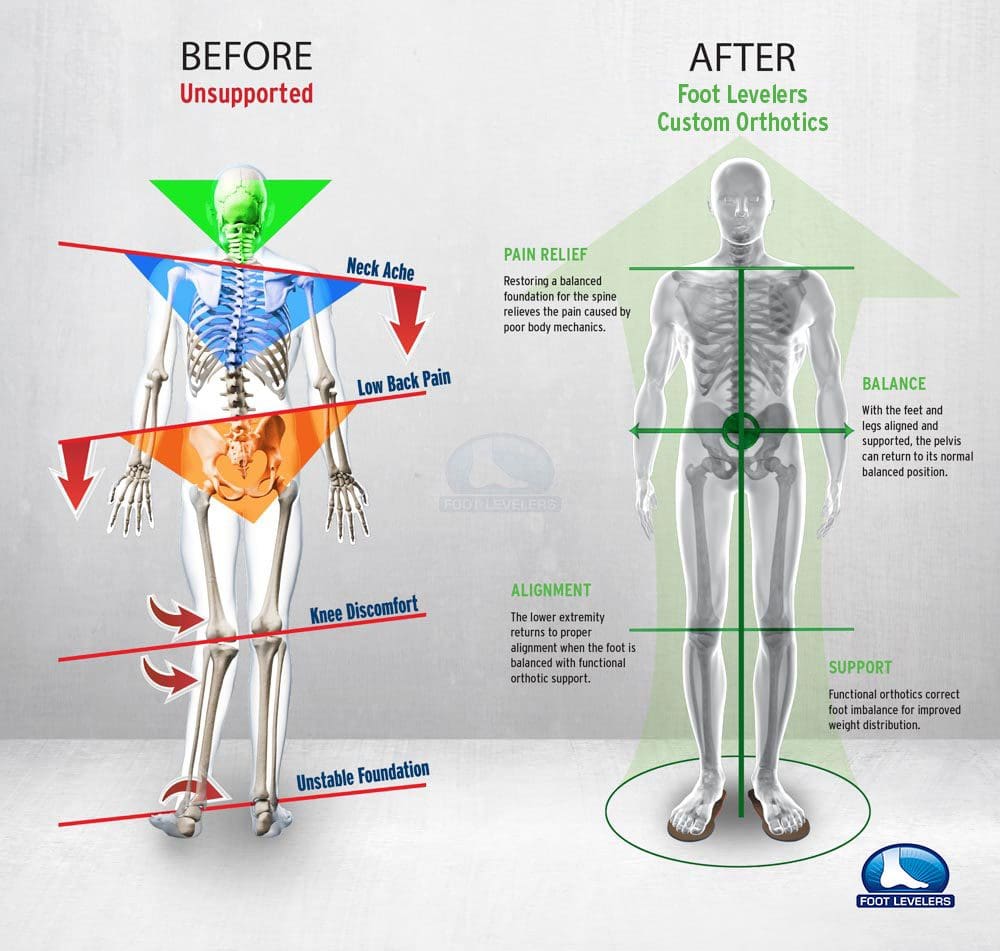
Most of the time patients need arch structure to be supported in an optimal functioning position.
Custom-made orthotics support all three arches of the foot provide the necessary support to reduce the tension on the plantar fascia by blocking the excessive pronation stretches.
Improvement through non-invasive treatment
Improvement of muscle function of the kinetic chain through massage or other forms of muscle management can improve muscle compliance, or the ability of the muscle to contract and relax.
Chronic muscle tension creates joint dysfunction and can lead to inflammation in the plantar fascia.
A massaging or mechanical chiropractic compression down the length of the plantar fascia can restore flexibility to that tissue.
Roll the foot over a golf ball or similar device for the purpose of restoring fascia flexibility can have profound effects on foot pain and function.
Patient tolerance is the key to any technique used, so try to understand that the chiropractor/physical/massage therapists are trying their best to bring relief, increasing the pressure and the length of any intervention.
Plantar or Neural
Feet are important. When you consider what your feet go through, taking 8,000 steps over the course of a day, according to the�Illinois Podiatric Medical Association�(IPMA), it�s easy to see how 75 percent of all Americans will have some type of�foot pain�at some point in their lives.�Plantar fasciitis is a common and very painful foot condition that can become chronic if not treated. It is also a condition that responds very well to chiropractic care. As it Reduces Stress in the Plantar Fascia�� When a ligament is inflamed or stressed the tissue can develop very small tears that cause the pain of plantar fasciitis. Chiropractic adjustments made to the heel and foot take the pressure off of the plantar fascia, allowing it to relax.
NCBI Resources
The SMART approach is a guide for setting realistic goals and attaining them. It is an acronym that outlines a success-focused�strategy for goal setting:
Specific
Measurable
Accountable
Realistic
Timeframe
Each step will bring you closer to achieving your goals and improve your health.
If you are an active amateur or a competitive runner, using the services of a chiropractor can make a vast change in your overall health, reduce your pain from injuries and improve your alignment for a more effective run.
Chiropractors are excellent when it comes to rehabilitation, and they can help you keep your body in top condition as an athlete. All sports is an area that chiropractors can specialize in, focusing their training and experience on targeted treatments for runners.
Recovering from Sports Injury/s
Most athletes get injured at one point or another in their career, whether it is while participating in their sport or an accident in their daily lives. Recovery from an injury can be difficult at times, and even after hours of physical therapy, you may feel that you aren’t ready to start training again.
Physical therapy is a great help in recovering strength in soft tissue and muscle after an injury or surgery. However, sports-medicine trained chiropractors can improve the mobility of your joints after an injury. Sports chiropractors work with the soft tissue in conjunction with the joints in a coordinated fashion. An examination will take a look at:
After the examination, the sports chiropractor will assess the runner to recommend treatment.
People running fast in a city marathon on street
Sports Chiropractic
According to U.S. News and World Report, there are four primary chiropractic treatments for running injuries.
Active Release Technique (ART) – combines massage and stretching by applying deep tension while moving a joint through its range of motion. This treatment is used primarily for adhesions in the muscle.
Graston Technique – used to break down surface-level scar tissue with hand-held stainless steel tools.
Functional Dry Needling – releases tension in trigger points through deep muscle stimulation with needles. This treatment can help the psoas muscle, a hip flexor muscle.
Electrical Muscle Stimulation (EMS) – releases tension through the stimulation of surface muscles.
General Adjustments
Chiropractors are trained to look at the whole body and align it for optimum balance. Many runners find it beneficial to have regular periodic adjustments to regain their body’s balance from daily stress and the impact of running. Aligning the body can relieve tension or pain that is caused by misalignment before it becomes more than a minor impediment.
Runners may not even realize that the tension they feel is the beginning of pain caused by being out of balance until it is adjusted. Chiropractic adjustments are often part and parcel of a runner’s training program to strengthen and improve performance. They can also help recover from pregnancy and postpartum bodily changes.
Prevents Injury and Promotes Optimal Performance
With regular care of a sports-trained chiropractor, runners can actually prevent injury and promote optimal performance by keeping their bodies fine-tuned, working at maximum capacity. A trained chiropractor can find imbalances that may lead to injury and correct them before they become a problem. With your body in perfect balance, muscles and joints work more efficiently, powering up your performance as a runner and making the most of your body’s resources.
Misalignment can be caused by many common runners� experiences including running on the same type of surface every day, running on a slanted surface such as a beach or replacing running shoes too infrequently. As a runner, you can work to vary your running surfaces and keep a better watch on your shoes, but your chiropractor will let you know if your body is in need of more balance.
To learn more or to schedule an appointment, please give us a call at the number provided at the top of this website. We’re here to help!
Red Flags of foot *PRONATION* | El Paso, Tx
Feet: A foundation for pain
99% of feet are normal at birth. But after the first year, 8% develop foot problems, 41% by age 5 and 80% by age 20. By age 40, almost everyone has a foot condition of some sort. Many foot conditions eventually contribute to health concerns, especially the generalized condition of �back pain� or runner�s knee. Spotting a potential problem originating in the feet can prevent other injuries from affecting your health and lifestyle.
Runners who are able to avoid injury are those who land the lightest on their feet, which sustains the lowest levels of impact. Researchers suggest that runners think about landing more softly and adjust their stride so that they land closer to the midfoot.
But that is easier said than done, as most runners tend to be heel-strikers.
Runners with excessive pronation that try to transition to a forefoot strike pattern could be more susceptible to inner foot and ankle injuries.
Runners with high arches who attempt to transition to a forefoot strike pattern are prone to suffer sprained ankles and metatarsal stress fractures.
Running can lead to a number of different injuries
Sudden trauma
Developed over time from microtrauma
Biomechanical errors
Structural asymmetries
Tissue weaknesses
Excessive external loads
Runners do their best to treat pain through stretching or exercises that target the area that hurts, but sometimes the source of the pain might actually be elsewhere. That source is foot imbalance.
Custom orthotics improve biomechanics
Custom orthotics are used to align and support the foot/ankle complex in a more near-normal physiologic position for a weight-bearing foot to prevent dysfunction and/or improve the function of movable body parts.[3] They are indicated to:
Creates a symmetrical foundation by blocking pronation or support supination
Provides heel strike shock absorption
Inhibits serial biomechanical stress
Enhances neuromuscular re-education
Custom-made orthotics that use viscoelastic materials can help to reduce the musculoskeletal impact from heel strikes when running.
This shock absorption can be of help particularly when there is instability, chronic degeneration, or inflammatory arthritis in the joints.
Orthotics are designed specifically to cushion foot impact and reduce pain triggers.
Everyone is misaligned
Patellofemoral pain care
Understanding the exact mechanical contributions of the knee is critical for the therapist to effectively manage injuries or conditions.
NCBI Resources
These injuries and conditions affect runners, cross fitters, group exercise enthusiasts (PUMP classes) and simple recreational walkers who spend a lot of time on hills and stairs.
Whether you are walking around the house, to the store or to the mailbox, you know how to walk. Taking a walk is one of the most basic things a human can do. What you may not realize is that you are doing something that is fundamental for health. Walking is one of the single best exercises you can do. This is why you can expect your chiropractor to suggest that your daily routine should incorporate walking.
Cardiovascular health
Better mood
Weight loss
Walking does so much! If it was a pill, everyone would be taking it.
Walking Benefits
When you come to the chiropractor, chances are you are seeking help for a condition that is painful and/or uncomfortable. Back pain, leg pain, neck pain, etc. You may also make regular visits to the chiropractor for your overall health, as scheduled adjustments can help you feel better over the long-term.
Hearing your chiropractor recommend walking can be surprising, especially when you are expecting an adjustment or some other immediate type of care (don’t worry, you can still get your adjustment.) But there are reasons for the recommendation, reasons that fit perfectly into the goals of chiropractic care. These include:
1. It will help you lose weight.
Every extra pound you carry puts exponential pressure on your joints, including your back. Your chiropractor wants you to lose weight to protect your joints and minimize your pain and chance of injury.
Just 30 minutes a day of walking is enough to steadily shed pounds. Start with a 20-minute walk a day and gradually increase your time. Ideally, you should get 10,000 steps a day for fitness (a pedometer is helpful for measuring your steps.)
2. It will improve your mood.
Commercial products and pharmaceuticals are constantly offered to the public as mood lifters, and some of them may work�but most carry significant side effects. Walking will also improve your mood, and its main side effect is weight loss.
Studies have demonstrated that walking lowers feelings of anger and hostility. Walking is recommended for Seasonal Affective Disorder (SAD), the condition that tends to show up as the days get darker and shorter.
Walking can also be helpful after an upsetting situation. If you take a walk, you will probably find you feel a little calmer and more in control when you return.
A father walking with his dog and his son in the suburbs
3. It will lower your risk of chronic disease.
There have been several studies that have shown walking can reduce the risk of chronic disease. One study found that people who walked five days a week for 30 minutes or more had a 30% less chance of developing cardiovascular disease. Other studies have shown it reduces blood pressure and most likely reduces the risk of having a stroke.
4. It improves digestion.
Having regular, predictable digestion makes life easier and more enjoyable. There are plenty of ways that people try to improve their digestion�ranging from a cup of coffee in the morning to fiber supplements. Walking is another way you can become more regular. The movement of walking aids in digestion, so much so that people who have gone through abdominal surgery are required to walk because of its positive effects on digestion.
What Walking Does to Your Body
Check out this video and discover exactly what happens to your body when you walk:
Ms. Hermosillo participates in fitness classes and follows healthy lifestyle habits. She participates in a variety of physical activities to achieve tip-top health. As a result, however, Ms. Hermosillo began to experience neck pain and back pain.
The symptoms were beginning to affect her life both professionally and personally. Ms. Hermosillo heard about local 20+ year El Paso, Texas chiropractor, Dr. Alex Jimenez that brought unbelievable relief of her symptoms! El Paso Back Clinic follows a safe and effective treatment focusing on a variety of health issues associated with the musculoskeletal and nervous systems. Ms. Hermosillo recommends Dr. Jimenez for personalized spine therapy for neck pain, back pain, and other conditions.
El Paso Back Clinic
We are blessed to present to you�El Paso�s Premier Wellness & Injury Care Clinic.
As El Paso�s Chiropractic Rehabilitation Clinic & Integrated Medicine Center,�we passionately are focused on treating patients after frustrating injuries and chronic pain syndromes. We focus on improving your ability through flexibility, mobility and agility programs tailored for all age groups and disabilities.
We want you to live a life filled with more energy, positive attitude, better sleep, less pain, proper body weight and educated on how to maintain this way of life.
Only the best for you!
If you have enjoyed this video and we have helped you in any way, please feel free to subscribe and recommend�us.
No matter what the season is, there’s always time to get outside and be active, as long as, the weather cooperates. Hiking is great exercise while getting to take in nature in the process. Now add chiropractic maintenance into the mix, and you have a formula for optimal wellness!
The Benefits
Hiking is a great cardio workout that can help improve your blood sugar levels as well as your blood pressure. It can also decrease your risk of heart disease.
What�s more, walking qualifies as a weight-bearing exercise so it helps guard against osteoporosis by improving bone density. If you hike on a regular basis, you will find that your weight is better managed, your core is stronger, your mood is better, and your balance is improved.
As you hike, anxiety and stress will melt away. You will look better, feel better, and function better. The good news is, the more you do it, the more benefits you�ll see.
The more you work, the more you can work. As your body gets stronger, you will find that you can go farther and even challenge yourself on some of the more difficult trails. Just the act of moving will make you feel better, but get ready to get hooked!
Chiropractic/Hiking Mean Healthy Results
Incorporating regular chiropractic care into your life helps keep everything working as it should. When you are backing that care with cardiovascular exercise, you greatly increase the benefits of both.
Chiropractic care is also focused on whole-body wellness, so your chiropractor may recommend certain lifestyle changes or a special diet to support your hiking routine. If you get hurt, or even sore, from your hikes, chiropractic can help manage the pain or eliminate it completely.
You will heal faster so you can get back on the trail sooner. What�s more, chiropractic will increase your performance faster and your body will work much more efficiently. Combining the two creates a powerhouse that will provide you with fantastic health benefits for a very long time.
Hiking Tips
When you set out to hike, you might feel great and want to get started right away. However, there are some things you need to pay attention to so that you can be sure your hike is productive and safe. There�s nothing like a knee, ankle, or back injury to mess up a great hiking routine. Stick with these tips to avoid any problems.
A good warm up before your hike will improve your performance on the trail and reduce your risk of injury. Take a few minutes to warm up your muscles and stretch a little. Your body will thank you.
Choosing the right shoes will greatly improve your hike. Look for footwear that is supportive, fits well, and allows your foot and ankle to work as they should. You will feel a good pair of shoes all the way up to your back � same as you�ll feel bad ones.
Don�t try to conquer the toughest trail right off the bat. Start slow and work your way up to more challenging trails and longer hikes. For instance, you may want to start on a fairly level surface and gradually work up to areas with uneven terrain or even hills.
If balance is an issue (or even if it�s not), you may want to add poles. They can help keep you balanced but do double duty by providing a great upper body workout.
IFM's Find A Practitioner tool is the largest referral network in Functional Medicine, created to help patients locate Functional Medicine practitioners anywhere in the world. IFM Certified Practitioners are listed first in the search results, given their extensive education in Functional Medicine