Healthy sleep plays a vital role in the body’s overall health, as it ensures muscle growth, recovery, and illness prevention. This is especially true for home D.I. Yers’ fitness enthusiasts, weekend warriors, athletes, and physically active individuals. When sleeping, the body goes into recovery mode, releasing hormones and other chemicals to repair and restore muscle. A healthy night’s sleep provides the rest the mind and body need to perform at optimal levels.
Healthy Sleep
Sleep is vital for recovering from workouts. This could be construction work, exercise, gardening, sports, landscaping, any activity that uses bodyweight or works against some form of resistance. The muscles cannot repair themselves properly without proper sleep. Sleep aids the muscles in releasing protein-building amino acids, helping them grow in size and strength.
Growth hormone is released during non-REM sleep that stimulates tissue growth and repairs muscle.
During REM or rapid eye movement sleep, blood pressure drops, breathing slows and deepens, the brain relaxes, and blood supply to the muscles increases, feeding them oxygen and nutrients.
Unhealthy Sleep
Sleep maintains the muscles’ sharpness, coordination, function, and muscle movement patterns that improve physical performance. The body needs to sleep for at least 7 hours a night for muscles to grow properly. Not getting healthy sleep decreases protein synthesis activity and increases the activity of degradation that leads to muscle loss.
Less Sleep Leads To Eating More
Hormonal changes occur when the body sleeps less, causing individuals to feel hungry more often, increasing the amount of food taken in because after eating, the body does not feel full right away, so the individual continues to eat. Without sleep, the body decreases the production of a hormone that indicates when the body is full and activates a hormone that causes hunger. Insufficient sleep also lowers the body’s sensitivity to insulin. Because of this, the muscle fuel glycogen is not adequately replenished. Without the regular restoration of glycogen, individuals have less energy, insulin sensitivity decreases, increasing the risk of diabetes.
Physical Health
Unhealthy sleep also impacts overall physical health. Individuals that do not get healthy sleep have an increased risk of developing:
Sugar raises blood sugar, which triggers the pancreas to release insulin, fueling the cells causing overstimulation.
Eliminating sugar after dinner can help the body fall asleep.
References
Dattilo, M et al. “Sleep and muscle recovery: endocrinological and molecular basis for a new and promising hypothesis.” Medical hypotheses vol. 77,2 (2011): 220-2. doi:10.1016/j.mehy.2011.04.017
Morselli, Lisa et al. “Role of sleep duration in the regulation of glucose metabolism and appetite.” Best practice & research. Clinical endocrinology & metabolism vol. 24,5 (2010): 687-702. doi:10.1016/j.beem.2010.07.005
Murray, Bob, and Christine Rosenbloom. “Fundamentals of glycogen metabolism for coaches and athletes.” Nutrition reviews vol. 76,4 (2018): 243-259. doi:10.1093/nutrit/nuy001
Athletes or weekend warriors hate to be sidelined from an injury or physical limitation. This is where chiropractic medicine and physical therapy for athletes can strengthen the body for improved performance and injury prevention. Sports chiropractors and physical therapists are trained and certified professionals that have extensive knowledge of the musculoskeletal system, maintaining and rehabilitating the body. This includes:
Exercise science
Physiological factors
Nutrition
Sports psychology
Treatment techniques include:
Massage
Electrotherapy
Muscle strengthening
Water therapy
Core stability training
Sports medicine professionals include medical doctors, sports chiropractors, physical therapists, athletic trainers, and massage therapists. They are trained in:
Assessment and diagnosis
Treatment
Rehabilitation
Management
Referral
Health coaching
Injury prevention
Chiropractic physical therapists restore function and mobility, manage or alleviate pain, and return individuals to their lifestyle and athletes to their sport. They understand training demands and advise on injury prevention, relieving pain, and optimizing performance.
Performance Treatment
Chiropractors and physical therapists provide:
Pre and post-surgery consultation
Pre and post-surgery treatment
Pre and post-surgery exercise programs and rehabilitation therapy
A chiropractic physical therapist will go through a series of examination routines to test and assess the body’s functionality and mobility, looking for areas of pain and weakness.
Personalized Treatment Plan
The analysis data helps to develop a customized treatment plan that looks at:
Weaknesses
Painful areas
Physical and positional demands of their specific sport.
Alleviate Pain
This is done through:
Therapeutic exercises
Manual techniques
Instrument-assisted manipulations with:
Percussive massagers
Ultrasound
Taping
Electrical stimulation
To relieve pain, restore muscle, and joint function.
Improve mobility
Stretching and strengthening exercises restore mobility.
Avoid Surgery and/or Expedite Recovery After Surgery
Effective physical therapy can eliminate the need for surgery, hasten recovery, and reduce healthcare costs.
Expedite rehabilitation and recovery post-surgery.
Prevention Techniques
Chiropractic physical therapy provides tools and exercises to maintain:
Strength
Balance
Fitness
To prevent new injuries or injury recurrence.
A customized chiropractic physical therapy program can help individuals return to a high level of performance from a team of professional chiropractors physical therapists. Individuals learn activities and lifestyle changes that will help prevent further injury and improve health and wellbeing.
Body Composition
Skipping Rest Days
Not listening to the body and taking time to recover can have serious consequences. When the body is not allowed to rest, recovery inflammation is not given the time to heal. This can lead to injuries, a weakened immune system, and the potential for muscle mass loss. During periods of intense stress, like an intense workout, the body’s immune system does not fully function. This means the body is compromised when fighting germs and viruses and constantly taking medications. This is why prioritizing rest is necessary. Another side effect of skipping rest days is burnout. Burnout is the feeling that anything is better than working out. It typically happens when individuals forget or choose not to take time off and rest for life outside of fitness.
References
Cullen, Michael-Flynn L et al. “Passive Recovery Strategies after Exercise: A Narrative Literature Review of the Current Evidence.” Current sports medicine reports vol. 20,7 (2021): 351-358. doi:10.1249/JSR.0000000000000859
Levy, Emily, and Thomas Chu. “Intermittent Fasting and Its Effects on Athletic Performance: A Review.” Current sports medicine reports vol. 18,7 (2019): 266-269. doi:10.1249/JSR.0000000000000614
Reinke, Simon et al. “The influence of recovery and training phases on body composition, peripheral vascular function and immune system of professional soccer players.” PloS one vol. 4,3 (2009): e4910. doi:10.1371/journal.pone.0004910
Resnik, Linda, and Janet K Freburger. “Health Services Research: Physical Therapy Has Arrived!.” Physical therapy vol. 95,12 (2015): 1605-7. doi:10.2522/ptj.2015.95.12.1605
Suchomel, Timothy J et al. “The Importance of Muscular Strength: Training Considerations.” Sports medicine (Auckland, N.Z.) vol. 48,4 (2018): 765-785. doi:10.1007/s40279-018-0862-z
Detoxifying does not necessarily mean juicing and going on a diet. Detoxing is about cleansing the whole body of environmental pollutants, food waste, bacteria, and toxins. Things like medications and alcohol also need to be flushed from the body. When the body becomes unhealthy and overweight, it can put its systems in a chronically stressed state, leading to nerve energy production failure, fatigue, a weakened immune system, and disease. The body constantly works to cleanse itself. Exercise helps expedite the process.
Exercise To Detoxify
Exercise removes harmful toxins by getting the lungs and the blood pumping and increasing sweat production, which encourages detoxification. More blood circulating throughout the body allows the liver and the lymph nodes to flush out toxins properly. With exercise, fluid intake increases, allowing more sweat production to release toxins. Drinking more water during workouts also helps the kidneys function at optimal levels to flush out toxins, fats, and waste.
Aerobics
Any low-intensity aerobic exercise that increases heart rate and increases heavier breathing is recommended as long as the breathing is within the fat-burning heart rate. Exercises can be anything from:
Bouncing on a mini-trampoline, also known as rebounding, is another form of exercise that promotes toxin release. The low-impact motion stimulates the lymphatic system. Lymph nodes filter substances and fight off infections by attacking bacteria/germs that travel into the lymph fluid. Twenty minutes on the trampoline two or three times a week to detoxify.
Yoga
There are yoga poses that help to detoxify specific organs. Yoga can help the body cleanse inside and generate more energy.
This pose improves circulation, stretches, and strengthens the low back, hips, hamstrings, and calves.
Step with the feet 3 to 4 feet apart.
Hands-on hips.
Lift tall through the whole torso.
Fold slowly over the legs.
Bend from the hip joints without rounding the lower back.
If the back starts to round, stop folding forward.
Sweating and Detoxing
Sweat is one of the body’s primary ways of eliminating toxins. However, more sweat does not mean more toxins are being flushed. Excess sweat could be caused by the body overheating and can lead to dehydration. This is why it’s vital to maintain the body’s hydration levels while working out. Fluids like juice and sports drinks can help maintain hydration, but they contain sugar and other ingredients that could interfere with thorough detoxifying.
Body Composition
Before Starting A Detox Diet
Individuals are recommended to talk with their doctor, nutritionist, health coach about detox diet methods to lose and maintain weight.
Talk with a doctor
Seek consultation with a physician before starting any body detox cleanse, especially if there are underlying medical conditions like diabetes or kidney disease.
For individuals struggling with obesity, a physician can recommend alternative diet approaches and exercise programs.
Realistic expectations
Detox diets work primarily through caloric restriction like a conventional diet.
Individuals could feel better from a body cleanse because they will likely be avoiding processed foods and empty calories.
Adopt a long-term frame of mind
Diet and exercise to achieve and maintain a healthy weight is a lifelong journey.
Detox diets can be a helpful tool to get going in the right direction.
References
Ernst, E. “Alternative detox.” British medical bulletin vol. 101 (2012): 33-8. doi:10.1093/bmb/lds002
Klein, A V, and H Kiat. “Detox diets for toxin elimination and weight management: a critical review of the evidence.” Journal of human nutrition and dietetics: the official journal of the British Dietetic Association vol. 28,6 (2015): 675-86. doi:10.1111/jhn.12286
Obert, Jonathan et al. “Popular Weight Loss Strategies: a Review of Four Weight Loss Techniques.” Current gastroenterology reports vol. 19,12 61. 9 Nov. 2017, doi:10.1007/s11894-017-0603-8
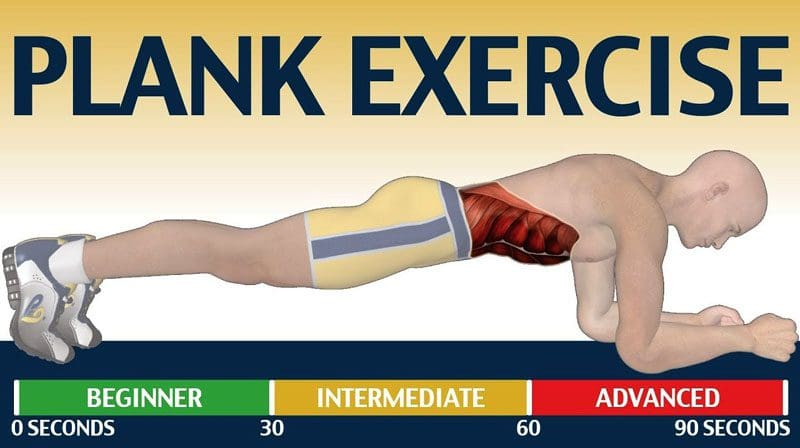
Regularly doing planks can support/strengthen the spine and prevent back pain no matter the fitness level. It’s estimated that 70% of adults will experience back problems and pain. One of the best ways to keep the spine healthy is by strengthening the core muscles. The more these muscles are built up, the healthier the body will become. The plank position activates the entire core taking the pressure off of the spine.
Core Anatomy
The core is the center of the body. It contains all the muscles surrounding the torso. These muscles work together to:
Stabilize the body during movement.
Prevent injury when engaged in physical activity/exercise.
Provide spinal support.
The core is split into two groups of muscles: The inner core and the outer core.
The deep abdominal muscle in the lower back sits on either side of the lumbar region of the spine.
Transversus Abdominis
Located between the lower ribs and the top of the pelvis.
Pelvic Floor
This base group of muscles stretches from the tailbone to the pubic bone.
Diaphragm
A dome-shaped muscle that rests below the lungs.
Outer Core
Rectus Abdominis
These are more commonly known as the abs.
External Obliques
These muscles are located on either side of the rectus abdominis.
Internal Obliques
These muscles are located below the external obliques, inside the hip bones.
Erector Spinae
These muscles surround the spine and extend up both sides of the vertebral column.
Planks and Back Pain Prevention
When the core is not strong enough, the spine and back muscles overcompensate to keep the body standing correctly. Studies have shown how planks effectively activate the muscles responsible for spinal stabilization. The exercise targets the entirety of the core and strengthens the shoulders and glutes. Strengthening these muscles improves posture, helping to alleviate back problems and pain. However, it’s recommended to talk to a doctor before beginning a plank regimen if back pain is present. If done incorrectly, they could aggravate the back muscles.
Proper Form
Choose an area clear of furniture where the whole body can stretch out. Follow these steps:
Begin with hands and knees on the floor.
Extend the legs back while keeping the elbows directly below the shoulders and the wrists below the elbows.
Keep the head down, looking at the space just above the hands.
Engage the abs and keep the body rigid.
Imagine a perfectly straight line from the neck to the toes.
Hold the position for 10 to 60 seconds, depending on fitness level.
Lower the body gently to the floor.
Make sure not to curve the back as curving means that the abdominal muscles are being engaged, and tilting the head up can strain the neck.
Both can lead to injury, which is why maintaining proper form is essential.
Plank Variations
There are variations of this exercise for different levels of physical fitness. Once the modified and full plank has been mastered, various planks can target other areas of the body. These include:
Side Plank
These involve shifting the weight to one forearm while extending the other arm into the air.
One-arm Plank
These involve lifting one hand off the ground, then alternating.
Anybody can work up to a plank at any age at any fitness level; it just takes time. Once achieved, it is a great way to keep the body’s core strong, healthy and helps prevent back problems.
Body Composition
Band Lateral Raise
The lateral band raise is an excellent workout for the shoulders. It works out the lateral deltoid, anterior deltoid, and serratus anterior.
Grasp one band in one hand.
Step on the free end with the opposite foot.
Right hand and left foot and vice versa.
Slowly extend and raise the arm until they are parallel to the floor.
Lower the arms in the same manner.
If the shoulders are healthy and strong enough, try adding dumbbells or kettlebells to increase the resistance.
References
Calatayud, Joaquín et al. “Tolerability and Muscle Activity of Core Muscle Exercises in Chronic Low-back Pain.” International journal of environmental research and public health vol. 16,19 3509. 20 Sep. 2019, doi:10.3390/ijerph16193509
World Health Organization. (2013) “Low back pain.” https://www.who.int/medicines/areas/priority_medicines/Ch6_24LBP.pdf
Youdas, James W et al. “Magnitudes of muscle activation of spine stabilizers in healthy adults during prone on elbow planking exercises with and without a fitness ball.” Physiotherapy Theory and practice vol. 34,3 (2018): 212-222. doi:10.1080/09593985.2017.1377792
Many individuals are trying to get fit and stay active through physical activity and exercise. Getting back to a previous fitness routine is an achievable and realistic goal. Fitness means having the energy and strength to perform physical activity and the body feeling as good as possible. Getting fit improves total health. But it does not require training like an athlete. Just walking for a half-hour every day can help individuals reach an adequate fitness level that helps them feel better and increase energy levels.
Benefits of Getting Fit
Getting the body fit and in shape:
Increases endurance
Increases muscle strength
Delivers oxygen and nutrients to tissues
Improves cardiovascular health
Helps release toxins
Improves overall energy levels
Improves sleep
Handle stress better
Being fit allows the body to work harder without as much work, the mind is better focused, the body burns more calories, even when at rest, and proper weight is maintained. Fitness reduces the risk of falls, heart attack, diabetes, high blood pressure, and certain cancers.
How Much Physical Activity Is Needed?
Experts say the goal should be one, or a combination, of these:
Moderate aerobic activity, like brisk walking, for at least 2½ hours a week.
It is up to the individual how many days to exercise, but it is best to be active at least three days a week.
Activity is recommended at least 10 minutes at a time. For example, an individual could:
Take a 10-minute walk three times a day, five days a week.
Take a half-hour walk three days a week.
On the other four days, take a 15-minute walk.
Take a 45-minute walk every other day.
Vigorous exercise is recommended at least three days a week for at least 10 minutes at a time. This activity makes the body breathe harder and increases heart rate. More vigorous activities, like running, could be included for at least one hour a week. This can be spread out 75 minutes, whichever way is more convenient for the individual. For example, an individual could:
Run for 25 minutes 3 times a week.
Run for 15 minutes 5 times a week.
Children as young as preschool age need activity as well. Encourage children ages 6 to 17 to engage in moderate to vigorous exercise for at least 1 hour every day.
Types of Physical Activity
Aerobic fitness
This makes the body breathe faster and makes the heart work harder.
Activities include walking, running, cycling, and swimming.
It is also known as cardio or cardiovascular training.
Muscle fitness
Muscle strength means building stronger muscles and increasing the length of time they can be used.
Activities like weight lifting, push-ups, squats, and resistance bands can improve muscular fitness.
Flexibility
Flexibility is the ability to move the joints and muscles through their full range of motion.
Moderate physical activity is safe for most individuals, but it’s recommended to talk to a doctor before engaging in physical activity/exercise. To help get started:
Make physical activity part of everyday
Make a regular habit of using stairs, not elevators, and walking, bicycling to do errands near home.
Start walking
Walking is a great fitness activity that most individuals can do.
Make it a habit to take a daily walk with family, friends, coworkers, or pets.
Find a workout partner
Working out with a partner can make exercising more enjoyable.
Find fun activities that you can stick with
Vary activities, so they don’t become boring and monotonous.
Use a calorie-burning application to determine how many calories are burned during exercise and daily activities.
Body Composition
Damaged Collagen
There are several reasons the body’s collagen production can slow down or become less efficient. The quality of the collagen made can decrease as well. Environmental factors can be avoided to protect collagen production; however, damage from disease and natural processes is inevitable. Aging is the most common cause of decreased natural collagen. As the body ages, collagen production and quality decrease. This leads to thinner, more fragile skin and achy joints. Certain chronic diseases like lupus and rheumatoid arthritis cause collagen deficiency, leading to issues that include:
UV exposure can accelerate the average rate of collagen damage that comes with aging.
UV exposure damage can also play a role in certain skin cancers.
Excessive sugar and fat intake increases inflammation and decreases protein synthesis.
References
American College of Sports Medicine, et al. (2009). Position stand: Exercise and physical activity for older adults. Medicine and Science in Sports and Exercise, 41(7): 1510–1530.
Anspaugh DJ, et al. (2011). Building muscular strength and endurance. Wellness: Concepts and Applications, 8th ed., pp. 111–137. New York: McGraw-Hill.
Centers for Disease Control and Prevention (2004). Strength training among adults aged 65 or older. MMWR, 53(2): 25–28.
U.S. Department of Health and Human Services (2008). 2008 Physical Activity Guidelines for Americans (ODPHP Publication No. U0036). Washington, DC: U.S. Government Printing Office. Available online: http://www.health.gov/paguidelines/guidelines/default.aspx.
Williams MA, et al. (2007). Resistance exercise in individuals with and without cardiovascular disease: 2007 update: A scientific statement from the American Heart Association Council on Clinical Cardiology and Council on Nutrition, Physical Activity, and Metabolism. Circulation, 116(5): 572–584.
Trying to fit exercise into a busy day can be a struggle to find a 30–45-minute window. However, research has found that mini workouts and accumulated exercises over the day are as effective as one complete session. Studies show that short workout sessions take the place of one long workout by breaking up the routine into several small ones and are just as effective.
The benefits of short, multiple exercise sessions are that they provide increased flexibility in an individual’s daily schedule, allowing them to focus on their health while navigating family, work, and other obligations. Performing mini-workouts throughout the day makes it easier to stay committed to an exercise program, experience the benefits, and achieve their health goals.
Increase Brain Health and Mood
Shorter duration workouts save time, allow multiple forms of exercise into a single day, and improve neurological, physical, and psychological benefits.
Performing an exercise as short as 3–5 minutes throughout the day can benefit the brain and mood.
Lower Blood Pressure
A study compared the effects of short aerobic exercise sessions and continuous exercise on 24-hour ambulatory blood pressure.
The study found that doing three 10-minute walks during the day morning, midday, and late afternoon lowered blood pressure more than doing one 30-minute walk in prehypertensive individuals.
Easier to Exercise
Performing high-intensity workouts for a long time is not easy, even for seasoned athletes.
This is why mini workout sessions appeal to fitness fans of all levels.
Decreasing the time allows the individual to exercise at higher intensities.
Reduce the Stress of Working Out
Incorporating shorter workouts can reduce the stress or fear that individuals have towards working out.
When looking at fitness from this perspective, shortened workouts naturally become a part of the day that helps relieve stress.
Achieve Fitness Goals
Shorter workouts allow individuals with busy schedules to focus on what they can perform in controlled sessions throughout the day without feeling overwhelmed by committing to an entire workout session.
Mini workouts are easy to schedule, more sustainable to perform, and easier to commit to long-term.
They allow for more focused and intensive exercise, especially when easily distracted.
Plan Ahead and Follow Through
The recommended way to accumulate a balance of strength, cardio, and mobility exercises throughout the day is to set up a plan. Find a routine that is enjoyable and not a chore, then set up the office space, work area, home to accommodate the exercises. For cardiovascular and strengthening benefits, an example of Tabata or HIIT workout.
Five exercises.
Two minutes on each exercise with a work-rest ratio of 30 seconds on, 30 seconds off.
Depending on an individual’s fitness level, the work-rest ratio can be modified.
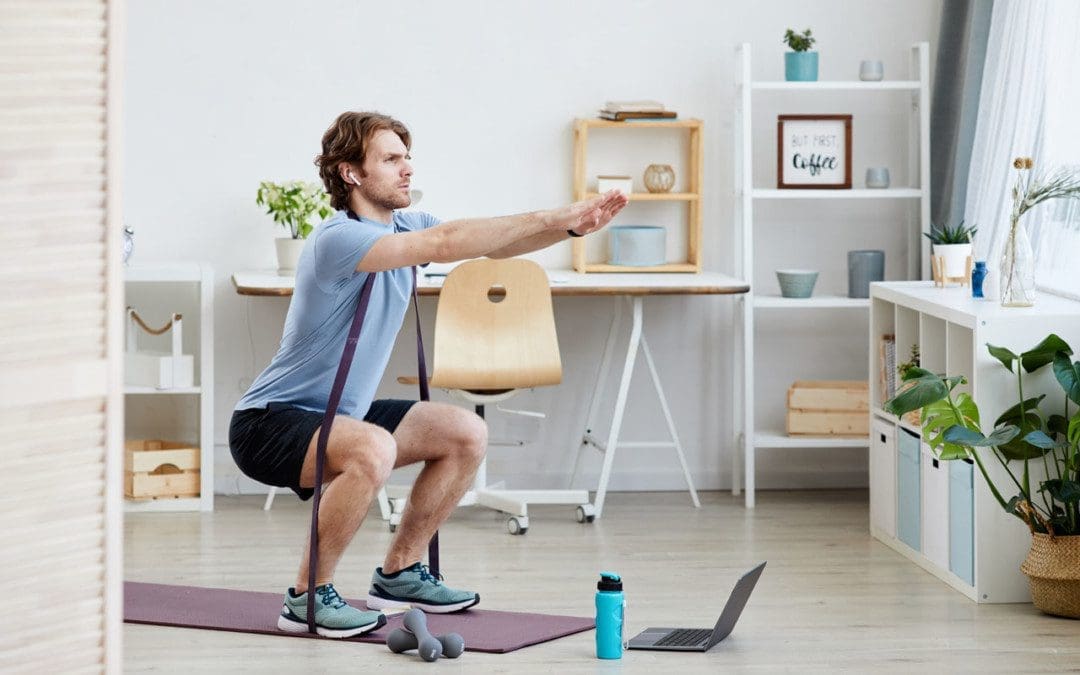
To improve mobility and strength, use weights or resistance bands.
Focus on proper form.
Try shorter workouts for a quick burst of exercise:
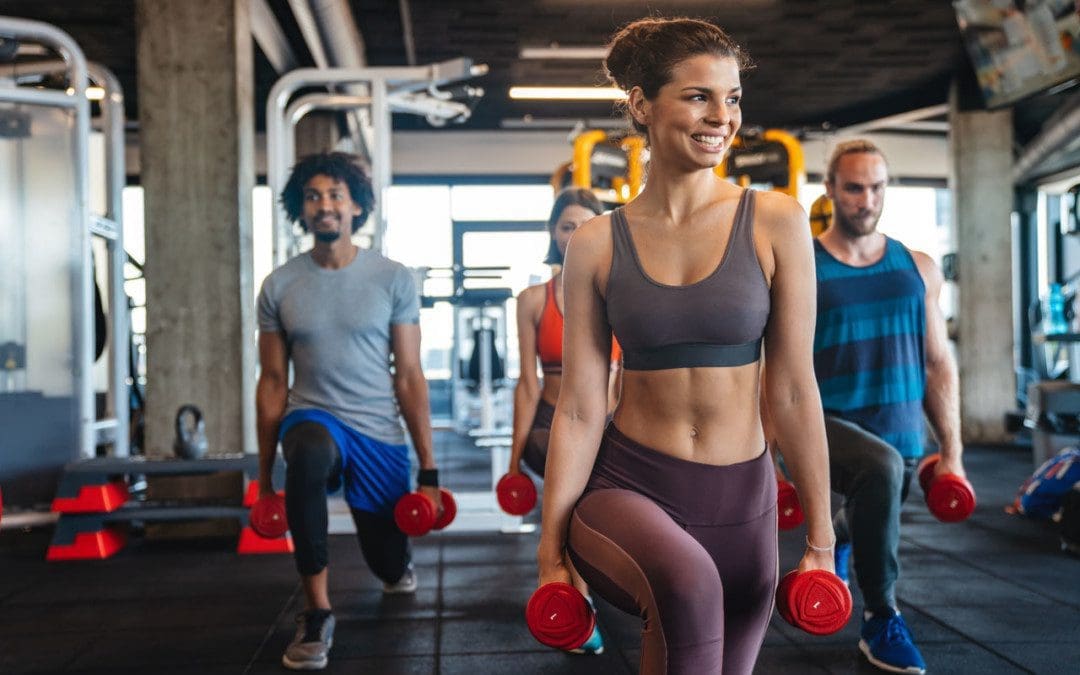
Pick two to three exercises like bicep curls, shoulder presses, bodyweight squats, calf raises, lunges, or planks.
How much physical activity do adults need? (2015, June 4) cdc.gov/physicalactivity/basics/adults/
Mayo Clinic Staff. (2014, October 10). Depression and anxiety: Exercise eases symptoms mayoclinic.org/diseases-conditions/depression/in-depth/depression-and-exercise/art-20046495
Mayo Clinic Staff. (2015, April 16). Exercise and stress: Get moving to manage stress mayoclinic.org/healthy-lifestyle/stress-management/in-depth/exercise-and-stress/art-20044469
In today’s podcast, Dr. Alex Jimenez and PUSH Fitness owner, Daniel Alvarado discuss how PUSH was created and demonstrate how the right motivation can help people achieve their goals as well as, improving their overall health and wellness.
Discussion
Dr. Alex Jimenez and PUSH Fitness owner, Daniel Alvarado introduce today’s podcast.
[00:00:01] Daniel Alvarado: You know what keeps them moving and growing and living? Tell me. It is another catfish or that predator. So we never have predators in our lives. We stay stuck, and we don’t progress anything. So every time we ask God to take away the stress or God take away this issue. We’re asking God to make us weaker, not stronger. OK. Because instead of asking like, “Hey God? Make me more creative. Make me more passionate, make me more patient.” We ask for, hey, take away this, but then we still want everything else that comes along with it. How does that work? It’s not easy.
[00:00:41] Dr. Alex Jimenez DC*: I don’t know. I mean, if you think about it’s from the first time we’re born. It’s not easy. You got to be one in a trillion sperm, really, and only God is very clear that if you don’t get to that egg first, you’re done. So from the moment where we’re given a chance, we’re on the point of destruction from the beginning. Exactly. So, in essence, why did that sperm get to that egg? So you can pass and fight through it.
[00:01:19] Daniel Alvarado: All right, so then you think of everything else as far as how people complain, how people say, you know, I want more money, I want this, but they don’t look at everybody’s backstory, the backend and the behind the curtains. They think, “Oh man, Jimenez, you are a doctor?” You don’t know how many times you’ve lost and rebuilt your practice or if you’re a gym owner and you haven’t made it. You don’t know how often you have to go in at 4:00 in the morning to get a workout in because you have to train people all day long to ensure that this business stays afloat. You know, people don’t see the back. You see, they’re quick to say, Oh, must be easy. No, it’s not easy until you step into the person’s shoes because you’re the one that has to sign the checks. You’re the one that has to stay up at night and figure out payroll. You’re the one that has to be creative and figure out how you’re going to make ends meet. You are the one that constantly has to be on it. You know, as much as you want to kick back and say whatever and do this, and I would love to work out four or five hours a day. That’s my passion and your passion.
[00:02:23] Dr. Alex Jimenez DC*: It’s my passion too.
[00:02:24] Daniel Alvarado: And can we? No, right. What do we have to do? Do we have to be meticulous? We have to be disciplined and ensure we have a proper order to stay on top of the schedule. Yes or no? Absolutely. Exactly. You know, so I’m saying at the end of the day that if you don’t have something chasing you, I mean, you become fat and dormant and become lazy.
[00:02:45] Dr. Alex Jimenez DC*: I think nature is designed to eliminate you. Alex would say, you know, it’s survival, the fittest limiting the species or whatever he’d call it when he’s in biochemistry. You see, I got to tell you it’s not easy to be a business owner. It’s not. It’s not easy when you have no sleep. Ever since I’ve known you, you’ve put the time in from early hours, and you here at 4:30 in the morning and here what time it is? Now you’re here, and we’re here sharing some stories. You know, it’s one of those things where it’s going to be nonstop all our lives. But here’s the thing if you don’t do it, it doesn’t stimulate you to become good at what you do, right? You become lethargic. Everything goes bad. You slowly begin the process of ceasing to exist.
[00:03:36] Daniel Alvarado: Right. So we all need rest to rejuvenate. Get creative. It’s scientifically proven. You need that to reset. You have to. Otherwise, you burn out. Right? But after how many days of rest, one or two where you get this disconnect spastic. Then afterward, you are like, “Alright, cool. I rested enough.” So you don’t stay stuck there.
[00:04:04] Dr. Alex Jimenez DC*: No, and I pray for vacation, right? And when I get it, after about three days, I’m like, OK, all right. I’m done.
[00:04:10] Daniel Alvarado: Let’s go.
[00:04:11] Dr. Alex Jimenez DC*: Yeah, OK, what I’m going to break. What am I going to do? That’s how we are.
[00:04:15] Daniel Alvarado: Exactly. But that’s what makes you so successful.
[00:04:17] Dr. Alex Jimenez DC*: Yeah. Well, it drives us, and it drives us to create who we are. And it also gives us a vision as to what we’re going to do. When we start this podcast, you know, Daniel, we want to get or tell the people a bit of the story of what you do and tell them about, you know, where you’ve been and what’s been happening with you. OK. So for me, it’s very important to share with the people what is happening. I’ve always been one to say, you know, I see how hard you work, and I see how much effort you put into things. But I’d like to know a bit of you as to what made you and what kind of makes you click a little bit. When I discuss these things, I want to ask you what made you begin PUSH? What made you start this massive organization?
How PUSH Fitness Started
PUSH Fitness owner, Daniel Alvarado explains how PUSH started.
[00:05:16] Daniel Alvarado: I want to reach the masses of people and help people. So in all reality, my sister, my brother-in-law, my brother, we’ve all come from platforms as far as I’m speaking, preaching, singing, whatever it is. I was always kind of the black sheep. And I mean it in a good way because I wasn’t trained differently. I just was very rebellious. That makes any sense. I wanted to create my own. So if someone is going right, I go left. If the people go right, I go left. I was always trying to find a different way, and I was stubborn enough to become the most successful by the end. But that’s what allowed me to create this place to reach the masses of people and have my platform of change in people’s lives.
[00:06:14] Dr. Alex Jimenez DC*: Let me ask you when you first started PUSH; what was your reason you started it out? You were always into fitness ever since I’ve known you; you’ve always been into a deep understanding. You see, I love sharing that story with people about when I first met you; you were driven. I mean, you were hunting for knowledge. You were trying to figure out what it was that made people tick, and you wanted to teach people… A little cocky, I’d say. But being 18 years old, I mean, who isn’t right at that age? You haven’t been thumped in the head a couple of times. But you did, and you shared it with people, and you did that. But what made you? What drove you? Because I got to tell you, I’m a big believer, Daniel, about when you evaluate families, I see how hard your dad works. I see how your mom’s incredible in terms of what she does. She wins these CrossFit competitions just on meer drive. You have to turn off the lights to get her off the wall because she keeps on going, right? I mean, what is it that what do you feel drove you and what started the whole philosophy of trying to help people out?
[00:07:24] Daniel Alvarado: I mean, you put in my parent’s work ethic; they just never stop. They still don’t stop and try to move forward despite what life throws at them, and they’re successful in their way. They never stop working towards their marriage, towards their love, towards serving each other. They showed me that we always have to help people, and they serve each other. They serve at the church, and they serve wherever they go. No matter where my dad is, he’s always trying to help. It doesn’t matter. You try to take out your trash can and table; whatever it is, he will help. But that’s where I learned it from him. You don’t just go anywhere and just be wherever you go. You always serve. And that’s my interfaith mentality. You know, it’s biblical. Wherever you are, we are supposed to serve people as husbands and wives. We’re supposed to serve each other. That’s what makes us so successful. You know, you look at Jesus in the Bible, and what do you do? You serve people. He helped people. Not the norm. The most unorthodox, nonreligious people. You know, all the people there that needed the most help, not the most religious. And I think that’s what I love to do. I love helping the people that need the most help. The unconventional. Not the people that are all ready to let go. I mean, don’t get me wrong, I do love helping them. But I guess I like helping the unorthodox.
[00:09:08] Dr. Alex Jimenez DC*: Yeah. You know what, when you mentioned that about your dad, one of the things I noticed is that I came here to work out at around six o’clock in the morning and it was freezing outside, literally freezing. You had a flat tire. Your dad was lifting in the car by himself to get that tire up. Yeah, it was crazy. By the time I got there, I was like, Is this guy working on it? There was no jack, and he was picking up the car himself. He’s pushing that thing up and lifting the vehicle to fit the tire on. I was like; You got to be kidding me. You didn’t even know until I told you, and you said, “Man, my dad never asked for help.”, you know, he does it. That’s one of the things you said, and that’s who we are. We are our parents. We eventually become our parents to some extent, and that’s very much how you are. Your philosophies have guided the PUSH fitness entourage, and the people who come here have been like extreme athletes. Tell me a bit of that in terms of what drove you to pick athleticism as your way of serving.
[00:10:11] Daniel Alvarado: I think I’ve seen the potential of what people can be pushed to if you believe in them. Often, people will, you know, people do believe in themselves, but it’s amazing what you see people become or individuals or athletes. When you say, Hey, I believe you. Someone that is not your mom, not your dad, because it’s kind of expected. You know, not that they have to tell you that, but you know, it’s kind of sometimes expected. You’re right. Yes, exactly. But then you have this stranger saying, I believe you genuinely wholeheartedly, and it brings out that much more in you. I know that’s how I was, and I still remember various times where you tapped me on the shoulder and said, you know. What are you doing? You can, and I’m very different; I don’t need someone to preach to me. It might get going, and that gets you going to move on to the next level of the mountain. And that’s what I love seeing as a potential that you could bring down in all individuals.
[00:11:32] Dr. Alex Jimenez DC*: When you see it, pretty much you’ve been able to see everyone crack. What is it you look for when you see them kind of hit that wall when you start working with an individual with a specific set, whatever sport they’re in, or whatever their dreams are? Weight loss or whatever it is. What is it you look for?
[00:11:50] Daniel Alvarado: To see the reason why they’re quitting. Are they genuinely tired, or have they been babied so much by society that they don’t know how to push for themselves anymore? It’s a sensitive society nowadays; you can’t push kids because they get their feelings hurt or feel this way or that way. And sometimes it’s like you got to wake your butt up; if not, you will not make it in this life. Nothing comes easy, and I think we’re expecting things to become easy because we’re, you know, microwave generation, where everything wants to be done so quickly. So I look for the reason as to why they’re quitting. This is genuinely why they are tired, and are they going to throw up? All right. But you remember firsthand that when I worked out with you, I went to the restroom and threw up. I came right back. Why? Because it’s what you build with that person that respect, you know, why would you want someone who is an equivalent you when he gets hard, you know?
[00:12:59] Dr. Alex Jimenez DC*: Yeah, exactly right.
[00:13:00] Daniel Alvarado: How are you going to count on them? How do you depend on them? When it gets tough, they are going to jump off the wagon; that’s it. You are left alone.
The Right Motivation
PUSH Fitness owner, Daniel Alvarado explains to Dr. Alex Jimenez how the right motivation can influence not only kids but adults as well.
[00:13:09] Dr. Alex Jimenez DC*: You know you’re given responsibility. A huge one with a lot of the El Paso kids in whatever sports they do and whatever the sport, whether it be agility, sport-based or just some sort of sport-based system where they’re just kind of, you know, let’s say, hockey or even things like tennis or golf. But they all have a moment of reaching within. I love how you do that in terms of going ahead and seeing the depths of what is wrong with them, and you can connect with them like no other. I’ve noticed that every single time with my kids, too, when you train them. Did you ask why? So really, at that point, you know, no one cares what you know, they care that you care and that caring allows them to open up, huh?
[00:13:55] Daniel Alvarado: Right? Yeah, it does. You know, it makes them feel like, you know, I do have it in me. I need a quit babying in myself. And I need to get up and get after this because no one will give it to me, and I got to get up after it and work for it. Period.
[00:14:11] Dr. Alex Jimenez DC*: I would tell my daughter when they would come in and say, “You know what? I’m not coming in, you know, I’m not going today.” And I said, All right, well, let me call Daniel. “No!” Now they sense the obligation and trust you have put into their hearts like no other? Because that’s what they want. They want someone to believe in them.
[00:14:35] Daniel Alvarado: Exactly, to push them.
[00:14:37] Dr. Alex Jimenez DC*: That’s why the push to PUSH, you know, there’s another way there’s the adage the push. You know, these are vital points. Do you have to deal with the mind-stuff while working with them? How do you work on developing a child’s mind or working them through their mental impediments or their mental kind of dynamics to make them better of who they are? If that makes sense.
[00:15:04] Daniel Alvarado: You had to build a foundation with them. First, you had to build trust with them. You can just go in and yell at them, Hey, let’s go. Move your butt! You know, you can’t do that. You have to build a relationship first, have them trust you, and understand why you’re pushing them. And then when they’re at the brink of giving up, and you yell at them, and they know why you’re screaming at them. A good parent after they spank them and ground them. They’ll tell them the reason why they did that. But they don’t stop loving them. They appreciate it because they know they’re wrong. Right? It’s the same concept here. Obviously, I yell at them after they know, like, hey yeah, I was sulking, and you start feeling sorry for myself and get after it, right?
[00:15:53] Dr. Alex Jimenez DC*: You know, from my own experience with what you did. You see, you have a lot of moms watching you train their kids. Moms are sharp. There’s nothing more intelligent than a mother in this world. And they intuitively, they understand, and they feel the depths of the change in the child. Right? So when they see the depths of the difference in the child, they trust you. And this is in mass because I have like a whole wall of families, moms, dads. They bring their kids no matter what. Tired, cold, sleet, rain, snow. They bring their kids here to train with you and your entire crew with the philosophies of pushing to those limits. You know, how does that feel when you see those kids excel?
[00:16:45] Daniel Alvarado: I feel proud. I’m pretty much over the moon because you see the hard work you took to instill that time into them and make sure their full potential came out. So it’s rewarding, and it’s inexplicable.
[00:17:03] Dr. Alex Jimenez DC*: Let me ask you this. You’re not young, and you’re in your 30s, which is a very young age. However, you’ve lived long enough to see some of these kids go on in to do their thing. Tell me how that feels in terms of you watching them develop in terms of their they’re who they are, and what they develop because of the foundation, or at least influenced by the foundation of just don’t give up and keep on pushing through it. How does it feel? What do you think?
[00:17:36] Daniel Alvarado: In a lot of sense, a lot of pride, because you can see what they could have been in there, what they couldn’t have been in times. Some kids do come from poor extremities. And so to see them excel believing themselves, go to college, get a successful job, and be something of a higher profession that otherwise they thought they couldn’t build or settle for less and not letting them settle for less is amazing. That’s why I keep doing what I’m doing.
[00:18:17] Dr. Alex Jimenez DC*: Do these kids keep calling you and talking to you personally?
[00:18:21] Daniel Alvarado: Yeah, they do. They still keep up with me as far as what they’re doing, how they’re doing. They’ll come in and work out. So, you know, to share with me everything. It’s fun. You build that long-lasting relationship.
[00:18:35] Dr. Alex Jimenez DC*: If you could come up with a couple of words indicating what makes PUSH unique and you can look deep inside your heart and figure out what it would be a word to get an obituary being read about you. What would they say about PUSH and you, huh? Would you want them to say?
[00:18:55] Daniel Alvarado: Honestly, that they had somebody other than their parents believe in them.
[00:19:03] Dr. Alex Jimenez DC*: That’s amazing. That’s a considerable component of everything that’s going on. When do you think someone actually should be coming out to this place and enjoying the kind of lifestyle that this place, you know, helps enhance their lives with? When is that time?
[00:19:21] Daniel Alvarado: Whenever. Whenever you want to be a better version of yourself.
[00:19:25] Dr. Alex Jimenez DC*: What do you think people sometimes think about, you know, why shouldn’t they come in? What should not be an impediment of them coming in here?
[00:19:35] Daniel Alvarado: Their image. They can’t do it, that they’re not like, you know, they’re obese, having problems, low back problems, and looking foolish. You know, the whole thing is that in the day, we’ve all looked foolish to an extent or another. But the point is if I always assumed what others thought and paid attention to how I felt this was for members and not being good enough, then I wouldn’t be where I’m at.
[00:20:03] Dr. Alex Jimenez DC*: I tell you, I’ve learned a lot from you, and if anything, my kids have learned a lot from you by just your persistence. You know, I can honestly tell you that my son is better as an athlete because of your relationship with you. But let me ask you, what kind of physical and emotional changes have you watched your clients attain their goals?
[00:20:34] Daniel Alvarado: Hearing people say. “He saved me from diabetic medications.” We hear people say like I would have died, been in this obese state, and you saved my life. And that’s how do you not get emotional with things like that? How do you not get emotional and people saying, like, you know, I thought I couldn’t walk or had this muscle imbalance, or how do you say where I have this one client that couldn’t build muscle? I can’t remember the terminology, but the fact that she can build muscle now, where the doctor told her she wouldn’t be able to squat a bar, and now she’s squatting over one hundred and thirty-five pounds, that’s phenomenal. How does that not keep you motivated to get up every day when you don’t feel like getting up? You know, and I’ll repeat it, in King David’s words. You know when you had to encourage yourself because somebody is not always there to inspire you. So you do have to encourage yourself so you can be the best or somebody else that needs it more than you. Ultimately, someone has more complicated than you, and you can always help somebody under you.
Conclusion
Dr. Alex Jimenez recaps today’s podcast.
[00:21:52] Dr. Alex Jimenez DC*: Well, Daniel, you said it is very short and essential keywords. You know, we appreciate you. We’re here at the push fitness center. You know you got some information there that you can use to find Mr. Alvarado. The PUSH fitness center is a monster center with many people who care and change people’s lives. Suppose you guys have any questions, comments, or ideas about what we do for people. Let us know, and we’re here to serve as Daniel is. Thank you very much, brother, and I appreciate everything you’ve done. And God bless, brother.
IFM's Find A Practitioner tool is the largest referral network in Functional Medicine, created to help patients locate Functional Medicine practitioners anywhere in the world. IFM Certified Practitioners are listed first in the search results, given their extensive education in Functional Medicine