

Head Injuries Affect Movement: Recovery Strategies
How Head Injuries Affect Movement—and How Chiropractic Care Gives It Back
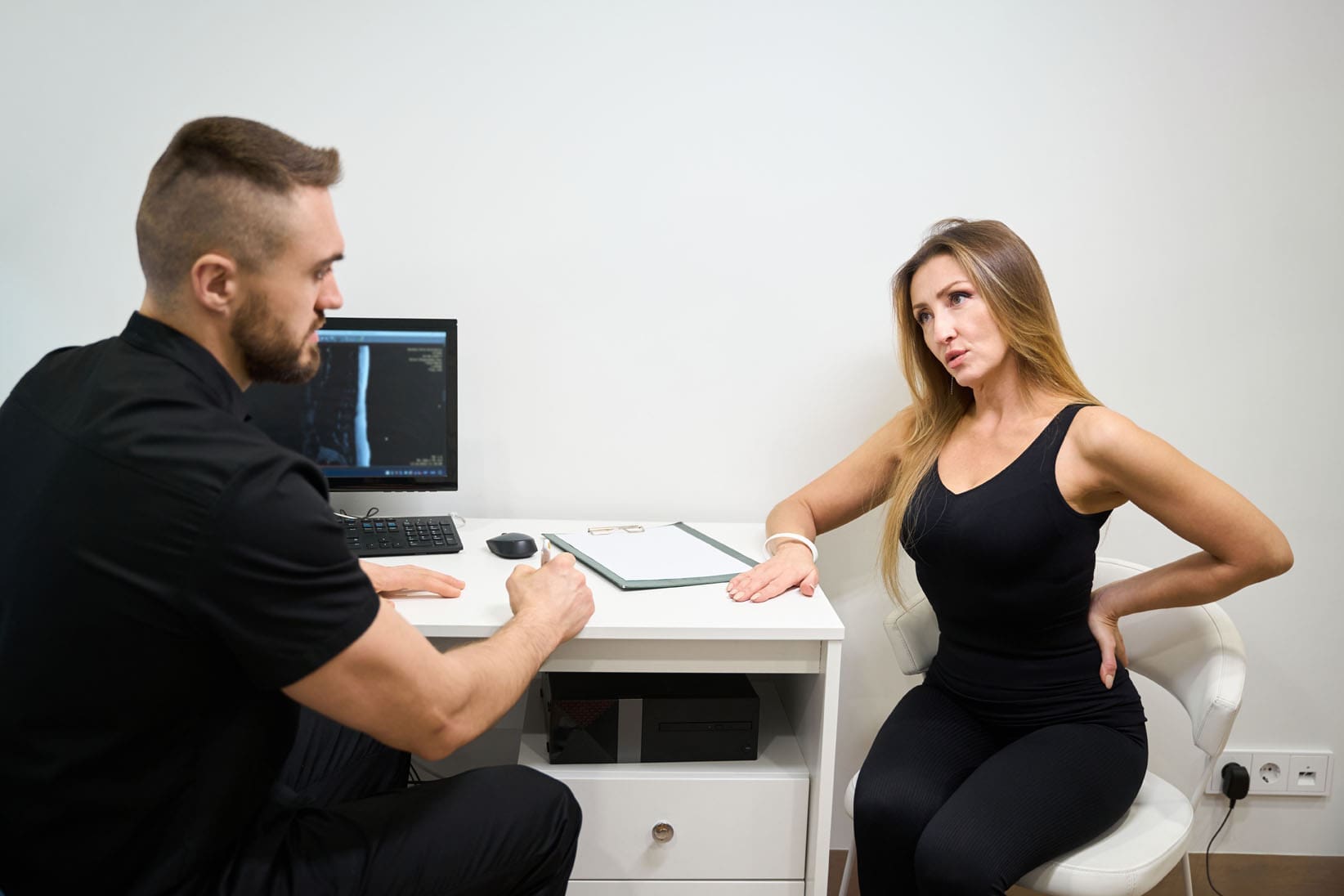
A physiotherapist is conducting a consultation on a possible traumatic brain injury; the patient complains of back pain and mobility problems.
Head injuries and traumatic brain injuries (TBIs) can turn simple steps into big challenges. A fall, a car crash, or a sports hit can damage the brain and the nerves that tell your body how to walk, reach, or stand tall. This guide explains exactly how these injuries cause muscle fatigue, shaky balance, stiff joints, and even paralysis. You will also learn how gentle chiropractic adjustments, soft-tissue work, and targeted exercises help people move better, feel less pain, and live fuller lives.
What Happens Inside the Body After a Head Injury
When the skull jolts, the brain bounces inside. That sudden movement can tear tiny nerve wires and swell delicate tissues. The messages that once zipped from brain to legs now arrive late, weak, or not at all (Model Systems Knowledge Translation Center, 2023).
Muscle Fatigue Hits Fast
Even mild TBIs make muscles tire in minutes instead of hours. A short walk to the mailbox can feel like a marathon. Dr. Alexander Jimenez, a chiropractor and nurse practitioner in El Paso, Texas, sees this every week. “Patients tell me their legs feel like wet sandbags after five minutes of standing,” he says in his clinic videos (Jimenez, 2025).
Balance Becomes a Wobbly Game
The brain’s balance center sits deep inside the cerebellum. When it gets bruised, the ground seems to tilt. People sway, stumble, or freeze in place. One study found that even “mild” head injuries change walking patterns enough to raise fall risk by 50% (Brain Injury Association of America, 2024).
Coordination Turns Clumsy
Reaching for a coffee cup can knock over the whole table. Fine finger skills vanish. Buttons stay undone, handwriting turns shaky, and stairs feel like mountains. Physiopedia refers to this as “loss of motor dexterity” (Physiopedia, 2024).
Pain and Tiredness Make Everything Worse
Chronic headaches, neck pain, and shoulder aches are common after TBIs. When pain flares, muscles guard and stiffen. Add normal daily fatigue, and movement shuts down completely (Irvine, 2023).
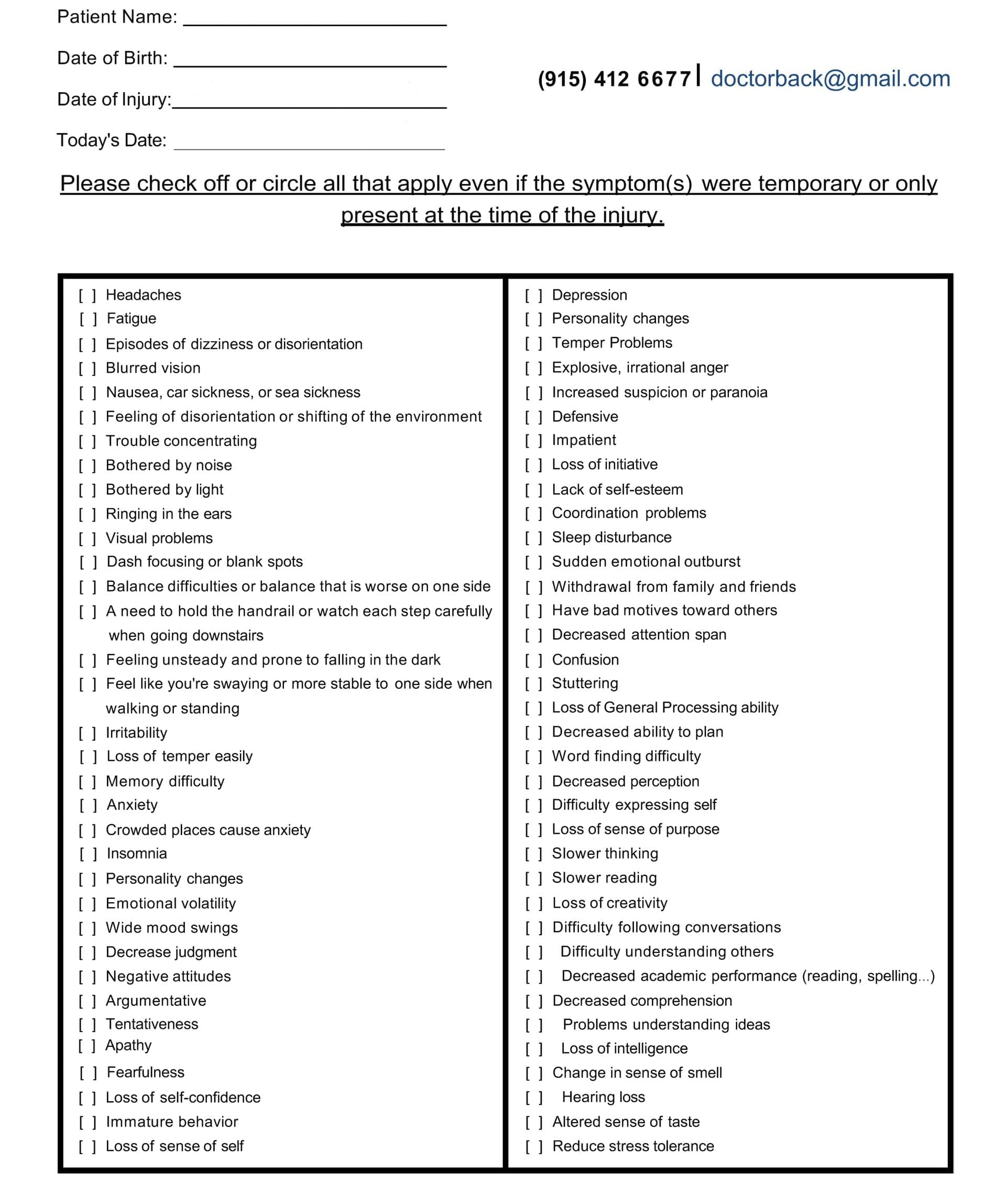
Symptom Questionnaire:
From Stiffness to Locked Joints: The Contracture Trap
If a person rests too much to avoid pain, muscles shorten like dried rubber bands. Joints freeze. Doctors call these locked positions contractures. Elbows, knees, and ankles can bend only a few degrees. Contractures typically develop within weeks and become permanent within months if left untreated (Physiopedia, 2024).
Headway, a UK brain-injury charity, warns: “Lack of movement is the biggest enemy of recovery” (Headway, 2023).
How Chiropractic and Integrative Care Unlock the Body
Chiropractors do more than crack backs. They use gentle moves, hands-on muscle work, and brain-retraining exercises to restart motion and calm pain.
1. Spinal Adjustments Re-Open Nerve Highways
Misaligned neck bones pinch nerves that control arms and legs. A precise chiropractic adjustment lifts that pressure. Blood and cerebrospinal fluid flow better. Patients often feel looser the same day (Northwest Florida Physicians Group, 2023).
Dr. Jimenez films before-and-after videos: one patient who dragged her foot for two years took ten smooth steps after three visits (Jimenez, 2025).
2. Soft-Tissue Therapy Melts Tight Muscles
Fascia—the thin sleeve around every muscle—can knot after injury. Chiropractors use tools and fingers to smooth these knots. Shoulders drop, necks turn, and hips swing again (Function First, 2024).
3. Balance Boards and Eye-Tracking Drills Rewire the Brain
Simple wobble boards teach the brain to steady the body. Following a finger with the eyes rebuilds coordination pathways. These “neuro-drills” are fun and fast. Most patients notice steadier steps in four weeks (HML Functional Care, 2024).
4. Stretching Plans Stop Contractures Before They Start
Daily 10-minute routines keep joints supple. A chiropractor demonstrates the exact angle and hold time to ensure muscles lengthen safely (NR Times, 2024).
5. Posture Fixes End Headache Cycles
Slumped shoulders strain the neck and starve the brain of oxygen. One posture taping session plus two adjustments can cut headache days in half (Cognitive FX, 2024).
Real Stories That Prove It Works
- Mark, age 34, car crash survivor “I couldn’t lift my toddler. After six weeks of chiropractic care, I carried her across the park.” (Patient testimonial, Apex Chiropractic, 2024)
- Sarah, age 19, soccer concussion “Balance boards felt silly—until I walked the graduation stage without my cane.” (Crumley House, 2024)
A Day-in-the-Life Recovery Plan
Morning 5-minute neck rolls + 2-minute wall angels, Chiropractic adjustment twice a week
Midday 10-minute walk with trekking poles, Soft-tissue massage on tight calves
Evening Wobble-board “surfing” while brushing teeth, Gentle foam-roll under guidance
Follow this for 90 days, and most people regain 70–80% of normal motion (Impact Medical Group, 2024).
When to See a Chiropractic Neurologist
Look for these red-flag signs:
- Your legs drag or cross when you walk
- Arms stay glued to your sides
- You fall more than once a month
- Painkillers no longer help
A chiropractic neurologist assesses your gait on video, tests eye reflexes, and develops a customized plan (NeuroChiro, 2024).
Science Backs the Gentle Touch
A 2022 review of 14 studies found that spinal adjustments, combined with exercise, reduced TBI pain by 41% more than exercise alone (Jimenez, 2025). Another trial showed that balance scores increased by 28 points in eight weeks with integrative care (PMC, 2022).
Safe, Drug-Free, and Covered by Many Insurances
Chiropractic care for head injuries is a non-invasive approach. No needles, no scalpels, no opioids. Most auto-insurance PIP plans and major health plans pay for 12–20 visits (Sam’s Chiropractic, 2024).
Your Next Step Today
- Call a local chiropractor who lists “TBI” or “concussion” on their website.
- Bring a 1-page list: “I trip, my left knee locks, headaches every afternoon.”
- Request a 15-minute complimentary gait screen.
One small visit can start the comeback.
References
- Apex Chiropractic. (2024). 3 benefits of chiropractic care following a traumatic brain injury. https://apexchiroco.com/auto-injury/3-benefits-of-chiropractic-care-following-a-traumatic-brain-injury/
- Brain Injury Association of America. (2024). Slight changes in walking and balance after traumatic brain injury. https://biausa.org/professionals/research/tbi-model-systems/slight-changes-in-walking-and-balance-after-traumatic-brain-injury
- Cognitive FX. (2024). TBI physical therapy: Exercises for traumatic brain injury recovery. https://www.cognitivefxusa.com/blog/tbi-physical-therapy
- Crumley House. (2024). Physical training after TBI. https://crumleyhouse.com/blog_physical_training/
- Function First. (2024). How chiropractic care can accelerate recovery from personal injuries. https://www.functionfirstindy.com/how-chiropractic-care-can-accelerate-recovery-from-personal-injuries
- Headway. (2023). Physical effects of brain injury. https://www.headway.org.uk/about-brain-injury/individuals/effects-of-brain-injury/physical-effects-of-brain-injury/
- HML Functional Care. (2024). How chiropractic neurology supports brain healing. https://hmlfunctionalcare.com/how-chiropractic-neurology-supports-brain-healing/
- Impact Medical Group. (2024). Can chiropractic care help with mild traumatic brain injuries? https://www.impactmedicalgroup.com/2024/06/26/can-chiropractic-care-help-with-mild-traumatic-brain-injuries/
- Irvine, K. (2023). Chronic pain associated with traumatic brain injury. Clinical Pain Advisor. https://www.clinicalpainadvisor.com/features/chronic-pain-associated-with-traumatic-brain-injury-causes-and-management/
- Jimenez, A. (2025). Clinical observations on TBI mobility recovery [Video series]. Dr. Alex Jimenez. https://dralexjimenez.com/
- Model Systems Knowledge Translation Center. (2023). Understanding TBI: Part 2. https://msktc.org/tbi/factsheets/understanding-tbi-part-2-brain-injury-impact-individuals-functioning
- NeuroChiro. (2024). Brain injury services. https://www.neurochiro.com/services/brain-injury/
- Northwest Florida Physicians Group. (2023). Using chiropractic care to treat traumatic brain injuries. https://northwestfloridaphysiciansgroup.com/using-chiropractic-care-to-treat-traumatic-brain-injuries/
- NR Times. (2024). Physiotherapy in post-TBI rehab. https://nrtimes.co.uk/nr-notes-physiotherapy-in-post-tbi-rehab/
- Physiopedia. (2024). Contracture management for traumatic brain injury. https://www.physio-pedia.com/Contracture_Management_for_Traumatic_Brain_Injury
- PMC. (2022). Hypokinesia after TBI. https://pmc.ncbi.nlm.nih.gov/articles/PMC9493170/
- Sam’s Chiropractic. (2024). Why chiropractic support improves recovery from auto injuries. https://samschiropractic.com/why-chiropractic-support-improves-recovery-from-auto-injuries/







