For individuals experiencing a turf toe injury, can knowing the symptoms help athletes and non-athletes with treatment, recovery time, and returning to activities?
Turf Toe Injury
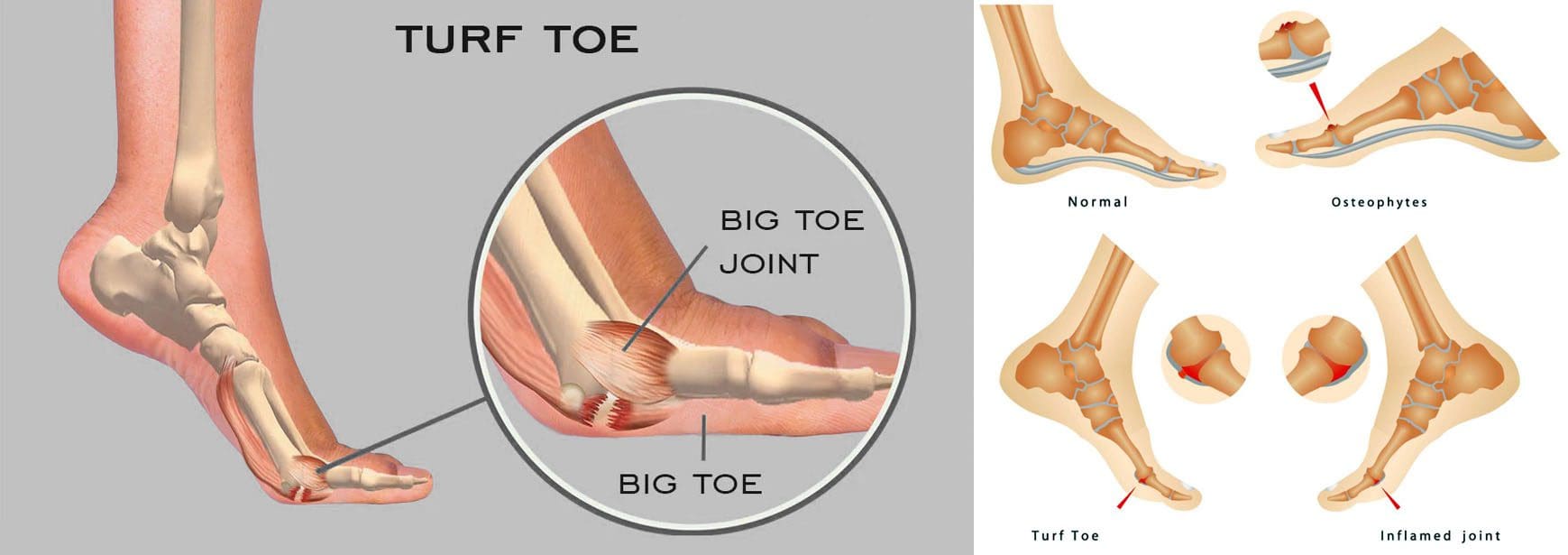
A turf toe injury affects the soft tissue ligaments and tendons at the base of the big toe under the foot. This condition usually occurs when the toe is hyperextended/forced upward, such as when the ball of the foot is on the ground and the heel is lifted. (American Academy of Orthopaedic Surgeons. 2021) The injury is common among athletes who play sports on artificial turf, which is how the injury got its name. However, it can also affect non-athletes, like individuals working on their feet all day.
Recovery time after turf toe injury depends on the severity and the type of activities the individual plans to return to.
Returning to high-level sports activities after a severe injury can take six months.
These injuries vary in severity but usually improve with conservative treatment. In severe cases, surgery could be required.
Pain is the primary issue that stops physical activities after a grade 1 injury, while grades 2 and 3 can take weeks to months to heal completely.
Meaning
A turf toe injury refers to a metatarsophalangeal joint strain. This joint comprises ligaments that connect the bone on the sole of the foot, below the big toe/proximal phalanx, to the bones that connect the toes to the larger bones in the feet/metatarsals. The injury is usually caused by hyperextension that often results from a pushing-off motion, like running or jumping.
If experiencing turf toe symptoms, see a healthcare provider for a proper diagnosis so they can develop a personalized treatment plan. They will perform a physical exam to assess pain, swelling, and range of motion. (American Academy of Orthopaedic Surgeons. 2021) If the healthcare provider suspects tissue damage, they may recommend imaging with X-rays and (MRI) to grade the injury and determine the proper course of action.
Grades 2 and 3 come with partial or complete tissue tearing, severe pain, and swelling. Treatments for more severe turf toe can include: (Ali-Asgar Najefi et al., 2018)
Limited weight bearing
Using assistive devices like crutches, a walking boot, or a cast.
Physical therapy also includes proprioception and agility training exercises, orthotics, and wearing recommended shoes for specific physical activities. (Lisa Chinn, Jay Hertel. 2010)
A physical therapist can also help ensure that the individual does not return to physical activities before the injury is fully healed and prevent the risk of re-injury.
Grade 1 – Subjective as it varies depending on the individual’s pain tolerance.
Grade 2 – Four to six weeks of immobilization.
Grade 3 – Eight weeks minimum of immobilization.
It can take up to six months to return to normal function.
Returning To Normal Activities
After a grade 1 turf toe injury, individuals can return to normal activities once the pain is under control. Grades 2 and 3 take longer to heal. Returning to sports activities after a grade 2 injury can take around two or three months, while grade 3 injuries and cases that require surgery can take up to six months. (Ali-Asgar Najefi et al., 2018)
Sports Chiropractic Treatment
References
American Academy of Orthopaedic Surgeons. (2021). Turf toe.
American College of Foot and Ankle Surgeons. Foot Health Facts. (2023). RICE protocol.
Najefi, A. A., Jeyaseelan, L., & Welck, M. (2018). Turf toe: A clinical update. EFORT open reviews, 3(9), 501–506. https://doi.org/10.1302/2058-5241.3.180012
Pinter, Z. W., Farnell, C. G., Huntley, S., Patel, H. A., Peng, J., McMurtrie, J., Ray, J. L., Naranje, S., & Shah, A. B. (2020). Outcomes of Chronic Turf Toe Repair in Non-athlete Population: A Retrospective Study. Indian journal of orthopaedics, 54(1), 43–48. https://doi.org/10.1007/s43465-019-00010-8
Chinn, L., & Hertel, J. (2010). Rehabilitation of ankle and foot injuries in athletes. Clinics in sports medicine, 29(1), 157–167. https://doi.org/10.1016/j.csm.2009.09.006
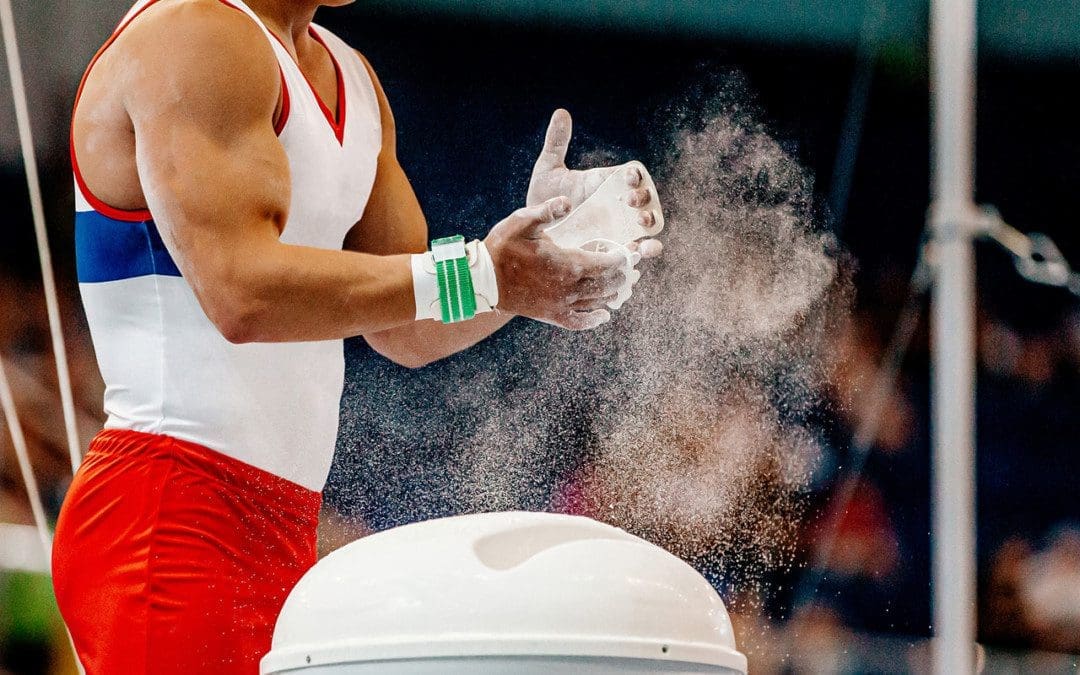
Olympic athletes are so fit they make everything look easy. It is one of the most amazing examples of athletic prowess to behold. Attempting these feats of athleticism could lead to injury without proper training and conditioning. However, you can draw inspiration from these incredible skills and commitment to reach your fitness goals. Individuals can emulate the Olympic athlete’s discipline to get the most out of physical activity and workouts.
Olympic Athlete Discipline
This is not about the literal workout routines these athletes engage in but the mental state and discipline that keeps them motivated, especially when things get tough. This can help individuals get the most out of every workout. When momentum or motivation starts to dwindle, look to Olympic athletes and then apply that discipline to recharge motivation and achieve the goal.
Learn to Train Daily
Many can succumb to weekend warrior syndrome. After sitting on the couch after a long day of work all week, individuals try to make up for the inactivity by overexerting themselves with hours of exercise on the weekend. This is a perfect setup for injury.
Instead, train, work out, exercise, and move around daily. Professional athletes know they won’t get the top results in one shot.
They approach it in incremental steps for a solid foundation and understanding of the final and optimal result.
Daily physical activity and exercise maintain body conditioning, strength, and overall fitness.
And makes the body more efficient at burning fat.
Maintain Goal Focus
Olympic athletes have specific goals in their training. There has to be when competing against the best athletes in the world and winning.
Individual health and fitness goals may be smaller, but they are just as important and should be treated as such for motivation to exercise each day.
Keep goals simple, specific, and reachable/doable when setting them.
SMART goals are Specific, Measurable, Achievable, Realistic, and Time-based.
Use daily reminders of what the goal is and strategies to achieve it.
Utilize Specific Training
Olympic athletes must have incredible endurance, strength, and skill sets to complete their event.
They must incorporate specific training drills, exercises, stretches, nutrition, etc., to improve and advance.
Whatever the goal, make sure the training is appropriate.
If trying to build muscle, focus on heavy strength training and consuming quality calories.
If the goal is to lose weight, break down the goal into achievable steps to get there, like.
What type of workouts are needed?
Consulting a nutritionist for recommendations.
Fuel the Body for Top Performance
Individuals can be concerned about food and whether it contains too much fat or calories.
Olympic athletes worry about getting the right nutrients and calories to fuel their bodies for competition.
Use a similar approach and ask what is the best thing I should eat right now for the workout and…
What foods will maintain optimal body health?
Listen to The Body and Rest
Olympic athletes have to learn to maintain the balance of maintaining top performance and not getting burnt out.
This is when they know to listen to their bodies, extend recovery days, or take a mini-vacation.
Overtraining can lead to injury, frustration, discouragement, and loss of motivation.
Whatever the activity, make sure proper form is followed.
For example, distance runners hold their heads high, have relaxed faces and upper bodies, have a natural arm swing, and do not overstride.
Apply the same form principles to stretches and exercises.
Stronger Body = Better Life
References
Casa, Douglas J et al. “Fluid Needs for Training, Competition, and Recovery in Track-and-Field Athletes.” International Journal of sports nutrition and exercise metabolism vol. 29,2 (2019): 175-180. doi:10.1123/ijsnem.2018-0374
Bailey RR. Goal Setting and Action Planning for Health Behavior Change. Am J Lifestyle Med. 2019;13(6):615-618. doi:10.1177/1559827617729634
Hackett, Daniel, et al. “Olympic weightlifting training improves vertical jump height in sportspeople: a systematic review with meta-analysis.” British Journal of sports medicine vol. 50,14 (2016): 865-72. doi:10.1136/bjsports-2015-094951
Huebner, Marianne, et al. “The Masters’ athlete in Olympic weightlifting: Training, lifestyle, health challenges, and gender differences.” PloS one vol. 15,12 e0243652. 4 Dec. 2020, doi:10.1371/journal.pone.0243652
Swift DL, Johannsen NM, Lavie CJ, Earnest CP, Church TS. The Role of Exercise and Physical Activity in Weight Loss and Maintenance. Prog Cardiovasc Dis. 2014;56(4):441-447. doi:10.1016/j.pcad.2013.09.012
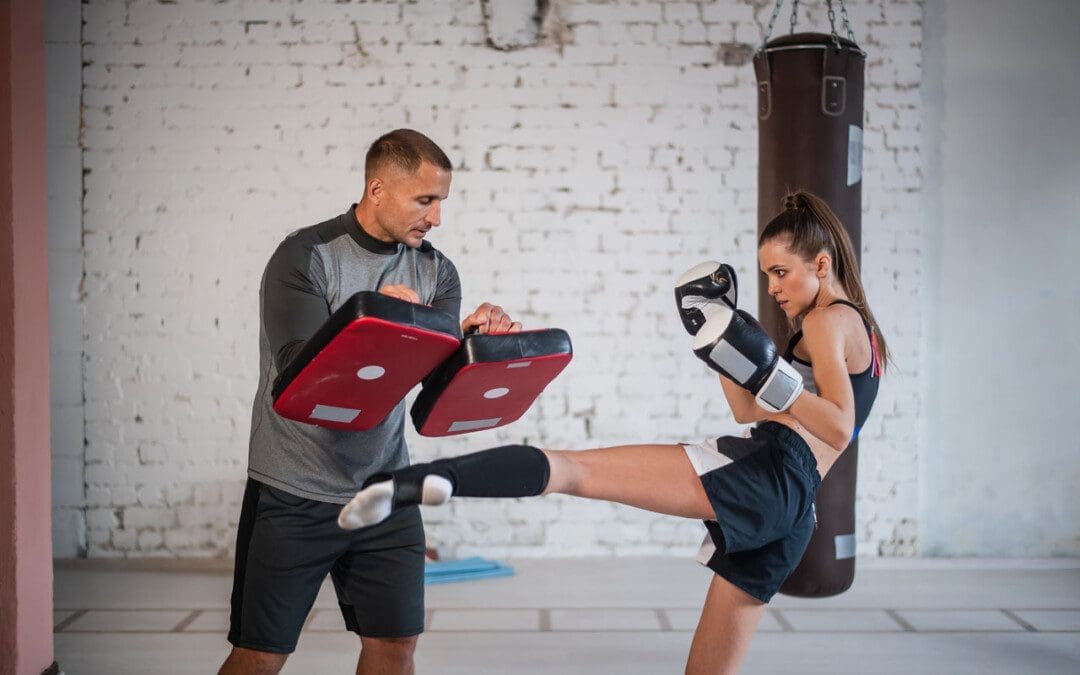
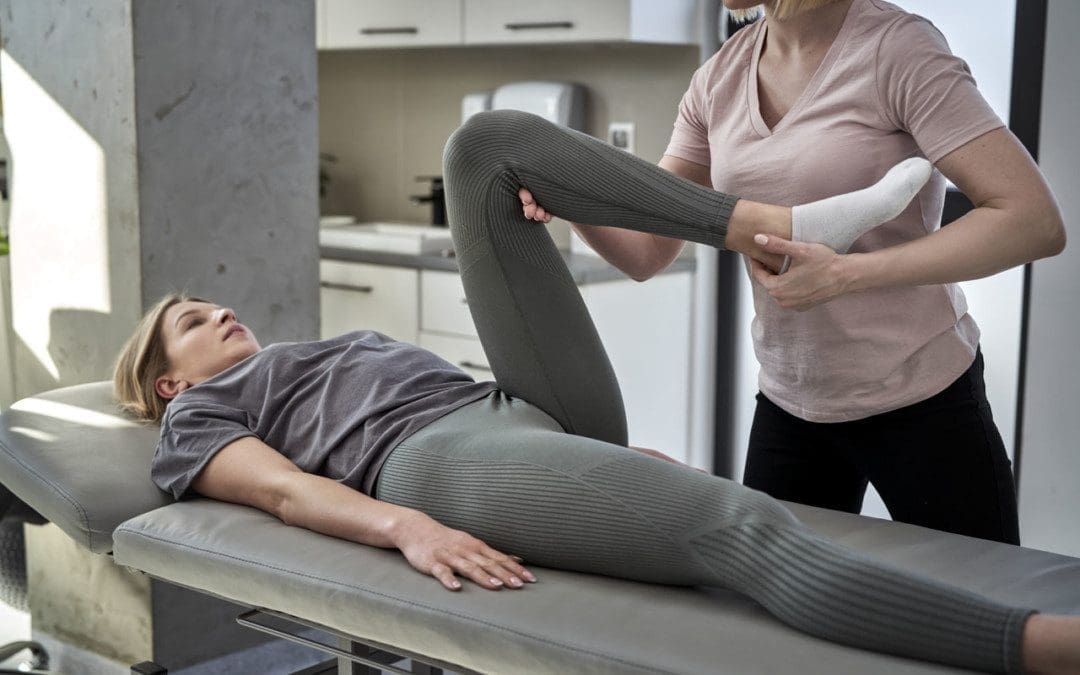
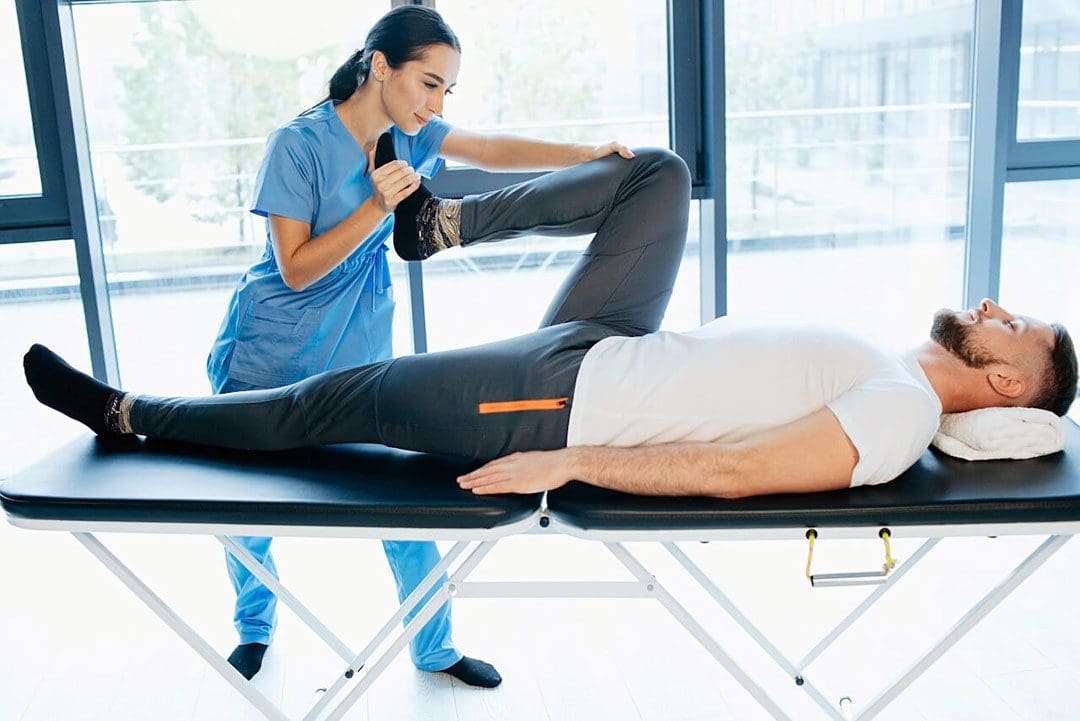
Agility is the ability to accelerate, decelerate, stabilize, and quickly change directions with proper form and posture. Everyone, athletes and non-athletes, use agility every day. This can be maneuvering around objects during a jog, shifting movements or positions when walking through a crowd, reaching toward the highest shelf, or carrying things upstairs. These controlled reactions require a balance of coordination, speed, stamina, and strength. Injury Medical Chiropractic and Functional Medicine Clinic can provide agility enhancement through adjustments, massage, and decompression to relax the body, strengthen the muscles, and improve circulation and nerve function.
Agility Enhancement
Individuals need skill and control to react to a stimulus or movement. Agility requires muscular coordination, efficiency, and cohesiveness between the upper and lower body. Agility and reaction time are two components of neuromusculoskeletal health that work together. Agility enhancement can improve cognitive ability, power production, and physical performance. Agility enhancement improves overall physical skills, including:
Balance
Stability
Coordination
Body Control
Cognition
Recovery time
Chiropractic Care
Chiropractic improves agility neurologically through improved circulation and energy flow in the nervous system.
Injury Treatment and Prevention
Agility enhancement can help with injury prevention, as agility training increases control, balance, and flexibility. It teaches the correct body placement while moving to protect the knees, shoulders, and lower back. It also helps to strengthen the muscles and improve the resiliency of the connective tissue allowing them to shorten and lengthen rapidly. This helps prevent injuries and relieves pain and stiffness associated with muscle overuse.
Stiffness often occurs from the overuse of muscles.
Stiffness reduces flexibility, increasing the risk of injury and affecting movement and physical capabilities.
Stiffness can even occur from changes in everyday routines.
Chiropractic prevents the muscles from tensing up, reducing stiffness and increasing your range of motion.
Chiropractic helps strengthen the musculoskeletal system, which makes it easier to maintain normal balance.
Chiropractic can strengthen the muscles by making the muscle fibers more excitable, contributing to quicker reaction time.
We create rehabilitation and strength and conditioning treatment plans that are individualized for each individual. This program entails the following:
Posture, mobility, and performance education for improved movement.
Health and nutritional recommendations.
Our treatment programs are designed to improve each individual’s whole body health and decrease the risk of injury.
Improve Balance And Agility
References
Ali, Kamran, et al. “Comparison of Complex Versus Contrast Training on Steroid Hormones and Sports Performance in Male Soccer Players.” Journal of chiropractic medicine vol. 18,2 (2019): 131-138. doi:10.1016/j.jcm.2018.12.001
Järvinen, Tero A H, et al. “Muscle injuries: optimizing recovery.” Best practice & research. Clinical rheumatology vol. 21,2 (2007): 317-31. doi:10.1016/j.berh.2006.12.004
Lennemann, Lynette M et al. “The influence of agility training on physiological and cognitive performance.” Journal of strength and conditioning research vol. 27,12 (2013): 3300-9. doi:10.1519/JSC.0b013e31828ddf06
Miners, Andrew L. “Chiropractic treatment and the enhancement of sports performance: a narrative literature review.” The Journal of the Canadian Chiropractic Association vol. 54,4 (2010): 210-21.
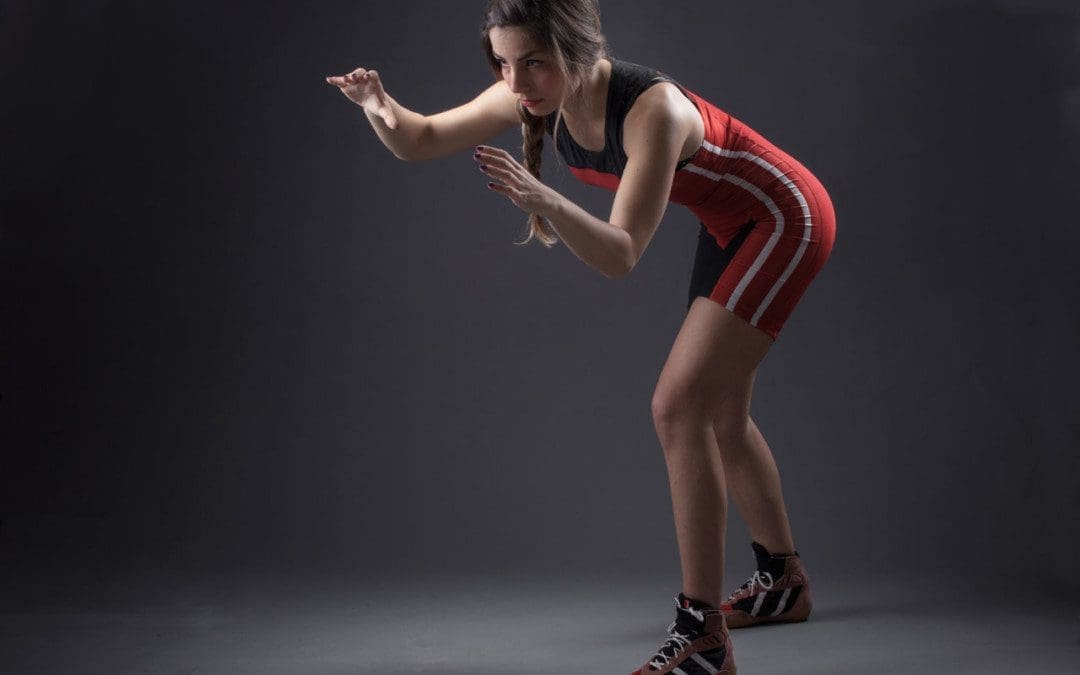
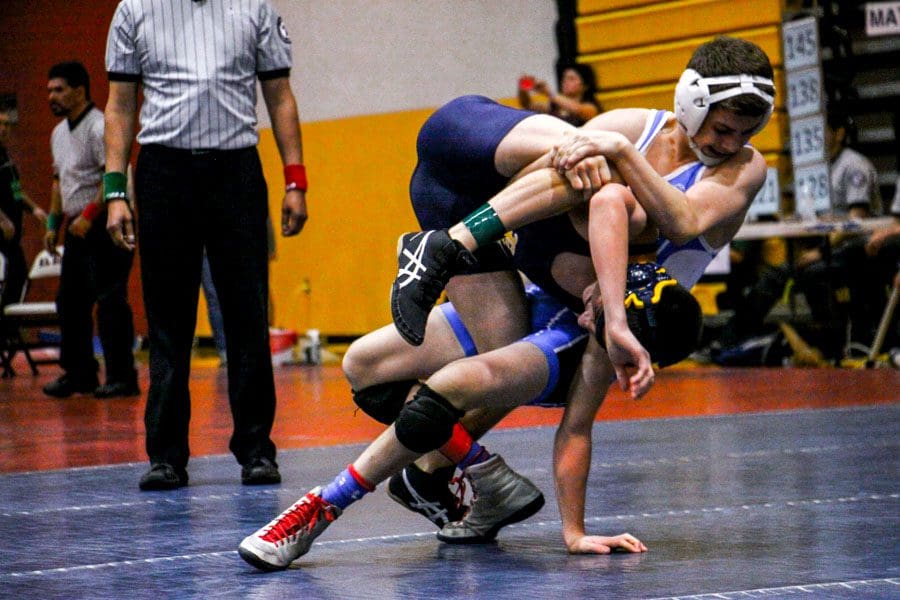
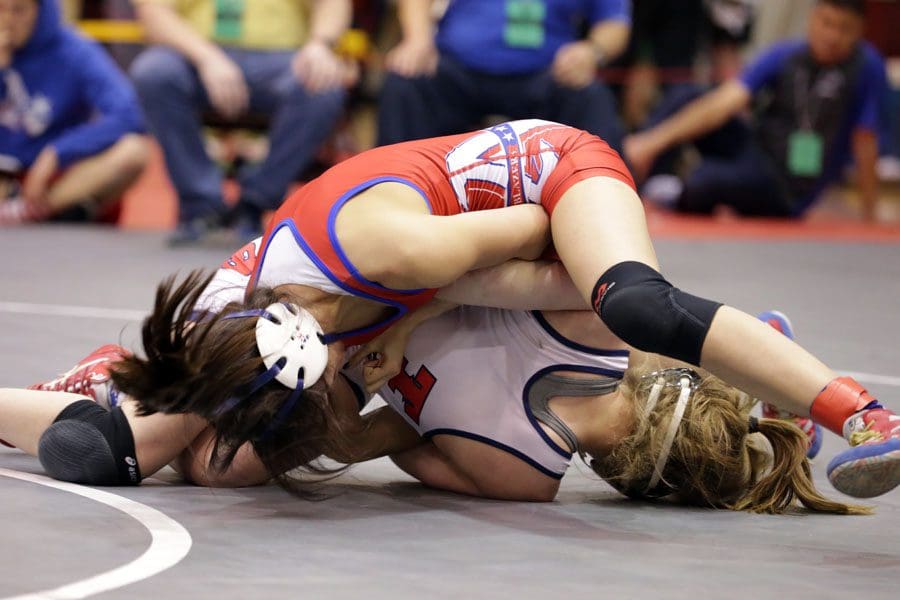
Wrestling is a sport that requires speed, strength, and endurance that involves intense physical contact, pushing and pulling the muscles, tendons, ligaments, and joints to their limits. Wrestlers’ are constantly contorting their bodies. Pushing the body to its limits increases the risk of developing wrestling injuries that include:
The most common injuries usually occur from forceful contact or twisting forces. And if a wrestler has been injured, there is an increase for re-injury. Wrestling tournaments typically take place over days, often with back-to-back matches, which significantly fatigues the body and increases injury risk. The most common wrestling injuries include:
Muscle strains of the lower extremities and/or the back.
Chronic problems can result from hours in the forward stance posture and repetitive motions.
Dislocations and sprains of the elbow or shoulder from take-downs.
Cauliflower ear – is a condition that can cause ear deformity and develops from friction or blunt trauma to the ears.
Skin infections occur from constant contact, sweating, bleeding, and rolling on the mats. Infections include herpes gladitorium, impetigo, folliculitis, abscesses, and tinea/ringworm.
Concussions are usually caused by hard falls/slams or violent collisions with the other wrestler.
Injuries can cause wrestlers to alter/change their technique, exacerbating the existing damage and potentially creating new injuries.
Chiropractic Rehabilitation and Strengthening
There can be a variety of pain generators/causes when it comes to wrestling injuries. Joints and muscles can get overstretched, muscles can spasm, and nerves can become compressed and/or irritated. For example, a neck muscle spasm could be caused by nerve irritation from a shifted vertebrae. To determine the specific cause or causes of the injury/pain, a detailed chiropractic examination will be performed that includes:
Range of motion testing
Ligament tests
Muscle palpation
Gait testing
Injuries often relate to the proper weight, neuromuscular control, core strength, proper technique, hygiene, and hydration management. Successful treatment depends on identifying the root cause of the wrestling injury. Chiropractic restores proper alignment through massage, specific manual adjustments, decompression, and traction therapies. Adjustments can include the back, neck, shoulder, hips, elbows, knees, and feet. Once correct body alignment is achieved, rehabilitative exercises and stretches are implemented to correct and strengthen muscle function. We work with a network of regional medical doctors specializing in referral situations and strive to return the athlete to their sport as soon as possible.
Wrestling Match
References
Boden, Barry P, and Christopher G Jarvis. “Spinal injuries in sports.” Neurologic clinics vol. 26,1 (2008): 63-78; viii. doi:10.1016/j.ncl.2007.12.005
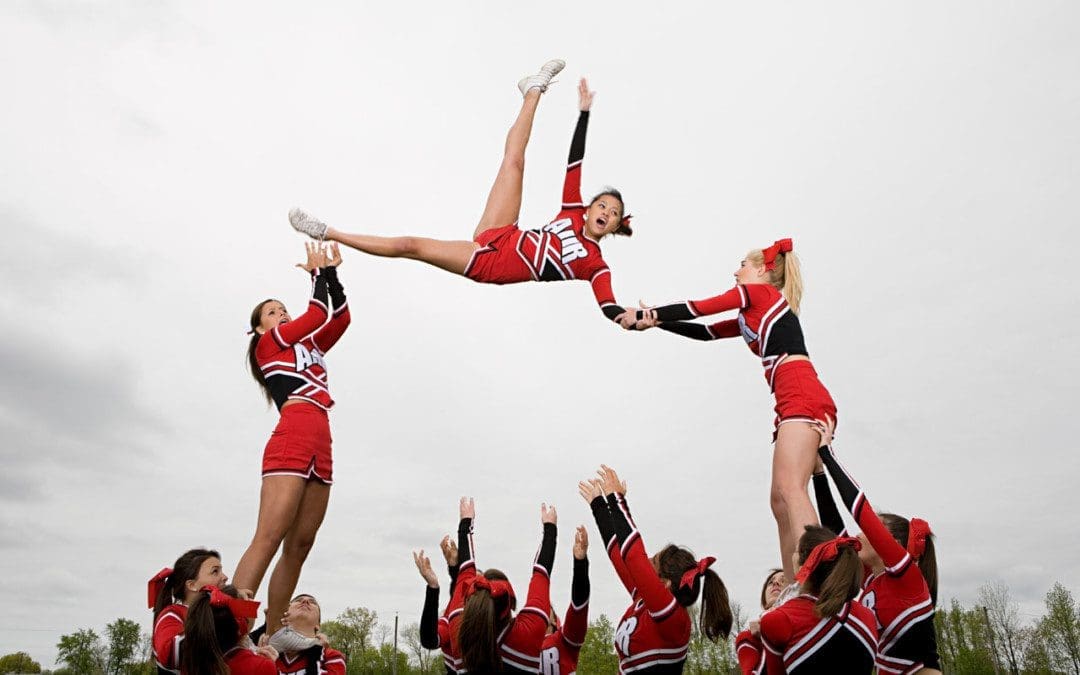
Cheerleading and the physically intensive gymnastics and acrobatics put participants’ body’s/musculoskeletal systems at an increased risk of injury. A wrong move or falling at the wrong angle can cause permanent damage. Cheerleaders must follow a balanced diet and maintain physical fitness, strength, endurance, and flexibility to be successful cheerleaders. Cheerleading conditioning builds the musculature and spinal strength to decrease the risk and prevent injury.
Cheerleading Conditioning
Cheerleaders must have a solid musculoskeletal system to ensure their safety and the safety of their squads. Workouts include cardio, strength training, and flexibility exercises.
Warming Up
Before any workout, the muscles need to be warmed up.
Spend five minutes jumping rope, running in place, jogging on a treadmill, or doing any mild activity to raise the heart rate.
Try tree pose by standing on the right foot, and the left leg bent on the right knee.
The left thigh should be parallel to the ground.
Raise arms overhead and make a V motion keeping the abdominal muscles pulled in tight.
Balance for up to one minute.
Switch to the other foot.
Once balance is mastered on the ground, try balancing on a cushion to add instability.
Repeat three to five times on each foot.
Common Injuries
Common injuries include:
Hand and finger injuries.
Ligament sprains in the knees and ankles.
Muscle strains in the hip, low back, and legs.
Overuse injuries
Cheerleading is becoming a year-round sport.
Starting with tryouts during spring.
Teams may hold or go to organized summer cheerleading camps to learn new skills, improve skill sets, and create routines for competition.
Continuous training and competitions increase the chance of overuse injuries.
The wrists, elbows, knees, and ankles can be injured by repetitive stress.
More severe injuries are:
The repetitive tumbling places significant pressure on the spine and can cause stress fractures.
Dislocation of the shoulder or elbow.
Injury Causes
Lack of arm and shoulder, foot, and ankle strength.
Little to no core and abdominal strength.
Flexibility problems.
Improper conditioning.
Unhealthy diet.
Performing skills that are advanced for the cheerleader’s current level.
Chiropractic Enhancement
Chiropractic care can treat injuries and strengthen the body’s musculoskeletal system to prevent injuries. Chiropractic’s goal is optimal body performance by redistributing blood circulation, nerve energy flow, correct muscle positioning, and skeletal alignment. Many cheerleading teams are incorporating chiropractic. Injury Medical Chiropractic and Functional Medicine Clinic also specializes in sports medicine rehabilitation, strength training, nutrition, and health coaching.
Cheerleading Strength Training Workout
References
Boden, Barry P, and Christopher G Jarvis. “Spinal injuries in sports.” Neurologic clinics vol. 26,1 (2008): 63-78; viii. doi:10.1016/j.ncl.2007.12.005
Miners, Andrew L. “Chiropractic treatment and the enhancement of sport performance: a narrative literature review.” The Journal of the Canadian Chiropractic Association vol. 54,4 (2010): 210-21.
Mueller, Frederick O. “Cheerleading injuries and safety.” Journal of athletic training vol. 44,6 (2009): 565-6. doi:10.4085/1062-6050-44.6.565
Pang, Yanbin, et al. “Premature exhaustion of mesenchymal stromal cells from myelodysplastic syndrome patients.” American journal of translational research vol. 9,7 3462-3468. 15 Jul. 2017
Wan, Jing-Jing, et al. “Muscle fatigue: general understanding and treatment.” Experimental & molecular medicine vol. 49,10 e384. 6 Oct. 2017, doi:10.1038/emm.2017.194
Sports-specific performance training is an approach to develop an athlete’s full potential in their sport. This involves three different factors: physical, technical, and experience. Physical ability is the exercise physiology that consists of strengthening and conditioning the body to handle the conditions of the sport. This includes:
Strength
Power
Speed
Endurance
Mobility
Stability
Flexibility
Balance
Technical ability involves the skill sets needed for the sport. This includes:
Running
Jumping
Kicking
Throwing
Catching
Hitting
Sliding
And finally is the athlete’s experience. This takes the knowledge, combined with the physical and technical abilities brought together to perform at optimum levels. However, it all begins with physical ability that needs to be developed. Even naturally gifted individuals need to develop their physical ability.
Sports Specific Performance Training
Strength & conditioning objectives are to develop the whole athlete. This involves:
An athlete’s health takes into consideration their body composition and current or past injuries. Along with injuries, the athlete’s mobility, flexibility, and stability are examined to determine if these were among the contributors or conditions that caused or could lead to an injury. Strength & conditioning is used so an athlete can return to play and allow them to be more resilient to injuries. Maintaining the body’s health means:
Keeping track of nutrition by making healthy food choices.
Maintaining proper hydration levels.
Allowing the body to recover from training thoroughly.
Keeping the body loose and flexible through chiropractic sports massage or a personal training therapist.
Stability is the coordination of muscle action that allows a joint to remain in the proper position during movement.
If an athlete is mobile and flexible but not stable, it increases the risk of sustaining an injury. The same can be said of an athlete with stability but limited mobility.
Athletic Mindset
An athlete’s mindset can win or lose games.
Athletes are encouraged to push themselves to see what they are capable of, which relies on mental strength.
Athletes that doubt their ability become their own worst critics and hold themselves in low self-esteem tend to underperform or become overly cautious when competing.
This is where a sports psychologistcan help an athlete overcome any confidence issues.
Athleticism
Developing athleticism involves strength, power, speed. These physical attributes allow athletes to perform within their technical and strategical abilities.
It is recommended to spend 10-15 minutes warming up with each sports-specific performance training session. The warm-up:
Speed training addresses linear, lateral, and multi-directional speed. The objective is to keep athletes learning and developing better reaction skills while maintaining high-quality movement. Speed training can last 10 to 15-minutes with the number of repetitions.
Strength training follows an individualized system for each athlete based on an initial evaluation. The objective is to eliminate any weaknesses that an individual may have and develop functional strength, giving the athlete the ability to take that strength onto the field, court, mat, etc.
It is essential to understand how the body moves. Kinesiologyand programming parameters involve – sets, repetitions, overall training volume, and the body’s response to the stimulus.
Body Composition
Exercise and Blood Pressure
Blood pressure typically rises naturally as the body ages. The American Heart Association recommends individuals get at least 150 minutes of moderate-intense aerobic exercise or 75 minutes of vigorous aerobic activity each week. This can be split up into 30 minutes per day on at least five days a week or in 10 minute short sessions throughout the day. Aerobic exercise can include:
Walking
Dancing
Running
Cycling
Hiking
Swimming
Resistance Training
Research suggests that resistance training with bands or weights can supplement aerobic exercise to reduce blood pressure. It is recommended to complete 2 to 4 sets of 8 to 12 repetitions for each major muscle group during workouts. It is recommended that resistance training be spaced out throughout the week to limit the potential muscle soreness that can lead to injury. Resistance training can include:
Weight machines like chest press, shoulder press, etc.
Bahr, R, and T Krosshaug. “Understanding injury mechanisms: a key component of preventing injuries in sport.” British journal of sports medicine vol. 39,6 (2005): 324-9. doi:10.1136/bjsm.2005.018341
Iaia, F Marcello et al. “High-intensity training in football.” International journal of sports physiology and performance vol. 4,3 (2009): 291-306. doi:10.1123/ijspp.4.3.291
Jeukendrup, Asker E. “Periodized Nutrition for Athletes.” Sports medicine (Auckland, N.Z.) vol. 47,Suppl 1 (2017): 51-63. doi:10.1007/s40279-017-0694-2
Kraemer, William J, and Nicholas A Ratamess. “Fundamentals of resistance training: progression and exercise prescription.” Medicine and science in sports and exercise vol. 36,4 (2004): 674-88. doi:10.1249/01.mss.0000121945.36635.61
Nagorsky, Eugen, and Josef Wiemeyer. “The structure of performance and training in esports.” PloS one vol. 15,8 e0237584. 25 Aug. 2020, doi:10.1371/journal.pone.0237584
Triathlon training involves running, biking, and swimming. This much fitness training takes a toll on the body. Pulled hamstrings, twisted ankles, and sore heels are common, but triathlon training can also cause or worsen back pain. Because the back muscles are connected to many other muscles, certain types of movement after a tough training session can present with back pain. There was an Ironman triathlete study that found that 90% of the athletes suffered some form of soft-tissue injury during training, with 70% reporting low back pain and/or sciatica. A 2020 study in BMC Musculoskeletal Disorders found that 14% of recreational half-marathon runners presented with low-back pain.
Triathlon Training Hard on the Back
High-impact activities/exercises, constant repetitive motion, places a heavy pounding on the body that impacts the joints and spine. Using improper techniques will aggravate any issues. The stresses applied from repetitive motions, and poor form can lead to the joints breaking down. If new to intense training the muscles might not be strong enough yet, which could also cause back pain and injury. The back stabilizer muscles tend to get neglected in the training, but these muscles support the structures in the midline, spine, and joints. Strengthening the:
Ensures stability of the spine and joints from all the wear and tear.
Training and Overtraining Errors
Even veteran athletes can make mistakes during their training that can lead to sore backs. The biggest mistake individuals make during triathlon training is that they only swim, bike, and run. Training for the specific sport/s is important; but weight lifting, core strengthening, and flexibility training are just as important. Proper rest can become neglected as the individual wants to get in as much training as possible that often gets overlooked, leading to overuse injuries. However, rest is a vital part of training to allow the body to fully recover and operate at full and optimal potential.
Preventing and Avoiding Back Pain When Training
How to sidestep back pain altogether during training includes:
Sleep
A healthy lifestyle includes proper sleep cycles and is even more important during training. The mental aspects a triathlon competition can create require proper rest. Fatigue can also lead to poor technique/form, placing excess stress on the joints and the spine, leading to injury.
Flexibility
Muscles need to maintain flexibility to preserve function and recovery ability. After a training session stretching and working on flexibility will help with overall performance. Stretching should be done after activity when the muscles are warm, and the fibers can be stretched/elongated for optimal recovery.
Proper nutrition
The body needs high-performance fuel to support high-calorie deficits that are associated with intense training and competition.
Strengthening the body
Having a solid body foundation is the objective. Everything is balanced with strong muscles supporting healthy bones. Specific exercises that target the multifidus muscles. These are the body’s back brace. Strengthening these muscles will help prevent spinal injury/s. Back-strengthening exercises include:
Plan rest days no matter what. Pushing through will not make the body stronger or able to perform better, and could cause performance to decrease leading to injury. This does not mean sleeping all day, but engaging in active recovery where the body gets the rest it needs while still maintaining fitness. Active recovery includes:
Allows for a thorough recovery and enhances training.
Technique Improvement
Proper form and technique can really make the difference between staying injury-free and injury/s. Using the right form promotes healthy function. It could help to have gait, swim stroke, and bike techniques evaluated by a professional to ensure that proper form is being utilized.
Body awareness
Stop if the body signals one to stop. This is why the body feels pain. It is the internal mechanism that tells the individual something is wrong. It is not recommended to follow the phrases train through the pain, and no pain, no gain. Individuals are recommended to:
Always pay attention if pain presents and does not go away after exercising or warming up.
Pain that limits function.
Pain that interferes with daily activities.
These could significantly exacerbate a spinal injury and should be checked by a doctor.
Body Composition
Rest and Recovery
During rest and recovery, the body goes back to normal or homeostasis. This is the body’s resting rate or normal phase. The body is always trying to go back to homeostasis. This is done by:
Maintaining core temperature
Blood pressure stable
Muscles refreshed
When exercising/training, the homeostasis phase is disturbed, meaning the body needs a period of rest to return to normal. The process of homeostasis uses a lot of energy, which results in an abundant amount of calories burned. After exercise, there is an increase in excess post-exercise oxygen consumption or EPOC. The body uses up more oxygen during recovery than it does before or during exercise. This increase results in burned calories and strong muscles. The most important part of recovery is the rebuilding of muscle. When working out, especially resistance training, tiny tears are made in the muscle fibers. For the tiny tears to turn into growing muscles, they need to repair themselves. This happens during rest. Apart from the physiological benefits, rest helps prevent injury caused by overuse and assists in healing when injuries do occur. Time off helps with mental health as well to refocus, reassess, and apply what has been learned. What rest and recovery can do for the body includes:
Burn massive calories
Build muscle
Refuels the muscles
Prevents injury
Improves mental health and motivation
References
American journal of physical medicine & rehabilitation/Association of Academic Physiatrists. (October 2014) “Efficacy of Aerobic Exercise for Treatment of Chronic Low Back Pain: A Meta-Analysis” https://www.researchgate.net/publication/266682158_Efficacy_of_Aerobic_Exercise_for_Treatment_of_Chronic_Low_Back_Pain_A_Meta-Analysis
Stretch Before and After Journal of Chiropractic Medicine. (Winter 2003) “Changes in low back pain in a long-distance runner after stretching the iliotibial band” https://www.sciencedirect.com/science/article/pii/S0899346707600718
IFM's Find A Practitioner tool is the largest referral network in Functional Medicine, created to help patients locate Functional Medicine practitioners anywhere in the world. IFM Certified Practitioners are listed first in the search results, given their extensive education in Functional Medicine


 Agility Enhancement