Sciatica Self-Massage at Home (The El Paso Back Clinic Approach to Safer Relief)
Sciatica is a nerve irritation pattern, not just a tight muscle. It often feels like burning, aching, tingling, or “electric” pain that can start in the low back or buttock and travel into the thigh, calf, and foot. Many people in El Paso experience sciatica after long hours of sitting, driving, or heavy lifting, or after an old injury that never fully healed. At El Paso Back Clinic, sciatica care is commonly described as integrative—meaning hands-on chiropractic care plus soft-tissue work, rehab, and (when appropriate) decompression strategies to reduce nerve pressure and help the body heal instead of just “chasing symptoms.”
Self-massage can be an effective home tool when done correctly. The goal is to relax the tissues around the irritated nerve pathway—especially the glutes, piriformis, low back muscles, hamstrings, and sometimes the calf—without smashing the nerve itself.
The safety rule that matters most: don’t “dig into” the sciatic nerve
If you press directly on the most “zappy” spot, you can flare symptoms. Instead, aim for gentle, targeted pressure that feels like a controlled release.
Use the “hurts good” rule:
Keep pressure 0–3 out of 10 (mild to moderate discomfort)
Avoid 4–10 out of 10 (too aggressive)
If symptoms worsen, stop right away and reduce pressure next time
Tools that work well at home
You do not need expensive equipment. These basic tools are enough for most people:
Tennis ball (beginner-friendly pressure)
Foam roller (great for slow myofascial release)
Two tennis balls taped together or in a sock (to work beside the spine more safely)
Heat pack (before or after)
Many sciatica massage guides recommend simple tools like tennis balls and foam rollers because they help you reach deep glute and hip muscles without overworking your hands.
Step-by-step: a simple self-massage routine for sciatica relief
Start with heat (optional, but helpful)
Apply heat to the lower back or glutes for 10–15 minutes. Heat can help muscles relax, so you do not need to apply as much pressure during a massage.
Tip: Heat should feel soothing, not scorching.
Trigger point release for the glutes and piriformis (tennis ball)
This is one of the most helpful self-massage steps because the piriformis and nearby glute muscles can tighten and irritate the sciatic nerve pathway.
How to do it:
Sit on the floor (or a firm bed) and place a tennis ball under one buttock.
Lean your weight into the ball until you find a tender “knot.”
Hold steady pressure for 20–45 seconds while breathing slowly.
Move the ball 1–2 inches and repeat on 2–4 spots.
Keep it safe:
If pain becomes sharp, numbness increases, or symptoms travel farther down the leg, stop immediately.
Low back muscle release (two tennis balls—NOT on the spine)
At El Paso Back Clinic, massage and soft-tissue work are considered a key part of sciatica treatment because relaxing tight tissues can reduce pressure on irritated structures. A safe home approach is to use two tennis balls so that pressure is applied beside the spine.
How to do it:
Tape two tennis balls together (or place them in a sock).
Lie on your back with knees bent.
Place the balls on either side of the spine, not on the bone.
Make tiny shifts and pauses—no fast rolling.
Work for 1–2 minutes, then rest.
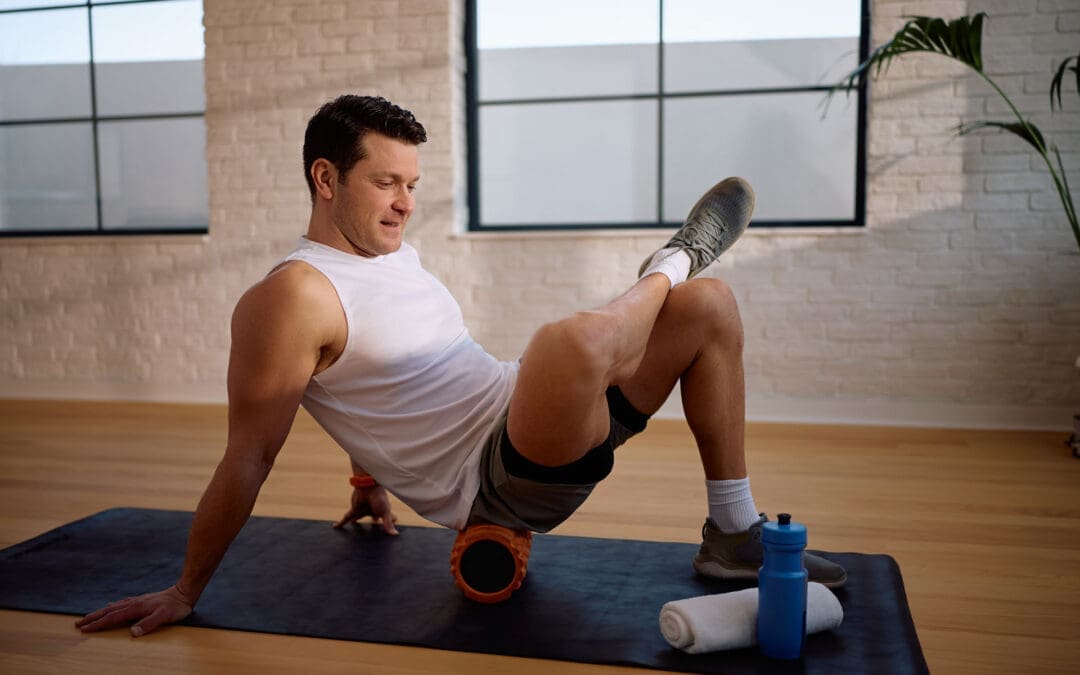
Myofascial release for hamstrings (foam roller)
If your hamstrings are tight, they can “pull” on the pelvis and keep the low back and hip region tense. Slow foam rolling is often described as a form of self-myofascial release that warms and loosens tissue over time.
How to do it:
Sit with the roller under the back of your thigh.
Roll slowly and pause on tight spots for 20–30 seconds.
Don’t chase pain—stay in the 0–3/10 range.
Calf massage for referred pain (hands or roller)
Some sciatica patterns show up strongly in the calf or foot. Gentle calf work may help reduce guarding and improve comfort.
How to do it:
Use your hands to squeeze and glide from ankle toward knee.
Pause on a tender spot and breathe.
Keep pressure light to moderate.
What to avoid (so you don’t flare symptoms)
Heavy pressure on the “electric” pain spot
Fast rolling over the lower back or buttocks
Long sessions that leave you sore for 1–2 days
Pressing on the bone (spine, sacrum ridge, hip bone)
If you feel worse after self-massage, your body is telling you the dose was too high. Reduce pressure and shorten the next session.
Why chiropractic + massage often works better than either alone
Self-massage can help relieve muscle tension, but some cases of sciatica also involve spinal joint restriction, disc irritation, or nerve root pressure. That is why integrative chiropractic care is often paired with soft-tissue work.
On El Paso Back Clinic, sciatica care is described as focusing on addressing sources of pain (not only masking it), and the clinic also highlights combining chiropractic adjustments with therapeutic massage and non-surgical decompression options.
Common integrative components include:
Targeted chiropractic adjustments to improve motion and reduce irritation
Myofascial release/therapeutic massage to reduce spasms and improve circulation
Non-surgical spinal decompression (when appropriate) to reduce pressure on discs/nerve roots
Clinical observations from Dr. Alexander Jimenez
Across sciatica-focused education on the clinic’s site, the recurring theme is that lasting relief often improves when care addresses both sides of the problem:
tissue tension (glutes/piriformis/low back tightness), and
spinal mechanics (how joints/discs and nerve pathways are loading under stress).
When to stop home care and get evaluated quickly
Get urgent medical evaluation if you have:
New or worsening leg weakness
Loss of bowel or bladder control
Numbness in the saddle area
Severe pain with fever, unexplained weight loss, or major trauma
These may indicate a condition requiring immediate care beyond self-massage.
When You Don’t Stretch: Why Muscles Get Stiff, Movement Gets Harder, and Injuries Become More Likely
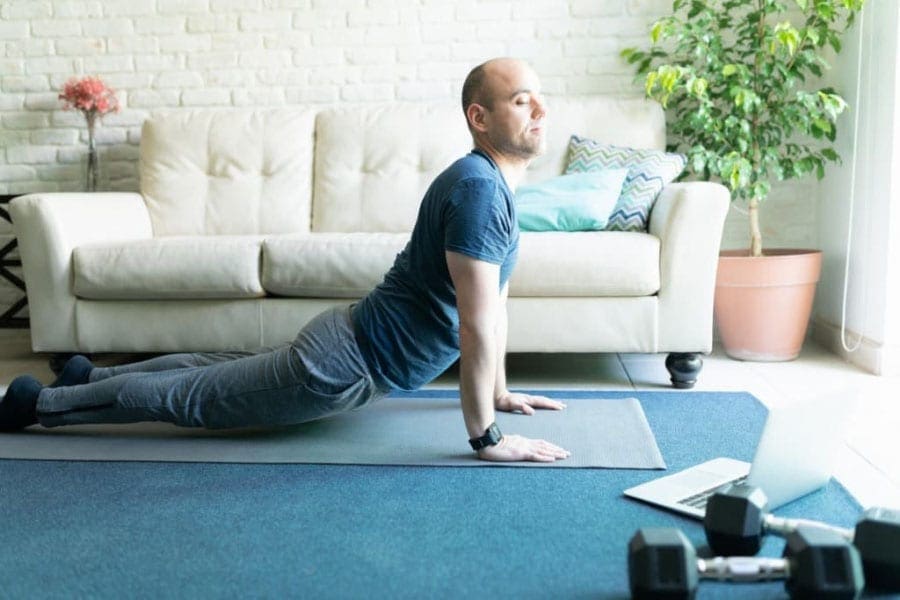
A patient with chronic back pain does targeted stretches.
If you rarely stretch, your body can start to feel “tight,” which can change how you move. Many people notice they can’t bend, twist, squat, reach overhead, or turn their head as easily as they used to. Over time, this can affect your flexibility, your range of motion (how far a joint can move), and how smooth and efficient your daily movements feel.
At El Paso Back Clinic, Dr. Alexander Jimenez, DC, APRN, FNP-BC, often explains this: when mobility decreases, the body starts to “compensate.” That means you move around a stiff area instead of through it, and those workarounds can build up stress in nearby joints and muscles (Jimenez, n.d.-a). This is one reason people can develop recurring back pain, neck stiffness, hip tightness, or shoulder irritation even without a single big injury.
What “Muscle Stiffness” Really Means
Muscle stiffness usually feels like tightness, soreness, or difficulty moving. It can happen after overuse, after you’ve been still for a long time, or when your muscles stay “stuck” in a more contracted state (Tarantino, 2025). Osmosis
Osmosis notes that stiffness can appear after a long period of minimal motion (such as bed rest or inactivity) or after new exercise that causes temporary muscle cell damage (Tarantino, 2025). Osmosis
Key idea: When your body doesn’t move a joint through its normal range often enough, the muscles and tissues around it can start to feel restricted. That restriction can make normal tasks think harder than they should.
Do Muscles Actually “Shorten” If You Don’t Stretch?
You’ll hear people say, “If you don’t stretch, your muscles will shorten.” That statement is partly true, but it needs context.
Adidas explains that the word “shorten” can be misleading: for most people, it feels like shortening because mobility and flexibility decrease when stretching is skipped, even if the muscle is not literally shrinking in everyday life (Adidas, 2025). adidas
Harvard Health adds an important clarification: without regular stretching, muscles can become tight, and when you need them for activity, they may not extend fully, increasing the risk of joint pain, strains, and muscle damage (Harvard Health Publishing, 2024). Harvard Health
So the practical takeaway is simple:
Skipping stretching often leads to less mobility and flexibility
Tight muscles can reduce how far joints can move
Tight muscles can make injuries more likely when you suddenly “ask more” of your body
How Tight Muscles Reduce Range of Motion
Range of motion (ROM) is the movement around a joint or body part. When ROM is limited, you can’t move that body part through its usual, healthy motion (Jimenez, n.d.-b). El Paso Back Clinic® • 915-850-0900
El Paso Back Clinic explains how tightness—especially in areas like the hips and ankles—can reduce ROM and limit potential for form and strength. When posture and form are compromised, pain and injury risk can rise (Jimenez, n.d.-b). El Paso Back Clinic® • 915-850-0900
What limited ROM can look like in real life
You might notice:
You can’t turn your head fully when driving
You bend from your lower back instead of your hips
You can’t squat without your heels lifting
Your shoulders feel “pinched” when reaching into a cabinet
Your hamstrings feel tight when you try to walk fast
And here’s the tricky part: your body still gets the job done—just with more strain.
Why Stiffness Can Raise Injury Risk
Harvard Health explains that tight muscles may be more easily damaged when they are suddenly stretched during strenuous activity (Harvard Health Publishing, 2024). Harvard Health
That’s why injuries often show up in moments like:
A weekend game after sitting all week
A sudden sprint to catch something
Lifting a heavy box with “cold” hips and hamstrings
A long drive followed by quick unloading or bending
Mayo Clinic also notes that better flexibility can help joints move through full ROM and may decrease injury risk, while emphasizing that stretching must be done correctly (Mayo Clinic Staff, n.d.). Mayo Clinic
Common Reasons People Stop Stretching (And How to Fix Them)
Most people don’t skip stretching because they don’t care. They skip it because it feels confusing, time-consuming, or uncomfortable.
Common barriers
“I don’t have time.”
“Stretching hurts.”
“I’m not flexible, so it doesn’t work for me.”
“I only need stretching if I work out.”
Better, more realistic reframes
You only need 5–10 minutes a few times a week to start seeing benefits (Mayo Clinic Staff, n.d.). Mayo Clinic
Stretching should create tension, not pain (Mayo Clinic Staff, n.d.). Mayo Clinic
Flexibility improves over weeks to months, not days (Harvard Health Publishing, 2024). Harvard Health
Stretching supports everyday movement, not just workouts (Harvard Health Publishing, 2024). Harvard Health
Safe Stretching Basics (So You Don’t Make Things Worse)
This matters: stretching done poorly can backfire.
Mayo Clinic recommends:
Don’t stretch cold muscles—warm up 5–10 minutes first
Don’t bounce
Hold stretches about 30 seconds (longer for problem areas)
Don’t stretch into pain (Mayo Clinic Staff, n.d.). Mayo Clinic
The American Heart Association adds:
Stretch when muscles are warm
Hold 10–30 seconds and repeat 3–5 times
Stretch slowly and smoothly (American Heart Association, 2024). www.heart.org
Quick safety checklist
Warm up first (easy walk, gentle movement)
Move slowly
Breathe
No bouncing
Stop if you feel sharp pain, numbness, or joint pain
A Simple 10-Minute Daily Stretch Routine for Real Life
This is designed for normal adults: busy schedules, stiff hips, tight neck, and lots of sitting.
Step 1: Warm up (1–2 minutes)
Walk around the house
March in place
Gentle arm circles
Step 2: Do these 6 stretches (about 8 minutes total)
1) Hip flexor stretch (1 minute each side) Helps if you sit a lot and feel tight in the front of your hips.
2) Hamstring stretch (1 minute each side) Harvard points out that tight hamstrings from sitting can limit how well you extend your leg and support walking mechanics (Harvard Health Publishing, 2024). Harvard Health
3) Calf stretch (45 seconds each side) Helpful for ankle mobility, walking, and squatting mechanics.
4) Chest opener (45 seconds) Stand in a doorway and gently open the chest to reduce rounded-shoulder posture.
5) Upper back reach (45 seconds) Hug yourself and gently pull your shoulder blades apart.
6) Neck side stretch (30 seconds each side) Gentle only—never crank your neck.
Step 3: Add “micro-mobility” during your day (optional but powerful)
Stand up every hour for 30–60 seconds
Do 5 bodyweight squats to a chair
Do 10 shoulder rolls
Take a 3-minute walk after meals
These small habits often matter as much as one long stretch session.
Stretching After Workouts: What You Should Know
Adidas explains the difference clearly:
Dynamic movement is best before workouts (prepares your body)
Static stretching is typically better after workouts, when you’re warm (Adidas, 2025). adidas
Mayo Clinic also cautions that stretching cold muscles can increase injury risk and notes that some intense activities may not benefit from heavy stretching right before performance (Mayo Clinic Staff, n.d.). Mayo Clinic
A balanced approach
Before exercise: warm up + dynamic mobility
After exercise: gentle static stretching + breathing
On rest days: short, consistent flexibility routine
When Stiffness Is a Sign You Need More Than Stretching
Sometimes the problem is not just “tight muscles.” You may have:
Joint restrictions that block movement
Spine or pelvis alignment issues affecting mechanics
Inflammation around a joint
Pain patterns that keep muscles “guarded”
A nerve-related problem (numbness, tingling, weakness)
El Paso Back Clinic notes that limited ROM in areas like the back, neck, or shoulders can be linked to the body being out of natural alignment, repetitive motions, or wear and tear (Jimenez, n.d.-b). El Paso Back Clinic® • 915-850-0900
If stretching doesn’t help—or makes symptoms worse—it’s smart to get assessed.
The El Paso Back Clinic Approach: Integrative Chiropractic + Nurse Practitioner Support
This is where integrative care can be a game-changer: you’re not only “stretching more,” you’re also finding out why you’re tight and building a plan that fits your body.
What chiropractic care can add
El Paso Back Clinic describes a “restoration” approach that may include:
Soft tissue work (to reduce tightness and improve circulation)
Adjustments (to address misalignments and support mobility)
Nurse practitioners are advanced practice clinicians who assess, diagnose, and treat illnesses and injuries and support chronic condition management (American Nurses Association, n.d.). ANA Healthgrades also describes NPs performing screenings and physical exams, ordering lab work, documenting care, and diagnosing certain conditions (Prosser, 2025). Healthgrades Resources
Why the combo helps stiffness and pain
Together, a chiropractor + NP team can:
Screen for red flags (nerve symptoms, systemic issues)
Decide when imaging or labs are appropriate
Build a movement plan that matches your pain level
Address sleep, stress, inflammation, and recovery habits
Track progress using measurable goals (like ROM improvements)
Dr. Jimenez’s Mobility & Flexibility materials emphasize that “great mobility” supports functional movement without ROM restrictions and that people who don’t stretch often may experience stiffened muscles that reduce effective movement (Jimenez, n.d.-a). El Paso Back Clinic® • 915-850-0900
Red Flags: When to Stop Stretching and Get Checked
Call a clinician promptly if you have:
Numbness, tingling, or weakness in an arm/leg
Loss of balance, clumsiness, or trouble walking
Severe pain that doesn’t improve
Pain after trauma (car accident, fall, sports collision)
Fever, unexplained swelling, or sudden intense stiffness
Muscle stiffness can sometimes be related to underlying medical issues, and diagnosis may require an exam and follow-up testing, depending on the cause (Tarantino, 2025). Osmosis
The Bottom Line
If you don’t stretch regularly, it’s common to feel tighter and less mobile over time. That stiffness can reduce range of motion, make daily tasks harder, and increase your risk of injury when you suddenly push your body. The good news is that you don’t need extreme flexibility. You need consistent, safe mobility work—and when required, professional support to restore movement and reduce pain.
A practical plan usually includes:
Small daily stretching habits
Better warm-ups and recovery routines
Strength + mobility (not stretching alone)
Integrative evaluation when pain, ROM loss, or repeated flare-ups keep returning
Self-Massage Tools That Support Your Care at El Paso Back Clinic
Using A Percussive Massager Correctly: El Paso Back Clinic
At El Paso Back Clinic, patients do not just get an adjustment and leave. The team, led by Dr. Alexander Jimenez, DC, APRN, FNP-BC, focuses on full-body recovery, including what you do at home between visits. El Paso Back Clinic® • 915-850-0900+1
One of the simplest ways to support your spine, joints, and muscles is with self-massage tools. When used correctly and with guidance, tools like foam rollers, massage balls, massage guns, and trigger point devices can:
Ease muscle tension
Improve circulation and tissue recovery
Help your adjustments “hold” longer
Support better posture and movement
However, not every tool is right for every person. The doctors, nurse practitioners, and rehab team at El Paso Back Clinic help patients decide which devices are safe for their bodies and how to use them without causing harm. El Paso Back Clinic® • 915-850-0900+1
Integrative Chiropractic Care at El Paso Back Clinic
Because Dr. Jimenez is both a chiropractor and a family nurse practitioner, he views your body from both structural and medical perspectives. This dual training helps him safely combine: El Paso, TX Doctor Of Chiropractic+1
Spine and joint alignment
Muscle and fascia recovery
Nerve health
Whole-person wellness, including nutrition and lifestyle
Self-massage devices fit into this model as home-care tools that extend the benefits of what happens in the clinic.
Why Self-Massage Tools Help Your Spine and Muscles
Most self-massage tools work by applying controlled pressure to muscles and fascia (the thin connective tissue around muscles). This pressure can:
Loosen tight areas that restrict movement
Improve local blood flow
Help your body remove waste products after activity
In simple terms, self-massage tools can help your body feel “less stuck” and more able to move. When your muscles and fascia move more freely, your joints can do the same, which supports your chiropractic adjustments.
Foam Rollers: A Core Tool for El Paso Back Clinic Patients
Foam rollers are one of the most recommended self-massage tools in chiropractic and rehab settings. They are firm foam cylinders you use under your back, hips, or legs as you slowly roll over them.
What Foam Rolling Does
Chiropractic and rehab sources describe foam rolling as a type of self-myofascial release that can:
Improve circulation and tissue oxygenation
Reduce muscle tightness and soreness
Support better posture by opening the chest and upper back
A chiropractic clinic article notes that foam rollers, when used properly, can enhance circulation and “support preventive chiropractic treatment,” while also helping with posture and movement. King Chiropractic Hand & Foot
Important: Foam rollers are usually not rolled directly over the lower back for patients with certain spine problems unless a provider has shown a safe method.
Basic Foam Rolling Tips
Your El Paso Back Clinic team may teach you:
Go slow. Roll slowly along the muscle, pausing on tender spots for 20–30 seconds.
Breathe. Relax your breathing instead of tensing up.
Control pressure. Use your arms and opposite leg to reduce weight if it is too intense.
Aim for “good discomfort.” If the pain is sharp, electric, or burning, stop and tell your provider.
Short sessions—5–10 minutes a day—can be enough to make a difference when done consistently.
Massage Balls and Spheres: Targeting the Tough Spots
Massage balls (such as lacrosse balls, rubber balls, or specialized therapy balls) deliver more precise pressure than a foam roller. They are very helpful for small or hard-to-reach areas. Articles on self-massage tools note that balls are especially useful for the feet, hips, and muscles around the spine. RAD Roller+3High Amplitude Health Chiropractic+3IDEA Health & Fitness Association+3
Areas Where Massage Balls Shine
Between the shoulder blades
Back of the shoulders and rotator cuff
Glutes and deep hip muscles
Bottom of the feet (plantar fascia)
Small tight spots along the spine (used carefully)
How Your Chiropractor Might Have You Use Them
Examples your provider might show you:
Wall technique:
Place the ball between your upper back and a wall.
Gently lean into it and roll up, down, or side-to-side until you find a tight spot.
Floor technique (hips):
Sit or lie with the ball under one buttock.
Slowly shift your weight until you feel a trigger point, then hold and breathe.
Foot rolling:
Stand or sit and roll the ball under your foot from heel to toes.
Use light to moderate pressure, not sharp pain.
Because these points can be very sensitive, Dr. Jimenez and his team usually suggest short, frequent sessions rather than long, aggressive work—especially in people with nerve irritation or high pain sensitivity. El Paso Back Clinic® • 915-850-0900+1
Percussion Massage Guns: High-Tech Help for Sore Muscles
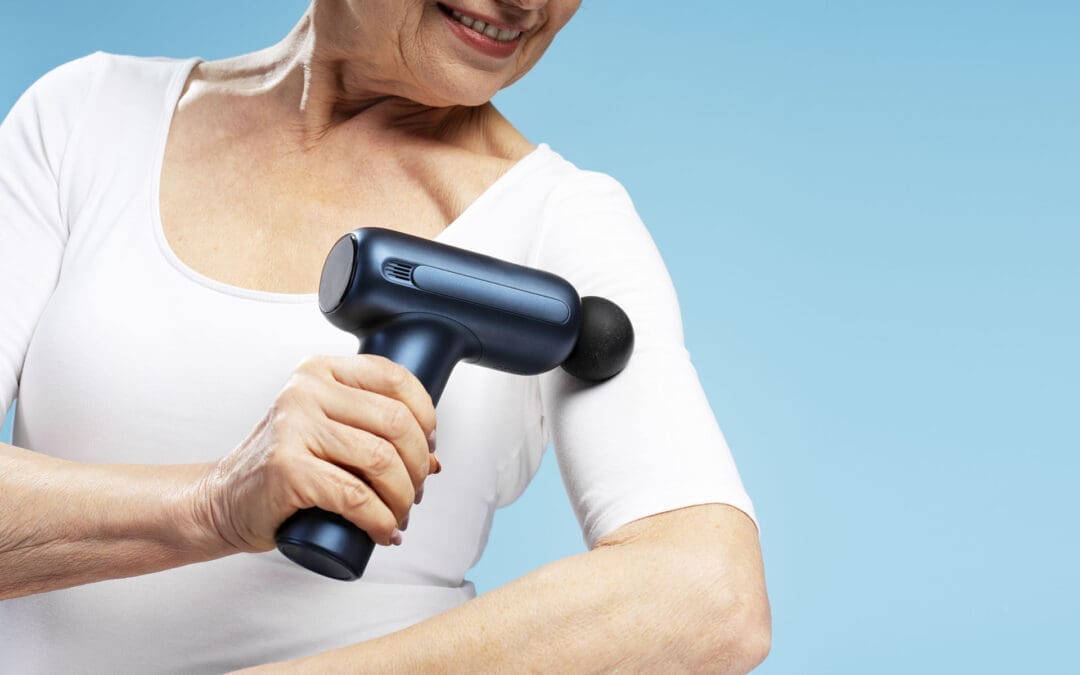
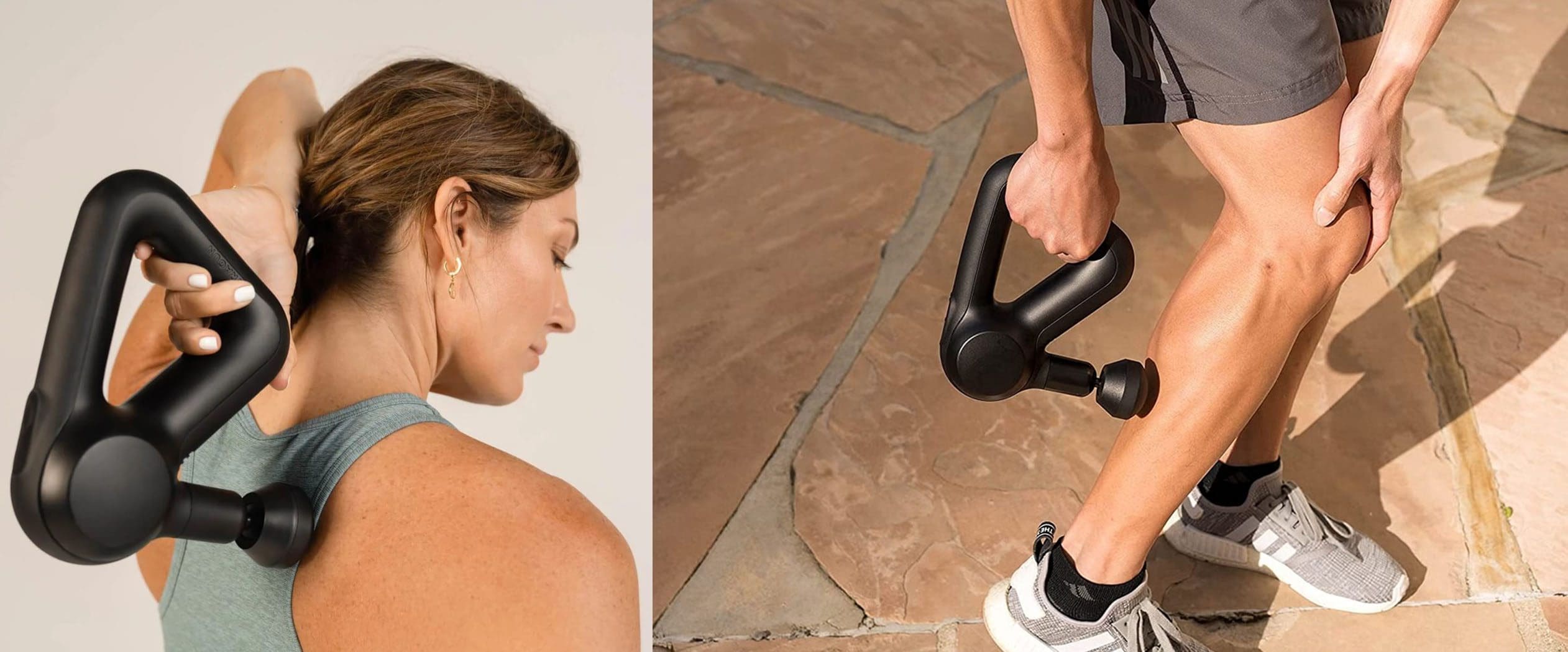
Percussion massage guns use rapid pulses to work into muscle tissue. Articles reviewing these devices note that they can improve local blood flow, reduce muscle soreness, and assist recovery when used properly. Allure+3BarBend+3BarBend+3
Massage Guns vs. Foam Rollers
Fitness and recovery experts have compared massage guns with foam rollers: BarBend+1
Massage guns
More targeted
Easier to use while standing or sitting
Adjustable speeds and attachments
Can be very intense if used on high settings
Foam rollers
Broader, more gentle pressure
Less expensive
Great for overall mobility and posture work
At El Paso Back Clinic, a massage gun may be recommended for:
Large muscle groups like the quadriceps, hamstrings, and glutes
Athletes or highly active patients who need a quick recovery
Patients who struggle to get on and off the floor to use a foam roller
Safe Use Tips for Massage Guns
Based on physical therapy and recovery guidance: BarBend+1
Start with the lowest speed.
Move slowly over the muscle, not the bones.
Limit each area to about 1–2 minutes.
Avoid the front of the neck, directly over the spine, or areas with swelling or bruising.
Do not use directly over recent injuries or unhealed surgical sites, or if you have vascular conditions, unless your provider clears it.
The team at El Paso Back Clinic may show you which muscles are safe to massage with a massage gun and which areas to avoid.
Manual Trigger Point Tools and Massage Sticks
Manual tools like massage sticks, canes, and handheld knobs are popular because they let you apply deep pressure without overworking your hands. Chiropractic and massage supply companies offer many options, including neck supports, rollers, and trigger-point tools. Redison Tech LLC+3ScripHessco+3RAD Roller+3
Common Manual Tools
Massage sticks: Rolled along muscles in the legs and back
Trigger point canes: The Hooked shape allows you to press knots between the shoulder blades
Handheld knobs: Designed to mimic a therapist’s thumb or elbow
When Dr. Jimenez Might Suggest These
Long-standing muscle knots that flare between visits
Old injuries with scar tissue
Posture correction programs that need focused daily soft-tissue work
Often, these tools are paired with corrective exercises right after use. For example:
Use a trigger point cane on the upper back
Then do posture drills, band work, or thoracic mobility exercises
Many patients ask about back massager chairs, cushions, or handheld units for home use. Consumer guides and chiropractic associations discuss how these devices can provide gentle, hands-free relief for general muscle tension. The Spruce+2ACA Today+2
Possible Benefits
Soothing end-of-day relaxation
Heat plus massage to ease stiffness
Helpful for people who sit long hours or drive frequently around El Paso
However, these devices do not replace a full evaluation at El Paso Back Clinic, especially if you have:
Radiating pain, numbness, or tingling down the arms or legs
Known disc herniations, spinal stenosis, or severe arthritis
Recent injuries from car accidents, sports, or falls
In those cases, the clinic team may only clear gentle back massagers after imaging, testing, and a clear plan.
Myofascial Release and Why Guidance Matters
The deeper goal behind many of these tools is myofascial release—loosening tight fascia and muscle layers so they can move freely again. Educational articles on myofascial release stress that: Spine & Health Co+2Spine & Health Co+2
Fascia can become tight due to injury, overuse, or prolonged sitting.
Skilled manual therapy can teach you how to extend these techniques at home safely.
Poor technique or excessive pressure can irritate tissues and sometimes worsen pain.
That is why the El Paso Back Clinic team often:
Demonstrates tool use in the office
Gives written or video instructions
Uses telemedicine follow-ups to review technique
Adjust your plan if your symptoms change
Guided self-massage is much safer and more effective than guessing on your own.
When to Be Careful or Avoid Self-Massage Tools
Self-massage tools are not for everyone, nor for every situation. Always speak with your chiropractor, nurse practitioner, or medical provider first if you have:
Recent fractures or major sprains
Recent surgery
Active infection, fever, or unexplained weight loss
History of blood clots or bleeding disorders
Cancer, especially in bone
Severe osteoporosis
Stop and call your provider or seek emergency care if you notice:
Sudden, sharp, or electric pain
New numbness or weakness in arms or legs
Loss of bowel or bladder control
Also, avoid using tools directly over:
Joints and bony areas
Open wounds or rashes
Areas with obvious swelling or strong bruising
The El Paso Back Clinic team will clearly explain what is safe for your specific diagnosis.
Simple Self-Massage Routines for El Paso Patients
Below are example routines that Dr. Jimenez and the team might customize for different patient groups. These are not medical advice; they show how tools can be used when approved by your provider.
1. Desk and Driver Routine
Goal: Reduce neck and upper-back tension from screens and driving.
Tools: Foam roller, massage ball
3–5 minutes foam rolling mid-back against the floor or wall
2 minutes lying lengthwise on the roller to open the chest
2–3 minutes with a massage ball against the wall between the shoulder blades
Follow with simple chin tucks and shoulder blade squeezes
2. Post-Workout Recovery Routine
Goal: Help muscles recover after sports or gym workouts.
5–10 minutes foam rolling quads, hamstrings, glutes, and calves
1–2 minutes per muscle group with a massage gun on low speed
3–5 minutes of light stretching and mobility drills after using the tools
3. Gentle Routine for Chronic Back Pain
Goal: Support mobility without overloading sensitive tissues.
Tools: Soft foam roller, massage ball, possibly a gentle back cushion
2–3 minutes foam rolling glutes and upper back (avoiding painful low back areas)
2 minutes of gentle ball work for glutes and hips
Short session with a low-intensity back cushion, if cleared
Follow with core stability exercises prescribed by the clinic
4. Mobility and Posture Routine
Goal: Improve posture and spinal mobility for daily life.
Tools: Foam roller, trigger point cane
3–5 minutes of foam rolling the upper back and sides of the rib cage
3–5 minutes using a trigger point cane on knots between the shoulder blades
Then, posture drills, band pulls, and breathing exercises are prescribed
These routines are most powerful when combined with the chiropractic adjustments, rehab exercises, and nutrition plans created for you at El Paso Back Clinic. El Paso Back Clinic® • 915-850-0900+1
Telemedicine visits for follow-up and problem-solving
Integration with exercises, nutrition support, and lifestyle changes
The goal is simple:
Make home care safe, effective, and easy to follow so your body keeps healing between visits.
If you are a current or new patient in the El Paso area and want to know which self-massage tools are right for you, contact El Paso Back Clinic® (915-850-0900) to schedule an in-person or telemedicine consultation and get a plan that matches your spine, lifestyle, and goals. El Paso Back Clinic® • 915-850-0900+1
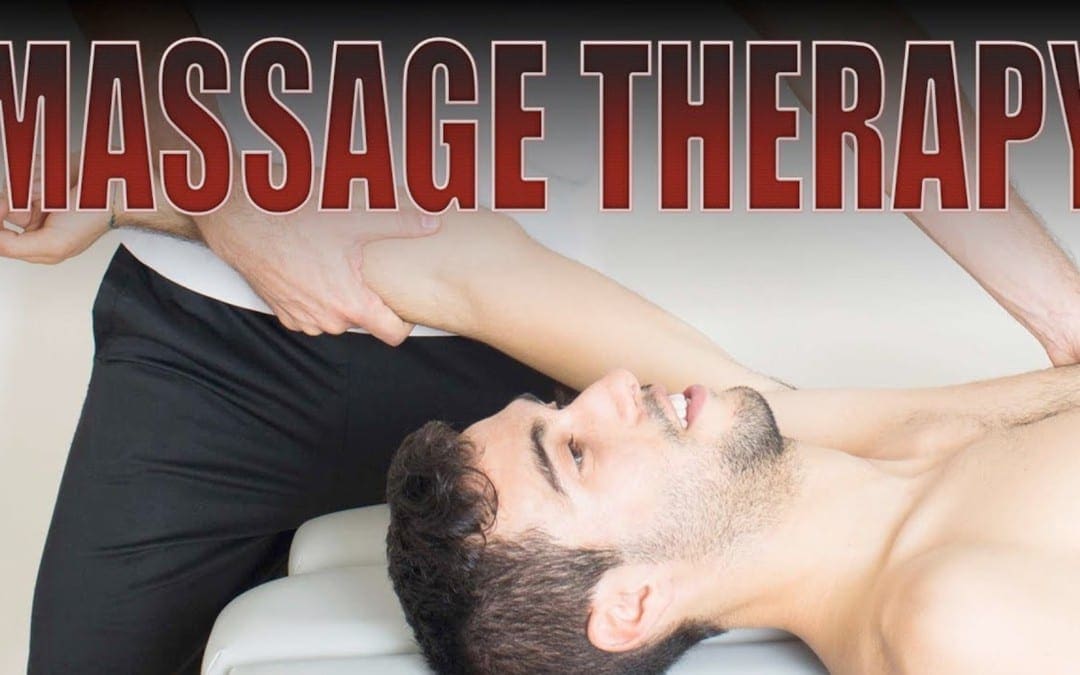
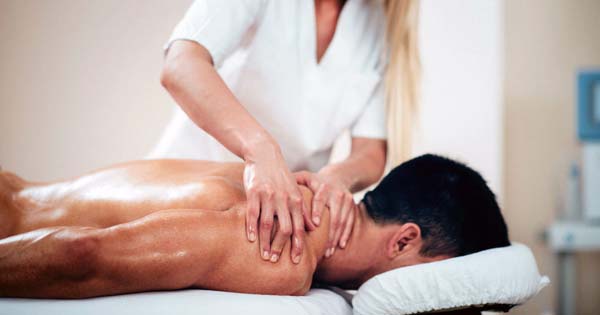
Massage is the manipulation of the body’s muscles and tissues using controlled force, gentle and slow kneading, and assisted instrumentation. Decompression Massage Centertailors treatment plans to the individual’s health needs to help expedite recovery. A medical decompression massage can:
Bring pain relief
Relieve stress
Relieve muscle aches and tension
Release knotted or cramped muscles
Improve sleep
Improve mental/emotional state
Accelerate injury rehabilitation
Strengthen the musculoskeletal system
Release toxins
Boost the immune system
Trained professionals perform massage therapy in a clinical or hospital setting to find and focus on problem areas. The therapeutic massage involves focused work on the body’s:
Soft tissues
Muscles
Tendons
Ligaments
Discomfort and Pain Relief
A massage therapist works on several medical issues that are either chronic or acute, which include:
Overuse/Repetitive stress injuries.
Neck pain
Whiplash.
Migraines.
Tension headaches, cluster headaches, and sinus headaches.
Shoulder pain.
Back pain.
Radiating pain.
Strains and sprains.
Tendonitis.
Post-surgical scar tissue rehabilitation with a doctor’s clearance.
Decompression Massage
A therapeutic decompression massage is more profound, with individuals experiencing more tenderness as the therapist works through the tissue using various techniques and instruments that could incorporate:
A decompression massage could be recommended as an extended part of a treatment plan. Spot work focuses on areas of concern for a shorter period while enhancing the decompression treatment. Focused massage techniques will:
Alleviate pain
Increase range of motion
Restore movement and function
Assist in healing faster
Spinal DRX9000
References
Demirel, Aynur, et al. “Regression of lumbar disc herniation by physiotherapy. Does non-surgical spinal decompression therapy make a difference? A double-blind, randomized controlled trial.” Journal of back and musculoskeletal rehabilitation vol. 30,5 (2017): 1015-1022. doi:10.3233/BMR-169581
Keller, Glenda. “The effects of massage therapy after decompression and fusion surgery of the lumbar spine: a case study.” International journal of therapeutic massage & bodywork vol. 5,4 (2012): 3-8. doi:10.3822/ijtmb.v5i4.189
Menard, Martha Brown. “Immediate Effect of Therapeutic Massage on Pain Sensation and Unpleasantness: A Consecutive Case Series.” Global advances in health and medicine vol. 4,5 (2015): 56-60. doi:10.7453/gahmj.2015.059
Zainuddin, Zainal, et al. “Effects of massage on delayed-onset muscle soreness, swelling, and recovery of muscle function.” Journal of athletic training vol. 40,3 (2005): 174-80.
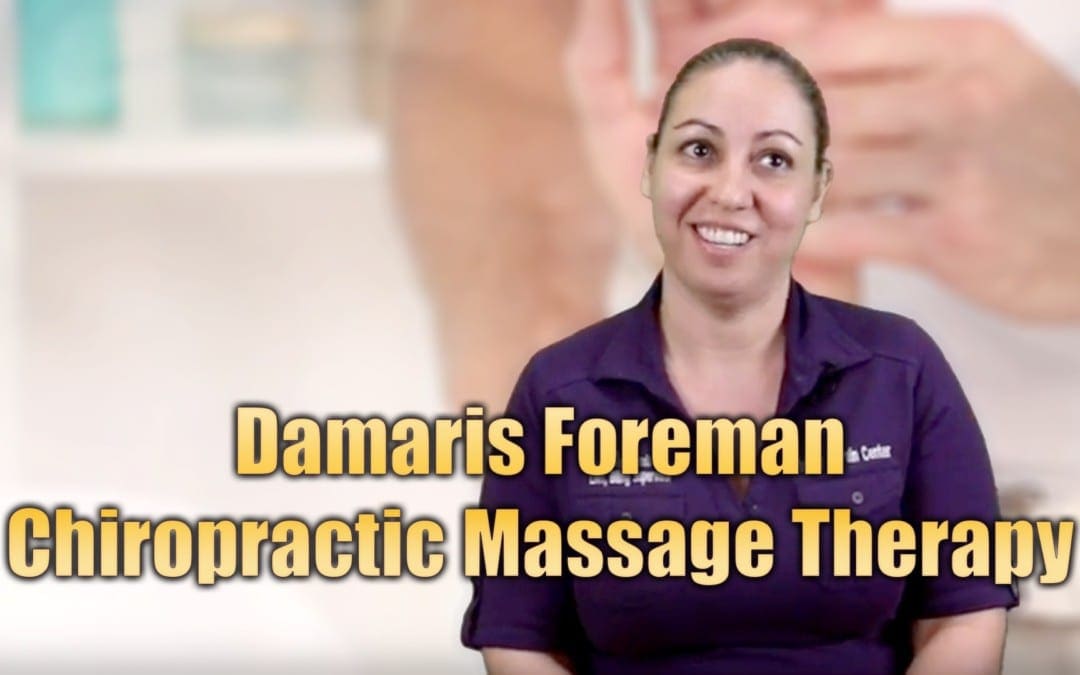
Damaris Foreman is a massage therapist at Dr. Alex Jimenez’s chiropractic massage therapy clinic. As an employee, Damaris has seen the healing procedure and the enormous improvement of several individuals receiving chiropractic care with Dr. Alex Jimenez. Damaris Foreman knows how chiropractic therapy procedures, like massage therapy, can help patients with a variety of health problems among others. Damaris clarifies how each patient is carefully cared for by Dr. Alex Jimenez and she adds that developing a strong bond with the patient through treatment is vital in the patient’s healing.
Chiropractic Massage Therapy
Massage treatment, clinically defined as the manipulation of the soft tissues of the human body to restore the health of those cells. Massage therapy consists of techniques that include holding and applying fixed or movable pressure, and causing movement to the body. Massage is often thought to impact the flow of blood vessels and the flow of blood and lymph, reduce muscular strain or flaccidity, affect the nervous system through stimulation or sedation, and enhance tissue healing. These effects can offer a variety of health benefits for people affected by musculoskeletal injuries and conditions, including those involving the nervous system.
We are blessed to present to you�El Paso�s Premier Wellness & Injury Care Clinic.
As El Paso�s Chiropractic Rehabilitation Clinic & Integrated Medicine Center,�we passionately are focused on treating patients after frustrating injuries and chronic pain syndromes. We focus on improving your ability through flexibility, mobility and agility programs tailored for all age groups and disabilities.
If you have enjoyed this video and we have helped you in any way, please feel free to subscribe and recommend�us.
Massage Therapy: Damaris Formeman is a massage therapist at Dr. Alex Jimenez’s chiropractic care clinic. As an employee, Damaris has witnessed the recovery process and the tremendous improvement of many patients receiving chiropractic care with Dr. Alex Jimenez. Damaris Formeman understands how chiropractic treatment methods, like massage therapy, can help patients with a variety of health issues, including sciatica, low back pain, neck pain and shoulder pain, among others. Damaris describes how each patient is carefully cared for by Dr. Alex Jimenez and she adds that building a strong bond with the patient during treatment is an important part of the patient’s healing journey.�
Massage Therapy Chiropractic Care
Massage therapy is medically defined as the manipulation of the soft tissues of the body for the purpose of restoring the health of those tissues. Massage therapy consists of manual techniques that include applying fixed or movable pressure and holding, and/or causing movement of or to the body. Massage is commonly believed to affect the circulation of blood and the flow of blood and lymph, reduce muscular tension or flaccidity, affect the nervous system through stimulation or sedation, and enhance tissue healing. These effects can provide a variety of health benefits for individuals affected by musculoskeletal injuries and conditions, including those affecting the nervous system, among others.
If you have enjoyed this video and/or we have helped you in any way please feel free to subscribe and share us.
Thank You & God Bless.
Dr. Alex Jimenez DC, C.C.S.T
One of the main symptoms of fibromyalgia is extreme sensitivity to touch, so it�s understandable that some people with fibromyalgia avoid getting massages. However, they are missing out on something great.
Massage treatment might seem like the very opposite approach to take for fibromyalgia pain, but the right amount of pressure and manipulation can actually do a lot for your congested muscles and tissues. In reality, massage is a perfect natural remedy for fibromyalgia. Therapeutic kneading will stimulate blood flow, eliminate metabolic waste, and lengthen muscle fibers. The right fibromyalgia massage treatment will work within the limits of your condition to release pockets of tension, and improve your physical wellbeing and quality of life.
Recommended Fibromyalgia Massage Treatment
There are many types of therapeutic massage treatments, and the right style for your fibromyalgia pain will respect your muscle sensitivity and particular pain issues. Stick with these massage techniques for the most healing benefits:
Swedish massage techniques. This classic relaxation technique ��using the hands, arms or mechanical means ��will gently manipulate tense muscles to relieve long-standing tension.
Myofascial release. Focusing on the connective tissue called fascia, this technique aims to release pressure where the tissues connect to the bones. Muscles will relax and lengthen, leaving more space for the organs to expand.
Reflexology. A safe and gentle approach that stimulates points on the hands and feet that are believed to be connected to various organs and tissues. This may help to relax certain areas that would be difficult to stimulate directly.
Cranial-sacral therapy (CST). Using very mild pressure on strategic points at the base of the skull and along the length of the spine, the CST therapist can detect interruptions in the flow of spinal fluid, and improve the balance and function of every muscle area.
Massages to Avoid
The types of massage that are out of the question if you don�t like touch because of sensitivity include:
Thai massage treatment. It puts you through different poses for an entire hour.
Reflexology foot massage treatment. Presses on reflexology points that often hurt.
Barefoot massage treatment. The massage therapist walks on your back while holding onto a supportive rack suspended from the ceiling.
Rolfing/structural integration. You�ll feel beat up with this one.
Before proceeding with any fibromyalgia massage, be sure to consult a healthcare professional who has properly diagnosed your condition and who has recommended you to follow up with any of the above mentioned therapies. Preventing further aggravation of any type of symptoms is best to promote a healthier lifestyle and improve overall symptoms.
While fibromyalgia has been known to cause symptoms of chronic pain, many individuals with the condition avoid massage or other forms of similar treatment to avoid aggravating their symptoms. However, massage therapy performed by a qualified healthcare professional can not only be beneficial, it can help reduce and manage the pain caused by fibromyalgia.
For more information, please feel free to ask Dr. Jimenez or contact us at 915-850-0900 .
IFM's Find A Practitioner tool is the largest referral network in Functional Medicine, created to help patients locate Functional Medicine practitioners anywhere in the world. IFM Certified Practitioners are listed first in the search results, given their extensive education in Functional Medicine

 Sciatica is a nerve irritation pattern, not just a tight muscle. It often feels like burning, aching, tingling, or “electric” pain that can start in the low back or buttock and travel into the thigh, calf, and foot. Many people in El Paso experience sciatica after long hours of sitting, driving, or heavy lifting, or after an old injury that never fully healed. At El Paso Back Clinic, sciatica care is commonly described as integrative—meaning hands-on chiropractic care plus soft-tissue work, rehab, and (when appropriate) decompression strategies to reduce nerve pressure and help the body heal instead of just “chasing symptoms.”