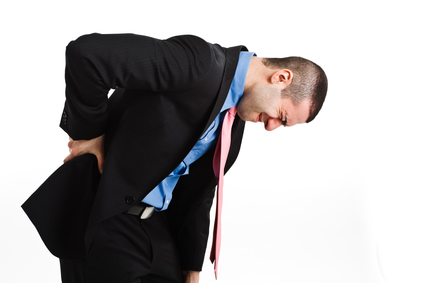
Suffer Sciatica: Are you experiencing pain along one side of your body from your lower back down through your hip and the back of your leg? If so, you could be suffering from a condition called sciatica.
According to the Mayo Clinic, sciatica can best be described as “most commonly occurring when a herniated disk or a bone spur on the spine compresses part of the nerve. This causes inflammation, pain and often some numbness in the affected leg.”
A variety of issues weigh in on an individual’s likelihood of ending up with sciatica. Most of them deal with increased pressure on the spine.
Suffer Sciatica: Causes
Obesity: carrying too much weight is instrumental in bringing on a number of health related issues. Extra pounds overload the spine, causing damage that results in sciatica.
Improper Lifting: Individuals who frequently twist the bodies and lift heavy loads are more likely to suffer from sciatica. Certain jobs that require these movements are a key cause of the condition.
Sedentary Lifestyle. A person’s job does not have to involve lifting to be responsible for this condition. Sitting for extended periods without stretching or standing puts excess pressure on the spine and can cause sciatica.
Too Many Birthdays. Getting older can affect all of our body’s joints and bones in a negative manner, especially if we never committed to an exercise routing. An individual’s back often deteriorates with age, causing bone spurs and herniated disks that sometimes result in sciatica.
Treatment options for sciatica are varied, and the choice depends on the severity of the condition.
Pain Medication: A common and easy way to treat sciatica is with drug therapy. Anti-inflammatory drugs are frequently used to reduce�the inflammation around the nerve, which is a big contributor of the pain. Over-the-counter pain medicines, as well as codeine, may also help with pain management.
Acupuncture. Alternative therapies like acupuncture have shown positive results in the treatment of sciatica. If a drug-free treatment option appeals to you, find an experienced acupuncturist in your area and talk to them about treatment options.
Strengthening Exercises. A consistent exercise program strengthens your muscles and helps the body function effectively. Ask your doctor which exercises assist the body with bouncing back from sciatica.
Supplements. Supplying the body with vital vitamins and minerals assists in overall health in general, including improvement from sciatica. Daily doses of supplements such as calcium, magnesium, St. John’s Wort, and Vitamin B12 have shown to treat sciatica effectively.
Chiropractic Care. Chiropractors understand all things spine-related, and work with the body as a whole to help it heal itself. Chiropractic treatment for sciatica works to align the spine and reduce the stress to the lower back. Treatment helps alleviate the underlying causes of the condition, and shows positive results in a short amount of time.
Cortisone Injections. Most of the time, sciatica can be treated by the less invasive measures mentioned above. However, severe bouts of sciatica may require a shot of cortisone directly into the inflamed area. Individuals generally choose this option when other treatments have garnered no relief.
Dealing with sciatica is painful and irritating, as the condition often sidelines the sufferer from daily activities. By knowing the treatment options that are effective in combating both the underlying causes and the pain of sciatica, sufferers can begin a regimen that will help them get back on their feet, pain-free in the shortest period of time possible and no longer have to suffer.
If you are suffering from sciatica and would like to talk to an experienced chiropractor about how to treat the condition, contact us today.
Sciatica
This article is copyrighted by Blogging Chiros LLC for its Doctor of Chiropractic members and may not be copied or duplicated in any manner including printed or electronic media, regardless of whether for a fee or gratis without the prior written permission of Blogging Chiros, LLC.
Expectant Mothers: Pregnancy is an exciting, precious time in a woman’s life, full of new experiences. Unfortunately, the baby’s development brings about bodily changes that often wreak havoc on the back and joints, and end up causing pain. These issues also frequently cause issues during delivery, and increase the time it takes for the body to recover post-pregnancy.
Expectant moms benefit from chiropractic care in a number of ways. Here are five key ways chiropractic care helps alleviate the toll pregnancy takes on a woman’s body.
#1: Expectant Mothers: Chiropractic Keeps The Spine In Alignment.
Pregnancy adds significant additional weight to a woman’s body in a short amount of time. This change bears on the spine, frequently pulling it out of alignment.
When this happens, the pain can be quite severe. Chiropractic care during pregnancy works to keep the spine in alignment and all supporting tendons working optimally, to be better prepared and able to adequately support the extra weight.
#2: Chiropractic Reduces Need For Pain Relievers.
Most times, individuals experiencing moderate pain pop a couple of over the counter pain relievers and think nothing of it. However, pregnant women strive to avoid medications when possible.
Chiropractic adjustments decrease the underlying issues that cause pain, so the patient relies less on medications. Experiencing less pain as well as eliminating the need for pain killers is a win-win situation for expectant mothers.
#3: Chiropractic Strengthens And Repairs Joints.
Pregnancy really beats up an expectant mothers joints. Chiropractic care for expectant mothers is a productive way to minimize the effect the large, protruding abdomen has on her hips, legs, and ankles.
Treating the body as a whole, chiropractic treatment works to strengthen the body and promotes healing of injured or strained areas.
#4: Chiropractic Helps Achieve Pelvic Alignment.
An aligned pelvis is critical to the birthing process, and increases the chances of being able to give birth naturally. According to the American Pregnancy Association,
“When the pelvis is misaligned it may reduce the amount of room available for the developing baby. This restriction is called intrauterine constraint. A misaligned pelvis may also make it difficult for the baby to get into the best possible position for delivery. This can affect the mother�s ability to have a natural, non-invasive birth.”
An experienced chiropractor can effectively align the pelvis before delivery, so the mother is able to deliver with little incident.
#5: Chiropractic Increases The Body’s Ability To Bounce Back.
Let’s face it, every pregnant woman thinks “will I ever fit in the clingy red dress again?” The healthier and stronger a woman’s body is before and during pregnancy, the easier it is to get back into shape once the baby is born. Eating right and safely exercising are effective ways to accomplish this.
Chiropractic care is also a valuable component to fitness. Expectant mothers who choose chiropractic enjoy better posture, less pain, and increased mobility, especially late in the third trimester.
This allows them to maintain exercise routines and be active longer than those suffering from back pain and achy joints. After the delivery, it’s easier to get back into a fitness routine, and into that red dress, if the new mother’s joints, back, and hips are aligned and functioning properly.
Chiropractic care can serve to reduce pain and increase the overall heath of expectant mothers, letting her relax and focus on the more pleasant aspects of pregnancy. Expecting women who commit to chiropractic care can look forward to a stronger body, the chances of a smoother delivery, and an easier recovery after the baby comes.
Pregnancy & Chiropractic Care
This article is copyrighted by Blogging Chiros LLC for its Doctor of Chiropractic members and may not be copied or duplicated in any manner including printed or electronic media, regardless of whether for a fee or gratis without the prior written permission of Blogging Chiros, LLC.
Parents of children suffering from ear infections are all too familiar with this cry. Tugging at their ears, crying, and trouble sleeping are all signs of an ear infection in your little one.
Children are more susceptible to ear infections than adults because of their smaller Eustachian tubes, and their less effective immune systems. Unfortunately, chronic ear infections can quickly become a painful, ongoing problem.
Parents have a variety of options at their disposal to treat their child’s ear infections. Drops, antibiotics, and ventilation tubes placed by surgical procedure are all commonly used treatments for chronic infections. Chiropractic care is another option available and is rapidly gaining acceptance and popularity for the effective treatment of ear infections.
According to HealthyChild.com, ear infections are the reason for 35% of pediatrician visits, and ear pain is the number one reason a child visits a chiropractor. Children who suffer from recurring ear infections benefit from chiropractic care in several ways that are not available through other, more traditional forms of treatment.
Here are a few of the benefits chiropractic care offer for ear infections are:
Ear Infections: It Is Non-Invasive
Unlike the surgical procedure that is often used to combat ear infections by inserting tubes in the child’s ears, chiropractic adjustments provide a non-invasive form of treatment.
This treatment option works well because a little one’s spine may be moved out of alignment from the birthing process, or from any number of spills he or she makes learning to walk, run, or navigate stairs. An experienced chiropractor can map out a treatment plan that includes gentle adjustments of the child’s neck and spine. The goal is to decrease fluid build up within the ear canals that bring on ear infections and pain.
It Is A Painless Option Of Treatment
The last thing parents want in any medical treatment is to cause their child more pain. A negative experience at a doctor’s office can create a fear that lasts for years to come.
Children with ear infections have nothing to fear from visiting a chiropractor. During a chiropractic visit, the child will participate in adjustments that are pain free. The treatments will be able to reduce the pain in a short amount of time in many instances, and reduce the chance of dealing with another ear infection down the road.
It Treats The Underlying Cause
Other options of treatment may decrease the symptoms of an ear infection, but never get to the actual root issue. Chiropractic care strives to return the body in its entirety to its normal function.
This is the main building block concept for chiropractic in general. By re-aligning the spine, the body as a whole can be healthier and more resistant to infection and disease. Chiropractic care helps adjust the child’s body back to a normal state, thus providing a way for it to heal itself and fight off future ear (and other) infections better than simply using drops and antibiotics.
If your child is susceptible to ear infections, there are steps you can take to minimize the chances of an occurrence in the first place. Frequent hand washing to prevent the spread of germs and avoiding cigarette smoke are two simple ways to combat ear infections.
Chiropractic treatment continues to show promise in treating the underlying issues that cause a child to suffer from ear infections. If you are looking for a treatment that is pain free, not intimidating to the child, and an alternative to invasive surgery, enlisting the help of a chiropractor is a fantastic option.
So if your child is experiencing chronic ear infections, give us a call. Our Doctor of Chiropractic is here to help!
Doctors Of Chiropractic Ensure Patients Have Strong Posture
This article is copyrighted by Blogging Chiros LLC for its Doctor of Chiropractic members and may not be copied or duplicated in any manner including printed or electronic media, regardless of whether for a fee or gratis without the prior written permission of Blogging Chiros, LLC.
Muscle Energy Techniques: A revolution has taken place in manipulative therapy involving a movement away from high velocity/low amplitude thrusts (HVT � now commonly known as �mobilization with impulse� and characteristic of most chiropractic and, until recently, much osteopathic manipulation) towards gentler methods which take far more account of the soft tissue component (DiGiovanna 1991, Lewit 1999, Travell & Simons 1992).
Greenman (1996) states that: �Early [osteopathic] techniques did speak of muscle relaxation with soft tissue procedures, but specific manipulative approaches to muscle appear to be 20th century phenomena.� One such approach � which targets the soft tissues primarily, although it also makes a major contribution towards joint mobilization � has been termed muscle energy technique (MET) in osteopathic medicine. There are a variety of other terms used to describe this approach, the most general (and descriptively accurate) of which was that used by chiropractor Craig Liebenson (1989, 1990) when he described muscle energy techniques as �active muscular relaxation techniques�. Muscle energy techniques evolved out of osteopathic procedures developed by pioneer practitioners such as T. J. Ruddy (1961), who termed his approach �resistive duction�, and Fred Mitchell Snr (1967). As will become clear in this chapter, there also exists a commonality between Muscle energy techniques and various procedures used in orthopaedic and physiotherapy methodology, such as proprioceptive neuromuscular facilitation (PNF). Largely due to the work of experts in physical medicine such as Karel Lewit (1999), MET has evolved and been refined, and now crosses all interdisciplinary boundaries.
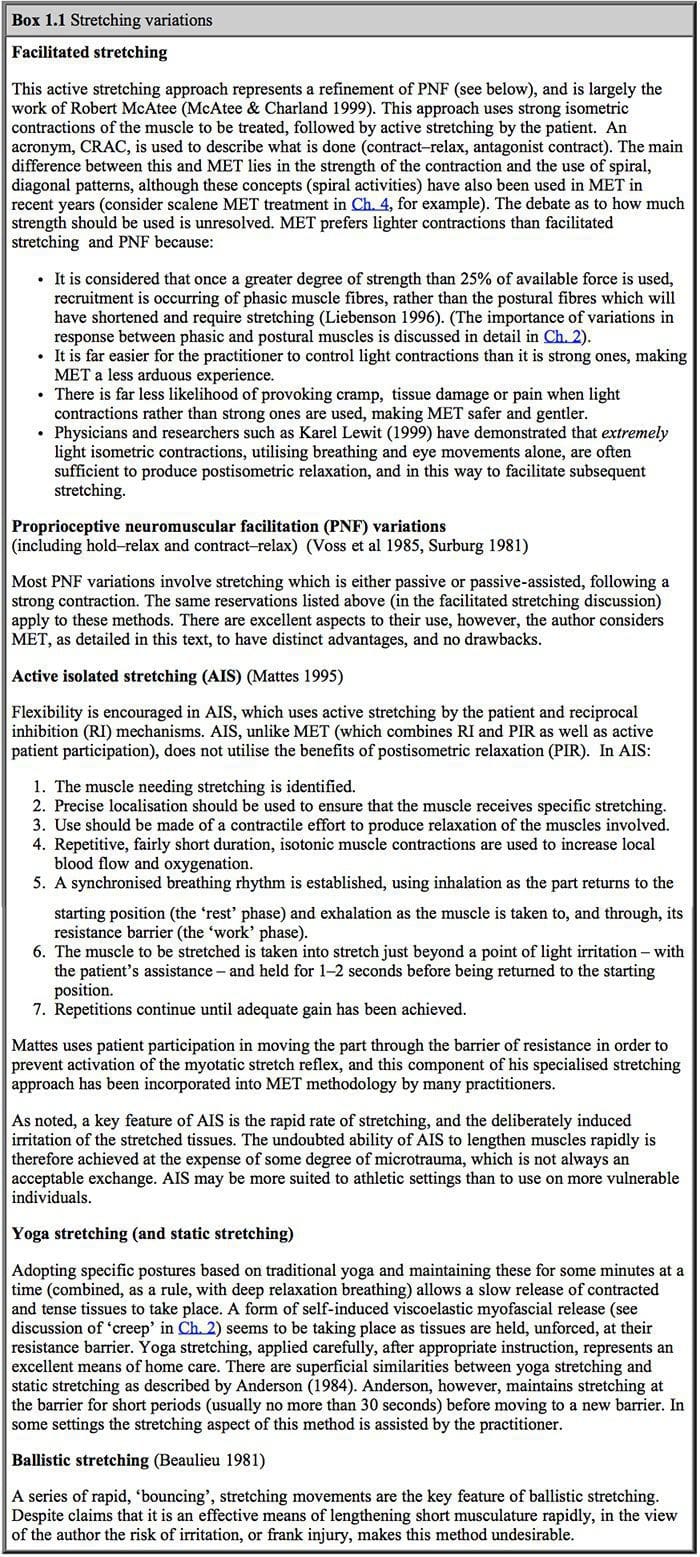
MET has as one of its objectives the induced relaxation of hypertonic musculature and, where�appropriate (see below), the subsequent stretching of the muscle. This objective is shared with a number of �stretching� systems, and it is necessary to examine and to compare the potential benefits and drawbacks of these various methods (see Box 1.1).
MET, as presented in this book, owes most of its development to osteopathic clinicians such as T. J. Ruddy (1961) and Fred Mitchell Snr (1967), with more recent refinements deriving from the work of people such as Karel Lewit (1986, 1999) and Vladimir Janda (1989) of the former Czechoslovakia, both of whose work will be referred to many times in this text.
T. J. Ruddy (1961)
In the 1940s and 50s, osteopathic physician T. J. Ruddy developed a treatment method involving patient-induced, rapid, pulsating contractions against resistance which he termed �rapid resistive duction�. It was in part this work which Fred Mitchell Snr used as the basis for the evolution of MET (along with PNF methodology, see Box 1.1). Ruddy�s method called for a series of rapid, low amplitude muscle contractions against resistance, at a rate a little faster than the pulse rate. This approach is now known as pulsed MET, rather than the tongue-twisting �Ruddy�s rapid resistive duction�.
As a rule, at least initially, these patient-directed pulsating contractions involve an effort towards the barrier, using antagonists to shortened structures. This approach can be applied in all areas where sustained contraction muscle energy technique procedures are appropriate, and is particularly useful for self-treatment, following instruction from a skilled practitioner. Ruddy suggests that the effects include improved local oxygenation, venous and lymphatic circulation, as well as a positive influence on both static and kinetic posture, because of the effects on proprioceptive and interoceptive afferent pathways.
Ruddy�s work formed part of the base on which Mitchell Snr and others constructed MET and aspects of its clinical application are described in Chapter 3.
Fred Mitchell Snr
No single individual was alone responsible for MET, but its inception into osteopathic work must be credited to F. L. Mitchell Snr, in 1958. Since then his son F. Mitchell Jnr (Mitchell et al 1979) and many others have evolved a highly sophisticated system of manipulative methods (F. Mitchell Jnr, tutorial on biomechanical procedures, American Academy of Osteopathy, 1976) in which the patient �uses his/her muscles, on request, from a precisely controlled position in a specific direction, against a distinctly executed counterforce�.
Philip Greenman
Professor of biomechanics Philip Greenman (1996) states that:
The function of any articulation of the body which can be moved by voluntary muscle action, either directly or indirectly, can be influenced by muscle energy procedures … . Muscle energy techniques can be used to lengthen a shortened, contractured or spastic muscle; to strengthen a physiologically weakened muscle or group of muscles; to reduce localized edema, to relieve passive congestion, and to mobilize an articulation with restricted mobility.
Sandra Yale
Osteopathic physician Sandra Yale (in DiGiovanna 1991) extols MET�s potential in even fragile and severely ill patients:
Muscle energy techniques are particularly effective in patients who have severe pain from acute somatic dysfunction, such as those with a whiplash injury from a car accident, or a patient with severe muscle spasm from a fall. MET methods are also an excellent treatment modality for hospitalized or bedridden patients. They can be used in older patients who may have severely restricted motion from arthritis, or who have brittle osteoporotic bones.
Edward Stiles
Among the key MET clinicians is Edward Stiles, who elaborates on the theme of the wide range of MET application (Stiles 1984a, 1984b). He states that:
Basic science data suggests the musculoskeletal system plays an important role in the function of other systems. Research indicates that segmentally related somatic and visceral structures may affect one another directly, via viscerosomatic and somaticovisceral reflex pathways. Somatic dysfunction may increase energy demands, and it can affect a wide variety of bodily processes; vasomotor control, nerve impulse patterns (in facilitation), axionic flow of neurotrophic proteins, venous and lymphatic circulation and ventilation. The impact of somatic dysfunction on various combinations of these functions may be associated with myriad symptoms and signs. A possibility which could account for some of the observed clinical effects of manipulation.
As to the methods of manipulation he now uses clinically, Stiles states that he employs muscle energy methods on about 80% of his patients, and functional techniques (such as strain/counterstrain) on 15�20%. He uses high velocity thrusts on very few cases. The most useful manipulative tool available is, he maintains, muscle energy techniques.
J. Goodridge and W. Kuchera
Modern osteopathic refinements of MET � for example the emphasis on very light contractions which has strongly influenced this text � owe much to physicians such as John Goodridge and William Kuchera, who consider that (Goodridge & Kuchera 1997):
Localization of force is more important than intensity. Localization depends on palpatory proprioceptive perception of movement (or resistance to movement) at or about a specific articulation … . Monitoring and confining forces to the muscle group or level of somatic dysfunction involved are important for achieving desirable changes. Poor results are most often due to improperly localized forces, often with excessive patient effort.
Early Sources Of Muscle Energy Techniques
MET emerged squarely out of osteopathic tradition, although a synchronous evolution of treatment methods, involving isometric contraction and stretching, was taking place independently in physical therapy, called PNF (see Box 1.1).
Fred Mitchell Snr (1958) quoted the words of the developer of osteopathy, Andrew Taylor Still: �The attempt to restore joint integrity before soothingly restoring muscle and ligamentous normality was putting the cart before the horse.� As stated earlier, Mitchell�s work drew on the methods developed by Ruddy; however, it is unclear whether Mitchell Snr, when he was refining MET methodology in the early 1950s, had any awareness of proprioceptive neuromuscular facilitation (PNF), a method which had been developed a few years earlier, in the late 1940s, in a physical therapy context (Knott & Voss 1968).
PNF method tended to stress the importance of rotational components in the function of joints and muscles, and employed these using resisted (isometric) forces, usually involving extremely strong contractions. Initially, the focus of PNF related to the strengthening of neurologically weakened muscles, with attention to the release of muscle spasticity following on from this, as well as to improving range of motion at intervertebral levels (Kabat 1959, Levine et al 1954) (see Box 1.1).
Postisometric Relaxation & Reciprocal Inhibition: Two Forms Of MET (Box 1.2)
A term much used in more recent developments of muscle energy techniques is postisometric relaxation (PIR), especially in relation to the work of Karel Lewit (1999). The term postisometric relaxation refers to the effect of the subsequent reduction in tone experienced by a muscle, or group of muscles, after brief periods during which an isometric contraction has been performed.
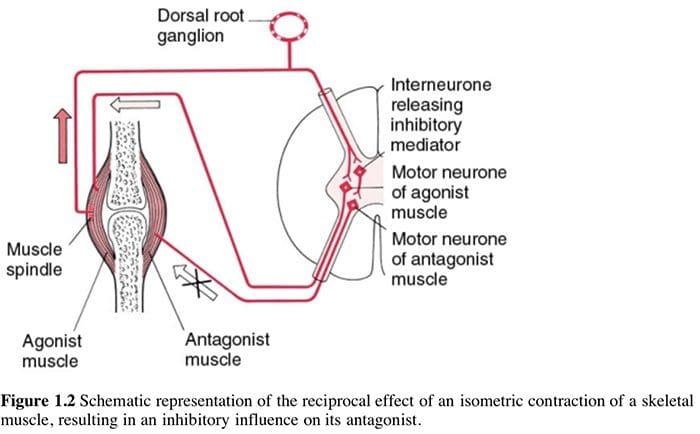
The terms proprioceptive neuromuscular facilitation (PNF) and postisometric relaxation (PIR) (the latent hypotonic state of a muscle following isometric activity) therefore represent variations on the same theme. A further variation involves the physiological response of the antagonists of a muscle which has been isometrically contracted � reciprocal inhibition (RI).
When a muscle is isometrically contracted, its antagonist will be inhibited, and will demonstrate reduced tone immediately following this. Thus the antagonist of a shortened muscle, or group of muscles, may be isometrically contracted in order to achieve a degree of ease and additional movement potential in the shortened tissues.
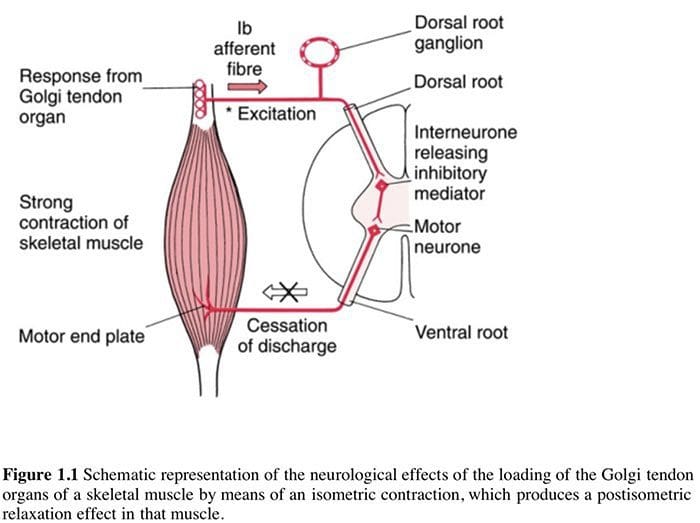
Sandra Yale (in DiGiovanna 1991) acknowledges that, apart from the well understood processes of reciprocal inhibition, the precise reasons for the effectiveness of MET remain unclear � although in achieving PIR the effect of a sustained contraction on the Golgi tendon organs seems pivotal, since their response to such a contraction seems to be to set the tendon and the muscle to a new length by inhibiting it (Moritan 1987). Other variations on this same theme include �hold�relax� and �contract�relax� techniques (see Box 1.1).
Lewit & Simons (1984) agree that while reciprocal inhibition is a factor in some forms of therapy related to postisometric relaxation techniques, it is not a factor in PIR itself, which is a phenomenon resulting from a neurological loop, probably involving the Golgi tendon organs (see Figs 1.1 and 1.2).
Liebenson (1996) discusses both the benefits of, and the mechanisms involved in, use of muscle energy techniques (which he terms �manual resistance techniques�, or MRT):
Two aspects to MRT [i.e. MET by another name] are their ability to relax an overactive muscle … and their ability to enhance stretch of a shortened muscle or its associated fascia when connective tissue or viscoelastic changes have occurred.
Two fundamental neurophysiological principles account for the neuromuscular inhibition that occurs during application of these techniques. The first is postcontraction inhibition [also known as postisometric relaxation, or PIR], which states that after a muscle is contracted, it is automatically in a relaxed state for a brief, latent, period. The second is reciprocal inhibition (RI) which states that when one muscle is contracted, its antagonist is automatically inhibited.
Liebenson suggests that there is evidence that the receptors responsible for PIR lie within the muscle and not in the skin or associated joints (Robinson 1982).
Where pain of an acute or chronic nature makes controlled contraction of the muscles involved difficult, the therapeutic use of the antagonists can patently be of value. Thus modern MET incorporates both postisometric relaxation and reciprocal inhibition methods, as well as aspects unique to itself, such as isokinetic techniques, described later.
A number of researchers, including Karel Lewit of Prague (Lewit 1999), have reported on the usefulness of aspects of MET in the treatment of trigger points, and this is seen by many to be an excellent method of treating these myofascial states, and of achieving the restoration of a situation where the muscle in which the trigger lies is once more capable of achieving its full resting length, with no evidence of shortening.
Travell & Simons (1992) mistakenly credited Lewit with developing MET, stating that �The concept of applying post-isometric relaxation in the treatment of myofascial pain was presented for the first time in a North American journal in 1984 [by Lewit]�. In fact Mitchell Snr had described the method some 25 years previously, a fact acknowledged by Lewit (Lewit & Simons 1984).
Key Points About Modern Muscle Energy Techniques
MET methods all employ variations on a basic theme. This primarily involves the use of the patient�s own muscular efforts in one of a number of ways, usually in association with the efforts of the therapist:
1. The operator�s force may exactly match the effort of the patient (so producing an isometric contraction) allowing no movement to occur � and producing as a result a physiological neurological response (via the Golgi tendon organs) involving a combination of:
� reciprocal inhibition of the antagonist(s) of the muscle(s) being contracted, as well as
� postisometric relaxation of the muscle(s) which are being contracted.
The operator�s force may overcome the effort of the patient, thus moving the area or joint in the direction opposite to that in which the patient is attempting to move it (this is an isotonic eccentric contraction, also known as an isolytic contraction).
The operator may partially match the effort of the patient, thus allowing, although slightly retarding, the patient�s effort (and so producing an isotonic concentric, isokinetic, contraction).
Other variables may be also introduced, for example involving:
l Whether the contraction should commence with the muscle or joint held at the resistance barrier or short of it � a factor decided largely on the basis of the degree of chronicity or acuteness of the tissues involved
How much effort the patient uses � say, 20% of strength, or more, or less
The length of time the effort is held � 7�10 seconds, or more, or less (Lewit (1999) favours 7� 10 seconds; Greenman (1989), Goodridge & Kuchera (1997) all favour 3�5 seconds)
Whether, instead of a single maintained contraction, to use a series of rapid, low amplitude contractions (Ruddy�s rhythmic resisted duction method, also known as pulsed muscle energy techniques)
The number of times the isometric contraction (or its variant) is repeated � three repetitions are thought to be optimal (Goodridge & Kuchera 1997)
The direction in which the effort is made � towards the resistance barrier or away from it, thus involving either the antagonists to the muscles or the actual muscles (agonists) which require �release� and subsequent stretching (these variations are also known as �direct� and �indirect� approaches, see p. 8)
Whether to incorporate a held breath and/or specific eye movements to enhance the effects of the contraction � desirable if possible, it is suggested (Goodridge & Kuchera 1997, Lewit 1999)
What sort of resistance is offered (for example by the operator, by gravity, by the patient, or by an immovable object)
Whether the patient�s effort is matched, overcome or not quite matched � a decision based on the precise needs of the tissues � to achieve relaxation, reduction in fibrosis or tonifying/ reeducation
Whether to take the muscle or joint to its new barrier following the contraction, or whether or not to stretch the area/muscle(s) beyond the barrier � this decision is based on the nature of�the problem being addressed (does it involve shortening? fibrosis?) and its degree of chronicity
Whether any subsequent (to a contraction) stretch is totally passive, or whether the patient should participate in the movement, the latter being thought by many to be desirable in order to reduce danger of stretch reflex activation (Mattes 1995)
Whether to utilize Muscle energy techniques alone, or in a sequence with other modalities such as the positional release methods of strain/counterstrain, or the ischaemic compression/inhibitory pressure techniques of neuromuscular technique (NMT) � such decisions will depend upon the type of problem being addressed, with myofascial trigger point treatment frequently benefiting from such combinations (see description of integrated neuromuscular inhibition (INIT), p. 197 (Chaitow 1993)).
Greenman summarises the requirements for the successful use of MET in osteopathic situations as �control, balance and localisation�. His suggested basic elements of MET include the following:
A patient/active muscle contraction, which
� commences from a controlled position
� is in a specific direction (towards or away from a restriction barrier)
The operator applies distinct counterforce (to meet, not meet, or to overcome the patient�s force)
The degree of effort is controlled (sufficient to obtain an effect but not great enough to induce trauma or difficulty in controlling the effort).
What is done subsequent to the contraction may involve any of a number of variables, as will be explained.
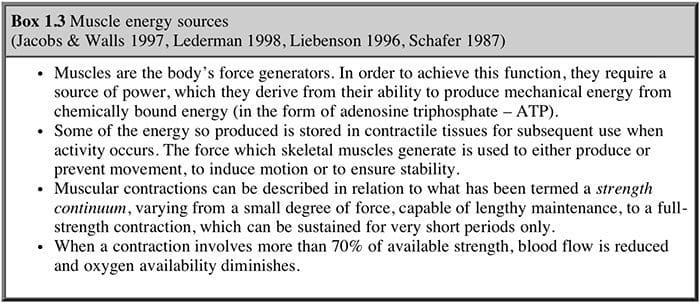
The essence of MET then is that it uses the energy of the patient, and that it may be employed in one or other of the manners described above with any combination of variables depending upon the particular needs of the case. Goodridge (one of the first osteopaths to train with Mitchell Snr in 1970) summarises as follows: �Good results [with MET] depend on accurate diagnosis, appropriate levels of force, and sufficient localization. Poor results are most often caused by inaccurate diagnosis, improperly localized forces, or forces that are too strong� (Goodridge & Kuchera 1997) (see also Box 1.3).
Using agonist or antagonist? (Box 1.4)
As mentioned, a critical consideration in MET, apart from degree of effort, duration and frequency of use, involves the direction in which the effort is made. This may be varied, so that the operator�s�force is directed towards overcoming the restrictive barrier (created by a shortened muscle, restricted joint, etc.); or indeed opposite forces may be used, in which the operator�s counter-effort is directed away from the barrier.
There is general consensus among the various osteopathic experts already quoted that the use of postisometric relaxation is more useful than reciprocal inhibition in normalizing hypertonic musculature. This, however, is not generally held to be the case by experts such as Lewit and Janda, who see specific roles for the reciprocal inhibition variation.
Osteopathic clinicians such as Stiles and Greenman believe that the muscle which requires stretching (the agonist) should be the main source of �energy� for the isometric contraction, and suggest that this achieves a more significant degree of relaxation, and so a more useful ability to subsequently stretch the muscle, than would be the case were the relaxation effect being achieved via use of the antagonist (i.e. using reciprocal inhibition).
Following on from an isometric contraction � whether agonist or antagonist is being used � there is a refractory, or latency, period of approximately 15 seconds during which there can be an easier (due to reduced tone) movement towards the new position (new resistance barrier) of a joint or muscle.
Variations On The Muscle Energy Techniques Theme
Liebenson (1989, 1990) describes three basic variations which are used by Lewit and Janda as well as by himself in a chiropractic rehabilitation setting.
Lewit�s (1999) modification of MET, which he calls postisometric relaxation, is directed towards relaxation of hypertonic muscle, especially if this relates to reflex contraction or the involvement of myofascial trigger points. Liebenson (1996) notes that �this is also a suitable method for joint mobilisation when a thrust is not desirable�.
Lewit�s postisometric relaxation method
(Lewit 1999)
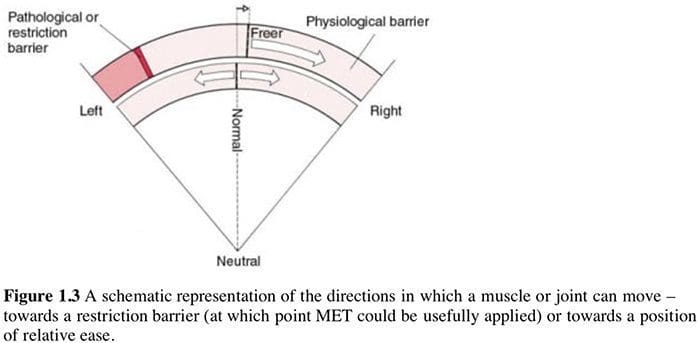
The hypertonic muscle is taken, without force or �bounce�, to a length just short of pain, or to the point where resistance to movement is first noted (Fig. 1.3).
The patient gently contracts the affected hypertonic muscle away from the barrier (i.e. the agonist is used) for between 5 and 10 seconds, while the effort is resisted with an exactly equal counterforce. Lewit usually has the patient inhale during this effort.
This resistance involves the operator holding the contracting muscle in a direction which would stretch it, were resistance not being offered.
The degree of effort, in Lewit�s method, is minimal. The patient may be instructed to think in terms of using only 10 or 20% of his available strength, so that the manoeuvre is never allowed to develop into a contest of strength between the operator and the patient.
After the effort, the patient is asked to exhale and to let go completely, and only when this is achieved is the muscle taken to a new barrier with all slack removed but no stretch � to the extent that the relaxation of the hypertonic muscles will now allow.
Starting from this new barrier, the procedure is repeated two or three times.
In order to facilitate the process, especially where trunk and spinal muscles are involved, Lewit usually asks the patient to assist by looking with his eyes in the direction of the contraction during the contracting phase, and in the direction of stretch during the stretching phase of the procedure.
The key elements in this approach, as in most MET, involve precise positioning, as well as taking out slack and using the barrier as the starting and ending points of each contraction.
What Is Happening?
Karel Lewit, discussing MET methods (Lewit 1999), states that medullary inhibition is not capable of explaining their effectiveness. He considers that the predictable results obtained may relate to the following facts:
During resistance using minimal force (isometric contraction) only a very few fibers are active, the others being inhibited
During relaxation (in which the shortened musculature is taken gently to its new limit without stretching) the stretch reflex is avoided � a reflex which may be brought about even by passive and non-painful stretch (see Mattes� views p. 3).
He concludes that this method demonstrates the close connection between tension and pain, and between relaxation and analgesia.
The use of eye movements as part of the methodology is based on research by Gaymans (1980) which indicates, for example, that flexion is enhanced by the patient looking downwards, and extension by the patient looking upwards. Similarly, sidebending is facilitated by looking towards the side involved. These ideas are easily proved by self-experiment: an attempt to flex the spine while maintaining the eyes in an upwards (towards the forehead) looking direction will be found to be less successful than an attempt made to flex while looking downwards. These eye-direction aids are also useful in manipulation of the joints.
Effects of Muscle energy techniques
Lewit (1999) discusses the element of passive muscular stretch in MET and maintains that this factor does not always seem to be essential. In some areas, self-treatment, using gravity as the resistance factor, is effective, and such cases sometimes involve no element of stretch of the muscles in question. Stretching of muscles during MET, according to Lewit (1999), is only required when contracture due to fibrotic change has occurred, and is not necessary if there is simply a disturbance in function. He quotes results in one series of patients in his own clinic in which 351 painful muscle groups, or muscle attachments, were treated by MET (using postisometric�relaxation) in 244 patients. Analgesia was immediately achieved in 330 cases and there was no effect in only 21 cases. These are remarkable results by any standards.
Lewit suggests, as do many others, that trigger points and �fibrositic� changes in muscle will often disappear after MET contraction methods. He further suggests that referred local pain points, resulting from problems elsewhere, will also disappear more effectively than where local anaesthesia or needling (acupuncture) methods are employed.
Janda�s postfacilitation stretch method
Janda�s variation on this approach (Janda 1993), known as �postfacilitation stretch�, uses a different starting position for the contraction and also a far stronger isometric contraction than that suggested by Lewit and most osteopathic users of Muscle energy techniques:
The shortened muscle is placed in a mid-range position about halfway between a fully stretched and a fully relaxed state.
The patient contracts the muscle isometrically, using a maximum degree of effort for 5�10 seconds while the effort is resisted completely.
On release of the effort, a rapid stretch is made to a new barrier, without any �bounce�, and this is held for at least 10 seconds.
The patient relaxes for approximately 20 seconds and the procedure is repeated between three and five times more.
Some sensations of warmth and weakness may be anticipated for a short while following this more vigorous approach.
Reciprocal inhibition variation
This method, which forms a component of PNF methodology (see Box 1.1) and Muscle energy techniques, is mainly used in acute settings, where tissue damage or pain precludes the use of the more usual agonist contraction, and also commonly as an addition to such methods, often to conclude a series of stretches whatever other forms of MET have been used (Evjenth & Hamberg 1984):
The affected muscle is placed in a mid-range position.
The patient is asked to push firmly towards the restriction barrier and the operator either completely resists this effort (isometric) or allows a movement towards it (isotonic). Some degree of rotational or diagonal movement may be incorporated into the procedure.
On ceasing the effort, the patient inhales and exhales fully, at which time the muscle is passively lengthened.
Liebenson notes that �a resisted isotonic effort towards the barrier is an excellent way in which to facilitate afferent pathways at the conclusion of treatment with active muscular relaxation techniques or an adjustment (joint). This can help reprogram muscle and joint proprioceptors and thus re-educate movement patterns.� (See Box 1.2.)
Strengthening variation
Another major muscle energy variation is to use what has been called isokinetic contraction (also known as progressive resisted exercise). In this the patient starts with a weak effort but rapidly progresses to a maximal contraction of the affected muscle(s), introducing a degree of resistance to the operator�s effort to put the joint, or area, through a full range of motion. The use of isokinetic contraction is reported to be a most effective method of building strength, and to be superior to high repetition, lower resistance exercises (Blood 1980). It is also felt that a limited range of motion, with good muscle tone, is preferable (to the patient) to having a normal range with limited power. Thus the strengthening of weak musculature in areas of permanent limitation of mobility is seen as�an important contribution in which isokinetic contractions may assist.
Isokinetic contractions not only strengthen the fibres which are involved, but also have a training effect which enables them to operate in a more coordinated manner. There is often a very rapid increase in strength. Because of neuromuscular recruitment, there is a progressively stronger muscular effort as this method is repeated. Isokinetic contractions, and accompanying mobilisation of the region, should take no more than 4 seconds at each contraction in order to achieve maximum benefit with as little fatiguing as possible, either of the patient or the operator. Prolonged contractions should be avoided. The simplest, safest, and easiest-to-handle use of isokinetic methods involves small joints, such as those in the extremities. Spinal joints may be more difficult to mobilise while muscular resistance is being fully applied.
The options available in achieving increased strength via these methods therefore involve a choice between either a partially resisted isotonic contraction, or the overcoming of such a contraction, at the same time as the full range of movement is being introduced (note that both isotonic concentric and eccentric contractions will take place during the isokinetic movement of a joint). Both of these options should involve maximum contraction of the muscles by the patient. Home treatment of such conditions is possible, via self-treatment, as in other MET methods.
Isolytic Muscle Energy Techniques
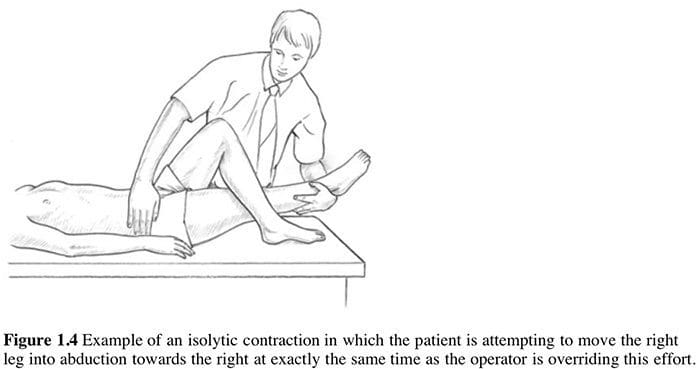
Another application of the use of isotonic contraction occurs when a direct contraction is resisted and overcome by the operator (Fig. 1.4). This has been termed isolytic contraction, in that it involves the stretching, and sometimes the breaking down, of fibrotic tissue present in the affected muscles. Adhesions of this type are reduced by the application of force by the operator which is just greater than that being exerted by the patient. This procedure can be uncomfortable, and the patient should be advised of this. Limited degrees of effort are therefore called for at the outset of isolytic contractions. This is an isotonic eccentric contraction, in that the origins and insertions of the muscles involved will become further separated, despite the patient�s effort to approximate them. In order to achieve the greatest degree of stretch (in the condition of myofascial fibrosis, for example), it is necessary for the largest number of fibers possible to be involved in the isotonic contraction. Thus there is a contradiction in that, in order to achieve this large involvement, the degree of contraction should be a maximal one, and yet this is likely to produce pain, which is contraindicated. It may also, in many instances, be impossible for the operator to overcome.
This stretches the muscles which are contracting (TFL shown in example) thereby inducing a degree of controlled microtrauma, with the aim of increasing the elastic potential of shortened or fibrosed tissues.
The patient should be instructed to use about 20% of possible strength on the first contraction, which is resisted and overcome by the operator, in a contraction lasting 3�4 seconds. This is then repeated, but with an increased degree of effort on the part of the patient (assuming the first effort was relatively painless). This continuing increase in the amount of force employed in the contracting musculature may be continued until, hopefully, a maximum contraction effort is possible, again to be overcome by the operator. In some muscles, of course, this may require a heroic degree of effort on the part of the operator, and alternative methods are therefore desirable. Deep tissue techniques, such as neuromuscular technique, would seem to offer such an alternative. The isolytic manoeuvre should have as its ultimate aim a fully relaxed muscle, although this will not always be possible.
Why Fibrosis Occurs Naturally
An article in the Journal of the Royal Society of Medicine (Royal Society of Medicine 1983) discusses connective tissue changes:
Aging affects the function of connective tissue more obviously than almost any organ system. Collagen fibrils thicken, and the amounts of soluble polymer decrease. The connective tissue cells tend to decline in number, and die off. Cartilages become less elastic, and their complement of proteoglycans changes both quantitatively and qualitatively. The interesting question is how many of these processes are normal, that contribute blindly and automatically, beyond the point at which they are useful? Does prevention of aging, in connective tissues, simply imply inhibition of cross linking in collagen fibrils, and a slight stimulation of the production of chondroitin sulphate proteoglycan?
The effects of various soft tissue approaches such as NMT and Muscle energy techniques will impact directly on these tissues as well as on the circulation and drainage of the affected structures, which suggests that the ageing process can be influenced. Destruction of collagen fibrils, however, is a serious matter (for example when using isolytic stretches), and although the fibrous tissue may be replaced in the process of healing, scar-tissue formation is possible, and this makes repair inferior to the original tissues, both in functional and structural terms. An isolytic contraction has the ability to break down tight, shortened tissues and the replacement of these with superior material will depend, to a large extent, on the subsequent use of the area (exercise, etc.), as well as the nutritive status of the individual. Collagen formation is dependent on adequate vitamin C, and a plentiful supply of amino acids such as proline, hydroxyproline and arginine. Manipulation, aimed at the restoration of a degree of normality in connective tissues, should therefore take careful account of nutritional requirements.
The range of choices in stretching, irrespective of the form of prelude to this � strong or mild isometric contraction, starting at or short of the barrier � therefore covers the spectrum from all- passive to all-active, with many variables in between.
Putting It Together
Many may prefer to use the variations, as described above, within individual settings. The recommendation of this text, however, is that they should be �mixed and matched� so that elements of all of them may be used in any given setting, as appropriate. Lewit�s (1999) approach seems ideal for more acute and less chronic conditions, while Janda�s (1989) more vigorous methods seem�ideal for hardy patients with chronic muscle shortening.
Muscle energy techniques offers a spectrum of approaches which range from those involving hardly any active contraction at all, relying on the extreme gentleness of mild isometric contractions induced by breath-holding and eye movements only, all the way to the other extreme of full-blooded, total- strength contractions. Subsequent to isometric contractions � whether strong or mild � there is an equally sensitive range of choices, involving either energetic stretching or very gentle movement to a new restriction. We can see why Sandra Yale (in DiGiovanna 1991) speaks of the usefulness of MET in treating extremely ill patients.
Many patients present with a combination of recent dysfunction (acute in terms of time, if not in degree of pain or dysfunction) overlaid on chronic changes which have set the scene for their acute current problems. It seems perfectly appropriate to use methods which will deal gently with hypertonicity, and more vigorous methods which will help to resolve fibrotic change, in the same patient, at the same time, using different variations on the theme of MET. Other variables can be used which focus on joint restriction, or which utilise RI should conditions be too sensitive to allow PIR methods, or variations on Janda�s more vigorous stretch methods (see Box 1.1).
Discussion of common errors in application of Muscle energy techniques will help to clarify these thoughts.
Why Muscle Energy Techniques Might Be Ineffective At Times
Poor results from use of Muscle energy techniques may relate to an inability to localize muscular effort sufficiently, since unless local muscle tension is produced in the precise region of the soft tissue dysfunction, the method is likely to fail to achieve its objectives. Also, of course, underlying pathological changes may have taken place, in joints or elsewhere, which make such an approach of short-term value only, since such changes will ensure recurrence of muscular spasms, sometimes almost immediately.
MET will be ineffective, or cause irritation, if excessive force is used in either the contraction phase or the stretching phase.
The keys to successful application of Muscle energy techniques therefore lie in a precise focusing of muscular activity, with an appropriate degree of effort used in the isometric contraction, for an adequate length of time, followed by a safe movement through the previous restriction barrier, usually with patient assistance.
Use of variations such as stretching chronic fibrotic conditions following an isometric contraction and use of the integrated approach (INIT) mentioned earlier in this chapter represent two examples of further adaptations of Lewit�s basic approach which, as described above, is ideal for acute situations of spasm and pain.
To Stretch Or To Strengthen?
Marvin Solit (1963), a former pupil of Ida Rolf, describes a common error in application of Muscle energy techniques � treating the �wrong� muscles the �wrong� way:
As one looks at a patient�s protruding abdomen, one might think that the abdominal muscles are weak, and that treatment should be geared towards strengthening them. By palpating the abdomen, however, one would not feel flabby, atonic muscles which would be the evidence of weakness; rather, the muscles are tight, bunched and shortened. This should not be surprising because here is an example of muscle working overtime maintaining body equilibrium. In addition these muscles are supporting the sagging viscera, which normally would be supported by their individual ligaments. As�the abdominal muscles are freed and lengthened, there is a general elevation of the rib cage, which in turn elevates the head and neck.
Attention to tightening and hardening these supposedly weak muscles via exercise, observes Solit, results in no improvement in posture, and no reduction in the �pot-bellied� appearance. Rather, the effect is to further depress the thoracic structures, since the attachments of the abdominal muscles, superiorly, are largely onto the relatively mobile, and unstable, bones of the rib cage. Shortening these muscles simply achieves a degree of pull on these structures towards the stable pelvic attachments below.
The approach to this problem adopted by Rolfers is to free and loosen these overworked and only apparently weakened tissues. This allows for a return to some degree of normality, freeing the tethered thoracic structures, and thus correcting the postural imbalance. Attention to the shortened, tight musculature, which will also be inhibiting their antagonist muscles, should be the primary aim. Exercise is not suitable at the outset, before this primary goal is achieved.
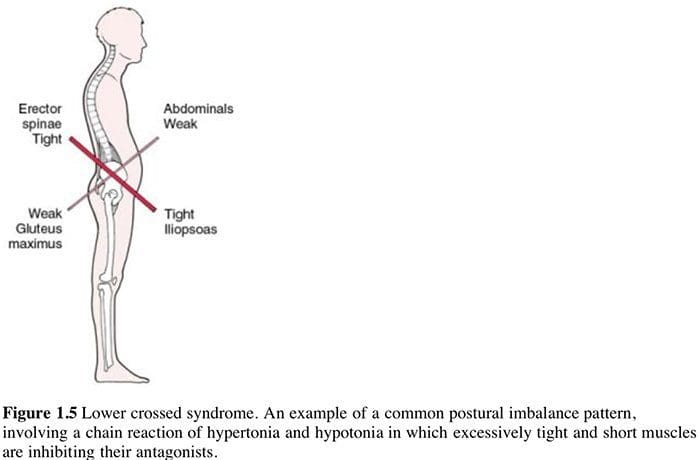
The common tendency in some schools of therapy to encourage the strengthening of weakened muscle groups in order to normalise postural and functional problems is also discussed by Vladimir Janda (1978). He expresses the reasons why this approach is �putting the cart before the horse�: �In pathogenesis, as well as in treatment of muscle imbalance and back problems, tight muscles play a more important, and perhaps even primary, role in comparison to weak muscles� (Fig. 1.5). He continues with the following observation:
Clinical experience, and especially therapeutic results, support the assumption that (according to Sherrington�s law of reciprocal innervation) tight muscles act in an inhibitory way on their antagonists. Therefore, it does not seem reasonable to start with strengthening of the weakened muscles, as most exercise programmes do. It has been clinically proved that it is better to stretch tight muscles first. It is not exceptional that, after stretching of the tight muscles, the strength of the weakened antagonists improves spontaneously, sometimes immediately, sometimes within a few days, without any additional treatment.
This sound, well-reasoned, clinical and scientific observation, which directs our attention and efforts towards the stretching and normalizing of those tissues which have shortened and tightened, seems irrefutable, and this theme will be pursued further in Chapter 2.
Muscle energy techniques are designed to assist in this endeavor and, as discussed above, also provides an excellent method for assisting in the toning of weak musculature, should this still be required, after the stretching of the shortened antagonists, by use of isotonic methods.
Tendons
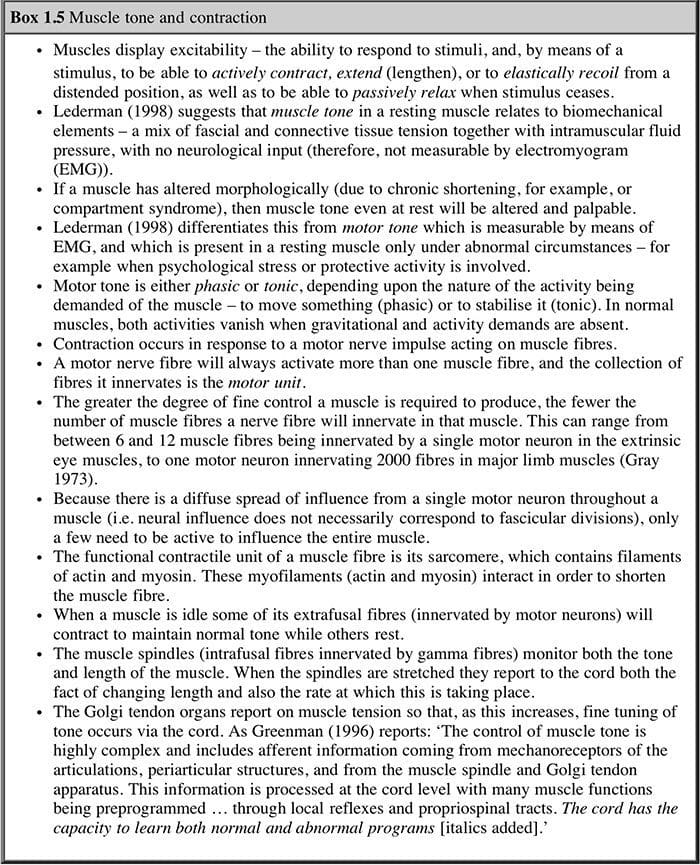
Aspects of the physiology of muscles and tendons are worthy of a degree of review, in so far as Muscle energy techniques and its effects are concerned (see also Box 1.5). The tone of muscle is largely the job of the Golgi tendon organs. These detect the load applied to the tendon, via muscular contraction. Reflex effects, in the appropriate muscles, are the result of this information being passed from the Golgi tendon organ back along the cord. The reflex is an inhibitory one, and thus differs from the muscle spindle stretch reflex. Sandler (1983) describes some of the processes involved:
When the tension on the muscles, and hence the tendon, becomes extreme, the inhibitory effect from the tendon organ can be so great that there is sudden relaxation of the entire muscle under stretch. This effect is called the lengthening reaction, and is probably a protective reaction to the force which, if unprotected, can tear the tendon from its bony attachments. Since the Golgi tendon organs, unlike the [muscle] spindles, are in series with the muscle fibres, they are stimulated by both passive and active contractions of the muscles.
Pointing out that muscles can either contract with constant length and varied tone (isometrically), or with constant tone and varied length (isotonically), he continues: �In the same way as the gamma efferent system operates as a feedback to control the length of muscle fibers, the tendon reflex serves as a reflex to control the muscle tone�.
The relevance of this to soft tissue techniques is explained as follows:
In terms of longitudinal soft tissue massage, these organs are very interesting indeed, and it is perhaps the reason why articulation of a joint, passively, to stretch the tendons that pass over the joint, is often as effective in relaxing the soft tissues as direct massage of the muscles themselves. Indeed, in some cases, where the muscle is actively in spasm, and is likely to object to being pummelled directly, articulation, muscle energy techniques, or functional balance techniques, that make use of the tendon organ reflexes, can be most effective.
The use of this knowledge in therapy is obvious and Sandler explains part of the effect of massage on muscle: �The [muscle] spindle and its reflex connections constitute a feedback device which can�operate to maintain constant muscle length, as in posture; if the muscle is stretched the spindle discharges increase, but if the muscle is shortened, without a change in the rate of gamma discharge, then the spindle discharge will decrease, and the muscle will relax.�
Sandler believes that massage techniques cause a decrease in the sensitivity of the gamma efferent, and thus increase the length of the muscle fibers rather than a further shortening of them; this produces the desired relaxation of the muscle. Muscle energy techniques provides for the ability to influence both the muscle spindles and also the Golgi tendon organs.
Joints & Muscle Energy Techniques
Bourdillon (1982) tells us that shortening of muscle seems to be a self-perpetuating phenomenon which results from an over-reaction of the gamma-neuron system. It seems that the muscle is incapable of returning to a normal resting length as long as this continues. While the effective length of the muscle is thus shortened, it is nevertheless capable of shortening further. The pain factor seems related to the muscle�s inability thereafter to be restored to its anatomically desirable length. The conclusion is that much joint restriction is a result of muscular tightness and shortening. The opposite may also apply where damage to the soft or hard tissues of a joint is a factor. In such cases the periarticular and osteophytic changes, all too apparent in degenerative conditions, are the major limiting factor in joint restrictions. In both situations, however, Muscle energy techniques may be useful, although more useful where muscle shortening is the primary factor.
The restriction which takes place as a result of tight, shortened muscles is usually accompanied by some degree of lengthening and weakening of the antagonists. A wide variety of possible permutations exists in any given condition involving muscular shortening which may be initiating, or be secondary to, joint dysfunction combined with weakness of antagonists. A combination of isometric and isotonic methods can effectively be employed to lengthen and stretch the shortened groups, and to strengthen and shorten the weak, overlong muscles.
Paul Williams (1965) stated a basic truth which is often neglected by the professions which deal with musculoskeletal dysfunction:
The health of any joint is dependent upon a balance in the strength of its opposing muscles. If for any reason a flexor group loses part, or all of its function, its opposing tensor group will draw the joint into a hyperextended position, with abnormal stress on the joint margins. This situation exists in the lumbar spine of modern man.
Lack of attention to the muscular component of joints in general, and spinal joints in particular, results in frequent inappropriate treatment of the joints thus affected. Correct understanding of the role of the supporting musculature would frequently lead to normalisation of these tissues, without the need for heroic manipulative efforts. Muscle energy techniques and other soft tissue approaches focus attention on these structures and offer the opportunity to correct both the weakened musculature and the shortened, often fibrotic, antagonists.
More recently, Norris (1999) has pointed out that:
The mixture of tightness and weakness seen in the muscle imbalance process alters body segment alignment and changes the equilibrium point of a joint. Normally the equal resting tone of the agonist and antagonist muscles allows the joint to take up a balanced position where the joint surfaces are evenly loaded and the inert tissues of the joint are not excessively stressed. However if the muscles on one side of a joint are tight and the opposing muscles relax, the joint will be pulled out of alignment towards the tight muscle(s).
Such alignment changes produce weight-bearing stresses on joint surfaces, and result also in shortened soft tissues chronically contracting over time. Additionally such imbalances result in reduced segmental control with chain reactions of compensation emerging (see Ch. 2).
Several studies will be detailed (Chs 5 and 8) showing the effectiveness of Muscle energy techniques application in diverse population groups, including a Polish study on the benefits of Muscle energy techniques in joints damaged by haemophilia, and a Swedish study on the effects of Muscle energy techniques in treating lumbar spine dysfunction, as well as an American/Czech study involving myofascial pain problems. In the main, the results indicate a universal role in providing resolution or relief of such problems by means of the application of safe and effective muscle energy techniques.
blank
References:
Anderson B 1984 Stretching. Shelter Publishing, Nolinas, California
Beaulieu J 1981 Developing a stretching program. Physician and Sports Medicine 9(11): 59�69
Blood S 1980 Treatment of the sprained ankle. Journal of the American Osteopathic Association
79(11): 689
Bourdillon J 1982 Spinal manipulation, 3rd edn. Heinemann, London
Chaitow L 1993 Integrated neuromuscular inhibition technique (INIT) in treatment of pain and
trigger points. British Journal of Osteopathy 13: 17�21
DiGiovanna E 1991 Osteopathic approach to diagnosis and treatment. Lippincott, Philadelphia
Evjenth O, Hamberg J 1984 Muscle stretching in manual therapy. Alfta, Sweden
Gaymans F 1980 Die Bedeuting der atemtypen fur mobilisation der werbelsaule maanuelle. Medizin
18: 96
Goodridge J P 1981 Muscle energy technique: definition, explanation, methods of procedure.
Journal of the American Osteopathic Association 81(4): 249�254
Goodridge J, Kuchera W 1997 Muscle energy treatment techniques. In: Ward R (ed) Foundations of
osteopathic medicine. Williams and Wilkins, Baltimore
Gray�s Anatomy 1973 Churchill Livingstone, Edinburgh
Greenman P 1989 Manual therapy. Williams and Wilkins, Baltimore
Greenman P 1996 Principles of manual medicine, 2nd edn. Williams and Wilkins, Baltimore
Grieve G P 1985 Mobilisation of the spine. Churchill Livingstone, Edinburgh, p 190
Jacobs A, Walls W 1997 Anatomy. In: Ward R (ed) Foundations of osteopathic medicine. Williams
and Wilkins, Baltimore
Janda V 1978 Muscles, central nervous regulation and back problems. In: Korr I (ed)
Neurobiological mechanisms in manipulative therapy. Plenum Press, New York
Janda V 1989 Muscle function testing. Butterworths, London
Janda V 1993 Presentation to Physical Medicine Research Foundation, Montreal, Oct 9�11Kabat H 1959 Studies of neuromuscular dysfunction. Kaiser Permanente Foundation Medical
Bulletin 8: 121�143
Knott M, Voss D 1968 Proprioceptive neuromuscular facilitation, 2nd edn. Harper and Row, New
York
Lederman E 1998 Fundamentals of manual therapy. Churchill Livingstone, Edinburgh
Levine M et al 1954 Relaxation of spasticity by physiological techniques. Archives of Physical
Medicine 35: 214�223
Lewit K 1986 Muscular patterns in thoraco-lumbar lesions. Manual Medicine 2: 105
Lewit K 1999 Manipulative therapy in rehabilitation of the motor system, 3rd edn. Butterworths,
London
Lewit K, Simons D 1984 Myofascial pain: relief by post isometric relaxation. Archives of Physical
Medical Rehabilitation 65: 452�456
Liebenson C 1989 Active muscular relaxation techniques (part 1). Journal of Manipulative and
Physiological Therapeutics 12(6): 446�451
Liebenson C 1990 Active muscular relaxation techniques (part 2). Journal of Manipulative and
Physiological Therapeutics 13(1): 2�6
Liebenson C (ed) 1996 Rehabilitation of the spine. Williams and Wilkins, Baltimore
McAtee R, Charland J 1999 Facilitated stretching, 2nd edn. Human Kinetics, Champaign, Illinois
Mattes A 1995 Flexibility � active and assisted stretching. Mattes, Sarasota
Mitchell F L Snr 1958 Structural pelvic function. Yearbook of the Academy of Osteopathy 1958,
Carmel, p 71 (expanded in references in 1967 yearbook)
Mitchell F L Snr 1967 Motion discordance. Yearbook of the Academy of Applied Osteopathy 1967,
Carmel, pp 1�5
Mitchell F Jnr, Moran P S, Pruzzo N 1979 An evaluation and treatment manual of osteopathic
muscle energy procedures. Valley Park, Illinois
Moritan T 1987 Activity of the motor unit during concentric and eccentric contractions. American
Journal of Physiology 66: 338�350
Norris C 1999 Functional load abdominal training (part 1). Journal of Bodywork and Movement
Therapies 3(3): 150�158
Robinson K 1982 Control of soleus motoneuron excitability during muscle stretch in man. Journal
of Neurology and Neurosurgical Psychiatry 45: 699
Royal Society of Medicine 1983 Connective tissues: the natural fibre reinforced composite material.
Journal of the Royal Society of Medicine 76
Ruddy T 1961 Osteopathic rhythmic resistive duction therapy. Yearbook of Academy of Applied
Osteopathy 1961, Indianapolis, p 58Sandler S 1983 Physiology of soft tissue massage. British Osteopathic Journal 15: 1�6
Schafer R 1987 Clinical biomechanics, 2nd edn. Williams and Wilkins, Baltimore
Solit M 1963 A study in structural dynamics. Yearbook of Academy of Applied Osteopathy 1963
Stiles E 1984a Patient Care May 15: 16�97
Stiles E 1984b Patient Care August 15: 117�164
Surburg P 1981 Neuromuscular facilitation techniques in sports medicine. Physician and Sports
Medicine 9(9): 115�127
Travell J, Simons D 1992 Myofascial pain and dysfunction, vol. 2, Williams and Wilkins, Baltimore
Voss D, Ionta M, Myers B 1985 Proprioceptive neuromuscular facilitation, 3rd edn. Harper and
Row, Philadelphia
Williams P 1965 The lumbo-sacral spine. McGraw Hill, New York
Relieve: A small muscle located deep in the buttocks, the piriformis muscle performs the essential function of rotating the leg outwards. Piriformis Syndrome is a painful condition that occurs when the piriformis muscle is tight and intrudes upon the sciatic nerve in the buttocks. Causing pain and tenderness and sometimes numbness in the buttocks, piriformis syndrome pain may also radiate down the sufferer’s leg, and in some cases, even into the calf.
There are two commonly identifiable potential causes for piriformis syndrome. One is sitting for prolonged periods of time, which can cause tightening of the muscle. The second cause is an injury to the buttocks, either by a fall, an accident, or a sports injury. Trauma causes the piriformis muscle to swell and irritate the sciatic nerve.
Spasms can also cause piriformis syndrome, however, the underlying cause of the spasms frequently remains unknown.
Unfortunately, once an individual has suffered from piriformis syndrome, the condition can recur periodically, usually brought on by too much exercise or sitting for a long time without stretching.
Whatever the initial cause, piriformis syndrome treatment options are vital in relieving the painful symptoms and healing the condition.
Relieve:
These Four Treatment Options Are Frequently Used To Treat Piriformis Syndrome.
Medication. Over-the-counter or prescribed pain medicines, anti-inflammatory drugs, or muscle relaxers frequently serve to reduce the pain from piriformis syndrome. A doctor may also inject medicine directly into the piriformis muscle to improve the condition.
Heat. A common way to relax tight muscles is to apply heat. Piriformis syndrome sufferers may find relief from painful symptoms by periodically applying heat directly to the tender area.
Heat therapy may relieve the tightness of the muscle and promote healing of the entire area. However, it’s important to avoid treating the muscle with heat if there is a chance the muscle may be torn.
Exercise. The overall cause of the condition is a tight piriformis muscle, so it stands to reason a proper exercise regimen will loosen the muscle and alleviate the symptoms associated with piriformis syndrome. A doctor can prescribe the correct exercises to stretch and subsequently strengthen the muscles and the body’s other muscles. A strong body will reduce the chances of the issue recurring down the road.
Hands on therapy. Used with other types of treatment or on their own, these types of therapies are popular because of their effectiveness, as well as the fact they are drug-free ways to gain relief from the pain. Massage is a commonly used therapy for piriformis syndrome, as it helps increase blood flow to the area. The massage therapist can manipulate the area to relieve the tightness of the muscle.
Another hands on therapy that produces positive results is chiropractic care.
Chiropractors view the body in its entirety, and will often treat other parts of the body, such as a foot or leg, in order to improve the condition of the piriformis muscle. They may also utilize a regimen of pelvic and spinal adjustments along with joint manipulation and stretching to loosen up the muscle and help heal the afflicted area.
As stated earlier, once the condition has been controlled and the area has healed, it’s vital to take precautions to avoid re-aggravating the area. Proper stretching before exercise, periodic breaks when sitting, and maintaining spinal and pelvic alignment will increase an individual’s chances of living free of the pain of piriformis syndrome in the future.
Treating Sciatica
If you have a question about how chiropractic care can help with the symptoms of piriformis syndrome, or other health conditions, contact us today.
This article is copyrighted by Blogging Chiros LLC for its Doctor of Chiropractic members and may not be copied or duplicated in any manner including printed or electronic media, regardless of whether for a fee or gratis without the prior written permission of Blogging Chiros, LLC.
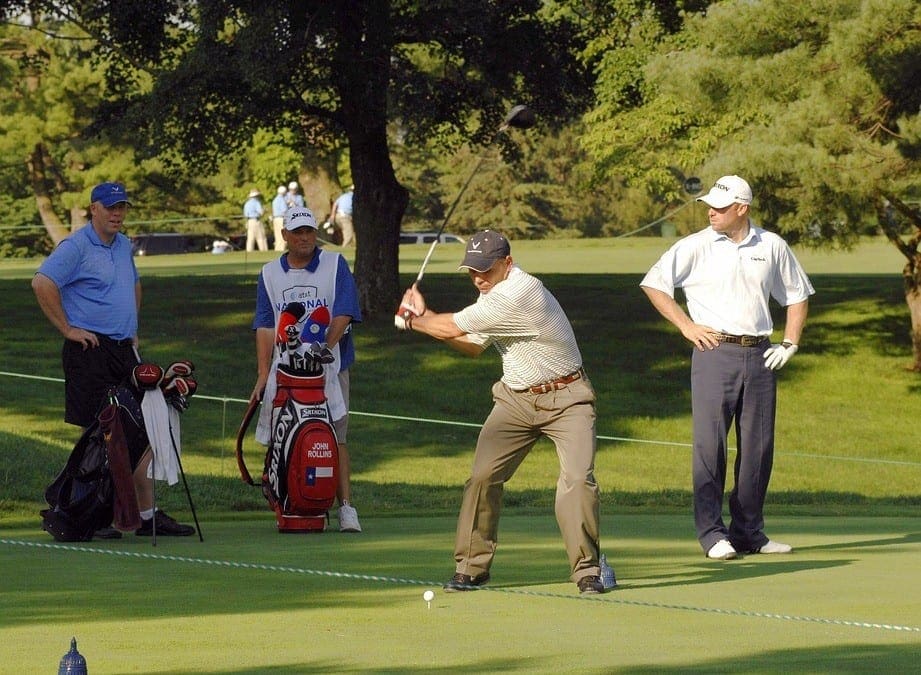
It’s a warm sunny day with a bit of a breeze, you are on the back nine about to sink a putt. When you swing, your back seizes up with severe pain. The beautiful day of golf turns into painfully riding in the golf cart back to the clubhouse, and you limping painfully to your car.
If you have ever strained your back during a golf game, you are not alone. It’s estimated of the 30 million golfers in the United States, 80% have experienced some sort of back pain. As fun as it is, swinging at golf balls puts an individual’s body in an awkward position, opening up the opportunity for injury.
While some golfers suffer through the pain by popping over-the-counter medications, others back away from playing as often, or stop altogether. There’s another way to combat back injuries caused by golfing, without meds. It’s not a magic wand, it’s chiropractic care!
Golfers are increasingly finding chiropractic care to be a valuable tool to help them deal with back injuries. Here are FORE! ways chiropractors can help injured golfers get off the couch and back on the green.
Golfers: Consistent Adjustments Can Avoid Injuries In The First Place.
Golfing, or any activity, is more enjoyable and causes less chance of injury if an individual’s body is in top condition and operating normally. Periodic spinal adjustments keep the body functioning at maximum capacity, and reduce the chances of being injured. If the neck and back are aligned correctly, awkward positioning such as a golf swing will have a less negative impact.
Chiropractic Treatment Can Reduce A Golfer’s Pain.
Back injuries can be extremely painful, and many turn to pain medications to gain relief and comfort. By treating the origin of the pain instead of just the symptoms, a chiropractor helps their patients manage the pain through manipulations, instead of drugs. Over the course of a few treatments, pain is often drastically diminished and much more manageable.
A Golf Injury Can Heal Quicker With Chiropractic Care.
Injuries to the back or neck can heal faster when chiropractors treat them than on their own. An experienced chiropractor can adjust the spine, and also work on the joints and surrounding tissue that can cause pain and hinder healing. Chiropractic evaluation considers the body as a whole. By treating the entire body, it promotes quicker healing of the injury.
Increased Mobility Can Be Gained With Chiropractic Visits.
Golfers who play often as well as those who only play a few times a year know mobility is essential to a good golf game. Stiff joints and a weak back not only mess with the golf game, but can be the very issues that end up causing an injury.
A chiropractic treatment schedule keeps the body loose and strong, and working in optimum fashion. This prevents injuries and increases the chances of playing the game of your life.
Golfers need to realize the sport can cause serious injuries just like “rougher” sports like football and rugby. It’s a good idea to stretch before playing, stay hydrated, and avoid overexertion.
If you are a golfer, chiropractic care is a valuable tool in staying healthy. Regular adjustments and manipulations keep your body on track and performing with maximum mobility at the top of your game. If you do suffer an injury, a chiropractor can help you manage your pain and decrease the time it takes to heal.
Professional Golfer Zach Johnson Trusts Chiropractic Care
Contact us today for more information on how we can help reduce the chance of injury for golfers, and promote healing.
This article is copyrighted by Blogging Chiros LLC for its Doctor of Chiropractic members and may not be copied or duplicated in any manner including printed or electronic media, regardless of whether for a fee or gratis without the prior written permission of Blogging Chiros, LLC.
Working: There are dangers in everyday life, from slipping in the shower to getting mowed down by the next door neighbor’s teenage driver. The risk doesn’t end once we are safely behind our desks, because� sitting is killing us!
Seriously, while not really trying to commit murder, our computer, desk, office chair and keyboard are not our friends. We spend working hours each day sitting, typing, staring at the computer screen, and this inactivity is wreaking havoc on our health in a variety of ways.
Working: First, Most Of Us Sit Incorrectly
Goldilocks knew what she was doing when it came to carefully selecting the right chair. Most of us cause excess stress and pressure on our neck, shoulders, and back from the way we sit in our inadequate office chairs.
According to OSHA, a person who spends time at their computer needs to choose an adjustable chair that supports the back, buttocks, legs and arms. Be mindful of your posture throughout the day as well. An ergonomically adjusted chair minimizes the occurrences of awkward, strained positions that frequently cause injury.
Along with the way we sit, our office jobs are killing us because�
We Have Our Desks Laid Out Wrong
Even with a great chair, a desk that is the wrong height can cause a person to repetitively move and bend awkwardly during the working day and injure themselves. Anyone who sits behind a desk needs to make certain it is the right height to comfortably reach the computer keyboard and all pertinent supplies are within a comfortable reach. Add a foot rest to decrease the stress on the lower back. Ergonomically positioning a desk offers greater comfort and less stress on a person’s body.
We’re Typing Wrong
Using the keyboard incorrectly can cause a ton of painful medical conditions from neck and back issues to carpal tunnel syndrome. The keyboard should sit at elbow height. Reduce the strain on your hands by keeping them in as natural a position as possible, holding your wrists up even with the backs of your hands. Avoid banging the keys by typing softly, which alleviates the stress on your fingers.
A computer mouse should be situated close to the keyboard, and it’s essential to keep the hand in a neutral position when using it. Avoid resting your hand on the mouse for an extended period of time.
We’re Not Taking Breaks
According to the Mayo Clinic, working while sitting for long periods of time is linked to a variety of serious medical conditions from obesity to high blood sugar and cholesterol levels. Sitting in the same position for hours can put pressure on and result in back and neck pain.
Break up sitting every 30 minutes by standing and walking around and stretching if possible. Even standing for a couple of minutes at a time lessens the impact of a sedentary job.
In addition to taking the initiative to build an ergonomic office space, choosing to participate in chiropractic care is a great way to help eliminate pain from back, shoulder,�and neck strain. Chiropractic treatment involves adjusting the spine, along with other techniques, offering better alignment in particular and a stronger, healthier body in general. A long-term benefit of chiropractic care is a body that enjoys greater mobility and fewer aches and pains.
An ergonomic office setup is critical in maintaining good posture that minimizes strain and repetitive motion injuries. By investing in ergonomically tailored furniture and setting it up to suit your specific needs, you will lessen the harm an office job does to your body.
If you or a co-worker suffer from symptoms related to an improperly positioned workstation, give us a call. Our Doctor of Chiropractic can help get the symptoms under control as well as guide you toward a more healthier spine and working environment.
Managing Workplace Stress
This article is copyrighted by Blogging Chiros LLC for its Doctor of Chiropractic members and may not be copied or duplicated in any manner including printed or electronic media, regardless of whether for a fee or gratis without the prior written permission of Blogging Chiros, LLC.
IFM's Find A Practitioner tool is the largest referral network in Functional Medicine, created to help patients locate Functional Medicine practitioners anywhere in the world. IFM Certified Practitioners are listed first in the search results, given their extensive education in Functional Medicine




 #3: Chiropractic Strengthens And Repairs Joints.
 It Treats The Underlying Cause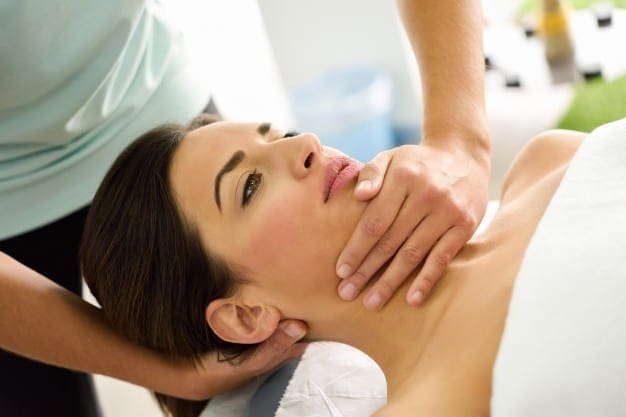
 Edward Stiles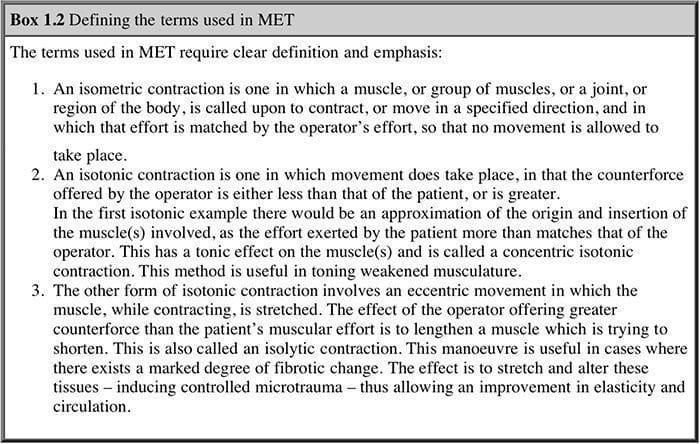
 Liebenson (1996) discusses both the benefits of, and the mechanisms involved in, use of muscle energy techniques (which he terms �manual resistance techniques�, or MRT):
 Using agonist or antagonist? (Box 1.4)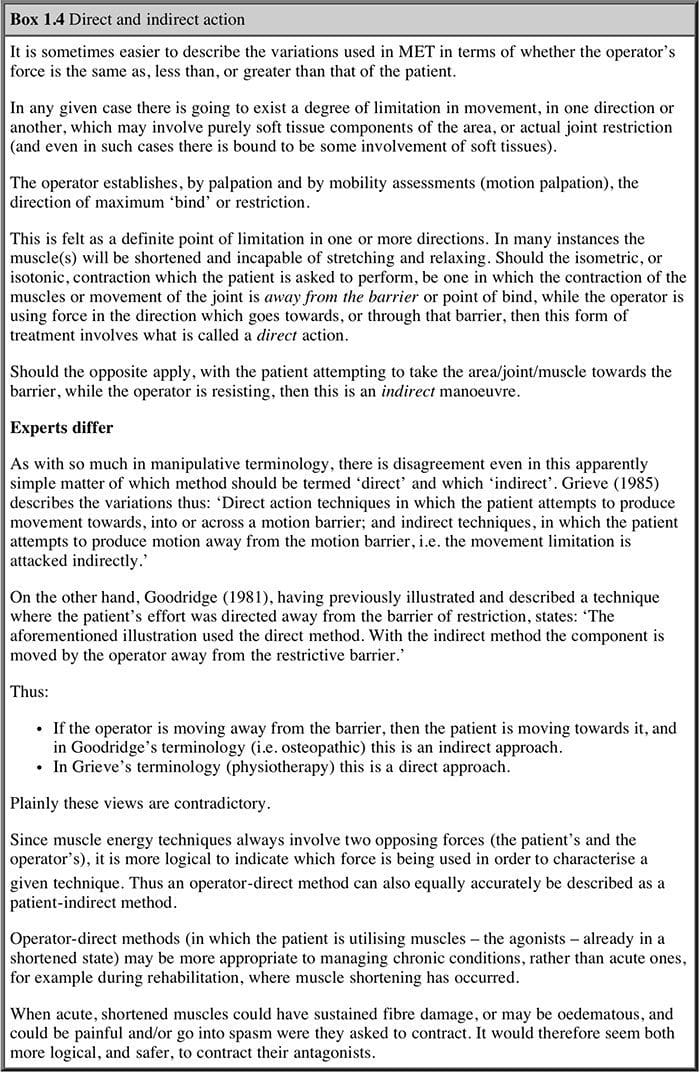
 What Is Happening?
 This stretches the muscles which are contracting (TFL shown in example) thereby inducing a degree of controlled microtrauma, with the aim of increasing the elastic potential of shortened or fibrosed tissues.
 Muscle energy techniques are designed to assist in this endeavor and, as discussed above, also provides an excellent method for assisting in the toning of weak musculature, should this still be required, after the
  The relevance of this to soft tissue techniques is explained as follows: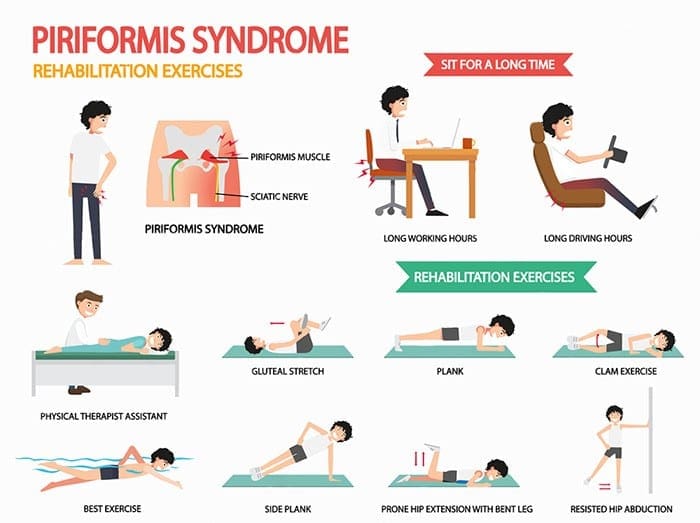



 We’re Typing Wrong






