Long-distance running, also known as endurance running, is a great way to improve fitness and relieve stress. Health experts say long-distance runners’ benefits include strong cardiovascular health, low cholesterol, healthy blood pressure levels, and improved metabolism. However, it is not easy and requires specific training, but it is not impossible even for beginners. Here is a beginner long-distance running training guide that goes over the fundamental areas needed to develop.
Long Distance Running Training
Running is a great form of cardio that offers several health benefits that, includes:
Weight loss
Stronger muscles
Stronger bones
Improved cardiovascular functionality
One of the main prerequisites is building up the body’s ability to handle the exercise. To reach the full potential as a distance runner, key areas that need developing include:
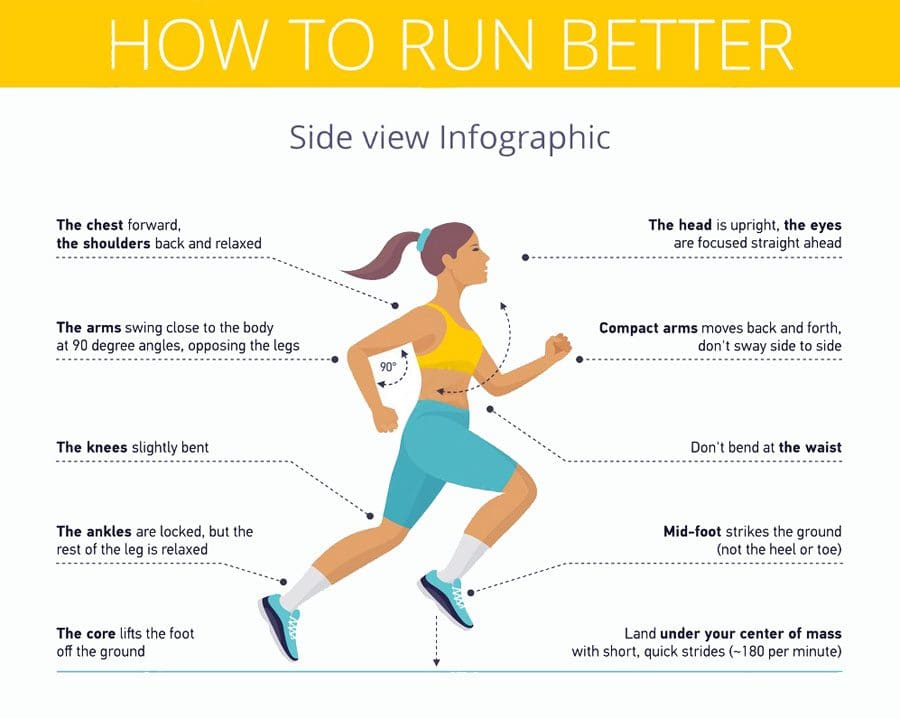
Running technique is essential for gaining the most speed and endurance. Using the correct form, the body is not expending unnecessary energy. The proper running form includes:
Maintaining an upright spine with the head, shoulders, and hips aligned.
Focus on maintaining a steady breathing rhythm.
Follow through on strides.
Do not cut the movements short.
Find your natural stride, which could be leading with the heel or running toe to heel.
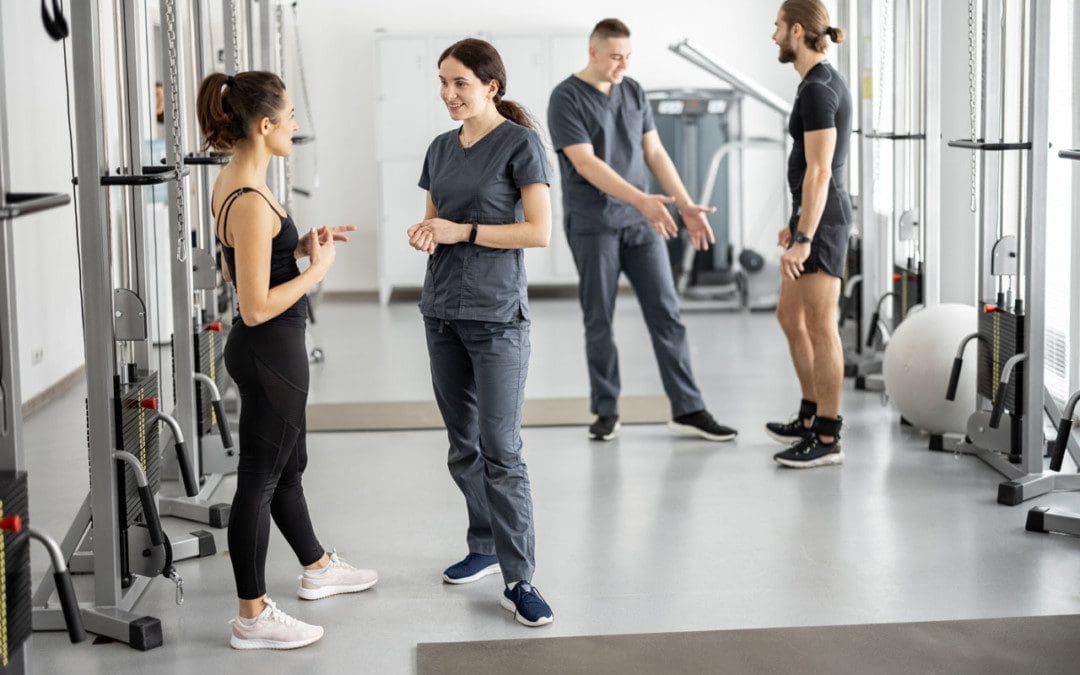
Consult an experienced running coach or exercise physiologist for assistance in finding your running form.
Long-Term Goal
The body adapts to the stress of training slowly and over time.
Physiological adaptations cannot be rushed; however, the training program can be optimized to individual needs.
The minimum time before seeing an improvement from training is around six weeks.
Gradual Increase
Training load is a combination of distance, intensity, and the number of runs each week.
The body can only develop with moderate increases over a short time.
Increasing the load too much and too fast leads to injury, illness, and exhaustion.
Limiting distance, intensity, or frequency changes is recommended no more than once a week.
Recovery
Training provides the stimulus to improved fitness, but the body needs recovery time to grow and adapt.
Often beginners want to train hard every day, trying to cover all the elements at once.
This common mistake slows progress and can cause various injuries, fatigue, and loss of motivation.
Rest days are essential to allow the body to recover, develop, adapt, and continue to progress healthily.
The classic training program alternates a hard training day with an easy day or a rest day.
Two consecutive hard training days can be done as long as they are followed by two full recovery days.
Beginner Tips
References
Berryman, Nicolas, et al. “Strength Training for Middle- and Long-Distance Performance: A Meta-Analysis.” International journal of sports physiology and performance vol. 13,1 (2018): 57-63. doi:10.1123/ijspp.2017-0032
Blagrove, Richard C et al. “Effects of Strength Training on the Physiological Determinants of Middle- and Long-Distance Running Performance: A Systematic Review.” Sports medicine (Auckland, N.Z.) vol. 48,5 (2018): 1117-1149. doi:10.1007/s40279-017-0835-7
Kenneally, Mark, et al. “The Effect of Periodization and Training Intensity Distribution on Middle- and Long-Distance Running Performance: A Systematic Review.” International journal of sports physiology and performance vol. 13,9 (2018): 1114-1121. doi:10.1123/ijspp.2017-0327
Tschopp, M, and F Brunner. “Erkrankungen und Überlastungsschäden an der unteren Extremität bei Langstreckenläufern” [Diseases and overuse injuries of the lower extremities in long distance runners]. Zeitschrift fur Rheumatologie vol. 76,5 (2017): 443-450. doi:10.1007/s00393-017-0276-6
van Poppel, Dennis, et al. “Risk factors for overuse injuries in short- and long-distance running: A systematic review.” Journal of sport and health science vol. 10,1 (2021): 14-28. doi:10.1016/j.jshs.2020.06.006
Training means engaging in activity for fitness purposes or improving performance skills. Sports training is a process of preparation aimed at strengthening and maintaining high performance in sports activities. It is used by scientists and experts in sports science, biomechanics, exercise physiology, sports psychology, and fields like yoga and kinesiology. Regardless of fitness level, physical training, or exercise program, general sports training principles include:
Progression
Periodization/Regularity
Overload
Variety
Recovery
Balance
Specificity
Designed to improve fitness and performance, it includes strength training, conditioning, cardiovascular training, corrective and restorative exercises, mental and psychological training, and nutritional/health coaching.
Sports Training Principles
Progression
To improve fitness levels, an individual needs to increase the intensity and duration of their training routine gradually. Gradual and systematic increases in training stress maintain tissue overload and continue the body’s training adaptation. Training variables must be increased to induce further transformation. These include:
The rate of progression is important as progressing too fast can result in injury, while going too slow can delay improvement goals.
Periodization and Regularity
Maintaining a consistent exercise regimen is important, with training occurring at regular intervals.
Training three-five times each week is recommended.
Ensure adequate sleep to train at optimal levels.
A proper nutrition plan to operate at high capacity during training.
Varying training variables like activity, rest, frequency, intensity, and duration help maintain optimal stimulus and address goal adjustments to avoid overtraining, injury, and burnout.
Overload
Overloading occurs when the training exercise is more than an individual’s body can take. Challenging an individual’s current fitness and performance levels generates improvements. For example, soccer players alternate between sprinting, jogging, and backpedaling during games. They do 40-50-minute jogging sessions daily to maintain stamina and endurance.
This means pushing the body, so the heart works at a high percentage of its maximum capacity.
Determining the proper intensity level depends on various factors, including age, weight, and overall fitness level.
Excessive overload and/or inadequate rest can result in overtraining, injury, and decreased performance levels.
Variety
Becoming bored with physical training can happen very easily when performing the same routine.
Mixing things up by breaking up the routine and doing other activities is important.
This prevents boredom and can increase motivation to help achieve maximum results.
Recovery
Rest periods between physical training are essential for repairing muscle damage and removing metabolic waste.
The recommended recovery time is between 24 and 48 hours after training.
Alternating more difficult training exercises with easier exercises or alternating muscle groups so as not to work out the same muscles can also achieve recovery.
Not allowing the body to recover properly can lead to muscle fatigue, increasing the risk of injuries.
Balance
When developing a physical training program, it’s important to ensure the whole body is being worked out equally to achieve a balanced fitness level.
Balance routines for the upper and lower body.
Components of a balanced exercise plan include Strength, Cardio, and Flexibility training.
For example:
One day of aerobic exercises for cardio.
One day of rest.
One day of resistance training for strength.
Stretching at the beginning and the end of workouts to relax muscles and maintain flexibility.
Specificity
The principle of specificity recommends that individuals gear their training toward specific goals.
Specific training consists of exercises to develop specific strength, specific muscle groups, and specific motor abilities required for a sport.
Incorporating specific motions and sports tasks generates neuromuscular and metabolic adaptations and muscle memory.
Chiropractic Therapy
Sports chiropractors work closely with massage therapists, performance coaches, athletic trainers, and medical doctors with a diverse treatment approach that is applied based on the needs of the individual. Chiropractic will:
Improve performance.
Reduce the risk of injury.
Alleviate muscle stress.
Expedite injury healing.
Maintain body alignment.
Sports Chiropractor Rehabilitation
References
Kasper, Korey. “Sports Training Principles.” Current sports medicine reports vol. 18,4 (2019): 95-96. doi:10.1249/JSR.0000000000000576
Maestroni, Luca, et al. “Strength and Power Training in Rehabilitation: Underpinning Principles and Practical Strategies to Return Athletes to High Performance.” Sports medicine (Auckland, N.Z.) vol. 50,2 (2020): 239-252. doi:10.1007/s40279-019-01195-6
Ralston, Grant W et al. “Weekly Training Frequency Effects on Strength Gain: A Meta-Analysis.” Sports medicine – open vol. 4,1 36. 3 Aug. 2018, doi:10.1186/s40798-018-0149-9
Schleip, Robert, and Divo Gitta Müller. “Training principles for fascial connective tissues: scientific foundation and suggested practical applications.” Journal of bodywork and movement therapies vol. 17,1 (2013): 103-15. doi:10.1016/j.jbmt.2012.06.007
Van Proeyen, Karen, et al. “Beneficial metabolic adaptations due to endurance exercise training in the fasted state.” Journal of applied physiology (Bethesda, Md.: 1985) vol. 110,1 (2011): 236-45. doi:10.1152/japplphysiol.00907.2010
Football season is here, and the sport demands healthy, strong bodies. It is explosive, with high-intensity plays lasting between 2-15 seconds. Strength and power are put out in a few moments then the player rests up and does it again. A football training chiropractor can take players to another level with therapeutic massage, body strengthening, and rehabilitation so that players can enjoy a healthy injury-free season.
Football Training
Stretching and Warm-Up
Stretching and a dynamic warm-up are essential to strengthening the body and preventing injury. Stretching is necessary to increase the range of motion in the muscles, especially when the body is in an awkward position; it can adapt. A dynamic warm-up increases the core temperature of the muscles and prepares the muscles, joints, and nervous system for the physical event. The critical muscles are the hip flexors, hamstrings, and calves. The warm-up consists of a series of progressive movement drills that include:
Proper stretching, followed by a dynamic warm-up, will maximize performance.
Cardio, Aerobic, and Anaerobic Fitness
Cardio training increases oxygen and blood circulation to play for a long time without getting tired.
Aerobic fitness increases oxygen and provides endurance to break through or enhance tackles, sustained effort, and strength.
Anaerobic fitness utilizes high-intensity exercises to challenge the body without using a lot of oxygen like cardio and aerobics do.
All are important, especially for players playing the whole or most of the game.
Core Strength
The core is where power and strength come from. It refers to the muscles around the trunk and pelvis, including the diaphragm, abdominal wall, low back, and hips. Reinforcing the core will enhance balance, stability, and efficiency and reduce the risk of injury. The core muscles under the washboard abs link upper-body power with lower-body torque. In-season strength training provides a progressive buildup to optimal fitness and performance. The focus is on the following:
Speed maintenance.
Aerobic and anaerobic fitness.
Strength and power.
Emphasis on injury prevention training stabilizer muscles for balance and agility.
It is recommended to allow at least two days between training sessions and games. Avoid strength training on the same day as working out on the field.
Rest entirely from strength training for one week in five.
Light workouts are fine.
Hydration
Football players have unique hydration needs due to the exposure to extreme heat or cold while wearing heavy equipment. Top-rated athletic trainers monitor weather conditions, length and time of day at practice and games, and the hydration levels of each player. Hydration recommendations include:
Hydrate before, during, and after practices and games.
Two to three hours before the game, drink 17 to 20 fluid ounces of water or a sports drink.
Ten to 20 minutes before the game, drink seven to 10 fluid ounces of water or a sports drink.
During practices, drink seven to 10 fluid ounces of water or sports drink every 10 to 20 minutes with the helmet off.
Post-practice/game, correct any fluid loss, ideally within two hours.
The hydration should contain water to restore hydration, carbohydrates to replenish glycogen stores, and electrolytes to speed the recovery process.
Football Training Chiropractic
Chiropractic care has become integral to NFL players’ health and training programs. All 32 teams have a chiropractor, and according to the Professional Football Chiropractic Society, the average NFL team chiropractor gives 30-50 treatments a week. Chiropractic treats conditions like neuromusculoskeletal strain injuries, neck pain, back pain, strains to the hamstring and quadriceps, and injuries caused by whiplash-like movements. Benefits include:
Iaia, F Marcello, et al. “High-intensity training in football.” International journal of sports physiology and performance vol. 4,3 (2009): 291-306. doi:10.1123/ijspp.4.3.291
Lorenz, Daniel, and Scot Morrison. “CURRENT CONCEPTS IN PERIODIZATION OF STRENGTH AND CONDITIONING FOR THE SPORTS PHYSICAL THERAPIST.” International journal of sports physical therapy vol. 10,6 (2015): 734-47.
Robbins, Daniel W. The Normalization of Explosive Functional Movements in a Diverse Population of Elite American Football Players. Journal of Strength and Conditioning Research: April 2012 – Volume 26 – Issue 4 – p 995-1000
doi: 10.1519/JSC.0b013e31822d53b7
Stump, John L, and Daniel Redwood. “The use and role of sports chiropractors in the national football league: a short report.” Journal of manipulative and physiological therapeutics vol. 25,3 (2002): E2. doi:10.1067/mmt.2002.122326
Zein MI, Saryono S, Laily I, Garcia-Jimenez JV. The effect of high-intensity circuit training-modified FIFA 11+ program on physical fitness among young football players. J Sports Med Phys Fitness 2020;60:11-6. DOI: 10.23736/S0022-4707.19.09813-X
Cheerleading and the physically intensive gymnastics and acrobatics put participants’ body’s/musculoskeletal systems at an increased risk of injury. A wrong move or falling at the wrong angle can cause permanent damage. Cheerleaders must follow a balanced diet and maintain physical fitness, strength, endurance, and flexibility to be successful cheerleaders. Cheerleading conditioning builds the musculature and spinal strength to decrease the risk and prevent injury.
Cheerleading Conditioning
Cheerleaders must have a solid musculoskeletal system to ensure their safety and the safety of their squads. Workouts include cardio, strength training, and flexibility exercises.
Warming Up
Before any workout, the muscles need to be warmed up.
Spend five minutes jumping rope, running in place, jogging on a treadmill, or doing any mild activity to raise the heart rate.
Try tree pose by standing on the right foot, and the left leg bent on the right knee.
The left thigh should be parallel to the ground.
Raise arms overhead and make a V motion keeping the abdominal muscles pulled in tight.
Balance for up to one minute.
Switch to the other foot.
Once balance is mastered on the ground, try balancing on a cushion to add instability.
Repeat three to five times on each foot.
Common Injuries
Common injuries include:
Hand and finger injuries.
Ligament sprains in the knees and ankles.
Muscle strains in the hip, low back, and legs.
Overuse injuries
Cheerleading is becoming a year-round sport.
Starting with tryouts during spring.
Teams may hold or go to organized summer cheerleading camps to learn new skills, improve skill sets, and create routines for competition.
Continuous training and competitions increase the chance of overuse injuries.
The wrists, elbows, knees, and ankles can be injured by repetitive stress.
More severe injuries are:
The repetitive tumbling places significant pressure on the spine and can cause stress fractures.
Dislocation of the shoulder or elbow.
Injury Causes
Lack of arm and shoulder, foot, and ankle strength.
Little to no core and abdominal strength.
Flexibility problems.
Improper conditioning.
Unhealthy diet.
Performing skills that are advanced for the cheerleader’s current level.
Chiropractic Enhancement
Chiropractic care can treat injuries and strengthen the body’s musculoskeletal system to prevent injuries. Chiropractic’s goal is optimal body performance by redistributing blood circulation, nerve energy flow, correct muscle positioning, and skeletal alignment. Many cheerleading teams are incorporating chiropractic. Injury Medical Chiropractic and Functional Medicine Clinic also specializes in sports medicine rehabilitation, strength training, nutrition, and health coaching.
Cheerleading Strength Training Workout
References
Boden, Barry P, and Christopher G Jarvis. “Spinal injuries in sports.” Neurologic clinics vol. 26,1 (2008): 63-78; viii. doi:10.1016/j.ncl.2007.12.005
Miners, Andrew L. “Chiropractic treatment and the enhancement of sport performance: a narrative literature review.” The Journal of the Canadian Chiropractic Association vol. 54,4 (2010): 210-21.
Mueller, Frederick O. “Cheerleading injuries and safety.” Journal of athletic training vol. 44,6 (2009): 565-6. doi:10.4085/1062-6050-44.6.565
Pang, Yanbin, et al. “Premature exhaustion of mesenchymal stromal cells from myelodysplastic syndrome patients.” American journal of translational research vol. 9,7 3462-3468. 15 Jul. 2017
Wan, Jing-Jing, et al. “Muscle fatigue: general understanding and treatment.” Experimental & molecular medicine vol. 49,10 e384. 6 Oct. 2017, doi:10.1038/emm.2017.194
Today, more than ever, individuals are less physically active and sitting down for more extended periods causing the gluteus muscles to be used less and weaken. Weak, inactive, or tightening glutes can cause instability in the lower spine, the hips, and the pelvis to shift out of alignment. This leads to low back and buttock pain. The pain is constantly dull, aching, pulsating, then when moving, getting up, it throbs and stings. Gluteal strengthening exercises can strengthen the muscles and alleviate the pain.
Gluteal Strengthening
Every individual has a unique physiology. The body develops asymmetrically as the individual favors one side or area of the body over another. This can cause imbalances in the muscular system, leading to awkward positioning that causes pain. The muscle groups that support the lower back consist of the:
Core muscles
The gluteal muscle group includes:
Gluteus Maximus
Gluteus medius
Gluteus minimus
Pelvis muscles
Hamstrings
Quadriceps
In some cases, the development or lack of level of an individual’s upper back strength can also affect the amount of strain on the lower back.
Gluteal Strengthening Difference
Many joints connect in this area that can have functional problems. The muscles within the lower back need:
Stretching allows the body to enhance the limits of its flexibility and mobility. Most of the stretches are involve the hip joint, as this is one of the most effective ways to loosen the gluteal regions. It’s essential to warm the muscles slightly with a light activity while stretching them to elongate naturally.
Seated Figure 4 Stretch
Sitting in a chair.
Cross the right leg over the left.
With the right ankle resting on the left knee.
It should resemble the number 4.
Bend forward at the hip, placing slight pressure onto the left leg.
Hold this stretch for ten-twenty seconds.
Stretch the other side.
Placing the left foot on the right knee.
Repeat this three times.
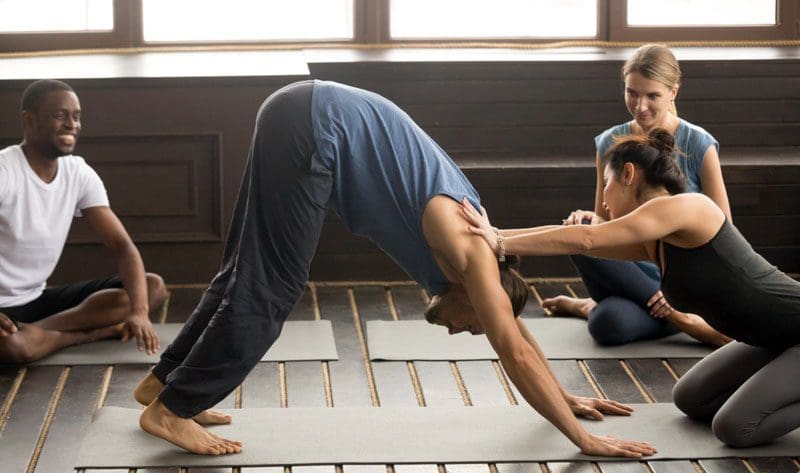
Downward Dog
This yoga pose engages all the muscles along the back. With the glutes at the top in this position, it forces them to activate, allowing them to stretch fully.
Hold this pose and focus the attention on the glutes.
Squats naturally engage the glutes. This is a variation on a squat that focuses on developing gluteal strength.
Stand with the back facing the wall.
Place a Swiss stability ball between the wall and the back.
Lean back into the ball for balance.
Lower the torso until the knees reach 90 degrees.
Return to standing.
Repeat for ten reps.
Do three sets.
Body Composition
Analysis An Effective Tool
Opportunities to increase physical activity lead individuals in a positive direction. The most common reason for reducing and stopping healthy changes is a lack of motivation and feedback. Strategies that provide immediate feedback are essential to:
Monitor progress for establishing a baseline.
Set appropriate and attainable goals.
Track changes over time.
Ensure success.
Monitoring changes with a simple weight scale or Body Mass Index calculator provides limited ability to accurately track changes that only highlight weight changes and not track progress in muscle gain or fat loss. In less than 45 seconds, the InBody Test provides doctors, trainers, and physical therapists with easy-to-understand, accurate and objective measurements to evaluate body composition that includes:
Assessing muscle distribution.
Target areas weakened by condition or injury.
Identify muscle and fat imbalances in each area of the body.
Monitor changes to determine the efficacy of the treatment plan, exercise program, and diet plan to ensure long-term success.
References
Akuthota, Venu et al. “Core stability exercise principles.” Current sports medicine reports vol. 7,1 (2008): 39-44. doi:10.1097/01.CSMR.0000308663.13278.69
Distefano, Lindsay J et al. “Gluteal muscle activation during common therapeutic exercises.” The Journal of orthopedic and sports physical therapy vol. 39,7 (2009): 532-40. doi:10.2519/jospt.2009.2796
Glaviano, Neal R et al. “Gluteal muscle inhibition: Consequences of patellofemoral pain?.” Medical hypotheses vol. 126 (2019): 9-14. doi:10.1016/j.mehy.2019.02.046
Jeong, Ui-Cheol et al. “The effects of gluteus muscle strengthening exercise and lumbar stabilization exercise on lumbar muscle strength and balance in chronic low back pain patients.” Journal of physical therapy science vol. 27,12 (2015): 3813-6. doi:10.1589/jpts.27.3813
Macadam, Paul et al. “AN EXAMINATION OF THE GLUTEAL MUSCLE ACTIVITY ASSOCIATED WITH DYNAMIC HIP ABDUCTION AND HIP EXTERNAL ROTATION EXERCISE: A SYSTEMATIC REVIEW.” International Journal of sports physical therapy vol. 10,5 (2015): 573-91.
Regularly doing planks can support/strengthen the spine and prevent back pain no matter the fitness level. It’s estimated that 70% of adults will experience back problems and pain. One of the best ways to keep the spine healthy is by strengthening the core muscles. The more these muscles are built up, the healthier the body will become. The plank position activates the entire core taking the pressure off of the spine.
Core Anatomy
The core is the center of the body. It contains all the muscles surrounding the torso. These muscles work together to:
Stabilize the body during movement.
Prevent injury when engaged in physical activity/exercise.
Provide spinal support.
The core is split into two groups of muscles: The inner core and the outer core.
The deep abdominal muscle in the lower back sits on either side of the lumbar region of the spine.
Transversus Abdominis
Located between the lower ribs and the top of the pelvis.
Pelvic Floor
This base group of muscles stretches from the tailbone to the pubic bone.
Diaphragm
A dome-shaped muscle that rests below the lungs.
Outer Core
Rectus Abdominis
These are more commonly known as the abs.
External Obliques
These muscles are located on either side of the rectus abdominis.
Internal Obliques
These muscles are located below the external obliques, inside the hip bones.
Erector Spinae
These muscles surround the spine and extend up both sides of the vertebral column.
Planks and Back Pain Prevention
When the core is not strong enough, the spine and back muscles overcompensate to keep the body standing correctly. Studies have shown how planks effectively activate the muscles responsible for spinal stabilization. The exercise targets the entirety of the core and strengthens the shoulders and glutes. Strengthening these muscles improves posture, helping to alleviate back problems and pain. However, it’s recommended to talk to a doctor before beginning a plank regimen if back pain is present. If done incorrectly, they could aggravate the back muscles.
Proper Form
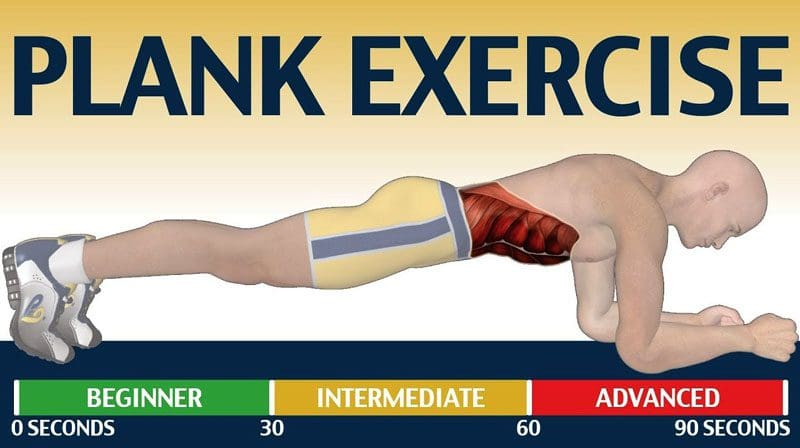
Choose an area clear of furniture where the whole body can stretch out. Follow these steps:
Begin with hands and knees on the floor.
Extend the legs back while keeping the elbows directly below the shoulders and the wrists below the elbows.
Keep the head down, looking at the space just above the hands.
Engage the abs and keep the body rigid.
Imagine a perfectly straight line from the neck to the toes.
Hold the position for 10 to 60 seconds, depending on fitness level.
Lower the body gently to the floor.
Make sure not to curve the back as curving means that the abdominal muscles are being engaged, and tilting the head up can strain the neck.
Both can lead to injury, which is why maintaining proper form is essential.
Plank Variations
There are variations of this exercise for different levels of physical fitness. Once the modified and full plank has been mastered, various planks can target other areas of the body. These include:
Side Plank
These involve shifting the weight to one forearm while extending the other arm into the air.
One-arm Plank
These involve lifting one hand off the ground, then alternating.
Anybody can work up to a plank at any age at any fitness level; it just takes time. Once achieved, it is a great way to keep the body’s core strong, healthy and helps prevent back problems.
Body Composition
Band Lateral Raise
The lateral band raise is an excellent workout for the shoulders. It works out the lateral deltoid, anterior deltoid, and serratus anterior.
Grasp one band in one hand.
Step on the free end with the opposite foot.
Right hand and left foot and vice versa.
Slowly extend and raise the arm until they are parallel to the floor.
Lower the arms in the same manner.
If the shoulders are healthy and strong enough, try adding dumbbells or kettlebells to increase the resistance.
References
Calatayud, Joaquín et al. “Tolerability and Muscle Activity of Core Muscle Exercises in Chronic Low-back Pain.” International journal of environmental research and public health vol. 16,19 3509. 20 Sep. 2019, doi:10.3390/ijerph16193509
World Health Organization. (2013) “Low back pain.” https://www.who.int/medicines/areas/priority_medicines/Ch6_24LBP.pdf
Youdas, James W et al. “Magnitudes of muscle activation of spine stabilizers in healthy adults during prone on elbow planking exercises with and without a fitness ball.” Physiotherapy Theory and practice vol. 34,3 (2018): 212-222. doi:10.1080/09593985.2017.1377792
Many individuals are trying to get fit and stay active through physical activity and exercise. Getting back to a previous fitness routine is an achievable and realistic goal. Fitness means having the energy and strength to perform physical activity and the body feeling as good as possible. Getting fit improves total health. But it does not require training like an athlete. Just walking for a half-hour every day can help individuals reach an adequate fitness level that helps them feel better and increase energy levels.
Benefits of Getting Fit
Getting the body fit and in shape:
Increases endurance
Increases muscle strength
Delivers oxygen and nutrients to tissues
Improves cardiovascular health
Helps release toxins
Improves overall energy levels
Improves sleep
Handle stress better
Being fit allows the body to work harder without as much work, the mind is better focused, the body burns more calories, even when at rest, and proper weight is maintained. Fitness reduces the risk of falls, heart attack, diabetes, high blood pressure, and certain cancers.
How Much Physical Activity Is Needed?
Experts say the goal should be one, or a combination, of these:
Moderate aerobic activity, like brisk walking, for at least 2½ hours a week.
It is up to the individual how many days to exercise, but it is best to be active at least three days a week.
Activity is recommended at least 10 minutes at a time. For example, an individual could:
Take a 10-minute walk three times a day, five days a week.
Take a half-hour walk three days a week.
On the other four days, take a 15-minute walk.
Take a 45-minute walk every other day.
Vigorous exercise is recommended at least three days a week for at least 10 minutes at a time. This activity makes the body breathe harder and increases heart rate. More vigorous activities, like running, could be included for at least one hour a week. This can be spread out 75 minutes, whichever way is more convenient for the individual. For example, an individual could:
Run for 25 minutes 3 times a week.
Run for 15 minutes 5 times a week.
Children as young as preschool age need activity as well. Encourage children ages 6 to 17 to engage in moderate to vigorous exercise for at least 1 hour every day.
Types of Physical Activity
Aerobic fitness
This makes the body breathe faster and makes the heart work harder.
Activities include walking, running, cycling, and swimming.
It is also known as cardio or cardiovascular training.
Muscle fitness
Muscle strength means building stronger muscles and increasing the length of time they can be used.
Activities like weight lifting, push-ups, squats, and resistance bands can improve muscular fitness.
Flexibility
Flexibility is the ability to move the joints and muscles through their full range of motion.
Moderate physical activity is safe for most individuals, but it’s recommended to talk to a doctor before engaging in physical activity/exercise. To help get started:
Make physical activity part of everyday
Make a regular habit of using stairs, not elevators, and walking, bicycling to do errands near home.
Start walking
Walking is a great fitness activity that most individuals can do.
Make it a habit to take a daily walk with family, friends, coworkers, or pets.
Find a workout partner
Working out with a partner can make exercising more enjoyable.
Find fun activities that you can stick with
Vary activities, so they don’t become boring and monotonous.
Use a calorie-burning application to determine how many calories are burned during exercise and daily activities.
Body Composition
Damaged Collagen
There are several reasons the body’s collagen production can slow down or become less efficient. The quality of the collagen made can decrease as well. Environmental factors can be avoided to protect collagen production; however, damage from disease and natural processes is inevitable. Aging is the most common cause of decreased natural collagen. As the body ages, collagen production and quality decrease. This leads to thinner, more fragile skin and achy joints. Certain chronic diseases like lupus and rheumatoid arthritis cause collagen deficiency, leading to issues that include:
UV exposure can accelerate the average rate of collagen damage that comes with aging.
UV exposure damage can also play a role in certain skin cancers.
Excessive sugar and fat intake increases inflammation and decreases protein synthesis.
References
American College of Sports Medicine, et al. (2009). Position stand: Exercise and physical activity for older adults. Medicine and Science in Sports and Exercise, 41(7): 1510–1530.
Anspaugh DJ, et al. (2011). Building muscular strength and endurance. Wellness: Concepts and Applications, 8th ed., pp. 111–137. New York: McGraw-Hill.
Centers for Disease Control and Prevention (2004). Strength training among adults aged 65 or older. MMWR, 53(2): 25–28.
U.S. Department of Health and Human Services (2008). 2008 Physical Activity Guidelines for Americans (ODPHP Publication No. U0036). Washington, DC: U.S. Government Printing Office. Available online: http://www.health.gov/paguidelines/guidelines/default.aspx.
Williams MA, et al. (2007). Resistance exercise in individuals with and without cardiovascular disease: 2007 update: A scientific statement from the American Heart Association Council on Clinical Cardiology and Council on Nutrition, Physical Activity, and Metabolism. Circulation, 116(5): 572–584.
IFM's Find A Practitioner tool is the largest referral network in Functional Medicine, created to help patients locate Functional Medicine practitioners anywhere in the world. IFM Certified Practitioners are listed first in the search results, given their extensive education in Functional Medicine