The UTEP softball team will continue its 2017 campaign with a trip to Conference USA West Division foe UAB April 29-30. The Miners (11-31, 5-13 C-USA) are coming off their bye week, while the Blazers (16-29, 7-9 C-USA) are coming off a loss at Middle Tennessee on April 22.
The Miners and Blazers will play a doubleheader starting at 1 p.m. CT/Noon MTon Saturday, while the series finale will be played on Sunday (1 p.m. CT) at Mary Bowers Field.
The weekend series in Birmingham will be the first of six final regular season games leading up to the C-USA Tournament May 10-13 in Hattiesburg, Miss. UTEP will close out the regular season against the defending C-USA Champions Florida Atlantic May 6-7.
MINERS FOLLOWING A BYE WEEK
UTEP is 4-2 the last two seasons following a bye week. In the 2015, following three losses at no. 25 UABMarch 14-15, the Miners responded by winning two of three against Southern Miss in El Paso (March 28-29). Last season, UTEP won two of three at Middle Tennessee (April 16-17). UTEP did not have a bye week in 2014 as it was scheduled to play at Colorado State in a three-game set April 5-6.
POSTSEASON PICTURE
UTEP is currently on the outside looking in the postseason outlook. Marshall (15-3 C-USA East) and LA Tech (13-5 West) have clinched spots while there are six spots remaining for the C-USA Tournament. The top three programs in each division will clinch a spot and the next two schools with the best record will seal the final two spots.
FIU (11-6 East), Florida Atlantic (10-8 East), North Texas (11-10 West) and UAB (7-9 West) are the next best four teams regarding league record, while WKU (10-10) and UTSA (9-12 West) would clinch spots if regular season ended today. Charlotte (7-10 East), Southern Miss (7-13 West), Middle Tennessee (5-11 East) and UTEP round out the list.
LAST SERIES
UTEP lost three contests at LA Tech April 14-15. The Miners fell in a pair of close contests on Friday, 4-2 and 4-0. The Lady Techsters took game three 8-0 in five. Taylor Sargent kept a hot bat as she hit .375 (3-8) with a double and a two-run triple. Kaitlin Ryder hit .333 with a run scored, while Lindsey Sokoloski also hit .333 and did not strikeout during the weekend.
ALL-TIME SERIES VS. UAB
The Blazers are 21-9 all-time against the Miners since May 6, 2006. UTEP has lost its last nine contests against UAB (April 20, 2013-April 24, 2016). UTEP last defeated UAB on April 22, 2012 in El Paso by the score of 7-0. The Miners were swept last season by the Blazers in El Paso. Cortney Smith went 4-for-10 with a pair of home runs and four RBI, while Courtney Clayton hit .545 (6-11) with a long ball and a pair of RBI.
UAB pulled away late in game one with the score knotted at 1-1 through four innings. The Blazers scored five in the fifth, three in the sixth and another run in the seventh to claim victory.
The Miners and Blazers slugged one out in game two as both squads each recorded 12 hits. The Miners took an early 3-0 lead after a Danielle Pearson RBI double and a Smith two-run single in the first frame. After UAB took a 4-3 lead, the Miners would tie the score in the second on a Kaitlin Ryder solo home run. After the Blazers took a 7-5 lead after three frames, Kiki Pepi scored on an error in the fourth that brought the Miners within a run.
But the Blazers used two runs in the seventh to put the game away. The Miners would go on to lose a heartbreaker in the series finale as UAB scored three runs in the seventh to claim a 4-2 victory. Following a run by the Blazers for a 1-0 edge in the fourth, the Miners would score runs in the fifth (Smith solo home run) and the sixth (Hope Moreno RBI single) for a 2-1 advantage.
UTEP is also 2-13 all-time in Birmingham, as the Miners took two of three from the Blazers during the 2009 season.
SCOUTING UAB
The Blazers are coming off a pair of losses, the first to no. 9/10 Washington, 6-0, on April 20 and another to at Middle Tennessee, 3-1, on April 22. UAB and Middle Tennessee were rained out on April 23 and rescheduled the two-game set for May 3 in Murfreesboro.
UAB is 16-29 overall and 7-9 in Conference USA. The Blazers are 8-9 on their home field and 3-2 in their last five home games � won two of three against North Texas (April 14-15), defeated Samford 4-3 [8] (April 18) and fell to Washington.
UAB ranks last in the conference with its .219 batting average, while its 132 runs are the least. UAB ranks eighth in the ERA (3.55) and walked a league-high 188 batters but have struck out 223 (ranked fourth in C-USA). UAB also ranks last in slugging (.314), on-base percentage (.298), hits (258) and RBI (114). The Blazers rank last in fielding percentage (.949) while their errors (73) are the most in the league. UAB has turned 22 plays, the third most in C-USA. Analyse Petree leads the team with a .278 batting average, while Madison Millsaps leads the squad in RBI (17).
Joanna Fallen and Millsaps each lead the team with five home runs apiece; Petree leads in doubles (seven) and Destini England leads the squad in runs (20) and hits (38). Claire Blount (7-10) leads the staff in wins, ERA (2.84), walks (88), innings (138.0) and Ks (114). Blount�s 114 strikeouts rank tied fourth in C-USA. Cara Goodwin (4-11) has a 3.85 ERA in 91.0 frames of work with 37 BBs and 70 Ks.
#TURNUP
UTEP turned three more double plays at LA Tech during Easter Weekend. The Miners lead Conference USA with 27 double plays turned, while they rank second nationally in double plays per game (.64) behind Auburn (.77). Auburn as turned a national-best 36 double plays, while Campbell has turned 29. UT Arlington has been part of 28 double plays, and UTEP and UC Riverside have turned 27 each.
Taylor Sargent andCourtney Clayton have each been part of 12 DPs to rank tied fourth with Florida Atlantic�s Lauren Whitt.Cortney Smith (11) ranks tied seventh with LA Tech�s Katie Smith and Kiki Pepi (10) is tied ninth with three other players.
SECOND MOST DOULBE PLAYS
UTEP�s 27 double plays turned in 2017 is already the second most turned in program history. Last season�s squad turned a program-best 30 double plays. In fact, since Tobin Echo-Hawk arrived to UTEP, the Miners have turned 96 doubles plays in 201 games (.48 per game).
The 2007 squad turned 21, while 19 double plays were turned during the 2005 season. The previous four seasons (2010-13), 46 double plays were turned.
BAT GIRLS
UTEP is hitting .299 to rank fourth in Conference USA and no. 58 nationally, while it would rank the third best average in program history if the season ended today. UTEP hit .307 in 2016 and .303 in 2007. UTEP�s slugging (.415) ranks fifth, while its hits (342) rank sixth. Marshall leads C-USA in batting (.321), while UTSA leads with 396 hits.
UTEP RANKINGS IN C-USA ONLY GAMES
The Miners rank second in batting average (.308) and hits (152) in Conference USA games only behind UTSA (.310 average & 181 hits). UTEP ranks fifth in runs scored (76), on-base percentage (.363), RBI (73) and fourth in total bases (200). UTEP ranks third in slugging (.405). LA Tech leads the way in runs scored (96) and RBI (89).
EXTRA BASE HITS
UTEP tallied a triple and double at LA Tech. The Miners rank fourth in Conference USA with 10 triples and seventh with 49 doubles. The Miners rank third in C-USA and no. 49 nationally with .24 triples per game.
Binghamton leads the nation with .49 triples per game and Florida State leads the nation with 20 triples (.42 per game). Marshall and LA Tech are tied for the lead league with 12 triples and Southern Miss (11) ranks third.
5 IN THE TOP 25
UTEP has five players ranked in the top 25 in Conference USA in batting. Taylor Sargent (.351) ranks 13th,Kaitlin Ryder (.350) ranks 14th, Kiki Pepi (.339) ranks 15th, Cortney Smith (.336) ranks 16th, andCourtney Clayton (.315) ranks no. 25.
UTEP has the most players in the top 25, while Marshall, Charlotte, North Texas and FIU each have three. Middle Tennessee and UTSA each have two. Florida Atlantic, WKU, LA Tech and Southern Miss each have one.
RACKING UP HITS
The Miners have connected on 342 hits, ranking sixth in Conference USA. UTEP�s 17 hits at UTSA (April 1) are tied for the most during the Tobin Echo-Hawk era, as 17 hits were recorded against Incarnate Word on Feb. 11, 2016. The 17 knocks are tied for eighth on the all-time list. Last season, the Miners set a single-season record with 451 knocks.
MORE ON THE HIT PARADE
UTEP has recorded 10-plus hit games 79 times during the Tobin Echo-Hawk era. The previous four seasons, the Miners tallied 10-plus hits in 50 contests. Since Echo-Hawk took the helm at UTEP, the Miners are hitting .298 (1,611-5,415), while the previous four years saw a .268 average (1,462-5,462). The Miners have connected on 15-plus hits in 14 different contests from 2014-17 and eight different times from 2010-13. The most hits recorded the last eight seasons were 24 at Brown on March 3, 2012 � tied most in program history.
Don�t get us wrong: We love trying out the latest boutique studio classes, busting through solid strength routines at the gym, and sweating it out on the treadmill. But these certainly aren�t the only ways to get active; and some days a full hour of exercise just isn�t in the cards. Luckily, you don�t need a fancy fitness membership or lots of free time to become your best, fittest self.
In fact, it�s possible to complete a super-effective fat-burning workout in less than 30 minutes, in your own living room. High-intensity interval training (HIIT) is one of the most efficient ways to whip your body into top shape.
What is HIIT, exactly? It�s a cardio interval workout technique that generally involves 20-30 second bursts of full-on effort, followed by short recovery periods. These workouts get your heart pumping, sculpt muscle, and burns massive amounts of calories, even after your workout has ended. Plus, HIIT workouts are rarely more than 20 minutes long. So they�re ideal when you want to sneak a quick but serious workout into your busy schedule.
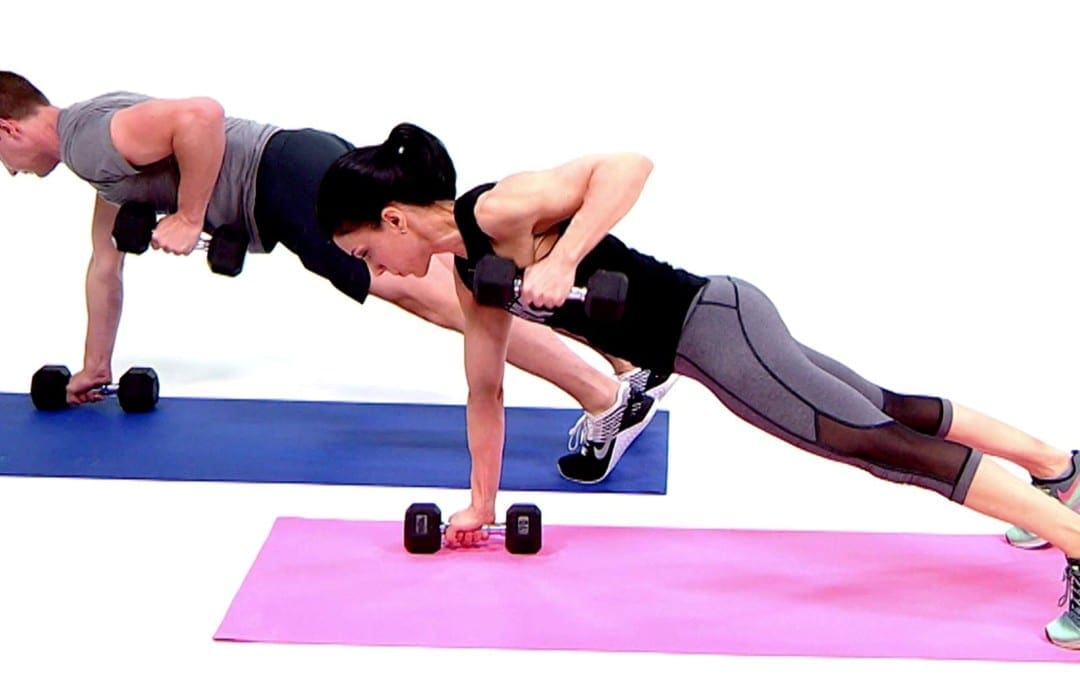
Sold? Follow along with this 20-minute HIIT workout led by Fhitting Room trainer Dara Theodore. It�s a heart-pumping sequence you can do anytime, anywhere�with dumbbells or simply your own body weight.
(Bonus: Check out this workout playlist that�s perfect for any HIIT workout.)
Upping the intake of soy protein may help fight inflammatory bowel disease (IBD), say Penn State researchers whose study included both mice and cultured human colon cells.
Inflammatory bowel diseases, which include ulcerative colitis and Crohn’s disease, are characterized by either continuous or periodic inflammation of the colon and are a significant risk factor for colon cancer.
For their study, researchers removed protein sources from the diets of the mice and substituted soy-protein concentrate. The soy equaled about 12 percent of their diet.
“We didn’t want to get carried away with using doses that were really high and would crowd out all the other protein that was there,” said researcher Zachary Bitzer. “Instead, we wanted to find a scenario that was going to fit into a more human-relevant situation.”
The dietary soy-protein at the 12-percent dose level improved body-weight loss and swelling of the spleen in the mice with induced inflammatory bowel disease.
“Soy-protein concentrate mitigates markers of colonic inflammation and loss of gut barrier function in the mice with induced IBD,” said researcher Amy Wopperer.
Followup studies will focus on whether the results translate to people. Because soy protein is a widely used food ingredient — often used as a meat substitute and commonly referred to as “texturized vegetable proteins” in ingredient lists — the researchers believe human studies could be arranged in the near future.
The study is published in The Journal of Nutritional Biochemistry,
Other studies have found soy to have health benefits. A study from Wayne State University found that compounds in soybeans can make radiation treatment of lung cancer more effective while helping to preserve normal tissue.
Soy isoflavones, a natural component of soybeans, increase the ability of radiation to kill cancer cells by hindering pathways necessary for the cancer cells to survive. At the same time, they act as antioxidants that protect normal cells from radiation-induced toxicity.
“In contrast to drugs, soy is very, very safe,” said Gilda Hillman, Ph.D., professor of radiation oncology at Wayne State University’s School of Medicine. “It’s also readily available, and it’s cheap.”
Weekly yoga sessions may be associated with a better quality of life for patients with ulcerative colitis, a chronic inflammatory bowel disease that can be exacerbated by stress, a small study suggests.
People with ulcerative colitis have inflammation in the lining of the large intestine that can lead to symptoms like diarrhea and abdominal pain. When symptoms are severe, patients may have sudden loose or bloody stools so often that it impairs their ability to navigate normal daily activities like going to school or work.
Researchers studied 77 ulcerative colitis patients who reported a reduced quality of life due to the disease even though their symptoms were clinically in remission. They randomly assigned participants to receive either 12 weekly yoga sessions or written self-care advice and found the yoga group had greater improvements in quality of life.
“It seems to be safe and effective, so it is surely worth trying yoga as an add-on to other evidence-based interventions at least for maintenance of remission,” said lead study author Dr. Holger Cramer, a researcher at the University of Duisburg-Essen in Germany.
“It definitely should not be used as a replacement but rather as an ancillary intervention,” Cramer said by email. “That’s how it was used in our study.”
Previous research has linked higher perceived stress levels to more severe ulcerative colitis symptoms, and other studies have also tied yoga to reduced stress in both healthy and sick people, researchers note in the journal Alimentary Pharmacology and Therapeutics.
While there isn’t a standard treatment regimen that’s the same for all patients with ulcerative colitis, they may take a variety of different drugs to curb inflammation and achieve symptom remission. In more severe cases, they may need surgery to remove the colon and rectum.
At the start of the current study, patients had been in remission for at least four weeks and no longer than one year.
People were excluded if they weren’t in remission and had active symptoms, if they had surgery to remove their colon, or if they had medical problems that would make it hard for them to do even light yoga exercises.
Patients assigned to yoga during the study took 90-minute classes in what’s known as hatha yoga, with postures and breathing exercises designed to calm the body and mind. People in the yoga group were also given manuals to try poses at home and encouraged to keep a daily log of their practice time.
Everyone in the control group of self-care patients received two books with general information on ulcerative colitis and strategies for improving symptoms with lifestyle modifications, medication and other approaches. They were asked not to start a yoga practice or any other exercise regimen during the study.
With yoga, people reported a better quality of life after 12 weeks of classes, and again three months later.
Five patients in the yoga group had side effects like musculoskeletal pain that may have been related to the yoga, while none of the mild side effects in the self-care group appeared related to this intervention.
One limitation of the study is that many patients dropped out of the yoga class, mainly because it proved too time consuming, the authors note. It’s also possible that personal attention from yoga instructors contributed to outcomes for that group rather than the yoga itself, the researchers point out.
Still, some previous studies suggest that stress reduction may have direct anti-inflammatory effects, which may explain why yoga reduced disease activity and flares in patients with ulcerative colitis in the current study, said Dr. Gilaad Kaplan, a gastroenterologist, at the University of Calgary in Canada.
“Yoga should not replace the medications that help patients with ulcerative colitis go into remission,” Kaplan, who wasn’t involved in the study, said by email. “But yoga may serve as complementary intervention, particularly in patients experiencing stress or whose quality of life is poor.”
UTEP softball head coach Tobin Echo-Hawk announced on Wednesday that pitcher Julia Wright will join the program prior to the 2017 fall season. Wright has played the last two seasons at Ranger College.
“We’re super excited to bring Julia onto the pitching staff for next season,” Echo-Hawk said. “Since we’ll be three pitchers short heading into next season, she’ll definitely add depth to the roster. Julia throws hard and places the ball well. We know Julia is excited to play at the Division I level and it’s great to add someone with collegiate experience in the circle.”
Wright, a native of Langley, British Columbia, will have two years of eligibility with the Orange and Blue and will add to a pitching staff that will lose three senior pitchers (Kaitlin Fifield, Taylor Grohmann & Erika Harrawood) following the 2017 campaign. Wright will join current freshmen hurlers Devyn Cretz and Allie Johnson.
Wright (17-11) ranks tied no. 36 nationally among NJCAA Division I pitchers in wins and has fashioned an ERA of 3.52 in 151.1 innings of work with 89 Ks. Wright has started 28 games with 32 appearances and registered 16 complete games. She has also tallied a save and 60 walks. Wright has four at bats with an RBI single.
One of Wright’s highlights in 2017 was tossing a no-hitter during a victory against Western Oklahoma State College on Feb. 25. She threw 5.0 frames, stuck out five and walked one during the 15-0 triumph. Wight hurled a season-high seven strikeouts in only 3.0 frames of work in a win against Mountain View College (April 19).
She tallied six Ks in 5.0 innings against Northern Oklahoma College-Enid (Feb. 18). Wright registered five strikeouts and allowed only one hit in 5.0 frames during a victory versus Cloud County Community College (Feb. 17). Wright went 1-for-3 with a RBI during an 8-0 win at Rose State College (March 18), while recently tossing a one-hit win in 5.0 innings against Vernon College (April 22).
She earned her lone save on March 1 at North Central Texas College, throwing an inning with a strikeout during Ranger College’s 7-5 win.
In 2016, Wright threw 213.0 innings and recorded 134 Ks. She finished 17-18 in 35 starts (41 appearances) and saved a pair of games. Wright recorded a career-high nine Ks in 6.0 innings, while allowing only three hits at Western Texas College on Feb. 29. She tallied seven strikeouts in three different contests, while registering six Ks in four different games her freshman season.
Choosing to receive treatment from a chiropractor won�t stop your slice or improve your putting, but it just might end up improving your overall game and lowering your score. It�s no secret that golf can be hard on your lower back. The quick, repetitive twisting motion required to swing a club puts your back at risk every time you play, and if you already have a back injury you�re putting other muscle groups at risk. Keep reading to learn how to improve your golf game in El Paso with chiropractic care.
How Chiropractic Boosts Your Game
Since a chiropractor is specifically trained to treat the entire neuromusculoskeletal system they are able to help golfers reduce the amount of stress and strain placed on their bodies. The lower back does undergo a lot of stress with the torque of a standard golf swing, but there are other body parts that can affect your golf game, too. Pain or range of motion issues in your shoulders, elbows, knees or wrists will definitely affect your swing and lead to inflated scores.
Chiropractic treatment can put your body back into alignment, remove nerve compression, and improve blood flow to vital muscles. When you are free from pain and your mobility isn�t hindered in any way, you can swing freely and focus on your game.
It All Begins With You
Although you can improve your golf game in El Paso with chiropractic, taking steps to help yourself will improve it even further. Arrive early at the course and do some warm up stretching and light swings before your game. Whether you hit some balls at the practice range or not, stretching and loosening up is key. You�ll also want to perform some light stretches after your round to keep your muscles loose and lengthened.
It�s easy to get dehydrated out on the golf course, but not drinking enough can set the stage for a strained muscle or similar injury. Make sure you drink plenty of water before, during, and after playing golf, especially if it is hot outside. If you walk the course when you play, avoid carrying your bag and pull it instead. Carrying a heavy golf bag over 18 holes can cause disc problems and irritate nerves.
If you have the option, avoid wearing metal spikes when you play. They have the potential to get stuck in the ground during your swing, causing a serious knee or back injury. And if you find that your swing is causing pain in any area of your body, consider taking lessons to learn a more efficient way to swing your clubs. If you follow these tips you�ll enjoy a pain-free round every time out.
Have you ever wondered how many years your treating chiropractic doctor went to school for or how their education compares to that of other health care professionals? Knowing your doctor’s educational background and additional certifications is often essential to helping you choose the health care provider that is right for you. While the word�”doctor” automatically implies an extensive academic curriculum, each health care specialist has a unique and individualized educational program to complete prior to practicing in the field. Our doctors�have designed this article to help you understand your chiropractor�s educational background and how it may affect your care.
Chiropractors Educational Requirements?
As with many professionals, the specific requirements outlined often vary from state to state. Typically, chiropractors are required to have completed undergraduate pre-medical studies and obtained a bachelor�s degree prior to admission to a post graduate chiropractic college. Each chiropractic college has undergone a meticulous evaluation process to become certified by the Department of Education as an accredited educational institution.
The amount of time that your chiropractic doctor spends at a specific chiropractic academic institution is impressive. In fact, your chiropractor has spent a minimum of 4,200 hours at a chiropractic college prior to receiving his diploma. This time is spent in the classroom, laboratory, and clinic learning about the various aspects of the chiropractic profession and health care in general.
In the classroom, your doctor focuses his studies on the subjects of anatomy, physiology, diagnosis, pathology, biochemistry, neuromuscular and orthopedic evaluation, pediatric and geriatric care, microbiology, nutrition, immunology, radiology, philosophy, and clinical research. While this may seem like a lot, all of this information is assimilated and tested prior to advancement to clinical work. Once the student has completed his academic work, he will typically spend a minimum of 1,000 hours at a campus clinic under the guidance of a clinic doctor. During this time he will learn hands on how to diagnosis and treat patients in real clinical situations.
During your chiropractors education they will be tested through a number of different evaluations. Not only is your doctor subject to evaluation by their chiropractic college, they must also pass a series of national board examinations. Chiropractors practicing in the United States are required to have passed a series of four national board exams which evaluate them on their understanding of the basic sciences, clinical sciences, physiological therapeutics, diagnostic imaging, case management, and clinical competency. In addition to these requirements, following graduation and completion of national board examinations, each chiropractor must become certified by their state licensing agency.
The completion of these standards is not the end of the educational journey for chiropractic doctors. Depending on the state, each chiropractor is required to complete additional approved course work at designated times following their licensure. For example, Wisconsin requires a minimum of 40 hours of continuing education every two years following graduation.
Chiropractors Education In Comparison To Other Health Care Professionals?
After reading the above information, I feel it is safe to say that your chiropractic doctor knows far more about your health than just treating your back. To help understand this it is useful to compare a chiropractor�s education to other members of the health care community. Since many people are familiar with a medical doctor, we will compare their educational background with that of a chiropractic doctor. For starters, the typical chiropractic student will have completed a total of approximately 2,419 hours of academic work prior to the initiation of clinical studies. In comparison, the majority of medical students will have completed somewhere around 2,047 hours of study. Further, while each health care discipline has its strengths, chiropractic students undergo more hours of study in the fields of anatomy, embryology, physiology, biochemistry, diagnosis, x-ray, and orthopedics. In contrast, medical practitioners have had more classroom hours studying the subjects of pathology, psychology, and obstetrics.
When analyzing these numbers it is important to understand that while differences exist, each of your doctors has undertaken and completed a similar core education. In addition, it is important to remember that each of your doctors (even in the same health care discipline) possess various strengths to compensate for other health care professionals’ weaknesses and utilize a different approach to healing the body. In the end, finding the doctor that understands your needs and has the tools to provide you with the most appropriate care is what is important.
Degenerative disk disease (DDD) develops as an outcome of the effects of aging in your back and particularly in your intervertebral discs.
Additionally, it may be associated with an injury to the back, but in that scenario, your disks have generally become weak because, with age, disks lose water content, may become thinner; both of which can change shape and the strength of one or more discs. Before you feel the result of DDD� other symptoms as well as pain � your discs along with other backbone constructions are changing. That is simply the natural consequence of the stress and tension each of us places our backs through every day.
Causes and Effects of DDD
Effects and the causes of degenerative disc disease are relatively clear-cut: You age, your disks change, your bones could be affected, and also you can develop pain. It even helps to think as a cause and effect process or cascade of DDD: One anatomical change happens, which leads to changes and more degeneration in the structures of your back. These changes combine to cause degenerative disk disease and its particular symptoms.
DDD begins with changes in your intervertebral discs, but eventually it’s going to change another movement parts of the spine, like the facet joints.
Over time, the collagen (protein) structure of the annulus fibrosus (that is the outer portion of the intervertebral disc) changes.
Moreover, water-pulling molecules�and consequently water�in the disc declines.
These changes decrease the ability to manage back move of the disc.
How Disc Degeneration Occurs
The disc can be less spongy and substantially thinner. A disc that is thinner means the space between the vertebra above and below the disc gets smaller, which causes a brand new problem, this time with all the facet joints. They help stabilize the back, and changes move, in the event the disc loses height. Subsequently the cartilage that protects the facets starts to wear away, and they start to proceed too much: They “override” and become excessively mobile.
Function of the Spine with Hypermobility
Freedom causes another change in your spine. It attempts to cease the motion with the growth of little bony parts called bone spurs (osteophytes). Sadly, the bone spurs sometimes pinch nerve structures and cause pain. The bone spurs can narrow the space for nerves and the spinal cord �that disorder is called spinal stenosis. Degenerative disc disease won’t cause spinal stenosis but it’s something you should be aware of if you’ve degenerative disc disease.
Genetics and DDD
Your genes can also raise your danger of developing degenerative disk disease. You might be predisposed to excessive joint and disc wear and tear, so if someone in your family has or had degenerative disk disorder, you may even develop back pain or neck pain related to DDD.
Controlling Your Lifestyle
Eventually, the method you are living could result in degenerative disk disease. Smoking, by way of example, will cause them to degenerate faster and adversely affects your disks. Smoking really decreases the level of water in your discs, and water is part of what helps your discs absorb move. With less water content, your intervertebral discs can wear out sooner.
The scope of our information is limited to chiropractic and spinal injuries and conditions. To discuss options on the subject matter, please feel free to ask Dr. Jimenez or contact us at 915-850-0900 .
By Dr. Alex Jimenez
Additional Topics: What is Chiropractic?
Chiropractic care is an well-known, alternative treatment option utilized to prevent, diagnose and treat a variety of injuries and conditions associated with the spine, primarily subluxations or spinal misalignments. Chiropractic focuses on restoring and maintaining the overall health and wellness of the musculoskeletal and nervous systems. Through the use of spinal adjustments and manual manipulations, a chiropractor, or doctor of chiropractic, can carefully re-align the spine, improving a patient�s strength, mobility and flexibility.
It�s easy to take�walking for granted�as a form of exercise. After�all, it�s how we move�around in the world every�day, so it can be hard to�believe it�ll knock off�pounds. But research�shows that walking is a�surprisingly strong health�and fitness strategy.�It matters how you walk,�though. A study in Journal�of Applied Physiology found�that walking quickly with�hand and ankle weights�was comparable to slow�running. And research�from the University of�Virginia revealed that�mixing short, fast walks�with longer, more leisurely�ones was an effective�way for obese women to�lose belly fat.
Walking can even help prevent disease. A study in the journal Arteriosclerosis, Thrombosis, and Vascular Biology showed that walking at a decent clip reduced participants� risk of developing high blood pressure, cholesterol, and blood sugar levels as much as running.
It�s clear that our bodies were made to walk, but there�s more than one way to get the most out of those daily steps. We spoke to three experts with different approaches so you can choose the right method for you. Whether you�re time-pressed or want to ease into running, our experts have got you covered.
Kirsch, who has trained the likes of Jennifer Lopez and Kate Upton, believes even the fittest people can benefit from walking more. “From a purely physiological standpoint, walking raises your heart rate and burns calories,”�he says. “But it�s also a great way to increase your mind-body connection, focus on your breath, spend time in nature, meditate, and de-stress.”
David Kirsch’s go-to walking workout:�For beginners, it�s all about working up to 10,000 steps a day, says Kirsch. That�s the preset daily goal on most fitness trackers because it�s considered a good target for heart health and weight maintenance. But after you�ve mastered that, challenge yourself to hit 15,000 to 25,000 daily steps. “Ten thousand should become the bare minimum,” he says. To amp up the intensity of your walks, try a hilly landscape or wear two- to three-pound ankle and hand weights. You can also incorporate some toning exercises every few minutes, like jumping jacks, walking lunges, squats, or squat jumps, suggests Kirsch. Adding these moves in intervals�will help you build muscle,�improve heart health,�and increase endurance.�”Walking is so good for�you,” he says. “It�s a great�start and supplement to�any wellness program.”
The Weight-Management Physician:�Amy Rothberg, MD
“Walking is one of the best tools for weight maintenance,” says Dr. Rothberg, director of the University of Michigan�s Weight Management Clinic. “It�s aerobic, it engages some of the biggest muscles, and it�s feasible for most people.”
Dr. Rothberg’s go-to walking workout:�To maintain a healthy weight, Dr. Rothberg recommends walking for at least 30 minutes five days a week. Some good news: You don�t have to log a half hour all at once. “You can do your 30 minutes in 10-minute bouts throughout the day,” she says, “and those add up.” Plus, when you walk for shorter periods, you can generally go at a faster speed, which may be even better for you than walking slowly for 30 minutes straight, since more vigorous activities can help increase your overall fitness level. And even lower-intensity exercises like fast-paced walking can help burn some of the body�s stored fat. Walking in chunks can give you little boosts of confidence to keep you motivated, too. “Whether it�s parking farther away or walking to meet a colleague, you get a sense of accomplishment,” she says. “It�s these little successes that end up establishing good habits.”
The Running Coach:�Jeff Galloway
Galloway is the creator�of the Run Walk Run�training method, which�helps walkers and longtime�runners alike stay in shape�and prep for races. Adding�running intervals to your�walks can help you burn�more calories, and running�has been shown to boost�appetite-suppressing�hormones, notes Galloway.�Plus, easing into running�like this allows you “to go�farther while feeling better�and avoiding injury,” he says.
Jeff Galloway’s go-to walking workout:�To introduce faster segments into your walks, start by jogging for 5 to 10 seconds per minute for 10 minutes, gradually working your way up to 30 minutes. Once you�ve conquered that goal, begin adding longer periods of jogging until you can jog for 30 seconds per minute for 30 minutes. Eventually, you can build up to shorter walk breaks�for example, walking for 30 seconds and running for 60. This is an excellent way to train for a 5K or even longer race, says Galloway. (For regular runners looking to add in strategic walking breaks, Galloway suggests alternating 90 seconds of running and 30 seconds of walking if you run a 10-minute mile on average. If you average a 12-minute mile, try alternating 60 seconds of running and 30 seconds of walking.)
El Paso, TX. Chiropractor Dr. Alex Jimenez examines working out on an empty stomach.
For a thing that should be simple, working out doesn�t consistently feel that way. There�s choosing the best fat-burning workout. There�s that pesky question of whether diet or exercise is essential for fat loss. And there�s a new one to throw into the mix: whether working out on an empty stomach can help you shed weight faster.
Bodybuilders swear by it while many people religiously enjoy their pre -workout protein shake. What exactly gives? Should you hitting the gym on an empty stomach and be forgoing food in the event you want to lose pounds?
Regrettably, like so much fitness guidance, this falls into the grey, �it depends� place. Let�s inquire.
Work Out On an Empty Stomach?
The theory behind exercising having an empty tummy is that when you squeeze before breakfast, your body burns fat faster.
See, what occurs is that glycogen, a type of carbohydrate which our bodies shop, � runs out� overnight. When you wake up and hit the gym first thing in the morning, because your body is low on carbs, the notion is the body will really turn to fats next to obtain energy. (1)
Things do get tricky because if the body is completely from glycogen � you had an early dinner, got the full nighttime�s remainder and perhaps snoozed an extra hour or two � the body might bypass fat burning and head directly to muscle shops instead, chipping away at body definition.
�
Advantages of Working Out On an Empty Stomach
So what does the science say the huge benefits before working out to missing breakfast?
1. Burn Fat Quicker. One study followed 12 active males after breakfast who ran on the treadmill either or while they were still fasting from the night time before. (2) The men who hadn�t broken their fast, i.e. hadn�t had breakfast, burned up to 20 percent more body fat during the same work outs.
What�s especially fascinating is that the guys who jumped breakfast didn�t overeat after or attempt to otherwise make � for the early AM calories up they missed out on. So obtaining a head start on your fitness regimen pre-breakfast can help you lose more fat without making you sneak in extra calories later.
2. Improve Performance. There�s evidence that exercising when your carb levels are low, like when you�re on an empty stomach, actually helps improve functionality during �normal� workouts. The concept behind �train low, compete � that is high is that working out in a glycogen- low state helps the body become more efficient at burning off fat so at times when carb levels are quite high, the body is primed and raring to go. (3)
3. Time-Restricted Eating Can Help In Losing Weight. Work Out out on an empty stomach ties into the thought of time-limited eating. On this diet program, it is possible to eat as much as you want of anything you desire. The only caveat is that you just eat strictly between certain hours, with 12�16 hours of time where you don�t eat anything.
The notion is that when our bodies understand just when we�re going to be eating, our hormones react by burning fat and supporting weight reduction during the food-free hours. Scheduling workouts during fasting hours could encourage the body to burn more fat, particularly when you�re exercising first thing in the morning.
4. Improve Body’s Response To Insulin. When we eat, our bodies release insulin to consume all of the nutrients in the foods we�re enjoying. However, as soon as we�re eating way too many carbohydrates and sugar, our bodies become resistant to insulin � it�s unable to do its job at the same time.
All that insulin can bring in regards to an assortment of chronic illnesses and builds up. Among many health benefits of fasting, however, is reducing that susceptibility to insulin. Without continuous food, insulin isn�t so our bodies don�t become immune to the hormone, created often.
5. Inspiration To Work Out More.�Let�s confront it � we�re all super active. By working out each morning before stopping to make breakfast, having that cup of coffee or whatever it’s that might derail you in the mornings, you can get your calorie burning out of the way with no distractions that happen after.
In the event you have to be out of your house by 8 a.m., it�s a lot easier to hit the gym before eating as opposed to sitting down for breakfast, waiting to digest and then working out.
When It�s Not Wise To Work Out Without Any Food On Board
But working out on an empty stomach might not be the finest idea for everybody. For each study that says burning fat occurs more easily when you exercise before eating, there�s another one that says the opposite. An International Journal of Sport Nutrition and Exercise Metabolism study found that a pre-workout snack or light meal actually helps burn body fat. (4)
Plus study found no difference in weight reduction between women who ate a meal-replacement shake before exercising without eating and those that got directly in their workouts. (5)
Another problem is that without any fuel in your belly, you may well not be working out as hard as you could. A pre-workout snack that�s a mix of carbs, protein and healthy fats can give you the energy you need to push yourself harder.
That extra fire might be just things you must finish high-intensity interval workouts like Crossfit or Tabata, which actually help you burn off more calories in a briefer amount of time. These are intense work outs where you�re likely to need to max out your energy.
And when you�re training for endurance sports like long-distance racing or a triathlon, working out on an empty stomach might work for short distances, but you definitely wish to consume before longer work outs � depending on how much you�re going, you might even need to refuel during training.
Finally, if you�re someone who psychologically has to realize which you aren�t going to burn out mid way because you�ve eaten through exercising, it�s not a great day to work out on an empty stomach. Same goes for people who are diabetic or experience low blood sugar. Eating a small bite will make sure that you remain safe throughout your workout.
Final�Thoughts
I wish I possibly could tell you that working out on an empty stomach will cause results that are better. But because numerous variables are at play � how fit you are, what type of exercise you�re doing and the way you workout best � it�s impossible.
What is vital is that you just remain hydrated before, during and following your workout. Drinking enough water will keep up energy levels. Drinking enough H2O can also keep pounds from increasing because thirst is, in addition, mistaken for hunger.
Maybe more notably than whether you eat before a workout is what you�re having later. A mix of protein and healthy carbs can help muscle tissue recover. Drinking a post-workout recovery shake or eating eggs with veggies in the first 45 minutes after exercise while your blood is circulating well is ideal. Take a look at my list of 43 greatest post-workout meals for quicker results � you�re certain to find something you�ll adore.
Eventually, whether you�re working out on an empty stomach or not, kudos to you for getting out there and taking control of your quality of life. Keep up the work outs!
IFM's Find A Practitioner tool is the largest referral network in Functional Medicine, created to help patients locate Functional Medicine practitioners anywhere in the world. IFM Certified Practitioners are listed first in the search results, given their extensive education in Functional Medicine