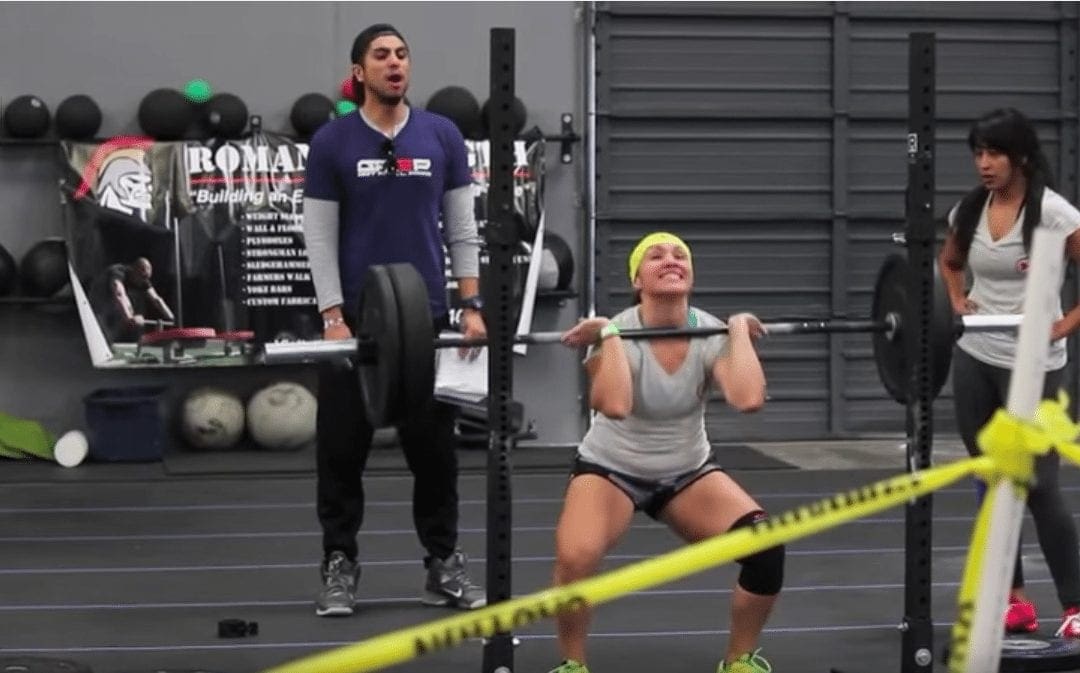
What Is It: BoxUnion — Charlotte McKinney’s favorite boxing studio — combines shadow boxing and heavy bag drills with cardio, core work and plyometric intervals to “sculpt, lean and champion a fit physique in a thoughtful, motivational environment.”
Who Tried It: Gabrielle Olya, PEOPLE writer and reporter
Level of Difficulty: 7 (on a scale of 1 to 10). I took the “Box U” class which is catered to beginners, so it’s easy to follow along and they offer plenty of modifications for every move so you can do a workout that’s appropriate for your fitness level. While I was able to do all the moves the class required, that doesn’t mean it was easy! I guarantee you will break a serious sweat during the 45-minute class.
The class started off with shadow boxing drills to make us more comfortable with the different punches (while also working our core and arms to do the moves). Then the boxing gloves went on, and we spent the remainder of class doing a mix of boxing intervals with the bag and floor intervals that included squatting, jumping, running in place and ab work.
While the class was physically exhausting (I was drenched in sweat about 10 minutes in!) the upbeat playlist and encouraging trainer helped me get through the whole class without stopping. I definitely felt challenged, but I was able to get so mentally lost doing the moves that I was honestly surprised when the class was over!
“It’s a really cool moving mind-body meditation,” Marxel Leobez, who trains the Baywatchstar, tells PEOPLE. “You’re in constant movement so you can kind of let go.”
And it’s also a really effective calorie-burning workout.
“The sequencing we use in BoxUnion is like HIIT training,” says Leobez. “You’re getting your heart rate elevated and bringing it down, so you’re boosting your metabolism to burn fat and sculpt muscle at the same time. It’s a high caloric burn.”
In addition to scorching calories, the boxing moves work muscles throughout the entire body.
“By using the rotations, you’re using every spacial plane,” explains Leobez. “You’re working your glutes, you’re working your core, especially, to keep the balance, and especially the transverse abdominus which pulls the abs in tight. It’s a lot of core work, and on top of that it works out your arms. It’s a full-body exercise.”
The Verdict: I left BoxUnion feeling sweaty and sore, but also really energized for the rest of the day. Not only did I feel like I got a great workout, but punching a bag was also an amazing stress reliever. I would definitely go back to sweat out a bad day (or start off a good one)!
IRVING, Texas – UTEP softball junior Courtney Clayton was named to the 2017 InTouch Credit Union Conference USA Softball All-Academic Team league officials announced on Wednesday.
It’s the second consecutive year that the Health Promotion major earned a spot on the academic team and is one of 14 student-athletes named to the exclusive list. Clayton fashions a 3.87 GPA, while being named to the C-USA Commissioner’s Honor Roll and recognized as a C-USA Academic Medalist for the third year in a row.
The Cornelius, Ore., native hit .314 (50-159) with four home runs and 21 RBI in 2017. Clayton led the squad in runs (29), while tallying seven doubles. She only struck out five times to rank in the top half of the nation in toughest to strikeout. Defensively, she recorded 109 putouts and 83 assists.
Clayton recently reached the 100-run club on the program’s all-time list. She’s the sixth player to accomplish the feat as she has crossed the dish 101 times. Clayton also ranks no. 5 on the program’s all-time hit’s list with 180 and is ranked tied no. 4 with Stacie Townsend in career doubles (38).
Last year, Clayton was the first Miner to be named to the academic team since Colleen Hohman received the honor in 2014.
Ask kids what their favorite part of the school day is and most will say lunch and recess. But the timing of these events matters when it comes to what children eat and how much physical activity they get, researchers report.
The new findings could help schools develop policies to promote healthy eating and exercise habits for kids, the study authors said.
“Overall, our findings suggest that recess and lunch behaviors are interrelated. However, the specific food choices and activity levels children engage in may be subject to the timing and duration of lunch and recess,” researcher Gabriella McLoughlin said in an American Society for Nutrition news release.
Contents
Nutritional Intake and Physical Activity for Kids
McLoughlin, a doctoral student at the University of Illinois, Urbana-Champaign, is scheduled to present the research Sunday at the society’s annual meeting in Chicago.
For the study, researchers analyzed what 151 fourth- and fifth-graders at two schools ate for lunch and their physical activity. All ate lunch right before or right after recess. Most research has focused on nutritional intake or physical activity during recess. Study leader Naiman Khan called this the first “to objectively measure food intake at lunch in conjunction with physical activity, and consider the influence of duration and timing.”
Khan is an assistant professor of kinesiology and community health at the university. The researchers discovered that students who had recess before eating lunch wasted less food. But kids who had lunch before recess ate more vegetables.
While the U.S. Centers for Disease Control and Prevention recommends recess before lunch to help curb food waste, researchers say this schedule and how much time kids have to eat and play could have unwanted effects on what they eat and how much exercise they get. The study found that kids who had more time for lunch and recess and who ate before they played were more active. The opposite was true for boys and girls who had less time for lunch and recess. These students were more active if they had recess before they ate.
“We plan to communicate our findings to school teachers, administrators and policymakers to facilitate the implementation of evidence-based policies that support children’s ability to meet their daily physical activity and nutritional recommendations,” Khan said.
The scope of our information is limited to chiropractic and spinal injuries and conditions. To discuss options on the subject matter, please feel free to ask Dr. Jimenez or contact us at 915-850-0900 .
Additional Topics: Whole Body Wellness
Maintaining overall health and wellness through a balanced nutrition, regular physical activity and proper sleep is essential for your whole body�s well-being. While these are some of the most important contributing factors for staying healthy, seeking care and preventing injuries or the development of conditions through natural alternatives can also guarantee overall health and wellness. Chiropractic care is a safe and effective treatment option utilized by many individuals to ensure whole body wellness.
Your best bet for healthy eating is having plenty of home-cooked meals, a new study states.
Researchers asked more than 400 Seattle-area adults about what they cooked and ate for a week. They were graded using the U.S. Department of Agriculture’s Healthy Eating Index (HEI). HEI scores range from 0 to 100. The higher the score, the better the diet. A score over 81 indicates a good diet; 51 to 80 means improvement is needed; and 50 or less is poor.
Households that had home-cooked meals three times a week had an average score of about 67, while cooking at home six times a week bumped up the average to about 74.
The results suggest that regular home-cooked meals — which tend to be lower in calories, sugar and fat — give you a better diet at a lower cost.
Contents
How Eating At Home Affects Our Health
The Oregon State University study was published in the May issue of the American Journal of Preventive Medicine.
“Higher HEI scores are generally associated with higher socioeconomic status, education and income. By contrast, cooking dinner at home depends more on the number of children at home. The study showed no association between income or education and eating at home or eating out,” study author Arpita Tiwari, a health systems researcher, said in a university news release.
“Traditionally better socioeconomic status — more money — means healthier people. That’s the trend. This research goes against that; it shows a resilience to that trend. It’s not spending more but how you spend that’s important,” Tiwari concluded.
Eight out of 10 Americans fail to meet at least some federal dietary guidelines, and about half the money spent to eat is for food not cooked at home, the study pointed out.
News stories are written and provided by HealthDay and do not reflect federal policy, the views of MedlinePlus, the National Library of Medicine, the National Institutes of Health, or the U.S. Department of Health and Human Services.
The scope of our information is limited to chiropractic and spinal injuries and conditions. To discuss options on the subject matter, please feel free to ask Dr. Jimenez or contact us at 915-850-0900 .
Additional Topics: Weight Loss Eases Back Pain
Back pain and symptoms of sciatica can affect a majority of the population throughout their lifetime. Research studies have demonstrated that people who are overweight or obese experience more back complications than people with a healthy weight. A proper nutrition along with regular physical fitness can help with weight loss as well as help maintain a healthy weight to eliminate symptoms of back pain and sciatica. Chiropractic care is also another natural form of treatment which treats back pain and sciatica utilizing manual spinal adjustments and manipulations.
No doubt that work, school and outside activities can make it hard to schedule regular family dinners. But research has shown that eating together on a regular basis helps to bond families and build good communication.
For children, the benefits range from better grades to getting along well with others. Kids and adults alike are also more likely to eat healthy meals and less likely to be overweight.
When busy schedules make it hard for everyone to sit down to dinner, use other meals to build togetherness. For instance, get everyone up 15 minutes early for a breakfast sit-down, or plan a regular weekend brunch where everyone pitches in. When dinner has to be fast food, eat at the restaurant instead of doing a pickup so you still have the chance to sit and talk, even if only for a few minutes.
There are also plenty of ways to build togetherness in addition to mealtime. Schedule regular outdoor activities, like a weekend walk on a nature trail or an afternoon at the playground. Make plans for a regular indoor activity, like family game night. Or, find a hobby everyone could enjoy. Perhaps take a vote on the activity, and then let each family member choose a role that will keep them involved.
The goal: Building togetherness, whether at the dinner table or beyond.
News stories are written and provided by HealthDay and do not reflect federal policy, the views of MedlinePlus, the National Library of Medicine, the National Institutes of Health, or the U.S. Department of Health and Human Services.
The scope of our information is limited to chiropractic and spinal injuries and conditions. To discuss options on the subject matter, please feel free to ask Dr. Jimenez or contact us at 915-850-0900 .
Additional Topics: Weight Loss Eases Back Pain
Back pain and symptoms of sciatica can affect a majority of the population throughout their lifetime. Research studies have demonstrated that people who are overweight or obese experience more back complications than people with a healthy weight. A proper nutrition along with regular physical fitness can help with weight loss as well as help maintain a healthy weight to eliminate symptoms of back pain and sciatica. Chiropractic care is also another natural form of treatment which treats back pain and sciatica utilizing manual spinal adjustments and manipulations.
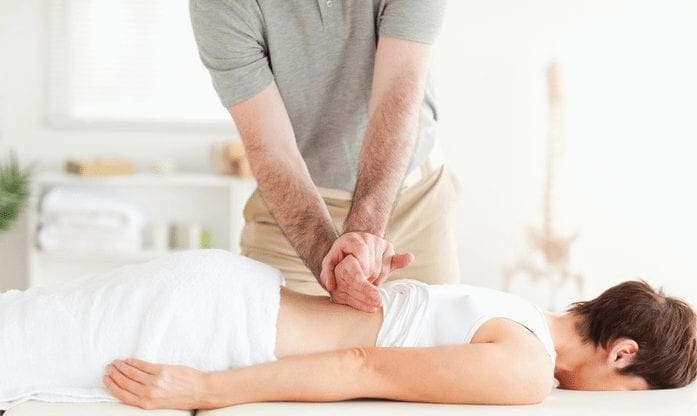
Chronic low back pain can be a challenge to treat, but new research suggests that massage therapy may provide some relief.
“Current medical guidelines actually recommend massage therapy prior to the use of opioid medications for lower back pain,” explained William Elder, the study’s principle investigator. “Yet even with those guidelines, physicians and nurse practitioners are not recommending massage therapy,” said Elder. He’s with the University of Kentucky’s departments of family and community medicine and clinical services.
Low back pain is a common problem, and for most people, it’s short-lived. But for about 15 percent of people with low back pain, the problem becomes chronic and lasts more than three months, the study authors said. There aren’t a lot of effective treatment options for chronic back pain, and physicians often prescribe opioid painkillers such as OxyContin or Percocet to ease the pain. But those drugs come with a risk of addiction.
Other possible treatments include exercise, steroid injections, behavior changes, chiropractic, acupuncture and surgery, according to the U.S. National Institute of Arthritis and Musculoskeletal and Skin Diseases.
Contents
Massage for Back Pain
The new study sought to simulate real-world back pain and treatment. Researchers asked physicians to recommend massage for people with chronic back pain. Just over 100 study volunteers were then paired with an approved, experienced massage therapist in their area who assessed the problem and created a treatment plan. The study participants received 10 treatments, which they set up directly with their therapist.
More than half of the participants had less pain after 12 weeks and many continued to report reduced pain after three months.
The research also showed that massage therapy worked better with patients aged 50 years and older, although younger people benefited, too.
“These results are exciting because it shows that most doctors can refer their patients for massage as a treatment. It’s applicable to the real world,” said Elder. “Some medical providers have taken interest in massage, but most don’t know which type would be helpful. We learned that just referring the patient to a massage therapist and letting them work to select the therapy is effective,” he added.
Dr. Anders Cohen, the neurosurgery division chief at The Brooklyn Hospital Center in New York City, recommends massage therapy to his patients as part of what he calls a comprehensive treatment plan.
“Massage is great way to break up adhesions and is great for soft tissue,” Cohen said. “If the back pain is a soft tissue issue, such as muscles and ligaments, it works great. Plus, there is the bonus of therapeutic touch.”
Reasons for Varying Back Pain Care
Patients in the study received the massage therapy free of charge. But, cost could also explain why some physicians recommend opioids instead. Cohen noted that massage prices vary, and may not be covered under some insurance plans. Study co-author Niki Munk is a licensed massage therapist who’s with the Indiana University School of Health and Rehabilitation Sciences. She said the researchers saw that massage needs to occur regularly when someone begins treatment to reduce the pain.
Munk added that more research is needed on the ideal pain maintenance schedule. But the study authors think that once a level of comfort has been achieved, people can continue to manage their back pain through regular massage therapy on a schedule that fits their needs, such as once a month or every other month.
Munk also noted that selecting the right therapist is important.
“Look for a masseuse that you can establish a therapeutic relationship with over time,” she recommended. “Chronic low back pain is a complex issue that can’t be cured from just a one-hour massage. Find a therapeutic massage clinic and ask questions about the therapist, such as their initial training and continuing education. Also, make sure that the therapist sets up a treatment plan that will work for you,” Munk said.
The study was published online recently in the journal Pain Medicine.
SOURCES: William Elder Jr., Ph.D., professor, family and community medicine and clinical services, University of Kentucky, Lexington; Niki Munk, Ph.D., L.M.T., assistant professor, health sciences, Indiana University School of Health and Rehabilitation Sciences, Indianapolis; Anders Cohen, M.D., division chief, neurosurgery, The Brooklyn Hospital Center, New York City; March 14, 2017, Pain Medicine, online
The scope of our information is limited to chiropractic and spinal injuries and conditions. To discuss options on the subject matter, please feel free to ask Dr. Jimenez or contact us at 915-850-0900 .
Additional Topics: Whole Body Wellness
Maintaining overall health and wellness through a balanced nutrition, regular physical activity and proper sleep is essential for your whole body�s well-being. While these are some of the most important contributing factors for staying healthy, seeking care and preventing injuries or the development of conditions through natural alternatives can also guarantee overall health and wellness. Chiropractic care is a safe and effective treatment option utilized by many individuals to ensure whole body wellness.
Proponents of mindfulness-based stress reduction claim it can improve relationships, mental health, weight and more. But, one complaint it’s unlikely to fix is lower back pain, researchers now say.
Lower back pain doesn’t respond to the programs, which embrace meditation, heightened self-awareness and exercise, according to a review.
Although short-term improvements were reported, “no clinical significance” was found in terms of overall pain or disability when mindfulness was compared to standard treatment, said study lead author Dennis Anheyer. Anheyer is a psychology research fellow in the faculty of medicine at the University of Duisburg-Essen in Germany.
About eight out of 10 American adults will experience lower back pain at some point in their lives, according to the U.S. National Institute of Neurological Disorders and Stroke. Roughly one in five of them will struggle with chronic lower back pain, lasting three months or more, which is a major cause of job-related disability.
Because no sure-fire treatment of back pain exists, many patients try complementary therapies such as mindfulness.
Contents
Mindfulness and Stress Reduction for Back Pain
Mindfulness programs, which are growing in popularity in the West, derive from the Buddhist spiritual tradition and are used to treat pain. They include sitting meditation; walking meditation; hatha yoga and body scan along with focusing attention sequentially on different parts of the body.
The seven studies that were reviewed involved close to 900 patients who had lower back pain for at least three months. Six of the studies were conducted in the United States; the seventh in Iran.
Some patients were offered standard back pain treatment, such as physical therapy and exercise routines that aim to strengthen the back and abdominal muscles; prescription and over-the-counter pain medications; ice packs and heat packs; and spinal manipulation and/or massage (chiropractic care). In some cases, surgery is recommended for chronic back pain.
Other patients engaged in mindfulness programs aimed at stress relief. Six of the programs were variations on an eight-week program developed at the University of Massachusetts. Most had a weekly 2.5 hour group session; one also had a day-long silent retreat.
Practitioners were also encouraged to engage in 30 to 45 minutes of meditation at home, six days a week. “We found that mindfulness-based stress reduction could decrease pain intensity at short-term, but not at long-term,” said Anheyer. Despite the negative findings, Michigan orthopedist Dr. Rachel Rohde isn’t ready to rule out mindfulness as a back-pain treatment.
The size of the research review was relatively small, said Rohde, an associate professor of orthopedic surgery at the Oakland University William Beaumont School of Medicine.
Also, “pain” is perceived differently by everyone, she said. In the case of chronic pain, people tend to try everything they can to feel better, making it difficult to figure out exactly what works and what doesn’t, she added.
The idea that changing the way you think can change the way you feel — the premise of cognitive behavior therapy — is used as a treatment for chronic pain, Rohde continued. “I think that mindfulness-based stress reduction is somewhat of an extension of this and probably would work very well for some and perhaps not so well for others,” she added.
The researchers behind the new review suggested that future studies look at specific components of mindfulness programs, such as yoga and mindful meditation. Yoga, they said, has been shown to increase function and decrease disability in patients with low back pain.
SOURCES: Dennis Anheyer, M.A., B.Sc., psychology research fellow, faculty of medicine, University of Duisburg-Essen, department of internal and integrative medicine, Kliniken Essen-Mitte, Essen, Germany; Rachel S. Rohde, M.D., associate professor of orthopedic surgery, Oakland University William Beaumont School of Medicine, Michigan Orthopaedic Institute, P.C., Royal Oak, Michigan; April 24, 2017, Annals of Internal Medicine
The scope of our information is limited to chiropractic and spinal injuries and conditions. To discuss options on the subject matter, please feel free to ask Dr. Jimenez or contact us at 915-850-0900 .
Additional Topics: Whole Body Wellness
Maintaining overall health and wellness through a balanced nutrition, regular physical activity and proper sleep is essential for your whole body�s well-being. While these are some of the most important contributing factors for staying healthy, seeking care and preventing injuries or the development of conditions through natural alternatives can also guarantee overall health and wellness. Chiropractic care is a safe and effective treatment option utilized by many individuals to ensure whole body wellness.
Breastfeeding has long been linked to a variety of health benefits in babies, and a new study suggests that bacteria transferred from mothers to their nursing infants might be at least partly responsible.
Researchers focused on what’s known as the microbiome, or all of the bacteria, viruses and fungi that live in and on the body. They tested 107 mother-baby pairs for organisms on women’s breasts and in their milk, and they also examined babies’ stool as a way of determining what types of organisms were in the infant gut microbiome.
While they found distinct types of bacteria in milk, breast tissue and infant stool, researchers also found infants’ gut microbial communities matched the bacteria in their mothers’ milk and on their mothers’ skin much more than it resembled samples from other women in the study.
That suggests each mother’s milk was a major contributor to her own infant’s gut microbiome.
“We were able to show that there are bacteria in milk and that these bacteria could be traced to bacteria in infant stools,” said senior study author Dr. Grace Aldrovandi, chief of the division of infectious diseases at Mattel Children’s Hospital at the University of California, Los Angeles.
“This supports the hypothesis that milk microbes are a mechanism by which breastfeeding provides benefit,” Aldrovandi said by email.
Pediatricians recommend that mothers exclusively breastfeed infants until at least 6 months of age because it is tied to reduced risk for babies of ear and respiratory infections, sudden infant death syndrome, allergies, childhood obesity and diabetes.
Mothers may benefit too, with longer periods of breastfeeding linked to lower risks of depression, bone deterioration and certain cancers.
Based on lab tests of bacteria found in milk, on skin and in stool in the current study, researchers estimated that babies who got at least 75 percent of their nutrition from breast milk during the first month of life received about 28 percent of their gut bacteria from their mother’s milk. These babies also got about 10 percent of their gut bacteria from mothers’ skin and 62 percent from sources researchers didn’t determine.
The more babies nursed, the more their gut bacterial community changed to resemble what was found in their mother’s milk.
And in babies who got more of their nutrition exclusively from breastfeeding, microbial communities were slightly more diverse overall and different microbes predominated compared to babies who breastfed less.
One limitation of the study is that researchers didn’t assess the origins of the breast milk bacteria or other bacterial communities from the mother that might have contributed to the infant gut microbiome, the authors note. Nor did they assess any effects on the babies’ health based on differences in their microbiomes.
Still, the results build on previous research suggesting that the infant gut microbiome is different for breast-fed and formula-fed babies, said Dr. Alexander Khoruts, a researcher at the University of Minnesota in Minneapolis who wasn’t involved in the study.
“We’ve always assumed that most of these microbes come from the mother,” Khoruts said by email. “They found that breastfeeding is the major source of microbial transfer during the early months of life, and I think the study provides supportive evidence for the current recommendations of exclusive breastfeeding for the first six months and continued breastfeeding to 12 months.”
Many factors can influence the infant gut microbiome, including breastfeeding, whether babies arrived by vaginal or surgical delivery and antibiotic use, noted Jose Clemente, a researcher in the genetics and genomic sciences at the Icahn School of Medicine at Mount Sinai in New York.
“The beneficial effects of breastfeeding are well known, and this study provides further evidence by demonstrating that probiotic bacteria found in breast milk can be transferred to the infant,” Clemente, who wasn’t involved in the study, said by email. “Every little bit helps, so even some amount of breast milk can be a source of beneficial bacteria for babies.”
A Franco-Australian study published this week reports that testosterone protects males against developing asthma, suppressing the production of a type of immune cell that triggers allergic asthma.
An international team of researchers set out to investigate why females are two times more likely to develop asthma than males after puberty.
According to the research, carried out jointly by the Walter and Eliza Hall Institute in Melbourne, Australia, and the Physiopathology Center of Toulouse-Purpan, France, the answer could lie in our hormones.
The scientists found that high levels of testosterone had a protective effect against the development of allergic asthma, inhibiting immune cells called type-two innate lymphoid cells (ILC2), associated with the initiation of asthma.
As highlighted by a French study published in PNAS in 2014, these cells, which are found in lungs, skin and other organs, play a role in triggering allergic reactions like asthma.
These cells produce inflammatory proteins that can cause lung inflammation and damage in response to common triggers for allergic asthma, such as pollen, dust mites, cigarette smoke and pet hair.
“Testosterone directly acts on ILC2s by inhibiting their proliferation,” explains Dr Cyril Seillet from Melbourne’s Walter and Eliza Hall Institute. “So in males, you have less ILC2s in the lungs and this directly correlates with the reduced severity of asthma.”
This major breakthrough in understanding the mechanisms that drive allergic asthma, as well as key differences between males and females, could lead to new treatments for the disease. These could potentially mimic the hormonal regulation of ILC2 to treat or prevent asthma.
PUSH-as-Rx � Fitness & Athletic Training is re-writing the status quo of fitness all together.
PUSH-as-Rx �� is leading the field with laser focus supporting our youth sport programs.� The PUSH-as-Rx � System is a sport specific athletic program designed by a strength-agility coach and physiology doctor with a combined 40 years of experience working with extreme athletes. At its core, the program is the multidisciplinary study of reactive agility, body mechanics and extreme motion dynamics. Through detailed and continued assessments of the athletes in motion and under stress loads offer a clear scientific picture of body dynamics. This system also has helped many athletes come back from injury faster, stronger, and ready to safely return to their sport without losing a beat after recovery. Results demonstrate clear improved agility, speed, decreased reaction time and advantageous postural-torque mechanics.� PUSH-as-Rx � offers specialized extreme performance enhancements to our athletes no matter the age.
Please Recommend Us: If you have enjoyed this video and/or we have helped you in any way please feel free to recommend us. Thank You.
IFM's Find A Practitioner tool is the largest referral network in Functional Medicine, created to help patients locate Functional Medicine practitioners anywhere in the world. IFM Certified Practitioners are listed first in the search results, given their extensive education in Functional Medicine