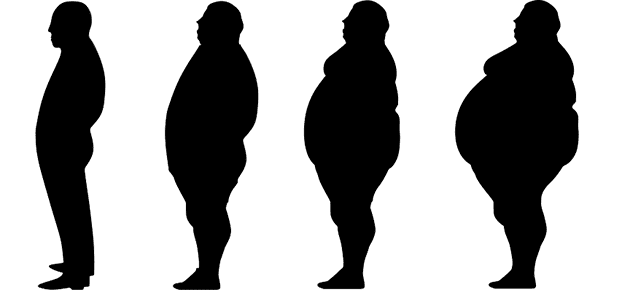
Having the right attitude about weight loss can go a long way in being successful. Being overweight contributes to poor health, sleep problems, increased risk for disease/s, and back pain. Weight problems can result from:
Eating the wrong food/s
Limited or no regular physical activity/exercise
Stress eating
Age
Genetics
These can all be overcome by setting sensible goals and realistic expectations. The first step is to discuss weight loss and general health with your healthcare provider. A doctor, health coach, or fitness chiropractor can help develop a fully customized weight loss treatment plan along with exercise, diet, and lifestyle changes/adjustments. Weight loss plans can include:
Surgical modification of the digestive system if necessary
A realistic properly developed and safe weight loss plan has a greater rate of success. If your doctor isn’t quite sure which is the best approach, they could reference a health coach, weight loss, or metabolic specialist. Assessing one’s body weight is now a more involved process than just stepping on a scale. The assessment usually involves measuring the Body Mass Index or BMI, waist circumference, and medical history. This information is analyzed to determine if there are any risks due to excess weight like high blood pressure, diabetes, heart disease, and cancer.
Nutrition Feeding The Body
A weight-loss treatment program does require a reduction in calories. An optimal treatment plan means changing/adjusting lifestyle bad habits and turning them into good/positive habits. This can include nutritional education, relearning to eat, manage stress, and adapting.
It is important to feed the body the proper nutrients it needs to maintain optimum health. No one food has all these essential nutrients. Therefore, it takes a combination of a variety of foods to help meet the body’s needs. If an individual has been overweight or obese for an extended amount of time, the body could be starving for these vital nutrients.
Nutrients
Sources
Functions
Proteins
Meat, Fish, Poultry, Eggs, Dairy, Legumes, Nuts
Formation of muscles, bone, blood, enzymes, specific hormones, cell membranes, tissue repair, regulates water/acid-base balance
Carbohydrates
Grains, Fruits, Vegetables
Supplies energy to brain cells, nervous system, blood, and muscles during physical activity and exercise
Fats
Meat, Fish, Poultry, Supplements
Supplies energy, insulates/cushions organs, helps in vitamin absorption
Vitamins
Fruits, Vegetables, Grains, Meat, Dairy
Promotes chemical reactions in the body’s cells
Minerals
Contained in most food groups
Regulates body functions, assists with growth, a catalyst for energy release
Water
Water, Liquids, Fruits, Vegetables
Medium for transporting chemicals, assists in chemical reactions, regulates temperature, removes waste, accounts for 50-70% of body weight
Types of Fats
Fats are essential in absorbingfat-solublevitamins A, D, E, and K.
Saturated Fat is known to increase blood cholesterol levels. This type of fat is found primarily in meat and dairy products. For example butter.
Polyunsaturated Fathas been shown to lower blood cholesterol levels. It is found in plant sources like cottonseed, corn, safflower, sunflower, and soybean.
Monounsaturated Fat has been shown to lower thelow-density cholesterol or LDL, which is unhealthy cholesterol. It can be found in avocados, olive, canola, and peanut oil.
A healthy diet should not exceed 30% of fat per day. An easy way to cut back is to:
Go for lean cuts of meat
Trim the visible fat
Remove the skin from poultry
Select water-packed tuna
Choose dairy products made from skim or low-fat milk
Eating and Losing Weight Recommendations
These recommendations could be redundant, but it is a start.
Drink at least eight glasses of water every day. This does not include tea, coffee or other beverages
Eat only when hungry
Stop when full
Eat and chew slowly – It takes 20 minutes for the stomach to tell the brain the body is full
Select foods that take a lot of chewing, which will satisfy the body with less food
Drinking a warm beverage with a meal helps promote the feeling of fullness and satisfaction
Serve food on a smaller plate – This fools the eyes, fooling the brain into believing that the meal is the same amount
Have a piece of fruit or a small fruit smoothie in between meals to keep hunger in check
Keep the kitchen stocked with healthy ready to eat snacks
It’s the small thorough steps that add up to achieve goals
Physical Activity Benefits
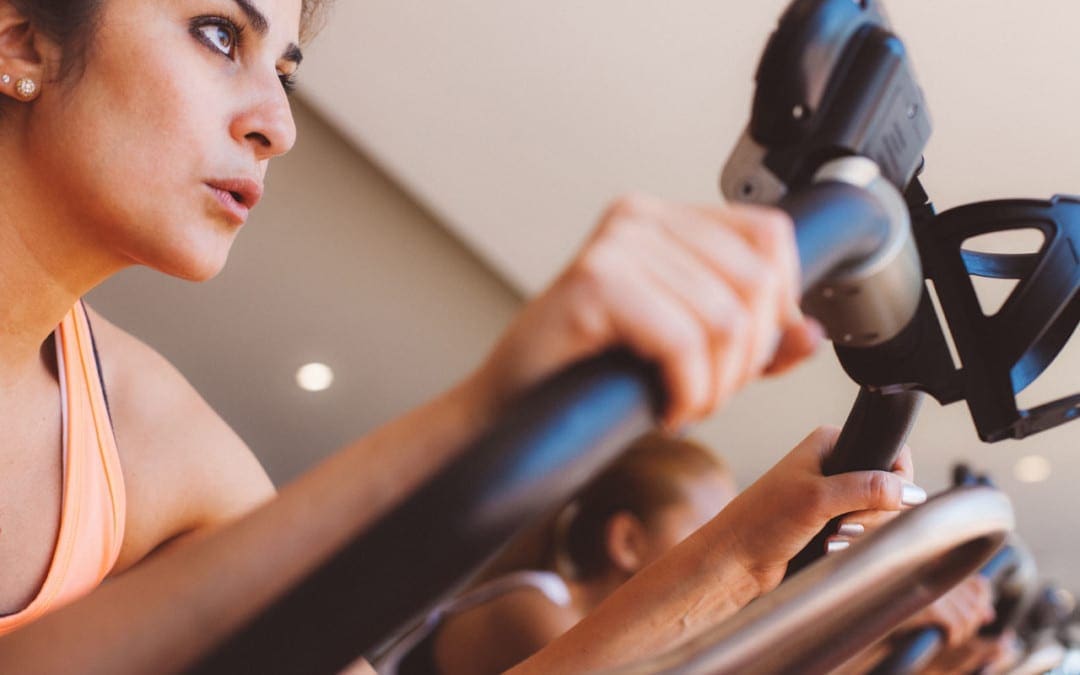
Healthy food combined with healthy eating habits and regular physical activity can help weight loss goals be met. Building and preserving muscle mass helps the body burn calories. Plus it decreases the risk of:
The scope of our information is limited to chiropractic, musculoskeletal, physical medicines, wellness, and sensitive health issues and/or functional medicine articles, topics, and discussions. We use functional health & wellness protocols to treat and support care for injuries or disorders of the musculoskeletal system. Our posts, topics, subjects, and insights cover clinical matters, issues, and topics that relate and support directly or indirectly our clinical scope of practice.*
Our office has made a reasonable attempt to provide supportive citations and has identified the relevant research study or studies supporting our posts. We also make copies of supporting research studies available to the board and or the public upon request. We understand that we cover matters that require an additional explanation as to how it may assist in a particular care plan or treatment protocol; therefore, to further discuss the subject matter above, please feel free to ask Dr. Alex Jimenez or contact us at 915-850-0900. The provider(s) Licensed in Texas& New Mexico*
Being physically fit does not mean training for a triathlon. Regular light exercise/activity is all that is needed. Just going for a 30-minute walk around the neighborhood or playing a 20-minute game regularly is highly beneficial to your health. And the more active you are the better for your health.
Skating
Bicycling
Jogging
Swimming
Walking
Playing
Regular Activity
Whatever the activity, so long as you get at least 20 minutes of exercise a day will go along way in the future. Regular activity/exercise can help prevent diseases and injuries, which include osteoporosis.
Nothing crazy, just begin to work some activity little by little into a routine. One way is after some sitting work/schoolwork once the brain has had enough is the perfect time to go outside and move around. Do some chores that require physical movement, like vacuuming, sweeping, hanging laundry, etc and turn it into a workout.� A daily routine of light to moderate physical activity strengthens and maintains the body by helping to:
Build healthy bones, muscles, and joints
Control weight
Build lean muscle
Reduce overall body fat
Prevent the development of high blood pressure hypertension��
Here are a few suggestions on how to get 20-30 minutes of daily exercise/activity.
Try an online fitness class.
Check out your local gym for online to see what classes are available.
Family time can become a fun activity/exercise time.
Take a walk with the family, as many are already doing, play basketball, soccer, or other favorite sport together.
Invite friends to be physically active online, maybe playing a workout video game and workout together.
If regular physical activity is difficult or you have a medical condition,�consult your doctor to recommend the appropriate amount of physical activity and exercises that are safe�to perform. But if you are a healthy person, but have not exercised for a while then try for 30 minutes of physical activity a day to keep you healthy and strong.
Core Exercises That Help With Back Pain
Here are some examples of abdominal exercises that can help develop strong abs and help with back pain prevention. These exercises and the number of repetitions are only suggestions. Talk to your doctor before trying these exercises, and remember to listen to your body. If it doesn’t feel right, stop right away.
Elbow Planks
Lie down on your stomach with your body straight.
Elbows should be at 90-degrees and close to the body’s sides.
Rest the forearms on the floor and interlace the fingers.
Gently push your body up using the forearms.
Don’t’ let the back fall/drop.
Stay straight.
Engage the core muscles during the entire movement.
Hold this position for 30 seconds, release, and repeat 3 times.
Do this once a day.
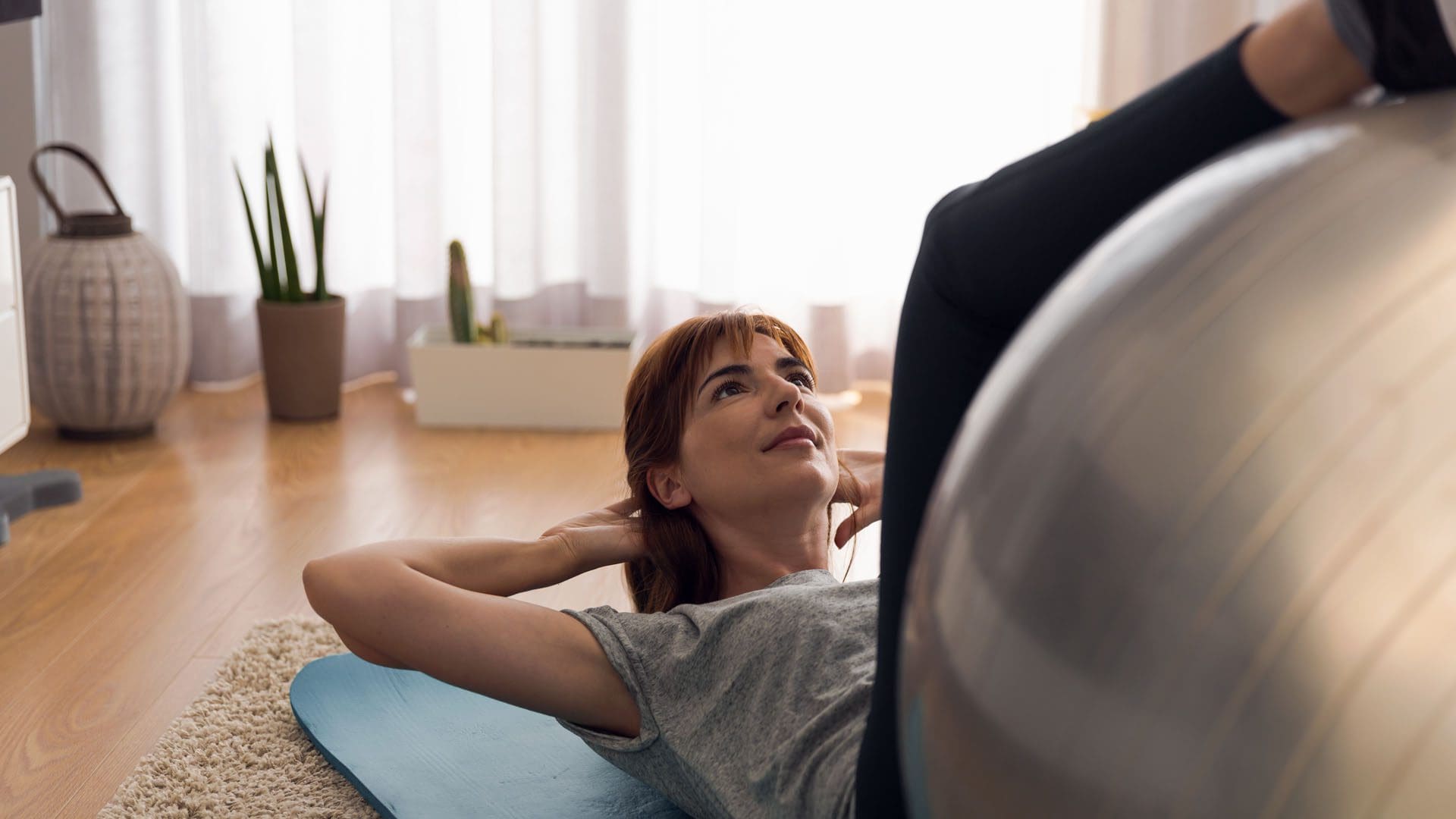
Crunches
Lie on your back with the knees bent and the feet flat on the floor, about hip-distance.
Interlace the fingers of your hands behind your head with the elbows out wide.
Inhale and then as you exhale, use the abdominal muscles and not the neck muscles to slowly raise the head, neck, and back off the floor.
Inhale and slowly lower the upper body back to the floor, and repeat.
Try for 3 sets of 10 crunches every day.
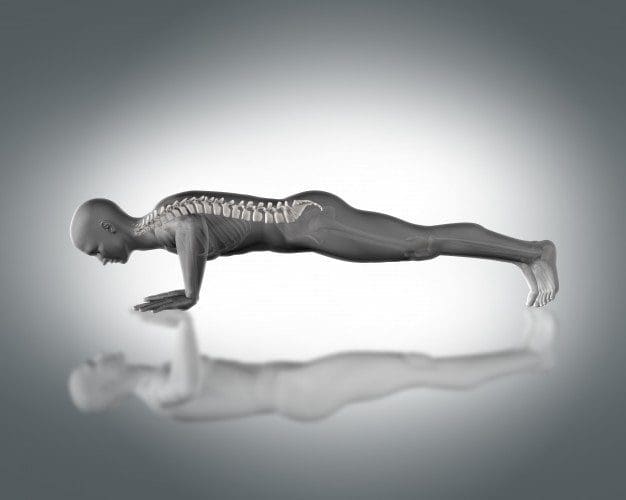
Push-ups
Lie down on the stomach so your body is straight.
Place the hands on the floor a little higher/further than the shoulders.
The hands should be wider than the shoulders.
Lift your body so that you’re balanced on the hands and toes.
Maintain a straight back, lower your body to the floor, and slowly bend your elbows until at 90 degrees.
Push back up using arm strength, upper back, and chest muscles, and repeat.
Try for 3 sets of 10 every day.
Once the body becomes stronger, you can go for more reps.
Doing these along with other core exercises you will notice your core strength leading to overall and optimal body strength. Other exercise forms that can help develop core strength while keeping the spine safe are yoga and Pilates. A good idea is to work with a physical therapist/chiropractor that can create a specifically targeted exercise plan that involves core strengthening and flexibility exercises to keep the spine healthy and help maintain proper posture.
Industrialization/modernization has impacted our food, the way we eat and our weight. Processed fast food can be purchased pretty much anywhere. We no longer expend physical energy to hunt and forage for food. Because of this back pain is probably the most common and most troublesome condition that individuals experience. Eight out of 10 will struggle with back pain at some point in their life. Low chronic back pain can become aggravated by a variety of triggers.
Mechanical stress
Excessive strain
Muscle weakness
Poor sleep position
No exercise
Excessive weight
These can all contribute to making back pain even worse. Obesity is defined as a disease. It is a serious disorder that affects adults and children. Being overweight can contribute to the development of coronary heart disease, diabetes, high blood pressure, and colon cancer. And it can also contribute to symptoms associated with:
Osteoporosis
Osteoarthritis
Rheumatoid arthritis
Degenerative disc disease
Spinal stenosis
Spondylolisthesis
Osteoporosis coupled with a sedentary lifestyle and an unhealthy diet can affect the density and the strength of the bones. When the structural integrity of the spine is compromised there is a higher risk for fracture. Vertebral fractures can be painful and disabling. Those diagnosed with osteoporosis probably have lost between 25% to 30% of bone density.
Being Overweight Affects the Spine
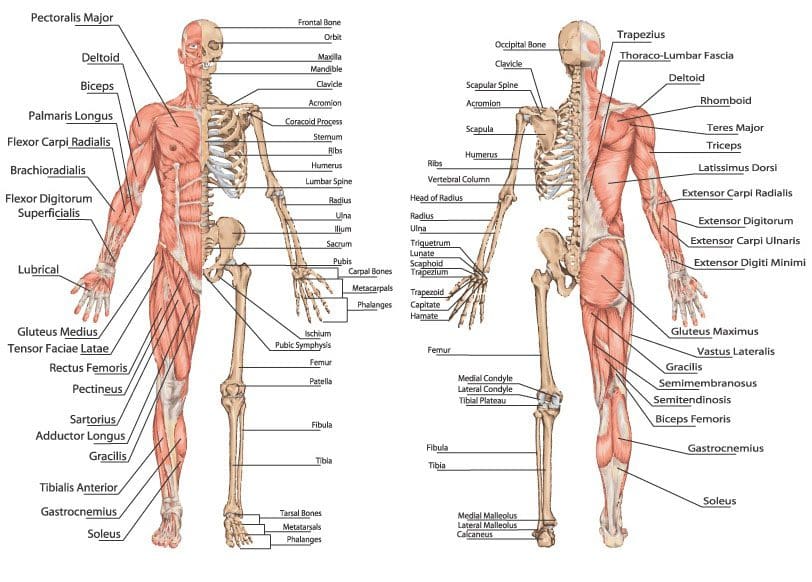
The spine carries the body’s weight and distributes the weight in an equal manner when resting and during activity. When there is excess weight the spine is forced to compromise which can lead to injuries and structural damage. The area of the spine that is the most vulnerable is the low back or lumbar spine.
Exercise is Important
When we don’t exercise it leads to:
Poor flexibility
Weak back muscles
Weak pelvis
Weak thighs
This can increase the lower back’s curve, which causes the pelvis to tilt forward in an unhealthy manner. This is detrimental to proper posture and when our posture weakens, the rest of the body follows.
Age Relation
These disorders of the spine might be thought of as the normal aging process. This is true that as we age, the body tissues begin to change and the spine’s disc wear down. But, if you are overweight, chances are you have, or will have pain in the back.
Weight Loss Reduces Back Pain
Weight loss can contribute to a partial or complete reduction in the back pain symptoms. The research between weight loss and back pain is still ongoing but numerous practitioners report cases of patients experiencing a serious reduction in pain after losing the excess weight. Because the extra weight is taken off the spine further stress is avoided. Especially when a chiropractor realigns the vertebral column. According to the American Spine Society, individuals that stay around 10 pounds of their proper weight are those least likely to experience back problems.
Back Health and Physical Activity
Chiropractic is one of the most popular treatments for back pain. With chiropractic adjustments, pain is alleviated but also the root cause of the problems is corrected. Spinal adjustments can help even more when combined with a proper diet and weight loss treatment program.
Besides weight loss, exercising and strengthening the core muscles can guarantee the proper distribution of the body�s weight. Stronger muscles, less weight, and better posture will provide amazing long-term benefits. If you want to know how to incorporate weight loss and exercise in your daily routine, speak to your chiropractor. They are ready to guide you along the way. If you aren�t currently seeing a chiropractor, give us a call. We�re here to help!
Chiropractic Weight Loss
NCBI Resources
While chiropractic adjustments and associated therapies can ease back pain symptoms and aid in healing, lifestyle changes like a healthy diet are just as important. The more a patient can get to their ideal weight, the easier it becomes to treat and eliminate the back pain.
Sitting is wonderful, however, sitting for too long is considered worse than smoking. Sitting for too long could be considered a disease. Today’s society is about technology. However, this technology involves a great deal of inactivity and sitting for a long time. This behavior has been linked to chronic disease and on a variety of health issues not to mention the havoc, it inflicts on your spine.
Unfortunately, many work environments encourage their employees to sit for hours and hours without any kind of movement except for using the bathroom. Something has to change because as someone said, “if you don’t take the time to focus on yourself and your health, you will be forced to take the time to focus on your illness.”
The Sedentary Work Lifestyle
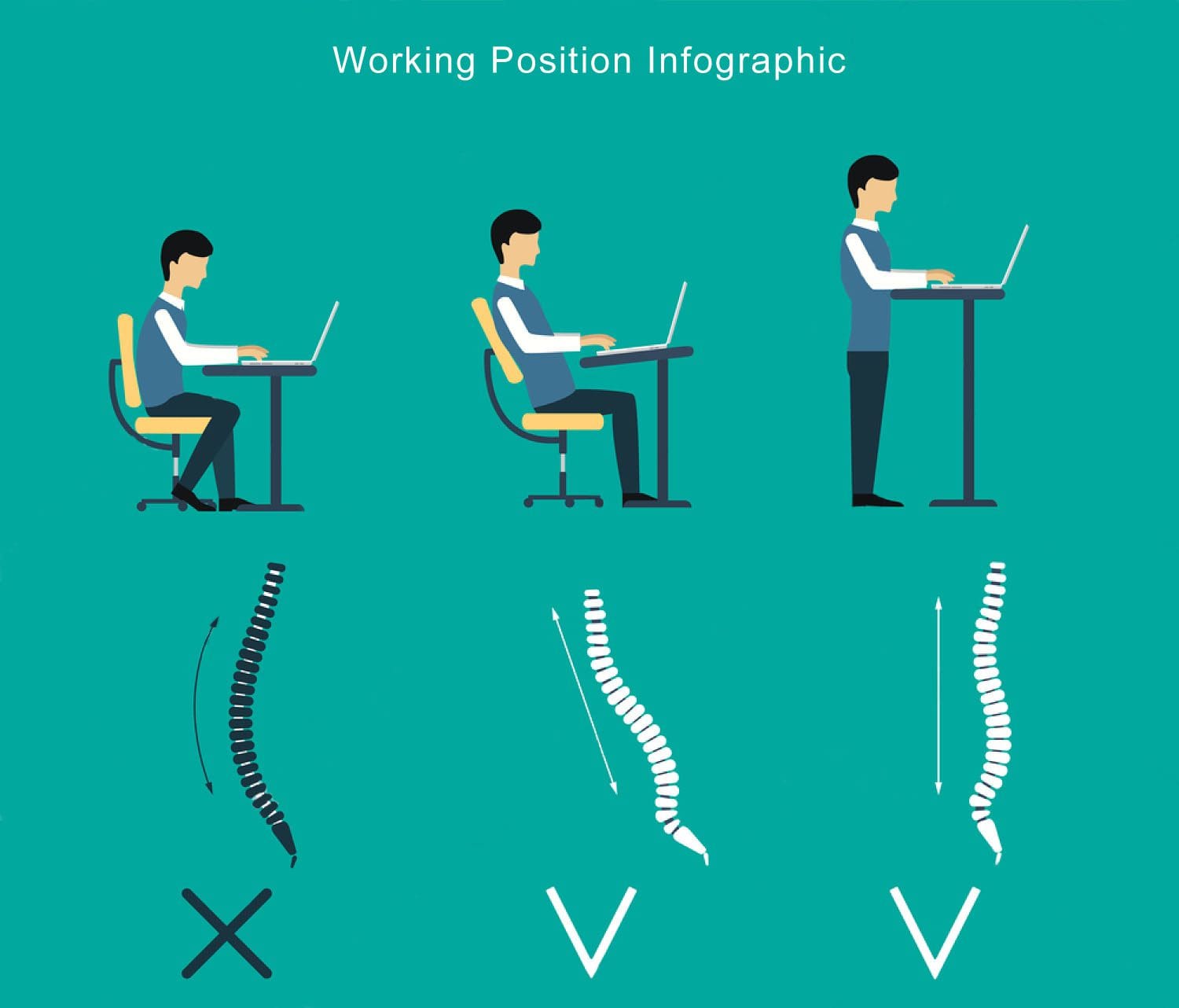
Being in front of a computer all day may be part of the job, however, the goal is to bring in more activity into the day. This can be accomplished by maintaining proper posture through exercise, stretching and if need be to invest in a sit-stand desk.
Understanding why you should avoid long bouts of time sitting, means you need to know the research about what the medical community is dubbing the sitting disease.
Health Hazards of Sitting Too Long
Up to 80% of people sit for six or more hours every day, according to a study from the National Health and Nutrition Examination Surveys. Whether at work, plopped down in front of the TV,� or the daily commute doesn’t matter, the point is that people are spending long hours sitting down and the impact of inactivity is not good.
Individuals that sit for prolonged periods have a greater risk of dying from all causes. This is because a sedentary lifestyle has been shown to increase the risk for:
Cardiovascular disease
Cancers (breast, colon, colorectal, endometrial, and epithelial ovarian)
Type 2 diabetes in adults
These results came from 47 studies that focused on the health effects of being sedentary. These included the types of activity people engage in, from leisure activities to strong physical activity. Those who did not exercise had the greatest risk of health problems with being sedentary. Adding only two minutes of light exercise for every hour spent sitting lowers the risk of presenting health issues/conditions by one-third, according to the Clinical Journal of the American Society of Nephrology study.
The Way Sitting Hurts the Back and Neck
Spending the majority of the day every day in a seated position will eventually take its toll leaving your spine sore, stiff, and in pain. Too much sitting puts stress on the muscles and discs of the back and neck.
What happens from all the sitting is tightness in the hip flexors like the iliopsoas muscle forms, along with pressure and restricted blood flow in the muscles of the gluteus maximus. This muscle supports a good amount of the weight placed on the spine.
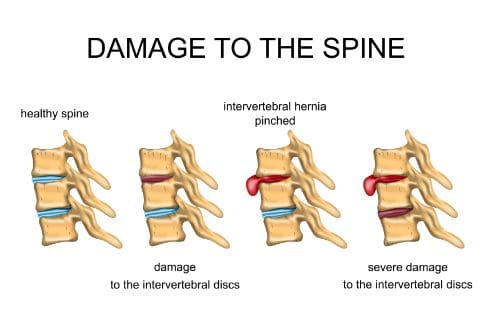
The longer individuals continue to repeat unhealthy sitting behavior, the higher the risk their posture begins to fall into slouching, into incorrect posture and possibly into spinal conditions and diseases. Slouching over time causes the ligaments to stretch beyond their healthy limit, combined with poor posture strains the spinal discs that can lead to herniation, bulging and complete loss of the intervertebral discs.
This results in added strain to the outer annulus of the disc and increases disc bulging and disc pressure.
When sitting, it’s usually at a computer/working on tasks at a desk that results in the head being in a constant forward position, with rounded shoulders that results in what is known as poor posture syndrome. Staying in the office chair or any chair too long leads to an isolated episode of back or neck pain/soreness. What’s happening is that the normal wear and tear of the spinal discs is sped up from the unhealthy weight and pressure being placed on the spine. This results in back pain that becomes a regular daily thing instead of an occasional problem.
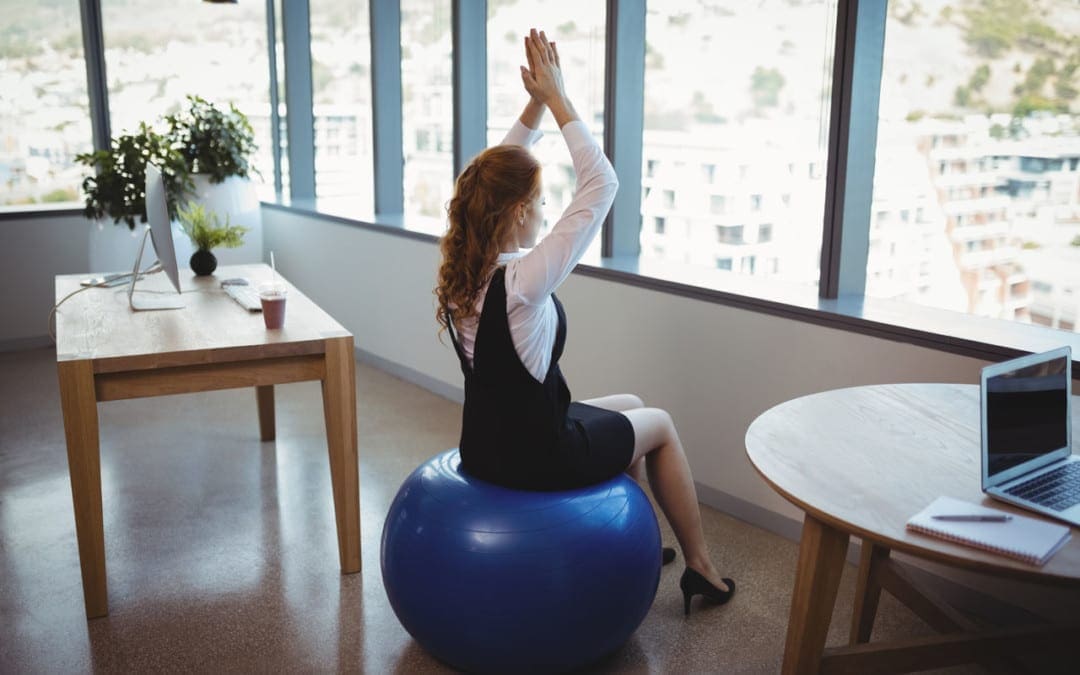
Ergonomic chairs, sit-stand desks, fitness/stability balls and utilizing proper posture/exercises are tools to help mitigate the damage of sitting all day.
This includes stretching the muscles like the:
Pectorals
Scalene muscles in the neck
Hip flexors
Strengthening the muscles that are not used is very important. Muscles like the abdominals, glutes, back extensors and scapular muscles will bring back the spine�s normal balance, improving posture and getting relief from pain. Varying posture is another great way to exercise different muscles and ligaments by occasionally standing and moving around for a few minutes every half-hour. This keeps joints, muscles, tendons, and ligaments loose and pain-free.
Work Health
We�ve all been there working, typing feeling the positive flow and then you see two hours have passed and you haven�t gotten up from your chair at all.
Experts recommend activity every 20-30 minutes, with 20 minutes of standing per hour. Desk technology has arrived and wants to keep employees healthy. Sit-stand desks are proving to be highly beneficial to companies throughout the country. These desks allow you to transition from sitting to standing while your desk stays the same.
Standing at work has shown to boost productivity all the while allowing you to readjust posture, lose weight by burning 30% more calories and keeps your spine healthy.
Stand Up
Even without a sit-stand desk, there are still ways of combating sitting disease and protecting your spine. Consider:
Doing some work standing up at a high table or counter.
Walk laps during discussions so you and your co-workers get some movement.
Take stand-and-stretch breaks every 30 minutes, set a timer if you have to.
Walk to a coworkers office to tell them in person instead of emailing/texting.
Park your car a little bit further from the office to work your steps.
After lunch walk around or do some stand-up work as this will help with digestion.
This will reduce your sitting throughout the day. Remember that changing posture is good for your back and neck, but don�t take it to the other extreme and stop sitting. It’s all about mixing it up. Sitting, standing, and moving around throughout the day is the best way to keep your spine/body-safe, and in optimal health at work and home.
Low Back Pain Relief! | El Paso, Tx
NCBI Resources
This may sound melodramatic, but it�s true. As we talked about above, sitting for prolonged periods of time puts you at greater risk of diseases that may end up killing you.�A study�published in the Archives of Internal Medicine, �found people who sat for over 11 hours a day had a 40% greater risk of dying within three years from any cause than people who sat less than 4 hours a day.�
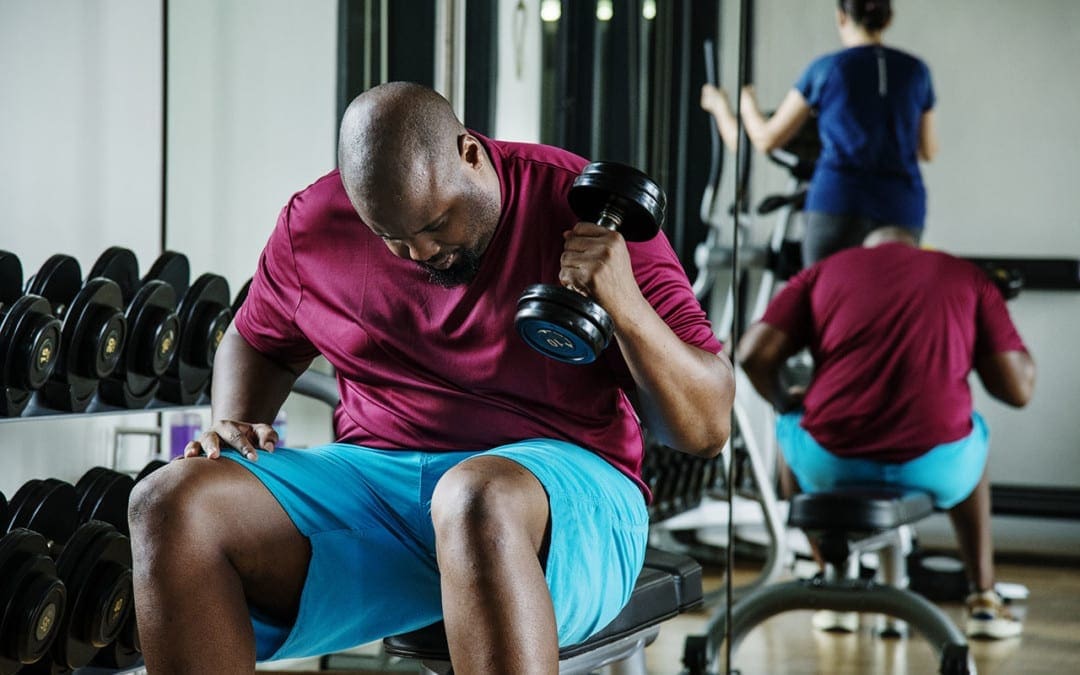
You might not think it, but weight lifting and spine strengthening exercises can help reduce back pain. Remember the point of this type of weight lifting is not to build up the muscles like a bodybuilder but is to develop:
Core strength
Spine strength
Body strength
The muscles in the back keep the spine moving and functioning properly. When the spine or abdominal muscles are weak this creates a higher probability of a back strain or injury. Having strong, healthy spine muscles are important because they function in maintaining correct posture, which in some cases, causes chronic back pain because of poor posture.
If�only one part of the body is strengthened like the back is not enough. Therefore strengthening the rest of the body is a must. These include the body’s core and leg muscles. Total body strength will reduce back pain and can help perform regular activities, like lifting heavy objects much easier, with more confidence and with a lesser probability of injury.
Spine strengthening exercises benefits
Most important reasons are they:
Prevents future back injuries
Stabilizes the spine
Helps the spine move properly
Help maintain correct posture
Increases muscle tone
Teaches correct body mechanics
Helps build bone this is especially beneficial for those with osteoporosis or at risk of developing it
A personal trainer or sports chiropractor can help start a spine strengthening regimen. They will teach:
Simple
Specific
Strengthening
Weight lifting exercises.
A physical therapist can also develop a custom weight lifting/strength�exercise�program for optimal spine health and for reducing pain.
Most workout regimens incorporate a combination of weight lifting with actual weights/exercise machines and strengthening exercises/calisthenics with the body’s weight as the resistance for maintaining a healthy strong spine.
Here are a few weight lifting and back strengthening exercises that can help decrease and prevent back pain.
Talk to a doctor or chiropractor before beginning any exercise program. Remember to listen to your body and stop right away if there is something off.
Push-ups
Push-ups help strengthen the:
Back
Chest
Arms
Core muscles
Your own body weight is the resistance.
To do this:
Position the body in a straight line from head to toe, the face looking down.
Hands should be wider than shoulder-distance apart. Walk the hands out so they are slightly higher than the shoulders
Keep the balance on toes and hands, with a straight back, lower the body to the floor by slowly bending the elbows until at a 90-degree angle.
Push up using arm upper back, and chest muscles.
Do 3 sets of 10 every day. As the strength increases do more reps.
Chest Flyes
Chest flies are excellent for building muscle in the:
Upper back
Chest
Dumbbells or a weight machine can be used for this exercise. To do this:
Lie on the floor with the knees bent and the feet flat on the ground.
Extend the arms out to either side of the body, and let them rest on the floor.
With a dumbbell in each hand, raise the dumbbells until they meet at the top at the same time, and keep a slight bend in the elbows.
Lower the hands to the ground, and repeat.
Do this exercise 15 times 3 times a week. With added strength add more reps.
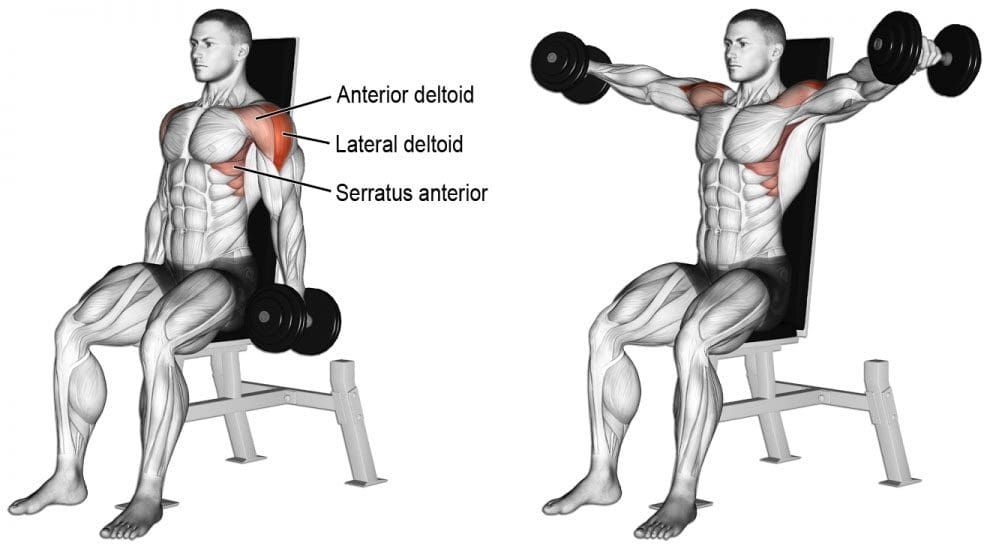
Lateral Raises
Lateral raises help strengthen the entire back. All that is needed is a set of dumbbells. To do this move:
Stand or sit with the feet equal hip-distance apart. Arms are at the side.
With a dumbbell in each hand and a slight bend in the elbows, raise the arms to the side until shoulder height. Keep the core engaged during the movement.
Once at shoulder height, slowly lower the dumbbells, and repeat.
Repeat this exercise 15 times 3 times a week. As strength increases add more reps.
These exercises should be performed slowly with a gradual build-up to more complex movements and adding more weight. Remember to breathe naturally. If you hold your breath during exercise, it can cause tension in the�muscles, which can worsen any pain or create new injuries.�Before adding weight or new spine strengthening exercises, talk to a doctor about exercising with back pain. They will let you know if there are certain movements or positions that should be avoided.
Weight lifting exercises done incorrectly can lead to more back pain and added injuries. If there is any pain while doing these exercises, stop and call a doctor, chiropractor or physical therapist right away.
As El Paso�s Chiropractic Rehabilitation Clinic & Integrated Medicine Center,�we passionately are focused on treating patients after frustrating injuries and chronic pain syndromes. We focus on improving your ability through flexibility, mobility and agility programs tailored for all age groups and disabilities.
Back Pain Chiropractic Care | El Paso, Tx
NCBI Resources
It can be tempting to not exercise with a spinal condition. But remember that if there is no movement at all, you could make the pain worse. Knowing what your body can handle and sticking to a workable schedule, these healthy steps will relieve you and help with back pain.
Sleep and weight are like a double edge sword. Less sleep will cause you to gain weight and gaining weight will cause you to sleep less. Since everyone wants to get a better night sleep, we need to cut those tight bonds so that our overall health and mental state to improve.
Less Sleep= More Weight
With our busy fast-paced lives, we tend to take on more commitments than we want. As well as, being stressed all the time. This lifestyle is not good for our bodies when we want to have a better lifestyle. In our previous article, lack of sleep can lead to chronic illness and loss of productivity. Not even that, Japan hold the number one spot of less sleep with 5 hours and less; while the U.S. holds the number two spot with 6 hours and less.
So, when we don�t get enough sleep due to causative factors, two major hormones in our body are affected and not in a good way either. It is our pituitary glands and our hormonal cortisol that get affected when we don�t get the recommended seven to eight hours of sleep. Our pituitary glands are the master controller to all our hormones and are sensitive when we don�t get enough sleep. When we actually get the recommended seven to eight hours of sleep, our pituitary glands release our growth and thyroid hormones as well as suppressing the stress hormone cortisol.
But in today�s society, according to the National Sleep Foundation, the average American sleeps only about seven hours per night-while other sleep five to six hours per night on a regular basis. With these studies, our body will be more or less in a constant state of partial sleep deprivation. Or if you have an anxious mind or have mental health issues, partial sleep deprivation can lead to chronic sleep deprivation. Chronic sleep deprivation can lead to elevated cortisol in the evening, a crucial time for the levels should be diminishing.
Cortisol Levels
When our cortisol levels get too high, we can develop insulin resistance, thus leading to weight gain and the high risk for type 2 diabetes. Chronic sleep deprivation can also change your growth hormone release. Instead of sending out one large pulse of growth hormones as soon as our heads hit the pillow, our bodies send out two small pulses, one before we go to bed and one after, thus leading us to have sleep deprivation. The one large pulse is responsible for the exposure of our tissues and reducing our glucose tolerance.
When we don�t get enough sleep throughout the day, the fat cells can�t handle the insulin in our bodies and will drop as much as 30 percent. When our cells resist insulin in our bodies, our blood sugar goes up and the excess sugar we produce is stored in our bodies as fat. This is dangerous to our health because not only we will gain the weight, but we will be at the risk for type 2 diabetes, high blood pressure, heart disease, and cancer. According to the CDC, 11.1 percent, adults who snooze less than 7 hours per night have type 2 diabetes, while 8.6 percent of adults who snooze more than 7 hours per night may already have the disease.
Late Night Munchies
One study stated that, people who snooze less tend to be heavier than people who sleep the recommended amount. The study looked at the younger age group and discovered that short sleep duration appears independently associated with weight gain. And the CDC also stated, 33 percent of adults who snooze less than 7 hours are obese, while 26.5 percent of adults who sleep more than 7 hours are obese as well. But the question still remains, why do we gain more weight when we snooze less?
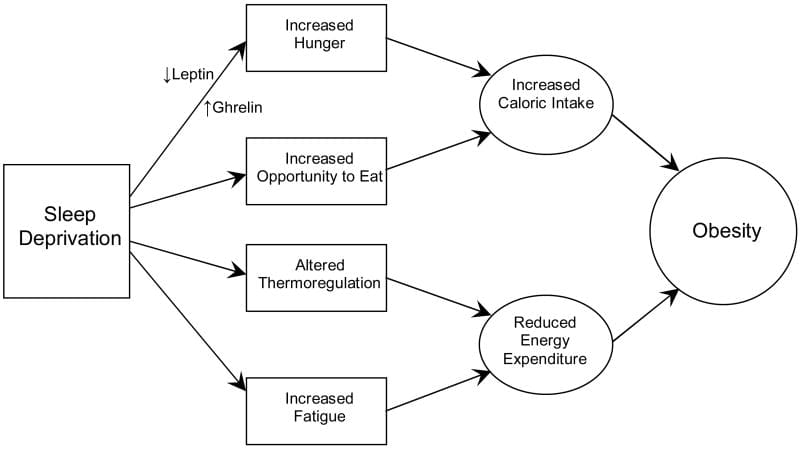
The answer is that our hormones are the ones that get affected the most when we don�t get enough sleep. Hence why we get the late-night munchies. When we are supposed to get our full 8 hours of sleep, our bodies release hormone leptin, which regulates how satiated we feel, and releases hormone ghrelin, which stimulates our appetite. So, when our hormone leptins go down and ghrelins go up, our minds think that we are very hungry and that we need to get up to satisfy that hunger with carbohydrates, thus making us loose those few extra minutes of sleep. So, it�s not your willpower that is making you wake up to eat at around 2 a.m., it is your lack of sleep that is causing the imbalance in your body.
More Weight= Less Sleep
Like we stated in the beginning, sleep and weight are like a double edge sword. Being overweight or obese can keep you from getting enough sleep as well. There are some weight-related issues like, sleep apnea, COPD (chronic obstructive pulmonary disease) and arthritis that can be an issue from getting those recommended snoozes.
Sleep apnea is very common for obese or overweight adults. When we have sleep apnea, our airways collapse or is blocked when we snooze. Our breathing gets very shallow or even stop while you sleep and can last for a few seconds to a couple of minutes or even longer.
We do wake up with a choking noise or snort then we go back to sleep, but when it�s the day time we are at risk for daytime sleepiness. Sleep apnea can be treated with breathing devices but major lifestyle changes can help you lose this medical condition.
When you are suffering from COPD, you will notice a shortness of breath and have more trouble sleeping. People with COPD may be overweight or obese can actually exercise to combat this condition. However, you must consult with your doctor if you want to change your lifestyle and fix this condition.
Painful, arthritic joints can keep you up at night. Granted that there are anti-inflammatory and pain medication that may help you sleep; but if you are overweight or obese taking those medications, they will add on more problems like digestive discomforts or a dependence.
Conclusion
Here at Injury Medical Clinic, we do consult with our patients about the importance of exercising and eating healthy to assist whatever ailments they may have. Whether it is stress or medical conditions, we strive to make our patients feel good.
In conclusion, sleep is highly important and should be on the top of the list for a better lifestyle as well as placing weight in second. Granted with our busy work schedules, and fast-pace lifestyles, we ignore sleep and we gain the weight. If you have any sleep conditions like COPD or sleep apnea, please seek professional help to get it under control. But if you change your lifestyle a little bit by eating right, focusing on mental health, exercising, and sleeping at the appropriate times; not only your mood changes but your body will heal tremendously and you will feel like you can conquer the world.
The Most Effective Chiropractor | El Paso, Tx (2019)
Neck pain and back pain are common symptoms which can develop because of sports accidents, automobile crash injuries, and a variety of other wellness issues. Painful symptoms can ultimately impact an individual’s daily physical activities, tremendously affecting their well-being. Patients clarify their neck pain and spine pain symptoms improved after they visited Dr. Alex Jimenez. Chiropractic care focuses on the diagnosis, therapy, and prevention of a variety of injuries and/or aggravated conditions associated with the musculoskeletal and nervous system. Patients highly recommend Dr. Alex Jimenez and his team as the non-surgical alternative for neck pain and spine pain related to sports injuries, auto accident injuries, and other health problems towards pain relief.
NCBI Resources
Chiropractic can help you sleep. In fact, one-third of people who undergo chiropractic adjustment report sleeping better immediately, according to the�National Sleep Foundation. The benefits are not just for adults � 40 percent of infants slept better after just one chiropractic session. That is good news, considering one-fourth of babies experience sleep problems and when babies don�t sleep, nobody else in the house sleeps either!
If you have been paying any attention to the latest diet trends, the ketogenic diet has probably come under your radar. The diet has been gaining popularity for a while now and may stay that way�as those who follow the diet are able to obtain some impressive weight loss and other health improvements. The main question about the ketogenic diet is whether it is sustainable or not. It is a challenging diet to maintain, which means you will need to be quite motivated over the long-term to make it a permanent lifestyle.
Understanding Ketosis
Under normal dietary conditions, the body burns glucose for energy. Glucose, which comes from carbohydrates, is easy to access and works well for fuel. But under the right dietary conditions, it is possible to put the body into a state of ketosis, where it starts to burn fat for energy.
How the Ketogenic Diet Works
The ketogenic diet is designed to put your body in a state of ketosis. Successful ketogenic dieters are able to burn fat at a relatively rapid rate. But reaching ketosis requires eating a lot differently than most people eat, especially those eating the Standard American Diet (SAD). In fact, it requires eliminating almost all carbs.
There is actually quite a history behind the ketogenic diet. It was developed over 100 years ago to help children suffering from seizures. There are definitely proven benefits to ketosis for at least the short term.
The average keto diet consists of 75% fat, 20% protein, and 5% carbohydrates. Achieving this ratio takes focus and persistence, but it does start getting results quickly. It only takes around 72 hours to start going into ketosis and burning your body�s fat for energy.
What do Ketogenic Dieters Eat?
Popular foods in the keto diet include:
Dairy that is high in fat�like butter, high-fat cream, and hard cheeses
All types of meat�including beef, lamb, chicken, turkey, pork
Eggs
Seeds and nuts�including walnuts, pecans, almonds, peanuts, macadamias, and sunflower seeds
Avocado
Berries
Broccoli and cauliflower
Leafy greens�like kale, spinach, lettuces
Coconut oil
Saturated fats
What do Ketogenic Dieters Avoid?
There are some foods that the keto diet definitely does not include:
All grains�including wheat, corn, rice, oats, etc.
Legumes�beans, peas, etc.
Fruit�bananas, apples, oranges, pears, plums, grapes, oranges, etc.
Tubers�yams, sweet potatoes, russet potatoes
Sugar for sweetening�agave, maple syrup, honey
What are the Challenges of the Ketogenic Diet?
Being a successful keto dieter requires a serious commitment to the task at hand. With the exception of perhaps the Inuit in the Arctic, it is difficult to think of a culture that does not eat any grains, fruit or tubers. Most meals are built around these staples. That means that finding a restaurant or going over to dinner at someone�s home and eating keto requires being very selective in what you choose. The best way to maintain your diet is to plan your meals and eat mostly what you make yourself.
The number of keto-specific options available at grocery stores and in restaurants has grown in recent years, but not enough to allow you to eat out at every meal and maintain your diet.
The biggest challenge of the keto diet is maintaining it over the long-term. Few people have the willpower to totally avoid pasta, bread, potatoes, fruit, sugar, and beans for years at a time. That does not mean you cannot try the diet out, switch to a regular or different diet, then switch back again if you choose.
Here for Your Health
As your chiropractic team, we are here to help you achieve and maintain optimal health. If you have questions about the ketogenic diet or other diets�or you just want to eat healthier�we would like to help. Contact us today to get started.
Benefits of Using Functional *FOOT ORTHOTICS* | El Paso, TX (2019)
Functional custom foot orthotics understand the anatomy of the foot. By supporting the 3 arches of the foot, functional custom foot orthotics can help promote proper posture to prevent a variety of health issues, including neck pain and back pain. Over the counter, inserts may create more harm than good. Functional custom foot orthotics can also help maintain overall health and wellness. Because every person is unique, functional custom foot orthotics can help balance a person’s unique body structure and function. Dr. Alex Jimenez can help provide functional custom foot orthotics to patients who need to improve their overall health and wellness.
99% of feet are normal at birth. But after the first year, 8% develop foot problems, 41% by age 5 and 80% by age 20.�By age 40, almost everyone has a foot condition of some sort. Many foot conditions eventually contribute to health concerns, especially the generalized condition of �back pain� or runner�s knee. Spotting a potential problem originating in the feet can prevent other injuries from affecting your health and lifestyle.
Foot Exercises
When there are problems with the feet, it can cause problems through the legs and all the way to the spine. This can cause the ankle to pronate, meaning it rolls inward. This alters the way the�bones of the foot�line up which extends through the tibia, or shin bone.
NCBI Resources
There are several significant�health benefits of a ketogenic diet. It was developed to be a way of life (WOL), not just a temporary diet and this was primarily due to the health benefits it provides. In fact, ketone diets were created to help allay or improve the symptoms of certain chronic health conditions, including epilepsy.
IFM's Find A Practitioner tool is the largest referral network in Functional Medicine, created to help patients locate Functional Medicine practitioners anywhere in the world. IFM Certified Practitioners are listed first in the search results, given their extensive education in Functional Medicine