Tennis requires strength, power, and endurance. Can combining tennis weight training into a player’s fitness regimen that is broken up into phases achieve optimal results?
Tennis Weight Training
In professional sports that utilize weight lifting, the training is often broken up into seasonal phases. (Daniel S Lorenz, Michael P Reiman, John C Walker. 2010) Each phase consists of specific objectives that contribute to and build upon the previous phase. This is known as periodization. Tennis is played year-round indoors and outdoors. This is an example of a tennis weight training program to build up strength.
Pre-Season
In the early pre-season, players prepare to rebuild their strength after a break.
The emphasis is on building functional strength and some muscle.
Late Pre-Season
In late pre-season, players workout to get ready for the start of the season.
Here, the emphasis is on building maximum power.
In Season
In season, regular practice, play, and competition get underway and players are in top condition.
In this phase, strength and power maintenance is the focus.
Season Break
This is when players need to relax for a while.
However, players need to keep active if they want to maintain some level of fitness.
The emphasis is on rest and recovery with the maintenance of light activity, like cross-training and light gym workouts.
Research has shown that taking a break from serious strength training does help the body recover and rebuild. (Daniel Lorenz, Scot Morrison. 2015)
This is a three-phase all-around program.
The first phase concentrates on building basic strength and muscle
The second phase on power delivery.
Players who play year-round can continue with the power program once they build the basics.
Players who take a break for longer than six weeks should start again with the strength program.
Pre-Season – Phase One
Strength and Muscle
The focus is on lifting heavy weights, but not going full force to begin training the nervous system to work with the muscle fibers.
Some muscle building or hypertrophy/building muscle size will happen during strength development.
Strength is the foundation for the power development phase.
Exercises:
Duration: 6-8 weeks
Workout Days: 2-3, with at least one day, however, two are recommended between sessions.
Reps: 8-10
Sets: 2-4
Rest between sets: 1-2 minutes
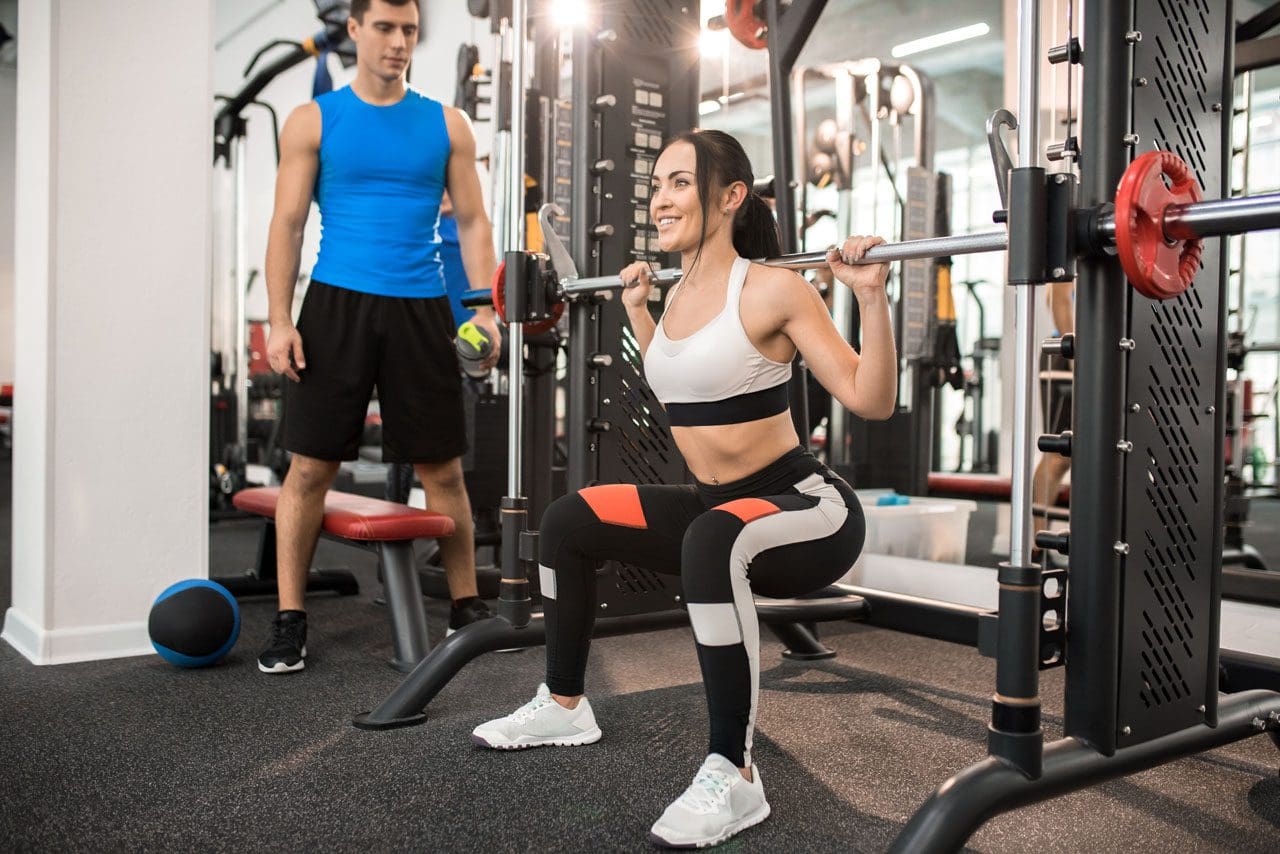
Barbell squat, dumbbell squat, or sled hack squat
Romanian deadlift
Dumbbell bent-over row
Dumbbell triceps extension or machine pushdown
Cable wood chop
Lat pulldown to the front with a wide grip
Reverse crunch
Things to Remember
Use the Proper Weight
Adjust the weight so that the last reps are heavy but don’t cause a complete failure.
Balance the Lower Half
The posterior chain of the hips, the gluteals/buttocks, the upper legs, and the abdominals are of equal importance and require equal attention. (Eline Md De Ridder, et al., 2013)
Squats and deadlifts build strength and power in this region.
Follow Proper Form
For upper body exercises like the dumbbell press, lat pulldown, and wood chops the proper form needs to be followed.
Keep the forearms in a vertical plane with the upper arms.
Do not extend excessively at the bottom of the movement.
Remember to protect the vulnerable shoulder joint.
Listen to The Body
Strength training is physically and mentally challenging.
Individuals who are not able to recover from a session with only one rest day are recommended to move the program to two sessions per week.
Muscle soreness or delayed onset muscle soreness – DOMS – is normal, however, joint pain is not.
Monitor arm and shoulder reactions during this phase.
Stop if any joint pain or discomfort is felt.
Late Pre-Season – In-Season – Phase Two
Power
Power is the ability to move the heaviest loads in the shortest time and is the combination of strength and speed. In this phase, the player builds on the strength developed in phase one with tennis weight training that will increase the ability to move a load at high velocity.
Power training requires lifting weights at high velocity and with explosiveness.
The body needs to rest adequately between repetitions and sets so that each movement is done as fast as possible.
The number of sets can be less than phase one because there is no point in training at this level when the body is fatigued.
Exercises
Duration: Ongoing
Days per week: 2
Reps: 8 to 10
Sets: 2-4
Rest between repetitions: 10 to 15 seconds
Rest between sets: at least 1 minute or until recovered
Barbell or dumbbell hang clean
Cable push-pull
Cable wood chop
One arm cable raises
Medicine ball push press
Medicine ball standing twist with a partner or alone – 6×15 repetitions fast and recover between sets.
Reminders When Preparing For the Season
Recovery Time
In power training, it’s important that the body has relatively recovered for each repetition and set so that the individual can maximize the movement.
The weights should not be as heavy and the rest periods sufficient.
Push When Possible
Rest is important, at the same time, the player needs to push through reasonably heavy loads to develop power against significant resistance.
When doing medicine ball twists, do a full set at maximum, then sufficiently rest before the next one.
If doing the medicine ball exercises alone, use a lighter ball and keep the ball in your hands while twisting.
In Season – Phase Three
When the season begins training does not stop in order to help maintain strength and power.
Strength and Power Maintenance
Alternate phase one and phase two for a total of two sessions each week.
Every fifth week, skip weight training to achieve optimal recovery.
Key Points
Things to keep in mind during the season.
Avoid Overscheduling
Avoid strength training on the same day when practicing on the court.
If the weight training has to be both on the same day, try to separate the workouts into morning and afternoon sessions.
Plan Time
Rest completely from strength training one week out of every six.
Light gym work is fine.
During the season, use intuition when it comes to working out at the gym.
Individuals with limited time, stick to court skills training instead of tennis weight training.
Off Season
If there is an off-season, this is the time for emotional and physical decompression and full-body recovery.
For several weeks, forget about weight training and do other things.
Stay fit and active with cross-training or other physical activities but keep it light to prevent injuries.
It is recommended to consult a coach, trainer, sports chiropractor, and/or physical therapist to develop a program specific to an individual’s needs, fitness goals, and access to resources.
Spine Injuries In Sports
References
Lorenz, D. S., Reiman, M. P., & Walker, J. C. (2010). Periodization: current review and suggested implementation for athletic rehabilitation. Sports health, 2(6), 509–518. https://doi.org/10.1177/1941738110375910
Lorenz, D., & Morrison, S. (2015). CURRENT CONCEPTS IN PERIODIZATION OF STRENGTH AND CONDITIONING FOR THE SPORTS PHYSICAL THERAPIST. International journal of sports physical therapy, 10(6), 734–747.
De Ridder, E. M., Van Oosterwijck, J. O., Vleeming, A., Vanderstraeten, G. G., & Danneels, L. A. (2013). Posterior muscle chain activity during various extension exercises: an observational study. BMC musculoskeletal disorders, 14, 204. https://doi.org/10.1186/1471-2474-14-204
Hiking is a form of exercise accessible to a wide range of physical abilities, which makes it a great outdoor activity for all. The health benefits include improved blood pressure, sleep, and reduced stress and anxiety. However, being out in the elements without conditioning the body can lead to serious injuries and other health issues. Many trails are rough, uneven, and have elevation gain, so even the easiest courses require balance and strength to avoid injury. Hiking training that includes strength, cardio, and practice will help condition the body to allow the trip to be more enjoyable and safe.
Hiking Training
Two of the most common hiking injuries are rolling the ankle and ankle sprains. Individuals that are out of shape or haven’t been active for some time are recommended to start with basic movements and exercises to warm up the muscles and increase heart rate.
Walk/Run Through Sand
This builds the muscles that protect the knees and ankles.
Increase Range of Motion
Using a resistance band will strengthen muscles through their full extension.
Standing on a tennis ball or balance disc is great as it builds the small stabilizer muscles around the ankles and knees.
Crunches
Building core strength will help maintain balance on uneven surfaces.
Squats and Lunges
Keep the back straight and take each squat and lunge slowly to strengthen the core muscles.
Push-ups
Sufficient upper body strength, especially the back muscles will help on long trips and when carrying a heavy pack.
Cardiovascular
Walking around the neighborhood, on a treadmill, or stationary bike will work to increase cardiovascular ability.
The objective is to get the heart rate up to build lung capacity.
Step-ups
Before a backpacking trip, weigh the pack – try 20 lbs. – and step up onto a park bench 16 to 18 inches high.
Add 5 pounds a week until the pack is as heavy as it will be on the hike.
Strength Hiking Training for Backpacking
Carrying a heavy pack activates many muscles, including those of the arms and shoulders, and back. Hiking for an extended period with a backpack requires getting used to the weight and feel of it. Nothing conditions the body for a pack better than actually experiencing it.
Shoulder and Neck
The trapezius muscles radiate out from the base of the neck.
This is where the shoulder harness of the pack sits.
Strong traps help prevent soreness.
Most of the pack’s weight should be on and around the hips, but it doesn’t always happen due to pack design and body shape.
Shoulder and Arm
The shoulder of the arm used to put on and take off the pack does a lot of work at awkward angles.
The rotator cuff of the shoulder is vulnerable to these loads.
Upper Back
The muscles of the upper and mid back contract to stabilize the pack, especially with heavy loads.
Beginning hikers and backpackers tend to get a dull pain right in the center of the shoulder blades.
Lower Back
The lower back takes the brunt of the force from lifting and twisting the posterior chain of muscles.
Abdominal Muscles
The abdominal muscles work to stabilize the pack when twisting and turning.
Legs
Walking, squatting, and standing with the pack requires strong support from the legs.
Strong legs, especially thighs, make a difference.
Start small and go slow until you feel comfortable in the surroundings. Start off with lightweight and short distances and gradually extend to heavier weights and longer distances. Remember to go at your own pace and don’t try to be an expert.
Hikers Strength Training
References
Chrusch, Adam, and Michelle Kavin. “Survey of Musculoskeletal Injuries, Prehike Conditioning, and On-Trail Injury Prevention Strategies Self-Reported by Long-Distance Hikers on the Appalachian Trail.” Wilderness & environmental medicine vol. 32,3 (2021): 322-331. doi:10.1016/j.wem.2021.04.004
Fleg, Jerome L. “Aerobic exercise in the elderly: a key to successful aging.” Discovery Medicine vol. 13,70 (2012): 223-8.
Gatterer, H et al. “Effect of weekly hiking on cardiovascular risk factors in the elderly.” Zeitschrift fur Gerontologie und Geriatrie vol. 48,2 (2015): 150-3. doi:10.1007/s00391-014-0622-0
Huber, Daniela, et al. “Sustainability of Hiking in Combination with Coaching in Cardiorespiratory Fitness and Quality of Life.” International journal of environmental research and public health vol. 19,7 3848. 24 Mar. 2022, doi:10.3390/ijerph19073848
Liew, Bernard, et al. “The Effect of Backpack Carriage on the Biomechanics of Walking: A Systematic Review and Preliminary Meta-Analysis.” Journal of applied biomechanics vol. 32,6 (2016): 614-629. doi:10.1123/jab.2015-0339
Li, Simon S W, et al. “Effects of a backpack and double pack loads on postural stability.” Ergonomics vol. 62,4 (2019): 537-547. doi:10.1080/00140139.2018.1552764
Li KW, Chu JC, Chen CC. Strength decrease, perceived physical exertion, and endurance time for backpacking tasks. Int J Environ Res Public Health. 2019;16(7):1296. doi:10.3390/ijerph16071296
Mitten, Denise, et al. “Hiking: A Low-Cost, Accessible Intervention to Promote Health Benefits.” American Journal of lifestyle medicine vol. 12,4 302-310. 9 Jul. 2016, doi:10.1177/1559827616658229
Joints are the musculoskeletal areas where two bones connect. The joints have soft tissues around them, like cartilage, tendons, and ligaments. Cartilage is the flexible tissue that covers the ends of the bones at a joint. The tendons are bands between the muscles and bones that connect everything to initiate joint movement. And the ligaments are a kind of bridge that connects the bones of the joints to keep the body stable when in motion. After an injury, the joints need to be worked out, stretched, and massaged to return to proper function and support. A chiropractic personalized rehabilitation program will include exercises that target joint stability.
Joint Injury Rehabilitation
The shoulders, elbows, wrists, knuckles, hips, knees, and ankles are joints. The spine is also made up of joints. The first step for achieving joint stability after a lower-body injury is to assess the joints for:
A physician, chiropractor, or therapist will check the joint and test for weakness or deficits in soft tissues, tendons, ligaments, and cartilage.
Individuals can have conditions, diseases, or injuries that affect the joints, causing dysfunction.
Correcting deficits may require taping, bracing, exercises, or surgery.
Joint stability is attained through specific exercises that target balance, proprioception, range of motion, flexibility, strength, and endurance.
Individuals must participate in their rehabilitation program to fully recover from their injuries.
Proprioception and Neuromuscular Training
Neuromuscular training and proprioception are essential to joint stability.
Neuromuscular control is an unconscious response to joint motions without awareness.
It is how workers or athletes adjust to uneven pavement or shift their weight to stay balanced on an incline or stairs.
Proprioceptionis the ability to sense the body’s orientation in the environment.
It allows body movement and responds without consciously thinking about where the body is in space.
The information signals detect joint position, limb movement, direction, and speed.
A joint with a high level of neuromuscular control and a trained proprioceptive system can respond appropriately to various forces placed upon it during activity, decreasing the risk of injury.
Proprioceptive exercises train joint proprioceptors to adapt before initiating a potentially damaging/injurious movement.
Targeted Training
Specific to the individual’s injury, specific exercises are incorporated to regain/relearn skill sets and reset automatic movement patterns.
Skills training improves the ability to make adjustments quickly and decreases the potential for worsening or creating another injury.
Research has found that individuals who participate in neuromuscular retraining have improved muscular activation and reaction to changes compared to those who do not incorporate retraining exercises.
Trainers and therapists use neuromuscular exercises to prevent and rehabilitate ACL injuries.
The following example of an exercise rehabilitation program can be used to rehabilitate the lower extremities. The exercises should be done slowly over several weeks. Therapeutic exercises should be combined with an appropriate and gradual range of motion and strengthening program. Individuals should always work with a chiropractor and physical therapist to develop the most suitable program for specific injuries and limitations.
One-Leg Balance
Try to stand on one leg for 10 to 30 seconds.
One-Leg Balance with Eyes Closed
Stand on one leg for 10 to 30 seconds with your eyes closed.
Akbar, Saddam, et al. “Effects of neuromuscular training on athletes’ physical fitness in sports: A systematic review.” Frontiers in physiology vol. 13 939042. 23 Sep. 2022, doi:10.3389/fphys.2022.939042
Borrelli, Joseph Jr et al. “Understanding Articular Cartilage Injury and Potential Treatments.” Journal of orthopedic trauma vol. 33 Suppl 6 (2019): S6-S12. doi:10.1097/BOT.0000000000001472
Cote, Mark P, et al. “Rehabilitation of acromioclavicular joint separations: operative and nonoperative considerations.” Clinics in sports medicine vol. 29,2 (2010): 213-28, vii. doi:10.1016/j.csm.2009.12.002
Jeong, Jiyoung, et al. “Core Strength Training Can Alter Neuromuscular and Biomechanical Risk Factors for Anterior Cruciate Ligament Injury.” The American Journal of sports medicine vol. 49,1 (2021): 183-192. doi:10.1177/0363546520972990
Porschke, Felix, et al. “Return to work after acromioclavicular joint stabilization: a retrospective case-control study.” Journal of orthopedic surgery and Research vol. 14,1 45. 12 Feb. 2019, doi:10.1186/s13018-019-1071-7
Vařeka, I, and R Vařeková. “Kontinuální pasivní pohyb v rehabilitaci kloubů po úrazech a operacích” [Continuous passive motion in joint rehabilitation after injury and surgery]. Acta Chirurgie orthopaedicae et traumatologiae Cechoslovaca vol. 82,3 (2015): 186-91.
A typical sandwich from home includes bread – one thick slice of whole wheat, one or two favorite condiments, lunch meat, lettuce, tomato, and pickles. Packing a homemade lunch to work or school is one of the easiest ways to lose and maintain weight. Making a sandwich means the ingredients, calories, and nutrition can be controlled. However, a healthy sandwich can easily exceed calories if not careful. Bread choices and condiments like mayonnaise, dressings, and cheese can change a sandwich’s nutrition and increase calories, fat, and sodium. Calories can be cut with smart nutrition information and a few recommendations.
Sandwich Nutrition Facts and Health Benefits
Sandwich Calories and Nutrition
USDA nutrition information for one sandwich with ham, cheese, and mayonnaise equals 155 grams.
Total Calories 361
Fat 16.7 grams
Sodium 1320 milligrams
Carbohydrates 32.5 grams
Fiber 2.3 grams
Sugars 5.1 grams
Protein 19.3 grams
Favorites
The calories can vary based on the bread, fillings, and spread used to make it and whether vegetables are added.
Peanut Butter
Calories 200 – 300.
Peanut butter on white bread.
A single serving of peanut butter is two tablespoons.
Peanut Butter and Jelly
Calories 350 – 500.
Depending on how much peanut butter is used and the type of jelly or jam.
Nutella
Calories 300 – 500.
A 2-tablespoon serving is 200 calories.
Turkey Sandwich
Calories 160 – 500.
Depending on the amount of meat added and condiment choices.
Ham
Calories less than 200.
This is without the cheese.
With butter on French bread, it can be 400 calories or more.
Chicken Salad
Calories 400 – 600 or more.
Egg Salad
Calories 350 for the mayonnaise filling, plus around 150 for the bread.
Egg and Cheese
Calories 250 -400 or more.
If made on a biscuit or croissant.
Subway
230 to nearly 1000 calories.
Cut Calories
With a few adjustments and healthy swaps, a nutritious and healthy sandwich that is lower in calories but full of flavor can be made.
Low-Calorie Bread
Thick, crusty bread, bagels, baguettes, croissants, and hearty rolls can contain fat and calories.
Instead, choose a whole grain or bread alternative with additional nutrient benefits like healthy fats or fiber.
Consider an open-faced sandwich for heartier bread and keeping the portion to one slice.
Once a healthy bread is chosen, build the sandwich around a meat or meat-free filling. Get creative and try different choices to find new flavors. Read labels of meat or fish spreads that sound healthy. Many brands may contain protein and beneficial nutrients, but the filling is often combined with other ingredients high in calories. Try for:
Pack the sandwich with natural toppings like vegetables. Make a goal to have at least two vegetable servings per sandwich. Nutrient-rich vegetables add flavor and crunch to the sandwich.
Iceberg lettuce, spinach, romaine lettuce, or greens.
Shredded cabbage.
Tomato.
Sun-dried tomatoes.
Cucumber.
Jalapeno peppers.
Banana peppers.
Green peppers.
Plain or grilled onions.
Basil leaves.
Bean sprouts.
Low-Calorie Condiments
The spread takes up the least space on a sandwich but can contain the most fat. Condiments should be used moderately.
When first starting, cutting sandwich calories might seem complicated and unfamiliar. Fill the refrigerator with as many healthy choices as possible, get creative, and see what you come up with, as crafting a delicious meal is fun once you get the hang of it.
Body In Balance, Fitness, and Nutrition
References
An, R et al.” Sandwich consumption concerning daily dietary intake and diet quality among U.S. adults, 2003-2012″ Public Health vol. 140 (2016): 206-212. doi:10.1016/j.puhe.2016.06.008
Sebastian, Rhonda S., et al.” Sandwich Consumption by Adults in the U.S. What We Eat In America, NHANES 2009-2012″ FSRG Dietary Data Briefs, United States Department of Agriculture (USDA), December 2015.
U.S. Department of Agriculture, Agricultural Research Service. FoodData Central. [Historical Record]: Ham and Cheese.
U.S. Department of Agriculture, Agricultural Research Service. FoodData Central [Historical Record]. Whole Wheat Bread.
Zhao Z, Feng Q, Yin Z, et al. Red and processed meat consumption and colorectal cancer risk: a systematic review and meta-analysis. Oncotarget. 2017;8(47):83306-83314. doi:10.18632/oncotarget.20667
Healthy posture and movement are essential for everyone, but especially for mothers-to-be. Practicing healthy posture is one of the most important contributions to a healthy pregnancy. Proper body alignment decreases low back and neck discomfort symptoms and muscle fatigue. A chiropractic therapy team can educate on maintaining a healthy posture when standing, sitting, and lying down throughout pregnancy, alleviate any subluxations, maintain optimal alignment, and keep the muscles relaxed through massage techniques.
Pregnancy Posture
Many changes occur in the musculoskeletal system during pregnancy for the growing fetus. This impacts posture, balance, and gait. Pregnancy posture can significantly influence the comfort and/or pain levels in the pregnant and postnatal body. This includes:
Sleeping in the best position while pregnant.
Sitting in the best position during pregnancy.
These little changes and adjustments impact the health of the mother and baby.
Postural Changes During Pregnancy
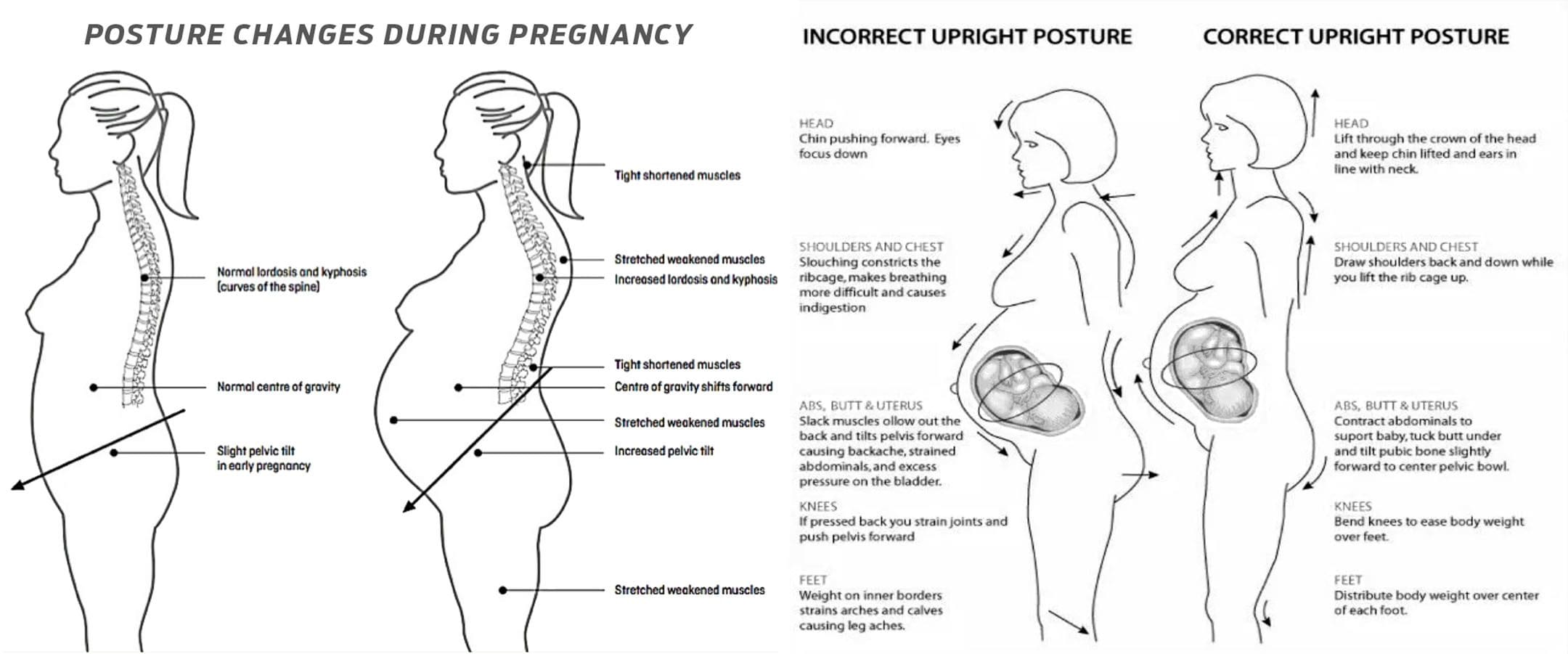
During pregnancy, several factors work against maintaining correct and healthy alignment. For one, the baby’s weight causes the lower back to sway as the center of gravity shifts forward.
Increased Lumbar Lordosis
The concave curvature in the spine can become more pronounced because of the forward pull of the growing fetus.
The normal slight forward curvature of the spine in the neck or cervical area is called cervical lordosis.
The growing fetus aggravates the forward pull on the neck.
During pregnancy, the breasts grow, adding more weight to the thoracic or mid back, causing the neck curvature to get pulled forward and down.
Both shoulders also move forward and inward.
These changes can lead to back problem symptoms/pain, sciatica, and other musculoskeletal disorders and conditions if left untreated.
Unhealthy Posture Happens Naturally
The abdominal muscles become stretched as the baby grows.
Hormone levels increase and cause joints and ligaments to loosen.
The muscles cannot contract fully and keep the lower back in alignment.
Healthy Posture Requires Practice
Standing
Proper posture when standing. From top to bottom:
Maintain a neutral gaze that looks straight ahead.
Don’t bend the head too much forward or backward.
Avoid twisting/bending movements whenever possible, or keep them to a minimum.
The chest should be up, the core braced, and the shoulders back.
The body weight is distributed evenly along the lower extremities.
Contract abdominal and pelvic floor muscles during movements, as they support the stability of the pelvis and the trunk.
When standing and having to hold the position for an extended period, use a box or stool to prop up one foot.
For example, when washing dishes, the cabinet under the sink can rest the foot on the ledge.
Switch position every 20 to 30 minutes.
Chiropractic
Whether in the planning stages or the second or third trimester, it’s essential to keep postural health in mind. A chiropractor trained in the needs of pregnant women will use tables that adjust for a pregnant woman’s body, and they will use techniques that avoid unneeded pressure on the abdomen and provide safe exercises and stretches. Benefits of chiropractic include:
Helps maintain a healthier pregnancy.
Helps regulate symptoms of nausea.
Relieves back, neck, discomfort symptoms, and pain.
Relieves and reduces excess strain on muscles, ligaments, and joints.
Spinal curvature exaggeration is corrected.
The normal spine curvatures are restored and maintained.
As more women seek the benefits of chiropractic for pregnancy, more healthcare providers seek trained doctors of chiropractic to refer their pregnant patients. Discuss these options with your healthcare provider, and schedule a visit to Injury Medical Chiropractic and Functional Medicine Clinic to check posture and biomechanics.
Chiropractic Pregnancy Treatment
References
Bauer, A W. “NEUE GESICHTSPUNKTE UEBER HALTUNG UND ERNAEHRUNG WAEHREND DER SCHWANGERSCHAFT” [NEW VIEWPOINTS ON POSTURE AND NUTRITION DURING PREGNANCY]. Wiener medizinische Wochenschrift (1946) vol. 113 (1963): 875-6.
Fitzhugh, M L, and M NEWTON. “Posture in pregnancy.” American Journal of Obstetrics and Gynecology vol. 85 (1963): 1091-5. doi:10.1016/s0002-9378(16)35644-7
Gutke A, Ostgaard HC, Oberg B Spine (Phila Pa 1976). 2006 Mar 1; 31(5):E149-55. Pelvic girdle pain and lumbar pain in pregnancy: a cohort study of the consequences in terms of health and functioning.
Schröder, Guido et al. “Impact of pregnancy on back pain and body posture in women.” Journal of physical therapy science vol. 28,4 (2016): 1199-207. doi:10.1589/jpts.28.1199
Yoo, Hyunju, et al. “Changes in the spinal curvature, degree of pain, balance ability, and gait ability according to pregnancy period in pregnant and nonpregnant women.” Journal of physical therapy science vol. 27,1 (2015): 279-84. doi:10.1589/jpts.27.279
Sciatica is one of the most common injuries, with as many as 40% of individuals experiencing the condition, and it becomes more frequent as the body ages. The pain originates with the sciatic nerves and can go on for several weeks, months, or years. Staying active is a major recommendation to relieve the pain and prevent future flare-ups. Injury Medical Chiropractic and Functional Medicine Clinic can decompress and release the nerve and educate individuals on an anti-inflammatory diet and staying active to expedite healing.
Staying Active
Sciatica is most commonly caused by a slipped disc, which puts pressure or irritates the sciatic nerve, and causes discomfort and painful sensations. The most common factors for developing sciatica include the following:
As the body ages, the spinal discs wear out and break down, leading to the spine shifting out of alignment.
Job occupations that place added strain on the back, like sitting or standing for extended periods, repetitive heavy lifting, or bending, reaching, and twisting movements.
Doctors and chiropractors have found that only resting with sciatica can worsen the injury.
This is because if it is a slipped/bulging/herniated disc, the disc remains in this state, the nerve stays compressed or irritated, and the muscles that control the low back become weak and unable to provide support.
Recommendations
Don’t Sit For Too Long
Prolonged periods of sitting place added pressure on the discs and ligaments in the low back.
Even when sitting doesn’t make it worse, the muscles can develop unhealthy muscle memory that causes partial contracting when there shouldn’t be any that tightens the gluteal muscles causing added strain.
Individuals with a job requiring a lot of sitting or standing are recommended to take frequent breaks to stretch out their muscles or use a standing desk to change positions.
Posture Adjustments
Slouching, hunching, and continuing to practice unhealthy postures will exacerbate sciatica.
Pay attention to the body’s position when standing or sitting.
To prevent slouching, pull the shoulders down and back.
Imagine the shoulder blades touching.
Individuals working at a desk or workstation should take frequent breaks.
Position the screen to see it without tilting the head down.
Increase Physical Activity and Exercise
Exercise is highly recommended to keep the muscles and nerves moving and circulation flowing.
Aerobics
Walking, light jogging, swimming, cycling, and dancing, increase heart rate without causing added strain or pain.
Strength Training
Exercises using free weights, weight machines, or isometric exercises strengthen the muscles and can help restore their position.
Stretching and Flexibility Training
Yoga, tai chi, and Pilates increase flexibility and strength.
The stretching will keep the nerves and muscles from spasms that can worsen the injury.
Strengthen The Core
A stronger core will improve spinal health. Actively engaging the abdominal muscles protects sciatic nerve roots by minimizing spinal pressure.
The back muscles can become increasingly stressed and tired when they have to do all the work without core muscle support.
A weak core can cause additional back pain and worsen sciatica symptoms.
Stand Up Straight
Keep the head and shoulders straight.
Focus On Breathing
Rhythmic breathing helps keep the mind focused and alert while engaged in an activity.
Core Muscles
The back, side, pelvis, and buttock muscles are also part of the core.
Strengthening all of these muscles helps to support the spine.
Exercises for core strengthening include yoga and Pilates, planks, and bridges.
Nerve Recovery
As the nerve recovers, the area the nerve supplies could experience tingling discomfort.
This could be accompanied by an electric sensation at the level of the healing nerve fibers.
The location of this sensation should move as the nerve heals.
With time the sensations should subside, and the area should begin to feel more normal.
Spinal Decompression Demonstration
References
Jensen, Rikke K et al. “Diagnosis and treatment of sciatica.” BMJ (Clinical research ed.) vol. 367 l6273. 19 Nov. 2019, doi:10.1136/bmj.l6273
Kuai, Shengzheng, et al. “Influences of lumbar disc herniation on the kinematics in multi-segmental spine, pelvis, and lower extremities during five activities of daily living.” BMC musculoskeletal disorders vol. 18,1 216. 25 May. 2017, doi:10.1186/s12891-017-1572-7
Ma, Xiao, et al. “The Effect of Diaphragmatic Breathing on Attention, Negative Affect and Stress in Healthy Adults.” Frontiers in psychology vol. 8 874. 6 Jun. 2017, doi:10.3389/fps.2017.00874
Ramaswami, Ramya, et al. “Management of Sciatica.” The New England journal of medicine vol. 376,12 (2017): 1175-1177. doi:10.1056/NEJMclde1701008
Nutritionists are medical professionals in food and nutrition and work one-on-one to develop an optimal nutrition plan for their body type, age, and health conditions. They explain the right foods to eat, how different foods impact the body, and what foods to avoid. Individuals can benefit from working with a nutritionist to help achieve a healthier lifestyle through education and healthy choices.
Working With A Nutritionist
Nutritionists work with individuals to enhance their knowledge about general nutrition, food, and health. Their focus is on food behavior, which includes developing and implementing meal plans to improve the individual’s or family’s nutrition. Nutritionists work in:
Clinical settings – hospitals, nursing homes, long-term care facilities, fitness and health, and chiropractic clinics.
Government – local health departments.
School districts – regarding school nutrition standards.
Private business – independent work in combination with other medical professionals.
Research – with various health and/or sports organizations.
Benefits
Working with a nutritionist will determine what factors are challenging an individual’s eating habits and triggers and find ways to overcome those barriers. Benefits include:
Nutrition plans are based on nutritional needs, current health, and lifestyle.
Nutrition plans cut down on grocery bills.
Shopping with a specific list cuts down on the extra foods being purchased.
Proper nutrition can help manage chronic diseases like diabetes and heart disease, combined with a primary care doctor or specialist treatment.
Nutritionists can help individuals dealing with food allergies or who have been diagnosed could require a diet change.
Nutritionists can help motivate when struggling to maintain a healthy lifestyle.
Responsibilities and Daily Activities
Nutritionists help individuals reach various goals, like weight loss, healthier eating habits, and stress management, and can be responsible for the following:
Evaluating health needs.
Screening for nutritional risk.
Discussing nutrition and eating habits.
Providing educational resources.
Developing personalized nutrition plans.
Talking about nutritional issues with individual families.
Discussing nutrition plans with primary doctors and other healthcare teams.
Equipping individuals with food behavior modification tools.
Adjusting plans as needed.
Monitoring progress.
Treating conditions and disease management through nutrition.
Functional Nutrition
References
Carrard, Isabelle et al. “Un outil pour évaluer les comportements alimentaires: ESSCA” [A tool for assessing eating behaviors: ESSCA]. Revue medicale suisse vol. 12,511 (2016): 591-6.
Golan, M, and A Weizman. “Reliability and validity of the Family Eating and Activity Habits Questionnaire.” European journal of clinical nutrition vol. 52,10 (1998): 771-7. doi:10.1038/sj.ejcn.1600647
Greenwood, Jessica L J, et al. “Healthy eating vital sign: a new assessment tool for eating behaviors.” ISRN obesity vol. 2012 734682. 22 Jul. 2012, doi:10.5402/2012/734682
Kelley, Claire P et al. “Behavioral Modification for the Management of Obesity.” Primary care vol. 43,1 (2016): 159-75, x. doi:10.1016/j.pop.2015.10.004
IFM's Find A Practitioner tool is the largest referral network in Functional Medicine, created to help patients locate Functional Medicine practitioners anywhere in the world. IFM Certified Practitioners are listed first in the search results, given their extensive education in Functional Medicine