El Paso, TX. Chiropractor Dr. Alex Jimenez looks at yoga for back pain.
Yoga increases strength and flexibility, but some find it to be a spiritual experience that brings serenity and delight.
I attended my first yoga class after I was 21 years old. At the time the goal was purely to appease my self so that I really could tell my family, buddies and coworkers that “I do yoga”. In my experience, yogis were “cool” and I enjoyed being linked with that healthy lifestyle. My twenty-something year old mind was in a self absorbed place and that I totally enjoyed the freedom of dedicating myself to yoga and other enjoyable ways to fill my time.
Yoga in its purest form is intended to help the individual’s head and body and is likely to be practiced without ego.
My First Yoga Course
I loved her gentle encouragement. As I visited my weekly yoga classes, bending and twisting and telling myself “I can perform this,” I began to reap the benefits. I was sleeping better. My body felt less angry and I noticed a calmness come over me. I felt more patient coping with the irritations of life, too.
Here is The�Irony
Yoga is not something you do. It’s a thing that you encounter. Because over time, it gets engrained in you it’s called a practice. The teachings of Maureen were put in me like little seeds which didn’t actually completely thrive until much later in my life. To jogging, though I did not intentionally give up my usual yoga practice, around along the way it took a back seat. Those little seeds were there but lay dormant for now.
Running Was Different
I felt free moving swiftly across the road. Being goal oriented, I found monitoring my mileage to be a pleasing achievement. Running was pleasing for another reason, too. My best friend Linda was also a runner, and we’d meet most Sundays for long runs. We’d participated in occasional half marathons and put in 15 to 20 miles each week. Running that distance took time � two hours or even more.
Those small seeds were there all along. Like I mentioned, yoga has a way of becoming engrained in you.
My Back Pain & Yoga
If you’ve been following my site, you understand that I’ve had back pain through most of my entire life. Then, seemingly out of nowhere, my little friend “yoga” softly arrived back on the scene. My pain riddled body seemed to intuitively understand it needed yoga again. I began feeling the requirement to roll over on my back and pull my legs towards my chest, before getting out of bed in the early hours. (The knees-to-chest pose extends your lower back muscles and is a gentle, soothing approach to begin your day.) The reach that was straightforward felt energizing and really good.
There are quite a lot of advantages of yoga, especially for maintaining well-being and managing low back pain. A follow up experiment was conducted after 26 weeks, and those same yoga participants were experiencing increased function and less pain. For me, the continual practice of yoga has relieved my pain to the point that I no more need pain medication to get me.
Other Ways�Yoga Relieves Back Pain
Yoga strengthens abdominal muscles both of which help support the spinal column and builds flexibility in the rear, when practiced regularly.
Holding yoga models, for up to a minute, helps stretch the muscles over time.
Properly stretching�the muscles in the low back reduces stress over the area.
Yoga offers relief from pain, stress and anxiety. All low back pain suffers know this is a vicious cycle. You start with pain that doesn’t go away. You find out there is an anatomical reason for the pain. But, you still have the anxiety, and stress of worrying about how long this may last. Yoga can counter that triple threat.
Yoga improves posture. To maintain a strong, fit, flexible backbone great posture is vital. Seated and standing yoga poses help improve the alignment of the spine and also posture. Proper bearing reduces back pain and removes some of the pressure from your spinal column.
Yoga For Beginners
Thus, let’s get started with a couple of poses which are a cinch to do and great for preserving flexibility in your spine.Try these three poses daily for increased flexibility and your spine will thank you!
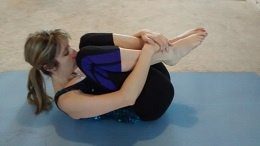
Knees to Chest Pose (Picture below)
Lie on your back with legs and arms stretched
Bring both knees to chest as you exhale. Clasp your hands around legs
Back is flat on the floor (mat)
If it’s comfortable for you, gently rock back and forth, which gives you a little massage
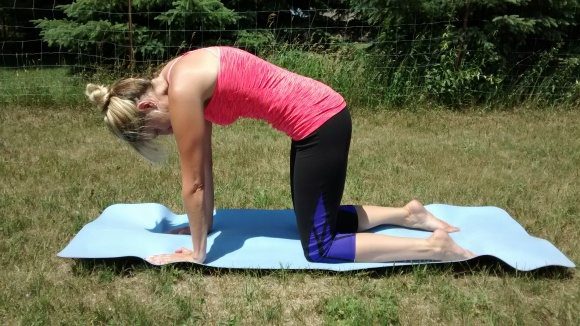
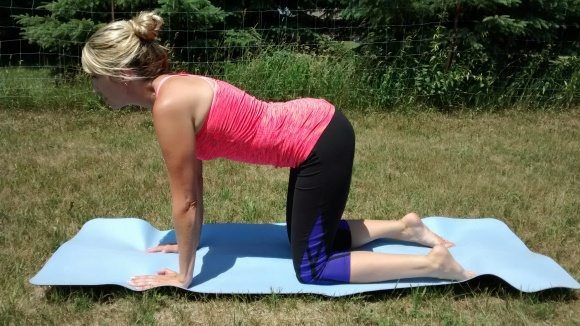
Cat/Cow Pose (Images below)
Begin on all fours in a tabletop�position
Place your hands under your shoulders along with your knees under your hips
Like a cat, round your back up to arch on the exhale
Bring your chin to chest
On the inhale, drop your abdomen and raise your head, extending your sitting bones (sits) back up
Cat Pose
Cow Pose
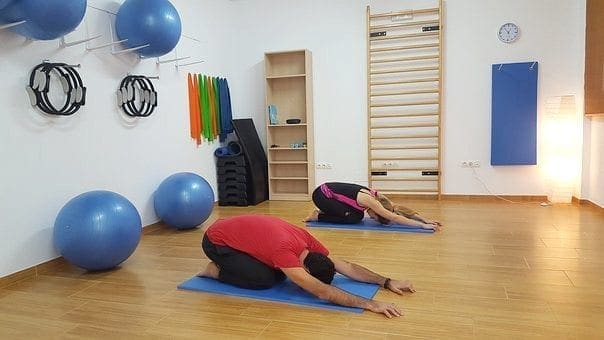
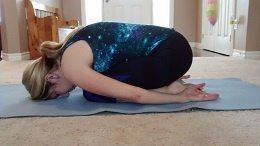
Child’s�Pose (Picture below)
Move from table top to a kneeling position. Rest your arms by your side, press your shoulders down and simultaneously reach your head tall
Slowly lower�your buttocks towards your heels feeling a nice stretch in your lower back/hips.
Let your forehead�rest on the floor
Place arms resting alongside your body
Or you can place�arms above head, gently stretching as they are placed on the floor
If it is easier too, you can widen knees as you stretch out
Those small yoga seeds�put by my first teacher long past � have continued to grow/flourish. I’m a fully certified yoga teacher and revel in sharing my practice with students every week now. May you find peace on your own journey and pain relief too, one pose at a time. Namaste.
El Paso, TX. Chiropractor Dr. Alex Jimenez takes a look at sciatica.
The pain shoots down your leg�burning, tingling, almost electric. Anyone who�s felt it knows that this is the hallmark symptom of sciatica. But did you know that there�s more to sciatica than just leg pain? And what about the best treatment�should you get plenty of rest or join boot camp? Get the answers with this slideshow. It�s your quick reference for all things sciatica�from what causes it to how to get rid of it.
Get the Answers to All Your Sciatica Questions
So What Exactly Is Sciatica?
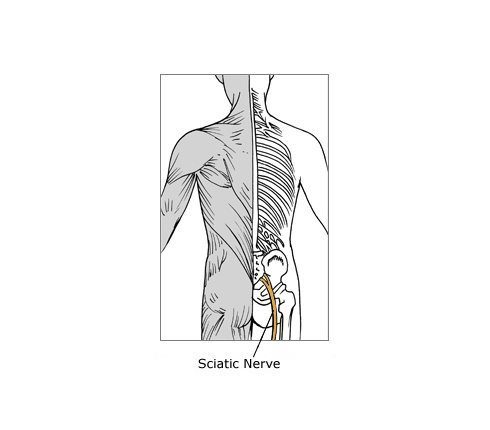
Sciatica Isn�t A Condition, Disorder or Disease. Though the pain may certainly warrant such a title. Sciatica is actually a group of symptoms. It involves the sciatic nerve, which is the longest and largest nerve in your body. The sciatic nerve is made from several nerve roots in your spine that merge and travel through your buttocks. It then extends down to your knee, where smaller nerves branch out from it and travel to your feet. Sciatica occurs when the sciatic nerve is compressed or aggravated in some way. So what causes that? Read on to learn more.
I Have Sciatica�But How Did It Happen?
Have You Done A Lot Of Heavy Lifting Lately? Perhaps with poor posture? Heavy lifting can cause a disc in your low back to bulge or herniate, and that can pinch your sciatic nerve. Lumbar herniated discs are the most common cause of sciatica. Herniated discs aren�t caused only by heavy lifting�the effects of aging on your spine can also cause herniated discs.�Though a herniated disc is the most common sciatica cause, it isn�t the only one. Spinal stenosis, injury or trauma, and even pregnancy are other common culprits.
What Does Sciatica Feel Like?
You likely understand the pain of sciatica it can shoot from your low back down your legs, sometimes into your feet. Burning, numbness, and tingling are also common sciatica symptoms. You may find that sitting or walking can become painful chores�and even a cough or sneeze can cause your pain to flare up.
Where Does It Hurt?
Sciatica affects people in different ways depending on the root cause. Some have pain in their feet, while others have intense pain above the knee. That�s why you should not only pay special attention to what your symptoms are but also where they are. This will help your doctor understand what�s causing your sciatica and, in turn, recommend the best treatment.
Medications
In some cases, the only thing you need to reduce your sciatica pain is time and over-the-counter medication. To help reduce inflammation and pain, you�ll want to choose non-steroidal anti-inflammatory drugs (NSAIDs). Advil and Aleve are brand name examples of NSAIDs. You can also try alternating heat and cold packs.
Treating Sciatica Pain
How Do I Treat Sciatica at Home?�Stay Active
Bed rest might be best for a cold, but it won�t treat your sciatica any faster. In fact, it might slow down the healing process. Most studies support staying active with mild exercise. This doesn�t mean you should spend hours in a gym�that would only aggravate your sciatica. Think gentle stretches and soothing movements. Need a place to start? Watch our sciatica exercise video series.
What if At-home Treatments Don�t Work?
You should talk to your doctor. He or she may recommend prescription medications or epidural steroid injections to reduce pain and inflammation. Or you may want to consult with a chiropractor or physical therapist. These professionals use specific therapies and techniques to reduce your sciatica pain.
Should I Be Thinking about Surgery?
But if your pain just won�t go away�even after using a number of non-surgical treatments�then spine surgery might be the best option for you. Having surgery for sciatica is a big deal, so make sure you gather as much information as possible on your procedure and don�t be afraid to ask your doctor questions.
El Paso, TX. Chiropractor Dr. Alex Jimenez takes a look at driving and how it effects the spine.
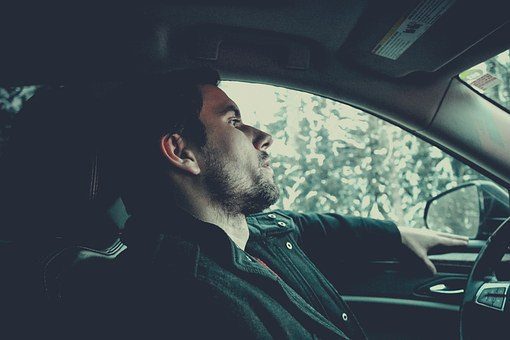
Daily, nearly 90% of journeys and 92% of miles traveled are made in autos or ground transportation (buses, trucks). On average, guys drive 44 miles as well as girls drive 34 miles each day. For many Americans, driving a motorized road vehicle is their job: truck drivers, bus drivers, ambulance and fire trucks, police, taxis etc.
Modern car and truck layouts have come a long way in their own design over the past 20 years, with better fuel efficiency, better features, better styling and better relaxation. But is there any signs that the look of contemporary bus, car or truck seats and driving might play a part in causing a few of the back injuries that plague�Americans each year?
Exactly Why Is Driving Different To Ordinary Sitting?
In case your own car is not moving, then sitting in a driving seat probably isn’t substantially different to sitting in a chair that is cushioned, but as soon as the vehicle begins moving things change. Additionally, when driving the feet are actively being used, the right foot on the gas (accelerator) pedal, the left on the brake, and in a stick-shift also on the clutch. When the feet are active they can’t be utilized to support and stabilize the reduced body when they’re put on the floor during regular sitting in a chair, as usually occurs. There is evidence the blend of those variables, coupled with the look of the car seat itself, can increase the possibility of back problems for many people.
Is Driving Linked With Back Problems?
Lab studies have examined the effects of whole-body vibration when a person is sitting in a car seat. The lumbar spine has a natural resonant frequency of 4-5 Hz , and results show that this natural frequency can be excited by lab simulated vehicle driving, and this may result in high spinal loadings in the lower back, and also this in turn could result in greater postural distress and an increased hazard of low back pain and injury.
Quite a few research studies have investigated potential associations between back and driving problems, and usually these studies have found significant consequences.
Drivers in the USA and in Sweden found that in each country 50% of those questioned reported low back pain.�
Investigation of the potential reasons for this revealed that long term vibration exposure from driving was among the greatest risk factors for neck, back and low back problems.
Gender generally seems to play an important part in the possibility of developing driving-related back problems. A survey of over 7000 Parisians found that even though severity and the prevalence of low back pain was higher in women, driving was just connected with back problems in guys. The need for driving as a risk factor improved with driving time, and was especially important for guys who drove 4 hours or more each day.
A survey of over 1400 urban transportation system motorists showed that issues using the capacity to accurately adjust the seat that was driving have significant effects on the prevalence of low back problems.
Nevertheless, it appears that driving need not consistently raise the chance of back problems.
Is There An Ideal Car Seat Layout?
Based on a comprehensive evaluation of advice from peer-reviewed scientific journals and texts, automotive engineering reports, and also the National Library of Medicine a string of requirements for the best car seat layout have been developed. Ideally, the optimal car seat should have:
1. Adjustable seat back incline (100 degrees from horizontal is ideal)
2. Changeable seat bottom depth (from seat back to front edge)
3. Adjustable seat height
4. Flexible seat bottom incline
5. Seat bottom cushion with solid (dense) foam
6. Adjustable lumbar support (horizontally and vertically adjustable)
7. Depth pulsating lumbar support to lessen static load
8. Flexible bilateral arm rests
9. Flexible seat back incline (100-degrees from horizontal is optimal
10. Flexible head restraint with pad that is lordosis
11. Frequencies between 1- 20 Hz to dampen
12. Linear front-back seat traveling to allow otherwise sized drivers to reach the pedals
13. Seat back damped to reduce bouncing of the torso in rear end impacts
Driving Safety
What To Check For In A Great Car Seat Layout When You Buy The Next Car
It is likely that most automobiles available on the market today won’t have the features listed above that are desirable in the optimal car seat all, but some will have more than others pick wisely. Pay close focus on the subsequent 5 guidelines which should help you to protect your back when you drive.
1) Car Seat Comfort
You’ve fixed this to suit your body and when you sit in the car seat does it feel comfortable. Otherwise, you will be most likely caused by then the car seat rear discomfort issues should you drive for any length of time. Rebound up and down in the seat to find out the way that it adapts vibration. Take the automobile on a test drive.
2) Car Seat Adjustments
Can you correct each of the features of the car seat you want to adjust? At a minimum you need to have the ability to adapt:
Seat space to accommodate different leg lengths
Seat height to accommodate different leg lengths
Backrest angle to sit down in either an upright or more reclined posture
You Should�Look For Other Adjustments That Are Useful:
Seat tilt to angle the front of the seat down or up so that this does not press against the back of your knees
Look for a car seat that supplies you with great low back support that can be corrected for depth (frequently the seat has an inflatable cushion) and is height adjustable
Headrest for neck support
Arms rests which are broad, cushioned and comfortable, and preferably height flexible
3) Shift Your Position
Remember to go your position from time to time. Wait until driving conditions are right to enable you to wriggle in the seat to relieve postural fatigue.
4) Take Breaks
Driving is exhausting work and to prevent driver fatigue and minimize postural discomfort it is good move around and take to pretty frequent rest breaks that enable you to stand up.
You can select a number of car seat accessories that will enhance seat comfort for you personally, from fleece covers to soften the seat to bead backrests to provide for some type of back massage while you drive. Select anything you find adds to your driving comfort.
5) Seat Accessories
You’re able to pick a number of car seat accessories which will improve seat comfort for you personally, from fleece covers to soften the seat to bead backrests to provide for some sort of back massage while you drive. Choose anything you locate adds to your driving comfort.
El Paso TX. Chiropractor Dr. Alex Jimenez looks at the work environment to see if it is in fact spine friendly.
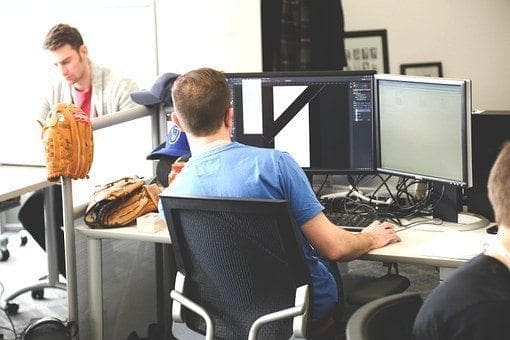
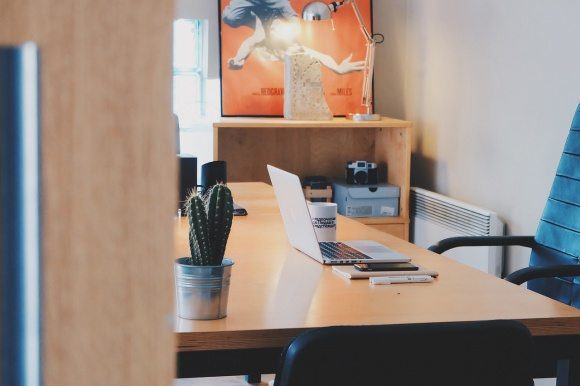
While work can be a pain, it doesn’t have to cause pain. Creating your office work room in order to avoid back and neck strain is easier than you may think. Plus, rethinking your work environment is a fantastic chance to brush up on other healthy work habits as well as your posture.
Here are five ways you are able to design your office together with your back in your mind.
#1. Perfect Your Sitting�Posture
If you’re not sitting right even with the top equipment, your back will suffer. Pay attention to the situation of legs, hands, and your head when sitting. To avoid back pain, make sure to do the following:
Sit erect with your back and shoulders against the trunk of your chair
Consider using a hands free headset to stop shoulder and neck pain
Don’t slouch
Arms should rest on the armrests of your chair to avoid nerve pressure or circulatory difficulties
Keep your feet flat on the flooring�don�t cross your legs
Rest your shoulders while typing
#2. Get A Good�Chair
A good-constructed ergonomic seat to help increase your blood flow, reduce fatigue, stress, and decrease the chance of injury to your own neck and back. Getting the chair that is best is important, which means this is one product which should be tried in the store as opposed to purchasing online so you know before purchasing it, the way that it feels. Make fully sure your office chair has got the following:
A good backrest that provides lumbar support
The capability to recline (Sitting erect at a 90� angle is not good for your spine; a 100-degrees to 110-degrees angle is much better.)
Flexible height (You don�t want the seat to be overly high�your feet must be flat on the floor)
The ability to rotate or swivel, so you can easily�change tasks
#3. Invest In A Desk That Offers More Than Just Storage
One of the biggest pitfalls of a spine-friendly work routine is staying in one position for a long time. Switching between sitting and standing is the best strategy, and some desks�known as sit-stand desks or sit-to-stand desks � encourage one to mix up your position through the entire workday.
Sit-to-stand desks offer you the choice to work comfortably in both sitting and standing poses�and they been discovered to simply help burn off calories. They come in various price points and styles, and a growing variety of companies are considering this investment to boost workplace wellness.
If you�re looking to boost the ergonomic quality of a traditional desk make sure the desk is:
Secure (not wobbly)
Suitably high (generally 28″ to 30″ above the floor)
Large enough for your computer, with surface space for writing along with other jobs.
Not�so large that you have to over reach to do your work, which could cause excessive stress on the back
#4. Look At Your Computer
Since so much office work is done on computers, wherever your equipment is put can really make a difference when you are at work, in how your back feels. Try the following hints:
Tilt the keyboard down and slightly away from you for better wrist posture
Be sure your mouse is close enough so you can use it with your arms relaxed, and let it be as close to your body as possible
Set the monitor right in front of you at eye level, not off to the side, in order to avoid eye and neck strain. Adjustable monitor stands are available to find an ideal height.
If using a notebook, consider getting an external monitor or keyboard (or both). This enables each of those parts individually to move to develop a comfortable arrangement.
#5.�Take A Break
Not just a coffee break but a spine break. Stretch, take a quick walk, get the blood flowing. It�s simple to get caught up in work jobs and forget that you�ve been sitting or typing for a straight hour. Whether it�s a 15-minute walk or two-minute stretch session, occasional breaks can help revive your muscles, and perhaps you can find feel more productive, too.
You spend lots of time at work�why not take a few extra steps to develop a space that does your back a number of favors in return?
El Paso TX. Chiropractor Dr. Alex Jimenez looks at how chiropractic treatment can help with joint inflammation.
If you are one of the millions of Americans with arthritis, you don�t have to suffer from painful joint inflammation.
Joint swelling is common in different types of arthritis, but arthritis can be managed with chiropractic care.
Arthritis Can Appear�Anywhere�& Symptoms Range From Inflammation, Pain & Stiffness
There Are More Than 100 Different Forms Of Arthritis & All Cause Pain In Different Ways
Arthritis was once considered a common part of the aging process and a signal that it�s time to slow down. However, according to the American Chiropractic Association, recent research and clinical findings show that there is much more to life for arthritis patients than the traditional recommendation of bed rest and medications.
The physical medicine of chiropractic adjustments which help restore the injured tissue strength and elasticity while decreasing the nerve sensitivity. With movement and function restored, excess pressure is not forced onto the joints.
According to Dr. Mike DeCubellis, owner and director of Main Street Chiropractic and Wellness Center in Downers Grove, the most effective therapies to relieve the pain and stiffness of osteoarthritis of the spine is massage therapy, electrical muscle stimulation therapy and ultrasound.
�The goal for each of the therapies is to reduce the pain and inflammation, relax the muscles tension associated with arthritis and increase the joint motion,� DeCubellis said.
Arthritis cannot be cured, but treatment from a chiropractor can prevent the damage created by the arthritis.
If a joint is out of alignment and not functioning properly, the surfaces will begin to make contact. That grinding causes inflammation, which leads to arthritis and – if left untreated – joint damage.
Your chiropractor can help you develop an exercise program that will help restore range of motion and improve flexibility and increase strength.
Modern chiropractic started in the late 1800s when Daniel David Palmer, a self-educated teacher and healer, performed the very first spinal manipulation on a patient. Chiropractic is the third largest area of medicine today. The word chiropractic comes from Greek words meaning “treatment by hand”, which is exactly what chiropractors do�they use their hands to manipulate the body and promote healing and wellness.
The chiropractic philosophy is dependant on the following belief statements:
All bodily functions are connected as well as the healing process requires the entire body.
A healthy nervous system, especially the spine, is the important thing to your healthier body. The spinal cord carries advice throughout the body and is accountable for many bodily functions including voluntary movements (such as walking) and involuntary functions (like respiration). When the systems of the body have been in equilibrium, it is called homeostasis. Disorders of the bones, muscles, and nerves increase the risk of disorder along with other health problems and can disrupt homeostasis.
When body systems are in harmony, the human anatomy gets the extraordinary ability to keep well-being and treat itself.
Chiropractors
They use traditional diagnostic testing strategies (like x-rays, MRI, and laboratory work) along with specific chiropractic techniques that involve hands-on manipulation of the articulations (joints) of the body. Nutrition and healthful lifestyle counseling is also offered by chiropractors. Chiropractors elect to not prescribe drugs, plus they do not perform operation; however, many chiropractors work with medical doctors and certainly will refer a patient when needed.
Chiropractors believe among the chief reasons for pain and disease is the misalignment of the vertebrae in the spinal column (this is known as a chiropractic subluxation). Through the usage of manual detection (or palpation), carefully applied pressure, massage, and manual manipulation of the vertebrae and joints (called adjustments), chiropractors are able to alleviate pressure and irritation on the nerves, restore joint mobility, and help return the body’s homeostasis.
Some chiropractors dedicate their practices exclusively to finding and removing subluxations. But in addition to using manual adaptations, most chiropractors offer other treatment modalities such as the following:
Physiotherapy
Herbal therapy
Heat/cold therapy
Ultrasound
Electric muscle stimulation
Acupuncture
Manipulation under anesthesia
Traction
Massage
Exercise programs and teaching
Lifestyle and nutrition counselling
Physical rehabilitation
Additionally, many chiropractors have considerable postgraduate training and become board certified in some specific regions of interest such as for instance:
Neurology
Orthopaedics
Sports medicine
Physical rehabilitation
Nourishment
Diagnostic radiology
In Overview
Chiropractic has come a long way since its beginnings. Due to its success in treating back and neck problems and as a consequence of changing approaches and recent research, chiropractic has become more accepted and is currently considered by many to be a piece of mainstream Western medicine. Actually, many hospitals finally have chiropractors on staff. Chiropractors will also be recognized by the court system as expert witnesses inside their field.
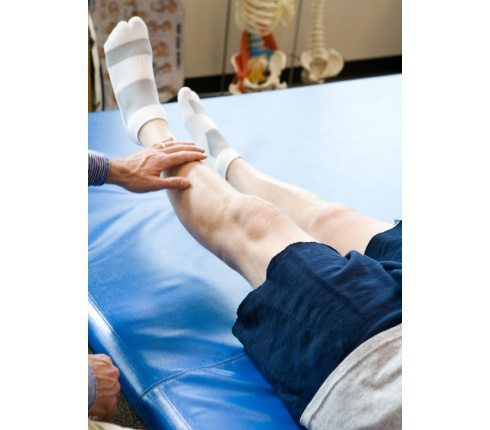
The majority of clients that present to the clinic with anterior knee pain over the coming year will more often than not have a patellofemoral (PF) problem.
It may be a slight bit of biomechanical mal-alignment that has stirred up the knee cap – this is the good, or they may have started to wear the cartilage behind the knee cap and as a result it has softened – chondromalacia � this is the bad. They may even have worn a hole into the knee cap cartilage and they now have a chondral defect, or worse still an osteochondral defect – the downright ugly.
These problems affect runners, cross fitters, group exercise enthusiasts (PUMP classes) and simple recreational walkers who spend a lot of time on hills and stairs.
How These Extremes Are Managed Will Differ
The biomechanical irritations and the chondromalacia versions can be managed conservatively with a combination of local treatment modalities and correcting the biomechanical faults. The more serious chondral/osteochondral defects often need some surgical intervention as often the pathology is too advanced to respond to conservative treatment alone.
Understanding the exact mechanical contributions of the knee cap in relation to the femur is critical for the therapist to effectively manage these problems.
At the local PF level, the fault is usually a malposition of the patella in the femoral trochlear groove. Often the knee cap is being pulled too far laterally and superiorly in the groove, creating an uneven contact situation between the knee cap and the femur. The PF compression force during loaded knee flexion (squats, lunges etc.) is no longer optimal and usually a smaller portion of the patella cartilage is taking all the load. This wears the cartilage down and creates pain and pathology. This is most noticeable as the knee flexes to 30 degrees and onwards as it is this knee flexion angle where the knee cap enters the femoral trochlear groove.
The more distant (but often dominant) faults lie at the hip/pelvis and at the feet. Below is a breakdown of common biomechanical faults that may contribute to PF pain syndromes.
1. Overpronation
If the foot pronates (rolls in) for too long or too much, the pronated midfoot forces the tibia to remain internally rotated. The femur follows the tibia and also internally rotates. This creates a mal-alignment at the knee whereby the PF arrangement is altered and the knee cap shifts laterally. We are all familiar with the Q angle of the knee and how this affects the PF alignment.
Common causes of overpronation may be structural flatfoot problems that can be corrected with orthotics and shoe selection. However, tight soleus (that limits dorsiflexion) or a tight and overactive peroneal system that everts the foot and flattens the foot can also be a cause.
Stretching and loosening the soleus and peroneals along with strengthening the anti-pronation muscles such as tibialis posterior, flexor hallucis longus and flexor digitorum longus may help fix this problem.
FADDIR represents a flexed, adducted and internally rotated hip joint at foot strike. This is often caused by tight and overactive hip flexors such as TFL and the adductors and weakness in the abductors (gluteus medius) and external hip rotators (gemellus, obturator muscles). This hip posture forces the femur to roll inwards and as a result the knee is deviated medially and away from the vertical line drawn up from the foot. This also increases the Q angle and PF misalignment results and perpetuates the local knee imbalance of tight and overactive lateral quadriceps and lateral hamstrings along with ITB tightness. As a result the VMO weakens.
Loosening the overactive TFL, adductors, lateral quad, ITB and lateral hamstring whilst strengthening the gluteus medius, hip external rotators and VMO may help this biomechanical mal-alignment.
3. Pelvic Trendelenburg
Defined as lateral pelvic shift whereby at stance phase the opposite side of the pelvis drops down below the height of the pelvis on the stance side. This is usually caused by a weak gluteus medius complex that is unable to hold the pelvis stable during stance phase. The implications again are that this causes the knee to roll in and increase the Q angle. The solution is to muscle up the gluteus medius.
This often forgotten about imbalance creates a situation whereby the individual finds it difficult to attain hip extension at the end of stance phase. The hip remains locked in a degree of flexion.
The knock on effect is that the knee also stays locked in some flexion. With the knee in flexion, the knee cap is now compressed against the femur, compression on the underside of the kneecap may result. To fix this the therapist needs to stretch/loosen the hip flexors and strengthen the gluteus maximus to promote more hip extension.
IFM's Find A Practitioner tool is the largest referral network in Functional Medicine, created to help patients locate Functional Medicine practitioners anywhere in the world. IFM Certified Practitioners are listed first in the search results, given their extensive education in Functional Medicine