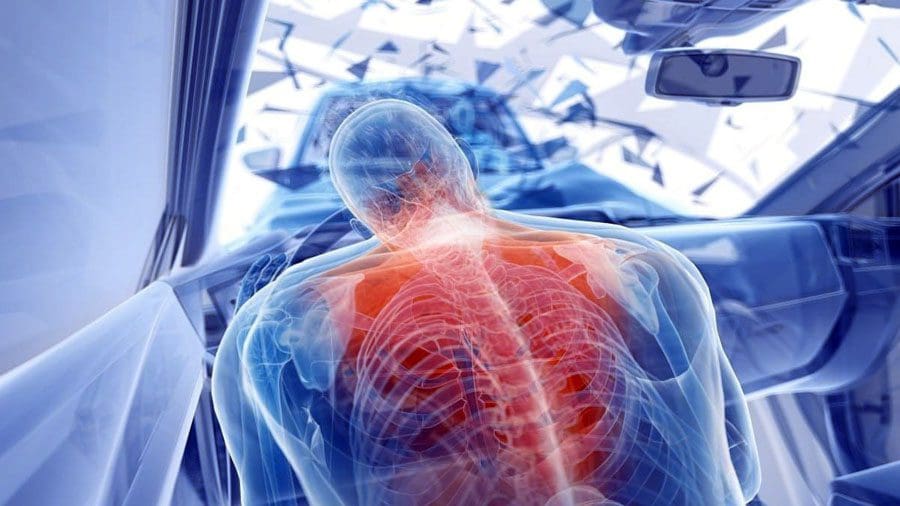
Back injuries from vehicle collisions vary from person to person. Common injuries may include strains, sprains, herniated discs, and fractures, and individuals dealing with certain spinal conditions like spinal stenosis may cause the medical condition to accelerate. Still, the force and physical impact the body absorbs during a crash, no matter how minor the accident or how safe the car is, will cause bodily aches and pains with the potential for other spinal conditions. Chiropractic care, massage, decompression, and traction therapy can relieve symptoms and restore mobility and function.
Back Injuries From Vehicle Collisions
Depending on how the impact affects the spine, problems can present in various areas of the back. The violent motion can sprain, strain, and fracture spinal components. Even minor incidents can impact mobility. Symptoms can stem from inflammation, compressed nerves, or fractures. Any damage can have long-lasting effects on the vertebrae, nerve roots, and back muscles. A vehicle collision can affect the following:
Lumbar vertebrae – lower back
Thoracic vertebrae – middle/upper back
Cervical vertebrae – neck
Each area consists of bones, tissues, muscles, nerves, tendons, and ligaments extending from the neck to the pelvis.
The most common back injuries are to the neck and lower back, where the most movement and shifting occurs, often causing nerve damage.
The central placement and rigid structure make middle back injuries less common.
Upper back injuries that connect the rib and chest region can affect breathing.
Soft tissue injuries might not show up immediately.
Symptoms
After a vehicle collision, it’s common to feel sore all over. The symptoms can range from manageable discomfort to complete immobility. Individuals may experience the following:
Muscle spasms
The muscle may repeatedly twitch, feel like hard knots, and feel tender to the touch.
Muscle spasms can vary in pain levels from mild to debilitating.
Stiffness
Individuals may not feel as flexible because of the muscle tension that activated during the crash to protect the body.
Stiffness can go away after light stretching or continue throughout the day.
Burning or Shooting Pain
A burning or shooting pain may travel down the back and buttocks through the back of one or both legs.
It can be mild, dull aches and pains that go away quickly or last for days.
Changing positions, such as sitting up after waking up or standing up after sitting, can cause sharp acute pain.
Certain physical activities can cause a throbbing sensation or mild pain when attempting to perform various tasks.
Tingling and/or Numbness
Tense muscles can pinch nerves leading to sensations of tingling or numbness in the legs, feet, arms, or hands.
Head Issues
Headaches, dizziness, or disorientation can present.
Spinal Disorders
Back injuries from vehicle collisions can result in a degenerative disc disorder months or years later. It can also speed up health issues individuals didn’t know they had before the crash. As the body ages, previous damage combined with degeneration can result in:
Micro-tears within the muscles and ligaments are common and cannot be found through a standard x-ray.
Spinal adjustments can bring the spine back into alignment, producing natural anti-inflammatory properties to assist with discomfort and heal the tears.
Scar Tissue Breakdown
Muscles can get scarred, causing stiffness and soreness.
Chiropractic massage targets these areas and breaks down the build-up quicker than if it was left to heal on its own.
Less scar tissue means faster recovery.
Range of Motion and Mobility Restored
Back injuries can result in restricted mobility.
It may be difficult to turn or move when the muscles are inflamed.
Mobilizing the spine through adjustments restores the proper range of motion.
Decreased Medication Use
Prescription pain medications can turn into dependency.
Chiropractic adjustments can ensure that the injury is healed and the pain is not just masked.
Long-Term Benefits
Receiving chiropractic care can help prevent minor injuries from worsening into serious and chronic conditions.
Post Whiplash Symptoms
References
Erbulut, Deniz U. “Biomechanics of neck injuries resulting from rear-end vehicle collisions.” Turkish neurosurgery vol. 24,4 (2014): 466-70. doi:10.5137/1019-5149.JTN.9218-13.1
National Spinal Cord Injury Statistical Center. (2020) “Spinal Cord Injury: Facts and Figures at a Glance.” https://www.nspine injurysc.uab.edu/Public/Facts%20and%20Figures%202020.pdf
Rao, Raj D et al. “Occupant and Crash Characteristics of Elderly Subjects With Thoracic and Lumbar Spine Injuries After Motor Vehicle Collisions.” Spine vol. 41,1 (2016): 32-8. doi:10.1097/BRS.0000000000001079
Rao, Raj D et al. “Occupant and crash characteristics in thoracic and lumbar spine injuries resulting from motor vehicle collisions.” The spine journal: official journal of the North American Spine Society vol. 14,10 (2014): 2355-65. doi:10.1016/j.spinee.2014.01.038
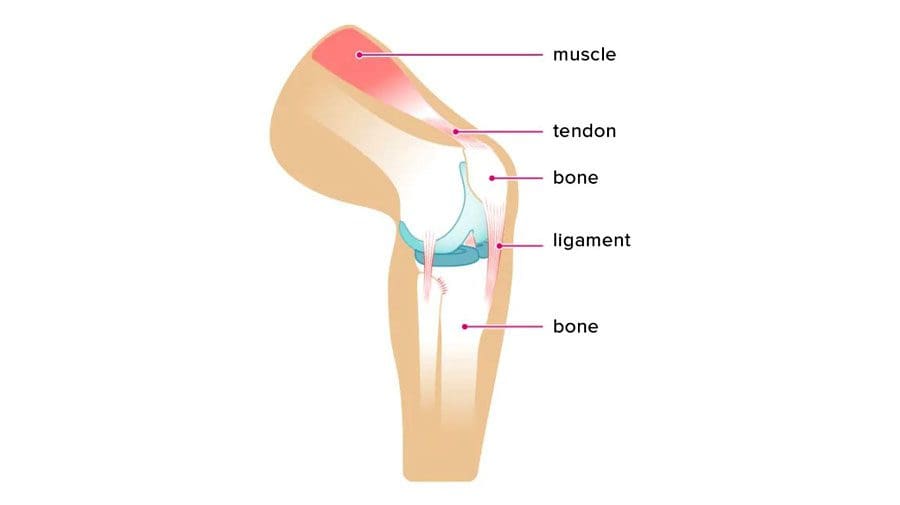
Tendons and Ligaments: A tendon is a fibrous flexible, strong tissue similar to a rope that attaches the muscles to the bones. Tendons allow for the movement of the body’s limbs and help prevent muscle injury by absorbing muscles’ impact when running, jumping, or performing other actions. Ligaments are bands of solid elastic tissue that connect bone to bone, hold structures together and keep them stable, support the joints and limit their movement.
Tendons and Ligaments
Tendons are strong and non-flexible.
Ligaments are flexible and elastic.
Both comprise collagen and living cells, essential in joints and bones and integral to locomotion.
Tendons allow body movement by transmitting force from muscle to bone, allowing the body to stand, walk, and jump.
Ligaments work by allowing for the full range of motion.
Ligaments are around the knees, ankles, elbows, shoulders, and other joints.
Connective Tissue
The collagen connective tissue that makes up tendons and ligaments is the same; their patterns are different.
Tendon fibers are laid out in a parallel pattern.
Tendon connective tissue needs to have more elasticity to help move the muscles.
Ligament fibers are laid out in a crisscross pattern.
Ligament connective tissue stabilizes and strengthens the bones’ joint structure.
Tendon Injury
A tendon that gets overstretched or torn is known as a strain. Common areas affected by strains are the:
Leg
Foot
Back
Strains often result from repetitive work movements, intense physical activity, and sports. Individuals who overuse their bodies without proper rest and muscle repair recovery have an increased risk of injury. Symptoms include:
Inflammation
Swelling
Pain
Cramping
Weakness
Ligament Injury
A ligament that gets overstretched or torn results in a sprain. Sprains can happen suddenly from a fall, awkward movement, or trauma. Sprains commonly occur in the:
Ankle
Knee
Wrist
Examples include:
Misstep causing the ankle to twist in an awkward position, snapping a ligament and causing unstableness or wobbliness.
There could be a popping sensation or the feeling of a tear when the injury occurs.
Wrist sprains often happen when reaching out and extending the hands to break a fall, and the wrist hyperextending back.
The hyperextension overstretches the ligament.
Symptoms of a sprained ligament include:
Inflammation
Swelling
Bruising
Pain
The joint may feel loose or weak and unable to take on weight.
The intensity of symptoms varies depending on whether the ligament is overextended or torn. Sprains are classified by grade:
Grade 1 – a mild sprain with slight stretching of the ligament.
Grade 2 – a moderate ligament tear, but not a complete tear.
Grade 3 – a complete ligament tear, making the joint unstable.
Chiropractic Care
Tendons and ligaments do not receive full blood circulation like other soft tissues. Depending on the severity of the injury, and the slower transfer of oxygen and nutrients, ligament and tendon injuries can take six to twelve weeks to heal, and repeatedly stressing the injured area from overuse can extend recovery. Chiropractic adjustments, and massage therapy, combined with corrective exercises and stretches, will reduce inflammation, decrease pain, improve the range of motion, increase nerve and muscle function, and strengthen the muscles. Chiropractic treatment involves:
Childress, Marc A, and Anthony Beutler. “Management of chronic tendon injuries.” American family physician vol. 87,7 (2013): 486-90.
Fenwick, Steven A et al. “The vasculature and its role in the damaged and healing tendon.” Arthritis research vol. 4,4 (2002): 252-60. doi:10.1186/ar416
Leong, Natalie L et al. “Tendon and Ligament Healing and Current Approaches to Tendon and Ligament Regeneration.” Journal of orthopedic research: official publication of the Orthopaedic Research Society vol. 38,1 (2020): 7-12. doi:10.1002/jor.24475
Scalcione, Luke R et al. “The athlete’s hand: ligament and tendon injury.” Seminars in musculoskeletal radiology vol. 16,4 (2012): 338-49. doi:10.1055/s-0032-1327007
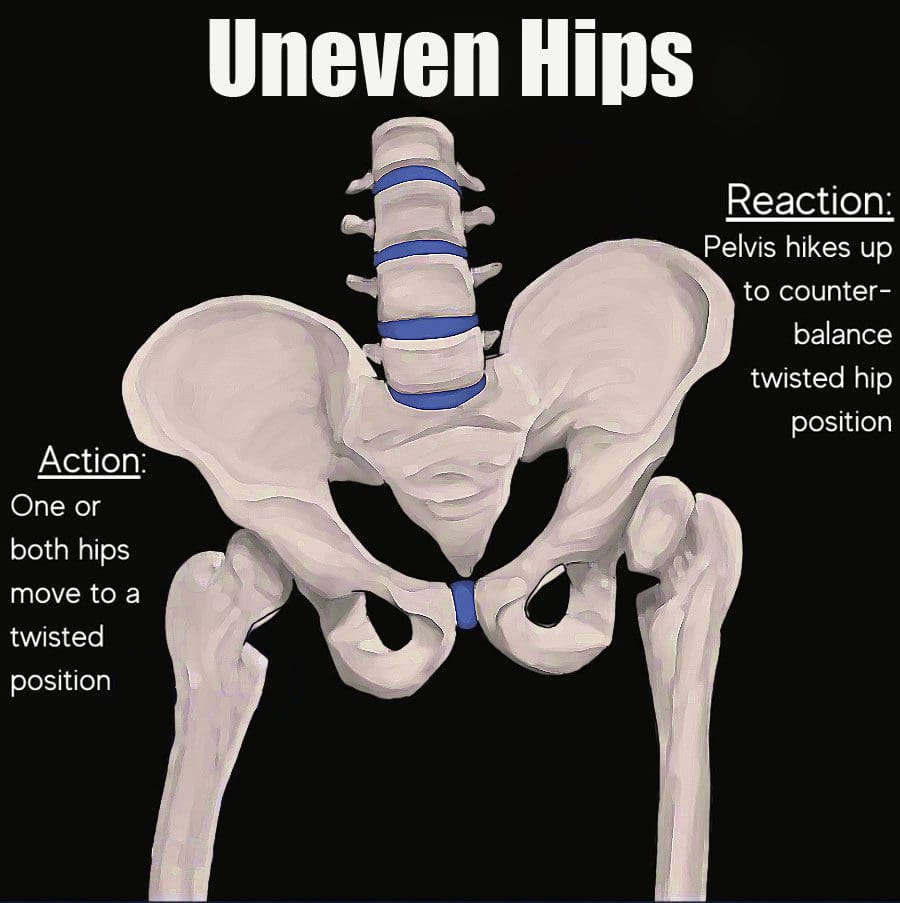
Uneven hips can throw the back out of natural alignment and cause back stiffness, tightness, discomfort, and pain. Hips that are off-balance unhealthily affect standing, sitting, sleeping posture, walking gait, and overall movements. Biomechanics issues cause the core and spine stabilizing muscles to become weakened and fatigued from overcompensating to keep the body up and moving. Over time this can lead to chronic pain in the back, hips, knees, and feet. Chiropractic care can restore proper hip and spinal alignment and wellness.
Uneven Hips
Misaligned hips can be caused by work or sports injury, exercise, vehicle collision, and/or general wear and tear. When hips are out of alignment, they have shifted from their centered position. They could be rotated forward or backward, forcing the spine and the lower limbs to compensate, resulting in the spine tilting that can make the legs appear uneven. Discomfort may be one-sided low back pain near the sacroiliac joint, causing a stiff/tight back, limited motion, and/or pain symptoms. Because the spine and lower limbs have to compensate for the unevenness, the shoulders and upper back, connected to the pelvis through the spine, are also affected and result in:
Back pain.
Hip and gluteal muscle pain.
Uneven leg length.
Knee, ankle, and foot issues and pain.
Uneven shoulders.
The shoulder blades can stick out on the side of the lower hip.
Rib discomfort and pain.
The rib cage could protrude out on one side. However, this could be due to advanced scoliosis.
Therapy
Staying active is recommended and includes stretching and core strengthening. General stretches recommended to optimize hip equity include:
Hamstring stretch
For this stretch, lie on a flat surface with your legs extended straight out.
Bend the right leg at the knee, placing the right foot on the ground.
Use a towel, belt, or band to grab and wrap around the left foot.
Keep the hip/buttock on the left side planted on the floor.
Slowly raise the left leg upward as far as possible until you feel the stretch.
Once you feel a stretch or restriction in the hamstring, hold the position for 30 seconds.
Repeat on the other side.
Perform 2 to3 times.
Hip flexor stretch
Kneel on the affected leg and bend the healthy leg out in front with the foot flat on the floor.
Back straight.
Slowly push the hips forward until you feel the stretch in the upper thigh and hip.
Hold the stretch for around 15 to 30 seconds.
Chiropractic Care
Chiropractic treatment is a highly recommended non-surgical option for uneven hips and pelvic tilt. Depending on the severity of the misalignment, underlying issues, and body scanning images, hip alignment treatment could include:
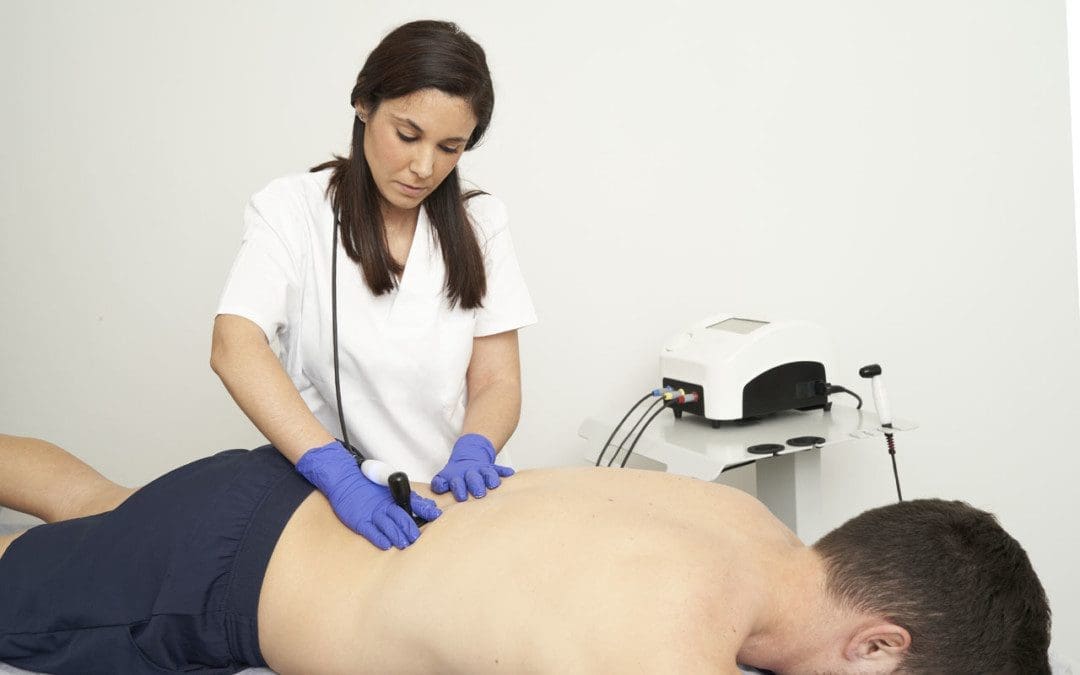
Soft tissue therapeutic massage
Chiropractic muscle release for tight hip flexors, quadriceps, hamstrings, and glutes.
Kiapour, Ali et al. “Biomechanics of the Sacroiliac Joint: Anatomy, Function, Biomechanics, Sexual Dimorphism, and Causes of Pain.” International journal of spine surgery vol. 14, Suppl 1 3-13. 10 Feb. 2020, doi:10.14444/6077
Lee, Jeong-Hoon, et al. “The effect of Graston technique on the pain and range of motion in patients with chronic low back pain.” Journal of physical therapy science vol. 28,6 (2016): 1852-5. doi:10.1589/jpts.28.1852
Patel, Rikin V et al. “Pelvic Tilt and Range of Motion in Hips With Femoroacetabular Impingement Syndrome.” The Journal of the American Academy of Orthopaedic Surgeons vol. 28,10 (2020): e427-e432. doi:10.5435/JAAOS-D-19-00155
Rivière, C et al. “Spine-hip relations add understandings to the pathophysiology of femoro-acetabular impingement: A systematic review.” Orthopaedics & traumatology, surgery & research : OTSR vol. 103,4 (2017): 549-557. doi:10.1016/j.otsr.2017.03.010
Suits, William H. “Clinical Measures of Pelvic Tilt in Physical Therapy.” International journal of sports physical therapy vol. 16,5 1366-1375. 1 Oct. 2021, doi:10.26603/001c.27978
Forklifts, also known as lift trucks, are used for loading, unloading, and transporting various goods and materials in construction, shipping, and retail industries. They are heavy-duty equipment and require extensive training to operate safely. Forklifts are involved in many serious workplace accidents causing thousands of injuries annually. Chiropractors specialize in injury care and rehabilitation from vehicle accidents and collisions. They can help restore optimal musculoskeletal function and health through adjustments, massage, decompression, and traction therapies.
Forklift Operation
The forklift is one of the most widely used pieces of equipment to raise, lower, or remove pallets, boxes, crates, or other containers and transport and stock goods and materials. There are a variety of lift trucks that include:
The weight, speed, and operation difficulty increase the risk of an accident, increasing the risk of injuries. Other factors include:
They can reach up to 20 miles per hour or more.
They have front braking systems making it harder to stop.
The weight distribution is in the back.
The rear wheels turn instead of the front, causing tip-overs.
Most carry their loads in front and can obstruct an operator’s view.
Lifting too heavy a load can destabilize a forklift and cause it to turn over.
Accident and Injury Causes
Federal work safety regulations require individuals to complete a training program to operate a forklift safely. The most common causes of accidents include:
Lack of training and experience.
Lack of safety equipment – helmets, seatbelts, grab handles, roll cages, cage guards, warning lights, and sirens.
Lack of maintenance – bent forks, no load backrest, unbalanced wheels, etc.
Improper loading – off center, damaged goods, loose loads.
Lifting, moving or tilting the mast too fast.
Riding with a raised load.
Speeding.
Improper backing-up techniques.
Poor communication.
Horseplay.
Giving rides.
Failing to immobilize the machine when the operator leaves.
Failing to pay attention to the position of the forks.
Failing to yield to pedestrians.
Traveling up or down unsafe inclines.
Driving off the side of a ramp.
Design or manufacturing defects.
Common Accidents
The most common type of accidents involve:
Tip-overs and Rollovers.
Falling off the lift.
Getting struck by falling materials or objects.
Pedestrian injuries like getting hit by the vehicle or tripping over the forks.
Getting caught in or compressed/crushed by the vehicle or objects.
Injuries
The most common injuries that result from lift accidents include:
Chiropractic therapy can help heal and rehabilitate musculoskeletal injuries. A chiropractic team will relieve pain symptoms and restore the body’s alignment and function. Treatment includes:
Adjustments
To gently realign joints.
Decrease pain.
Increase range of motion.
Improves posture.
Soft-tissue massage
To relax tight muscles.
Relieve spasms.
Release tension in the connective tissue surrounding the muscles.
Reduces pain.
Improves the range of motion of the spine and joints.
Exercises and stretches
To restore and maintain flexibility, joint stability, and mobility.
Joint bracing and taping
To support sprained joints or muscles during healing.
Health Coaching
Guides diet and nutrition to reduce inflammation and promote healthy eating to manage weight.
Forklift Fails
References
Bage, T et al. “Forklift-related lower limb injuries: a retrospective case series study with patient-reported outcome measures (PROMs).” Annals of the Royal College of Surgeons of England vol. 103,10 (2021): 730-733. doi:10.1308/rcsann.2020.7124
Born, C T et al. “Patterns of injury and disability caused by forklift trucks.” The Journal of trauma vol. 40,4 (1996): 636-9. doi:10.1097/00005373-199604000-00020
Hong, Choon Chiet, et al. “Forklift-Related Crush Injuries of the Foot and Ankle.” Foot & ankle international vol. 36,7 (2015): 806-11. doi:10.1177/1071100715576486
Ull, Christopher et al. “Injuries after Forklift Trucks Accidents – Injury Patterns, Therapy and Outcome in the Context of the Statutory Accident Insurance.” “Gabelstaplerunfälle – Verletzungsmuster, Therapie und Outcome im berufsgenossenschaftlichen Kontext.” Zeitschrift fur Orthopadie und Unfallchirurgie, 10.1055/a-1402-1649. 19 Apr. 2021, doi:10.1055/a-1402-1649
Waters, Thomas et al. “Lower back disorders among forklift operators: an emerging occupational health problem?.” American journal of industrial medicine vol. 47,4 (2005): 333-40. doi:10.1002/ajim.20146
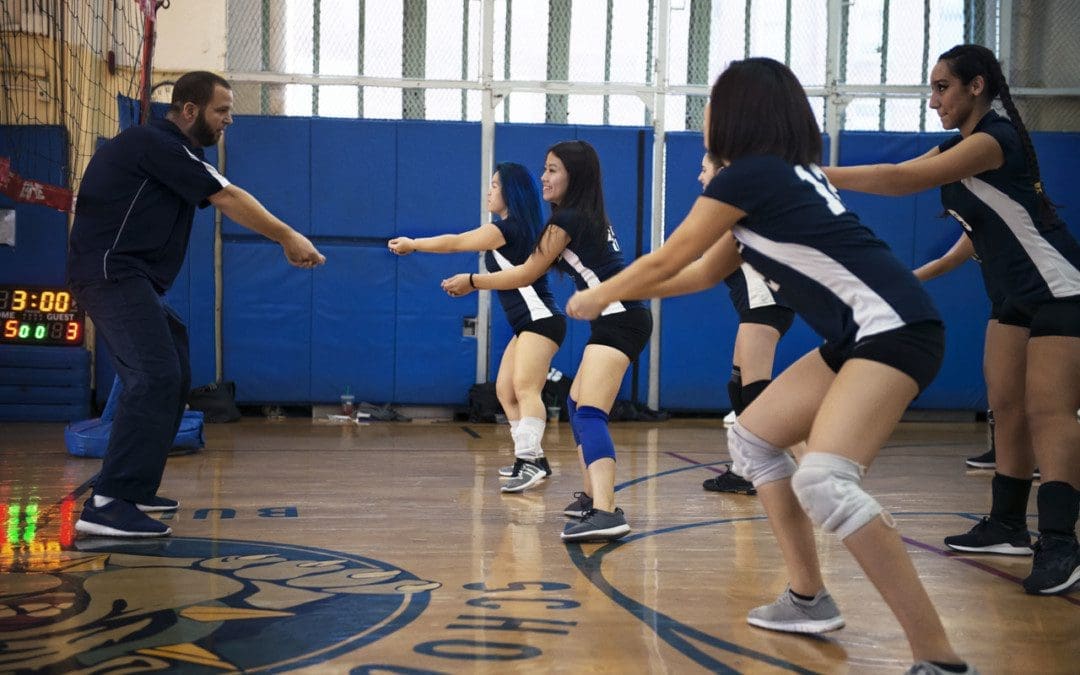
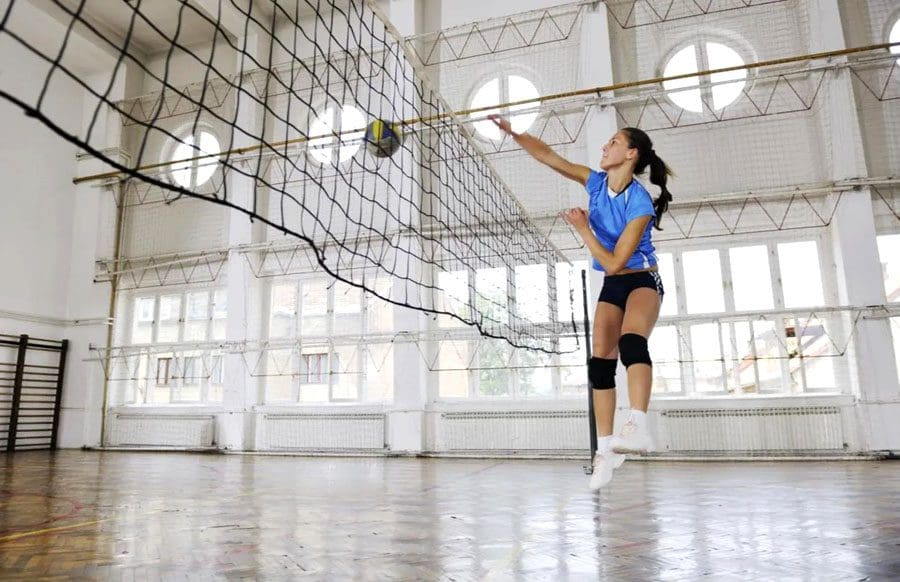
The low back is a common source of discomfort and soreness among volleyball players because of repetitive jumping, bending, and rotating of the trunk. Adolescents have an increased risk of this injury because their vertebral bones are still developing, which increases the risk for stress fractures. Chiropractic care, massage therapy, decompression, rest, and athletic training can help expedite pain relief and heal the injury.
Volley Back Pain
Muscle or ligament strains are the most common injury from repetitive jumping, bending, rotating movements, and hyperextension during serving, hitting and setting. This can lead to excessive compression forces on the discs and joints, causing reduced blood circulation, increasing the risk of overload injuries. One study reported that low back pain is experienced in 63% of players. However, if low-back pain is accompanied by pain that runs down the leg along with numbness or weakness in the foot or ankle, the issue could be a herniated disc.
Causes
One common reason is endurance imbalances in the muscles that stabilize the low back. The core muscles provide stability to the low back and spine for all movements. If imbalances are present, a player may spike or serve the ball with intense turning and arching. The added actions cause increased pressure in the joints and hip, gluteal, and leg muscles, affecting the spine’s stability.
The gluteals run from the back of the pelvis/hip bones down to the outside of the thigh.
The gluteal muscles prevent the trunk and hips from overbending forward when landing.
If the gluteal muscles do not have the strength and endurance to perform this motion, the upper body will bend too far forward, causing poor landing posture and decreased spine stability.
Anterior Pelvic Tilt
Studies have shown that players with low back pain tend to stand and land with an anterior pelvic tilt. This is an unhealthy posture when the front of the pelvis tilts forward, and the back of the pelvis raises. Landing hard with an anterior pelvic tilt causes increased arching and increases the pressure in the joints.
Chronic back pain
Warning signs of a more serious back problem include:
Pain that has lasted for more than 1 week and is not improving or getting worse.
Pain that prevents sleep or causes the individual to constantly wake up.
Difficulty sitting.
Back soreness when performing basic tasks and chores.
Significant pain on the court when jumping, landing, or rotating.
Chronic pain ranges from aches to shooting or throbbing pain that can run down the buttocks and legs.
Chiropractic Care
A chiropractor can alleviate volleyball back pain, rule out a more severe injury, such as a stress fracture or herniated disc, and provide a healthier and faster recovery. According to a study, athletes who received chiropractic care showed better speed and mobility. Quick reflexes and hand-eye coordination depend on an optimal functioning nervous system. 90% of the central nervous system travels through the spine. When one or more spinal segments are misaligned, the effect on the nervous system can seriously impact and disrupt nerve circulation, affecting speed, mobility, reflexes, and hand-eye coordination. Chiropractic adjustments will:
Relax and reset the back muscles.
Realign and decompress the spine.
Remove the pressure around the nerve roots.
Strengthen the core.
Improve and increase range of motion, strength, and overall endurance.
Anterior Pelvic Tilt
References
Haddas R, Sawyer SF, Sizer PS, Brooks T, Chyu MC, James CR. “Effects of Volitional Spine Stabilization and Lower-Extremity Fatigue on the Knee and Ankle During Landing Performance in a Population With Recurrent Low Back Pain.” J Sport Rehabil. 2017 Sep;26(5):329-338. doi: 10.1123/jsr.2015-0171.
Hangai M. et al., Relationship Between Low Back Pain and Competitive Sports Activities During Youth, Am J Sports Med 2010; 38: 791-796; published online before print January 5, 2010, doi:10.1177/0363546509350297.
Jadhav, K.G., Deshmukh, P.N., Tuppekar, R.P., Sinku, S.K.. A Survey of Injuries Prevalence in Varsity Volleyball Players. Journal of Exercise Science and Physiotherapy, Vol. 6, No. 2: 102-105, 2010 102
Mizoguchi, Yasuaki, et al. “Factors associated with low back pain in elite high school volleyball players.” Journal of physical therapy science vol. 31,8 (2019): 675-681. doi:10.1589/jpts.31.675
Movahed,Marziehet al. (2019). “Single leg landing kinematics in volleyball athletes: A comparison between athletes with and without active extension low back pain.”
Sheikhhoseiniet al. (2018). “Altered Lower Limb Kinematics during Jumping among Athletes with Persistent Low Back Pain”
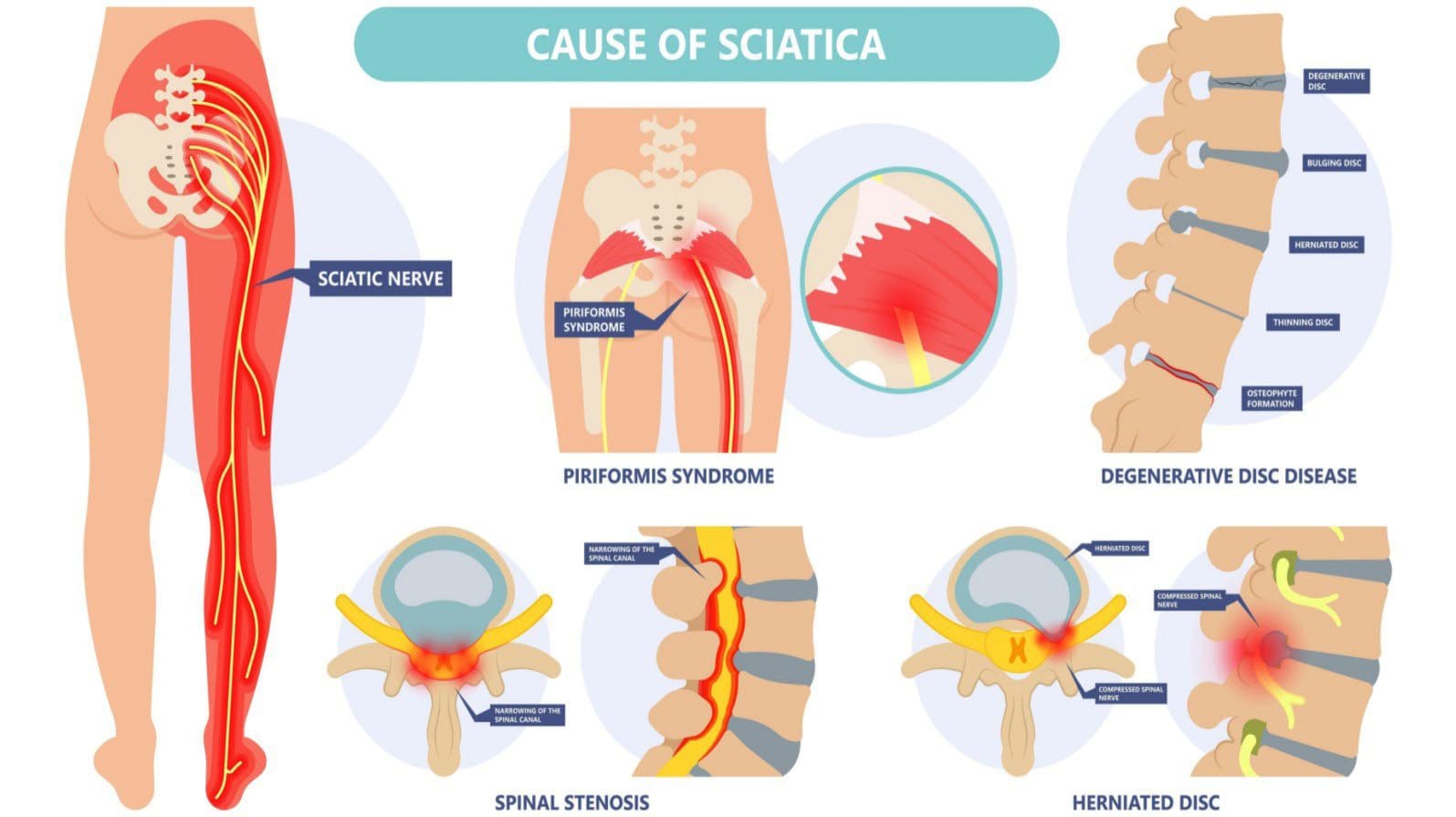
Sciatica is common and affects up to 40% of the general population. Different types include acute, chronic, alternating, and bilateral sciatica. The sciatic nerve comprises three specific nerve roots in the lower back. The three nerves originate in the L4 and L5 vertebrae and the sacrum, just below the vertebrae. The nerve then branches off and runs through the back of each thigh. Injury, compression, or irritation of these nerves can cause various symptoms, including numbness, tingling, electrical shooting pain, and muscle spasms in the low back, the leg, and the foot. Chiropractic care can realign the spine, relax the muscles, release compression and relieve sciatica.
Acute, Chronic, Alternating, and Bilateral Sciatica
Acute
Acute pain can be brought on by sudden irritation to the nerves that have become pinched, compressed, or a combination.
Causes a constant burning or shooting sensation through the low back, buttocks, down the leg, and possible hip discomfort.
It becomes worse when sitting.
It can cause immediate and short-term pain lasting for 1-2 weeks.
Chronic
Chronic sciatica can last for months or years on and off or continuously.
It can be caused or worsened by inflammatory conditions like rheumatoid arthritis, injuries, infections, and spinal misalignment issues.
It can resolve but will come back without treatment or lifestyle and activity adjustments.
Bilateral
Sciatica typically takes place in one leg; it has been known to be bilateral and experienced in both legs.
This type of sciatica is rare but can occur from degenerative changes in the vertebrae and/or the discs at several spinal levels.
If there is pain in both legs, it is likely not a herniation but degenerative changes like spinal stenosis.
The symptoms can range from infrequent to irritating to severe and debilitating.
Weakness may be felt in the leg and foot, or a feeling of heaviness, making it difficult to lift the foot off the floor.
Alternating
Alternating sciatica affects both legs alternately. It is usually connected to bilateral sciatica that switches sides.
This type is rare and can result from degenerative problems in the sacroiliac joint, the joint connecting the spine to the hips, or sacroiliac arthritis.
Spinal Sources
Sciatica occurs when L4, L5, and/or S1 nerve roots are affected.
L4 Nerve Root
Pain in the hip, thigh, inner medial areas or the knee, and the calf.
Weakness in the thigh and hip muscles.
Reduced knee-jerk reflex.
Loss of sensation around the calf.
L5 Nerve Root
Pain in the buttock and the outer area of the thigh.
Weakness in the buttock and leg muscles.
Difficulty moving the ankle and lifting the big toe upward.
Loss of sensation between the big toe and the second toe.
S1 Nerve Root
Known as classic sciatica.
Pain in the buttock, back of the calf, and side of the foot.
Fatigue in the buttock and foot muscles.
Difficulty and discomfort raising the heel off the ground or walking on tiptoes.
Loss of sensation in the foot’s outer side, including the third, fourth, and fifth toes.
Chiropractic care can directly address the root cause of the problem, treat the cause, and alleviate the symptoms. Chiropractic manipulation is recommended by the American College of Physiciansas a first line of treatment for back pain before medication, muscle relaxants, injections, and surgery. Treatments to address sciatic nerve impingement:
Ice/Cold Therapy
Reduces inflammation and swelling.
Prepares the patient for massage and adjustments.
Therapeutic Tissue Massage
This therapy promotes muscle relaxation and lessens the muscle spasm/recoil response.
Ultrasound
Soothing heat created by sound waves penetrates the muscles, increases circulation, and relaxes the muscles to alleviate spasms, stiffness, and pain.
Transcutaneous Electrical Nerve Stimulation/Tens Unit
A muscle stimulation machine applies electrical impulses to relax the muscles and untangle muscle knots.
Spinal Manipulation
This process realigns the spine to move properly and restores vertebral health.
Stretches and Exercises
This ensures treatment will last once treatment has or is coming to an end.
Spinal Decompression
Pulls and stretches the body to release any compression on the nerve roots and infuse circulation back into the discs.
The pressure is taken off the sciatic nerve, and routine adjustments will retrain the muscles to maintain their re-alignment. The duration of treatment will vary based on the root cause of sciatica. Each treatment plan is tailored to the individual patient’s situation.
Severe and Complex Sciatica Syndromes
References
Davis D, Maini K, Vasudevan A. Sciatica. [Updated 2022 May 6]. In: StatPearls [Internet]. Treasure Island (FL): StatPearls Publishing; 2022 Jan-. Available from: https://www.ncbi.nlm.nih.gov/books/NBK507908/
Hernández C.P., Sanchez N., Navarro-Siguero A., Saldaña M.T. (2013) What is Sciatica and Radicular Pain?. In: Laroche F., Perrot S. (eds) Managing Sciatica and Radicular Pain in Primary Care Practice. Springer Healthcare, Tarporley. https://doi.org/10.1007/978-1-907673-56-6_1
Kumar, M. Epidemiology, pathophysiology and symptomatic treatment of sciatica: A review. nt. J. Pharm. Bio. Arch. 2011, 2.
Ngnitewe Massa R, Mesfin FB. Herniation, Disc. [Updated 2018 Oct 27]. In: StatPearls [Internet]. Treasure Island (FL): StatPearls Publishing; 2019 Jan-. Available from: https://www.ncbi.nlm.nih.gov/books/NBK441822/
Ombregt L. The dural concept. In: A System of Orthopaedic Medicine. Elsevier; 2013:447-472.e4. doi:10.1016/b978-0-7020-3145-8.00033-8
Witenko, Corey, et al. “Considerations for the appropriate use of skeletal muscle relaxants for the management of acute low-back pain.” P & T : a peer-reviewed journal for formulary management vol. 39,6 (2014): 427-35.
Wright R, Inbody SB. Radiculopathy and Degenerative Spine Disease. In: Neurology Secrets. Elsevier; 2010:121-130. doi:10.1016/b978-0-323-05712-7.00007-6
When the body is correctly aligned, the shoulders are the same height, and face forward. Uneven shoulders are when one shoulder begins to raise higher than the other. It usually starts with a slight difference but can turn into a more severe imbalance causing discomfort, tightness, and pain in the neck, shoulders, hips, and back. Chiropractic treatment can bring the body back into balance and alignment through various techniques and therapy modalities.
Misaligned Uneven Shoulders
Several factors can lead to uneven shoulders. Misalignments can be caused by:
Often the shoulder on the dominant side tends to be slightly lower.
Constantly using one hand or side for everything.
Carrying a heavy bag on the dominant shoulder.
Structural issues or muscular skeletal imbalances in other areas of the body.
For example, if the ankle or hip gets injured, it can cause an individual to bring their body out of alignment to adjust to how they position themselves and move. Other common causes include:
Overuse of the shoulders
Tight upper back muscles
Unhealthy posture
Uneven hips
Pinched nerve
Weak muscles
Flat feet
Sedentary lifestyle
Varying leg length
Osteoporosis
Scoliosis
Shoulder injuries
Incorrect sleeping position or sleeping on one side
Sports like tennis, golf, and baseball have an increased risk of causing misaligned, uneven shoulders and posture imbalances.
Symptoms
Uneven shoulders can result in discomfort, tightness, and stiffness in the neck, shoulders, and lower back.
Continued tightness and pulling in the higher shoulder.
A chiropractic massage and functional medicine team will bring the shoulders back into normal alignment.
Therapeutic myofascial release massage will release tension, relax the muscles, and increase flexibility.
Chiropractic adjustments
Spinal decompression therapy
Stretches and muscle-building exercises to balance the shoulders.
Lifestyle adjustment instructions for switching shoulders when carrying bags, using armrests, using the phone, using a mouse, and using ergonomic chairs.
Posture training includes learning to stay aware of one’s posture throughout the day when standing or sitting and completing regular activities.
Learning to use the non-dominant arm to balance the workload.
Incorporating relaxation, meditation, and breathing techniques to relieve stress, tension, and tightness.
Shoulder Pain Treatment
References
Burbank, Kelton M et al. “Chronic shoulder pain: part I. Evaluation and diagnosis.” American family physician vol. 77,4 (2008): 453-60.
Foroozan Mahmoodi et al. The effect of corrective exercises on the pain and degree of uneven shoulder deformity https://rsr.basu.ac.ir/article_625_en.html
Mayo Clinic Staff. (2017). Stress management. mayoclinic.org/healthy-lifestyle/stress-management/in-depth/relaxation-technique/art-20045368
Mitchell, Caroline, et al. “Shoulder pain: diagnosis and management in primary care.” BMJ (Clinical research ed.) vol. 331,7525 (2005): 1124-8. doi:10.1136/bmj.331.7525.1124
Pu Chu, Eric Chun, and Kevin Hsu Kai Huang. “Bridging the gap between observation and brace treatment for adolescent idiopathic scoliosis.” Journal of family medicine and primary care vol. 6,2 (2017): 447-449. doi:10.4103/jfmpc.jfmpc_52_17
IFM's Find A Practitioner tool is the largest referral network in Functional Medicine, created to help patients locate Functional Medicine practitioners anywhere in the world. IFM Certified Practitioners are listed first in the search results, given their extensive education in Functional Medicine