Fitness, exercising, weight, and strength training programs use terms like sets, reps, and rest intervals. Knowing what they mean and how to use them for optimal results is important to achieve health goals. An individual’s training program will differ in the weights, reps, sets, rest intervals, and execution speed depending on whether the training is for fitness, muscle growth, strength, power, or endurance. Here we offer a strength training guide on understanding these terms and how they apply to a workout program.
Strength Training Guide
Reps
Rep means repetition.
A rep is one completion of an exercise, such as one bench press, or one bicep curl.
So, one bicep curl equals one rep, and 10 bicep curls equals 10 reps.
Reps make up a set, which is typically the total number of reps done before taking a break.
A repetition maximum – 1RM is an individual’s personal best or the most they can lift once in a single repetition.
A 10RM would be the most an individual could lift and successfully perform 10 reps with proper form.
Sets
A set is a series of repetitions performed sequentially.
For example, one set of bench presses could be eight reps
Sets are designed according to the individual’s workout program.
Rest
The rest interval is the time of resting between sets that allow the muscles to recover.
The rest period between sets can range from 30 seconds to two minutes.
Exercises can have short or long rests between reps.
The ideal rest period depends on the objective of the workout and health goals.
Not resting long enough and starting with another set too soon can fatigue the muscles too soon, increasing the risk of injury.
Resting too long between reps can cool the muscles down and release tension before starting again.
Execution Speed
The speed at which one rep of an exercise is performed is contraction velocity.
Concentric – shortening of the muscle is often the lifting part of a rep.
Eccentric – lengthening of the muscle, often the lowering part of a rep helps to build muscle mass.
Strength: 1 to 2 seconds concentric and eccentric
Hypertrophy: 2 to 5 seconds concentric and eccentric
Endurance: 1 to 2 seconds concentric and eccentric
Power: Less than 1 second concentric and 1 to 2 seconds eccentric
Choosing Weights
The distribution of repetitions against a percentage of 1RM maximum lift is as follows. This example uses a bench press where 1RM is 160 pounds.
100% of 1RM: 160 pounds, 1 repetition
60% of 1RM: 96 pounds, warm-up reps
85% of 1RM: 136 pounds, 6 repetitions
67% of 1RM: 107 pounds, 12 repetitions
65% of 1RM: 104 pounds, 15 repetitions
An individual should be able to do one lift at 1RM, six reps at 85%, 15 reps at 65%, and so on.
Goals to Build a Program
A training program is a schedule of exercise types, frequency, intensity, and volume, for weight training or any other type of fitness training. Individuals can devise various combinations of sets, reps, rest, and exercise types to find what works best for them. A qualified strength and conditioning trainer can help develop a program. The variables can be adjusted and include:
Exercise selection
Weights or resistance used
Number of reps
Number of sets
Execution speed
Rest time between sets
Rest time between training sessions and days of the week
General Fitness
A basic strength training fitness program targets strength and muscle-building.
Between eight and 15 repetitions for two to four sets will help achieve both.
Choose eight to 12 exercises, making sure to hit the lower and upper body and core.
Strength
Building strength uses the most weight, the least number of reps, and the longest rest periods.
The neuromuscular system responds to heavy weights by increasing the body’s ability to lift heavy loads.
For example, individuals with a strength goal could use a 5×5 system.
This means five sets of five repetitions.
Muscle Growth
Muscle growth and bodybuilding training use lighter weights, more reps, and less rest periods.
Muscle requires metabolic stress to increase in size.
This means working the muscles to the point where lactate builds and the muscle suffers internal damage, sometimes called “training to failure.”
Then resting and proper nutrition help muscle repair and the muscle grows larger in the process.
A program could be three sets of 8 to 12 reps, with loads that reach or near the failure point on the last few reps.
Power
Power training uses slightly lighter weights, takes longer rest periods, and focuses on execution speed.
Power is the ability to move an object at high speed.
Each push, pull, squat, or lunge is done at a quick tempo.
This type of training requires practicing the acceleration of a lift, resting properly, and repeating.
Muscular Endurance
Endurance weight training requires more reps in each set, up to 20 or 30, with lighter weights.
Individuals should ask themselves what is the day-to-day physical activity that requires the most muscular endurance?
For example, runners will want to concentrate on increasing endurance in their legs.
Swimmers may shift and focus on their arms one day then legs another.
Movement as Medicine
References
Liu, Chiung-Ju, and Nancy K Latham. “Progressive resistance strength training for improving physical function in older adults.” The Cochrane Database of systematic reviews vol. 2009,3 CD002759. 8 Jul. 2009, doi:10.1002/14651858.CD002759.pub2
Loturco, Irineu, et al. “Muscle Contraction Velocity: A Suitable Approach to Analyze the Functional Adaptations in Elite Soccer Players.” Journal of sports science & medicine vol. 15,3 483-491. 5 Aug. 2016
Rønnestad, B R, and I Mujika. “Optimizing strength training for running and cycling endurance performance: A review.” Scandinavian Journal of Medicine & Science in Sports vol. 24,4 (2014): 603-12. doi:10.1111/sms.12104
Suchomel, Timothy J et al. “The Importance of Muscular Strength: Training Considerations.” Sports medicine (Auckland, N.Z.) vol. 48,4 (2018): 765-785. doi:10.1007/s40279-018-0862-z
Tøien, Tiril, et al. “Maximal strength training: the impact of eccentric overload.” Journal of Neurophysiology vol. 120,6 (2018): 2868-2876. doi:10.1152/jn.00609.2018
Westcott, Wayne L. “Resistance training is medicine: effects of strength training on health.” Current sports medicine reports vol. 11,4 (2012): 209-16. doi:10.1249/JSR.0b013e31825dabb8
Power is the combination of strength and speed over time. Strength is how much force an individual can exert. Powerishow fast an individual can exert force. Strength training for power, aka power training, is being able to exert a certain amount of force in a given time. Power can be built with weight training. However, power strength training is not just for weightlifters. Many athletes like football, basketball, and volleyball players, sprinters, dancers, and wrestlers build strength to increase power, improve explosiveness, increase their vertical leap/jump, and give their bodies a break from heavy weight training.
Power Strength Training
Building strength is one factor, but becoming powerful requires another element in training. Biologically, individuals train the muscles to elongate and contract fast so the body can perform a certain set of movements.
Benefits
The benefits of power strength training.
Promotes Active Body Rest
Power training gives the mind and body a break from heavy training.
Provides the tendons, joints, and central nervous system a rest.
Offers a fun and healthy change with jumping, throwing, swinging, etc.
A study found individuals with knee osteoarthritis that participated in high-intensity strength training, compared with low-intensity, had a reduction in knee pain symptoms.
Improves Vertical Jump
Vertical jump or leap is how high an individual can jump and is a common parameter for assessing athletic ability.
It is an integral part of movement training programs to improve sports performance.
Research has shown that power strength and jump training can improve jump height.
Training Program
Before starting any exercise program, it is recommended to talk with a doctor. Key components to focus on when training for power.
Going above this frequency can be intense on the body and central nervous system.
Limiting sessions to a few times a week gives the body time to recover.
Equipment
Because power training involves a combination of increasing force and speed, using the right equipment that allows both is important. However, there are ways to improve without equipment.
For practicing jumps, increase the force by increasing the distance using a taller box.
For practicing push-ups on the floor, increase the force by pushing with more power so the hands come off the ground.
To improve power by increasing speed, exercises can be performed faster or with decreased rest between sets.
Weight
The weight depends on an individual’s one-rep max or the heaviest weight that can be lifted in a single repetition.
This is essentially an individual’s record for whatever type of weightlifting is being done.
Power training movement options: Plyometrics, Ballistic, or Dynamic.
Plyometrics includes activities like squats or jump lunges, common with football and basketball players.
Ballistic training includes activities like a back squat for football or soccer players.
Dynamic training works for sports-specific training motions like golf swinging or tennis serving.
Nutrition
Whether cardio or strength training, adequate caloric intake is important regardless of workout type, this means having a healthy balance of the three macronutrients: carbohydrates, fat, and protein.
Carbohydrates could be the most important, as research has shown that high-intensity exercise like power training improves when eating carbohydrates before, during, and after the workout.
Fat is necessary, and a daily intake below 20% of calorie intake can decrease the absorption of various essential nutrients.
It is recommended to consume 1.2-1.7 grams of protein per kilogram of individual body weight.
As with any exercise, training takes time, and it’s important to gradually progress only when the body is prepared. Incorporating the elements of a healthy lifestyle includes a balanced, nutrient-rich diet and proper sleep and rest days. This will help get the most benefits and prevent injuries.
Improving Athletic Performance Through Chiropractic
References
Balachandran, Anoop T et al. “Comparison of Power Training vs. Traditional Strength Training on Physical Function in Older Adults: A Systematic Review and Meta-analysis.” JAMA Network Open vol. 5,5 e2211623. 2 May. 2022, doi:10.1001/jamanetworkopen.2022.11623
Maestroni, Luca, et al. “Strength and Power Training in Rehabilitation: Underpinning Principles and Practical Strategies to Return Athletes to High Performance.” Sports medicine (Auckland, N.Z.) vol. 50,2 (2020): 239-252. doi:10.1007/s40279-019-01195-6
Marián, Vanderka, et al. “Improved Maximum Strength, Vertical Jump and Sprint Performance after 8 Weeks of Jump Squat Training with Individualized Loads.” Journal of sports science & Medicine vol. 15,3 492-500. 5 Aug. 2016
Peebles, Alexander T et al. “Landing biomechanics deficits in anterior cruciate ligament reconstruction patients can be assessed in a non-laboratory setting.” Journal of orthopedic research: official publication of the Orthopaedic Research Society vol. 40,1 (2022): 150-158. doi:10.1002/jor.25039
Suchomel, Timothy J et al. “The Importance of Muscular Strength: Training Considerations.” Sports medicine (Auckland, N.Z.) vol. 48,4 (2018): 765-785. doi:10.1007/s40279-018-0862-z
Wesley, Caroline A et al. “Lower Extremity Landing Biomechanics in Both Sexes After a Functional Exercise Protocol.” Journal of athletic training vol. 50,9 (2015): 914-20. doi:10.4085/1062-6050-50.8.03
Westcott, Wayne L. “Resistance training is medicine: effects of strength training on health.” Current sports medicine reports vol. 11,4 (2012): 209-16. doi:10.1249/JSR.0b013e31825dabb8
The biceps curl is an exercise to build strength in the upper arm. Curls are a common exercise used in upper-body strength training. Specifically, the curl works the muscles in the front of the upper arm. It’s recommended for achieving strength and definition and provides core and stability challenges. Injury Medical Chiropractic and Functional Medicine Clinic can educate individuals on fitness, strength training, nutrition, and injury prevention.
Bicep Curls
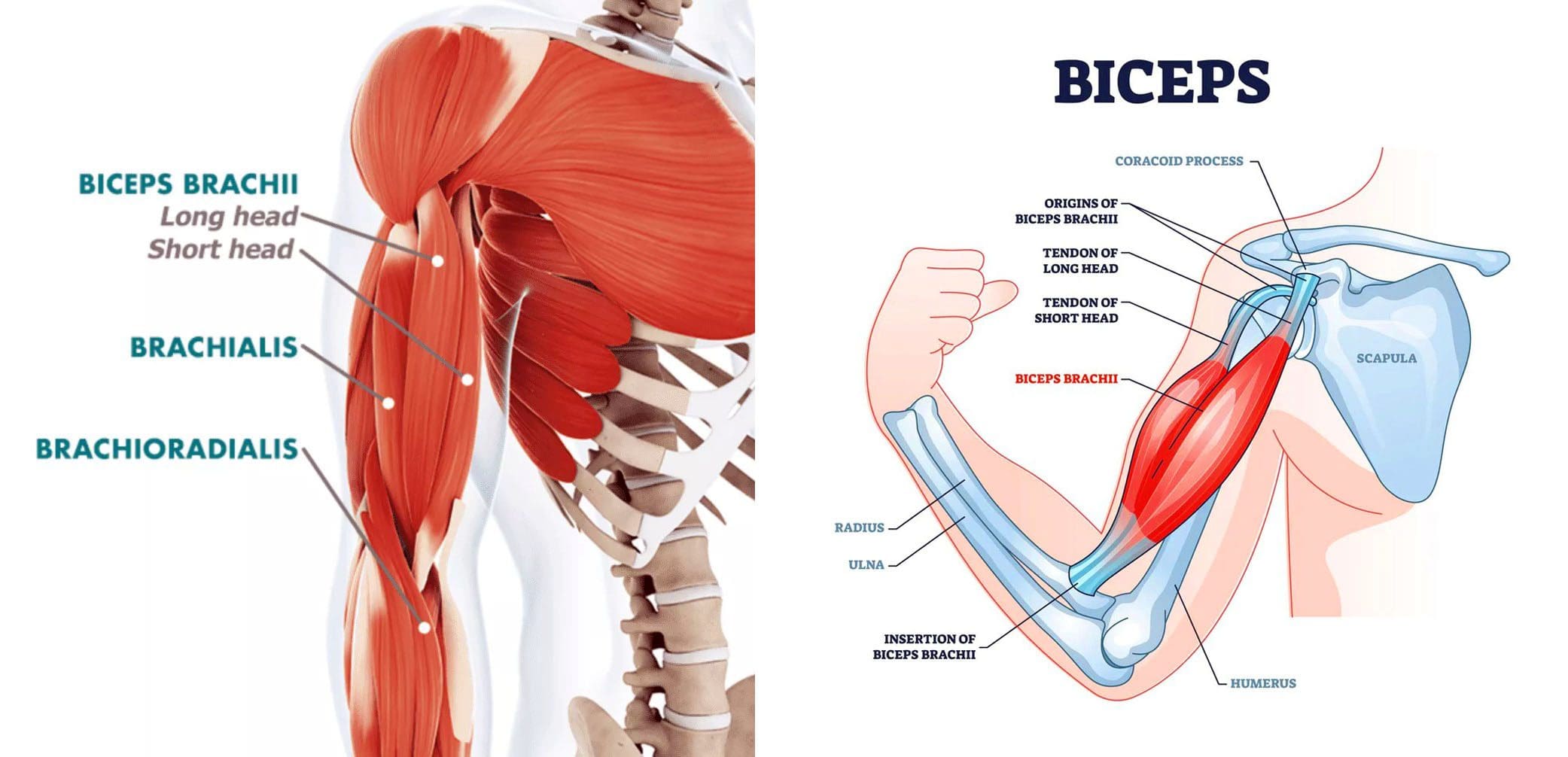
Located at the upper arm, the biceps comprise a short and long head that operates as a single muscle.
The bicep heads begin at different places around the shoulder/scapula region,
They have a common insertion point on the elbow tendon.
Together allow the bending of the arm at the elbow joint to curl and pull weight.
Curls work the muscles at the front of the upper arm and the lower arm. The brachialis and brachioradialis.
Dumbbells
Different equipment and grips can be used, including dumbbell weights, kettlebells, barbells, resistance bands, or cable machines. Select equipment with enough weight that can be lifted ten times using proper form, ensuring the last three repetitions are challenging to the point of being unable to raise another. From there, use this same weight to perform eight repetitions or slightly lower the weight and perform ten repetitions.
Begin by standing with the feet about hip-width apart.
Keep the abdominal/core muscles engaged.
Hold one dumbbell in each hand.
Relax the arms down at the sides with palms facing forward.
Keep the upper arms stable and shoulders relaxed.
Bend at the elbow and lift the weights so the dumbbells approach the shoulders.
Raise the dumbbells to eye or forehead level for a full range of motion.
Tension will be felt in the muscles in the front of the upper arm.
Keep movements smooth and controlled.
The elbows should stay tucked in close to the body.
Be careful to keep the wrist straight and rigid.
Flexing the wrist while bending the elbow won’t target the biceps effectively and can result in a wrist or elbow injury.
Exhale while lifting.
Lower the weights to the starting position.
For most, one set of 12 to 15 repetitions is adequate.
Train to failure performing the desired reps, staying within 3 to 5 repetitions of total failure.
When able, slightly increase weight and/or reps over time to increase muscle and strength.
Both biceps can be worked out by alternating arms.
Get the most out of the workout by avoiding these errors.
Rushing Through
Focus on proper form and avoid rushing through the workout.
Lift the weights with a smooth motion.
Take as much time to lower the weight as when lifting it.
Lowering the weight slowly can help build more muscle, making the most of the workout.
Improper Elbow Position
The position of the elbows should remain close to the side of the body.
Only the lower arm should move until the end of the movement when the elbows rise. This is a complete range of motion.
If the elbows move away from the torso or swing behind the body, there is probably too much weight.
Avoid Swinging the Weights
Focus on maintaining a tall, upright spine and a tight core.
The shoulders or torso should not swing the weights up when doing the curl.
It can feel like swinging, twisting, or heaving movements.
Don’t let the hips hinge, or the lower body assist the movement.
Keep the elbows at the sides until they naturally rise at the end of the motion.
Keep the shoulders relaxed
Make sure the shoulders don’t move forward to initiate the movement.
Use lighter weights or reduce the number of repetitions if this happens.
Safety
This exercise is generally recommended for most individuals. However, getting clearance from a primary caregiver before beginning any exercise routine is recommended.
Individuals with an arm injury or who experience pain during the motion should not perform the exercise without a doctor’s approval.
Don’t try to lift weights that are too heavy.
After a few lifts, expect to feel fatigued and a burning sensation in the biceps and forearm muscles.
This is the desired effect to get the muscles strong and growing.
Do not force extra repetitions once proper form cannot be achieved.
These muscles are in constant use when picking things up.
Consistently performing the biceps curl will help build strength in the upper arm.
Individuals learn to use their arm muscles correctly and with the core muscles.
Unlocking Athletic Potential with Chiropractic
References
Coratella, Giuseppe, et al. “Biceps Brachii and Brachioradialis Excitation in Biceps Curl Exercise: Different Handgrips, Different Synergy.” Sports (Basel, Switzerland) vol. 11,3 64. 9 Mar. 2023, doi:10.3390/sports11030064
Coratella, Giuseppe, et al. “Bilateral Biceps Curl Shows Distinct Biceps Brachii and Anterior Deltoid Excitation Comparing Straight vs. EZ Barbell Coupled with Arms Flexion/No-Flexion.” Journal of functional morphology and Kinesiology vol. 8,1 13. 19 Jan. 2023, doi:10.3390/jfmk8010013
Marchetti, Paulo H et al. “Seated row and biceps curl exercises present similar acute responses on muscle thickness, arm circumference, and peak force for elbow flexors after a resistance training session in recreationally-trained subjects.” The Journal of sports medicine and physical fitness vol. 60,11 (2020): 1415-1422. doi:10.23736/S0022-4707.20.10996-4
Sato, Shigeru, et al. “Elbow Joint Angles in Elbow Flexor Unilateral Resistance Exercise Training Determine Its Effects on Muscle Strength and Thickness of Trained and Non-trained Arms.” Frontiers in physiology vol. 12 734509. 16 Sep. 2021, doi:10.3389/fphys.2021.734509
Schoenfeld, Brad Jon, et al. “Differential effects of attentional focus strategies during long-term resistance training.” European Journal of sports science vol. 18,5 (2018): 705-712. doi:10.1080/17461391.2018.1447020
Mountain and trail biking is a fun way to exercise. Mountain biking requires total body/core strength, explosive power, balance, endurance, and agility to maneuver the bike, build speed, and absorb the rough bumps and terrain. But it also means that certain muscles get overused, causing overcompensation in the body that can lead to musculoskeletal problems and conditions. Strength, cardiovascular, and cross-fit can benefit mountain biking training for improved performance, safer and more confident riding, and injury prevention.
Mountain Biking Training
A few of the benefits of training are:
Increasing bone density.
Improving joint health.
Correcting imbalances and unhealthy posture.
Weight loss.
Aging muscle loss prevention.
Maintaining body posture centered on the bike requires core strength to perform the movements when moving the body backward and forwards, side to side, and pushing up and down when different obstacles pop up. The exercises’ objective is to work various body parts simultaneously and diagonally, like the movements used on the bike.
General Overview of Mountain Biking Training
Build strength – Target the quads, hamstrings, and abdominal muscles to power pedaling strokes.
Increase endurance – Avoid getting fatigued early because of weakened legs and aerobic performance.
Improve mountain bike skills – Ride faster and more efficiently by improving bike handling and technical skills.
Example Training Week
The terrain determines the intensity, but the same basic principles apply to mountain biking training as other endurance sports. Here’s a training example for a beginner that can be adjusted to the rider’s needs:
Monday
Stretching and training the muscles to relax prevent becoming stiff or cramping up during rides.
Cornering is a critical skill that should never stop being practiced and improved.
Cornering Drills
Pick a corner on a local trail and ride through it until mastered.
Focus on riding smoothly through the corner, and speed will generate.
As confidence builds in the corners, do the same on the opposite side.
Straighten Out
Ride to the furthest outside edge when approaching the turn.
Initiate the turn just before the sharpest point of the corner.
Stick to the furthest outside point of the corner when riding out of the corner.
Brake Before The Corner
Braking in the corner can cause the tires to slide out of control, causing a slip-and-fall accident.
Look through the turn as the bike follows where the eyes look.
Don’t stare at the front wheel, which could lead to a falling or flipping accident.
Eventually, riders can handle this technique, but it’s too advanced for beginners.
Smooth Ride
Beginners can be amazed at how much terrain bikes can ride over and through. Modern mountain bike suspension and tire systems can handle it. However, using the correct technique is essential to get through or around the obstacles and avoid crashes.
Stay aware of the surroundings.
Keep the body loose when approaching obstacles.
Decide how to overcome the obstacle – ride over, pop/raise the wheels, jump, or ride around.
Maintain confidence.
When riding over the obstacle, maintain an even balance on the pedals and keep the buttocks slightly off the saddle.
Keep arms and legs loose and let the body absorb the shock of the obstacle.
Trust the suspension and tires.
Ensure enough speed is generated to go over it and that it won’t stop the bike and cause a fall.
Some rough trail areas can require added strength to hold the bike steady.
Braking
There is no need to squeeze the brake handles with extreme force.
Extreme braking, especially the front, will likely lead to a flip or crash.
The brakes are made to stop with minimal force.
Beginners are recommended to learn to use a light touch when braking.
Improvement will follow with each riding session.
Foundation
References
Arriel, Rhaí André, et al. “Current Perspectives of Cross-Country Mountain Biking: Physiological and Mechanical Aspects, Evolution of Bikes, Accidents, and Injuries.” International journal of environmental research and public health vol. 19,19 12552. 1 Oct. 2022, doi:10.3390/ijerph191912552
Inoue, Allan, et al. “Effects of Sprint versus High-Intensity Aerobic Interval Training on Cross-Country Mountain Biking Performance: A Randomized Controlled Trial.” PloS one vol. 11,1 e0145298. 20 Jan. 2016, doi:10.1371/journal.pone.0145298
Kronisch, Robert L, and Ronald P Pfeiffer. “Mountain biking injuries: an update.” Sports medicine (Auckland, N.Z.) vol. 32,8 (2002): 523-37. doi:10.2165/00007256-200232080-00004
Muyor, J M, and M Zabala. “Road Cycling and Mountain Biking Produce Adaptations on the Spine and Hamstring Extensibility.” International Journal of sports medicine vol. 37,1 (2016): 43-9. doi:10.1055/s-0035-1555861
Ranchordas, Mayur K. “Nutrition for adventure racing.” Sports medicine (Auckland, N.Z.) vol. 42,11 (2012): 915-27. doi:10.1007/BF03262303
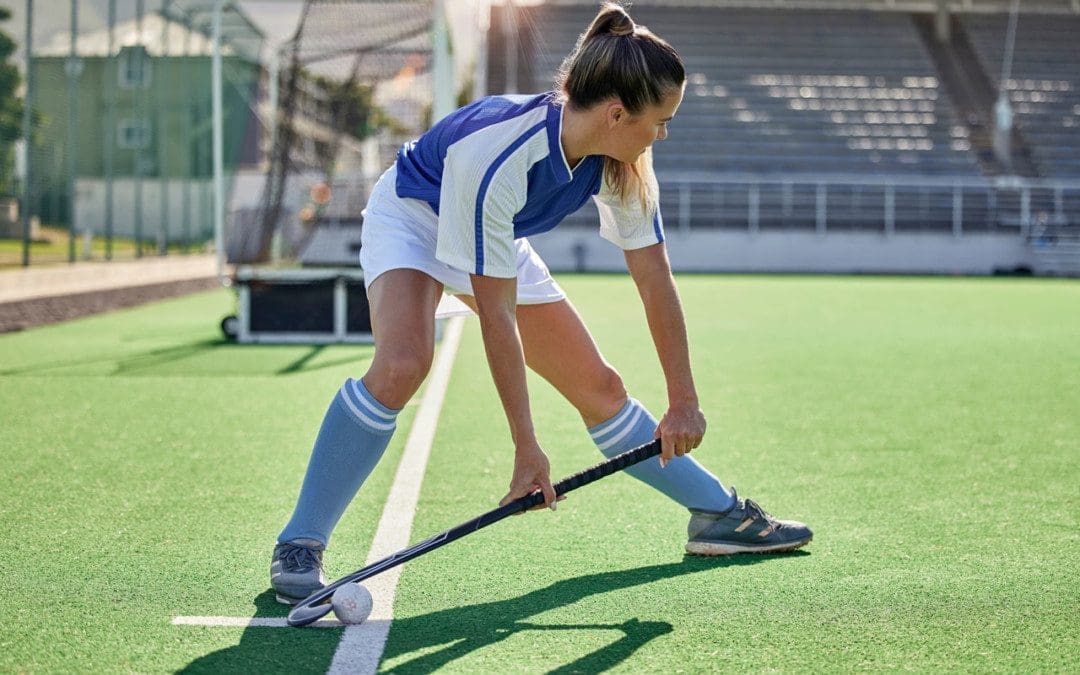
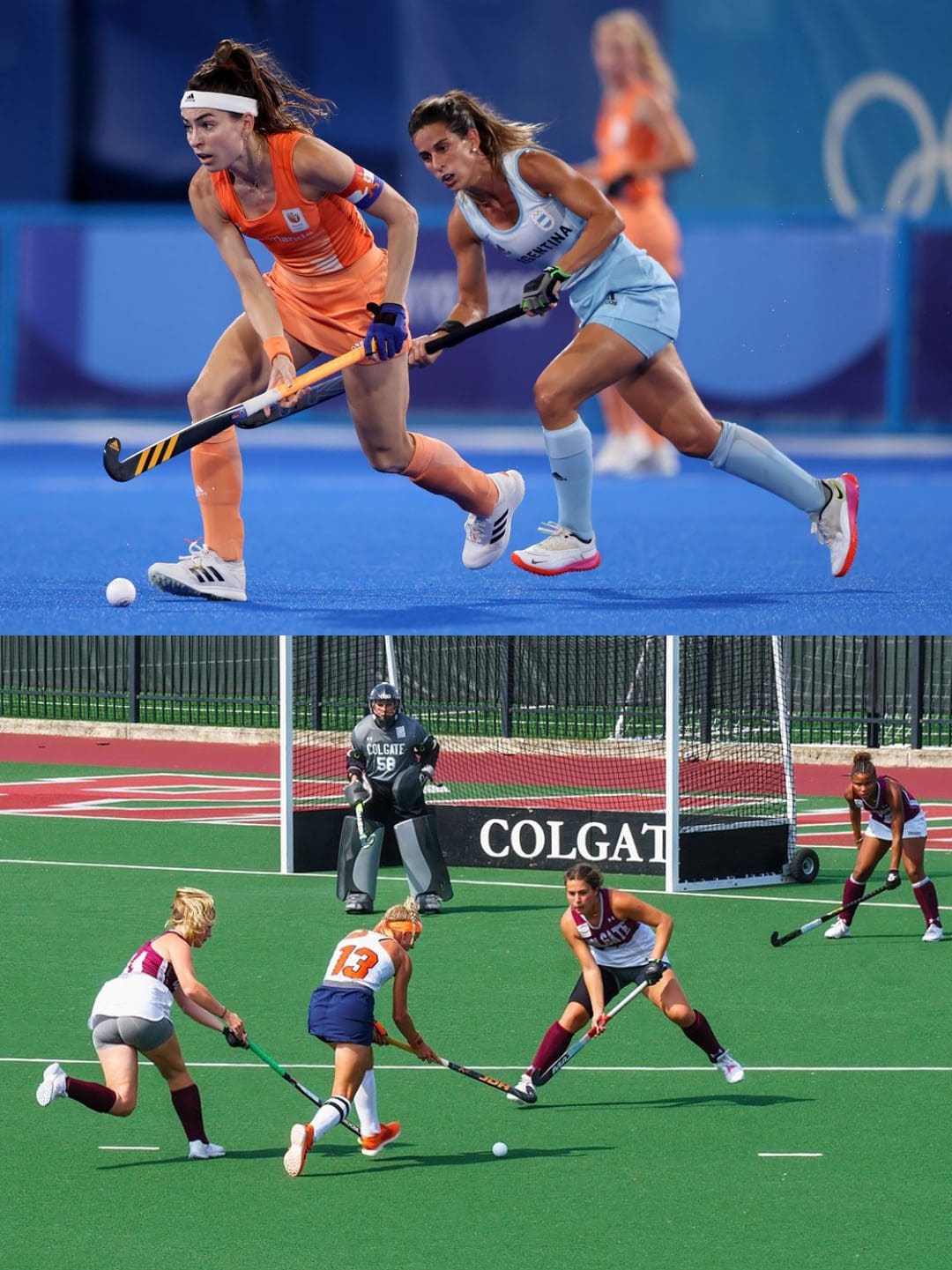
Field hockey is one of the world’s oldest team sports, dating back to the classical Greek era. It also is recognized as one of the oldest college sports in America. It is a game where teams composed of 11 players, including one goalkeeper, come together on a field and use hockey sticks to drive a ball into a net to score points. The winner is determined by whoever has the most points at the end of the game. The sport requires high aerobic and anaerobic fitness to provide endurance, strength to position, trap, pass, and hit the ball, push and flick the ball, and acceleration/speed and agility. Here we look at the basic fitness components and chiropractic care benefits.
Field Hockey
Aerobic Fitness
Field hockey players need to have high levels of endurance to perform. The game consists of 2 35 – minute halves, with a 10-minute break, plus stoppages. This consistent use of energy and muscular strength requires the cardiovascular system to supply oxygen through the blood.
A conditioning workout should include long-distance and interval training.
Long-distance running or biking is a great way to build up the endurance to run back and forth on the field.
To keep workouts fun, alternate between long-distance and interval.
Strength and Power
Players need to be physically strong to power through an opponent, drive the ball, or push the ball out from another player’s stick. Incorporating exercises that strengthen the entire body will help.
Body-weight workouts will work if you don’t have access to a gym or weights.
Squats, glute bridges, and lunges can help build a strong lower body.
Push-ups and tricep dips are great for the upper body.
Lower body injuries are common. The risk can be reduced by 50% through regular participation in a strength training program with a resistance component, such as neuromuscular training.
Agility
The ability to change direction quickly is important, as players will change direction at least every 5 seconds during a game.
Players should include interval training to increase quickness and agility.
Common agility drills are ladder drills, lateral sprints, and hill climbs.
Flexibility
Healthy hamstring and lower back flexibility maintain stability and balance, which is also important for injury prevention.
Field hockey fitness is about perfecting moves to become an automatic reaction.
Chiropractic Benefits
After putting their body through intense training, players can benefit from sports massage and chiropractic. Benefits include:
Increased Range of Motion
The sport requires a wide range of motion. A misaligned area like the spine and hips causes weakness in the muscles and tendons near the joints causing the player to take on awkward positioning that can lead to various neuromusculoskeletal issues and injuries. Chiropractic reset and realignment maintain body flexibility, muscle relaxation, optimal circulation and strengthen the areas causing weakness.
Enhanced Balance and Coordination
Balance and coordination are critical as the players sprint, shift, twist, and turn. The eyes and ears are the main balance components, but the nervous system plays a role. Chiropractic spinal alignment increases the nervous system’s function of sending signals to the rest of the body.
Speeds up Recovery From Injury
Chiropractic helps heal injury quicker because fluids and nutrients released after an adjustment will move toward the damage expediting healing. Chiropractic breaks up scar tissue and trigger points to rebuild that strength and stamina without the risk of worsening or further injury.
Chiropractic care will improve how the central nervous system communicates with the rest of the body.
Strength Training
References
Espí-López, Gemma V et al. “Effect of manual therapy versus proprioceptive neuromuscular facilitation in dynamic balance, mobility and flexibility in field hockey players. A randomized controlled trial.” Physical therapy in sport: official journal of the Association of Chartered Physiotherapists in Sports Medicine vol. 32 (2018): 173-179. doi:10.1016/j.ptsp.2018.04.017
Krzykała, M et al. “Does field hockey increase morphofunctional asymmetry? A pilot study.” Homo : internationale Zeitschrift fur die vergleichende Forschung am Menschen vol. 69,1-2 (2018): 43-49. doi:10.1016/j.jchb.2018.03.003
Reilly, T, and A Borrie. “Physiology applied to field hockey.” Sports medicine (Auckland, N.Z.) vol. 14,1 (1992): 10-26. doi:10.2165/00007256-199214010-00002
Tapsell, Liam C et al. “Validity and Reliability of a Field Hockey-Specific Dribbling Speed Test.” Journal of strength and conditioning research vol. 36,6 (2022): 1720-1725. doi:10.1519/JSC.0000000000003700
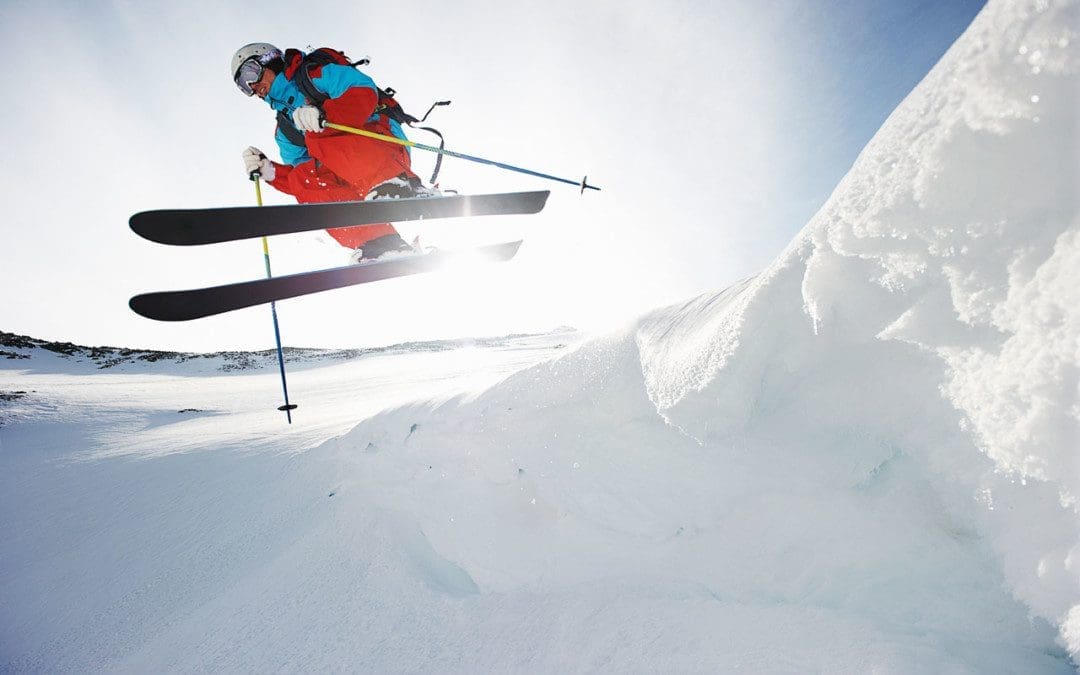
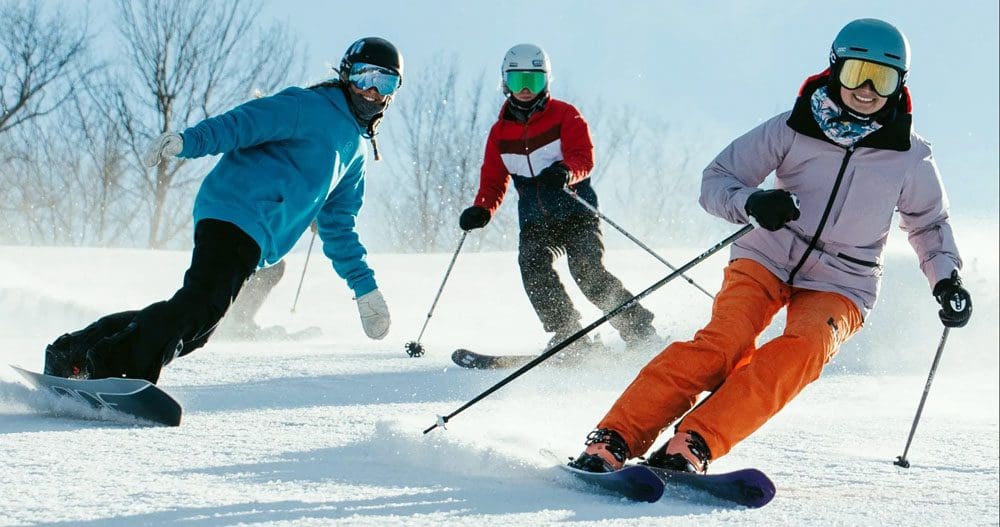
Skiing sports require balance, strength, endurance, and muscle power. It is recommended to start training for ski season about eight to twelve weeks before heading to the slopes. However, any amount of training is better than no training; as long as you stay consistent and focus on exercises that enhance skiing or snowboarding, even a few weeks of fitness training can make a difference. A ski conditioning workout can help you ski better, stay out longer, prevent injuries, and have more fun.
Skiing
Before beginning any training plan, check with your doctor or a certified training professional. The recommended strategy is a cardio and strength workout routine that trains and strengthens the lower-body muscles, including the quads, hamstrings, and glutes. This will improve mobility and balance to help control the skis better and support body parts like the knees, which are more prone to skiing injuries.
General Overview of Training
Increase Muscle Power
Strengthen the quads, glutes, hamstrings, and hips.
Posture and Balance
Train the core and the muscles around the hips, which helps provide stability.
Increase Endurance
Condition the body to handle vigorous conditions.
Increase Cardiovascular Function
Cardiovascular activities include running, biking, or interval training to strengthen the lungs and heart.
Training Schedule
Starting
With skiing, you’ll need a combination of cardio and strength training and enhanced aerobic fitness for the higher altitude.
Individuals are encouraged to start around six to eight weeks before ski season because it takes around that amount of time to experience the benefits.
The muscles need time to recover and repair themselves between sessions.
As aforementioned, you can still exercise even if you have missed the training window.
Pick an enjoyable activity: jogging, biking, and high-intensity interval training/HITT.
The goal should be 30 minutes of cardio activity 2-3 times a week to prepare the heart and lungs for downhill runs.
Recommended workouts for getting into ski shape:
Elliptical trainer – The elliptical trainer is highly recommended for ski training, as it mimics the same upper-body and lower-body movements used in Nordic skiing.
This could be a short session on a treadmill, jumping jacks, or a quick jog.
Guidelines as you progress through the workout:
Inhale during initial exertion, and exhale as you return to the starting position.
Maintain breathing patterns during faster exercises.
Rest at the end of each exercise.
Walking Lunge with Rotation Exercise
This exercise works the glutes, quads, hamstrings, and abdominals and improves core rotation.
Stand with your feet slightly apart.
Step one foot forward into a lunge.
As you step forward, rotate your body to the side in the direction of your lead knee.
Arms should be at chest height, slightly elevated from the sides.
Drive up and through your forward leg to take the next lunge.
Repeat ten times on each side for a total of 20.
Tips and modifications:
If you don’t have enough space, you can stay in one spot and alternate lunging.
Make it easier by keeping the back leg straight.
Make sure that your knees do not go inward.
Stay in a straight line with your foot and hip.
Lateral Ski Jump Exercise
This power exercise prepares for the explosive ski movements and energy bursts needed to control the descent.
Stand with your feet hip-width apart and knees slightly bent, balancing on one leg.
Jump to the side, landing on the other leg.
Think about landing softly with your knee slightly bent.
Jump to the other side, landing softly on the other leg.
Swing the arms sideways across your body like a speed skater.
Repeat 15 on each side.
Tips and modifications:
Make smaller jumps to the side
Move slower
Touch your toe to the ground instead of keeping it off the floor.
Chop Exercise
This exercise will strengthen the core to initiate turns using the core rather than the arms or shoulders and help prevent lower back pain.
Use a resistance band that you can secure slightly above the shoulders.
Stand sideways to where the band is anchored.
Position yourself so that you can reach up evenly with your shoulder to grab the free end of the band with both hands.
Your knees should be slightly bent.
Pull the band down across your body while turning your body.
Think about the trunk doing most of the work for this exercise, not the arms and shoulders.
Keep your arms as straight as you can as you pull the band down
The arms should act as guides, with the obliques and back muscles generating the pulling and rotating power.
Do this 15 times, then repeat facing the other way.
Rest for 90 seconds before moving on to the next exercise.
Tips and modifications:
Adjust the band resistance level by shortening it to increase resistance or lengthening it to ease resistance.
The goal is to feel tired at the end of the reps but not so exhausted that you struggle to finish.
Hip Roll Exercise
This exercise strengthens the muscles of the hips, including the glutes, to help prevent knee pain. There’s a direct relationship between hip strength and knee control. When hip strength is weak, the knees tend to shift inward.
Stand on your left leg.
Lean your body forward at the hips, keeping the back straight.
Lift your right leg back behind you, slightly off the ground.
Rotate or roll your hip away from your standing foot.
Maintain the body in a straight line as you roll your hips back.
Repeat 10-15 times on each side.
Tips and modifications:
If balancing is difficult, hold on to the back of a chair or keep your toes on the ground.
Whether you’re going alpine or Nordic skiing, these are just a few exercises designed to help all types and levels of recreational skiers and snowboarders. Always check with your doctor before starting any exercise routine, and it is recommended to consult a ski instructor or personal trainer for more comprehensive and intense workouts.
Ski Team Workout
References
Laskowski, E R. “Snow skiing.” Physical medicine and rehabilitation clinics of North America vol. 10,1 (1999): 189-211.
Nagle, Kyle B. “Cross-Country Skiing Injuries and Training Methods.” Current sports medicine reports vol. 14,6 (2015): 442-7. doi:10.1249/JSR.0000000000000205
Steadman, J R et al. “Training for Alpine skiing.” Clinical orthopedics and related research,216 (1987): 34-8.
Therell, Terese, et al. “Effects of Core Strength Training on Skiing Economy in Elite Junior Cross-Country Skiers.” Research quarterly for exercise and sport vol. 93,3 (2022): 608-614. doi:10.1080/02701367.2021.1887441
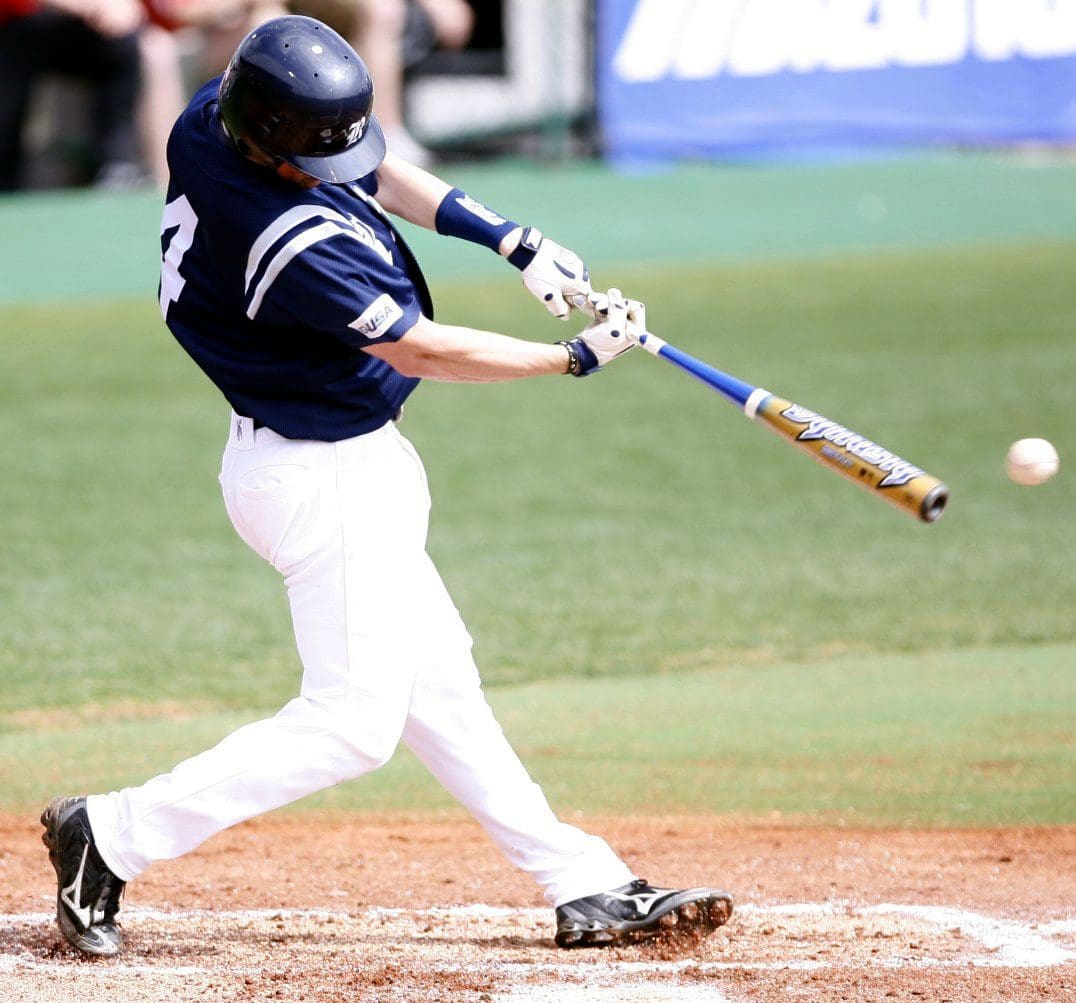
All sports differ in the relative importance of various physical skills contributing to the game and individual performance. Baseball is a precision sport with fast, explosive movements and full-body activity. The ability to repeatedly perform near maximum level with little rest is necessary for baseball players. Baseball training involves a multidimensional approach that focuses on speed, agility, and strength in a way that is relative to the motions and requirements of the sport.
Baseball Training
Trainers have to assess the unique needs of the sport and determine the time needed to improve each quality within the athlete. They should focus on the following:
Baseball training workouts are targeted at increasing running speed, bat speed, pitching, and throwing velocity that breaks down the muscle groups for improving performance while decreasing the risk of injury. Training consists of combined conditioning that includes:
Throwing a baseball at high velocity is a full-body movement that requires total body development.
Strong leg, hip, and core muscles are necessary to transfer power from the ground, up through the lower body, to the torso, and then the arm and hand to generate a fast, whipping ball release.
This will improve generating power in the throwing muscles.
The objective is to build power utilizing a heavy and then a light load to build arm speed, and using proper form will improve throwing velocity safely.
Proper trunk rotation during arm cocking and strength and flexibility training should involve trunk rotational exercises to develop the obliques so that maximum arm speed can be generated.
Players have to deal with consistent failure and remain confident.
Hitting Mistakes
References
Ellenbecker, Todd S, and Ryoki Aoki. “Step-by-Step Guide to Understanding the Kinetic Chain Concept in the Overhead Athlete.” Current reviews in musculoskeletal medicine vol. 13,2 (2020): 155-163. doi:10.1007/s12178-020-09615-1
Fleisig, Glenn S et al. “Biomechanical Analysis of Weighted-Ball Exercises for Baseball Pitchers.” Sports health vol. 9,3 (2017): 210-215. doi:10.1177/1941738116679816
Rhea, Matthew R, and Derek Bunker. “Baseball-specific conditioning.” International journal of sports physiology and performance vol. 4,3 (2009): 402-7. doi:10.1123/ijspp.4.3.402
Seroyer, Shane T et al. “The kinetic chain in overhand pitching: its potential role for performance enhancement and injury prevention.” Sports health vol. 2,2 (2010): 135-46. doi:10.1177/1941738110362656
IFM's Find A Practitioner tool is the largest referral network in Functional Medicine, created to help patients locate Functional Medicine practitioners anywhere in the world. IFM Certified Practitioners are listed first in the search results, given their extensive education in Functional Medicine





 Baseball Training






