Can individuals maintain proper hydration levels in their bodies to prevent spinal pain and other musculoskeletal conditions?
Introduction
When making small changes to better their health and wellness, many understand that eating nutritional foods, exercising, and finding ways to reduce the pain and stress that environmental factors have affected the body. However, there is also another crucial component to a person’s health and wellness, and that is staying hydrated. Many individuals sometimes don’t realize that the human body contains about 60% of the water, which helps every vital organ, muscle, tissue, and vertebra in the body to function. However, many individuals who do not consume enough water due to a stressful event, exercising, or just wanting to drink sugary drinks will feel pain and discomfort in their bodies. This can range from mild headaches to back pain. Today’s article focuses on what spinal pain correlates with the back, why staying hydrated can reduce spinal pain and ways to stay hydrated. We talk with certified associated medical providers who inform our patients to maintain proper hydration to reduce the chances of spinal pain affecting their bodies. While asking their associated medical provider intricate questions, we advise patients to incorporate daily hydration levels as part of their routine to reduce the chances of spinal pain from returning. Dr. Alex Jimenez, D.C., includes this information as an academic service. Disclaimer.
Spinal Pain Is Correlated With The Back
Do you feel constant aches or pains after a stressful day? Do you feel like chugging gallons of water but still feel thirsty? Or have you been noticing that you have been dealing with limited mobility that has been causing you pain and discomfort in your lower back? These pain-like scenarios are multifactorial and can correlate with spinal pain affecting the back. Now, many people wonder why spinal pain is associated with back pain. The spine is crucial in allowing the individual to be upright and move around during daily activities. The spinal vertebrae discs are between the bones, which would enable shock absorption when a person twists, bends, or flexes so the bones don’t rub together. However, when the body ages, the spine does, too, which causes the intervertebral disc to gradually fall and change the dynamics of the affected spine segments. (Kos et al., 2019) To that point, when the intervertebral disc becomes compressed due to degeneration, it can lead to the development of back pain.
Since low back pain is a multifactorial musculoskeletal condition, many individuals often develop low back pain from numerous environmental risk factors like physical labor, excessive sitting or standing, poor dieting, andphysical inactivity, which can cause individuals to have a loss of sensation, reduced reflexes, limited range of movements and tenderness can affect a person’s gait and posture. (Kabeer et al., 2023) When the spinal discs are being compressed, the water inside the disc becomes dehydrated and is linked to lower back pain. (Cheung et al., 2023) When the spinal discs are dehydrated in the spine due to improper hydration, it can lead to immobility, cause the disc to degenerate, and cause spinal structural defects that cause the surrounding muscles and tissues to have biomechanical instability and inflammation. (Hauser et al., 2022) When the body starts dehydrating, it retrieves water from the spine and other parts to sustain life and keep the vital organs functioning.
Eating Right To Feel Better- Video
Why Staying Hydrated Can Reduce Spinal Pain
Proper hydration is key to reducing the chances of spinal pain. By staying hydrated with plain, pure water, individuals can stay focused, remove toxins from the body, aid in weight reduction, and reduce muscle and low back pain. (Nsiah-Asamoah & Buxton, 2021) Drinking at least 64 ounces of water a day can rehydrate the body and prevent future issues that can cause pain.Proper hydration allows the body to maintain cell activity and regulate body temperature, reducing the chances of pain affecting the body.
Ways to Stay Hydrated
There are ways to stay hydrated and allow the body to have proper hydration levels. Incorporating hydrating fruits and vegetables can help aid in proper hydration as these fruits and vegetables contain about 90% water and the essential nutrients. Additionally, when individuals try to get their hydration levels back up, they are encouraged to drink more fluids as they prefer, especially if they feel unwell. This is to ensure that the body is hydrated enough so that individuals can receive subcutaneous or intravenous fluid supplements combined with regular fluid intake. (Li et al., 2023) Another way many individuals can stay hydrated is to combine non-surgical treatments like chiropractic care and spinal decompression to help realign and lengthen the spine to reduce unwanted pressure on the spinal discs and rehydrate them. The combination of non-surgical treatments and drinking plenty of hydrating fluids can help many individuals dealing with back pain associated with the spine as they start to make small changes to their routine and can live a life pain-free.
References
Cheung, S. T. Y., Cheung, P. W. H., & Cheung, J. P. Y. (2023). Why Are Some Intervertebral Discs More Prone to Degeneration?: Insights Into Isolated Thoracic “Dysgeneration”. Spine (Phila Pa 1976), 48(12), E177-E187. https://doi.org/10.1097/BRS.0000000000004632
Hauser, R. A., Matias, D., Woznica, D., Rawlings, B., & Woldin, B. A. (2022). Lumbar instability as an etiology of low back pain and its treatment by prolotherapy: A review. J Back Musculoskelet Rehabil, 35(4), 701-712. https://doi.org/10.3233/BMR-210097
Kabeer, A. S., Osmani, H. T., Patel, J., Robinson, P., & Ahmed, N. (2023). The adult with low back pain: causes, diagnosis, imaging features and management. Br J Hosp Med (Lond), 84(10), 1-9. https://doi.org/10.12968/hmed.2023.0063
Li, S., Xiao, X., & Zhang, X. (2023). Hydration Status in Older Adults: Current Knowledge and Future Challenges. Nutrients, 15(11). https://doi.org/10.3390/nu15112609
Nsiah-Asamoah, C. N. A., & Buxton, D. N. B. (2021). Hydration and water intake practices of commercial long-distance drivers in Ghana: what do they know and why does it matter? Heliyon, 7(3), e06512. https://doi.org/10.1016/j.heliyon.2021.e06512
For individuals who enjoy walking for exercise and health, can knowing when to replace walking shoes help protect their feet and prevent musculoskeletal injuries?
Replacing Walking Shoes
The best walking shoes must be replaced to ensure musculoskeletal health and prevent injuries. Wearing worn-out shoes during prolonged standing, distance walking or running, and high-impact workouts can exacerbate lower back stiffness, soreness, and pain. Comfortable walking shoes offer substantial support and superior cushioning, working to alleviate discomfort and prevent injury. However, they break down cushioning and support with each step. When an individual walks or runs 500 miles, most athletic shoes are ready for replacement and should be recycled or saved for non-exercise purposes.
500-Miles
Most athletic shoes are built to last 350 to 500 miles. (Cook, S. D., Kester, M. A., and Brunet, M. E. 1985) Walkers’ feet don’t impact their feet as hard as runners’, but individuals are unlikely to feel support and cushioning past 500 miles. Weight is also a factor; the more an individual weighs, the faster their shoes wear down.
It is recommended that individuals who walk 30 minutes daily or an average of three to four hours a week replace their shoes every six months.
Individuals who walk 60 minutes daily or seven hours weekly replace their shoes every three months.
Replace walking shoes every three to six months or every 500 miles.
Shoe Wear
When athletic shoes are glued together, they start to wear from the factory to the stores as the adhesive dries out. The air pockets in the cushioning slowly begin to dissipate. Walking shoes are often on sale when old models are discontinued and may already be over a year old. To get the longest life, buy the current model and ask staff how long they have been on the shelf.
Shoe Care
Shoes can last longer by following a few guidelines:
Use walking Shoes only for Walking Exercise
It is recommended not to wear them for daily use.
Use them only for walking.
Wearing them all day exposes them to foot moisture and bacteria, breaking them down faster.
Air Out Shoes Between Uses
Store walking shoes where they are exposed to air so they can dry out completely between uses.
Keeping them in a gym bag won’t allow them to breathe.
Wash Shoes and Air Dry
When washing walking shoes, use gentle soap and cold water to prevent the glue from breaking down.
Always air dry rather than placing them in a dryer.
Avoid heat, as this will contribute to faster glue breakdown.
Replace the Insoles
Individuals who prefer custom insoles should replace them each time shoes are replaced.
However, changing the insole is not a substitute for replacing the shoe.
Cushioning insoles do not provide the same support.
A new insole will not fix a broken-down walking shoe.
Rotate Walking Shoes
Alternate walking shoes every one to two months. The feet sense the difference when the older pair begins to break down. For individuals who walk one or more times daily, alternating shoes allow each pair to dry out fully between uses. Having two pairs of walking shoes to alternate will keep you from replacing them more frequently.
Signs It’s Time
Many wait until their shoes look worn out, with holes and torn laces, before considering replacing them. Here are a few guidelines for when to replace walking shoes:
Worn Tread
Many of today’s walking shoes change color through the sole to alert the individual.
If green turns to pink or some other combination, it’s time to replace the shoes.
Overpronation or Supination
This can lead to the heel of the shoe being worn down on one side more than the other.
This can affect your gait, making it important to replace your walking shoe.
Wrinkles On The Side or Bottom Of The Sole
The breakdown of support and cushioning can cause this.
Weak Ankle Support
This is usually from the uppers being broken down around the ankle.
Wear Patterns
Where and how the soles and heels of walking shoes are worn can tell a foot and shoe professional which shoes the individual should wear. It is recommended that used shoes be taken to the shoe store. They can indicate overpronation, a neutral gait, or supination.
Risks
The risks of wearing worn-out walking shoes include:
Lack of cushioning and support can lead to foot, knee, or leg pain.
Individuals who notice new soreness and aches may indicate that the shoes need replacing.
Recycling
Keeping one or two pairs of used walking shoes is great for household chores. They can also be recycled or donated. Recycled walking shoes are used to make playground and track surfaces. Look for a shoe bin at a community recycling center or athletic shoe store. Shoes in decent condition can be donated to charity clothing centers.
Injury Medical Chiropractic and Functional Medicine Clinic
At Injury Medical Chiropractic and Functional Medicine Clinic, our areas of practice include Wellness & Nutrition, Chronic Pain, Personal Injury, Auto Accident Care, Work Injuries, Back Injury, Low Back Pain, Neck Pain, Migraine Headaches, Sports Injuries, Severe Sciatica, Scoliosis, Complex Herniated Discs, Fibromyalgia, Chronic Pain, Complex Injuries, Stress Management, Functional Medicine Treatments, and in-scope care protocols. We focus on what works for you to achieve improvement goals and create an improved body through research methods and total wellness programs. If other treatment is needed, individuals will be referred to a clinic or physician best suited to their injury, condition, and/or ailment.
Custom Foot Orthotics Benefits
References
Cook, S. D., Kester, M. A., & Brunet, M. E. (1985). Shock absorption characteristics of running shoes. The American journal of sports medicine, 13(4), 248–253. https://doi.org/10.1177/036354658501300406
Rethnam, U., & Makwana, N. (2011). Are old running shoes detrimental to your feet? A pedobarographic study. BMC research notes, 4, 307. https://doi.org/10.1186/1756-0500-4-307
It can be challenging for individuals trying to keep their homes clean with chronic back pain. Can learning and proper body mechanics help manage household responsibilities without aggravating pain symptoms?
Household Chores
Household-related back problems usually occur because we don’t take the time to consider how to move and perform the tasks from a musculoskeletal perspective to avoid and prevent injuries. Most ergonomic tips for household chores revolve around the same ideas for athletes and fitness enthusiasts: maintain a neutral spine, avoid twisting when possible, strengthen the body’s core, take regular breaks, stretch, and don’t overdo it. A healthy body mechanics system works for those who garden as well. Using strategies like cleaning a little here and there instead of taking an entire day whenever possible and organizing tools ahead of time along with training oneself how to perform them in a way that the spine, back muscles, and the entire body are protected from injury, pain, sciatica, or re-injury. However, implementing proper body mechanics requires a willingness to become aware of how each task is performed and to retrain the body where necessary to a healthier method/technique and a happier household.
Vacuuming
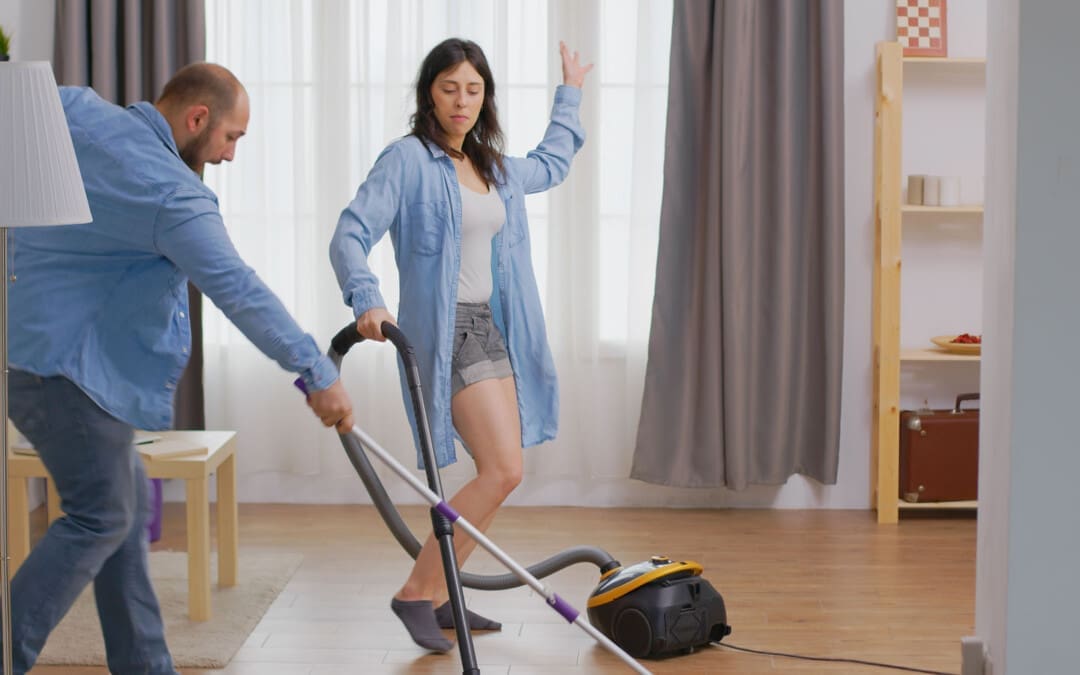
Vacuuming is one of those chores that can quickly lead to a habitual bent-over posture. This is not recommended for the spine’s health; slouching, whether from a position held for a sustained period of time or an activity that requires repetition, can lead to problems with the intervertebral discs and pain symptoms. (Nazari J., Pope M. H., and Graveling R. A. 2012) Another posture that individuals tend to engage in is vacuuming with an overly straight back. Like slouching, keeping the spine rigidly over-extended while vacuuming can irritate the spine and cause muscle spasms. It can also increase the normal low back curve, which, in turn, may lead to extra tightness and a painful back.
Vacuuming with healthy body mechanics includes employing a minimal lunge that stays in a pain-free position that does not extend beyond the comfortable position. Individuals should place one foot in front of the other for a short distance. The stance is similar to the way fencers position themselves. This allows a shift forward and back during the vacuuming process instead of bending or rounding over at the spine. For those with sacroiliac joint issues, the forward placement of one leg may be more comfortable than the forward placement of the other. Try out and use the side that feels comfortable, and stick with that. Do not work in pain or through the pain. Switching legs and/or arms can help avoid muscle fatigue or injury triggers. Place the non-vacuuming hand on the thigh in front to help take the weight and pressure off the back. Maintain the pelvis in a level position when working. Another strategy for those who can get up and down from the floor without trouble is to vacuum while kneeling on one knee. This brings the body’s center of mass closer to the floor, reducing the degree to which the body has to deal with the force of gravity. Kneeling while vacuuming may also help prevent rounding over at the spine.
Dusting
When dusting, reduce the load off the back by propping the inactive arm on the item or area being cleaned. Alternatively, prop the arm on the thigh.
Laundry
In a large household, it is very easy to overdo laundry and trying to finish up as much as possible can lead to pain symptoms and injuries. If possible, break up the loads that have to be lifted or carried into smaller bundles that weigh less. This can mean more loads, but the strategy protects the back and spine. Avoid extremes in the spinal position; don’t round over at the spine or keep it rigid and over-extended. Lift with the legs and protect the discs. Adjustments that can be made to the basic lift with the leg and not the back strategy include putting the laundry basket on a table or chair that is preferably the same height as the washer or dryer. This will minimize bending. To relieve pressure on the back, use one hand to load the washer, dryer, or laundry basket while using one of the appliances to prop the other hand.
Dishes
During dishwashing, use a small step stool or box to help prevent injury and/or relieve pain. Place it in the cabinet under the sink and rest one foot on it. This strategy can work well for those with sacroiliac joint problems, especially if the foot on the pain-free side is the one placed on the box or stool. Ensuring foot placement reduces pain and discomfort and does not cause pain. Using a box or stool can also help with core stability. Core stability is one of the best ways, in general, to prevent injury and keep low back pain away. (Coulombe B. J., Games K. E., Neil E. R., and Eberman L. E. 2017) As the box is directly under the sink, the body has to firmly position itself against the counter, providing stability during the task. The box or stool will contract the pelvic and hip muscles and strengthen the core.
Sweeping
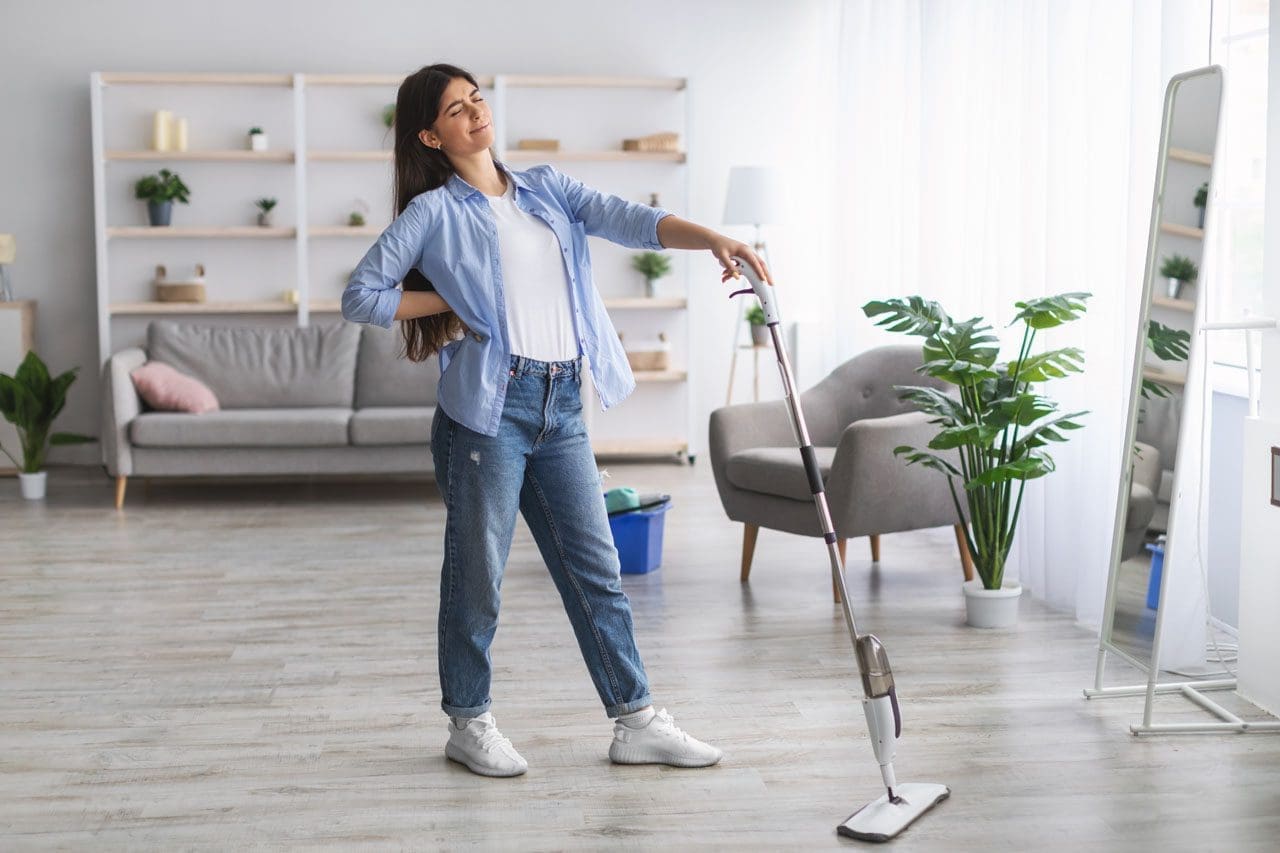
Many sweep, mop, and rake with their spines, which can be counterproductive to health, as twisting and bending simultaneously is a known risk factor for a herniated disc. (Shimia, M. et al., 2013) Use the arms and legs instead of overly involving the back during sweeping and raking. The idea is to reach and pull the broom or sweeper with the arms rather than twisting around to reach all the areas working with one leg in front of the other. When needing to change directions, pivot on the back leg, keeping the trunk relaxed, equivalent to a tai chi movement. Or, turn the whole body in different directions by taking small steps. Taking small steps or pivoting on the back leg to change the direction of the trunk and arms protects from overuse and extensive wear and tear.
Adjustments for a new method of household sweeping and raking include:
Sweeping or raking about 1 to 2 feet in front to avoid overreaching and strain.
Maintaining the spine in one long, flexible, but unbroken line.
The head, shoulders, rib cage, pelvis, knees, and feet should always face the same direction and be vertically balanced relative to one another.
This will mean changing directions by pivoting the back leg or moving the whole body around, taking small steps.
Consider using an ergonomically designed broom, sweeper, mop, rake, and other household tools. This will be a bend in the handle or stem to help avoid bending.
Injury Chiropractic and Functional Medicine Clinic
Injury Medical Chiropractic and Functional Medicine Clinic works with primary healthcare providers and specialists to develop personalized treatment programs. We focus on what works for you and use an integrated approach to treating injuries and chronic pain syndromes to improve flexibility, mobility, and agility, relieve pain, and help individuals return to normal activities. Our providers use Functional Medicine, Acupuncture, Electro-Acupuncture, and Sports Medicine principles. Dr. Jimenez has teamed up with top surgeons, clinical specialists, medical researchers, and rehabilitation providers if other treatments are needed.
Heel Spurs
References
Nazari, J., Pope, M. H., & Graveling, R. A. (2012). Reality about migration of the nucleus pulposus within the intervertebral disc with changing postures. Clinical biomechanics (Bristol, Avon), 27(3), 213–217. https://doi.org/10.1016/j.clinbiomech.2011.09.011
Coulombe, B. J., Games, K. E., Neil, E. R., & Eberman, L. E. (2017). Core Stability Exercise Versus General Exercise for Chronic Low Back Pain. Journal of athletic training, 52(1), 71–72. https://doi.org/10.4085/1062-6050-51.11.16
Shimia, M., Babaei-Ghazani, A., Sadat, B. E., Habibi, B., & Habibzadeh, A. (2013). Risk factors of recurrent lumbar disk herniation. Asian journal of neurosurgery, 8(2), 93–96. https://doi.org/10.4103/1793-5482.116384
The levator scapulae muscles could be overstretched for individuals experiencing upper back, shoulder, and neck pain. Can physical therapies help relieve pain and retrain the muscles to function properly?
Levator Scapulae Muscles
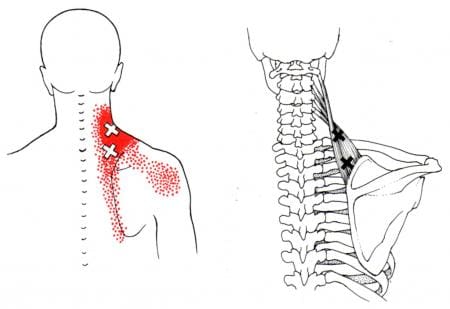
The levator scapulae muscles stretch along the spine across the upper back and neck. They originate from the cervical vertebrae C1 to C4 and attach to the inside top edge of the scapula. (Chotai P. N. et al., 2015) They elevate the shoulder blades, tilt the head, and work with other muscles to stabilize the spine and influence neck motion and upper back posture. The shoulder blade/scapula is the flat, triangular-shaped bone that sits on top of the upper part of the rib cage. Where the levator scapulae attaches, the muscles raise the shoulder blade, a movement called elevation, and indirectly rotates the scapula’s bottom tip downward towards the spine. These shoulder blade movements are part of the shoulder joint’s larger flexion and abduction movements.
Flexion occurs when moving the arm forward and up, and abduction occurs when moving the arm out to the side.
The levator scapulae muscles contract during flexion and/or abduction,
The muscles also contract when moving the neck in side bending, lateral flexion, rotation, or twisting.
Symptoms
Neck and shoulder pain are common problems for office workers, truck drivers, and others who sit most of the day for their jobs. It can worsen when there is no spinal support for maintaining correct alignment. Poorly designed work chairs may contribute to chronic muscle tension and spasms, plus they may contribute to muscle weakness. One of the primary functions of the levator scapulae muscles is to keep the shoulder blade in a position that supports a vertical alignment of the head and to prevent forward head posture. (Yoo W. G. 2018)
However, the shoulder blade is an extremely movable bone. Maintaining stability and correct neck posture is not easy. The levator scapulae muscles may not be strong enough to keep the shoulder blade where it’s supposed to be for healthy posture, and instead, they become overstretched. When muscles are overstretched, they often become taut to try to maintain some form of stability. It can feel like muscle tension because the muscles shorten, but there is a difference. The situation can worsen if one slouches, has no lumbar support, and/or the desk or steering wheel is too high or too low, which may force the shoulder blade upward or downward.
Pain Relief
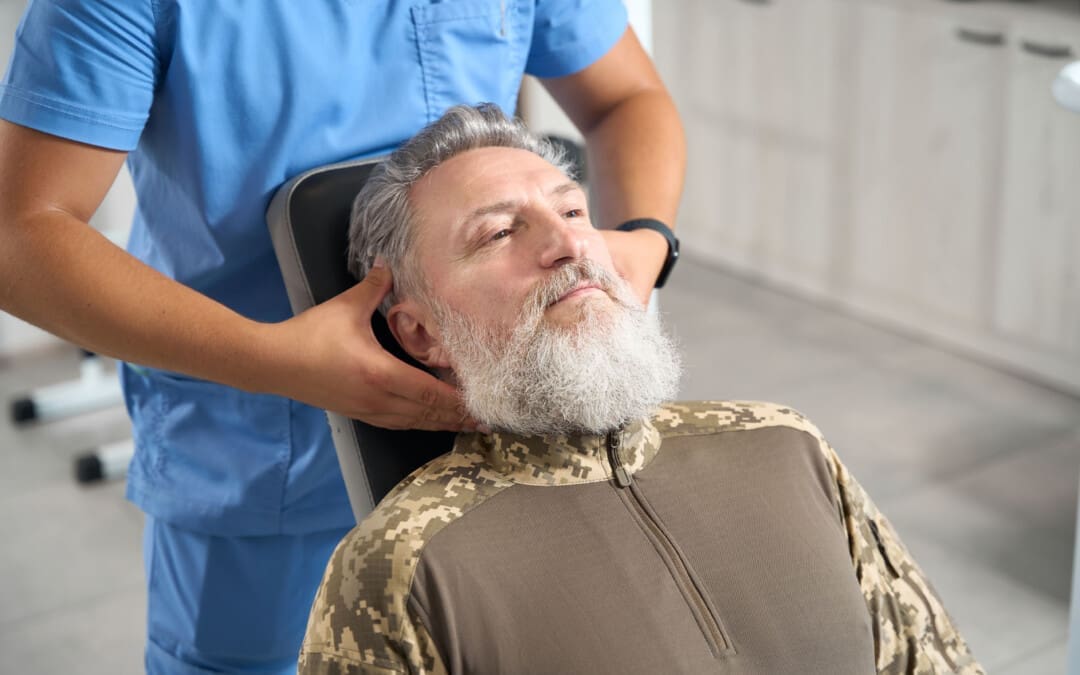
The levator scapulae muscles are two of several shoulder muscles that may contribute when neck pain presents. This is why a qualified, licensed health professional should diagnose any pain or dysfunction in the area. Physical therapy can help get the body back on track. (Yoo W. G. 2018) Treatment may consist of restoring muscle strength and flexibility in the shoulder, neck, and upper back muscles and developing better posture habits. Physical therapy exercises, particularly those that address upper back posture, can help reduce the stress placed on the levator scapulae muscles and can help decrease kyphosis, often a precursor to forward head posture. Stretching, strengthening, and posture lessons will help relieve pain and increase the physical functioning of the upper body. Other tips for avoiding and relieving muscle pain include:
Stretching regularly by gently rotating the neck and shoulders.
Applying heat to promote relaxation.
Regular massage therapy.
Adjusting chairs and/or monitor height to align with a straight line of sight.
Not carrying heavy bags, especially on one shoulder.
Avoiding side sleeping without proper head support.
Injury Medical Chiropractic Clinic
Visiting a chiropractic and physical therapy team can help treat injuries and chronic pain syndromes, relieve pain, resolve musculoskeletal issues, and prevent future symptoms. Injury Medical Chiropractic and Functional Medicine Clinic works with primary healthcare providers and specialists to develop a personalized care program for each patient through an integrated approach to help return to normal and optimal function. If other treatments are needed, Dr. Jimenez has teamed up with top surgeons, clinical specialists, medical researchers, and rehabilitation providers to provide the most effective treatments.
The Natural Way to Heal: Non-Surgical Chiropractic Care for Pain Relief
References
Chotai, P. N., Loukas, M., & Tubbs, R. S. (2015). Unusual origin of the levator scapulae muscle from mastoid process. Surgical and radiologic anatomy : SRA, 37(10), 1277–1281. https://doi.org/10.1007/s00276-015-1508-6
Yoo W. G. (2018). Effects of thoracic posture correction exercises on scapular position. Journal of physical therapy science, 30(3), 411–412. https://doi.org/10.1589/jpts.30.411
An annular fissure is caused by age-related changes to the spine, which often do not cause symptoms but can cause back pain. Can understanding the causes help individuals manage lower back pain and help healthcare providers develop an effective treatment program?
Annular Fissure
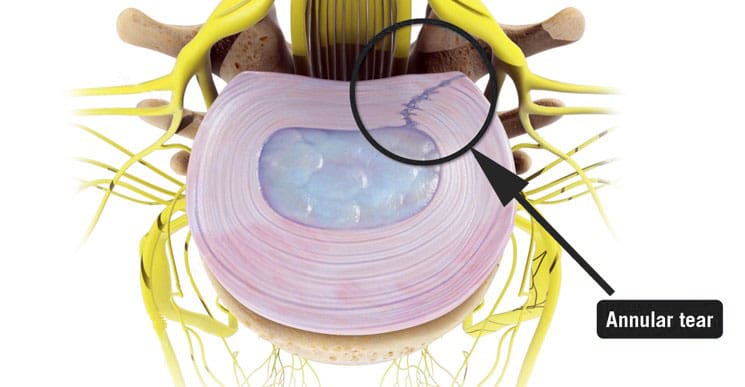
An annular fissure is a discogenic condition that affects the spine and can cause lower back pain. Also called an annular tear, it’s usually a wear-and-tear condition that happens over time rather than a condition caused by trauma. It usually happens when the fibers that make up the annulus or the tough outer covering of the intervertebral disc break or separate. To manage it, healthcare providers may recommend:
Making lifestyle changes.
Staying aware of how you go about daily activities and take steps to make adjustments, such as being mindful of unhealthy posture.
Start doing exercises that help make the back stronger.
Medical care if pain and other symptoms need to be managed.
Symptoms
Lower back pain may be a sign of an annular fissure, or there may be no symptoms. Symptoms can include:
Pain
Weakness
Numbness
Electrical sensations travel down one leg or arm if a cervical/neck tear is present.
Numbness and weakness may be caused by the nerves getting irritated or compressed near an annular tear. (Stadnik, T. W. et al., 1998)
These symptoms can also be similar to a herniated disc, which can be a complication of an annular fissure.
However, studies have shown that annular tears and herniated discs often go unnoticed because they have few obvious symptoms. (Jarvik, J. G. et al., 2005)
Annulus Function
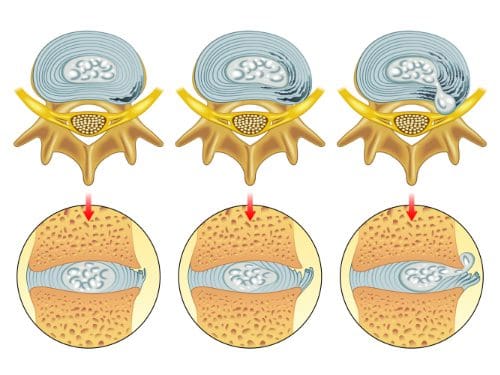
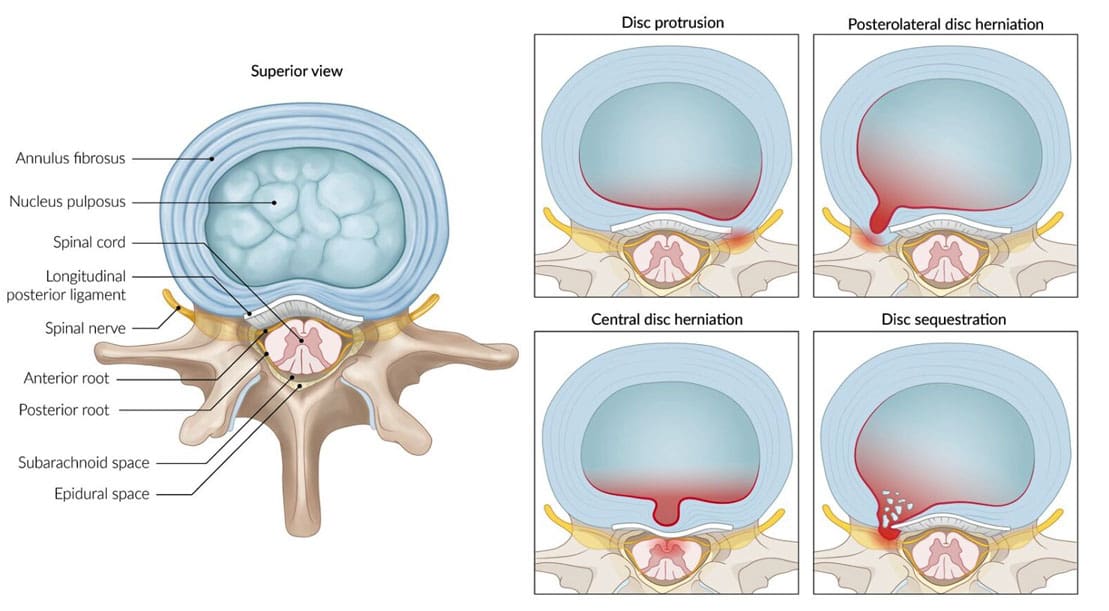
The annulus comprises several layers of tough fibers/fibrocartilage that surround, contain, and protect the soft, liquid nucleus inside the disc. The layers of the annulus fibrosus crisscross to provide support. The nucleus is a shock absorber cushions the body’s weight on the spinal joints when sitting, standing, or moving. Its strength also allows the disc to buffer the jolts and jars it experiences. It also helps maintain the integrity of the intervertebral joint by supporting the space between the two vertebrae. When an annular fissure occurs, the fibers separate or tear off from insertion on the nearby spinal bone. A fissure can also be a break in the fibers of one or more layers. (Jarvik, J. G. et al., 2005)
Causes
An annular tear is not the standard term medical professionals use to describe or diagnose a fissure because the word tear suggests that trauma has led to the separation or break in the fibers. While an injury can cause an annular fissure, it’s usually caused by long-term wear and tear. (Guterl, C. C. et al., 2013) The tears are typically caused by age-related degenerative changes in the disc, which can also lead to degeneration in other areas of the spine. Wear and tear are caused by annular fissures due to an individual’s daily living habits, such as sitting, standing, walking, climbing stairs, and performing other routine movements.
Treatment
While a large annular fissure is not likely to improve without treatment, a small one could heal independently. However, once an area has torn, it becomes more likely to continue tearing. (Virginia Spine Institute, N.D.) Conservative treatment is usually enough to control pain and symptoms. Physical therapy and anti-inflammatory medication are the first line of treatment. (Cheng, J. et al., 2019) Medication can be over-the-counter or prescription. Physical therapy treatment includes exercises, traction, and other therapies. If these do not help with the symptoms, the provider may suggest a steroid injection to reduce inflammation and pain. It can take three to six months to recover from degenerative disc problems if doing a standard treatment plan that includes rest, low-impact therapy exercises, and anti-inflammatory treatments. (Cheng, J. et al., 2019)
In severe cases, surgery may be recommended, including disc replacement surgery. An annular tear is not a reason to have disc replacement surgery alone; it is only when there are degenerative changes in the vertebral disc that surgery might be necessary. (Yue, J. J. et al., 2012)
Improving Body Alignment
Not paying attention and being aware of how the body performs everyday activities can, over time, set the stage for an annular fissure and other musculoskeletal injuries. However, fixing daily movement and posture habits to prevent injuries can be done through simple adjustments. For example, strengthening the core and back muscles can reduce pressure on the spine and help prevent injuries. (Camp, C. L. et al., 2016) The idea is to improve joint and overall body alignment. Activities can include:
Strength training
Walking
Pilates classes
Yoga
Tai chi
Somatic exercises
These activities help with muscle balance and joint alignment, which are recommended prevention strategies that physical therapists use when working with individuals who need help with spinal problems.
Visiting a chiropractic and physical therapy team can help treat injuries and chronic pain syndromes, relieve pain, resolve musculoskeletal issues, and prevent future symptoms. Injury Medical Chiropractic and Functional Medicine Clinic works with primary healthcare providers and specialists to develop a personalized care program for each patient through an integrated approach to treating injuries, improving flexibility, mobility, and agility to help return to normal and optimal function. If other treatments are needed, Dr. Jimenez has teamed up with top surgeons, clinical specialists, medical researchers, and rehabilitation providers to provide the most effective treatments.
Back Pain Specialist
References
Stadnik, T. W., Lee, R. R., Coen, H. L., Neirynck, E. C., Buisseret, T. S., & Osteaux, M. J. (1998). Annular tears and disk herniation: prevalence and contrast enhancement on MR images in the absence of low back pain or sciatica. Radiology, 206(1), 49–55. https://doi.org/10.1148/radiology.206.1.9423651
Jarvik, J. G., Hollingworth, W., Heagerty, P. J., Haynor, D. R., Boyko, E. J., & Deyo, R. A. (2005). Three-year incidence of low back pain in an initially asymptomatic cohort: clinical and imaging risk factors. Spine, 30(13), 1541–1549. https://doi.org/10.1097/01.brs.0000167536.60002.87
Guterl, C. C., See, E. Y., Blanquer, S. B., Pandit, A., Ferguson, S. J., Benneker, L. M., Grijpma, D. W., Sakai, D., Eglin, D., Alini, M., Iatridis, J. C., & Grad, S. (2013). Challenges and strategies in the repair of ruptured annulus fibrosus. European cells & materials, 25, 1–21. https://doi.org/10.22203/ecm.v025a01
Virginia Spine Institute. (N.D.). Annular disc tear Understanding the Symptoms, Causes, and Treatments. https://www.spinemd.com/conditions/annular-disc-tear/
Cheng, J., Santiago, K. A., Nguyen, J. T., Solomon, J. L., & Lutz, G. E. (2019). Treatment of symptomatic degenerative intervertebral discs with autologous platelet-rich plasma: follow-up at 5-9 years. Regenerative medicine, 14(9), 831–840. https://doi.org/10.2217/rme-2019-0040
Yue, J. J., Telles, C., Schlösser, T. P., Hermenau, S., Ramachandran, R., & Long, W. D., 3rd (2012). Do presence and location of annular tear influence clinical outcome after lumbar total disc arthroplasty? A prospective 1-year follow-up study. International journal of spine surgery, 6, 13–17. https://doi.org/10.1016/j.ijsp.2011.09.001
Camp, C. L., Conti, M. S., Sgroi, T., Cammisa, F. P., & Dines, J. S. (2016). Epidemiology, Treatment, and Prevention of Lumbar Spine Injuries in Major League Baseball Players. American journal of orthopedics (Belle Mead, N.J.), 45(3), 137–143.
For individuals wanting to try Pilates for back pain and exercise, can learning how to find their neutral spine help improve flexibility and increase the range of motion in the joints?
Pilates Neutral Spine
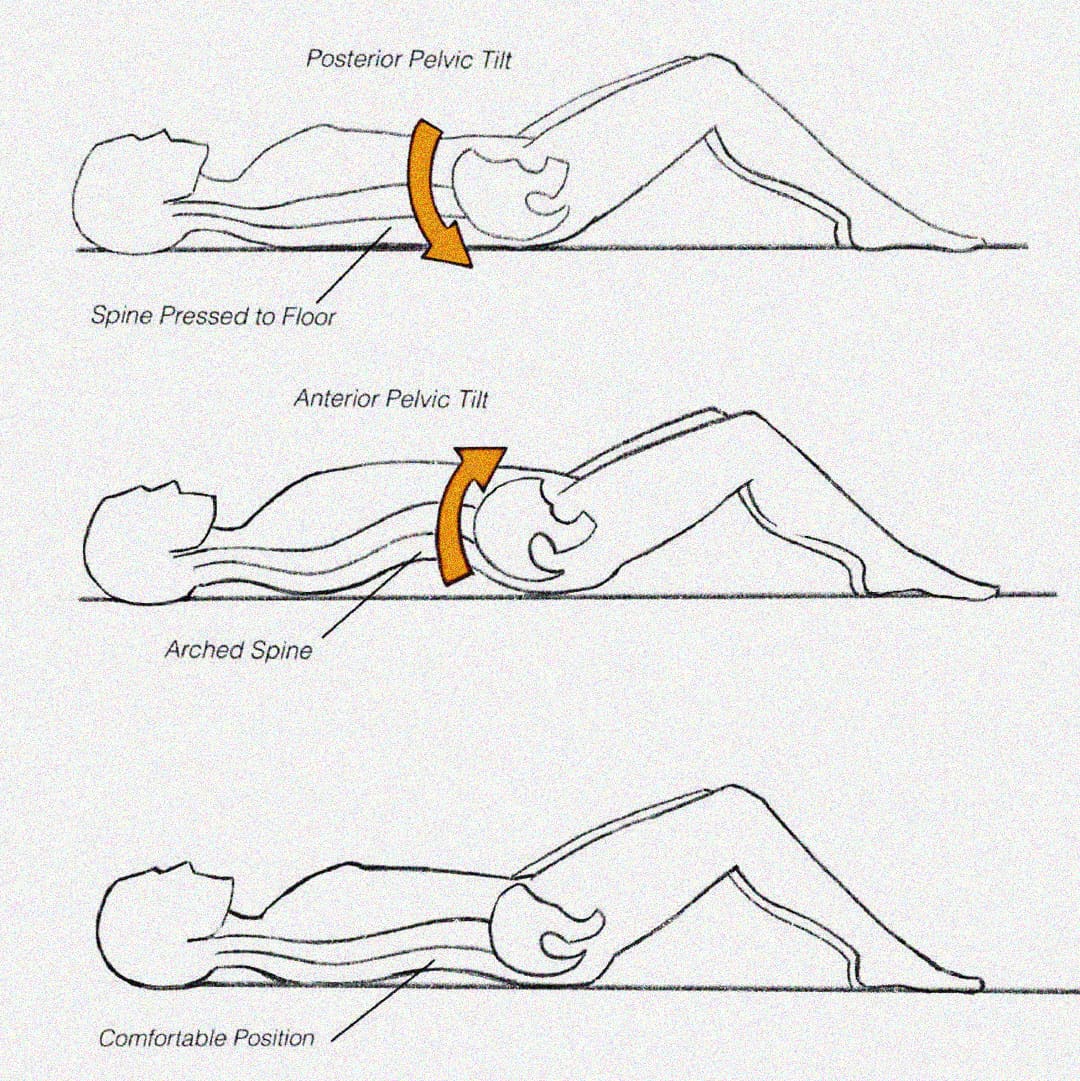
Pilates is a functional exercise modality emphasizing core stability, which is fundamental to developing a balanced body. The exercises strengthen the muscles, improve flexibility, and increase the range of motion in the joints. (Kloubec J. 2011) It is considered a functional fitness method because its principles work to establish more graceful, efficient movements from everyday life, such as improving posture. Pilates has shown its effectiveness in that it is often used in physical therapy and rehabilitation settings. (Byrnes, K., Wu, P. J., and Whillier, S. 2018) However, knowing how to find the neutral spine is essential for performing various Pilates exercises correctly. (Barbosa, A. C. et al., 2018) This subtle adjustment during practice may help prevent injury and increase overall performance. A neutral spine is the natural position of the spine when all three curves:
Cervical (neck)
Thoracic (middle)
Lumbar (lower)
Are active and in healthy alignment.
This is the strongest position for the spine when standing or sitting, allowing the body to move more naturally.
Alignment
The following exercise can help find the Pilates neutral spine.
Basic Position
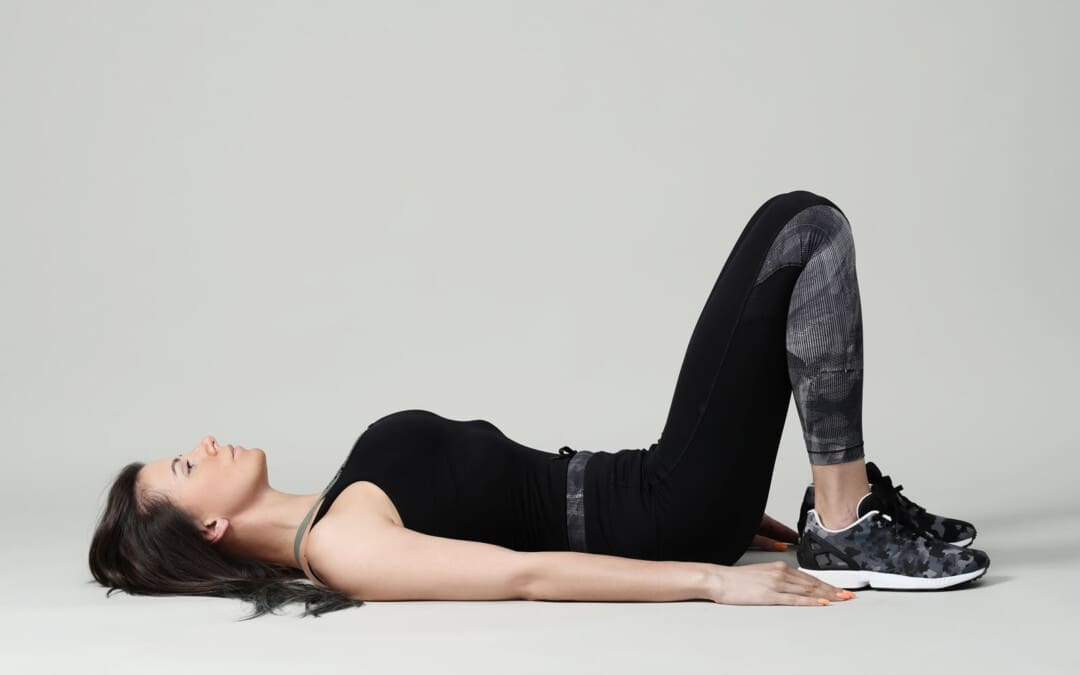
Lie on the back with knees bent and feet flat on the floor.
Ensure the legs are parallel to the hips, knees, heels, and toes.
Let the arms rest at your sides.
Relax
Relax the body, including the shoulders, neck, and jaw.
Allow the back to melt into the floor.
The rib cage will drop when the lower ribs are released to the floor.
Breathe Deep
Inhale all the way into the body, allowing it to move into the back and sides of the rib cage and all the way to the pelvis.
Pelvic Tilt
Exhale and use the abdominals to press the lower spine into the floor in a pelvic tuck. (Eickmeyer S. M. 2017)
Inhale to release.
Exhale and pull the lower spine off the floor, creating a pelvic tilt.
Inhale to release.
Pilates exercises don’t use excess energy or tension. Proper alignment and a neutral spine position can ensure that tension is released and excess energy is not exerted. (Byrnes, K., Wu, P. J., and Whillier, S. 2018) When performing the exercise, ensure that the shoulders, neck, and legs are relaxed and not involved in the movement.
When Exercising
Once a neutral spine is achieved, the goal is to maintain this spinal position during the exercises and when changing positions.
Start by lifting the right leg and placing it back down without letting the hips move.
Then, repeat the motion with the left leg.
Engage the abdominal muscles to help stabilize the pelvis, keeping it from moving and maintaining a neutral spine.
Repeat this process with each leg.
Once each leg can be lifted easily, test with both legs.
Exhale deeply and lift the legs while keeping the core and pelvis stable.
Then, lower them back down.
When performing this progression, there may be a want to release the abs and let the back arch.
This will cause a tuck and tilt position away from the neutral spine position.
If this progression is difficult, keep practicing until you can maintain a neutral spine.
Once this basic progression feels easy, try additional progressions and positioning.
Visualization Tips
Most people have their spines in one of two positions: tucked or tilted. A neutral spine requires individuals to be in between, with the lower abdominals flat and the lower spine’s natural curve slightly off the floor. The following visualization can help establish a neutral spine.
Balanced Pelvic Placement
Imagine a cup of water sitting on the lower abdomen, a couple of inches below the belly button.
Allow the abdominal muscles to drop toward the spine, flattening the belly.
You don’t want the water to spill, so the pelvis cannot be tipped forward or tucked under.
Body Scan Meditation
Once the body is relaxed with a balanced alignment on the floor.
Allow breathing to become deep and full and the abdominals to drop toward the floor.
The natural neck and lower spine curves should be off the floor.
Ensure the lower spine is not pressed into the floor, as this indicates a pelvic tilt.
If there is any discomfort or pain when working to increase endurance, seek advice from a healthcare professional. Injury Medical Chiropractic and Functional Medicine Clinic uses an integrated approach to treating injuries and chronic pain syndromes. It offers personalized care plans that improve ability through flexibility, mobility, and agility programs to relieve pain. Our providers use an integrated approach to create personalized care plans for each patient, including Functional Medicine, Acupuncture, Electro-Acupuncture, and Sports Medicine principles. Our goal is to relieve pain naturally by restoring health and function to the body. If other treatment is needed, Dr. Jimenez has teamed up with top surgeons, clinical specialists, medical researchers, and rehabilitation providers to provide the most effective treatments.
Is Motion Key to Healing?
References
Kloubec J. (2011). Pilates: how does it work and who needs it?. Muscles, ligaments and tendons journal, 1(2), 61–66.
Byrnes, K., Wu, P. J., & Whillier, S. (2018). Is Pilates an effective rehabilitation tool? A systematic review. Journal of bodywork and movement therapies, 22(1), 192–202. https://doi.org/10.1016/j.jbmt.2017.04.008
Barbosa, A. C., Vieira, E. R., Silva, A. F., Coelho, A. C., Martins, F. M., Fonseca, D. S., Barbosa, M. A., & Bordachar, D. (2018). Pilates experience vs. muscle activation during abdominal drawing-in maneuver. Journal of bodywork and movement therapies, 22(2), 467–470. https://doi.org/10.1016/j.jbmt.2017.05.002
Eickmeyer S. M. (2017). Anatomy and Physiology of the Pelvic Floor. Physical medicine and rehabilitation clinics of North America, 28(3), 455–460. https://doi.org/10.1016/j.pmr.2017.03.003
Can understanding the nucleus pulposus help in body positioning and prevention for individuals wanting to practice spinal hygiene and protect their discs from injury?
Nucleus Pulposus
The spinal discs are located between the spine’s vertebrae and are the body’s natural impact and shock absorbers. Within the disc is the nucleus pulposus, which plays a major role in providing the spine with shock absorption during movement. (Zhou Z. et al., 2014) The discs have a tough outer portion and a soft inner core. They are the:
It forms the tough circular exterior and comprises concentric sheets of collagen fibers or lamellae surrounding the inner core.
It has cartilaginous endplates that firmly attach to the vertebrae above and below.
Nucleus Pulposus
The nucleus pulposus is the inner core soft filling of the discs.
It contains a network of fibers suspended in a mucoprotein gel with a water base to maintain strength and pliability.
The near-liquid consistency makes it responsive to movement to handle the body’s axial load.
It helps maintain spinal suspension to prevent pressure on the bones and prevent bone-to-bone contact, reducing the potential for injuries and pain.
Shock Absorber
Each intervertebral disc is a shock-absorbing cushion, with the nucleus pulposus providing shock-absorbing properties (Zhou Z. et al., 2014). The intervertebral discs move as the body moves. For example, when arching the back, the disc moves forward slightly, and when twisting, the disc twists as well.
Spinal Action
The intervertebral disc supports spinal movements. When bending, twisting, arching, or tilting the spine, the nucleus pulposus swivels to accommodate these actions. These repeated spinal actions, which occur throughout the day and night, contribute to shifting positions while sitting, working, playing sports, carrying groceries, performing house chores, etc. An example is bending forward to pick something up. This action involves forward spinal flexion, which is bending the spine forward, flattening, or rounding. When bending using flexion, the spinal bones come closer together, pushing the nucleus pulposus toward the back.
Injuries
The disc can be pushed too far back with persistent or excessive spinal flexion. If the fibers of the annulus fibrosus become weak, they can tear, causing the nucleus pulposus to leak out and disc herniation. Generally, the nucleus pulposus will leak to the side and back; however, this corresponds to the location of the very sensitive nerve root/s with which it can come into contact, causing pain and other symptoms. The most common causes of disc herniation are degenerative wear and tear changes of the disc and trauma. Disc degeneration occurs as the body ages; it weakens the annulus fibers, allowing the nucleus pulposus to distend, bulge, or herniate.
Aging
Disc degeneration occurs with age but can also occur with injuries to the area. In young individuals, the nucleus pulposus is mostly water. For this age group, a herniation from trauma is more likely than in older individuals. (Ucar, D. et al., 2021) But as the body ages, the discs, especially the nucleus pulposus, begin to dry out. This dehydration leads to a significant loss of disc height. (UCLA Health, 2024) By age 60 or 70, the discs may be composed entirely of fiber, which can cause the shock absorption function not to work and disappear.
Chiropractic therapy is among the more conservative treatment options for a herniated disc and may be tried first before proceeding with more invasive treatments. Injury Medical Chiropractic and Functional Medicine Clinic works with primary healthcare providers and specialists to develop an optimal health and wellness solution that fully benefits the individual to get back to normal.
The Science of Functional Healing
References
Zhou, Z., Gao, M., Wei, F., Liang, J., Deng, W., Dai, X., Zhou, G., & Zou, X. (2014). Shock absorbing function study on denucleated intervertebral disc with or without hydrogel injection through static and dynamic biomechanical tests in vitro. BioMed research international, 2014, 461724. https://doi.org/10.1155/2014/461724
Nosikova, Y. S., Santerre, J. P., Grynpas, M., Gibson, G., & Kandel, R. A. (2012). Characterization of the annulus fibrosus-vertebral body interface: identification of new structural features. Journal of anatomy, 221(6), 577–589. https://doi.org/10.1111/j.1469-7580.2012.01537.x
Ucar, D., Duman, S., Bayram, Y., & Ucar, B. Y. (2021). Extruded disc herniations are experienced earlier by inactive young people in the high-tech gaming era. Journal of medicine and life, 14(3), 402–407. https://doi.org/10.25122/jml-2021-1059
IFM's Find A Practitioner tool is the largest referral network in Functional Medicine, created to help patients locate Functional Medicine practitioners anywhere in the world. IFM Certified Practitioners are listed first in the search results, given their extensive education in Functional Medicine