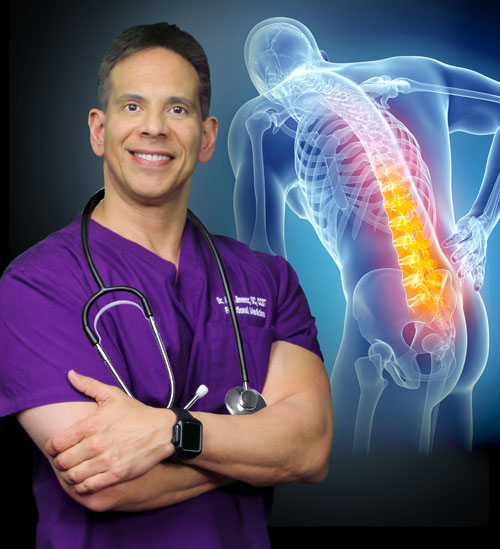
Ever wonder what goes through your chiropractors head when treating your moderate back pain? Using a patient as an example, Dr. Jimenez shares his thought process through the treatment of a patient with moderate low back pain. All the way through the first appointment through to the recovery process.
Patient’s Background
Louis is a 47-year-old programmer who plays tennis regularly, especially tournaments.
However, low back pain has put Louis’ game on hold as he�s not able to manage the pain with the regular heating pad, ice, and over-the-counter pain reliever.
His primary physician referred him to Dr. Jimenez.
Louis’ is referred to chiropractic
Dr. Jimenez: Louis’ primary physician referred him to me instead of a spine surgeon because first, the pain is not yet serious enough for surgery. And so there was a window to treat with a non-invasive approach. Secondly, I specialize in sports medicine and so maximize conservative, non-operative techniques/methods.
The United States has 5 times the surgical rate of other countries, so going to a non-operative spine specialist/chiropractor is the best approach at the beginning before the pain becomes severe/acute/chronic.
Louis’ first appointment, medical history, and current back pain
Dr. Jimenez: Once I went through his medical history, I saw it was pretty straightforward. So I dug deeper into other areas of Louis’ lifestyle.
I asked about:
Diet
Physical activity
Emotional well-being
Smoking status
Also, a factor, his occupation was contributing to his pain. He�s a programmer, so spends a lot of time sitting at a desk. Sitting for prolonged periods and usually improperly/poor posture are two of the worst things you can do to your spine.
Sitting for a long time without moving around causes the hip muscles to get tight, and glutes and spine muscles to weaken.
Louis sits most of the day working and spends the weekend if not doing house chores, then playing tennis. Just imagine using weakened muscles during the week and then jumping into a sports activity on the weekend will definitely cause pain.
Louis said that his pain would worsen when serving, hitting a forehand and bending over to pick up a ball. The pain would ease down once he was resting and sleeping.
Louis’ physical exam
Dr. Jimenez: With the physical examination, I looked at
Alignment
Motion
Inflexibilities (not just the spine but the hips and lower extremities)
Muscular imbalances
Weaknesses
I saw that Louis had a flattened lumbar lordosis, meaning the gentle curve in his low back was now flat. Restricted motion in one direction� or a flexion. And weakness in the buttock muscles and hips, and tightness in the lower extremity muscles.
Pushing on certain areas along his spine, presented tenderness in the mid to lower lumbar spine and joint areas.
Initial treatment for Louis’ moderate low back pain
Chiropractic
Physical therapy
Exercises
Stretching
Re-education – proper sitting/standing
Diet
Foot orthotics if necessary
The best initial treatment is to work chiropractically on the muscular imbalances of the spine and lower extremities that are affecting the body’s biomechanics.
Other exams?
Dr. Jimenez: If necessary, a functional movement screening examination.
This test is used in sports medicine to check for imbalances from the feet all the way up to the neck.
After this, Louis would be tested to see if foot orthotics could help and receive specially designed exercises from a physical therapist to address the muscular imbalances.
Radiographic, CT, or MRI imaging
Dr. Jimenez: Many believe that imaging tests are essential to the diagnostic process.
My goal for Louis and all my patients is to get them pain-free, functional and back to health.
Are imaging tests important?
Dr. Jimenez: Imaging tests are important when there are neurologic discoveries/complaints, like muscle weakness, sensory loss, and immobility, as this can indicate the need for surgery.
Imaging tests are helpful for guiding targeted treatment like an epidural injection.
And if your doctor believes there is something serious, e.g., a spinal tumor, infection, then get an imaging test right away.
Louis’ diagnosis
Dr. Jimenez: Because Louis’ pain worsened while playing tennis and then ease during sleep, I diagnosed him with mechanical low back pain.
This type of back pain comes on through mechanical activities or applying a load to the spine.
Non-mechanical low back pain is pain that exists all the time.
Thought process while developing Louis’ treatment plan
Dr. Jimenez: The treatment plan is focused on controlling pain and inflammation.
I first recommended chiropractic treatment, physical therapy/massage, and heat/ice compress.
After completing the course of treatment I suggested Louis take naturally derived supplements:
Turmeric
Bromelain
High-dose omega 3’s
This would help reduce inflammation.
They have been proven to be effective without the serious side effects of both over-the-counter and prescription medications.
Louis and I also discussed his diet
I recommended cutting back on carbohydrate and processed sugar intake thus curbing inflammation and upped healthy fat consumption of and natural sugars that are found in nuts and berries.
I taught Louis proper basic movement techniques, including positioning himself at work and stretches to do throughout the day.
I suggested that Louis work with a fitness physical therapist to build strength and flexibility, that would take shape in 4 to 6 weeks.
After a few sessions, the goal is to be able to do the exercises without help.
Return to tennis
Dr. Jimenez: Very soon, as long as, he uses his natural anti-inflammatory supplements and follows through with regular chiropractic/physical therapy.
Slow and steady is the key to pain relief. Jumping into a tennis set before finishing treatment would set him back and possibly cause new injuries.
I recommended he start by playing non-competitive tennis and just rally after completing the treatment and then take a day or 2 to see how it feels.
Taking it slow should bring back full strength within 2 months after the initial visit.
Preventive tips:
A proper tennis swing should put minimal force on the spine.
Tennis professionals start and stop, jump, slide, dive and run, run, run. That is where a significant overload of the lower back occurs and all the energy goes right into the spine.
The key to a proper swing is to rotate the hips, take the proper arm swing, and hit through the ball.
If you don�t have proper hip rotation, your body will pay for it through the spine.
Bending at the hips and knees when picking up balls will greatly reduce stress on your low back.
Work with a tennis pro that can teach you proper swing and specific tennis training especially movement.
This will help you play well, alleviate/avoid back pain and enjoy the game.
Low Back Pain Treatment | El Paso, Tx
Low back pain which gradually influenced his quality of life was developed. David Garcia was unable to walk as his symptoms worsened and his back pain became excruciating. He first visited Dr. Alex Jimenez, a chiropractor in El Paso, TX, following a recommendation from his sister. Dr. Jimenez managed to supply David Garcia with all the aid he deserved for his low back pain, restoring his well-being. David Garcia clarifies the wonderful service Dr. Alex Jimenez and his team have given him to offer him relief from his painful symptoms and he highly recommends chiropractic care as the non-surgical pick for low back pain, among other health problems.
NCBI Resources
A chiropractor is the ideal medical professional to consult with for any unexplained pain in the musculoskeletal system. They are highly qualified professionals that their specialty is treating conditions like moderate lower back pain and they are very affordable. 31 million Americans experience moderate low back pain at any given time. This condition affects many, but finding the exact cause can be a challenge. Chiropractors are spinal specialists that are trained to not only alleviate pain but also find and help correct the cause of the problem.
Healthy joints have obvious benefits, including aiding in movement, keeping you flexible and allowing you to stay active. The health of some of your joints is readily apparent�you only have to bend your knees, ankles, elbows or wrists to see how they are functioning at any given moment. But there are some joints in your body that are even more important, although you may not be as aware of them. The joints in your spine, where each vertebra connects to another, are vital to the normal, healthy function of your body. Without healthy spinal joints, you can expect pain and loss of mobility, among other unpleasant symptoms.
Fortunately, keeping your spinal joints healthy is made much easier with regular chiropractic care. Periodic visits to your chiropractor will help you keep your spine operating as well as it possibly can, year in and year out!
Ways that Chiropractic Helps In Spinal Joint Health
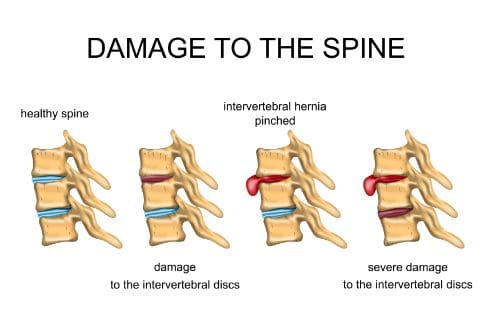
ILLUSTRATION OF A HEALTHY INTERVERTEBRAL DISC, THE DAMAGED INTERVERTEBRAL DISC, HERNIATION.
1. Circulation Increased.
Stiffness in the spine can be caused by a variety of issues, including trauma and degenerative disc disease. While chiropractic cannot prevent the wear and tear that life often brings, it can do a lot to heal that damage. One way that adjustments aid in healing is by increasing circulation to your spinal discs and surrounding tissues. Increased circulation brings in healthy nutrients and removes undesirable material, making it possible for your spine to heal more thoroughly than without good circulation.
2. Pain Is Reduced or Eliminated.
Back pain can make living a normal life difficult if not impossible. Depending on the frequency and severity of the pain, you may find yourself unable to do many of the things you once enjoyed. Even if you do not lose mobility, back pain can distract and upset you every time it shows up.
The pain in your back can most likely be alleviated through chiropractic care. By returning your spine to proper alignment, your chiropractor can ease pressure on the nerves in your back and encourage muscles and other soft tissue to release. Over time spinal adjustments can greatly reduce or even eliminate back pain, which will help you stay active and improve the health of your spinal joints.
3. Mobility Increased.
Pain in your spine and/or neck is usually accompanied by a loss of mobility. Your muscles may seize up in an effort to protect your spine, which can make it impossible to move normally. Even if you are not suffering from muscle spasms, consistent back and neck pain can make you hesitant to move in ways that will trigger pain. Over time, the lack of movement can cause the body to stiffen and weaken. The longer this goes on, the less likely you are to get the physical activity you need to keep your joints mobile and your body strong.
Chiropractic adjustments are capable of breaking up the stiffness that holds you back. By returning your spine to proper alignment, circulation is increased, pain is decreased, muscles release and mobility returns. It can take time to get back to the way you want to be, but it is time well spent.
Healthy Joint Health Requires Consistency
The best way to keep your spinal joints healthy over the long-term is to make regular visits to your chiropractor while also maintaining a healthy diet and exercise regimen. Everyone is different, which is why it is important to get customized treatment from your chiropractor. By establishing a relationship with your chiropractor, you can ensure that you are always on the right track for spinal joint health.
Contact us today to learn more about chiropractic care and to schedule an appointment with our team.
The Difference of Using *CHIROPRACTIC ORTHOTICS* | El Paso, Tx
Custom Orthotics are Worth The Cost
People who experience back, hip, and/or foot pain usually turn to orthotics for relief.
Foot Levelers is the leading custom orthotic provider in the U.S., but custom is not always cheap, as compared with the non-customized, over-the-counter orthotics.
What�s the difference and why spend money on custom orthotics?
Common Orthotics are Not The Same for Everyone
What works for one person may not work for you, which is evident by all the different insoles on the market for the same problems.
Take 10 people, all of who have different levels of activity, weight, age, types of pain and wear different shoes, go to the store for store-bought orthotics, take a quick assessment, and are all told to wear the same insole.
You need customized care, which is exactly what custom orthotics provide for your body.
Custom orthotics are created by scanning and assessing your arches, seeing how you distribute your body weight on your feet, and then a unique treatment plan is created especially for you.
The Body’s Foundation is our Feet
What if you were told that the foundation of your home was cracking and you had two options: put duct tape over the crack and hope for the best or spend a little more money and fix the problem the right way.
A scan of the feet is used to learn about each foot independently.
These scans highlight any differences between your feet like one being smaller, wider, or flatter than the other.
This information is essential to creating orthotics and helps achieve a result that over-the-counter orthotics simply cannot provide.
Although non-custom orthotics are less expensive, they are basically like putting duct tape on your foundation and may not resolve the issue\s and cause more problems and greater costs.
In the Long Run You Will Save Money
Custom orthotics are an investment that pays your body back a hundredfold.
Non-custom orthotics are cheaper and are made with unreliable and usually cheap material. These are not designed to resolve your condition, which forces you to spend more money.
Paying attention to the foundation of your body provides benefits to the rest of your body, and eliminates the cost of treating all types of discomfort.
The process of getting custom orthotics begins with a simple foot scan.
This provides us with important information to keep your body operating optimally.
Spine Pain
Overpronation and over supination can cause a variety of injuries and conditions that affect not only the feet and ankles, but also the knees, hips, and back as well. Foot Dysfunction�can very easily cause a domino effect that extends all the way to the back. The feet are the foundation of the body and when there is a problem with the way they function it can cause the entire body to shift out of alignment.
NCBI Resources
All our organs receive messages from our brain via our spinal cord. The lungs know to breathe in and out because of the messages they receive from the brain. The heart beats because of these messages as well. Every organ in our body is connected to the brain and blocking this connection�even a little�can cause serious health issues. Some health problems are easily felt like numbness in the fingers or a headache. Some troubles are not so apparent like digestive issues or kidney problems. If the spine is out of order, the organs will feel it.
Degenerative disc disease is a condition where the degradation or wearing away of your spinal discs leads to pain and discomfort. Everyone�s discs wear down, but not every person experiences pain. That is the difference!
What are the Four Stages of DDD
Two of the main components of the spine are the vertebrae and the discs. The discs sit between vertebrae to provide cushion, support, and flexibility. Each disc is made up of a soft inner layer and a tough outer layer. Over time, or due to injury, the discs can lose their integrity, begin to thin and even tear in certain cases. Compromised discs increase the likelihood of pressure on nerves and friction between the vertebrae.
Like many diseases, degenerative disc disease has several possible stages. As the stages progress, the negative symptoms become more pronounced.
1st Stage
The first stage of degenerative disc disease may go unnoticed by the individual but can be identified by a chiropractor or other medical professional. The loss of the natural curvature of the spine can indicate the beginning of degenerative disc disease. Pain may not be apparent, but extra pressure is being placed on the spine which can lead to more rapid aging of the spine, nerves, joints, etc.
2nd Stage
The degradation of discs becomes more apparent in the second stage. They may look thinner, and it is common to see deformations in the bone, such as bone spurs. The curvature of the spine will become more unnatural and the spinal canal may become more narrow. Stage 2 is often where you will begin to notice some pain and discomfort.
3rd Stage
Stage 3 is marked by a more extreme change in the posture and curvature of the spine, along with more pain and loss of mobility. Nerve damage is common and scar tissue typically begins to form. Discs are even thinner than before, which can sometimes cause even more deformation of the bones.
4th Stage
The final stage of degenerative disc disease is the most severe and is typically considered irreversible. Discs are at their thinnest or gone altogether. The flexibility of the spine is extremely limited and pain is often considerable. Nerve damage can be severe and the bones of the spine may even begin to fuse together.
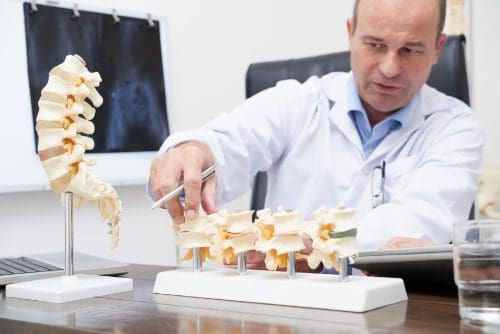
Doctor explaining various spine diseases by the example of plastic models
How Can Chiropractic Help DDD?
Chiropractic care is a preferred treatment option for degenerative disc disease for a variety of reasons. Because it is gentle and non-invasive, chiropractic is much less likely to create undesirable side effects�which are common with prescription medications and surgery. Obviously, the earlier the stage of degenerative disc disease, the more successful treatment can be. But chiropractic can be helpful even in the most extreme cases of degenerative disc disease.
Chiropractic treatments may include:
Chiro Adjustments
One of the most effective ways to treat degenerative disc disease is to ensure the spine is in proper alignment. Loss of alignment, which can happen due to injury or just day to day life, puts extra stress on the spine which can accelerate the degradation of discs. Adjustments bring back alignment.
Spine Decompression
Spinal decompression uses gentle but firm pressure to bring space back between the vertebrae. Space allows blood flow to return and healing to happen. Decompression is an important treatment to complement adjustments.
Now is the Time to Treat DDD
The best time to seek treatment for your back and neck pain is right now. Our chiropractic team can help you feel better and live a healthier life. Please contact us now to learn more!
About� 40 percent of people all over the world struggle with allergies and the demand for treatment has never been higher. However, there is still no cure-all when it comes to treating allergies. There are plenty of options available, but few are as effective as we would like them to be�and the ones that do work usually have side effects that can make them undesirable.
Chiropractic offers an attractive alternative to standard medical treatment. By improving general health, chiropractic helps the body better cope with all those allergens now and years to come.
What are they?
When the human body encounters a substance that it is allergic to, the immune system is triggered and attempts to attack the allergen in much the same way it would a substance that is truly harmful. The problem is, the allergen is not harmful in and of itself�but the immune system reaction can be harmful, or at least highly unpleasant.
For example, if you are allergic to pollen, your immune system will attempt to attack the pollen you inhale. Your body will produce immunoglobulin, leading to the release of histamines. The histamines that surge through your system cause blood vessels to dilate, fluid to increase in the space surrounding your cells, and your blood pressure to drop. A runny nose and sneezing typically follow, and symptoms can become even more extreme, like nausea and vomiting. It all seems like overkill for a bit of pollen, but there is little you can do to avoid it.
It is possible to be allergic to just about anything, but there are certain substances that are common allergens. These include:
Pollen
Mold
Pet Dander
Weeds
Dust Mites
Grass
Girl� with allergies
Allergies and Chiropractic Adjustments
Allergies are not something that can be cured, but they can be treated in a way that lessens their impact on your life. Standard medical care offers a variety of treatments for allergies, some more effective than others.
Many over-the-counter allergy medications are available, each with its own potential side effects. You can also seek an appointment with an allergy specialist, who can determine exactly what you are allergic to and offer stronger treatment options�but these also carry potential side effects, and as with over-the-counter options, may or may not be effective.
Proper Nervous System Function
Chiropractic care approaches allergies more holistically. One of the main ideas behind chiropractic is that the human body can heal itself in most cases if the conditions are right.
It is the job of your chiropractor to create the ideal conditions for healing. By optimizing spinal alignment, it is possible to improve nervous system function and thereby improve the body�s response to all types of stimuli�including allergens.
Lifestyle Recommendations
Chiropractic is about more than spinal adjustments. A holistic approach means optimizing every aspect of your health, which includes diet and exercise.
Your chiropractor can look closely at your diet and other lifestyle factors and help you identify changes that may lessen your allergy symptoms. By improving your diet and adding exercises that add strength and mobility, you will change the composition of your body in fundamental ways. These changes often lead to surprising improvements in the way you react to a variety of substances.
Call To Make An Appointment
If you are suffering from allergy symptoms and you are tired of ineffective treatments and their unpleasant side effects, chiropractic care may be a perfect fit for you. Please contact us today to schedule an appointment with Dr. Alex Jimenez. Let us show you how much better chiropractic can make you feel.
Backpacks allow us to carry everything we need wherever we go. But as great as backpacks are, the fact is they can cause real damage if they are not carried correctly. It is possible to carry more weight than you should and in ways that are not healthy. From children to the elderly, everyone should know how to properly carry a backpack.
How Not Carrying Properly Can Hurt Your Back
A recent article on NBC News discussed the health concerns that backpacks present, discussing the various studies that have shown the damage they can cause. As the article noted, most everyone uses a backpack at one time or another. They are simply too useful to do otherwise. But research has demonstrated that they can hurt the back significantly, especially in children.
The back injuries that a backpack can cause include:
Disc Injuries
The spine is made up of vertebrae separated by spinal discs. The discs provide cushioning and flexibility in the spine. But the discs in your spine are only capable of carrying so much weight. When a backpack is too heavy, it can lead to disc compression and possibly tearing of the disc.
Carrying a backpack over one shoulder day after day will eventually cause your body to alter its alignment and your muscles to become imbalanced. Muscle imbalances can cause a cascade of problems, including altering the way you walk and increasing wear on your spine.
How to Carry Properly
Backpacks can be used safely, you just need to take the proper steps. These include:
1. Do Not Carry too much weight.
The recommended percentage of your body weight when using a backpack ranges from 10% – 15%. Someone that weighs 100 lbs should carry a backpack weighing no more than 15 lbs. Ideally, you should keep it around 10%. The more you go over the recommended weight, the more risk of injury to your back.
2. Utilize both straps.
Backpacks are designed to be carried using a strap over each shoulder. Using both straps distributes the weight evenly across your shoulders, minimizing the risk of excessive wear or injury.
3. Adjust the straps.
The straps of your backpack should be pulled snug, but not too tight. If your backpack includes a belt or additional straps, use them � especially if you are carrying a lot of weight.
4. Carry only what is needed.
It is easy to accumulate items in your backpack without realizing how much you have. Try to examine what is in your pack on a regular basis to ensure you are only taking what you need.
5. Use roll bags for heavy loads.
If you really need to carry more weight, invest in a bag with wheels. Rolling backpacks or other rolling bags can allow you to carry significantly more weight in comfort and safety.
6. Apply all of the above to your child�s backpack.
If you have one or more children, it is important to train them on how to use backpacks safely � and to check them from time to time.
Enjoy Back Pain Relief
Our chiropractic team is ready to help you get relief from your back pain. If you are suffering from back pain, please contact us to schedule an appointment with an experienced chiropractor.
Sitting for long periods is associated with early death � upsetting news for the millions of Americans who spend extensive time sitting as they work and as they relax after work. A recent study conducted at Columbia� University has found that prolonged sitting destroys your health. Regular exercise, although great for you, failed to significantly reduce the risks associated with prolonged sitting.
Fortunately, there are things you can do to minimize the time you spend sitting. Experts recommend taking a movement break every 30 minutes to protect your health.
The Sitting Study
The study used hip-mounted accelerometers to measure how much time study participants � nearly 8,000 individuals � spent in sedentary positions. Over four years researchers tracked participants and recorded the number of deaths among participants. The study found that increased sedentary time leads to an increased risk of death from any cause. The risk of death went up regardless of how old the participants were or how often they exercised.
The study found that participants who sat less than 30 minutes had a 55% lower risk of death in comparison to participants who sat for longer periods of time.
Why Does Sitting Ruin Your Health?
Finding out that sitting for extended periods so greatly increases your risk of death is startling for many people. The next question is, �Why?� Unfortunately, the exact reasons are far from clear. The study was not meant to uncover the reasons why, so there is limited information to explain what occurs in the body to increase the risk of death. It will take further studies to provide an answer.
Methods to Protect Your Health
Although the exact reasons why sitting increases the risk of mortality are not yet clear, the recommendation to take a break from sitting every 30 minutes does offer an actionable step to protect your health. There are several other ways you can limit your sitting, including:
Sit & Standing Desks
There are a number of different desks designed to be used from a standing position, including stationary standing desks and sit to stand desks � both manually operated and motorized. Standing desks allow you to work exactly as you would at a sitting desk, only while standing. They take some getting used to, but most people who try them out find that they are an easy way to minimize time spent sitting.
When you purchase a standing or sit to stand desk, it may take some time to build up your stamina to use the desk for extended periods of time. Try standing for short periods, then sitting, then standing again to avoid excessive fatigue.
Apps
A number of apps are available to help you track your activity and make gradual lifestyle adjustments to increase your activity levels. Apple�s Health app includes an Activity monitor and coach that collects data from your iPhone, Apple Watch and third-party apps to let you know how much you are moving and to remind you to move more. You can set reminders on your app to tell you to move � such as every 30 minutes � as a way to ensure you avoid sitting for prolonged periods of time.
Timers
The simplest way to avoid sitting for more than 30 minutes is to set a timer on your phone or use a separate timer, to go off after 30 minutes of sitting. Once the timer goes off, engage in brisk walking or some other activity to get your heart rate up for five minutes. Then you can go back to sitting � after you set your timer again.
Helping You Stay as Healthy as Possible
Our chiropractic team is dedicated to helping you enjoy a long and healthy life. Please contact us to schedule an appointment for a comprehensive exam and targeted health advice from an experienced chiropractor.
In the same ways that it helps human patients, it also helps animals. It offers a less invasive, medication-free way to manage pain and correct many health issues, including arthritis and joint injuries. A number of pet owners claim chiropractic is not only great for their pets but that their pets are excited to go to appointments and see their chiropractors.
Which animals benefit from veterinary chiropractic care?
Any species of animal can benefit from chiropractic. The most common animals to receive this specialized type of care are dogs, cats, and horses. However, any vertebrate species, including birds, can reap the benefits.
Chiropractic for animals has long been a standard form of treatment with many show horses, race horses, and barrel racers. It is considered a viable, beneficial treatment to help the animals combat the stress their bodies are put under due to their jobs. It is also very good for injuries, speeding healing while managing pain.
It is often used on dogs and cats to help with injuries, arthritis, and aging. Sometimes an animal can hurt but they are unable to communicate that to their owners. If you notice behavioral changes or grumpiness, you may want to check your pet out. He or she may be hurt and can�t tell you � and chiropractic could be the answer.
Most often treated conditions
Veterinary chiropractic helps pets with many conditions that are biomechanical or neurological in origin � much like it helps humans. Some of these conditions include spondylosis, hip dysplasia, and other types of degenerative joint diseases, intervertebral disk disease, neck pain, back pain, and cervical instability. It can also address problems of the autonomic nervous system like musculoskeletal weakness, fecal and urinary incontinence, chronic neck and back pain, and other pain that don�t respond to conventional treatments.
Serious injuries like ligament tears or fractures may require surgical intervention, but chiropractic can help post-surgery. It can help relieve the pain as well as correct secondary problems that could occur due to the animal overcompensating in response to the injury. In performance animals, regular chiropractic care can help prevent injury by maintaining flexibility and a good range of motion.
How does it work?
Chiropractic is designed to help keep the joints and spine in their natural, healthy alignment. The nerves that surround the joints and run along the spine communicate with the central nervous system. This connects to all of the organs in the body, including the brain.
When the spine is out of alignment, even just a little, it can cause disruptions in how the messages are relayed through the central nervous system and to the organs and brain. A misaligned spine can affect the entire body, causing pain in muscles and joints, affecting organ function, and impact the animal�s overall health and wellbeing. When the spine is not aligned, the body will not function as it should.
Give the best possible chiropractic experience.
When you meet with the veterinary chiropractor, make sure that you have all of your pet�s information available, including vaccinations, health care history, any conditions they have, their diet (including supplements), medications they are taking, and their daily activities. If the doctor is treating an injury, explain how the injury occurred if you know.
When the adjustment is over, make sure that you understand any therapy or exercises to do at home, post adjustment. If there is something you don�t understand, ask. The doctor may also provide recommendations regarding lifestyle changes including saddle fit, collar fit, exercise, conditioning, or shoeing. Make sure you follow these as well. Your pet can�t make those decisions for his or her own health, that is up to you. Don�t let them down.
IFM's Find A Practitioner tool is the largest referral network in Functional Medicine, created to help patients locate Functional Medicine practitioners anywhere in the world. IFM Certified Practitioners are listed first in the search results, given their extensive education in Functional Medicine